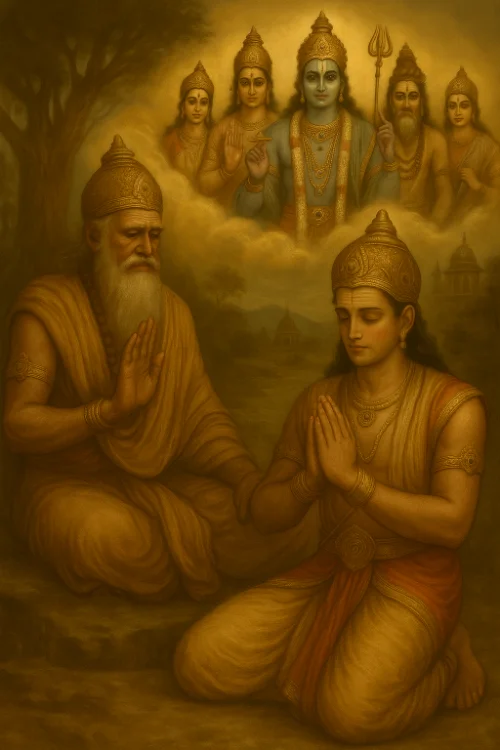
Mahābhārata - Anuśāsana Parva
CHAPTER 150 - The Mantras for success in a journey, entry into new buildings, and for propitiating malevolent spirits
युधिष्ठिर उवाच
पितामह महाप्राज्ञ सर्वशास्त्रविशारद ।
किं जप्यं जपतो नित्यं भवेद् धर्मफलं महत्।।१।।
yudhiṣṭhira uvāca
pitāmaha mahāprājña sarvaśāstraviśārada |
kiṃ japyaṃ japato nityaṃ bhaved dharmaphalaṃ mahat ||1||
Yuthishthira said O Grandfather, O greatly wise one, expert in all scriptures, what should one chant daily to attain great religious merit?
प्रस्थाने वा प्रवेशे वा प्रवृत्ते वापि कर्मणि ।
दैवे वा श्राद्धकाले वा किं जप्यं कर्मसाधनम् ॥ २ ॥
prasthāne vā praveśe vā pravṛtte vāpi karmaṇi |
daive vā śrāddhakāle vā kiṃ japyaṃ karmasādhanam || 2 ||
What is that Mantra which gives success, if recited starting on a journey or in entering a new building, or at the beginning of any undertaking? During divine rituals or Śrāddha ceremonies? What should be chanted as the means for success in actions?
शान्तिकं पौष्टिकं रक्षा शत्रुध्नं भयनाशनम् ।
जयं यद् ब्रह्मसमितं तद् भवान् वक्तुमर्हति ॥ ३ ॥
śāntikaṃ pauṣṭikaṃ rakṣā śatrudhnaṃ bhayanāśanam |
jayaṃ yad brahmasamitaṃ tad bhavān vaktumarhati || 3 ||
You should tell me what, indeed, what Mantra it is, which propitiates all malevolent influences, or brings on prosperity or growth or protection from evil, or the destruction of enemies, or the dispelling of fears, and which, at the same time, is consistent with the Vedas.
भीष्म उवाच
व्यासप्रोक्तमिमं मन्त्रं शृणुष्वैकमना नृप ।
सावित्र्या विहितं दिव्यं सद्यः पापविमोचनम् ॥ ४॥
bhīṣma uvāca
vyāsaproktamimaṃ mantraṃ śṛṇuṣvaikamanā nṛpa |
sāvitryā vihitaṃ divyaṃ sadyaḥ pāpavimocanam || 4||
Bhishma said Hear, O king, with rapt attention, what that Mantra is which was declared by Vyasa. It was ordained by Savitri and is highly excellent. It is capable of purifying a person forthwith of all his sins.
शृणु मन्त्रविधिं कृत्स्नं प्रोच्यमानं मयाऽनघ ।
यं श्रुत्वा पाण्डवश्रेष्ठ सर्वपापैः प्रमुच्यते ॥ ५ ॥
śṛṇu mantravidhiṃ kṛtsnaṃ procyamānaṃ mayā’nagha |
yaṃ śrutvā pāṇḍavaśreṣṭha sarvapāpaiḥ pramucyate || 5 ||
Hear, O sinless one, as I recite to you the ordinances about that Mantra. Indeed, O chief of the sons of Pandu, by listening to those ordinances, one becomes purged of all his sins.
रात्रावहनि धर्मज्ञ जपन् पापैर्न लिप्यते ।
तत्तेऽहं सम्प्रवक्ष्यामि शृणुष्वैकमना नृप || ६ ||
rātrāvahani dharmajña japan pāpairna lipyate |
tatte’haṃ sampravakṣyāmi śṛṇuṣvaikamanā nṛpa || 6 ||
One who recites this Mantra day and night is not tainted by sins. I shall now explain it to you. Listen with rapt attention.
आयुष्मान् भवते चैव यं श्रुत्वा पार्थिवात्मज ।
पुरुषस्तु सुसिद्धार्थः प्रेत्य चेह च मोदते ॥ ७ ॥
āyuṣmān bhavate caiva yaṃ śrutvā pārthivātmaja |
puruṣastu susiddhārthaḥ pretya ceha ca modate || 7 ||
O prince, by hearing this, one attains longevity and becomes highly accomplished. Such a person rejoices both in this life and after death.
सेवितं सततं राजन् पुरा राजर्षिसत्तमैः ।
क्षत्रधर्मपरैर्नित्यं सत्यव्रतपरायणैः ॥ ८ ॥
sevitaṃ satataṃ rājan purā rājarṣisattamaiḥ |
kṣatradharmaparairnityaṃ satyavrataparāyaṇaiḥ || 8 ||
O King, this has always been practiced by the greatest of royal sages in the past, by those devoted to the Kshatriya duty, and by those constantly dedicated to truth and vows.
इदमाह्निकमव्यग्रं कुर्वद्भिर्नियतैः सदा ।
नृपैर्भरतशार्दूल प्राप्यते श्रीरनुत्तमा । । ९ ॥
idamāhnikamavyagraṃ kurvadbhirniyataiḥ sadā |
nṛpairbharataśārdūla prāpyate śrīranuttamā | | 9 ||
O tiger among the Bharatas, kings who perform this daily ritual with unwavering discipline and constant self-restraint always attain supreme prosperity.
नमो वसिष्ठाय महाव्रताय पराशरं वेदनिधिं नमस्ये ।
नमोऽस्त्वनन्ताय महोरगाय नमोऽस्तु सिद्धेभ्य इहाक्षयेभ्यः ॥ १० ॥
namo vasiṣṭhāya mahāvratāya parāśaraṃ vedanidhiṃ namasye |
namo’stvanantāya mahoragāya namo’stu siddhebhya ihākṣayebhyaḥ || 10 ||
Salutations to Vasishtha of high vows, after having bowed with respect to Parashara, that Ocean of the Vedas. Salutation to the great snake Ananta, and salutations to all those who are crowned with success, and who are of undecaying glory.
नमोऽस्त्वृषिभ्यः परमं परेषां देवेषु देवं वरदं वराणाम् |
सहस्रशीर्षाय नमः शिवाय सहस्रनामाय जनार्दनाय ॥ ११ ॥
namo’stvṛṣibhyaḥ paramaṃ pareṣāṃ deveṣu devaṃ varadaṃ varāṇām |
sahasraśīrṣāya namaḥ śivāya sahasranāmāya janārdanāya ||11||
Salutations to the great Ṛṣis, the supreme among the supreme. Salutations to the God of gods, the bestower of boons among the givers of boons. Salutations to the thousand-headed one (Sahasraśīrṣā), to Lord Śiva, and to Janārdana, who is known by a thousand names.
अजैकपादहिर्बुध्न्यः पिनाकी चापराजितः ।
ऋतश्च पितृरूपश्च त्र्यम्बकश्च महेश्वरः ॥ १२ ॥
वृषाकपिश्च शम्भुश्च हवनोऽथेश्वरस्तथा ।
एकादशैते प्रथिता रुद्रास्त्रिभुवनेश्वराः ॥ १३ ॥
ajaikapādahirbudhnyaḥ pinākī cāparājitaḥ |
ṛtaśca pitṛrūpaśca tryambakaśca maheśvaraḥ || 12 ||
vṛṣākapiśca śambhuśca havano’theśvarastathā |
ekādaśaite prathitā rudrāstribhuvaneśvarāḥ || 13 ||
The Eleven Rudras, the great lords of the three worlds, are: Ajaikapād, Ahirbudhnya, Pinākī, Aparājita, Ṛta, Pitṛrūpa, Tryambaka, Maheshvara, Vṛṣākapi, Śambhu, Havana, and Īśvara. These Eleven Rudras are revered as the mighty deities governing the universe.
शतमेतत् समाम्नतं शतरुद्रे महात्मनाम् ।
अंशो भगश्च मित्रश्च वरुणश्च जलेश्वरः ॥ १४ ॥
तथा धार्तायमा चैव जयन्तो भास्करस्तथा ।
त्वष्टा पूषा तथैवेन्द्रो द्वादशो विष्णुरुच्यते ।। १५ ।।
इत्येते द्वादशादित्याः काश्यपेया इति श्रुतिः ।
śatametat samāmnataṃ śatarudre mahātmanām |
aṃśo bhagaśca mitraśca varuṇaśca jaleśvaraḥ || 14 ||
tathā dhārtāyamā caiva jayanto bhāskarastathā |
tvaṣṭā pūṣā tathaivendro dvādaśo viṣṇurucyate || 15 ||
ityete dvādaśādityāḥ kāśyapeyā iti śrutiḥ |
Beyond these, the Śatarudriya hymn mentions a hundred forms of Rudra worshipped by great beings. Then, among the Twelve Ādityas, the celestial sons of Kaśyapa, are Aṁśa, Bhaga, Mitra, and Varuṇa, the lord of waters, followed by Dhārtāyama, Jayanta, Bhāskara (Sun), Tvaṣṭā, Pūṣā, Indra and the twelfth—Viṣṇu. Thus, these Twelve Ādityas, born of Kaśyapa, are well-established in the scriptures as the radiant solar deities.
धरो ध्रुवश्च सोमश्च
सावित्रोऽथानिलोऽनलः॥१६॥
प्रत्यूषश्च प्रभासश्च वसवोऽष्टौ प्रकीर्तिताः ।
dharo dhruvaśca somaśca
sāvitro’thānilo’nalaḥ ||16||
pratyūṣaśca prabhāsaśca vasavo’ṣṭau prakīrtitāḥ |
Dhara, Dhruva, Soma, Savitṛ, Anila, Anala, Pratyūṣa, and Prabhāsa—these are the eight Vasus, named in the scriptures.
नासत्यश्चापि दत्तश्च स्मृतौ द्वावश्विनावपि । । १७ ॥
मार्तण्डस्यात्मजावेतौ संज्ञानासाविनिर्गतौ ।
nāsatyaścāpi dattaśca smṛtau dvāvaśvināvapi | | 17 ||
mārtaṇḍasyātmajāvetau saṃjñānāsāvinirgatau |
Nāsatya and Datta are said to be the two Ashvins. They are the sons of Mārtaṇḍa (the Sun) born of his wife Saṃjñā, from whose nostrils they emanated.
अतः परं प्रवक्ष्यामि लोकानां कर्मसाक्षिणः ॥ १८ ॥
अपि यज्ञस्य वेत्तारो दत्तस्य सुकृतस्य च ।
ataḥ paraṃ pravakṣyāmi lokānāṃ karmasākṣiṇaḥ || 18 ||
api yajñasya vettāro dattasya sukṛtasya ca |
After this I shall recite the names of those who are the witnesses of all deeds in the worlds. They take note of all sacrifices, of all gifts, of all good deeds.
अदृश्याः सर्वभूतेषु पश्यन्ति त्रिदशेश्वराः ।। १९ ।।
शुभाशुभानि कर्माणि मृत्युः कालश्च सर्वशः ।
विश्वेदेवाः पितृगणा मूर्तिमन्तस्तपोधनाः ॥ २० ॥
मुनयश्चैव सिद्धाश्च तपोमोक्षपरायणाः ।
adṛśyāḥ sarvabhūteṣu paśyanti tridaśeśvarāḥ || 19 ||
śubhāśubhāni karmāṇi mṛtyuḥ kālaśca sarvaśaḥ |
viśvedevāḥ pitṛgaṇā mūrtimantastapodhanāḥ || 20 ||
munayaścaiva siddhāśca tapomokṣaparāyaṇāḥ |
Those lords among the deities see everything although they are invisible. Indeed, they see all the good and bad deeds of all beings. They are Death (Mṛtyu) and Time (Kāla) who observe everything, the Vishvedevas, the Pitris having forms, the great Rishis having penances for wealth, the Munis, and others crowned with success and devoted to penances and Liberation.
शुचिस्मिताः कीर्तयतां प्रयच्छन्ति शुभं नृणाम् ॥ २१॥
प्रजापतिकृतानेताँल्लोकान् दिव्येन तेजसा ।
śucismitāḥ kīrtayatāṃ prayacchanti śubhaṃ nṛṇām || 21||
prajāpatikṛtānetāṁllokān divyena tejasā |
Those who chant with devotion and sincerity are granted auspiciousness by these divine beings. Gifted with celestial energy, they confer various regions of happiness created by the Grandfather upon such men.
वसन्ति सर्वलोकेषु प्रयताः सर्वकर्मसु ॥ २२ ॥
प्राणानामीश्वरानेतान् कीर्तयन् प्रयतो नरः ।
vasanti sarvalokeṣu prayatāḥ sarvakarmasu || 22 ||
prāṇānāmīśvarānetān kīrtayan prayato naraḥ |
They live in all the worlds and attentively mark all deeds. By reciting the names of those lords of all living creatures, one always becomes gifted with rightousness and wealth and enjoyments in profusion.
धर्मार्थकामैर्विपुलैर्युज्यते सह नित्यशः ॥ २३ ॥
लोकांश्च लभते पुण्यान् विश्वेश्वरकृताञ्छुभान्।
dharmārthakāmairvipulairyujyate saha nityaśaḥ || 23 ||
lokāṃśca labhate puṇyān viśveśvarakṛtāñchubhān|
Such a person is always blessed abundantly with Dharma (righteousness), Artha (wealth), and Kāma (fulfillment of desires). He also attains the auspicious and holy worlds created by the Lord of the Universe (Viśveśvara).
एते देवास्त्रयस्त्रिंशत् सर्वभूतगणेश्वराः ।। २४ ।।
नन्दीश्वरो महाकायो ग्रामणीर्वृषभध्वजः ।
ईश्वराः सर्वलोकानां गणेश्वरविनायकाः ॥ २५ ॥
सौम्या रौद्रा गणाश्चैव योगभूतगणास्तथा ।
ज्योतींषि सरितो व्योम सुपर्णः पतगेश्वरः ।। २६ ।।
पृथिव्यां तपसा सिद्धा: स्थावराश्च चराश्च ह।
हिमवान् गिरयः सर्वे चत्वारश्च महार्णवाः ||२७||
भवस्यानुचराश्चैव हरतुल्यपराक्रमाः ।
विष्णुर्देवोऽथ जिष्णुश्च स्कन्दश्चाम्बिकया सह ।। २८ ।।
कीर्तयन् प्रयतः सर्वान् सर्वपापैः प्रमुच्यते ।
ete devāstrayastriṃśat sarvabhūtagaṇeśvarāḥ || 24 ||
nandīśvaro mahākāyo grāmaṇīrvṛṣabhadhvajaḥ |
īśvarāḥ sarvalokānāṃ gaṇeśvaravināyakāḥ || 25 ||
saumyā raudrā gaṇāścaiva yogabhūtagaṇāstathā |
jyotīṃṣi sarito vyoma suparṇaḥ patageśvaraḥ || 26 ||
pṛthivyāṃ tapasā siddhā: sthāvarāśca carāśca ha|
himavān girayaḥ sarve catvāraśca mahārṇavāḥ ||27||
bhavasyānucarāścaiva haratulyaparākramāḥ |
viṣṇurdevo’tha jiṣṇuśca skandaścāmbikayā saha || 28 ||
kīrtayan prayataḥ sarvān sarvapāpaiḥ pramucyate |
The Thirty-three gods are the rulers of all beings. Among them are Nandīśvara, Gaṇeśvara, Vināyaka, and Viṣṇu, along with celestial luminaries, rivers, the sky, and Garuda, the lord of birds. On earth, the Siddhas, immovable beings (mountains), and movable beings (humans, animals) hold spiritual significance, while the Himalayas and the four great oceans are revered as part of the divine order. The followers of Bhava (Śiva), who possess great valor, stand alongside Viṣṇu, Jiṣṇu (Indra or Arjuna), Skanda (Kārttikeya), and Ambikā (Pārvatī) in their divine roles. A person who chants the names of these deities with devotion is freed from all sins.
अत ऊर्ध्वं प्रवक्ष्यामि मानवानृषिसत्तवान् ॥ २९ ॥
यवक्रीतश्च रैभ्यश्च अर्वावसुपरावसू ।
औशिजचैव कक्षीवान् बलश्चाङ्गिरसः सुतः || ३० ॥
ऋषिर्मेधातिथेः पुत्रः कण्वो बर्हिषदस्तथा ।
ata ūrdhvaṃ pravakṣyāmi mānavānṛṣisattavān || 29 ||
yavakrītaśca raibhyaśca arvāvasuparāvasū |
auśijacaiva kakṣīvān balaścāṅgirasaḥ sutaḥ || 30 ||
ṛṣirmedhātitheḥ putraḥ kaṇvo barhiṣadastathā |
After this, I shall recite the names of those foremost Rishis who are known as Mānavas (referring to sages of human lineage rather than celestial sages Devarṣis). Yavakrīta, Raibhya, Arvāvasu, Parāvasu, Auśija, Kakṣīvān, and Bala, the son of Aṅgiras. The sage Medhātithi’s son, Kaṇva, and also Barhiṣad.
ब्रह्मतेजोमयाः सर्वे कीर्तिता लोकभावनाः ।। ३१||
लभन्ते हि शुभं सर्वे रुद्रानलवसुप्रभाः ।
brahmatejomayāḥ sarve kīrtitā lokabhāvanāḥ || 31||
labhante hi śubhaṃ sarve rudrānalavasuprabhāḥ |
All these are gifted with the energy of Brahman and have been spoken of as creators of the universe. They have originated from Rudra and Anala and the Vasus. By reciting their names people get great benefits.
भुवि कृत्वा शुभं कर्म मोदन्ते दिवि दैवतैः ॥ ३२ ॥
महेन्द्रगुरवः सप्त प्राचीं वै दिशमाश्रिताः ।
bhuvi kṛtvā śubhaṃ karma modante divi daivataiḥ || 32 ||
mahendraguravaḥ sapta prācīṃ vai diśamāśritāḥ |
Indeed, by doing good deeds on Earth, people sport happily in the celestial region, with the celestials. These Rishis are the priests of Indra. They live in the East.
प्रयतः कीर्तयेदेताञ्शक्रलोके महीयते ॥ ३३ ॥
prayataḥ kīrtayedetāñśakraloke mahīyate || 33 ||
That man who, with rapt attention, recites the names of these Rishis, succeeds in ascending to the regions of Indra and getting great honours there.
उन्मुचुः प्रमुचुश्चैव स्वस्त्यात्रेयश्च वीर्यवान् ।
दृढव्यश्चोर्ध्वबाहुश्च तृणसोमाङ्गिरास्तथा।।३४।।
मित्रावरुणयोः पुत्रस्तथागस्त्यः प्रतापवान्।
धर्मराजर्त्विजः सप्त दक्षिणां दिशमाश्रिताः ।। ३५ ।।
unmucuḥ pramucuścaiva svastyātreyaśca vīryavān |
dṛḍhavyaścordhvabāhuśca tṛṇasomāṅgirāstathā||34||
mitrāvaruṇayoḥ putrastathāgastyaḥ pratāpavān|
dharmarājartvijaḥ sapta dakṣiṇāṃ diśamāśritāḥ || 35 ||
Unmucu, Pramucu, and the mighty Svastyātreya, along with Dṛḍhavya, Ūrdhvabāhu, Tṛṇasoma, and Aṅgiras — who are the seven Ṛtvijas (priests) of Dharma-rāja (Yama) and Agastya, the powerful son of Mitra and Varuṇa, all have taken refuge in the southern direction.
दृढेयुश्च ऋतेयुश्च परिव्याधश्च कीर्तिमान् ।
एकतश्च द्वितश्चैव त्रितश्चादित्यसंनिभाः ॥ ३६ ॥
अत्रे : पुत्रश्च धर्मात्मा ऋषिः सारस्वतस्तथा ।
वरुणस्यर्त्विजः सप्त पश्चिमां दिशमाश्रिताः ॥ ३७॥
dṛḍheyuśca ṛteyuśca parivyādhaśca kīrtimān |
ekataśca dvitaścaiva tritaścādityasaṃnibhāḥ || 36 ||
atre : putraśca dharmātmā ṛṣiḥ sārasvatastathā |
varuṇasyartvijaḥ sapta paścimāṃ diśamāśritāḥ || 37||
Dṛḍheyu, Ṛteyu, illustrious Parivyādha, Ekata, Dvita, and Trita, the last three gifted with solar effulgence, and Atri's son of righteous soul, the Rishi Sarasvata, these seven who had acted as Ritvijas in the great sacrifice of Varuna, have taken up their abodes in the Western quarter.
अत्रिर्वसिष्ठो भगवान् कश्यपश्च महानृषिः ।
गौतमश्च भरद्वाजो विश्वामित्रोऽथ कौशिकः || ३८ ॥
ऋचीकतनयचोग्रो जमदग्निः प्रतापवान् ।
धनेश्वरस्य गुरवः सप्तैते उत्तराश्रिताः ।। ३९ ।।
atrirvasiṣṭho bhagavān kaśyapaśca mahānṛṣiḥ |
gautamaśca bharadvājo viśvāmitro’tha kauśikaḥ || 38 ||
ṛcīkatanayacogro jamadagniḥ pratāpavān |
dhaneśvarasya guravaḥ saptaite uttarāśritāḥ || 39 ||
Atri, the illustrious Vaśiṣṭha, the great Rishi Kaśyapa, Gautama, Bharadvāja, Viśvāmitra the son of Kauśika, and Richīka's fierce and energetic son Jamadagni (who was the father of Paraśurāma), these seven are the Ritvijas of the Lord of treasures Kubera and live in the Northern quarter.
अपरे मुनयः सप्त दिक्षु सर्वास्वधिष्ठिताः ।
कीर्तिस्तस्तिकरा नृणां कीर्तिता लोकभावनाः ॥४०॥
apare munayaḥ sapta dikṣu sarvāsvadhiṣṭhitāḥ |
kīrtistastikarā nṛṇāṃ kīrtitā lokabhāvanāḥ ||40||
There are seven other Rishis who live in all directions. They, it is, who give fame and of all that is beneficial to men, and they have been sung as the creators of the worlds.
धर्मः कामश्च कालश्च वसुर्वासुकिरेव च।
अनन्तः कपिलश्चैव सप्तैते धरणीधराः ॥४१॥
dharmaḥ kāmaśca kālaśca vasurvāsukireva ca|
anantaḥ kapilaścaiva saptaite dharaṇīdharāḥ ||41||
Dharma, Kāma, Kāla, Vasu, Vāsuki, Ananta, and Kapila, these seven are the upholders of the world.
रामो व्यासस्तथा द्रौणिरश्वत्थामा च लोमशः ।
इत्येते मुनयो दिव्या एकैकः सप्त सप्तधा । । ४२ ॥
rāmo vyāsastathā drauṇiraśvatthāmā ca lomaśaḥ |
ityete munayo divyā ekaikaḥ sapta saptadhā | | 42 ||
Rāma, Vyāsa, Droṇa’s son Aśvatthāmā, and Lomaśa—these divine sages are extraordinary. Each of them exists in seven forms, manifests in seven aspects, and embodies sevenfold wisdom and influence.
शान्तिस्वस्तिकरा लोके दिशांपालाः प्रकीर्तिताः ।
यस्यां यस्यां दिशि ह्येते तन्मुखः शरणं व्रजेत् ॥ ४३ ॥
śāntisvastikarā loke diśāṃpālāḥ prakīrtitāḥ |
yasyāṃ yasyāṃ diśi hyete tanmukhaḥ śaraṇaṃ vrajet || 43 ||
They are proclaimed as the guardians of directions, bringing peace and auspiciousness to the world. One should turn his face to that direction in which one of these Rishis live if one desires to adore him. In whichever direction they reside, one should take refuge in them for protection.
स्रष्टारः
सर्वभूतानां कीर्तिता लोकपावनाः ।
संवर्ती मेरुसावर्णो मार्कण्डेयश्च धार्मिकः ॥४४॥
सांख्ययोगौ नारदश्च दुर्वासाश्च महानृषिः ।
अत्यन्ततपसो दान्तास्त्रिषु लोकेषु विश्रुताः ॥ ४५ ॥
sraṣṭāraḥ
sarvabhūtānāṃ kīrtitā lokapāvanāḥ |
saṃvartī merusāvarṇo mārkaṇḍeyaśca dhārmikaḥ ||44||
sāṃkhyayogau nāradaśca durvāsāśca mahānṛṣiḥ |
atyantatapaso dāntāstriṣu lokeṣu viśrutāḥ || 45 ||
They are proclaimed as the creators of all beings, the sanctifiers of the worlds and purifiers of all. Saṁvartī, Merusāvarṇi, and the righteous Mārkaṇḍeya; Sāṅkhya and Yoga (personified), Nārada, and the great sage Durvāsā — all of them are known for their extreme penance and selfcontrol, renowned across the three worlds.
अपरे रुद्रसंकाशा: कीर्तिता ब्रह्मलौकिकाः ।
अपुत्रो लभते पुत्रं दरिद्रो लभते धनम् ॥४६॥
apare rudrasaṃkāśā: kīrtitā brahmalaukikāḥ |
aputro labhate putraṃ daridro labhate dhanam||46||
There are others who are equal to Rudra himself. They live in the region of Brahman. By naming them with respect a sonless man obtains a son, and a poor man acquires riches.
तथा धर्मार्थकामेषु सिद्धिं च लभते नरः ।
पृथुं वैन्यं नृपवरं पृथ्वी यस्याभवत् सुता ॥४७॥
प्रजापतिं सार्वभौमं कीर्तयेद् वसुधाधिपम् ।
आदित्यवंशप्रभवं महेन्द्रसमविक्रमम् ॥४८॥
पुरूरवसमैलं च त्रिषु लोकेषु विश्रुतम्।
बुधस्य दयितं पुत्रं कीर्तयेद् वसुधाधिपम् ॥४९॥
tathā dharmārthakāmeṣu siddhiṃ ca labhate naraḥ |
pṛthuṃ vainyaṃ nṛpavaraṃ pṛthvī yasyābhavat sutā ||47||
prajāpatiṃ sārvabhaumaṃ kīrtayed vasudhādhipam |
ādityavaṃśaprabhavaṃ mahendrasamavikramam||48||
purūravasamailaṃ ca triṣu lokeṣu viśrutam|
budhasya dayitaṃ putraṃ kīrtayed vasudhādhipam||49||
A person who follows dharma, wealth, and desires righteously attains success. King Pṛthu, the son of Vena, was so great that the Earth itself became his daughter. Pṛthu should be honored as a universal emperor, as he belongs to the Solar dynasty (Ādityas) and possesses Indra-like valor. Purūravas, the great king of the Lunar dynasty, the son of Budha (Mercury) and Ilā, was renowned in all three worlds and should be praised as a great ruler of the Earth.
त्रिलोकविश्रुतं वीरं भरतं च प्रकीर्तयेत् ।
गवामयेन यज्ञेन येनेष्टं वै कृते युगे ॥ ५० ॥
रन्तिदेवं महादेवं कीर्तयेत् परमद्युतिम् ।
विश्वजित्तपसोपेतं लक्षण्यं लोकपूजितम् ॥ ५१ ॥
trilokaviśrutaṃ vīraṃ bharataṃ ca prakīrtayet |
gavāmayena yajñena yeneṣṭaṃ vai kṛte yuge || 50 ||
rantidevaṃ mahādevaṃ kīrtayet paramadyutim |
viśvajittapasopetaṃ lakṣaṇyaṃ lokapūjitam || 51 ||
One should also glorify Bharata, the heroic ruler, renowned across the three worlds, who performed the Govāmayena Yajña in the Kṛta Yuga. One should praise Rantideva, the great and radiant one, who, through his penance (tapas) and supreme renunciation, became distinguished and worshiped by the world.
तथा श्वेतं च राजर्षि कीर्तयेत् परमद्युतिम् ।
सगरस्यात्मजा येन प्लावितास्तारितास्तथा ।। ५२ ।।
tathā śvetaṃ ca rājarṣi kīrtayet paramadyutim |
sagarasyātmajā yena plāvitāstāritāstathā || 52 |
One should also take the name of the royal sage Shveta of illustrious fame. (He had pleased the great Mahadeva and it was for his sake that Andhaka was killed.) One should also take the name of the illustrious royal sage Bhagiratha, who through the favour of Mahadeva, succeeded in bringing down the sacred river from the celestial region.
हुताशन समानेतान् महारूपान् महौजसः ।
उग्रकायान् महासत्त्वान् कीर्तयेत् कीर्तिवर्धनान् ॥ ५३॥
hutāśana samānetān mahārūpān mahaujasaḥ |
ugrakāyān mahāsattvān kīrtayet kīrtivardhanān || 53||
It was Bhagiratha who caused the ashes of the sixty thousand sons of Sagara to be washed with the sacred waters of Ganga and thereby rescued them from their sin. Indeed, one should take the names of all these who were gifted with the blazing effulgence of fire, great beauty, and high energy.
देवानृषिगणांश्चैव नृपांश्च जगतीश्वरान् ।
सांख्यं योगं च परमं हव्यं कव्यं तथैव च ॥ ५४ ॥
कीर्तितं परमं ब्रह्म सर्वश्रुतिपरायणम् ।
मङ्गल्यं सर्वभूतानां पवित्रं बहुकीर्तितम् ॥ ५५ ॥
व्याधिप्रशमनं श्रेष्ठं पौष्टिकं सर्वकर्मणाम् ।
devānṛṣigaṇāṃścaiva nṛpāṃśca jagatīśvarān |
sāṃkhyaṃ yogaṃ ca paramaṃ havyaṃ kavyaṃ tathaiva ca || 54 ||
kīrtitaṃ paramaṃ brahma sarvaśrutiparāyaṇam |
maṅgalyaṃ sarvabhūtānāṃ pavitraṃ bahukīrtitam || 55 ||
vyādhipraśamanaṃ śreṣṭhaṃ pauṣṭikaṃ sarvakarmaṇām |
One should invoke the names of the celestial deities, the hosts of great Ṛṣis, the noble kings, and the sovereign rulers of the world, all of whom are celebrated as the bestowers of fame and prosperity.
Sāṅkhya (the path of knowledge) and Yoga (the path of meditation and discipline), both of which are supreme, along with Havya (oblations offered to the gods) and Kavya (ancestral offerings to the Pitṛs), are all revered as manifestations of the highest truth—the Supreme Brahman, which is extolled in all the sacred Śrutis.
These sacred practices are auspicious, purifying, and universally praised. They serve as a source of great blessings for all beings and are instrumental in dispelling sins.
They are the foremost of all remedies, capable of curing even the gravest ailments, and they bring nourishment, prosperity, and success in all righteous endeavors.
प्रयतः कीर्तयेच्चैतान् कल्यं सायं च भारत ॥ ५६ ॥
एते वै पान्ति वर्षन्ति भान्ति वान्ति सृजन्ति च ।
prayataḥ kīrtayeccaitān kalyaṃ sāyaṃ ca bhārata || 56 ||
ete vai pānti varṣanti bhānti vānti sṛjanti ca |
With a pure mind, one should recite these names in the morning and evening, O Bhārata. These beings protect. They shower rain. They shine and give light and heat. They make the wind blow. They create all things.
एते विनायकाः श्रेष्ठा दक्षा: शान्ता जितेन्द्रियाः ॥ ५७ ॥
नराणामशुभं सर्वे व्यपोहन्ति प्रकीर्तिताः ।
ete vināyakāḥ śreṣṭhā dakṣā: śāntā jitendriyāḥ || 57 ||
narāṇāmaśubhaṃ sarve vyapohanti prakīrtitāḥ |
These are the foremost Vināyakas, skillful, peaceful, and self-controlled. When praised, they remove all misfortunes of men.
साक्षिभूता महात्मानः पापस्य सुकृतस्य च ॥५८॥
एतान् वै कल्यमुत्थाय कीर्तयशुभमश्नुते ।
sākṣibhūtā mahātmānaḥ pāpasya sukṛtasya ca||58||
etān vai kalyamutthāya kīrtayaśubhamaśnute |
These great souls are witnesses to both sin and virtue. He who praises them upon rising in the morning attains auspiciousness.
नाग्निचौरभयं तस्य न मार्गप्रतिरोधनम् ॥५९॥
एतान् कीर्तयतां नित्यं दुःस्वप्नो नश्यते नृणाम्।
nāgnicaurabhayaṃ tasya na mārgapratirodhanam || 59 ||
etān kīrtayatāṃ nityaṃ duḥsvapno naśyate nṛṇām|
He has no fear of fire or thieves, nor any obstruction on his path. For those who recite these names daily, bad dreams are destroyed.
मुच्यते सर्वपापेभ्यः स्वस्तिमांश्च गृहान् व्रजेत् ॥ ६०॥
दीक्षाकालेषु सर्वेषु यः पठेन्नियतो द्विजः ।
न्यायवानात्मनिरतः क्षान्तो दान्तोऽनसूयकः ।। ६१ ।।
रोगार्तो व्याधियुक्तो वा पठन् पापात् प्रमुच्यते ।
वास्तुमध्ये तु पठतः कुले स्वस्त्ययनं भवेत् ॥ ६२ ॥
क्षेत्रमध्ये तु पठतः सर्वे सस्यं प्ररोहति ।
गच्छतः क्षेममध्वानं ग्रामान्तरगतः पठन् ॥ ६३ ॥
mucyate sarvapāpebhyaḥ svastimāṃśca gṛhān vrajet || 60||
dīkṣākāleṣu sarveṣu yaḥ paṭhenniyato dvijaḥ |
nyāyavānātmanirataḥ kṣānto dānto’nasūyakaḥ || 61 ||
rogārto vyādhiyukto vā paṭhan pāpāt pramucyate |
vāstumadhye tu paṭhataḥ kule svastyayanaṃ bhavet || 62 ||
kṣetramadhye tu paṭhataḥ sarve sasyaṃ prarohati |
gacchataḥ kṣemamadhvānaṃ grāmāntaragataḥ paṭhan || 63 ||
Purged of every sin, such men take birth in auspicious families. That disciplined twice-born person, who recites this during all initiation ceremonies, should be righteous, devoted to self-study, patient, self-controlled, and free from malice. A person afflicted with disease or suffering from ailments is freed from sin by reciting this. Reciting it in the middle of a household brings prosperity to the family. Reciting it in a field causes all crops to grow abundantly. Reciting it while traveling ensures a safe journey, and reciting it in another village grants protection.
आत्मनश्च सुतानां च दाराणां च धनस्य च ।
बीजानामोषधीनां च रक्षामेतां प्रयोजयेत् ॥ ६४ ॥
ātmanaśca sutānāṃ ca dārāṇāṃ ca dhanasya ca |
bījānāmoṣadhīnāṃ ca rakṣāmetāṃ prayojayet || 64 ||
One should employ this protection for oneself, one's children, wives, wealth, seeds, and medicinal herbs.
एतान् संग्रामकाले तु पठतः क्षत्रियस्य तु ।
व्रजन्ति रिपवो नाशं क्षेमं च परिवर्तते ॥ ६५ ॥
एतान् दैवे च पित्र्ये च पठतः पुरुषस्य हि ।
भुञ्जते पितरः काव्यं हव्यं च त्रिदिवौकसः । । ६६ ॥
न व्याधिश्वापदभयं न द्विपान्न हि तस्करात् ।
etān saṃgrāmakāle tu paṭhataḥ kṣatriyasya tu |
vrajanti ripavo nāśaṃ kṣemaṃ ca parivartate || 65 ||
etān daive ca pitrye ca paṭhataḥ puruṣasya hi |
bhuñjate pitaraḥ kāvyaṃ havyaṃ ca tridivaukasaḥ | | 66 ||
na vyādhiśvāpadabhayaṃ na dvipānna hi taskarāt |
When a Kshatriya recites these during battle, enemies are destroyed, and well-being prevails. When a man recites these during divine and ancestral rituals, the ancestors partake of the offerings, and the gods receive the oblations. The man who recites them becomes freed from fear of disease, wild beasts, elephants, or thieves.
कश्मलं लघुतां याति पाप्मना च प्रमुच्यते ।। ६७ ।।
यानपात्रे च याने च प्रवासे गजवेश्मनि ।
kaśmalaṃ laghutāṃ yāti pāpmanā ca pramucyate || 67 ||
yānapātre ca yāne ca pravāse gajaveśmani |
Sinfulness diminishes, lightness (ease) is attained, and one is freed from sin. Whether in a vehicle, during travel, or in an elephant stable..
परां सिद्धिमवाप्नोति सावित्री ह्युत्तमां पठन् ॥ ६८ ॥
न च राजभयं तेषां न पिशाचान्न राक्षसात् ।
parāṃ siddhimavāpnoti sāvitrī hyuttamāṃ paṭhan || 68 ||
na ca rājabhayaṃ teṣāṃ na piśācānna rākṣasāt |
One attains supreme success by reciting the excellent Sāvitrī mantra. There is no fear from kings, nor from spirits or demons.
नाग्नयम्बुपवनव्यालाद् भयं तस्योपजायते ॥ ६९ ॥
nāgnayambupavanavyālād bhayaṃ tasyopajāyate || 69 ||
He does not experience fear from fire, water, wind, or serpents..
चतुर्णामपि वर्णानामाश्रमस्य विशेषतः । ।
कराति सततं शान्ति सावित्रीमुत्तमां पठन् ॥ ७० ॥
caturṇāmapi varṇānāmāśramasya viśeṣataḥ | |
karāti satataṃ śānti sāvitrīmuttamāṃ paṭhan || 70 ||
These Savitri Mantras, recited duly bring on the peace and wellbeing of all the four castes. Those men who recite them with respect become freed from every sorrow and at last acquire a high end.
नाग्निर्दहति काष्ठानि सावित्री यत्र पठ्यते ।
न तत्र बालो म्रियते न च तिष्ठन्ति पन्नगाः । । ७१ ।।
nāgnirdahati kāṣṭhāni sāvitrī yatra paṭhyate |
na tatra bālo mriyate na ca tiṣṭhanti pannagāḥ | | 71 ||
Where the Sāvitrī mantra is recited, fire does not burn the wood, no child dies there, and serpents do not remain.
न तेषां विद्यते दुःख गच्छन्ति परमां गतिम् ।
ये शृण्वन्ति महद् ब्रह्मसावित्रीगुणकीर्तनम्॥७२॥
गवां मध्ये तु पठतो गावोऽस्य बहुवत्सलाः ।
प्रस्थाने वा प्रवासे वा सर्वादस्थां गतः पठेत् ।। ७३ ।।
जपतां जुह्वतां चैव नित्यं च प्रयतात्मनाम् ।
ऋषीणां परमं जत्यं गुह्यमेतन्नराधिप ।। ७४ ।।
na teṣāṃ vidyate duḥkha gacchanti paramāṃ gatim |
ye śṛṇvanti mahad brahmasāvitrīguṇakīrtanam||72||
gavāṃ madhye tu paṭhato gāvo’sya bahuvatsalāḥ |
prasthāne vā pravāse vā sarvādasthāṃ gataḥ paṭhet || 73 ||
japatāṃ juhvatāṃ caiva nityaṃ ca prayatātmanām |
ṛṣīṇāṃ paramaṃ jatyaṃ guhyametannarādhipa || 74 ||
Those who listen to the great glories of Brahman and the divine attributes of the Sāvitrī mantra (Gāyatrī) shall never experience sorrow and shall ultimately attain the supreme state of liberation.
If one recites these sacred verses while residing among cows, the cows will shower affection upon him, treating him as their own.
Whether one is setting out on a journey, traveling far from home, or even in times of adversity, he should recite these verses, for they grant divine protection and auspiciousness.
For those engaged in constant meditation (japa) and sacrificial offerings (homa), and who remain ever pure and disciplined in mind, this teaching is of the highest order, a supreme and hidden mystery known only to the great Ṛṣis.
O ruler of men, this wisdom is most exalted, revered, and deeply esoteric, a knowledge that leads to the highest spiritual realization.
याथातथ्येन सिद्धस्य इतिहासं पुरातनम् ।
पराशरमतं दिव्यं शक्राय कथितं पुरा ॥७५॥
yāthātathyena siddhasya itihāsaṃ purātanam |
parāśaramataṃ divyaṃ śakrāya kathitaṃ purā ||75||
This that I have said to you, is the excellent opinion of Parashara. It was recited formerly to Shakra himself. Representing, as it does, Truth or Eternal Brahma, I have declared it fully to you.
तदेतत् ते समाख्यातं तथ्यं ब्रह्म सनातनम्।
हृदयं सर्वभूतानां श्रुतिरेषा सनातनी ॥ ७६ ॥
अभ्यासे नित्यं देवाना सप्तर्षीणां ध्रवस्य च।
मोक्षणं सर्वकृच्छ्राणां मोचयत्यशुभात् सदा ॥७७॥
tadetat te samākhyātaṃ tathyaṃ brahma sanātanam|
hṛdayaṃ sarvabhūtānāṃ śrutireṣā sanātanī || 76 ||
abhyāse nityaṃ devānā saptarṣīṇāṃ dhravasya ca|
mokṣaṇaṃ sarvakṛcchrāṇāṃ mocayatyaśubhāt sadā ||77||
It forms the heart of all creatures, and is the highest Shruti. All the princes of the solar and lunar families, the Raghavas and the Kauravas, recite these Mantras every day after having purified themselves. These form the highest end of human creatures. One becomes freed from every trouble and calamity by daily reciting the names of the celestials, of the seven Rishis, and of Dhruva. Indeed, such recitation speedily frees one from distress.
वृद्धैः काश्यपगौतमप्रभृतिभिर्भृग्वङ्गिरोऽत्र्यादिभिः।
शुक्रागस्त्यबृहस्पतिप्रभृतिभिर्ब्रह्मर्षिभिः सेवितम्।
भारद्वाजमतमृचीकतनयैः प्राप्तं वसिष्ठात् पुनः ।
सावित्रीमधिगम्य शक्रवसुभिः कृत्स्ना जिता दानवः ॥
vṛddhaiḥ kāśyapagautamaprabhṛtibhirbhṛgvaṅgiro’tryādibhiḥ|
śukrāgastyabṛhaspatiprabhṛtibhirbrahmarṣibhiḥ sevitam|
bhāradvājamatamṛcīkatanayaiḥ prāptaṃ vasiṣṭhāt punaḥ |
sāvitrīmadhigamya śakravasubhiḥ kṛtsnā jitā dānavaḥ ||
The sages of olden times, Kāśyapa, Gautama, and others, and Bhrigu, Aṅgirasand Atri and others, and Shukra, Agastya, and Brihaspati, and others, all of whom are Brahmarishis, have worshipped these Mantras. Approved of by the son of Bharadvaja, these Mantras were attained by the sons of Richīka. Having acquired them again from Vasishtha, Shakra and the Vasus went forth to battle and succeeded in vanquishing the Danavas.
यो गोशतं कनकशृङ्गमयं ददाति
विप्राय वेदविदुषे च बहुश्रुताय ।
दिव्यां च भारतकथां कथयेच नित्यं
तुल्यं फलं भवति तस्य च तस्य चैव ॥ ८१ ॥
yo gośataṃ kanakaśṛṅgamayaṃ dadāti
viprāya vedaviduṣe ca bahuśrutāya |
divyāṃ ca bhāratakathāṃ kathayeca nityaṃ
tulyaṃ phalaṃ bhavati tasya ca tasya caiva || 81 ||
One who donates a hundred cows with golden horns to a learned Brāhmaṇa well-versed in the Vedas, and one who regularly recites the divine story of the Mahābhārata—both attain the same merit and rewards.
धर्मो विवर्धति भृगोः परिकीर्तनेन
वीर्यं विवर्धति वसिष्ठनमोनतेन ।
संग्रामजिद् भवति चैव रघु नमस्यन् ।
स्यादश्विनौ च परिकीर्तयतो न रोगः ।।
dharmo vivardhati bhṛgoḥ parikīrtanena
vīryaṃ vivardhati vasiṣṭhanamonatena |
saṃgrāmajid bhavati caiva raghu namasyan |
syādaśvinau ca parikīrtayato na rogaḥ ||
By reciting the name of Bhrigu, one's virtue becomes enhances. By bowing to Vasishtha, one's energy becomes enhanced and strength grows. By bowing to Raghu, one becomes victorious in battle. By reciting the praises of the Ashvins, one becomes freed from diseases.
एषा ते कथिता राजन् सावित्री ब्रह्म शाश्वती ।
विवक्षुरसि यच्चान्यत् तत् वे वक्ष्यामि भारत ।। ८२ ॥
eṣā te kathitā rājan sāvitrī brahma śāśvatī |
vivakṣurasi yaccānyat tat ve vakṣyāmi bhārata || 82 ||
In have thus, O king, told you of the Savitri Mantras which are at one with eternal Brahma. If you wish to question me on any other subject, you may do so. I shall, O Bharata, answer you.
Full Synopsis of Mantras for Success in a Journey
In this chapter of the Mahabharata, Yudhishthira, the eldest Pandava and seeker of wisdom, approaches the wise Bhishma during his final teachings on the battlefield of Kurukshetra. Yudhishthira seeks to learn about a sacred and potent mantra to guide individuals toward virtue, success, and spiritual fulfillment. He asks for a mantra suitable for daily recitation and specific occasions such as embarking on journeys, entering new spaces, performing sacrifices, or overcoming fear and adversity.
Drawing upon the knowledge of Vyasa and ancient traditions, Bhishma reveals the Savitri Mantras. These mantras, described as embodying eternal truth and the essence of the Vedas, have the power to purify individuals of sin, bestow longevity, and bring worldly prosperity and spiritual liberation. Bhishma explains that these mantras were recited by great sages, kings, and warriors who achieved unparalleled success and righteousness. Through their recitation, one can honor divine beings, dispel malevolent forces, and secure blessings for oneself and one’s family.
The text elaborates on the divine beings, sages, and kings whose names are invoked within the Savitri Mantras. These include the eleven Rudras, the twelve Adityas, the eight Vasus, the Ashvins, and Vishnu himself. The mantras also honor great sages like Vasishtha, Atri, Kashyapa, and Bharadvaja, and legendary rulers such as Prithu and Bhagiratha, known for their unparalleled deeds and devotion. These figures, revered for their divine qualities and accomplishments, are presented as models of dharma, cosmic harmony, and spiritual enlightenment.
Bhishma emphasizes the manifold benefits of reciting these mantras. They protect from physical and metaphysical dangers, such as fire, water, disease, and evil spirits, and grant peace, wealth, and fulfillment of desires. The recitation safeguards travelers, ensures prosperity in agricultural and domestic endeavors, and protects against misfortune in battles and daily life. It also sanctifies rituals performed in honor of deities and ancestors, allowing the reciter to channel divine blessings to the world around them.
The mantras are portrayed as panaceas capable of alleviating fear, dispelling sorrow, and promoting well-being across all aspects of life. Bhishma highlights their role in connecting the individual to the cosmic order, as they encapsulate the essence of the highest spiritual truths. The sacred recitation is recommended as a daily practice, offering both worldly benefits and spiritual liberation while serving as a reminder of the interconnectedness of all existence.
Bhishma concludes by affirming the mantras' timeless relevance and universal efficacy, urging Yudhishthira to adopt their recitation to uphold dharma and achieve inner peace. He offers to share further wisdom should Yudhishthira seek guidance on other matters. Through this dialogue, the text underscores the importance of devotion, discipline, and the transformative power of sacred sound in pursuing a virtuous and fulfilling life.