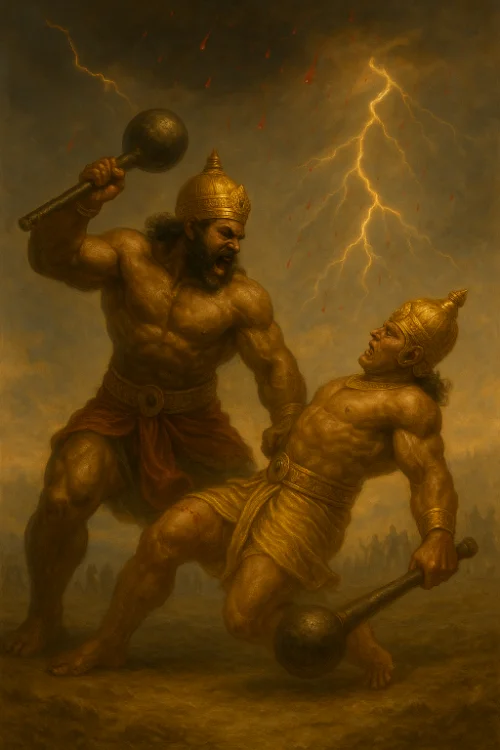
Mahābhārata - Shalya Parva
Chapter 58 - The Fall of Duryodhana
संजय उवाच
समुदीर्णं ततो दृष्ट्वा संग्रामें कुरुमुख्ययोः ।
अथाब्रवीदर्जुनस्तु वासुदेवं यशस्विनम् ॥ १ ॥
अनयोर्वीरयोर्युद्धे को ज्यायान् भवतो मतः ।
कस्य वा को गुणो भूयानेतद् वद जनार्दन ॥ २ ॥
saṃjaya uvāca
samudīrṇaṃ tato dṛṣṭvā saṃgrāmeṃ kurumukhyayoḥ |
athābravīdarjunastu vāsudevaṃ yaśasvinam || 1 ||
anayorvīrayoryuddhe ko jyāyān bhavato mataḥ |
kasya vā ko guṇo bhūyānetad vada janārdana || 2 ||
Sanjaya said Witnessing that fierce combat between those two foremost warriors of the Kuru race, Arjuna then addressed Vasudeva, the illustrious one, and said—
"Who, among these two mighty heroes, do you consider superior? Whose virtues, O Janārdana, surpass the other's? Pray, tell me!"
वासुदेव उवाच
उपदेशोऽनयोस्तुल्यो भीमस्तु बलवत्तरः ।
कृती यत्नपरस्त्वेष धार्तराष्ट्रो वृकोदरात् ॥ ३ ॥
vāsudeva uvāca
upadeśo’nayostulyo bhīmastu balavattaraḥ |
kṛtī yatnaparastveṣa dhārtarāṣṭro vṛkodarāt || 3 ||
Vasudeva said Their training is equal, yet Bhīma surpasses in sheer strength. Duryodhana, however, is more skilled and exerts greater effort in battle.
भीमसेनस्तु धर्मेण युद्ध्यमानो न जेष्यति ।
अन्यायेन तु युध्यन् वै हन्यादेव सुयोधनम् ॥ ४ ॥
bhīmasenastu dharmeṇa yuddhyamāno na jeṣyati |
anyāyena tu yudhyan vai hanyādeva suyodhanam || 4 ||
If Bhīmasena fights strictly by the code of righteousness, he will not prevail. But if he resorts to unfair means, he will certainly slay Suyodhana.
मायया निर्जिता देवैरसुरा इति नः श्रुतम् ।
विरोचनस्तु शक्रेण मायया निर्जितः स वै ॥ ५ ॥
māyayā nirjitā devairasurā iti naḥ śrutam |
virocanastu śakreṇa māyayā nirjitaḥ sa vai || 5 ||
We have heard how the gods of old conquered the Asuras through guile. Was not Virocana himself deceived and defeated by Śakra?
मायया चाक्षिपत् तेजो वृत्रस्य बलसूदनः ।
तस्मान्मायामयं भीम आतिष्ठतु पराक्रमम् ॥ ६ ॥
māyayā cākṣipat tejo vṛtrasya balasūdanaḥ |
tasmānmāyāmayaṃ bhīma ātiṣṭhatu parākramam || 6 ||
Was not Vṛtra’s radiance subdued by Indra through deception? Therefore, Bhīma must now unleash his might using similar craft!
प्रतिज्ञातं च भीमेन द्यूतकाले धनंजय |
ऊरू भेत्स्यामि ते संख्ये गदयेति सुयोधनम् ॥ ७ ॥
pratijñātaṃ ca bhīmena dyūtakāle dhanaṃjaya |
ūrū bhetsyāmi te saṃkhye gadayeti suyodhanam || 7 ||
At the gambling hall, O Dhanañjaya, Bhīma made a solemn vow: 'With my mace, I shall shatter thy thighs in battle, O Suyodhana!'
सोऽयं प्रतिज्ञां तां चापि पालयत्वरिकर्षणः ।
मायाविनं तु राजानं माययैव निकृन्ततु ॥ ८ ॥
so’yaṃ pratijñāṃ tāṃ cāpi pālayatvarikarṣaṇaḥ |
māyāvinaṃ tu rājānaṃ māyayaiva nikṛntatu || 8 ||
Let this tiger among men now fulfill that pledge! Let him vanquish this deceitful king through the very means of deception!
यद्येष बलमास्थाय न्यायेन प्रहरिष्यति ।
विषमस्थस्ततो राजा भविष्यति युधिष्ठिरः ॥ ९ ॥
yadyeṣa balamāsthāya nyāyena prahariṣyati |
viṣamasthastato rājā bhaviṣyati yudhiṣṭhiraḥ || 9 ||
If Bhīma, relying on strength alone, attacks fairly, then Yudhiṣṭhira will be placed in a disadvantageous position as king, and his claim to the throne will be jeopardized!
पुनरेव तु वक्ष्यामि पाण्डवेय निबोध मे ।
धर्मराजापराधेन भयं नः पुनरागतम् ॥ १० ॥
punareva tu vakṣyāmi pāṇḍaveya nibodha me |
dharmarājāparādhena bhayaṃ naḥ punarāgatam || 10 ||
I say it again, O son of Pandu, listen carefully! Through the fault of King Yudhishthira alone, danger has once again returned upon us.
कृत्वा हि सुमहत् कर्म हत्वा भीष्ममुखान् कुरून् ।
जयः प्राप्तो यशः प्राग्र्यं वैरं च प्रतियातितम् ॥ ११॥
kṛtvā hi sumahat karma hatvā bhīṣmamukhān kurūn |
jayaḥ prāpto yaśaḥ prāgryaṃ vairaṃ ca pratiyātitam || 11||
Having performed mighty deeds by slaying Bhishma and the other foremost Kurus, victory had been secured, supreme glory attained, and enmity nearly extinguished.
तदेवं विजय: प्राप्तः पुनः संशयितः कृतः ।
अबुद्धिरेषा महती धर्मराजस्य पाण्डव ॥ १२ ॥
यदेकविजये युद्धं पाणितं घोरमीद्दशम् ।
सुयोधनः कृती वीर एकायनगतस्तथा।। १३ ।।
tadevaṃ vijaya: prāptaḥ punaḥ saṃśayitaḥ kṛtaḥ |
abuddhireṣā mahatī dharmarājasya pāṇḍava || 12 ||
yadekavijaye yuddhaṃ pāṇitaṃ ghoramīddaśam |
suyodhanaḥ kṛtī vīra ekāyanagatastathā|| 13 ||
Thus, though victory had been achieved, once more it has been placed in doubt! This, O Pandava, is a grave error of Yudhishthira’s judgment. Why was this terrible duel allowed, where everything now hinges on a single combatant? Duryodhana, however, is skilled and a warrior of unwavering determination.
अपि चोशनसा गीत: श्रूयतेऽयं पुरातनः ।
श्लोकस्तत्त्वार्थसहितस्तन्मे निगदतः शृणु ॥ १४ ॥
api cośanasā gīta: śrūyate’yaṃ purātanaḥ |
ślokastattvārthasahitastanme nigadataḥ śṛṇu || 14 ||
Moreover, a verse of profound truth, uttered by the ancient sage Ushanas (also known as Śukra), is well known. Listen now as I recite it to you, along with its deeper meaning.
पुनरावर्तमानानां भग्नानां जीवितैषिणाम् ।
भेतव्यपरिशेषाणामेकायनगता हि ते ॥ १५ ॥
punarāvartamānānāṃ bhagnānāṃ jīvitaiṣiṇām |
bhetavyapariśeṣāṇāmekāyanagatā hi te || 15 ||
Those who, though routed and seeking survival, return to the battlefield again should still be feared, for they fight with unwavering, single-minded determination.
साहसोत्पतितानां च निराशानां च जीविते ।
न शक्यमग्रतः स्थातुं शक्रेणापि धनंजय ॥ १६ ॥
sāhasotpatitānāṃ ca nirāśānāṃ ca jīvite |
na śakyamagrataḥ sthātuṃ śakreṇāpi dhanaṃjaya || 16 ||
Even Shakra (Indra) himself would find it impossible to withstand the reckless onslaught of warriors who, having abandoned all hope of life, rise again in fearless fury!
सुयोधनमिमं भग्नं हतसैन्यं हृदं गतम् ।
पराजितं वनप्रेप्सुं निराशं राज्यलम्भने ॥ १७॥
को वेष संयुगे प्राज्ञः पुनर्द्वन्द्वे समाह्वयेत् ।
अपि नो निर्जितं राज्यं न हरेत सुयोधनः ॥ १८ ॥
suyodhanamimaṃ bhagnaṃ hatasainyaṃ hṛdaṃ gatam |
parājitaṃ vanaprepsuṃ nirāśaṃ rājyalambhane || 17||
ko veṣa saṃyuge prājñaḥ punardvandve samāhvayet |
api no nirjitaṃ rājyaṃ na hareta suyodhanaḥ || 18 ||
Behold this Suyodhana—routed, his army slain, forced to take refuge in a lake, utterly defeated, despairing, and ready to retire into the forest! What wise man would now challenge such a broken warrior to a duel? Could it be that he might yet snatch away the kingdom we have already won?
यस्त्रयोदशवर्षाणि गदया कृतनिश्रमः ।
चरत्यूर्ध्वं च तिर्यक् च भीमसेनजिघांसया ॥ १९ ॥
yastrayodaśavarṣāṇi gadayā kṛtaniśramaḥ |
caratyūrdhvaṃ ca tiryak ca bhīmasenajighāṃsayā || 19 ||
For thirteen years, he has toiled tirelessly with the mace, leaping high and moving sideways, all to slay Bhimasena!
एनं चेन महाबाहुरन्यायेन हनिष्यति ।
एष वः कौरवो राजा धार्तराष्ट्रो भविष्यति ॥ २० ॥
धनंजयस्तु श्रुत्वैतत् केशवस्य महात्मनः ।
प्रेक्षतो भीमसेनस्य सव्यमूरुमताडयत् ॥ २१ ॥
enaṃ cena mahābāhuranyāyena haniṣyati |
eṣa vaḥ kauravo rājā dhārtarāṣṭro bhaviṣyati || 20 ||
dhanaṃjayastu śrutvaitat keśavasya mahātmanaḥ |
prekṣato bhīmasenasya savyamūrumatāḍayat || 21 ||
If the mighty-armed Bhima does not strike him unfairly, then this son of Dhritarashtra shall remain the ruler of the Kauravas!
Hearing these words of the illustrious Keshava, Dhananjaya, while Bhimasena looked on, struck his own left thigh, signaling him.
गृह्य संज्ञां ततो भीमो गदया व्यचरद् रणे ।
मण्डलानि विचित्राणि यमकानीतराणि च ॥ २२ ॥
gṛhya saṃjñāṃ tato bhīmo gadayā vyacarad raṇe |
maṇḍalāni vicitrāṇi yamakānītarāṇi ca || 22 ||
Understanding that sign, Bhima began maneuvering with his mace, executing intricate circles and other diverse movements on the battlefield.
दक्षिणं मण्डलं सव्यं गोमूत्रकमथापि च।
व्यचरत् पाण्डवो राजन्नरिं सम्मोहयन्निव ॥ २३ ॥
dakṣiṇaṃ maṇḍalaṃ savyaṃ gomūtrakamathāpi ca|
vyacarat pāṇḍavo rājannariṃ sammohayanniva || 23 ||
Executing the rightward Mandala, then the leftward, and also the Gomūtraka maneuver, the son of Pandu moved about, seemingly confounding his adversary.
तथैव तव पुत्रोऽपि गदामार्गविशारदः ।
व्यचरल्लघु चित्रं च भीमसेनजिघांसया ॥ २४॥
tathaiva tava putro’pi gadāmārgaviśāradaḥ |
vyacarallaghu citraṃ ca bhīmasenajighāṃsayā || 24||
Likewise, your son, O king, skilled in the art of mace combat, moved swiftly and skillfully, intent on slaying Bhimasena.
आधुन्वन्तो गदे घोरे चन्दनागरुरूषिते ।
वैरस्यान्तं परीप्सन्तौ रणे क्रुद्धाविवान्तकौ ॥ २५ ॥
ādhunvanto gade ghore candanāgarurūṣite |
vairasyāntaṃ parīpsantau raṇe kruddhāvivāntakau || 25 ||
Whirling their formidable maces, smeared with sandal and fragrant aloe, the two warriors, furious as Yama himself, sought to end their long-standing enmity in battle.
अन्योन्यं तौ जिघांसन्तौ प्रवीरौ पुरुषर्षभौ ।
युयुधाते गरुत्मन्तौ तथा नागामिषैषिणौ ॥ २६ ॥
anyonyaṃ tau jighāṃsantau pravīrau puruṣarṣabhau |
yuyudhāte garutmantau tathā nāgāmiṣaiṣiṇau || 26 ||
Both longing for each other’s destruction, those two foremost warriors among men fought like two Garudas vying for the same prey.
मण्डलानि विचित्राणि चरतोर्नृपभीमयोः ।
गदासम्पात जास्तत्र प्रजज्ञुः पावकार्चिषः ॥ २७॥
maṇḍalāni vicitrāṇi caratornṛpabhīmayoḥ |
gadāsampāta jāstatra prajajñuḥ pāvakārciṣaḥ || 27||
As the king and Bhima moved in intricate circles, their maces clashed with such force that they emitted sparks like flames of fire.
समं प्रहरतोस्तत्र शूरयोर्बलिनोर्मृधे ।
क्षुब्धयोर्वायुना राजन् द्वयोरिव समुद्रयोः ॥ २८ ॥
samaṃ praharatostatra śūrayorbalinormṛdhe |
kṣubdhayorvāyunā rājan dvayoriva samudrayoḥ || 28 ||
Both mighty warriors, striking one another with equal force in that battle, resembled, O king, two storm-tossed oceans agitated by violent winds.
तयोः प्रहरतोस्तुल्यं मत्तकुञ्जरयोरिव ।
गदानिर्घातसंहृादः प्रहाराणामजायत॥ २९ ॥
tayoḥ praharatostulyaṃ mattakuñjarayoriva |
gadānirghātasaṃhṛādaḥ prahārāṇāmajāyata|| 29 ||
As those two warriors struck each other with equal force, they resembled two infuriated elephants colliding. The deafening sound of their maces crashing against one another echoed like peals of thunder.
तस्मिंस्तदा सम्प्रहारे दारुणे संकुले भृशम्।
उभावपि परिश्रान्तौ युध्यमानावरिंदमौ ॥ ३० ॥
tasmiṃstadā samprahāre dāruṇe saṃkule bhṛśam|
ubhāvapi pariśrāntau yudhyamānāvariṃdamau || 30 ||
In that intense and dreadful duel, fraught with turmoil, both those great warriors and chastisers of foes gradually grew exhausted as they relentlessly fought on.
तौ मुहूर्तं समाश्वस्य पुनरेव परंतप ।
अभ्यहारयतां क्रुद्धो प्रगृह्य महती गदे ॥ ३१ ॥
tau muhūrtaṃ samāśvasya punareva paraṃtapa |
abhyahārayatāṃ kruddho pragṛhya mahatī gade || 31 ||
Resting for a brief moment, those two mighty warriors, scorcher of foes, seized their colossal maces again and, driven by rage, resumed their furious battle.
तयोः समभवद् युद्धं घोररूपमसंवृतम् ।
गदानिपातै राजेन्द्र तक्षतोर्वै परस्परम् ॥ ३२ ॥
tayoḥ samabhavad yuddhaṃ ghorarūpamasaṃvṛtam |
gadānipātai rājendra takṣatorvai parasparam || 32 ||
Their combat, O king, turned into a ferocious and unrestrained fight. As their maces struck each other with resounding force, their bodies bore wounds from the relentless blows.
समरे प्रद्रुतौ तौ तु वृषभाक्षौ तरस्विनौ ।
अन्योन्यं जघ्नतुर्वीरौ पङ्कस्थौ महिषाविव ॥ ३३ ॥
samare pradrutau tau tu vṛṣabhākṣau tarasvinau |
anyonyaṃ jaghnaturvīrau paṅkasthau mahiṣāviva || 33 ||
Both mighty warriors, with eyes like enraged bulls, charged at each other with great vigor, striking one another like two wild buffaloes locked in combat within a muddy field.
जर्जरीकृतसर्वाङ्गौ रुधिरेणाभिसम्प्लुतौ ।
दद्दशाते हिमवति पुष्पिताविव किंशुकौ ॥ ३४ ॥
jarjarīkṛtasarvāṅgau rudhireṇābhisamplutau |
daddaśāte himavati puṣpitāviva kiṃśukau || 34 ||
Their entire bodies were battered, bruised, and drenched in blood. They stood facing each other, appearing like two blossoming Kiṃśuka trees on the slopes of the Himavat, their vibrant red flowers mimicking the blood that covered them.
दुर्योधनस्तु पार्थेन विवरे सम्प्रदर्शिते ।
ईषदुन्मिषमाणस्तु सहसा प्रससार ॥ ३५॥
duryodhanastu pārthena vivare sampradarśite |
īṣadunmiṣamāṇastu sahasā prasasāra || 35||
Noticing a small opening presented by Bhimasena in battle, Duryodhana, ever watchful, swiftly advanced to seize the opportunity.
तमभ्यागतं प्राज्ञो रणे प्रेक्ष्य वृकोदरः ।
अवाक्षिपद् गदां तस्मिन् वेगेन महता बली ॥ ३६॥
tamabhyāgataṃ prājño raṇe prekṣya vṛkodaraḥ |
avākṣipad gadāṃ tasmin vegena mahatā balī || 36||
Observing his foe rush toward him in battle, the wise and mighty Vrikodara (Bhima) quickly hurled his powerful mace with tremendous force.
आक्षिपन्तं तु तं दृष्ट्वा पुत्रस्तव विशाम्पते।
अवासर्पत्ततः स्थानात् सा मोघा न्यपतद् भुवि ॥ ३७॥
ākṣipantaṃ tu taṃ dṛṣṭvā putrastava viśāmpate|
avāsarpattataḥ sthānāt sā moghā nyapatad bhuvi || 37||
Your son, O king, seeing the mighty Bhima hurl his mace, swiftly moved aside from his position, causing the weapon to miss its mark and strike the ground in vain.
मोक्षयित्वा प्रहारं तं सुतस्तव सुसम्भ्रमात्।
भीमसेनं त गदया प्राहरत् कुरुसत्तम ॥ ३८॥
mokṣayitvā prahāraṃ taṃ sutastava susambhramāt|
bhīmasenaṃ ta gadayā prāharat kurusattama || 38||
Having skillfully evaded that attack, your son, O best of the Kurus, swiftly struck Bhimasena with his mace, delivering a powerful blow.
तस्य विस्यन्दमानेन रुधिरेणामितौजसः ।
प्रहारगुरुपाताच मूछेंव समजायत ।। ३९ ।।
tasya visyandamānena rudhireṇāmitaujasaḥ |
prahāragurupātāca mūcheṃva samajāyata || 39 ||
As blood flowed profusely from Bhima's wound due to the might of that blow, the great warrior momentarily reeled, appearing to be on the verge of losing consciousness.
दुर्योधनो न तं वेद पीडितं पाण्डवं रणे ।
धारयामास भीमोऽपि शरीरमतिपीडितम् ॥ ४० ॥
duryodhano na taṃ veda pīḍitaṃ pāṇḍavaṃ raṇe |
dhārayāmāsa bhīmo’pi śarīramatipīḍitam || 40 ||
Duryodhana, however, did not perceive that Pandu’s son was deeply afflicted in battle. Summoning all his strength, Bhima bore the intense pain that wracked his body and remained steadfast.
अमन्यत स्थितं ह्येनं प्रहरिष्यन्तमाहवे ।
अतो न प्राहरत् तस्मै पुनरेव तवात्मजः ॥ ४१ ॥
amanyata sthitaṃ hyenaṃ prahariṣyantamāhave |
ato na prāharat tasmai punareva tavātmajaḥ || 41 ||
Thinking that Bhima still stood firm and was ready to strike back, your son, O King, refrained from delivering another blow.
ततो मुहूर्तमाश्वस्य दुर्योधनमुपस्थितम् ।
वेगेनाभ्यपद् राजन् भीमसेनः प्रतापवान् ॥ ४२ ॥
tato muhūrtamāśvasya duryodhanamupasthitam |
vegenābhyapad rājan bhīmasenaḥ pratāpavān || 42 ||
After regaining his breath for a brief moment, the mighty Bhimasena, burning with fury, rushed toward Duryodhana, who stood before him, O King.
तमापतन्तं सम्प्रेक्ष्य संरब्धममितौजसम् ।
मोघमस्य प्रहारं तं चिकीर्षुर्भरतर्षभ ॥ ४३ ॥
अवस्थाने मतिं कृत्वा पुत्रस्तव महामनाः ।
इयेषोत्पतितुं राजञ्छलयिष्यन् वृकोदरम्॥४४॥
tamāpatantaṃ samprekṣya saṃrabdhamamitaujasam |
moghamasya prahāraṃ taṃ cikīrṣurbharatarṣabha || 43 ||
avasthāne matiṃ kṛtvā putrastava mahāmanāḥ |
iyeṣotpatituṃ rājañchalayiṣyan vṛkodaram||44||
Seeing Bhimasena charging at him with great speed and immeasurable energy, your high-souled son, O Bharata, sought to render his opponent’s attack futile. Desiring to beguile Vrikodara, he resolved to employ the maneuver known as Avasthāna, leaping upwards at the precise moment.
अबुद्ध्यद् भीमसेनस्तु राज्ञस्तस्य चिकीर्षितम् ।
अथास्य समभिद्रुत्य समुत्क्रुश्य च सिंहवत् ॥ ४५ ॥
सृत्या वञ्चयतो राजन् पुनरेवोत्पतिष्यतः ।
ऊरुभ्यां प्राहिणोद् राजन् गदां वेगेन पाण्डवः ॥ ४६॥
abuddhyad bhīmasenastu rājñastasya cikīrṣitam |
athāsya samabhidrutya samutkruśya ca siṃhavat || 45 ||
sṛtyā vañcayato rājan punarevotpatiṣyataḥ |
ūrubhyāṃ prāhiṇod rājan gadāṃ vegena pāṇḍavaḥ || 46||
Bhimasena, however, fully understood Duryodhana’s intent. As the Kuru prince attempted to leap up once more, the mighty Bhima, with a resounding roar like that of a lion, lunged forward with supreme agility and hurled his mace with tremendous force at his adversary’s thighs.
सा वज्रनिष्पेषसमा प्रहिता भीमकर्मणा ।
ऊरू दुर्योधनस्याथ बभञ्ज प्रियदर्शनी ॥ ४७ ॥
sā vajraniṣpeṣasamā prahitā bhīmakarmaṇā |
ūrū duryodhanasyātha babhañja priyadarśanī || 47 ||
That mighty blow, equal in power to the stroke of Indra’s thunderbolt, struck Duryodhana’s handsome thighs, shattering them completely under the impact of Bhima’s tremendous strength.
स पपात नरव्याघ्रो वसुधामनुनादयन् ।
भग्नोरुर्भीमसेनेन पुत्रस्तव महीपते ॥ ४८ ॥
sa papāta naravyāghro vasudhāmanunādayan |
bhagnorurbhīmasenena putrastava mahīpate || 48 ||
Your son, O King, that tiger among men, fell to the ground with a resounding crash as the earth trembled beneath him. His thighs, shattered by Bhimasena, rendered him incapable of standing.
ववुर्वाता: सनिर्घाताः पांशुवर्षं पपात च ।
चचाल पृथिवी चापि सवृक्षक्षुपपर्वता ॥ ४९ ॥
vavurvātā: sanirghātāḥ pāṃśuvarṣaṃ papāta ca |
cacāla pṛthivī cāpi savṛkṣakṣupaparvatā || 49 ||
As the prince fell, violent winds howled, accompanied by deafening thunder. A storm of dust rained down, and the earth itself trembled, shaking the trees, bushes, and mountains as if mourning the fate of Duryodhana.
तस्मिन् निपतिते वीरे पत्यौ सर्वमहीक्षिताम् ।
महास्वना पुनर्दीता सनिर्घाता भयंकरी ॥ ५० ॥
पपात चोल्का महती पतिते पृथिवीपतौ ।
tasmin nipatite vīre patyau sarvamahīkṣitām |
mahāsvanā punardītā sanirghātā bhayaṃkarī || 50 ||
papāta colkā mahatī patite pṛthivīpatau |
When that mighty hero, the lord of all kings, fell to the ground, a fierce tempest arose, howling with deafening roars and dreadful thunderclaps. Great and fiery meteors, ominous and fearsome, blazed across the sky and fell upon the earth as if lamenting the fall of the Kuru monarch.
तथा शोणितवर्षं च पांशुवर्षं च भारत ।। ५१ ।।
ववर्ष मघवांस्तत्र तव पुत्रे निपातिते ।
tathā śoṇitavarṣaṃ ca pāṃśuvarṣaṃ ca bhārata || 51 ||
vavarṣa maghavāṃstatra tava putre nipātite |
O Bharata, as your son lay fallen upon the earth, Indra caused showers of blood and dust to rain down from the heavens, as if the very elements wept for him.
यक्षाणां राक्षसानां च पिशाचानां तथैव च ॥ ५२ ॥
अन्तरिक्षे महानादः श्रूयते भतरर्षभ ।
yakṣāṇāṃ rākṣasānāṃ ca piśācānāṃ tathaiva ca || 52 ||
antarikṣe mahānādaḥ śrūyate bhatararṣabha |
A dreadful uproar was heard in the skies, O best of Bharatas! The cries of Yakshas, Rakshasas, and Pisachas echoed from the firmament, as if the spirits of the netherworld exulted over Duryodhana’s downfall.
तेन शब्देन घोरेण मृगाणामथ पक्षिणाम् ॥ ५३ ॥
जज्ञे घोरतरः शब्दो बहूनां सर्वतोदिशम् ।
tena śabdena ghoreṇa mṛgāṇāmatha pakṣiṇām || 53 ||
jajñe ghorataraḥ śabdo bahūnāṃ sarvatodiśam |
At that terrible sound, wild beasts and birds across the land cried out in fear, their howls and screeches resounding in all directions, amplifying the horror of that dreadful moment.
ये तत्र वाजिनः शेषा गजाश्च मनुजैः सह ॥ ५४ ॥
मुमुचुस्ते महानादं तव पुत्रे निपातिते ।
भेरीशङ्खमृदङ्गानामभवच स्वनो महान् ॥ ५५ ॥
ye tatra vājinaḥ śeṣā gajāśca manujaiḥ saha || 54 ||
mumucuste mahānādaṃ tava putre nipātite |
bherīśaṅkhamṛdaṅgānāmabhavaca svano mahān || 55 ||
The remaining warriors, both horsemen and elephant-riders, along with the foot soldiers, raised a great and sorrowful cry at the fall of your son. The blaring of conchs, the beating of drums, and the deep rumbling of war tom-toms filled the air, creating a tumultuous and mournful symphony.
अन्तर्भूमिगतश्चैव तव पुत्रे निपातिते ।
बहुपादैर्बहुभुजैः कबन्धैर्घोरदर्शनैः ॥ ५६ ॥
नृत्यद्भिर्भयदैर्व्याप्ता दिशस्तत्राभवन् नृप ।
antarbhūmigataścaiva tava putre nipātite |
bahupādairbahubhujaiḥ kabandhairghoradarśanaiḥ || 56 ||
nṛtyadbhirbhayadairvyāptā diśastatrābhavan nṛpa |
O King, upon the fall of your son, a dreadful sight manifested upon the land. From beneath the earth arose hideous headless beings, bearing many arms and legs. These terrifying spirits, monstrous in form, danced and writhed across the battlefield, striking horror into the hearts of all who beheld them.
ध्वजवन्तोऽस्त्रवन्तश्च शस्त्रवन्तस्तथैव च ॥ ५७॥
प्राकम्पन्त ततो राजंस्तव पुत्रे निपातिते ।
dhvajavanto’stravantaśca śastravantastathaiva ca || 57||
prākampanta tato rājaṃstava putre nipātite |
O King, warriors who stood bearing banners, wielding weapons, and holding mighty arms began to tremble uncontrollably, stricken with awe and fear at the fall of your son.
ह्रदाः कूपाश्च रुधिरमुद्वेमुर्नृपसत्तम ॥ ५८ ॥
नद्यश्च सुमहावेगाः प्रतिस्त्रोतोवहाऽभवन् ।
hradāḥ kūpāśca rudhiramudvemurnṛpasattama || 58 ||
nadyaśca sumahāvegāḥ pratistrotovahā’bhavan |
O best of kings! The lakes and wells on the battlefield began to vomit forth streams of blood. The great rivers, in a ghastly omen, reversed their currents and flowed against their natural course, as if mourning the slain prince.
पुँल्लिङ्गा इव नार्यस्तु स्त्रीलिङ्गाः पुरुषाभवन् ॥५९॥
दुर्योधने तदा राजन् पतिते तनये तव ।
puṁlliṅgā iva nāryastu strīliṅgāḥ puruṣābhavan ||59||
duryodhane tadā rājan patite tanaye tava |
O King, when your son Duryodhana fell, a strange illusion overtook all—women appeared like men, and men took on the semblance of women, as if the very nature of existence had been reversed in grief and shock.
दृष्ट्वा तानद्भुतोत्पातान् पञ्चालाः पाण्डवैः सह ॥ ६०॥
आविग्नमनसः सर्वे बभूवुर्भरतर्षभ ।
dṛṣṭvā tānadbhutotpātān pañcālāḥ pāṇḍavaiḥ saha || 60||
āvignamanasaḥ sarve babhūvurbharatarṣabha |
Beholding those astonishing and dreadful omens, the Panchalas and the Pandavas, O mighty Bharata, were struck with deep anxiety, their minds troubled by the unnatural signs that heralded the fall of the Kuru prince.
ययुर्देवा यथाकामं गन्धर्वाप्सरसस्तथा । ६१ ।।
कथयन्तोऽद्भुतं युद्धं सुतयोस्तव भारत ।
yayurdevā yathākāmaṃ gandharvāpsarasastathā | 61 ||
kathayanto’dbhutaṃ yuddhaṃ sutayostava bhārata |
The gods, departing as they pleased, left the battlefield, as did the Gandharvas and the celestial Apsaras, marveling and conversing amongst themselves about the wondrous battle fought between your sons, O Bharata.
तथैव सिद्धा राजेन्द्र तथा वातिकचारणाः ।
नरसिंह प्रशंसन्तौ विप्रजग्मुर्यथागतम् ॥ ६२ ॥
tathaiva siddhā rājendra tathā vātikacāraṇāḥ |
narasiṃha praśaṃsantau viprajagmuryathāgatam || 62 ||
Similarly, O king, the Siddhas, along with the great celestial seers—the Vatikas and Charanas—sang praises of those lion-hearted warriors. Then, having witnessed that extraordinary battle, they returned to their respective divine realms as they had come.
Full Synopsis of The Fall of Duryodhana
This passage from the Mahabharata describes the final mace duel between Bhima (Vrikodara) and Duryodhana (Suyodhana) at the end of the Kurukshetra War. It highlights the intensity of their battle, the strategies employed, and the moral ambiguities that arise in the pursuit of justice and vengeance.
Arjuna, observing the duel, asks Krishna to evaluate the two combatants. Krishna explains that while Bhima is physically stronger, Duryodhana possesses more excellent skills and years of rigorous training. Krishna also notes that a fair fight would likely favor Duryodhana, but Bhima's victory could only be assured through deception. Krishna reminds Arjuna of Bhima's vow to break Duryodhana's thighs, made years earlier after Draupadi's humiliation in the Kuru court. This moment calls for fulfilling that promise, even if it means bending the rules of mace combat.
As the duel progresses, both warriors display incredible skill and determination. They move in intricate patterns, their maces clashing with thunderous sounds that spark like lightning. The sheer ferocity of their strikes makes the ground tremble, and blood flows freely from their injuries. Each appears equally matched; trading blow for blow with neither willing to yield. Confident in his abilities, Duryodhana miscalculates Bhima's resilience after landing a powerful strike. Believing his opponent weakened, he refrains from pressing his advantage, allowing Bhima to recover and prepare for a counterattack.
At this moment, Arjuna gestures to Bhima, pointing at Duryodhana’s thighs as a reminder of his vow. Understanding the signal, Bhima roars like a lion and executes a decisive maneuver. Duryodhana, attempting to evade Bhima’s attack by leaping into the air, exposes his thighs. Seizing the opportunity, Bhima delivers a crushing blow with his mace, shattering Duryodhana’s thighs and bringing him down. The strike, though effective, violates the established rules of mace combat, further deepening the ethical complexity of the battle.
Duryodhana's fall unleashes apocalyptic omens. Fierce winds blow, the earth trembles, and blood rains from the skies. Lakes overflow, rivers flow backward, and unnatural phenomena terrify all who witness them. The Pandava army celebrates the victory, but the moment is tinged with unease as even the gods and celestial beings recognize the moral weight of what has transpired.
This climactic duel encapsulates the dualities of war: strength versus skill, righteousness versus pragmatism, and justice versus revenge. It marks the end of Duryodhana’s reign and solidifies the Pandavas’ victory, but not without leaving questions about the cost of such triumphs.