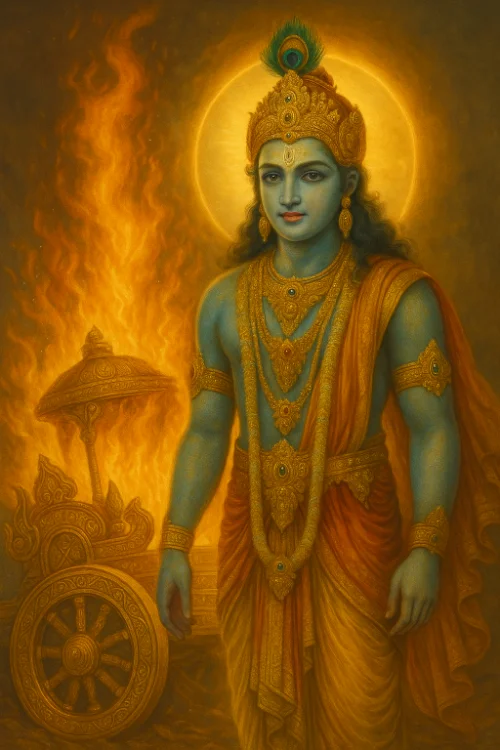
Mahābhārata - Shalya Parva
Chapter 62 - Yudhishthira Praises Krishna
संजय उवाच
ततस्ते प्रययुः सर्वे निवासाय महीक्षितः ।
शङ्खान् प्रध्मापयन्तो वै हृष्टाः परिघबाहवः ॥ १॥
saṃjaya uvāca
tataste prayayuḥ sarve nivāsāya mahīkṣitaḥ |
śaṅkhān pradhmāpayanto vai hṛṣṭāḥ parighabāhavaḥ || 1||
Sanjaya said Then, all those mighty kings, their arms strong as iron maces, overflowing with joy, departed to their tents while blowing their conchs in triumph.
पाण्डवान् गच्छतश्चापि शिबिरं नो विशाम्पते ।
महेष्वासोऽन्वगात् पश्चाद् युयुत्सुः सात्यकिस्तथा ॥ २ ॥
धृष्टद्युम्नः शिखण्डी च द्रौपदेयाश्च सर्वशः ।
सर्वे चान्ये महेष्वासाः प्रययुः शिविराण्युत ॥ ३ ॥
pāṇḍavān gacchataścāpi śibiraṃ no viśāmpate |
maheṣvāso’nvagāt paścād yuyutsuḥ sātyakistathā || 2 ||
dhṛṣṭadyumnaḥ śikhaṇḍī ca draupadeyāśca sarvaśaḥ |
sarve cānye maheṣvāsāḥ prayayuḥ śivirāṇyuta || 3 ||
As the Pāṇḍavas proceeded towards their camp, O King, the great bowman Yuyutsu followed them, along with Sātyaki, Dhṛṣṭadyumna, Śikhaṇḍī, and the sons of Draupadī. All the other mighty archers also departed for their tents.
ततस्ते प्राविशन् पार्था हतत्विट्कं हतेश्वरम् ।
दुर्योधनस्य शिविरं रङ्गवद्विसृते जने ॥ ४ ॥
tataste prāviśan pārthā hatatviṭkaṃ hateśvaram |
duryodhanasya śiviraṃ raṅgavadvisṛte jane || 4 ||
The Pāṇḍavas entered Duryodhana’s camp, now stripped of its former splendor, bereft of its master, and appearing like an abandoned arena after a great festival has ended.
गतोत्सवं पुरमिव हतनागमिव ह्रदम् ।
स्त्रीवर्षवरभूयिष्ठं वृद्धामात्यैरधिष्ठितम्॥ ५ ॥
gatotsavaṃ puramiva hatanāgamiva hradam |
strīvarṣavarabhūyiṣṭhaṃ vṛddhāmātyairadhiṣṭhitam|| 5 ||
It resembled a city after its grand festival had ended, or a lake deprived of its mighty elephants. The camp was now filled with women, eunuchs, and aged ministers, who sat in mourning.
तत्रैतान् पर्युपातिष्ठन् दुर्योधनपुरःसराः ।
कृताञ्जलिपुटा राजन् काषायमलिनाम्बराः ॥ ६ ॥
tatraitān paryupātiṣṭhan duryodhanapuraḥsarāḥ |
kṛtāñjalipuṭā rājan kāṣāyamalināmbarāḥ || 6 ||
There, those who had once followed Duryodhana with reverence and pride now stood before the Pāṇḍavas with folded hands, clad in dust-stained, saffron robes, mourning their fallen lord.
शिबिरं समनुप्राप्य कुरुराजस्य पाण्डवा: ।
अवतेरुर्महाराज रथेभ्यो रथसत्तमाः ॥ ७ ॥
śibiraṃ samanuprāpya kururājasya pāṇḍavā: |
avaterurmahārāja rathebhyo rathasattamāḥ || 7 ||
Upon reaching the pavilion of the Kuru king, the illustrious Pāṇḍavas, foremost among chariot-warriors, descended from their chariots, O great king.
ततो गाण्डीवधन्वानमभ्यभाषत केशवः ।
स्थितः प्रियहिते नित्यमतीव भरतर्षभ ॥ ८॥
अवरोपय गाण्डीवमक्षयौ च महेषुधी ।
अथाहमवरोक्ष्यामि पश्चाद् भरतसत्तम ॥ ९ ॥
tato gāṇḍīvadhanvānamabhyabhāṣata keśavaḥ |
sthitaḥ priyahite nityamatīva bharatarṣabha || 8||
avaropaya gāṇḍīvamakṣayau ca maheṣudhī |
athāhamavarokṣyāmi paścād bharatasattama || 9 ||
Then Keśava, ever devoted to the well-being of his dear friend, spoke to Dhananjaya, wielder of the Gāṇḍīva, saying: ‘O best of the Bharatas, first lay down your Gāṇḍīva bow and your two inexhaustible quivers. Only after you descend, shall I step down from the chariot.’
स्वयं चैवावरोह त्वमेतच्छ्रेयस्तवानघ ।
तच्चाकरोत् तथा वीरः पाण्डुपुत्रो धनंजयः ॥ १० ॥
svayaṃ caivāvaroha tvametacchreyastavānagha |
taccākarot tathā vīraḥ pāṇḍuputro dhanaṃjayaḥ || 10 ||
‘Descend first, O sinless one, for this shall be for your welfare!’ Hearing this, the valiant son of Pāṇḍu, Dhananjaya, obeyed and descended as instructed.
अथ पश्चात् ततः कृष्णो रश्मीनुत्सृज्य वाजिनाम् ।
अवरोहत मेधावी रथाद् गाण्डीवधन्वनः ॥ ११॥
atha paścāt tataḥ kṛṣṇo raśmīnutsṛjya vājinām |
avarohata medhāvī rathād gāṇḍīvadhanvanaḥ || 11||
Then, after releasing the reins of the celestial horses, the wise Keśava, divine in knowledge, descended from Arjuna’s chariot.
अथातवतीर्णे भूतानामीश्वरे सुमहात्मनि ।
कपरन्तर्दधे दिव्य ध्वजो गाण्डीवधन्वनः ॥ १२ ॥
athātavatīrṇe bhūtānāmīśvare sumahātmani |
kaparantardadhe divya dhvajo gāṇḍīvadhanvanaḥ || 12 ||
As soon as Keśava, the Supreme Lord of all beings, had descended from the chariot, the celestial banner bearing the emblem of Hanumān, which had adorned Arjuna's chariot throughout the war, vanished into thin air.
सदग्धो द्रोणकर्णाभ्यां दिव्यैरस्त्रैर्महारथः ।
अथादीप्तोऽग्निना ह्याशु प्रजज्वाल महीपते ॥ १३ ॥
sadagdho droṇakarṇābhyāṃ divyairastrairmahārathaḥ |
athādīpto’gninā hyāśu prajajvāla mahīpate || 13 ||
The mighty chariot of Arjuna, which had already been scorched by the celestial weapons of Drona and Karna, immediately burst into flames, O king, as soon as Keśava stepped down.
सोपासङ्गः सरश्मिश्च साश्वः सयुगबन्धुरः ।
भस्मीभूतोऽपतद्भूमौ रथो गाण्डीवधन्वनः ॥ १४ ॥
sopāsaṅgaḥ saraśmiśca sāśvaḥ sayugabandhuraḥ |
bhasmībhūto’patadbhūmau ratho gāṇḍīvadhanvanaḥ || 14 ||
With its harness, reins, celestial steeds, yokes, and fittings, Arjuna’s chariot was entirely reduced to ashes, collapsing to the ground as a heap of cinders.
तं तथा भस्मभूतं तु दृष्ट्वा पाण्डुसुताः प्रभो ।
अभवन् विस्मिता राजन्नर्जुनश्चेदमब्रवीत् ।। १५ ।।
कृताञ्जलिः सप्रणयं प्रणिपत्याभिवाद्य ह ।
गोविन्द कस्माद् भगवन् रथोदग्धोऽयमग्निना ॥ १६ ॥
taṃ tathā bhasmabhūtaṃ tu dṛṣṭvā pāṇḍusutāḥ prabho |
abhavan vismitā rājannarjunaścedamabravīt || 15 ||
kṛtāñjaliḥ sapraṇayaṃ praṇipatyābhivādya ha |
govinda kasmād bhagavan rathodagdho’yamagninā || 16 ||
Seeing the chariot reduced to ashes, O King, the sons of Pāṇḍu were struck with wonder. Filled with awe, Arjuna bowed reverently before Krishna, and with folded hands and devotion in his heart, asked:
'O Govinda, O Supreme Lord, why has this chariot been consumed by fire?'
किमेतन्महदाश्चर्यमभवद् यदुनन्दन।
तन्मे ब्रूहि महाबाहो श्रोतव्यं यदि मन्यसे ॥ १७ ॥
kimetanmahadāścaryamabhavad yadunandana|
tanme brūhi mahābāho śrotavyaṃ yadi manyase || 17 ||
What is this great wonder that has occurred, O delight of the Yadus? Tell me about it, O mighty-armed one, if you think it should be heard.
वासुदेव उवाच
अस्त्रैर्बहुविधैर्दग्धः पूर्वमेवायमर्जुन ।
मदधिष्ठितत्त्वात् समरे न विशीर्णः परंतप ॥ १८ ॥
vāsudeva uvāca
astrairbahuvidhairdagdhaḥ pūrvamevāyamarjuna |
madadhiṣṭhitattvāt samare na viśīrṇaḥ paraṃtapa || 18 ||
Vāsudeva said This chariot, O Arjuna, had already been consumed by the immense power of celestial weapons, having endured the fire of countless divine missiles launched by warriors like Drona and Karna.
Yet, it was only because of My presence upon it that it remained intact and did not disintegrate in battle, O scorcher of foes!
इदानीं तु विशीर्णोऽयं दग्धो ब्रह्मास्त्रतेजा ।
या विमुक्तः कौन्तेय त्वय्यद्य कृतकर्मणि ॥ १९ ॥
idānīṃ tu viśīrṇo’yaṃ dagdho brahmāstratejā |
yā vimuktaḥ kaunteya tvayyadya kṛtakarmaṇi || 19 ||
But now, O son of Kunti, as your task is complete, the Brahmāstra’s power that had previously burned it has been released, and the chariot has been reduced to ashes as was destined!
ईषदुत्स्मयमास्तु भगवान् केशवोऽरिहा ।
परिष्वज्य च राजानं युधिष्ठिरमभाषत ॥ २० ॥
दिष्ट्या जयसि कौन्तेय दिष्ट्याते शत्रवो जिताः ।
दिया गाण्डीवधन्वा च भीमसेनश्च पाण्डवः ॥ २१ ॥
त्वं चापि कुशली राजन् माद्रीपुत्रो च पाण्डवौ ।
मुक्ता वीरक्षयादस्मात् संग्रामान्निहतद्विषः ॥ २२ ॥
क्षिप्रमुत्तरकालानि कुरु कार्याणि भारत।
उपायतमुपप्लव्यं सह गाण्डीवधन्वना ॥ २३ ॥
īṣadutsmayamāstu bhagavān keśavo’rihā |
pariṣvajya ca rājānaṃ yudhiṣṭhiramabhāṣata || 20 ||
diṣṭyā jayasi kaunteya diṣṭyāte śatravo jitāḥ |
diyā gāṇḍīvadhanvā ca bhīmasenaśca pāṇḍavaḥ || 21 ||
tvaṃ cāpi kuśalī rājan mādrīputro ca pāṇḍavau |
muktā vīrakṣayādasmāt saṃgrāmānnihatadviṣaḥ || 22 ||
kṣipramuttarakālāni kuru kāryāṇi bhārata|
upāyatamupaplavyaṃ saha gāṇḍīvadhanvanā || 23 ||
Then, the Supreme Lord, Keśava, the destroyer of foes, with a slight smile of divine wisdom, embraced King Yudhiṣṭhira and spoke to him.
By good fortune, O Kaunteya, you have attained victory! By good fortune, your enemies have been vanquished! By good fortune, the wielder of Gāṇḍīva (Arjuna) and Bhīmasena have survived after slaying their foes!
You too, O King, along with the sons of Mādrī (Nakula and Sahadeva), have survived this fierce war of annihilation, having slain your enemies! O Bharata, without delay, attend to the necessary post-war duties.
Return to Upaplavya with the wielder of Gāṇḍīva (Arjuna), and prepare for the rule of the kingdom that is now rightfully yours!
आनीय मधुपर्कं मां यत् पुरा त्वमवोचथाः ।
एष भ्राता सखा चैव तव कृष्ण धनंजयः ॥ २४ ॥
रक्षितव्यो महाबाहो सर्वास्वापत्स्विति प्रभो ।
तव चैव ब्रुवाणस्य तथेत्येवाहमब्रुवम् ॥ २५ ॥
स सव्यसाची गुप्तस्ते विजयी च जनेश्वर ।
ānīya madhuparkaṃ māṃ yat purā tvamavocathāḥ |
eṣa bhrātā sakhā caiva tava kṛṣṇa dhanaṃjayaḥ || 24 ||
rakṣitavyo mahābāho sarvāsvāpatsviti prabho |
tava caiva bruvāṇasya tathetyevāhamabruvam || 25 ||
sa savyasācī guptaste vijayī ca janeśvara |
O mighty-armed king! When I first arrived at Upaplavya, you offered me the traditional Madhuparka (honeyed offering) and spoke these words:
O Kṛṣṇa, this Dhanañjaya (Arjuna) is your brother and dearest friend. Protect him in all dangers!
At that time, O lord of men, I solemnly replied: ‘So be it!’
Thus, under my protection, the Savyasācin (Arjuna, the ambidextrous bowman) remained unscathed and emerged victorious in battle, O ruler of men!"
भ्रातृभिः सह राजेन्द्र शूरः सत्यपराक्रमः ॥ २६ ॥
मुक्तो वीरक्षयादस्मात् संग्रामाल्लोमहर्षणात् ।
एवमुक्तस्तु कृष्णेन धर्मराजो युधिष्ठिरः ॥ २७ ॥
हृष्टरोमा महाराज प्रत्युवाच जनार्दनम् ।
bhrātṛbhiḥ saha rājendra śūraḥ satyaparākramaḥ || 26 ||
mukto vīrakṣayādasmāt saṃgrāmāllomaharṣaṇāt |
evamuktastu kṛṣṇena dharmarājo yudhiṣṭhiraḥ || 27 ||
hṛṣṭaromā mahārāja pratyuvāca janārdanam |
O King of Kings, that brave warrior, whose valor is ever truthful and steadfast, has, along with his brothers, been rescued from this great war, which brought destruction upon heroes and horripilation even to the fearless.
Hearing these words from Krishna, King Yudhiṣṭhira, with his hairs standing on end in awe, replied to Janārdana (Kṛṣṇa).
युधिष्ठिर उवाच
प्रमुक्तं द्रोणकर्णाभ्यां ब्रह्मास्त्रमरिमर्दन ॥ २८ ॥
कस्त्वदन्यः सहेत् साक्षादपि वज्री पुरंदरः ।
yudhiṣṭhira uvāca
pramuktaṃ droṇakarṇābhyāṃ brahmāstramarimardana || 28 ||
kastvadanyaḥ sahet sākṣādapi vajrī puraṃdaraḥ |
Yudhishthira said O destroyer of foes! Who else but you, O Kṛṣṇa, could have withstood the Brahmāstra weapons, discharged by Drona and Karna?
Not even Indra, the wielder of the thunderbolt (Vajra), could have endured them!
भवतस्तु प्रसादेन संशप्तकगणा जिताः ॥ २९ ॥
महारणगतः पार्थो यच नासीत् पराङ्मुखः ।
bhavatastu prasādena saṃśaptakagaṇā jitāḥ || 29 ||
mahāraṇagataḥ pārtho yaca nāsīt parāṅmukhaḥ |
It was only by your grace, O Keśava, that the fearsome Saṃśaptakas were defeated!
It was through your divine presence that Pārtha (Arjuna) never turned away from battle, even in the most dreadful encounters.
तथैव च महाबाहो पर्यायैर्बहुभिर्मया ॥ ३० ॥
कर्मणामनुसंतानं तेजसश्च गतीः शुभाः ।
उपप्लव्ये महषिर्मे कृष्णद्वैपायनोऽब्रवीत्॥ ३१ ॥
यतो धर्मस्ततः कृष्णो यतः कृष्णस्ततो जयः ।
tathaiva ca mahābāho paryāyairbahubhirmayā || 30 ||
karmaṇāmanusaṃtānaṃ tejasaśca gatīḥ śubhāḥ |
upaplavye mahaṣirme kṛṣṇadvaipāyano’bravīt|| 31 ||
yato dharmastataḥ kṛṣṇo yataḥ kṛṣṇastato jayaḥ |
O mighty-armed Kṛṣṇa, in many ways and through various deeds, you have ensured the continuation of our lineage and guided us to auspicious glory.
At Upaplavya, the great sage Vyāsa (Kṛṣṇa-Dvaipāyana) once said to me:
Where there is Dharma, there is Kṛṣṇa. Where there is Kṛṣṇa, there is Victory!
इत्येवमुक्ते ते वीराः शिबिरं तव भारत ॥ ३२ ॥
प्रविश्य प्रत्यपद्यन्त कोशरत्नर्धिसंचयान् ।
रजतं जातरूपं च मणीनथ च मौक्तिकान् ॥ ३३ ॥
भूषणान्यथ मुख्यानि कम्बलान्यजिनानि च ।
दासीदासमसंख्येयं राज्योपकरणानि च ॥ ३४ ॥
ते प्राप्य धनमक्षय्यं त्वदीयं भरतर्षभ ।
उदक्रोशन्महाभागा नरेन्द्र विजितारयः ।। ३५ ।।
ityevamukte te vīrāḥ śibiraṃ tava bhārata || 32 ||
praviśya pratyapadyanta kośaratnardhisaṃcayān |
rajataṃ jātarūpaṃ ca maṇīnatha ca mauktikān || 33 ||
bhūṣaṇānyatha mukhyāni kambalānyajināni ca |
dāsīdāsamasaṃkhyeyaṃ rājyopakaraṇāni ca || 34 ||
te prāpya dhanamakṣayyaṃ tvadīyaṃ bharatarṣabha |
udakrośanmahābhāgā narendra vijitārayaḥ || 35 ||
Sanjaya continued After this sacred conversation, O Bhārata, the victorious warriors entered the royal encampment of Duryodhana, which had once been yours.
Inside, they found vast treasures, heaps of jewels, countless gold and silver, priceless pearls, and ornaments of great magnificence.
There were silken fabrics, fine blankets, and sacred deer skins, along with innumerable servants, male and female—all the splendorous regalia of kingship.
Having claimed these inexhaustible riches, which once belonged to you, O foremost of Bharatas, those illustrious heroes, now triumphant over their enemies, raised cries of victory that echoed through the heavens!
ते तु वीराः समाश्वस्य वाहनान्यवमुच्य च।
अतिष्ठन्त मुहुः सर्वे पाण्डवाः सात्यकिस्तथा ॥ ३६ ॥
te tu vīrāḥ samāśvasya vāhanānyavamucya ca|
atiṣṭhanta muhuḥ sarve pāṇḍavāḥ sātyakistathā || 36 ||
Having unyoked their chariots and steeds, the mighty Pandavas and Sātyaki rested for a while, taking a moment to regain their composure.
अथाब्रवीन्महाराज वासुदेवो महायशाः ।
अस्माभिर्मङ्गलार्थाय वस्तव्यं शिबिराद् बहिः ॥ ३७ ॥
तथेत्युक्त्वा हि ते सर्वे पाण्डवाः सात्यकिस्तथा ।
वासुदेवेन सहिता मङ्गलार्थं बहिर्ययुः ।। ३८ ।।
athābravīnmahārāja vāsudevo mahāyaśāḥ |
asmābhirmaṅgalārthāya vastavyaṃ śibirād bahiḥ || 37 ||
tathetyuktvā hi te sarve pāṇḍavāḥ sātyakistathā |
vāsudevena sahitā maṅgalārthaṃ bahiryayuḥ || 38 ||
Then, the illustrious Vasudeva (Krishna) spoke: "For the sake of auspiciousness, let us spend the night outside the camp."
Agreeing to his counsel, the Pandavas and Sātyaki, accompanied by Krishna, left the camp and made their stay outside, in adherence to sacred tradition.
ते समासाद्य सरितं पुण्यामोघवतीं नृप ।
न्यवसन्नथ तां रात्रिं पाण्डवा हतशत्रवः ॥ ३९ ॥
te samāsādya saritaṃ puṇyāmoghavatīṃ nṛpa |
nyavasannatha tāṃ rātriṃ pāṇḍavā hataśatravaḥ || 39 ||
Reaching the sacred river Oghavatī, O king, the Pandavas, now free from their foes, spent the night there in peace.
युधिष्ठिरस्ततो राजा प्राप्तकालमचिन्तयत्।
तत्र ते गमनं प्राप्तं रोचते तव माधव ॥ ४० ॥
गान्धार्याः क्रोधदीप्ताया: प्रशमार्थमरिंदम ।
हेतुकारणयुक्तैश्च वाक्यैः कालसमीरितैः ॥ ४१ ॥
क्षिप्रमेव महाभाग गान्धारीं प्रशमिष्यसि ।
पितामहश्च भगवान् व्यासस्तत्र भविष्यति ॥ ४२ ॥
yudhiṣṭhirastato rājā prāptakālamacintayat|
tatra te gamanaṃ prāptaṃ rocate tava mādhava || 40 ||
gāndhāryāḥ krodhadīptāyā: praśamārthamariṃdama |
hetukāraṇayuktaiśca vākyaiḥ kālasamīritaiḥ || 41 ||
kṣiprameva mahābhāga gāndhārīṃ praśamiṣyasi |
pitāmahaśca bhagavān vyāsastatra bhaviṣyati || 42 ||
At that time, King Yudhishthira reflected on the appropriate course of action and said:
"O Mādhava (Krishna), I believe the time has come for us to go to Hastinapura. O vanquisher of foes, we must pacify Gandhari, whose heart burns with grief and anger. O noble one, with your words, infused with wisdom and reason, and attuned to the right moment, you will swiftly calm Gandhari's wrath. The divine sage Vyasa, our revered grandfather, will also be present there."
वैशम्पायन उवाच
ततः सम्प्रेषयामासुर्यादवं नागसाह्वयम् ।
स च प्रायाञ्जवेनाशुः वासुदेवः प्रतापवान् ॥ ४३ ॥
दारुकं रथमारोप्य येन राजाम्बिकासुतः ।
vaiśampāyana uvāca
tataḥ sampreṣayāmāsuryādavaṃ nāgasāhvayam |
sa ca prāyāñjavenāśuḥ vāsudevaḥ pratāpavān || 43 ||
dārukaṃ rathamāropya yena rājāmbikāsutaḥ |
Vaiśampāyana said: Then, the Yadava hero, Krishna, was sent forth to Hastinapura.
The mighty Vasudeva, mounting his swift chariot, commanded Dāruka to drive him speedily to the palace where the royal son of Ambikā, Dhritarashtra, resided.
तमूचुः सम्प्रयास्यन्तं शैव्यसुग्रीववाहनम्॥४४॥
प्रत्याश्वासय गान्धारीं हतपुत्रां यशस्विनीम् ।
स प्रायात् पाण्डवैरुक्तस्तत् पुरं सात्वतां वरः ॥
आससाद ततः क्षिप्रं गान्धारीं निहतात्मजाम् ॥ ४५॥
tamūcuḥ samprayāsyantaṃ śaivyasugrīvavāhanam||44||
pratyāśvāsaya gāndhārīṃ hataputrāṃ yaśasvinīm |
sa prāyāt pāṇḍavairuktastat puraṃ sātvatāṃ varaḥ ||
āsasāda tataḥ kṣipraṃ gāndhārīṃ nihatātmajām || 45||
As Krishna prepared to depart, mounting his chariot yoked with the horses Shaivya and Sugrīva, the Pandavas spoke to him, saying:
"Comfort Gandhari, the noble lady, who has lost all her sons."
Thus, commanded by the Pandavas, the foremost of the Satvatas, Krishna, set forth to Hastinapura.
Reaching there swiftly, he approached Gandhari, whose sons had all perished in battle.
Full Synopsis of Yudhishthira Praises Krishna
After the Kurukshetra War, the Pandavas and their allies return to the battlefield camp to reclaim their spoils of war and reflect on the events of the battle. The scene is set with an air of both triumph and solemnity as they visit the now desolate pavilion of Duryodhana, bereft of its former splendor. The Pandavas, accompanied by Krishna, Satyaki, and other warriors, secure the wealth and possessions left behind by the defeated Kauravas.
A remarkable event unfolds when Krishna instructs Arjuna to descend from his chariot before him. As Krishna steps down, the divine chariot, previously held together by Krishna's divine presence, is consumed by fire. Krishna explains that the celestial weapons of Drona and Karna had already destroyed the chariot during battle, but his presence had preserved it until victory was achieved. This miraculous event emphasizes Krishna's divine role in protecting the Pandavas and ensuring their success.
Krishna then reminds Yudhishthira of their hard-won victory and attributes their survival and triumph to divine intervention. Yudhishthira, deeply grateful, praises Krishna for his unwavering support and acknowledges that righteousness and victory always accompany Krishna.
After securing the wealth of the Kauravas, the Pandavas decide to rest by the sacred river Oghavati. Yudhishthira, reflecting on the events, resolves to visit Hastinapura to pacify Gandhari, the grieving mother of the Kauravas, and consoles her with wisdom and compassion. Krishna is sent ahead to comfort Gandhari and ensure harmony.
This narrative encapsulates themes of divine intervention, gratitude, the fleeting nature of material wealth, and the importance of reconciliation after conflict. It highlights Krishna's pivotal role in the war and the Pandavas’ commitment to fulfilling their moral obligations even after their victory.