Linga Mahāpurāna - Vidyesvara Samhita
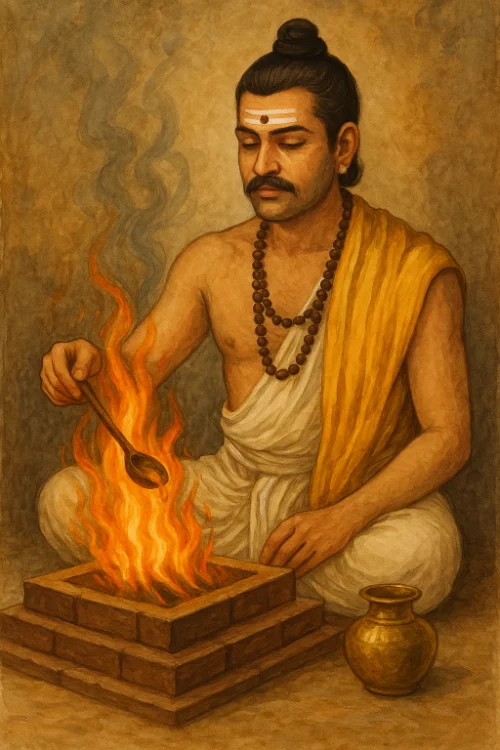
Chapter 14 - Description of Agni-yajña and Related Sacred Rites
ऋषय ऊचुः
अग्नियज्ञं देवयज्ञं ब्रह्मयज्ञं तथैव च ।
गुरुपूजां ब्रह्मतृप्तिं क्रमेण ब्रूहि नः प्रभो ॥ १ ॥
agniyajñaṃ devayajñaṃ brahmayajñaṃ tathaiva ca |
gurupūjāṃ brahmatṛptiṃ krameṇa brūhi naḥ prabho || 1 ||
Rşis said, “O Sūta, you kindly narrate to us the performing of Agni-yajña, Deva-yajña, Brahma-yajña, Guru-pūjā and Brahma-tṛpti."
सूत उवाच
अग्नौ जुहोति यद्द्रव्यमग्नियज्ञः स उच्यते ।
ब्रह्मचर्याश्रमस्थानां समिदाधानमेव हि ॥ २ ॥
sūta uvāca
agnau juhoti yaddravyamagniyajñaḥ sa ucyate |
brahmacaryāśramasthānāṃ samidādhānameva hi || 2 ||
Sūta said, "The material which is offered in fire for the purpose of yajña, is called the Agni- yajña. A person in brahmacarya-āśrama should perform homa daily with pieces of wood ( Samidhā).
समिदग्नौ व्रताद्यं च विशेषयजनादिकम् ।
प्रथमाश्रमिणामेवं यावदौपासनं द्विजाः ॥ ३ ॥
samidagnau vratādyaṃ ca viśeṣayajanādikam |
prathamāśramiṇāmevaṃ yāvadaupāsanaṃ dvijāḥ || 3 ||
O Brāhmaṇas, in the student’s fire (samid-agnī), one should perform vows, daily disciplines, and special sacrificial acts. Such is the duty of those in the first āśrama (brahmacarya), and it is to be practiced until the initiation of the household fire (aupāsana) at marriage.
आत्मन्यारोपिताग्नीनां वनिनां यतिनां द्विजाः ।
हितं च मितमेध्यान्नं स्वकाले भोजनं हुतिः ॥ ४ ॥
ātmanyāropitāgnīnāṃ vanināṃ yatināṃ dvijāḥ |
hitaṃ ca mitamedhyānnaṃ svakāle bhojanaṃ hutiḥ || 4 ||
O Brāhmaṇas, for forest-dwellers and ascetics who have installed the fire within their own self, the eating of food — when it is wholesome, moderate, and pure, taken at the right time — is itself regarded as a sacrificial offering (huti).
औपासनाग्निसन्धानं समारभ्य सुरक्षितम् ।
कुण्डे वाप्यथ भाण्डे वा तदजस्त्रं समीरितम् ॥ ५ ॥
aupāsanāgnisandhānaṃ samārabhya surakṣitam |
kuṇḍe vāpyatha bhāṇḍe vā tadajastraṃ samīritam || 5 ||
The householder’s sacred fire (aupāsanāgni), once ritually kindled and properly safeguarded, should be kept constantly burning, either in a sacrificial pit (kuṇḍa) or in an appropriate vessel (bhāṇḍa).
अग्निमात्मन्यरण्यां वा राजदैववशाद्ध्रुवम् ।
अग्नित्यागभयादुक्तं समारोपितमुच्यते ॥ ६ ॥
agnimātmanyaraṇyāṃ vā rājadaivavaśāddhruvam |
agnityāgabhayāduktaṃ samāropitamucyate || 6 ||
When, due to royal command or divine constraint, one preserves the sacred fire within oneself or within the araṇi fire-sticks, out of fear of abandoning the sacred flame, it is called the Samāropita Agni — the internally sustained or symbolically established fire.
सम्पत्कारी तथा ज्ञेया सायमग्न्याहुतिर्द्विजाः ।
आयुष्करीति विज्ञेया प्रात: सूर्याहुतिस्तथा ॥ ७ ॥
sampatkārī tathā jñeyā sāyamagnyāhutirdvijāḥ |
āyuṣkarīti vijñeyā prāta: sūryāhutistathā || 7 ||
O Brāhmaṇas, the evening oblation into the sacred fire is known as Sampatkārī, for it brings prosperity and success. Likewise, the morning offering to the sun is called Āyuṣkarī, as it grants longevity and vitality.
अग्नियज्ञो हायं प्रोक्तो दिवा सूर्यनिवेशनात् ।
इन्द्रादीन्सकलान्देवानुद्दिश्याग्नौ जुहोति यत् ॥ ८ ॥
देवयज्ञं हि तं विद्यात्स्थालीपाकादिकान्क्रतून् ।
चौलादिकं तथा ज्ञेयं लौकिकाग्नौ प्रतिष्ठितम् ॥९॥
agniyajño hāyaṃ prokto divā sūryaniveśanāt |
indrādīnsakalāndevānuddiśyāgnau juhoti yat || 8 ||
devayajñaṃ hi taṃ vidyātsthālīpākādikānkratūn |
caulādikaṃ tathā jñeyaṃ laukikāgnau pratiṣṭhitam ||9||
This is called the Agni-yajña, performed when the essence of the sun is invoked into the fire during the day. When oblations are offered into the fire for Indra and other deities, that is known as the Deva-yajña.
Rituals such as Sthālīpāka and other food-based offerings are also regarded as part of the Deva-yajña. Ceremonies such as Cūḍākaraṇa (tonsure) and similar household rites are to be understood as rooted in the domestic (laukika) fire.
ब्रह्मयज्ञं द्विजः कुर्याद्देवानां तृप्तये सकृत् ।
ब्रह्मयज्ञ इति प्रोक्तो वेदस्याध्ययनं भवेत् ॥ १० ॥
brahmayajñaṃ dvijaḥ kuryāddevānāṃ tṛptaye sakṛt |
brahmayajña iti prokto vedasyādhyayanaṃ bhavet || 10 ||
A Brāhmaṇa should perform the Brahma-yajña daily, for the satisfaction of the gods. Indeed, the study and recitation of the Vedas is itself known as Brahma-yajña.
नित्यानन्तरमासोऽयं ततस्तु न विधीयते ।
अग्नौ देवयजनं शृणुत श्रद्धयाऽऽदरात् ॥ ११ ॥
nityānantaramāso’yaṃ tatastu na vidhīyate |
agnau devayajanaṃ śṛṇuta śraddhayā’’darāt || 11 ||
This daily rite is not to be repeated again immediately; its single performance is sufficient. Now, O sages, listen with faith and reverence to the instructions for the Deva-yajña performed with fire.
आदिसृष्टौ महादेवः सर्वज्ञः करुणाकरः ।
सर्वलोकोपकारार्थं वीरान्कल्पितवान्प्रभुः ॥ १२ ॥
ādisṛṣṭau mahādevaḥ sarvajñaḥ karuṇākaraḥ |
sarvalokopakārārthaṃ vīrānkalpitavānprabhuḥ || 12 ||
At the beginning of creation, the omniscient and compassionate Mahādeva (Śiva), for the welfare of all the worlds, brought forth the Vīras — beings of divine valor and purpose.
संसारवैद्य: सर्वज्ञः सर्वभेषजभेषजम् ।
आदावारोग्यदं वारं स्ववारं कृतवान्प्रभुः ॥१३॥
saṃsāravaidya: sarvajñaḥ sarvabheṣajabheṣajam |
ādāvārogyadaṃ vāraṃ svavāraṃ kṛtavānprabhuḥ ||13||
The Lord, omniscient and the cosmic physician, the medicine of all medicines, first created his own day — the vāra that bestows health — thus ordaining Sunday at the beginning of time.
सम्पत्करं स्वमायाया वारं च कृतवांस्ततः ।
जनने दुर्गतिक्रान्ते कुमारस्य ततः परम् ॥ १४ ॥
sampatkaraṃ svamāyāyā vāraṃ ca kṛtavāṃstataḥ |
janane durgatikrānte kumārasya tataḥ param || 14 ||
Then the Lord created Monday, a prosperity-giving day, associated with his own Māyā. After that, he created Tuesday, a day marked by the hardship at the birth of Kumāra, who overcame adversity in his emergence into the world.
आलस्यदुरितक्रान्त्यै वारं कल्पितवान्प्रभुः ।
रक्षकस्य तथा विष्णोर्लोकानां हितकाम्यया ॥ १५ ॥
ālasyaduritakrāntyai vāraṃ kalpitavānprabhuḥ |
rakṣakasya tathā viṣṇorlokānāṃ hitakāmyayā || 15 ||
To overcome laziness and remove sin, the Lord created Wednesday, a day that dispels inertia and impurity. Then, desiring the welfare of the worlds, he created Thursday, the day of Viṣṇu, the great protector of the universe.
पुष्ट्यर्थं चैव रक्षार्थं वारं कल्पितवान्प्रभुः ।
आयुष्करं ततो वारमायुषां कर्तुरेव हि ।। १६ ।।
puṣṭyarthaṃ caiva rakṣārthaṃ vāraṃ kalpitavānprabhuḥ |
āyuṣkaraṃ tato vāramāyuṣāṃ kartureva hi || 16 ||
For the sake of nourishment and protection, the Lord created Friday, a day of growth and care. Then he created Saturday, the day that bestows long life, ruled by the giver and determiner of lifespan.
त्रैलोक्यसृष्टिकर्तुर्हि ब्रह्मणः परमेष्ठिनः ।
जगदायुष्यसिद्ध्यर्थं वारं कल्पितवान्प्रभुः ॥ १७ ॥
trailokyasṛṣṭikarturhi brahmaṇaḥ parameṣṭhinaḥ |
jagadāyuṣyasiddhyarthaṃ vāraṃ kalpitavānprabhuḥ || 17 ||
The Supreme Lord, Brahmā, the creator of the three worlds and known as Parameṣṭhin, established the weekdays for the attainment and preservation of lifespan in the world.
आदौ त्रैलोक्यवृद्ध्यर्थं पुण्यपापे प्रकल्पिते ।
तयोः कर्त्रीस्ततो वारमिन्द्रस्य च यमस्य च ॥ १८ ॥
ādau trailokyavṛddhyarthaṃ puṇyapāpe prakalpite |
tayoḥ kartrīstato vāramindrasya ca yamasya ca || 18 ||
At the beginning, for the expansion of the three worlds, merit and sin were established as foundational principles. Then, their respective lords — Indra and Yama — were assigned their own sacred days (vāras).
भोगप्रदं मृत्युहरं लोकानां च प्रकल्पितम् ।
आदित्यादीन्स्वरूपान्सुखदुःखस्य सूचकान् ॥ १९॥
bhogapradaṃ mṛtyuharaṃ lokānāṃ ca prakalpitam |
ādityādīnsvarūpānsukhaduḥkhasya sūcakān || 19 ||
The Sun and other celestial forms (Āditya and the rest) were established as indicators of pleasure and pain, as bestowers of enjoyment, and even as dispellers of death, for the guidance and support of beings across the worlds.
वारेशान्कल्पयित्वादी ज्योतिश्चक्रप्रतिष्ठितान्।
स्वस्ववारे तु तेषां तु पूजा स्वस्वफलप्रदा ॥ २० ॥
vāreśānkalpayitvādī jyotiścakrapratiṣṭhitān|
svasvavāre tu teṣāṃ tu pūjā svasvaphalapradā || 20 ||
Having first appointed the ruling deities of the weekdays, and established them within the astrological system (jyotiṣ-cakra), the worship of each deity on their respective day bestows the specific rewards aligned with that day’s divine influence.
In traditional Purāṇic and astrological lore, each day of the week (vāra) is presided over by a specific deity, whose worship on that day is believed to bring corresponding spiritual and worldly benefits.
Sunday is associated with Sūrya (the Sun God) or sometimes Śiva, symbolizing illumination, health, and authority.
Monday is linked to Pārvatī or Soma (the Moon) and is ideal for cultivating devotion, emotional balance, and inner peace.
Tuesday is governed by Skanda (Kārttikeya) or Maṅgala (Mars), invoking courage, strength, and protection.
Wednesday belongs to Viṣṇu or Budha (Mercury), promoting wisdom, communication, and prosperity.
Thursday is often associated with Yama, the lord of dharma and discipline, or with Bṛhaspati (Jupiter), the guru of the gods, both linked to righteousness, longevity, and guidance.
Friday is traditionally connected with Brahmā or Lakṣmī, representing creativity, fertility, and wealth.
Saturday is ruled by Indra in some traditions or more commonly by Śani (Saturn), signifying karma, endurance, and the balancing of past actions. Worshipping these deities on their respective days is said to align one with cosmic order and bring about auspicious results.
Worshipping these deities on their respective days is said to align one with cosmic order and bring about auspicious results.
आरोग्यं सम्पदश्चैव व्याधीनां शान्तिरेव च ।
पुष्टिरास्तथा भोगो मृतेर्हानिर्यथाक्रमम् ॥ २१ ॥
ārogyaṃ sampadaścaiva vyādhīnāṃ śāntireva ca |
puṣṭirāstathā bhogo mṛterhāniryathākramam || 21 ||
Health, prosperity, and the removal of diseases, nourishment, increase in longevity, enjoyment, and even the diminishment of death — these are the respective results of honoring the seven weekdays, in sequence.
वारक्रमफलं प्राहुर्देवप्रीतिपुर : सरम् ।
अन्येषामपि देवानां पूजायाः फलदः शिवः ॥ २२ ॥
vārakramaphalaṃ prāhurdevaprītipura : saram |
anyeṣāmapi devānāṃ pūjāyāḥ phaladaḥ śivaḥ || 22 ||
The benefits assigned to each weekday arise through the pleasure of their presiding deities. Yet even in the worship of other gods, it is Śiva alone who ultimately bestows the fruit.
देवानां प्रीतये पूजा पञ्चधैव प्रकल्पिता ।
तत्तन्मन्त्रजपो होमो दानं चैव तपस्तथा ॥ २३ ॥
devānāṃ prītaye pūjā pañcadhaiva prakalpitā |
tattanmantrajapo homo dānaṃ caiva tapastathā || 23 ||
To please the gods, fivefold worship has been prescribed.
These are:
The chanting of appropriate mantras
Japa (repetition)
Homa (fire-sacrifice)
Dāna (charitable giving)
Tapas (spiritual austerity)
स्थण्डिले प्रतिमायां च ह्यग्नौ ब्राह्मणविग्रहे ।
समाराधनमित्येवं षोडशैरुपचारकैः ॥ २४ ॥
sthaṇḍile pratimāyāṃ ca hyagnau brāhmaṇavigrahe |
samārādhanamityevaṃ ṣoḍaśairupacārakaiḥ || 24 ||
Worship is to be performed through the sixteen traditional offerings, whether directed toward the ritual altar (sthaṇḍila), the divine image (pratimā), the sacrificial fire (agni), or the body of a Brāhmaṇa, which itself is a sacred embodiment.
उत्तरोत्तरवैशिष्ट्यात् पूर्वाभावे तथोत्तरम् ।
नेत्रयोः शिरसो रोगे तथा कुष्ठस्य शान्तये ।। २५ ।।
uttarottaravaiśiṣṭyāt pūrvābhāve tathottaram |
netrayoḥ śiraso roge tathā kuṣṭhasya śāntaye || 25 ||
Due to the increasing spiritual potency of each successive form of worship, when the former is unavailable, the next may be employed. These forms of worship are remedial for diseases of the eyes, head ailments, and even leprosy, bringing about healing and pacification.
This verse affirms that while ṣoḍaśopacāra worship may be offered to altar, image, fire, or Brāhmaṇa — they are not only spiritually valid, but also medically and karmically therapeutic, with a hierarchy of potency.
आदित्यं पूजयित्वा तु ब्राह्मणाम्भोजयेत्ततः ।
दिनं मासं तथा वर्षं वर्षत्रयमथापि वा ॥ २६ ॥
प्रारब्धं प्रबलं चेत्स्यान्नश्येद्रोगजरादिकम् ।
जपाद्यमिष्टदेवस्य वारादीनां फलं विदुः ॥ २७ ॥
ādityaṃ pūjayitvā tu brāhmaṇāmbhojayettataḥ |
dinaṃ māsaṃ tathā varṣaṃ varṣatrayamathāpi vā || 26 ||
prārabdhaṃ prabalaṃ cetsyānnaśyedrogajarādikam |
japādyamiṣṭadevasya vārādīnāṃ phalaṃ viduḥ || 27 ||
After worshipping the Sun (Āditya), one should feed a Brāhmaṇa, for a day, a month, a year, or even three years, as appropriate. If one’s prārabdha karma is not overwhelmingly strong, then ailments, premature aging, and similar sufferings are destroyed. The benefits of weekday rituals (vāras) are known to be attained through japa and allied practices devoted to one’s chosen deity (iṣṭa-devatā).
पापशान्तिर्विशेषेण ह्यादिवारो निवेदयेत्।
आदित्यस्यैव देवानां ब्राह्मणानां विशिष्टदम् ॥ २८॥
pāpaśāntirviśeṣeṇa hyādivāro nivedayet|
ādityasyaiva devānāṃ brāhmaṇānāṃ viśiṣṭadam || 28||
Sunday (Ādivāra) is especially auspicious for the removal of sins, and should be dedicated to offerings and worship. It is a day that brings special merit in pleasing Āditya (the Sun), as well as the gods and Brāhmaṇas.
सोमवारे च लक्ष्म्यादीन्सम्पदर्थं यजेद्बुधः ।
आज्यान्नेन तथा विप्रान्सपत्नीकांश्च भोजयेत्॥२९॥
somavāre ca lakṣmyādīnsampadarthaṃ yajedbudhaḥ |
ājyānnena tathā viprānsapatnīkāṃśca bhojayet||29||
On Monday, the wise devotee should worship Lakṣmī and other deities of wealth, seeking prosperity and abundance. He should also feed Brāhmaṇas with their wives, offering them pure food prepared with ghee.
काल्यादीन्भौमवारे तु यजेद्रोगप्रशान्तये ।
तु माषमुद्राढकान्नेन ब्राह्मणांश्चैव भोजयेत् ॥ ३० ॥
kālyādīnbhaumavāre tu yajedrogapraśāntaye |
tu māṣamudrāḍhakānnena brāhmaṇāṃścaiva bhojayet || 30 ||
On Tuesday, one should worship Kālī and similar fierce deities to bring about the removal of ailments and disease. Brāhmaṇas should be fed with food prepared from black gram and green gram, measured using an āḍhaka — a sacred offering in service of healing.
सौम्यवारे तथा विष्णुं दध्यन्नेन यजेद्बुधः ।
पुत्रमित्रकलत्रादिपुष्टिर्भवति सर्वदा ॥ ३१ ॥
saumyavāre tathā viṣṇuṃ dadhyannena yajedbudhaḥ |
putramitrakalatrādipuṣṭirbhavati sarvadā || 31 ||
On Wednesday, the wise devotee should worship Viṣṇu with an offering of curd and rice (dadhyanna). This brings about lasting prosperity and well-being for one’s sons, friends, spouse, and all dear companions.
आयुष्कामो गुरोवर देवानां पुष्टिसिद्धये ।
उपवीतेन वस्त्रेण क्षीराज्येन यजेद्बुधः ॥ ३२ ॥
āyuṣkāmo gurovara devānāṃ puṣṭisiddhaye |
upavītena vastreṇa kṣīrājyena yajedbudhaḥ || 32 ||
On Thursday, a wise person desiring long life should worship the gods, seeking the attainment of strength and nourishment. He should offer a sacred thread, clothing, and milk mixed with ghee, as part of the ritual.
भोगार्थं भृगुवारे तु यजेद्देवान्समाहितः ।
घड्सोपेतमन्नं च दद्याद्ब्राह्मणतृप्तये ॥ ३३ ॥
bhogārthaṃ bhṛguvāre tu yajeddevānsamāhitaḥ |
ghaḍsopetamannaṃ ca dadyādbrāhmaṇatṛptaye || 33 ||
On Friday, one who desires enjoyment and prosperity should worship the gods with focused devotion. To please the Brāhmaṇas, he should offer rice accompanied by sixteen varieties of dishes.
स्त्रीणां च तृप्तये तद्वद्देयं वस्त्रादिकं शुभम् ।
अपमृत्युहरे मन्दे रुद्रादींश्च यजेद्बुधः ॥ ३४ ॥
strīṇāṃ ca tṛptaye tadvaddeyaṃ vastrādikaṃ śubham |
apamṛtyuhare mande rudrādīṃśca yajedbudhaḥ || 34 ||
To please the wives of Brāhmaṇas, one should likewise donate auspicious items, such as fine clothing. On Saturday, the day known to remove untimely death, the wise devotee should worship Rudra and other protective deities.
तिलहोमेन दानेन तिलान्नेन च भोजयेत् ।
इत्थं यजंश्च विबुधानारोग्यादिफलं लभेत् ॥ ३५॥
tilahomena dānena tilānnena ca bhojayet |
itthaṃ yajaṃśca vibudhānārogyādiphalaṃ labhet || 35||
On Saturday, one should perform homa with sesame seeds, give sesame in charity, and serve food prepared with sesame. By worshipping the gods in this way, one obtains the blessings of health and other auspicious rewards.
देवानां नित्ययजने विशेषयजनेऽपि च ।
स्नाने दाने जपे होमे ब्राह्मणानां च तर्पणे ॥ ३६॥
devānāṃ nityayajane viśeṣayajane’pi ca |
snāne dāne jape home brāhmaṇānāṃ ca tarpaṇe || 36||
In both daily worship and special rituals dedicated to the gods, one should also perform ritual bathing, acts of charity, mantra recitation (japa), homa, and offer ritual satisfaction to Brāhmaṇas.
तिथिनक्षत्रयोगे च तत्तद्देवप्रपूजने ।
आदिवारादिवारेषु सर्वज्ञो जगदीश्वरः ॥ ३७ ॥
तत्तदूपेण सर्वेषामारोग्यादिफलप्रदः ।
देशकालानुसारेण तथा पात्रानुसारतः ॥ ३८ ॥
tithinakṣatrayoge ca tattaddevaprapūjane |
ādivārādivāreṣu sarvajño jagadīśvaraḥ || 37 ||
tattadūpeṇa sarveṣāmārogyādiphalapradaḥ |
deśakālānusāreṇa tathā pātrānusārataḥ || 38 ||
In the worship of specific deities during various tithis, nakṣatras, and celestial conjunctions, and throughout all weekdays, beginning with Sunday, it is Śiva — the all-knowing Lord of the universe — who reigns supreme.
Assuming the appropriate form for each ritual, He alone bestows the desired fruits — such as health and prosperity — in accordance with place, time, and the spiritual worthiness of the devotee.
द्रव्यं श्रद्धानुसारेण तथा लोकानुसारतः ।
तारतम्यक्रमाद्देवस्त्वारोग्यादीन्प्रयच्छति ॥ ३९ ॥
dravyaṃ śraddhānusāreṇa tathā lokānusārataḥ |
tāratamyakramāddevastvārogyādīnprayacchati || 39 ||
The Lord (deva) bestows health and other rewards according to the nature of the offerings, the depth of the devotee’s faith, their worldly circumstances, and the spiritual hierarchy of their merit and devotion.
शुभादावशुभान्ते च जन्मर्क्षेषु गृहे गृही ।
आरोग्यादिसमृद्ध्यर्थमादित्यादीन्प्रहान्यजेत् ॥ ४० ॥
śubhādāvaśubhānte ca janmarkṣeṣu gṛhe gṛhī |
ārogyādisamṛddhyarthamādityādīnprahānyajet || 40 ||
At the start of auspicious events, at the end of inauspicious periods, and on occasions related to one’s birth star, the householder should worship the Sun and other planetary deities, to attain health, prosperity, and household well-being.
तस्माद्वै देवयजनं सर्वाभीष्टफलप्रदम् ।
समन्त्रकं ब्राह्मणानामन्येषां चैव तान्त्रिकम् ॥ ४१ ॥
tasmādvai devayajanaṃ sarvābhīṣṭaphalapradam |
samantrakaṃ brāhmaṇānāmanyeṣāṃ caiva tāntrikam || 41 ||
Therefore, Deva-yajña is a powerful practice that fulfills all spiritual and worldly desires. It should be performed with mantras by Brāhmaṇas, and through Tāntrika methods by others, thus ensuring that all people, regardless of varṇa, may receive its full benefits.
यथाशक्त्यनुरूपेण कर्तव्यं सर्वदा नरैः ।
सप्तस्वपि च वारेषु नरैः शुभफलेप्सुभिः ॥ ४२ ॥
yathāśaktyanurūpeṇa kartavyaṃ sarvadā naraiḥ |
saptasvapi ca vāreṣu naraiḥ śubhaphalepsubhiḥ || 42 ||
Regardless of status or means, all those who seek auspicious rewards should regularly worship the deities of each weekday, to the best of their ability.
दरिद्रास्तपसा देवान्यजेदाढ्यो धनेन हि ।
पुनश्चैवंविधं धर्मं कुरुते श्रद्धया सह ॥४३॥
पुनश्च भोगान्विविधान्भुक्त्वा भूमौ प्रजायते ।
छायां जलाशयं ब्रह्मप्रतिष्ठां धर्मसञ्चयम् ॥४४॥
सर्वं च वित्तवान्कुर्यात्सदा भोगप्रसिद्धये ।
कालाच पुण्यपाकेन ज्ञानसिद्धिः प्रजायते ॥ ४५ ॥
daridrāstapasā devānyajedāḍhyo dhanena hi |
punaścaivaṃvidhaṃ dharmaṃ kurute śraddhayā saha ||43||
punaśca bhogānvividhānbhuktvā bhūmau prajāyate |
chāyāṃ jalāśayaṃ brahmapratiṣṭhāṃ dharmasañcayam ||44||
sarvaṃ ca vittavānkuryātsadā bhogaprasiddhaye |
kālāca puṇyapākena jñānasiddhiḥ prajāyate || 45 ||
The poor man should worship the gods through austerity (tapas), while the wealthy should worship through generous offerings. Whoever performs such righteous acts with faith, truly follows the path of dharma.
Enjoying varied pleasures as a result, he is eventually reborn on Earth. He then accumulates merit by planting shade-giving trees, building wells and reservoirs, establishing centers of learning, and spreading sacred knowledge.
A person of wealth should continually engage in such meritorious acts, to promote both enjoyment and spiritual fulfillment. In due course, as the fruit of his merit ripens, he attains true wisdom (jñāna-siddhi).
य इमं शृणुतेऽध्यायं पठते वा नरो द्विजाः ।
श्रवणस्योपकर्त्ता च देवयज्ञफलं लभेत् ॥ ४६ ॥
ya imaṃ śṛṇute’dhyāyaṃ paṭhate vā naro dvijāḥ |
śravaṇasyopakarttā ca devayajñaphalaṃ labhet || 46 ||
O Brāhmaṇas, whoever — man or twice-born — listens to, reads, or recites this chapter, or assists others in its hearing, shall obtain the full merit of performing the Deva-yajña.
इति श्रीशिवमहापुराणे प्रथमायां विद्येश्वरसंहितायामग्नियज्ञादिवर्णनं नाम चतुर्दशोऽध्यायः ॥ १४ ॥
iti śrīśivamahāpurāṇe prathamāyāṃ vidyeśvarasaṃhitāyāmagniyajñādivarṇanaṃ nāma caturdaśo’dhyāyaḥ || 14 ||
Thus ends Chapter Fourteen, entitled "Description of Agni-yajña and Related Sacred Rites", from the Vidyeśvara Saṁhitā, the first section of the glorious Śiva Mahāpurāṇa.
Full Synopsis of Description of Agni-yajña and Related Sacred Rites
This chapter presents a detailed explanation of Agni-yajña, Deva-yajña, Brahma-yajña, Guru-pūjā, and Brahma-tṛpti, emphasizing the importance of regular worship, ritual fire offerings, and devotion to deities throughout the days of the week. It outlines Vedic duties across life stages, cosmological significance of weekdays, and the universal accessibility of worship, regardless of caste or wealth.
- Agni-yajña is the daily offering into the sacred fire, particularly for brahmacārins using samidh (firewood).
- Deva-yajña refers to fire sacrifices offered to gods like Indra and the performance of household rituals like Sthālīpāka.
- Brahma-yajña is the study and recitation of the Vedas, a daily obligation for Brāhmaṇas.
- For forest-dwellers and ascetics, even eating moderate, pure food becomes a sacred homa.
- Various types of fire — including aupāsana, samāropita, sampatkārī, and āyuṣkarī — are described in relation to life stages and purposes.
Creation of Weekdays:
- Śiva created the seven weekdays for healing, strength, devotion, and longevity, assigning each day a presiding deity (e.g., Sūrya, Soma, Skanda, Viṣṇu, Yama, Lakṣmī, Śani).
- Astrological alignment and planetary influences are explained as divine manifestations, guiding humans through pleasure, pain, and karmic resolution.
Presiding Deities and Their Benefits:
- Each weekday (vāra) is linked to a deity whose worship grants specific spiritual and worldly rewards:
- Sunday – Sūrya/Śiva (illumination, health)
- Monday – Soma/Pārvatī (emotional balance, peace)
- Tuesday – Skanda/Maṅgala (courage, protection)
- Wednesday – Viṣṇu/Budha (wisdom, communication)
- Thursday – Yama/Bṛhaspati (righteousness, guidance)
- Friday – Brahmā/Lakṣmī (fertility, wealth)
- Saturday – Śani/Indra (karma, endurance)
Modes of Worship:
- Fivefold worship (pañca-pūjā):
- Mantra recitation
- Japa (repetition)
- Homa (fire offering)
- Dāna (charity)
- Tapas (austerity)
- Ṣoḍaśopacāra (sixteenfold worship) may be offered to:
- The altar (sthaṇḍila)
- Sacred image (pratimā)
- Fire (agni)
- Brāhmaṇa body (sacred embodiment)
- Even alternate or lower methods bring benefit when higher forms are unavailable.
Weekday Rituals & Benefits:
- Specific rituals and offerings are prescribed for each weekday (e.g., sesame on Saturday, curd-rice on Wednesday, sweet food on Monday).
- Each day's deity should be honored for blessings such as removal of sin, health, wealth, family well-being, and spiritual merit.
- Śiva is said to ultimately bestow the results of all worship, regardless of the form or recipient.
Inclusivity and Merit:
- Both rich and poor are encouraged to perform worship:
- The poor through tapas (austerity)
- The rich through donation and public works (e.g., planting trees, building wells, promoting education)
- Charity and worship, when performed with Śraddhā (faith), lead to future birth, enjoyment, and ultimately jñāna-siddhi (perfection of wisdom).
The Deva-yajña is upheld as a powerful practice for fulfilling all human and divine aspirations.
Those who read, hear, or help others engage with this chapter receive the full merit of performing the Deva-yajña itself.