Kūrma Mahāpurāna - Pūrva Bhāga - Bhuvanakośa section
Chapter 45 - The Listing of Mountains
सूत उवाच
एतद्ब्रह्माण्डमाख्यातं चदुर्द्दशविधं महत् ।
अतः परं प्रवक्ष्यामि भूर्लोकस्यास्य निर्णयम् ॥ १ ॥
sūta uvāca
etadbrahmāṇḍamākhyātaṃ cadurddaśavidhaṃ mahat |
ataḥ paraṃ pravakṣyāmi bhūrlokasyāsya nirṇayam || 1 ||
Sūta said, "This extensive cosmic egg consisting of fourteen parts has been described to you so far. Now, I shall describe the details of the Bhūloka (the earth).
जम्बूद्वीप: प्रधानोऽयं प्लक्षः शाल्मलिरेव च ।
कुश: क्रौञ्चश्च शाकश्च पुष्करश्चैव सप्तमः ॥ २ ॥
एते सप्त महाद्वीपा : समुद्रैः सप्तभिर्वृताः ।
द्वीपाद्वीपो महानुक्तः सागराचापि सागरः ॥ ३ ॥
jambūdvīpa: pradhāno’yaṃ plakṣaḥ śālmalireva ca |
kuśa: krauñcaśca śākaśca puṣkaraścaiva saptamaḥ || 2 ||
ete sapta mahādvīpā : samudraiḥ saptabhirvṛtāḥ |
dvīpādvīpo mahānuktaḥ sāgarācāpi sāgaraḥ || 3 ||
Jambūdvīpa is the foremost among the continents. The others are Plakṣa, Śālmalī, Kuśa, Krauñca, Śāka, and Puṣkara, which is the seventh. These seven great continents are each encircled by seven oceans. Each successive continent is said to be larger than the previous one, and each successive ocean is likewise greater than the former.
क्षारोदेक्षुरसोदश्च सुरोदश्च घृतोदकः ।
दध्योदः क्षीरसलिल: स्वादूदश्चेति सागराः ॥ ४ ॥
पञ्चाशत्कोटिविस्तीर्णा ससमुद्रा धरा स्मृता ।
द्वपैश्च सप्तभिर्युक्ता योजनानां समन्ततः ॥५॥
kṣārodekṣurasodaśca surodaśca ghṛtodakaḥ |
dadhyodaḥ kṣīrasalila: svādūdaśceti sāgarāḥ || 4 ||
pañcāśatkoṭivistīrṇā sasamudrā dharā smṛtā |
dvapaiśca saptabhiryuktā yojanānāṃ samantataḥ ||5||
The oceans are: Kṣāroda (of salty water), Ikṣurasoda (of sugarcane juice), Suroda (of wine), Ghṛtoda (of ghee), Dadhyoda (of curd), Kṣīrasalila (of milk), and Svādūda (of sweet water) — thus are the [seven] oceans.
The earth, along with the oceans, is said to be fifty crores [500 million] Yojanas in extent, and is endowed with seven dvīpas (islands/continents) all around.
जम्बूद्वीपः समस्तानां मध्ये चैव व्यवस्थितः ।
तस्य मध्ये महामेरुर्विश्रुतः कनकप्रभः ॥६॥
चतुरशीतिसाहस्रो योजनैस्तस्य चोच्छ्रयः ।
प्रविष्टः षोडशाधस्ताद्द्वात्रिंशन्मूर्ध्नि विस्तृतः ॥ ७ ॥
jambūdvīpaḥ samastānāṃ madhye caiva vyavasthitaḥ |
tasya madhye mahāmerurviśrutaḥ kanakaprabhaḥ ||6||
caturaśītisāhasro yojanaistasya cocchrayaḥ |
praviṣṭaḥ ṣoḍaśādhastāddvātriṃśanmūrdhni vistṛtaḥ || 7 ||
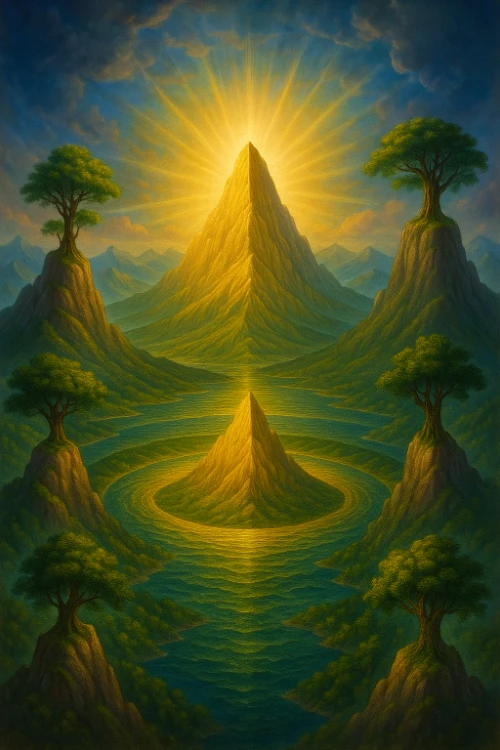
Jambūdvīpa is situated at the very center of all the continents. In its middle stands the renowned mountain Mahāmeru, radiant with the brilliance of gold.
It rises to a height of eighty-four thousand yojanas. Of these, sixteen thousand yojanas extend below the surface, and at its summit it spreads out thirty-two thousand yojanas in width.
मूले षोडशसाहस्रो विस्तारस्तस्य सर्वतः ।
भूपद्मस्यास्य शैलोऽसौ कर्णिकात्वेन संस्थितः ॥ ८ ॥
हिमवान् हेमकूटश्च निषधश्चास्य दक्षिणे ।
नील: श्वेतश्च शृङ्गी च उत्तरे वर्षपर्वताः ॥ ९ ॥ १
mūle ṣoḍaśasāhasro vistārastasya sarvataḥ |
bhūpadmasyāsya śailo’sau karṇikātvena saṃsthitaḥ || 8 ||
himavān hemakūṭaśca niṣadhaścāsya dakṣiṇe |
nīla: śvetaśca śṛṅgī ca uttare varṣaparvatāḥ || 9 ||
At the base of Mount Meru, it extends to sixteen thousand Yojanas on all sides. This mountain is situated like the pericarp at the center of the terrestrial lotus. To its south lie the mountain ranges Himavān, Hemakūṭa, and Niṣadha. To its north are Nīla, Śveta, and Śṛṅgī, the mountain ranges of the northern regions (varṣaparvatas).
लक्षप्रमाणौ द्वौ मध्ये दशहीनास्तथापरे ।
सहस्रद्वितयोच्छ्रायास्तावद्विस्तारिणश्च ते ॥ १० ॥
lakṣapramāṇau dvau madhye daśahīnāstathāpare |
sahasradvitayocchrāyāstāvadvistāriṇaśca te || 10 ||
Among these mountains, two situated in the middle (i.e., Himavān and Hemakūta) each measure one lakh (100,000) Yojanas in length. The others that follow are each ten thousand Yojanas shorter than the previous. All of these mountains are 2,000 Yojanas in height and the same in breadth (width).
भारतं प्रथमं वर्षं ततः किम्पुरुषं स्मृतम् ।
हरिवर्षं तथैवान्यन्मेरोर्द्दक्षिणतो द्विजाः ॥ ११ ॥
रम्यकञ्चोत्तरं वर्षं तस्यैवान् हिरण्मयम् ।
उत्तरे कुरवश्चैव यथैते भारतास्तथा ॥ १२ ॥
bhārataṃ prathamaṃ varṣaṃ tataḥ kimpuruṣaṃ smṛtam |
harivarṣaṃ tathaivānyanmerorddakṣiṇato dvijāḥ || 11 ||
ramyakañcottaraṃ varṣaṃ tasyaivān hiraṇmayam |
uttare kuravaścaiva yathaite bhāratāstathā || 12 ||
O Brāhmaṇas! To the south of Mount Meru, the first region (varṣa) is Bhārata; next comes Kimpuruṣa, and then Harivarṣa. To the north of Meru, there are the regions of Ramyaka, then Hiraṇmaya, and finally Uttarakuru — all of these are similar in nature to Bhārata-varṣa.
नवसाहस्त्रमेकैकमेतेषां द्विजसत्तमाः ।
इलावृतञ्च तन्मध्ये तन्मध्ये मेरुरुच्छ्रितः ॥१३॥
मेरोश्चतुर्द्दशं तत्र नवसाहस्रविस्तरम् ।
इलावृतं महाभागाश्चत्वारस्तत्र पर्वताः ॥ १४ ॥
navasāhastramekaikameteṣāṃ dvijasattamāḥ |
ilāvṛtañca tanmadhye tanmadhye merurucchritaḥ ||13||
meroścaturddaśaṃ tatra navasāhasravistaram |
ilāvṛtaṃ mahābhāgāścatvārastatra parvatāḥ || 14 ||
O best of the Brāhmaṇas, each of these [varṣas] is nine thousand yojanas in extent. In the very center among them lies Ilāvṛta-varṣa, and in the very center of that, the lofty Mount Meru rises.
Of Mount Meru, one-fourteenth part is located within Ilāvṛta, which also spans nine thousand yojanas in width. O illustrious ones, four great mountains are also situated there within Ilāvṛta.
विष्कम्भा रचिता मेरोर्योजनायुतमुच्छ्रिताः ।
पूर्वेण मन्दरो नाम दक्षिणे गन्धमादनः ॥ १५ ॥
विपुलः पश्चिमे पार्श्वे सुपार्श्वश्चोत्तरः स्मृतः ।
कदम्बस्तेषु जम्बूश्च पिप्पलौ वट एव च ॥ १६ ॥
viṣkambhā racitā meroryojanāyutamucchritāḥ |
pūrveṇa mandaro nāma dakṣiṇe gandhamādanaḥ || 15 ||
vipulaḥ paścime pārśve supārśvaścottaraḥ smṛtaḥ |
kadambasteṣu jambūśca pippalau vaṭa eva ca || 16 ||
These four mountains are constructed like supporting arms (viṣkambha) of Mount Meru and rise to a height of ten thousand yojanas.
To the east lies Mount Mandara, to the south is Gandhamādana, to the west is Vipula, and to the north is Suparśva.
On each of these mountains are found distinct sacred trees: the Kadamba on Mandara, the Jambū (rose apple) on Gandhamādana, the Pippala (sacred fig) on Vipula, and the Vaṭa (banyan) on Suparśva.
जम्बूद्वीपस्य सा जम्बूर्नामहेतुर्महर्षयः ।
महागज प्रमाणानि जंब्वास्तस्या फलानि च ॥ १७॥
पतन्ति भूभृतः पृष्ठे शीर्यमाणानि सर्वतः ।
रसेन तस्याः प्रख्याता तत्र जम्बूनदी गिरौ ॥ १८ ॥
jambūdvīpasya sā jambūrnāmaheturmaharṣayaḥ |
mahāgaja pramāṇāni jaṃbvāstasyā phalāni ca || 17||
patanti bhūbhṛtaḥ pṛṣṭhe śīryamāṇāni sarvataḥ |
rasena tasyāḥ prakhyātā tatra jambūnadī girau || 18 ||
O great sages, the landmass known as Jambūdvīpa derives its name from the Jambū tree (rose-apple tree). The fruits of this Jambū tree are of colossal size—equal in size to elephants. These fruits fall and shatter upon the slopes of the mountain. From the juice of these fruits, a river is formed on that mountain, which is renowned as the Jambū-nadī, the Jambū river.
सरित्प्रवर्त्तते चापि पीयते तत्र वासिभिः ।
न स्वेदो न च दौर्गन्ध्यं न जरा नेन्द्रियक्षयः ॥ १९ ॥
न तापः स्वच्छमनसां नासौख्यं तत्र जायते ।
तत्तीरमृद्रसं प्राप्य वायुना सुविशोषितम् ॥ २० ॥
जाम्बूनदाख्यं भवति सुवर्णं सिद्धभूषण ।
saritpravarttate cāpi pīyate tatra vāsibhiḥ |
na svedo na ca daurgandhyaṃ na jarā nendriyakṣayaḥ || 19 ||
na tāpaḥ svacchamanasāṃ nāsaukhyaṃ tatra jāyate |
tattīramṛdrasaṃ prāpya vāyunā suviśoṣitam || 20 ||
jāmbūnadākhyaṃ bhavati suvarṇaṃ siddhabhūṣaṇa |
A river flows there, and its juice is consumed by the inhabitants. Those who live there are of pure mind; they do not sweat, nor do they emit any foul odor. They do not age, nor do their sensory organs decline. They do not experience suffering, nor do they suffer from mental afflictions. When the juice of the river soaks into the soft earth on its banks and is thoroughly dried by the wind, it turns into gold, known as Jāmbūnada, which is used as ornaments by the Siddhas (perfected beings).
भद्राश्व: पूर्वतो मेरो: केतुमालश्च पश्चिमे ॥ २१ ॥
वर्षे द्वे तु मुनिश्रेष्ठास्तयोर्मध्ये इलावृतम्।
वनं चैत्ररथं पूर्वं दक्षिणं गन्धमादनम् ॥ २२ ॥
वैभ्राजं पश्चिमं विद्यादुत्तरं सवितुर्वनम् ।
bhadrāśva: pūrvato mero: ketumālaśca paścime || 21 ||
varṣe dve tu muniśreṣṭhāstayormadhye ilāvṛtam|
vanaṃ caitrarathaṃ pūrvaṃ dakṣiṇaṃ gandhamādanam || 22 ||
vaibhrājaṃ paścimaṃ vidyāduttaraṃ saviturvanam |
To the east of Mount Meru lies the Bhadrāśva Varṣa, and to the west lies the Ketumāla Varṣa. O best of sages, in between them is located Ilāvṛta-varṣa. The forest named Caitraratha is situated to the east of Meru, Gandhamādana forest lies to the south, Vaibhrāja forest lies to the west, and to the north is the forest of Savitṛ (the Sun-god).
अरुणोदं महाभद्रमसितोदश्च मानसम् ॥२३॥
सरांस्येतानि चत्वारि देवभोग्यानि सर्वदा ।
सितान्तश्च कुमुद्वांश्च कुरुरी माल्यवांस्तथा ॥२४॥
वैकङ्को मणिशैलश्च वृक्षवांश्चचलोत्तमः ।
महानीलोऽथ रुचकः सबिन्दुर्मन्दरस्तथा ॥ २५ ॥
वेणुमांश्चैव मेघश्च निषधो देवपर्वतः ।
इत्येते देवरचिता: सिद्धावासाः प्रकीर्त्तिताः ॥ २६॥
aruṇodaṃ mahābhadramasitodaśca mānasam ||23||
sarāṃsyetāni catvāri devabhogyāni sarvadā |
sitāntaśca kumudvāṃśca kururī mālyavāṃstathā ||24||
vaikaṅko maṇiśailaśca vṛkṣavāṃścacalottamaḥ |
mahānīlo’tha rucakaḥ sabindurmandarastathā || 25 ||
veṇumāṃścaiva meghaśca niṣadho devaparvataḥ |
ityete devaracitā: siddhāvāsāḥ prakīrttitāḥ || 26||
There are four great lakes: Aruṇoda, Mahābhadra, Asitoda, and Mānasa. These four lakes are always enjoyed by the gods. The mountains Sītānta, Kumudvān, Kururī, and Mālyavān are also located there. Then follow the eminent mountains: Vaikaṅka, Maṇiśaila, Vṛkṣavān, Mahānīla, Rucaka, Śabindu, and Mandara. Also mentioned are Veṇumān, Megha, Niṣadha, and Devaparvata. These mountains, created by the gods, are said to be the abodes of the Siddhas (perfected beings).
अरुणोदस्य सरसः पूर्वतः केसराचलः ।
त्रिकूट : सशिरश्चैव पतङ्गो रुचकस्तथा ॥ २७ ॥
निषधो वसुधारश्च कलिङ्गस्त्रिशिखः स्मृतः ।
समूलो वसुवेदिश्च कुरुक्षैव सानुमान् ॥ २८ ॥
ताम्राज्जातश्च विशालश्च कुमुदो वेणुपर्वतः ।
एकशृङ्गो महाशैलो गजशैलश्च पिञ्जकः ॥ २९ ॥
पञ्चशैलोऽथ कैलासो हिमवांश्चचलोत्तमः ।
इत्येते देवचरिता उत्कटाः पर्वतोत्तमाः ॥ ३० ॥
aruṇodasya sarasaḥ pūrvataḥ kesarācalaḥ |
trikūṭa : saśiraścaiva pataṅgo rucakastathā || 27 ||
niṣadho vasudhāraśca kaliṅgastriśikhaḥ smṛtaḥ |
samūlo vasuvediśca kurukṣaiva sānumān || 28 ||
tāmrājjātaśca viśālaśca kumudo veṇuparvataḥ |
ekaśṛṅgo mahāśailo gajaśailaśca piñjakaḥ || 29 ||
pañcaśailo’tha kailāso himavāṃścacalottamaḥ |
ityete devacaritā utkaṭāḥ parvatottamāḥ || 30 ||
To the east of the Arunoda lake lie the mountains Kesarācala, Trikūṭa, Saśira, Patanga, and Rucaka. Further are Nisadha, Vasudhāra, Kaliṅga, Triśikha, Samūla, Vasuvedi, Kururu, and Sānumān. Then come Tāmrāta, Viśāla, Kumuda, Venuparvata, Ekaśṛṅga, Mahāśaila, Gajaśaila, and Piñjaka. Following them are Pañcaśaila, Kailāsa, and Himavān, the excellent and lofty mountains revered by the gods.
महाभद्रस्य सरसो दक्षिणे केसराचलः ।
शिखिवासाश्च वैदूर्यः कपिलो गन्धमादनः ॥ ३१ ॥
जारुधिश्च सुराम्बुश्च सर्वगन्धाचलोत्तमः ।
सुपार्श्वश्च सुपक्षच कंक: कपिल एव च ॥ ३२ ॥
विरजो भद्रजालश्च सुसकश्च महाबलः ।
अञ्जनो मधुमांस्तद्वचित्रशृङ्गो महालयः॥३३॥
कुमुदो मुकुटचैव पाण्डुरः कृष्ण एव च।
पारिजातो महाशैलस्तथैव कपिलाचलः ॥ ३४॥
सुषेणः पुण्डरीकश्च महामेघस्तथैव च।
एते पर्वतराजाश्च सिद्धगन्धर्वसेविताः ॥ ३५ ॥
mahābhadrasya saraso dakṣiṇe kesarācalaḥ |
śikhivāsāśca vaidūryaḥ kapilo gandhamādanaḥ || 31 ||
jārudhiśca surāmbuśca sarvagandhācalottamaḥ |
supārśvaśca supakṣaca kaṃka: kapila eva ca || 32 ||
virajo bhadrajālaśca susakaśca mahābalaḥ |
añjano madhumāṃstadvacitraśṛṅgo mahālayaḥ||33||
kumudo mukuṭacaiva pāṇḍuraḥ kṛṣṇa eva ca|
pārijāto mahāśailastathaiva kapilācalaḥ || 34||
suṣeṇaḥ puṇḍarīkaśca mahāmeghastathaiva ca|
ete parvatarājāśca siddhagandharvasevitāḥ || 35 ||
To the south of the lake Mahābhadra, lie numerous majestic mountains, including:
Kesarācala, Śikhivāsa, Vaidūrya, Kapila, and the renowned Gandhamādana.
Also found are Jārudhi, Surāmbu, and Sarvagandha, the excellent mountain of all fragrances.
Further are Supārśva, Supakṣa, Kaṅka, another Kapila, Viraja, Bhadrajāla, Susaka, and Mahābala.
Then Añjana, Madhumān, the remarkable Citraśṛṅga (variegated peaks), and Mahālaya.
Kumuda, Mukuta, Pāṇḍura, Kṛṣṇa, Pārijāta, Mahāśaila, and Kapilācala follow.
Finally, Suṣeṇa, Puṇḍarīka, and Mahāmegha. These are all kings among mountains, continually visited and revered by the Siddhas and Gandharvas.
असितोदस्य सरसः पश्चिमे केसराचलः ।
शङ्खकूटोऽथ वृषभो हंसो नागस्तथैव च ॥ ३६॥
कालाञ्जनः शुक्रशैलो नीलः कमल एव च ।
पारिजातो महाशैलः शैलः कनक एव च ॥ ३७॥
पुष्पकश्च सुमेघश्च वाराहो विरजास्तथा ।
मयूरः कपिलश्चैव महाकपिल एव च ॥ ३८ ॥
इत्येते देवगन्धर्वासिद्धयक्षैश्च सेविताः ।
सरसो मानसस्येह उत्तरे केसराचलः ॥ ३९ ॥
asitodasya sarasaḥ paścime kesarācalaḥ |
śaṅkhakūṭo’tha vṛṣabho haṃso nāgastathaiva ca || 36||
kālāñjanaḥ śukraśailo nīlaḥ kamala eva ca |
pārijāto mahāśailaḥ śailaḥ kanaka eva ca || 37||
puṣpakaśca sumeghaśca vārāho virajāstathā |
mayūraḥ kapilaścaiva mahākapila eva ca || 38 ||
ityete devagandharvāsiddhayakṣaiśca sevitāḥ |
saraso mānasasyeha uttare kesarācalaḥ || 39 ||
To the west of the Asitoda lake lie several sacred mountains beginning with Kesarācala, followed by Śaṅkhakūṭa, Vṛṣabha, Haṁsa, and Nāga. These are succeeded by Kālāñjana, Śukraśaila, Nīla, Kamala, Pārijāta, Mahāśaila, and Kanaka mountain. Further west are found Puṣpaka, Sumegha, Vārāha, Virajas, Mayūra, Kapila, and the great Mahākapila. All these mountains are renowned as abodes frequently visited and revered by the gods, Gandharvas, Siddhas, and Yakṣas. Additionally, to the north of the Mānasa lake stands the distinguished mountain Keśarācala.
एतेषां शैलमुख्यानामन्तरेषु यथाक्रमम् ।
सन्ति चैवान्तरद्रोण्यः सरांसि च वनानि च ॥ ४०॥
वसन्ति तत्र मुनयः सिद्धा व ब्रह्मभावितः ।
प्रसन्नः शान्तरजसः सर्वदुःखविवर्जिताः ॥ ४१ ॥
eteṣāṃ śailamukhyānāmantareṣu yathākramam |
santi caivāntaradroṇyaḥ sarāṃsi ca vanāni ca || 40||
vasanti tatra munayaḥ siddhā va brahmabhāvitaḥ |
prasannaḥ śāntarajasaḥ sarvaduḥkhavivarjitāḥ || 41 ||
In the spaces between these chief mountains, arranged in sequence, there are inner valleys, lakes, and forests. There, sages and Siddhas dwell, their minds absorbed in Brahman. Serene and free from passion, they are completely devoid of all sorrow.
इति श्रीकूर्मपुराणे पूर्वभागे भुवनकोशे पर्वतसंख्याने पञ्चचत्वारिंशोऽध्यायः ॥ ४५॥
Iti Śrī-Kūrma-Purāṇe Pūrva-bhāge Bhuvana-kośe Parvata-saṅkhyāne Pañcacaṭvāriṁśo’dhyāyaḥ || 45 ||
Thus ends the forty-fifth chapter in the Bhuvanakośa section of the Pūrvabhāga of the sacred Kūrma Purāṇa, The Listing of Mountains.
Full Synopsis of Chapter 45 — The Listing of Mountains
Chapter 45 of the Kūrma Purāṇa continues the grand cosmographical exposition by offering a detailed description of Bhūloka — the terrestrial realm — within the structure of the cosmic egg (brahmāṇḍa). Sūta, the narrator, introduces the seven sacred continents (dvīpas), arranged concentrically and expanding outward, each surrounded by oceans made of progressively more wondrous substances. These continents are: Jambū, Plakṣa, Śālmalī, Kuśa, Krauñca, Śāka, and Puṣkara. Each is larger than the last, and each is girdled by an ocean of increasing vastness and variety: salt water, sugarcane juice, wine, ghee, curds, milk, and sweet water, respectively. Together, they form the terrestrial domain, measured as fifty crores (500 million) yojanas in extent.
At the center of this cosmic geography lies Jambūdvīpa, the most sanctified of all the continents and the origin of human civilization. At the very heart of Jambūdvīpa stands the resplendent Mount Meru, radiant with golden brilliance. It rises 84,000 yojanas into the sky, with 16,000 submerged below the surface. At its summit, Meru spans 32,000 yojanas wide and narrows to 16,000 yojanas at the base, like the pericarp of a massive lotus. Surrounding Mount Meru are six great mountain ranges — three to the south (Himavān, Hemakūṭa, Niṣadha) and three to the north (Nīla, Śveta, Śṛṅgī). These form boundaries for the seven regional divisions (varṣas) of Jambūdvīpa: to the south are Bhāratavarṣa, Kimpuruṣa, and Harivarṣa; to the north are Ramyaka, Hiraṇmaya, and Uttarakuru; and at the very center lies Ilāvṛta-varṣa, which envelops the upper part of Mount Meru.
Ilāvṛta-varṣa is 9,000 yojanas wide and serves as a celestial center, flanked by four great “viṣkambha” mountains — Mandara, Gandhamādana, Vipula, and Suparśva — situated in the cardinal directions around Meru. Each of these sacred mountains hosts a divine tree: the Kadamba on Mandara, the Jambū (rose-apple) on Gandhamādana, the Pippala (sacred fig) on Vipula, and the Banyan (Vaṭa) on Suparśva. The continent of Jambūdvīpa itself is named after the legendary Jambū tree, whose enormous fruits fall on the mountainsides and yield rivers of juice. The most famous of these is the Jambū-nadī, whose sweet nectar sustains the region’s inhabitants, making them free from aging, disease, sweat, odor, and mental afflictions. When the river’s juice dries upon the earth, it crystallizes into Jāmbūnada gold, prized by the Siddhas for ornamentation.
Surrounding Ilāvṛta-varṣa are other divine regions: Bhadrāśva to the east and Ketumāla to the west, each filled with forests and lakes of divine origin. Among these are the sacred forests: Caitraratha, Gandhamādana, Vaibhrāja, and Savitṛ, associated with gods, sages, and solar deities. Four holy lakes — Aruṇoda, Mahābhadra, Asitoda, and Mānasa — are described as sanctuaries where celestial beings find joy. The region is also adorned with an immense number of mountains, including Sītānta, Kumudvān, Kururī, and Mālyavān, as well as Kailāsa, Himavān, and Mandara, all described as divine habitations of Siddhas, Yakṣas, Gandharvas, and righteous ṛṣis.
The text then offers exhaustive lists of sacred mountains in each direction of the central lakes — east, south, west, and north — such as Kapila, Sarvagandha, Citraśṛṅga, Mahālaya, Puṇḍarīka, Mahāmegha, Śaṅkhakūṭa, Vārāha, Mayūra, and Kanaka, among many others. These are revered as the thrones of sages, perfected beings, and divine spirits, resounding with sacred austerities. Between these towering ranges lie serene valleys, lakes, and hidden forests, where ascetic sages dwell in profound tranquility, absorbed in Brahman, liberated from sorrow and unbound by worldly attachment.


Commentary
1 Yojana = 12.8 km is often used 50 crores = 500,000,000 Yojanas 500,000,000 × 12.8 km = 6,400,000,000 km That’s 6.4 billion kilometers The diameter of the solar system (out to Pluto) ≈ 7.5 billion km So, the described “earth” in this Purāṇic cosmology — including all seven dvīpas and oceans — spans nearly the scale of the entire solar system.