Agni Purana
Chapter 25 - Exposition on the Mantras beginning with Vasudeva.
पञ्चविंशोऽध्यायः वासुदेवादिमन्त्रनिरूपणम्
pañcaviṁśo ’dhyāyaḥ vāsudevādi-mantra-nirūpaṇam
Chapter Twenty-Five:
Exposition on the Mantras beginning with Vāsudeva.
नारद उवाच
वासुदेवादिमन्त्राणां पूज्यानां लक्षणं वदे
वासुदेवः सङ्कर्षणः प्रद्युम्नश्चानिरुद्धकः ॥१॥
nārada uvāca vāsudevādi-mantrāṇāṁ pūjyānāṁ lakṣaṇaṁ vade vāsudevaḥ saṅkarṣaṇaḥ pradyumnaś cāniruddhakaḥ || 1 ||
Nārada said: I shall describe the nature of the venerable mantras beginning with Vāsudeva — Vāsudeva, Saṅkarṣaṇa, Pradyumna, and Aniruddha.
Verse 2
नमो भगवते चादौ अं अः सबीजकाः
ओङ्काराद्या नमोऽन्ताश्च नमो नारायणस्ततः ॥२॥
namo bhagavate cādau aṃ–aḥ sabījakau
oṅkārādyā namo’ntāś ca namo nārāyaṇas tataḥ || 2 ||
Reverence to the Blessed Lord. At the beginning are the two bīja-s aṃ and aḥ. The mantras commence with Oṅkāra and conclude with ‘namaḥ’. Thereafter comes the salutation ‘namo Nārāyaṇa’.
Verse 3
ॐ तत्सद्ब्रह्मणे चैव ॐ नमो विष्णवे नमः
ॐ क्षौं ॐ नमो भगवते नरसिंहाय वै नमः ॥३॥
oṃ tatsad-brahmaṇe caiva oṃ namo viṣṇave namaḥ
oṃ kṣauṃ oṃ namo bhagavate narasiṃhāya vai namaḥ || 3 ||
Om. Salutation to Brahman designated as ‘Tat’ and ‘Sat’. Om. Reverence to Viṣṇu. Om kṣauṃ. Om. Salutation to the Blessed Lord Narasiṃha indeed—reverence.
Verse 4
ॐ भूर्नमो भगवते वराहाय नखादिपाः
जवारुणहरिद्राभा नीलश्यामललोहिताः ॥४॥
oṃ bhūr namo bhagavate varāhāya nakhādipāḥ
jvāruṇa-haridrābhā nīla-śyāmala-lohitāḥ || 4 ||
Om bhūḥ. Salutation to the Blessed Lord Varāha. His nails (and extremities) shine with the hues of flame-red, saffron-yellow, blue, dark, and crimson.
Verse 5
मेघाग्निमधुपिङ्गाभा वल्लभा नव नायकाः
अङ्गानि स्वरबीजानां स्वनामान्तैर्यथाक्रमम् ॥५॥
meghāgni-madhu-piṅgābhā vallabhā nava nāyakāḥ
aṅgāni svara-bījānāṃ sva-nāmāntair yathākramam || 5 ||
Cloud-colored, fire-colored, honey-colored, and tawny in radiance are the nine auspicious leaders—the limbs of the sound-bīja syllables—each designated in sequence by the endings of their own names.
Verse 6
हृदयादीनि कल्पेत विभक्तैस्तन्त्रवेदिभिः
व्यञ्चनादीनि बीजानि तेषां लक्षणमन्यथा ॥६॥
hṛdayādīni kalpeta vibhaktais tantravedibhiḥ
vyañcanādīni bījāni teṣāṃ lakṣaṇam anyathā || 6 ||
The heart-mantra and the other limbs should be distinctly arranged by those versed in the Tantras. The bīja-s beginning with vyañcana elements have characteristics that are to be understood separately.
Verse 7
दीर्घस्वरैस्तु भिन्नानि नमोऽन्तान्तस्थितानि तु
अङ्गानि ह्रस्वयुक्तानि उपाङ्गानीति वर्ण्यते ॥७॥
dīrghasvarais tu bhinnāni namo’ntānta-sthitāni tu
aṅgāni hrasvayuktāni upāṅgānīti varṇyate || 7 ||
Those components distinguished by long vowels and ending with ‘namaḥ’ are considered the primary aṅgas; those formed with short vowels are described as the secondary aṅgas, called upāṅgas.
Verse 8
विभक्तनामवर्णान्तस्थितं बीजात्ममुत्तमम्
दीर्घेर्ह्रस्वैश्च संयुक्तं साङ्गोपाङ्गस्वरैः क्रमात् ॥८॥
vibhakta-nāma-varṇānta-sthitaṃ bījātmam uttamam
dīrgheḥ hrasvaiś ca saṃyuktaṃ sāṅgopāṅga-svaraiḥ kramāt || 8 ||
The supreme bīja, placed at the end of the inflected name-syllables, is joined with both long and short vowels, and sequenced with the vowel-sounds of the primary and secondary mantra-limbs (aṅgas and upāṅgas).
Verse 9
व्यञ्चनानां क्रमो ह्येष हृदयादिप्रक्लृप्तये
स्वबीजेन स्वनामान्तैर्विभक्तान्यङ्गनामभिः ॥९॥
vyañjanānāṃ kramo hyeṣa hṛdayādi-prakalptaye
svabījena sva-nāmāntair vibhaktāny aṅga-nāmabhiḥ || 9 ||
This is indeed the sequence of consonantal elements intended for the arrangement of the hṛdaya and the other mantra-limbs— those limbs being distinguished by their own bījas and by the terminal forms of their respective names.
Verse 10
युक्तानि हृदयादीनि द्वादशान्तानि पञ्चतः
आरभ्य कल्पयित्वा तु जपेत्सिद्धानुरूपतः ॥१०॥
yuktāni hṛdayādīni dvādaśāntāni pañcataḥ
ārabhya kalpayitvā tu japet siddhānurūpataḥ || 10 ||
Having arranged the hṛdaya and the other limbs—each properly connected, ending in the twelve-fold form and beginning from the fifth—one should perform the japa in accordance with what leads to attainment.
Verse 11
हृदयञ्च शिरश्चूडा कवचं नेत्रमस्त्रकम्
षडङ्गानि तु बीजानां मूलस्य द्वादशाङ्गकम् ॥११॥
hṛdayaṃ ca śiraś cūḍā kavacaṃ netram astrakam
ṣaḍaṅgāni tu bījānāṃ mūlasya dvādaśāṅgakam || 11 ||
The Heart, Head, Crest, Armor, Eye, and Weapon— these six are the limbs of the bīja-mantras; and when applied to the root mantra, they constitute its twelvefold form.
Verse 12
हृच्छिरश्च शिखा वर्म चास्त्रनेत्रं तथोदरम्
पृष्ठबाहूरुजानूंश्च जङ्घे पादौ क्रमात् नयसेत् ॥१२॥
hṛc-chiraś ca śikhā varma cāstra-netraṃ tathodaram
pṛṣṭha-bāhūru-jānūṃś ca jaṅghe pādau kramāt nayaset || 12 ||
The heart, head, crest, armor, weapon, eye, and the abdomen—then the back, arms, thighs, knees, calves, and feet—one should assign in due sequence.
Verse 13
कं टं पं शं वैनतेयः खं ठं फं षं गदानुजः
गं डं बं सं पुष्टिमन्त्रो घं ढं भं हं श्रियै नमः ॥१३॥
kaṃ ṭaṃ paṃ śaṃ vainateyaḥ
khaṃ ṭhaṃ phaṃ ṣaṃ gadānujaḥ
gaṃ ḍaṃ baṃ saṃ puṣṭi-mantro
ghaṃ ḍhaṃ bhaṃ haṃ śriyai namaḥ || 13 ||
Kaṃ, ṭaṃ, paṃ, śaṃ’ belong to Vainateya (Garuḍa). ‘Khaṃ, ṭhaṃ, phaṃ, ṣaṃ’ likewise pertain to the younger brother of Gadā (Garuḍa). ‘Gaṃ, ḍaṃ, baṃ, saṃ’ form the mantra of Puṣṭi. ‘Ghaṃ, ḍhaṃ, bhaṃ, haṃ’—reverence to Śrī—are hers.
Verse 14
वं शं मं क्षं पाञ्चजन्यं छं तं पं कौस्तुभाय च
जं खं वं सुदर्शनाय श्रीवत्साय सं वं दं चं लम् ॥१४॥
vaṃ śaṃ maṃ kṣaṃ pāñcajanyaṃ
chaṃ taṃ paṃ kaustubhāya ca
jaṃ khaṃ vaṃ sudarśanāya
śrīvatsāya saṃ vaṃ daṃ caṃ lam || 14 ||
Vaṃ, śaṃ, maṃ, kṣaṃ belong to Pañcajanya; ‘Chaṃ, taṃ, paṃ’ are assigned to Kaustubha. ‘Jaṃ, khaṃ, vaṃ’ to Sudarśana, and ‘saṃ, vaṃ, daṃ, caṃ, lam’ to Śrīvatsa.
Verse 15
ॐ धं वं वनमालायै महानन्ताय वै नमः
निर्बीजपदमन्त्राणं पदैरङ्गानि कल्पयेत् ॥१५॥
oṃ dhaṃ vaṃ vanamālāyai mahānantāya vai namaḥ
nirbīja-pada-mantrāṇāṃ padair aṅgāni kalpayet || 15 ||
Om. ‘Dhaṃ’ and ‘vaṃ’ are for Vanamālā and for Mahā-Ananta—indeed, reverence. For mantras whose words have no bījas, their aṅgas should be arranged through the pada-elements.
Verse 16
जात्यन्तैर्नामसंयुक्तैर्हृदयादीनि पञ्चधा
प्रणवं हृदयादीनि ततः प्रोक्तानि पञ्चधा ॥१६॥
jātyantair nāma-saṃyuktair hṛdayādīni pañcadhā
praṇavaṃ hṛdayādīni tataḥ proktāni pañcadhā || 16 ||
With jāti-endings joined to the deity’s name, the hṛdaya and the other aṅgas are formed in five ways. Then, with the addition of the praṇava, the hṛdaya and the other aṅgas are again declared in a fivefold manner.
Verse 17
प्रणवं हृदयं पूर्वं परायेति शिरः शिखा
नाम्नात्मना तु कवचमस्त्रं नामान्तकं भवेत् ॥१७॥
praṇavaṃ hṛdayaṃ pūrvaṃ parāyeti śiraḥ śikhā
nāmnātmana tu kavacam astraṃ nāmāntakaṃ bhavet || 17 ||
The praṇava is first applied as the hṛdaya. The form with the syllable ‘para’ becomes the śiras and the śikhā. Using the deity’s own name-form, it becomes the kavaca, and with the terminal form of the name, it becomes the astra.
Verse 18
ॐ परास्त्रादिस्वनामात्मा चतुर्थ्यन्तो नमोऽन्तकः
एकव्यूहादिषड्विंशव्यूहात्तस्यात्मनो मनुः ॥१८॥
oṃ parāstrādi-sva-nāmātmā caturthy-anto namo’ntakaḥ
eka-vyūhādi-ṣaḍviṃśa-vyūhāt tasya ātmano manuḥ || 18 ||
Beginning with ‘Om’, composed of the para-, astra- and other aṅgas and of the deity’s own name, ending in the dative and concluding with ‘namaḥ’—such is the mantra. From the single-vyūha up to the twenty-sixfold vyūha, each has its own specific mantra-form.
Verse 19
कनिष्ठादिकराग्रेषु प्रकृतिं देहकेऽर्चयेत्
पराय पुरुषात्मा स्यात् प्रकृत्यात्मा द्विरूपकः ॥१९॥
kaniṣṭhādi-karāgreṣu prakṛtiṃ dehake’rcayet
parāya puruṣātmā syāt prakṛtyātmā dvirūpakaḥ || 19 ||
Upon the fingertips, beginning with the little finger, one should worship Prakṛti upon the body. By offering it to Parā, he becomes the Purusha-self; united with Prakṛti, he becomes of twofold form.
Verse 20
ॐ परायाग्न्यात्मने चैव वाय्वात्मको च द्विरूपकः
अग्निं त्रिमूर्तीं विन्यस्य व्यापकं करदेहयोः ॥२०॥
oṃ parāyāgnyātmane caiva vāyvātmako ca dvirūpakaḥ
agniṃ trimūrtīṃ vinyasya vyāpakaṃ kara-dehayoḥ || 20 ||
Om. When directed to Parā, he becomes of the nature of Fire; when directed to Vāyu he becomes two-formed. Having installed Agni in its threefold form, one should let it pervade both the hands and the body.
Verse 21
वाय्वात्मकौ करशाखासु सव्येतर–करद्वये
हृदि मूर्तौ तनूवेषौ त्रिव्यूहे तुर्यरूपके ॥२१॥
vāyvātmakau karaśākhāsu savyetara-karadvaye
hṛdi mūrtau tanūveṣau trivyuhe turya-rūpake || 21 ||
The two energies of Vāyu are present in the branches of both hands, right and left. In the heart appears the divine form, manifest in the subtle and gross bodies, in the triple vyūha and in the transcendent fourth form.
Verse 22
ऋग्वेदं व्यापकं हस्ते अङ्गुलीषु यजुर्न्यसेत्
तलद्वयेऽथर्वरूपं शिरोहच्चरणान्तकः ॥२२॥
ṛgvedaṃ vyāpakaṃ haste aṅgulīṣu yajur nyaset
taladvaye’tharvarūpaṃ śirohac-caraṇāntakaḥ || 22 ||
One should install the all-pervading Ṛg Veda in the hand, and place the Yajur Veda in the fingers. In both palms is the Atharva form, extending from the head down to the feet.
Verse 23
आकाशं व्यापकं न्यस्य करे देहे तु पूर्ववत्
अङ्गुलीषु च वाय्वादि शिरो हृद्गुह्यपादके ॥२३॥
ākāśaṃ vyāpakaṃ nyasya kare dehe tu pūrvavat
aṅgulīṣu ca vāyvādi śiro hṛd-guhyapādake || 23 ||
Having placed the all-pervading element of space in the hand and, as before, in the body, one should place Vāyu and the other elements in the fingers, and direct them to the regions of the head, heart, secret part, and feet.
Verse 24
वायुर्ज्योतिर्जलं पृथ्वी पञ्चव्यूहः समीरितः
मनः श्रोत्रन्त्वग्दृग्जिह्वा घ्राणं षड्व्यूह ईरितः ॥२४॥
vāyur jyotir jalaṃ pṛthvī pañcavyūhaḥ samīritaḥ
manaḥ śrotraṃ tvag-dṛg-jihvā ghrāṇaṃ ṣaḍvyūha īritaḥ || 24 ||
Air, fire, water, and earth—together with space—are described as the fivefold vyūha. Mind, hearing, touch, sight, taste, and smell are stated to form the sixfold vyūha.
Verse 25
व्यापकं मानसं न्यस्य ततोऽङ्गुष्ठादितः क्रमात्
मूर्द्ध–आस्य–हृद्–गुह्य–पद्सु कथितः करुणात्मकः ॥२५॥
vyāpakaṃ mānasaṃ nyasya tato’ṅguṣṭhāditaḥ kramāt
mūrdhāsyahṛd-guhya-patsu kathitaḥ karuṇātmakaḥ || 25 ||
Having installed the all-pervading mind-principle, then beginning with the thumb and proceeding in order, one assigns it to the head, mouth, heart, secret region, and feet—thus the compassionate One is described.
Verse 26
आदिमूर्त्तिस्तु सर्वत्र व्यापको जीवसञ्ज्ञितः
भूर्भुवः स्वर्म्महर्जनस्तपः सत्यञ्च सप्तधा ॥२६॥
ādimūrtis tu sarvatra vyāpako jīva-saṃjñitaḥ
bhūr bhuvaḥ svar mahar janas tapaḥ satyaṃ ca saptadhā || 26 ||
The primal form, all-pervading and known as the Jīva, becomes sevenfold as Bhūḥ, Bhuvaḥ, Svar, Mahaḥ, Janaḥ, Tapaḥ, and Satya.
Verse 27
करे देहे न्यसेदाद्यमङ्गुष्ठादिक्रमेण तु
तलसंस्थः सप्तमश्च लोकेशो देहके क्रमात् ॥२७॥
kare dehe nyased ādyaṃ aṅguṣṭhādi-krameṇa tu
tala-saṃsthaḥ saptamaś ca lokeśo dehake kramāt || 27 ||
In the hand and in the body, one should first install the primal form, following the sequence beginning with the thumb. The seventh, the Lord of the worlds—established in the palms—is to be placed in the body in proper order.
Verse 28
देहे शिरोललाटास्यहृद्गुह्याङ्घ्रिषु संस्थितः
अग्निष्टोमस्तथोक्थस्तु षोडशी वाजपेयकः ॥२८॥
dehe śiro-lalāṭāsya-hṛd-guhyāṅghriṣu saṃsthitaḥ
agniṣṭomas tathokthas tu ṣoḍaśī vājapeyakaḥ || 28 ||
Established in the body—in the head, forehead, mouth, heart, secret region, and feet—are Agniṣṭoma, Uktha, Ṣoḍaśī, and the Vājapeya.
Verse 29
अतिरात्राप्तोर्यामश्च यज्ञात्मा सप्तरूपकः
धीश्चाहं मनः शब्दश्च स्पर्शरूपरसास्ततः ॥२९॥
atirātrāptoryāmaś ca yajñātmā saptarūpakaḥ
dhīś cāhaṃ manaḥ śabdaś ca sparśa-rūpa-rasās tataḥ || 29 ||
Atirātra and Aptoryāma, the sacrifice in its sevenfold form—intellect, the ‘I’-sense, mind, and then sound, touch, form, and taste (as their essences).
Verse 30
गन्धो बुद्धिर्व्यापकं तु करे देहे न्यसेत्क्रमात्
न्यसेदन्त्यौ च तलयोः के ललाटे मुखे हृदि ॥३०॥
gandho buddhir vyāpakaṃ tu kare dehe nyaset kramāt
nyased antyau ca talayoḥ karṇe lalāṭe mukhe hṛdi || 30 ||
One should install smell and intellect—both all-pervading—into the hand and the body sequentially. Then the last two (principles) are to be placed in the two palms, and in the ear, the forehead, the mouth, and the heart.
Verse 31
नाभौ गुह्ये च पादे च अष्टव्यूहः पुमान् स्मृत
जीवो बुद्धिरहङ्कारो मनः शब्दो गुणोऽनिलः ॥३१॥
nābhau guhye ca pāde ca aṣṭavyūhaḥ pumān smṛtaḥ
jīvo buddhir ahaṅkāro manaḥ śabdo guṇo’nilaḥ || 31 ||
In the navel, in the secret region, and in the feet, the Person is declared to be the eightfold vyūha— namely: the Jīva, intellect, ego, mind, sound, qualities, and air.
Verse 32
रूपं रसो नवात्मायं जीव अङ्गुष्ठकद्वये
तर्जन्यादिक्रमाच्छेषं यावद्वामप्रदेशिनीम् ॥३२॥
rūpaṃ raso navātmāyaṃ jīva aṅguṣṭhaka-dvaye
tarjany-ādi-kramāc cheṣaṃ yāvad vāmapradeśinīm || 32 ||
Form, taste, the ninefold self, and the Jīva are to be placed in the two thumbs; and the remaining (principles) are installed sequentially from the index finger up to the little finger of the left hand.
Verse 33
देहे शिरोललाटास्यहृन्नाभिगुह्यजानुषु
पादयोश्च दशात्मायमिन्द्रो व्यापी समास्थितः ॥३३॥
dehe śiro-lalāṭāsya-hṛn-nābhi-guhya-jānuṣu
pādayoś ca daśātmāyam indro vyāpī samāsthitaḥ || 33 ||
In the body—at the head, forehead, mouth, heart, navel, secret region, knees, and in both feet—Indra, possessed of ten forms, is established as the all-pervading one.
Verse 34
अङ्गुष्ठकद्वये वह्निस्तर्जन्यादौ परेषु च
शिरोललाटवक्त्रेषु हृन्नाभीगुह्यजानुषु ॥३४॥
aṅguṣṭhaka-dvaye vahnis tarjany-ādau pareṣu ca
śiro-lalāṭa-vaktreṣu hṛn-nābhī-guhya-jānuṣu || 34 ||
Fire is (to be placed) in the two thumbs, and then in the other fingers beginning with the index finger; and in the head, forehead, face, heart, navel, secret region, and knees.
Verse 35
पादयोरेकादशात्मा मनः श्रोत्रं त्वगेव च
चक्षुर्जिह्वा तथा घ्राणं वाक्पाण्यङ्घ्रिश्च पायुकः ॥३५॥
pādayor ekādaśātmā manaḥ śrotraṃ tvag eva ca
cakṣur jihvā tathā ghrāṇaṃ vāk-pāṇy-aṅghriś ca pāyukaḥ || 35 ||
In both feet resides the elevenfold self: mind, hearing, touch, sight, taste, and smell; and likewise speech, the hands, the feet, and the organ of excretion.” (The reproductive organ, the remaining karmendriya, was already placed previously in the guhyā-region.)
Verse 36
उपस्थं मानसो व्यापी श्रोत्रमङ्गुष्ठकद्वये
तर्जन्यादिक्रमादष्टावतिरिक्तं तलद्वये ॥३६॥
upasthaṃ mānaso vyāpī śrotram aṅguṣṭhaka-dvaye
tarjany-ādi-kramād aṣṭāv atiriktam tala-dvaye || 36 ||
The reproductive organ is pervaded by the mind-principle, and hearing is placed in the two thumbs. Beginning with the index finger, the remaining eight (faculties) are to be installed, and then in both palms.
Verse 37
उत्तमाङ्गललाटस्यहृन्नाभावथ गुह्यके
ऊरुयुग्मे तथा जङ्घे गुल्फपादेषु च क्रमात् ॥३७॥
uttamāṅga-lalāṭasya-hṛn-nābhāvat ha guhyake
ūru-yugme tathā jaṅghe gulpha-pādeṣu ca kramāt || 37 ||
On the crown, the forehead, the heart, the navel, and then in the secret region; in the pair of thighs, then in the shanks, and in the ankles and feet, in due order.
Verse 38
विष्णुर्म्मधुहरश्चैव त्रिविक्रमकवामनौ
श्रीधरोऽथ हृषीकेशः पद्मनाभस्तथैव च ॥३८॥
viṣṇur madhu-haraś caiva trivikramaka-vāmanau
śrīdharo’tha hṛṣīkeśaḥ padmanābhas tathaiva ca || 38 ||
Viṣṇu, the slayer of Madhu, Trivikrama and Vāmana, Śrīdhara, Hṛṣīkeśa, and Padmanābha likewise.
Verse 39
दामोदरः केशवश्च नारायणस्ततः परः
माधवश्चाथ गोविन्दो विष्णुं वै व्यापकं न्यसेत् ॥३९॥
dāmodaraḥ keśavaś ca nārāyaṇas tataḥ paraḥ
mādhavaś cātha govindo viṣṇuṃ vai vyāpakaṃ nyaset || 39 ||
Dāmodara, Keśava, Nārāyaṇa, then the Supreme One, Mādhava and then Govinda—thus one should install the all-pervading Viṣṇu.
Verse 40
अङ्गुष्ठादौ तले द्वौ च पादे जानुनि वै कटौ
शिरः शिखोरःकट्यास्यजानुपादादिषु न्यसेत् ॥४०॥
aṅguṣṭhādau tale dvau ca pāde jānuni vai kaṭau
śiraḥśikhoraḥkaṭyāsya-jānupādādiṣu nyaset || 40 ||
Beginning with the thumb, and then in the two palms, the feet, the knees, and indeed the waist, one should perform the nyāsa in the head, the śikhā, the chest, the waist, the face, the knees, the feet, and other such places.
Verse 41
द्वादशात्मा पञ्चविंशः षड्विंशव्यूहकस्तथा
पुरुषो धीः अहङ्कारो मनश्चित्तञ्च शब्दकः ॥४१॥
dvādaśātmā pañcaviṃśaḥ ṣaḍviṃśa-vyūhakaś tathā
puruṣo dhīr ahaṅkāro manaś cittaṃ ca śabdakaḥ || 41 ||
The twelvefold self, the twenty-fifth, and likewise the twenty-sixth vyūha—the Purusha, intelligence, ego, mind, citta, and the principle of sound.
Verse 42
तथा स्पर्शो रसो रूपं गन्धः श्रोत्रं त्वचस्तथा
चक्षुर्जिह्वा नासिका च वाक्पाण्यंघ्रिश्च पायवः ॥४२॥
tathā sparśo raso rūpaṃ gandhaḥ śrotraṃ tvacas tathā
cakṣur jihvā nāsikā ca vāk-pāṇy-aṅghriś ca pāyavaḥ || 42 ||
Likewise, touch, taste, form, smell, hearing, and skin; the eye, the tongue, the nose, speech, the hands, the feet, and the organs of excretion.
Verse 43
उपस्थो भूर्जलन्तेजो वायुराकाशमेव च
पुरुषं व्यापकं न्यस्य अङ्गुष्ठादौ दश न्यसेत् ॥४३॥
upastho bhūr-jalaṃ tejo vāyur ākāśam eva ca
puruṣaṃ vyāpakaṃ nyasya aṅguṣṭhādau daśa nyaset || 43 ||
The upastha, earth, water, fire, air, and ether—together with the all-pervading Purusha—having installed these, one should place (them) in the ten (finger-points), beginning with the thumb.
Verse 44
शेषान् हस्ततले न्यस्य शिरस्यथ ललाटके
मुखहृन्नाभिगुह्योरुजान्वङ्घ्रौ करणोद्गतौ ॥४४॥
śeṣān hastatale nyasya śiras yatha lalāṭake
mukha-hṛn-nābhi-guhyoru-jānv-aṅghrau karaṇodgatau || 44 ||
Having placed the remaining (principles) in the palms, one should then install them in the head and in the forehead, and in the face, heart, navel, secret region, thighs, knees, and in the two feet—the extremities arising from the organs.
Verse 45
पादे जान्वोरुपस्थे च हृदये मूर्ध्नि च क्रमात्
परश्च पुरुषात्मादौ षड्विंशे पूर्ववत्परम् ॥४५॥
pāde jānvor upasthe ca hṛdaye mūrdhni ca kramāt
paraś ca puruṣātmādau ṣaḍviṃśe pūrvavat param || 45 ||
In the feet, the knees, the upastha, the heart, and the head, in due order, one should install the Supreme and the Puruṣātman, and the twenty-sixth (tattva), just as previously the supreme (principle) was placed.
Verse 46
सञ्चिन्त्य मण्डलैके तु प्रकृतिं पूजयेद्बुधः
पूर्वयाम्याप्यसौम्येषु हृदयादीनि पूजयेत् ॥४६॥
sañcintya maṇḍalaike tu prakṛtiṃ pūjayed budhaḥ
pūrva–yāmya–āpya–saumyeṣu hṛdayādīni pūjayet || 46 ||
Having meditated upon (the deity) in the maṇḍala, the wise person should worship Prakṛti. In the eastern, southern, western, and northern quarters, one should worship the heart and the other (centers).
Verse 47
अस्त्रमग्न्यादिकोणेषु वैनतेयादि पूर्ववत्
दिक्पालांश्च विधिस्त्वन्यः त्रिव्यूहेऽग्निश्च मध्यतः ॥४७॥
astram agny-ādi-koṇeṣu vainateyādi pūrvavat
dikpālāṃś ca vidhis tvan yaḥ trivyuhe’gniś ca madhyataḥ || 47 ||
In the corners, beginning with the Agni-corner, the Astra-mantra and the deities beginning with Vainateya are to be placed as before. The guardians of the directions are installed by another method, and in the center of the three-vyūha, Agni is to be placed.
Verse 48
पूर्वादिदिग्बला वासो राज्यादिभिरलङ्कृतः
कर्णिकायां नाभसश्च मानसः कर्णिकास्थितः ॥४८॥
pūrvādi-digbalā vāso rājyādibhir alaṅkṛtaḥ
karṇikāyāṃ nābhasaś ca mānasaḥ karṇikāsthitaḥ || 48 ||
The garment of the maṇḍala is formed by the directional powers beginning with the East, adorned with regal ornaments. In the lotus-pericarp, the mind-born (deity), sprung from ether, is established in the very center.
Verse 49
विश्वरूपं सर्वस्थित्यै यजेद्राज्यजयाय च
सर्वव्यूहैः समायुक्तमङ्गैरपि च पञ्चभिः ॥४९॥
viśvarūpaṃ sarva-sthityai yajed rājya-jayāya ca
sarva-vyūhaiḥ samāyuktam aṅgair api ca pañcabhiḥ || 49 ||
One should worship the Viśvarūpa, for the preservation of all and for victory in sovereignty, endowed with all the vyūhas and with the five aṅgas as well.
Verse 50
गरुडाद्यैस्तथेन्द्राद्यैः सर्वान् कामानवाप्नुयात्
विष्वक्सेनं यजेन्नाम्ना वै बीजं व्योमसंस्थितम् ॥५०॥
garuḍādyais tathe ndrādyaiḥ sarvān kāmān avāpnuyāt
viṣvaksenaṃ yajen nāmnā vai bījaṃ vyoma-saṃsthitam || 50 ||
With Garuḍa and the others, and with Indra and the others, one obtains all desired aims. One should worship Viṣvaksena by his name, using the seed-mantra that is established in the ether.
इत्यादिमहापुराणे आग्नेये मन्त्रप्रदर्शनं नाम पञ्चविंशोऽध्यायः
ity ādi–mahāpurāṇe āgney e mantra–pradarśanaṃ nāma pañcaviṃśo’dhyāyaḥ
Thus, in the Āgniya (Agni) section of the great primordial Purāṇa, ends the twenty-fifth chapter, entitled ‘The Exposition of Mantras.’
Synopsis of Chapter 25 — Exposition on the Mantras beginning with Vasudeva.
1. Vyūha Mantras and Their Theological Frame
This chapter explains the mantras that begin with Vāsudeva and extend through the three other vyūhas—Saṅkarṣaṇa, Pradyumna, and Aniruddha—each embodying a distinct divine function: pure consciousness, withdrawal and the individual soul, creative mind, and governing intelligence. Mantras invoking these forms are rooted in Vedic authority through formulas like Om Tat Sat, and they integrate bīja-s and epithets of Viṣṇu’s incarnations (such as Narasiṃha and Varāha), combining metaphysical grounding, protection, and devotional surrender in a single mantric stream.
2. Mantra Architecture: Bīja, Aṅga, and Upāṅga
A major portion of the chapter is devoted to technical mantra-śāstra. It distinguishes primary limbs (aṅgas)—segments with long vowels ending in namaḥ—from secondary limbs (upāṅgas) formed with short vowels, and explains how the supreme bīja is attached to the deity’s declined name. The six standard mantra-limbs (heart, head, crest, armor, eye, weapon) are joined to the root mantra, creating a complete twelvefold structure whose internal sequence and phonetic coherence are essential for effective japa and ritual use.
3. Bīja Assignments to Viṣṇu’s Emblems and Powers
The text maps specific bīja-syllables and consonant clusters onto Viṣṇu’s attendants and emblems: Garuḍa, Puṣṭi, Śrī, the conch Pañcajanya, the discus Sudarśana, the jewel Kaustubha, the chest-mark Śrīvatsa, Vanamālā, and Ananta. These correspondences encode protective, nourishing, radiant, and auspicious functions within the mantras. For mantras built from meaningful words rather than bīja-s, their limbs are constructed from the deity’s name-forms and other pada-elements, using praṇava and related sound-prefixes to generate heart, head, crest, armor, and weapon formulas in a systematic, multi-fold way.
4. Nyāsa: Sacralizing the Body as Mantric Field
The chapter then turns to nyāsa, the installation of mantra-limbs, Vedic powers, and tattvas into the practitioner’s body. The six aṅgas are assigned to heart, head, crest, armor, eyes, weapon, and extended to abdomen, back, limbs, and feet, transforming the body into the support of the mantra. Detailed kara-nyāsa and aṅga-nyāsa place Vedas, elements, senses, organs of action, prāṇas, and various vyūhas into fingers, palms, and major body-centers, so that the practitioner’s form becomes a consecrated microcosm charged for ritual, japa, and meditation.
5. Cosmology and Sacrifice Internalized in the Body
Sāṅkhya cosmology and Vedic ritual are overlaid on this bodily map: the five elements and six inner faculties are treated as vyūhas; the seven worlds from Bhūḥ to Satya are installed through the hands and body; and great Soma sacrifices—Agniṣṭoma, Ukthya, Ṣoḍaśī, Vājapeya, Atirātra, Aptoryāma—are correlated with key bodily loci. Intellect, ego, mind, subtle essences (sound, touch, form, taste, smell), senses, and action-organs, together with Indra’s tenfold vital force, are successively placed in specific locations, making the human body simultaneously altar, cosmos, and sacrificial field.
6. Installing Viṣṇu and the Supreme Tattvas
After this cosmological nyāsa, Viṣṇu is installed through his many names—Madhu-slayer, Trivikrama, Vāmana, Śrīdhara, Hṛṣīkeśa, Padmanābha, Dāmodara, Keśava, Nārāyaṇa, Mādhava, Govinda—each assigned to prescribed body-points. The twelvefold self, the twenty-fifth tattva (Puruṣa), and the transcendent twenty-sixth principle are likewise embodied along a vertical axis from feet to head. This completes a hierarchical tattva-nyāsa in which the practitioner’s body reflects the full ascent from gross elements and senses to the Parama-Puruṣa beyond Prakṛti and ordinary Puruṣa.
7. Maṇḍala Worship and Culmination in Viśvarūpa
The final section moves from inner nyāsa to outer maṇḍala worship. Prakṛti is visualized in the central circle, mantra-limbs are honored in the four directions, Astra-mantras and protectors like Garuḍa and the dikpālas are stationed in the corners, and Agni is installed in the center of a three-vyūha layout. Directional powers form the maṇḍala’s “garment,” with a mind-born deity arising from ether in the lotus-center. The rite culminates in worship of Viśvarūpa, the universal form of Viṣṇu endowed with all vyūhas and mantra-limbs, together with Garuḍa, Indra, and Viṣvaksena’s ether-bīja, securing protection, cosmic stability, and royal victory.


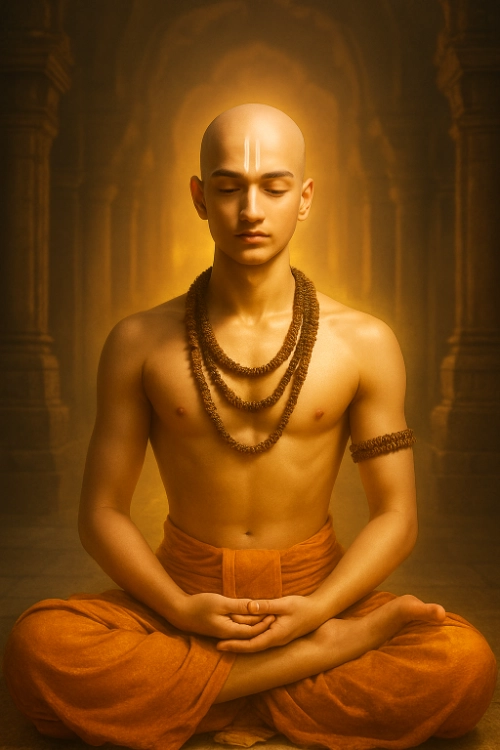
Commentary
This opening verse frames the chapter as a theological and ritual exposition on the Vyūha doctrine, central to Pāñcarātra and Purāṇic Vaiṣṇava thought. The four emanations—Vāsudeva, Saṅkarṣaṇa, Pradyumna, and Aniruddha—represent successive expansions of the Supreme Being for the purpose of cosmic order, creation, and spiritual realization. Each manifests a particular divine function: pure consciousness (Vāsudeva), individual soul and withdrawal (Saṅkarṣaṇa), mind and creative impulse (Pradyumna), and governance or intelligence (Aniruddha). The mantras invoking these forms serve both meditative and ritual purposes, allowing the practitioner to attune themselves with these cosmic principles.