Agni Purana
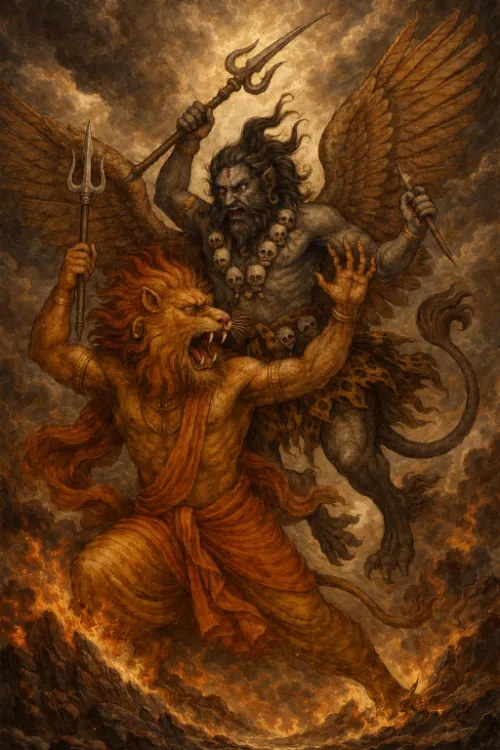
Chapter 95 - Subjugation of Narasimha
Verse 1
ऋषय ऊचुः
नृसिंहेन हतः पूर्वं हिरण्याक्षाग्रजः श्रुतम्।
कथं निषूदितस्तेन हिरण्यकशिपुर्वद ॥ १ ॥
ṛṣaya ūcuḥ
nṛsiṃhena hataḥ pūrvaṃ hiraṇyākṣāgrajaḥ śrutam |
kathaṃ niṣūditas tena hiraṇyakaśipur vada || 1 ||
The sages said: “We have heard that Hiraṇyakaśipu, the elder brother of Hiraṇyākṣa, was formerly slain by Narasiṃha. Tell us—how did he destroy Hiraṇyakaśipu?”
Verse 2
सूत उवाच
हिरण्यकशिपोः पुत्रः प्रह्लाद इति विश्रुतः ।
धर्मज्ञः सत्यसंपन्नस्तपस्वी चाभवत्सुधीः ॥ २॥
sūta uvāca
hiraṇyakaśipoḥ putraḥ prahlāda iti viśrutaḥ |
dharmajñaḥ satyasaṃpannas tapasvī cābhavat sudhīḥ || 2 ||
Sūta said: “Hiraṇyakaśipu had a son, well known by the name Prahlāda. He was versed in righteousness, endowed with truthfulness, devoted to austerity, and possessed of excellent understanding.”
Verse 4
जन्मप्रभृति देवेशं पूजयामास चाव्ययम्।
सर्वज्ञं सर्वगं विष्णुं सर्वदेवभवोद्भवम् ॥३॥
तमादिपुरुषं भक्त्या परब्रह्मस्वरूपिणम् ।
ब्रह्मणोधिपतिं सृष्टिस्थितिसंहारकारणम् ॥४॥
janma-prabhṛti deveśaṃ pūjayām āsa cāvyayam |
sarvajñaṃ sarvagaṃ viṣṇuṃ sarva-deva-bhavodbhavam || 3 ||
tam ādipuruṣaṃ bhaktyā parabrahmasvarūpiṇam |
brahmaṇo’dhipatiṃ sṛṣṭi-sthiti-saṃhāra-kāraṇam || 4 ||
From the moment of his birth, he worshipped Viṣṇu—the imperishable lord of the gods, the omniscient and all-pervading one, the source from whom all the deities arise. With devotion he revered him as the primordial Person, the embodiment of the Supreme Brahman, the lord of Brahmā, and the cause of creation, preservation, and dissolution.
Verse 6
सोपि विष्णोस्तथाभूतं दृष्ट्वा पुत्रं समाहितम् ।
नमो नारायणायेति गोविंदेति मुहुर्मुहः ॥ ५ ॥
स्तुवंतं प्राह देवारि: प्रदहन्निव पापधीः ।
न मां जानासि दुर्बुद्धे सर्वदैत्यामरेश्वरम्॥६॥
so ’pi viṣṇos tathābhūtaṃ dṛṣṭvā putraṃ samāhitam |
namo nārāyaṇāyeti govindeti muhur muhaḥ || 5 ||
stuvantaṃ prāha devāriḥ pradahann iva pāpadhīḥ |
na māṃ jānāsi durbuddhe sarvadaityāmareśvaram || 6 ||
Seeing his son absorbed in such devotion to Viṣṇu—repeatedly chanting ‘Obeisance to Nārāyaṇa’ and ‘Govinda!’—the enemy of the gods, whose mind was wicked, glared at him as though burning him and said: ‘O foolish boy, do you not know me? I am the lord of all the Daityas and even of the gods!’
Verse 8
प्रह्लाद वीरदुष्पुत्र द्विजदेवार्तिकारणम् ।
को विष्णुः पद्मजो वापि शक्रश्च वरुणोथ वा ॥७॥
वायः सोमस्तथेशानः पावको मम यः समः ।
मामेवार्चय भक्त्या च स्वल्पं नारायणं सदा ॥८॥
prahlāda vīra-duṣputra dvija-devārtikāraṇam |
ko viṣṇuḥ padmajo vāpi śakraś ca varuṇo ’tha vā || 7 ||
vāyuḥ somas tathaīśānaḥ pāvakaḥ mama yaḥ samaḥ |
mām evārcaya bhaktyā ca svalpaṃ nārāyaṇaṃ sadā || 8 ||
O Prahlāda—wicked son of a hero! I am the very cause of affliction to Brāhmaṇas and gods. Who is Viṣṇu? Who is the lotus-born Brahmā? Who are Indra or Varuṇa, or Vāyu, Soma, Īśāna, or Agni who could be equal to me? Worship me alone with devotion. Always regard Nārāyaṇa as insignificant.
Verse 12
प्रह्लाद जीविते वांछा तवैषा शृणु चास्ति चेत्।
श्रुत्वापि तस्य वचनं हिरण्यकशिपोः सुधीः ॥९॥
प्रह्लादः पूजयामास नमो नारायणेति च ।
नमो नारायणायेति सर्वदैत्यकुमारकान् ॥ १० ॥
अध्यापयामास च तां ब्रह्मविद्यां सुशोभनाम् ।
दुर्लंघ्यां चात्मनो दृष्ट्वा शक्रादिभिरपि स्वयम् ॥११॥
पुत्रेण लंघितामाज्ञां हिरण्यः प्राह दानवान्।
एतं नानाविधैर्वध्यं दुष्पुत्रं हंतुमर्हथ ॥ १२ ॥
prahlāda jīvite vāñchā tavaiṣā śṛṇu cāsti cet |
śrutvāpi tasya vacanaṃ hiraṇyakaśipoḥ sudhīḥ || 9 ||
prahlādaḥ pūjayām āsa namo nārāyaṇeti ca |
namo nārāyaṇāyeti sarva-daitya-kumārakān || 10 ||
adhyāpayām āsa ca tāṃ brahmavidyāṃ suśobhanām |
durlanghyāṃ cātmano dṛṣṭvā śakrādibhir api svayam || 11 ||
putreṇa langhitām ājñāṃ hiraṇyaḥ prāha dānavān |
etaṃ nānāvidhair vadhyaṃ duṣputraṃ hantum arhatha || 12 ||
Hiraṇyakaśipu said: ‘Prahlāda, if you wish to preserve your life, then listen to me.’ But even after hearing his words, the wise Prahlāda continued to worship, repeatedly chanting: ‘Namo Nārāyaṇāya!’ He taught all the sons of the Daityas to recite ‘Namo Nārāyaṇāya’ and instructed them in that splendid Brahma-vidyā. When Hiraṇyakaśipu saw that his own command—one impossible for even Indra and the other gods to transgress—had been disregarded by his son, he addressed the Dānavas: ‘This wicked son, deserving of death in many ways—kill him!’”
Verse 13
एवमुक्तास्तदा तेन दैत्येन सुदुरात्मना ।
निजघ्नुर्देवदेवस्य भृत्यं प्रह्लादमव्ययम् ॥१३॥
evam uktās tadā tena daityena sudurātmanā |
nijaghnur devadevasya bhṛtyaṃ prahlādam avyayam || 13 ||
Thus commanded by that extremely wicked Daitya, they attacked Prahlāda, the imperishable servant of the God of gods.
Verse 14
तत्र तत्प्रतिकृतं तदा सुरै-
दैत्यराजतनयं द्विजोत्तमाः ।
क्षीरवारिनिधिशायिनः प्रभोर्निष्-
फलं त्वथ बभूव तेजसा ॥१४॥
tatra tat pratikṛtaṃ tadā suraiḥ
daityarāja-tanayaṃ dvijottamāḥ |
kṣīra-vārinidhi-śāyinaḥ prabhor
niṣphalaṃ tv atha babhūva tejasā || 14 ||
O best of Brāhmaṇas, whatever was done there against the son of the Daitya king became utterly ineffective through the splendour of the Lord who reclines upon the ocean of milk.
Verse 16
तदाथ गर्वभिन्नस्य हिरण्यकशिपोः प्रभुः ।
तत्रैवाविरभूद्धंतुं नृसिंहाकृतिमास्थितः॥१५॥
जघानं च सुतं प्रेक्ष्य पितरं दानवाधमम्।
बिभेद तत्क्षणादेव करजैर्निशितैः शतैः ॥ १६ ॥
tadātha garva-bhinnasya hiraṇyakaśipoḥ prabhuḥ |
tatraivāvirabhūd dhantuṃ nṛsiṃhākṛtim āsthitaḥ || 15 ||
jaghānaṃ ca sutaṃ prekṣya pitaraṃ dānavādhamam |
bibheda tat-kṣaṇād eva karajair niśitaiḥ śataiḥ || 16 ||
Then, in order to break the pride of Hiraṇyakaśipu, the Lord appeared there itself, assuming the form of Narasiṃha to slay him. Seeing his son being attacked, he instantly tore apart his father—the vile Daitya— with hundreds of sharp nails.”
Verse 17
ततो निहत्य तं दैत्यं सबांधवमघापहः ।
पीडयामास दैत्येन्द्रं युगांताग्निरिवापरः ॥ १७ ॥
tato nihatyā taṃ daityaṃ sabāndhavam aghāpahaḥ |
pīḍayām āsa daityendraṃ yugāntāgnir ivāparaḥ || 17 ||
Then the remover of sins, having slain that Daitya together with his kinsmen, began to crush the Daitya chiefs like another fire of cosmic dissolution.
Verse 18
नादैस्तस्य नृसिंहस्य घोरैर्वित्रासितं जगत् ।
आब्रह्मभुवनाद्विप्राः प्रचचाल स सुव्रताः॥१८॥
nādaīs tasya nṛsiṃhasya ghorair vitrāsitaṃ jagat |
ā-brahma-bhuvanād viprāḥ pracakāla sa suvrataḥ || 18 ||
O Brāhmaṇas, with the terrible roars of Narasiṃha, the whole world was struck with fear; and from earth up to Brahmaloka, everything trembled because of him, the noble one.
Verse 21
दृष्ट्वा सुरासुरमहोरगसिद्धसाध्या-
स्तस्मिन् क्षणे हरिविरिञ्चिमुखा नृसिंहम् ।
धैर्यं बलं च समवाप्य ययुर्विसृज्य
आदिङ्मुखांतसुरक्षणतत्पराश्च॥१९॥
ततस्तैर्गतैः सैषा देवो नृसिंह: सहस्राकृतिः सर्वपात्सर्वबाहुः ।
सहस्रेक्षणः सोमसूर्याग्निनेत्रस्तदा
संस्थितः सर्वमावृत्य मायी ॥ २० ॥
तं तुष्टुवुः सुरश्रेष्ठा लोका लोकाचले स्थिताः ।
सब्रह्मकाः ससाध्याश्च सयमाः समरुद्गणाः॥२१॥
dṛṣṭvā surāsura-mahoraga-siddha-sādhyās tasmiṃ kṣaṇe hari-viriñci-mukhā nṛsiṃham |
dhairyaṃ balaṃ ca samavāpya yayur visṛjya
ādiṅ-mukhānta-sura-kṣaṇa-tatparāś ca || 19 ||
tatas tair gateṣu saiṣa devo nṛsiṃhaḥ
sahasrākṛtiḥ sarvapād sarvabāhuḥ |
sahasrekṣaṇaḥ soma-sūryāgni-netraḥ
tadā saṃsthitaḥ sarvam āvṛtya māyī || 20 ||
taṃ tuṣṭuvuḥ suraśreṣṭhā lokā lokācale sthitāḥ |
sabraḥmakāḥ sasādhyāś ca sayamāḥ samarud-gaṇāḥ || 21 ||
Seeing Nṛsiṃha at that moment, the gods, Asuras, great serpents, Siddhas and Sādhyas—headed by Hari and Brahmā—lost their courage and strength, and fled in every direction, intent only on preserving their lives.
Then, when they had fled, that very god Nṛsiṃha stood there—of a thousand forms, with feet and arms everywhere, thousand-eyed, and with the moon, sun, and fire for his eyes—encompassing all things, the wielder of Māyā.
Him the foremost gods praised—the worlds stationed at the Lokāloka mountain did so as well—together with Brahmā, the Sādhyas, Yama, and the hosts of the Maruts.
Verse 23
परात्परतरं ब्रह्म तत्त्वात्तत्त्वतमं भवान् ।
ज्योतिषां तु परं ज्योतिः परमात्मा जगन्मयः॥२२॥
स्थूलं सूक्ष्मं सुसूक्ष्मं च शब्दब्रह्ममयः शुभः ।
वागतीतो निरालंबो निर्द्वद्वो निरुपप्लवः ॥२३॥
parāt parataraṃ brahma tattvāt tattvatamaṃ bhavān |
jyotiṣāṃ tu paraṃ jyotiḥ paramātmā jagan-mayaḥ || 22 ||
sthūlaṃ sūkṣmaṃ susūkṣmaṃ ca śabda-brahmamayaḥ śubhaḥ |
vāgatīto nirālombo nirdvandvo nirupaplavaḥ || 23 ||
You are Brahman, higher than the highest; You are the innermost essence of all reality. You are the supreme Light of lights, the highest Self, pervading the entire universe. You are gross, subtle, and exceedingly subtle; You are formed of the sacred Sound-Brahman, O auspicious One. You are beyond the reach of speech, unsupported by anything, free from duality, and untouched by disturbance.
यज्ञभुग्यज्ञमूर्तिस्त्वं यज्ञिनां फलदः प्रभुः ।
भवान्मत्स्याकृतिः कौर्ममास्थाय जगति स्थितः ॥
yajña-bhug yajña-mūrtis tvaṃ yajñināṃ phaladaḥ prabhuḥ |
bhavān matsyākṛtiḥ kaurmam āsthāya jagati sthitaḥ ||
You are the enjoyer of sacrifices, the very embodiment of sacrifice, and the Lord who bestows the fruit upon the sacrificers. You have taken the form of the Fish, and, assuming the Tortoise form, You uphold the world.
Verse 25
वाराहीं चैव तां सैंहीमास्थायेह व्यवस्थितः।
देवानां देवरक्षार्थं निहत्य दितिजेश्वरम् ॥ २५ ॥
vārāhīṃ caiva tāṃ saiṃhīm āsthāyaiha vyavasthitaḥ |
devānāṃ deva-rakṣārthaṃ nihatya ditijeśvaram || 25 ||
Having assumed the Boar form and the Lion form, You stand manifested here, having slain the lord of the Daityas for the protection of the gods.
Verse 26
द्विजशापच्छलेनैवमवतीर्णेसि लीलया ।
न दृष्टं यत्त्वदन्यं हि भवान्सर्वं चराचरम्॥२६॥
dvija-śāpa-chalenaivam avatīrṇo ’si līlayā |
na dṛṣṭaṃ yat tvad anyaṃ hi bhavān sarvaṃ carācaram || 26 ||
Under the pretext of a Brāhmaṇa’s curse, You have descended thus, in divine play. For nothing apart from You is ever perceived—for You are the whole of the moving and unmoving universe.”
Verse 27
भवान्विष्णुर्भवान् रुद्रो भवानेव पितामहः ।
भवानादिर्भवानंतो भवानेव वयं विभो ॥ २७॥
bhavān viṣṇur bhavān rudro bhavān eva pitāmahaḥ |
bhavān ādir bhavān anto bhavān eva vayaṃ vibho || 27 ||
You are Viṣṇu; You are Rudra; You are indeed Pitāmaha. You are the beginning, and You are the end; and You alone are, indeed, ourselves, O all-pervading One.
Verse 28
भवानेव जगत्सर्वं प्रलापेन किमीश्वर ।
मायया बहुधा संस्थमद्वितीयमयं प्रभो ॥ २८ ॥
bhavān eva jagat sarvaṃ pralāpena kim īśvara |
māyayā bahudhā saṃstham advitīyam ayaṃ prabho || 28 ||
You alone are the entire universe—what use is there of further words, O Lord? Through Your Māyā You appear in manifold forms, yet this whole manifestation is non-dual and wholly Yourself, O Master.
Verse 30
स्तोष्यामस्त्वां कथं भासि देवदेव मृगाधिप ।
स्तुतोपि विविधैः स्तुत्यैर्भावैर्नानाविधैः प्रभुः॥२९
न जगाम द्विजाः शांतिं मानयन्योनिमात्मनः ।
यो नृसिंहस्तवं भक्त्या पठेद्वार्थं विचारयेत् ॥३०॥
stoṣyāmaḥ tvāṃ kathaṃ vāsi deve-deva mṛgādhipa |
stuto ’pi vividhaiḥ stutyaiḥ bhāvair nānāvidhaiḥ prabho || 29 ||
na jagāma dvijāḥ śāntiṃ mānayan svāṃ tanuṃ prabhuḥ |
yo nṛsiṃha-stavaṃ bhaktyā paṭhed vā ’rthaṃ vicārayet || 30 ||
How shall we praise You, O God of gods, O Lord in the form of a Lion? Even though hymned with many kinds of praises and with diverse devotional moods, O Lord, You did not become pacified. The Lord did not attain calmness, maintaining His own (terrible) form. Whoever recites this Nṛsiṃha-hymn with devotion, or reflects on its meaning, (attains its stated fruits…).
Verse 34
श्रावयेद्वा द्विजान्सर्वान् विष्णुलोके महीयते ।
तदंतरे शिवं देवाः सेंद्रा: सब्रह्मकाः प्रभुम्॥३१॥
संप्राप्य तुष्टुवः सर्वं विज्ञाप्य मृगरूपिणः ।
ततो ब्रह्मादयस्तूर्णं संस्तूय परमेश्वरम् ॥३२॥
आत्मत्राणाय शरणं जग्मुः परमकारणम् ।
मंदरस्थं महादेवं क्रीडमानं सहोमया ॥ ३३ ॥
सेवितं गणगंधर्वैः सिद्धैरप्सरसां गणैः ।
देवताभिः सह ब्रह्मा भीतभीतः सगद्गदम् ।
प्रणम्य दण्डवद्भूमौ तुष्टाव परमेश्वरम् ॥ ३४ ॥
śrāvayed vā dvijān sarvān viṣṇuloke mahīyate |
tad-antare śivaṃ devā sendrāḥ sa-brahmakāḥ prabhum ||31||
saṃprāpya tuṣṭuvuḥ sarvaṃ vijñāpya mṛgarūpiṇam |
tato brahmādayas tūrṇaṃ saṃstūya parameśvaram ||32||
ātma-trāṇāya śaraṇaṃ jagmuḥ parama-kāraṇam |
mandara-sthaṃ mahādevaṃ krīḍamānaṃ sah omayā ||33||
sevitaṃ gaṇa-gandharvaiḥ siddhair apsarasāṃ gaṇaiḥ |
devatābhiḥ saha brahmā bhīta-bhītaḥ sa-gad-gadam |
praṇamya daṇḍavad bhūmau tuṣṭāva parameśvaram ||34||
He who causes all the Brāhmaṇas to hear this Nṛsiṃha-hymn is honored in Viṣṇu’s world. Meanwhile, the gods—together with Indra and Brahmā—went to Lord Śiva. Having reached him, they praised him, informing him fully about the One who had taken the form of a Lion. Then Brahmā and the others quickly extolled Parameśvara. For the sake of preserving their own lives they sought refuge in the Supreme Cause—Mahādeva, who was upon Mount Mandara, sporting there with Umā. Served by the Gaṇas, Gandharvas, Siddhas, and hosts of Apsarases, Brahmā—utterly terrified, his voice faltering—bowed to the ground in full prostration and praised Parameśvara.
Verse 35
ब्रह्मोवाच
नमस्ते कालकालाय नमस्ते रुद्र मन्यवे ।
नमः शिवाय रुद्राय शङ्कराय शिवाय ते ॥ ३५ ॥
Brahmovāca
namas te kāla-kālāya namas te rudra manyave |
namaḥ śivāya rudrāya śaṅkarāya śivāya te || 35 ||
Brahmā said: Salutations to You, the destroyer of Time; salutations to You, O Rudra of mighty wrath. Salutations to Śiva, to Rudra, to Śaṅkara—salutations to You, O Śiva.
Verse 36
उग्रोसि सर्वभूतानां नियंतासि शिवोसि नः ।
नमः शिवाय शर्वाय शङ्करायार्त्तिहारिणे ॥३६॥
ugro ’si sarva-bhūtānāṃ niyantā ’si śivo ’si naḥ |
namaḥ śivāya śarvāya śaṅkarāyārtihāriṇe || 36 ||
You are the fierce one, the controller of all beings; You are our Śiva. Salutations to Śiva, to Śarva, to Śaṅkara—the remover of all distress.
Verse 37
भास्कराय विश्वाय विष्णवे ब्रह्मणे नमः ।
अंतकाय नमस्तुभ्यमुमायाः पतये नमः॥३७॥
bhāskarāya viśvāya viṣṇave brahmaṇe namaḥ |
antakāya namas tubhyam umāyāḥ pataye namaḥ || 37 ||
Salutation to You as Bhāskara, as the All, as Viṣṇu, and as Brahmā. Salutation to You as Antaka, and salutation to You, the Lord of Umā.
Verse 38
हिरण्यबाहवे साक्षाद्धिरण्यपतये नमः ।
शर्वाय सर्वरूपाय पुरुषाय नमोनमः ॥ ३८ ॥
hiraṇya-bāhave sākṣād hiraṇya-pataye namaḥ |
śarvāya sarva-rūpāya puruṣāya namo namaḥ || 38 ||
Salutations to the One with golden arms, to the manifest Golden Lord. Salutations to Śarva, to Him of all forms, to the Supreme Person—salutations again and again.
Verse 39
सदसद्व्यक्तिहीनाय महतः कारणाय ते ।
नित्याय विश्वरूपाय जायमानाय ते नमः ॥३९॥
sadasad-vyakti-hīnāya mahataḥ kāraṇāya te |
nityāya viśva-rūpāya jāyamānāya te namaḥ || 39 ||
Salutations to You who are free from the manifestation of being and non-being, to You who are the cause of Mahat; to the Eternal One, of universal form, who ever appears (in embodied forms)—salutations to You.”
Verse 40
जाता बहुधा लोके प्रभूताय नमोनमः ।
रुद्राय नीलरुद्राय कालरुदाय प्रचेतसे ॥ ४० ॥
jātaḥ bahudhā loke prabhūtāya namo namaḥ |
rudrāya nīla-rudrāya kāla-rudrāya pracetase || 40 ||
Salutations again and again to the One who is manifest in many forms in the world, to the mighty Prabhūta. Salutations to Rudra, to the dark Rudra, to Rudra as Time, and to Pracetas.
Verse 41
कालाय कालरूपाय नमः कालाङ्गहारिणे ।
मीढुष्टमाय देवाय शितिकंठाय ते नमः ॥४१॥
kālāya kāla-rūpāya namaḥ kālāṅga-hāriṇe |
mīḍhuṣṭamāya devāya śitikaṇṭhāya te namaḥ || 41 ||
Salutations to Kāla, to Him whose form is Kāla; salutations to the One who destroys Kāla’s power. Salutations to the most bountiful divine Lord, to You, the blue-throated One.
Verse 42
महीयसे नमस्तुभ्यं हंत्रे देवारिणां सदा ।
ताराय च सुताराय तारणाय नमोनमः ॥४२॥
mahīyase namas tubhyaṃ hantre devāriṇāṃ sadā |
tārāya ca sutārāya tāraṇāya namo namaḥ || 42 ||
Salutations to You, the Exalted One, the constant slayer of the enemies of the gods. Salutations to Tāra, to the Excellent Savior, to the Deliverer—salutations again and again.
Verse 43
हरिकेशाय देवाय शंभवे परमात्मने ।
देवानां शंभवे तुभ्यं भूतानां शंभवे नमः ॥ ४३ ॥
harikeśāya devāya śaṃbhave paramātmane |
devānāṃ śaṃbhave tubhyaṃ bhūtānāṃ śaṃbhave namaḥ || 43 ||
Salutations to Harikeśa, to the divine One, to Śambhu, the supreme Self. Salutations to You who are Śambhu for the gods, and Śambhu for all beings.
Verse 44
शंभवे हैमवत्याश्च मन्यवे रुद्ररूपिणे ।
कपर्दिने नमस्तुभ्यं कालकंठाय ते नमः ॥ ४४ ॥
śaṃbhave haimavatyāś ca manyave rudra-rūpiṇe |
kapardine namas tubhyaṃ kālakaṇṭhāya te namaḥ || 44 ||
Salutations to Śambhu, to the consort of Himavat’s daughter; salutations to the Wrathful One, the Rudra-formed. Salutations to Kapardin, the matted-haired Lord; salutations to You, O dark-throated One.
Verse 45
हिरण्याय महेशाय श्रीकंठाय नमोनमः ।
भस्मदिग्धशरीराय दण्डमुण्डीश्वराय च ॥ ४५॥
hiraṇyāya maheśāya śrīkaṇṭhāya namo namaḥ |
bhasma-digdha-śarīrāya daṇḍa-muṇḍīśvarāya ca || 45 ||
Repeated salutations to the golden One, to Maheśa, to the auspicious-throated Lord. Salutations to Him whose body is smeared with sacred ash, to the Lord of the staff and skulls.
Verse 46
नमो ह्रस्वाय दीर्घाय वामनाय नमोनमः ।
नम उग्रत्रिशूलाय उग्राय च नमोनमः ॥ ४६ ॥
namo hrasvāya dīrghāya vāmanāya namo namaḥ |
nama ugratriśūlāya ugrāya ca namo namaḥ || 46 ||
Salutations to the Short One, to the Tall One, and to the Dwarf; salutations again and again. Salutations to Him of the fierce trident, and to the Fierce One—salutations again and again.
Verse 47
भीमाय भीमरूपाय भीमकर्मरताय ते ।
अग्रेधाय वै भूत्वा नमो दूरेवधाय च ॥४७॥
bhīmāya bhīma-rūpāya bhīma-karma-ratāya te |
agredhāya vai bhūtvā namo dūre-vadhāya ca || 47 ||
Salutations to the Terrible One, to Him of terrible form, to Him who delights in terrible deeds. Salutations to Him who strikes at the forefront, and to Him who slays from afar.
Verse 48
धन्विने शूलिने तुभ्यं गदिने हलिने नमः ।
चक्रिणे वर्मिणे नित्यं दैत्यानां कर्मभेदिने ॥ ४८ ॥
dhanvine śūline tubhyaṃ gadine haline namaḥ |
cakriṇe varmiṇe nityaṃ daityānāṃ karma-bhedine || 48 ||
Salutations to You who bear the bow, to You who bear the trident, to You who bear the mace, and to You who wield the plough. Salutations to You who carry the discus and the armor, who ever shatter the designs of the Daityas.
Verse 49
सद्याय सद्यरूपाय सद्योजाताय ते नमः ।
वामाय वामरूपाय वामनेत्राय ते नमः ॥ ४९ ॥
sadyāya sadya-rūpāya sadyojātāya te namaḥ |
vāmāya vāma-rūpāya vāma-netrāya te namaḥ || 49 ||
Salutations to the Immediate One, to Him of the immediate form, to Sadyojāta. Salutations to Vāma, to Him whose form is Vāma, to Him of the Vāma (benign) eye.
Verse 51
अघोररूपाय विकटाय विकटशरीराय ते नमः ।
पुरुषरूपाय पुरुषैकतत्पुरुषाय वै नमः ॥५०॥
पुरुषार्थप्रदानाय पतये परमेष्ठिने ।
ईशानाय नमस्तुभ्यमीश्वराय नमोनमः ॥५१॥
aghorarūpāya vikaṭāya vikaṭa-śarīrāya te namaḥ |
puruṣarūpāya puruṣaika-tatpuruṣāya vai namaḥ || 50 ||
puruṣārtha-pradānāya pataye parameṣṭhine |
īśānāya namas tubhyam īśvarāya namo namaḥ || 51 ||
Salutations to Him of the Aghora form, to the Formidable One, to Him whose body is formidable. Salutations to Him of the Puruṣa-form, to the One whose very essence is the One Puruṣa, to Tatpuruṣa. Salutations to the Giver of the puruṣārthas, to the Lord, to the Supreme One who dwells above all. Salutations to Īśāna; salutations again and again to Īśvara.
Verse 54
ब्रह्मणे ब्रह्मरूपाय नमः साक्षाच्छिवाय ते ।
सर्वविष्णुर्नृसिंहस्य रूपमास्थाय विश्वकृत् ॥५२॥
हिरण्यकशिपुं हत्वा करजैर्निशतैः स्वयम् ।
दैत्येंद्रैर्बहुभिः सार्धं हितार्थं जगतां प्रभुः ॥ ५३ ॥
सैंहीं समानयन्योनिं बाधते निखिलं जगत् ।
यत्कृत्यमत्र देवेश तत्कुरुष्व भवानिह ॥५४॥
brahmaṇe brahma-rūpāya namaḥ sākṣācchivāya te |
sarva-viṣṇur nṛsiṃhasya rūpam āsthāya viśvakṛt || 52 ||
hiraṇyakaśipuṃ hatvā karajair niśitaiḥ svayam |
daityendrair bahubhiḥ sārdhaṃ hitārthaṃ jagatāṃ prabhuḥ || 53 ||
saiṃhīṃ samānayan yonim bādhate nikhilaṃ jagat |
yat kṛtyam atra deveśa tat kuruṣva bhavān iha || 54 ||
Salutations to Brahman, to Him whose form is Brahman; salutations to You, the manifest Śiva. The all-pervading Viṣṇu, the creator of the universe, has assumed the form of Narasiṃha. He Himself, with His sharp nails, slew Hiraṇyakaśipu—together with many Daitya-lords—for the welfare of the worlds. Maintaining the lion-form, He is afflicting the entire universe. Whatever must be done here, O Lord of the gods—do that now.
Verse 55
उग्रोसि सर्वदुष्टानां नियंतासि शिवोसि नः ।
कालकूटादिवपुषा त्राहि नः शरणागतान्॥५५॥
ugro ’si sarva-duṣṭānāṃ niyantā ’si śivo ’si naḥ |
kālakūṭādi-vapuṣā trāhi naḥ śaraṇāgatān || 55 ||
You are the fierce one, the restrainer of all the wicked; You are our auspicious protector. With Your form that bore the Kālakūṭa poison, protect us who have taken refuge in You.
शुक्रं तु वृत्तं विश्वेश क्रीडा वै केवलं वयम् ।
तवोन्मेषनिमेषाभ्यामस्माकं प्रलयोदयौः ॥५६॥
उन्मीलयेत्त्वयि ब्रह्मन्विनाशोस्ति न ते शिव ।
संतप्तास्मो वयं देव हरिणामिततेजसा ॥ ५७॥
सर्वलोकहितायैनं तत्त्वं संहर्तुमिच्छसि ।
śukraṃ tu vṛttaṃ viśveśa krīḍā vai kevalaṃ vayam |
tavonmeṣa-nimeṣābhyām asmākaṃ pralayodayaḥ || 56 ||
unmīlayet tvayi brahman vināśo ’sti na te śiva |
saṃtaptāsmo vayaṃ deva hariṇāmita-tejasā || 57 ||
sarva-loka-hitāyainaṃ tattvaṃ saṃhartum icchasi ||
O Lord of the universe, Your conduct is spotless, and we are merely the play of Your sport. By the opening and closing of Your eyes, our creation and dissolution occur. When You open Your eyes, O Brahman, there is no destruction for You, O Śiva. We are tormented, O god, by Hari of immeasurable splendor. For the welfare of all the worlds, You must truly pacify this one.
Verse 63
सूत उवाच
विज्ञापितस्तथा देवः प्रहसन्प्राह तान् सुरान् ॥५८॥
अभयं च ददौ तेषां हनिष्यामीति तं प्रभुः ।
सोपि शक्रः सुरैः सार्धं प्रणिपत्य यथागतम् ॥५९॥
जगाम भगवान् ब्रह्मा तथान्ये च सुरोत्तमाः ।
अथोत्थाय महादेवः शारभं रूपमास्थितः ॥६०॥
यौ प्रांते नृसिंहस्य गर्वितस्य मृगाशिनः ।
अपहृत्य तदा प्राणान् शरभः सुरपूजितः ॥ ६१ ॥
सिंहात्ततो नरो भूत्वा जगाम च यथाक्रमम्।
एवं स्तुतस्तदा देवैर्जगाम स यथाक्रमम्॥६२॥
यः पठेच्छृणुयाद्वपि संस्तवं शार्वमुत्तमम् ।
रुद्रलोकमनुप्राप्य रुद्रेण सह मोदते ॥ ६३ ॥
sūta uvāca
vijñāpitas tathā devaḥ prahasan prāha tān surān || 58 ||
abhayaṃ ca dadau teṣāṃ haniṣyāmīti taṃ prabhuḥ |
sa api śakraḥ suraiḥ sārdhaṃ praṇipatya yathāgatam || 59 ||
jagāma bhagavān brahmā tathānye ca surottamāḥ |
athotthāya mahādevaḥ śarabhaṃ rūpam āsthitaḥ || 60 ||
yaḥ prānte nṛsiṃhasya garvitasya mṛgāśinaḥ |
apahṛtya tadā prāṇān śarabhaḥ surapūjitaḥ || 61 ||
siṃhāt tato naro bhūtvā jagāma ca yathākramam |
evaṃ stutas tadā devair jagāma sa yathākramam || 62 ||
yaḥ paṭhec chṛṇuyād vāpi saṃstavaṃ śārvam uttamam |
rudralokam anuprāpya rudreṇa saha modate || 63 ||
Sūta said: Thus entreated, the god (Śiva), smiling, addressed the gods and granted them fearlessness, saying, ‘I shall subdue him.’ Indra, together with the gods, bowed and returned as he had come. Then Brahmā and the foremost gods departed, while Mahādeva arose and assumed the form of Śarabha. Śarabha, the mighty beast-eater, at the climax of the proud lion-form of Nṛsiṃha, suppressed his raging vital force and was honored by the gods. Then, having become a man again from the lion-form, he (Viṣṇu) departed in due order; and Mahādeva, praised by the gods, also departed in due order. He who recites or hears this excellent Śaiva hymn reaches the world of Rudra and rejoices there with Rudra.
Verse 95
इति श्रीलिङ्गमहापुराणे पूर्व भागे नारसिंहे
पञ्चनवतितमोऽध्यायः॥९५॥
iti śrī-liṅga-mahāpurāṇe pūrva-bhāge nārasiṃhe
pañcanavatitamo ’dhyāyaḥ || 95 ||
Thus ends the ninety-fifth chapter, entitled Narasimha, in the First Part of the glorious Liṅga Mahāpurāṇa.
Synopsis of Chapter 95 — Subjugation of Narasimha
1. Summary of the Narrative Framework
The sages begin by asking how Narasiṃha slew the formidable Hiraṇyakaśipu, prompting a retelling of the well-known episode. The text describes Prahlāda as a child born with innate devotion to Viṣṇu—virtuous, truthful, ascetic, and wise. From birth he worships the all-pervading Supreme, the origin of all deities and the cause of cosmic creation, preservation, and dissolution. His unshakable devotion, expressed through constant repetition of “Namo Nārāyaṇāya,” immediately provokes his father’s wrath. Hiraṇyakaśipu, blinded by pride, claims supremacy even over the gods and forbids Prahlāda from honoring Viṣṇu. When Prahlāda defies him, he commands the Daityas to kill his son, but none of their efforts can harm the boy, protected as he is by Viṣṇu’s grace.
2. Narasiṃha’s Advent and the Overwhelming of the Cosmos
To break Hiraṇyakaśipu’s arrogance, Viṣṇu manifests as Narasiṃha—the Man-Lion incarnation—and effortlessly tears the Daitya apart with His nails. After slaughtering the Daitya warriors, Narasiṃha’s terrible roar shakes the universe from earth up to Brahmaloka. Even the gods, Asuras, Siddhas, and Nāgas flee in terror, unable to withstand the intensity of His wrath. The narrative emphasizes that Narasiṃha transforms into a cosmic, multi-formed deity whose thousand limbs, thousand eyes, and solar-lunar-fiery radiance encompass and overwhelm the world. The gods, positioned at the bounds of the cosmos, offer hymns declaring Him Brahman, the Supreme Light, transcendent and immanent, gross and subtle, the One Reality appearing as all forms.
3. The Hymns and the Limits of Devotional Appeasement
Despite the gods’ profound praises—affirming Narasiṃha as the sacrifice, the enjoyer of sacrifice, and the source of every avatāra—His fury does not subside. The narrative signals that although hymns can describe divine attributes, they cannot always influence the deity’s immediate cosmic function; Narasiṃha remains in his “krodha-mūrti,” his wrath-form. A doctrinal implication emerges: the transcendent reality may adopt a form whose power cannot be neutralized even by its own laudatory recognition. This thematic tension sets the stage for the intervention of Śiva.
4. The Gods Appeal to Śiva and Praise His Supreme Status
Unable to pacify Narasiṃha, the gods turn to Mahādeva, who is described as the Supreme Cause, sporting with Umā on Mount Mandara. Their supplication is marked by fear and reverence, with Brahmā offering an extensive litany of Śiva’s names—Rudra, Śaṅkara, Bhīma, Kapardin, Nīlakaṇṭha—and praising Him as the destroyer of Time, the support of all beings, the one beyond duality, and the lord of every cosmic function. In this theological setting, Śiva is presented as the only being capable of restraining the unbounded fury of Viṣṇu’s Narasiṃha-form. This reflects a Śaiva Purāṇic perspective in which Śiva’s sovereignty encompasses even the avatāras of Viṣṇu.
5. Śiva as Śarabha and the Subduing of Narasiṃha
Śiva grants fearlessness to the gods and assumes the form of Śarabha—a fierce, composite, super-predatory being. This Śarabha confronts Narasiṃha at the apex of His rage. The conflict is symbolic rather than merely physical: Śarabha embodies the restraining, purificatory, and dissolving aspect of Śiva, capable of absorbing uncontrolled cosmic energies. Narasiṃha, whose avatāra-purpose (slaying Hiraṇyakaśipu) has been completed, is here portrayed as unable to return to equilibrium on His own. Through Śiva’s intervention, Narasiṃha’s fury is extinguished. Thereafter Viṣṇu resumes His peaceful human form and departs, while Śiva—honored by the gods—withdraws His Śarabha form.
6. Theological Message and Context
The Śarabha-Nṛsiṃha episode stands as one of the most explicit assertions of Śiva’s superiority found in Śaiva Purāṇas. It is not meant to negate Viṣṇu’s greatness—as the text explicitly identifies Him with Brahman—but to portray cosmic balance as reliant on Śiva’s ultimate power to control even the intense avatāric energies of Viṣṇu. In this Śaiva framing, Viṣṇu performs his dharma through incarnations, while Śiva remains the transcendent regulator of all divine actions. The narrative also underscores a key Purāṇic motif: whenever the cosmic equilibrium is threatened—even by a righteous but overwhelming divine manifestation—Śiva acts as the final harmonizing force.
7. Concluding Fruits of Recitation
The chapter ends with praise for the spiritual efficacy of reciting or listening to the Śarabha narrative and its associated hymns. One who recites it with devotion attains Rudra’s world and dwells with Him, a mark of supreme spiritual attainment in Śaiva theology. This closing benediction not only sacralizes the narrative but signals its doctrinal purpose: to elevate Śiva as the supreme stabilizing power in the cosmos and to present the Śarabha myth as a profound theological resolution to the overwhelming force released in Viṣṇu’s Narasiṃha avatāra.