Vamana Mahapurana
Chapter 7 - The Birth of Urvaśī and Prahlāda’s Battle with Nara-Nārāyaṇa
Verse 1-3
पुलस्त्य उवाच ।
ततोऽनङ्गं विभुर्दृष्ट्वा ब्रह्मन् नारायणो मुनिः ।
प्रहस्यैवं वचः प्राह—कन्दर्प, इह आस्यताम् ॥ १ ॥
तदक्षुब्धत्वमीक्ष्यास्य कामो विस्मयमागतः ।
वसन्तोऽपि महाचिन्तां जगामाशु महामुने ॥ २ ॥
ततश्चाप्सरसो दृष्ट्वा स्वागतेनाभिपूज्य च ।
वसन्तमाह भगवान्—एह्येहि, स्थीयतामिति ॥ ३ ॥
pulastya uvāca |
tato ’naṅgaṃ vibhur dṛṣṭvā brahman nārāyaṇo muniḥ |
prahasyaivaṃ vacaḥ prāha—kandarpa, iha āsyatām || 1 ||
tadakṣubdhatvam īkṣyāsya kāmo vismayam āgataḥ |
vasanto ’pi mahācintāṃ jagāmāśu mahāmune || 2 ||
tataś cāpsaraso dṛṣṭvā svāgatenābhipūjya ca |
vasantam āha bhagavān—ehy ehi, sthīyatām iti || 3 ||
Pulastya said: Then, O Brahman, the mighty sage Nārāyaṇa, seeing Anaṅga, smiled and addressed him with these words: “O Kandarpa, be seated here.”
Seeing that he remained entirely unagitated, Kāma was filled with astonishment, while Spring also immediately fell into deep anxiety, O great sage.
Then the Blessed Lord, seeing the Apsarases, honored them with words of welcome and said to Spring: “Come, come; remain here.”
Verse 4-6
ततो विहस्य भगवान् मञ्जरीं कुसुमावृताम् ।
आदाय प्राक् सुवर्णाङ्गीम् ऊर्वोर्बालां विनिर्ममे ॥ ४ ॥
ऊरूद्भवां स कन्दर्पो दृष्ट्वा सर्वाङ्गसुन्दरीम् ।
अमन्यत तदाऽनङ्गः—किमियं सा प्रिया रतिः ॥ ५ ॥
तदेव वदनं चारु स्वक्षिभ्रुकुटिलालकम् ।
सुनासावंशाधरोष्ठमालोकनपरायणम् ॥ ६ ॥
tato vihasya bhagavān mañjarīṃ kusumāvṛtām |
ādāya prāk suvarṇāṅgīm ūrvor bālāṃ vinirmame || 4 ||
ūrūdbhavāṃ sa kandarpo dṛṣṭvā sarvāṅgasundarīm |
amanyata tadānaṅgaḥ—kim iyaṃ sā priyā ratiḥ || 5 ||
tad eva vadanaṃ cāru svakṣibhru-kuṭilālakam |
sunāsāvaṃśādharauṣṭham ālokanaparāyaṇam || 6 ||
Then the Blessed Lord laughed, took a flower-cluster covered with blossoms, and before them fashioned from his thighs a young maiden whose limbs shone like gold.
Seeing that thigh-born maiden, beautiful in every limb, Kandarpa—Anaṅga—thought: “Could this be my beloved Rati herself?”
It was indeed that same lovely face: with beautiful eyes and brows, curling locks, a finely formed bridge of the nose and lower lip, and an appearance wholly captivating to behold.
Verse 7-9
तावेव हार्याविरलौ पीवरौ मग्नचूचुकौ ।
राजेतेऽस्याः कुचौ पीनौ सज्जनाविव संहतौ ॥ ७ ॥
तदेव तनु चार्वङ्ग्या वलित्रयविभूषितम् ।
उदरं राजते श्लक्ष्णं रोमावलिविभूषितम् ॥ ८ ॥
रोमावली च जघनाद् यान्ती स्तनतटं त्वियम् ।
राजते भृङ्गमालेव पुलिनात् कमलाकरम् ॥ ९ ॥
tāv eva hāryāv iralau pīvarau magnacūcukau |
rājete ’syāḥ kucau pīnau sajjanāv iva saṃhatau || 7 ||
tad eva tanu cārvaṅgyā valitrayavibhūṣitam |
udaraṃ rājate ślakṣṇaṃ romāvalivibhūṣitam || 8 ||
romāvalī ca jaghanād yāntī stanataṭaṃ tv iyam |
rājate bhṛṅgamāleva pulināt kamalākaram || 9 ||
Those same two captivating, close-set breasts—full and with scarcely projecting nipples—shone upon her, firm and closely joined as two virtuous people united in companionship.
That same slender and smooth abdomen of the beautiful-limbed maiden shone adorned with three delicate folds and embellished by a fine line of hair.
That line of hair, ascending from her lower abdomen toward the slopes of her breasts, appeared like a row of black bees traveling from a riverbank toward a lotus-filled lake.
Verse 10-12
जघनं त्वतिविस्तीर्णं भात्यस्या रशनावृतम् ।
क्षीरोदमथने बद्धं भुजङ्गेनेव मन्दरम् ॥ १० ॥
कदलीस्तम्भसदृशैरूर्ध्वमूलैरथोरुभिः ।
विभाति सा सुचार्वङ्गी पद्मकिञ्जल्कसन्निभा ॥ ११ ॥
जानुनी गूढगुल्फे च शुभे जङ्घे त्वरोमशे ।
विभातोऽस्यास्तथा पादौ अलक्तकसमत्विषौ ॥ १२ ॥
jaghanaṃ tv ativistīrṇaṃ bhāty asyā raśanāvṛtam |
kṣīrodamathane baddhaṃ bhujaṅgeneva mandaram || 10 ||
kadalīstambhasadṛśair ūrdhvamūlair athorubhiḥ |
vibhāti sā sucārvaṅgī padmakiñjalkasannibhā || 11 ||
jānunī gūḍhagulphe ca śubhe jaṅghe tv aromaśe |
vibhāto ’syās tathā pādau alaktakasamatviṣau || 12 ||
Her exceedingly broad hips, girdled with a sash, shone like Mount Mandara bound by a serpent during the churning of the Ocean of Milk.
That exquisitely formed maiden, resembling the filaments of a lotus, shone with thighs like plantain trunks, full and rounded at their upper roots.
Her knees were lovely, her ankles hidden, her shanks shapely and hairless; and likewise her two feet shone with the luster of red lac-dye.
Verse 13-15
इति सञ्चिन्तयन् कामस्तामनिन्दितलोचनाम् ।
कामातुरोऽसौ संजातः किमुतान्यो जनो मुने ॥ १३ ॥
माधवोऽप्युर्वशीं दृष्ट्वा सञ्चिन्तयत्, नारद ।
किंस्वित् कामनरेन्द्रस्य राजधानी स्वयं स्थिता ॥ १४ ॥
आयाता शशिनो नूनमियं कान्तिर्निशाक्षये ।
रविरश्मिप्रतापार्तिभीता शरणमागता ॥ १५ ॥
iti sañcintayan kāmas tām aninditalocanām |
kāmāturo ’sau sañjātaḥ kim utānyo jano mune || 13 ||
mādhavo ’py urvaśīṃ dṛṣṭvā sañcintayat, nārada |
kiṃsvit kāmanarendrasya rājadhānī svayaṃ sthitā || 14 ||
āyātā śaśino nūnam iyaṃ kāntir niśākṣaye |
raviraśmipratāpārtibhītā śaraṇam āgatā || 15 ||
While contemplating that maiden of irreproachable eyes in this way, Kāma himself became afflicted with desire. What, then, could be expected of any other person, O sage?
Spring also, upon seeing Urvaśī, wondered, O Nārada: “Has the very capital city of King Kāma taken bodily form and come to stand here?
Or perhaps this is the radiance of the Moon, which has come here at the end of the night, tormented and frightened by the fierce heat of the Sun’s rays, seeking refuge.”
Verse 16-18
इत्थं सञ्चिन्तयन्नेवावष्टभ्याप्सरोगणम् ।
तस्थौ मुनिरिव ध्यानमास्थितः स तु माधवः ॥ १६ ॥
ततः स विस्मितान् सर्वान् कन्दर्पादीन् महामुने ।
दृष्ट्वा प्रोवाच वचनं स्मितं कृत्वा शुभव्रतः ॥ १७ ॥
इयं ममोरुसम्भूता, कामाप्सरस माधव ।
नीयतां सुरलोकाय दीयतां वासवाय च ॥ १८ ॥
itthaṃ sañcintayann evāvaṣṭabhyāpsarogaṇam |
tasthau munir iva dhyānam āsthitaḥ sa tu mādhavaḥ || 16 ||
tataḥ sa vismitān sarvān kandarpādīn mahāmune |
dṛṣṭvā provāca vacanaṃ smitaṃ kṛtvā śubhavrataḥ || 17 ||
iyaṃ mamorusaṃbhūtā, kāmāpsarasa mādhava |
nīyatāṃ suralokāya dīyatāṃ vāsavāya ca || 18 ||
Continuing to reflect in this way, Mādhava restrained the host of Apsarases and stood motionless like a sage absorbed in meditation.
Then, O great sage, the observer of auspicious vows, seeing all of them—Kandarpa and the others—overcome with astonishment, smiled and addressed them.
“This maiden has arisen from my thigh. O Kāma, O Apsarases, and O Mādhava, let her be taken to the world of the gods and presented to Vāsava.”
Verse 19-21
इत्युक्ताः कम्पमानास्ते जग्मुर्गृह्योर्वशीं दिवम् ।
सहस्राक्षाय तां प्रादाद् रूपयौवनशालिनीम् ॥ १९ ॥
आचक्षुश्चरितं ताभ्यां धर्मजाभ्यां महामुने ।
देवराजाय कामाद्यास्ततोऽभूद् विस्मयः परः ॥ २० ॥
एतादृशं हि चरितं ख्यातिमग्र्यां जगाम ह ।
पातालेषु तथा मर्त्ये दिक्ष्वष्टासु जगाम च ॥ २१ ॥
ity uktāḥ kampamānās te jagmur gṛhyorvaśīṃ divam |
sahasrākṣāya tāṃ prādād rūpayauvanaśālinīm || 19 ||
ācakṣuś caritaṃ tābhyāṃ dharmajābhyāṃ mahāmune |
devarājāya kāmādyās tato ’bhūd vismayaḥ paraḥ || 20 ||
etādṛśaṃ hi caritaṃ khyātim agryāṃ jagāma ha |
pātāleṣu tathā martye dikṣv aṣṭāsu jagāma ca || 21 ||
Thus addressed, they tremblingly took Urvaśī and went to heaven, where they presented that maiden, endowed with beauty and youth, to the Thousand-eyed Indra.
O great sage, Kāma and the others related to the king of the gods the extraordinary deed of those two sons of Dharma. Indra was then filled with the greatest astonishment.
Such was their deed that it attained the highest renown; its fame spread throughout the subterranean worlds, the mortal realm, and all eight directions.
Verse 22-24
एकदा निहते रौद्रे हिरण्यकशिपौ मुने ।
अभिषिक्तस्तदा राज्ये प्रह्लादो नाम दानवः ॥ २२ ॥
तस्मिञ्छासति दैत्येन्द्रे देवब्राह्मणपूजके ।
मखानि भुवि राजानो यजन्ते विधिवत्तदा ॥ २३ ॥
ब्राह्मणाश्च तपो धर्मं तीर्थयात्राश्च कुर्वते ।
वैश्याश्च पशुवृत्तिस्थाः शूद्राः शुश्रूषणे रताः ॥ २४ ॥
ekadā nihate raudre hiraṇyakaśipau mune |
abhiṣiktas tadā rājye prahlādo nāma dānavaḥ || 22 ||
tasmiñ chāsati daityendre devabrāhmaṇapūjake |
makhāni bhuvi rājāno yajante vidhivat tadā || 23 ||
brāhmaṇāś ca tapo dharmaṃ tīrthayātrāś ca kurvate |
vaiśyāś ca paśuvṛttisthāḥ śūdrāḥ śuśrūṣaṇe ratāḥ || 24 ||
Once the fierce Hiraṇyakaśipu had been slain, O sage, a Dānava named Prahlāda was consecrated as king.
While that lord of the Daityas—one who honored the gods and Brahmins—was ruling, kings throughout the earth duly performed sacrifices.
Brahmins practiced austerity and religious duty and undertook pilgrimages; Vaiśyas maintained themselves through animal husbandry, while Śūdras devoted themselves to service.
Verse 25-28
चातुर्वर्ण्यं ततः स्वे स्वे आश्रमे धर्मकर्मणि ।
आवर्तत ततो देवा वृत्त्या युक्ता अभवन् मुने ॥ २५ ॥
ततस्तु च्यवनो नाम भार्गवेन्द्रो महातपाः ।
जगाम नर्मदां स्नातुं तीर्थं चैवाकुलीश्वरम् ॥ २६ ॥
तत्र दृष्ट्वा महादेवं नदीं स्नातुमवातरत् ।
अवतीर्णं प्रजग्राह नागः केकरलोहितः ॥ २७ ॥
गृहीतस्तेन नागेन सस्मार मनसा हरिम् ।
संस्मृते पुण्डरीकाक्षे निर्विषोऽभून्महोरगः ॥ २८ ॥
cāturvarṇyaṃ tataḥ sve sve āśrame dharmakarmaṇi |
āvartata tato devā vṛttyā yuktā abhavan mune || 25 ||
tatas tu cyavano nāma bhārgavendro mahātapāḥ |
jagāma narmadāṃ snātuṃ tīrthaṃ caivākulīśvaram || 26 ||
tatra dṛṣṭvā mahādevaṃ nadīṃ snātum avātarat |
avatīrṇaṃ prajagrāha nāgaḥ kekaralohitaḥ || 27 ||
gṛhītas tena nāgena sasmāra manasā harim |
saṃsmṛte puṇḍarīkākṣe nirviṣo ’bhūn mahoragaḥ || 28 ||
The fourfold social order then functioned within its respective āśramas and in the performance of religious duties. Thereafter, O sage, the gods too became supplied with their proper sustenance.
Then the great ascetic Cyavana, foremost among the descendants of Bhṛgu, went to the Narmadā to bathe and to the sacred place called Ākulīśvara.
There, after beholding Mahādeva, he descended into the river to bathe. As soon as he entered, a great serpent named Kekaralohita seized him.
Seized by that serpent, he mentally remembered Hari. The moment the Lotus-eyed Lord was remembered, the great serpent became devoid of venom.
Verse 29-31
नीतस्तेनातिरौद्रेण पन्नगेन रसातलम् ।
निर्विषश्चापि तत्याज च्यवनं भुजगोत्तमः ॥ २९ ॥
सन्त्यक्तमात्रो नागेन च्यवनो भार्गवोत्तमः ।
चचार नागकन्याभिः पूज्यमानः समन्ततः ॥ ३० ॥
विचरन् प्रविवेशाथ दानवानां महत् पुरम् ।
सम्पूज्यमानो दैत्येन्द्रैः प्रह्लादोऽथ ददर्श तम् ॥ ३१ ॥
nītas tenātiraudreṇa pannagena rasātalam |
nirviṣaś cāpi tatyāja cyavanaṃ bhujagottamaḥ || 29 ||
santyaktamātro nāgena cyavano bhārgavottamaḥ |
cacāra nāgakanyābhiḥ pūjyamānaḥ samantataḥ || 30 ||
vicaran praviveśātha dānavānāṃ mahat puram |
sampūjyamāno daityendraiḥ prahlādo ’tha dadarśa tam || 31 ||
That exceedingly fierce serpent carried Cyavana down into Rasātala; but, having become devoid of venom, the foremost of serpents released him.
As soon as he had been released by the serpent, Cyavana, the foremost of the Bhārgavas, wandered about, honored on every side by the Nāga maidens.
As he wandered, he entered the great city of the Dānavas. While he was being honored by the Daitya lords, Prahlāda saw him.
Verse 32-35
भृगुपुत्रे महातेजाः पूजां चक्रे यथार्हतः ।
सम्पूजितोपविष्टश्च पृष्टश्चागमनं प्रति ॥ ३२ ॥
स चोवाच—महाराज, महातीर्थं महाफलम् ।
स्नातुमेवागतोऽस्म्यद्य द्रष्टुं चैवाकुलीश्वरम् ॥ ३३ ॥
नद्यामेवावतीर्णोऽस्मि गृहीतश्चाहिना बलात् ।
समानीतोऽस्मि पाताले दृष्टश्चात्र भवानपि ॥ ३४ ॥
एतच्छ्रुत्वा तु वचनं च्यवनस्य दितीश्वरः ।
प्रोवाच धर्मसंयुक्तं स वाक्यं वाक्यकोविदः ॥ ३५ ॥
bhṛguputre mahātejāḥ pūjāṃ cakre yathārhataḥ |
sampūjitopaviṣṭaś ca pṛṣṭaś cāgamanaṃ prati || 32 ||
sa covāca—mahārāja, mahātīrthaṃ mahāphalam |
snātum evāgato ’smy adya draṣṭuṃ caivākulīśvaram || 33 ||
nadyām evāvatīrṇo ’smi gṛhītaś cāhinā balāt |
samānīto ’smi pātāle dṛṣṭaś cātra bhavān api || 34 ||
etac chrutvā tu vacanaṃ cyavanasya ditīśvaraḥ |
provāca dharmasaṃyuktaṃ sa vākyaṃ vākyakovidaḥ || 35 ||
The greatly radiant Prahlāda duly offered honor to the son of Bhṛgu. Having been respectfully received and seated, Cyavana was asked about the reason for his arrival.
He replied: “O great king, I came today to bathe at a great and highly meritorious tīrtha and to behold Ākulīśvara.
As soon as I entered the river, I was forcibly seized by a serpent. I was brought down into Pātāla, and here I have also encountered Your Majesty.”
Having heard these words of Cyavana, the lord of the descendants of Diti—skilled in speech—addressed him with words consonant with dharma.
प्रह्लाद उवाच
भगवन् कानि तीर्थानि पृथिव्यां कानि चाम्बरे
रसातले च कानि स्युरेतद् वक्तुं ममार्हसि ३६
prahlāda uvāca |
bhagavan, kāni tīrthāni pṛthivyāṃ kāni cāmbare |
rasātale ca kāni syur etad vaktuṃ mamārhasi || 36 ||
Prahlāda said: “O venerable Lord, which sacred places exist upon the earth, which in the celestial realm, and which in Rasātala? You should explain this to me.”
च्यवन उवाच
पृथिव्यां नैमिषं तीर्थमन्तरिक्षे च पुष्करम्
चक्रतीर्थं महाबाहो रसातलतले विदुः ३७
cyavana uvāca |
pṛthivyāṃ naimiṣaṃ tīrtham antarikṣe ca puṣkaram |
cakratīrthaṃ mahābāho rasātalatale viduḥ || 37 ||
Cyavana said: “On earth, Naimiṣa is the sacred tīrtha; in the intermediate celestial region is Puṣkara; and, O mighty-armed one, Cakratīrtha is known to exist in the depths of Rasātala.”
Verse 38
पुलस्त्य उवाच ।
श्रुत्वा तद्भार्गववचो दैत्यराजो महामुने ।
नैमिषं गन्तुकामस्तु दानवानिदमब्रवीत् ॥ ३८ ॥
pulastya uvāca |
śrutvā tad bhārgavavaco daityarājo mahāmune |
naimiṣaṃ gantukāmas tu dānavān idam abravīt || 38 ||
Pulastya said: O great sage, having heard those words of the Bhārgava, the king of the Daityas desired to go to Naimiṣa and addressed the Dānavas as follows.
Verse 39
प्रह्लाद उवाच ।
उत्तिष्ठध्वं गमिष्यामः स्नातुं तीर्थं हि नैमिषम् ।
द्रक्ष्यामः पुण्डरीकाक्षं पीतवाससमच्युतम् ॥ ३९ ॥
prahlāda uvāca |
uttiṣṭhadhvaṃ gamiṣyāmaḥ snātuṃ tīrthaṃ hi naimiṣam |
drakṣyāmaḥ puṇḍarīkākṣaṃ pītavāsasam acyutam || 39 ||
Prahlāda said: “Arise! We shall go to bathe at the sacred tīrtha of Naimiṣa, and we shall behold the Lotus-eyed Acyuta, clad in yellow garments.”
Verse 40-42
पुलस्त्य उवाच ।
इत्युक्ता दानवेन्द्रेण सर्वे ते दैत्यदानवाः ।
चक्रुरुद्योगमतुलं निर्जग्मुश्च रसातलात् ॥ ४० ॥
ते समभ्येत्य दैतेया दानवाश्च महाबलाः ।
नैमिषारण्यमागत्य स्नानं चक्रुर्मुदान्विताः ॥ ४१ ॥
ततो दितीश्वरः श्रीमान् मृगव्यां स चचार ह ।
चरन् सरस्वतीं पुण्यां ददर्श विमलोदकाम् ॥ ४२ ॥
pulastya uvāca |
ity uktā dānavendreṇa sarve te daityadānavāḥ |
cakrur udyogam atulaṃ nirjagmuś ca rasātalāt || 40 ||
te samabhyetya daiteyā dānavāś ca mahābalāḥ |
naimiṣāraṇyam āgatya snānaṃ cakrur mudānvitāḥ || 41 ||
tato ditīśvaraḥ śrīmān mṛgavyāṃ sa cacāra ha |
caran sarasvatīṃ puṇyāṃ dadarśa vimalodakām || 42 ||
Pulastya said: Thus addressed by the lord of the Dānavas, all those Daityas and Dānavas made extraordinary preparations and departed from Rasātala.
Having arrived there, those immensely powerful descendants of Diti and Danu reached the forest of Naimiṣa and joyfully performed their ritual bathing.
Then the illustrious lord of the descendants of Diti went out upon a hunt. While roaming, he beheld the sacred Sarasvatī, whose waters were perfectly clear.
Verse 43-45
तस्यादूरे महाशाखं शालवृक्षं शरैश्चितम् ।
ददर्श बाणानपरान् मुखे लग्नान् परस्परम् ॥ ४३ ॥
ततस्तानद्भुताकारान् बाणान् नागोपवीतकान् ।
दृष्ट्वाऽतुलं तदा चक्रे क्रोधं दैत्येश्वरः किल ॥ ४४ ॥
स ददर्श ततोऽदूरात् कृष्णाजिनधरौ मुनी ।
समुन्नतजटाभारौ तपस्यासक्तमानसौ ॥ ४५ ॥
tasyādūre mahāśākhaṃ śālavṛkṣaṃ śaraiś citam |
dadarśa bāṇān aparān mukhe lagnān parasparam || 43 ||
tatas tān adbhutākārān bāṇān nāgopavītakān |
dṛṣṭvātulaṃ tadā cakre krodhaṃ daityeśvaraḥ kila || 44 ||
sa dadarśa tato ’dūrāt kṛṣṇājinadharau munī |
samunnatajaṭābhārau tapasyāsaktamānasau || 45 ||
Not far from there, he saw a great-branched śāla tree covered with arrows, as well as other arrows whose points were lodged against one another.
Seeing those arrows of extraordinary form, encircled by serpents as though the serpents were their sacred threads, the lord of the Daityas became exceedingly angry.
Then, not far away, he saw two sages clothed in black antelope skins, bearing lofty masses of matted hair and with their minds wholly absorbed in austerity.
Verse 46-48
तयोश्च पार्श्वयोर्दिव्ये धनुषी लक्षणान्विते ।
शार्ङ्गमाजगवं चैवाक्षय्यौ च महेषुधी ॥ ४६ ॥
तौ दृष्ट्वाऽमन्यत तदा दाम्भिकाविति दानवः ।
ततः प्रोवाच वचनं तावुभौ पुरुषोत्तमौ ॥ ४७ ॥
किं भवद्भ्यां समारब्धं दम्भं धर्मविनाशनम् ।
क्व तपः क्व जटाभारः क्व चेमौ प्रवरायुधौ ॥ ४८ ॥
tayoś ca pārśvayor divye dhanuṣī lakṣaṇānvite |
śārṅgam ājagavaṃ caivākṣayyau ca maheṣudhī || 46 ||
tau dṛṣṭvāmanyata tadā dāmbhikāv iti dānavaḥ |
tataḥ provāca vacanaṃ tāv ubhau puruṣottamau || 47 ||
kiṃ bhavadbhyāṃ samārabdhaṃ dambhaṃ dharmavināśanam |
kva tapaḥ kva jaṭābhāraḥ kva cemau pravarāyudhau || 48 ||
At their two sides stood two divine bows, furnished with auspicious marks—Śārṅga and Ājagava—as well as two great inexhaustible quivers.
Seeing the two of them, the Dānava then thought, “These men are hypocrites.” Thereupon, he addressed those two foremost of men.
“What is this dharma-destroying pretense that you two have undertaken? What connection is there between austerity and these masses of matted hair—and what connection have these with your two excellent weapons?”
Verse 49-51
अथोवाच नरो दैत्यं—का ते चिन्ता, दितीश्वर ।
सामर्थ्ये सति यः कुर्यात् तत् सम्पद्येत तस्य हि ॥ ४९ ॥
अथोवाच दितीशस्तौ—का शक्तिर्युवयोरिह ।
मयि तिष्ठति दैत्येन्द्रे धर्मसेतुप्रवर्तके ॥ ५० ॥
नरस्तं प्रत्युवाचाथ—आवाभ्यां शक्तिरूर्जिता ।
न कश्चिच्छक्नुयाद् योद्धुं नरनारायणौ युधि ॥ ५१ ॥
athovāca naro daityaṃ—kā te cintā, ditīśvara |
sāmarthye sati yaḥ kuryāt tat sampadyeta tasya hi || 49 ||
athovāca ditīśas tau—kā śaktir yuvayor iha |
mayi tiṣṭhati daityendre dharmasetupravartake || 50 ||
naras taṃ pratyuvācātha—āvābhyāṃ śaktir ūrjitā |
na kaścic chaknuyād yoddhuṃ naranārāyaṇau yudhi || 51 ||
Nara then said to the Daitya: “Why should this concern you, O lord of the descendants of Diti? When a person possesses the necessary power, whatever he undertakes is successfully accomplished.”
The lord of the descendants of Diti then said to the two of them: “What power can you two possess here, while I—the lord of the Daityas and guardian of the bounds of dharma—am present?”
Nara replied to him: “The power possessed by the two of us is formidable. No one is capable of fighting Nara and Nārāyaṇa in battle.”
Verse 52-54
दैत्येश्वरस्ततः क्रुद्धः प्रतिज्ञामारुरोह च ।
यथा कथञ्चिज्जेष्यामि नरनारायणौ रणे ॥ ५२ ॥
इत्येवमुक्त्वा वचनं महात्मा
दितीश्वरः स्थाप्य बलं वनान्ते ।
वितत्य चापं गुणमाविकृष्य
तलध्वनिं घोरतरं चकार ॥ ५३ ॥
ततो नरस्त्वाजगवं हि चापम्
आनाम्य बाणान् सुबहूञ्शिताग्रान् ।
मुमोच तानप्रतिमैः पृषत्कैश्
चिच्छेद दैत्यस्तपनीयपुङ्खैः ॥ ५४ ॥
daityeśvaras tataḥ kruddhaḥ pratijñām āruroha ca |
yathā kathañcij jeṣyāmi naranārāyaṇau raṇe || 52 ||
ity evam uktvā vacanaṃ mahātmā
ditīśvaraḥ sthāpya balaṃ vanānte |
vitatya cāpaṃ guṇam āvikṛṣya
taladhvaniṃ ghorataraṃ cakāra || 53 ||
tato naras tv ājagavaṃ hi cāpam
ānāmya bāṇān subahūñ śitāgrān |
mumoca tān apratimaiḥ pṛṣatkaiś
ciccheda daityas tapanīyapuṅkhaiḥ || 54 ||
The lord of the Daityas then became enraged and made a solemn vow: “By whatever means possible, I shall defeat Nara and Nārāyaṇa in battle.”
Having spoken these words, the mighty lord of the descendants of Diti stationed his army at the edge of the forest. He extended his bow, drew back its string, and produced an exceedingly terrifying sound by striking it with his palm.
Nara then bent his bow Ājagava and released a great many sharp-pointed arrows. But the Daitya cut them apart with matchless, golden-fletched shafts.
Verse 55-57
छिन्नान् समीक्ष्याथ नरः पृषत्कान्
दैत्येश्वरेणाप्रतिमेन सङ्ख्ये ।
क्रुद्धः समानम्य महाधनुस्ततो
मुमोच चान्यान् विविधान् पृषत्कान् ॥ ५५ ॥
एकं नरो द्वौ दितिजेश्वरश्च
त्रीन् धर्मसूनुश्चतुरो दितीशः ।
नरस्तु बाणान् प्रमुमोच पञ्च
षड् दैत्यनाथो निशितान् पृषत्कान् ॥ ५६ ॥
सप्तर्षिमुख्यो द्विचतुश्च दैत्यो
नरस्तु षट् त्रीणि च दैत्यमुख्ये ।
षट् त्रीणि चैकं च दितीश्वरेण
मुक्तानि बाणानि नराय विप्र ॥ ५७ ॥
chinnān samīkṣyātha naraḥ pṛṣatkān
daityeśvareṇāpratimena saṅkhye |
kruddhaḥ samānamya mahādhanus tato
mumoca cānyān vividhān pṛṣatkān || 55 ||
ekaṃ naro dvau ditijeśvaraś ca
trīn dharmasūnuś caturo ditīśaḥ |
naras tu bāṇān pramumoca pañca
ṣaḍ daityanātho niśitān pṛṣatkān || 56 ||
saptarṣimukhyo dvicatuś ca daityo
naras tu ṣaṭ trīṇi ca daityamukhye |
ṣaṭ trīṇi caikaṃ ca ditīśvareṇa
muktāni bāṇāni narāya vipra || 57 ||
Seeing his arrows cut apart by the incomparable lord of the Daityas in battle, Nara became enraged. Bending his mighty bow, he then released other arrows of many different kinds.
Nara discharged one arrow, and the lord of the descendants of Diti discharged two; the son of Dharma released three, and the lord of Diti four. Nara then discharged five arrows, while the lord of the Daityas released six sharp-pointed shafts.
The foremost of sages released seven, and the Daitya twice four—that is, eight. Nara then discharged six and three—nine—against the foremost Daitya; and the lord of Diti released six, three, and one—ten—arrows at Nara, O Brahman.
Verse 58-60
एकं च षट् पञ्च नरेण मुक्तास्त्वष्टौ शराः सप्त च दानवेन ।
षट् सप्त चाष्टौ नव षण् नरेण द्विसप्ततिं दैत्यपतिः ससर्ज ॥ ५८ ॥
शतं नरस्त्रीणि शतानि दैत्यः षड् धर्मपुत्रो दश दैत्यराजः ।
ततोऽप्यसंख्येयतरान् हि बाणान् मुमोचतुस्तौ सुभृशं हि कोपात् ॥ ५९ ॥
ततो नरो बाणगणैरसंख्यैरवास्तरद् भूमिमथो दिशः खम् ।
स चापि दैत्यप्रवरः पृषत्कैश्चिच्छेद वेगात् तपनीयपुङ्खैः ॥ ६० ॥
ekaṃ ca ṣaṭ pañca nareṇa muktās tv aṣṭau śarāḥ sapta ca dānavena |
ṣaṭ sapta cāṣṭau nava ṣaṇ nareṇa dvisaptatiṃ daityapatiḥ sasarja || 58 ||
śataṃ naras trīṇi śatāni daityaḥ ṣaḍ dharmaputro daśa daityarājaḥ |
tato ’py asaṃkhyeyatarān hi bāṇān mumocatus tau subhṛśaṃ hi kopāt || 59 ||
tato naro bāṇagaṇair asaṃkhyair avāstarad bhūmim atho diśaḥ kham |
sa cāpi daityapravaraḥ pṛṣatkaiś ciccheda vegāt tapanīyapuṅkhaiḥ || 60 ||
Nara released one, six, and five arrows—twelve in all—while the Dānava released eight and seven—fifteen. Nara then discharged six, seven, eight, nine, and six—thirty-six arrows—and the lord of the Daityas launched seventy-two.
Nara released one hundred arrows, and the Daitya three hundred; the son of Dharma released six hundred, and the Daitya king one thousand. Thereafter, overcome by intense anger, the two released arrows in numbers beyond calculation.
Nara then covered the earth, the directions, and the sky with innumerable masses of arrows. But the foremost of the Daityas swiftly cut them apart with his gold-fletched shafts.
Verse 61-63
ततः पतत्त्रिभिर्वीरौ सुभृशं नरदानवौ ।
युद्धे वरास्त्रैर्युध्येतां घोररूपैः परस्परम् ॥ ६१ ॥
ततस्तु दैत्येन वरास्त्रपाणिना
चापे नियुक्तं तु पितामहास्त्रम् ।
महेश्वरास्त्रं पुरुषोत्तमेन
समं समाहत्य निपेततुस्तौ ॥ ६२ ॥
ब्रह्मास्त्रे तु प्रशमिते प्रह्लादः क्रोधमूर्च्छितः ।
गदां प्रगृह्य तरसा प्रचस्कन्द रथोत्तमात् ॥ ६३ ॥
tataḥ patattribhir vīrau subhṛśaṃ naradānavau |
yuddhe varāstrair yudhyetāṃ ghorarūpaiḥ parasparam || 61 ||
tatas tu daityena varāstrapāṇinā
cāpe niyuktaṃ tu pitāmahāstram |
maheśvarāstraṃ puruṣottamena
samaṃ samāhatya nipetatus tau || 62 ||
brahmāstre tu praśamite prahlādaḥ krodhamūrcchitaḥ |
gadāṃ pragṛhya tarasā pracakanda rathottamāt || 63 ||
Then the two heroes, Nara and the Dānava, fought one another fiercely in battle with winged arrows and excellent divine missiles of terrifying forms.
Thereupon the Daitya, wielding supreme missiles, placed the weapon of Pitāmaha upon his bow, while Puruṣottama employed the weapon of Maheśvara. The two missiles struck one another with equal force and fell neutralized.
When the Brahmāstra had been pacified, Prahlāda became overcome with rage. Seizing his mace, he forcefully leaped down from his excellent chariot.
Verse 64-65
गदापाणिं समायान्तं दैत्यं नारायणस्तदा ।
दृष्ट्वाऽथ पृष्ठतश्चक्रे नरं योद्धुमनाः स्वयम् ॥ ६४ ॥
ततो दितीशः सगदः समाद्रवत्
सशार्ङ्गपाणिं तपसां निधानम् ।
ख्यातं पुराणर्षिमुदारविक्रमं
नारायणं नारद लोकपालम् ॥ ६५ ॥
gadāpāṇiṃ samāyāntaṃ daityaṃ nārāyaṇas tadā |
dṛṣṭvātha pṛṣṭhataś cakre naraṃ yoddhumanāḥ svayam || 64 ||
tato ditīśaḥ sagadaḥ samādravat
saśārṅgapāṇiṃ tapasāṃ nidhānam |
khyātaṃ purāṇarṣim udāravikramaṃ
nārāyaṇaṃ nārada lokapālam || 65 ||
Seeing the Daitya approaching with mace in hand, Nārāyaṇa placed Nara behind himself, intending to fight personally.
Then the mace-bearing lord of the descendants of Diti rushed upon Nārāyaṇa—the wielder of Śārṅga, the repository of austerity, the renowned primeval sage of exalted prowess and protector of the worlds—O Nārada.
Verse 7
इति श्रीवामनपुराणे
सप्तमोऽध्यायः ॥ ७ ॥
iti śrīvāmanapurāṇe
saptamo ’dhyāyaḥ || 7 ||
Thus ends the seventh chapter of the venerable Vāmana Purāṇa.
Synopsis of Chapter 7 — The Birth of Urvaśī and Prahlāda’s Battle with Nara-Nārāyaṇa
Nārāyaṇa’s Ascetic Supremacy and the Creation of Urvaśī
The chapter opens with Nārāyaṇa confronting the combined powers of Kāma, Spring, and the celestial Apsarases, whom Indra has sent to disturb his austerities. Rather than becoming agitated, Nārāyaṇa receives them courteously and demonstrates complete yogic self-mastery. His freedom from desire reverses the intended temptation: Kāma and Spring themselves become astonished and unsettled by the sage’s composure.
Nārāyaṇa then manifests a maiden of unsurpassed beauty from his thigh. Her physical perfection is described through conventional Sanskrit poetic imagery, comparing her features to lotuses, plantain trunks, Mount Mandara, lunar radiance, and the concentrated kingdom of desire. Kāma himself becomes captivated and compares her to his consort Rati. Because she is born from Nārāyaṇa’s thigh, she is identified as Urvaśī and is sent to Indra as a gift, demonstrating that ascetic power can generate forms of beauty superior to those employed as instruments of temptation.
Prahlāda’s Righteous Rule and Cyavana’s Descent
The narrative shifts to the reign of Prahlāda following the death of Hiraṇyakaśipu. Although born among the Daityas, Prahlāda is portrayed as a protector of religious and social order: sacrifices resume, the gods receive their ritual portions, and the four social classes perform their prescribed functions. His reign establishes the dharmic setting for the subsequent pilgrimage narrative.
The sage Cyavana travels to the Narmadā and the tīrtha of Ākulīśvara, where he is seized by a serpent and carried into Rasātala. Through the mental remembrance of Hari, the serpent immediately loses its venom and releases him. Cyavana is then honored by the Nāgas and received by Prahlāda, who asks him to identify the foremost sacred places in the terrestrial, celestial, and subterranean regions. Cyavana names Naimiṣa on earth, Puṣkara in the intermediate realm, and Cakratīrtha in Rasātala.
Pilgrimage to Naimiṣa and the Armed Ascetics
Prahlāda responds by leading the Daityas and Dānavas from Rasātala to Naimiṣāraṇya, where they perform ritual bathing. While hunting near the Sarasvatī, Prahlāda encounters a śāla tree covered with arrows and discovers the sages Nara and Nārāyaṇa. They possess the external marks of ascetics—antelope skins, matted hair, and absorption in austerity—yet beside them stand the divine bows Ājagava and Śārṅga, together with inexhaustible quivers.
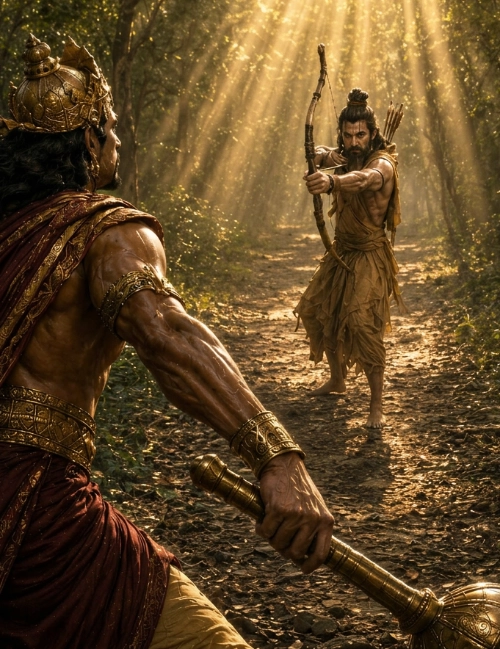
Prahlāda interprets this conjunction of asceticism and weaponry as religious hypocrisy. Nara rejects the accusation, asserting that one who genuinely possesses the required power may successfully undertake both disciplines. The confrontation escalates into an archery contest, progressing from individually counted arrows to volleys of hundreds, and finally to innumerable shafts. Divine weapons are then deployed: Prahlāda’s Brahmāstra is neutralized by the Maheśvarāstra, after which the enraged Daitya abandons ranged combat and charges with a mace. Nārāyaṇa steps forward to confront him personally, embodying the chapter’s central theological principle—that perfect austerity and martial power are complementary instruments in the preservation of dharma.


Commentary
The striking feature of these verses is Nārāyaṇa’s complete akṣubdhatva, “freedom from agitation.” Kāma, Spring, and the Apsarases had transformed the hermitage specifically to disturb his ascetic concentration, yet he responds neither with anger nor temptation, but with laughter, courtesy, and hospitality.
The expression prahasya, “having smiled or laughed,” conveys effortless superiority rather than mockery. Nārāyaṇa has already understood the purpose of Indra’s agents, but their combined erotic and seasonal power has no effect upon him. This reversal causes Kāma’s astonishment and Spring’s anxiety: the forces ordinarily capable of unsettling gods, sages, and living beings have encountered perfect yogic stability.
The imperatives āsyatām, “be seated,” and sthīyatām, “remain here,” are formally impersonal and courteous. By welcoming Kāma, Spring, and the Apsarases as guests, Nārāyaṇa converts an attempted assault upon his tapas into an occasion for hospitality and a demonstration of ascetic mastery.