Vamana Mahapurana
Chapter 9 - Andhaka’s War Against the Gods
Verse 1-3
नारद उवाच ।
नेत्रहीनः कथं राज्ये प्रह्लादेनान्धको मुने ।
अभिषिक्तो जानतापि राजधर्मं सनातनम् ॥ १ ॥
पुलस्त्य उवाच ।
लब्धचक्षुरसौ भूयो हिरण्याक्षेऽपि जीवति ।
ततोऽभिषिक्तो दैत्येन प्रह्लादेन निजे पदे ॥ २ ॥
नारद उवाच ।
राज्येऽन्धकोऽभिषिक्तस्तु किमाचरत सुव्रत ।
देवादिभिः सह कथं समास्ते तद् वदस्व मे ॥ ३ ॥
nārada uvāca |
netrahīnaḥ kathaṃ rājye prahlādenāndhako mune |
abhiṣikto jānatāpi rājadharmaṃ sanātanam || 1 ||
pulastya uvāca |
labdhacakṣur asau bhūyo hiraṇyākṣe ’pi jīvati |
tato ’bhiṣikto daityena prahlādena nije pade || 2 ||
nārada uvāca |
rājye ’ndhako ’bhiṣiktas tu kim ācarata suvrata |
devādibhiḥ saha kathaṃ samāste tad vadasva me || 3 ||
Nārada said: O sage, how was the blind Andhaka consecrated as king by Prahlāda, although Prahlāda knew the eternal duties governing kingship?
Pulastya said: He had regained his sight while Hiraṇyākṣa was still alive. Thereafter, he was installed in his proper position by Prahlāda, the Daitya.
Nārada said: O virtuous one, after Andhaka had been consecrated as king, how did he conduct himself? How did he live and interact with the gods and the other beings? Tell me this.
Verse 4-6
पुलस्त्य उवाच ।
राज्येऽभिषिक्तो दैत्येन्द्रो हिरण्याक्षसुतोऽन्धकः ।
तपसाराध्य देवेशं शूलपाणिं त्रिलोचनम् ॥ ४ ॥
अजेयत्वमवध्यत्वं सुरसिद्धर्षिपन्नगैः ।
अदाह्यत्वं हुताशेन अक्लेद्यत्वं जलेन च ॥ ५ ॥
एवं स वरलब्धस्तु दैत्यो राज्यमपालयत् ।
शुक्रं पुरोहितं कृत्वा समध्यास्ते ततोऽन्धकः ॥ ६ ॥
pulastya uvāca |
rājye ’bhiṣikto daityendro hiraṇyākṣasuto ’ndhakaḥ |
tapasārādhya deveśaṃ śūlapāṇiṃ trilocanam || 4 ||
ajeyatvam avadhyatvaṃ surasiddharṣipannagaiḥ |
adāhyatvaṃ hutāśena akledyatvaṃ jalena ca || 5 ||
evaṃ sa varalabdhas tu daityo rājyam apālayat |
śukraṃ purohitaṃ kṛtvā samadhyāste tato ’ndhakaḥ || 6 ||
Pulastya said: After Andhaka, the lord of the Daityas and son of Hiraṇyākṣa, had been consecrated to the kingship, he propitiated through austerities the Lord of the gods—the trident-bearing, three-eyed deity.
He obtained the conditions of being unconquerable and incapable of being slain by gods, Siddhas, seers, or serpents; of being incombustible by fire; and incapable of being soaked or dissolved by water.
Having thus obtained these boons, the Daitya governed the kingdom. Then Andhaka appointed Śukra as his royal priest and assumed his sovereign station.”
Verse 7-9
ततश्चक्रे समुद्योगं देवानामन्धकोऽसुरः ।
आक्रम्य वसुधां सर्वां मनुजेन्द्रान् पराजयत् ॥ ७ ॥
पराजित्य महीपालान् सहायार्थे नियोज्य च ।
तैः समं मेरुशिखरं जगामाद्भुतदर्शनम् ॥ ८ ॥
शक्रोऽपि सुरसैन्यानि समुद्योज्य महागजम् ।
समारुह्यामरावत्यां गुप्तिं कृत्वा विनिर्ययौ ॥ ९ ॥
tataś cakre samudyogaṃ devānām andhako ’suraḥ |
ākramya vasudhāṃ sarvāṃ manujendrān parājayat || 7 ||
parājitya mahīpālān sahāyārthe niyojya ca |
taiḥ samaṃ meruśikharaṃ jagāmādbhutadarśanam || 8 ||
śakro ’pi surasainyāni samudyojya mahāgajam |
samāruhyāmarāvatyāṃ guptiṃ kṛtvā viniryayau || 9 ||
Then Andhaka, the Asura, commenced preparations for an expedition against the gods. Invading the whole earth, he defeated the foremost kings among men.
Having vanquished those rulers and compelled them to serve as his auxiliaries, he went together with them to the wondrous summit of Mount Meru.
Śakra, for his part, mobilized the armies of the gods, mounted his great elephant, arranged for the protection of Amarāvatī, and marched forth.
Verse 10-12
शक्रस्यानु तथैवान्ये लोकपाला महौजसः ।
आरुह्य वाहनं स्वं स्वं सायुधा निर्ययुर्बहिः ॥ १० ॥
देवसेनाऽपि च समं शक्रेणाद्भुतकर्मणा ।
निर्जगामातिवेगेन गजवाजिरथादिभिः ॥ ११ ॥
अग्रतो द्वादशादित्याः पृष्ठतश्च त्रिलोचनाः ।
मध्येऽष्टौ वसवो विश्वे साध्याश्विमरुतां गणाः ।
यक्षविद्याधराद्याश्च स्वं स्वं वाहनमास्थिताः ॥ १२ ॥
śakrasyānu tathaivānye lokapālā mahaujasaḥ |
āruhya vāhanaṃ svaṃ svaṃ sāyudhā niryayur bahiḥ || 10 ||
devasenāpi ca samaṃ śakreṇādbhutakarmaṇā |
nirjagāmātivegena gajavājirathādibhiḥ || 11 ||
agrato dvādaśādityāḥ pṛṣṭhataś ca trilocanāḥ |
madhye ’ṣṭau vasavo viśve sādhyāśvimarutāṃ gaṇāḥ |
yakṣavidyādharādyāś ca svaṃ svaṃ vāhanam āsthitāḥ || 12 ||
Following Śakra, the other mighty guardians of the worlds likewise mounted their respective vehicles and went forth, bearing their weapons.
The army of the gods also marched out at tremendous speed together with Śakra, the performer of wondrous deeds, accompanied by elephants, horses, chariots, and other forces.
At the front were the twelve Ādityas, and at the rear were the three-eyed Rudras. In the center were the eight Vasus, the Viśvedevas, and the hosts of the Sādhyas, Aśvins, and Maruts. The Yakṣas, Vidyādharas, and the other divine classes were also mounted upon their respective vehicles.
Verse 13-15
नारद उवाच ।
रुद्रादीनां वदस्वेह वाहनानि च सर्वशः ।
एकैकस्यापि धर्मज्ञ परं कौतूहलं मम ॥ १३ ॥
पुलस्त्य उवाच ।
शृणुष्व कथयिष्यामि सर्वेषामपि नारद ।
वाहनानि समासेन एकैकस्यानुपूर्वशः ॥ १४ ॥
रुद्रहस्ततलोत्पन्नो महावीर्यो महाजवः ।
श्वेतवर्णो गजपतिर्देवराजस्य वाहनम् ॥ १५ ॥
nārada uvāca |
rudrādīnāṃ vadasveha vāhanāni ca sarvaśaḥ |
ekaikasyāpi dharmajña paraṃ kautūhalaṃ mama || 13 ||
pulastya uvāca |
śṛṇuṣva kathayiṣyāmi sarveṣām api nārada |
vāhanāni samāsena ekaikasyānupūrvaśaḥ || 14 ||
rudrahastatalotpanno mahāvīryo mahājavaḥ |
śvetavarṇo gajapatir devarājasya vāhanam || 15 ||
Nārada said: O knower of dharma, tell me here, in full, the vehicles of Rudra and the other deities, each one individually, for my curiosity is exceedingly great.
Pulastya said: Listen, O Nārada. I shall briefly describe the vehicles of all of them, one by one, and in their proper sequence.
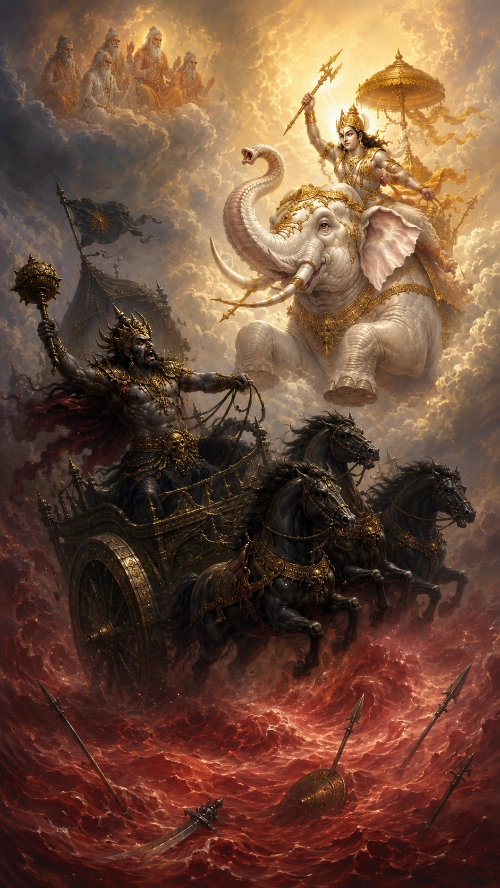
The lord of elephants, born from the palm of Rudra’s hand, possessed of immense strength and tremendous speed, and white in color, is the vehicle of the king of the gods.
Verse 16-18
रुद्रोरुसंभवो भीमः कृष्णवर्णो मनोजवः ।
पौण्ड्रको नाम महिषो धर्मराजस्य नारद ॥ १६ ॥
रुद्रकर्णमलोद्भूतः श्यामो जलधिसंज्ञकः ।
शिशुमारो दिव्यगतिर्वाहनं वरुणस्य च ॥ १७ ॥
रौद्रः शकटचक्राक्षः शैलाकारो नरोत्तमः ।
अम्बिकापादसंभूतो वाहनं धनदस्य तु ॥ १८ ॥
rudrorusaṃbhavo bhīmaḥ kṛṣṇavarṇo manojavaḥ |
pauṇḍrako nāma mahiṣo dharmarājasya nārada || 16 ||
rudrakarṇamalodbhūtaḥ śyāmo jaladhisaṃjñakaḥ |
śiśumāro divyagatir vāhanaṃ varuṇasya ca || 17 ||
raudraḥ śakaṭacakrākṣaḥ śailākāro narottamaḥ |
ambikāpādasaṃbhūto vāhanaṃ dhanadasya tu || 18 ||
Born from Rudra’s thigh, terrifying, black in color, and swift as thought, the buffalo named Pauṇḍraka is the vehicle of Dharmarāja, O Nārada.
Born from the wax of Rudra’s ear, dark-hued and known by the name Jaladhi, the śiśumāra of celestial movement is the vehicle of Varuṇa.
Fierce, with eyes like the wheels of a cart, mountain-like in form, and foremost among men, the being born from Ambikā’s feet is the vehicle of Dhanada.
Verse 19-21
एकादशानां रुद्राणां वाहनानि महामुने ।
गन्धर्वाश्च महावीर्या भुजगेन्द्राश्च दारुणाः ।
श्वेतानि सौरभेयानि वृषाण्युग्रजवानि च ॥ १९ ॥
रथं चन्द्रमसश्चार्द्धसहस्रं हंसवाहनम् ।
हरयो रथवाहाश्च आदित्या मुनिसत्तम ॥ २० ॥
कुञ्जरस्थाश्च वसवो यक्षाश्च नरवाहनाः ।
किन्नरा भुजगारूढा हयारूढौ तथाश्विनौ ॥ २१ ॥
ekādaśānāṃ rudrāṇāṃ vāhanāni mahāmune |
gandharvāś ca mahāvīryā bhujagendrāś ca dāruṇāḥ |
śvetāni saurabheyāni vṛṣāṇy ugrajavāni ca || 19 ||
rathaṃ candramasaś cārddhasahasraṃ haṃsavāhanam |
harayo rathavāhāś ca ādityā munisattama || 20 ||
kuñjarasthāś ca vasavo yakṣāś ca naravāhanāḥ |
kinnarā bhujagārūḍhā hayārūḍhau tathāśvinau || 21 ||
O great sage, the vehicles of the eleven Rudras are mighty Gandharvas, terrible serpent-lords, and white bulls descended from Surabhī, possessed of fierce speed.
The Moon has a chariot drawn by five hundred geese, and the Ādityas, O best of sages, have horses as the draught-animals of their chariots.
The Vasus are mounted on elephants; the Yakṣas have men as their vehicles; the Kinnaras ride upon serpents; and the two Aśvins ride upon horses.
Verse 22-24
सारङ्गाधिष्ठिता ब्रह्मन् मरुतो घोरदर्शनाः ।
शुकारूढाश्च कवयो गन्धर्वाश्च पदातिनः ॥ २२ ॥
आरुह्य वाहनान्येवं स्वानि स्वान्यमरोत्तमाः ।
संनह्य निर्ययुर्हृष्टा युद्धाय सुमहौजसः ॥ २३ ॥
नारद उवाच ।
गदितानि सुरादीनां वाहनानि त्वया मुने ।
दैत्यानां वाहनान्येवं यथावद् वक्तुमर्हसि ॥ २४ ॥
sāraṅgādhiṣṭhitā brahman maruto ghoradarśanāḥ |
śukārūḍhāś ca kavayo gandharvāś ca padātinaḥ || 22 ||
āruhya vāhanāny evaṃ svāni svāny amarottamāḥ |
saṃnahya niryayur hṛṣṭā yuddhāya sumahaujasaḥ || 23 ||
nārada uvāca |
gaditāni surādīnāṃ vāhanāni tvayā mune |
daityānāṃ vāhanāny evaṃ yathāvad vaktum arhasi || 24 ||
O Brāhmaṇa, the fearsome-looking Maruts are mounted upon deer; the Kavis ride upon parrots, while the Gandharvas proceed on foot.
Thus, the foremost of the immortals mounted their respective vehicles. Arming themselves, those exceedingly powerful beings joyfully marched forth for battle.
Nārada said: O sage, you have described the vehicles of the gods and the other divine beings. You should now duly describe the vehicles of the Daityas in the same manner.
Verse 25-27
पुलस्त्य उवाच ।
शृणुष्व दानवादीनां वाहनानि द्विजोत्तम ।
कथयिष्यामि तत्त्वेन यथावच्छ्रोतुमर्हसि ॥ २५ ॥
अन्धकस्य रथो दिव्यो युक्तः परमवाजिभिः ।
कृष्णवर्णैः सहस्रारस्त्रिनल्वपरिमाणवान् ॥ २६ ॥
प्रह्लादस्य रथो दिव्यश्चन्द्रवर्णैर्हयोत्तमैः ।
उह्यमानस्तथाष्टाभिः श्वेतरुक्ममयः शुभः ॥ २७ ॥
pulastya uvāca |
śṛṇuṣva dānavādīnāṃ vāhanāni dvijottama |
kathayiṣyāmi tattvena yathāvac chrotum arhasi || 25 ||
andhakasya ratho divyo yuktaḥ paramavājibhiḥ |
kṛṣṇavarṇaiḥ sahasrāras trinalvaparimāṇavān || 26 ||
prahlādasya ratho divyaś candravarṇair hayottamaiḥ |
uhyamānas tathāṣṭābhiḥ śvetarukmamayaḥ śubhaḥ || 27 ||
Pulastya said: Listen, O best of the twice-born, to the vehicles of the Dānavas and the other Asuras. I shall describe them accurately; you should hear the account in due order.
Andhaka possessed a divine chariot, yoked to excellent horses of black color. It had a thousand spokes and measured three nalvas in extent.
Prahlāda’s divine chariot was drawn by eight excellent horses, moon-like in color. It was auspicious and fashioned of bright, pale gold.
Verse 28-30
विरोचनस्य च गजः कुजम्भस्य तुरङ्गमः ।
जम्भस्य तु रथो दिव्यो हयैः काञ्चनसन्निभैः ॥ २८ ॥
शङ्कुकर्णस्य तुरगो हयग्रीवस्य कुञ्जरः ।
रथो मयस्य विख्यातो दुन्दुभेश्च महोरगः ।
शम्बरस्य विमानोऽभूदयःशङ्कोर्मृगाधिपः ॥ २९ ॥
बलवृत्रौ च बलिनौ गदामुसलधारिणौ ।
पद्भ्यां दैवतसैन्यान्यभिद्रवितुमुद्यतौ ॥ ३० ॥
virocanasya ca gajaḥ kujambhasya turaṅgamaḥ |
jambhasya tu ratho divyo hayaiḥ kāñcanasannibhaiḥ || 28 ||
śaṅkukarṇasya turago hayagrīvasya kuñjaraḥ |
ratho mayasya vikhyāto dundubheś ca mahoragaḥ |
śambarasya vimāno ’bhūd ayaḥśaṅkor mṛgādhipaḥ || 29 ||
balavṛtrau ca balinau gadāmusaladhāriṇau |
padbhyāṃ daivatasainyāny abhidrav samudyatau || 30 ||
Virocana had an elephant as his vehicle, while Kujambha had a horse. Jambha possessed a divine chariot drawn by gold-like horses.
Śaṅkukarṇa had a horse, and Hayagrīva an elephant. Maya was renowned for his chariot, while Dundubhi was renowned for his great serpent. Śambara possessed an aerial vehicle, and Ayaḥśaṅku had the lord of beasts—a lion—as his mount.
The mighty Bala and Vṛtra, bearing a mace and a pestle, set out on foot, intent upon charging the armies of the gods.
Verse 31-33
ततो रणोऽभूत् तुमुलः संकुलोऽतिभयङ्करः ।
रजसा संवृतो लोकः पिङ्गवर्णेन नारद ॥ ३१ ॥
नाज्ञासीच्च पिता पुत्रं न पुत्रः पितरं तथा ।
स्वानेवान्ये निजघ्नुर्वै परानन्ये च सुव्रत ॥ ३२ ॥
अभिद्रुतो महावेगो रथोपरि रथस्तदा ।
गजो मत्तगजेन्द्रं च सादी सादिनमभ्यगात् ॥ ३३ ॥
tato raṇo ’bhūt tumulaḥ saṃkulo ’tibhayaṅkaraḥ |
rajasā saṃvṛto lokaḥ piṅgavarṇena nārada || 31 ||
nājñāsīc ca pitā putraṃ na putraḥ pitaraṃ tathā |
svān evānye nijaghnur vai parān anye ca suvrata || 32 ||
abhidruto mahāvego rathopari rathas tadā |
gajo mattagajendraṃ ca sādī sādinam abhyagāt || 33 ||
Then there arose a tumultuous, confused, and exceedingly dreadful battle. O Nārada, the world was enveloped in tawny-coloured dust.
A father could not recognize his son, nor could a son recognize his father. Some indeed struck down their own comrades, while others slew their enemies, O virtuous one.
Then a chariot of tremendous speed rushed against another chariot; an elephant charged a mighty intoxicated elephant, and a horseman advanced against another horseman.
Verse 34-36
पदातिरपि संक्रुद्धः पदातिनमथोल्बणम् ।
परस्परं तु प्रत्यघ्नन्नन्योन्यजयकाङ्क्षिणः ॥ ३४ ॥
ततस्तु संकुले तस्मिन् युद्धे दैवासुरे मुने ।
प्रावर्तत नदी घोरा शमयन्ती रणाद्रजः ॥ ३५ ॥
शोणितोदा रथावर्ता योधसंघट्टवाहिनी ।
गजकुम्भमहाकूर्मा शरमीना दुरत्यया ॥ ३६ ॥
padātir api saṃkruddhaḥ padātinam atholbaṇam |
parasparaṃ tu pratyaghnann anyonyajayakāṅkṣiṇaḥ || 34 ||
tatas tu saṃkule tasmin yuddhe daivāsure mune |
prāvartata nadī ghorā śamayantī raṇād rajaḥ || 35 ||
śoṇitodā rathāvartā yodhasaṃghaṭṭavāhinī |
gajakumbhamahākūrmā śaramīnā duratyayā || 36 ||
An enraged foot soldier likewise attacked a fierce foot soldier. Desiring victory over one another, they struck each other in combat.
Then, O sage, amid that confused battle between the gods and the Asuras, a dreadful river began to flow, laying the dust of battle to rest.
Its water was blood; its whirlpools were chariots; and it carried along the colliding masses of warriors. The frontal globes of elephants were its great tortoises, its fish were arrows, and it was exceedingly difficult to cross.
Verse 37-39
तीक्ष्णाग्रप्रासमकरा महासिग्राहवाहिनी ।
अन्त्रशैवालसंकीर्णा पताकाफेनमालिनी ॥ ३७ ॥
गृध्रकङ्कमहाहंसा श्येनचक्राह्वमण्डिता ।
वनवायसकादम्बा गोमायुश्वापदाकुला ॥ ३८ ॥
पिशाचमुनिसंकीर्णा दुस्तरा प्राकृतैर्जनैः ।
रथप्लवैः संतरन्तः शूरास्तां प्रजगाहिरे ॥ ३९ ॥
tīkṣṇāgraprāsamakarā mahāsigrāhavāhinī |
antraśaivālasaṃkīrṇā patākāphenamālinī || 37 ||
gṛdhrakaṅkamahāhaṃsā śyenacakrāhvamaṇḍitā |
vanavāyasakādambā gomāyuśvāpadākulā || 38 ||
piśācamunisaṃkīrṇā dustarā prākṛtair janaiḥ |
rathaplavaiḥ saṃtarantaḥ śūrās tāṃ prajagāhire || 39 ||
It had sharp-pointed spears for its makaras, and great swords for its seizing water-creatures; it was strewn with intestines like water-weeds, and garlanded with banners as with foam.
It had vultures, herons, and great swans; it was adorned with hawks and cakrāhva birds; it was thronged with wild crows, and crowded with jackals and beasts of prey.
It was filled with Piśācas and sages, and was difficult for ordinary men to cross. But the heroes, crossing it by means of chariots as though they were rafts, plunged into it.
Verse 40-42
आगुल्फादवमज्जन्तः सूदयन्तः परस्परम् ।
समुत्तरन्तो वेगेन योधा जयधनेप्सवः ॥ ४० ॥
ततस्तु रौद्रे सुरदैत्यसादने
महाहवे भीरुभयङ्करेऽथ ।
रक्षांसि यक्षाश्च सुसंप्रहृष्टाः
पिशाचयूथास्त्वभिरेमिरे च ॥ ४१ ॥
पिबन्त्यसृग्गाढतरं भटानाम्
आलिङ्ग्य मांसानि च भक्षयन्ति ।
वसां विलुम्पन्ति च विस्फुरन्ति
गर्जन्त्यथान्योन्यमथो वयांसि ॥ ४२ ॥
āgulphād avamajjantaḥ sūdayantaḥ parasparam |
samuttaranto vegena yodhā jayadhanepsavaḥ || 40 ||
tatas tu raudre suradaityasādane
mahāhave bhīrubhayaṅkare ’tha |
rakṣāṃsi yakṣāś ca susaṃprahṛṣṭāḥ
piśācayūthās tv abhiremire ca || 41 ||
pibanty asṛg gāḍhataraṃ bhaṭānām
āliṅgya māṃsāni ca bhakṣayanti |
vasāṃ vilumpanti ca visphuranti
garjanty athānyonyam atho vayāṃsi || 42 ||
Sinking into it as far as their ankles and slaying one another, the warriors—desiring victory as their prize—swiftly struggled across it.
Then, in that fierce and mighty battle, which brought destruction upon gods and Daityas and struck terror into the cowardly, the Rākṣasas and Yakṣas became exceedingly delighted, while the hosts of Piśācas reveled.
The birds drank deeply of the warriors’ blood; seizing pieces of flesh, they devoured them. They tore away the fat, fluttered violently, and then shrieked at one another.
Verse 43-45
मुञ्चन्ति फेत्काररवाञ्शिवाश्च
क्रन्दन्ति योधा भुवि वेदनार्ताः ।
शस्त्रप्रतप्ता निपतन्ति चान्ये
युद्धं श्मशानप्रतिमं बभूव ॥ ४३ ॥
तस्मिञ्शिवाघोररवे प्रवृत्ते
सुरासुराणां सुभयङ्करे ह ।
युद्धं बभौ प्राणपणोपविद्धं
द्वन्द्वेऽतिशस्त्राक्षगतो दुरोदरः ॥ ४४ ॥
हिरण्यचक्षुस्तनयो रणेऽन्धको
रथे स्थितो वाजिसहस्रयोजिते ।
मत्तेभपृष्ठस्थितमुग्रतेजसं
समेयिवान् देवपतिं शतक्रतुम् ॥ ४५ ॥
muñcanti phetkāraravāñ śivāś ca
krandanti yodhā bhuvi vedanārtāḥ |
śastraprataptā nipatanti cānye
yuddhaṃ śmaśānapratimaṃ babhūva || 43 ||
tasmiñ śivāghorarave pravṛtte
surāsurāṇāṃ subhayaṅkare ha |
yuddhaṃ babhau prāṇapaṇopaviddhaṃ
dvandve ’tiśastrākṣagato durodaraḥ || 44 ||
hiraṇyacakṣustanayo raṇe ’ndhako
rathe sthito vājisahasrayojite |
mattebhapṛṣṭhasthitam ugratejasaṃ
sameyivān devapatiṃ śatakratum || 45 ||
The she-jackals gave forth their howling cries, while warriors lying upon the ground wailed in agony. Others, tormented by weapons, fell down; the battlefield came to resemble a cremation ground.
When that dreadful howling of the she-jackals arose—striking intense fear into gods and Asuras alike—the battle appeared like a game of dice in which lives were staked, weapons served as the dice, and the combatants faced one another in single combat.
In the battle, Andhaka, the son of Hiraṇyacakṣus, stood upon a chariot yoked with a thousand horses. He encountered the fiercely radiant lord of the gods, Śatakratu, who was seated upon the back of an elephant in rut.
Verse 46-48
समापतन्तं महिषाधिरूढं
यमं प्रतीच्छद् बलवान् दितीशः ।
प्रह्लादनामा तुरगाष्टयुक्तं
रथं समास्थाय समुद्यतास्त्रः ॥ ४६ ॥
विरोचनश्चापि जलेश्वरं त्वगाज्
जम्भस्त्वथागाद् धनदं बलाढ्यम् ।
वायुं समभ्येत्य च शम्बरोऽथ
मयो हुताशं युयुधे मुनीन्द्र ॥ ४७ ॥
अन्ये हयग्रीवमुखा महाबला
दितेस्तनूजा दनुपुङ्गवाश्च ।
सुरान् हुताशार्कवसूरगेश्वरान्
द्वन्द्वं समासाद्य महाबलान्विताः ॥ ४८ ॥
samāpatantaṃ mahiṣādhirūḍhaṃ
yamaṃ pratīcchad balavān ditīśaḥ |
prahlādanāmā turagāṣṭayuktaṃ
rathaṃ samāsthāya samudyatāstraḥ || 46 ||
virocanaś cāpi jaleśvaraṃ tv agāj
jambhas tv athāgād dhanadaṃ balāḍhyam |
vāyuṃ samabhyetya ca śambaro ’tha
mayo hutāśaṃ yuyudhe munīndra || 47 ||
anye hayagrīvamukhā mahābalā
dites tanūjā danupuṅgavāś ca |
surān hutāśārkavasūrageśvarān
dvandvaṃ samāsādya mahābalānvitāḥ || 48 ||
The mighty lord of the Daityas, named Prahlāda, mounted a chariot yoked with eight horses and, with his weapon raised, confronted Yama as he charged forward mounted upon his buffalo.
Virocana advanced against the Lord of Waters; Jambha then went against the mighty Dhanada. Śambara approached Vāyu, while Maya fought Hutāśa, O foremost of sages.
The other immensely powerful sons of Diti and foremost descendants of Danu, with Hayagrīva at their head and all endowed with tremendous strength, engaged in single combat with the gods—Agni, the Sun, the Vasus, and the lords of the serpents.
Verse 49-52
गर्जन्त्यथान्योन्यमुपेत्य युद्धे
चापानि कर्षन्त्यतिवेगिताश्च ।
मुञ्चन्ति नाराचगणान् सहस्रशः
“आगच्छ हे! तिष्ठसि किं?” ब्रुवन्तः ॥ ४९ ॥
शरैस्तु तीक्ष्णैरतितापयन्तः
शस्त्रैरमोघैरभिताडयन्तः ।
मन्दाकिनीवेगनिभां वहन्तीं
प्रवर्तयन्तो भयदां नदीं च ॥ ५० ॥
त्रैलोक्यमाकाङ्क्षिभिरुग्रवेगैः
सुरासुरैर्नारद संप्रयुद्धे ।
पिशाचरक्षोगणपुष्टिवर्धनीम्
उत्तर्तुमिच्छद्भिरसृग्नदी बभौ ॥ ५१ ॥
वाद्यन्ति तूर्याणि सुरासुराणां
पश्यन्ति खस्था मुनिसिद्धसंघाः ।
नयन्ति तानप्सरसां गणाग्र्या
हता रणे येऽभिमुखास्तु शूराः ॥ ५२ ॥
garjanty athānyonyam upetya yuddhe
cāpāni karṣanty ativegitāś ca |
muñcanti nārācagaṇān sahasraśaḥ
“āgaccha he! tiṣṭhasi kiṃ?” bruvantaḥ || 49 ||
śarais tu tīkṣṇair atitāpayantaḥ
śastrair amoghair abhitāḍayantaḥ |
mandākinīveganibhāṃ vahantīṃ
pravartayanto bhayadāṃ nadīṃ ca || 50 ||
trailokyam ākāṅkṣibhir ugravegaiḥ
surāsurair nārada saṃprayuddhe |
piśācarakṣogaṇapuṣṭivardhanīm
uttartum icchadbhir asṛgnadī babhau || 51 ||
vādyanti tūryāṇi surāsurāṇāṃ
paśyanti khasthā munisiddhasaṃghāḥ |
nayanti tān apsarasāṃ gaṇāgryā
hatā raṇe ye ’bhimukhās tu śūrāḥ || 52 ||
Drawing near to one another in battle, they roared and, moving with tremendous speed, drew their bows. They released volleys of nārāca arrows by the thousands, shouting, “Come on, you! Why are you standing there?”
Tormenting one another with sharp arrows and striking on every side with unfailing weapons, they caused a fearsome river to flow, rushing like the current of the Mandākinī.
O Nārada, when the gods and Asuras—fierce in their onrush, coveting the three worlds, and striving to cross it—were fully engaged in combat, the river of blood shone forth, increasing the nourishment of the hosts of Piśācas and Rākṣasas.
The martial instruments of the gods and Asuras resounded, while companies of sages and Siddhas watched from the sky. The foremost hosts of Apsarases led away those heroes who had been slain in battle while facing the enemy.
इति श्रीवामनपुराणे
नवमोऽध्यायः ε
iti śrīvāmanapurāṇe navamo ’dhyāyaḥ || 9 ||
Thus ends the ninth chapter of the Śrī Vāmana Purāṇa.
Synopsis of Chapter 9 — Andhaka’s War Against the Gods
Andhaka’s Legitimation and Acquisition of Divine Power
The ninth chapter of the Vāmana Purāṇa begins by clarifying how Andhaka, formerly blind, became eligible for kingship. Pulastya explains that Andhaka recovered his sight while his father, Hiraṇyākṣa, was still alive, and that he was later installed by Prahlāda in his hereditary position. After his consecration, Andhaka performed austerities to propitiate the three-eyed Śiva and obtained extensive protections: he could not be conquered or slain by gods, Siddhas, sages, or serpents, nor could he be burned by fire or affected by water. He then appointed Śukra as his royal priest, combining ascetic power, divine favor, dynastic legitimacy, and priestly counsel.
From Earthly Sovereignty to Cosmic Imperialism
Andhaka’s rule quickly develops into a campaign of universal conquest. He first defeats the kings of the earth and compels them to join his forces as military auxiliaries. Only after consolidating terrestrial power does he advance toward Mount Meru and challenge the gods. This progression reflects a characteristic Purāṇic model of imperial expansion: conquest begins in the human realm and culminates in an attempt to overturn the established cosmic hierarchy. Indra responds by securing Amarāvatī, mobilizing the celestial armies, and marching out with the Lokapālas and other divine classes.
The Organization of the Celestial Army
The divine host is presented as a carefully ordered coalition rather than an undifferentiated mass. The twelve Ādityas occupy the front, the eleven Rudras form the rear, and the Vasus, Viśvedevas, Sādhyas, Aśvins, Maruts, Yakṣas, and Vidyādharas occupy the center. The chapter then pauses the battle narrative to catalog their vehicles. Indra rides the white elephant born from Rudra’s palm, Yama rides the black buffalo Pauṇḍraka, Varuṇa rides the aquatic Śiśumāra named Jaladhi, and Kubera rides a gigantic anthropomorphic being born from Ambikā’s feet. The mounts are thus described as divine emanations possessing their own supernatural origins.
Symbolism of the Divine and Asuric Vehicles
The catalog expands beyond familiar individual mounts, assigning characteristic vehicles to entire classes of beings. The Rudras use Gandharvas, serpent-lords, and Surabhī-born bulls; the Moon’s chariot is drawn by five hundred geese; the Vasus ride elephants; the Kinnaras ride serpents; the Maruts ride deer; and the Kavis ride parrots. The Asura forces are organized with comparable magnificence: Andhaka possesses a vast thousand-spoked chariot drawn by black horses, while Prahlāda rides a luminous golden chariot drawn by eight moon-coloured horses. Maya has a celebrated chariot, Śambara an aerial vehicle, Dundubhi a great serpent, and Ayaḥśaṅku a lion. These vehicles communicate the rank, nature, and symbolic attributes of their riders.
The Structure of the God–Asura Duels
Once the two armies meet, the larger conflict resolves into a sequence of paired combats. Andhaka confronts Indra, Prahlāda faces Yama, Virocana advances against Varuṇa, Jambha opposes Kubera, Śambara engages Vāyu, and Maya fights Agni. These pairings create both military and symbolic correspondences: rulers confront rulers, magical powers oppose elemental forces, and the divine and Asuric hierarchies are arranged as parallel structures. Prahlāda’s participation is especially significant, since his personal righteousness does not remove him from the collective obligations of the Daitya lineage.
The Battlefield as a River of Blood
The climactic battle is described through an extended river metaphor. Blood becomes water, chariots become whirlpools, arrows become fish, spears become makaras, elephant foreheads become tortoises, intestines become aquatic weeds, and banners resemble foam. Warriors cross this dreadful current using their chariots as rafts, while vultures, jackals, Piśācas, and Rākṣasas feast upon the dead. The battlefield consequently resembles both a cremation ground and an inverted sacrificial space, where human and divine bodies become offerings to beings associated with death and impurity.
Heroic Death and Cosmic Spectatorship
Despite the horror of the battle, the conclusion introduces the ideal of heroic transcendence. Sages and Siddhas observe the combat from the sky; martial instruments resound; and Apsarases receive the warriors who die facing the enemy. The chapter, therefore, combines political theology, mythological classification, military spectacle, and epic imagery. Andhaka’s campaign is not merely a war for territory: it is an attempt to replace the cosmic order, fought by two highly organized supernatural societies and interpreted through the Purāṇic ideals of sovereignty, fate, martial courage, and posthumous reward.


Commentary
Nārada’s second question signals the chapter’s central concern. The true measure of Andhaka’s kingship will not be his lineage or consecration alone, but the manner in which he exercises power and conducts himself toward the gods and the wider cosmic community.