Visit the best and largest 108 and 1008 names collection

108 Names of Vishnu

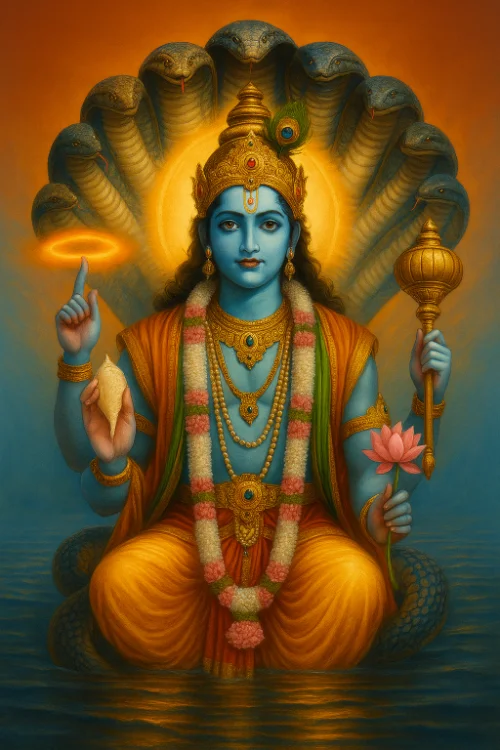
108 Names of Lord Viṣṇu – Sacred Epithets of the Preserver of the Universe

Discover the divine 108 names of Lord Viṣṇu, the cosmic preserver and sustainer in the Hindu Trimūrti. Each of these sacred names encapsulates his boundless attributes — from compassion, strength, and wisdom to his infinite forms and incarnations across time.

Drawn from ancient scriptures like the Viṣṇu Sahasranāma and Pāñcarātra texts, this list presents every name in Sanskrit, with IAST transliteration, English translation, and brief explanation, allowing readers to connect with the spiritual depth and beauty of each title — such as Nārāyaṇa, Keśava, Mādhava, Govinda, and Vāsudeva.

Whether used in japa (chanting), meditation, or scholarly study, these 108 names serve as a gateway to understanding Viṣṇu’s divine nature and his role in upholding dharma, protecting devotees, and restoring cosmic balance.

108 Names of Vishnu With Original Sanskrit, Transliteration, English Translation and Explanation of Meaning.

  1. ॐ विष्णवे नमः
    Om Viṣṇave Namaḥ
    To Vishnu
    Vishnu is the preserver and protector of the universe, a central deity in Hinduism.
  2. ॐ लक्ष्मीपतये नमः
    Om Lakṣmīpataye Namaḥ
    To the Lord of Lakshmi
    Lakshmipati refers to Vishnu as the consort of Goddess Lakshmi, symbolizing prosperity and well-being.
  3. ॐ कृष्णाय नमः
    Om Kṛṣṇāya Namaḥ
    To Krishna
    Krishna is an incarnation of Vishnu, embodying divine joy and love, and known for his teachings in the Bhagavad Gita.
  4. ॐ वैकुण्ठाय नमः
    Om Vaikuṇṭhāya Namaḥ
    To the Lord of Vaikuntha
    Vaikuntha is the celestial abode of Vishnu, symbolizing eternal bliss and liberation.
  5. ॐ गरुडध्वजाय नमः
    Om Garuḍadhvajāya Namaḥ
    To the One with Garuda as the Emblem
    Garuda, the eagle, is Vishnu's mount and emblem, symbolizing speed and power.
  6. ॐ परब्रह्मणे नमः
    Om Parabrahmaṇe Namaḥ
    To the Supreme Absolute
    Parabrahman signifies the ultimate reality or supreme cosmic spirit in Hindu philosophy.
  7. ॐ जगन्नाथाय नमः
    Om Jagannāthāya Namaḥ
    To the Lord of the Universe
    Jagannatha means the master of the universe, reflecting Vishnu's role as the universal ruler.
  8. ॐ वासुदेवाय नमः
    Om Vāsudevāya Namaḥ
    To Vasudeva
    Vasudeva refers to Krishna, emphasizing his divine descent and his role as a savior.
  9. ॐ त्रिविक्रमाय नमः
    Om Trivikramāya Namaḥ
    To the Lord of Three Strides
    Trivikrama is an epithet of Vishnu, referring to his Vamana avatar, who measured the universe in three strides.
  10. ॐ दैत्यान्तकाय नमः
    Om Daityāntakāya Namaḥ
    To the Slayer of Demons
    Daityantaka signifies Vishnu's role in defeating demons, protecting dharma and righteousness.
  11. ॐ मधुरिपवे नमः
    Om Madhuripave Namaḥ
    To the Slayer of Madhu
    Madhuripu refers to Vishnu's victory over the demon Madhu, representing the triumph of good over evil.
  12. ॐ तर्क्ष्यवाहनाय नमः
    Om Tārkṣyavāhanāya Namaḥ
    To the One with Garuda as the Vehicle
    Tārkṣya, another name for Garuda, emphasizes Vishnu's swift and powerful presence.
  13. ॐ सनातनाय नमः
    Om Sanātanāya Namaḥ
    To the Eternal One
    Sanatana signifies Vishnu's timeless and unchanging nature, embodying eternal truth.
  14. ॐ नारायणाय नमः
    Om Nārāyaṇāya Namaḥ
    To Narayana
    Narayana, meaning the refuge of all beings, highlights Vishnu's role as the source and sustainer of life.
  15. ॐ पद्मनाभाय नमः
    Om Padmanābhāya Namaḥ
    To the Lotus-naveled One
    Padmanabha refers to Vishnu, from whose navel a lotus emerged, giving birth to Brahma, the creator.
  16. ॐ हृषीकेशाय नमः
    Om Hṛṣīkeśāya Namaḥ
    To the Lord of the Senses
    Hrishikesha denotes Vishnu as the master of senses, guiding beings towards spiritual awakening.
  17. ॐ सुधाप्रदाय नमः
    Om Sudhāpradāya Namaḥ
    To the Bestower of Nectar
    Sudhaprada indicates Vishnu's role in conferring immortality and divine bliss.
  18. ॐ माधवाय नमः
    Om Mādhavāya Namaḥ
    To Madhava
    Madhava, a name of Vishnu, signifies sweetness and is often associated with his springtime festival.
  19. ॐ पुण्डरीकाक्षाय नमः
    Om Puṇḍarīkākṣāya Namaḥ
    To the Lotus-eyed One
    Pundarikaksha refers to Vishnu's beautiful, lotus-like eyes, symbolizing purity and spiritual vision.
  20. ॐ स्थितिकर्त्रे नमः
    Om Sthitikartre Namaḥ
    To the Maintainer of the Universe
    Sthitikarta signifies Vishnu's role in sustaining and preserving the cosmos.
  21. ॐ परात्पराय नमः
    Om Parātparāya Namaḥ
    Salutations to the Supreme of the Supreme
    This name signifies Vishnu as the highest of the high, transcending all distinctions and dualities.
  22. ॐ वनमालिने नमः
    Om Vanamāline Namaḥ
    Salutations to the Wearer of the Forest Garland
    Vishnu is depicted as wearing a garland made of forest flowers, symbolizing his connection with nature and purity.
  23. ॐ यज्ञहूपाय नमः
    Om Yajñahūpāya Namaḥ
    Salutations to the Sacrificial Post
    This name refers to Vishnu's role in the sacrificial rituals, symbolizing the central pillar of support in all yajñas (sacrifices).
  24. ॐ चक्रपाणये नमः
    Om Cakrapāṇaye Namaḥ
    Salutations to the Holder of the Discus
    Vishnu holds the Sudarshana Chakra, a powerful weapon symbolizing the destruction of evil and protection of righteousness.
  25. ॐ गदाधराय नमः
    Om Gadādharāya Namaḥ
    Salutations to the Bearer of the Mace
    The mace (Gadā) held by Vishnu represents strength, authority, and the power to destroy ignorance.
  26. ॐ उपेन्द्राय नमः
    Om Upendrāya Namaḥ
    Salutations to the Younger Brother of Indra
    This name refers to Vishnu's incarnation as Vamana, the younger brother of Indra, symbolizing humility and divine intervention.
  27. ॐ केशवाय नमः
    Om Keśavāya Namaḥ
    Salutations to the One with Beautiful Hair
    Keśava is a name that denotes Vishnu's beauty and charm, often associated with his divine form.
  28. ॐ हंसाय नमः
    Om Haṁsāya Namaḥ
    Salutations to the Swan
    The swan symbolizes purity, spiritual wisdom, and the ability to discern between good and evil.
  29. ॐ समुद्रमथनाय नमः
    Om Samudramathanāya Namaḥ
    Salutations to the Churner of the Ocean
    Vishnu played a pivotal role in the churning of the ocean (Samudra Manthan), which symbolizes the extraction of divine nectar from the depths of the universe.
  30. ॐ हरये नमः
    Om Haraye Namaḥ
    Salutations to the Remover of Sins
    Hara means the remover, and this name signifies Vishnu's role in removing the sins and sufferings of his devotees.
  31. ॐ गोविन्दाय नमः
    Om Govindāya Namaḥ
    Salutations to the Protector of Cows
    Govinda refers to Vishnu's role as the protector of cows, symbolizing his guardianship over all living beings and the Earth.
  32. ॐ ब्रह्माजनकाय नमः
    Om Brahmājanakāya Namaḥ
    Salutations to the Creator of Brahmā
    This name signifies Vishnu as the originator of Brahmā, the creator god, emphasizing his role as the ultimate source of the universe.
  33. ॐ कैटभासुरमर्दनाय नमः
    Om Kaitabhāsura-mardanāya Namaḥ
    Salutations to the Slayer of the Demon Kaitabha
    Vishnu is celebrated for defeating the demon Kaitabha, symbolizing the triumph of divine power over evil forces.
  34. ॐ श्रीधराय नमः
    Om Śrīdhārāya Namaḥ
    Salutations to the Bearer of Śrī
    Śrīdhara means the one who holds Lakshmi (Śrī), the goddess of wealth and prosperity, indicating Vishnu's auspicious and prosperous nature.
  35. ॐ कामजनकाय नमः
    Om Kāmajanakāya Namaḥ
    Salutations to the Creator of Desire
    This name refers to Vishnu as the source of all desires, symbolizing his role in the creation and sustenance of life.
  36. ॐ शेषशायिने नमः
    Om Śeṣaśāyine Namaḥ
    Salutations to the One Who Reclines on Śeṣa
    Vishnu is often depicted resting on the serpent Śeṣa, symbolizing his transcendence and eternal nature.
  37. ॐ चतुर्भुजाय नमः
    Om Caturbhujāya Namaḥ
    Salutations to the Four-Armed One
    Vishnu is traditionally depicted with four arms, each holding a symbol of divine power and protection.
  38. ॐ पाञ्चजन्यधराय नमः
    Om Pāñcajanyadharāya Namaḥ
    Salutations to the Holder of the Pāñcajanya Conch
    The conch (Pāñcajanya) held by Vishnu signifies the primordial sound and the call to righteousness.
  39. ॐ श्रीमते नमः
    Om Śrīmate Namaḥ
    Salutations to the Revered One
    Śrīmate denotes Vishnu's embodiment of prosperity, auspiciousness, and reverence.
  40. ॐ शार्ङ्गपाणये नमः
    Om Śārṅgapāṇaye Namaḥ
    Salutations to the Holder of the Śārṅga Bow
    The Śārṅga bow symbolizes Vishnu's readiness to protect dharma and uphold justice.
  41. ॐ जनार्दनाय नमः
    Om Janārdanāya Namah
    Salutations to Janārdana
    Janārdana means "He who is the remover of the ignorance of people". It signifies Vishnu as the one who dispels the darkness of ignorance and grants wisdom.
  42. ॐ पीताम्बरधराय नमः
    Om Pītāmbaradharāya Namah
    Salutations to the Wearer of Yellow Garments
    Pītāmbaradhara refers to Vishnu who is often depicted wearing yellow garments, symbolizing purity and wisdom.
  43. ॐ देवाय नमः
    Om Devāya Namah
    Salutations to the Divine
    Deva means "God" or "Divine", acknowledging Vishnu's supreme divinity and benevolence.
  44. ॐ सूर्यचन्द्रविलोचनाय नमः
    Om Sūrya-candra-vilocanāya Namah
    Salutations to the One with Sun and Moon as Eyes
    This name signifies Vishnu's omnipresence and ability to see everything, symbolized by the sun and the moon as his eyes.
  45. ॐ मत्स्यरूपाय नमः
    Om Matsyarūpāya Namah
    Salutations to the One in the Form of a Fish
    Matsyarūpa refers to Vishnu's first avatar, the Fish, who saved the Vedas from the deluge.
  46. ॐ कूर्मतनवे नमः
    Om Kūrmatanave Namah
    Salutations to the One with the Form of a Tortoise
    Kūrmatanava refers to Vishnu's second avatar, the Tortoise, who supported Mount Mandara during the churning of the ocean.
  47. ॐ क्रोधरूपाय नमः
    Om Krodharūpāya Namah
    Salutations to the One in the Form of Wrath
    Krodharūpa signifies Vishnu's form as Narasimha, the Man-Lion, who manifested in wrath to protect his devotee Prahlada.
  48. ॐ नृकेसरिणे नमः
    Om Nṛkesariṇe Namah
    Salutations to the Man-Lion
    Nṛkesari refers to the Narasimha avatar, where Vishnu appeared as a half-man, half-lion to defeat the demon Hiranyakashipu.
  49. ॐ वामनाय नमः
    Om Vāmanāya Namah
    Salutations to Vāmana
    Vāmana is the dwarf avatar of Vishnu who subdued the demon king Bali with his three strides.
  50. ॐ भार्गवाय नमः
    Om Bhārgavāya Namah
    Salutations to Bhārgava
    Bhārgava refers to Parashurama, the warrior sage who is the sixth avatar of Vishnu, known for his valor and devotion.
  51. ॐ रामाय नमः
    Om Rāmāya Namah
    Salutations to Rama
    Rāma is the seventh avatar of Vishnu, the prince of Ayodhya, known for his righteousness and valor.
  52. ॐ बलिने नमः
    Om Baline Namah
    Salutations to Bali
    Bali refers to the mighty king who was subdued by Vāmana, representing humility and devotion.
  53. ॐ कल्किने नमः
    Om Kalkine Namah
    Salutations to Kalki
    Kalki is the prophesied future avatar of Vishnu, who will appear to restore righteousness at the end of the current age.
  54. ॐ हयाननाय नमः
    Om Hayānānāya Namah
    Salutations to the Horse-faced One
    Hayānana refers to Hayagriva, an avatar of Vishnu with a horse's head, known for restoring the Vedas.
  55. ॐ विश्वम्भराय नमः
    Om Viśvambharāya Namah
    Salutations to the Sustainer of the Universe
    Viśvambhara refers to Vishnu as the one who supports and maintains the universe.
  56. ॐ शिशुमाराय नमः
    Om Śiśumāraaya Namah
    Salutations to the Dolphin
    Śiśumāra represents a form of Vishnu associated with the constellation of the dolphin, symbolizing cosmic order.
  57. ॐ श्रीकराय नमः
    Om Śrīkarāya Namah
    Salutations to the Giver of Prosperity
    Śrīkāra signifies Vishnu as the bestower of fortune and prosperity.
  58. ॐ कपिलाय नमः
    Om Kapilāya Namah
    Salutations to Kapila
    Kapila is the sage who is considered an incarnation of Vishnu, known for his teachings on Sāṅkhya philosophy.
  59. ॐ ध्रुवाय नमः
    Om Dhruvāya Namah
    Salutations to Dhruva
    Dhruva, a devotee of Vishnu, symbolizes steadfast devotion and is associated with the Pole Star.
  60. ॐ दत्तात्रेयाय नमः
    Om Dattātreyāya Namah
    Salutations to Dattatreya
    Dattatreya is a combined incarnation of Brahma, Vishnu, and Shiva, representing the unity of the Trimurti.
  61. ॐ अच्युताय नमः
    Om Acyutāya Namaḥ
    Salutations to the Infallible One
    Acyuta means one who never falls or is infallible. It signifies the eternal and unchanging nature of Vishnu.
  62. ॐ अनन्ताय नमः
    Om Anantāya Namaḥ
    Salutations to the Infinite One
    Ananta means endless or limitless, representing the boundless nature of Vishnu, who is beyond all limitations.
  63. ॐ मुकुन्दाय नमः
    Om Mukundāya Namaḥ
    Salutations to the Giver of Liberation
    Mukunda is one who grants liberation or moksha, the ultimate goal of life, freeing beings from the cycle of birth and death.
  64. ॐ दधिवामनाय नमः
    Om Dadhivāmanāya Namaḥ
    Salutations to the Dwarf Incarnation Who Used Curd
    Dadhivāmana refers to the Vāmana avatar, where Vishnu, in a dwarf form, used curd as part of a ritual to reclaim the universe from the demon king Bali.
  65. ॐ धन्वन्तरये नमः
    Om Dhanvantaraye Namaḥ
    Salutations to the Divine Physician
    Dhanvantari is the god of Ayurveda, the ancient system of medicine, and is considered the divine healer who emerged during the churning of the ocean.
  66. ॐ श्रीनिवासाय नमः
    Om Śrīnivāsāya Namaḥ
    Salutations to the Abode of Goddess Lakshmi
    Śrīnivāsa means the dwelling place of Śrī (Lakshmi), signifying Vishnu as the eternal consort of the goddess of wealth and prosperity.
  67. ॐ प्रद्युम्नाय नमः
    Om Pradyumnāya Namaḥ
    Salutations to the Son of Krishna
    Pradyumna is the son of Krishna and Rukmini, representing love and compassion, and one of the four vyuhas (expansions) of Vishnu.
  68. ॐ पुरुषोत्तमाय नमः
    Om Puruṣottamāya Namaḥ
    Salutations to the Supreme Person
    Puruṣottama means the highest or supreme being, emphasizing the transcendental nature of Vishnu above all beings.
  69. ॐ श्रीवत्सकौस्तुभधराय नमः
    Om Śrīvatsakaustubhadharāya Namaḥ
    Salutations to the Bearer of Śrīvatsa and Kaustubha
    Śrīvatsa is a mark on Vishnu's chest, and Kaustubha is a divine jewel he wears, symbolizing divine prosperity and purity.
  70. ॐ मुरारातये नमः
    Om Murārātaye Namaḥ
    Salutations to the Enemy of Mura
    Murārāti refers to Vishnu as the slayer of the demon Mura, symbolizing the destruction of ignorance and evil.
  71. ॐ अधोक्षजाय नमः
    Om Adhokṣajāya Namaḥ
    Salutations to the Transcendental Lord
    Adhokṣaja refers to one who is beyond the perception of the senses, highlighting the transcendental nature of Vishnu.
  72. ॐ ऋषभाय नमः
    Om Ṛṣabhāya Namaḥ
    Salutations to the Supreme Leader
    Ṛṣabha means the best or the supreme, indicating Vishnu's role as the ultimate guide and leader.
  73. ॐ मोहिनीरूपधारिणे नमः
    Om Mohinīrūpadhāriṇe Namaḥ
    Salutations to the One Who Assumed the Form of Mohini
    Mohinīrūpadhārin refers to Vishnu's incarnation as Mohini, the enchanting female form that bewitched demons to restore the nectar of immortality to the gods.
  74. ॐ संकर्षणाय नमः
    Om Saṅkarṣaṇāya Namaḥ
    Salutations to the One Who Draws Together
    Saṅkarṣaṇa is another name for Balarama, Krishna's elder brother, symbolizing the force that binds or draws together the universe.
  75. ॐ पृथवे नमः
    Om Pṛthave Namaḥ
    Salutations to the Broad One
    Pṛthave signifies vastness and expansion, representing Vishnu's all-encompassing nature.
  76. ॐ शीराब्धिशायिने नमः
    Om Śīrābdhiśāyine Namaḥ
    Salutations to the One Who Rests on the Ocean of Milk
    Śīrābdhiśāyin refers to Vishnu's repose on the cosmic ocean of milk, symbolizing his role as the preserver and sustainer of the universe.
  77. ॐ भूतात्मने नमः
    Om Bhūtātmane Namaḥ
    Salutations to the Soul of All Beings
    Bhūtātman signifies Vishnu as the inner soul of all living entities, embodying the universal consciousness.
  78. ॐ अनिरुद्धाय नमः
    Om Aniruddhāya Namaḥ
    Salutations to the Unrestrained One
    Aniruddha is one of the four vyuhas (expansions) of Vishnu, symbolizing the aspect of freedom and unrestrained power.
  79. ॐ भक्तवत्सलाय नमः
    Om Bhaktavatsalāya Namaḥ
    Salutations to the Lover of Devotees
    Bhaktavatsala refers to Vishnu's deep affection and care for his devotees, highlighting his compassionate nature.
  80. ॐ नराय नमः
    Om Narāya Namaḥ
    Salutations to the Refuge of Humanity
    Nara means human, and Narāya signifies Vishnu as the ultimate refuge and protector of humanity.
  81. ॐ गजेन्द्रवरदाय नमः
    Om Gajendravaradāya Namah
    Salutations to the Bestower of Boons to Gajendra
    This name refers to Vishnu as the one who granted liberation to Gajendra, the elephant king, symbolizing divine intervention in times of distress.
  82. ॐ त्रिधाम्ने नमः
    Om Tridhāmne Namah
    Salutations to the One with Three Abodes
    Vishnu is associated with three realms: the spiritual sky, the material world, and the heart of devotees, representing his omnipresence.
  83. ॐ भूतभावनाय नमः
    Om Bhūtabhāvanāya Namah
    Salutations to the Creator of All Beings
    This name signifies Vishnu as the originator and nurturer of all living entities, emphasizing his role in creation and sustenance.
  84. ॐ श्वेतद्वीपसुवास्तव्याय नमः
    Om Śvetadvīpasuvāstavyāya Namah
    Salutations to the Resident of Śvetadvīpa
    Śvetadvīpa is the spiritual abode of Vishnu, a realm of purity and eternal bliss, symbolizing the ultimate spiritual destination.
  85. ॐ सनकादिमुनिध्येयाय नमः
    Om Sanakādimunidhyeyāya Namah
    Salutations to the One Meditated upon by Sages like Sanaka
    This name highlights Vishnu as the supreme object of meditation for sages such as Sanaka, representing wisdom and spiritual enlightenment.
  86. ॐ भगवते नमः
    Om Bhagavate Namah
    Salutations to the Possessor of All Opulences
    Vishnu, as Bhagavān, embodies all divine qualities and opulences, including wealth, strength, fame, beauty, knowledge, and renunciation.
  87. ॐ शङ्करप्रियाय नमः
    Om Śaṅkarapriyāya Namah
    Salutations to the Beloved of Śaṅkara (Shiva)
    This name signifies the harmonious relationship between Vishnu and Shiva, symbolizing unity and mutual respect among divine forces.
  88. ॐ नीलकण्ठाय नमः
    Om Nīlakaṇṭhāya Namah
    Salutations to the Blue-Throated One
    Although commonly associated with Shiva, this name here may reflect Vishnu's encompassing nature, embracing diverse aspects of divinity.
  89. ॐ धराकण्ठाय नमः
    Om Dharākaṇṭhāya Namah
    Salutations to the Beloved of Earth
    This name represents Vishnu's connection to the Earth, symbolizing his role as the protector and preserver of the world.
  90. ॐ वेदात्मने नमः
    Om Vedātmanē Namah
    Salutations to the Soul of the Vedas
    Vishnu is seen as the essence and source of the Vedas, representing ultimate knowledge and spiritual truth.
  91. ॐ बादरायणाय नमः
    Om Bādarāyaṇāya Namah
    Salutations to the Sage Vyāsa
    Vyāsa, also known as Bādarāyaṇa, is considered an incarnation of Vishnu, revered for compiling and organizing the Vedas.
  92. ॐ भागीरथीजन्मभूमिपादपद्माय नमः
    Om Bhāgīrathījanmabhūmipādapadmāya Namah
    Salutations to the Lotus Feet on the Birthplace of the Ganges
    This name signifies Vishnu's presence at the origin of the sacred river Ganges, symbolizing purity and divine grace.
  93. ॐ शतां प्रभवे नमः
    Om Śatāṁ Prabhave Namah
    Salutations to the Lord of Hundreds
    Vishnu is the master of countless beings and worlds, symbolizing his supreme authority and control over the universe.
  94. ॐ स्वभुवे नमः
    Om Svabhuve Namah
    Salutations to the Self-Existent
    This name emphasizes Vishnu's eternal existence, independent and self-sustaining, representing the ultimate reality.
  95. ॐ विभवे नमः
    Om Vibhave Namah
    Salutations to the All-Pervading
    Vishnu is present in all things and beings, symbolizing his omnipresence and pervasive influence throughout the cosmos.
  96. ॐ धनश्यामाय नमः
    Om Dhanaśyāmāya Namah
    Salutations to the Dark-Hued One
    Vishnu's dark complexion is often associated with the infinite and the unknown, symbolizing depth and mystery.
  97. ॐ जनत्कारणाय नमः
    Om Janatkāraṇāya Namah
    Salutations to the Cause of Creation
    This name signifies Vishnu as the fundamental cause behind the creation and existence of the universe.
  98. ॐ अव्ययाय नमः
    Om Avyayāya Namah
    Salutations to the Imperishable
    Vishnu is eternal and unchanging, representing the unalterable truth amidst the transient nature of the material world.
  99. ॐ बुद्धावताराय नमः
    Om Buddha-Avatārāya Namah
    Salutations to the Incarnation as Buddha
    Vishnu incarnated as Buddha to teach compassion and non-violence, emphasizing the importance of dharma and spiritual awakening.
  100. ॐ शान्तात्मने नमः
    Om Śāntātmanē Namah
    Salutations to the Peaceful Soul
    Vishnu embodies peace and tranquility, offering solace and calmness to devotees amidst the chaos of worldly life.
  101. ॐ लीलामानुषविग्रहाय नमः
    Om Līlāmānuṣavigrahāya Namaḥ
    Salutations to the One with a Playful Human Form
    This name refers to Vishnu's ability to take on a human form for divine play (līlā), demonstrating the divine's accessibility and relatability to humanity.
  102. ॐ दामोदराय नमः
    Om Dāmodarāya Namaḥ
    Salutations to the One with a Rope Around His Waist
    Dāmodara refers to the story of Krishna being tied with a rope by his mother Yashoda, symbolizing the binding of the infinite by love and devotion.
  103. ॐ विराड्रूपाय नमः
    Om Virāḍrūpāya Namaḥ
    Salutations to the One with the Cosmic Form
    Virāḍrūpa signifies the universal form of Vishnu, encompassing all creation and demonstrating his omnipresence and omnipotence.
  104. ॐ भूतभव्यभवत्प्रभवे नमः
    Om Bhūtabhavyabhavatprabhave Namaḥ
    Salutations to the Lord of Past, Present, and Future
    This name highlights Vishnu as the master of time, encompassing all temporal states—past, present, and future.
  105. ॐ आदिदेवाय नमः
    Om Ādidevāya Namaḥ
    Salutations to the Primeval Deity
    Ādideva refers to Vishnu as the original and foremost deity, existing before all others and the source of all divine manifestations.
  106. ॐ देवदेवाय नमः
    Om Devadevāya Namaḥ
    Salutations to the God of Gods
    Devadeva signifies Vishnu as the supreme deity, revered by other gods, underscoring his position as the ultimate divine authority.
  107. ॐ प्रह्लादपरिपालकाय नमः
    Om Prahlādaparipālakāya Namaḥ
    Salutations to the Protector of Prahlada
    This name celebrates Vishnu's role in protecting Prahlada, a devout child, from his father Hiranyakashipu, showcasing divine intervention in upholding righteousness.
  108. ॐ श्रीमहाविष्णवे नमः
    Om Śrīmahāviṣṇave Namaḥ
    Salutations to the Great Vishnu
    Śrīmahāviṣṇu emphasizes the grandeur and supreme nature of Vishnu, embodying all auspiciousness and greatness.
Bookmark Dharmavidya by pressing Ctrl+D or Cmd+D. 
Visit our YouTube channel.