Visit the best and largest 108 and 1008 names collection


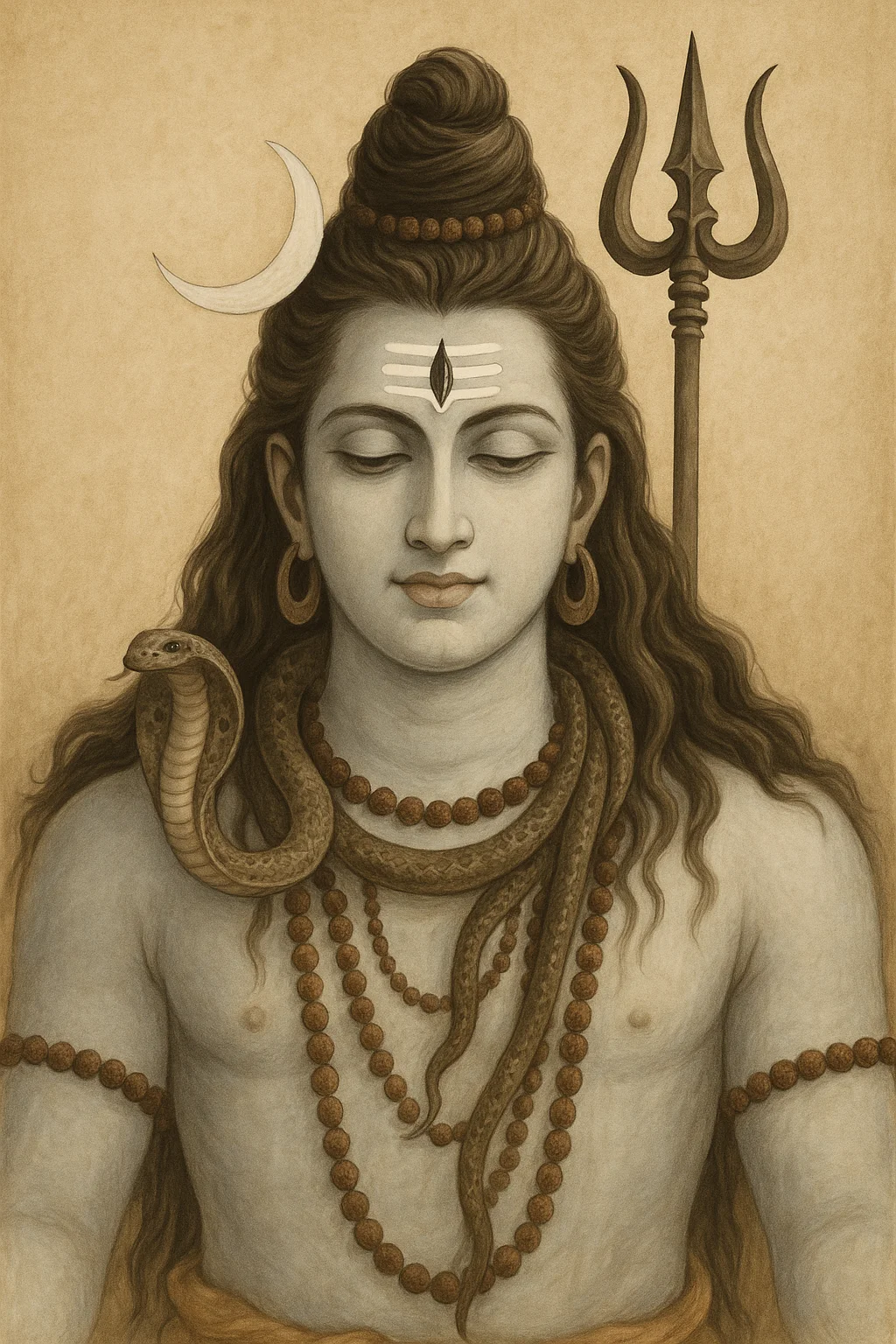
The Mahā-mṛtyuñjaya Mantra is one of the most sacred, powerful, and revered mantras in the entire Vedic tradition. It appears in the Ṛgveda (7.59.12), as well as in the Yajurveda and various Śaiva scriptures. This ancient mantra is dedicated to Rudra, the fierce and transformative form of Lord Śiva, in his aspect as Mṛtyuñjaya — the Conqueror of Death.
This mantra is known by many names:
Hailed by the sages as the heart of the Veda, this mantra is revered alongside the Gāyatrī Mantra as one of the two most powerful and spiritually uplifting mantras in the Vedic corpus. It is widely used for healing, protection, meditation, and for overcoming fear, illness, and even death, not merely in the physical sense, but as a means to transcend the deeper spiritual bondages of ignorance, ego, and impermanence.
ॐ त्र्यम्बकं यजामहे
सुगन्धिं पुष्टिवर्धनम्।
उर्वारुकमिव बन्धनान्
मृत्योर्मुक्षीय माऽमृतात्॥
Om Tryambakaṁ Yajāmahe
Sugandhiṁ Puṣṭi-vardhanam
Urvārukam-iva Bandhanān
Mṛtyor-mukṣīya Mā’mṛtāt
Three-eyed one, I meditate on you,
who increase fragrance and nourishment.
From powerful disease, bondage and death
free us into immortality.
The true “mṛtyu” (death) we seek release from is not merely physical death, but the spiritual death caused by ignorance, delusion, and weakness — and the amṛta we seek is liberation, truth, and divine consciousness.
ॐ त्र्यम्बकं यजामहे
Om Tryambakaṁ Yajāmahe
We worship the three-eyed One (Śiva)
सुगन्धिं पुष्टिवर्धनम्
Sugandhiṁ Puṣṭi-vardhanam
The one who is fragrant (pure and divine), and who nourishes and strengthens all beings.
उर्वारुकमिव बन्धनान्
Urvārukam-iva Bandhanān
Just as one is bound by deadly and overpowering diseases,
may I be released from such bondage.
मृत्योर्मुक्षीय माऽमृतात्॥
Mṛtyor-mukṣīya Mā’mṛtāt
May I be liberated from death, not from immortality.
This line expresses a yearning for freedom from the cycle of birth and death (saṁsāra), not merely physical death, but the death of ignorance, ego, and bondage — seeking the eternal truth and liberation (mokṣa).
Though the mantras generally start with word OM, one should end it also with word OM.
According to some puranas, the mahamrutyunjaya mantra has been used by many rishis as well as Sati during the time when Chandra suffered from the curse of Prajapati Daksha. By reciting this mantra, the effect of the curse of Daksha, that could make him die, slowed, and Shiva then took Chandrama on his head.