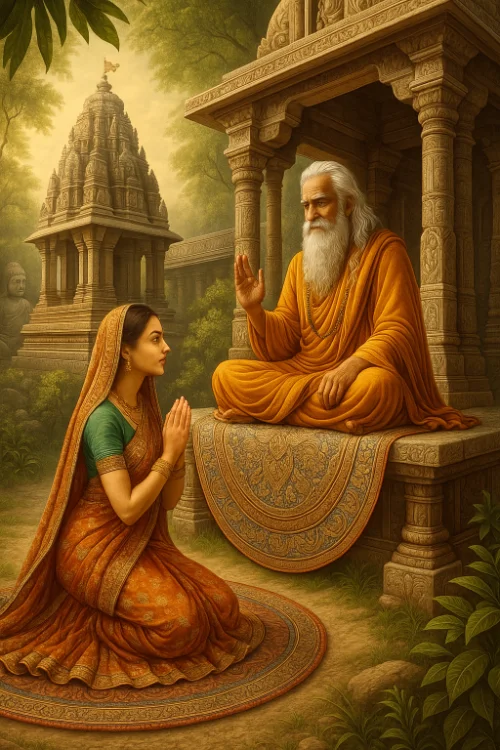
BRAHMAVAIVARTA MAHAPURĀṆAM - BRAHMA-KHANDA
CHAPTER 16 - Brāhmaṇa spells out the medical treatment
ब्राह्मण उवाच
दृष्टः कालो यमो मृत्युकन्या व्याधिगणा अहा ।
कस्तेऽधुना च संदेहस्तं पृच्छ कन्यके शुभे ॥ १ ॥
brāhmaṇa uvāca
dṛṣṭaḥ kālo yamo mṛtyukanyā vyādhigaṇā ahā |
kaste’dhunā ca saṃdehastaṃ pṛccha kanyake śubhe || 1 ||
The Brāhmaṇa said: You have seen Kāla (Time), Yama (Death), the daughter of Mṛtyu (Death), and the multitude of diseases. What doubt remains in your mind now? Ask, O auspicious maiden!
ब्राह्मणस्य वचः श्रुत्वा दृष्टा मालावती सती।
यन्मनोनिहितं प्रश्नं चकार जगदीश्वरम् ॥ २ ॥
brāhmaṇasya vacaḥ śrutvā dṛṣṭā mālāvatī satī|
yanmanonihitaṃ praśnaṃ cakāra jagadīśvaram || 2 ||
Upon hearing the words of the Brāhmaṇa, the chaste Mālāvatī was delighted. She then asked Jagadīśvara (the Lord of the Universe) the question that was deeply cherished in her mind.
मालावत्युवाच
त्वया यः कथितो व्याधिः प्राणिनां प्राणहारकः ।
तत्कारणं च विविधं सर्वं वेदे निरूपितम् ॥ ३॥
mālāvatyuvāca
tvayā yaḥ kathito vyādhiḥ prāṇināṃ prāṇahārakaḥ |
tatkāraṇaṃ ca vividhaṃ sarvaṃ vede nirūpitam || 3||
Malāvatī said: You have mentioned that disease takes away the life of living beings, and its various causes have been explained in the Vedas in detail, along with their remedies.
यतो न संचरेद्व्याधिर्दुर्निवारोऽशुभावहः ।
तमुपायं च साकल्यं भवान्वक्तुमिहार्हति ॥ ४ ॥
yato na saṃcaredvyādhirdurnivāro’śubhāvahaḥ |
tamupāyaṃ ca sākalyaṃ bhavānvaktumihārhati || 4 ||
By what means can an unstoppable and inauspicious disease be prevented from spreading? You should explain this comprehensively and in full detail.
यद्यत्पृष्टमपृष्टं वा ज्ञातमज्ञातमेव वा।
सर्वं कथय तद्भद्रं त्वं गुरुर्दीनवत्सलः ॥ ५ ॥
yadyatpṛṣṭamapṛṣṭaṃ vā jñātamajñātameva vā|
sarvaṃ kathaya tadbhadraṃ tvaṃ gururdīnavatsalaḥ || 5 ||
Whether it has been asked or not, whether it is known or unknown, please explain everything. May auspiciousness be upon you, for you are a guru and compassionate toward the distressed.
मालावतीवचः श्रुत्वा विप्ररूपी जनार्दनः ।
संहितां वक्तुमारेभे संहितार्थं च वैद्यकीम् ॥ ६ ॥
mālāvatīvacaḥ śrutvā viprarūpī janārdanaḥ |
saṃhitāṃ vaktumārebhe saṃhitārthaṃ ca vaidyakīm || 6 ||
Hearing Mālavatī’s words, Janārdana, in the form of a Brāhmaṇa, began to recite the Saṁhitā and explain the meaning of medical science (Āyurveda).
ब्राह्मण उवाच
वन्दे तं सर्वतत्त्वज्ञ सर्वकारणकारणम् ।
वेदवेदाङ्गबीजस्य वीजं श्रीकृष्णमीश्वरम् ॥ ७ ॥
brāhmaṇa uvāca
vande taṃ sarvatattvajña sarvakāraṇakāraṇam |
vedavedāṅgabījasya vījaṃ śrīkṛṣṇamīśvaram || 7 ||
Brāhmaṇa said: I bow at the feet of lord Kṛṣṇa, who is well aware of the secrets of all the tattvas, who is the cause of all the causes and is the seed of all the seeds of the Vedic literature.
स ईशश्चतुरो वेदान्ससृजे मङ्गलालयान् ।
सर्वमङ्गलमाङ्गल्यबीजरूपः सनातनः ॥ ८ ॥
sa īśaścaturo vedānsasṛje maṅgalālayān |
sarvamaṅgalamāṅgalyabījarūpaḥ sanātanaḥ || 8 ||
Supreme Lord (Īśa) created the four Vedas, which are the abode of auspiciousness. He is the eternal one, the very seed of all auspiciousness and well-being.
ऋग्यजुः सामाथर्वाख्यान्दृष्ट्वा वेदान्प्रजापतिः ।
विचिन्त्य तेषामर्थं चैवायुर्वेदं चकार सः ॥ ९ ॥
ṛgyajuḥ sāmātharvākhyāndṛṣṭvā vedānprajāpatiḥ |
vicintya teṣāmarthaṃ caivāyurvedaṃ cakāra saḥ || 9 ||
Seeing the four Vedas—Ṛg, Yajur, Sāma, and Atharva— Prajāpati, after contemplating their meaning, compiled Āyurveda (the science of life and medicine).
कृत्वा तु पञ्चमं वेदं भास्कराय ददौ विभुः ।
स्वतन्त्रसंहितां तस्माद्भास्करश्च चकार सः ॥ १० ॥
भास्करच स्वशिष्येभ्य आयुर्वेदं स्वसंहिताम् ।
प्रददौ पाठयामास ते चक्रुः संहितास्ततः ॥ ११ ॥
kṛtvā tu pañcamaṃ vedaṃ bhāskarāya dadau vibhuḥ |
svatantrasaṃhitāṃ tasmādbhāskaraśca cakāra saḥ || 10 ||
bhāskaraca svaśiṣyebhya āyurvedaṃ svasaṃhitām |
pradadau pāṭhayāmāsa te cakruḥ saṃhitāstataḥ || 11 ||
Having compiled the fifth Veda (Āyurveda), the Supreme Lord bestowed it upon Bhāskara. From that, Bhāskara composed an independent treatise (Saṁhitā).
Bhāskara then imparted Āyurveda and his own Saṁhitā to his disciples and taught them its wisdom. In turn, they composed their own Saṁhitās.
तेषां नामानि विदुषां तन्त्राणि तत्कृतानि च।
व्याधिप्रणाशवीजनि साध्वि मत्तो निशामय ॥ १२ ॥
teṣāṃ nāmāni viduṣāṃ tantrāṇi tatkṛtāni ca|
vyādhipraṇāśavījani sādhvi matto niśāmaya || 12 ||
O noble lady, listen to me as I reveal the names of those wise sages and the treatises they composed, which serve as the seed for the destruction of diseases.
धन्वन्तरिदिवोदास: काशीराजोऽश्विनीसुतौ ।
नकुलः सहदेवोऽर्किश्च्यवनो जनको बुधः ।। १३ ।।
जावालो जाजलि: पैलः करथोऽगस्त्य एव च।
एते वेदाङ्गवेदज्ञा: षोडश व्याधिनाशकाः ।। १४ ।।
dhanvantaridivodāsa: kāśīrājo’śvinīsutau |
nakulaḥ sahadevo’rkiścyavano janako budhaḥ || 13 ||
jāvālo jājali: pailaḥ karatho’gastya eva ca|
ete vedāṅgavedajñā: ṣoḍaśa vyādhināśakāḥ || 14 ||
Dhanvantari, Divodāsa (who is the King of Kāśī), the twin sons of the Aśvinīs, Nakula, Sahadeva, Arki, Chyavana, Janaka, and Budha, Jāvāla, Jājali, Paila, Karatha, and Agastya—these sages, experts in the Vedas and Vedāṅgas, are the sixteen destroyers of disease. The sixteenth of them is Yamarāja.
चिकित्सातत्त्वविज्ञानं नामतन्त्रं मनोहरम् ।
धन्वन्तरिच भगवांचकार प्रथमे सति ।। १५ ।।
चिकित्सादर्पणं नाम दिवोदासचकार सः ।
चिकित्साकौमुदी दिव्यां काशीराजश्चकार सः ।। १६ ।।
चिकित्सासारतन्त्रं च भ्रमघ्नं चाश्विनीसुतौ ।
तन्त्रं वैद्यकसर्वस्वं नकुलश्च चकार सः ॥ १७ ॥
चकार सहदेवश्च व्याधिसिन्धुविमर्दनम् ।
ज्ञानार्णवं महातन्त्रं यमराजचकार ह || १८ ||
cikitsātattvavijñānaṃ nāmatantraṃ manoharam |
dhanvantarica bhagavāṃcakāra prathame sati || 15 ||
cikitsādarpaṇaṃ nāma divodāsacakāra saḥ |
cikitsākaumudī divyāṃ kāśīrājaścakāra saḥ || 16 ||
cikitsāsāratantraṃ ca bhramaghnaṃ cāśvinīsutau |
tantraṃ vaidyakasarvasvaṃ nakulaśca cakāra saḥ || 17 ||
cakāra sahadevaśca vyādhisindhuvimardanam |
jñānārṇavaṃ mahātantraṃ yamarājacakāra ha || 18 ||
The sacred treatise known as ‘Chikitsā-Tattva-Vijñāna’ (The Deep Knowledge of Medical Treatment), a captivating and comprehensive text on medical science, was first composed by the divine sage Dhanvantari.
The treatise ‘Chikitsā-Darpaṇa’ (The Mirror of Medicine) was composed by Divodāsa.
The King of Kāśī (Divodāsa) also compiled the divine text ‘Chikitsā-Kaumudī’ (The Moonlight of Medicine).
The Aśvinī Kumāras (twin divine physicians) authored the ‘Chikitsā-Sāra-Tantra’ (The Essence of Medical Science) and the ‘Bhramaghna’ (The Treatise on Curing Dizziness/Delusions). The comprehensive treatise ‘Vaidyaka-Sarvasva’ (The Complete Medical Science) was composed by Nakula.
Sahadeva composed the treatise ‘Vyādhi-Sindhu-Vimardana’ (The Ocean of Disease Destruction). The great Tantra ‘Jñānārṇava’ (The Ocean of Knowledge) was compiled by Yamarāja, the Lord of Death.
च्यवनो जीवदानं च चकार भगवानृषिः ।
चकार जनको योगी वैद्यसंदेहभञ्जनम्॥ १९॥
सर्वसारं चन्द्रसुतो जाबालस्तन्त्रसारकम् ।
वेदाङ्गसारं तन्त्रं च चकार जाजलिर्मुनिः ॥ २० ॥
पैलो निदानं करथस्तन्त्रं सर्वधरं परम्।
द्वैधनिर्णयतन्त्रं च चकार कुम्भसंभवः ॥ २१॥
चिकित्साशास्त्रबीजानि तन्त्राण्येतानि षोडश ।
व्याधिप्रणाशवीजानि बलाधानकराणि च ॥ २२ ॥
cyavano jīvadānaṃ ca cakāra bhagavānṛṣiḥ |
cakāra janako yogī vaidyasaṃdehabhañjanam|| 19||
sarvasāraṃ candrasuto jābālastantrasārakam |
vedāṅgasāraṃ tantraṃ ca cakāra jājalirmuniḥ || 20 ||
pailo nidānaṃ karathastantraṃ sarvadharaṃ param|
dvaidhanirṇayatantraṃ ca cakāra kumbhasaṃbhavaḥ || 21||
cikitsāśāstrabījāni tantrāṇyetāni ṣoḍaśa |
vyādhipraṇāśavījāni balādhānakarāṇi ca || 22 ||
The divine sage Chyavana composed the treatise ‘Jīva-Dāna’ (The Science of Restoring Life). The yogi-king Janaka authored ‘Vaidya-Sandeha-Bhañjanam’ (The Treatise on Resolving Medical Doubts).
The moon-born sage Budha compiled ‘Sarva-Sāra’ (The Essence of All Medical Knowledge).
The sage Jāvāla wrote ‘Tantra-Sāraka’ (The Essence of Medical Tantras).
The sage Jājali composed ‘Vedāṅga-Sāra-Tantra’ (The Essence of Vedic Sciences in Medicine)."
The sage Paila authored ‘Nidāna’ (The Science of Diagnosis).
The sage Karatha compiled ‘Tantra-Sarva-Dhara’ (The Supreme Medical Treatise).
The sage Kumbha-Sambhava (Agastya, born from a pot) composed ‘Dvaidha-Nirṇaya-Tantra’ (The Treatise on Resolving Medical Dilemmas).
These sixteen Tantras (medical treatises) are the seeds of the science of medicine (Chikitsā-Śāstra). They are also the seeds for the destruction of diseases and the foundation of health and strength.
मथित्वा ज्ञानमन्त्रेणैवायुर्वेदपयोनिधिम् ।
ततस्तस्मादुदाजह्नुर्नवनीतानि कोविदाः ॥ २३ ॥
mathitvā jñānamantreṇaivāyurvedapayonidhim |
tatastasmādudājahnurnavanītāni kovidāḥ || 23 ||
By churning the vast ocean of Āyurveda with the mantra of knowledge, the wise ones then extracted from it the essence, just as fresh butter is drawn from milk.
एतानि क्रमशो दृष्ट्वा व्यां भास्करसंहिताम् ।
आयुर्वेदं सर्ववीजं सर्व जानामि सुन्दरि ॥ २४ ॥
etāni kramaśo dṛṣṭvā vyāṃ bhāskarasaṃhitām |
āyurvedaṃ sarvavījaṃ sarva jānāmi sundari || 24 ||
By studying these (treatises) in succession and by examining the Bhāskara-Saṁhitā, you will gain complete knowledge of Āyurveda, which is the seed of all sciences, O beautiful one!
व्याधेस्तत्त्वपरिज्ञानं वेदनायाश्च विग्रहः ।
एतद्वैद्यस्य वैद्यत्वं न वैद्यः प्रभुरायुषः ॥ २५ ॥
आयुर्वेदस्य विज्ञाता चिकित्सासु यथार्थवित्।
धर्मिष्ठ दयालुश्च तेन वैद्यः प्रकीर्तितः ॥ २६ ॥
जनक: सर्वरोगाणां दुर्वारो दारुणो ज्वरः ।
शिवभक्तश्च योगी च निष्ठुरो विकृताकृतिः ॥ २७ ॥
vyādhestattvaparijñānaṃ vedanāyāśca vigrahaḥ |
etadvaidyasya vaidyatvaṃ na vaidyaḥ prabhurāyuṣaḥ || 25 ||
āyurvedasya vijñātā cikitsāsu yathārthavit|
dharmiṣṭha dayāluśca tena vaidyaḥ prakīrtitaḥ || 26 ||
janaka: sarvarogāṇāṃ durvāro dāruṇo jvaraḥ |
śivabhaktaśca yogī ca niṣṭhuro vikṛtākṛtiḥ || 27 ||
Understanding the true nature of disease and the manifestation of pain—this is the real essence of a physician’s knowledge. A physician is not the master of life (āyuṣaḥ) but rather a seeker of medical truth.
The one who is well-versed in Āyurveda, who understands treatments with accuracy, who is righteous (dharmic) and compassionate— such a person is truly called a Vaidhya (physician).
Fever (Jvara) is the progenitor and source of all diseases, an uncontrollable and dreadful affliction. It is a devotee of Śiva, a yogi, harsh in nature, and of a terrifying form.
भीमस्त्रिपादस्त्रिशिराः षड्भुजो नवलोचनः ।
भस्मप्रहरणो रौद्रः कालान्तकयमोपमः ॥ २८ ॥
bhīmastripādastriśirāḥ ṣaḍbhujo navalocanaḥ |
bhasmapraharaṇo raudraḥ kālāntakayamopamaḥ || 28 ||
Fever (Jvara) is terrifying, possessing three feet, three heads, six arms, and nine eyes. He wields ashes as his weapon, is fierce and dreadful in nature, and is comparable to Kāla (Time), Antaka (Death), and Yama (Lord of the Dead).
मन्दाग्निस्तस्य जनको मन्दाग्नेर्जनकास्त्रयः ।
पित्तश्लेष्मसमीराश्च प्राणिनां दुःखदायकाः ॥ २९॥
mandāgnistasya janako mandāgnerjanakāstrayaḥ |
pittaśleṣmasamīrāśca prāṇināṃ duḥkhadāyakāḥ || 29||
Weak digestion (Mandāgni) is the cause of Jvara (fever). Mandāgni itself is caused by three factors: Pitta (bile), Śleṣma (kapha/mucus), and Samīra (vāta/wind). These three doshas bring great suffering to living beings.
वायुज: पित्तश्चैव श्लेष्मजश्च तथैव च ।
ज्वरभेदाश्च त्रिविधाश्चतुर्थश्च त्रिदोषजः ॥ ३० ॥
vāyuja: pittaścaiva śleṣmajaśca tathaiva ca |
jvarabhedāśca trividhāścaturthaśca tridoṣajaḥ || 30 ||
There are three types of fever: Vāta-induced (Vāyuja), Pitta-induced, Kapha-induced (Śleṣmaja). The fourth type is Tridoṣaja Jvara, caused by an imbalance of all three doshas.
पाण्डुश्च कामल: कुष्ठ: शोथ: प्लीहा च शूलकः ।
ज्वरातिसारग्रहणीकासव्रणहलीमकाः ॥ ३१ ॥
मूत्रकृच्छश्च गुल्मश्च रक्तदोषविकारजः ।
विषमेहश्च कब्जश्च गोदश्च गलगण्डकः ॥ ३२ ॥
भ्रमरी संनिपातश्च विषूची दारुणी सति ।
एषां भेदप्रभेदेन चतुःषष्टी रुजः स्मृताः ॥ ३३ ॥
pāṇḍuśca kāmala: kuṣṭha: śotha: plīhā ca śūlakaḥ |
jvarātisāragrahaṇīkāsavraṇahalīmakāḥ || 31 ||
mūtrakṛcchaśca gulmaśca raktadoṣavikārajaḥ |
viṣamehaśca kabjaśca godaśca galagaṇḍakaḥ || 32 ||
bhramarī saṃnipātaśca viṣūcī dāruṇī sati |
eṣāṃ bhedaprabhedena catuḥṣaṣṭī rujaḥ smṛtāḥ || 33 ||
Pāṇḍu (anemia), Kāmla (jaundice), Kuṣṭha (skin diseases/leprosy), Śotha (swelling/inflammation), Plīhā (spleen disorders), and Śūlaka (colic or severe abdominal pain), along with Jvara (fever), Atisāra (diarrhea), Grahāṇī (digestive disorders), Kāsa (cough), Vraṇa (ulcers/wounds), and Halīmakā (chronic jaundice or anemia).
Mutrakṛccha (painful urination/urinary disorders), Gulma (abdominal tumors or masses), Raktadoṣa-vikāraja (blood-related diseases), Viṣameha (diabetes or excessive urination), Kabja (constipation), Goda (a type of skin disease or filariasis), and Galagaṇḍaka (goiter or thyroid disorders).
Bhramarī (vertigo or buzzing in ears), Saṁnipāta (serious tridoshic disorder), Viṣūchī (a severe epidemic disease or cholera), and Dāruṇī (a dreadful affliction). By classification and sub-classification, a total of sixty-four types of diseases are identified.
मृत्युकन्यासुताश्चैते जरा तस्याश्च कन्यका ।
जरा च भ्रातृभिः सार्द्धं शश्वद्भ्रमति भूतलम् ॥ ३४ ॥
mṛtyukanyāsutāścaite jarā tasyāśca kanyakā |
jarā ca bhrātṛbhiḥ sārddhaṃ śaśvadbhramati bhūtalam || 34 ||
These diseases are the sons of Mṛtyu’s daughter. And old age is her granddaughter. Together with her brothers (other diseases), Old age (or Jarā) constantly roams the earth.
एते चोपायवेत्तारं न गच्छन्ति च संयतम् ।
पलायन्ते च तं दृष्ट्वा वैनतेयमिवोरगाः ॥ ३५ ॥
ete copāyavettāraṃ na gacchanti ca saṃyatam |
palāyante ca taṃ dṛṣṭvā vainateyamivoragāḥ || 35 ||
These ailments cannot approach such people who are self-disciplined and are aware of ways and means to remove them. At the sight of such persons they flee as the serpents flee at the sight of Garuḍa.
चक्षुर्जलं च व्यायामः पादाधस्तैलमर्दनम् ।
कर्णयोर्मूर्ध्नि तैलं च जराव्याधिविनाशनम् ॥ ३६ ॥
cakṣurjalaṃ ca vyāyāmaḥ pādādhastailamardanam |
karṇayormūrdhni tailaṃ ca jarāvyādhivināśanam || 36 ||
Washing the eyes with water, engaging in physical exercise, massaging the soles of the feet with oil, and applying oil to the ears and head help in eliminating aging and diseases.
वसन्ते भ्रमणं वह्निसेवां स्वल्पां करोति यः ।
बालां च सेवते काले जरा तं नोपगच्छति ॥ ३७ ॥
खातशीतोदकस्नायी सेवते चन्दनद्रवम् ।
नोपयाति जरां तं च निदाघेऽनिलसेवकम् ॥ ३८ ॥
vasante bhramaṇaṃ vahnisevāṃ svalpāṃ karoti yaḥ |
bālāṃ ca sevate kāle jarā taṃ nopagacchati || 37 ||
khātaśītodakasnāyī sevate candanadravam |
nopayāti jarāṃ taṃ ca nidāghe’nilasevakam || 38 ||
One who walks outdoors in spring, engages in minimal exposure to fire, and associates with young ones at the right time does not experience premature aging.
One who bathes in cool underground water, applies sandalwood paste, and seeks the comfort of the breeze during the summer does not succumb to the effects of aging.
प्रावृष्युष्णोदकस्नायी घनतोयं न सेवते।
समये च समाहारी जरा तं नोपगच्छति ।। ३९॥
शरद्रौद्रं न गृह्णाति भ्रमणं तत्र वर्जयेत् ।
खातस्नायी समाहारी जरा तं नोपगच्छति ॥ ४० ॥
prāvṛṣyuṣṇodakasnāyī ghanatoyaṃ na sevate|
samaye ca samāhārī jarā taṃ nopagacchati || 39||
śaradraudraṃ na gṛhṇāti bhramaṇaṃ tatra varjayet |
khātasnāyī samāhārī jarā taṃ nopagacchati || 40 ||
One who bathes in warm water during the rainy season, avoids stagnant or dense water, and consumes food in moderation at the proper time is not afflicted by old age (Jarā).
One who does not expose themselves to excessive heat in autumn, avoids unnecessary wandering during that season, bathes in well water, and eats in moderation is not affected by old age (Jarā).
खातस्नायी च हेमन्ते काले वह्निं च सेवते ।
भुङ्क्ते नावान्नमुष्णं च जरा तं नोपगच्छति ॥ ४१ ॥
khātasnāyī ca hemante kāle vahniṃ ca sevate |
bhuṅkte nāvānnamuṣṇaṃ ca jarā taṃ nopagacchati || 41 ||
One who bathes in well water during Hemanta (early winter), seeks the warmth of fire, and avoids consuming freshly harvested grains while eating warm food is not approached by old age (Jarā).
शिशिरेऽशुकवह्निं च न वोष्णान्नं च सेवते ।
पश्च कवोष्णोदकस्नायी जरा तं नोपगच्छति ॥ ४२ ॥
śiśire’śukavahniṃ ca na voṣṇānnaṃ ca sevate |
paśca kavoṣṇodakasnāyī jarā taṃ nopagacchati || 42 ||
During Śiśira (late winter), one should avoid sitting near an uncovered fire and consuming excessively hot food. Instead, one should take a warm water bath afterward. Such a person is not affected by old age.
सद्योमांसं नवान्नं च वाला स्त्री क्षीरभोजनम् ।
घृतं च सेवते यो हि जरा तं नोपगच्छति ॥ ४३ ॥
sadyomāṃsaṃ navānnaṃ ca vālā strī kṣīrabhojanam |
ghṛtaṃ ca sevate yo hi jarā taṃ nopagacchati || 43 ||
One who consumes fresh meat, newly harvested grains, enjoys youthful female companionship, milk-based foods, and ghee (clarified butter) is not afflicted by old age.
भुङ्गे सदनं क्षुत्काले तृष्णायां पीयते जलम् ।
नित्यं भुङ्गे च ताम्बूलं जरा तं नोपगच्छति ॥ ४४ ॥
दधि हैयङ्गवीनं च नवनीतं तथा गुडम् ।
नित्यं भुङ्गे संयमी यो जरा तं नोपगच्छति ॥ ४५ ॥
शुष्कमांसं स्त्रियं वृद्धां बालार्क तरुणं दधि ।
संसेवन्तं जरा याति प्रहृष्टा भ्रातृभिः सह ॥ ४६॥
bhuṅge sadanaṃ kṣutkāle tṛṣṇāyāṃ pīyate jalam |
nityaṃ bhuṅge ca tāmbūlaṃ jarā taṃ nopagacchati || 44 ||
dadhi haiyaṅgavīnaṃ ca navanītaṃ tathā guḍam |
nityaṃ bhuṅge saṃyamī yo jarā taṃ nopagacchati || 45 ||
śuṣkamāṃsaṃ striyaṃ vṛddhāṃ bālārka taruṇaṃ dadhi |
saṃsevantaṃ jarā yāti prahṛṣṭā bhrātṛbhiḥ saha || 46||
One who eats at the proper time when hungry, drinks water only when thirsty, and regularly chews betel leaves is not affected by old age
One who habitually consumes curd, aged ghee, fresh butter, and jaggery, while maintaining a disciplined lifestyle, does not suffer from old age.
One who frequently consumes dried meat, associates with an aged woman, and eats curd exposed to the morning sun is approached by old age, which arrives joyfully along with its ‘brothers’—diseases.
रात्रौ य दधि सेवन्ते पुंश्चलीश्च रजस्वलाः ।
तानुपैति जरा हृष्टा भ्रातृभिः सह सुन्दरि ॥ ४७ ॥
रजस्वला च कुलटा चावीरा जारदूतिका ।
शुद्रयाजकपत्नी या ऋतुहीना च या सति ॥ ४८ ॥
यो हि तासामन्नभोजो ब्रह्महत्यां लभेत्तु सः ।
तेन पापेन सार्द्धं सा जरा तमुपगच्छति ।। ४९ ।।
rātrau ya dadhi sevante puṃścalīśca rajasvalāḥ |
tānupaiti jarā hṛṣṭā bhrātṛbhiḥ saha sundari || 47 ||
rajasvalā ca kulaṭā cāvīrā jāradūtikā |
śudrayājakapatnī yā ṛtuhīnā ca yā sati || 48 ||
yo hi tāsāmannabhojo brahmahatyāṃ labhettu saḥ |
tena pāpena sārddhaṃ sā jarā tamupagacchati || 49 |
O beautiful one, those who consume curd at night, associate with immoral women or menstruating women, are approached by old age, which arrives joyfully along with its ‘brothers’—diseases.
A menstruating woman, an adulterous woman, an unmanly man, a messenger of illicit affairs, the wife of a lowly priest, or a woman without a proper menstrual cycle—whoever eats food from such women incurs the sin of killing a Brahmin.
Due to that sin, old age approaches him, accompanied by disease and suffering.
पापानां व्याधिभिः सार्द्ध मित्रता संततं ध्रुवम् ।
पापं व्याधिजरावीजं विघ्नबीजं च निश्चितम् ॥ ५० ॥
पापेन जायते व्याधिः पापेन जायते जरा ।
पापेन जायते दैन्यं दुःखं शोको भयंकरः ॥ ५१ ॥
pāpānāṃ vyādhibhiḥ sārddha mitratā saṃtataṃ dhruvam |
pāpaṃ vyādhijarāvījaṃ vighnabījaṃ ca niścitam || 50 ||
pāpena jāyate vyādhiḥ pāpena jāyate jarā |
pāpena jāyate dainyaṃ duḥkhaṃ śoko bhayaṃkaraḥ || 51 ||
Sins and diseases always exist together in close association. Sin is the root cause of ailments, old age, and all forms of obstacles.
From sin arises disease, from sin arises old age, and from sin arise poverty, suffering, sorrow, and great fear.
तस्मात्पापं महावैरं दोषवीजममङ्गलम्।
भारते सततं सन्तो नाचरन्ति भयातुराः ॥ ५२ ॥
tasmātpāpaṃ mahāvairaṃ doṣavījamamaṅgalam|
bhārate satataṃ santo nācaranti bhayāturāḥ || 52 ||
Therefore, sin is the greatest enemy, the seed of faults (doṣas), and inauspiciousness. The wise in Bhārata always avoid it out of fear.
स्वधर्माचारयुक्तं च दीक्षितं हरिसेवकम् ।
गुरुदेवातिथीनां च भक्तं सक्तं तपःसु च ॥ ५३ ॥
व्रतोपवासयुक्तं च सदा तीर्थनिषेवकम् ।
रोगा द्रवन्ति तं दृष्ट्वा वैनतेयमिवोरगाः ॥ ५४ ॥
svadharmācārayuktaṃ ca dīkṣitaṃ harisevakam |
gurudevātithīnāṃ ca bhaktaṃ saktaṃ tapaḥsu ca || 53 ||
vratopavāsayuktaṃ ca sadā tīrthaniṣevakam |
rogā dravanti taṃ dṛṣṭvā vainateyamivoragāḥ || 54 ||
One who follows their own Dharma, has received initiation, is devoted to the service of Lord Hari, and is dedicated to the Guru, Devas, and guests, is protected from disease. Such a person remains engrossed in austerities and religious vows, and performs fasting with great dedication.
One who regularly visits sacred pilgrimage sites, observes vows and fasting, is feared by diseases, which flee from him just as serpents flee upon seeing Garuḍa.
एताञ्जरा न सेवेत व्याधिसंघच दुर्जयः ।
सर्वं बोध्यमसमये काले सर्व प्रसिष्यति ॥ ५५॥
Old age and the formidable groups of diseases do not afflict such a person. However, if one neglects such wisdom and fails to maintain righteousness and discipline, diseases will overpower him untimely.
ज्वरश्च सर्वरोगाणां जनकः कथितः सति । पित्तश्लेष्मसमीराश्च ज्वरस्य जनकास्त्रयः ॥ ५६ ॥
jvaraśca sarvarogāṇāṃ janakaḥ kathitaḥ sati | pittaśleṣmasamīrāśca jvarasya janakāstrayaḥ || 56 ||
Fever is said to be the origin of all diseases. The three primary causes of fever are Pitta (bile), Śleṣma (Kapha or phlegm), and Samīra (Vāta or wind).
एते यथा संचरन्ति स्वयं यान्ति च देहि ।
तमेव विविधोपायं साध्वि मत्तो निशामय ॥५७॥
ete yathā saṃcaranti svayaṃ yānti ca dehi |
tameva vividhopāyaṃ sādhvi matto niśāmaya ||57||
Just as these (diseases) arise and spread on their own, they also subside naturally. O virtuous one, listen to the various remedies for them from me.
क्षुधि जाज्वल्यमानायामाहाराभाव एव च ।
प्राणिनां जायते पित्तं चक्रे च मणिपूरके ॥ ५८ ॥
kṣudhi jājvalyamānāyāmāhārābhāva eva ca |
prāṇināṃ jāyate pittaṃ cakre ca maṇipūrake || 58 ||
When hunger burns intensely and there is an absence of food, Pitta (bile) arises in living beings, centered in the Maṇipūraka (solar plexus chakra).
तालबिल्वफलं भुक्त्वा जलपानं च तत्क्षणम्।
तदेव तु भवेत्पित्तं सद्यः प्राणहरं परम् ॥ ५९ ॥
tālabilvaphalaṃ bhuktvā jalapānaṃ ca tatkṣaṇam|
tadeva tu bhavetpittaṃ sadyaḥ prāṇaharaṃ param || 59 ||
After consuming Tāla (palmyra) or Bilva (bael) fruit, if one immediately drinks water, it leads to an excess of Pitta, which can instantly become extremely fatal to life.
तप्तोदकं च शिरसि (शिशिरे) भाद्रे तिक्तं विशेषतः ।
दैवतश्च यो भुङ्क्ते पित्तं तस्य प्रजायते ॥ ६० ॥
taptodakaṃ ca śirasi (śiśire) bhādre tiktaṃ viśeṣataḥ |
daivataśca yo bhuṅkte pittaṃ tasya prajāyate || 60 ||
Pouring hot water on the head (especially in the cold season), consuming bitter foods in the month of Bhādra, or eating food meant for the deities causes an increase in Pitta.
सशर्करं च धान्याकं पिष्टं शीतोदकान्वितम् ।
चणकं सर्वगव्यं च दधितक्रविवर्जितम् ॥ ६१॥
बिल्वतालफलं पक्वं सर्वमेव च।
आर्द्रकं मुद्गसूपं च तिलपिष्टं सशर्करम् ।। ६२ ।
पित्तक्षयकरं सद्यो बलपुष्टिप्रदं परम् ।
पित्तनाशं च तद्वीजमुक्तमन्यन्निबोध मे ॥ ६३ ॥
भोजनानन्तरं स्नानं जलपानं विना तृषा ।
तिलतैलं स्त्रिग्धतैलं स्त्रिग्धमामलकीद्रवम्॥ ६४ ॥
पर्युषितान्न च तक्रं च पक्कं रम्भाफलं दधि ।
मेघाम्बु शर्करातोयं सुस्निग्धजलसेवनम् ॥ ६५ ॥
नारिकेलोदकं रुक्षस्नानं पर्युषितं जलम् ।
तरुमुञ्जापक्वफलं सुपक्वं कर्कटीफलम् ॥६६॥
खातस्नानं च वर्षासु मूलकं श्लेष्मकारकम् ।
ब्रह्मरन्ध्रे च तज्जन्म महद्वीर्ये विनाशनम् ॥ ६७ ॥
saśarkaraṃ ca dhānyākaṃ piṣṭaṃ śītodakānvitam |
caṇakaṃ sarvagavyaṃ ca dadhitakravivarjitam || 61||
bilvatālaphalaṃ pakvaṃ sarvameva ca|
ārdrakaṃ mudgasūpaṃ ca tilapiṣṭaṃ saśarkaram || 62 |
pittakṣayakaraṃ sadyo balapuṣṭipradaṃ param |
pittanāśaṃ ca tadvījamuktamanyannibodha me || 63 ||
bhojanānantaraṃ snānaṃ jalapānaṃ vinā tṛṣā |
tilatailaṃ strigdhatailaṃ strigdhamāmalakīdravam|| 64 ||
paryuṣitānna ca takraṃ ca pakkaṃ rambhāphalaṃ dadhi |
meghāmbu śarkarātoyaṃ susnigdhajalasevanam || 65 ||
nārikelodakaṃ rukṣasnānaṃ paryuṣitaṃ jalam |
tarumuñjāpakvaphalaṃ supakvaṃ karkaṭīphalam ||66||
khātasnānaṃ ca varṣāsu mūlakaṃ śleṣmakārakam |
brahmarandhre ca tajjanma mahadvīrye vināśanam || 67 ||
Coriander mixed with sugar, flour mixed with cold water, chickpeas, all dairy products except curd and buttermilk reduce excess Pitta immediately.
Ripe Bilva and Tāla fruits, ginger, green gram soup, sesame flour mixed with sugar provide strength and nourishment and balance Pitta dosha.
These substances pacify Pitta, bestow strength and nourishment, and eliminate Pitta imbalance. Now listen to other foods that influence Pitta dosha.
Bathing immediately after meals, drinking water without thirst, using sesame oil or any heavy oils, and consuming excessively oily Amla extract aggravate Pitta.
Stale food, buttermilk, fully ripened plantains, curd, rainwater, sugar-infused water, or excessively unctuous water further increase Pitta dosha.
Drinking coconut water, bathing with rough water, consuming stale or stored water, eating unripe or overly ripe Karakatī fruit (papaya or watermelon) are also harmful.
Bathing in a well during the rainy season, eating radish which increases Kapha, and applying excessive oil to the Brahmarandhra (crown chakra) all weaken vital energy and cause great harm to the body.
वह्निस्वेदं भ्रष्टभङ्गं पक्वतैलविशेषकम् ।
भ्रमणं शुष्कभक्षं च शुष्कपक्वहरीतकी ॥ ६८ ॥
पिण्डारकमपक्वं च रम्भाफलमपक्वकम् ।
वेसवार: सिन्धुवार अनाहारमपानकम् ।। ६९ ।।
सघृतं रोचनाचूर्णं सघृतं शुष्कशर्करम् ।
मरीचं पिप्पलं शुष्कमार्द्रकं जीवकं मधु ॥ ७० ॥
द्रव्याण्येतानि गान्यवि सद्यः श्लेष्महराणि च।
बलपुष्टिकराण्येव वायुबीजं निशामय ॥ ७१ ॥
vahnisvedaṃ bhraṣṭabhaṅgaṃ pakvatailaviśeṣakam |
bhramaṇaṃ śuṣkabhakṣaṃ ca śuṣkapakvaharītakī || 68 ||
piṇḍārakamapakvaṃ ca rambhāphalamapakvakam |
vesavāra: sindhuvāra anāhāramapānakam || 69 ||
saghṛtaṃ rocanācūrṇaṃ saghṛtaṃ śuṣkaśarkaram |
marīcaṃ pippalaṃ śuṣkamārdrakaṃ jīvakaṃ madhu || 70 ||
dravyāṇyetāni gānyavi sadyaḥ śleṣmaharāṇi ca|
balapuṣṭikarāṇyeva vāyubījaṃ niśāmaya || 71 ||
Excessive exposure to fire and sweating, fractures or bone dislocations, overcooked oils, excessive walking, consuming dry food, and dried or overripe Harītakī aggravate Vāta dosha.
Unripe Piṇḍāraka, unripe banana, Vesavāra (spicy preparations), Sindhuvāra (Nirgundi plant), fasting, and consuming unfermented sour drinks also contribute to imbalances in the body.
Ghee mixed with Rocanā (a medicinal aromatic substance), ghee mixed with dried sugar, black pepper, long pepper, dried ginger, Jīvaka (a powerful medicinal herb), and honey are beneficial.
All these substances are excellent remedies against Kapha, instantly pacify excess phlegm (Kapha), and provide strength and nourishment.
Now, listen carefully to the causes and remedies for Vāta (wind-related) disorders.
भोजनाननतरं सद्यो गमनं धावनं तथा।
छेदनं वह्रितापश्च शश्वद्भ्रमणमैथुनम् ॥७२॥
वृद्धस्त्रीगमनं चैव मनः संताप एव च।
अतिरुक्षमनाहारं युद्धं कलहमेव च ॥ ७३ ॥
कटुवाक्यं भयं शोकः केवलं वायुकारणम् ।
आज्ञाख्यचक्रे तज्जन्म निशामय तदौषधम् ॥ ७४ ॥
bhojanānanataraṃ sadyo gamanaṃ dhāvanaṃ tathā|
chedanaṃ vahritāpaśca śaśvadbhramaṇamaithunam ||72||
vṛddhastrīgamanaṃ caiva manaḥ saṃtāpa eva ca|
atirukṣamanāhāraṃ yuddhaṃ kalahameva ca || 73 ||
kaṭuvākyaṃ bhayaṃ śokaḥ kevalaṃ vāyukāraṇam |
ājñākhyacakre tajjanma niśāmaya tadauṣadham || 74 ||
Immediately after eating, engaging in excessive movement such as walking, running, cutting, exposure to extreme heat, constant wandering, and sexual activity should be avoided, as these aggravate Vāta.
Association with an aged woman, excessive mental distress, consuming excessively dry food, fasting, engaging in battles, and frequent quarrels contribute to Vāta imbalance.
Speaking harsh words, fear, sorrow—all of these are direct causes of Vāta disturbance. Vāta originates in the Ājñā Chakra (third eye center). Now, listen to its remedies.
पक्वं रम्भाफलं चैव सवीजं शर्करोदकम् ।
नारिकेलोदकं चैव सद्यस्तक्रं सुपिष्टकम् ॥ ७५ ॥
माहिषं दघि मिष्टं च केवलं वा सशर्करम् ।
सद्यः पर्युषितान्नं च सौवीरं शीतलोदकम् ॥ ७६ ॥
पक्वतैलविशेषं च तिलतैलं च केवलम्।
लाङ्गली तालखर्जूरमुष्णमामलकीद्रवम्॥७७॥
शीतोष्णोदक स्नानं सुस्निग्धं चन्दनद्रवम् ।
स्त्रिग्धपापत्रतल्पं सुस्निग्धव्यजनानि च ॥ ७८ ॥
एतत्ते कथितं वत्से सद्यो वायुप्रणाशनम् ।
वायवस्त्रिविधाः पुंसां क्लेशसंतापकामजाः ॥ ७९ ॥
pakvaṃ rambhāphalaṃ caiva savījaṃ śarkarodakam |
nārikelodakaṃ caiva sadyastakraṃ supiṣṭakam || 75 ||
māhiṣaṃ daghi miṣṭaṃ ca kevalaṃ vā saśarkaram |
sadyaḥ paryuṣitānnaṃ ca sauvīraṃ śītalodakam || 76 ||
pakvatailaviśeṣaṃ ca tilatailaṃ ca kevalam|
lāṅgalī tālakharjūramuṣṇamāmalakīdravam||77||
śītoṣṇodaka snānaṃ susnigdhaṃ candanadravam |
strigdhapāpatratalpaṃ susnigdhavyajanāni ca || 78 ||
etatte kathitaṃ vatse sadyo vāyupraṇāśanam |
vāyavastrividhāḥ puṃsāṃ kleśasaṃtāpakāmajāḥ || 79 ||
Consuming ripe banana fruit, water mixed with sugar, coconut water, freshly prepared buttermilk, and well-ground flour-based foods helps in pacifying Vāta.
Buffalo curd, sweet curd, either plain or mixed with sugar, freshly cooked yet slightly aged food, Sauvīra, and cold water are also beneficial.
Overcooked oil, plain sesame oil, Langali herb, palmyra fruit, dates, and warm Amla extract are recommended for Vāta balance.
Taking alternating hot and cold water baths, applying well-scented sandalwood paste, sleeping on lotus leaves or soft bedding, and using well-oiled fans are also effective in controlling Vāta.
O dear one, I have now explained to you the immediate remedies for pacifying Vāta. Vāta manifests in three forms, bringing suffering, burning sensations, and ailments related to passions.
व्याधिसंघश्च कथितस्तन्त्राणि विविधानि च ।
तानि व्याधिप्रणाशाय कृतानि सद्भिरेव च ॥ ८० ॥
vyādhisaṃghaśca kathitastantrāṇi vividhāni ca |
tāni vyādhipraṇāśāya kṛtāni sadbhireva ca || 80 ||
Thus I have given you an idea about the ailments and the means to remove them by consuming different types of medicine.
तन्त्राण्येतानि सर्वाणि व्याधिक्षयकराणि च।
रसायनादयो येषु चोपायाश्च सुदुर्लभाः ॥ ८१ ॥
tantrāṇyetāni sarvāṇi vyādhikṣayakarāṇi ca|
rasāyanādayo yeṣu copāyāśca sudurlabhāḥ || 81 ||
All these Tantras are effective in the destruction of diseases. Within them are Rasāyanas (rejuvenation therapies) and other remedies, which are extremely rare and difficult to obtain.
न शक्तः कथितुं साध्वि यथार्थं वत्सरेण च।
तेषां च सर्वतन्त्राणां कृतानां च विचक्षणैः ॥ ८२ ॥
na śaktaḥ kathituṃ sādhvi yathārthaṃ vatsareṇa ca|
teṣāṃ ca sarvatantrāṇāṃ kṛtānāṃ ca vicakṣaṇaiḥ || 82 ||
O chaste lady, the tantras composed by the intellectuals cannot be spelt out even in one year's time.
केन रोगेण त्वत्कान्तो मृतः कथय शोभने।
तदुपायं करिष्यामि येन जीवेदयं सति ॥ ८३ ॥
kena rogeṇa tvatkānto mṛtaḥ kathaya śobhane|
tadupāyaṃ kariṣyāmi yena jīvedayaṃ sati || 83 ||
Therefore, O beautiful one, you tell me the particular ailment which caused the death of your husband. I shall prescribe a remedy by which he will get back to life.
सौतिरुवाच ब्राह्मणस्य वचः श्रुत्वा कन्या चित्ररथस्य च।
कथां कथितुमारेभे सा गान्धर्वी प्रहर्षिता ॥ ८४ ॥
sautiruvāca brāhmaṇasya vacaḥ śrutvā kanyā citrarathasya ca|
kathāṃ kathitumārebhe sā gāndharvī praharṣitā || 84 ||
Sauti said- Listening to the words of Brāhmaṇa, Mālāvatī the daughter of Chitraratha spoke delightedly.
मालावत्युवाच योगेन प्राणांस्तत्याज ब्रह्मणः शापहेतुना ।
सभायां लज्जितः कान्तो मम विप्र निशामय ।। ८५ ।।
सर्व श्रुतमपूर्व च शुभाख्यानं मनोहरम् ।
भवेद्भवे कृतः केषां महल्लभ्यं विपद्विना ॥ ८६ ॥
mālāvatyuvāca yogena prāṇāṃstatyāja brahmaṇaḥ śāpahetunā |
sabhāyāṃ lajjitaḥ kānto mama vipra niśāmaya || 85 ||
sarva śrutamapūrva ca śubhākhyānaṃ manoharam |
bhavedbhave kṛtaḥ keṣāṃ mahallabhyaṃ vipadvinā || 86 ||
Mālāvatī said- O Brāhmaṇa, listen to me. My beloved gave up his life through yogic practice as a consequence of a Brāhmaṇa's curse. He was humiliated in the assembly, and now, my heart is filled with sorrow.
I have heard all that you have said, an unprecedented and auspicious narration, enchanting to the mind. In this world, who indeed can obtain the company of such a great being as yourself, without first enduring hardship?
अधुना मत्प्राणकान्तं देहि देहि विचक्षण ।
नत्वा वः स्वामिना सार्द्धं यास्यामि स्वगृहं प्रति ।। ८७ ।
adhunā matprāṇakāntaṃ dehi dehi vicakṣaṇa |
natvā vaḥ svāminā sārddhaṃ yāsyāmi svagṛhaṃ prati || 87 |
O wise one, now grant me back my beloved husband. After offering my respects to you, I shall return to my home, accompanied by my lord.
मालावतीवचः श्रुत्वा विप्ररूपी जनार्दनः ।
सभां जगाम देवानां शीघ्रं विप्रस्तदन्तिकात् ॥ ८८ ॥
mālāvatīvacaḥ śrutvā viprarūpī janārdanaḥ |
sabhāṃ jagāma devānāṃ śīghraṃ viprastadantikāt || 88 ||
On hearing the words of Malavati lord Viṣņu who had taken to the form of a Brāhmaṇa, got up and went to the assembly of the gods.
इति श्रीब्रह्मवैवर्ते महापुराणे सौतिशौनकसंवादे ब्रह्मखण्डे चिकित्साप्रयणने षोडशोऽध्यायः ।। १६ ।।
iti śrībrahmavaivarte mahāpurāṇe sautiśaunakasaṃvāde brahmakhaṇḍe cikitsāprayaṇane ṣoḍaśo’dhyāyaḥ || 16 ||