Kūrma Mahāpurāna - Bhuvanakośa section
Chapter 43 - Movement of the Planets
सूत उवाच
एवमेष महादेवो देवदेवः पितामहः ।
करोति नियतं कालं कालात्मा श्वरीं तनुः ॥ १ ॥
sūta uvāca
evameṣa mahādevo devadevaḥ pitāmahaḥ |
karoti niyataṃ kālaṃ kālātmā śvarīṃ tanuḥ || 1 ||
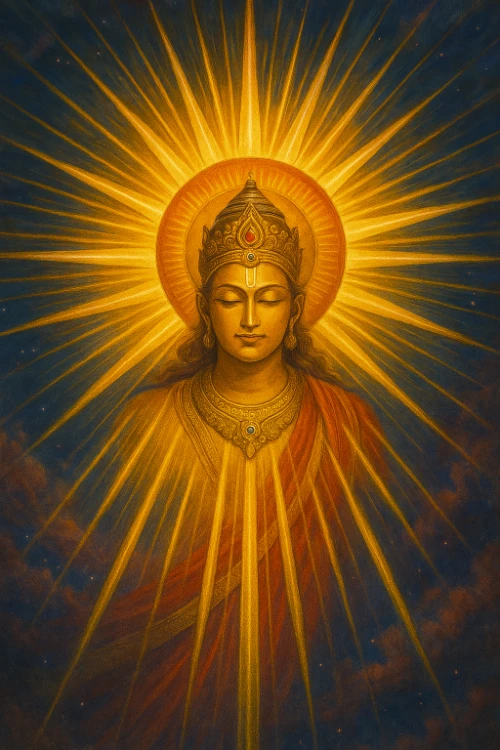
In this manner, Mahādeva, the Lord of all gods, the Grandsire and Sun-like radiance, taking on the form of Kāla (Time), himself becomes Time incarnate and governs its unceasing flow.
तस्या ये रश्मयो विप्राः सर्वलोकप्रदीपकाः ।
तेषां श्रेष्ठाः पुनः सप्तरश्मयो गृहमेधिनः ॥ २ ॥
tasyā ye raśmayo viprāḥ sarvalokapradīpakāḥ |
teṣāṃ śreṣṭhāḥ punaḥ saptaraśmayo gṛhamedhinaḥ || 2 ||
O Brāhmaṇas, the rays (raśmayaḥ) of that divine form illumine all the worlds. Among those, seven principal rays are considered the best — and are especially beneficial to householders (gṛhamedhinaḥ).
सुषुम्लो हरिकेशश्च विश्वकर्मा तथैव च।
विश्वश्रवाः पुनश्चान्यः संयद्वसुरतः परः ॥ ३ ॥
अर्वावसुरिति ख्यातः स्वरकः सप्त कीर्त्तिताः ।
सुषुम्न: सूर्यरश्मिस्तु पुष्णाति शिशरद्युतिम् ॥ ४ ॥
suṣumlo harikeśaśca viśvakarmā tathaiva ca|
viśvaśravāḥ punaścānyaḥ saṃyadvasurataḥ paraḥ || 3 ||
arvāvasuriti khyātaḥ svarakaḥ sapta kīrttitāḥ |
suṣumna: sūryaraśmistu puṣṇāti śiśaradyutim || 4 ||
These are the names of the seven exalted rays of the Sun: Suṣumla, Harikeśa, Viśvakarman, Viśvaśravas, Saṃyadvasu, Arvāvasu, and Svaraka. Among them, Suṣumna, the chief ray of the sun, nourishes and sustains the radiance of the Moon.
तिर्यगूर्ध्वप्रचारोऽसौ सुषुम्नः परिपठ्यते ।
हरिकेशस्तु यः प्रोक्तो रश्मिर्नक्षत्रपोषकः ॥ ५ ॥
विश्वकर्मा तथा रश्मिर्बुधं पुष्णाति सर्वदा ।
विश्वश्रवास्तु यो रश्मिः शुक्रं पुष्णाति नित्यदा ॥ ६ ॥
tiryagūrdhvapracāro’sau suṣumnaḥ paripaṭhyate |
harikeśastu yaḥ prokto raśmirnakṣatrapoṣakaḥ || 5 ||
viśvakarmā tathā raśmirbudhaṃ puṣṇāti sarvadā |
viśvaśravāstu yo raśmiḥ śukraṃ puṣṇāti nityadā || 6 ||
Suṣumṇa, the foremost ray, is said to move obliquely and upward, while Harikeśa, the ray so named, nourishes the brilliance of the stars.
Viśvakarman, another solar ray, constantly nourishes Budha (Mercury), and Viśvaśravas, yet another, continually supports the radiance of Śukra (Venus).
संयद्वसुरिति ख्यातो यः पुष्णाति स लोहितम् ।
बृहस्पतिं सुपुष्णाति रश्मिरर्वावसुः प्रभुः ॥ ७ ॥
saṃyadvasuriti khyāto yaḥ puṣṇāti sa lohitam |
bṛhaspatiṃ supuṣṇāti raśmirarvāvasuḥ prabhuḥ || 7 ||
The ray known as Saṃyadvasu nourishes Mars (Lohita “the red one”), while the powerful ray named Arvāvasu greatly sustains Bṛhaspati (Jupiter).
शनैश्चरं प्रपुष्णाति सप्तमस्तु स्वरस्तथा ।
एवं सूर्यप्रभावेण सर्वा नक्षत्रतारकाः ॥ ८ ॥
वर्द्धन्ते वर्द्धिता नित्यं नित्यमाप्याययन्ति च ।
दिव्यानां पार्थिवानाञ्च नैशानाञ्चैव नित्यशः ॥ ९॥
आदानान्नित्यमादित्यस्तेजसां तमसामपि ।
śanaiścaraṃ prapuṣṇāti saptamastu svarastathā |
evaṃ sūryaprabhāveṇa sarvā nakṣatratārakāḥ || 8 ||
varddhante varddhitā nityaṃ nityamāpyāyayanti ca |
divyānāṃ pārthivānāñca naiśānāñcaiva nityaśaḥ || 9||
ādānānnityamādityastejasāṃ tamasāmapi |
The seventh ray, known as Svaraka, nourishes Śanaiścara (Saturn). Thus, by the power of the Sun, all the constellations and stars are continually sustained.
All these luminaries, constantly nourished, grow and increase in brightness. They ceaselessly infuse vitality into both celestial and terrestrial beings, as well as into nocturnal elements.
Because the Sun constantly absorbs the splendour (tejas) from both the bright and dark sources, it is therefore called Āditya — the absorber.
आदत्ते स तु नाडीनां सहस्रेण समन्ततः ॥ १० ॥
नादेयं चैव सामुद्रं कौप्यं चैव सहस्रदृक् ।
स्थावरं जङ्गमञ्चैव यच्च कुल्यादिकं पयः ॥ ११ ॥
तस्य रश्मिसहस्त्रन्तु शीतवर्षोष्णनिस्रवम् ।
तासाञ्चतुःशता नाड्यो वर्षन्ते चित्रमूर्त्तयः ॥ १२ ॥
ādatte sa tu nāḍīnāṃ sahasreṇa samantataḥ || 10 ||
nādeyaṃ caiva sāmudraṃ kaupyaṃ caiva sahasradṛk |
sthāvaraṃ jaṅgamañcaiva yacca kulyādikaṃ payaḥ || 11 ||
tasya raśmisahastrantu śītavarṣoṣṇanisravam |
tāsāñcatuḥśatā nāḍyo varṣante citramūrttayaḥ || 12 ||
With thousands of rays, the Sun draws water from all directions, absorbing it through countless nāḍīs (channels).
He draws water from oceans, from deep reservoirs (kaupya), from immovable and mobile sources, and from canals and small streams alike.
Among his thousands of rays—capable of releasing cold, heat, and rain—four hundred specific nāḍī-like rays, of variegated forms, are those that produce rainfall.
चन्द्रगाश्चैव गाहाश्च काञ्चना: शातनास्तथा ।
अमृता नामतः सर्वा रश्मयो वृष्टिसर्जनाः ॥ १३ ॥
हिमोद्धताश्च ता नाड्यो रश्मयो निःसृताः पुनः ।
रेयो मेष्यश्च वास्य ह्रादिन्य: सर्जनास्तथा ॥ १४॥
candragāścaiva gāhāśca kāñcanā: śātanāstathā |
amṛtā nāmataḥ sarvā raśmayo vṛṣṭisarjanāḥ || 13 ||
himoddhatāśca tā nāḍyo raśmayo niḥsṛtāḥ punaḥ |
reyo meṣyaśca vāsya hrādinya: sarjanāstathā || 14||
The nectar-like solar rays, known by the names Candragā, Gāhā, Kāñcanā, and Śātanā, are collectively called Amṛtā, and they are the creators of rain.
Again, the excessively cold nāḍīs—which are rays of the sun—emerge as rays named Reṣyā, Meṣyā, Vāsyā, Hrādinī, and Sarjanā.
चन्द्रास्ता नामतः सर्वाः पीतास्ताः स्युर्गभस्तयः ।
शुक्लाश्च कुंकुमाश्चैव गावो विश्वभृतस्तथा । । १५ ॥
शुक्लास्ता नामतः सर्वास्त्रिविधा धर्मसर्जनाः ।
समं विभर्ति ताभिः स मनुष्यपितृदेवताः ॥ १६ ॥
candrāstā nāmataḥ sarvāḥ pītāstāḥ syurgabhastayaḥ |
śuklāśca kuṃkumāścaiva gāvo viśvabhṛtastathā | | 15 ||
śuklāstā nāmataḥ sarvāstrividhā dharmasarjanāḥ |
samaṃ vibharti tābhiḥ sa manuṣyapitṛdevatāḥ || 16 ||
The yellow-colored rays are known by the name Candrās, while other rays called Śukla (white), Kuṅkuma (saffron/red), Gāvaḥ (cows), and Viśvabhṛt (world-supporting) also emanate from the Sun.
These rays, especially the white ones, are named for their threefold generation of dharma (spiritual/ritual power). By means of these rays, the Sun nourishes equally the humans (manuṣyāḥ), the Pitṛs (ancestral spirits), and the Devas (gods).
मनुष्यानौषधेनेह स्वधया च पितृनपि ।
अमृतेन सुरान्सर्वांस्त्रीस्त्रिभिस्तर्पयत्यसौ ॥ १७ ॥
manuṣyānauṣadheneha svadhayā ca pitṛnapi |
amṛtena surānsarvāṃstrīstribhistarpayatyasau || 17 ||
He (the Sun) nourishes humans with medicinal herbs (auṣadha) in this world, Pitṛs (ancestral spirits) with svadhā (ritual oblation), and Devas (gods) with amṛta (nectar of immortality).
Thus, he satisfies all three — humans, ancestors, and gods — with their respective triple offerings.
वसन्ते ग्रीष्मके चैव षड्भिः स तपति प्रभुः ।
शरद्यपि च वर्षास्तु चतुर्भिः संप्रवर्षति ॥ १८ ॥
हेमन्ते शिशिरे चैव हिममुत्सृजति त्रिभिः ।
वरुणो माघमासे तु सूर्यः पूषा तु फाल्गुने ॥ १९ ॥
vasante grīṣmake caiva ṣaḍbhiḥ sa tapati prabhuḥ |
śaradyapi ca varṣāstu caturbhiḥ saṃpravarṣati || 18 ||
hemante śiśire caiva himamutsṛjati tribhiḥ |
varuṇo māghamāse tu sūryaḥ pūṣā tu phālgune || 19 ||
During the seasons of spring (vasanta) and summer (grīṣma), the radiant Lord (Sun) scorches the earth through six rays.
In the autumn (śarada) and monsoon (varṣā) seasons, he brings down rain through four rays.
During early winter (hemanta) and late winter (śiśira), he causes the fall of snow or frost by means of three rays.
In the month of Māgha, the Sun is referred to as Varuṇa, and in the month of Phālguna, he is called Pūṣan.
चैत्रे मासे स देवेशो धाता वैशाखतापनः ।
ज्येष्ठे मासे भवेदिन्द्रः आषाढे तपते रविः ॥ २०॥
विवस्वान् श्रावणे मासि प्रौष्ठपद्यां भगः स्मृतः ।
पर्जन्यश्चाश्विने मासि कार्तिके मासि भास्करः ॥२१॥
मार्गशीर्षे भवेन्मित्र: पौषे विष्णुः सनातनः ।
caitre māse sa deveśo dhātā vaiśākhatāpanaḥ |
jyeṣṭhe māse bhavedindraḥ āṣāḍhe tapate raviḥ || 20||
vivasvān śrāvaṇe māsi prauṣṭhapadyāṃ bhagaḥ smṛtaḥ |
parjanyaścāśvine māsi kārtike māsi bhāskaraḥ ||21||
mārgaśīrṣe bhavenmitra: pauṣe viṣṇuḥ sanātanaḥ |
In the month of Caitra, the Sun is known as Devadeva Dhātā, and in Vaiśākha, he is called Tāpana, the scorching one. In Jyeṣṭha, he assumes the name Indra, and during Āṣāḍha, he shines as Ravi, the blazing one.
In Śrāvaṇa, he is called Vivasvān, and in Bhādrapada (Prauṣṭhapada), he is Bhaga, the bestower of fortune. In the month of Āśvina, he is known as Parjanya, the bringer of rain, and in Kārtika, he is Bhāskara, the radiant illuminator.
In Mārgaśīrṣa, the Sun is called Mitra, the friend of all, and in Pauṣa, he is venerated as Sanātana Viṣṇu, the eternal one.
पञ्चरश्मिसहस्राणि वरुणस्यार्ककर्मणि ॥ २२ ॥
षड्भिः सहस्रैः पूषा तु देवेशः सप्तभिस्तथा ।
धाताष्टभि: सहस्त्रैस्तु नवभिश्च शतक्रतुः ॥२३॥
विवस्वान्दशभिः पाति पात्येकादशभिर्भगः ।
pañcaraśmisahasrāṇi varuṇasyārkakarmaṇi || 22 ||
ṣaḍbhiḥ sahasraiḥ pūṣā tu deveśaḥ saptabhistathā |
dhātāṣṭabhi: sahastraistu navabhiśca śatakratuḥ ||23||
vivasvāndaśabhiḥ pāti pātyekādaśabhirbhagaḥ |
For the function and operation of the Sun:
Varuṇa contributes five thousand rays,
Pūṣan (the nourisher) contributes six thousand,
Deveśa (Lord of the gods) contributes seven thousand rays,
Dhātṛ (the sustainer) contributes eight thousand rays,
Śatakratu (another name for Indra) contributes nine thousand,
Vivasvān (the radiant one) sustains the universe with ten thousand rays,
and Bhaga, the god of fortune, governs with eleven thousand rays.
सप्तभिस्तपते मित्रस्त्वष्टा चैवाष्टभिस्तपेत् ॥ २४ ॥
अर्यमा दशभिः पाति पर्जन्यो नवभिस्तथा ।
षड्भी रश्मिसहस्त्रैस्तु विष्णुस्तपति विश्वधृक् ॥ २५ ॥
saptabhistapate mitrastvaṣṭā caivāṣṭabhistapet || 24 ||
aryamā daśabhiḥ pāti parjanyo navabhistathā |
ṣaḍbhī raśmisahastraistu viṣṇustapati viśvadhṛk || 25 ||
Mitra (the sun in his friendly aspect) heats the world with seven thousand rays.
Tvaṣṭṛ (the divine artisan) radiates with eight thousand rays.
Aryaman (the noble solar deity) governs with ten thousand rays,
Parjanya (the rain-bestowing form) sustains with nine thousand rays,
And Viṣṇu, the preserver and sustainer of the cosmos (viśva-dhṛk),
Radiates his power with six thousand rays.
वसन्ते कपिलः सूर्यो ग्रीष्मे काञ्चनसप्रभः ।
श्वेतो वर्षासु विज्ञेयः पाण्डुरः शरदि प्रभुः ॥ २६ ॥
vasante kapilaḥ sūryo grīṣme kāñcanasaprabhaḥ |
śveto varṣāsu vijñeyaḥ pāṇḍuraḥ śaradi prabhuḥ || 26 ||
In the spring season (vasanta), the Sun is of a tawny hue (kapilaḥ). During the summer (grīṣma), he shines with a golden radiance (kāñcana-saprabhaḥ). In the rainy season (varṣāsu), he is known to be white (śvetaḥ), and in the autumn (śaradi), the Lord of the skies assumes a whitish-yellow (pāṇḍuraḥ) complexion.
हेमन्ते ताम्रवर्ण : स्याच्छिशिरे लोहितो रविः ।
ओषधीषु कलां धत्ते स्वधामपि पितृष्वथ ॥ २७ ॥
सूर्योऽमरेष्वमृतं तु त्रयं त्रिषु नियच्छति ।
hemante tāmravarṇa : syācchiśire lohito raviḥ |
oṣadhīṣu kalāṃ dhatte svadhāmapi pitṛṣvatha || 27 ||
sūryo’mareṣvamṛtaṃ tu trayaṃ triṣu niyacchati |
During Hemanta (early winter), the Sun appears with a coppery hue, and during Śiśira (late winter), his glow turns deep red. He places his essence (kalā, or energizing potency) into medicinal herbs, svadhā (the offering-sustaining force) into the ancestors (Pitṛs), and amṛta (nectar) into the gods (amaras). Thus, the Sun sustains all three domains—herbal vitality for humans, nourishment for ancestral rites, and immortality for the deities—through these three essences.
अन्ये चाष्टौ ग्रहा ज्ञेयाः सूर्येणाधिष्ठिता द्विजाः ॥ २८॥
चन्द्रमाः सोमपुत्रश्च शुक्रश्चैव बृहस्पतिः ।
भौमो मन्दस्तथा राहुः केतुमानपि चाष्टमः ॥ २९ ॥
anye cāṣṭau grahā jñeyāḥ sūryeṇādhiṣṭhitā dvijāḥ || 28||
candramāḥ somaputraśca śukraścaiva bṛhaspatiḥ |
bhaumo mandastathā rāhuḥ ketumānapi cāṣṭamaḥ || 29 ||
The sun deposits Amṛta (nectar) in the immortal beings. Thus in the three beings he deposits the three articles. O Brāhmaṇas, the other eight planets are dependant over the sun- god. They are the Moon, Budha (Mercury), Venus, Jupiter, Mars, Saturn, Rāhu and Ketu.
सर्वे ध्रुवे निबद्धा वै ग्रहास्ते वातरश्मिभिः ।
भ्राम्यमाणा यथायोगं भ्रमन्त्यनु दिवाकरम् ॥ ३० ॥
sarve dhruve nibaddhā vai grahāste vātaraśmibhiḥ |
bhrāmyamāṇā yathāyogaṃ bhramantyanu divākaram || 30 ||
All the planets are bound to Dhruva (the pole star) by cords of wind, and being made to revolve as per their ordained paths, they rotate following the sun.
अलातचक्रवद्यान्ति वातचक्रेरितास्तथा ।
यस्माद्वहति तान्वायुः प्रवहस्तेन स स्मृतः ॥ ३१॥
alātacakravadyānti vātacakreritāstathā |
yasmādvahati tānvāyuḥ pravahastena sa smṛtaḥ || 31||
The planets move like the wheel of a firebrand, driven by a wheel of wind. Since the wind carries them, it is therefore called Pravaha (‘that which flows forward’), the cosmic wind that bears the planets in their orbits.
रथस्त्रिचक्रः सोमस्य कुन्दाभास्तस्य वाजिनः ।
वामदक्षिणतो युक्ता दश तेन क्षपाकरः ॥ ३२ ॥
वीथ्याश्रयाणि चरति नक्षत्राणि रविर्यथा ।
ह्रासवृद्धी तु विप्रेन्द्रा ध्रुवाधाराणि सर्वदा ॥ ३३ ॥
rathastricakraḥ somasya kundābhāstasya vājinaḥ |
vāmadakṣiṇato yuktā daśa tena kṣapākaraḥ || 32 ||
vīthyāśrayāṇi carati nakṣatrāṇi raviryathā |
hrāsavṛddhī tu viprendrā dhruvādhārāṇi sarvadā || 33 ||
The chariot of Soma (the Moon) has three wheels, and ten horses, shining like jasmine flowers, are yoked to it — five on the left and five on the right. With that chariot, he becomes the illuminator of the night.
He moves through the constellations along his own orbit, just as the sun does. O best of Brāhmaṇas, the waxing and waning (decline and increase) of the Moon are always based on (supported by) Dhruva, the Pole Star.
स सोमः शुक्लपक्षे तु भास्करे परतः स्थिते ।
आपूर्यते परस्यान्ते सततञ्चैव ताः प्रभाः ॥३४॥
sa somaḥ śuklapakṣe tu bhāskare parataḥ sthite |
āpūryate parasyānte satatañcaiva tāḥ prabhāḥ ||34||
That Soma (the Moon), during the bright fortnight (śuklapakṣa), when the Sun (Bhāskara) is positioned opposite to it, becomes gradually filled with light. It is at the far end (i.e., the side opposite the Sun) that the rays (of the Sun) continually illuminate him.
क्षीणं पातं सुरैः सोममाप्याययति नित्यदा ।
एकेन रश्मिना विप्राः सुषुम्लाख्येन भास्करः ॥३५॥
एषा सूर्यस्य वीर्येण सोमस्याप्यायिता तनुः ।
पौर्णमास्यां स दृश्येत संपूर्णो दिवसक्रमात् ॥ ३६ ॥
kṣīṇaṃ pātaṃ suraiḥ somamāpyāyayati nityadā |
ekena raśminā viprāḥ suṣumlākhyena bhāskaraḥ ||35||
eṣā sūryasya vīryeṇa somasyāpyāyitā tanuḥ |
paurṇamāsyāṃ sa dṛśyeta saṃpūrṇo divasakramāt || 36 ||
O Brāhmaṇas, as the gods continually drink the moon (i.e., consume its nectar), the sun replenishes it daily with a single ray, known as Suṣumṇā.
It is through the potency (vīrya) of the sun that the body of the moon is nourished; and thus, in the course of days, it becomes completely full and is seen as the full moon on the night of Paurṇamāsī (the full moon day).
संपूर्णमर्द्धमासेन तं सोमममृतात्मकम्।
पिबन्ति देवता विप्रा यतस्तेऽमृतभोजनाः ॥ ३७ ॥
saṃpūrṇamarddhamāsena taṃ somamamṛtātmakam|
pibanti devatā viprā yataste’mṛtabhojanāḥ || 37 ||
O Brāhmaṇas, within half a month (i.e., during the bright fortnight), the gods drink that Soma, which is of the nature of nectar (amṛtātmaka), because they are nourished by nectar (amṛta-bhojanāḥ).
ततः पञ्चदशे भागे किञ्चिच्छिष्टे कलात्मके ।
अपराह्ने पितृगणा जघन्यं पर्युपासते ॥ ३८ ॥
पिबन्ति द्विलवं कालं शिष्टा तस्य कला तु या ।
सुधामृतमयीं पुण्यां तामिन्दोरमृतात्मिकाम्॥ ३९॥
tataḥ pañcadaśe bhāge kiñcicchiṣṭe kalātmake |
aparāhne pitṛgaṇā jaghanyaṃ paryupāsate || 38 ||
pibanti dvilavaṃ kālaṃ śiṣṭā tasya kalā tu yā |
sudhāmṛtamayīṃ puṇyāṃ tāmindoramṛtātmikām|| 39||
When only one fifteenth portion remains, during the afternoon, the Pitṛs (ancestral spirits) partake of that last digit. For a brief period (two lavas in time), they consume that remaining drop of nectar—pure, auspicious, and composed of ambrosia, from the immortal essence of the Moon.
निःसृतं तदमावास्यां गभस्तिभ्यः स्वधामृतम् ।
मातृप्तिमवाश्यन्ति पितरः सन्ति निर्वृताः ॥ ४० ॥
न सोमस्य विनाशः स्यात्सुधा चैव सुपीयते ।
एवं सूर्यनिमित्तोऽस्य क्षयो वृद्धिश्च सत्तमाः ॥ ४१ ॥
niḥsṛtaṃ tadamāvāsyāṃ gabhastibhyaḥ svadhāmṛtam |
mātṛptimavāśyanti pitaraḥ santi nirvṛtāḥ || 40 ||
na somasya vināśaḥ syātsudhā caiva supīyate |
evaṃ sūryanimitto’sya kṣayo vṛddhiśca sattamāḥ || 41 ||
On the new moon day (amāvāsyā), the nectar of svadhā (the oblation offered to ancestors), having issued forth from the rays (of the moon), is consumed by the Pitṛs (ancestors); being thus satisfied, they remain contented and appeased.
Although the nectar (sudhā) is well consumed, there is no destruction of Soma (the moon). O excellent one, in this way, the waning and waxing of the moon occurs due to the agency of the sun.
सोमपुत्रस्य चाष्टाभिर्वाजिभिर्वायुवेगिभिः ।
वारिजैः स्यन्दनो युक्तस्तेनासौ याति सर्वतः ॥ ४२ ॥
somaputrasya cāṣṭābhirvājibhirvāyuvegibhiḥ |
vārijaiḥ syandano yuktastenāsau yāti sarvataḥ || 42 ||
The chariot of Budha (Mercury), the son of Soma (the Moon), is yoked with eight horses born of water (vārija), swift as the wind. With this chariot, he moves in all directions.
शुक्रस्य भूमिजैरश्वैः स्यन्दनो दशभिर्वृतः ।
अष्टभिश्चापि भौमस्य रथो हैमः सुशोभनः ॥ ४३ ॥
बृहस्पते रथोऽष्टाश्वः स्यन्दनो हेमनिर्मितः ।
रथो रूप्यमयोऽष्टाश्वो मन्दस्यायसनिर्मितः ॥ ४४ ॥
स्वर्भानोर्भास्करारेश्च तथाष्टाभिर्हयैर्वृतः ।
एते महाग्रहाणां वै समाख्याता रथाश्च वै ॥ ४५ ॥
śukrasya bhūmijairaśvaiḥ syandano daśabhirvṛtaḥ |
aṣṭabhiścāpi bhaumasya ratho haimaḥ suśobhanaḥ || 43 ||
bṛhaspate ratho’ṣṭāśvaḥ syandano hemanirmitaḥ |
ratho rūpyamayo’ṣṭāśvo mandasyāyasanirmitaḥ || 44 ||
svarbhānorbhāskarāreśca tathāṣṭābhirhayairvṛtaḥ |
ete mahāgrahāṇāṃ vai samākhyātā rathāśca vai || 45 ||
The chariot of Śukra (Venus) is drawn by ten horses born of the Earth. The chariot of Bhauma (Mars), splendid and made of gold, is drawn by eight horses. The chariot of Bṛhaspati (Jupiter) is drawn by eight horses and is constructed of gold. The chariot of Manda (Saturn) is made of silver and drawn by eight horses, but the frame is of iron. The chariots of Svara-bhānu (Rāhu) and Bhāskara-ari (Ketu, "enemy of the Sun") are also drawn by eight horses each. Thus are described the chariots of the great planets (mahā-grahāḥ).
सर्वे ध्रुवे महाभागा निबद्धा वायुरश्मिभिः ।
ग्रहर्क्षताराधिष्ण्यानि ध्रुवे बद्धान्यशेषतः ।
भ्रमन्ति भ्रामयन्त्येनं सर्वाण्यनिलरश्मिभिः ॥ ४६॥
sarve dhruve mahābhāgā nibaddhā vāyuraśmibhiḥ |
graharkṣatārādhiṣṇyāni dhruve baddhānyaśeṣataḥ |
bhramanti bhrāmayantyenaṃ sarvāṇyanilaraśmibhiḥ || 46||
All these great celestial bodies are bound to Dhruva (the Pole Star) by the rays (or currents) of wind (vāyu-raśmibhiḥ). The abodes of the planets (graha), constellations (ṛkṣa), and stars (tārā) are all completely fastened to Dhruva. They revolve, and cause him (i.e., Dhruva) to revolve, all due to the streams (or reins) of air (anila-raśmibhiḥ).
इति श्रीकूर्मपुराणे पूर्वभागे भुवनकोशे त्रिचत्वारिंशोऽध्यायः ॥४३॥
iti śrīkūrmapurāṇe pūrvabhāge bhuvanakośe tricatvāriṃśo’dhyāyaḥ ||43||
Thus ends Chapter 43 in the Bhuvanakośa section of the Pūrvabhāga (First Part) of the sacred Kūrma Purāṇa.
Full Synopsis of Chapter 43 — Movement of the Planets
Chapter 43 of the Kūrma Purāṇa presents a profound cosmological vision in which Mahādeva, the Lord of all gods, becomes Kāla, the embodiment of Time itself. As the Sun, he governs the movement of time and sustains the universe with his countless rays. Among these rays, seven are considered most significant, especially for householders: Suṣumṇa, Harikeśa, Viśvakarman, Viśvaśravas, Saṃyadvasu, Arvāvasu, and Svaraka. Each ray nourishes a different celestial body — Suṣumṇa supports the Moon, Harikeśa nourishes the stars, Viśvakarman sustains Mercury, Viśvaśravas strengthens Venus, Saṃyadvasu energizes Mars, Arvāvasu fortifies Jupiter, and Svaraka maintains Saturn. Through this interwoven system, the Sun governs both planetary functions and terrestrial vitality.
The Sun possesses thousands of rays, among which 400 are responsible for rainfall. Four of these rain-bringing rays are collectively called Amṛtā — Candragā, Gāhā, Kāñcanā, and Śātanā. Other rays include Śukla (white), Kuṅkuma (saffron), Gāvaḥ (cow-like, nourishing), and Viśvabhṛt (world-sustaining). These rays serve threefold functions: nourishing humans through medicinal herbs (auṣadha), sustaining Pitṛs (ancestral spirits) through svadhā (ritual offerings), and feeding the gods through amṛta (nectar of immortality). As the seasons change, so do the hues of the Sun: tawny in spring, golden in summer, white in the monsoon, pale yellow in autumn, coppery in early winter, and deep red in late winter. Each month of the solar year is also associated with a different divine form of the Sun, such as Varuṇa, Pūṣan, Indra, Vivasvān, Bhāskara, and Mitra, each emanating thousands of rays with specific functions like heating, nourishing, or illuminating.
The Moon (Soma) rides a chariot drawn by ten jasmine-colored horses and revolves through the constellations much like the Sun. His waxing and waning are governed by the rays of the Sun — particularly Suṣumṇa, which replenishes the nectar consumed by the gods during the bright fortnight. In the final lunar phase, the Pitṛs consume the last trace of this nectar, ensuring their satisfaction and continued blessing. Despite this ongoing consumption, the Moon is never diminished, representing eternal regeneration. This process illustrates a dynamic interchange between solar and lunar energy, linked deeply to both ritual practice and cosmic balance.
The other planets also move in harmony with this solar order. Mercury rides a chariot pulled by eight watery horses; Venus is drawn by ten horses born of earth; Mars, Jupiter, and Saturn each have golden or silver chariots drawn by eight horses, with Saturn's being iron-framed. Rāhu and Ketu also travel in eight-horse chariots. All these planetary bodies are bound to Dhruva, the Pole Star, by currents of wind (vāyu-raśmibhiḥ) and are propelled through space by Pravaha, the cosmic wind. Their motion is likened to a spinning firebrand — fluid, luminous, and perpetual. Dhruva acts as the fixed cosmic axis, anchoring the movements of stars, planets, and lunar mansions.
Through this chapter, the Kūrma Purāṇa presents a vision of the cosmos that integrates astronomy, metaphysics, and ritual meaning. The Sun is not merely a physical object but the very embodiment of Time and Dharma — illuminating, sustaining, and regulating both the visible and the invisible worlds. The planets, stars, and luminaries operate as extensions of divine will, tethered to Dhruva by streams of wind, their order maintained through the continuous interplay of light, motion, and sacrifice. This sacred cosmology affirms a universe that is not random but divinely governed — where every ray of sunlight, drop of rain, and phase of the moon is imbued with purpose and sacred resonance.


Commentary
The names suggest divine or elemental qualities:
Suṣumna – “very gentle” or “central,” often considered the main solar ray. Harikeśa – “with tawny/golden hair,” associated with light or flame. Viśvakarman – “cosmic architect,” implies a constructive force. Viśvaśravas – “universally heard,” suggesting resonance or vibration. Saṃyadvasu – possibly “well-restrained wealth,” indicating stability. Arvāvasu – “near-radiance,” perhaps a localizing light. Svaraka – from svar, “radiance” or “heavenly voice.” Suṣumna is given prominence as the one that supports the moon’s luminosity — revealing the interdependence of celestial forces.