Linga Mahāpurāna - Uttara Bhāga
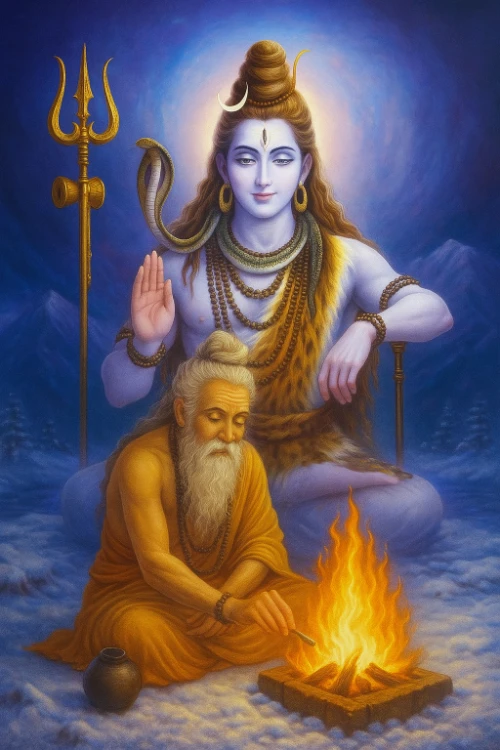
Chapter 25 - The holy fire rites of Shiva
शैलादिरुवाच
शिवाग्निकार्यं वक्ष्यामि शिवेन परिभाषितम् ।
जनयित्वाग्रतः प्राचीं शुभे देशे सुसंस्कृते ॥१॥
śailādiruvāca
śivāgnikāryaṃ vakṣyāmi śivena paribhāṣitam |
janayitvāgrataḥ prācīṃ śubhe deśe susaṃskṛte ||1||
Śailādi said: "I shall now explain the rite of Śiva-fire (śivāgni-kārya) as taught by Lord Śiva himself. It is to be commenced by kindling the sacred fire facing the east (prācīṁ), in a place that is auspicious (śubhe deśe) and well-prepared (susaṁskṛte)."
पूर्वाग्रमुत्तराग्रं च कुर्यात्सूत्रत्रयं शुभम् ।
चतुस्रीकृते क्षेत्रे कुर्यात्कुण्डानि यत्नतः॥२॥
pūrvāgramuttarāgraṃ ca kuryātsūtratrayaṃ śubham |
catusrīkṛte kṣetre kuryātkuṇḍāni yatnataḥ||2||
One should draw three auspicious lines (sūtratrayam śubham), one directed toward the east (pūrvāgram) and another toward the north (uttarāgram). Then, in a properly leveled and square-shaped area (catusrīkṛta-kṣetra), one should carefully construct the sacrificial pits (kuṇḍāni) with diligence.
नित्यहोमाग्निकुण्डं च त्रिमेखलसमायुतम् ।
चतुस्रीद्व्यङ्गुलायामा मेखला हस्तमात्रतः॥३॥
हस्तमात्रं भवेत्कुण्डं योनिः प्रादेशमात्रतः ।
अश्वत्थपत्रवद्योनिं मेखलोपरि कल्पयेत् ॥ ४॥
nityahomāgnikuṇḍaṃ ca trimekhalasamāyutam |
catusrīdvyaṅgulāyāmā mekhalā hastamātrataḥ||3||
hastamātraṃ bhavetkuṇḍaṃ yoniḥ prādeśamātrataḥ |
aśvatthapatravadyoniṃ mekhalopari kalpayet || 4||
The permanent fire-pit for daily homa should be square in shape, furnished with three surrounding bands. Each band should be two fingers wide, and the total area of the kuṇḍa should be the size of one hasta (the span of a hand, approximately 45cm).
The kuṇḍa (fire altar) itself should measure one hasta in size. A yoni (channel or opening) should be constructed measuring one prādeśa (a palm’s length). This yoni should be shaped like a pipal leaf (a pointed, heart-shaped form) and should be placed above the surrounding band.
कुण्डमध्ये तु नाभिः स्यादष्टपत्रं सकणिकम् ।
प्रादेशमात्रं विधिना कारयेद्ब्रह्मणः सुत ॥५॥
kuṇḍamadhye tu nābhiḥ syādaṣṭapatraṃ sakaṇikam |
prādeśamātraṃ vidhinā kārayedbrahmaṇaḥ suta ||5||
O son of Brahmā, at the center of the fire altar (kuṇḍa), a navel-like design (nābhi) should be created in the form of an eight-petalled lotus (aṣṭapatraṁ), complete with its central seed-pod (kaṇika). It should be crafted according to proper ritual procedure (vidhinā), and its diameter should measure one prādeśa (i.e., the width of the palm, roughly 20–24 cm).
षष्ठेनोल्लेखनं प्रोक्तं प्रोक्षणं वर्मणा स्मृतम् ।
नेत्रेणालोक्य वै कुण्डं षड्रेखाः कारयेद्बुधः ॥६॥
प्रागायतेन विप्रेंद्र ब्रह्मविष्णुमहेश्वराः ।
उत्तराग्राः शिवा रेखाः प्रोक्षयेद्वर्मणा पुनः ॥७॥
ṣaṣṭhenollekhanaṃ proktaṃ prokṣaṇaṃ varmaṇā smṛtam |
netreṇālokya vai kuṇḍaṃ ṣaḍrekhāḥ kārayedbudhaḥ ||6||
prāgāyatena vipreṃdra brahmaviṣṇumaheśvarāḥ |
uttarāgrāḥ śivā rekhāḥ prokṣayedvarmaṇā punaḥ ||7||
Using the sixth bīja-mantra, the ritual marking of lines (ullekhana) is to be performed. The sprinkling of water (prokṣaṇa) should be done using the varmaṇa-mantra (protective mantra).
Having gazed steadily at the altar (kuṇḍa) with focused attention, the learned one should draw six lines (ṣaḍrekhāḥ).
O best of Brāhmaṇas, on the eastern side, the three lines represent Brahmā, Viṣṇu, and Maheśvara (Śiva).
On the northern side, additional auspicious lines representing Śiva should be drawn. These too must be sprinkled with water using the varmaṇa-mantra for purification and protection.
शमी पिप्पलसंभूतामरणीं षोडशाङ्गुलाम् ।
मथित्वा वह्निबीजेन शक्तिन्यासं हृदैव तु ॥ ८ ॥
प्रक्षिपेद्विधिना वह्निमन्वाधाय यथाविधि।
तूष्णीं प्रादेशमात्रैस्तु याज्ञिकैः शकलैः शुभैः ॥ ९ ॥
परिसंमोहनं कुर्याज्जलेनाष्टसु दिक्षु वै ।
परिस्तीर्य विधानेन प्रागाद्येवमनुक्रमात्॥१०॥
śamī pippalasaṃbhūtāmaraṇīṃ ṣoḍaśāṅgulām |
mathitvā vahnibījena śaktinyāsaṃ hṛdaiva tu || 8 ||
prakṣipedvidhinā vahnimanvādhāya yathāvidhi|
tūṣṇīṃ prādeśamātraistu yājñikaiḥ śakalaiḥ śubhaiḥ || 9 ||
parisaṃmohanaṃ kuryājjalenāṣṭasu dikṣu vai |
paristīrya vidhānena prāgādyevamanukramāt||10||
Let the araṇi (sacrificial fire-stick), made from Śamī or Pippala wood and measuring sixteen aṅgulas (finger-breadths), be kindled with the seed-mantra of fire (vahni-bīja). Then the Śakti-nyāsa (installation of energy) should be performed at the heart (hṛt) with due procedure.
The fire should be kindled and invoked according to proper rules. Without uttering words, one should quietly offer auspicious ritual fuel sticks (śakalas), each measuring one prādeśa (the distance between thumb and forefinger), into the fire as per Vedic ordinance.
Then the parisaṁmohana rite (purificatory sealing of space) should be done by sprinkling water in the eight directions. Afterwards, the paristīra (ritual strewing of darbha grass or consecrated material) should be performed sequentially starting from the east, following the proper method.
उत्तराग्रं पुरस्ताद्धि प्रागग्रं दक्षिणे पुनः ।
पश्चिमे चोत्तराग्रं तु सौम्यं पूर्वाग्रमेव तु ॥११॥
uttarāgraṃ purastāddhi prāgagraṃ dakṣiṇe punaḥ |
paścime cottarāgraṃ tu saumyaṃ pūrvāgrameva tu ||11||
In the eastern direction, the tip of the kuśa grass should point north.
In the southern direction, the tip should point east.
In the western direction, it should be placed with the tip northward,
and in the northern direction, the tip should be turned eastward.
This arrangement is considered auspicious (saumya).
ऐन्द्रे चैन्द्राग्नमावाह्य यास्य एवं विधीयते ।
सौम्यस्योपरि चांद्राग्नं वारुमाग्नमधस्ततः ॥ १२ ॥
aindre caindrāgnamāvāhya yāsya evaṃ vidhīyate |
saumyasyopari cāṃdrāgnaṃ vārumāgnamadhastataḥ || 12 ||
In the Indra vessel (āindra), one should invoke the combined presence of Indra and Agni—this is the prescribed procedure.
Upon the Saumya vessel (associated with Soma), one should invoke Soma and Agni; Beneath that, Varuṇa and Agni (Vāruṇāgni) should be installed.
द्वंद्वरूपेण पात्राणि बर्हिः ष्वासाद्य सुव्रत ।
अधोमुखानि सर्वाणि द्रव्याणि च तथोत्तरे ॥ १३॥
तस्योपरि न्यसेद्दर्भाञ्छिवं दक्षिणतोन्यसेत् ।
पूजयेन्मूलमंत्रेण पश्चाद्धोमं समाचरेत्॥१४॥
dvaṃdvarūpeṇa pātrāṇi barhiḥ ṣvāsādya suvrata |
adhomukhāni sarvāṇi dravyāṇi ca tathottare || 13||
tasyopari nyaseddarbhāñchivaṃ dakṣiṇatonyaset |
pūjayenmūlamaṃtreṇa paścāddhomaṃ samācaret||14||
O noble-souled one (Suvrata), the ritual vessels are to be arranged in pairs (dvaṁdvarūpa), placed upon a seat of barhis (sacrificial kuśa grass). All the vessels should be set upside down (adhomukhāni)—that is, with their mouths facing downward—while their ritual substances (dravyāṇi) should be placed in proper order to the north (uttare).
On top of those vessels, darbha grass should be carefully laid. The Śiva vessel (śivaṁ pātram) should be placed to the south. One must worship it by reciting the Mūla-mantra (root mantra of Śiva). Only after this worship, the homa (sacred fire ritual) is to be performed.
प्रेक्षणीपात्रमादाय पूरयेदंबुना पुनः ।
प्रादेशमात्रौ तु कुशौ स्थापयेदुदकोपरि ॥ १५ ॥
prekṣaṇīpātramādāya pūrayedaṃbunā punaḥ |
prādeśamātrau tu kuśau sthāpayedudakopari || 15 ||
Taking the Prekṣaṇī-pātra (the vessel meant for viewing or examining ritual purity), one should fill it with water (ambunā punaḥ pūrayed). Then, two kuśa blades, each measuring one prādeśa (a palm's width — distance between thumb and forefinger), should be placed over the surface of the water (udakopari sthāpayet).
प्लावयेच्च कुशाग्रं तु वसोः सूर्यस्य रश्मिभिः ।
विकीर्य सर्वपात्राणि सुसंप्रोक्ष्य विधानतः ॥ १६॥
प्रणीतापात्रमादाय पूरयेदंबुना पुनः ।
अन्योदककुशाग्रैस्तु सम्यगाच्छाद्य सुव्रत॥१७॥
हस्ताभ्यां नासिकं पात्रमैशान्यां दिशि विन्यसेत् ।
आज्याधिश्रयणं कुर्यात्पश्चिमोत्तरतः शुभम् ॥ १८ ॥
plāvayecca kuśāgraṃ tu vasoḥ sūryasya raśmibhiḥ |
vikīrya sarvapātrāṇi susaṃprokṣya vidhānataḥ || 16||
praṇītāpātramādāya pūrayedaṃbunā punaḥ |
anyodakakuśāgraistu samyagācchādya suvrata||17||
hastābhyāṃ nāsikaṃ pātramaiśānyāṃ diśi vinyaset |
ājyādhiśrayaṇaṃ kuryātpaścimottarataḥ śubham || 18 ||
One should sprinkle the tip of the kuśa grass in water, reciting the mantra “Vasoḥ Sūryasya raśmibhiḥ”. Then, according to proper procedure, all ritual vessels (pātras) should be properly arranged with their openings facing upward and sprinkled with sanctified water.
After that, the praṇīta-pātra (a vessel specifically designated for water sanctified through mantras) should be filled with clean water. The remaining water vessels should be covered with kuśa grass so that their openings remain protected.
Then, taking the praṇīta vessel with both hands, it should be raised to the nose-level and respectfully placed in the north-eastern direction (aiśānya diś). After this, the ghee (clarified butter) warming ritual — ājya-adhishrayaṇa — should be performed in the north-western direction (vāyavya).
भस्ममिश्रांस्तथाङ्गारान् ग्राहयेत्सकलेन वै ।
पश्चिमोत्तरतो नीत्वा तत्र चाज्यं प्रतापयेत् ॥ १९॥
कुशानग्नौ तु प्रज्वाल्य पर्यग्नि त्रिभिराचरेत् ।
तान्सर्वांस्तत्र निःक्षिप्य चाग्रे चाज्यं निधापयेत् ॥ २०
bhasmamiśrāṃstathāṅgārān grāhayetsakalena vai |
paścimottarato nītvā tatra cājyaṃ pratāpayet || 19||
kuśānagnau tu prajvālya paryagni tribhirācaret |
tānsarvāṃstatra niḥkṣipya cāgre cājyaṃ nidhāpayet || 20
The practitioner should gather embers mixed with sacred ash (bhāsma) using a sakala, i.e., a ritual ladle or small vessel specifically meant for handling such substances.
Then, taking the embers from the western direction and carrying them toward the north, the practitioner should use them to warm the clarified butter (ājya) over this fire. This action energizes the ghee with the transformative force of fire (Agni).
Next, the kuśa grass (used throughout the ritual for sanctity and protection) is to be ignited in the fire, and moved around the sacred fire three times — this is called paryagni or circumambulating the fire with the burning kuśas. This symbolizes purification of the fire and space around it.
After the kuśas have been burned and circumambulated, all of them should be deposited into the fire. Then, the warmed ghee (ājya) should be placed in front of the fire, ready for the main homa (sacrificial offering).
अङ्गुष्ठमात्रौ तु कुशौ प्रक्षाल्य विधिनैव तु ।
पर्यग्निं च ततः कुर्यात्तैरेव नवभिः पुनः ॥ २१ ॥
पर्यग्निं च पुनः कुर्यात्तदाज्यमवरोपयेत्।
अथापकर्षयेत् पात्रं क्रमेणोत्तरपश्चिमे ॥ २२ ॥
aṅguṣṭhamātrau tu kuśau prakṣālya vidhinaiva tu |
paryagniṃ ca tataḥ kuryāttaireva navabhiḥ punaḥ || 21 ||
paryagniṃ ca punaḥ kuryāttadājyamavaropayet|
athāpakarṣayet pātraṃ krameṇottarapaścime || 22 ||
The devotee should take two kuśa blades, each measuring aṅguṣṭha-mātra (thumb-length), and ritually wash them as per the prescribed procedure (vidhinā).
Using these two kuśas, he should perform paryagni (circumambulating the fire with sanctity). Then, again, he should repeat the paryagni rite, this time using nine kuśa blades (nava-kuśaiḥ). These multiple circumambulations reinforce sacred sealing and purification of the homa area.
A third and final circumambulation (paryagni) is then performed to complete the sanctification. Following this, the ghee vessel (ājya-pātra) is to be gently removed from its position—a symbolic withdrawal preparing for the main oblations.
The ghee vessel is withdrawn in order, starting from the north and toward the west (uttara → paścima), which traditionally corresponds to the vāyavya or dissolution zone. This directional movement mirrors the cosmic principle of withdrawal after creation or energization.
संयुज्यं चाग्नि काष्ठेन प्रक्षाल्यारोप्य पश्चिमे ।
आज्यस्योत्पवनं कुर्यात्पवित्राभ्यां सहैव तु ॥ २३ ॥
पृथगादाय हस्ताभ्यां प्रवाहेण यथाक्रमम् ।
अङ्गुष्ठानामिकाभ्यां तु उभाभ्यां मूलविद्यया ॥ २४ ॥
अभ्युक्ष्य दापयेदग्नौ पवित्रे घृतपंकिते ।
सौवर्णं स्रुक्स्रुवं कुर्याद्रनिमात्रेण सुव्रत ॥ २५ ॥
राजतं वा यथान्यायं सर्वलक्षणसंयुतम्।
अथवा याज्ञिकैर्वृक्षैः कर्तव्यो स्रुक्खुवावुभौ ॥ २६ ॥
saṃyujyaṃ cāgni kāṣṭhena prakṣālyāropya paścime |
ājyasyotpavanaṃ kuryātpavitrābhyāṃ sahaiva tu || 23 ||
pṛthagādāya hastābhyāṃ pravāheṇa yathākramam |
aṅguṣṭhānāmikābhyāṃ tu ubhābhyāṃ mūlavidyayā || 24 ||
abhyukṣya dāpayedagnau pavitre ghṛtapaṃkite |
sauvarṇaṃ sruksruvaṃ kuryādranimātreṇa suvrata || 25 ||
rājataṃ vā yathānyāyaṃ sarvalakṣaṇasaṃyutam|
athavā yājñikairvṛkṣaiḥ kartavyo srukkhuvāvubhau || 26 ||
The fire is to be nourished and maintained by adding a clean (washed) piece of sacrificial firewood (kāṣṭha) into the fire. This is to be placed on the western side of the fire altar, which aligns with symbolic withdrawal or stabilization.
Then begins the utpavana rite — the ritual straining and sanctification of ghee using pavitra, which are strainer-rings or loops made of kuśa grass. These are used not only for purification but for energy sealing.
With both hands, the devotee separately takes up the strained ghee and performs the flowing motion (pravāha) in the correct sequence of steps — a gesture of consecration. The pavitra rings are worn on the thumb and ring finger (aṅguṣṭha and anāmikā) of both hands, signifying the full engagement of ritual limbs. The act is accompanied by the chanting of the mūla-vidyā (root mantra) of Śiva.
The sanctified ghee, now ritually energized and consecrated, is lightly sprinkled (abhyukṣya) into the fire using the kuśa-ring strainer (pavitra), whose tips are smeared with ghee (ghṛta-paṅkita), completing the act of offering life-breath to fire.
The offering ladle (sruk) and spoon (sruva) may ideally be made of gold, and each should be of the size of one raṇi-mātra — which means about the length of the forearm or palm, indicating practical usability.
Alternatively, they may be made of silver, provided they possess all proper marks, measurements, and ritual characteristics (sarva-lakṣaṇa), maintaining full ritual purity and scriptural compliance.
Or, if metals are unavailable, the sruk and sruva may be carved out of sacred woods designated for yajña purposes (such as Palāśa, Udumbara, Bilva), maintaining the same ritual measurements and sanctity.
अरत्निमात्रमायामं तत्पात्रे तु बिलं भवेत् ।
षडङ्कलपरीणाहं दण्डमूलं महामुने ॥ २७ ॥
तदर्थं कंठनालं स्यात्पुष्करं मूलवद्भवेत् ।
गोवालसदृशं दण्डं स्रुवाग्रं नासिकासमम् ॥ २८॥
पुटद्वयसमायुक्तं मुक्ताद्येन प्रपूरितम् ।
षट्त्रिंशदङ्गुलायाममष्टाङ्कुलसविस्तरम्॥२९॥
उत्सेधस्तु तदर्थं स्यात्सूत्रेण समितं ततः ।
सप्ताङ्गुलं भवेदास्यं विस्तरायामतः पुनः ॥ ३० ॥
त्रिभागैकं भवेदग्रं कृत्वा शेषं परित्यजेत् ।
कंठं च द्व्यङ्गुलायामं विस्तरं चतुरङ्गुलम् ॥३१॥
वेदिरष्टाङ्कलायामा विस्तारस्तत्प्रमाणतः ।
तस्य मध्ये बिलं कुर्याच्चतुरङ्गुलमानतः॥३२॥
aratnimātramāyāmaṃ tatpātre tu bilaṃ bhavet |
ṣaḍaṅkalaparīṇāhaṃ daṇḍamūlaṃ mahāmune || 27 ||
tadarthaṃ kaṃṭhanālaṃ syātpuṣkaraṃ mūlavadbhavet |
govālasadṛśaṃ daṇḍaṃ sruvāgraṃ nāsikāsamam || 28||
puṭadvayasamāyuktaṃ muktādyena prapūritam |
ṣaṭtriṃśadaṅgulāyāmamaṣṭāṅkulasavistaram||29||
utsedhastu tadarthaṃ syātsūtreṇa samitaṃ tataḥ |
saptāṅgulaṃ bhavedāsyaṃ vistarāyāmataḥ punaḥ || 30 ||
tribhāgaikaṃ bhavedagraṃ kṛtvā śeṣaṃ parityajet |
kaṃṭhaṃ ca dvyaṅgulāyāmaṃ vistaraṃ caturaṅgulam ||31||
vediraṣṭāṅkalāyāmā vistārastatpramāṇataḥ |
tasya madhye bilaṃ kuryāccaturaṅgulamānataḥ||32||
O great sage, the ritual ladle (sruva) should have a length of one aratni (i.e., the span from elbow to fingertip, approximately 42–45 cm). The handle’s base (daṇḍamūla) should have a circumference of six aṅgulas (approx. 10.5 cm). A hole (bila) should be made within the ladle’s vessel portion — this may serve ritual or symbolic function (e.g., drainage, channeling, or energy release).
To connect the bowl to the handle, a neck-like channel (kaṇṭhanāla) should be made, shaped like the stalk of a lotus (puṣkara) at the base. The handle (daṇḍa) should be shaped like a cow’s tail, long and gently curved. The tip of the ladle (sruvāgra) should resemble a human nose in shape — this detail suggests functional elegance and symbolic resemblance to breath or prāṇa.
The tip (sruvāgra) should feature two bowl-shaped cavities (puṭadvaya), traditionally filled with pearls or other sacred objects, possibly for balancing or symbolism. The total length of the ladle should be 36 aṅgulas (~63–65 cm), and its width should be 8 aṅgulas (~14 cm).
The depth or height (utseḍha) of the ladle should be half the width, i.e., 4 aṅgulas (~7 cm). The mouth (āsya) of the ladle should measure 7 aṅgulas in both length and width (~12.5 cm), creating a proportional square bowl for offerings. These should be measured using a cord (sūtra) — indicating the precision and care in crafting.
The tip (agra) of the ladle should constitute one-third of the total length, and the remaining portion (two-thirds) should form the handle and other sections. The neck (kaṇṭha) of the ladle should be 2 aṅgulas long and 4 aṅgulas wide — providing structural balance and enabling a smooth transition between handle and bowl.
The altar (vedi) associated with this ladle should be a square of 8 aṅgulas on each side (~14 cm). At the center of the altar, a hole (bila) should be made of 4 aṅgulas (~7 cm) in diameter. This may be meant for placing the ladle, collecting excess offerings, or symbolic passage of the essence.
बिलं सुवर्तितं कुर्यादष्टपत्रं सुकर्णिकम् ।
परितो बिलबाह्ये तु पट्टिकार्धांगुलेन तु ॥३३॥
तद्बाह्ये च विनिद्रं तु पद्मपत्रविचित्रितम् ।
यवद्वयप्रमाणेन तद्बाह्ये पट्टिका भवेत् ॥ ३४ ॥
bilaṃ suvartitaṃ kuryādaṣṭapatraṃ sukarṇikam |
parito bilabāhye tu paṭṭikārdhāṃgulena tu ||33||
tadbāhye ca vinidraṃ tu padmapatravicitritam |
yavadvayapramāṇena tadbāhye paṭṭikā bhavet || 34 ||
The central hole (bila) of the altar (vedi) must be perfectly circular (suvartita), not irregular or jagged. It should be designed in the shape of a lotus with eight petals (aṣṭapatra), with a clearly formed central pericarp (su-karṇika) — the raised center that symbolically represents the origin point or the bindu of the lotus. Surrounding the outer rim of this hole, there should be a decorative border (paṭṭikā) of precisely half an aṅgula in width, i.e., approximately 0.88 cm (assuming 1 aṅgula ≈ 1.76 cm).
Beyond this inner border, the surface must be unbroken and continuous (vinidra) — not dotted or segmented — and should be ornamented with lotus petals (padmapatra-vicitritam), making the entire surface appear like a fully blossomed lotus.
Surrounding this petalled region, there shall be a final, outer fringe-like ring (paṭṭikā), with a width equivalent to two barley grains (yava-dvaya-pramāṇa) — approximately 0.7 to 0.8 cm. This final embellishment completes the sacred floral geometry around the altar’s heart.
वेदिकामध्यतो रंध्रं कनिष्ठाङ्गुलमानतः ।
खातं यावन्मुखांतःस्याद्विलमानं तु निम्नगम् ॥ ३५ ॥
vedikāmadhyato raṃdhraṃ kaniṣṭhāṅgulamānataḥ |
khātaṃ yāvanmukhāṃtaḥsyādvilamānaṃ tu nimnagam || 35 ||
In the center of the altar (vedikā), a perforation (randhra) should be made, having the diameter equal to that of a little finger (kaniṣṭhāṅgula — approx. 1.6 cm). The groove should be dug so that it extends inward toward the mouth (yāvat-mukhāntaḥ syāt), with a sloping or descending gradient (vilamānaṃ tu nimnagam) to ensure proper flow or drainage.
दण्डं षडङ्कलं नालं दण्डाग्रे दण्डिकात्रयम् ।
अर्धांगुलविवृद्ध्या तु कर्तव्यं चतुरङ्गुलम् ॥३६॥
daṇḍaṃ ṣaḍaṅkalaṃ nālaṃ daṇḍāgre daṇḍikātrayam |
ardhāṃgulavivṛddhyā tu kartavyaṃ caturaṅgulam ||36||
The stick (daṇḍa) should be six aṅgulas in length (i.e., approx. 11.25 cm) and hollow (nāla). At the tip of the stick, three notches (daṇḍikās) should be carved successively. Each of these should progressively increase in length by half an aṅgula (≈ 0.9375 cm), with the final one reaching a length of four aṅgulas (≈ 7.5 cm).
त्रयोदशाङ्कलायामं दण्डमूले घटं भवेत् ।
द्व्यङ्गुलस्तु भवेत्कुंभो नाभिं विद्याद्दशाङ्गुलम् ॥३७॥
trayodaśāṅkalāyāmaṃ daṇḍamūle ghaṭaṃ bhavet |
dvyaṅgulastu bhavetkuṃbho nābhiṃ vidyāddaśāṅgulam ||37||
At the root of the danda (ritual handle or staff), there should be a jar (ghaṭa) measuring thirteen aṅgulas in length (13 aṅgulas ≈ 24.7 cm). The pot-like dome (kuṁbha) should be two aṅgulas high (2 aṅgulas ≈ 3.8 cm). The central depression or navel (nābhi) should have a width or diameter of ten aṅgulas (10 aṅgulas ≈ 19 cm).
वेदिमध्ये तथा कृत्वा पादं कुर्याच्च द्वयङ्गुलम् ।
पद्मपृष्ठसमाकारं पादं वै कर्णिकाकृतिम् ॥३८॥
गजोष्ठसदृशाकारं तस्य पृष्ठाकृतिर्भवेत् ।
अभिचारादिकार्येषु कुर्यात्कृष्णायसेन तु ॥ ३९ ॥
vedimadhye tathā kṛtvā pādaṃ kuryācca dvayaṅgulam |
padmapṛṣṭhasamākāraṃ pādaṃ vai karṇikākṛtim ||38||
gajoṣṭhasadṛśākāraṃ tasya pṛṣṭhākṛtirbhavet |
abhicārādikāryeṣu kuryātkṛṣṇāyasena tu || 39 ||
In the center of the altar (vedi), a pāda (ritual “foot” or base) should be constructed, measuring two aṅgulas in size (approximately 3.8 cm). This foot should be shaped like the underside of a lotus, with a structure resembling the pericarp (central ovary or bud of the lotus).
The upper side (pṛṣṭhākṛti) of this form should be like the lip of an elephant (gajoṣṭha)—broad and slightly curved.
For rites associated with abhicāra (black magic, aggressive, or counteractive rituals), this entire structure should be forged from black iron (kṛṣṇāyasa).
पञ्चविंशत्कुशेनैव स्रुक्स्रुवौ मार्जयेत्पुनः ।
अग्रमग्रेण संशोध्य मध्यं मध्येन सुव्रत ॥ ४०॥
मूलं मूलेन विधिना अग्नौ ताप्य हृदा पुनः ।
आज्यस्थाली प्रणीता च प्रोक्षणी तिस्र एव च ॥ ४१ ॥
सौवर्णी राजती वापि ताम्री वा मृन्मयी तु वा ।
अन्यथा नैव कर्तव्य शांतिके पौष्टिके शुभे ॥ ४२॥
आयसी त्वभिचारे तु शांतिके मृन्मयी तु वा ।
षडङ्कल सुविस्तीर्णं पात्राणां मुखमुच्यते ॥ ४३॥
pañcaviṃśatkuśenaiva sruksruvau mārjayetpunaḥ |
agramagreṇa saṃśodhya madhyaṃ madhyena suvrata || 40||
mūlaṃ mūlena vidhinā agnau tāpya hṛdā punaḥ |
ājyasthālī praṇītā ca prokṣaṇī tisra eva ca || 41 ||
sauvarṇī rājatī vāpi tāmrī vā mṛnmayī tu vā |
anyathā naiva kartavya śāṃtike pauṣṭike śubhe || 42||
āyasī tvabhicāre tu śāṃtike mṛnmayī tu vā |
ṣaḍaṅkala suvistīrṇaṃ pātrāṇāṃ mukhamucyate || 43||
The ladles (sruva and sruk) should be thoroughly cleansed using a bundle of 25 kuśa grass blades. O excellent sage, the tip of the ladle should be wiped using the tip of the grass, the middle with the middle, and the root with the root, exactly in accordance with the prescribed method. After that, the ladles must be warmed in the fire while reciting the hṛdaya-mantra.
The three sacred vessels used for ghee (ājya), praṇīta (sacrificial preparation), and prokṣaṇī (sprinkling) may be made from gold, silver, copper, or earthenware (clay). For rituals meant for peace (śānti) and nourishment (pauṣṭika), these materials are prescribed, and no other types should be used.
However, in rites involving abhicāra (rituals meant to subdue or harm), the vessels should be made from iron. In peaceful rituals (śāntika), clay vessels are also permitted.
The mouths of these vessels (the opening at the top) should each be six aṅgulas wide — that is, approximately 11.4 cm in diameter.
प्रोक्षणी द्वयङ्गुलोत्सेधा
प्रणीता द्व्यङ्गुलाधिका ।
आज्यस्थाली ततस्तस्या
उत्सेधो द्व्यङ्गुलाधिकः॥४४॥
prokṣaṇī dvayaṅgulotsedhā
praṇītā dvyaṅgulādhikā |
ājyasthālī tatastasyā
utsedho dvyaṅgulādhikaḥ||44||
The Prokṣaṇī (sprinkling vessel) should be 2 aṅgulas in height — that is, approximately 3.8 cm.
The Praṇītā (preparation vessel) should be 2 aṅgulas taller than that — i.e., 4 aṅgulas or 7.6 cm in total.
The Ājyasthālī (ghee vessel) should, in turn, be 2 aṅgulas taller than the praṇītā — that is, 6 aṅgulas or 11.4 cm in height.
यैः समिद्भिर्हुतं प्रोक्तं तैरेव परिधिर्भवेत् ।
मध्याङ्कलपरीणाहा अवक्रा निर्वणाः समाः ॥ ४५ ॥
द्वात्रिंशदङ्गुलायमास्तिस्रः परिधयः स्मृताः ।
द्वात्रिंशदङ्गुलायामैस्त्रिँशद्दर्भैः परिस्तरेत्॥४६॥
yaiḥ samidbhirhutaṃ proktaṃ taireva paridhirbhavet |
madhyāṅkalaparīṇāhā avakrā nirvaṇāḥ samāḥ || 45 ||
dvātriṃśadaṅgulāyamāstisraḥ paridhayaḥ smṛtāḥ |
dvātriṃśadaṅgulāyāmaistriṁśaddarbhaiḥ paristaret||46||
The sacrificial sticks (samidhs) used for offerings (homa) shall also be used as paridhi sticks (bordering rods placed around the fire). These sticks should be equal in girth to the middle finger (madhyāṅgula-pariṇāhaḥ) — approximately 1.9 cm in circumference, and should be straight, unbroken, and uniform in size.
There shall be three paridhis (enclosing rods or rings), each measuring 32 aṅgulas in length — that is, approximately 60.8 cm.
For strewing around the fire, 30 blades of kuśa grass, each 32 aṅgulas (≈ 60.8 cm) in length, should be used in the ritual arrangement (paristara).
चतुरङ्कलमध्ये तु ग्रथितं तु प्रदक्षिणम् ।
अभिचारादिकार्येषु शिवाग्न्याधानवर्जितम् ॥ ४७॥
caturaṅkalamadhye tu grathitaṃ tu pradakṣiṇam |
abhicārādikāryeṣu śivāgnyādhānavarjitam || 47||
The darbha grass should be tied in the middle (madhye) with a binding cord made of kuśa grass that measures four aṅgulas in length — approximately 7.6 cm — with the binding wrapped clockwise (pradakṣiṇam).
In rituals related to abhicāra (acts of destructive magic or counter-sorcery), the consecration of Śiva's sacred fire (Śivāgny-ādhāna) should be omitted.
अकोला: स्थिरा विप्र संग्राह्यास्त्वाभिचारिके ।
समग्रः सुसमाः स्थूलाः कनिष्ठाङ्गुलसंमिताः॥४८॥
अवक्रा निर्व्रणाः स्निग्धा द्वादशांकुलसंमिताः ।
समिधस्थं प्रमाणं हि सर्वकार्येषु सुव्रत॥४९॥
akolā: sthirā vipra saṃgrāhyāstvābhicārike |
samagraḥ susamāḥ sthūlāḥ kaniṣṭhāṅgulasaṃmitāḥ||48||
avakrā nirvraṇāḥ snigdhā dvādaśāṃkulasaṃmitāḥ |
samidhasthaṃ pramāṇaṃ hi sarvakāryeṣu suvrata||49||
O Brāhmaṇas, in abhicāra rites (tantric or magical operations), the twigs (samidhs) should be firm (sthirāḥ) and not tender (akolāḥ). They must be whole, uniform, and thick, possessing the girth of a little finger, that is approximately 1.27 cm (kanishṭhāṅgula). Furthermore, the twigs should be:
Straight (not bent) (avakrāḥ),
Free from any blemishes or cracks (nirvraṇāḥ),
Glossy or unctuous (snigdhāḥ),
And of a uniform length of twelve aṅgulas, i.e., 22.8 cm. O excellent sage, this is the standard size (pramāṇam) of twigs to be used in all sacrificial acts (sarvakāryeṣu), not just in abhicāra.
गव्यं घृतं ततः श्रेष्ठं कापिलं तु ततोऽधिकम् ।
आहुतीनां प्रमाणं तु स्रुवं पूर्णं यथा भवेत् ॥ ५० ॥
gavyaṃ ghṛtaṃ tataḥ śreṣṭhaṃ kāpilaṃ tu tato’dhikam |
āhutīnāṃ pramāṇaṃ tu sruvaṃ pūrṇaṃ yathā bhavet || 50 ||
The ghee obtained from cow's milk (gavyaṃ ghṛtam) is considered excellent (śreṣṭham). Even superior to that is the ghee derived from a tawny-colored cow (kāpilaṃ), which holds greater sanctity and efficacy in ritual use (tataḥ adhikam).
The standard measure (pramāṇam) for each offering (āhutīnāṃ) is such that the ladle (sruva) is completely filled (pūrṇaṃ yathā bhavet). That is, each oblation should use as much ghee as fills the sruva to its brim.
अन्नमक्षप्रमाणं स्याच्छुक्तिमात्रेण वै तिलः ।
यवानां च तदर्थं स्यात्फलानां स्वप्रमाणतः ॥५१॥
annamakṣapramāṇaṃ syācchuktimātreṇa vai tilaḥ |
yavānāṃ ca tadarthaṃ syātphalānāṃ svapramāṇataḥ ||51||
The amount of cooked rice used for offerings should be equivalent to the size of an akṣa, traditionally understood to resemble the size of a baibhitaka (Terminalia bellirica) fruit. The quantity of sesame seeds (tila) should equal the volume held by an oyster shell (śukti), i.e., a small cupped shell. The barley grains (yava) should be used in half that amount. As for fruits, they should be offered in their natural, full size without alteration or reduction.
क्षीरस्य मधुनो दध्नः प्रमाणं घृतवद्भवेत् ।
चतुःस्रुवप्रमाणेन स्रुवा पूर्णाहुतिर्भवेत्॥५२॥
kṣīrasya madhuno dadhnaḥ pramāṇaṃ ghṛtavadbhavet |
catuḥsruvapramāṇena sruvā pūrṇāhutirbhavet||52||
The quantity of milk (kṣīra), honey (madhu), and curd (dadhi) used in the ritual should be equal to that of the ghee (ghṛta). A complete oblation (pūrṇāhutiḥ) is to be performed using a ladle (sruvā) that holds the volume of four śruvas worth of material.
तदर्थं स्विष्टकृत्प्रोक्तं शेषं सर्वमथापि वा ।
शांतिकं पौष्टिकं चैव शिवाग्नौ जुहुयात्सदा ॥५३॥
tadarthaṃ sviṣṭakṛtproktaṃ śeṣaṃ sarvamathāpi vā |
śāṃtikaṃ pauṣṭikaṃ caiva śivāgnau juhuyātsadā ||53||
The remaining offerings, or what is referred to as the Sviṣṭakṛt — the ritual portion offered to ensure the proper completion of the yajña — as well as any remaining substances, should be entirely offered into the sacred fire consecrated to Śiva. All sacrificial rites intended for peace, harmony (śānti), or for strength and nourishment (pauṣṭika), should always be conducted using Śiva’s fire altar (śivāgni).
लौकिकाग्रौ महाभाग मोहनोच्चाटनादयः ।
शिवाग्निं जनयित्वा तु सर्वकर्मणि सुव्रत ॥५४॥
सप्त जिह्वाः प्रकल्प्यैव सर्वकार्याणि कारयेत्।
अथवा सर्वकार्याणि जिह्वामात्रेण सिध्यति ॥५५॥
शिवाग्निरिति विप्रेंद्रा जिह्वामात्रेण साधकः ॥५६॥
laukikāgrau mahābhāga mohanoccāṭanādayaḥ |
śivāgniṃ janayitvā tu sarvakarmaṇi suvrata ||54||
sapta jihvāḥ prakalpyaiva sarvakāryāṇi kārayet|
athavā sarvakāryāṇi jihvāmātreṇa sidhyati ||55||
śivāgniriti vipreṃdrā jihvāmātreṇa sādhakaḥ ||56||
O highly blessed sage, rituals involving mohana (enchantment), uccāṭana (expulsion), and other such worldly rites are to be performed in the laukika agni — the secular or ordinary fire. However, in all sacred undertakings, the fire consecrated to Śiva (śivāgni) must be kindled with proper rites. One may establish seven tongues (jihvās) of this sacred fire for the performance of various karmas. Yet even in the absence of multiple flames, all rituals can be duly accomplished with a single tongue of the fire alone. Indeed, O foremost of Brāhmaṇas, it is said that the fire of Śiva — the śivāgni — can be realized and effectively employed through just one tongue (jihvā-mātra), if consecrated properly.
ॐ बहुरूपायै दक्षिणोत्तरमध्यगा मध्यजिह्वायै
अनेकवर्णायै कपौष्टिकमोक्षादिफलप्रदायै स्वाहा॥५७॥
oṃ bahurūpāyai dakṣiṇottaramadhyagā madhyajihvāyai
anekavarṇāyai kapauṣṭikamokṣādiphalapradāyai svāhā||57||
Om Svāhā to the middle tongue (madhya-jihvā) of the sacred fire, to the one of many forms (bahurūpāyai) and many colours (anekavarṇāyai), to the one who moves in the southern, northern, and central directions (dakṣiṇa-uttara-madhyagā), to the one who bestows all benefits (phalapradāyai) — such as well-being (kapauṣṭika), prosperity, and ultimately liberation (mokṣa) — Svāhā!
ॐ हिरण्यायै चामीकराभायै ईशानजिह्वायै ज्ञानप्रदायै स्वाहा॥५८॥
ॐ कनकायै कनकनिभायै रम्यायै ऐंद्राजिह्वायै स्वाहा॥५९॥
ॐ रक्तायै रक्तवर्णायै आग्नेयजिह्वायै अनेकवर्णायै विद्वेषणमोहनायै स्वाहा॥६०॥
ॐ कृष्णायै नैर्ऋतजिह्वायै मारणायै स्वाहा॥६१॥
ॐ सुप्रभायै पश्चिमजिह्वायै मुक्ताफलायै शांतिकायै पौष्टिकायै स्वाहा ॥ ६२॥
ॐ अभिव्यक्तायै वायव्यजिह्वायै शत्रूच्चाटनायै स्वाहा॥६३॥
ॐ वह्नये तेजस्विने स्वाहा॥६४॥
oṃ hiraṇyāyai cāmīkarābhāyai īśānajihvāyai jñānapradāyai svāhā||58||
oṃ kanakāyai kanakanibhāyai ramyāyai aiṃdrājihvāyai svāhā||59||
oṃ raktāyai raktavarṇāyai āgneyajihvāyai anekavarṇāyai vidveṣaṇamohanāyai svāhā||60||
oṃ kṛṣṇāyai nairṛtajihvāyai māraṇāyai svāhā||61||
oṃ suprabhāyai paścimajihvāyai muktāphalāyai śāṃtikāyai pauṣṭikāyai svāhā || 62||
oṃ abhivyaktāyai vāyavyajihvāyai śatrūccāṭanāyai svāhā||63||
oṃ vahnaye tejasvine svāhā||64||
Om svāhā unto the one who is golden (hiraṇyāyai), resembling refined gold (cāmīkarābhāyai), unto the Īśāna-jihvā (the tongue of Īśāna), the one who bestows knowledge (jñānapradāyai), svāhā.
Om svāhā unto the golden one (kanakāyai), who resembles gold (kanakanibhāyai), the beautiful one (ramyāyai), unto the Aindra-jihvā (tongue of Indra), svāhā.
Om svāhā unto the red one (raktāyai), of red hue (raktavarṇāyai), unto the Āgneya-jihvā (tongue of Agni), who is of many colours (anekavarṇāyai), who causes enmity and fascination (vidveṣaṇa-mohanāyai), svāhā.
Om svāhā unto the black one (kṛṣṇāyai), unto the Nairṛta-jihvā (tongue of Nirṛti), the one who is destructive (māraṇāyai), svāhā.
Om svāhā unto the splendid one (suprabhāyai), unto the Western tongue (paścima-jihvāyai), the one with a pearl-like radiance (muktāphalāyai), who grants peace and nourishment (śāntikāyai, pauṣṭikāyai), svāhā.
Om svāhā unto the fully manifest one (abhivyaktyāyai), unto the Vāyavya-jihvā (tongue of wind), who causes enemy dispersion (śatrūccāṭanāyai), svāhā.
Om svāhā unto Vahni (Fire), the radiant one (tejasvine), svāhā.
एतावद्वह्निसंस्कारमथवा वह्निकर्मसु ।
नैमित्तिके च विधिना शिवाग्निं कारयेत्पुनः ॥ ६५ ॥
etāvadvahnisaṃskāramathavā vahnikarmasu |
naimittike ca vidhinā śivāgniṃ kārayetpunaḥ || 65 ||
Up to this point, the purification (saṁskāra) of the fire has been described. In all fire-related rituals, and particularly in naimittika (occasional) rites, the Śiva-fire should be generated again, following the prescribed method.
निरीक्षणं प्रोक्षणं ताडनं च षष्ठेन फडंतेन
अभ्युक्षणं चतुर्थेन खननोत्किरणं षष्ठेन
पूरणं समीकरणमाद्येन सेचनं वौषडंतेन
कुट्टनं षष्ठेन संमार्जनोपलेपने तुरीयेण
कुण्डपरिकल्पनं निवृत्त्या त्रिभिरेव
कुण्डपरिधानं चतुर्थेन कुण्डार्चनमाद्येन
रेखाचतुष्टय- संपादनं षष्ठेन फडंतेन
वज्रीकरणं चतुष्पदापादन- माद्येन
एवं कुण्डसंस्कारमष्टादशविधम्॥६६॥
nirīkṣaṇaṃ prokṣaṇaṃ tāḍanaṃ ca ṣaṣṭhena phaḍaṃtena
abhyukṣaṇaṃ caturthena khananotkiraṇaṃ ṣaṣṭhena
pūraṇaṃ samīkaraṇamādyena secanaṃ vauṣaḍaṃtena
kuṭṭanaṃ ṣaṣṭhena saṃmārjanopalepane turīyeṇa
kuṇḍaparikalpanaṃ nivṛttyā tribhireva
kuṇḍaparidhānaṃ caturthena kuṇḍārcanamādyena
rekhācatuṣṭaya- saṃpādanaṃ ṣaṣṭhena phaḍaṃtena
vajrīkaraṇaṃ catuṣpadāpādana- mādyena
evaṃ kuṇḍasaṃskāramaṣṭādaśavidham||66||
Sprinkling and the beating should be performed reciting the sixth bīja-mantra, ending with phat, completely. The sprinkling rite should again be performed reciting the fourth bija-mantra. The rite of digging and scattering upwards should be done with sixth bija-mantra. Filling and levelling rites should be performed reciting the first bīja-mantra.
Nirīkṣaṇa (निरीक्षणम्) – Inspection: To be done with the sixth bīja-mantra ending in phaṭ (e.g., "ṣaṭ bīja + phaṭ").
Prokṣaṇa (प्रोक्षणम्) – Sprinkling (of water): Also with the sixth bīja-mantra ending in phaṭ.
Tāḍana (ताडनम्) – Beating (the earth): Again with the sixth bīja-mantra ending in phaṭ.
Abhyukṣaṇa (अभ्युक्षणम्) – Lustration or additional sprinkling: With the fourth bīja-mantra.
Khanana-Utkiraṇa (खननोत्किरणम्) – Digging and throwing up the soil: With the sixth bīja-mantra.
Pūraṇa (पूरणम्) – Filling (back the pit): With the first bīja-mantra.
Samīkaraṇa (समीकरणम्) – Leveling: Also with the first bīja-mantra.
Secana (सेचनम्) – Watering the pit: With the first bīja-mantra, ending in vauṣaṭ.
Kuṭṭana (कुट्टनम्) – Pounding or compacting the earth: With the sixth bīja-mantra.
Saṁmārjana-Upalepana (संमार्जनोपलेपनम्) – Sweeping and Smearing: With the fourth bīja-mantra.
Kuṇḍa-Parikalpana (कुण्डपरिकल्पनम्) – Designing the altar: Done with three kalās (powers) of Nivṛtti.
Kuṇḍa-Paridhāna (कुण्डपरिधानम्) – Covering the altar: With the fourth bīja-mantra.
Kuṇḍa-Ārcana (कुण्डार्चनम्) – Worship of the altar: With the first bīja-mantra.
Rekhā-Catuṣṭaya-Sampādana (रेखाचतुष्टयसम्पादनम्) – Drawing the four lines: With the sixth bīja-mantra ending in phaṭ.
Vajrīkaraṇa (वज्रीकरणम्) – Fortifying (making it thunderbolt-like): With the first bīja-mantra.
Catuṣpad-Āpādana (चतुष्पदापादनम्) – Establishing the four supports (legs): With the first bīja-mantra.
कुण्डसंस्कारानंतरमक्षपाटनं
षष्ठेन विष्टरन्यासमाद्येन वज्रासने
वागीश्वर्यावाहनम्॥६७॥
kuṇḍasaṃskārānaṃtaramakṣapāṭanaṃ
ṣaṣṭhena viṣṭaranyāsamādyena vajrāsane
vāgīśvaryāvāhanam||67||
After the consecration of the altar (kuṇḍa-saṁskāra), the casting of rice grains (akṣapātana) should be done with the sixth (bīja-mantra); the placement of the seat (viṣṭara-nyāsa) with the first (bīja-mantra); and on the vajrāsana, the invocation of Vāgīśvarī (goddess of speech) should be performed.
ॐ ह्रीं वागीश्वरीं श्यामवर्णां विशालाक्षीं यौवनोन्मत्तविग्रहम्।
ऋतुमतीं वागीश्वरशक्तिमावाहयामि॥६८॥
oṁ hrīṁ vāgīśvarīṁ śyāma-varṇāṁ viśālākṣīṁ yauvanonmatta-vigraham |
ṛtumatīṁ vāgīśvara-śaktim āvāhayāmi || 68 ||
Translation: Om Hrīṁ. I invoke (āvāhayāmi) Vāgīśvarī, dark-complexioned (śyāma-varṇām), wide-eyed (viśāla-akṣīm), whose form is intoxicated with youth (yauvana-unmatta-vigraham), menstruating (ṛtumatiṁ), the very power (śakti) of Vāgīśvara.
वागीश्वरीं पूजयामि॥६९॥
पुनर्वागीश्वरीवाहनम् ॥७०॥
एकवक्त्रं चतुर्भुजं शुद्धस्फटिकाभं वरदाभयहस्तं
परशुमृगधरं जटामुकुटमण्डितं सर्वाभरण-
भूषितमावाहयामि ॥७१॥
ॐ ईं वागीश्वराय नमः ।
आवाहनस्थापनसन्निधानसन्निरोधपूजांतं वागीश्वरीं
संभाव्य गर्भाधानवह्निसंस्कारम्॥७२॥
अरणीजनितं कांतोद्भवं वा अग्निहोत्रजं वा ताम्र-
पात्रे शरावे वा आनीय निरीक्षणताडनाभ्युक्षण-
प्रक्षालनमाद्येनक्रव्यादाशिवपरित्यागोपि प्रथमेन
वस्त्रैकारणं जठरभ्रूमध्यादावाह्याग्नि वैकारणमूर्ता-
वाग्नेयेन उद्दीपनमाद्येन पुरुषेण संहितया धारणा
धेनुमुद्रां तुरीयेणावगुंठ्य जानुभ्यामवनिं गत्वा
शरावोत्थापनं कुण्डोपरि निधाय प्रदक्षिणमावर्त्य
तुरीयेणात्मसम्मुखां वागीश्वरीं गर्भनाड्यां गर्भाधानां-
तरीयेण कमलप्रदानमाद्येन वौषडंतेन कुशार्घ्यं दत्त्वा
ईंधनप्रदानमाद्येन प्रज्वालनं गर्भाधानं चसद्येनाद्येन
पूजनं पुंसवनं वामेन पूजनं द्वितीयेन सीमंतोन्न-
यनमघोरेण तृतीयेन पूजनम्॥७३॥
vāgīśvarīṃ pūjayāmi||69||
punarvāgīśvarīvāhanam ||70||
ekavaktraṃ caturbhujaṃ śuddhasphaṭikābhaṃ varadābhayahastaṃ
paraśumṛgadharaṃ jaṭāmukuṭamaṇḍitaṃ sarvābharaṇa-
bhūṣitamāvāhayāmi ||71||
oṃ īṃ vāgīśvarāya namaḥ |
āvāhanasthāpanasannidhānasannirodhapūjāṃtaṃ vāgīśvarīṃ
saṃbhāvya garbhādhānavahnisaṃskāram||72||
araṇījanitaṃ kāṃtodbhavaṃ vā agnihotrajaṃ vā tāmra-
pātre śarāve vā ānīya nirīkṣaṇatāḍanābhyukṣaṇa-
prakṣālanamādyenakravyādāśivaparityāgopi prathamena
vastraikāraṇaṃ jaṭharabhrūmadhyādāvāhyāgni vaikāraṇamūrtā-
vāgneyena uddīpanamādyena puruṣeṇa saṃhitayā dhāraṇā
dhenumudrāṃ turīyeṇāvaguṃṭhya jānubhyāmavaniṃ gatvā
śarāvotthāpanaṃ kuṇḍopari nidhāya pradakṣiṇamāvartya
turīyeṇātmasammukhāṃ vāgīśvarīṃ garbhanāḍyāṃ garbhādhānāṃ-
tarīyeṇa kamalapradānamādyena vauṣaḍaṃtena kuśārghyaṃ dattvā
īṃdhanapradānamādyena prajvālanaṃ garbhādhānaṃ casadyenādyena
pūjanaṃ puṃsavanaṃ vāmena pūjanaṃ dvitīyena sīmaṃtonna-
yanamaghoreṇa tṛtīyena pūjanam||73||
“I worship Vāgīśvarī (the goddess of speech and knowledge).” “I invoke the vehicle of Vāgīśvarī.” “I invoke (āvāhayāmi) the goddess who has one face (eka-vaktraṁ) and four arms (catur-bhujaṁ), whose form is as pure and lustrous as crystal (śuddha-sphaṭikābhaṁ), whose hands bestow boons and remove fear (varada-abhaya-hastaṁ), who holds a hatchet (paraśu) and a deer (mṛga), who is adorned with a matted hair crown (jaṭā-mukuṭa) and all divine ornaments (sarvābharaṇa-bhūṣitam).” “Om īṁ — Salutations to Vāgīśvara.”
Having performed the invocation, establishment, presence, and protective rites of Vāgīśvarī, the sacrament of consecrating the fire for the rite of symbolic impregnation (garbhādhāna) is to be performed.”
The fire should be generated using arani (wooden firesticks) or brought forth by lustrous means or via the Agnihotra fire, and brought in a copper or clay vessel.
Then, with the first bīja-mantra, the rituals of visual examination, striking, sprinkling, and washing are done.
The rite of warding off evil (asura and inauspicious influences) is done with the first bīja-mantra.
The fire is invoked from the belly and the space between the eyebrows, symbolizing cosmic origins.
The fire representing the causal form of the universe is kindled using the fire-mantra and the Puruṣa-mantra, supported by Saṁhitā recitation.
Using the fourth bīja-mantra, the vessel is sealed.
The devotee kneels on the ground, lifts the vessel, places it on the altar/fire-pit, and circumambulates it while reciting the fourth bīja-mantra.
Then, Vāgīśvarī is meditated upon directly.
The garbhādhāna (symbolic impregnation) is performed in the womb-vessel.
A lotus offering is made with the first bīja-mantra ending in "vauṣaṭ".
Then arghya (offering water with Kuśa grass) is given.
Fuel is offered with the first bīja-mantra, fire is kindled, and the act of impregnation is finalized using the "sadya" mantra.
Worship continues with:
Puṁsavana (for male progeny) using the Vāmā mantra
Second bīja-mantra worship
Sīmantonnayana (ceremonial parting of hair) using the Aghora mantra
Third bīja-mantra worship
अवयवव्याप्तिवक्त्रोद्घाटनं वक्त्रनिष्कृतिरिति तृतीयेन
गर्भजातकर्मपुरुषेण पूजनं तुरीयेण षष्ठेन प्रोक्षणं
सूतकशुद्धये चाग्निसूनुरक्षाकुशास्त्रेण वक्त्रेणाऽग्नौ
मूलमीशानं नैर्ऋतिमूलं वायव्याग्रं वायव्यमूलमीशाग्रमिति
कुशास्तरणमितिपूर्वोक्त मिध्ममग्रमूलघृताचं
लालापनोदाय षष्ठेन जुहुयात्॥७४॥
avayavavyāptivaktrodghāṭanaṃ vaktraniṣkṛtiriti tṛtīyena
garbhajātakarmapuruṣeṇa pūjanaṃ turīyeṇa ṣaṣṭhena prokṣaṇaṃ
sūtakaśuddhaye cāgnisūnurakṣākuśāstreṇa vaktreṇā’gnau
mūlamīśānaṃ nairṛtimūlaṃ vāyavyāgraṃ vāyavyamūlamīśāgramiti
kuśāstaraṇamitipūrvokta midhmamagramūlaghṛtācaṃ
lālāpanodāya ṣaṣṭhena juhuyāt||74||
The ritual covering (vyāpti) of the limbs, the opening of the mouth, and the removal of the facial covering are to be performed while reciting the third bīja-mantra.
The rites connected with birth (jātakarman) are to be performed using the Puruṣa-mantra.
Worship (pūjanam) is to be done while reciting the fourth bīja-mantra.
For purification after birth pollution (sūtaka-śuddhi), sprinkling with sanctified water (prokṣaṇa) is performed with the sixth bīja-mantra.
For protection of the fire (Agni-sūnu-rakṣā), a kuśa-grass covering (kuśa-āstaraṇa) is laid while uttering the Vaktra-mantra.
The kuśa grass is to be arranged in three specific orientations:
With its tip facing northeast (īśāna) and root in the southeast (nairṛti).
With its root in the southwest (nairṛti) and tip toward the northwest (vāyavya).
With its root in the northwest (vāyavya) and tip in the northeast (īśāna).
Thus is the kuśa-covering (kuśāstaraṇa) completed.
Then, as previously stated (pūrvokta), the sacrificial offering—having its tip and root anointed with ghee for the removal of evil (lālāpa-nodana)—is to be offered into the fire while reciting the sixth bīja-mantra.
पञ्चपूर्वातिक्रमेण परिधिविष्टरन्यासोऽपि आद्येन
विष्टरोपरि हिरण्यगर्भहरनारायणानपि पूजयेत् ॥ ७५ ॥
pañcapūrvātikrameṇa paridhiviṣṭaranyāso’pi ādyena
viṣṭaropari hiraṇyagarbhaharanārāyaṇānapi pūjayet || 75 ||
With progression beyond the five preliminary acts (pañca-pūrva-atikrama), the placement of the enclosing fire-sticks (paridhi) and sacrificial seat (viṣṭara) should be carried out using the first bīja-mantra (ādya-bīja).
Upon the sacrificial seat (viṣṭara), one should then worship the deities Hiraṇyagarbha (Brahmā), Hara (Śiva), and Nārāyaṇa (Viṣṇu) in proper order.
इंद्रादिलोकपालांश्च पूजयेत्॥७६॥
वज्रावर्तपर्यंतानपि पूजयेत्॥७७॥
वागीश्वरवागीश्वरीपूजाद्येनमुद्वास्य हुतं विसर्जयेत्॥
iṃdrādilokapālāṃśca pūjayet||76||
vajrāvartaparyaṃtānapi pūjayet||77||
vāgīśvaravāgīśvarīpūjādyenamudvāsya hutaṃ visarjayet||
The devotee shall worship the guardians of the directions (Lokapālas), beginning with Indra.
Thereafter, one should also adore the beings extending up to the boundary of Vajrāvarta (the outermost limit or realm associated with the thunderbolt or cosmic boundary).
Following this, Vāgīśvara (Lord of Speech) and Vāgīśvarī (Goddess of Speech) are to be duly worshipped, after which, they are ritually dismissed (udvāsa) using the appropriate opening mantra (ādya-mantra), and the homa fire is respectfully concluded and relinquished (hutaṁ visarjayet).
स्रुक्स्रुवसंस्कारमथो निरीक्षणप्रोक्षणताडनाभ्यु-
क्षणादीनि पूर्ववत् स्रुक् स्रुवं च हस्तद्वये गृहीत्वा
संस्थापनमाद्येन ताडनमपि सुकस्रुवोपरि दर्भानु-
लेखनमूलमध्यामाऽग्रेण त्रित्वेन स्रुक्शक्तिं स्रुवमपि
शुंभुं दक्षिणापार्श्वे कुशोपरि शक्तये नमः शंभवे नमः ॥७९॥
ततो ह्यन्तिसूत्रेण स्रुकस्रुवौ तुरीयेण वेष्टयेदर्चयेच्च ॥
sruksruvasaṃskāramatho nirīkṣaṇaprokṣaṇatāḍanābhyu-
kṣaṇādīni pūrvavat sruk sruvaṃ ca hastadvaye gṛhītvā
saṃsthāpanamādyena tāḍanamapi sukasruvopari darbhānu-
lekhanamūlamadhyāmā’greṇa tritvena srukśaktiṃ sruvamapi
śuṃbhuṃ dakṣiṇāpārśve kuśopari śaktaye namaḥ śaṃbhave namaḥ ||79||
tato hyantisūtreṇa srukasruvau turīyeṇa veṣṭayedarcayecca ||
Next, the purification and consecration (saṁskāra) of the sruva (offering spoon) and sruk (larger ladle) must be carried out.
The rites of inspection (nirīkṣaṇa), sprinkling (prokṣaṇa), tapping (tāḍana), and anointing (abhyukṣaṇa) are performed as previously described.
The sruk and sruva are to be held with both hands.
Their installation (saṁsthāpana) is done with the first bīja-mantra (ādya-mantra), and tapping (tāḍana) is likewise performed.
Then, each ladle is gently scraped with darbha grass in a threefold manner—first with the root, then the middle, and lastly with the tip, signifying purification.
The ladles are then placed on sacred kuśa grass to the right side of Śiva, while intoning the mantras:
"śaktaye namaḥ, śambhave namaḥ"
(Salutations to Śakti; salutations to Śambhu/Śiva.)
Thereafter, using a final thread (antisūtra), the two ladles are bound together while reciting the fourth bīja-mantra (turīya-mantra), and then they are ritually worshipped (arcayet).
धेनुमुद्रां दर्शयित्वा तुरीयेणावगुंठ्य षष्ठेन रक्षां
विधाय स्रुक्स्रुवसंस्कारः पूर्वमेवोक्तः॥८१॥
dhenumudrāṃ darśayitvā turīyeṇāvaguṃṭhya ṣaṣṭhena rakṣāṃ
vidhāya sruksruvasaṃskāraḥ pūrvamevoktaḥ||81||
After forming and displaying the Dhenu-mudrā (the symbolic hand-gesture of the cow), the devotee shall cover (āvaguṇṭhana) the ladles while reciting the fourth bīja-mantra (turīya-mantra).
Then, by reciting the sixth bīja-mantra, he shall perform the rite of protection (rakṣā-vidhi) for the consecrated utensils.
The purificatory consecration (saṁskāra) of the sruk and sruva has already been described earlier.
पुनराज्यसंस्कारः पूर्वमेवोक्त निरीक्षणप्रोक्षण-
ताडनाभ्युक्षणादीनि पूर्ववत् ॥ ८२ ॥
punarājyasaṃskāraḥ pūrvamevokta nirīkṣaṇaprokṣaṇa-
tāḍanābhyukṣaṇādīni pūrvavat || 82 ||
Then, the rite of consecrating the ghee (ājya-saṁskāra) shall be performed again, which has already been described earlier.
This includes the processes of inspection (nirīkṣaṇa), sprinkling (prokṣaṇa), tapping or striking (tāḍana), and anointing or smearing (abhyukṣaṇa)—all of which are to be carried out just as previously prescribed.
आज्यप्रतापनमैशान्यां वा षष्ठेन वेद्युपरि विन्यस्य
घृतपात्रं वितस्तिमात्रं कुशपवित्रं वामहस्ताङ्गुष्ठा-
नामिकाग्रं गृहीत्वा दक्षिणाङ्गुष्ठानामिकामूलं
गृहीत्वाग्निज्वालोत्पवनं स्वाहांतेन तुरीयेण पुनः षड्
दर्भान् गृहीत्वा पूर्ववत्स्वात्मसंप्लवनं स्वहांतेनाद्येन
कुशद्वयपवित्रबंधनं चाद्येन घृते न्यसेदिति पवित्रीकरणम् ॥ ८३ ॥
ājyapratāpanamaiśānyāṃ vā ṣaṣṭhena vedyupari vinyasya
ghṛtapātraṃ vitastimātraṃ kuśapavitraṃ vāmahastāṅguṣṭhā-
nāmikāgraṃ gṛhītvā dakṣiṇāṅguṣṭhānāmikāmūlaṃ
gṛhītvāgnijvālotpavanaṃ svāhāṃtena turīyeṇa punaḥ ṣaḍ
darbhān gṛhītvā pūrvavatsvātmasaṃplavanaṃ svahāṃtenādyena
kuśadvayapavitrabaṃdhanaṃ cādyena ghṛte nyasediti pavitrīkaraṇam || 83 ||
Then comes the rite of purification (pavitrīkaraṇam) through sanctifying the ghee (ājya):
The warming of the ghee (ājya-pratāpana) is to be performed in the north-eastern direction (Īśānya), accompanied by the sixth bīja-mantra.
A ghee vessel is then placed upon the altar (vedī).
A loop (pavitra) made of darbha grass, measuring one vitasti (span), is prepared.
The tip of this pavitra is held by the thumb and ring finger of the left hand; simultaneously, the base of the right thumb and ring finger hold the other end.
The blowing of air over the flame is then performed to energize the fire, reciting the fourth bīja-mantra, ending with "svāhā".
The practitioner then takes six blades of kuśa grass, and as described earlier, performs the rite of self-flooding (svātma-saṁplavana)—a symbolic act of inner purification—reciting the first bīja-mantra, also ending with "svāhā".
Then, a loop made of two kuśa blades is tied and bound using the first bīja-mantra.
This kuśa-loop is placed into the ghee, thereby completing the ritual of sanctifying (pavitrīkaraṇam).
दर्भद्वयं प्रगृह्याग्निप्रज्वालनं घृतं त्रिधा वर्तयेत् ।
संप्रोक्ष्याग्नौ निधापयेदिति नीराजनम् ॥८४॥
darbhadvayaṃ pragṛhyāgniprajvālanaṃ ghṛtaṃ tridhā vartayet |
saṃprokṣyāgnau nidhāpayediti nīrājanam ||84||
Taking two blades of darbha grass, the practitioner proceeds to ignite the sacred fire (agniprajvālanaṁ). He then rotates or whirls the ghee three times in a ritual manner. After this, he sprinkles sanctified water (saṁprokṣaṇa) and finally offers the ghee into the fire (nidḥāpana).
This entire sequence constitutes the rite of nīrājana—the ceremonial waving of light or fire sanctification.
पुनर्दर्भान् गृहीत्वा कीटकादि निरीक्ष्यार्येण
संप्रोक्ष्य दर्भानग्नौ निधाय इत्यवद्योतनम्॥८५॥
punardarbhān gṛhītvā kīṭakādi nirīkṣyāryeṇa
saṃprokṣya darbhānagnau nidhāya ityavadyotanam||85||
The practitioner shall again take darbha grass and carefully inspect it for insects or other impurities. Then, using arghya water (ritually consecrated offering water), he must sprinkle the darbha grass. After this, the grass is consigned to the fire.
This entire act is known as the rite of avadyotana — the illumination or purification by fire.
दर्भद्वयं गृहीत्वाग्निज्वालया घृतं निरीक्षयेत् ॥८६॥
दर्भेण गृहीत्वा तेनाग्रद्वयेन शुक्लपक्षद्वयेनाद्येनेति
कृष्णपक्षसंपातनं घृतं त्रिभागेन विभज्य स्रुवेणैक-
भागेनाज्येनाग्नये स्वाहा द्वितीयेनाज्येन सोमाय स्वाहा
आज्येन ॐ अग्नीसोमाभ्यां स्वाहा आज्येनाग्नये
स्विष्टकृते स्वाहा॥८७॥
पुनः कुशेन गृहीत्वा संहिता-
भिमंत्रेण नमोन्तेनाभिमंत्रयेत् ॥ ८८ ॥
अभिमंत्र्य धेनुमुद्राप्रदर्शनकवचावगुंठनास्त्रेण रक्षाम् ।
अथ संस्कृते निधापयेत् आज्यसंस्कारः॥८९॥
आज्येन स्रुग्वदनेन चक्राभिधारणं शक्तिबीजा-
दीशानमूर्तये स्वाहा । पूर्ववत्पुरुषवक्त्राय स्वाहा
अघोरहृदयाय स्वाहा वामदेवाय गुह्याय स्वाहा ।
सद्योजातमूर्तये स्वाहा। इति वक्त्रोद्घाटनम् ॥९०॥
ईशानमूर्तये तत्पुरुषवक्त्राय स्वाहा तत्पुरुषवक्त्राय
अघोरहृदयाय स्वाहा अघोरहृदयाय वामगुह्याय
सद्योजातमूर्तये स्वाहा इति वक्त्रसंधानम्॥९१॥
darbhadvayaṃ gṛhītvāgnijvālayā ghṛtaṃ nirīkṣayet ||86||
darbheṇa gṛhītvā tenāgradvayena śuklapakṣadvayenādyeneti
kṛṣṇapakṣasaṃpātanaṃ ghṛtaṃ tribhāgena vibhajya sruveṇaika-
bhāgenājyenāgnaye svāhā dvitīyenājyena somāya svāhā
ājyena oṃ agnīsomābhyāṃ svāhā ājyenāgnaye
sviṣṭakṛte svāhā||87||
punaḥ kuśena gṛhītvā saṃhitā-
bhimaṃtreṇa namontenābhimaṃtrayet || 88 ||
abhimaṃtrya dhenumudrāpradarśanakavacāvaguṃṭhanāstreṇa rakṣām |
atha saṃskṛte nidhāpayet ājyasaṃskāraḥ||89||
ājyena srugvadanena cakrābhidhāraṇaṃ śaktibījā-
dīśānamūrtaye svāhā | pūrvavatpuruṣavaktrāya svāhā
aghorahṛdayāya svāhā vāmadevāya guhyāya svāhā |
sadyojātamūrtaye svāhā| iti vaktrodghāṭanam ||90||
īśānamūrtaye tatpuruṣavaktrāya svāhā tatpuruṣavaktrāya
aghorahṛdayāya svāhā aghorahṛdayāya vāmaguhyāya
sadyojātamūrtaye svāhā iti vaktrasaṃdhānam||91||
The devotee takes two blades of darbha grass, ignites them from the sacred fire, and then uses their flame to examine the clarity and purity of the ghee (ghṛta).
He touches the ghee with the two ignited tips of the darbha grass, symbolically invoking the bright (śukla) and dark (kṛṣṇa) halves of the lunar month. He then divides the ghee into three parts:
With the first part, he offers into the fire for Agni, chanting: "Ajyena Agnaye Svāhā"
With the second part, he offers into the fire for Soma, chanting: "Ajyena Somāya Svāhā"
With the third part, he offers a joint oblation to both Agni and Soma, chanting: "Ajyena Om Agnisomābhyām Svāhā"
Finally, he offers to Agni as the Svishṭakṛt (the purifier and receiver of all oblations): "Ajyena Agnaye Sviṣṭakṛte Svāhā"
Again, taking kusa grass, the practitioner chants a saṁhitā mantra ending in “namaḥ” to empower and purify the ghee.
After empowering with mantra, the practitioner performs:
Displaying the Dhenu-mudrā (symbolizing nourishment and the cow),
Covering (Avaguṇṭhana) with the Kavaca-mantra (for protection),
Sealing it with the Astra-mantra (defensive mantra).
Then, the consecrated ghee is placed in its designated position.
This is the completion of the ājya-saṁskāraḥ — the ritual consecration of ghee.
With the ladle (sruva) dipped in the consecrated ghee (ājya), the mouth of the ladle is rotated in a circular motion (cakra-vidhi), symbolizing the activation of divine energy. Then, one offers ghee with the following mantras:
"Śaktibījāya Īśānamūrtaye Svāhā"
"Puruṣavaktrāya Svāhā"
"Aghorahṛdayāya Svāhā"
"Vāmadevāya Guhyāya Svāhā"
"Sadyajāta-mūrtaye Svāhā"
This rite is called Vaktra-Udghaṭanam — the Opening of the Divine Mouths (invoking and awakening the deities associated with different cosmic aspects).
Further offerings are made, sealing the invoked presences by offering to:
Īśāna-mūrti
Tatpuruṣa-vaktra
Aghora-hṛdaya
Vāma-guhya
Sadyajāta-mūrti
This completes the rite of Vaktra-Sandhānam — the sealing or integration of the divine mouths after invocation.
ईशानमूर्तये तत्पुरुषाय वक्त्राय अघोरहृदयाय
वामदेवाय गुह्याय सद्योजाताय स्वाहा इति
वक्त्रैक्यकरणम्॥९२॥
īśānamūrtaye tatpuruṣāya vaktrāya aghorahṛdayāya
vāmadevāya guhyāya sadyojātāya svāhā iti vaktraikyakaraṇam || 92 ||
Svāhā unto Īśāna-mūrti, unto Tatpuruṣa, unto the face of Tatpuruṣa, unto the heart of Aghora, unto Vāmadeva, unto the secret (guhya) of Vāmadeva, and unto Sadyojāta — thus is performed the Vaktraikyakaraṇa, the unification of the mouths (or aspects) of Śiva.”
शिवाग्निं जनयित्वैवं सर्वकर्मणि कारयेत् ।
केवलं जिह्वया वापि शांतिकाद्यानि सर्वदा ॥ ९३ ॥
śivāgniṃ janayitvaivaṃ sarvakarmaṇi kārayet |
kevalaṃ jihvayā vāpi śāṃtikādyāni sarvadā || 93 ||
Having thus generated the Śiva-fire (śivāgni), the devotee should perform all the prescribed rites. Alternatively, the rites such as Śānti (pacification) and others may always be performed even with a single flame or fire-tongue (jihvā).
गर्भाधानादिकार्येषु वह्नेः प्रत्येकमव्यय।
दश आहुतयो देया योनिबीजेन पञ्चधा ॥९४॥
शिवाग्नौ कल्पयेद्दिव्यं पूर्ववत्परमासनम् ।
आवाहनं तथा न्यासं यथा देवे तथार्चनम् ॥ ९५ ॥
garbhādhānādikāryeṣu vahneḥ pratyekamavyaya|
daśa āhutayo deyā yonibījena pañcadhā ||94||
śivāgnau kalpayeddivyaṃ pūrvavatparamāsanam |
āvāhanaṃ tathā nyāsaṃ yathā deve tathārcanam || 95 ||
In the rites such as Garbhādhāna (conception) and other related sacraments, ten offerings (āhuti-s) should be made into the fire for each rite, each divided into five parts, and performed with the Yoni-bīja mantra.
In the Śiva-fire (śivāgni), the devotee should ritually establish the divine supreme seat (paramāsana) as described earlier. Then, he should perform the invocation (āvāhana) and ritual nyāsa just as is done during the worship (arcana) of the deity.
मूलमंत्रं सकृज्जप्त्वा देवदेवं प्रणम्य च।
प्राणायाम त्रयं कृत्वा सगर्भं सर्वसंमतम् ॥९६॥
परिषेचनपूर्वं च तदिध्ममाभिधार्य च।
जुहुयादग्निमध्ये तु ज्वलितेऽथ महामुने ॥९७॥
mūlamaṃtraṃ sakṛjjaptvā devadevaṃ praṇamya ca|
prāṇāyāma trayaṃ kṛtvā sagarbhaṃ sarvasaṃmatam ||96||
pariṣecanapūrvaṃ ca tadidhmamābhidhārya ca|
juhuyādagnimadhye tu jvalite’tha mahāmune ||97||
Reciting the Mūla-mantra once and bowing down to the Lord of lords (devadeva), he shall then perform three rounds of prāṇāyāma (breath regulation) of the Sagarbha type, which is approved by all the sages.
After the rite of sprinkling water (pariṣecana), he shall pour ghee over the kindling sticks (idhma). Then, O great sage, he should offer them into the center of the blazing fire.
आघारावपि चाधाय चाज्येनैव तु षण्मुखे।
आज्यभागौ तु जुहुयाद्विधिनैव घृतेन च॥९८॥
चक्षुषी चाज्यभागौ तु चाग्नये च तथोत्तरे।
आत्मनो दक्षिणे चैव सोमायेति द्विजोत्तम॥९९॥
āghārāvapi cādhāya cājyenaiva tu ṣaṇmukhe|
ājyabhāgau tu juhuyādvidhinaiva ghṛtena ca||98||
cakṣuṣī cājyabhāgau tu cāgnaye ca tathottare|
ātmano dakṣiṇe caiva somāyeti dvijottama||99||
Placing the two āghāra vessels, he shall then offer two portions of ghee into the fire dedicated to the six-faced deity (Ṣaṇmukha, i.e., Kārttikeya), strictly according to prescribed ritual procedure.
O excellent Brāhmaṇa (dvijottama), the two portions of ghee are offered as the eyes — one to Agni in the northern direction, and the other to Soma in the southern direction, as offerings on behalf of the Self.
प्रत्यङ्मुखस्य देवस्य शिवाग्नेर्ब्रह्मणः सुत ।
अक्षि वै दक्षिणं चैव चोत्तरं चोत्तरं तथा ॥ १०० ॥
दक्षिणं तु महाभाग भवत्येव न संशयः ।
आज्येनाहुतयस्तत्र मूलेनैव तथैव तु ॥ १०१ ॥
pratyaṅmukhasya devasya śivāgnerbrahmaṇaḥ suta |
akṣi vai dakṣiṇaṃ caiva cottaraṃ cottaraṃ tathā || 100 ||
dakṣiṇaṃ tu mahābhāga bhavatyeva na saṃśayaḥ |
ājyenāhutayastatra mūlenaiva tathaiva tu || 101 ||
O son of Brahmā, since the deity—Śiva as the sacrificial fire (śivāgni)—is seated facing westward (pratyaṅmukha), the southern and northern vessels (or offerings) are symbolically treated as his right and left eyes, respectively.
The southern side, O highly blessed one, indeed becomes the right side—there is no doubt about this. Into it, ten oblations of ghee are to be offered, each accompanied by the mūla-mantra (root mantra).
चरुणा च यथावद्धि समिद्भिश्च तथा स्मृतम् ।
पूर्णाहुतिं ततो दद्यान्मूलमंत्रेण सुव्रत॥१०२॥
caruṇā ca yathāvaddhi samidbhiśca tathā smṛtam |
pūrṇāhutiṃ tato dadyānmūlamaṃtreṇa suvrata||102||
The offerings may also be properly performed using charu (a rice pudding or sweet gruel) and sacrificial twigs (samidhs), as prescribed in tradition. Thereafter, O virtuous one, the pūrṇāhuti (final, full oblation) shall be offered with the mūla-mantra.
सर्वावरणदेवानां पञ्चपञ्चैव पूर्ववत् ।
ईशानादिक्रमेणैव शक्तिबीजक्रमेण च ॥ १०३॥
प्रायश्चित्तमघोरेण स्वेष्टांतं पूर्ववत्स्मृतम् ।
त्रिप्रकारं मया प्रोक्तमग्निकार्यं सुशोभनम् ॥ १०४॥
यथावसरमेवं हि कुर्यान्नित्यं महामुने ।
जीवितांते लभेत्स्वर्गं लभते अग्निदीपनम् ॥१०५॥
sarvāvaraṇadevānāṃ pañcapañcaiva pūrvavat |
īśānādikrameṇaiva śaktibījakrameṇa ca || 103||
prāyaścittamaghoreṇa sveṣṭāṃtaṃ pūrvavatsmṛtam |
triprakāraṃ mayā proktamagnikāryaṃ suśobhanam || 104||
yathāvasaramevaṃ hi kuryānnityaṃ mahāmune |
jīvitāṃte labhetsvargaṃ labhate agnidīpanam ||105||
The fivefold offerings for all the protective deities (āvaraṇa-devatās) should be made in the same manner as described before—proceeding from Īśāna onward, and in accordance with the sequence of the Śakti-bīja mantras.
The act of expiation (prāyaścitta) is performed with the Aghora mantra, and the ritual concludes with a personal offering (sveṣṭa) just as previously stated. Thus, I have described the fire ritual (agni-kārya) in threefold form, which is highly auspicious.
This entire rite should be performed daily, O great sage, as per the proper occasions and order. At the end of one’s life, it leads to the attainment of heaven (svarga) and ensures the illumination through the divine fire (agnidīpanam).
नरकं चैव नाप्नोति यस्य कस्यापि कर्मणः ।
अहिंसकं चरेद्धोमं साधको मुक्तिकांक्षकः ॥ १०६ ॥
हृदिस्थं चितयेदग्नि ध्यानयज्ञेन होमयेत् ।
देहस्थं सर्वभूतानां शिवं सर्वजगत्पतिम् ॥१०७॥
तं ज्ञात्वा होमयेद्भक्त्या प्राणायामेन नित्यशः ।
बाह्यहोमप्रदाता तु पाषाणे दर्दुरो भवेत् ॥ १०८ ॥
narakaṃ caiva nāpnoti yasya kasyāpi karmaṇaḥ |
ahiṃsakaṃ careddhomaṃ sādhako muktikāṃkṣakaḥ || 106 ||
hṛdisthaṃ citayedagni dhyānayajñena homayet |
dehasthaṃ sarvabhūtānāṃ śivaṃ sarvajagatpatim ||107||
taṃ jñātvā homayedbhaktyā prāṇāyāmena nityaśaḥ |
bāhyahomapradātā tu pāṣāṇe darduro bhavet || 108 ||
Such a practitioner does not fall into hell, regardless of any past action. One who seeks liberation (mukti-kāṅkṣakaḥ) should perform the sacrifice (homa) in a non-violent (ahiṁsaka) manner.
He should contemplate the inner fire situated in the heart and perform internal oblation (homa) through meditative sacrifice (dhyāna-yajña). One should offer to Śiva, the Lord of the entire universe, who abides in the body of all beings.
Having realized Him (Śiva) thus, one should perform the homa daily, through prāṇāyāma and with devotion (bhakti).
But one who only performs external sacrifices becomes like a frog croaking on a stone—a mere show, devoid of essence.
Full Synopsis of Chapter 25 — The holy fire rites of Shiva
The chapter entitled The Sacred Agnihotra Related to Śiva from the Liṅga Mahāpurāṇa meticulously outlines the elaborate process of consecrating and performing the śivāgni-kārya, the sacred fire ritual dedicated to Lord Śiva. The rite begins with the preparation of a sanctified space, facing east and carefully measured and squared. In this space, a fire-altar (kuṇḍa) is constructed, complete with symbolic elements such as an eight-petaled lotus with a central seed-pod (kaṇika), and surrounded by concentric bands. Special attention is paid to ritual geometry and symmetry, with each measurement conforming to traditional aṅgula, hasta, or prādeśa units. Lines are drawn and sprinkled with water to mark divine presence, especially of Brahmā, Viṣṇu, and Maheśvara, invoking them on specific directional lines.
The text details the process of igniting the fire using araṇi sticks and empowering it with bīja-mantras and ritual nyāsas (placements of energies). It emphasizes the use of specific types of kuśa grass and sacrificial woods, with explicit directionality and measurements for laying out ritual implements and vessels. The vessels for Indra, Soma, and Varuṇa are placed in particular arrangements and orientations, along with darbha grass for sanctity. The ghee (ājya) is consecrated by warming it over embers, circumambulating the fire, and straining it through pavitra rings made of sacred grass, followed by specific mantras and gestures like the Dhenu-mudrā (symbol of nourishment).
Tools like the sruk and sruva ladles are described in high detail — their dimensions, shapes, materials (preferably gold or silver), and symbolic features such as lotus-stalk necks and pearl-filled bowls — each element imbued with ritual and cosmic significance. Special mention is given to the materials appropriate for peaceful rites (like clay and copper) versus rites of abhicāra (subjugation or magical aggression), which use iron. The entire kuṇḍa-saṁskāra or altar consecration involves eighteen clearly defined acts, each with an associated bīja-mantra, covering everything from drawing lines to smearing, pounding, leveling, and invoking energy.
After the altar and ghee are consecrated, the rite proceeds through the garbhādhāna-like ritual of invoking and placing the divine presence (especially of the goddess Vāgīśvarī) onto the altar. Fire is kindled from sacred sources or produced using araṇis, with detailed orientation and mantra use. Multiple offerings are made, including pūrṇāhuti (the complete offering), directional offerings, and offerings to Agni and Soma. These acts are seen not just as ritual performances but cosmic re-enactments — symbolizing creation, transformation, and dissolution.
The fire is personified with seven tongues (jihvās), each associated with colors, deities, and functions—from purification and knowledge to destruction and dispersion of enemies. These fiery aspects are propitiated through specific mantras during the Vaktra-Udghaṭana (opening of divine mouths) and Vaktra-Sandhāna (sealing or integration). The practitioner invokes, energizes, and seals the presence of divine forms like Īśāna, Tatpuruṣa, Aghora, Vāmadeva, and Sadyojāta using sequential mantras and offerings, signifying activation of cosmic consciousness in the fire.
The later sections describe advanced sacramental applications of the fire such as for Garbhādhāna (conception), Puṁsavana (for male child), and Sīmantonnayana (parting of hair)—each performed with unique mantras and offerings, adhering strictly to Śaiva liturgical codes. Rites of purification (saṁskāra), consecration, and fire preservation are reiterated, emphasizing the sanctity and transformative role of the śivāgni. Even the manner of removing ritual implements, extinguishing the fire, and invoking Śiva’s cosmic form through internal meditative oblation (dhyāna-yajña) is laid out as the culmination of this divine procedure.
In its conclusion, the text extols the benefits of performing this ritual regularly. It affirms that a practitioner who performs the Śiva-fire ritual—properly and non-violently—attains purification, heavenly worlds, and ultimately liberation (mokṣa). External ritual without inner contemplation is criticized as superficial. Instead, the highest form of homa is seen as the one where the devotee realizes Śiva within and performs the offering through breath, devotion, and meditative awareness. This sacred fire rite, thus, merges cosmology, ritual, and inner realization into a unified path of liberation.


Commentary
Sūtratrayam (सूत्रत्रयम्) – Refers to the three sacred alignment strings or lines typically drawn with rice flour or darbha grass, used in Vedic rituals to mark orientation and sanctify space. Pūrvāgram / Uttarāgram – Indicate alignment of the ritual space: the front line directed eastward (pūrva) and the side toward the north (uttara), symbolizing auspicious directions in ritual geometry. Catusrīkṛta-kṣetra (चतुस्रीकृत क्षेत्र) – A square ground, symbolizing stability, cosmic order, and ritual perfection. This is a standard form for Vedic altars and fire-pits. Kuṇḍāni (कुण्डानि) – The fire-altars or pits into which oblations are made. Constructing them “with care” (yatnataḥ) underscores their sacred role in invoking deities and channeling the fire element (Agni) as the divine messenger.