Linga Mahāpurāna - Uttara Bhāga, Vidyeśvara-saṁhitā
Chapter 40 - The Extent and Nature of the Four Yugas
शक्र उवाच
तिष्ये मायामसूयां च वधं चैव तपस्विनाम्।
साधयंति नरास्तत्र तमसा व्याकुलेन्द्रियाः ॥ १ ॥
śakra uvāca
tiṣye māyāmasūyāṃ ca vadhaṃ caiva tapasvinām|
sādhayaṃti narāstatra tamasā vyākulendriyāḥ || 1 ||
Indra said: In the age of Kali (Tiṣya), men—whose senses are disturbed by the darkness (tamas)—engage in deceit, jealousy, and even the killing of ascetics.
कलौ प्रमादको रोगः सततं क्षुद्धयानि च ।
अनावृष्टिभयं घोरं देशानां च विपर्ययः ॥ २ ॥
kalau pramādako rogaḥ satataṃ kṣuddhayāni ca |
anāvṛṣṭibhayaṃ ghoraṃ deśānāṃ ca viparyayaḥ || 2 ||
In the Kaliyuga, there is constant negligence and disease, and ongoing suffering due to hunger. There is terrible fear of drought, and disorder and upheaval prevail across the lands.
न प्रामाण्यं श्रुतेरस्ति नृणां चाधर्मसेवनम् ।
अधार्मिकास्त्वनाचारा महाकोपाल्पचेतसः ॥३॥
na prāmāṇyaṃ śruterasti nṛṇāṃ cādharmasevanam |
adhārmikāstvanācārā mahākopālpacetasaḥ ||3||
In the age of Kali, people do not regard the Veda (śruti) as authoritative. They engage in unrighteous acts, are devoid of Dharma, engage in improper conduct, are exceedingly prone to anger, and possess shallow intellect.
अनृतं ब्रुवते लुब्धास्तिष्ये जाताश्च दुष्प्रजाः ।
दुरिष्टैर्दुरधीतैश्च दुराचारैर्दुरागमैः ॥४॥
anṛtaṃ bruvate lubdhāstiṣye jātāśca duṣprajāḥ |
duriṣṭairduradhītaiśca durācārairdurāgamaiḥ ||4||
In Kali Yuga, people speak falsehoods, driven by greed. Wicked offspring are born. They are corrupted by evil intentions, misguided education, immoral conduct, and heretical doctrines.
विप्राणां कर्म दोषेण प्रजानां जायते भयम् ।
नाधीयन्ते तदा वेदान्न यजंति द्विजातयः ॥५॥
viprāṇāṃ karma doṣeṇa prajānāṃ jāyate bhayam |
nādhīyante tadā vedānna yajaṃti dvijātayaḥ ||5||
Due to the corruption (doṣa) in the actions (karma) of the Brāhmaṇas (viprāṇām), fear (bhayam) arises among the people (prajānām). At that time (tadā), the twice-born (dvijātayaḥ) do not study (na adhīyante) the Vedas (vedān), nor do they perform (na yajanti) sacrificial rites (yajña).
उत्सीदंति नराश्चैव क्षत्रियाश्च विशः क्रमात् ।
शूद्राणां मंत्रयोगेन संबंधो ब्रह्मणैः सह ॥६॥
भवतीह कलौ तस्मिञ्शयनासनभोजनैः ।
राजानः शूद्रभूयिष्ठा ब्राह्मणान् बाधयंति ते ॥७॥
utsīdaṃti narāścaiva kṣatriyāśca viśaḥ kramāt |
śūdrāṇāṃ maṃtrayogena saṃbaṃdho brahmaṇaiḥ saha ||6||
bhavatīha kalau tasmiñśayanāsanabhojanaiḥ |
rājānaḥ śūdrabhūyiṣṭhā brāhmaṇān bādhayaṃti te ||7||
The people, along with the Kṣatriyas and Vaiśyas, fall into decline. In Kali Yuga, the Śūdras associate with Brāhmaṇas even in matters of sacred rituals and mantras. In that Kali age, Śūdras share sleeping quarters, seats, and meals with Brāhmaṇas. Kings, mostly Śūdras, rise to power and oppress the Brāhmaṇas.
भ्रूणहत्या वीरहत्या प्रजायंते प्रजासु वै।
शूद्राश्च ब्राह्मणाचाराः शूद्राचाराश्च ब्राह्मणाः ॥ ८ ॥
bhrūṇahatyā vīrahatyā prajāyaṃte prajāsu vai|
śūdrāśca brāhmaṇācārāḥ śūdrācārāśca brāhmaṇāḥ || 8 ||
In that age, among the people, the killing of unborn children (abortions) and the slaying of warriors (noble men) becomes prevalent. Śūdras adopt the conduct of Brāhmaṇas, and Brāhmaṇas (in turn) assume the conduct of Śūdras.
राजवृत्तिस्थिताश्चौराश्चौराचाराश्च पार्थिवाः ।
एकपत्न्यो न शिष्यंति वर्धिष्यंत्यभिसारिकाः ॥९॥
rājavṛttisthitāścaurāścaurācārāśca pārthivāḥ |
ekapatnyo na śiṣyaṃti vardhiṣyaṃtyabhisārikāḥ ||9||
Thieves take on the role of kings, and kings conduct themselves with the ways of thieves. Monogamous women no longer remain; instead, women who indulge in promiscuous behavior grow in number.
वर्णाश्रमप्रतिष्ठानो जायते नृषु सर्वतः ।
तदा स्वल्पफला भूमिः क्वचिच्चापि महाफला ॥
varṇāśramapratiṣṭhāno jāyate nṛṣu sarvataḥ |
tadā svalpaphalā bhūmiḥ kvaciccāpi mahāphalā ||
The stability and discipline of the four castes and sages of life known as āśramas, disappear from all the places. The earth, at that point of time, yields very little fruits in one place and in abundance at other places.
अरक्षितारो हर्तारः पार्थिवाश्च शिलाशन |
शूद्रा वै ज्ञानिनः सर्वे ब्राह्मणैरभिवंदिताः॥११॥
arakṣitāro hartāraḥ pārthivāśca śilāśana |
śūdrā vai jñāninaḥ sarve brāhmaṇairabhivaṃditāḥ||11||
O Śilāśana, in the age of Kali, the kings cease to be protectors — instead, they become plunderers and exploiters. The Śūdras, having acquired knowledge, are honored and revered even by the Brāhmaṇas.
अक्षत्रियाश्च राजानो विप्राः शूद्रोपजीविनः ।
आसनस्था द्विजान्दृष्ट्वा न चलंत्यल्पबुद्धयः॥१२॥
akṣatriyāśca rājāno viprāḥ śūdropajīvinaḥ |
āsanasthā dvijāndṛṣṭvā na calaṃtyalpabuddhayaḥ||12||
Those who are not of the Kṣatriya lineage become kings, and the Brāhmaṇas subsist by serving the Śūdras. Seeing Brāhmaṇas approaching, the dull-witted Śūdras do not even rise from their seats.
ताडयंति द्विजेन्द्रांश्च शूद्रा वै स्वल्पबुद्धयः ।
आस्ये निधाय वै हस्तं कर्णं शूद्रस्य वै द्विजाः ॥ १३
नीचस्येव तदा वाक्यं वदंति विनयेन तम् ।
उच्चासनस्थान् शूद्रांश्च द्विजमध्ये द्विजर्षभ ॥ १४॥
ज्ञात्वा न हिंसते राजा कलौ कालवशेन तु ।
पुष्पैश्च वासितैश्चैव तथान्यैमंगलैः शुभैः ॥१५॥
शूद्रानभ्यर्चयंत्यल्प श्रुतभाग्यबलान्विताः ।
न प्रेक्षं गर्विताश्च शूद्रा द्विजवरान् द्विज ॥१६॥
सेवावसरमालोक्य द्वारे तिष्ठति वै द्विजाः ।
वाहनस्थान् समावृत्य शूद्राञ्शूद्रोपजीविनः ॥ १७ ॥
सेवंते ब्राह्मणास्तत्र स्तुवंति स्तुतिभिः कलौ ।
तपोयज्ञफलानां च विक्रेतारो द्विजोत्तमाः ॥ १८ ॥
tāḍayaṃti dvijendrāṃśca śūdrā vai svalpabuddhayaḥ |
āsye nidhāya vai hastaṃ karṇaṃ śūdrasya vai dvijāḥ || 13
nīcasyeva tadā vākyaṃ vadaṃti vinayena tam |
uccāsanasthān śūdrāṃśca dvijamadhye dvijarṣabha || 14||
jñātvā na hiṃsate rājā kalau kālavaśena tu |
puṣpaiśca vāsitaiścaiva tathānyaimaṃgalaiḥ śubhaiḥ ||15||
śūdrānabhyarcayaṃtyalpa śrutabhāgyabalānvitāḥ |
na prekṣaṃ garvitāśca śūdrā dvijavarān dvija ||16||
sevāvasaramālokya dvāre tiṣṭhati vai dvijāḥ |
vāhanasthān samāvṛtya śūdrāñśūdropajīvinaḥ || 17 ||
sevaṃte brāhmaṇāstatra stuvaṃti stutibhiḥ kalau |
tapoyajñaphalānāṃ ca vikretāro dvijottamāḥ || 18 ||
The foolish Śūdras, lacking discernment, strike the foremost among Brāhmaṇas. In the Kali Yuga, under the sway of time, the Brāhmaṇas place their hand to the mouth and speak into the ear of a Śūdra.
O best of Brāhmaṇas, even when a Śūdra sits arrogantly among Brāhmaṇas on a high seat, the king, recognizing him, does not inflict punishment due to the corrupt time. Brāhmaṇas of little knowledge and weakened fortune worship the Śūdras with flowers, scented garlands, and other auspicious offerings.
O Brāhmaṇa, the arrogant Śūdras do not even glance at noble Brāhmaṇas. When the Brāhmaṇas seek to serve them, they stand at the door awaiting service. Śūdras, surrounded by their own retainers, mount chariots while the Brāhmaṇas praise them with hymns.
In the Kali Yuga, O Brāhmaṇa, the Brāhmaṇas become vendors, selling the fruits of their penance and sacrifices.
यतयश्च भविष्यंति बहवोस्मिन्कलौ युगे ।
पुरुषाल्पं बहुस्त्रीकं युगांते समुपस्थिते ॥ १९ ॥
निन्दन्ति वेदविद्यां च द्विजाः कर्माणि वै कलौ ।
कलौ देवो महादेवः शङ्करो नीललोहितः ॥ २० ॥
प्रकाशते प्रतिष्ठार्थं धर्मस्य विकृताकृतिः ।
ये तं विप्रा निषेवंते येन केनापि शङ्करम् ॥ २१॥
कालिदोषान् विनिर्जित्य प्रयांति परमं पदम् ।
श्वापदप्रबलत्वं च गवां चैव परिक्षयः ॥ २२ ॥
साधूनां विनिवृत्तिश्च वेद्या तस्मिन्युगक्षये ।
तदा सूक्ष्मो महोदर्को दुर्लभो दानमूलवान्॥२३॥
चातुराश्रमशैथिल्ये धर्मः प्रतिचलिष्यति ।
अरक्षितारो हर्तारो बलिभागस्य पार्थिवाः ॥ २४॥
युगान्तेषु भविष्यंति स्वरक्षणपरायणाः ।
अट्टशूला जनपदाः शिवशूलाश्चतुष्पथाः ॥ २५ ॥
प्रमदाः केशशूलिन्यो भविष्यंति कलौ युगे ।
yatayaśca bhaviṣyaṃti bahavosminkalau yuge |
puruṣālpaṃ bahustrīkaṃ yugāṃte samupasthite || 19 ||
nindanti vedavidyāṃ ca dvijāḥ karmāṇi vai kalau |
kalau devo mahādevaḥ śaṅkaro nīlalohitaḥ || 20 ||
prakāśate pratiṣṭhārthaṃ dharmasya vikṛtākṛtiḥ |
ye taṃ viprā niṣevaṃte yena kenāpi śaṅkaram || 21||
kālidoṣān vinirjitya prayāṃti paramaṃ padam |
śvāpadaprabalatvaṃ ca gavāṃ caiva parikṣayaḥ || 22 ||
sādhūnāṃ vinivṛttiśca vedyā tasminyugakṣaye |
tadā sūkṣmo mahodarko durlabho dānamūlavān||23||
cāturāśramaśaithilye dharmaḥ praticaliṣyati |
arakṣitāro hartāro balibhāgasya pārthivāḥ || 24||
yugānteṣu bhaviṣyaṃti svarakṣaṇaparāyaṇāḥ |
aṭṭaśūlā janapadāḥ śivaśūlāścatuṣpathāḥ || 25 ||
pramadāḥ keśaśūlinyo bhaviṣyaṃti kalau yuge |
In this Kali Yuga, many false renunciates (yati-s) will arise. As the age nears its end, there will be an abundance of women but a scarcity of men.
The Brāhmaṇas will denounce Vedic knowledge and the performance of Vedic rituals. In this age of Kali, the deity Mahādeva, known as Śaṅkara and Nīlalohita, will appear with a distorted form, for the sake of maintaining Dharma.
O Brāhmaṇa, those who revere Śaṅkara—regardless of how or in what form—shall, by overcoming the corrupting influence of the Kali age, attain the supreme state (parama padam).
Wild beasts will diminish, and cows will decline in number. As the end of the Yuga approaches, the virtuous will withdraw from society. You should understand that.
At that time, subtlety and great wealth will become rare. Charity, which is the root of meritorious Dharma, will become difficult to obtain. The weakening of the institution of the four āśrama-s (stages of life) will shake the foundation of Dharma.
Kings will no longer act as protectors but will instead become extortioners of offerings meant for the gods. As the Yuga concludes, they will be preoccupied solely with their own survival.
In towns and villages, spiked clubs will be carried openly, and Śiva's tridents (śūla) will be seen at crossroads. Women will bear disheveled hair and behave without restraint in this Kali Yuga.
चित्रवर्षी तदा देवो यदा प्राहुर्युगक्षयम्॥२६॥
सर्वे वणिग्जनाश्चापि भविष्यंत्यधमे युगे ।
कुशीलचर्या: पाषण्डैर्वृथारूपैः ः समावृताः ॥ २७॥
बहुयाजनको लोको भविष्यति परस्परम् ।
नाव्याहृतक्रूरवाक्यो नार्जवी नानसूयकः॥२८॥
न कृते प्रतिकर्ता च युगक्षीणे भविष्यति ।
निंदकाश्चैव पतिता युगांतस्य च लक्षणम्॥ २९॥
नृपशून्या वसुमती न च धान्यधनावृता ।
मण्डलान भविष्यंति देशेषु नगरेषु च ॥ ३० ॥
अल्पोदका चाल्पफला भविष्यति वसुंधरा ।
गोप्तारश्चाप्यगोप्तारः संभविष्यंत्यशासनाः ॥३१॥
citravarṣī tadā devo yadā prāhuryugakṣayam||26||
sarve vaṇigjanāścāpi bhaviṣyaṃtyadhame yuge |
kuśīlacaryā: pāṣaṇḍairvṛthārūpaiḥ ḥ samāvṛtāḥ || 27||
bahuyājanako loko bhaviṣyati parasparam |
nāvyāhṛtakrūravākyo nārjavī nānasūyakaḥ||28||
na kṛte pratikartā ca yugakṣīṇe bhaviṣyati |
niṃdakāścaiva patitā yugāṃtasya ca lakṣaṇam|| 29||
nṛpaśūnyā vasumatī na ca dhānyadhanāvṛtā |
maṇḍalāna bhaviṣyaṃti deśeṣu nagareṣu ca || 30 ||
alpodakā cālpaphalā bhaviṣyati vasuṃdharā |
goptāraścāpyagoptāraḥ saṃbhaviṣyaṃtyaśāsanāḥ ||31||
At the end of the yuga, the gods will release only scattered or meager rain. In that degraded age, all merchants will resort to dishonest practices, and society will be enveloped by hypocrites wearing religious guises without inner purity. Though people will engage in numerous rituals and sacrifices, mutual enmity will dominate. Gentle speech, straightforwardness, and freedom from envy will vanish. No one will return favors or respond to good deeds, and malicious critics and the morally fallen will become prevalent—clear signs of the yuga’s decline. The earth will be bereft of righteous rulers, devoid of grain and wealth, and filled with factions and conspiracies in every region and city. Water and fruit will become scarce, and those called protectors will neither guard nor govern justly, becoming unruly and lawless themselves.
हर्तारः परवित्तानां परदारप्रधर्षकाः ।
कामात्मानो दुरात्मानो ह्यधमाः साहसप्रियाः ॥३२॥
प्रनष्टचेष्टनाः पुंसो मुक्तकेशाश्च शूलिनः ।
जनाः षोडशवर्षाश्च प्रजायंते युगक्षये ॥ ३३ ॥
hartāraḥ paravittānāṃ paradārapradharṣakāḥ |
kāmātmāno durātmāno hyadhamāḥ sāhasapriyāḥ ||32||
pranaṣṭaceṣṭanāḥ puṃso muktakeśāśca śūlinaḥ |
janāḥ ṣoḍaśavarṣāśca prajāyaṃte yugakṣaye || 33 ||
At the end of the Kali Yuga, people will shamelessly steal the wealth of others and violate the sanctity of others' spouses. Driven by lust and wickedness, they will be utterly base in character, engaging in reckless and violent acts without moral restraint. Deprived of noble conduct and righteous endeavor, they will lose clarity of mind, move about with unkempt hair, and abandon all standards of appearance and decorum. Youths will be born at just sixteen years of age, prematurely embodying the traits and burdens of adulthood, signaling the utter degradation of the age.
शुक्लदंताजिनाक्षाश्च मुण्डाः काषायवाससः ।
शूद्रा धर्मं चरिष्यंति युगांते समुपस्थिते ॥ ३४॥
śukladaṃtājinākṣāśca muṇḍāḥ kāṣāyavāsasaḥ |
śūdrā dharmaṃ cariṣyaṃti yugāṃte samupasthite || 34||
At the close of the Kali Yuga, Śūdras will be seen adopting the outward signs of dharma. They will appear with white teeth, wearing deer skins and rosaries, having shaven heads, and dressed in ochre robes. They will assume the guise of ascetics and followers of righteousness.
सस्यचौरा भविष्यंति दृढचैलाभिलाषिणः ।
चौराश्चोरस्वहर्तारो हर्तुर्हर्ता तथापरः॥३५॥
sasyacaurā bhaviṣyaṃti dṛḍhacailābhilāṣiṇaḥ |
caurāścorasvahartāro harturhartā tathāparaḥ||35||
Thieves will plunder crops and grains, and people will covet and snatch away even the firmest held garments. Thieves will steal from other thieves, and those who rob will themselves be robbed by others, forming an endless cycle of mutual plunder.
योग्यकर्मण्युपरते लोके निष्क्रियतां गते ।
कीटमूषकसर्पाश्च धर्षयिष्यंति मानवान्॥३६॥
yogyakarmaṇyuparate loke niṣkriyatāṃ gate |
kīṭamūṣakasarpāśca dharṣayiṣyaṃti mānavān||36||
When the world has abandoned righteous and meaningful actions and has fallen into complete inactivity, then even insects, rats, and serpents will afflict and overpower human beings.
सुभिक्षं क्षेममारोग्यं सामर्थ्यं दुर्लभं तदा ।
कौशिकीं प्रतिपत्स्यंते देशान्क्षुद्भयपीडिताः ॥ ३७॥
subhikṣaṃ kṣemamārogyaṃ sāmarthyaṃ durlabhaṃ tadā |
kauśikīṃ pratipatsyaṃte deśānkṣudbhayapīḍitāḥ || 37||
At that time, abundance of food, security, health, and physical capability will become rare. Afflicted by hunger and fear, people will begin migrating toward the regions along the Kauśikī (Kosi) river.
दुःखेनाभिप्लुतानां च परमायुः शतं तदा ।
दृश्यंते न च दृश्यंते वेदाः कलियुगेऽखिलाः ॥३८॥
उत्सीदति तदा यज्ञा केवलाधर्मपीडिताः ।
काषायिणोप्यनिर्ग्रन्थाः कापालीबहुलास्त्विह ॥ ३९ ॥
duḥkhenābhiplutānāṃ ca paramāyuḥ śataṃ tadā |
dṛśyaṃte na ca dṛśyaṃte vedāḥ kaliyuge’khilāḥ ||38||
utsīdati tadā yajñā kevalādharmapīḍitāḥ |
kāṣāyiṇopyanirgranthāḥ kāpālībahulāstviha || 39 ||
At that time, for those afflicted by suffering, even the supreme lifespan of one hundred years will not be seen. The Vedas—all of them—will no longer be visible (i.e., they will vanish) in the Kali Yuga.
Then, the sacrificial rites (yajñas) will collapse, being afflicted solely by unrighteousness. Even those clad in ochre robes (kāṣāya)—though lacking in proper scriptural discipline (anirgranthāḥ)—will proliferate, and Kapālikas will become numerous in this world.
वेदविक्रयिणश्चान्ये तीर्थविक्रयिणः परे ।
वर्णाश्रमाणां ये चान्ये पाषण्डाः परिपन्थिनः॥४०॥
उत्पद्यंते तदा ते वै संप्राप्ते तु कलौ युगे ।
अधीयते तदा वेदाञ्शूद्रा धर्मार्थकोविदाः ॥ ४१ ॥
vedavikrayiṇaścānye tīrthavikrayiṇaḥ pare |
varṇāśramāṇāṃ ye cānye pāṣaṇḍāḥ paripanthinaḥ||40||
utpadyaṃte tadā te vai saṃprāpte tu kalau yuge |
adhīyate tadā vedāñśūdrā dharmārthakovidāḥ || 41 ||
Others will sell the Vedas, and some will sell access to sacred pilgrimage sites. Moreover, impostors and heretics will arise—those who act as adversaries to the established systems of varṇa (caste) and āśrama (stages of life).
When the Kali Yuga sets in, such heretics will be born. Then, Śūdras will study the Vedas and become interpreters of dharma and artha (law and material prosperity).
यजंते चाश्वमेधेन राजानः शूद्रयोनयः ।
स्त्रीबालगोवधं कृत्वा हत्वा चैव परस्परम्॥४२॥
उपद्रवांस्तथान्योन्यं साधयन्ति तदा प्रजाः ।
दुःखप्रभूतमल्पायुर्देहोत्सादः सरोगता॥४३॥
अधर्माभनिवेशित्वात्तमोवृत्तं कलौ स्मृतम् ।
प्रजासु ब्रह्महत्यादि तदा वै संप्रवर्तते ॥ ४४ ॥
yajaṃte cāśvamedhena rājānaḥ śūdrayonayaḥ |
strībālagovadhaṃ kṛtvā hatvā caiva parasparam||42||
upadravāṃstathānyonyaṃ sādhayanti tadā prajāḥ |
duḥkhaprabhūtamalpāyurdehotsādaḥ sarogatā||43||
adharmābhaniveśitvāttamovṛttaṃ kalau smṛtam |
prajāsu brahmahatyādi tadā vai saṃpravartate || 44 ||
In the Kali Yuga, rulers born of Śūdra lineage will perform great rituals such as the Aśvamedha sacrifice. However, despite the grandeur of such rites, unrighteousness prevails: they will engage in the slaughter of women, children, and cows, and mutual violence will become rampant among the people. Society, overwhelmed by disturbances, will be torn by widespread hostility and aggression.
People will be burdened with suffering, have short life spans, and live in frail, disease-ridden bodies. Because of their immersion in adharma (unrighteous conduct), their actions will be dominated by tamas — inertia, ignorance, and darkness. In this age of spiritual and moral collapse, heinous sins such as brahmahatyā (the killing of Brāhmaṇas) will become widespread and normalized among the populace.
तस्मादायुर्बलं रूपं कलिं प्राप्य प्रहीयते ।
तदा त्वल्पेन कालेन सिद्धिं गच्छंति मानवाः ॥ ४५ ॥
tasmādāyurbalaṃ rūpaṃ kaliṃ prāpya prahīyate |
tadā tvalpena kālena siddhiṃ gacchaṃti mānavāḥ || 45 ||
Therefore, upon entering the age of Kali, lifespan, strength, and beauty diminish. Yet during that time, people attain success quickly, within a short period.
धन्या धर्मं चरिष्यंति युगांते द्विजसत्तमाः ।
श्रुतिस्मृत्युदितं धर्मं ये चरन्त्यनसूयकाः॥४६॥
त्रेतायां वार्षिको धर्मो द्वापरे मासिकः स्मृतः ।
यथाक्लेशं चरन्प्राज्ञस्तदह्ना प्राप्नुते कलौ ॥४७॥
dhanyā dharmaṃ cariṣyaṃti yugāṃte dvijasattamāḥ |
śrutismṛtyuditaṃ dharmaṃ ye carantyanasūyakāḥ||46||
tretāyāṃ vārṣiko dharmo dvāpare māsikaḥ smṛtaḥ |
yathākleśaṃ caranprājñastadahnā prāpnute kalau ||47||
O best of Brāhmaṇas, even at the end of the Kali-yuga, the blessed ones shall practice dharma. Those who follow the dharma as taught in the Śruti (Vedas) and Smṛti (law texts), and do so without envy or malice, are indeed virtuous.
In Tretā-yuga, dharma performed over a year yields its fruit; In Dvāpara-yuga, the same is attained in a month; But in Kali-yuga, the wise person who performs dharma with sincere effort obtains that same merit within a single day.
एषा कलियुगावस्था संध्यांशं तु निबोध मे ।
युगेयुगे च हीयंते त्रींस्त्रीन्यादांस्तु सिद्धयः ॥ ४८॥
eṣā kaliyugāvasthā saṃdhyāṃśaṃ tu nibodha me |
yugeyuge ca hīyaṃte trīṃstrīnyādāṃstu siddhayaḥ || 48||
This is the condition during the age of Kali. Now listen to me as I explain the portion known as Sandhyāṁśa (the twilight or transition period of the yuga).
With each passing yuga, a reduction occurs — three-fourths of the siddhis (spiritual attainments or perfections) that were present at the beginning are lost by the end of each yuga.
युगस्वभावाः संध्यास्तु तिष्ठन्तीह तु पादश: ।
संध्यास्वभावाः स्वांशेषु पादशस्ते प्रतिष्ठिताः ॥ ४९ ॥
yugasvabhāvāḥ saṃdhyāstu tiṣṭhantīha tu pādaśa: |
saṃdhyāsvabhāvāḥ svāṃśeṣu pādaśaste pratiṣṭhitāḥ || 49 ||
The transitional periods (sandhyā-s) bearing the nature (svabhāva) of the yuga indeed remain here as one-fourth portions (pādaśaḥ). Within each such transitional period (sandhyā), only a fourth portion of its own intrinsic nature (svāṃśa) is established.
एवं सन्ध्यांशके काले संप्राप्ते तु युगांतिके ।
तेषां शास्ता ह्यसाधूनां भूतानां निधनोत्थितः ॥५०॥
गोत्रे ऽस्मिन्वै चन्द्रमसो नाम्ना प्रमितिरुच्यते ।
मानवस्य तु सोंशेन पूर्वं स्वायंभुवेन्तरे ॥ ५१ ॥
समाः स विंशतिः पूर्णा पर्यटन्वै वसुंधराम् ।
अनुकर्षन् स वै सेनां सवाजिरथकुञ्जराम् ॥५२॥
प्रगृहीतायुधैर्विप्रैः शतशोथ सहस्रशः ।
स तदा तैः परिवृतो म्लेच्छान् हंति सहस्रशः ॥५३॥
evaṃ sandhyāṃśake kāle saṃprāpte tu yugāṃtike |
teṣāṃ śāstā hyasādhūnāṃ bhūtānāṃ nidhanotthitaḥ ||50||
gotre ’sminvai candramaso nāmnā pramitirucyate |
mānavasya tu soṃśena pūrvaṃ svāyaṃbhuventare || 51 ||
samāḥ sa viṃśatiḥ pūrṇā paryaṭanvai vasuṃdharām |
anukarṣan sa vai senāṃ savājirathakuñjarām ||52||
pragṛhītāyudhairvipraiḥ śataśotha sahasraśaḥ |
sa tadā taiḥ parivṛto mlecchān haṃti sahasraśaḥ ||53||
When the end of the yuga arrives, specifically during the twilight phase (sandhyāṁśa), there shall arise a chastiser (śāstā) of the wicked — an agent of destruction for evil beings.
He shall be born in the Lunar dynasty (Candra-vaṁśa), and shall be known by the name Pramiti. In a previous era — the Svāyambhuva Manvantara — he was born from a portion (aṃśa) of the progenitor Manu.
For a full twenty years, he will wander across the Earth, accompanied by a powerful army of horses, chariots, and elephants. He will be surrounded by Brāhmaṇas, in their hundreds and thousands, wielding weapons — and he shall slay the Mlecchas (impure or non-Vedic people) by the thousands.
स हत्वा सर्वशश्चैव राज्ञस्ताञ्शूद्रयोनिजान् ।
पाखण्डांस्तु ततः सर्वान्निःशेषं कृतवान् प्रभुः ॥५४॥
नात्यर्थं धार्मिका ये च तान् सर्वान् हन्ति सर्वतः ।
वर्णव्यत्यासजाताश्च ये च ताननुजीविनः ॥५५॥
sa hatvā sarvaśaścaiva rājñastāñśūdrayonijān |
pākhaṇḍāṃstu tataḥ sarvānniḥśeṣaṃ kṛtavān prabhuḥ ||54||
nātyarthaṃ dhārmikā ye ca tān sarvān hanti sarvataḥ |
varṇavyatyāsajātāśca ye ca tānanujīvinaḥ ||55||
He (Pramiti) will slay all those kings who were born from Śūdra lineages. Then he shall utterly destroy all heretics (pākhaṇḍās). The Lord (Prabhuḥ) will cleanse the earth completely, leaving none of them behind.
He will kill all those who are not truly righteous (nātyarthaṃ dhārmikāḥ), wherever they may be. Also, those who are born from unlawful varṇa mixtures (varṇa-vyatyāsa-jātāḥ), and those who live off them or depend on them (tān anujīvinaḥ).
प्रवृत्तचक्रो बलवान् म्लेच्छानामंतकृत्स तु ।
अधृष्यः सर्वभूतानां चचाराथ वसुंधराम् ॥५६॥
pravṛttacakro balavān mlecchānāmaṃtakṛtsa tu |
adhṛṣyaḥ sarvabhūtānāṃ cacārātha vasuṃdharām ||56||
He, having set the wheel of conquest in motion (pravṛtta-cakraḥ), powerful and mighty, the destroyer of the Mlecchas, invincible to all beings, then roamed across the Earth (vasuṃdharā).
मानवस्य तु सोंशेन देवस्येह विजविज्ञान् ।
पूर्वजन्मनि विष्णोस्तु प्रमितिर्नाम वीर्यवान् ॥ ५७॥
गोत्रतो वै चन्द्रमसः पूर्णे कलियुगे प्रभुः ।
द्वात्रिंशेऽभ्युदिते वर्षे प्रक्रांतो विंशतिः समाः ॥ ५८ ॥
mānavasya tu soṃśena devasyeha vijavijñān |
pūrvajanmani viṣṇostu pramitirnāma vīryavān || 57||
gotrato vai candramasaḥ pūrṇe kaliyuge prabhuḥ |
dvātriṃśe’bhyudite varṣe prakrāṃto viṃśatiḥ samāḥ || 58 ||
Endowed with divine might and wisdom, he (Pramiti) is born here as a portion (aṃśa) of Manu, who himself was a manifestation of Viṣṇu in a previous birth. He is known by the name Pramiti, the valiant one.
He shall be born in the Lunar dynasty (Candra-vaṃśa), and at the completion of Kali Yuga, the Lord (Prabhuḥ) shall arise. In his thirty-second year, he will begin his divine mission, and it shall continue for twenty years.
विनिघ्नन्सर्वभूतानि शतशोथ सहस्रशः ।
कृत्वा बीजावशेषां तु पृथिवीं क्रूरकर्मणः ॥५९॥
vinighnansarvabhūtāni śataśotha sahasraśaḥ |
kṛtvā bījāvaśeṣāṃ tu pṛthivīṃ krūrakarmaṇaḥ ||59||
He will slay living beings by the hundreds and thousands — bringing about such destruction through fierce and violent deeds (krūra-karmaṇaḥ) that he will leave the earth bereft of any seed — reducing it to a state where no potential for life remains.
परस्परनिमित्तेन कोपेनाकस्मिकेन तु ।
स साधयित्वा वृषलान् प्रायशस्तानधार्मिकान् ॥६०॥
गङ्गायमुनयोर्मध्ये स्थितिं प्राप्तः सहानुगः ।
ततो व्यतीते काले तु सामात्यः सहसैनिकः ॥ ६१॥
उत्साद्य पार्थिवान् सर्वान् म्लेच्छांश्चैव सहस्रशः।
तत्र संध्यांशके काले संप्राप्ते तु युगांतिके ॥ ६२॥
स्थितास्वल्पावशिष्टासु प्रजास्विह क्वचित्क्वचित् ।
अप्रग्रहास्ततस्ता वै लोभाविष्टास्तु कृत्स्नशः ॥ ६३ ॥
उपहिंसन्ति चान्योन्यं प्रणिपत्य परस्परम् ।
अराजके युगवशात्संशये समुपस्थिते ॥६४॥
प्रजास्ता वै ततः सर्वाः परस्परभयार्दिताः ।
व्याकुलाश्च परिभ्रांतास्त्यक्त्वा दारान् गृहाणि च ॥
स्वान्प्राणाननपेक्षन्तो निष्कारुण्याः सुदुःखिताः ।
नष्टे श्रते स्मार्तधर्मे परस्परहतास्तदा ॥ ६६ ॥
निर्मर्यादा निराक्रांता निःस्नेहा निरपत्रपाः ।
नष्टे धर्मे प्रतिहताः ह्रस्वकाः पञ्चविंशकाः ॥६७॥
हित्वा पुत्रांश्च दारांश्च विवादव्याकुलेन्द्रियाः ।
अनावृष्टिहताश्चैव वार्तामुत्सृज्य दूरतः ॥ ६८ ॥
प्रत्यंतानुपसेवते हित्वा जनपदान् स्वकान् ।
सरित्सागरकूपांस्ते सेवते पर्वतांस्तथा ॥ ६९ ॥
parasparanimittena kopenākasmikena tu |
sa sādhayitvā vṛṣalān prāyaśastānadhārmikān ||60||
gaṅgāyamunayormadhye sthitiṃ prāptaḥ sahānugaḥ |
tato vyatīte kāle tu sāmātyaḥ sahasainikaḥ || 61||
utsādya pārthivān sarvān mlecchāṃścaiva sahasraśaḥ|
tatra saṃdhyāṃśake kāle saṃprāpte tu yugāṃtike || 62||
sthitāsvalpāvaśiṣṭāsu prajāsviha kvacitkvacit |
apragrahāstatastā vai lobhāviṣṭāstu kṛtsnaśaḥ || 63 ||
upahiṃsanti cānyonyaṃ praṇipatya parasparam |
arājake yugavaśātsaṃśaye samupasthite ||64||
prajāstā vai tataḥ sarvāḥ parasparabhayārditāḥ |
vyākulāśca paribhrāṃtāstyaktvā dārān gṛhāṇi ca ||
svānprāṇānanapekṣanto niṣkāruṇyāḥ suduḥkhitāḥ |
naṣṭe śrate smārtadharme parasparahatāstadā || 66 ||
nirmaryādā nirākrāṃtā niḥsnehā nirapatrapāḥ |
naṣṭe dharme pratihatāḥ hrasvakāḥ pañcaviṃśakāḥ ||67||
hitvā putrāṃśca dārāṃśca vivādavyākulendriyāḥ |
anāvṛṣṭihatāścaiva vārtāmutsṛjya dūrataḥ || 68 ||
pratyaṃtānupasevate hitvā janapadān svakān |
saritsāgarakūpāṃste sevate parvatāṃstathā || 69 ||
Due to mutual hostility and sudden rage, Pramiti will defeat the vṛṣalas (impure, degraded classes), most of whom are unrighteous.
Having slain kings and Mlecchas by the thousands, he will settle down with his army and ministers in the region between the Ganga and Yamuna. At the twilight (sandhyāṁśa) at the end of the yuga, only a few people will remain scattered here and there.
These few survivors, filled with greed and lacking self-restraint, will begin to oppress and injure each other, even after feigning submission. As no ruler remains (arājaka), chaos prevails and mutual suspicion grips everyone.
Frightened and confused, the people abandon their homes and families. They become utterly pitiless, miserable, and disregard even their own lives. With the Śruti and Smṛti-based dharma destroyed, they slay each other recklessly.
With no decorum, no dignity, no affection, and no shame, dharma having vanished, they become stunted in growth, and live only up to twenty-five years.
Deserting their wives and children, their minds disturbed by quarrels, struck by drought, they abandon their livelihoods and professions. Leaving their native regions, they wander to borders and wilderness, taking refuge in rivers, oceans, wells, and mountains.
मधुमांसैर्मूलफलैर्वर्तयंति सुदुःखिताः ।
चीरपत्राजिनधरा निष्क्रिया निष्परिग्रहाः ॥ ७० ॥
madhumāṃsairmūlaphalairvartayaṃti suduḥkhitāḥ |
cīrapatrājinadharā niṣkriyā niṣparigrahāḥ || 70 ||
In great suffering, they will sustain themselves on wine, meat, roots, and fruits. They will wear garments made of bark, leaves, or animal hides, they will be devoid of rituals (niṣkriyāḥ) and possessions (niṣparigrahāḥ).
वर्णाश्रमपरिभ्रष्टाः सङ्कटं घोरमास्थिताः ।
एवं कष्टमनुप्राप्ता अल्पशेषाः प्रजास्तदा ॥७१॥
varṇāśramaparibhraṣṭāḥ saṅkaṭaṃ ghoramāsthitāḥ |
evaṃ kaṣṭamanuprāptā alpaśeṣāḥ prajāstadā ||71||
Having fallen away from the discipline of the varṇa (social order) and āśrama (stages of life), they will enter into a state of terrible suffering and peril. Thus, at that time, only a small remnant of people (alpaśeṣāḥ prajāḥ) will survive — and they too will be afflicted by intense hardship.
जराव्याधिक्षुधाविष्टा दुःखान्निर्वेदमानसाः ।
विचारणा तु निर्वेदात्साम्यावस्था विचारणा ॥७२॥
साम्यावस्थात्मको बोधः संबोधाद्धर्मशीलता ।
अरूपशमयुक्तास्तु कलिशिष्टा हि वै स्वयम् ॥ ७३ ॥
jarāvyādhikṣudhāviṣṭā duḥkhānnirvedamānasāḥ |
vicāraṇā tu nirvedātsāmyāvasthā vicāraṇā ||72||
sāmyāvasthātmako bodhaḥ saṃbodhāddharmaśīlatā |
arūpaśamayuktāstu kaliśiṣṭā hi vai svayam || 73 ||
Overcome by old age, disease, hunger, and thirst, they will become deeply distressed, their minds sinking into despondency (nirveda). Yet from this very despondency, reflection (vicāraṇā) arises, and from such reflection comes a state of equanimity (sāmyāvasthā).
That equanimous state gives rise to true knowledge (bodha), from which comes enlightenment (saṃbodha) and a return to righteous conduct (dharma-śīlatā).
Those few who survive Kali Yuga, though stripped of bodily form and worldly traits, shall become inherently associated with formlessness and inner peace.
अहोरात्रात्तदा तासां युगं तु परिवर्तते ।
चित्तसंमोहनं कृत्वा तासां वै सुप्तमत्तवत् ॥७४॥
भाविनोर्थस्य च बलात्ततः कृतमवर्तत ।
प्रवृते तु ततस्तस्मिन्पुनः कृतयुगे तु वै ॥ ७५ ॥
उत्पन्नाः कलिशिष्टास्तु प्रजा: कार्तयुगास्तदा ।
तिष्ठति चेह ये सिद्धा अदृष्टा विचरंति च ॥ ७६ ॥.
सप्त सप्तर्षिभिश्चैव तत्र ते तु व्यवस्थिताः ।
ब्रह्मक्षत्रविश: शूद्रा बीजार्थं ये स्मृता इह ॥ ७७ ॥
कलिजैः सह ते सर्वे निर्विशेषास्तदाऽभवन् ।
तेषां सप्तर्षयो धर्मं कथयंतीतरेपि च ॥ ७८ ॥
ahorātrāttadā tāsāṃ yugaṃ tu parivartate |
cittasaṃmohanaṃ kṛtvā tāsāṃ vai suptamattavat ||74||
bhāvinorthasya ca balāttataḥ kṛtamavartata |
pravṛte tu tatastasminpunaḥ kṛtayuge tu vai || 75 ||
utpannāḥ kaliśiṣṭāstu prajā: kārtayugāstadā |
tiṣṭhati ceha ye siddhā adṛṣṭā vicaraṃti ca || 76 ||.
sapta saptarṣibhiścaiva tatra te tu vyavasthitāḥ |
brahmakṣatraviśa: śūdrā bījārthaṃ ye smṛtā iha || 77 ||
kalijaiḥ saha te sarve nirviśeṣāstadā’bhavan |
teṣāṃ saptarṣayo dharmaṃ kathayaṃtītarepi ca || 78 ||
At that final moment, the transition between yugas (from Kali to Kṛta) occurs suddenly—within the span of a day and night. The remaining people, their minds deluded and stupefied like those drunk or asleep, will not even realize the change. Yet, by the force of destiny, the age begins to shift, and thus the Kṛta Yuga begins once more.
Those few beings who have survived Kali Yuga, purified through suffering and aligned with truth, will become invisible and spiritually perfected (siddhāḥ). They will wander unseen, bearing the seed of renewal, and belong to the reborn Kṛta Yuga.
Accompanying them are the seven sages (Saptarṣis), firmly established in that new age. From the surviving remnant of Brāhmaṇas, Kṣatriyas, Vaiśyas, and Śūdras, the seed of humanity (bījārtha) for the new cycle is formed.
These remaining groups—though once born in Kali Yuga—are now all equalized and spiritually cleansed, their distinctions neutralized. And to these reborn beings, the Saptarṣis once again teach dharma, restoring the cosmic and moral order.
वर्णाश्रमाचारयुतं श्रौतं स्मार्तं द्विधा तु यम् ।
ततस्तेषु क्रियावत्सु वर्धन्ते वै प्रजाः कृते ॥ ७९ ॥
varṇāśramācārayutaṃ śrautaṃ smārtaṃ dvidhā tu yam |
tatasteṣu kriyāvatsu vardhante vai prajāḥ kṛte || 79 ||
The sages will instruct the people in the twofold dharma — that which is based on the Śruti (Vedic injunctions) and that based on Smṛti (traditional codes), along with the proper conduct pertaining to the varṇas and āśramas (social orders and life stages). Then, when the people begin to perform these sacred rites, Humanity begins to flourish once more in the Kṛta Yuga.
श्रौतस्मार्त कृतानां च धर्मे सप्तर्षिदर्शिते ।
केचिद्धर्मव्यवस्थार्थं तिष्ठन्तीह युगक्षये ॥ ८० ॥
मन्वंतराधिकारेषु तिष्ठति मुनयस्तु वै ।
यथा दावप्रदग्धेषु तृणेष्विह ततः क्षितौ ॥ ८१ ॥
वनानां प्रथमं वृष्ट्या तेषां मूलेषु संभवः ।
तथा कार्तयुगानां तु कलिजेष्विह संभवः ॥ ८२ ॥
एवं युगाद्युगस्येह संतानं तु परस्परम् ।
वर्तते ह्यव्यवच्छेदाद्यावन्मन्वंतरक्षयः ॥ ८३ ॥
śrautasmārta kṛtānāṃ ca dharme saptarṣidarśite |
keciddharmavyavasthārthaṃ tiṣṭhantīha yugakṣaye || 80 ||
manvaṃtarādhikāreṣu tiṣṭhati munayastu vai |
yathā dāvapradagdheṣu tṛṇeṣviha tataḥ kṣitau || 81 ||
vanānāṃ prathamaṃ vṛṣṭyā teṣāṃ mūleṣu saṃbhavaḥ |
tathā kārtayugānāṃ tu kalijeṣviha saṃbhavaḥ || 82 ||
evaṃ yugādyugasyeha saṃtānaṃ tu parasparam |
vartate hyavyavacchedādyāvanmanvaṃtarakṣayaḥ || 83 ||
From the dharma expounded by the seven sages (Saptarṣis), others differentiate and establish its application through Śrauta and Smārta practices. Some of these sages continue to live even during the end of the yuga, sustaining the order of dharma through transitional times.
Such sages remain active through Manvantaras (cosmic time cycles governed by Manus), just as after a wildfire consumes dry grass, the trees survive, rooted and enduring upon the earth.
When rain comes after the fire, grass sprouts again from the roots. In the same way, after Kali Yuga's destruction, the beings of Kṛta Yuga arise again from those remnants.
Thus, from one yuga to the next, the succession continues without interruption, until the final end of the Manvantara.
सुखमार्युर्बलं रूपं धर्मोऽर्थः काम एव च ।
युगेष्वेतानि हीयंते त्रींस्त्रीन्पादान्क्रमेण तु ॥ ८४॥
sukhamāryurbalaṃ rūpaṃ dharmo’rthaḥ kāma eva ca |
yugeṣvetāni hīyaṃte trīṃstrīnpādānkrameṇa tu || 84||
Happiness (sukha), lifespan (āyus), strength (bala), beauty (rūpa), as well as the three human goals: dharma (virtue), artha (wealth), and kāma (pleasure) — all these gradually decline, losing three-fourths of their measure with each successive yuga.
संसंध्यांशेषु हीयन्ते युगानां धर्मसिद्धयः ।
इत्येषा प्रतिसिद्धिर्वै कीर्तितैषा क्रमेणु तु ॥ ८५ ॥
saṃsaṃdhyāṃśeṣu hīyante yugānāṃ dharmasiddhayaḥ |
ityeṣā pratisiddhirvai kīrtitaiṣā krameṇu tu || 85 ||
In the twilight periods (saṃdhyāṃśa) between the yugas, even the attainments (siddhis) of dharma diminish further. Thus, this sequential mode of decline has been described — in order, step by step, as it unfolds through time.
चतुर्युगानां सर्वेषामनेनैव तु साधनम् ।
एषा चतुर्युगावृत्तिरासहस्राद्गुणीकृता॥८६॥
ब्रह्मणस्तदहः प्रोक्तं रात्रिश्चैतावती स्मृता ।
अनार्जवं जडीभावो भूतानामायुगक्षयात् ॥ ८७॥
एतदेव तु सर्वेषां युगानां लक्षणं स्मृतम् ।
ऐषां चतुर्युगाणां च गुणिता ह्येकसप्ततिः ॥ ८८ ॥
क्रमेण परिवृत्ता तु मनोरन्तरमुच्यते ।
चतुर्युगे यथैकस्मिन्भवतीह यदा तु यत्॥८९॥
तथा चान्येषु भवति पुनस्तद्वै यथाक्रमम् ।
सर्गेसर्गे यथा भेदा उत्पद्यंते तथैव 'तु॥९०॥
पञ्चविंशत्परिमिता न न्यूना नाधिकास्तथा ।
तथा कल्पा युगैः सार्धं भवंति सह लक्षणैः ॥ ९१॥
मन्वन्तराणां सर्वेषामेतदेव तु लक्षणम् ॥९२॥
caturyugānāṃ sarveṣāmanenaiva tu sādhanam |
eṣā caturyugāvṛttirāsahasrādguṇīkṛtā||86||
brahmaṇastadahaḥ proktaṃ rātriścaitāvatī smṛtā |
anārjavaṃ jaḍībhāvo bhūtānāmāyugakṣayāt || 87||
etadeva tu sarveṣāṃ yugānāṃ lakṣaṇaṃ smṛtam |
aiṣāṃ caturyugāṇāṃ ca guṇitā hyekasaptatiḥ || 88 ||
krameṇa parivṛttā tu manorantaramucyate |
caturyuge yathaikasminbhavatīha yadā tu yat||89||
tathā cānyeṣu bhavati punastadvai yathākramam |
sargesarge yathā bhedā utpadyaṃte tathaiva 'tu||90||
pañcaviṃśatparimitā na nyūnā nādhikāstathā |
tathā kalpā yugaiḥ sārdhaṃ bhavaṃti saha lakṣaṇaiḥ || 91||
manvantarāṇāṃ sarveṣāmetadeva tu lakṣaṇam ||92||
All four yugas follow this same pattern of decline and regeneration. A single cycle of four yugas, multiplied a thousand times, constitutes a day of Brahmā. The night of Brahmā is said to be of equal length. At the end of every yuga, living beings undergo a decline into delusion, loss of clarity, and decreased spiritual integrity.
This progressive degeneration and renewal is regarded as the defining characteristic of all yugas. Seventy-one cycles of such fourfold yugas form one Manvantara.
Whatever occurs in one set of four yugas (like Satya, Tretā, etc.), is repeated in each subsequent cycle, in identical sequence, timing, and form — though minor differences may arise between cosmic creations (sargāḥ).
These variations are exactly twenty-five, never fewer, never more. In this manner, kalpas (cosmic eons) unfold, accompanied by the yugas and their characteristics.
Such is the universal structure of all Manvantaras — the span of time governed by each Manu during cosmic evolution.
यथा युगानां परिवर्तनानि
चिरप्रवृत्तानि युगस्वभावात् ।
तथा तु संतिष्ठति जीवलोकः
क्षयोदयाभ्यां परिवर्तमानः ॥ ९३ ॥
yathā yugānāṃ parivartanāni
cirapravṛttāni yugasvabhāvāt |
tathā tu saṃtiṣṭhati jīvalokaḥ
kṣayodayābhyāṃ parivartamānaḥ || 93 ||
Just as the transformations of the yugas — long established and driven by the inherent nature of time — so too does the world of living beings (jīvaloka) continue to exist, perpetually revolving through cycles of decline and renewal, destruction and rebirth.
इत्येतल्लक्षणं प्रोक्तं युगानां वै समासतः ।
अतीतानागतानां हि सर्वमन्वन्तरेषु वै ॥ ९४ ॥
ityetallakṣaṇaṃ proktaṃ yugānāṃ vai samāsataḥ |
atītānāgatānāṃ hi sarvamanvantareṣu vai || 94 ||
Thus have the essential characteristics of the yugas been described in summary. These apply equally to past and future yugas, throughout all the Manvantaras.
मन्वंतरेण चैकेन सर्वाण्येवान्तराणि च ।
व्याख्यातानि न संदेहः कल्पः कल्पेन चैव हि ॥ ९५
manvaṃtareṇa caikena sarvāṇyevāntarāṇi ca |
vyākhyātāni na saṃdehaḥ kalpaḥ kalpena caiva hi || 95
By understanding one Manvantara, all other Manvantaras are understood as well — there is no doubt. Likewise, by knowing one Kalpa, all other Kalpas follow in the same pattern.
अनागतेषु तद्वच्च तर्कः कार्यो विजानता ।
मन्वंतरेषु सर्वेषु अतीतानागतेष्विह ॥ ९६ ॥
तुल्याभिमानिनः सर्वे नामरूपैर्भवत्युत ।
देवा ह्यष्टविधा ये च ये च मन्वंतरेश्वराः ॥ ९७॥
ऋषयो मनवश्चैव सर्वे तुल्यप्रयोजनाः ।
एवं वर्णाश्रमाणां तु प्रविभागो युगेयुगे ॥ ९८ ॥
युगस्वभावश्च तथा विधत्ते वै तदा प्रभुः ।
वर्णाश्रमविभागाश्च युगानि युगसिद्धयः ॥ ९९ ॥
anāgateṣu tadvacca tarkaḥ kāryo vijānatā |
manvaṃtareṣu sarveṣu atītānāgateṣviha || 96 ||
tulyābhimāninaḥ sarve nāmarūpairbhavatyuta |
devā hyaṣṭavidhā ye ca ye ca manvaṃtareśvarāḥ || 97||
ṛṣayo manavaścaiva sarve tulyaprayojanāḥ |
evaṃ varṇāśramāṇāṃ tu pravibhāgo yugeyuge || 98 ||
yugasvabhāvaśca tathā vidhatte vai tadā prabhuḥ |
varṇāśramavibhāgāśca yugāni yugasiddhayaḥ || 99 ||
Likewise, the same reasoning should be applied by the wise to understand future Manvantaras, just as with those of the past and present.
In every Manvantara, although the names and forms may change, the Devas (in their eight-fold categories) and the rulers of each Manvantara act with equivalent dignity and purpose.
So too do the Ṛṣis (seers) and the Manus, whose roles and aims remain the same. The divisions of varṇa (castes) and āśrama (life-stages) also continue in every yuga, without exception.
The essential nature of each yuga is ordained by the Supreme Lord, including the distinct order of castes, stages of life, the nature of each yuga, and the success (siddhi) attainable within it.
युगानां परिमाणं ते कथितं हि प्रसङ्गतः ।
वदामि देविपुत्रत्वं पद्मयोने: समासतः ॥ १००॥
yugānāṃ parimāṇaṃ te kathitaṃ hi prasaṅgataḥ |
vadāmi deviputratvaṃ padmayone: samāsataḥ || 100||
The measures of the Yugas have thus been recounted to you as the occasion called for. Now, I shall briefly declare to you the divine sonship of the Lotus-born (Padma-yoni — Brahmā).
इति श्रीलिङ्गमहापुराणे पूर्वभागे चतुर्युगपरिमाणं नाम चत्वारिंशोऽध्यायः ॥ ४० ॥
iti śrīliṅgamahāpurāṇe pūrvabhāge caturyugaparimāṇaṃ nāma catvāriṃśo’dhyāyaḥ || 40 ||
Thus ends the 40th chapter, entitled “The Extent and Nature of the Four Yugas”, from the Pūrvabhāga (First Part) of the Liṅga Mahāpurāṇa.
Full Synopsis of Chapter 40 — The Extent and Nature of the Four Yugas
This chapter offers a detailed description of Kali Yuga, the final age in the fourfold cycle of time (Caturyuga), and how dharma (righteousness) decays through successive yugas. It illustrates the deepening moral, social, environmental, and spiritual decline as Kali advances, culminating in a cosmic reset through destruction and eventual renewal. The chapter culminates in the appearance of Pramiti (a messianic figure akin to Kalki), who purifies the Earth of corruption and lays the foundation for the rebirth of Kṛta Yuga.
Degeneration of Dharma in Kali Yuga
Kali Yuga is depicted as an age dominated by tamas (darkness, ignorance, inertia). Human behavior becomes governed by greed, anger, falsehood, and deceit. The once noble dvijas (twice-born Brāhmaṇas, Kṣatriyas, and Vaiśyas) abandon their dharmic duties. Vedic study, yajñas (sacrifices), and proper ritual observances collapse. Society becomes lawless as thieves rise to rulership, kings become extortionists, and women lose their moral restraint.
The social order is inverted:
- Śūdras gain undue prominence, sitting above Brāhmaṇas and being praised in rituals.
- Brāhmaṇas, in turn, become vendors of penance, performing rituals for survival and serving Śūdras.
- False renunciates and pseudo-ascetics flourish, donning ochre robes but lacking spiritual discipline.
- The caste (varṇa) and stage-of-life (āśrama) systems disintegrate entirely.
Environmental, Moral, and Ritual Collapse
Nature mirrors societal degradation:
- Drought, famine, disease, and natural imbalance become widespread.
- Rain falls sparsely or excessively and without pattern.
- Cows, wild animals, and essential grains become scarce.
- Crops are stolen by thieves, and even basic necessities are contested and hoarded.
False ritualism and hollow religiosity spread:
- People outwardly perform yajñas and rites but with selfish motives and inner hypocrisy.
- Spiritual teachings are distorted or commercialized.
- Dharma loses its guiding presence in both personal and public life.
Climactic Crisis and the Appearance of Pramiti
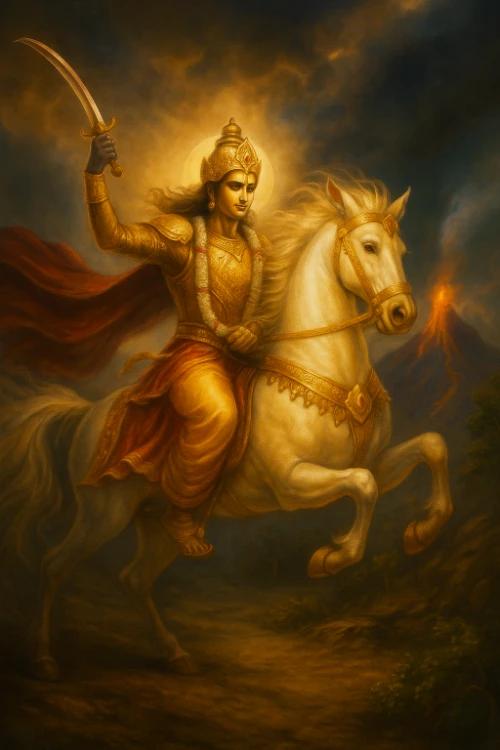
As Kali Yuga nears its end, Pramiti, a divine warrior born from the Lunar dynasty (Candra-vaṁśa) and a portion of Manu (who himself is an aspect of Viṣṇu), emerges as a destroyer of adharma. He:
- Raises a powerful army and slays thousands of mlecchas (foreigners/heretics) and corrupt kings.
- Targets those born of improper varṇa unions and those who live by adharma.
- Cleanses the earth, leaving only a sparse remnant of humanity.
His mission lasts twenty years, beginning in his thirty-second year, and he ultimately renders the earth bereft of seed, i.e., devoid of reproductive and generative vitality due to massive destruction.
Collapse, Reflection, and the Seeds of Renewal
After Pramiti’s purge:
- The world descends into arājakatā (absence of rule).
- Survivors become desperate, forsake homes, professions, and families, living in forests, caves, and riverbanks.
- Deprived of ritual, possessions, and social structure, they suffer profoundly.
But this suffering gives rise to transformation:
- From nirveda (existential despondency) arises vicāraṇā (reflective thought),
- From reflection comes bodha (insight) and sambodha (awakening),
- Which leads to dharma-śīlatā (a return to dharmic character).
The survivors become few but purified. They shed external identifiers and attain formlessness, purity, and spiritual clarity. These invisible siddhas (perfected beings) become the seeds of the coming Kṛta Yuga.
Sudden Dawn of Kṛta Yuga and the Role of the Saptarṣis
The transition to Kṛta Yuga happens suddenly, like a lightning strike, unnoticed by the deluded masses. But a remnant of spiritually awakened souls survives. With them arise the Saptarṣis (Seven Sages), who:
- Instruct humanity in Vedic and Smṛti-based dharma,
- Reestablish the systems of śrauta (Vedic rites) and smārta (householder duties),
- Ensure the orderly restoration of the varṇa-āśrama dharma.
Thus, a new Kṛta Yuga begins with equalized, purified souls, where previous social distinctions no longer bear karmic baggage.
Cosmology and the Universal Pattern of Time
The narrative shifts to a macrocosmic view:
- One Mahāyuga (Kṛta–Tretā–Dvāpara–Kali) is repeated 1,000 times to form a Kalpa (one day of Brahmā).
- 71 Mahāyugas form a Manvantara, presided over by a Manu.
- In every Manvantara, though names and forms change, the essential events repeat.
Time is described as cyclical and recursive:
- Dharma declines by three-fourths with each successive Yuga.
- Even the sandhyā (twilight periods between yugas) contain only one-fourth of the dharmic quality of their age.
- After every decline comes a rebirth, mirroring the cycle of fire–ash–regrowth.
This recursive cosmic model affirms that:
“By knowing one Manvantara or one Kalpa, all others may be understood.”
Conclusion
This chapter paints a sweeping panorama of cosmic degeneration and moral collapse, culminating in divine intervention and the reseeded restoration of the world through spiritual purification. It emphasizes that Dharma is never truly destroyed, only obscured, eventually reborn through reflection, suffering, and divine guidance.
The laws of time, decay, and renewal are constant—what occurs once in a Yuga will recur again in every Manvantara. Thus, human beings are called not only to observe the rhythms of dharma and adharma but also to participate in its restoration, no matter how dark the times may be.


Commentary
Each yuga consists of a main period and a sandhyā (twilight or junction). The sandhyā is 1/4 (one pāda) of the yuga’s total duration. Within this sandhyā, only 1/4 of the dharma or svabhāva (inherent spiritual quality) of the sandhyā itself remains effectively active. This indicates a further dilution or weakening of dharma during transitions — like a twilight of already-declining dharmic light.