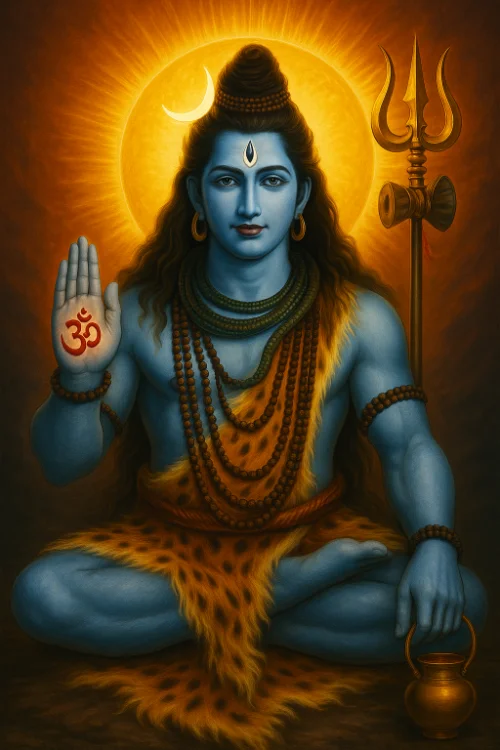
Linga Mahāpurāna - Shalya Parva
Chapter 65 - Thousand Names of Rudra
ऋषय ऊचुः
आदित्यवंशं सोमस्य वंशं वंशविदां वर ।
वक्रुमर्हसि चास्माकं संक्षेपाद्रोमहर्षण ॥ १ ॥
ṛṣaya ūcuḥ
ādityavaṃśaṃ somasya vaṃśaṃ vaṃśavidāṃ vara |
vakrumarhasi cāsmākaṃ saṃkṣepādromaharṣaṇa || 1 ||
The Rishis said- O best among those who know genealogies, you should briefly recount to us the lineage of Āditya (the Sun) and Soma (the Moon), O Lomaharṣaṇa!"
सूत उवाच
अदितिः सुषुवे पुत्रमादित्यं कश्यपाद्विजाः ।
तस्यादित्यस्य चैवासीद्भार्यात्रयमथापरम्॥२॥
sūta uvāca
aditiḥ suṣuve putramādityaṃ kaśyapādvijāḥ |
tasyādityasya caivāsīdbhāryātrayamathāparam||2||
Suta said- Aditi gave birth to a son, Āditya, from Kaśyapa, O sages. Āditya had three wives thereafter.
संज्ञा राज्ञी प्रभा छाया पुत्रांस्तासां वदामि वः।
संज्ञात्वाष्ट्रीच सुषुवे सूर्यान्मनुमनुत्तमम् ॥३॥
यमं च यमुनां चैव रात्री रेवतमेव च ।
प्रभा प्रभातमादित्याच्छायां संज्ञाप्यकल्पयत् ॥४॥
छाया च तस्मात्सुषुवे सावर्णि भास्कारद्विजाः।
ततः शनिं च तपतीं विष्टिं चैव यथाक्रमम् ॥५॥
saṃjñā rājñī prabhā chāyā putrāṃstāsāṃ vadāmi vaḥ|
saṃjñātvāṣṭrīca suṣuve sūryānmanumanuttamam ||3||
yamaṃ ca yamunāṃ caiva rātrī revatameva ca |
prabhā prabhātamādityācchāyāṃ saṃjñāpyakalpayat ||4||
chāyā ca tasmātsuṣuve sāvarṇi bhāskāradvijāḥ|
tataḥ śaniṃ ca tapatīṃ viṣṭiṃ caiva yathākramam ||5||
Sañjñā, Rājñī, Prabhā, and Chāyā—these were the queens (of the Sun). I shall now tell you about their children.
Sañjñā, the daughter of Tvaṣṭṛ, gave birth to the illustrious Manu, the best among men, from Sūrya. She also bore Yama and Yamunā, as well as Rātri and Revata.
This Manu was Vaivasvata Manu also known as Satyavrata. He is the seventh manu (from 14 in total), and he is ancestor of Solar Dynaty. He was a son of Sañjñā.
Prabhā gave birth to Prabhāta from Āditya (the Sun), while Chāyā was created as a substitute for Sañjñā.
From Chāyā were born Sāvārṇi (Manu), O twice-born sages, as well as Śani (Saturn), Tapatī, and Viṣṭi (Gulika), in due order.
छाया स्वपुत्राभ्यधिकं स्नेहं चक्रे मनौ तदा ।
पूर्वेमनुर्न चक्षाम यमस्तु क्रोधमूर्च्छितः ॥६॥
संताडयामास रूषा पादमुद्यम्य दक्षिणम् ।
यमेन ताडिता स तु छाया वै दुःखिताभवत् ॥ ७॥
chāyā svaputrābhyadhikaṃ snehaṃ cakre manau tadā |
pūrvemanurna cakṣāma yamastu krodhamūrcchitaḥ ||6||
saṃtāḍayāmāsa rūṣā pādamudyamya dakṣiṇam |
yamena tāḍitā sa tu chāyā vai duḥkhitābhavat || 7||
At that time, Chāyā showed greater affection toward her own son, Manu. The elder Manu did not speak, but Yama, overcome by anger, struck her in fury, raising his right foot. Being struck by Yama, Chāyā became distressed and sorrowful.
छायाशापात्पदं चैकं यमस्य क्लिन्नमुत्तमम् ।
शोणितसंपूर्णं कृमीणां निचयान्वितम् ॥८॥
chāyāśāpātpadaṃ caikaṃ yamasya klinnamuttamam |
śoṇitasaṃpūrṇaṃ kṛmīṇāṃ nicayānvitam ||8||
Due to Chāyā's curse, one of Yama’s feet became afflicted, covered with blood and filled with a mass of worms.
सोपि गोकर्णमाश्रित्य फलकेनानिलाशनः ।
आराधयन्महादेवं यावद्वर्षायुतायुतम्॥९॥
sopi gokarṇamāśritya phalakenānilāśanaḥ |
ārādhayanmahādevaṃ yāvadvarṣāyutāyutam||9||
Yama then took refuge at Gokarṇa, subsisting on air and seated on a plank, and worshiped Mahādeva (Śiva) for one hundred million years.
भवप्रसादादागत्य लोकपालत्वमुत्तमम्।
पितॄणामाधिपत्यं तु शापमोक्षं तथैव च ॥१०॥
bhavaprasādādāgatya lokapālatvamuttamam|
pitṝṇāmādhipatyaṃ tu śāpamokṣaṃ tathaiva ca ||10||
By the grace of Bhava (Śiva), Yama attained the supreme position of a Lokapāla, guardian of the worlds, sovereignty over the Pitṛs (ancestors), and also liberation from the curse.
लब्धवान्देवदेवस्य प्रभावाच्छूलपाणिनः ।
असहंती पुरा भानोस्तेजोमयमनिंदिता ॥११॥
रूपं त्वाष्ट्री स्वदेहात्तु छायाख्यां सा त्वकल्पयत् ।
वडवारूपमास्थाय तपस्तेपे तु सुव्रता ॥ १२ ॥
labdhavāndevadevasya prabhāvācchūlapāṇinaḥ |
asahaṃtī purā bhānostejomayamaniṃditā ||11||
rūpaṃ tvāṣṭrī svadehāttu chāyākhyāṃ sā tvakalpayat |
vaḍavārūpamāsthāya tapastepe tu suvratā || 12 ||
By the power of Śūlapāṇi (Śiva), the god of gods, Yama attained this status. Long ago, the faultless Sañjñā, the daughter of Tvaṣṭṛ, unable to bear the intense radiance of Bhānu (the Sun), from her own body created a shadow-form called Chāyā.
Then, assuming the form of a mare, the virtuous one performed penance.
कालात्प्रयत्नतो ज्ञात्वा छायां छायापतिः प्रभुः ।
वडवामगमत्संज्ञामश्वरूपेण भास्करः ॥१३॥
kālātprayatnato jñātvā chāyāṃ chāyāpatiḥ prabhuḥ |
vaḍavāmagamatsaṃjñāmaśvarūpeṇa bhāskaraḥ ||13||
In due course of time, through effort, the mighty lord of Chāyā (Sūrya, the Sun) came to know the truth about Chāyā, that she is only the shadow.
Then Bhāskara (the Sun), he assuming the form of a horse, indulged in sexual intercourse with Sañjñā, who had adopted the form of a mare.
वडवा च तदा त्वाष्ट्री संज्ञा तस्माद्दिवाकरात्।
सुषुवे चाश्विनौ देवौ देवानां तु भिषग्वरौ॥१४॥
vaḍavā ca tadā tvāṣṭrī saṃjñā tasmāddivākarāt|
suṣuve cāśvinau devau devānāṃ tu bhiṣagvarau||14||
Then Sañjñā, the daughter of Tvaṣṭṛ who had taken the guise of a mare, bore Divākara (the Sun) the twin children, known as Aśvins. They became the excellent physicians among the gods.
लिखितो भास्करः पश्चात्संज्ञापित्रा महात्मना ।
विष्णोश्चक्रं तु यद्घोरं पण्डलाद्भास्करस्य तु ॥१५॥
निर्ममे भगवांस्त्वष्टा प्रधानं दिव्यमायुधम् ।
रुद्रप्रसादाच्च शुभं सुदर्शनमिति स्मृतम् ॥ १६॥
likhito bhāskaraḥ paścātsaṃjñāpitrā mahātmanā |
viṣṇoścakraṃ tu yadghoraṃ paṇḍalādbhāskarasya tu ||15||
nirmame bhagavāṃstvaṣṭā pradhānaṃ divyamāyudham |
rudraprasādācca śubhaṃ sudarśanamiti smṛtam || 16||
Subsequently, the Sun was brought down by the noble-souled father of Samjñā (Tvaṣṭṛ). It was from the solar disc that the divine weapon of lord Visņu was created by Tvaştr. Through Rudra’s grace, it became known as the auspicious Sudarśana..
लब्धवान् भगवांश्चक्रं कृष्णः कालाग्निसन्निभम्।
मनोस्तु प्रथमस्यासन्नव पुत्रास्तु तत्समाः ॥१७॥
इक्ष्वाकुर्न भगश्चैव धृष्णुः शर्यातिरेव च ।
नरिष्यंतश्च वै धीमान् नाभागोरिष्ट एव च ॥ १८॥
करूषश्च पृषघ्नश्च नवैते मानवा: स्मृताः ।
इला ज्येष्ठा वरिष्ठा च पुंस्त्वं प्राप च या पुरा ॥ १९ ॥
labdhavān bhagavāṃścakraṃ kṛṣṇaḥ kālāgnisannibham|
manostu prathamasyāsannava putrāstu tatsamāḥ ||17||
ikṣvākurna bhagaścaiva dhṛṣṇuḥ śaryātireva ca |
nariṣyaṃtaśca vai dhīmān nābhāgoriṣṭa eva ca || 18||
karūṣaśca pṛṣaghnaśca navaite mānavā: smṛtāḥ |
ilā jyeṣṭhā variṣṭhā ca puṃstvaṃ prāpa ca yā purā || 19 ||
The blessed Kṛṣṇa (Viṣṇu) obtained the Sudarśana Chakra, which resembled the fire of cosmic destruction.
The Vaivasvata Manu had nine sons, who were all equal to him in greatness.
The nine sons of Manu were: Ikṣvāku, Bhaga, Dhṛṣṇu, Śaryāti, Nariṣyanta, the wise Nābhāga, and Ariṣṭa.
The last two sons of Manu were: Karūṣa and Pṛṣadhna. Thus, these nine are remembered as the Manavas (descendants of Manu).
His eldest and most distinguished daughter was Ilā, who, in ancient times, was transformed into a man.
सुद्युम्न इति विख्याता पुंस्त्वं प्राप्ता त्विला पुरा ।
मित्रावरुणयोस्त्वत्र प्रसादान्मुनिपुङ्गवाः ॥ २० ॥
पुनः शरवणं प्राप्य स्त्रीत्वं प्राप्तो भवाज्ञया ।
सुद्युम्नो मानवः श्रीमान् सोमवंशप्रवृद्धये॥ २१ ॥
sudyumna iti vikhyātā puṃstvaṃ prāptā tvilā purā |
mitrāvaruṇayostvatra prasādānmunipuṅgavāḥ || 20 ||
punaḥ śaravaṇaṃ prāpya strītvaṃ prāpto bhavājñayā |
sudyumno mānavaḥ śrīmān somavaṃśapravṛddhaye|| 21 ||
Ilā, who was once renowned as Sudyumna, had attained manhood in ancient times, by the grace of Mitra and Varuṇa, O foremost of sages.
Then, upon reaching Śaravaṇa, by the command of Bhava (Śiva), she regained her womanhood.
The illustrious Sudyumna, a descendant of Manu, became instrumental in the expansion of the Soma dynasty (Lunar lineage).
इक्ष्वाकोरश्वमेधेन इला किंपुरुषोऽभवत् ।
इला किंपुरुषत्वे च सुद्युम्न इति चोच्यते ॥ २२ ॥
ikṣvākoraśvamedhena ilā kiṃpuruṣo’bhavat |
ilā kiṃpuruṣatve ca sudyumna iti cocyate || 22 ||
Through Ikṣvāku’s Aśvamedha (horse sacrifice), Ilā became a Kiṁpuruṣa (a being of dual nature). When in the state of Kiṁpuruṣa, she was also known as Sudyumna.
मासमेकं पुमान्वीरः स्त्रीत्वं मासमभूत्पुनः।
इला बुधस्य भवनं सोमपुत्रस्य चाश्रिता ॥ २३ ॥
बुधेनांतरमासाद्य मैथुनाय प्रवर्तिता ।
सोमपुत्राद्बुधाच्चापि ऐलो जज्ञे पुरूरवाः ॥ २४॥
māsamekaṃ pumānvīraḥ strītvaṃ māsamabhūtpunaḥ|
ilā budhasya bhavanaṃ somaputrasya cāśritā || 23 ||
budhenāṃtaramāsādya maithunāya pravartitā |
somaputrādbudhāccāpi ailo jajñe purūravāḥ || 24||
For one month, Ilā remained a valiant man, and for the next month, she became a woman again.
Ilā took refuge in the house of Budha, the son of Soma (the Moon God).
In due course, Budha, upon meeting her during her time as a woman, engaged in union with her.
From Budha, the son of Soma, was born Purūravā, the illustrious Aiḷa. The progenitor of the Lunar Dynasty (Soma Vaṁśa).
सोमवंशाग्रजो धीमान्भवभक्तः प्रतापवान्।
इक्ष्वाकोर्वंशविस्तारं पश्चाद्वक्ष्ये तपोधनाः ॥ २५ ॥
somavaṃśāgrajo dhīmānbhavabhaktaḥ pratāpavān|
ikṣvākorvaṃśavistāraṃ paścādvakṣye tapodhanāḥ || 25 ||
The wise Purūravā, the eldest in the Soma dynasty, a devotee of Bhava (Śiva), and a ruler of great splendor.
O ascetics rich in penance, I shall later describe the expansion of Ikṣvāku’s lineage.
पुत्रत्रयमभूत्तस्य सुद्युम्नस्य द्विजोत्तमाः ।
उत्कलश्च गयश्चैव विनताश्वस्तथैव च ॥ २६॥
putratrayamabhūttasya sudyumnasya dvijottamāḥ |
utkalaśca gayaścaiva vinatāśvastathaiva ca || 26||
O excellent Brāhmaṇas, Sudyumna (Ilā in male form) had three sons: Utkala, Gaya and Vinatāśva.
उत्कलस्योत्कलं राष्ट्रं विनताश्वस्य पश्चिमम् ।
गया गयस्य चाख्याता पुरी परमशोभना ॥ २७॥
utkalasyotkalaṃ rāṣṭraṃ vinatāśvasya paścimam |
gayā gayasya cākhyātā purī paramaśobhanā || 27||
Utkala received the Utkala country. Vinatāśva got the western region. The splendid city of Gaya was given over to the son named Gaya.
सुराणां संस्थितिर्यस्यां पितॄणां च सदा स्थितिः ।
इक्ष्वाकुज्येष्ठदायादो मध्यदेशमवाप्तवान्॥२८॥
surāṇāṃ saṃsthitiryasyāṃ pitṝṇāṃ ca sadā sthitiḥ |
ikṣvākujyeṣṭhadāyādo madhyadeśamavāptavān||28||
The land where the gods (surās) reside, and where the ancestors (pitṛs) always dwell in Gaya.
The eldest heir of Ikṣvāku obtained the central region (Madhyadeśa).
कन्याभावाच्च सुद्युम्नो नैव भागमवाप्तवान् ।
वसिष्ठवचनात्त्वासीत्प्रतिष्ठाने महाद्युतिः॥२९॥
प्रतिष्ठा धर्मराजस्य सुद्युम्नस्य महात्मनः ।
तत्पुरूरवसे प्रादाद्राज्यं प्राप्य महायशाः ॥ ३० ॥
मानवेयो महाभागः स्त्रीपुंसोर्लक्षणन्वितः ।
kanyābhāvācca sudyumno naiva bhāgamavāptavān |
vasiṣṭhavacanāttvāsītpratiṣṭhāne mahādyutiḥ||29||
pratiṣṭhā dharmarājasya sudyumnasya mahātmanaḥ |
tatpurūravase prādādrājyaṃ prāpya mahāyaśāḥ || 30 ||
mānaveyo mahābhāgaḥ strīpuṃsorlakṣaṇanvitaḥ |
Due to having been a woman formerly, Sudyumna was not entitled to a share of the inheritance.
However, following the instruction of Vasiṣṭha, the highly radiant Sudyumna resided in Pratiṣṭhāna.
That city became the Pratiṣṭhā (foundation) of Dharma-rāja through the great Sudyumna.
After attaining great fame, he handed over the kingdom to Purūravā.
This illustrious descendant of Manu (Sudyumna) was one who embodied the characteristics of both male and female.
इक्ष्वाकोरभवद्वीरो विकुक्षिर्धर्मवित्तमः॥३१॥
ज्येष्ठः पुत्रशतस्यासीद्दश पञ्च च तत्सुताः ।
अभूज्ज्येष्ठः ककुत्स्थश्च ककुत्स्थात्तु सुयोधनः ॥
ikṣvākorabhavadvīro vikukṣirdharmavittamaḥ||31||
jyeṣṭhaḥ putraśatasyāsīddaśa pañca ca tatsutāḥ |
abhūjjyeṣṭhaḥ kakutsthaśca kakutsthāttu suyodhanaḥ ||
A valiant warrior, Vikukṣi, was born to Ikṣvāku, and he was the foremost knower of dharma.
He was the eldest of a hundred sons, and he had fifteen sons.
Among them, the eldest was Kakutstha, and from Kakutstha, Suyodhana was born..
ततः पृथुर्मुनिश्रेष्ठा विश्वकः पार्थिवस्तथा ।
विश्वकस्यार्द्रको धीमान्युवनाश्वस्तु तत्सुतः ॥ ३३॥
tataḥ pṛthurmuniśreṣṭhā viśvakaḥ pārthivastathā |
viśvakasyārdrako dhīmānyuvanāśvastu tatsutaḥ || 33||
Then came Pṛthu, O best of sages, and Viśvaka, the royal prince. From Viśvaka was born Ārdraka, the wise, and his son was Yuvanāśva.
शाबस्तिश्च महातेजा वंशकस्तु ततोभवत्।
निर्मिता येन शाबस्ती गौडदेशे द्विजोत्तमाः ॥ ३४॥
śābastiśca mahātejā vaṃśakastu tatobhavat|
nirmitā yena śābastī gauḍadeśe dvijottamāḥ || 34||
Then was born Śābasti, of great splendor, and from him came Vaṃśaka.
By whom the city of Śābastī was established in Gauḍa (in Bengal region), O best among the brāhmaṇas.
वंशाश्च बृहदश्वोभूत्कुवलाश्वस्तु तत्सुतः ।
धुंधुमारत्वमापन्नो धुंधुं हत्वा महाबलम्॥३५॥
vaṃśāśca bṛhadaśvobhūtkuvalāśvastu tatsutaḥ |
dhuṃdhumāratvamāpanno dhuṃdhuṃ hatvā mahābalam||35||
And then was born Bṛhadaśva, and his son was Kuvalāśva.
Having slain the mighty demon Dhundhu, he attained the title of Dhundhumāra (Destroyer of Dhundhu).
धुंधुमारस्य तनयास्त्रयस्त्रैलोक्यविश्रुताः ।
दृढाश्वश्चैव चण्डाश्वः कपिलाश्वश्च ते स्मृताः ॥३६॥
dhuṃdhumārasya tanayāstrayastrailokyaviśrutāḥ |
dṛḍhāśvaścaiva caṇḍāśvaḥ kapilāśvaśca te smṛtāḥ ||36||
Dhundhumāra had three sons who were well known in the three worlds. The three sons were known by the names of Dṛdhāśva, Caṇḍāśva and Kapilāśva.
दृढाश्वस्य प्रमोदस्तु हर्यश्वस्तस्य वै सुतः ।
हर्यश्वस्य निकुंभस्तु संहताश्वस्तु तत्सुतः ॥३७॥
dṛḍhāśvasya pramodastu haryaśvastasya vai sutaḥ |
haryaśvasya nikuṃbhastu saṃhatāśvastu tatsutaḥ ||37||
Dṛḍhāśva's son was Pramoda, and his son was Haryaśva.
Haryaśva's son was Nikuṁbha, and his son was Saṁhatāśva.
कृशाश्वोथ रणाश्वश्च संहताश्वात्मजावुभौ ।
युवनाश्वो रणाश्वस्य मांधाता तस्य वै सुतः॥३८॥
kṛśāśvotha raṇāśvaśca saṃhatāśvātmajāvubhau |
yuvanāśvo raṇāśvasya māṃdhātā tasya vai sutaḥ||38||
Samhatāśva had the sons known as Kṛṣāśva and Raṇāśva. Yuvanāśva was the son of Raṇāśva, and he had a son named Māndhātā.
मांधातुः पुरुकुत्सोभूदंबरीषश्च वीर्यवान् ।
मुचुकुंदश्च पुण्यात्मा त्रयस्त्रैलोक्यविश्रुताः॥३९॥
māṃdhātuḥ purukutsobhūdaṃbarīṣaśca vīryavān |
mucukuṃdaśca puṇyātmā trayastrailokyaviśrutāḥ||39||
Māndhātā had three sons who were famous in the three worlds who were known by the names of Purukutsa, the glorious Ambarīṣa and Muchukunda, the noble soul.
अंबरीषस्य दायादो युवानाश्वोपरः स्मृतः।
हरितो युवनाश्वस्य हरितास्तु यतः स्मृताः ॥४०॥
एते गिरसः पक्षे क्षत्रोपेता द्विजातयः ।
पुरुकुत्सस्य दायादस्त्रसद्दस्युर्महायशाः ॥ ४१ ॥
नर्मदायां समुत्पन्नः संभूतिस्तस्य चात्मजः ।
विष्णुवृद्धः सुतस्तस्य विष्णुवृद्धा यतः स्मृताः ॥ ४२
aṃbarīṣasya dāyādo yuvānāśvoparaḥ smṛtaḥ|
harito yuvanāśvasya haritāstu yataḥ smṛtāḥ ||40||
ete girasaḥ pakṣe kṣatropetā dvijātayaḥ |
purukutsasya dāyādastrasaddasyurmahāyaśāḥ || 41 ||
narmadāyāṃ samutpannaḥ saṃbhūtistasya cātmajaḥ |
viṣṇuvṛddhaḥ sutastasya viṣṇuvṛddhā yataḥ smṛtāḥ || 42
Yuvānāśva, the Second, was the descendent of Ambarīşa, while Harita was the son of Yuvānāśva. The Harita vamsha started from him. All of them were the Angiras Brāhmaṇas, but by temperament, they were Kshatriyas. The descendant of Purukutsa was the well-known Trasaddasyu. He got a son from Narmadā, and his son was Saṁbhūti, who had a son named Vişņuvrddha.
एते ह्यंगिरसः पक्षे क्षत्रोपेताः समाश्रिताः ।
संभूतिरपरं पुत्रमनरम्यमजीजनत् ॥४३॥
ete hyaṃgirasaḥ pakṣe kṣatropetāḥ samāśritāḥ |
saṃbhūtiraparaṃ putramanaramyamajījanat ||43||
All of them were the Brahmaņas of the Angiras dynasty, but in actual practice, they were the Ksatriyas. Anaranya was the second son of Sambhūti.
रावणेन हतो योऽसौ त्रैलोक्यविजये द्विजाः ।
बृहदश्वोऽनरण्यस्य हर्यश्वस्तस्य चात्मजः॥४४॥
rāvaṇena hato yo’sau trailokyavijaye dvijāḥ |
bṛhadaśvo’naraṇyasya haryaśvastasya cātmajaḥ||44||
O Brāhmaṇas, Anaranya was killed by Rāvana, during his conquest of the three worlds. His son was Bṛhadaśva, and Bṛhadaśva’s son was Haryaśva.
हर्यश्वात्तु दृषद्वत्यां जज्ञे वसुमना नृपः ।
तस्य पुत्रो भवद्राजा त्रिधन्वा भवभावितः ॥ ४५ ॥
haryaśvāttu dṛṣadvatyāṃ jajñe vasumanā nṛpaḥ |
tasya putro bhavadrājā tridhanvā bhavabhāvitaḥ || 45 ||
The king Vasumanas was born of Dṛşadvati and Haryaśva. Tridhanvān was his son, who was a great devotee of Śiva.
प्रसादाद्ब्रह्मसूनोर्वै तण्डिनः प्राप्य शिष्यताम् ।
अश्वमेधसहस्रस्य फलं प्राप्य तदाज्ञया ॥ ४६ ॥
गणैश्वर्यमनुप्राप्तो भवभक्तः प्रतापवान् ।
कथं चैवाश्वमेधं वै करोमीति विचिंतयन् ॥४७॥
धनहीनश्च धर्मात्मा दृष्टवान् ब्रह्मणः सुतम्।
तण्डिसंज्ञं द्विजं तस्माल्लब्धवान्द्विजसत्तमाः ॥४८॥
नाम्नां सहस्रं रुद्रस्य ब्रह्मणा कथितं पुरा ।
तेन नाम्नां सहस्रेण स्तुत्वा तण्डिर्महेश्वरम् ॥ ४९ ॥
लब्धवान्गाणपत्यं च ब्रह्मयोनिर्द्विजोत्तमः ।
ततस्तस्मान्नृपो लब्ध्वा तण्डिना कथितं पुरा ॥ ५० ॥
prasādādbrahmasūnorvai taṇḍinaḥ prāpya śiṣyatām |
aśvamedhasahasrasya phalaṃ prāpya tadājñayā || 46 ||
gaṇaiśvaryamanuprāpto bhavabhaktaḥ pratāpavān |
kathaṃ caivāśvamedhaṃ vai karomīti viciṃtayan ||47||
dhanahīnaśca dharmātmā dṛṣṭavān brahmaṇaḥ sutam|
taṇḍisaṃjñaṃ dvijaṃ tasmāllabdhavāndvijasattamāḥ ||48||
nāmnāṃ sahasraṃ rudrasya brahmaṇā kathitaṃ purā |
tena nāmnāṃ sahasreṇa stutvā taṇḍirmaheśvaram || 49 ||
labdhavāngāṇapatyaṃ ca brahmayonirdvijottamaḥ |
tatastasmānnṛpo labdhvā taṇḍinā kathitaṃ purā || 50 ||
Tridhanvān became a disciple of Tandin, the son of Brahmā. By his grace, he attained the fruit of a thousand Aśvamedha sacrifices. At his behest, he became a valorous devotee of Śiva and achieved the leadership of Śiva ganas.
Although virtuous, he was devoid of wealth. How could he perform the Aśvamedha sacrifice? O excellent Brāhmaṇas, it was at that time that he met the son of Brahmā, the Brāhmaṇa Tandin and acquired from him the thousand names of Rudra which were once revealed by Brahmā in ancient times. Taṇḍin worshiped the great lord Śiva by reciting of the thousand names. This excellent Brāhmana, born of Brahmā, as a result achieved the lordship of Śivas ganas. Thereafter, the king too obtained the thousand names which had been recited by Tandin earlier. By repeating the thousand names of Śiva, he too achieved the lordship of ganas.
ऋषय ऊचुः
नाम्नां सहस्रं रुद्रस्य तण्डिना ब्रह्मयोनिना॥५१॥
कथितं सर्ववेदार्थसञ्चयं सूत सुव्रत ।
नाम्नां सहस्रं विप्राणां वक्तुमर्हसि शोभनम् ॥५२॥
ṛṣaya ūcuḥ
nāmnāṃ sahasraṃ rudrasya taṇḍinā brahmayoninā||51||
kathitaṃ sarvavedārthasañcayaṃ sūta suvrata |
nāmnāṃ sahasraṃ viprāṇāṃ vaktumarhasi śobhanam ||52||
The sages said- O Sūta, the excellent one, the thousand names of Rudra, which were revealed by Taṇḍi, the one born from Brahmā, contain the essence of all the Vedas. O Brāhmaṇa, please recite to us those auspicious thousand names.
सूत उवाच
सर्वभूतात्मभूतस्य हरस्यामिकतेजसः ।
अष्टोत्तरसहस्रं तु नाम्नां शृणुत सुव्रताः ॥५३॥
यज्जत्वा तु मुनिश्रेष्ठा गाणपत्यमवाप्तवान् ।
ॐ स्थिरः स्थाणुः प्रभुर्भानुः प्रवरो वरदो वरः ॥ ५४
sūta uvāca
sarvabhūtātmabhūtasya harasyāmikatejasaḥ |
aṣṭottarasahasraṃ tu nāmnāṃ śṛṇuta suvratāḥ ||53||
yajjatvā tu muniśreṣṭhā gāṇapatyamavāptavān |
oṃ sthiraḥ sthāṇuḥ prabhurbhānuḥ pravaro varado varaḥ || 54
Sūta said- O excellent sages, listen to the thousand and eight names of Śiva - the soul of all the living beings in the universe and whose resplendence is beyond measure. It was by repeating these (thousand and eight names) that he attained the lordship of the Shiva ganas.
सर्वात्मा सर्वविख्यातः सर्वः सर्वकरो भवः ।
जटी दण्डी शिखण्डी च सर्वगः सर्वभावनः ॥ ५५ ॥
हरिश्च हरिणाक्षश्च सर्वभूतहरः स्मृतः ।
प्रवृत्तिश्च निवृत्तिश्च शांतात्मा शाश्वतो ध्रुवः ॥ ५६ ॥
श्मशानवासी भगवान्खचरो गोचरोर्दनः ।
अभिवाद्यो महाकर्मा तपस्वी भूतधारणः ॥५७॥
उन्मत्तवेषः प्रच्छन्नः सर्वलोकः प्रजापतिः ।
महारूपो महाकायः सर्वरूपो महायशाः ॥ ५८ ॥
महात्मा सर्वभूतश्च विरूपो वामनो नरः ।
लोकपालोऽन्तर्हितात्मा प्रसादोऽभयदो विभुः ॥ ५९ ॥
पवित्रश्च महांश्चैव नियतो नियताश्रयः ।
स्वयंभूः सर्वकर्मा च आदिरादिकरो निधिः ॥ ६०॥
sarvātmā sarvavikhyātaḥ sarvaḥ sarvakaro bhavaḥ |
jaṭī daṇḍī śikhaṇḍī ca sarvagaḥ sarvabhāvanaḥ || 55 ||
hariśca hariṇākṣaśca sarvabhūtaharaḥ smṛtaḥ |
pravṛttiśca nivṛttiśca śāṃtātmā śāśvato dhruvaḥ || 56 ||
śmaśānavāsī bhagavānkhacaro gocarordanaḥ |
abhivādyo mahākarmā tapasvī bhūtadhāraṇaḥ ||57||
unmattaveṣaḥ pracchannaḥ sarvalokaḥ prajāpatiḥ |
mahārūpo mahākāyaḥ sarvarūpo mahāyaśāḥ || 58 ||
mahātmā sarvabhūtaśca virūpo vāmano naraḥ |
lokapālo’ntarhitātmā prasādo’bhayado vibhuḥ || 59 ||
pavitraśca mahāṃścaiva niyato niyatāśrayaḥ |
svayaṃbhūḥ sarvakarmā ca ādirādikaro nidhiḥ || 60||
Thousand names of Rudra-
Sthiraḥ (He is firm, immovable, and steady like a mountain, representing eternal stability)
Sthāṇuḥ (He is like a pillar, standing firm as the eternal support of the universe)
Prabhuḥ (He is the almighty ruler, commanding absolute power over the cosmos)
Bhānuḥ (He shines like the sun, radiating divine light and wisdom)
Pravaraḥ (He is the best among gods, sages, and beings, surpassing all in greatness)
Varadaḥ (He grants wishes and blessings to his devotees, fulfilling their desires)
Varaḥ (He is the greatest boon in himself, the ultimate refuge for devotees)
Sarvātma (the soul of all beings, the essence that pervades everything)
Sarvavikhyātaḥ (the most renowned, known in all worlds)
Sarvaḥ (the all-encompassing one, present everywhere)
Sarvakaraḥ (the doer of all actions, the creator and sustainer of the universe)
Bhavaḥ (the source of all existence, the one from whom all things arise)
Jaṭī (the one with matted locks, symbolizing ascetic power)
Daṇḍī (the staff-bearing sage, representing discipline and restraint)
Śikhaṇḍī (the one with a crown or crest, representing spiritual knowledge)
Sarvagaḥ (the omnipresent one, existing everywhere)
Sarvabhāvanaḥ (the one who fosters and nurtures all beings)
Hariḥ (the remover of sins, the one who takes away suffering)
Hariṇākṣaḥ (the one with deer-like eyes, soft and full of grace)
Sarvabhūtaharaḥ (the one who absorbs all beings into himself at the time of dissolution)
Pravṛttiḥ (the active force, responsible for creation and sustenance)
Nivṛttiḥ (the withdrawing force, responsible for dissolution and renunciation)
Śāntātmā (the peaceful soul, the embodiment of inner tranquility)
Śāśvataḥ (the eternal one, existing beyond time)
Dhruvaḥ (the unchanging and immovable, like the pole star)
Śmaśānavāsī (the dweller of cremation grounds, symbolizing detachment from material existence)
Bhagavān (the blessed lord, full of divine attributes)
Khacharaḥ (the one who moves freely in space, transcending all limitations)
Gocharaḥ (the perceivable one, yet beyond human comprehension)
Dārdanaḥ (the fierce one, who crushes ignorance and falsehood)
Abhivādyaḥ (the one who is worthy of reverence and respect)
Mahākarmā (the performer of great deeds, the cosmic actor)
Tapasvī (the ascetic, the one who undergoes penance)
Bhūtadhāraṇaḥ (the sustainer of all beings and creatures)
Unmattaveṣaḥ (the one who appears intoxicated, signifying divine madness or transcendence of worldly concerns)
Prachchannaḥ (the hidden one, often appearing in disguised forms to test devotees)
Sarvalokaḥ (the one who encompasses all worlds)
Prajāpatiḥ (the lord of all creatures, the progenitor of life)
Mahārūpaḥ (the one with a vast form, infinite in manifestation)
Mahākāyaḥ (the one with a colossal body, extending across the cosmos)
Sarvarūpaḥ (the one who assumes all forms, existing in everything)
Mahāyaśāḥ (the one of great fame, renowned across all realms)
Mahātmā (the great soul, the supreme self)
Sarvabhūtaḥ (the one who is present in all beings)
Virūpaḥ (the one with a strange and unique form, signifying his ability to appear in any shape)
Vāmanaḥ (the dwarf form, representing his incarnation as Vāmana)
Lokapālaḥ (the protector of the worlds)
Antarhitātmā (the one who remains hidden, the invisible force guiding the universe)
Prasādaḥ (the embodiment of divine grace, the one who bestows blessings)
Abhayadaḥ (the giver of fearlessness, protecting devotees from all dangers)
Vibhuḥ (the all-pervading one, the supreme ruler)
Pavitraḥ (the purest one, free from all impurity)
Mahān (the great one, infinite in grandeur)
Niyataḥ (the disciplined one, the master of self-control)
Niyatāśrayaḥ (the one who is the ultimate refuge, the steadfast supporter of devotees)
Svayaṁbhūḥ (the self-born, existing without origin)
Sarvakarmā (the doer of all actions, directing the universe's workings)
Ādiḥ (the primordial being, the first cause of everything)
Ādikaraḥ (the original creator, the initiator of cosmic processes)
Nidhiḥ (the ultimate treasure, the source of all knowledge and wealth)
सहस्राक्षो विशालाक्षः सोमो नक्षत्रसाधकः ।
चन्द्रः सूर्यः शनिः केतुर्ग्रहो ग्रहपतिर्मतः ॥ ६१ ॥
राजा राज्योदयः कर्ता मृगबाणर्पणो घनः ।
महातपा दीर्घतपा अदृश्यो धनसाधकः ॥ ६२ ॥
संवत्सर: कृती मंत्र: प्राणायामः परंतपः ।
योगी योगो महाबीजो महारेता महाबलः ॥६३॥
सुवर्णरेताः सर्वज्ञः सुबीजो वृषवाहनः ।
दशबाहुस्त्वनिमिषो नीलकंठ उमापतिः॥६४॥
विश्वरूपः स्वयं श्रेष्ठो बलवीरो बलाग्रणीः ।
गणकर्ता गणपतिर्दिग्वासाः काम्य एव च ॥६५॥
मंत्रवित्परमो मंत्रः सर्वभावकरो हरः ।
कमण्डलुधरो धन्वी बाणहस्तः कपालवान् ॥६६॥
शरी शतघ्नी खड्गी च पट्टिशी चायुधी महान् ।
अजश्च मृगरूपश्च तेजस्तेजस्करो विधिः॥६७॥
उष्णीचीच सुवक्त्रश्च उदग्रोविनतस्तथा ।
दीर्घश्च हरिकेशश्च सुतीर्थः कृष्ण एव च ॥ ६८ ॥
शृगालरूपः सर्वार्थो मुण्डः सर्वशुभङ्करः ।
सिंहशार्दूलरूपश्च गंधकारी कपर्द्यपि॥ ६९ ॥
ऊर्ध्वरेतोर्ध्वलिङ्गी च ऊर्ध्वशायी नभस्तलः ।
त्रिजटी चीरवासाश्च रुद्रः सेनापतिर्विभुः ॥७०॥
sahasrākṣo viśālākṣaḥ somo nakṣatrasādhakaḥ |
candraḥ sūryaḥ śaniḥ keturgraho grahapatirmataḥ || 61 ||
rājā rājyodayaḥ kartā mṛgabāṇarpaṇo ghanaḥ |
mahātapā dīrghatapā adṛśyo dhanasādhakaḥ || 62 ||
saṃvatsara: kṛtī maṃtra: prāṇāyāmaḥ paraṃtapaḥ |
yogī yogo mahābījo mahāretā mahābalaḥ ||63||
suvarṇaretāḥ sarvajñaḥ subījo vṛṣavāhanaḥ |
daśabāhustvanimiṣo nīlakaṃṭha umāpatiḥ||64||
viśvarūpaḥ svayaṃ śreṣṭho balavīro balāgraṇīḥ |
gaṇakartā gaṇapatirdigvāsāḥ kāmya eva ca ||65||
maṃtravitparamo maṃtraḥ sarvabhāvakaro haraḥ |
kamaṇḍaludharo dhanvī bāṇahastaḥ kapālavān ||66||
śarī śataghnī khaḍgī ca paṭṭiśī cāyudhī mahān |
ajaśca mṛgarūpaśca tejastejaskaro vidhiḥ||67||
uṣṇīcīca suvaktraśca udagrovinatastathā |
dīrghaśca harikeśaśca sutīrthaḥ kṛṣṇa eva ca || 68 ||
śṛgālarūpaḥ sarvārtho muṇḍaḥ sarvaśubhaṅkaraḥ |
siṃhaśārdūlarūpaśca gaṃdhakārī kapardyapi|| 69 ||
ūrdhvaretordhvaliṅgī ca ūrdhvaśāyī nabhastalaḥ |
trijaṭī cīravāsāśca rudraḥ senāpatirvibhuḥ ||70||
Sahasrākṣaḥ (thousand-eyed)
Viśālākṣaḥ (large-eyed)
Somaḥ (Moon-god)
Nakṣatrasādhakaḥ (the master of the stars)
Chandra (the Moon)
Sūrya (the Sun)
Śani (Saturn)
Ketu (the shadow planet Ketu)
Graha (planet)
Grahapati (the lord of planets)
Rājā (He is the king)
Rājyodayaḥ kartā (the creator of royal success)
Mṛgabāṇarpaṇaḥ (the one who sends arrows at animals)
Ghanaḥ (the dense one, symbolizing depth and stability)
Mahātapā (the one of great austerities)
Dīrghatapā (the one of long penance)
Adṛśyaḥ (the invisible one)
Dhanasādhakaḥ (the bestower of wealth)
Saṁvatsaraḥ (the year, time itself)
Kṛtī (the doer of righteous acts)
Mantraḥ (the sacred chant itself)
Prāṇāyāmaḥ (the breath-control technique of yoga)
Parantapaḥ (the supreme ascetic who burns away sins)
Yogī (the supreme yogi)
Yogaḥ (the essence of yoga itself)
Mahābījaḥ (the supreme seed of creation)
Mahāretāḥ (the one with immense creative energy)
Mahābalaḥ (the immensely strong one)
Suvarṇaretāḥ (the golden-semened, bestower of divine creation)
Sarvajñaḥ (the all-knowing one)
Subījaḥ (the source of all good seeds, progeny)
Vṛṣavāhanaḥ (he who rides the bull, Nandi)
Daśabāhuḥ (ten-armed)
Animiṣaḥ (the one who never blinks, ever-watchful)
Nīlakaṇṭhaḥ (the blue-throated one, who drank the poison Hālāhala)
Umāpatiḥ (the husband of Umā, Pārvatī)
Viśvarūpaḥ (he who takes all forms in the universe)
Svayaṁśreṣṭhaḥ (the self-supreme one)
Balavīraḥ (the mighty hero)
Balāgraṇīḥ (the foremost among the strong)
Gaṇakartā (the creator of Śiva’s Gaṇas, attendants)
Gaṇapatiḥ (the leader of the Gaṇas, different from Gaṇeśa here)
Digvāsāḥ (the one who wears the directions as his clothing, meaning nakedness)
Kāmyaḥ (the one who fulfills desires)
Mantravit (the knower of all mantras)
Paramo Mantraḥ (the supreme mantra itself)
Sarvabhāvakaraḥ (the creator of all emotions and existences)
Haraḥ (the destroyer, the remover of sorrows)
Kamandaludharaḥ (the one holding a water pot, symbolizing asceticism)
Dhanvī (the wielder of a bow)
Bāṇahastaḥ (the one holding arrows in his hand)
Kapālavān (the one holding a skull, symbolizing renunciation)
Śarī (the wielder of divine weapons)
Śataghni (the one who wields the hundred-bladed weapon)
Khaḍgī (the one holding a sword)
Paṭṭiśī (the wielder of an axe-like weapon)
Āyudhīmahān (the one with immense weaponry)
Ajaḥ (the unborn, eternal one)
Mṛgarūpaḥ (he who takes the form of a deer, signifying innocence and agility)
Tejaḥ (the very essence of brilliance and radiance)
Tejaskaraḥ (the one who bestows radiance and power)
Vidhiḥ (the one who determines destiny, or a form of Brahmā)
Uṣṇīṣī (the one who wears a turban or crown of asceticism)
Suvaktraḥ (he of a beautiful face)
Udagraḥ (the exalted one, or the fierce one)
Vinataḥ (the humble and bowing one, showing both pride and humility)
Dīrghaḥ (long or vast, all-pervading)
Harikeśaḥ (he with golden or greenish hair, also meaning the lord of winds, Vāyu)
Sutīrthaḥ (the most sacred pilgrimage by himself)
Kṛṣṇaḥ (the dark-complexioned one, meaning mysterious and infinite)
Śṛgālarūpaḥ (he who assumes the form of a jackal, symbolic of time and death)
Sarvārthaḥ (the one who is the ultimate purpose of everything)
Muṇḍaḥ (the shaven-headed one, representing renunciation)
Sarvaśubhaṅkaraḥ (the bringer of all auspiciousness)
Siṁharūpaḥ (he who takes the form of a lion)
Śārdūlarūpaḥ (he who takes the form of a tiger)
Gandhakārī (he who spreads divine fragrances)
Kapardī (the one with matted hair, signifying his ascetic nature)
Ūrdhvaretaḥ (one whose energy flows upwards, symbolizing divine control over desires)
Ūrdhvaliṅgī (one who represents the upward-consciousness, the supreme ascetic)
Ūrdhvaśāyī (he who sleeps in the highest plane, meaning supreme transcendence)
Nabhastalaḥ (the one who resides in the sky, representing boundlessness)
Trijaṭī (the three-braided one, signifying asceticism and the three guṇas)
Chīravāsāḥ (clothed in tree bark or ascetic garments)
Rudraḥ (the howler, the fierce one)
Senāpatiḥ (the commander of divine armies, leading the Gaṇas)
Vibhuḥ (the all-pervading, infinite one)
अहोरात्रं च नक्तं च तिग्ममन्युः सुवर्चसः ।
गजहा दैत्यहाकालो लोकधाता गुणाकरः ॥ ७१ ॥
सिंहशार्दूलरूपाणामार्द्रचर्मांबरंधरः ।
कालयोगी महानादः सर्वावासश्चतुष्पथः ॥७२॥
निशाचरः प्रेतचारी सर्वदर्शी महेश्वरः ।
बहुभूतो बहुधनः सर्वसारोऽमृतेश्वरः ॥७३॥
नृत्यप्रियो नित्यनृत्ये नर्तनः सर्वसाधकः ।
सकार्मुको महाबाहुर्महाघोरो महातपाः ॥ ७४ ॥
महाशरो महापाशो नित्यो गिरिचरो यतः ।
सहस्रहस्तो विजयो व्यवसायो ह्यनिन्दितः ॥७५॥
अमर्षणो मर्षणात्मा यज्ञहा कामनाशनः।
दक्षा परिचारी च प्रहसो मध्यमस्तथा ॥७६॥
तेजापहारी बलवान्विदितोऽभ्युदितो बहुः ।
गंभीरघोषो योगात्मा यज्ञहा कामानाऽशनः ॥७७॥
गंभीररोषो गंभीरो गंभीरबलवाहनः ।
न्यग्रोधरूपो न्यग्रोधो विश्वकर्मा च विश्वभुक् ॥ ७८ ॥
तीक्ष्णोपायश्च हर्यश्चः सहायः कर्मकालवित्
विष्णुः प्रसादितो यज्ञः समुद्रो वडवामुखः ॥७९॥
हुताशनसहायश्च प्रशांतात्मा हुताशनः ।
उग्रतेजा महातेजा जयो विजयकालवित् ॥ ८० ॥
ahorātraṃ ca naktaṃ ca tigmamanyuḥ suvarcasaḥ |
gajahā daityahākālo lokadhātā guṇākaraḥ || 71 ||
siṃhaśārdūlarūpāṇāmārdracarmāṃbaraṃdharaḥ |
kālayogī mahānādaḥ sarvāvāsaścatuṣpathaḥ ||72||
niśācaraḥ pretacārī sarvadarśī maheśvaraḥ |
bahubhūto bahudhanaḥ sarvasāro’mṛteśvaraḥ ||73||
nṛtyapriyo nityanṛtye nartanaḥ sarvasādhakaḥ |
sakārmuko mahābāhurmahāghoro mahātapāḥ || 74 ||
mahāśaro mahāpāśo nityo giricaro yataḥ |
sahasrahasto vijayo vyavasāyo hyaninditaḥ ||75||
amarṣaṇo marṣaṇātmā yajñahā kāmanāśanaḥ|
dakṣā paricārī ca prahaso madhyamastathā ||76||
tejāpahārī balavānvidito’bhyudito bahuḥ |
gaṃbhīraghoṣo yogātmā yajñahā kāmānā’śanaḥ ||77||
gaṃbhīraroṣo gaṃbhīro gaṃbhīrabalavāhanaḥ |
nyagrodharūpo nyagrodho viśvakarmā ca viśvabhuk || 78 ||
tīkṣṇopāyaśca haryaścaḥ sahāyaḥ karmakālavit
viṣṇuḥ prasādito yajñaḥ samudro vaḍavāmukhaḥ ||79||
hutāśanasahāyaśca praśāṃtātmā hutāśanaḥ |
ugratejā mahātejā jayo vijayakālavit || 80 ||
Ahorātraṁ (day and night itself)
Naktaṁ (the darkness of night)
Tigma-manyuḥ (one of fierce anger)
Suvarchasaḥ (one of radiant brilliance)
Gajahā (the slayer of an elephant demon)
Daityahā (the destroyer of demons, Daityas)
Kālaḥ (time itself, the all-consuming one)
Lokadhātā (the sustainer of the worlds)
Guṇākaraḥ (the source of all qualities)
Siṁha-śārdūla-rūpāṇām (He appears in the forms of lions and tigers)
Ārdra-charmāmbaram-dharaḥ (He wears moist elephant skin as his garment)
Kāla-yogī (He is the master of cosmic time)
Mahānādaḥ (the great primordial sound)
Sarvāvāsaḥ (He resides everywhere)
Chatuṣpathaḥ (He is the crossroad of existence)
Niśācharaḥ (the one who moves at night, like a renunciate or a guardian of mysteries)
Pretachārī (the one who moves among spirits and beings of the dead)
Sarvadarśī (the all-seeing one, omniscient)
Mahā-īśvaraḥ (the great lord, Mahādeva)
Bahubhūtaḥ (existing in countless forms)
Bahudhānaḥ (possessor of infinite wealth)
Sarvasāraḥ (the essence of everything)
Amṛteśvaraḥ (the lord of immortality, connected to the nectar of the gods)
Nṛtyapriyaḥ (fond of dance, the lord of Tāṇḍava)
Nityanṛtye (forever engaged in dance, representing cosmic rhythm)
Nartanaḥ (the dancer himself)
Sarvasādhakaḥ (the one who accomplishes everything)
Sakārmukaḥ (the wielder of a powerful bow)
Mahābāhuḥ (the one with mighty arms)
Mahāghoraḥ (the extremely terrifying one)
Mahātapāḥ (the great ascetic performing immense penance)
Mahāśaraḥ (the wielder of mighty arrows)
Mahāpāśaḥ (he who binds enemies with his noose, symbolizing liberation and karma)
Nityaḥ (the eternal one)
Giricharaḥ (the one who roams the mountains, symbolic of his dwelling in Kailāsa)
Sahasrahastaḥ (one with a thousand hands, indicating his omnipotence)
Vijayaḥ (victorious over all forces)
Vyavasāyaḥ (the embodiment of determination and effort)
Aninditaḥ (the flawless one, beyond reproach)
Amarṣaṇaḥ (one who cannot tolerate injustice, always upholding dharma)
Marṣaṇātmā (yet, he is also forgiving by nature when necessary)
Yajñahā (the receiver of all yajñas and offerings)
Kāmanāśanaḥ (the destroyer of desires)
Dakṣa-parichārī (the one who witnessed and judged Dakṣa’s yajña)
Prahasaḥ (the one who laughs, symbolizing his carefree nature)
Madhyamaḥ (the one who is balanced and central to cosmic order)
Tejāpahārī (the one who absorbs and grants radiance and power)
Balavān (the strongest of all beings)
Viditaḥ (the all-knowing one)
Abhyuditaḥ (the ever-rising, ever-glorious one)
Bahubhūḥ (the one who exists in multiple forms)
Gambhīraghoṣaḥ (he who has a deep, thunderous voice, symbolic of cosmic sound)
Yogātmā (the soul of all yogic practices and realization)
Yajñahā (the one who accepts all offerings of sacrifice)
Kāmānāśanaḥ (the destroyer of worldly desires)
Gambhīra-roṣaḥ (one of deep, intense fury when dharma is violated)
Gambhīraḥ (profound, unfathomable in wisdom and power)
Gambhīra-bala-vāhanaḥ (the one who rides an immensely powerful vehicle, Nandi)
Nyagrodha-rūpaḥ (one who takes the form of the great banyan tree, symbolic of eternal shelter and wisdom)
Nyagrodhaḥ (the banyan tree itself, symbolic of refuge and immortality)
Viśvakarmā (the cosmic architect, creator of all worlds)
Viśvabhuk (he who consumes and encompasses the universe)
Tīkṣṇopāyaḥ (the one who uses sharp and effective means to uphold dharma)
Haryaścha (the remover of obstacles and sins)
Sahāyaḥ (the eternal companion of devotees and righteous beings)
Karma-kālavid (the knower of all actions and time itself)
Viṣṇuḥ (one with all-pervading qualities, also revered in his aspect as Viṣṇu)
Prasāditaḥ (one who is easily pleased by devotion and austerities)
Yajñaḥ (the embodiment of sacrifice itself, accepting all offerings as the ultimate recipient)
Samudraḥ (as deep and vast as the ocean itself, signifying infinite knowledge and power)
Vaḍavāmukhaḥ (the great subterranean fire that burns beneath the ocean, symbolizing his destructive and purifying aspect)
Hutāśana-sahāyaḥ (the one who aids Agni, the fire-god)
Praśāntātmā (the one whose soul is eternally calm, yet capable of immense wrath)
Hutāśanaḥ (the fire itself, representing his role as cosmic purifier)
Ugratejāḥ (one of fierce and terrifying radiance)
Mahātejāḥ (one of immense brilliance and divine energy)
Jayaḥ (the victorious one over all enemies, inner and outer)
Vijayakālavid (the one who knows the exact moment of ultimate victory)
ज्योतिषामयनं सिद्धिः संधिर्विग्रह एव च ।
खड्गी शङ्खी जटी ज्वाली खचरो द्युचरो बली ॥ ८१ ॥
वैणवीं पैणवी कालः कालकंठः कटङ्कटः ।
नक्षत्रविग्रहो भावो विभावः सर्वतोमुखः ॥ ८२ ॥
विमोचनस्तु शरणो हिरण्यकवचोद्भवः ।
मेखलाकृतिरूपश्च जलाचारः स्तुतस्तथा ॥८३॥
वीणी च पणवी ताली नाली कलिकटुस्तथा ।
सर्वतूर्यनिनादी च सर्वव्याप्यपरिग्रहः॥८४॥
व्यालरूपी बिलावासी गुहावासी तरङ्गवित् ।
वृक्षः श्रीमालकर्मा च सर्वबंधविमोचनः ॥ ८५ ॥
बंधनस्तु सुरेन्द्रणां युधि शत्रुविनाशनः ।
सखा प्रवासो दुर्वापः सर्वसाधुनिषेवितः ॥ ८६ ॥
प्रस्कंदोप्यविभावश्च तुल्यो यज्ञविभागवित् ।
सर्ववासः सर्वचारी दुर्वासा वासवो मतः ॥ ८७॥
हैमो हेमकारो यज्ञः सर्वधारी धरोत्तमः ।
आकाशो निर्विरूपश्च विवासा उरगः खगः ॥ ८८ ॥
भिक्षुश्च भिक्षुरूपी च रौद्ररूपः सुरूपवान्।
वसुरेताः सुवर्चस्वी वसुवेगो महाबलः ॥८९॥
मनोवेगो निशाचरः सर्वलोकशुभप्रदः ।
सर्वावासी त्रयीवासी उपदेशकरो धरः ॥ ९० ॥
मुनिरात्मा मुनिर्लोकः सभाग्यश्च सहस्रभुक्।
पक्षी च पत्ररूपश्च अतिदीप्तो निशाकरः ॥९१॥
समीरो दमनाकारो ह्यर्थो ह्यर्थकरो वशः ।
वासुदेवश्च देवश्च वामदेवश्च वामनः ॥९२॥
सिद्धयोगापहारी च सिद्धः सर्वार्थसाधकः ।
अक्षुण्णः क्षुण्णरूपश्च वृषणो मृदुरव्यः ॥९३॥
महासेनो विशाखश्च षष्टिभागो गवांपतिः ।
चक्रहस्तस्तु विष्टंभी मूलस्तम्भन एव च ॥ ९४॥
ऋतुर्ऋतुकरस्तालो मधुर्मधुकरो वरः ।
वानस्पत्यो वाजसनो नित्यमाश्रमपूजितः ॥ ९५॥
ब्रह्मचारी लोकचारी सर्वचारी सुचारवित् ।
ईशान ईश्वरः कालो निशाचारी ह्यनेकदृक् ॥ ९६॥
निमित्तस्थो निमित्तं च नंदिर्नंदिकरो हरः ।
नन्दीश्वरः सुनंदी च नंदनो विषमर्दनः ॥ ९७ ॥
भगहारी नियंता च कालो लोकपितामहः ।
चतुर्मुखो महालिङ्गश्चारुलिङ्गस्तथैव च॥९८॥
लिङ्गाध्यक्षः सुराध्यक्षः कालाध्यक्षो युगावहः ।
बीजाध्यक्षो बीजकर्ता अध्यात्मानुगतो बलः ॥ ९९ ॥
इतिहासश्च कल्पश्च दमनो जगदीश्वरः ।
दंभो दंभकरो दाता वंशो वंशकरः कलिः ॥ १०० ॥
jyotiṣāmayanaṃ siddhiḥ saṃdhirvigraha eva ca |
khaḍgī śaṅkhī jaṭī jvālī khacaro dyucaro balī || 81 ||
vaiṇavīṃ paiṇavī kālaḥ kālakaṃṭhaḥ kaṭaṅkaṭaḥ |
nakṣatravigraho bhāvo vibhāvaḥ sarvatomukhaḥ || 82 ||
vimocanastu śaraṇo hiraṇyakavacodbhavaḥ |
mekhalākṛtirūpaśca jalācāraḥ stutastathā ||83||
vīṇī ca paṇavī tālī nālī kalikaṭustathā |
sarvatūryaninādī ca sarvavyāpyaparigrahaḥ||84||
vyālarūpī bilāvāsī guhāvāsī taraṅgavit |
vṛkṣaḥ śrīmālakarmā ca sarvabaṃdhavimocanaḥ || 85 ||
baṃdhanastu surendraṇāṃ yudhi śatruvināśanaḥ |
sakhā pravāso durvāpaḥ sarvasādhuniṣevitaḥ || 86 ||
praskaṃdopyavibhāvaśca tulyo yajñavibhāgavit |
sarvavāsaḥ sarvacārī durvāsā vāsavo mataḥ || 87||
haimo hemakāro yajñaḥ sarvadhārī dharottamaḥ |
ākāśo nirvirūpaśca vivāsā uragaḥ khagaḥ || 88 ||
bhikṣuśca bhikṣurūpī ca raudrarūpaḥ surūpavān|
vasuretāḥ suvarcasvī vasuvego mahābalaḥ ||89||
manovego niśācaraḥ sarvalokaśubhapradaḥ |
sarvāvāsī trayīvāsī upadeśakaro dharaḥ || 90 ||
munirātmā munirlokaḥ sabhāgyaśca sahasrabhuk|
pakṣī ca patrarūpaśca atidīpto niśākaraḥ ||91||
samīro damanākāro hyartho hyarthakaro vaśaḥ |
vāsudevaśca devaśca vāmadevaśca vāmanaḥ ||92||
siddhayogāpahārī ca siddhaḥ sarvārthasādhakaḥ |
akṣuṇṇaḥ kṣuṇṇarūpaśca vṛṣaṇo mṛduravyaḥ ||93||
mahāseno viśākhaśca ṣaṣṭibhāgo gavāṃpatiḥ |
cakrahastastu viṣṭaṃbhī mūlastambhana eva ca || 94||
ṛturṛtukarastālo madhurmadhukaro varaḥ |
vānaspatyo vājasano nityamāśramapūjitaḥ || 95||
brahmacārī lokacārī sarvacārī sucāravit |
īśāna īśvaraḥ kālo niśācārī hyanekadṛk || 96||
nimittastho nimittaṃ ca naṃdirnaṃdikaro haraḥ |
nandīśvaraḥ sunaṃdī ca naṃdano viṣamardanaḥ || 97 ||
bhagahārī niyaṃtā ca kālo lokapitāmahaḥ |
caturmukho mahāliṅgaścāruliṅgastathaiva ca||98||
liṅgādhyakṣaḥ surādhyakṣaḥ kālādhyakṣo yugāvahaḥ |
bījādhyakṣo bījakartā adhyātmānugato balaḥ || 99 ||
itihāsaśca kalpaśca damano jagadīśvaraḥ |
daṃbho daṃbhakaro dātā vaṃśo vaṃśakaraḥ kaliḥ || 100 ||
Jyotiṣām ayanaṁ (the refuge of all celestial bodies, the source of light and astrology)
Siddhiḥ (the embodiment of success and spiritual attainment)
Sandhiḥ (the union, the peaceful one)
Vigrahaḥ (the form of war, the fierce one)
Khaḍgī (the wielder of a sword)
Śaṅkhī (the bearer of a conch shell)
Jaṭī (the matted-haired ascetic)
Jvālī (the flaming one, full of radiance)
Khacharaḥ (the one who moves in the sky)
Dyucharaḥ (the one who moves in the heavens)
Balī (the powerful one)
Vaiṇavī (the master of the Vedic knowledge, the ruler of sacred texts)
Paiṇavī (the controller of spiritual paths)
Kālaḥ (time itself, the great destroyer)
Kālakaṇṭhaḥ (the one with a deep and terrifying voice)
Kaṭaṅkaṭaḥ (he who makes a fearsome sound)
Nakṣatravigrahaḥ (the embodiment of the constellations and planets)
Bhāvaḥ (the essence of existence)
Vibhāvaḥ (the radiant one, spreading illumination)
Sarvatomukhaḥ (the one who faces all directions, omnipresent)
Vimochanaḥ (the great liberator, the one who frees from bondage)
Śaraṇaḥ (the ultimate refuge of all beings)
Hiraṇyakavachaḥ (the one with a golden armor, protector of dharma)
Udbhavaḥ (the origin of all existence)
Mekhalākṛtirūpaḥ (the one who wears a sacred girdle, symbolizing protection and self-restraint)
Jalāchāraḥ (he who moves in water, representing purity and flow of life)
Stutaḥ (the one who is continuously praised and worshiped)
Vīṇī (the one associated with the Vīṇā, symbolizing divine music and wisdom)
Paṇavī (the one who holds small drums, representative of rhythmic cosmic functions)
Tālī (the one associated with cymbals, maintaining cosmic harmony)
Nālī (the one associated with flutes, representing divine melody and breath)
Kalikaṭuḥ (the one who delights in rhythmic chants and sounds)
Sarvatūryaninādī (the one who pervades all musical instruments, representing divine vibrations)
Sarvavyāpī (the all-pervading one)
Aparigrahaḥ (the one free from worldly possessions)
Vyālarūpī (the one who assumes the form of a serpent, representing transcendence of time and energy)
Bilāvāsī (the dweller of caves, symbolic of renunciation and meditation)
Guhāvāsī (the one residing in sacred caves, representing inner contemplation)
Taraṅgavit (the knower of cosmic waves and energies)
Vṛkṣaḥ (the great tree of existence, sheltering all beings)
Śrīmālaḥ (the one adorned with divine garlands, representing auspiciousness)
Karmā (the embodiment of action and dharma)
Sarvabandhavimochanaḥ (the one who releases all beings from worldly bondage)
Bandhanaḥ (the one who binds the enemies of righteousness)
Surendranāṁ yudhi śatruvināśanaḥ (the destroyer of enemies of the gods in battle)
Sakhā (the eternal friend and companion of devotees)
Pravāsaḥ (the wanderer, the one who moves freely between realms)
Durvāpaḥ (the one who is difficult to attain, representing transcendental realization)
Sarvasādhu-niṣevitaḥ (the one revered by all holy and wise beings)
Praskandaḥ (the one who leaps across difficulties, the protector of dharma)
Avibhāvaḥ (the imperishable one, beyond destruction)
Tulyo yajñavibhāgavitaḥ (the one who understands the true distribution of sacrificial offerings)
Sarvavāsaḥ (the one who resides in all beings)
Sarvachārī (the one who moves in all directions and realms)
Durvāsāḥ (the wrathful ascetic, who tests devotees and purifies them through hardships)
Vāsavaḥ (the divine one, associated with Indra and cosmic rulership)
Haimo (the golden one, pure and radiant)
Hemakāraḥ (the creator of gold, representing perfection and purity)
Yajñaḥ (the sacrifice itself, the receiver of all offerings)
Sarvadhārī (the sustainer of everything in existence)
Dharo’ttamaḥ (the greatest among those who bear burdens, protector of the universe)
Ākāśaḥ (the infinite sky, the formless ether)
Nirvirūpaḥ (the one without a fixed form, assuming countless manifestations)
Vivasāḥ (the ever-radiant one, shining like the sun)
Uragaḥ (the serpent, symbolic of his control over time and energy)
Khagaḥ (the sky-dweller, soaring above worldly attachments)
Bhikṣuḥ (the mendicant, the one who begs, renouncing all material possessions)
Bhikṣurūpī (one who assumes the form of a wandering ascetic)
Raudrarūpaḥ (the fierce one, with a terrifying aspect)
Surūpavān (the beautiful one, full of divine grace)
Vasuretāḥ (one whose essence is wealth and prosperity, also meaning "golden-semened")
Suvarchasvī (the highly radiant one)
Vasuvegaḥ (he who moves with the speed of wind or wealth itself)
Mahābalaḥ (the immensely strong one)
Manovegaḥ (one who moves at the speed of thought, swift in action and realization)
Niśācharaḥ (the wanderer of the night, protector of those who seek him in solitude)
Sarvalokaśubhapradaḥ (the one who bestows auspiciousness upon all worlds)
Sarvāvāsī (the one who resides everywhere)
Trayīvāsī (the one who dwells in the Vedas, especially the three sacred ones: Ṛg, Yajur, and Sāma)
Upadeśakaraḥ (the great teacher, the bestower of wisdom and guidance)
Dharaḥ (the sustainer of the universe)
Munirātmā (the soul of all sages and ascetics)
Munirlokaḥ (the sage of the entire cosmos)
Sabhāgyaḥ (the one who possesses all fortune and auspiciousness)
Sahasrabhuk (the one who consumes or enjoys everything in thousands of forms)
Pakṣī (he who assumes the form of a bird, symbolizing transcendence and freedom)
Patrarūpaḥ (he who has the form of wings or leaves, signifying universality)
Atidīptaḥ (the one who shines brilliantly, the most luminous)
Niśākaraḥ (the one who delights in the night, also meaning the moon or the divine presence in darkness)
Samīraḥ (the wind, the life-breath of the universe)
Damanākāraḥ (the suppressor of evil, the controller of forces)
Arthaḥ (the ultimate purpose, the supreme truth)
Arthakaraḥ (the giver of meaning and significance to life)
Vaśaḥ (the one under complete self-control, as well as the controller of everything)
Vāsudevaḥ (the all-pervading one, also referring to his presence in Viṣṇu)
Devaḥ (the supreme divine being)
Vāmadevaḥ (the serene and benevolent aspect of Śiva)
Vāmanaḥ (the dwarf incarnation, signifying humility and cosmic expansion)
Siddhayogāpahārī (the one who grants and takes away yogic perfections, siddhis)
Siddhaḥ (the perfected one, beyond all limitations)
Sarvārthasādhakaḥ (the accomplisher of all purposes and goals)
Akṣuṇṇaḥ (the one who is never diminished or destroyed)
Kṣuṇṇarūpaḥ (the one who assumes a crushed or humbled form, representing humility)
Vṛṣaṇaḥ (the virile, strong one, also meaning righteousness in its fullest form)
Mṛduḥ (the gentle, kind one)
Avyaḥ (the unmanifest, beyond material comprehension)
Mahāsenaḥ (the great general, the leader of divine armies)
Viśākhaḥ (the one associated with Skanda, his son and warrior aspect)
Ṣaṣṭibhāgaḥ (the one who is associated with the sixty-fold divisions of time and dharma)
Gavāmpatiḥ (the lord of cows, protector of dharma and sacred beings)
Chakrahastaḥ (the one who holds the divine discus, symbolic of supreme power)
Viṣṭambhī (the supporter of the universe, the one who holds everything together)
Mūlastambhaḥ (the root pillar, the foundation of all existence)
Ṛtuḥ (the embodiment of seasons, governing time and natural cycles)
Ṛtukaraḥ (the creator of seasons, time, and change)
Tālaḥ (the one who controls rhythm, beats, and cosmic order)
Madhurḥ (the sweet, pleasing one)
Madhukaraḥ (the creator of sweetness, the source of nectar, both literal and divine)
Vānaspatyaḥ (the lord of trees and plant life, nature itself)
Vājasaṇaḥ (the one who provides nourishment and strength)
Nityam āśramapūjitaḥ (the one eternally worshipped in sacred hermitages and spiritual retreats)
Brahmachārī (the eternal celibate, master of self-discipline and purity)
Lokachārī (the one who moves freely in all worlds, omnipresent)
Sarvachārī (the one who moves in everything, the cosmic traveler)
Sucharavit (the knower of all right conduct and wisdom)
Īśānaḥ (the supreme ruler, the lord of all directions)
Īśvaraḥ (the ultimate God, the controller of all cosmic forces)
Kālaḥ (the destroyer, the force of time)
Niśāchārī (the one who moves in the night, protector of hidden wisdom)
Anekadṛk (the one with countless eyes, seeing everything)
Nimittasthaḥ (the one who resides in all causes and effects)
Nimittaṁ (the very cause of existence)
Nandīḥ (the one who grants joy and bliss)
Nandikaraḥ (the giver of divine happiness)
Haraḥ (the remover of suffering and ignorance)
Nandīśvaraḥ (the lord of Nandī, the bull and dharma itself)
Sunandī (the extremely blissful and joyous one)
Nandanaḥ (the ever-joyous, ever-happy one)
Viṣamardanaḥ (the destroyer of poisons and afflictions)
Bhagahārī (the remover of worldly desires and passions)
Niyantā (the supreme controller, the regulator of all actions)
Kālaḥ (the force of time, the ultimate destroyer of all beings)
Loka-pitāmahaḥ (the grandfather of all worlds, the eternal progenitor)
Chaturmukhaḥ (the four-faced one, signifying omniscience and his manifestation in all directions)
Mahāliṅgaḥ (the great cosmic Liṅga, the supreme symbol of divine energy and creation)
Chāru-liṅgaḥ (the beautiful, auspicious Liṅga, representing purity and transcendence)
Liṅgādhyakṣaḥ (the overseer of all sacred Liṅgas, the lord of divine manifestations)
Surādhyakṣaḥ (the ruler of all gods, the chief of celestial beings)
Kālādhyakṣaḥ (the lord of time, beyond past, present, and future)
Yugāvahaḥ (the bringer of cosmic ages, the initiator of time cycles)
Bījādhyakṣaḥ (the overseer of all seeds, the essence of all creation)
Bījakartā (the creator of all seeds, the origin of life itself)
Adhyātmānugataḥ (the one who follows the path of the highest spiritual realization, leading others toward self-realization)
Balaḥ (the ultimate strength, the source of all power in the universe)
Itihāsaḥ (the embodiment of history, the timeless recorder of past events)
Kalpaḥ (the cycle of cosmic time, the creator and dissolver of universes)
Damanaḥ (the restrainer of evil forces, the controller of all)
Jagadīśvaraḥ (the lord of the universe, the supreme deity)
Dambhaḥ (the hidden force behind all existence, the divine illusion that governs creation)
Dambhakarah (the creator of divine mystery, the one who establishes cosmic order)
Dātā (the supreme giver, bestower of all blessings)
Vaṁśaḥ (the eternal lineage, the origin of all dynasties)
Vaṁśakaraḥ (the creator of lineages, the progenitor of sacred traditions and families)
Kaliḥ (the force of time, dissolution, and cosmic transformation)
लोककर्ता पशुपतिर्महाकर्ता ह्यधोक्षजः ।
अक्षरं परमं ब्रह्म बलवाञ्छुक्र एव च ॥१०१॥
नित्यो ह्यनीशः शुद्धात्मा शुद्धो मानो गतिर्हविः ।
प्रासादस्तु बलो दर्पो दर्पणो हव्य इन्द्रजित् ॥ १०२॥
वेदकारः सूत्रकारो विद्वांश्च परमर्दनः ।
महामेघनिवासी च महाघोरो वशी करः ॥१०३॥
अग्निज्वालो महाज्वालः परिधूम्रावृतो रविः ।
घिषणः शङ्करो नित्यो वर्चस्वी धूम्रलोचनः ॥ १०४ ॥
नीलस्तथाङ्गलुप्तश्च शोभनो नरविग्रहः ।
स्वस्ति स्वस्तिस्वभावश्च भोगी भोगकरो लघुः ॥ १०
उत्सङ्गश्च महाङ्गंश्च महागर्भः प्रतापवान् ।
कृष्णवर्णः सुवर्णश्च इन्द्रियः सर्ववर्णिकः ॥ १०६ ॥
महापादो महाहस्तो महाकायो महायशाः ।
महामूर्धा महामात्रो महामित्रो नगालयः ॥ १०७॥
महास्कंधो महाकर्णो महोष्ठश्च महाहनुः ।
महानासो महाङ्कठो महाग्रीवः श्मशानवान् ॥ १०८॥
महाबलो महातेजा ह्यंतरात्मा मृगालयः ।
लंबितोष्ठश्च निष्ठश्च महामायः पयोनिधिः ॥ १०९॥
महादन्तो महादंष्ट्रो महाजिह्वो महामुखः ।
महानखो महारोमा महाकेशो महाजटः ॥ ११०॥
lokakartā paśupatirmahākartā hyadhokṣajaḥ |
akṣaraṃ paramaṃ brahma balavāñchukra eva ca ||101||
nityo hyanīśaḥ śuddhātmā śuddho māno gatirhaviḥ |
prāsādastu balo darpo darpaṇo havya indrajit || 102||
vedakāraḥ sūtrakāro vidvāṃśca paramardanaḥ |
mahāmeghanivāsī ca mahāghoro vaśī karaḥ ||103||
agnijvālo mahājvālaḥ paridhūmrāvṛto raviḥ |
ghiṣaṇaḥ śaṅkaro nityo varcasvī dhūmralocanaḥ || 104 ||
nīlastathāṅgaluptaśca śobhano naravigrahaḥ |
svasti svastisvabhāvaśca bhogī bhogakaro laghuḥ || 10
utsaṅgaśca mahāṅgaṃśca mahāgarbhaḥ pratāpavān |
kṛṣṇavarṇaḥ suvarṇaśca indriyaḥ sarvavarṇikaḥ || 106 ||
mahāpādo mahāhasto mahākāyo mahāyaśāḥ |
mahāmūrdhā mahāmātro mahāmitro nagālayaḥ || 107||
mahāskaṃdho mahākarṇo mahoṣṭhaśca mahāhanuḥ |
mahānāso mahāṅkaṭho mahāgrīvaḥ śmaśānavān || 108||
mahābalo mahātejā hyaṃtarātmā mṛgālayaḥ |
laṃbitoṣṭhaśca niṣṭhaśca mahāmāyaḥ payonidhiḥ || 109||
mahādanto mahādaṃṣṭro mahājihvo mahāmukhaḥ |
mahānakho mahāromā mahākeśo mahājaṭaḥ || 110||
Loka-kartā (the creator of the world, the one who manifests all existence)
Paśupatiḥ (the lord of all beings, protector of animals and creatures)
Mahākartā (the supreme doer, the one responsible for all creation and action)
Adhokṣajaḥ (the transcendental one, beyond material perception)
Akṣaraṁ (the imperishable one, beyond time and decay)
Paramaṁ Brahma (the supreme absolute reality, the ultimate truth)
Balavān (the immensely powerful one)
Śukraḥ (the pure, bright one, associated with divine brilliance)
Nityaḥ (the eternal one, existing beyond birth and death)
Anīśaḥ (the one without a superior, beyond control)
Śuddhātmā (the pure soul, free from all impurities)
Śuddhaḥ (the supremely pure one, untarnished by the material world)
Mānaḥ (the one who grants respect, honor, and self-worth)
Gatiḥ (the ultimate goal, the refuge of all seekers)
Haviḥ (the offering itself, the one who accepts all sacrifices)
Prāsādaḥ (the supreme grace, the one who grants divine favor)
Balaḥ (strength incarnate)
Darpaḥ (pride, the one who holds divine confidence)
Darpaṇaḥ (the mirror, reflecting ultimate truth and wisdom)
Havyaḥ (the recipient of all sacred offerings in fire rituals)
Indrajit (the conqueror of celestial forces, the one who overcomes all difficulties)
Veda-kāraḥ (the creator of the Vedas, the source of divine knowledge)
Sūtra-kāraḥ (the composer of aphorisms and scriptures, the granter of wisdom)
Vidvān (the supremely knowledgeable one)
Paramardanaḥ (the destroyer of the greatest obstacles and enemies of dharma)
Mahāmegha-nivāsī (the one who resides in great clouds, controlling the cosmic waters)
Mahāghoraḥ (the extremely terrifying one, feared by all evil forces)
Vaśī-karaḥ (the one who controls and subdues all beings and forces)
Agni-jvālaḥ (the flame of fire, the burning force of cosmic purification)
Mahā-jvālaḥ (the great flaming one, radiating immense energy)
Paridhūmrāvṛtaḥ (he who is surrounded by divine smoke, symbolizing the transformation of all things)
Raviḥ (the sun itself, the source of all light and life)
Ghiṣaṇaḥ (the fierce one, the destroyer of wickedness)
Śaṅkaraḥ (the giver of bliss, the one who brings auspiciousness)
Nityaḥ (eternal, existing beyond time)
Varchasvī (the one who radiates divine splendor and brilliance)
Dhūmralochanaḥ (he who has smoke-colored eyes, symbolizing deep vision and fire within)
Nīlaḥ (the blue-colored one, the blue-throated, signifying his consumption of poison for cosmic welfare)
Tathā-aṅgaluptaḥ (the one who protects the limbs of the cosmos, preserving universal balance)
Śobhanaḥ (the most beautiful, radiating divine grace)
Nara-vigrahaḥ (the one who assumes human form, taking avatars for dharma)
Svasti (the embodiment of auspiciousness)
Svasti-svabhāvaḥ (his very nature is auspiciousness)
Bhogī (the enjoyer of all experiences, both material and spiritual)
Bhoga-karaḥ (the giver of divine bliss and fulfillment)
Laghuḥ (the light one, moving freely without constraints)
Utsaṅgaḥ (the one who embraces all beings, the source of comfort and shelter)
Mahā-aṅgaḥ (the one with a vast cosmic body, encompassing all existence)
Mahā-garbhaḥ (the great womb, the origin of all creation)
Pratāpavān (the one radiating power and energy)
Kṛṣṇa-varṇaḥ (the one of dark complexion, symbolizing depth, mystery, and infinity)
Suvarṇaḥ (the golden-hued one, radiating divine brilliance)
Indriyaḥ (the master of senses and their ultimate controller)
Sarva-varṇikaḥ (the one of all colors, encompassing diversity and unity)
Mahā-pādaḥ (the one with immense feet, symbolizing his stability in the universe)
Mahā-hastaḥ (the one with great hands, symbolizing his active role in cosmic duties)
Mahā-kāyaḥ (the one with a great body, encompassing the entire cosmos)
Mahā-yaśāḥ (the one of supreme fame and renown)
Mahā-mūrdhā (the one with a vast head, signifying omniscience)
Mahā-mātraḥ (the one who holds vast measures, governing the universe)
Mahā-mitraḥ (the great friend, the supporter of all devotees)
Naga-ālayaḥ (the dweller of mountains, residing in Kailāsa)
Mahā-skandhaḥ (the one with broad shoulders, carrying the weight of the universe)
Mahā-karṇaḥ (the one with great ears, hearing all prayers and cosmic vibrations)
Mahā-oṣṭhaḥ (the one with great lips, symbolizing the power of speech and mantras)
Mahā-hanuḥ (the one with a strong jaw, symbolizing unwavering resolve)
Mahā-nāsaḥ (the one with a grand nose, perceiving the fragrance of devotion)
Mahā-aṅkaṭhaḥ (the one with a powerful chest, symbolizing infinite strength)
Mahā-grīvaḥ (the one with a great neck, holding the weight of time and karma)
Śmaśāna-vān (the dweller of cremation grounds, the conqueror of death)
Mahā-balaḥ (the one of immense strength, unmatched in power)
Mahā-tejāḥ (the one radiating divine brilliance and spiritual power)
Antar-ātmā (the innermost self of all beings, the supreme soul)
Mṛgālayaḥ (the refuge of all beings, symbolizing compassion and care)
Lambitoṣṭhaḥ (the one with prominent lips, symbolic of speech and divine mantras)
Niṣṭhaḥ (the ultimate goal, the final refuge of all seekers)
Mahā-māyaḥ (the master of illusion, controlling the cosmic play of creation and destruction)
Payonidhiḥ (the ocean of grace, knowledge, and existence)
Mahā-dantaḥ (the one with great teeth, representing power and the ability to consume everything)
Mahā-daṁṣṭraḥ (the one with great fangs, symbolizing his terrifying aspect that destroys evil)
Mahā-jihvaḥ (the one with a massive tongue, consuming offerings and purifying all through fire)
Mahā-mukhaḥ (the one with a great mouth, the source of all sacred sounds and mantras)
Mahā-nakhaḥ (the one with great nails, capable of tearing through illusions)
Mahā-romā (the one whose body hairs symbolize the vastness of creation)
Mahā-keśaḥ (the one with magnificent hair, representing his ascetic and cosmic form)
Mahā-jaṭāḥ (the one with vast matted locks, through which the Ganges descends)
असपत्नः ग्रसादश्च प्रत्ययो गीतसाधकः ।
प्रस्वेदनोऽस्वेदनश्च आदिकश्च महामुनिः ॥ १११ ॥
वृषको वृषकेतुश्च अनलो वायुवाहनः ।
मण्डली मेरुवासश्च देववाहन एव च ॥ ११२॥
अथर्वशीर्षः सामास्य ऋक्सहस्रोर्जितेक्षणः।
यजुः पादभुजो गुह्यः प्रकाशौजास्तथैव च ॥ ११३॥
अमोघार्थप्रसादश्च अंतर्भाव्यः सुदर्शनः ।
उपहारः प्रियः सर्वः कनकः काञ्चनस्थितः॥११४॥
नाभिर्नन्दिकरो हर्म्य: पुष्करः स्थपतिः स्थितः ।
सर्वशास्त्रो धनश्चाद्यो यज्ञो यज्वा समाहितः ॥ ११५ ॥
नगो नीलः कविः कालो मकरः कालपूजितः ।
सगणो गणकारश्च भूतभावनसारथिः॥ ११६॥
भस्मशायी भस्मगोसा भस्मभूततनुर्गणः ।
आगमश्च विलोपश्च महात्मा सर्वपूजितः ॥ ११७॥
शुक्लः स्त्रीरूपसंपन्नः शुचिर्भूतनिषेवितः ।
आश्रमस्थः कपोतस्थो विश्वकर्मा पतिर्विराट् ॥ ११८ ॥
विशालशाखस्ताम्रोष्ठो ह्यंबुजाल: सुनिश्चितः ।
कपिलः कलशः स्थूल आयुधैश्चैव रोमशः॥११९॥
गंधर्वो ह्यदितिस्तार्क्ष्यो ह्यविज्ञेयः सुशारदः ।
परश्वायुधो देवो ह्यर्थकारी सुबांधवः ॥ १२० ॥
asapatnaḥ grasādaśca pratyayo gītasādhakaḥ |
prasvedano’svedanaśca ādikaśca mahāmuniḥ || 111 ||
vṛṣako vṛṣaketuśca analo vāyuvāhanaḥ |
maṇḍalī meruvāsaśca devavāhana eva ca || 112||
atharvaśīrṣaḥ sāmāsya ṛksahasrorjitekṣaṇaḥ|
yajuḥ pādabhujo guhyaḥ prakāśaujāstathaiva ca || 113||
amoghārthaprasādaśca aṃtarbhāvyaḥ sudarśanaḥ |
upahāraḥ priyaḥ sarvaḥ kanakaḥ kāñcanasthitaḥ||114||
nābhirnandikaro harmya: puṣkaraḥ sthapatiḥ sthitaḥ |
sarvaśāstro dhanaścādyo yajño yajvā samāhitaḥ || 115 ||
nago nīlaḥ kaviḥ kālo makaraḥ kālapūjitaḥ |
sagaṇo gaṇakāraśca bhūtabhāvanasārathiḥ|| 116||
bhasmaśāyī bhasmagosā bhasmabhūtatanurgaṇaḥ |
āgamaśca vilopaśca mahātmā sarvapūjitaḥ || 117||
śuklaḥ strīrūpasaṃpannaḥ śucirbhūtaniṣevitaḥ |
āśramasthaḥ kapotastho viśvakarmā patirvirāṭ || 118 ||
viśālaśākhastāmroṣṭho hyaṃbujāla: suniścitaḥ |
kapilaḥ kalaśaḥ sthūla āyudhaiścaiva romaśaḥ||119||
gaṃdharvo hyaditistārkṣyo hyavijñeyaḥ suśāradaḥ |
paraśvāyudho devo hyarthakārī subāṃdhavaḥ || 120 ||
Asapatnaḥ (the one without rivals, supreme and unmatched)
Prasādaḥ (the bestower of grace and blessings)
Pratyayaḥ (the embodiment of certainty and trust)
Gītasādhakaḥ (the one who is attained through divine hymns and music)
Prasvedanaḥ (the one who generates heat and purification)
Asvedanaḥ (the one untouched by heat, remaining unaffected by suffering)
Ādikaḥ (the primordial one, existing from the beginning)
Mahāmuniḥ (the greatest sage, embodying deep wisdom and meditation)
Vṛṣakaḥ (the bull, symbolizing dharma and power)
Vṛṣaketuḥ (the one who holds the bull-banner, representing righteousness)
Analaḥ (fire itself, the one who burns away ignorance and impurities)
Vāyu-vāhanaḥ (the one who moves with the speed of the wind, controlling prāṇa and breath)
Maṇḍalī (the circular one, representing cosmic cycles and the eternal wheel of time)
Meruvāsaḥ (the one who resides in Mount Meru, the center of the cosmos)
Deva-vāhanaḥ (the carrier or supporter of the gods, the protector of divinity)
Atharva-śīrṣaḥ (the essence of the Atharva Veda, symbolizing mystical and esoteric knowledge)
Sāmāsyaḥ (the one whose face is the Sāma Veda, representing melody and devotion)
Ṛk-sahasraḥ (the one associated with thousands of Ṛgvedic hymns)
Ūrjit-ekṣaṇaḥ (the one with powerful, resplendent eyes)
Yajuḥ-pāda-bhujaḥ (the one whose limbs are the Yajur Veda, embodying ritual and sacrifice)
Guhyaḥ (the secret, mysterious one, beyond ordinary perception)
Prakāśaujāḥ (the one who radiates supreme light and energy)
Amogha-artha-prasādaḥ (the bestower of infallible blessings and meaningful boons)
Antarbhāvyaḥ (the one who exists within all beings, the indwelling consciousness)
Sudarśanaḥ (the one with beautiful vision, also the divine discus that protects dharma)
Upahāraḥ (the one who is pleased with offerings and devotion)
Priyaḥ (the beloved, the one dear to all beings)
Sarvaḥ (the all-encompassing one, existing in everything)
Kanakaḥ (the golden one, representing purity and brilliance)
Kāñchana-sthitaḥ (the one who resides in gold, symbolizing supreme wealth and divine splendor)
Nābhiḥ (the navel, the central source of creation, from which the universe emerges)
Nandikaraḥ (the one who brings joy and bliss, the lord of Nandī)
Harmyaḥ (the abode of happiness, the supreme shelter for devotees)
Puṣkaraḥ (the sacred lotus, signifying purity and spiritual awakening)
Sthapatiḥ (the divine architect, the cosmic creator)
Sthitaḥ (the one who remains stable, never changing)
Sarva-śāstraḥ (the embodiment of all scriptures and sacred knowledge)
Dhanaḥ (the wealth itself, the one who bestows material and spiritual prosperity)
Ādyaḥ (the original, the first cause of everything)
Yajñaḥ (the sacrifice, the essence of all Vedic rituals)
Yajvā (the supreme performer of sacrifices)
Samāhitaḥ (the one who is completely focused, ever absorbed in meditation)
Nagaḥ (the serpent, representing eternity and cosmic energy)
Nīlaḥ (the blue one, the blue-throated Śiva who consumed the poison for cosmic welfare)
Kaviḥ (the great poet, the one who expresses divine truth through words)
Kālaḥ (time itself, the controller of all events and existence)
Makaraḥ (the one associated with Capricorn, ruling over the waters and transformation)
Kāla-pūjitaḥ (the one worshiped through time, eternal and omnipresent)
Sagaṇaḥ (the leader of divine beings, accompanied by celestial attendants)
Gaṇa-kāraḥ (the creator of Gaṇas, the commander of supernatural forces)
Bhūta-bhāvana-sārathiḥ (the charioteer of all beings, guiding them through existence)
Bhasma-śāyī (the one who smears his body with sacred ashes, signifying detachment)
Bhasma-gosā (the one whose body is purified with holy ash)
Bhasma-bhūta-tanuḥ (the one whose very form is composed of ashes, symbolizing the impermanence of the material world)
Gaṇaḥ (the leader of divine beings, the lord of Gaṇas)
Āgamaḥ (the essence of scriptures, particularly the Āgamas, the source of Śaiva wisdom)
Vilopaḥ (the destroyer, the one who dissolves the universe at the end of time)
Mahātmā (the great soul, the supreme being of immense grandeur)
Sarva-pūjitaḥ (the one worshiped by all beings, gods, and sages)
Śuklaḥ (the pure, radiant one, associated with auspiciousness)
Strī-rūpa-sampannaḥ (the one who embodies both masculine and feminine energies, Ardhanārīśvara)
Śuchiḥ (the supremely pure one)
Bhūta-niṣevitaḥ (the one served by celestial and supernatural beings)
Āśrama-sthaḥ (the one who resides in spiritual retreats, supporting the ascetics and sages)
Kapota-sthaḥ (the one seated like a pigeon, representing simplicity and renunciation)
Viśvakarmā (the divine architect, the creator of all worlds)
Patir-virāṭ (the lord of the cosmic form, the supreme ruler of the universe)
Viśāla-śākhaḥ (the one with vast branches, symbolizing his all-encompassing nature)
Tāmra-oṣṭhaḥ (the one with copper-colored lips, signifying his fiery aspect)
Ambu-jālaḥ (the one surrounded by the sacred waters, signifying cosmic purity)
Suniśchitaḥ (the one who is firmly established, unshakable in resolve)
Kapilaḥ (the sage of divine wisdom, also signifying the golden hue)
Kalaśaḥ (the sacred pot, holding divine nectar and knowledge)
Sthūlaḥ (the great, the vast, encompassing everything)
Āyudhī (the wielder of divine weapons)
Romāśaḥ (the one whose body hairs symbolize the entire universe)
Gandharvaḥ (the celestial musician, the master of divine sound)
Aditiḥ (the boundless, the mother of gods, infinite and vast)
Tārkṣyaḥ (the one associated with Garuḍa, representing speed and divine knowledge)
Avijñeyaḥ (the one beyond comprehension, mysterious and infinite)
Suśāradaḥ (the one of great wisdom, an expert in all knowledge)
Paraśvāyudhaḥ (the wielder of the battle-axe, symbolic of destruction of ignorance)
Devaḥ (the supreme divine being)
Arthakārī (the bestower of wealth and purpose)
Subāndhavaḥ (the best of companions, the true friend of all devotees)
तुंबवीणो महाकोप ऊर्ध्वरेता जलेशयः ।
उग्रो वंशकरो वंशो वंशवादी ह्यनिन्दितः ॥ १२१ ॥
सर्वांगरूपी मायवी सुहृदो ह्यनिलो बलः ।
बंधनो बंधकर्ता च सुबंधनविमोचनः ॥ १२२ ॥
राक्षसनोऽथ कामारिर्महादंष्ट्रो महायुधः ।
लंबितो लंबितोष्ठच लंबहस्तो वरप्रदः ॥ १२३॥
बाहुस्त्वनिंदितः सर्वः शङ्करोथाप्यकोपनः ।
अमरेशो महाघोरो विश्वदेवः सुरारिहा ॥ १२४॥
अहिर्बुध्न्यो निर्ऋतिश्च चेकितानो हली तथा ।
अजैकपाच्च कापाली शं कुमारो महागिरिः ॥ १२५॥
धन्वंतरिर्धूमकेतुः सूर्यो वैश्रवणस्तथा ।
धाता विष्णुश्च शक्रश्च मित्रस्त्वष्टा धरो ध्रुवः ॥
१२६ प्रभासः पर्वतो वायुरर्यमा सविता रविः ।
धृतिश्चैव विधाता च मांधाता भूतभावनः ॥ १२७॥
नीरस्तीर्थश्च भीमश्च सर्वकर्मा गुणोद्वहः ।
पद्यगर्भो महागर्भश्चंद्रवक्त्रो नभोऽनघः ॥ १२८॥
बलवांश्चोपशांतश्च पुराणः पुण्यकृत्तमः ।
क्रूरकर्ता क्रूरवासी तनुरात्मा महौषधः॥१२९॥
सर्वाशयः सर्वचारी प्राणेशः प्राणिनां पतिः ।
देवदेवः सुखोत्सिक्तः सदसत्सर्वरत्नवित् ॥ १३० ॥
कैलासस्थो गुहावासी हिमवद्विरिसंश्रयः ।
कुलहारी कुलाकर्ता बहुवित्तो बहुप्रजः ॥ १३१ ॥
प्राणेशो बंधकी वृक्षो नकुलश्चाद्रिकस्तथा ।
ह्रस्वग्रीवो महाजानुरलोलश्च महौषधिः ॥ १३२ ॥
सिद्धांतकारी सिद्धार्थश्छंदो व्याकरणोद्भवः ।
सिंहनादः सिंहदंष्ट्रः सिंहास्यः सिंहवाहनः ॥ १३३॥
प्रभावात्मा जगत्कालः कालः कंपीतरुस्तनुः ।
सारङ्गो भूतचक्राङ्कः केतुमाली सुवेधकः ॥ १३४ ॥
भूतालयो भूतपतिरहोरात्रो मलोऽमलः ।
वसुभृत्सर्वभूतात्मा निश्चलः सुविदुर्बुधः ॥ १३५ ॥
असुहृत्सर्वभूतानां निश्चलश्चविद्बुधः ।
अमोघः संयमो हृष्टो भोजनः प्राणधारणः ॥१३६॥
दृष्टिमान्मतिमांस्त्र्यक्षः सुकृतस्तु युधांयतिः ।
गोपालो गोपतिर्ग्रामो गोचर्मवसनो हरः ॥ १३७॥
हिरण्यबाहुश्च तथा गुहावासः प्रवेशनः ।
महामना महाकामो चित्तकामो जितेन्द्रियः ॥ १३८॥
गांधारश्च सुरापश्च तापकर्मरतो हितः ।
महाभूतो भूतवृतो ह्यप्सरोगणसेवितः ॥ १३९॥
महाकेतुर्धराधाता नैकतानरतः स्वरः ।
अवेदनीय आवेद्यः सर्वगश्च सुखावहः ॥ १४० ॥
tuṃbavīṇo mahākopa ūrdhvaretā jaleśayaḥ |
ugro vaṃśakaro vaṃśo vaṃśavādī hyaninditaḥ || 121 ||
sarvāṃgarūpī māyavī suhṛdo hyanilo balaḥ |
baṃdhano baṃdhakartā ca subaṃdhanavimocanaḥ || 122 ||
rākṣasano’tha kāmārirmahādaṃṣṭro mahāyudhaḥ |
laṃbito laṃbitoṣṭhaca laṃbahasto varapradaḥ || 123||
bāhustvaniṃditaḥ sarvaḥ śaṅkarothāpyakopanaḥ |
amareśo mahāghoro viśvadevaḥ surārihā || 124||
ahirbudhnyo nirṛtiśca cekitāno halī tathā |
ajaikapācca kāpālī śaṃ kumāro mahāgiriḥ || 125||
dhanvaṃtarirdhūmaketuḥ sūryo vaiśravaṇastathā |
dhātā viṣṇuśca śakraśca mitrastvaṣṭā dharo dhruvaḥ ||
126 prabhāsaḥ parvato vāyuraryamā savitā raviḥ |
dhṛtiścaiva vidhātā ca māṃdhātā bhūtabhāvanaḥ || 127||
nīrastīrthaśca bhīmaśca sarvakarmā guṇodvahaḥ |
padyagarbho mahāgarbhaścaṃdravaktro nabho’naghaḥ || 128||
balavāṃścopaśāṃtaśca purāṇaḥ puṇyakṛttamaḥ |
krūrakartā krūravāsī tanurātmā mahauṣadhaḥ||129||
sarvāśayaḥ sarvacārī prāṇeśaḥ prāṇināṃ patiḥ |
devadevaḥ sukhotsiktaḥ sadasatsarvaratnavit || 130 ||
kailāsastho guhāvāsī himavadvirisaṃśrayaḥ |
kulahārī kulākartā bahuvitto bahuprajaḥ || 131 ||
prāṇeśo baṃdhakī vṛkṣo nakulaścādrikastathā |
hrasvagrīvo mahājānuralolaśca mahauṣadhiḥ || 132 ||
siddhāṃtakārī siddhārthaśchaṃdo vyākaraṇodbhavaḥ |
siṃhanādaḥ siṃhadaṃṣṭraḥ siṃhāsyaḥ siṃhavāhanaḥ || 133||
prabhāvātmā jagatkālaḥ kālaḥ kaṃpītarustanuḥ |
sāraṅgo bhūtacakrāṅkaḥ ketumālī suvedhakaḥ || 134 ||
bhūtālayo bhūtapatirahorātro malo’malaḥ |
vasubhṛtsarvabhūtātmā niścalaḥ suvidurbudhaḥ || 135 ||
asuhṛtsarvabhūtānāṃ niścalaścavidbudhaḥ |
amoghaḥ saṃyamo hṛṣṭo bhojanaḥ prāṇadhāraṇaḥ ||136||
dṛṣṭimānmatimāṃstryakṣaḥ sukṛtastu yudhāṃyatiḥ |
gopālo gopatirgrāmo gocarmavasano haraḥ || 137||
hiraṇyabāhuśca tathā guhāvāsaḥ praveśanaḥ |
mahāmanā mahākāmo cittakāmo jitendriyaḥ || 138||
gāṃdhāraśca surāpaśca tāpakarmarato hitaḥ |
mahābhūto bhūtavṛto hyapsarogaṇasevitaḥ || 139||
mahāketurdharādhātā naikatānarataḥ svaraḥ |
avedanīya āvedyaḥ sarvagaśca sukhāvahaḥ || 140 ||
Tuṁba-vīṇaḥ (the one who plays the divine lute, symbolizing celestial music and wisdom)
Mahākopaḥ (the greatly wrathful one, whose anger is transformative and righteous)
Ūrdhva-retāḥ (the one whose energy flows upward, symbolizing supreme celibacy and asceticism)
Jaleśayaḥ (the one who rests upon the waters, controlling cosmic balance)
Ugraḥ (the fierce and formidable one)
Vaṁśakaraḥ (the creator of lineages, ensuring continuity of dharma)
Vaṁśaḥ (the divine lineage itself, the progenitor of great dynasties)
Vaṁśavādī (the upholder of traditions and righteous heritage)
Aninditaḥ (the flawless one, beyond reproach)
Sarvāṅga-rūpī (the one who has forms in all limbs, appearing in many manifestations)
Māyāvī (the master of divine illusion, controlling the cosmic play of reality)
Su-hṛdaḥ (the best of friends, the true companion of all beings)
Anilaḥ (the wind, representing the all-pervading life force)
Balaḥ (the embodiment of strength and power)
Bandhanaḥ (the one who binds karmic forces)
Bandha-kartā (the creator of bonds, determining the fate of all beings)
Su-bandhana-vimochanaḥ (the liberator from divine bondage, the giver of ultimate freedom)
Rākṣasa-naḥ (the destroyer of demons, the protector of dharma)
Kāmāriḥ (the enemy of desire, the one who overcomes lust and attachment)
Mahādaṁṣṭraḥ (the one with great fangs, terrifying to unrighteous beings)
Mahāyudhaḥ (the wielder of great weapons, invincible in battle)
Lambitaḥ (the one who stands tall and unwavering)
Lambitoṣṭhaḥ (the one with hanging lips, signifying his divine and fearsome appearance)
Lambahastaḥ (the one with long-reaching hands, symbolizing his omnipresence)
Varapradaḥ (the bestower of boons, fulfilling the desires of devotees)
Bāhuḥ (the mighty-armed one, signifying protection and strength)
Aninditaḥ (the blameless, without flaw)
Sarvaḥ (the all-encompassing one, pervading everything)
Śaṅkaraḥ (the giver of bliss and auspiciousness)
Apyakopanaḥ (the one who does not get easily angry, the embodiment of patience)
Amareśaḥ (the lord of immortals, the ruler of celestial beings)
Mahāghoraḥ (the most fearsome and terrible to evildoers)
Viśvadevaḥ (the universal deity, the god of all worlds)
Surārihā (the slayer of enemies of the gods, protector of dharma)
Ahirbudhnyaḥ (the serpent beneath the ocean, the mysterious force governing the depths)
Nirṛtiḥ (the lord of dissolution and destruction, removing negativity)
Chekitānaḥ (the wise one, aware of all things)
Halī (the one who wields a plow, associated with agriculture and sustenance)
Ajaikapāt (the one-legged form of Rudra, a mysterious aspect of the divine)
Kāpālī (the skull-bearer, signifying renunciation and transcendence)
Śaṁkumāraḥ (the ever-youthful one, full of divine energy)
Mahāgiriḥ (the great mountain, the immovable and eternal)
Dhanvantariḥ (the divine physician, the bestower of health and healing)
Dhūmaketuḥ (the one who appears as a comet, symbolizing power and transformation)
Sūryaḥ (the sun, the source of life and illumination)
Vaiśravaṇaḥ (the king of wealth, associated with Kubera)
Dhātā (the sustainer, the one who holds everything together)
Viṣṇuḥ (the all-pervading one, present in all beings)
Śakraḥ (Indra, the ruler of the heavens)
Mitraḥ (the friend of all, benevolent and kind)
Tvaṣṭā (the divine architect, shaping forms and structures)
Dharaḥ (the bearer of all existence)
Dhruvaḥ (the eternal, the immovable one)
Prabhāsaḥ (the one who radiates divine brilliance, the source of all light)
Parvataḥ (the mountain, symbolizing strength and stability)
Vāyuḥ (the wind, representing prāṇa and movement)
Aryamā (the noble one, associated with the solar deities and righteousness)
Savitaḥ (the inspirer, the one who drives all actions)
Raviḥ (the sun, the ever-shining one)
Dhṛtiḥ (the steadfast one, full of patience and perseverance)
Vidhātā (the ordainer, the one who sets all things in motion)
Māndhātā (the great king of ancient lineage, representing justice and virtue)
Bhūta-bhāvanaḥ (the nurturer of all beings, the sustainer of existence)
Nīras-tīrthaḥ (the one who transcends all sacred pilgrimages, being the ultimate holy destination)
Bhīmaḥ (the terrifying one, feared by the unrighteous)
Sarvakarmā (the doer of all actions, controlling the cosmic play)
Guṇodvahaḥ (the bearer of all good qualities and virtues)
Padya-garbhaḥ (the one who holds the essence of the sacred scriptures and knowledge)
Mahāgarbhaḥ (the great womb, from whom the universe emerges)
Chandra-vaktraḥ (the one with a moon-like face, radiating peace and serenity)
Nabhaḥ (the vast sky, representing formless infinity)
Anaghaḥ (the sinless, the pure one)
Balavān (the strongest one, holding immeasurable power)
Upaśāntaḥ (the peaceful one, embodying serenity and calmness)
Purāṇaḥ (the ancient one, existing before time itself)
Puṇya-kṛttamaḥ (the greatest doer of virtuous deeds)
Krūra-kartā (the one who punishes evil with strictness and justice)
Krūra-vāsī (the one who dwells even in terrifying places, protecting all beings)
Tanuḥ (the embodiment of cosmic existence)
Ātmā (the supreme self, the indwelling consciousness in all beings)
Mahauṣadhaḥ (the great healer, the ultimate remedy for all suffering)
Sarvāśayaḥ (the refuge of all, the ultimate shelter for seekers)
Sarvachārī (the one who moves through all realms, omnipresent)
Prāṇeśaḥ (the lord of life energy, the controller of all breath and existence)
Prāṇināṁ patiḥ (the master of all living beings)
Devadevaḥ (the god of gods, the supreme deity)
Sukhotsiktaḥ (the one immersed in divine bliss)
Sadasat (the essence of both being and non-being, beyond duality)
Sarvaratnavit (the knower of all treasures, material and spiritual)
Kailāsa-sthaḥ (the one who resides in Mount Kailāsa, the divine abode of ascetics and deities)
Guhāvāsī (the dweller of caves, symbolizing his renunciate and meditative nature)
Himavad-viri-saṁśrayaḥ (the one who takes refuge in the Himalayas, the great sacred mountain)
Kulahārī (the destroyer of corrupt dynasties and families)
Kulākartā (the creator of noble lineages)
Bahuvitto (the one with immense wealth, both material and spiritual)
Bahuprajaḥ (the progenitor of numerous beings, the father of all creatures)
Prāṇeśaḥ (the lord of life energies, the controller of prāṇa)
Bandhakī (the one who binds and releases souls from the cycle of birth and death)
Vṛkṣaḥ (the cosmic tree, representing the shelter and support of all beings)
Nakulaḥ (the one associated with the mongoose, signifying protection from snakes and poison)
Ādrikaḥ (the one connected to mountains, symbolizing stability and permanence)
Hrasva-grīvaḥ (the one with a short neck, or symbolic of a contained and controlled force)
Mahājānuḥ (the one with large knees, representing firm grounding and steadfastness)
Alolaḥ (the unwavering one, free from fickleness and distractions)
Mahauṣadhiḥ (the greatest medicine, the supreme healer of all ailments, physical and spiritual)
Siddhānta-kārī (the establisher of philosophical truths, the ultimate lawgiver)
Siddhārthaḥ (the one who has achieved all spiritual goals, the supreme realized being)
Chando (the essence of the Vedic meters, the rhythmic form of divine speech)
Vyākaraṇodbhavaḥ (the source of all grammar and language, the revealer of knowledge)
Siṁhanādaḥ (the one whose roar is like a lion, signifying fearless authority)
Siṁhadaṁṣṭraḥ (the one with lion-like fangs, terrifying to enemies of dharma)
Siṁhāsyaḥ (the one with a lion-like face, symbolic of power and kingship)
Siṁhavāhanaḥ (the one who rides a lion, indicating strength and dominance)
Prabhāvātmā (the essence of all power and glory, the embodiment of divine influence)
Jagatkālaḥ (the time of the universe, the force that moves all creation)
Kālaḥ (time itself, the ultimate destroyer and regenerator of existence)
Kampītaruḥ (the one who shakes the cosmic tree, symbolizing transformation and destruction)
Tanuḥ (the subtle essence, the divine body of reality)
Sāraṅgaḥ (the one with spotted antelope-like eyes, signifying alertness and grace)
Bhūta-cakrāṅkaḥ (the one marked with the circle of beings, the controller of all creatures)
Ketumāli (the one who wears a banner or flag, signifying leadership and divine identity)
Suvedhakaḥ (the one with supreme wisdom and insight)
Bhūtālayaḥ (the abode of all beings, the shelter of existence)
Bhūtapatiḥ (the lord of all creatures, the master of spirits and elements)
Ahorātraḥ (the one who encompasses both day and night, beyond the cycles of time)
Malaḥ (the remover of impurities, the purifier of souls)
Amalaḥ (the pure one, free from all contamination)
Vasubhṛt (the sustainer of wealth, both material and spiritual)
Sarvabhūtātmā (the soul of all beings, the essence within all creatures)
Niścalaḥ (the unshakable one, immovable and firm)
Suvidurbudhaḥ (the one who is well understood by the wise but difficult for the ignorant to comprehend)
Asuhṛt (the one who appears unfriendly to the unrighteous, but is truly the well-wisher of all beings)
Sarvabhūtānām (the one who belongs to all creatures, the ultimate refuge of all beings)
Niścalaḥ (the steadfast and unwavering one, free from all doubts)
Avid-budhaḥ (the one whose wisdom is beyond ordinary comprehension)
Amoghaḥ (the infallible one, whose actions and blessings never go to waste)
Saṁyamaḥ (the embodiment of self-restraint and discipline)
Hṛṣṭaḥ (the ever-joyous one, filled with divine bliss)
Bhojanaḥ (the one who consumes all offerings and nourishes the world)
Prāṇa-dhāraṇaḥ (the sustainer of life, the one who upholds all living beings)
Dṛṣṭimān (the all-seeing one, whose vision encompasses all)
Matimān (the supremely intelligent one, the knower of all knowledge)
Tryakṣaḥ (the three-eyed one, seeing past, present, and future simultaneously)
Sukṛtaḥ (the doer of righteous deeds, the embodiment of virtue)
Yudhāṁ-yatiḥ (the warrior among warriors, the conqueror of battles)
Gopālaḥ (the protector of cows, signifying nourishment and dharma)
Gopatiḥ (the lord of all beings, the master of divine herds)
Grāmaḥ (the community leader, ensuring social and spiritual order)
Go-charma-vasanaḥ (the one who wears the hide of a bull, signifying renunciation and detachment)
Haraḥ (the remover of sins and ignorance)
Hiraṇyabāhuḥ (the one with golden arms, symbolizing divine splendor and strength)
Guhāvāsaḥ (the cave-dweller, the lord of ascetics and yogis)
Praveśanaḥ (the one who enters all beings, pervading all of existence)
Mahāmanāḥ (the one with a great mind, the embodiment of divine intelligence)
Mahākāmaḥ (the one who grants the highest desires of liberation and wisdom)
Citta-kāmaḥ (the one who fulfills the aspirations of the heart)
Jitendriyaḥ (the one who has conquered all senses, the supreme yogi)
Gāndhāraḥ (the one associated with music, especially the Gāndhāra note of the Sāma Veda)
Surāpaḥ (the one who intoxicates devotees with divine bliss and nectar)
Tāpa-karma-rataḥ (the one engaged in penance and ascetic practices, mastering heat and energy transformation)
Hitaḥ (the benevolent one, always working for the welfare of beings)
Mahābhūtaḥ (the great elemental force, controlling all five elements)
Bhūtavṛtaḥ (the protector of all creatures and supernatural beings)
Apsarogaṇa-sevitaḥ (the one served by celestial dancers, Apsarās)
Mahāketuḥ (the great banner, symbolizing victory and righteousness)
Dharādhātā (the supporter of the earth, holding the world in balance)
Naikatānārataḥ (the one who is not fixed in one place, moving freely in the cosmos)
Svarah (the divine sound, the essence of sacred vibrations)
Avedanīyaḥ (the one beyond sensory perception, beyond the grasp of the material world)
Āvedyaḥ (the one who can only be known through direct spiritual experience)
Sarvagaḥ (the all-pervading one, present everywhere)
Sukhāvahaḥ (the bringer of joy and ultimate bliss)
तारणश्चरणो धाता परिधा परिपूजितः ।
संयोगी वर्धनो वृद्धो गणिकोऽथ गणाधिपः ॥ १४१ ॥
नित्यो धाता सहायश्च देवासुरपतिः पतिः ।
युक्तश्च युक्तबाहुश्च सुदेवोपि सुपर्वणः ॥ १४२॥
आषाढश्च सुषाढश्च स्कन्धदो हरितोहरः ।
वपुरावर्तमानोऽन्यो वपुः श्रेष्ठो महावपुः ॥ १४३ ॥
शिरो विमर्शनः सर्वलक्ष्यलक्षणभूषितः ।
अक्षयो रथगीतश्च सर्वभोगी महाबलः ॥ १४४॥
साम्नायोथ महाम्नायस्तीर्थदेवो महायशाः ।
निर्जीवो जीवनो मंत्रः सुभगो बहुकर्कशः ॥ १४५॥
रत्नभूतोऽथ रत्नाङ्गो महार्णवनिपातवित् ।
मूलं विशालो ह्यमृतं व्यक्ताव्यक्तस्तपोनिधिः ॥१४६ ॥
आरोहणोधिरोहश्च शीलधारी महातपाः ।
महाकण्ठो महायोगी युगो युगकरो हरिः ॥ १४७॥
युगरूपो महारूपो वहनो गहनो नगः ।
न्यायो निर्वापणोऽपादः पण्डितो ह्यचलोपमः ॥ १४८ ॥
बहुमालो महामालः शिपिविष्टः सुलोचनः ।
विस्तारो लवणः कूपः कुसुमाङ्गः फलोदयः ॥ १४९ ॥
ऋषभो वृषभो भङ्गो मणिबिंबजटाधरः ।
इंदुर्विसर्गः सुमुखः शूरः सर्वायुधः सहः ॥१५०॥
tāraṇaścaraṇo dhātā paridhā paripūjitaḥ |
saṃyogī vardhano vṛddho gaṇiko’tha gaṇādhipaḥ || 141 ||
nityo dhātā sahāyaśca devāsurapatiḥ patiḥ |
yuktaśca yuktabāhuśca sudevopi suparvaṇaḥ || 142||
āṣāḍhaśca suṣāḍhaśca skandhado haritoharaḥ |
vapurāvartamāno’nyo vapuḥ śreṣṭho mahāvapuḥ || 143 ||
śiro vimarśanaḥ sarvalakṣyalakṣaṇabhūṣitaḥ |
akṣayo rathagītaśca sarvabhogī mahābalaḥ || 144||
sāmnāyotha mahāmnāyastīrthadevo mahāyaśāḥ |
nirjīvo jīvano maṃtraḥ subhago bahukarkaśaḥ || 145||
ratnabhūto’tha ratnāṅgo mahārṇavanipātavit |
mūlaṃ viśālo hyamṛtaṃ vyaktāvyaktastaponidhiḥ ||146 ||
ārohaṇodhirohaśca śīladhārī mahātapāḥ |
mahākaṇṭho mahāyogī yugo yugakaro hariḥ || 147||
yugarūpo mahārūpo vahano gahano nagaḥ |
nyāyo nirvāpaṇo’pādaḥ paṇḍito hyacalopamaḥ || 148 ||
bahumālo mahāmālaḥ śipiviṣṭaḥ sulocanaḥ |
vistāro lavaṇaḥ kūpaḥ kusumāṅgaḥ phalodayaḥ || 149 ||
ṛṣabho vṛṣabho bhaṅgo maṇibiṃbajaṭādharaḥ |
iṃdurvisargaḥ sumukhaḥ śūraḥ sarvāyudhaḥ sahaḥ ||150||
Tāraṇaḥ (the savior, the one who helps beings cross the ocean of existence)
Charaṇaḥ (the refuge, the divine feet that provide sanctuary)
Dhātā (the sustainer, the upholder of the universe)
Paridhā (the encircling one, the protector of all things)
Paripūjitaḥ (the one who is worshipped by all beings)
Saṁyogī (the uniter, the one who brings together opposites, such as creation and destruction)
Vardhanaḥ (the one who nurtures and increases the well-being of devotees)
Vṛddhaḥ (the ancient one, existing before time itself)
Gaṇikaḥ (the leader of celestial beings and attendants)
Gaṇādhipaḥ (the lord of Gaṇas, the leader of divine hosts)
Nityaḥ (the eternal one, beyond birth and death)
Dhātā (the one who holds and supports all things)
Sahāyaḥ (the helper and guide of devotees)
Devāsura-patiḥ (the lord of both gods and demons, treating all beings equally)
Patiḥ (the supreme lord, the master of all creation)
Yuktaḥ (the one who is balanced, harmonizing all aspects of existence)
Yuktabāhuḥ (the one with well-balanced and powerful arms)
Sudevaḥ (the most divine, the most worship-worthy)
Suparvaṇaḥ (the one who holds the best constellations and cycles of time within him)
Āṣāḍhaḥ (the one who exists beyond material desires, the one associated with the month of Āṣāḍha)
Suṣāḍhaḥ (the well-established one, firm and steadfast)
Skandhadaḥ (the bestower of strength and might, the giver of power to Skanda/Kārttikeya)
Haritoharaḥ (the remover of obstacles, associated with greenery and prosperity)
Vapūr-āvartamānaḥ (the one who manifests in many forms, assuming different appearances for the benefit of devotees)
Anyaḥ (the unique one, beyond all classifications and comparisons)
Vapuḥ-śreṣṭhaḥ (the one with the supreme divine form, transcending human comprehension)
Mahāvapuḥ (the one with a vast and grand body, encompassing the cosmos)
Śiraḥ (the head, the supreme intellect and consciousness of the universe)
Vimarśanaḥ (the one who analyzes and understands all, the embodiment of supreme wisdom)
Sarva-lakṣya-lakṣaṇa-bhūṣitaḥ (the one adorned with all divine attributes and auspicious marks)
Akṣayaḥ (the indestructible one, the imperishable reality)
Ratha-gītaḥ (the one glorified in hymns and scriptures, also associated with chariot hymns in the Vedas)
Sarva-bhogī (the one who enjoys and grants all experiences, both worldly and spiritual)
Mahābalaḥ (the immensely powerful one, holding infinite strength)
Sāmnāyaḥ (the essence of all sacred chants, particularly from the Sāma Veda)
Mahāmnāyaḥ (the highest sacred tradition, the revealer of ultimate knowledge)
Tīrtha-devaḥ (the divine presence in all sacred places and pilgrimages)
Mahāyaśāḥ (the most renowned, the one with eternal glory)
Nirjīvaḥ (the one who transcends physical life, the supreme consciousness beyond mortality)
Jīvanaḥ (the giver of life, the sustainer of all beings)
Mantraḥ (the essence of sacred sounds, the embodiment of divine words)
Subhagaḥ (the auspicious one, radiating divine beauty and grace)
Bahukarkaśaḥ (the one who endures great hardships for the welfare of the universe)
Ratnabhūtaḥ (the one who is like a precious gem, the most valuable presence in existence)
Ratnāṅgaḥ (the one whose limbs shine like jewels, filled with divine radiance)
Mahārṇava-nipāta-vit (the one who knows the depths of the great ocean, symbolic of infinite wisdom and understanding)
Mūlaṁ (the root of all existence, the origin of the universe)
Viśālaḥ (the vast, infinite being, encompassing everything)
Amṛtaṁ (the immortal one, the nectar of eternal life)
Vyakta-avyaktaḥ (the manifest and the unmanifest, existing beyond and within all creation)
Tapo-nidhiḥ (the treasure house of penance and austerity)
Ārohaṇaḥ (the one who leads beings toward higher spiritual realms)
Adhirohaḥ (the one who transcends and ascends beyond all limits)
Śīladhārī (the upholder of ethics and discipline, the embodiment of righteousness)
Mahātapāḥ (the great ascetic, the one who performs intense penance)
Mahākaṇṭhaḥ (the one with a great throat, the blue-throated Śiva who consumed poison for cosmic welfare)
Mahāyogī (the supreme yogi, the master of meditation and spiritual discipline)
Yugaḥ (the one who exists in all ages and time cycles)
Yuga-karaḥ (the creator and controller of cosmic ages)
Hariḥ (the remover of sins and obstacles, also referring to Viṣṇu’s aspect in Śiva)
Yuga-rūpaḥ (the embodiment of all cosmic cycles and ages)
Mahārūpaḥ (the one with a vast and great form, beyond human comprehension)
Vahanaḥ (the carrier of divine wisdom and consciousness)
Gahanaḥ (the deep, mysterious one, unfathomable to ordinary beings)
Nagaḥ (the mountain, symbolizing stability and strength)
Nyāyaḥ (the embodiment of justice, the one who ensures righteousness prevails)
Nirvāpaṇaḥ (the one who grants liberation and extinguishes suffering)
Apādaḥ (the one without physical limbs, symbolizing his formless nature)
Paṇḍitaḥ (the wisest, the knower of all sacred knowledge)
Achalopamaḥ (the immovable one, comparable to the mightiest mountain)
Bahumālaḥ (the one adorned with many garlands, symbolizing victory and divine splendor)
Mahāmālaḥ (the one wearing the greatest celestial garland, representing purity and devotion)
Śipiviṣṭaḥ (the one who pervades all things, radiant and all-encompassing)
Sulochanaḥ (the one with beautiful, divine eyes, full of compassion and wisdom)
Vistāraḥ (the one who expands the universe, infinite in scope)
Lavaṇaḥ (the essence of taste and flavor, the presence in all experiences)
Kūpaḥ (the deep well, representing hidden wisdom and divine knowledge)
Kusumāṅgaḥ (the one with a body like flowers, symbolizing beauty and grace)
Phalodayaḥ (the bestower of the fruits of karma, the one who ensures actions bear results)
Ṛṣabhaḥ (the bull, representing dharma and stability)
Vṛṣabhaḥ (the lord of dharma, upholding righteousness)
Bhaṅgaḥ (the destroyer, the one who shatters illusions and falsehoods)
Maṇibimba-jaṭādharaḥ (the one whose matted locks shine like precious gems)
Induḥ (the moon, symbolizing coolness and tranquility)
Visargaḥ (the source of all creation and evolution)
Sumukhaḥ (the one with a pleasant and auspicious face)
Śūraḥ (the brave, the warrior of dharma)
Sarvāyudhaḥ (the wielder of all weapons, invincible in battle)
Sahaḥ (the enduring one, capable of withstanding all challenges)
निवेदन: सुधाजातः स्वर्गद्वारो महाधनुः ।
गिरावासो विसर्गश्च सर्वलक्षणलक्षवित् ॥ १५१ ॥
गन्धमाली च भगवाननन्तः सर्वलक्षणः ।
संतानो बहुलो बाहुः सकलः सर्वपावनः ॥ १५२॥
करस्थाली कपाली च ऊर्ध्व संहननो युवा ।
यंत्रतंत्रसुविख्यातो लोकः सर्वाश्रयो मृदुः ॥ १५३॥
मुण्डो विरूपो विकृतो दण्डी कुण्डी विकुर्वणः ।
वार्यक्षः ककुभो वज्री दीप्ततेजाः सहस्रपात् ॥१५४॥
सहस्रमूर्धा देवेन्द्रः सर्वदेवमयो गुरुः ।
सहस्रबाहुः सर्वाङ्गः शरण्यः सर्वलोककृत् ॥ १५५ ॥
पवित्रं त्रिमधुमंत्रः कनिष्ठः कृष्णापिंगलः ।
ब्रह्मदण्डविनिर्माता शतघ्नः शतपाशधृक् ॥ १५६॥
कला काष्ठा लवो मात्रा मुहूर्तोहः क्षपाक्षणः ।
विश्वक्षेत्रप्रदो बीजं लिङ्गमाद्यस्तु निर्मुखः ॥ १५७॥
सदसद्व्यक्तमव्यक्तं पिता माता पितामहः ।
स्वर्गद्वारं मोक्षद्वारं प्रजाद्वारं त्रिविष्टप: ॥ १५८॥
निर्वाणं हृदयश्चैव ब्रह्मलोकः परा गतिः ।
देवासुरविनिर्माता देवासुरपरायणः ॥ १५९ ॥
देवासुरगुरुर्देवो देवासुरनमस्कृतः ।
देवासुरमहामात्रो देवासुरगणाश्रयः॥ १६०॥
देवासुरगणाध्यक्षो देवासुरगणाग्रणीः ।
देवाधिदेवो देवर्षिदेवासुरवरप्रदः॥१६१॥
देवासुरेश्वरो विष्णुर्देवासुरमहेश्वरः ।
सर्वदेवमयोऽचित्यो देवतात्मा स्वयंभवः ॥ १६२॥
उद्गतस्त्रिक्रमो वैद्यो वरदोऽवरजोंबरः ।
इज्यो हस्ती तथा व्याघ्रो देवसिंहो महर्षभः ॥ १६३ ॥
विबुधाग्र्यः सुरः श्रेष्ठः स्वर्गदेवस्तथोत्तमः।
संयुक्तः शोभनो वक्ता आशानां प्रभवाव्ययः ॥ १६४ ॥
गुरु: कांतो निजः सर्गः पवित्रः सर्ववाहनः ।
शृङ्गी शृंगप्रियो बभ्रू राजराजो निरामयः ॥ १६५॥
अभिरामः सुशरणो निरामः सर्वसाधनः ।
ललाटाक्षो विश्वदेहो हरिणो ब्रह्मवर्चसः ॥ १६६॥
स्थावराणां पतिश्चैव नियतेन्द्रियवर्तन: ।
सिद्धार्थः सर्वभूतार्थोऽचित्यः सत्यः शुचिव्रतः ॥ १६७ ॥
व्रताधिपः परं ब्रह्म मुक्तानां परमा गतिः ।
विमुक्तो मुक्तकेशश्च श्रीमाञ्छ्रीवर्धनो जगत् ॥ १६८॥
nivedana: sudhājātaḥ svargadvāro mahādhanuḥ |
girāvāso visargaśca sarvalakṣaṇalakṣavit || 151 ||
gandhamālī ca bhagavānanantaḥ sarvalakṣaṇaḥ |
saṃtāno bahulo bāhuḥ sakalaḥ sarvapāvanaḥ || 152||
karasthālī kapālī ca ūrdhva saṃhanano yuvā |
yaṃtrataṃtrasuvikhyāto lokaḥ sarvāśrayo mṛduḥ || 153||
muṇḍo virūpo vikṛto daṇḍī kuṇḍī vikurvaṇaḥ |
vāryakṣaḥ kakubho vajrī dīptatejāḥ sahasrapāt ||154||
sahasramūrdhā devendraḥ sarvadevamayo guruḥ |
sahasrabāhuḥ sarvāṅgaḥ śaraṇyaḥ sarvalokakṛt || 155 ||
pavitraṃ trimadhumaṃtraḥ kaniṣṭhaḥ kṛṣṇāpiṃgalaḥ |
brahmadaṇḍavinirmātā śataghnaḥ śatapāśadhṛk || 156||
kalā kāṣṭhā lavo mātrā muhūrtohaḥ kṣapākṣaṇaḥ |
viśvakṣetraprado bījaṃ liṅgamādyastu nirmukhaḥ || 157||
sadasadvyaktamavyaktaṃ pitā mātā pitāmahaḥ |
svargadvāraṃ mokṣadvāraṃ prajādvāraṃ triviṣṭapa: || 158||
nirvāṇaṃ hṛdayaścaiva brahmalokaḥ parā gatiḥ |
devāsuravinirmātā devāsuraparāyaṇaḥ || 159 ||
devāsuragururdevo devāsuranamaskṛtaḥ |
devāsuramahāmātro devāsuragaṇāśrayaḥ|| 160||
devāsuragaṇādhyakṣo devāsuragaṇāgraṇīḥ |
devādhidevo devarṣidevāsuravarapradaḥ||161||
devāsureśvaro viṣṇurdevāsuramaheśvaraḥ |
sarvadevamayo’cityo devatātmā svayaṃbhavaḥ || 162||
udgatastrikramo vaidyo varado’varajoṃbaraḥ |
ijyo hastī tathā vyāghro devasiṃho maharṣabhaḥ || 163 ||
vibudhāgryaḥ suraḥ śreṣṭhaḥ svargadevastathottamaḥ|
saṃyuktaḥ śobhano vaktā āśānāṃ prabhavāvyayaḥ || 164 ||
guru: kāṃto nijaḥ sargaḥ pavitraḥ sarvavāhanaḥ |
śṛṅgī śṛṃgapriyo babhrū rājarājo nirāmayaḥ || 165||
abhirāmaḥ suśaraṇo nirāmaḥ sarvasādhanaḥ |
lalāṭākṣo viśvadeho hariṇo brahmavarcasaḥ || 166||
sthāvarāṇāṃ patiścaiva niyatendriyavartana: |
siddhārthaḥ sarvabhūtārtho’cityaḥ satyaḥ śucivrataḥ || 167 ||
vratādhipaḥ paraṃ brahma muktānāṃ paramā gatiḥ |
vimukto muktakeśaśca śrīmāñchrīvardhano jagat || 168||
Nivedanaḥ (the one who is offered all things, the ultimate recipient of devotion)
Sudhājātaḥ (born of nectar, the immortal one)
Svargadvāraḥ (the gateway to heaven, the path to liberation and divine realms)
Mahādhanuḥ (the wielder of the great bow, symbolizing supreme strength and justice)
Girāvāsaḥ (the one who resides in the mountains, Kailāsa)
Visargaḥ (the one who creates and releases the cosmos into existence)
Sarva-lakṣaṇa-lakṣavit (the knower of all signs and auspicious characteristics)
Gandhamālī (the one adorned with fragrant garlands, representing purity and devotion)
Bhagavān (the supremely divine one, the lord of all beings)
Anantaḥ (the infinite, the endless one beyond time and space)
Sarva-lakṣaṇaḥ (the one possessing all divine qualities)
Santānaḥ (the eternal lineage, ensuring the continuity of creation)
Bahulaḥ (the abundant, the limitless one)
Bāhuḥ (the one with mighty arms, signifying strength and protection)
Sakalaḥ (the all-encompassing one, containing all aspects of existence)
Sarva-pāvanaḥ (the purifier of all, removing sins and ignorance)
Karasthalī (the one who holds the universe in his hands, signifying control and protection)
Kapālī (the skull-bearer, symbolizing renunciation and transcendence)
Ūrdhva-saṁhananaḥ (the one who is firm, upward-bound, symbolizing enlightenment and spiritual elevation)
Yuvā (the eternally youthful one, full of divine energy)
Yantra-tantra-su-vikhyātaḥ (the one renowned for his mastery of sacred mystical sciences and practices)
Lokaḥ (the very embodiment of the universe, existing in all beings)
Sarvāśrayaḥ (the refuge of all, providing shelter and support to devotees)
Mṛduḥ (the gentle, compassionate one, full of kindness)
Muṇḍaḥ (the shaven-headed one, symbolizing ascetic renunciation)
Virūpaḥ (the one with varied forms, appearing in different manifestations)
Vikṛtaḥ (the terrifying one, assuming fearsome forms to destroy evil)
Daṇḍī (the one who wields a staff, representing control over cosmic law)
Kuṇḍī (the one who carries a water-pot, associated with austerity and asceticism)
Vikurvaṇaḥ (the one who changes forms at will, assuming diverse manifestations)
Vāryakṣaḥ (the one whose eyes are like water, flowing with compassion and wisdom)
Kakubhaḥ (the one who encompasses all directions, omnipresent)
Vajrī (the wielder of the thunderbolt, signifying indestructible power)
Dīptatejāḥ (the one who shines with immense radiance and energy)
Sahasrapāt (the one with a thousand feet, indicating omnipresence and cosmic vastness)
Sahasra-mūrdhā (the one with a thousand heads, symbolizing omniscience and supreme intelligence)
Devendraḥ (the chief among the gods, the ruler of divine beings)
Sarva-deva-mayaḥ (the one who embodies all gods, containing their divine essence)
Guruḥ (the supreme teacher, the guide to liberation)
Sahasra-bāhuḥ (the one with a thousand arms, signifying immense power and capability)
Sarvāṅgaḥ (the one whose limbs extend everywhere, omnipresent)
Śaraṇyaḥ (the ultimate refuge, the protector of all beings)
Sarvaloka-kṛt (the creator of all worlds, the one who establishes cosmic order)
Pavitraṁ (the purest one, untouched by impurities)
Trimadhu-mantraḥ (the sacred mantra associated with the threefold nectar, signifying divine wisdom)
Kaniṣṭhaḥ (the youngest, ever-youthful and full of vigor)
Kṛṣṇāpiṅgalaḥ (the one with dark and tawny hues, symbolizing his dual aspects of destruction and benevolence)
Brahmadaṇḍa-vinirmātā (the creator of the staff of Brahmā, signifying supreme authority)
Śataghnaḥ (the destroyer of hundreds of enemies, upholding righteousness)
Śatapāśa-dhṛk (the one who holds a hundred nooses, binding and liberating souls)
Kalā (the embodiment of time, controlling the cosmic cycles)
Kāṣṭhā (the smallest unit of time, signifying precise control over existence)
Lavaḥ (the moment, the fleeting aspect of time)
Mātrā (the measure of all things, regulating universal order)
Muhūrtaḥ (the one who determines auspicious moments and cycles of time)
Ahaḥ (the essence of day, the ruler of time)
Kṣapā (the night, the one who brings cycles of activity and rest)
Kṣaṇaḥ (the moment, governing every instant in existence)
Viśva-kṣetra-pradaḥ (the one who provides the universal field of action and experience)
Bījaṁ (the seed of creation, from which everything originates)
Liṅgaṁ (the divine symbol of energy and consciousness)
Ādyaḥ (the first cause, the origin of all things)
Nirmukhaḥ (the one who is free from all limitations and constraints)
Sadasad (both existence and non-existence, beyond duality)
Vyakta-avyaktaṁ (the manifest and the unmanifest, transcending perception)
Pitā (the father of all creation, the nurturer and protector)
Mātā (the mother, the nourishing aspect of divinity)
Pitāmahaḥ (the grandfather, the original progenitor of beings)
Svargadvāraṁ (the gateway to heaven, the path to higher realms)
Mokṣadvāraṁ (the gateway to liberation, leading souls to ultimate freedom)
Prajādvāraṁ (the door to procreation, ensuring the continuity of life)
Triviṣṭapaḥ (the ruler of the three heavens, governing all celestial realms)
Nirvāṇaṁ (the state of absolute liberation, the end of worldly suffering)
Hṛdayaḥ (the heart, the core essence of all beings)
Brahmalokaḥ (the ultimate divine abode, the highest spiritual realm)
Parā gatiḥ (the supreme goal, the final destination for seekers of truth)
Devāsura-vinirmātā (the creator of both gods and demons, ensuring cosmic balance)
Devāsura-parāyaṇaḥ (the one worshipped by both celestial and demonic beings)
Devāsura-guruḥ (the teacher of both gods and demons, guiding all beings toward enlightenment)
Devaḥ (the supreme divine being, the ultimate God)
Devāsura-namaskṛtaḥ (the one worshipped by both gods and demons, transcending divisions)
Devāsura-mahāmātrāḥ (the one who maintains order among celestial and demonic forces)
Devāsura-gaṇāśrayaḥ (the refuge of both divine and non-divine beings, protecting all creatures)
Devāsura-gaṇādhyakṣaḥ (the lord of the divine and demonic hosts, the ruler of all celestial and non-celestial beings)
Devāsura-gaṇāgraṇīḥ (the foremost leader of both the gods and demons, guiding all)
Devādhi-devaḥ (the god of gods, the highest among divine beings)
Devarṣi-devāsura-vara-pradaḥ (the bestower of boons upon celestial sages, gods, and demons alike)
Devāsureśvaraḥ (the supreme lord of both the divine and demonic worlds)
Viṣṇuḥ (the all-pervading one, encompassing all existence)
Devāsura-maheśvaraḥ (the great lord of gods and demons alike, transcending all divisions)
Sarva-devamayaḥ (the one who embodies all gods, the essence of all divine manifestations)
Achityaḥ (the one who is beyond perception and comprehension)
Devatātmā (the soul of all deities, the divine consciousness)
Svayaṁbhavaḥ (the self-born, existing without a creator)
Udgataḥ (the one who has risen beyond material existence, ever-transcendent)
Trikramaḥ (the one who traverses the three worlds, encompassing all realms)
Vaidyaḥ (the supreme healer, the divine physician who cures all ailments, physical and spiritual)
Varadaḥ (the bestower of boons, granting divine blessings to his devotees)
Avarajaḥ (the one who manifests in many forms, appearing among gods and men)
Ambarah (the one who pervades the sky, the vast and all-encompassing)
Ijyaḥ (the one who is worshiped in all Vedic and Tantric rituals)
Hastī (the one associated with elephants, symbolizing strength and majesty)
Vyāghraḥ (the tiger, signifying his fierce and protective nature)
Deva-siṁhaḥ (the lion among gods, symbolizing supreme power and rulership)
Mahārṣabhaḥ (the great bull, the symbol of dharma and strength)
Vibudhāgryaḥ (the foremost among the wise, the highest intelligence)
Suraḥ (the divine one, the celestial being beyond mortality)
Śreṣṭhaḥ (the supreme one, the best among all beings)
Svarga-devaḥ (the lord of heaven, ruling over the divine realms)
Tathottamaḥ (the most excellent, the ultimate being)
Saṁyuktaḥ (the one who is complete, perfect in all attributes)
Śobhano (the radiant, the beautiful one, glowing with divine splendor)
Vaktā (the supreme speaker, the one who reveals truth and wisdom)
Āśānāṁ prabhavaḥ (the source of all directions, the one who creates all possibilities)
Avyayaḥ (the imperishable, eternal one, beyond destruction)
Guruḥ (the supreme teacher, the guide to liberation)
Kāntaḥ (the most beloved, radiating divine charm and attraction)
Nijaḥ (the self-existent one, not dependent on anything else)
Sargaḥ (the creator of all worlds, the source of creation)
Pavitraḥ (the pure one, beyond any impurity)
Sarva-vāhanaḥ (the one who carries and supports all beings, the vehicle of existence itself)
Śṛṅgī (the one with horns, Bull Nandī symbolizing strength and auspiciousness)
Śṛṅga-priyaḥ (the one fond of peaks and heights, associated with mountains and elevation, the highest spiritual peak—beyond ordinary existence)
Babhruḥ (the tawny-colored one, the great protector)
Rājarājaḥ (the king of kings, the supreme ruler of all worlds)
Nirāmayaḥ (the one free from disease and suffering, the bestower of health and well-being)
Abhirāmaḥ (the most pleasing and delightful, bringing joy to devotees)
Suśaraṇaḥ (the best refuge, the ultimate protector)
Nirāmaḥ (the undisturbed, the unshaken one, beyond suffering)
Sarva-sādhanaḥ (the accomplisher of all goals, the giver of success in all endeavors)
Lalāṭākṣaḥ (the one with an eye on the forehead, the third eye representing divine wisdom and power)
Viśvadehaḥ (the one whose body encompasses the entire universe, the cosmic form)
Hariṇaḥ (the one with deer-like qualities, symbolic of swiftness and grace)
Brahmavarchasaḥ (the one shining with the radiance of divine knowledge and spiritual brilliance)
Sthāvarāṇāṁ patiḥ (the lord of all immovable beings, including mountains and trees)
Niyate-indriya-vartanaḥ (the controller of the senses, the master of restraint and discipline)
Siddhārthaḥ (the one who has attained all spiritual goals, the perfected being)
Sarva-bhūtārthaḥ (the one who is the ultimate purpose of all living beings)
Achityaḥ (the one beyond mental comprehension, the unfathomable one)
Satyaḥ (the embodiment of truth, the absolute reality)
Śuchi-vrataḥ (the one who follows the highest and purest vows, the supreme ascetic)
Vratādhipaḥ (the lord of all vows, the one who ensures the fulfillment of spiritual disciplines)
Paraṁ Brahma (the supreme absolute reality, the highest divine principle)
Muktānāṁ paramā gatiḥ (the highest goal of the liberated souls, the final destination of spiritual seekers)
Vimuktaḥ (the completely liberated one, free from all bondage)
Mukta-keśaḥ (the one with unbound hair, signifying his wild and ascetic nature)
Śrīmān (the one who is endowed with infinite prosperity and divine splendor)
Śrīvardhanaḥ (the one who enhances auspiciousness and divine fortune)
Jagat (the entire universe itself, the essence of all existence)
यथाप्रधानं भगवानिति भक्त्या स्तुतो मया ।
भक्तिमेवं पुरुस्कृत्य मया यक्षपतिर्विभुः॥१६९॥
yathāpradhānaṃ bhagavāniti bhaktyā stuto mayā |
bhaktimevaṃ puruskṛtya mayā yakṣapatirvibhuḥ||169||
Thus, according to the foremost attributes, Bhagavān (the divine Lord) has been praised by me with devotion.
Having placed bhakti as the foremost principle, I have thus extolled the Yakṣapati, the all-pervading one (Vibhuḥ).
ततो ह्यनुज्ञां प्राप्यैव स्तुतो भक्तिमतां गतिः ।
तस्माल्लब्ध्वा स्तवं शंभोर्नृपस्त्रैलोक्यविश्रुतः ॥ १७० ॥
अश्वमेधसहस्रस्य फलं प्राप्य महायशाः ।
गणाधिपत्यं संप्राप्तस्तण्डिनस्तेजसा प्रभोः ॥ १७१ ॥
यः पठेच्छृणुयाद्वापि श्रावयेद्ब्राह्मणानपि ।
अश्वमेधसहस्रस्य फलं प्राप्नोति वै द्विजाः ॥१७२॥
ब्रह्मघ्नश्च सुरापश्च स्तेयी च गुरुतल्पगः ।
शरणागतघाती च मित्रविश्वासघातकः ॥ १७३ ॥
मातृहा पितृहा चैव वीरहा भ्रूणहा तथा ।
संवत्सरं क्रमाज्जपत्वा त्रिसंध्यं शङ्कराश्रमे ॥ १७४॥
देवमिष्ट्वा त्रिसंध्यं च सर्वपापैः प्रमुच्यते ॥ १७५ ॥
tato hyanujñāṃ prāpyaiva stuto bhaktimatāṃ gatiḥ |
tasmāllabdhvā stavaṃ śaṃbhornṛpastrailokyaviśrutaḥ || 170 ||
aśvamedhasahasrasya phalaṃ prāpya mahāyaśāḥ |
gaṇādhipatyaṃ saṃprāptastaṇḍinastejasā prabhoḥ || 171 ||
yaḥ paṭhecchṛṇuyādvāpi śrāvayedbrāhmaṇānapi |
aśvamedhasahasrasya phalaṃ prāpnoti vai dvijāḥ ||172||
brahmaghnaśca surāpaśca steyī ca gurutalpagaḥ |
śaraṇāgataghātī ca mitraviśvāsaghātakaḥ || 173 ||
mātṛhā pitṛhā caiva vīrahā bhrūṇahā tathā |
saṃvatsaraṃ kramājjapatvā trisaṃdhyaṃ śaṅkarāśrame || 174||
devamiṣṭvā trisaṃdhyaṃ ca sarvapāpaiḥ pramucyate || 175 ||
Then, having received the divine permission, He, who is the ultimate refuge of devotees, was glorified. Thus, having obtained the great hymn of praise to Śambhuḥ (Śiva), the king, renowned throughout the three worlds, attained great fame.
Having attained the merit equal to performing a thousand Ashvamedha sacrifices, the highly illustrious king obtained lordship over Gaṇas, celestial beings, through the divine radiance and power of Sage Tāṇḍi, the revealer of this hymn.
Whoever recites, listens, or makes brāhmaṇas hear this hymn, attains the merit of performing a thousand Ashvamedha sacrifices, O twice-born ones!
Even great sinners—such as: a slayer of a brāhmaṇa, a drinker of intoxicants, a thief, one who has committed adultery with a teacher’s wife, one who has killed a refugee or one who has surrendered, one who has betrayed a friend’s trust—can be purified through the sincere recitation of this hymn.
Those who have committed even more grievous sins, such as: mother-killer, father-killer, a slayer of a warrior or hero, one who has killed an unborn child or fetus—can atone for their sins if they recite this hymn for one full year, three times a day, in Śiva’s sacred hermitage.
By worshiping the deity (deva-miṣṭvā) three times a day, one becomes completely freed from all sins.
इति श्रीलिङ्गमहापुराणे पूर्वभागे रुद्रसहस्रनामकथनं नाम पञ्चषष्टितमोऽध्यायः॥६५॥
iti śrīliṅgamahāpurāṇe pūrvabhāge rudrasahasranāmakathanaṃ nāma pañcaṣaṣṭitamo’dhyāyaḥ||65||
Full Synopsis of Thousand Names of Rudra
Chapter 65 of the Liṇga Mahāpurāṇa begins with the sages requesting Lomaharṣaṇa to narrate the divine genealogies of the Solar and Lunar dynasties. Sūta recounts how the Sun-god (Sūrya), born of Kaśyapa and Aditi, fathered children through his consorts Sañjñā, Chāyā, Prabhā, and Rājñī. From Sañjñā were born Vaivasvata Manu, Yama, and Yamunā, laying the foundation for the Sūrya-vamsha (Solar dynasty). Chāyā, a shadow-form of Sañjñā, gave birth to Sāvarṇi Manu, Śani, Tapatī, and Viṣţi.
Sañjñā, unable to endure the searing brilliance of her husband Sūrya, creates her shadow-form Chāyā and departs to perform penance in the form of a mare.
Yama, out of anger, raises his foot against Chāyā, resulting in a curse that afflicts him with a grotesque, worm-infested leg. In remorse, Yama retreats to Gokarṇa, where he performs extreme penance to Lord Śiva for a hundred million years. Eventually, by Mahādeva’s grace, he is freed from the curse and appointed Lokapāla and lord of the Pitṛ-s.
Realizing that Chāyā is not Sañjñā, Sūrya assumes the form of a stallion and finds Sañjñā. Together they beget the Aśvins—twin gods revered as the divine physicians of the heavens.
Son of Sañjñā, Vaivasvata (the 7th Manu) is the ancestor of the Solar dynasty. His son is Ikṣvāku, and his oldest daughter, Ilā, originally a woman, is transformed into a man named Sudyumna. By a divine twist governed by Mitra, Varuṇa, and Śiva, Sudyumna alternates gender monthly. Eventually, during a female phase, Ilā unites with Budha (son of Soma), giving birth to Purūravā, thus initiating the Soma-vaṃśa (Lunar dynasty).
Sudyumna, unable to inherit the Solar kingdom due to the prior female form, settles in Pratiṣṭhāna and later cedes his rule to Purūravā. Ikṣvāku, another of Manu’s sons, becomes the chief carrier of the Solar dynasty, fathering prominent rulers like Kakutstha, Pṛthu, and Viśvaka. The dynasty spreads into regions like Utkala and Gaya, each ruled by Sudyumna's descendants.
The narrative continues with heroic kings like Dhundhumāra, destroyer of the demon Dhundhu, and his valiant lineage. Among them, Māndhātā stands out as a globally renowned monarch and devotee of Śiva. The spiritual and martial exploits of kings like Ambarīṣa and Muchukunda further embellish the Solar lineage.
A remarkable episode describes King Tridhanvān, a devout but impoverished ruler desiring to perform the grand Aśvamedha sacrifice. Encountering the sage Taṇḍi, son of Brahmā, he receives the thousand names of Rudra, originally revealed by Brahmā. By reciting this Sahasranāma with devotion, both Taṇḍi and Tridhanvān attain sovereignty over Śiva’s gaṇas (divine attendants).
The thousand names of Rudra begin with epithets like Sthiraḥ, Sthāṇuḥ, and Prabhuḥ, portraying Śiva as firm, immovable, and supreme. These names describe his attributes, cosmic functions, forms, and powers. Names like Śmaśānavāsī and Jaṭī highlight his ascetic and fearsome aspects, while names like Sarvabhūtātmā and Śuddhātmā reflect his universal and pure nature.
Throughout the Sahasranāma, Śiva is depicted as embodying the Vedas, time, creation, dissolution, and liberation. He is praised as Yogī, Tapasvī, and Parabrahman, reinforcing his role as both immanent and transcendent. The repetition of mantric attributes like Omnipresence, Omniscience, and fierce austerity reinforces the totality of his divine form.
The chapter asserts that chanting or listening to this Sahasranāma grants the merit of performing a thousand Aśvamedha sacrifices. Even the gravest sinners—murderers, thieves, and those guilty of heinous acts—can be purified by its recitation. For the worst transgressions, a full year of thrice-daily recitation at a Śiva temple is prescribed.
In conclusion, the sages declare that this hymn contains the distilled essence of the Vedas and grants ultimate liberation. With devotion placed at the center, this praise of Rudra was delivered by Sūta, and the one who chants, hears, or propagates it attains renown, prosperity, and closeness to the divine. This ends Chapter 65, titled "The narration of the thousand names of Rudra."
Thus, this monumental chapter seamlessly weaves mythic genealogies, moral lessons, spiritual devotion, and philosophical grandeur. It connects the Solar and Lunar dynasties, illustrates divine justice and grace, and celebrates the power of mantric devotion to Rudra as the supreme path to purification and liberation.