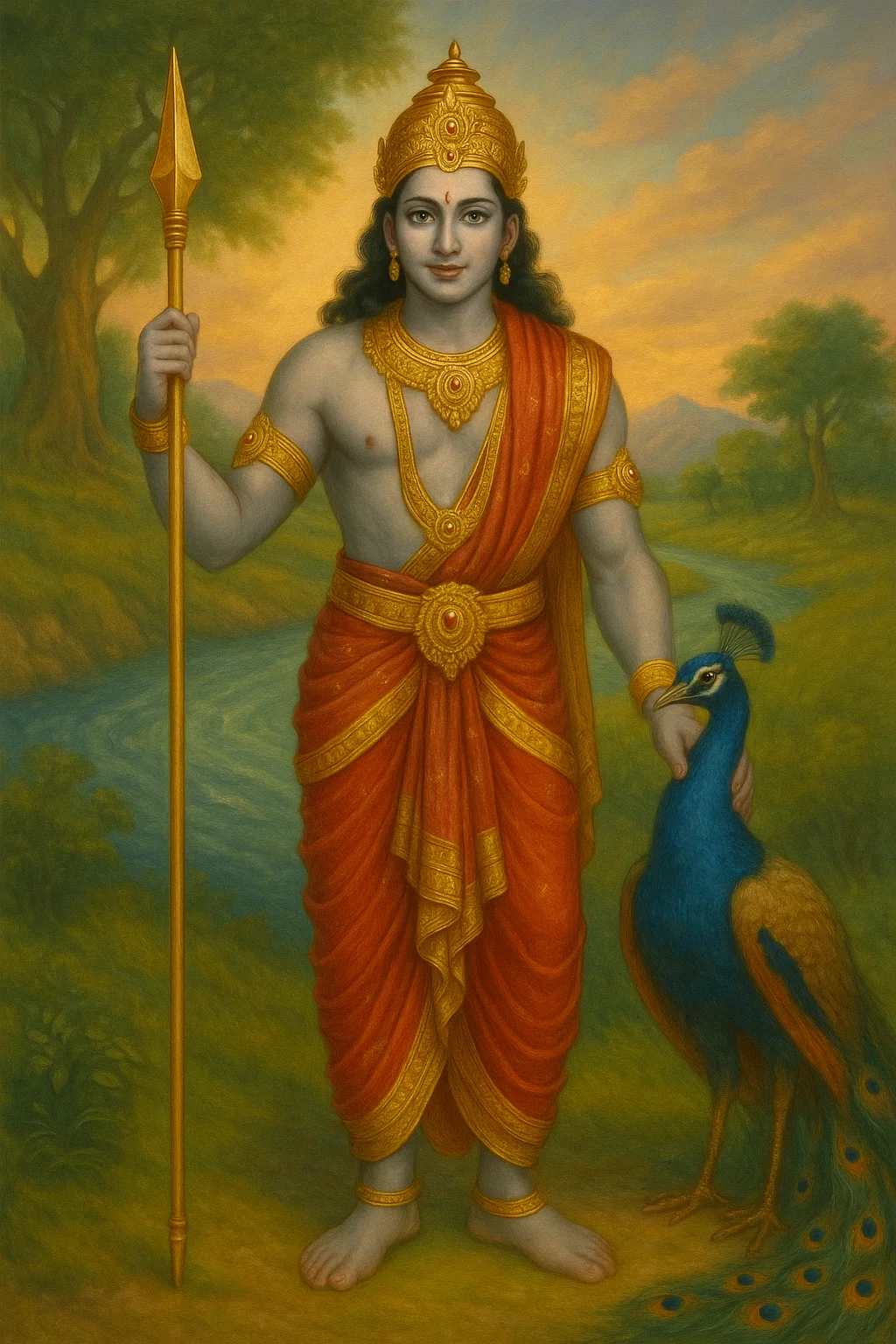
Mahābhārata - Shalya Parva
Chapter 44 - The Investiture of Kartikeya. His Companions.
जनमेजय उवाच
सरस्वत्याः प्रभावोऽयमुक्तस्ते द्विजसत्तम ।
कुमारस्याभिषेकं तु ब्रह्मन् व्याख्यातुमर्हसि ॥ १॥
janamejaya uvāca
sarasvatyāḥ prabhāvo’yamuktaste dvijasattama |
kumārasyābhiṣekaṃ tu brahman vyākhyātumarhasi || 1||
Janamejaya said O best among the twice-born, you have described the wondrous power of the river Sarasvatī. Now, please narrate in detail the consecration of Kumāra (Skanda).
यस्मिन् देशे च काले च यथा च वदतां वर ।
यैश्चाभिषिक्तो भगवान् विधिना येन च प्रभुः ॥ २ ॥
स्कन्दो यथा च दैत्यानामकरोत् कदनं महत् ।
तथा मे सर्वामाचक्ष्व परं कौतूहलं हि मे ॥ ३ ॥
yasmin deśe ca kāle ca yathā ca vadatāṃ vara |
yaiścābhiṣikto bhagavān vidhinā yena ca prabhuḥ || 2 ||
skando yathā ca daityānāmakarot kadanaṃ mahat |
tathā me sarvāmācakṣva paraṃ kautūhalaṃ hi me || 3 ||
Great is my curiosity. Tell me everything, therefore, about the time, place and manner in which the worshipful and powerful Skanda was appointed the commander-in-chief of the celestial hosts ! Tell me also, O best of speakers, who invested him and who performed the actual rites and how the celestial generalissimo killed the Daityas."
वैशम्पायन उवाच
कुरुवंशस्य सदृशं कौतूहलमिदं तव ।
हर्षमुत्पादयत्येव वचो मे जनमेजय ॥ ४ ॥
vaiśampāyana uvāca
kuruvaṃśasya sadṛśaṃ kautūhalamidaṃ tava |
harṣamutpādayatyeva vaco me janamejaya || 4 ||
Vaishampāyana said Your curiosity is indeed befitting the Kuru lineage. The words that I shall speak, will, O Janamejaya, please you.
हन्त ते कथयिष्यामि शृण्वानस्य नराधिप ।
अभिषेकं कुमारस्य प्रभावं च महात्मनः ॥५॥
hanta te kathayiṣyāmi śṛṇvānasya narādhipa |
abhiṣekaṃ kumārasya prabhāvaṃ ca mahātmanaḥ ||5||
Well then, O lord of men, I shall narrate to you as you listen, the consecration of Kumāra and the great splendor of that exalted being.
तेजो माहेश्वरं स्कन्नमग्नौ प्रपतितं पुरा।
तत् सर्वभक्षो भगवान् नाशकद् दग्धुमक्षयम्॥ ६ ॥
tejo māheśvaraṃ skannamagnau prapatitaṃ purā|
tat sarvabhakṣo bhagavān nāśakad dagdhumakṣayam|| 6 ||
Once the vital seed of Maheshvara, dropped into a blazing fire. The consumer of everything, the worshipful Agni, could not burn that indestructible seed.
तेनासीदतितेजस्वी दीप्तिमान् हव्यवाहनः ।
न चैव धारयामास गर्भं तेजोमयं तदा ॥ ७ ॥
tenāsīdatitejasvī dīptimān havyavāhanaḥ |
na caiva dhārayāmāsa garbhaṃ tejomayaṃ tadā || 7 ||
Because of that, the fire-god, the carrier of sacrificial libations, became exceedingly radiant and blazingly brilliant. Yet, he was unable to bear within himself that powerful seed.
स गङ्गामभिसंगम्य नियोगाद् ब्रह्मणः प्रभुः ।
गर्भमाहितवान् दिव्यं भास्करोपमतेजसम्॥ ८॥
sa gaṅgāmabhisaṃgamya niyogād brahmaṇaḥ prabhuḥ |
garbhamāhitavān divyaṃ bhāskaropamatejasam|| 8||
He, the mighty one, upon the command of Brahmā, approached the river Gaṅgā. There, he placed the divine seed, which shone with radiance effulgent like the Sun.
अथ गङ्गापि तं गर्भमसहन्ती विधारणे ।
उत्ससर्ज गिरौ रम्ये हिमवत्मरार्चिते ॥ ९ ॥
atha gaṅgāpi taṃ garbhamasahantī vidhāraṇe |
utsasarja girau ramye himavatmarārcite || 9 ||
Then, even Gaṅgā, unable to bear it, placed it upon a beautiful mountain, the revered Himavat, honored by the celestials.
स तत्र ववृधे लोकानावृत्य ज्वलनात्मजः ।
ददृशुर्ज्वलनाकारं तं गर्भमथ कृत्तिकाः ॥ १० ॥
sa tatra vavṛdhe lokānāvṛtya jvalanātmajaḥ |
dadṛśurjvalanākāraṃ taṃ garbhamatha kṛttikāḥ || 10 ||
Thereupon Agni's son began to grow there, overpowering all the worlds by his energy. Meanwhile the six Krittikas saw that child of fiery splendour.
शरस्तम्बे महात्मानमनलात्मजमीश्वरम् ।
ममायमिति ताः सर्वाः पुत्रार्थिन्योऽभिचुक्रुशुः ॥ ११ ॥
śarastambe mahātmānamanalātmajamīśvaram |
mamāyamiti tāḥ sarvāḥ putrārthinyo’bhicukruśuḥ || 11 ||
Seeing that powerful lord, that great son of Agni, lying on a clump of reeds, all the six Krittikas, who wanted to have a son, cried aloud, saying - "This child is mine, this child is mine.'
तासां विदित्वा भावं तं मातॄणां भगवान् प्रभुः।
प्रस्नुतानां पयः षड्भिर्वदनैरपिबत् तदा ॥ १२ ॥
tāsāṃ viditvā bhāvaṃ taṃ mātṝṇāṃ bhagavān prabhuḥ|
prasnutānāṃ payaḥ ṣaḍbhirvadanairapibat tadā || 12 ||
Understanding the feelings of those six mothers, the wonderful lord Skanda sucked the breasts of all, having assumed six mouths.
तं प्रभावं समालक्ष्य तस्य बालस्य कृत्तिकाः ।
परं विस्मयमापन्ना देव्यो दिव्यवपुर्धराः ॥ १३ ॥
taṃ prabhāvaṃ samālakṣya tasya bālasya kṛttikāḥ |
paraṃ vismayamāpannā devyo divyavapurdharāḥ || 13 ||
Observing the wondrous power of that child, the Kṛttikās, celestial goddesses bearing divine forms, were struck with immense astonishment.
यत्रोत्सृष्टः स भगवान् गङ्गया गिरिमूर्धनि ।
स शैलः काञ्चनः सर्वः सम्बभौ कुरुसत्तम ॥ १४ ॥
yatrotsṛṣṭaḥ sa bhagavān gaṅgayā girimūrdhani |
sa śailaḥ kāñcanaḥ sarvaḥ sambabhau kurusattama || 14 ||
Where that divine being was placed by Gaṅgā upon the mountain’s peak, that entire mountain shone brilliantly, appearing golden, O best of the Kurus.
वर्धता चैव गर्भेण पृथिवी तेन रञ्जिता ।
अतश्च सर्वे संवृत्ता गिरयः काञ्चनाकराः ।। १५ ।।
vardhatā caiva garbheṇa pṛthivī tena rañjitā |
ataśca sarve saṃvṛttā girayaḥ kāñcanākarāḥ || 15 ||
As the divine child grew, the earth was infused with its radiance. From that very cause, all the mountains started to produce gold.
कुमारः सुमहावीर्यः कीर्तिकेय इति स्मृतः ।
गाङ्गेयः पूर्वमभवन्महायोगबलान्वितः ॥ १६ ॥
kumāraḥ sumahāvīryaḥ kīrtikeya iti smṛtaḥ |
gāṅgeyaḥ pūrvamabhavanmahāyogabalānvitaḥ || 16 ||
That mighty warrior Kumāra became renowned as Kārtikeya. Previously, he was known as Gāṅgeya, being endowed with immense yogic power.
शमेन तपसा चैव वीर्येण च समन्वितः ।
ववृधेऽतीव राजेन्द्र चन्द्रवत् प्रियदर्शनः ॥ १७ ॥
śamena tapasā caiva vīryeṇa ca samanvitaḥ |
vavṛdhe’tīva rājendra candravat priyadarśanaḥ || 17 ||
Endowed with serenity, ascetic austerity, and strength, he grew exceedingly, O King, with a delightful radiance, like the moon.
स तस्मिन् काञ्चने दिव्ये शरस्तम्भे श्रिया वृतः ।
स्तूयमानः सदा शेते गन्धर्वैर्मुनिभिस्तथा ॥ १८ ॥
sa tasmin kāñcane divye śarastambhe śriyā vṛtaḥ |
stūyamānaḥ sadā śete gandharvairmunibhistathā || 18 ||
Highly beautiful the child lay on that excellent and golden clump of reeds, worshipped and lauded by Gandharvas and ascetics.
तथैतमन्वनृत्यन्तः देवकन्या सहस्रशः ।
दिव्यवादित्रनृत्यज्ञाः स्तुवन्त्यश्चारुदर्शनाः ॥ १९ ॥
tathaitamanvanṛtyantaḥ devakanyā sahasraśaḥ |
divyavāditranṛtyajñāḥ stuvantyaścārudarśanāḥ || 19 ||
Thousands of celestial girls, of very handsome features, accomplished in celestial music and dance, lauded him and danced before him.
अन्वास्ते च नदी देवं गङ्गा वै सरितां वरा ।
दधार पृथिवी चैनं बिभ्रती रूपमुत्तमम् ॥ २० ॥
anvāste ca nadī devaṃ gaṅgā vai saritāṃ varā |
dadhāra pṛthivī cainaṃ bibhratī rūpamuttamam || 20 ||
And the divine river, the foremost among streams, the sacred Ganga, remained in attendance upon the god. The earth also bore him, upholding his supreme form.
जातकर्मादिकास्तत्र क्रियाश्चक्रे बृहस्पतिः ।
वेदश्चैनं चतुर्मूर्तिरूपतस्थे कृताञ्जलिः ॥ २१ ॥
jātakarmādikāstatra kriyāścakre bṛhaspatiḥ |
vedaścainaṃ caturmūrtirūpatasthe kṛtāñjaliḥ || 21 ||
The celestial priest Brihaspati performed the usual rites of the birth ceremony of that child. And the Vedas, assuming a fourfold form, approached the child with folded hands.
धनुर्वेदश्चतुष्पादः शस्त्रग्रामः ससंग्रहः ।
तत्रैनं समुपातिष्ठत् साक्षाद् वाणी च केवला ॥ २२ ॥
dhanurvedaścatuṣpādaḥ śastragrāmaḥ sasaṃgrahaḥ |
tatrainaṃ samupātiṣṭhat sākṣād vāṇī ca kevalā || 22 ||
The Dhanurveda, complete with its four limbs, along with the full array of weapons and their techniques, all stood before him in person, as did Vāṇī, the Sarasvatī, the goddess of speech, in her pure and absolute form.
स ददर्श महावीर्यं देवदेवमुमापतिम् ।
शैलपुत्र्या समासीनं भूतसंघशतैर्वृतम्॥ २३ ॥
sa dadarśa mahāvīryaṃ devadevamumāpatim |
śailaputryā samāsīnaṃ bhūtasaṃghaśatairvṛtam|| 23 ||
One day Skanda beheld the great and mighty Lord of the gods, Umāpati (Śiva), seated with the daughter of the mountain Pārvatī, surrounded by hundreds of hosts of goblins.
निकाया भूतसंघानां परमाद्भुतदर्शनाः ।
विकृता विकृताकारा बिकृताभरणध्वजाः ॥ २४ ॥
nikāyā bhūtasaṃghānāṃ paramādbhutadarśanāḥ |
vikṛtā vikṛtākārā bikṛtābharaṇadhvajāḥ || 24 ||
Those goblins of exceedingly wondrous appearance, stood there—some deformed, some of grotesque forms, adorned with terrifying ornaments and banners.
व्याघ्रसिंहर्क्षवदना विडालमकराननाः ।
वृषदंशमुखाश्चान्ये गजोष्ट्रवदनास्तथा ।। २५ ।
उलूकवदनाः केचिद् गृध्रगोमायुदर्शनाः ।
vyāghrasiṃharkṣavadanā viḍālamakarānanāḥ |
vṛṣadaṃśamukhāścānye gajoṣṭravadanāstathā || 25 |
ulūkavadanāḥ kecid gṛdhragomāyudarśanāḥ |
Their faces were like those of tigers and lions and bears and cats and Makaras. Others had faces like those of scorpions; others had faces like those of elephant and camels and owls. And some had faces like those of vultures and jackals.
क्रौञ्चपारावतनिभैर्वदनै राङ्कवैरपि ॥ २६ ॥
श्वाविच्छल्यकगोधानामजैडकगवां तथा ।
सदृशानि वपूंष्यन्ये तत्र यत्र व्यधारयन् ॥ २७॥
केचिच्छैलाम्बुदप्रख्याश्चक्रोद्यतगदायुधाः ।
केचिदञ्जनपुञ्जाभाः केचिच्छ्वेताचलप्रभाः ॥ २८ ॥
सप्त मातृगणाश्चैव समाजग्मुर्विशाम्पते ।
krauñcapārāvatanibhairvadanai rāṅkavairapi || 26 ||
śvāvicchalyakagodhānāmajaiḍakagavāṃ tathā |
sadṛśāni vapūṃṣyanye tatra yatra vyadhārayan || 27||
kecicchailāmbudaprakhyāścakrodyatagadāyudhāḥ |
kecidañjanapuñjābhāḥ kecicchvetācalaprabhāḥ || 28 ||
sapta mātṛgaṇāścaiva samājagmurviśāmpate |
Some had faces resembling cranes, pigeons, and even herons. Others bore appearances resembling wild dogs, porcupines, monitor lizards, as well as goats, rams, and cows. Some were as massive as mountains and clouds, wielding chakras, raised maces, and other weapons. Some had the luster of dark collyrium, while others shone like white mountains. O descendant of the Kuru lineage, the seven mother-goddesses (Saptamātṛs) also arrived there.
साध्या विश्वेऽथ मरुतो वसवः पितरस्तथा ॥ २९ ॥
रुद्रादित्यास्तथा सिद्धा भुजगाः दानवाः खगाः ।
ब्रह्मा स्वयम्भूर्भगवान् सपुत्रः सह विष्णुना ॥ ३० ॥
शक्रस्तथाभ्ययाद् द्रष्टुं कुमारवरमच्युतम्।
sādhyā viśve’tha maruto vasavaḥ pitarastathā || 29 ||
rudrādityāstathā siddhā bhujagāḥ dānavāḥ khagāḥ |
brahmā svayambhūrbhagavān saputraḥ saha viṣṇunā || 30 ||
śakrastathābhyayād draṣṭuṃ kumāravaramacyutam|
The Sādhyas, the Viśvedevas, the Maruts, the Vasus, and the Pitṛs all arrived there. Along with them came the Rudras, Ādityas, Siddhas, Nāgas (serpent-beings), Dānavas (demons), and Khagas (celestial birds). Brahmā, the self-born, arrived with his sons, accompanied by Viṣṇu. Likewise, Śakra (Indra) also came to behold the incomparable prince Kumāra, the infallible one.
नारदप्रमुखाश्चापि देवगन्धर्वसत्तमाः ।। ३१ ।।
देवर्षयश्च सिद्धाश्च बृहस्पतिपुरोगमाः ।
पितरो जगतः श्रेष्ठा देवानामपि देवताः ॥ ३२ ॥
तेऽपि तत्र समाजग्मुर्यामा धामाश्च सर्वशः ।
nāradapramukhāścāpi devagandharvasattamāḥ || 31 ||
devarṣayaśca siddhāśca bṛhaspatipurogamāḥ |
pitaro jagataḥ śreṣṭhā devānāmapi devatāḥ || 32 ||
te’pi tatra samājagmuryāmā dhāmāśca sarvaśaḥ |
Nārada, foremost among the celestial sages, along with the best of the Gandharvas also arrived. The divine sages (Devarṣis) and the Siddhas, led by Bṛhaspati, likewise came. The forefathers (Pitṛs), the greatest beings of the world, and the supreme deities even among the gods, all gathered there. Along with them, the Yamas (guardians of order) and the Dhāmas (celestial beings of radiance) also arrived from all directions.
स तु बालोऽपि बलवान महायोगबलान्वितः ॥ ३३ ॥
अभ्याजगाम देवेशं शूलहस्तं पिनाकिनम् ।
sa tu bālo’pi balavāna mahāyogabalānvitaḥ || 33 ||
abhyājagāma deveśaṃ śūlahastaṃ pinākinam |
Though still a child, he was immensely powerful, endowed with the strength of great yogic energy. He approached Maheśvara, the Lord of the gods, who wielded the trident and the Pināka bow.
तमाव्रजन्तमालक्ष्य शिवस्यासीन्मनोगतम्॥ ३४॥
युगपच्छैलपुत्र्याश्च गङ्गायाः पावकस्य च।
कं नु पूर्वमयं बालो गौरवादभ्युपैष्यति ॥ ३५ ॥
अपि मामिति सर्वेषां तेषामासीन्मनोगतम् ।
tamāvrajantamālakṣya śivasyāsīnmanogatam|| 34||
yugapacchailaputryāśca gaṅgāyāḥ pāvakasya ca|
kaṃ nu pūrvamayaṃ bālo gauravādabhyupaiṣyati || 35 ||
api māmiti sarveṣāṃ teṣāmāsīnmanogatam |
As Skanda Kumāra approached, a thought arose in Śiva’s mind: "Among Pārvatī (the daughter of the mountain), Gaṅgā, and Agni (the fire-god), whom will this child first approach out of reverence?" Likewise, all of them wondered in their hearts, "Will he come to me first?"
तेषामेतमभिप्रायं चतुर्णामुपलक्ष्य सः ॥ ३६॥
युगपद् योगमास्थाय ससर्ज विविधास्तनूः ।
teṣāmetamabhiprāyaṃ caturṇāmupalakṣya saḥ || 36||
yugapad yogamāsthāya sasarja vividhāstanūḥ |
Perceiving the intent of all four of them (Pārvatī, Gaṅgā, Agni, and Śiva), Kumāra, through the power of yoga, simultaneously manifested multiple forms.
ततोऽभवच्चतुर्मूति: क्षणेन भगवान् प्रभुः ॥३७॥
तस्य शाखो विशाखश्च नैगमेयश्च पृष्ठतः ।
tato’bhavaccaturmūti: kṣaṇena bhagavān prabhuḥ ||37||
tasya śākho viśākhaśca naigameyaśca pṛṣṭhataḥ |
Then, in an instant, the glorious and mighty Lord Kumāra became fourfold in form. From him emerged Śākha and Viśākha, and behind him stood Naigameya.
एवं स कृत्वा ह्यात्मानं चतुर्धा भगवान् प्रभुः ॥ ३८ ॥
यतो रुद्रस्ततः स्कन्दो गजामाद्भुतदर्शनः ।
evaṃ sa kṛtvā hyātmānaṃ caturdhā bhagavān prabhuḥ || 38 ||
yato rudrastataḥ skando gajāmādbhutadarśanaḥ |
Thus, the glorious Lord (Bhagavān) divided himself into four forms. Since he emerged from Rudra, Skanda took on a wondrous elephant-like appearance.
विशाखस्तु ययौ येन देवी गिरीवरात्मजा ॥ ३९॥
शाखो ययौ स भगवान् वायुमूर्तिर्विभावसुं ।
नैगमेयोऽगमद् गङ्गां कुमारः पावकप्रभः॥४०॥
viśākhastu yayau yena devī girīvarātmajā || 39||
śākho yayau sa bhagavān vāyumūrtirvibhāvasuṃ |
naigameyo’gamad gaṅgāṃ kumāraḥ pāvakaprabhaḥ||40||
Viśākha went to Devī, the noble daughter of the mountain. Śākha, embodying the form of Vāyu, approached Vibhāvasu (Agni, the Fire-god).
Naigameya, the radiant son of Fire, went to Gaṅgā.
सर्वे भासुरदेहास्ते चत्वारः समरूपिणः ।
तान् समभ्ययुरव्यग्रास्तदद्भुतमिवाभवत्॥ ४१॥
sarve bhāsuradehāste catvāraḥ samarūpiṇaḥ |
tān samabhyayuravyagrāstadadbhutamivābhavat|| 41||
All those four forms, of similar appearance, were highly effulgent. The four forms went calmly to the four gods and goddesses. It was indeed wonderful.
हाहाकारो महानासीद् देवदानवरक्षसाम् ।
तद् दृष्ट्वा महदाश्चर्यमद्भूतं लोमहर्षणम् ॥ ४२ ॥
hāhākāro mahānāsīd devadānavarakṣasām |
tad dṛṣṭvā mahadāścaryamadbhūtaṃ lomaharṣaṇam || 42 ||
A great uproar arose among the gods, demons, and rākṣasas. Witnessing that astonishing and wondrous sight, which made one's hair stand on end, they were filled with awe.
ततो रुद्रश्च देवीं च पावकश्च पितामहम् ।
गङ्गा सहिताः सर्वे प्रणिपेतुर्जगत्पतिम् ॥ ४३ ॥
tato rudraśca devīṃ ca pāvakaśca pitāmaham |
gaṅgā sahitāḥ sarve praṇipeturjagatpatim || 43 ||
Then, Rudra, the Goddess (Pārvatī), Agni (the Fire god), and Gaṅgā, all together, prostrated before Brahmā, the Lord of the Universe.
प्रणिपत्य ततस्ते तु विधिवद् राजपुङ्गव ।
उदमूचुर्वचो राजन् कार्तिकेयप्रियेप्सया ॥ ४४ ॥
अस्य बालस्य भगवन्नाधिपत्यं यथेप्सितम् ।
अस्मात्प्रियार्थं देवेश सदृशं दातुमर्हसि ॥ ४५ ॥
praṇipatya tataste tu vidhivad rājapuṅgava |
udamūcurvaco rājan kārtikeyapriyepsayā || 44 ||
asya bālasya bhagavannādhipatyaṃ yathepsitam |
asmātpriyārthaṃ deveśa sadṛśaṃ dātumarhasi || 45 ||
Then, having bowed down properly, O foremost of kings, they spoke these words to Brahmā, desiring the favor of Kārtikeya.
"O Lord of the Gods, for the sake of this divine child, you should grant him authority as befits his greatness."
ततः स भगवान् धीमान् सर्वलोकपितामहः ।
मनसा चिन्तयामास किमयं लभतामिति ॥ ४६॥
tataḥ sa bhagavān dhīmān sarvalokapitāmahaḥ |
manasā cintayāmāsa kimayaṃ labhatāmiti || 46||
Thereat, the worshipful grandfather Brahmā of all the worlds, endued with great intelligence, began to think as to what should that youth receive.
ऐश्वर्याणि च सर्वाणि देवगन्धर्वरक्षसाम् ।
भूतयक्षविहङ्गानां पन्नगानां च सर्वशः ॥ ४७ ॥
पूर्वमेवादिदेशासौ निकायेषु महात्मनाम् ।
समर्थं च तमैश्वर्ये महामतिरमन्यत ॥ ४८ ॥
aiśvaryāṇi ca sarvāṇi devagandharvarakṣasām |
bhūtayakṣavihaṅgānāṃ pannagānāṃ ca sarvaśaḥ || 47 ||
pūrvamevādideśāsau nikāyeṣu mahātmanām |
samarthaṃ ca tamaiśvarye mahāmatiramanyata || 48 ||
Brahmā had already assigned dominion among the great celestial beings, now deemed Kārtikeya worthy and capable of wielding authority. Sovereignty over all the gods, gandharvas, rākṣasas, bhūtas, yakṣas, birds, and serpents was granted to him in its entirety.
ततो मुहूर्तं स ध्यात्वा देवानां श्रेयसि स्थितः ।
सैनापत्यं ददौ तस्मै सर्वभूतेषु भारत ।। ४९ ।।
tato muhūrtaṃ sa dhyātvā devānāṃ śreyasi sthitaḥ |
saināpatyaṃ dadau tasmai sarvabhūteṣu bhārata || 49 ||
Reflecting deeply for a moment on the welfare of the gods, Brahmā granted Kārtikeya the supreme command over all beings, O Bhārata!
सर्वदेवनिकायानां ये राजानः परिश्रुताः ।
तान् सर्वान् व्यादिदेशास्मै सर्वभूतपितामहः ॥ ५० ॥
sarvadevanikāyānāṃ ye rājānaḥ pariśrutāḥ |
tān sarvān vyādideśāsmai sarvabhūtapitāmahaḥ || 50 ||
The grandsire of all beings appointed to Skanda all the renowned kings of the assemblies of the gods.
ततः कुमारमादाय देवा ब्रह्मपुरोगमाः ।
अभिषेकार्थमाजग्मुः शैलेन्द्रं सहितास्ततः ।। ५१ ।।
tataḥ kumāramādāya devā brahmapurogamāḥ |
abhiṣekārthamājagmuḥ śailendraṃ sahitāstataḥ || 51 ||
Then, the gods lead by Brahmā, taking Kumāra with them, proceeded together to the Himavat, the lord of mountains, for his consecration.
पुण्यां हैमवतीं देवीं सरिच्छ्रेष्ठां सरस्वतीम् ।
समन्तपञ्चके या वै त्रिषु लोकेषु विश्रुता ॥ ५२ ॥
puṇyāṃ haimavatīṃ devīṃ saricchreṣṭhāṃ sarasvatīm |
samantapañcake yā vai triṣu lokeṣu viśrutā || 52 ||
The site selected by them was the bank of the sacred and divine Sarasvati, that foremost of rivers, taking her rise from Himavat, which is celebrated over the three worlds by the name of Samantapanchaka.
तत्र तीरे सरस्वत्याः पुण्ये सर्वगुणान्विते ।
निषेदुर्देवगन्धर्वाः सर्वे सम्पूर्णमानसाः ॥ ५३ ॥
tatra tīre sarasvatyāḥ puṇye sarvaguṇānvite |
niṣedurdevagandharvāḥ sarve sampūrṇamānasāḥ || 53 ||
On the auspicious and virtuous bank of the Sarasvatī, all the gods and Gandharvas sat down, their minds completely content.
Full Synopsis of The Investiture of Kartikeya. His Companions.
In this passage, King Janamejaya requests Vaishampayana to narrate the details of Skanda's (Kartikeya's) investiture as the commander-in-chief of the celestial army, his divine origins, and his defeat of the Daityas (demons).
Vaishampayana begins by recounting the extraordinary birth of Skanda. The vital seed of Maheshvara (Shiva) was entrusted to Agni (the fire god), who, unable to contain it, passed it to the river Ganga. Ganga, likewise overwhelmed by its energy, deposited it on the golden peaks of the Himalayas. There, the child Skanda was born, radiating fiery splendor. The six celestial Krittikas discovered the child lying on a clump of reeds, each claiming him as their own. In response, Skanda assumed six faces to simultaneously nurse from all six mothers, earning him the name Kartikeya.
As Skanda grew, his beauty, strength, and divine energy captivated the gods, ascetics, and celestial beings. Worshipped by Gandharvas and praised through hymns, he embodied unparalleled charm and power. The celestial priest Brihaspati performed his birth rites, and the Vedas themselves approached him with reverence. Skanda’s divine attributes, including self-restraint, ascetic power, and extraordinary prowess, became evident as he matured.
When Skanda approached Mahadeva (Shiva), Parvati, Ganga, and Agni, each expected the child to honor them first. To fulfill their desires equally, Skanda divided himself into four identical forms, each paying homage to one of the gods or goddesses. This miraculous display astonished all celestial beings, who gathered in awe to witness the event.
Acknowledging Skanda's unmatched virtues and strength, Brahma, the creator was petitioned by Shiva, Parvati, Ganga, and Agni to bestow a suitable position of sovereignty upon the child. Recognizing Skanda’s divine purpose, Brahma appointed him as the generalissimo of the celestial army, granting him dominion over all beings.
The investiture ceremony was conducted on the sacred banks of the Sarasvati River at Samantapanchaka, with the gods, Gandharvas, and celestial hosts assembling in joy and reverence. The passage celebrates Skanda's divine destiny, his role as the protector of the gods, and his role as the harbinger of cosmic order and victory.