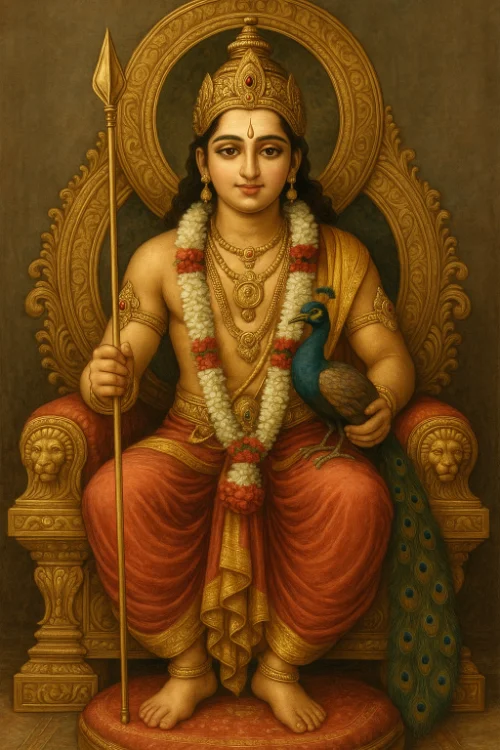
Mahābhārata - Shalya Parva
Chapter 45 - The Companions of Kartikeya
वैशम्पायन उवाच
ततोऽभिषेकसम्भारान् सर्वान् सम्भृत्य शास्त्रत: ।
बृहस्पतिः समिद्धेऽग्नौ जुहावाग्निं यथाविधि ॥ १ ॥
vaiśampāyana uvāca
tato’bhiṣekasambhārān sarvān sambhṛtya śāstrata: |
bṛhaspatiḥ samiddhe’gnau juhāvāgniṃ yathāvidhi || 1 ||
Vaishampāyana said: Then, having gathered all the consecration materials according to the scriptures, Brihaspati offered oblations into the kindled fire, performing the ritual as prescribed.
ततो हिमवता दत्ते मणिप्रवरशोभिते ।
दिव्यारत्नाचिते पुण्ये निषण्णं परमासने ॥ २ ॥
tato himavatā datte maṇipravaraśobhite |
divyāratnācite puṇye niṣaṇṇaṃ paramāsane || 2 ||
Then, Kartikeya was seated upon the supreme throne, which was adorned with excellent gems, resplendent with divine jewels, and graciously bestowed by Himavat.
सर्वमङ्गलसम्भारैर्विधिमन्त्रपुरस्कृतम् ।
आभिषेचनिकं द्रव्यं गृहीत्वा देवातगणा: ।। ३ ।।
sarvamaṅgalasambhārairvidhimantrapuraskṛtam |
ābhiṣecanikaṃ dravyaṃ gṛhītvā devātagaṇā: || 3 ||
The hosts of gods, taking the consecration materials, which were accompanied by auspicious rites and prescribed mantras, prepared for the sacred ablution.
इन्द्राविष्णू महावीर्यौ सूर्याचन्द्रमसौ तथा ।
धाता चैव विधाता च तथा चैवानिलानलौ ॥ ४ ॥
पूष्णा भगेनार्यम्णा च अंशेन च विवस्वता ।
रुद्रश्च सहितो धीमान् मित्रेण वरुणेन च ॥ ५ ॥
रुद्रैर्वसुभिरादित्यैरश्विभ्यां च वृतः प्रभुः ।
विश्वेदेवैर्मरुद्भिश्च साध्यैश्च पितृभिः सह ॥ ६ ॥
गन्धवैरप्सरोभिश्च यक्षराक्षसपन्नगैः ।
देवर्षिभिरसंख्यातैस्तथा ब्रह्मर्षिभिस्तथा ॥ ७ ॥
वैखानसैर्वालखिल्यैर्वाय्वारैर्मरीचिपैः ।
भृगुभिचाङ्गिरोभिश्च यतिभिश्च महात्मभिः ॥ ८ ॥
सर्वैर्विद्याधरैः पुण्यैर्योगसिद्धैस्तथा वृतः ।
पितामहः पुलस्त्यश्च पुलहश्च महातपाः ॥ ९ ॥
अङ्गिराः कश्यपोऽपिश्च मरीचिर्भृगुरेव च ।
क्रतुर्हर: प्रचेताश्च मनुर्दक्षस्तथैव च ॥ १० ॥
ऋतवश्च ग्रहाश्चैव ज्योतिषिं च विशाम्पते।
मूर्तिमत्यश्च सरितो वेदाश्चैव सनातनाः ॥ ११ ॥
समुद्राश्च हृदाचैव तीर्थानि विविधानि च ।
पृथिवी द्यौर्दिशश्चैव पादपाश्च जनाधिप ॥ १२ ॥
अदितिर्देवमाता च ह्रीः श्रीः स्वाहा सरस्वती ।
उमा शची सिनीवाली तथा चानुमतिः कुहूः ॥ १३ ॥
राका च धिषणा चैव पल्यश्चान्या दिवौकसाम् ।
हिमवांश्चैव विन्ध्यश्च मेस्श्चानेकशृङ्गवान्॥ १४॥
ऐरावतः सानुचरः कलाः काष्ठास्तथैव च ।
मासार्धमासा ऋतवस्तथा रात्र्यहनी नृप ॥ १५ ॥
उच्चैःश्रवा हयश्रेष्ठो नागराजश्च वासुकिः ।
अरुणो गरुडश्चैव वृक्षाश्चौषधिभिः सह ॥ १६ ॥
धर्मश्च भगवान् देवः समाजग्मुर्हि सङ्गताः ।
कालो यमश्च मृत्युश्च यमस्यानुचराश्च ये ॥ १७ ॥
indrāviṣṇū mahāvīryau sūryācandramasau tathā |
dhātā caiva vidhātā ca tathā caivānilānalau || 4 ||
pūṣṇā bhagenāryamṇā ca aṃśena ca vivasvatā |
rudraśca sahito dhīmān mitreṇa varuṇena ca || 5 ||
rudrairvasubhirādityairaśvibhyāṃ ca vṛtaḥ prabhuḥ |
viśvedevairmarudbhiśca sādhyaiśca pitṛbhiḥ saha || 6 ||
gandhavairapsarobhiśca yakṣarākṣasapannagaiḥ |
devarṣibhirasaṃkhyātaistathā brahmarṣibhistathā || 7 ||
vaikhānasairvālakhilyairvāyvārairmarīcipaiḥ |
bhṛgubhicāṅgirobhiśca yatibhiśca mahātmabhiḥ || 8 ||
sarvairvidyādharaiḥ puṇyairyogasiddhaistathā vṛtaḥ |
pitāmahaḥ pulastyaśca pulahaśca mahātapāḥ || 9 ||
aṅgirāḥ kaśyapo’piśca marīcirbhṛgureva ca |
kraturhara: pracetāśca manurdakṣastathaiva ca || 10 ||
ṛtavaśca grahāścaiva jyotiṣiṃ ca viśāmpate|
mūrtimatyaśca sarito vedāścaiva sanātanāḥ || 11 ||
samudrāśca hṛdācaiva tīrthāni vividhāni ca |
pṛthivī dyaurdiśaścaiva pādapāśca janādhipa || 12 ||
aditirdevamātā ca hrīḥ śrīḥ svāhā sarasvatī |
umā śacī sinīvālī tathā cānumatiḥ kuhūḥ || 13 ||
rākā ca dhiṣaṇā caiva palyaścānyā divaukasām |
himavāṃścaiva vindhyaśca mesścānekaśṛṅgavān|| 14||
airāvataḥ sānucaraḥ kalāḥ kāṣṭhāstathaiva ca |
māsārdhamāsā ṛtavastathā rātryahanī nṛpa || 15 ||
uccaiḥśravā hayaśreṣṭho nāgarājaśca vāsukiḥ |
aruṇo garuḍaścaiva vṛkṣāścauṣadhibhiḥ saha || 16 ||
dharmaśca bhagavān devaḥ samājagmurhi saṅgatāḥ |
kālo yamaśca mṛtyuśca yamasyānucarāśca ye || 17 ||
Then, the great heroes Indra and Viṣṇu, along with the Sun and the Moon, as well as Dhātā and Vidhātā, and also Anila (Wind) and Anala (Fire).
Pūṣan with Bhaga, Aryaman, Aṁśa, and Vivasvān, the wise Rudra accompanied by Mitra and Varuṇa (5),
Surrounded by the Rudras, the Vasus, the Ādityas, and the twin Aśvins, along with the Viśvedevas, the Maruts, the Sādhyas, and the Pitṛs.
Along with the Gandharvas, Apsaras, Yakṣas, Rākṣasas, and Nāgas, and innumerable celestial sages (Devarṣis) as well as Brāhmaṇa sages (Brahmarṣis).
The Vaikhānasas, the Vālakhilyas, those others among Rishis that live only on air and those that live on the rays of the Sun — the Vāyuvyas and the Mārīcipas, the Bhṛgus, the Āṅgirasas, and the great ascetics (Yatis).
All the pure Vidyādharas and Yoga-siddhas gathered, as well as the grandsire Brahmā, along with the great ascetics Pulastya and Pulaha.
Aṅgiras, Kaśyapa, Marīci, Bhṛgu, Kratu, Hara (Śiva), Pracetā (Varuṇa), Manu, and Dakṣa.
The seasons, planets, luminaries, and constellations, O King, along with personified rivers, the eternal Vedas.
The oceans, sacred lakes, various tīrthas (holy places), the Earth, the heavens, the directions, and all kinds of trees.
Aditi, the mother of the gods, along with Hṛī (Modesty), Śrī (Goddess of Fortune), Svāhā, and Sarasvatī, as well as Umā, Śacī, Sinīvālī, Anumatī, and Kuhū.
Rākā, Dhīṣaṇā, and other celestial goddesses, along with the great mountains Himavat, Vindhya, and Meru with its countless peaks.
Airāvata, the great elephant with his retinue, as well as Kāṣṭhās (divisions of time), Kalās (time units), fortnights, months, and seasons, days and nights, O King.
Uccaiḥśravā, the best among horses, and Vāsuki, the king of serpents, Aruṇa, Garuḍa, as well as trees along with medicinal herbs.
The divine god Dharma, assembled together, along with Kāla (Time), Yama (the god of Death), Mṛtyu (Death personified), and Yama’s attendants.
बहुलत्वाश्च नोक्ता ये विविधा देवतागणाः ।
ते कुमाराभिषेकार्थं समाजग्मुस्ततस्ततः॥ १८ ॥
bahulatvāśca noktā ye vividhā devatāgaṇāḥ |
te kumārābhiṣekārthaṃ samājagmustatastataḥ|| 18 ||
And the countless other divine hosts, who were not mentioned, also gathered from all directions for Kumāra’s consecration.
गृहस्ते तदा राजन् सर्व एव दिवौकसः ।
आभिषेचनिकं भाण्डं मङ्गलानि च सर्वशः ॥ १९ ॥
gṛhaste tadā rājan sarva eva divaukasaḥ |
ābhiṣecanikaṃ bhāṇḍaṃ maṅgalāni ca sarvaśaḥ || 19 ||
Then, O King, all the celestial beings assembled in the dwelling, bringing consecration vessels and all auspicious items.
दिव्यसम्भारसंयुक्तैः कलशैः काञ्चनैर्नृप।
सरस्वतीभिः पुण्याभिर्दिव्यतोयाभिरेव तु ॥ २० ॥
अभ्यषिञ्चन् कुमारं वै सम्प्रहृष्टा दिवौकसः ।
सेनापतिं महात्मानमसुराणां भयंकरम्॥ २१॥
divyasambhārasaṃyuktaiḥ kalaśaiḥ kāñcanairnṛpa|
sarasvatībhiḥ puṇyābhirdivyatoyābhireva tu || 20 ||
abhyaṣiñcan kumāraṃ vai samprahṛṣṭā divaukasaḥ |
senāpatiṃ mahātmānamasurāṇāṃ bhayaṃkaram|| 21||
With golden vessels adorned with divine substances, O King, and with sacred waters from the holy Sarasvatī, the jubilant celestial beings consecrated the noble Kumāra, the great commander, the terror of the Asuras.
पुरा यथा महाराज वरुणं वै जलेश्वरम् ।
तथाभ्यषिञ्चद् भगवान् सर्वलोकपितामहः ॥ २२ ॥
purā yathā mahārāja varuṇaṃ vai jaleśvaram |
tathābhyaṣiñcad bhagavān sarvalokapitāmahaḥ || 22 ||
Just as in ancient times, O great king, when the divine grandsire of all worlds once anointed Varuṇa as the lord of waters, so too did he now consecrate Kumāra..
कश्यपश्च महातेजा ये चान्ये लोककीर्तिताः ।
तस्मै ब्रह्मा ददौ प्रीतो बलिनो वातरंहसः ॥ २३॥
कामवीर्यधरान् सिद्धान् महापरिषदान् प्रभुः ।
kaśyapaśca mahātejā ye cānye lokakīrtitāḥ |
tasmai brahmā dadau prīto balino vātaraṃhasaḥ || 23||
kāmavīryadharān siddhān mahāpariṣadān prabhuḥ |
Kaśyapa, the resplendent sage, along with other renowned beings of the world, saw the great event unfolding. Pleased, Brahmā bestowed upon Kārttikeya mighty warriors, swift as the wind, their strength immeasurable.
These warriors, bearers of invincible will and unmatched power, accomplished and perfected in their might, were given to him as his great council.
नन्दिसेनं लोहिताक्षं घण्टाकर्णं च सम्मतम् ॥ २४ ॥
चतुर्थमस्यानुचरं ख्यातं कुमुदमालिनम्।
nandisenaṃ lohitākṣaṃ ghaṇṭākarṇaṃ ca sammatam || 24 ||
caturthamasyānucaraṃ khyātaṃ kumudamālinam|
Among them stood Nandisena, the valiant, Lohitākṣa, the red-eyed warrior, and Ghaṇṭākarṇa, with bell-shaped ears, all esteemed among the divine hosts.
And as the fourth, renowned across the worlds, came Kumudamālī, adorned with a garland of radiant Kumuda flowers, a steadfast attendant of Kārttikeya, ever ready for battle.
तत्र स्थाणुर्महातेजा महापारिषदं प्रभुः ॥ २५ ॥
मायाशतधरं कामं कामवीर्यं बलान्वितम् ।
tatra sthāṇurmahātejā mahāpāriṣadaṃ prabhuḥ || 25 ||
māyāśatadharaṃ kāmaṃ kāmavīryaṃ balānvitam |
There, the mighty and radiant Sthāṇu (Shiva), the revered Lord of the great assembly, bestowed upon him a warrior of a hundred illusions, endowed with irresistible might and desire.
ददौ स्कन्दाय राजेन्द्र सुरारिविनिबर्हणम् ॥ २६ ॥
स हि देवासुरे युद्धे दैत्यानां भीमकर्मणाम् ।
जघान दोर्भ्यां संक्रुद्धः प्रयुतानि चतुर्दश ॥ २७ ॥
dadau skandāya rājendra surārivinibarhaṇam || 26 ||
sa hi devāsure yuddhe daityānāṃ bhīmakarmaṇām |
jaghāna dorbhyāṃ saṃkruddhaḥ prayutāni caturdaśa || 27 ||
In the great battle between the gods and the Asuras, this companion that Sthanu gave, fierce and unconquerable in battle, with his hands alone killed 140 million Daityas of terrible deeds.
तथा देवा ददुस्तस्मै सेनां नैर्ऋतसंकुलाम् ।
देवशत्रुक्षयकरीमजय्यां विष्णुरूपिणीम् ॥ २८ ॥
tathā devā dadustasmai senāṃ nairṛtasaṃkulām |
devaśatrukṣayakarīmajayyāṃ viṣṇurūpiṇīm || 28 ||
Likewise, the Devas bestowed upon him an army filled with Nāirṛta warriors. This force, assuming the form of Viṣṇu, was invincible and capable of annihilating the enemies of the gods.
जयशब्दं तथा चक्रुर्देवाः सर्वे सवासवाः ।
गन्धर्वा यक्षरक्षांसि मनुयः पितरस्तथा ॥ २९ ॥
jayaśabdaṃ tathā cakrurdevāḥ sarve savāsavāḥ |
gandharvā yakṣarakṣāṃsi manuyaḥ pitarastathā || 29 ||
Then, all the Devas, along with Vāsava (Indra), proclaimed cries of victory. The Gandharvas, Yakṣas, Rākṣasas, as well as humans and Pitṛs, all joined in this triumphant acclamation.
ततः प्रादादनुचरौ यमः कालोपमावुभौ ।
उन्माथश्च प्रमाथश्च महावीर्यौ महाद्युती ॥ ३० ॥
tataḥ prādādanucarau yamaḥ kālopamāvubhau |
unmāthaśca pramāthaśca mahāvīryau mahādyutī || 30 ||
Then, Yama, the lord of death, bestowed upon Skanda two mighty followers, both resembling Kāla (Time and Death) in their power. They were Unmātha and Pramātha, of immense strength and radiant energy.
सुभ्राजभास्वरश्चैव यौ तौ सूर्यानुयायिनौ ।
तौ सूर्यः कार्तिकेयाय ददौ प्रीतः प्रतापवान् ॥ ३१ ॥
subhrājabhāsvaraścaiva yau tau sūryānuyāyinau |
tau sūryaḥ kārtikeyāya dadau prītaḥ pratāpavān || 31 ||
Then, the resplendent and radiant ones, who were the followers of Sūrya (the Sun God), both shining with immense brilliance, were bestowed upon Kārtikeya by the mighty Sūrya, pleased and filled with great splendor.
कैलासशृङ्गसंकाशो श्वेतमाल्यानुलेपनौ ।
सोमो ऽप्यनुचरौ प्रादान्मणि सुमणिमेव च ॥ ३२ ॥
kailāsaśṛṅgasaṃkāśo śvetamālyānulepanau |
somo ’pyanucarau prādānmaṇi sumaṇimeva ca || 32 ||
Then Soma (the Moon God), radiant like the peaks of Kailāsa, adorned with white garlands and fragrant unguents, bestowed upon Kārtikeya his two attendants—Maṇi and Sumāṇi, shining brilliantly like precious gems.
ज्वालाजिह्वं तथा ज्योतिरात्मजाय हुताशनः ।
ददावनुचरौ शूरौ परसैन्यप्रमाथिनौ ॥ ३३ ॥
jvālājihvaṃ tathā jyotirātmajāya hutāśanaḥ |
dadāvanucarau śūrau parasainyapramāthinau || 33 ||
Agni, the consumer of offerings, gave two heroic attendants—Jvālājihva ('Flame-tongued') and another mighty warrior—to Kārttikeya, the radiant son (of Agni), who were fierce destroyers of enemy armies.
परिघं च वरं चैव भीमं च सुमहाबलम् ।
दहति दहनं चैव प्रचण्डौ वीर्यसम्मतौ ॥ ३४ ॥
parighaṃ ca varaṃ caiva bhīmaṃ ca sumahābalam |
dahati dahanaṃ caiva pracaṇḍau vīryasammatau || 34 ||
Agni also granted Kārtikeya a mighty Parigha (iron club), a supreme boon, a terrifying and immensely powerful weapon. Along with it, he bestowed Dahana (the Burner) and Prachanda (the Fierce One)—two warriors of great valor and fiery might.
अंशोऽप्यनुचरान् पञ्च ददौ स्कन्दाय धीमते ।
उत्क्रोशं पञ्चकं चैव वज्रदण्जधरावुभौ ॥ ३५ ॥
aṃśo’pyanucarān pañca dadau skandāya dhīmate |
utkrośaṃ pañcakaṃ caiva vajradaṇjadharāvubhau || 35 ||
Aṁśa (the Vedic deity of shares and portions) also granted five followers to the wise Skanda. Additionally, he bestowed upon him Utkrōśa (the Loud-Crier) and Pañcaka (the Five-formed One), as well as Vajradaṇḍa (the Thunderbolt-Wielder) and Dhaṇḍara (the Staff-Bearer).
ददावनलपुत्राय वासवः परवीरहा ।
तौ हि शत्रून् महेन्द्रस्य जघ्नतुः समरे बहून् ॥ ३६ ॥
चक्रं विक्रमकं चैव संक्रमं च महाबलम् ।
dadāvanalaputrāya vāsavaḥ paravīrahā |
tau hi śatrūn mahendrasya jaghnatuḥ samare bahūn || 36 ||
cakraṃ vikramakaṃ caiva saṃkramaṃ ca mahābalam |
The slayer of enemy heroes Vāsava (Indra) granted these mighty warriors to Skanda, the son of Agni. For they had slain many foes of Indra Mahendra in battle.
He also bestowed Cakra (the Discus-wielder), Vikramaka (the Bold-striker), and Saṅkrama (the Unyielding One), all of great strength.
स्कन्दाय त्रीननुचरान् ददौ विष्णुर्महायशाः ॥ ३७ ॥
वर्धनं नन्दनं चैव सर्वविद्याविशारदौ ।
skandāya trīnanucarān dadau viṣṇurmahāyaśāḥ || 37 ||
vardhanaṃ nandanaṃ caiva sarvavidyāviśāradau |
The greatly renowned Viṣṇu granted three attendants to Skanda. Among them were Vardhana (the Strengthener) and Nandana (the Joyous One), both well-versed in all forms of knowledge.
स्कन्दाय ददतुः प्रीतावश्विनौ भिषजां वरौ ॥ ३८ ॥
कुन्दं च कुसुमं चैव कुमुदं च महायशाः ।
डम्बराम्बरौ चैव ददौ धाता महात्मने ॥ ३९ ॥
skandāya dadatuḥ prītāvaśvinau bhiṣajāṃ varau || 38 ||
kundaṃ ca kusumaṃ caiva kumudaṃ ca mahāyaśāḥ |
ḍambarāmbarau caiva dadau dhātā mahātmane || 39 ||
The Aśvins, the foremost among physicians, offered their gift to Skanda, filled with joy.
The renowned Dhātṛ then bestowed upon the great-souled Skanda the attendants Kunda (Jasmine), Kusuma (Flower), and Kumuda (Water-lily), as well as Ḍambara and Ambara, who radiated celestial brilliance.
चक्रानुचौ बलिनौ मेघचक्रौ बलोत्कटा ।
ददौ त्वष्टा महामायौ स्कन्दायानुतरावुभौ ॥ ४० ॥
cakrānucau balinau meghacakrau balotkaṭā |
dadau tvaṣṭā mahāmāyau skandāyānutarāvubhau || 40 ||
The divine Tvaṣṭṛ, the celestial architect, bestowed upon Skanda two mighty and fierce attendants, the invincible Meghacakra twins, who wielded great mystical powers, unmatched in battle.
सुव्रतं सत्यसंधं च ददौ मित्रौ महात्मने।
कुमाराय महात्मानौ तपोविद्याधरौ प्रभुः ॥ ४१ ॥
सुदर्शनीयौ वरदौ त्रिषु लोकेषु विश्रुतौ ।
suvrataṃ satyasaṃdhaṃ ca dadau mitrau mahātmane|
kumārāya mahātmānau tapovidyādharau prabhuḥ || 41 ||
sudarśanīyau varadau triṣu lokeṣu viśrutau |
The divine Mitra, the celestial guardian, granted unto Kumāra, the great soul, two noble and truthful companions, who were renowned for their ascetic power and wisdom.
These two, Sudarśanīya and Varada, celebrated across the three worlds, stood as radiant figures of excellence and grace.
सुव्रतं च महात्मानं शुभकर्माणमेव च ॥ ४२ ॥
कार्तिकेयाय सम्प्रादाद् विधाता लोकविश्रुतौ ।
suvrataṃ ca mahātmānaṃ śubhakarmāṇameva ca || 42 ||
kārtikeyāya samprādād vidhātā lokaviśrutau |
The divine Architect (Vidhātā), renowned across the worlds, bestowed upon Kārtikeya two noble attendants: One, Suvrata, a great soul, steadfast in his vows and devoted to righteousness. The other, Śubhakarman, celebrated for his auspicious deeds, both standing as paragons of virtue in service of the war god.
पाणीतकं कालिकं च महामायाविनावुभौ ॥ ४३ ॥
पूषा च पार्षदौ प्रादात् कार्तिकेयाय भारत।
pāṇītakaṃ kālikaṃ ca mahāmāyāvināvubhau || 43 ||
pūṣā ca pārṣadau prādāt kārtikeyāya bhārata|
The god Pūṣan, O Bhārata, bestowed upon Kārtikeya two attendants: Pāṇītaka and Kālika, both masters of great illusions, fierce and powerful, ever ready to serve the god of war.
बलं चातिबलं चैव महावक्त्रौ महाबलौ ॥ ४४॥
प्रददौ कार्तिकेयाय वायुर्भरतसत्तम ।
balaṃ cātibalaṃ caiva mahāvaktrau mahābalau || 44||
pradadau kārtikeyāya vāyurbharatasattama |
The mighty Wind-god (Vāyu), O best of the Bhāratas, bestowed upon Kārtikeya two powerful attendants: Bala and Atibala, fierce and formidable, both great-mouthed and of immense strength.
यमं चातियमं चैव तिमिवक्त्रौ महाबलौ ॥ ४५॥
प्रददौ कार्तिकेयाय वरुणः सत्यसङ्गरः ।
yamaṃ cātiyamaṃ caiva timivaktrau mahābalau || 45||
pradadau kārtikeyāya varuṇaḥ satyasaṅgaraḥ |
The lord of waters, Varuṇa, the truthful warrior, bestowed upon Kārtikeya two mighty attendants, Yama and Atiyama, fierce in battle, both having the jaws of a great whale.
सुवर्चसं महात्मानं तथैवाप्यतिवर्चसम्॥ ४६ ॥
हिमवान् प्रददौ राजन् हुताशनसुताय वै।
suvarcasaṃ mahātmānaṃ tathaivāpyativarcasam|| 46 ||
himavān pradadau rājan hutāśanasutāya vai|
The Himalayan King bestowed upon the son of Fire, two mighty beings Suvarcasa and Ativarcasa.
काञ्चनं च महात्मानं मेघमालिनमेव च ॥ ४७॥
ददावनुचरो मेरुरग्निपुत्राय भारत ।
kāñcanaṃ ca mahātmānaṃ meghamālinameva ca || 47||
dadāvanucaro meruragniputrāya bhārata |
The great Meru bestowed as companions the golden-hued Kāñcana and the cloud-garlanded Meghamālin, O Bhārata, upon the son of Fire.
स्थिरं चातिस्थिरं चैव मेरुरेवापरौ ददौ ॥ ४८ ॥
महात्मा त्वग्निपुत्राय महाबलपराक्रमौ ।
sthiraṃ cātisthiraṃ caiva merurevāparau dadau || 48 ||
mahātmā tvagniputrāya mahābalaparākramau |
The great Meru also bestowed two more companions—the steadfast Sthira and the resolute Atisthira, upon the mighty and valiant son of Fire.
उच्छ्रतं चाग्निशृङ्गं च महापाषाणयोधिनौ ॥ ४९ ॥
प्रददावग्निपुत्राय विन्ध्यः पारिषदावुभौ ।
ucchrataṃ cāgniśṛṅgaṃ ca mahāpāṣāṇayodhinau || 49 ||
pradadāvagniputrāya vindhyaḥ pāriṣadāvubhau |
The Vindhya mountain bestowed two mighty attendants—the towering Ucchrata and the formidable Agniśṛṅga, both mighty warriors of stone.
संग्रहं विग्रहं चैव समुद्रोऽपि गदाधरौ ॥ ५० ॥
प्रददावग्निपुत्राय महापारिषदावुभौ ।
saṃgrahaṃ vigrahaṃ caiva samudro’pi gadādharau || 50 ||
pradadāvagniputrāya mahāpāriṣadāvubhau |
The ocean granted two mighty mace-wielding attendants, Saṅgraha (The Assembler) and Vigraha (The Divider), to the son of Agni, both being great leaders among his retinue.
उन्मादं शङ्कुकर्णं च पुष्पदन्तं तथैव च ॥ ५१ ॥
प्रददावग्निपुत्राय पार्वती शुभदर्शना ।
unmādaṃ śaṅkukarṇaṃ ca puṣpadantaṃ tathaiva ca || 51 ||
pradadāvagniputrāya pārvatī śubhadarśanā |
Pārvatī, the auspiciously radiant goddess, bestowed upon the son of Agni three powerful attendants—Unmāda, Śaṅkukarṇa, and Puṣpadanta.
जयं महाजयं चैव नागौ ज्वलनसूनवे ॥ ५२ ॥
प्रददौ पुरुषव्याघ्र वासुकिः पन्नगेश्वरः।
jayaṃ mahājayaṃ caiva nāgau jvalanasūnave || 52 ||
pradadau puruṣavyāghra vāsukiḥ pannageśvaraḥ|
Vāsuki, the lord of serpents, granted to the son of Agni two mighty serpents—Jaya and Mahājaya, O tiger among men.
एवं साध्याश्च रुद्राश्च वसवः पितरस्तथा ॥ ५३॥
सागराः सरितश्चैव गिरयश्च महाबलाः ।
ददुः सेनागणाध्यक्षान् शूलपट्टिशधारिणः ॥ ५४ ॥
दिव्यप्रहरणोपेतान् नानावेपविभूषितान् ।
evaṃ sādhyāśca rudrāśca vasavaḥ pitarastathā || 53||
sāgarāḥ saritaścaiva girayaśca mahābalāḥ |
daduḥ senāgaṇādhyakṣān śūlapaṭṭiśadhāriṇaḥ || 54 ||
divyapraharaṇopetān nānāvepavibhūṣitān |
Thus, the Sādhyas and Rudras, along with the Vasus and Pitṛs, as well as the mighty oceans, rivers, and great mountains, bestowed commanders upon the army, wielders of spears and tridents, adorned with various banners, and equipped with divine weapons.
शृणु नामानि चाप्येषां येऽन्ये स्कन्दस्य सैनिकाः ॥ ५५ ॥
विविधायुधसम्पन्नाश्चित्राभरणभूषिताः ।
śṛṇu nāmāni cāpyeṣāṃ ye’nye skandasya sainikāḥ || 55 ||
vividhāyudhasampannāścitrābharaṇabhūṣitāḥ |
Listen now to the names of those other warriors, that Skanda got, armed with various weapons and clad in diverse kind of robes and ornaments.
शङ्कुकर्णो निकुम्भश्च पद्मः कुमुद एव च ॥५६॥
अनन्तो द्वादशभुजस्तथा कृष्णोपकृष्णको ।
प्राणश्रवाः कपिस्कन्धः काञ्चनाक्षो जलन्धमः ॥ ५७ ॥
अक्षः संतर्जनो राजन् कुनदीकस्तमोऽन्तकृत् ।
एकाक्षो द्वादशाक्षश्च तथैवैकजटः प्रभुः ॥ ५८ ॥
सहस्रबाहुर्विकटो व्याघ्राक्षः क्षितिकम्पनः ।
पुण्यमाना सुनामा च सुचक्रः प्रियदर्शनः ॥ ५९ ॥
परिश्रुतः कोकनदः प्रियामाल्यानुलेपनः ।
अजोदरो गजशिराः स्कन्धाक्षः शतलोचनः ॥ ६० ॥
ज्वालाजिह्वः करालाक्षः शितिकेशो जटी हरिः ।
परिश्रुतः कोकनदः कृष्णकेशो जटाधरः ॥ ६१ ॥
चतुर्दंष्ट्रोऽष्टजिह्वश्च मेघनादः पृथुश्रवाः ।
विद्युताक्षो धनुर्वक्त्रो जाठरो मारुताशनः ॥ ६२ ॥
उदारक्षो रथाश्च वज्रनाभो वसुप्रभः ।
समुद्रवेगो राजेन्द्र शैलकम्पी तथैव च ॥ ६३ ॥
वृपो मेष: प्रवाहश्च तथा नन्दोपनन्दकौ ।
धूम्रः श्वेतः कलिङ्गश्च सिद्धार्थो वरदस्था ॥ ६४ ॥
प्रियकश्चैव नन्दश्च गोनन्दश्च प्रतापवान् ।
आनन्दश्च प्रमोदश्च स्वस्तिको ध्रुवकस्तथा ॥ ६५॥
क्षेमवाहः सुवाहश्च सिद्धपात्रश्च भारत ।
गोव्रजः कनकापीडो महापारिषदेश्वरः ॥ ६६ ॥
गायनो हसनश्चैव वाणः खङ्गश्च वीर्यवान् ।
वैताली गतिताली च तथा कथकवातिकौ ॥ ६७ ॥
हंसजः पङ्कदिग्धाङ्गः समुद्रोन्मादनश्च ह।
रणोत्कटः प्रहासश्च श्वेतसिद्धश्च नन्दनः ॥ ६८ ॥
कालकण्ठ; प्रभासश्च तथा कुम्भाण्डकोदरः ।
कालकक्ष : सितश्चैव भूतानां मथनस्तथा ।। ६९ ।।
यज्ञवाह : सुवाहश्च देवयाजी च सोमपः ।
मनश्च महातेजाः कथक्राथौ च भारत ॥ ७० ॥
तुहरश्च तुहारश्च चित्रदेवश्च वीर्यवान् ।
मधुरः सुप्रसादश्च किरीटी च महाबलः ॥ ७१ ॥
वत्सलो मधुवर्णश्च कलशोदर एव च।
धर्मदो मन्मथकर: सूचीवक्त्रश्च वीर्यवान् ॥ ७२ ॥
श्वेतवक्त्रः सुवक्त्रश्च चारुवक्त्रश्च पाण्डुरः ।
दण्डबाहुः सुबाहुश्च रजः कोकिलकस्तथा ॥ ७३ ॥
अचलः कनकाक्षश्च बालानामपि यः प्रभुः ।
संचारकः कोकनदो गृध्रपत्रश्च जम्बुकः ॥ ७४ ॥
लोहाजवक्त्रो जवनः कुम्भवक्त्रश्च कुम्भकः ।
स्वर्णग्रीवश्च कृष्णौजा : हंसवक्त्रश्च चन्द्रभः ॥ ७५ ॥
पाणिकूर्चाश्च शम्बूकः पञ्चवक्त्रश्च शिक्षकः ।
चाषवक्त्रश्च जम्बूकः शाकवक्त्रश्च कुञ्जलः ॥७६॥
śaṅkukarṇo nikumbhaśca padmaḥ kumuda eva ca ||56||
ananto dvādaśabhujastathā kṛṣṇopakṛṣṇako |
prāṇaśravāḥ kapiskandhaḥ kāñcanākṣo jalandhamaḥ || 57 ||
akṣaḥ saṃtarjano rājan kunadīkastamo’ntakṛt |
ekākṣo dvādaśākṣaśca tathaivaikajaṭaḥ prabhuḥ || 58 ||
sahasrabāhurvikaṭo vyāghrākṣaḥ kṣitikampanaḥ |
puṇyamānā sunāmā ca sucakraḥ priyadarśanaḥ || 59 ||
pariśrutaḥ kokanadaḥ priyāmālyānulepanaḥ |
ajodaro gajaśirāḥ skandhākṣaḥ śatalocanaḥ || 60 ||
jvālājihvaḥ karālākṣaḥ śitikeśo jaṭī hariḥ |
pariśrutaḥ kokanadaḥ kṛṣṇakeśo jaṭādharaḥ || 61 ||
caturdaṃṣṭro’ṣṭajihvaśca meghanādaḥ pṛthuśravāḥ |
vidyutākṣo dhanurvaktro jāṭharo mārutāśanaḥ || 62 ||
udārakṣo rathāśca vajranābho vasuprabhaḥ |
samudravego rājendra śailakampī tathaiva ca || 63 ||
vṛpo meṣa: pravāhaśca tathā nandopanandakau |
dhūmraḥ śvetaḥ kaliṅgaśca siddhārtho varadasthā || 64 ||
priyakaścaiva nandaśca gonandaśca pratāpavān |
ānandaśca pramodaśca svastiko dhruvakastathā || 65||
kṣemavāhaḥ suvāhaśca siddhapātraśca bhārata |
govrajaḥ kanakāpīḍo mahāpāriṣadeśvaraḥ || 66 ||
gāyano hasanaścaiva vāṇaḥ khaṅgaśca vīryavān |
vaitālī gatitālī ca tathā kathakavātikau || 67 ||
haṃsajaḥ paṅkadigdhāṅgaḥ samudronmādanaśca ha|
raṇotkaṭaḥ prahāsaśca śvetasiddhaśca nandanaḥ || 68 ||
kālakaṇṭha; prabhāsaśca tathā kumbhāṇḍakodaraḥ |
kālakakṣa : sitaścaiva bhūtānāṃ mathanastathā || 69 ||
yajñavāha : suvāhaśca devayājī ca somapaḥ |
manaśca mahātejāḥ kathakrāthau ca bhārata || 70 ||
tuharaśca tuhāraśca citradevaśca vīryavān |
madhuraḥ suprasādaśca kirīṭī ca mahābalaḥ || 71 ||
vatsalo madhuvarṇaśca kalaśodara eva ca|
dharmado manmathakara: sūcīvaktraśca vīryavān || 72 ||
śvetavaktraḥ suvaktraśca cāruvaktraśca pāṇḍuraḥ |
daṇḍabāhuḥ subāhuśca rajaḥ kokilakastathā || 73 ||
acalaḥ kanakākṣaśca bālānāmapi yaḥ prabhuḥ |
saṃcārakaḥ kokanado gṛdhrapatraśca jambukaḥ || 74 ||
lohājavaktro javanaḥ kumbhavaktraśca kumbhakaḥ |
svarṇagrīvaśca kṛṣṇaujā : haṃsavaktraśca candrabhaḥ || 75 ||
pāṇikūrcāśca śambūkaḥ pañcavaktraśca śikṣakaḥ |
cāṣavaktraśca jambūkaḥ śākavaktraśca kuñjalaḥ ||76||
They were:
Śaṅkukarṇa (Sharp-eared), Nikumbha (Unshaken), Padma (Lotus), Kumuda (Water-lily), Ananta (Endless), Dvādaśabhuja (Twelve-armed), Kṛṣṇopakṛṣṇaka (Dark and Deeply Dark), Prāṇaśravā (Breath-hearer), Kapiskandha (Monkey-shouldered), Kāñcanākṣa (Golden-eyed), Jalandhama (Flowing-water).
Akṣa (Imperishable), Saṁtarjana (Intimidator), Kunadīka (Well-streamed), Tama-antakṛt (Darkness-destroyer), Eka-akṣa (One-eyed), Dvādaśākṣa (Twelve-eyed), Eka-jaṭa (Single-matted-hair), Prabhu (Lord), Sahasrabāhu (Thousand-armed), Vikata (Terrifying), Vyāghrākṣa (Tiger-eyed), Kṣitikampana (Earth-shaker), Puṇyamāna (Auspicious-being), Sunāma (Well-named), Sucakra (Well-wheeled), Priyadarśana (Pleasant-faced).
Pariśruta (Widely-renowned), Kokānada (Red-lotus), Priyāmālya-anulepana (Adorned with Beloved Garlands), Ajodara (Goat-bellied), Gajaśirā (Elephant-headed), Skandhākṣa (Shoulder-eyed), Śatalocana (Hundred-eyed), Jvālājihva (Flame-tongued), Karālākṣa (Fierce-eyed), Śitikēśa (White-haired), Jaṭī (Matted-haired), Hari (Tawny One), Pariśruta (Widely-renowned), Kokanada (Red-lotus), Kṛṣṇakeśa (Dark-haired), Jaṭādhara (Matted-lock-bearer).
Caturdaṁṣṭra (Four-tusked), Aṣṭajihva (Eight-tongued), Meghanāda (Thunderous-roar), Pṛthuśrava (Wide-hearing), Vidyutākṣa (Lightning-eyed), Dhanurvaktra (Bow-mouthed), Jāṭhara (Massive-bellied), Mārutāśana (Wind-eater), Udārākṣa (Noble-eyed), Rathāśa (Chariot-eater), Vajranābha (Thunderbolt-naveled), Vasuprabha (Radiant-wealth), Samudravega (Ocean-speed), Śailakampī (Mountain-shaker).
Vṛpa (Wolf), Meṣa (Ram), Pravāha (Flow), Nanda-upanandakau (Bliss and Lesser-bliss), Dhūmra (Smoky), Śveta (White), Kaliṅga (Kaliṅga-born), Siddhārtha (Accomplished), Varadāstha (Bestower-of-boons), Priyaka (Beloved), Nanda (Joyful), Go-nanda (Cow-joyful), Pratāpavān (Fierce), Ānanda (Happiness), Pramoda (Delight), Svastika (Auspicious), Dhruvaka (Firm).
Kṣemavāha (Bringer-of-welfare), Suvāha (Well-carried), Siddhapātra (Vessel of the Accomplished), Govraja (Cow-pasturer), Kanakāpīḍa (Golden-crowned), Mahāpāriṣada-īśvara (Great-companion-lord), Gāyana (Singer), Hasana (Laugher), Vāṇa (Arrow), Khaṅga (Sword-wielder), Vīryavān (Heroic), Vaitālī (Spirit-walker), Gatitālī (Swift-walker), Kathaka-vātika (Speaker-and-Wind-like).
Haṁsaja (Swan-born), Paṅkadigdha-aṅga (Mud-smeared-bodied), Samudra-unmādana (Ocean-agitator), Raṇotkaṭa (Battle-fierce), Prahāsa (Laugher), Śveta-siddha (White-accomplished), Nandana (Joyful), Kālakāṇṭha (Dark-throated), Prabhāsa (Brilliant), Kumbhāṇḍa-kodara (Pot-bellied), Kālakakṣa (Time-eyed), Sita (White), Bhūtānāṁ mathana (Churner-of-beings).
Yajñavāha (Sacrifice-bearer), Suvāha (Well-carried), Devayājī (Sacrificial-offerer-to-gods), Somapa (Moon-drinker), Mana (Mind), Mahātejā (Greatly-radiant), Kathakrātha (Orator), Bhārata (Descendant of Bharata), Tuhara (Roarer), Tuhāra (Thunderer), Citradeva (Colorful-god), Vīryavān (Heroic), Madhura (Sweet), Suprasāda (Most-pleased), Kirīṭī (Crowned), Mahābala (Mighty).
Vatsala (Affectionate), Madhuvarṇa (Honey-colored), Kalaśodara (Pot-bellied), Dharmada (Righteous-giver), Manmathakara (Mind-agitator), Sūcīvāktra (Needle-mouthed), Śveta-vaktra (White-faced), Suvaktra (Well-faced), Cāruvaktra (Lovely-faced), Pāṇḍura (Pale), Daṇḍabāhu (Staff-armed), Subāhu (Strong-armed), Raja (Dusty), Kokilaka (Cuckoo-voiced).
Acala (Unmoving), Kanakākṣa (Golden-eyed), Bālānām api yaḥ prabhu (Lord even of the young), Saṁcāraka (Wanderer), Kokānada (Red-lotus), Gṛdhrapatra (Vulture-winged), Jambuka (Jackal), Lohājavaktra (Iron-mouthed), Javana (Swift), Kumbhavaktra (Pot-mouthed), Kumbhaka (Pot-bodied), Svarṇagrīva (Gold-necked), Kṛṣṇaujā (Dark-energy), Haṁsavaktra (Swan-faced), Candrabha (Moon-radiant).
Pāṇikūrcha (Fist-clawed), Śaṁbūka (Snail-like), Pañcavaktra (Five-faced), Śikṣaka (Teacher), Cāṣavaktra (Parrot-faced), Jambuka (Jackal), Śākavaktra (Vegetable-faced), Kuñjala (Elephant-sounder).
योगयुक्ता महात्मानः सततं ब्राह्मणप्रियाः ।
पैतामहा महात्मानो महापारिषदाश्च ये ।। ७७ ॥
yogayuktā mahātmānaḥ satataṃ brāhmaṇapriyāḥ |
paitāmahā mahātmāno mahāpāriṣadāśca ye || 77 ||
Besides these, many other great and powerful companions, endowed with yogic discipline, devoted to austerities, and ever reverent toward Brāhmaṇas were granted to him by the Grandfather, Brahmā.
यौवनस्थाश्च बालाश्च वृद्धाश्च जनमेजय ।
सहस्रशः पारिषदाः कुमारमवतस्थिरे ॥ ७८ ॥
yauvanasthāśca bālāśca vṛddhāśca janamejaya |
sahasraśaḥ pāriṣadāḥ kumāramavatasthire || 78 ||
Some of them were young, some were old and some, O Janamejaya, were green youths. Thousands and thousands of such came to Kartikeya.
वक्त्रैर्नानाविधैर्ये तु शृणु ताञ्जनमेजय ।
कूर्मकुक्कुटवक्त्राश्च शशोलूकमुखास्तथा।। ७९ ॥
खरोष्ट्रवदनाश्चान्ये वराहवदनास्तथा ।
मार्जारशशवक्त्राश्च दीर्घवक्त्राश्च भारत ॥ ८० ॥
मत्स्यमेषाननाश्चान्ये अजाविमहिषाननाः ।
ऋक्षशार्दूलवक्त्राश्च द्वीपिसिंहाननास्तथा ।। ८२ ॥
भीमा गजाननाचैव तथा नक्रमुखाश्च ये ।
vaktrairnānāvidhairye tu śṛṇu tāñjanamejaya |
kūrmakukkuṭavaktrāśca śaśolūkamukhāstathā|| 79 ||
kharoṣṭravadanāścānye varāhavadanāstathā |
mārjāraśaśavaktrāśca dīrghavaktrāśca bhārata || 80 ||
matsyameṣānanāścānye ajāvimahiṣānanāḥ |
ṛkṣaśārdūlavaktrāśca dvīpisiṃhānanāstathā || 82 ||
bhīmā gajānanācaiva tathā nakramukhāśca ye |
Listen now, O Janamejaya, to the many forms of faces they bore, some with tortoise and cock heads, others with hare and owl features.
Some had the faces of donkeys and camels, while others, O Bhārata, Had boar-like faces, cat and rabbit visages, or elongated muzzles.
Some bore the faces of fish and rams, others like goats and buffaloes, while some had bear and tiger heads, or leopard and lion visages.
Fearsome were those with elephant heads, and others had crocodile jaws.
गरुडाननाः कङ्कमुखा वृककाकमुखास्तथा ॥ ८३ ॥
गोखरोष्ट्रमुखाश्चान्ये वृषदंशमुखास्तथा ।
महाजठरपादाङ्गास्तारकाक्षाश्च भारत ॥ ८४ ॥
पारावतमुखाश्चान्ये तथा वृषमुखाः परे ।
कोकिलाभाननाश्चान्ये श्येनतित्तिरिकाननाः ॥ ८५
कृकलासमुखाश्चैव विरजोऽम्बरधारिणः ।
व्यालवक्त्रा: शूलमुखाश्चण्डवक्त्राः शुभाननाः ॥ ८६ ॥
आशीविषाश्वीरधरा गोनासावदनास्तथा ।
garuḍānanāḥ kaṅkamukhā vṛkakākamukhāstathā || 83 ||
gokharoṣṭramukhāścānye vṛṣadaṃśamukhāstathā |
mahājaṭharapādāṅgāstārakākṣāśca bhārata || 84 ||
pārāvatamukhāścānye tathā vṛṣamukhāḥ pare |
kokilābhānanāścānye śyenatittirikānanāḥ || 85
kṛkalāsamukhāścaiva virajo’mbaradhāriṇaḥ |
vyālavaktrā: śūlamukhāścaṇḍavaktrāḥ śubhānanāḥ || 86 ||
āśīviṣāśvīradharā gonāsāvadanāstathā |
There were Garuda-faced warriors, with vulture-beaks, some bore the faces of wolves and crows as well.
Others had the snouts of cows and camels, or the jaws of vipers, their bellies vast, their limbs immense, their eyes like stars, O Bhārata!
Some had pigeon faces, others the muzzles of bulls, while some bore nightingale faces, and others had the visages of hawks and partridges.
Tortoise-faced warriors, clad in robes of purity, some had serpent visages, others jaws like spears, some were fierce-faced, yet auspicious in form. There were those snake-borne, and others who had the muzzles of bulls.
स्थूलोदरा: कृशाङ्गाश्च स्थूलाङ्गाश्च कृशोदराः ॥ ८७ ॥
ह्रस्वग्रीवा महाकर्णा नानाव्यालविभूषणाः ।
नकुलोलूकवक्त्राश्च काकवक्त्रास्तथा परे।
आखुबभ्रुकवक्त्राश्च मयूरवदनास्तथा ॥ ८१ ॥
गजेन्द्रचर्मवसनास्तथा कृष्णाजिनाम्बराः ॥ ८८ ॥
स्कन्धेमुखा महाराज तथाप्युदरतोमुखाः ।
पृष्ठेखा हनुमुखास्तथा जङ्घामुखा अपि ॥ ८९ ॥
पार्श्वाननाश्च बहवो नानादेशमुखास्तथा ।
तथा कीटपतङ्गानां सदृशास्या गणेश्वराः ॥ ९० ॥
नानाव्यालमुखाश्चान्ये बहुबाहुशिरोधराः ।
sthūlodarā: kṛśāṅgāśca sthūlāṅgāśca kṛśodarāḥ || 87 ||
hrasvagrīvā mahākarṇā nānāvyālavibhūṣaṇāḥ |
nakulolūkavaktrāśca kākavaktrāstathā pare|
ākhubabhrukavaktrāśca mayūravadanāstathā || 81 ||
gajendracarmavasanāstathā kṛṣṇājināmbarāḥ || 88 ||
skandhemukhā mahārāja tathāpyudaratomukhāḥ |
pṛṣṭhekhā hanumukhāstathā jaṅghāmukhā api || 89 ||
pārśvānanāśca bahavo nānādeśamukhāstathā |
tathā kīṭapataṅgānāṃ sadṛśāsyā gaṇeśvarāḥ || 90 ||
nānāvyālamukhāścānye bahubāhuśirodharāḥ |
Short-necked, large-eared warriors, adorned with serpentine ornaments, with the faces of mongooses and owls, others bore the beaks of crows, some had rat-faces, others jackal-visages, and some had the heads of peacocks.
They wore elephant-hide garments, or black antelope skins, some had faces on their shoulders, others bore visages on their bellies, some had faces upon their backs, while others had monkey-faces, and still more had faces upon their thighs.
There were those with faces on their sides, and others with heads from various lands. Some resembled insects and fluttering moths, among the vast hosts of Ganeśvaras. Some had serpent visages, others had many arms and heads.
नानावृक्षभुजा: केचित् कटिशीर्षास्तथा परे ॥ ९१ ॥
भुजङ्गभोगवदना नानागुल्मनिवासिनः ।
चीरसंवृतगात्राश्च नानाकनकवाससः ।। ९२ ।।
नानावेषधराश्चैव नानामाल्यानुलेपनाः ।
नानावस्त्रधराश्चैव चर्मवासस एव च ॥ ९३॥
उष्णीषिणो मुकुटिनं सुग्रीवाश्च सुवर्चसः ।
किरीटिन: पञ्चशिखास्तथा काञ्चनमूर्धजाः ॥ ९४ ॥
त्रिशिखा द्विशिखाचैव तथा सप्तशिखाः परे ।
nānāvṛkṣabhujā: kecit kaṭiśīrṣāstathā pare || 91 ||
bhujaṅgabhogavadanā nānāgulmanivāsinaḥ |
cīrasaṃvṛtagātrāśca nānākanakavāsasaḥ || 92 ||
nānāveṣadharāścaiva nānāmālyānulepanāḥ |
nānāvastradharāścaiva carmavāsasa eva ca || 93||
uṣṇīṣiṇo mukuṭinaṃ sugrīvāśca suvarcasaḥ |
kirīṭina: pañcaśikhāstathā kāñcanamūrdhajāḥ || 94 ||
triśikhā dviśikhācaiva tathā saptaśikhāḥ pare |
Some had branches of trees as arms, while others bore their heads upon their waists.
Some had serpent-hoods for faces, others dwelt amidst various shrubs. Their bodies were covered in bark garments, or adorned in varied golden robes.
Some wore different attires, while others adorned diverse garlands and unguents. They were clad in varied fabrics, and some were draped in animal hides.
Some warriors bore turbans, others crowns, some were sublime and radiant. Many wore diadems, while some had five crests of hair, others bore golden locks.
Some had three topknots, others two, and still others bore seven upon their heads.
शिखण्डीनो मुकुटिनो मुण्डाश्च जटिलास्तथा ॥ ९५ ॥
चित्रमालाधराः केचित् केचिद् रोमाननास्तथा ।
विग्रहैकरसा नित्यमजेयाः सुरसत्तमैः ॥ ९६ ॥
कृष्णा निर्मांसवक्त्राश्च दीर्घपृष्ठास्तनूदराः ।
स्थूलपृष्ठा ह्रस्वपृष्ठाः प्रलम्बोदरमेहनाः ॥ ९७ ॥
महाभुजा हस्वभुजा ह्रस्वगात्राश्च वामनाः ।
कुब्जाश्च ह्रस्वजङ्घाश्च हस्तिकर्णशिरोधराः ॥ ९८ ॥
śikhaṇḍīno mukuṭino muṇḍāśca jaṭilāstathā || 95 ||
citramālādharāḥ kecit kecid romānanāstathā |
vigrahaikarasā nityamajeyāḥ surasattamaiḥ || 96 ||
kṛṣṇā nirmāṃsavaktrāśca dīrghapṛṣṭhāstanūdarāḥ |
sthūlapṛṣṭhā hrasvapṛṣṭhāḥ pralambodaramehanāḥ || 97 ||
mahābhujā hasvabhujā hrasvagātrāśca vāmanāḥ |
kubjāśca hrasvajaṅghāśca hastikarṇaśirodharāḥ || 98 ||
Some had feathers on their heads, some had crowns, some had heads that were perfectly bald and some had matted locks, Some were bedecked with beautiful garlands and the faces of some were covered with hairs. They took great delight only in battle and all of them were invincible even the foremost ones amongst the gods. Many of them were dressed in various kinds of celestial robes. All were fond of battle. Some were of dark colour and the faces of some had no flesh on them. Some had very long backs and some had no stomachs. The backs of some were very large while those of some were very short. Some had long stomachs and some had long limbs. Some had long arms and others had short ones. Some were dwarfs. Some were haunch-backed. Some had short hips. The ears and heads of some were like those of elephants.
हस्तिनासाः कूर्मनासा वृकनासास्तथा परे।
दीर्घोच्छ्वासा दीर्घजङ्घा विकराला ह्यधोमुखाः ॥ ९९ ॥
महादंष्ट्रा ह्रस्वदंष्ट्राश्चतुर्दंष्ट्रास्तथा परे ।
वारणेन्द्रनिभाश्चान्ये भीमा राजन् सहस्रशः ॥ १००॥
सुविभक्तशरीराश्च दीप्तिमन्तः स्वलंकृताः ।
पिङ्गाक्षाः शङ्कुकर्णाश्च रक्तनासाश्च भारत ।। १०१ ॥
hastināsāḥ kūrmanāsā vṛkanāsāstathā pare|
dīrghocchvāsā dīrghajaṅghā vikarālā hyadhomukhāḥ || 99 ||
mahādaṃṣṭrā hrasvadaṃṣṭrāścaturdaṃṣṭrāstathā pare |
vāraṇendranibhāścānye bhīmā rājan sahasraśaḥ || 100||
suvibhaktaśarīrāśca dīptimantaḥ svalaṃkṛtāḥ |
piṅgākṣāḥ śaṅkukarṇāśca raktanāsāśca bhārata || 101 ||
Some had elephant-like trunks for noses, some had turtle-like noses, others bore wolf-like snouts, their breath long and heavy. With elongated legs and terrifying visages, they were down-faced and ominous.
Some had colossal fangs, others short ones, some bore four protruding tusks. Others were gigantic, resembling lordly elephants, fearsome in form, they numbered thousands upon thousands.
Their bodies were well-defined and powerfully built, they shone radiantly, adorned with ornaments. Their eyes gleamed tawny, their ears pointed like spears, some bore blood-red noses, O Bharata!
पृथुदंष्ट्रा महाष्ट्राः स्थूलौष्ठा हरिमूर्धजाः ।
नानापादौष्ठदंष्ट्राश्च नानाहस्तशिरोधराः ॥ १०२ ॥
नानाचर्मभिराच्छन्ना नानाभाषाश्च भारत ।
कुशला देशभाषसु जल्पन्तोऽन्योन्यमीश्वराः ॥ १०३ ॥
हृष्टाः परिपतन्ति स्म महापारिषदास्तथा ।
दीर्घग्रीवा दीर्घनखा दीर्घपादशिरोभुजाः ॥ १०४ ॥
पिङ्गाक्षा नीलकण्ठाश्च लम्बकर्णाश्च भारत ।
वृकोदर निभाश्चैव केचिदञ्जनसंनिभाः ॥ १०५ ॥
श्वेताक्षा लोहितग्रीवाः पिङ्गाक्षाश्च तथा परे ।
कल्माषा बहवो राजंश्चित्रवर्णाश्च भारत ॥ १०६ ॥
चामरापीडकनिभाः श्वेतलोहितराजयः ।
नानावर्णाः सवर्णाश्च मयूरसदृशप्रभाः ॥ १०७॥
pṛthudaṃṣṭrā mahāṣṭrāḥ sthūlauṣṭhā harimūrdhajāḥ |
nānāpādauṣṭhadaṃṣṭrāśca nānāhastaśirodharāḥ || 102 ||
nānācarmabhirācchannā nānābhāṣāśca bhārata |
kuśalā deśabhāṣasu jalpanto’nyonyamīśvarāḥ || 103 ||
hṛṣṭāḥ paripatanti sma mahāpāriṣadāstathā |
dīrghagrīvā dīrghanakhā dīrghapādaśirobhujāḥ || 104 ||
piṅgākṣā nīlakaṇṭhāśca lambakarṇāśca bhārata |
vṛkodara nibhāścaiva kecidañjanasaṃnibhāḥ || 105 ||
śvetākṣā lohitagrīvāḥ piṅgākṣāśca tathā pare |
kalmāṣā bahavo rājaṃścitravarṇāśca bhārata || 106 ||
cāmarāpīḍakanibhāḥ śvetalohitarājayaḥ |
nānāvarṇāḥ savarṇāśca mayūrasadṛśaprabhāḥ || 107||
They had broad, protruding fangs and were immensely gigantic, their lips were thick and massive, their heads covered with tawny manes. With varied feet, lips, and fangs, and multiple hands, heads, and necks, they appeared extraordinary.
Clad in diverse skins and garments, speaking various tongues, O Bhārata! These mighty beings were masters of many regional languages, engaged in lively conversations among themselves.
Ecstatic in spirit, the great attendants rushed about with boundless energy. Their necks were long, their nails sharp, their feet, heads, and arms extraordinarily extended.
Their eyes glowed tawny, their throats dark as the sky, some had hanging, massive ears, O Bhārata! Some had bellies of voracious appetite, while others were deep black, like smoldering charcoal.
Some had pure white eyes, others fiery red throats, still others had tawny, golden-hued eyes, many bore variegated markings, their bodies adorned with dazzling, intricate patterns, O King!
Resembling crested fans of yak-tails, their complexions shimmered in hues of white, red, and gold. Some bore multicolored forms, while others shone uniform in color, their radiance resembling the resplendent plumage of peacocks.
पुनः प्रहरणान्येषां कीर्त्यमानानि मे शृणु ।
शेषैः कृतः पारिषदैपरायुधानां परिग्रहः ॥ १०८ ॥
पाशोद्यतकराः केचिद् व्यादितास्याः खराननाः ।
पृष्ठाक्षा नीलकण्ठाश्च तथा परिघबाहवः ॥ १०९ ॥
शतघ्नीचक्रहस्ताश्च तथा मुसलपाणयः ।
punaḥ praharaṇānyeṣāṃ kīrtyamānāni me śṛṇu |
śeṣaiḥ kṛtaḥ pāriṣadaiparāyudhānāṃ parigrahaḥ || 108 ||
pāśodyatakarāḥ kecid vyāditāsyāḥ kharānanāḥ |
pṛṣṭhākṣā nīlakaṇṭhāśca tathā parighabāhavaḥ || 109 ||
śataghnīcakrahastāśca tathā musalapāṇayaḥ |
I shall describe to you the weapons that were taken by those that came last to Kartikeya.
Some wielded nooses in their hands, others had wide-open mouths and the faces of donkeys. Some had eyes on their backs, blue throats, and arms like iron clubs. Some holded hundred-spiked maces and discus weapons in their hands, while others were armed with heavy maces.
असिमुद्गरहस्ताश्च दण्डहस्ताश्च भारत ।। ११० ॥
दाभुशुण्डितश्च तथा तोमरपाणयः ।
आयुधैविविधैर्घोरैर्महात्मानो महाजवाः ॥ १११ ॥
महाबलाः महावेगा महापारिषदास्तथा ।
asimudgarahastāśca daṇḍahastāśca bhārata || 110 ||
dābhuśuṇḍitaśca tathā tomarapāṇayaḥ |
āyudhaivividhairghorairmahātmāno mahājavāḥ || 111 ||
mahābalāḥ mahāvegā mahāpāriṣadāstathā |
Some bore swords and maces in hand, others wielded mighty staffs, O Bhārata. Some carried dreadful bludgeons, while others held piercing spears. Armed with fierce and varied weapons, they were great in might and speed, the mighty companions, full of power, unstoppable in their charge.
अभिषेकं कुमारस्य दृष्ट्वा दृष्टा रणप्रियाः ॥ ११२ ॥
घण्टाजालपिनद्धाङ्गा ननृतुस्ते महौजसः ।
abhiṣekaṃ kumārasya dṛṣṭvā dṛṣṭā raṇapriyāḥ || 112 ||
ghaṇṭājālapinaddhāṅgā nanṛtuste mahaujasaḥ |
Beholding the consecration of Kumāra, those warriors, devoted to battle, adorned with jingling bells upon their limbs, danced in great splendor.
एते चान्ये च बहवो महापारिषदा नृप ॥ ११३ ॥
उपतस्थुर्महात्मानं कार्तिकेयं यशस्विनम् ।
ete cānye ca bahavo mahāpāriṣadā nṛpa || 113 ||
upatasthurmahātmānaṃ kārtikeyaṃ yaśasvinam |
These and many other great attendants, O King, gathered in service of the illustrious and mighty Kārtikeya.
दिव्याश्चाप्यान्तरिक्षाश्च पार्थिवाश्चानिलोपमाः ॥ ११४ ॥
व्यादिष्टा दैवतैः शूराः स्कन्दस्यानुचरा भवन्।
divyāścāpyāntarikṣāśca pārthivāścānilopamāḥ || 114 ||
vyādiṣṭā daivataiḥ śūrāḥ skandasyānucarā bhavan|
Celestial, aerial, and terrestrial warriors, swift as the wind, appointed by the gods, became the valiant companions of Skanda.
तादृशानां सहस्राणि प्रयुतान्यर्बुदानि च।
अभिषिक्तं महात्मानं परिवार्योपतस्थिरे ॥ ११५ ॥
tādṛśānāṃ sahasrāṇi prayutānyarbudāni ca|
abhiṣiktaṃ mahātmānaṃ parivāryopatasthire || 115 ||
Thousands and thousands, millions and millions, of such beings came there at the investiture of the great Kartikeya and stood encircling him."
Full Synopsis of The Companions of Kartikeya
Kārttikeya’s consecration was conducted with great celestial grandeur. The gods, led by Brahmā, Indra, and Viṣṇu, gathered with sacred substances, golden vessels, and holy water from the Sarasvatī to perform the investiture. The ceremony mirrored the anointing of Varuṇa in ancient times, with Kārttikeya seated on a gem-studded throne gifted by Himavat.
A multitude of celestial beings arrived for the event: Rudras, Vasus, Ādityas, Maruts, Gandharvas, Apsaras, Nāgas, Yakṣas, Devarṣis, Brahmarṣis, and Vālakhilyas. Even cosmic personifications like rivers, planets, stars, time units, and great mountains graced the occasion. Goddesses such as Śrī, Umā, Sarasvatī, and Svāhā were also present.
To support Kārttikeya in his mission to defeat the Asuras, powerful divine companions were gifted to him. Indra gave valiant warriors; Viṣṇu, Yama, Agni, Soma, and other deities contributed mighty attendants, some blazing like fire, others as swift as wind. These companions were masters of illusion, fierce in battle, and unmatched in might.
Divine mountains like Meru, Himavat, and Vindhya, as well as oceans and rivers, sent their champions to join Kārttikeya’s army. Even celestial creatures like Airāvata and Garuḍa offered their support. Parvati, Vāsuki, and numerous sages also contributed followers, all fierce, radiant, and devoted to dharma.
These attendants bore extraordinary forms: some had animal heads (lion, elephant, peacock, serpent), others had multiple limbs, radiant auras, or striking weapons. Some had faces on their shoulders, thighs, or backs. All were adorned with celestial ornaments, wielded divine weapons, and spoke many tongues.
Weapons included spiked maces, nooses, swords, clubs, spears, and iron staffs. These warriors, decorated with bells and divine garments, danced with joy at Kārttikeya’s consecration. They were unstoppable in battle, fierce, loyal, and masters of various martial disciplines.
Encircled by millions of divine, aerial, and terrestrial beings, Kārttikeya stood ready—invested as the general of the celestial army. This magnificent event marked his rise as Skanda, the great commander destined to destroy the Asuras and uphold cosmic order.