Mahābhārata - Shalya Parva
Chapter 48 - The Story of Indra Tirtha
वैशम्पायन उवाच
ततस्तीर्थवरं रामो ययौ बदरपाचनम् ।
तपस्विसिद्धचरितं यत्र कन्या घृतव्रता ॥१॥
भरद्वाजस्य दुहिता रूपेणाप्रतिमा भुवि ।
श्रुतावती नाम विभो कुमारी ब्रह्मचारिणी ॥ २ ॥
vaiśampāyana uvāca
tatastīrthavaraṃ rāmo yayau badarapācanam |
tapasvisiddhacaritaṃ yatra kanyā ghṛtavratā ||1||
bharadvājasya duhitā rūpeṇāpratimā bhuvi |
śrutāvatī nāma vibho kumārī brahmacāriṇī || 2 ||
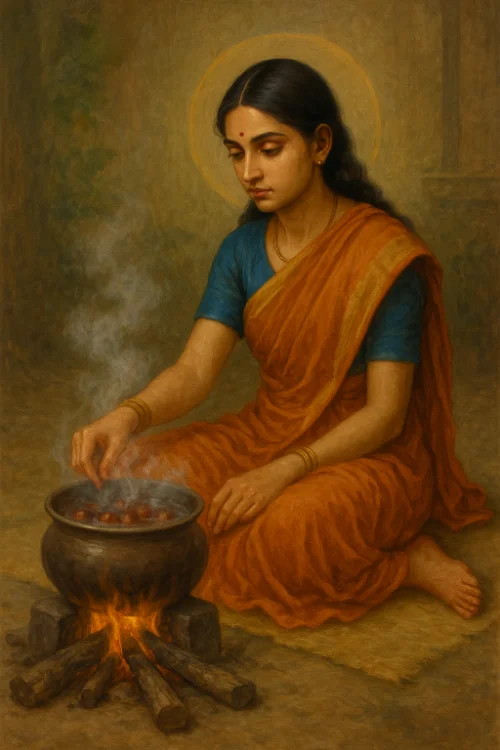
Vaishampayana said Then, Rāma proceeded to the supreme tīrtha known as Badarapācana. That sacred place was frequented by ascetics, siddhas, and the accomplished ones. There a maiden, devoted to the vow of ghṛta-vratā, resided.
She was the daughter of Bharadvāja, unmatched in beauty on earth. O illustrious one, she was known as Śrutavatī, A maiden of great learning, devoted to the path of brahmacarya (celibacy and spiritual discipline).
तपश्चचार साऽत्युग्रं नियमैर्बहुभिर्वृता ।
भर्ता मे देवराजः स्यादिति निश्चित्य भामिनी ॥ ३ ॥
tapaścacāra sā’tyugraṃ niyamairbahubhirvṛtā |
bhartā me devarājaḥ syāditi niścitya bhāminī || 3 ||
She performed extremely intense penance (tapas), observing numerous strict austerities (niyamas) with great discipline. The noble maiden, having made a firm resolution, by the desire to obtain Indra, the lord of the gods, as her husband.
समास्तस्या व्यतिक्रान्ता बह्वयः कुरुकुलोद्वह ।
चरन्त्या नियमांस्तांस्तां स्त्रीभिस्तीव्रान् सुदुश्चरान् ॥४॥
samāstasyā vyatikrāntā bahvayaḥ kurukulodvaha |
carantyā niyamāṃstāṃstāṃ strībhistīvrān suduścarān ||4||
O chief of Kuru's race, many years passed for her as she continued her austerities (niyamas), practicing various severe disciplines, which were extremely difficult for women to observe.
तस्यास्तु तेन वृत्तेन तपसा च विशाम्पते।
भक्त्या च भगवान् प्रीतः परया पाकशासनः ॥ ५॥
tasyāstu tena vṛttena tapasā ca viśāmpate|
bhaktyā ca bhagavān prītaḥ parayā pākaśāsanaḥ || 5||
O chief of the people, due to her conduct, her intense penance, and her supreme devotion, the revered Pākśāsana (Indra, the wielder of the thunderbolt) became greatly pleased with her.
आजगामाश्रमं तस्यास्त्रिदशाधिपतिः प्रभुः ।
आस्थाय रूपं विप्रर्षेर्वसिष्ठस्य महात्मनः ॥ ६॥
ājagāmāśramaṃ tasyāstridaśādhipatiḥ prabhuḥ |
āsthāya rūpaṃ viprarṣervasiṣṭhasya mahātmanaḥ || 6||
The lord of the gods, the mighty one, arrived at her āśrama, O great sage among brāhmaṇas, assuming the form of the illustrious sage Vasiṣṭha.
सा तं दृष्ट्वाग्रतपसं वसिष्ठं तपतां वरम् ।
आचारैर्मुनिभिर्दृष्टैः पूजयामास भारत ॥ ७ ॥
sā taṃ dṛṣṭvāgratapasaṃ vasiṣṭhaṃ tapatāṃ varam |
ācārairmunibhirdṛṣṭaiḥ pūjayāmāsa bhārata || 7 ||
O descendant of Bharata, Seeing the foremost ascetic Vasiṣṭha, she honored him with the rituals and respect that sages customarily offer to revered guests.
उवाच नियमज्ञा च कल्याणी सा प्रियंवदा ।
भगवन् मुनिशार्दूल किमाज्ञापयसि प्रभो ॥ ८ ॥
uvāca niyamajñā ca kalyāṇī sā priyaṃvadā |
bhagavan muniśārdūla kimājñāpayasi prabho || 8 ||
Conversant with vows, the auspicious and sweet-speech damsel addressed him, saying - "O worshipful one, O foremost of ascetics, tell me your commands, O lord.
That auspicious and sweet-spoken maiden, who was well-versed in sacred vows, addressed him with reverence, saying: 'O Blessed One, O Best among Sages, what do you command, O Lord?'
सर्वमद्य यथाशक्ति तव दास्यामि सुव्रत ।
शक्रभक्त्या च ते पाणिं न दास्यामि कथंचन । ९ ॥
sarvamadya yathāśakti tava dāsyāmi suvrata |
śakrabhaktyā ca te pāṇiṃ na dāsyāmi kathaṃcana | 9 ||
O one of great vows, today, I shall offer you everything to the best of my ability. However, due to my devotion to Indra, I shall never give you my hand in marriage.
व्रतैश्च नियमैश्चैव तपसा च तपोधन।
शक्रस्तोषयितव्यो वै मया त्रिभुवनेश्वरः ॥ १० ॥
vrataiśca niyamaiścaiva tapasā ca tapodhana|
śakrastoṣayitavyo vai mayā tribhuvaneśvaraḥ || 10 ||
O ascetic endowed with austerity, through my vows (vrata), disciplines (niyama), and penance (tapas), I must propitiate Śakra (Indra), the Lord of the Three Worlds.
इत्युक्तो भगवान् देवः स्मयन्निव निरीक्ष्य ताम् ।
उवाच नियमं ज्ञात्वा सांत्वयन्निव भारत।। ११ ॥
उग्र तपश्चरसि वै विदिता मेऽसि सुव्रते ।
यदर्थमयमारम्भस्तव कल्याणि हृद्गतः ॥ १२ ॥
ityukto bhagavān devaḥ smayanniva nirīkṣya tām |
uvāca niyamaṃ jñātvā sāṃtvayanniva bhārata|| 11 ||
ugra tapaścarasi vai viditā me’si suvrate |
yadarthamayamārambhastava kalyāṇi hṛdgataḥ || 12 ||
Thus addressed, the illustrious god, looking at her with a slight smile, knowing her strict discipline, spoke to her in a comforting manner, O Bhārata.
O one of great vows, your austerities are indeed intense. You are well-known to me. O auspicious one, the purpose for which you have undertaken this effort, which remains deeply cherished in your heart, shall be fulfilled.
तच सर्वं यथाभूतं भविष्यति वरानने ।
तपसा लभ्यते सर्वं यथाभूतं भविष्यति ॥ १३ ॥
था स्थानानि दिव्यानि विबुधानां शुभानने ।
तपसा तानि प्राप्याणि तपोमूलं महत् सुखम् ॥ १४ ॥
taca sarvaṃ yathābhūtaṃ bhaviṣyati varānane |
tapasā labhyate sarvaṃ yathābhūtaṃ bhaviṣyati || 13 ||
thā sthānāni divyāni vibudhānāṃ śubhānane |
tapasā tāni prāpyāṇi tapomūlaṃ mahat sukham || 14 ||
O beautiful-faced one, everything shall happen exactly as it truly is. Through penance, everything can be attained, and it shall come to pass just as it is meant to be.
O auspicious-faced one, the divine realms of the celestial beings, can be attained only through penance. Indeed, the greatest bliss is rooted in austerity.
Everything is attained by penance. Everything depends on penances.
इति कृत्वा तपो घोरं देहं संन्यस्य मानवाः ।
देवत्वं यान्ति कल्याणि शृणुष्वैकं वचो मम ॥ १५ ॥
iti kṛtvā tapo ghoraṃ dehaṃ saṃnyasya mānavāḥ |
devatvaṃ yānti kalyāṇi śṛṇuṣvaikaṃ vaco mama || 15 ||
Thus, by performing severe penance, and renouncing the physical body, mortal beings attain divinity, O auspicious one, remember these words of mine.
पञ्च चैतानि सुभगे बदराणि शुभवते ।
पचेत्युक्त्वा तु भगवाञ्जगाम बलसूदनः ॥ १६ ॥
आमन्त्रयतां त कल्याणीं ततो जप्यं जजाप सः ।
तु अविदूरे ततस्तस्मादाश्रमात् तीर्थमुत्तमम् ॥ १७ ॥
इन्द्रतीर्थेति विख्यातं त्रिषु लोकेषु मानद ।
pañca caitāni subhage badarāṇi śubhavate |
pacetyuktvā tu bhagavāñjagāma balasūdanaḥ || 16 ||
āmantrayatāṃ ta kalyāṇīṃ tato japyaṃ jajāpa saḥ |
tu avidūre tatastasmādāśramāt tīrthamuttamam || 17 ||
indratīrtheti vikhyātaṃ triṣu lokeṣu mānada |
Do you now, O blessed damsel, boil these five jujubes, O you of excellent vows.' Having said these words, the worshipful slayer of Vala went away, taking leave to recite mentally specific mantras at an excellent Tirtha not far from that hermitage. That Tirtha passed in the three worlds after the name of Indra, O giver of honors.
“O fortunate one, here are five sacred badara fruits (jujubes), bestowing auspiciousness.
Cook these!” Having said these words, the illustrious deity departed, O destroyer of enemies.
After addressing the auspicious maiden, he then recited sacred prayers in a supreme sacred place not far from that āśramā. It became widely known in the three worlds, as the renowned Indra-tīrtha, O bestower of honor.
तस्या जिज्ञासनार्थं स भगवान् पाकशासनः । १८ ॥ बरदाणामपचनं चकार विबुधाधिपः ।
tasyā jijñāsanārthaṃ sa bhagavān pākaśāsanaḥ | 18 || baradāṇāmapacanaṃ cakāra vibudhādhipaḥ |
The divine king of the celestials, Pākaśāsana (Indra), sought to test the maiden’s devotion. Thus, he used his powers to prevent the boiling of the jujube fruits that she was preparing.
ततः प्रतप्ता सा राजन् वाग्यता विगतकुमा॥ १९ ॥
तत्परा शुचिसंवीता पावके समधिश्रयत् ।
tataḥ prataptā sā rājan vāgyatā vigatakumā|| 19 ||
tatparā śucisaṃvītā pāvake samadhiśrayat |
Then, O King, the maiden, pure in mind and firm in resolve, began her task. Restraining her speech and focusing with unwavering concentration, she continued her effort, unfazed and without fatigue.
अपचद् राजशार्दूल बदराणि महाव्रता ॥ २० ॥
तस्याः पतन्त्याः सुमहान् कालोऽगात् पुरुषर्षभ ।
apacad rājaśārdūla badarāṇi mahāvratā || 20 ||
tasyāḥ patantyāḥ sumahān kālo’gāt puruṣarṣabha |
O tiger among kings, the noble maiden, firm in her vows, continued to boil the jujube fruits. Yet, despite the long passage of time, O foremost of men, The fruits remained hard and did not soften in the boiling water.
न च स्म तान्यपच्यन्त दिनं च क्षयमभ्यगात् ॥ २१ ॥
हुताशनेन दग्धश्च यस्तस्याः काष्ठसंचयः ।
na ca sma tānyapacyanta dinaṃ ca kṣayamabhyagāt || 21 ||
hutāśanena dagdhaśca yastasyāḥ kāṣṭhasaṃcayaḥ |
As the day passed and no progress was made, all the fuel was finally consumed. Seeing the sacred fire beginning to fade due to lack of wood, The maiden, without hesitation, resolved to sacrifice her own limbs as fuel.
अकाष्ठमग्नि सा दृष्ट्वा स्वशरीरमथादहत् ॥ २२ ॥
पादौ प्रक्षिप्य सा पूर्वं पावके चारुदर्शना ।
दग्धौ दग्धौ पुनः पादावुपावर्तयतानघ ॥ २३ ॥
akāṣṭhamagni sā dṛṣṭvā svaśarīramathādahat || 22 ||
pādau prakṣipya sā pūrvaṃ pāvake cārudarśanā |
dagdhau dagdhau punaḥ pādāvupāvartayatānagha || 23 ||
She first placed her feet into the sacred fire, her face serene and unwavering. Even as she saw her feet burning, she remained unmoved, devoted to her sacred duty.
चरणौ दह्यमानौ च नाचिन्तयदनिन्दिता ।
कुर्वाणा दुष्करं कर्म महर्षिप्रियकाम्यया ॥ २४ ॥
caraṇau dahyamānau ca nācintayadaninditā |
kurvāṇā duṣkaraṃ karma maharṣipriyakāmyayā || 24 ||
Even as her feet burned, she showed no distress and did not withdraw. Her pain was insignificant in comparison to her desire to serve the great sage.
न वैमनस्यं तस्यास्तु मुखभेदोऽथवाभवत्।
शरीरमग्निनादीप्य जलमध्येऽव वहर्षिता ॥ २५ ॥
na vaimanasyaṃ tasyāstu mukhabhedo’thavābhavat|
śarīramagninādīpya jalamadhye’va vaharṣitā || 25 ||
She exhibited no sign of mental distress, nor did her face reflect any change. Though her body burned in the fire, she remained calm, as if she were merely immersed in cool water.
तच्चास्या वचनं नित्यमवर्तद्वृदि भारत ।
सर्वथा बदराण्येव पक्तव्यानीति कन्यका ॥ २६॥
taccāsyā vacanaṃ nityamavartadvṛdi bhārata |
sarvathā badarāṇyeva paktavyānīti kanyakā || 26||
O Bhārata, the words of the sage constantly echoed in her mind. The maiden firmly resolved that, by all means, the jujubes must be cooked, as per his command.
सा तन्मनसि कृत्वैव महर्षेर्वचनं शुभा ।
अपचद् वदराण्येव न चापच्यन्त भारत ॥ २७॥
sā tanmanasi kṛtvaiva maharṣervacanaṃ śubhā |
apacad vadarāṇyeva na cāpacyanta bhārata || 27||
That auspicious maiden, having firmly set the great Rishi’s words in her mind, continued to cook only the jujubes. Yet, O Bhārata, they would not soften.
तस्यास्तु चरणौ वह्निर्ददाह भगवान् स्वयम् ।
न च तस्या मनो दुःखं स्वल्पमप्यभवत् तदा ॥ २८ ॥
tasyāstu caraṇau vahnirdadāha bhagavān svayam |
na ca tasyā mano duḥkhaṃ svalpamapyabhavat tadā || 28 ||
The divine Fire God himself burned her feet. Yet, at that moment, not even the slightest pain arose in her mind.
अथ तत् कर्म दृष्ट्वास्याः प्रीतिस्त्रिभुवनेश्वरः ।
ततः संदर्शयामास कन्यायै रूपमात्मनः ॥ २९ ॥
atha tat karma dṛṣṭvāsyāḥ prītistribhuvaneśvaraḥ |
tataḥ saṃdarśayāmāsa kanyāyai rūpamātmanaḥ || 29 ||
Witnessing her unwavering devotion and sacrifice, the Lord of the three worlds was filled with joy. Pleased, He revealed His divine form before the maiden.
उवाच च सुरश्रेष्ठस्तां कन्यां सुदृढव्रताम् ।
प्रीतोऽस्मि ते शुभे भक्त्या तपसा नियमेन च ॥ ३०॥
uvāca ca suraśreṣṭhastāṃ kanyāṃ sudṛḍhavratām |
prīto’smi te śubhe bhaktyā tapasā niyamena ca || 30||
Then, the foremost among the celestials addressed the maiden, steadfast in her vows: 'O auspicious one, I am pleased by your unwavering devotion, penance, and discipline.'
तस्माद् योऽभिमतः कामः स ते सम्पत्स्यते शुभे ।
देहं त्यक्त्वा महाभागे त्रिदिवे मयि वत्स्यसि ॥ ३१ ॥
tasmād yo’bhimataḥ kāmaḥ sa te sampatsyate śubhe |
dehaṃ tyaktvā mahābhāge tridive mayi vatsyasi || 31 ||
Therefore, O blessed one, whatever desire you cherish shall be fulfilled. Upon leaving your mortal body, you shall dwell with me in the celestial realms.
इदं च ते तीर्थवरं स्थिरं लोके भविष्यति ।
सर्वपापापहं सुभ्रु नाम्ना बदरपाचनम् ॥ ३२ ॥
विख्यातं त्रिषु लोकेषु ब्रह्मर्षिभिरभिप्लुतम्।
idaṃ ca te tīrthavaraṃ sthiraṃ loke bhaviṣyati |
sarvapāpāpahaṃ subhru nāmnā badarapācanam || 32 ||
vikhyātaṃ triṣu lokeṣu brahmarṣibhirabhiplutam|
This sacred site shall forever remain a foremost Tīrtha in the world, capable of absolving all sins. O fair-browed one, it shall be known as Badarāpācana, famed across the three worlds and revered by the great sages.
अस्मिन् खलु महाभागे शुभे तीर्थवरेऽनघे ॥ ३३ ॥
त्यक्त्वा सप्तर्षयो जग्मुर्हिमवन्तमरुन्धतीम् ।
asmin khalu mahābhāge śubhe tīrthavare’naghe || 33 ||
tyaktvā saptarṣayo jagmurhimavantamarundhatīm |
In this very Tirtha, O auspicious, sinless, and highly blessed one, the seven Rishis had once left Arundhatī (the wife of one of them) while they went to Himavat.
ततस्ते वै महाभागा गत्वा तत्र सुसंशिताः ॥ ३४ ॥
वृत्त्यर्थं फलमूलानि समाहर्तुं ययुः किल ।
tataste vai mahābhāgā gatvā tatra susaṃśitāḥ || 34 ||
vṛttyarthaṃ phalamūlāni samāhartuṃ yayuḥ kila |
Those highly blessed sages, of very rigid vows, had gone there to collect fruits and roots for their sustenance.
तेषां वृत्यर्थिना तत्र वसतां हिमवद्वने ॥ ३५ ॥
अनावृष्टिरनुप्राप्ता तदा द्वादशवार्षिकी।
teṣāṃ vṛtyarthinā tatra vasatāṃ himavadvane || 35 ||
anāvṛṣṭiranuprāptā tadā dvādaśavārṣikī|
While they dwelled in the forests of Himavat, seeking sustenance, a great drought befell the land, lasting for twelve years.
ते 'कृत्वा चाश्रमं तत्र न्यवसन्त तपस्विनः ॥ ३६ ॥
अरुन्धत्यपि कल्याणी तपोनित्याभवत् तदा ।
te 'kṛtvā cāśramaṃ tatra nyavasanta tapasvinaḥ || 36 ||
arundhatyapi kalyāṇī taponityābhavat tadā |
The ascetics established a hermitage there and continued to reside in it. Meanwhile, the virtuous Arundhatī engaged in constant penance.
अरुन्धतीं ततो दृष्ट्वा तीव्रं नियममास्थिताम् ॥३७॥
अथागमत् त्रिनयनः सुप्रीतो वरदस्तदा ।
arundhatīṃ tato dṛṣṭvā tīvraṃ niyamamāsthitām ||37||
athāgamat trinayanaḥ suprīto varadastadā |
Seeing Arundhatī engaged in the most intense austerities, the three-eyed Mahādeva, pleased and ready to grant boons, appeared before her.
ब्राह्मं रूपं ततः कृत्वा महादेवो महायशाः ॥ ३८ ॥
तामभ्येत्याब्रवीद् देवो भिक्षामिच्छाम्यहं शुभे ।
brāhmaṃ rūpaṃ tataḥ kṛtvā mahādevo mahāyaśāḥ || 38 ||
tāmabhyetyābravīd devo bhikṣāmicchāmyahaṃ śubhe |
The glorious Mahādeva then assumed the form of a Brahmana, approached her, and spoke: 'O blessed one, I seek alms.'
प्रत्युवाच ततः सा तं ब्राह्मणं चारुदर्शना ॥ ३९ ॥
श्रीणाऽत्रसंचयो विप्र बदराणीह भक्षय ।
pratyuvāca tataḥ sā taṃ brāhmaṇaṃ cārudarśanā || 39 ||
śrīṇā’trasaṃcayo vipra badarāṇīha bhakṣaya |
Then, the radiant Arundhatī addressed the Brahmana: 'O learned one, our provisions are gone, but here are jujubes—please partake of them.'
ततोऽब्रवीन्महादेवः पचस्वैतानि सुव्रते ॥ ४० ॥
इत्युक्ता साऽपचत् तानि ब्राह्मणप्रियकाम्यया ।
tato’bravīnmahādevaḥ pacasvaitāni suvrate || 40 ||
ityuktā sā’pacat tāni brāhmaṇapriyakāmyayā |
Then Mahādeva said, 'O virtuous one, cook these jujubes.'
Hearing this, she obediently began cooking them, wishing to please the Brahmana.
अधिश्रित्य समिद्धेऽग्नौ बदराणि यशस्विनी ॥ ४१ ॥
दिव्या मनोरमाः पुण्याः कथाः शुश्राव सा तदा ।
अतीता सा त्वनावृष्टिर्घोरा द्वादशवार्षिकी ॥ ४२ ॥
adhiśritya samiddhe’gnau badarāṇi yaśasvinī || 41 ||
divyā manoramāḥ puṇyāḥ kathāḥ śuśrāva sā tadā |
atītā sā tvanāvṛṣṭirghorā dvādaśavārṣikī || 42 ||
As the renowned Arundhatī placed the jujubes upon the kindled fire, she listened to divine, auspicious, and melodious sacred stories (from the lips of Mahadeva). Thus, the dreadful twelve-year drought finally came to an end.
अनश्नन्त्याः पचन्त्याश्च शृण्वन्त्याश्च कथाः शुभाः ।
दिनोपमः स तस्याथ कालोऽतीतः सुदारुणः ॥ ४३॥
anaśnantyāḥ pacantyāśca śṛṇvantyāśca kathāḥ śubhāḥ |
dinopamaḥ sa tasyātha kālo’tītaḥ sudāruṇaḥ || 43||
While fasting, cooking, and attentively listening to those sacred discourses, that dreadful period passed for her as swiftly as a single day.
ततस्तु मुनयः प्राप्ताः फलान्यादाय पर्वतात् ।
ततः स भगवान् प्रीतः प्रोवाचारुन्धतीं ततः ॥४४॥
उपसर्गस्व धर्मज्ञे यथापूर्वमिमानृषीन् ।
प्रीतोऽस्मि तव धर्मज्ञे तपसा नियमेन त ॥ ४५ ॥
tatastu munayaḥ prāptāḥ phalānyādāya parvatāt |
tataḥ sa bhagavān prītaḥ provācārundhatīṃ tataḥ ||44||
upasargasva dharmajñe yathāpūrvamimānṛṣīn |
prīto’smi tava dharmajñe tapasā niyamena ta || 45 ||
Then, having gathered fruits from the mountains, the sages returned. Seeing this, the delighted Lord addressed Arundhatī: 'O knower of dharma, approach these Ṛṣis as before. I am truly pleased with your penance and discipline.'
ततः संदर्शयामास स्वरूपं भगवान् हरः ।
ततोऽब्रवीत् तदा तेभ्यस्तस्याश्च चरितं महत् ॥ ४६॥
भवद्भिर्हिमवत्पृष्ठे यत् तपः समुपार्जितम् ।
अस्याश्च यत् तपो विप्रा न समं तन्मतं मम ॥ ४७॥
अनया हि तपस्विन्या तपस्तप्तं सुदुश्चरम् ।
अनश्नन्या पचन्त्या च समा द्वादश पारिताः ॥ ४८ ॥
tataḥ saṃdarśayāmāsa svarūpaṃ bhagavān haraḥ |
tato’bravīt tadā tebhyastasyāśca caritaṃ mahat || 46||
bhavadbhirhimavatpṛṣṭhe yat tapaḥ samupārjitam |
asyāśca yat tapo viprā na samaṃ tanmataṃ mama || 47||
anayā hi tapasvinyā tapastaptaṃ suduścaram |
anaśnanyā pacantyā ca samā dvādaśa pāritāḥ || 48 ||
Then, the divine Hara revealed his true form. He spoke to the Ṛṣis of Arundhatī’s remarkable devotion: 'O sages, the penance she has performed far exceeds even yours in the Himālayas. For twelve years, she endured the severest austerities—fasting and cooking ceaselessly.'
ततः प्रोवाच भगवांस्तामेवारुन्धतीं पुनः ।
वरं वृणीष्व कल्याणि यत् तेऽभिलषितं हृदि ॥ ४९ ॥
tataḥ provāca bhagavāṃstāmevārundhatīṃ punaḥ |
varaṃ vṛṇīṣva kalyāṇi yat te’bhilaṣitaṃ hṛdi || 49 ||
Then, the divine Mahādeva once again spoke to Arundhatī: 'O blessed one, ask for a boon—whatever your heart desires.'
साऽब्रवीत् पृथुताम्राक्षी देवं सप्तर्षिसंसदि ।
भगवान् यदि मे प्रीतस्तीर्थं स्यादिदमद्भुतम्॥५०॥
सिद्धदेवर्षिदयितं नाम्ना वरदपाचनम् ।
तथास्मिन् देवदेवेश त्रिरात्रमुषितः शुचिः ॥ ५१ ॥
sā’bravīt pṛthutāmrākṣī devaṃ saptarṣisaṃsadi |
bhagavān yadi me prītastīrthaṃ syādidamadbhutam||50||
siddhadevarṣidayitaṃ nāmnā varadapācanam |
tathāsmin devadeveśa trirātramuṣitaḥ śuciḥ || 51 ||
Then, the wide-eyed Arundhatī spoke before the divine Mahādeva, in the assembly of the seven Ṛṣis: 'O Lord, if you are truly pleased with me, let this place become a sacred Tīrtha, renowned as Varadapācana, beloved by Siddhas and celestial sages. Moreover, O Lord of gods, may those who reside here in purity for three nights attain great merit.'
प्राप्नुयादुपवासेन फलं द्वादशवार्षिकम् ।
एवमस्त्विति तां देवः प्रत्युवाच तपस्विनीम्॥ ५२ ॥
prāpnuyādupavāsena phalaṃ dvādaśavārṣikam |
evamastviti tāṃ devaḥ pratyuvāca tapasvinīm|| 52 ||
May one who observes a fast here attain the merit of a twelve-year penance.
“So be it!” the divine Lord replied to the devoted ascetic.
सप्तर्षिभिः स्तुतो देवस्ततो लोकं ययौ तदा ।
ऋषयो विस्मयं जग्मुस्तां दृष्ट्वा चाप्यरुन्धतीम् ॥ ५३ ॥
saptarṣibhiḥ stuto devastato lokaṃ yayau tadā | ṛṣayo vismayaṃ jagmustāṃ dṛṣṭvā cāpyarundhatīm || 53 ||
Praised by the seven Ṛṣis, the divine Lord then ascended to the celestial realms.
The sages, beholding Arundhatī’s remarkable endurance, were struck with wonder.
अश्रान्तां चाविवर्णां च क्षुत्पिपासासमायुताम् ।
एवं सिद्धिः परा प्राप्ता अरुन्धत्या विशुद्धया ॥ ५४ ॥
aśrāntāṃ cāvivarṇāṃ ca kṣutpipāsāsamāyutām |
evaṃ siddhiḥ parā prāptā arundhatyā viśuddhayā || 54 ||
Despite enduring hunger and thirst, Arundhatī remained untiring and radiant. Thus, through her purity, she attained the highest spiritual success.
यथा त्वया महाभागे मदर्थं संशितव्रते ।
विशेषो हि त्वया भद्रे व्रते ह्यस्मिन् समर्पितः ॥ ५५ ॥
yathā tvayā mahābhāge madarthaṃ saṃśitavrate |
viśeṣo hi tvayā bhadre vrate hyasmin samarpitaḥ || 55 ||
O highly blessed one, just as you have dedicated yourself to this vow for my sake, you have indeed made an extraordinary offering through this austerity.
तथा चेदं ददाम्यद्य नियमेन सुतोषितः ।
विशेषं तव कल्याणि प्रयच्छामि वरं वरे ॥ ५६ ॥
अरुन्धत्या वरस्तस्या यो दत्तो वै महात्मना ।
तस्य चाहं प्रभावेण तव कल्याणि तेजसा ॥ ५७॥
प्रवक्ष्यामि परं भूयो वरमत्र यथाविधि ।
यस्त्वेकां रजनीं तीर्थे वत्स्यते सुसमाहितः ॥ ५८ ॥
स स्नात्वा प्राप्स्यते लोकान् देहन्यासात् सुदुर्लभान्।
tathā cedaṃ dadāmyadya niyamena sutoṣitaḥ |
viśeṣaṃ tava kalyāṇi prayacchāmi varaṃ vare || 56 ||
arundhatyā varastasyā yo datto vai mahātmanā |
tasya cāhaṃ prabhāveṇa tava kalyāṇi tejasā || 57||
pravakṣyāmi paraṃ bhūyo varamatra yathāvidhi |
yastvekāṃ rajanīṃ tīrthe vatsyate susamāhitaḥ || 58 ||
sa snātvā prāpsyate lokān dehanyāsāt sudurlabhān|
Thus, O blessed one, as I am deeply pleased with your unwavering discipline, I shall grant you a special boon today, superior to the one bestowed upon Arundhatī."
O blessed one, through the power of the great Mahātman who bestowed the boon upon Arundhatī, and through your own divine energy, I shall now proclaim yet another boon as per due order.
Whoever resides in this sacred Tīrtha with a focused mind for a single night, shall, after bathing here and renouncing the body, attain celestial realms that are exceedingly rare to achieve.
इत्युक्त्वा भगवान् देवः सहस्राक्षः प्रतापवान् ॥ ५९ ॥
श्रुतावतीं ततः पुण्यां जगाम त्रिदिवं पुनः ।
ityuktvā bhagavān devaḥ sahasrākṣaḥ pratāpavān || 59 ||
śrutāvatīṃ tataḥ puṇyāṃ jagāma tridivaṃ punaḥ |
Having said these words of the pure Shrutāvatī, the thousand-eyed Shakra returned to heaven.
गते वज्रधरे राजंस्तत्र वर्षं पपात ह ॥ ६० ॥
पुष्पाणां भरतश्रेष्ठ दिव्यानां पुण्यगन्धिनाम् ।
देवदुन्दुभयश्चापि नेदुस्तत्र महास्वनाः ।। ६१ ।।
मारुतश्च ववौ पुण्यः पुण्यगन्धो विशाम्पते ।
gate vajradhare rājaṃstatra varṣaṃ papāta ha || 60 ||
puṣpāṇāṃ bharataśreṣṭha divyānāṃ puṇyagandhinām |
devadundubhayaścāpi nedustatra mahāsvanāḥ || 61 ||
mārutaśca vavau puṇyaḥ puṇyagandho viśāmpate |
O King, as the mighty wielder of the thunderbolt departed, a shower of celestial flowers, fragrant and divine, rained down from the heavens. Loud resounding celestial drums echoed across the sky, while blessed breezes, carrying auspicious scents, flowed through the air.
उत्सृज्य तु शुभा देहं जगामास्य च भार्यताम् ॥ ६२ ॥
तपसोग्रेण तं लब्ध्वा तेन रेमे सहाच्युत ।
utsṛjya tu śubhā dehaṃ jagāmāsya ca bhāryatām || 62 ||
tapasogreṇa taṃ labdhvā tena reme sahācyuta |
Renouncing her mortal form, the radiant Śrutāvatī attained the honor of becoming Indra’s wife. Through her intense penances, she gained this exalted position and lived in bliss alongside the divine lord.
जनमेजय उवाच
का तस्या भगवन् माता क्व संवृद्धा च शोभना ।
श्रोतुमिच्छाम्यहं विप्र परं कौतूहलं हि मे ॥ ६३ ॥
janamejaya uvāca
kā tasyā bhagavan mātā kva saṃvṛddhā ca śobhanā |
śrotumicchāmyahaṃ vipra paraṃ kautūhalaṃ hi me || 63 ||
Janamejaya said O revered sage, who was the mother of Śrutavatī, and where was she raised? I am eager to hear this, for my curiosity is immense, O learned one!'
वैशम्पायन उवाच
भरद्वाजस्य विप्रर्षे: स्कन्नं रेतो महात्मनः ॥ ६४॥
दृष्ट्वाऽप्सरसभायान्तीं घृताचीं पृथुलोचनाम् ।
vaiśampāyana uvāca
bharadvājasya viprarṣe: skannaṃ reto mahātmanaḥ || 64||
dṛṣṭvā’psarasabhāyāntīṃ ghṛtācīṃ pṛthulocanām |
Vaishampayana said When the great sage Bharadvāja beheld the wide-eyed celestial nymph Ghṛtācī passing through the sky, his vital seed was involuntarily released.'
स तु जग्राह तद्रेतः करेण जपतां वरः ॥ ६५ ॥
तदाऽपतत् पर्णपुटे तत्र सा समभवत् सुता ।
sa tu jagrāha tadretaḥ kareṇa japatāṃ varaḥ || 65 ||
tadā’patat parṇapuṭe tatra sā samabhavat sutā |
That foremost of ascetics, Bharadvāja, caught the seed in his hand. It then fell upon a folded leaf, where a divine girl was born from it—Śrutavatī.
तस्यास्तु जातकर्मादि कृत्वा सर्वं तपोधनः ।। ६६ ॥
नाम चास्याः स कृतवान् भरद्वाजो महामुनिः ।
tasyāstu jātakarmādi kṛtvā sarvaṃ tapodhanaḥ || 66 ||
nāma cāsyāḥ sa kṛtavān bharadvājo mahāmuniḥ |
The sage, rich in penance, performed all the birth rites for her, and the great ascetic Bharadvāja bestowed upon her the name Śrutavatī.
श्रुतावतीति धर्मात्मा देवर्षिगणसंसदि ।
स्वे च तामाश्रमे न्यस्य जगाम हिमवद्वनम् ॥ ६७॥
śrutāvatīti dharmātmā devarṣigaṇasaṃsadi |
sve ca tāmāśrame nyasya jagāma himavadvanam || 67||
The pious Rishi named her Shruvavatī in the presence of the gods and Rishis. Leaving the girl in his hermitage, Bharadvaja went to the Himavat forest.
तत्राप्युपस्पृश्य महानुभावो
वसूनि दत्त्वा च महाद्विजेभ्यः ।
जगाम तीर्थं सुसमाहितात्मा
शक्रस्य वृष्णिप्रवरस्तदानीम् ॥ ६८ ॥
tatrāpyupaspṛśya mahānubhāvo
vasūni dattvā ca mahādvijebhyaḥ |
jagāma tīrthaṃ susamāhitātmā
śakrasya vṛṣṇipravarastadānīm || 68 ||
That noble soul, Baladeva, foremost among the Vṛṣṇis, purified himself there. He then offered abundant wealth to the Brahmanas and, with a serene mind, departed for the sacred Tīrtha of Śakra.
Full Synopsis of The Story of Indra Tirtha
At the revered tīrtha of Badarāpācana, visited by sages and ascetics, Baladeva hears the extraordinary tale of Śrutavatī, a radiant and devout maiden born to the sage Bharadvāja and the celestial nymph Ghṛtācī. Born miraculously from a drop of Bharadvāja’s seed that fell upon a leaf, she was raised in his āśrama and grew into a woman of profound learning and spiritual discipline. Renowned for her commitment to brahmacarya, she firmly vowed to attain Indra, the king of the gods, as her husband through intense penance and unwavering ascetic practice.
For many years, Śrutavatī observed extreme austerities, following rigorous vratas and niyamas with pure resolve—practices that were extraordinarily difficult even for men, let alone women. Her devotion and self-restraint soon pleased Indra, also known as Pākśāsana. To test her, he appeared before her disguised as the sage Vasiṣṭha. Honoring him as a revered guest, she offered him all she could, stating clearly, however, that she could not offer herself in marriage due to her vow to win Indra as husband.
Acknowledging her resolve, Indra, still in disguise, commended her discipline and instructed her to boil five sacred jujube fruits, promising that her desire would be fulfilled. As he left, he mentally invoked mantras at a nearby sacred spot, which thereafter became the famed Indratīrtha. Meanwhile, Śrutavatī began cooking the jujubes. However, by Indra’s divine will, the fruits remained hard and refused to boil despite long hours of effort. Even as her fuel ran out, the steadfast maiden showed no distress and instead, offered her own body to keep the fire burning, placing her feet into the flames with serene detachment.
Though the fire burned her limbs, she neither wavered nor showed pain, remaining entirely focused on fulfilling her sacred duty. So intense was her devotion that even Agni, the fire god, who scorched her, was awed. Witnessing such unparalleled discipline and sacrifice, Indra revealed his divine form and praised her unmatched devotion and tapas. As a reward, he promised her a place at his side in the celestial realms after death, declaring the tīrtha where this occurred as sacred and efficacious in removing all sins.
Vaiśampāyana also narrates how this site was further sanctified by another tale: during a 12-year drought, the great sage’s wife Arundhatī, left behind by the seven Ṛṣis, remained in the same region. When approached by Mahādeva disguised as a Brahmana seeking alms, she cooked the last of her jujubes while fasting and listening to his sacred stories. Her unbroken devotion brought an end to the drought and earned her divine praise from Śiva himself, who revealed his identity and blessed her.
At Arundhatī’s request, that site was named Varadāpācana, a place where those who observe fasts or stay in purity for even three nights could attain immense merit. Śrutavatī, by surpassing even Arundhatī’s penance, was granted a boon by Indra greater than any given before. Indra declared that any person who resides in this tīrtha with focus and purity for a single night would attain celestial realms after death.
As Indra ascended back to heaven, divine flowers showered from the sky, celestial drums resounded, and fragrant winds swept across the land. Śrutavatī, now freed from her mortal body, ascended to the heavens and joined Indra as his celestial consort. Her journey—marked by discipline, purity, and transcendence—enshrined Badarāpācana as one of the holiest tīrthas in all the worlds.