Mahābhārata - Shalya Parva
Chapter 59 - Bhima Tries to Crush Duryodhana's Head With His Foot, and Yudhishthira Prevents Him.
संजय उवाच
तं पातितं ततो दृष्ट्वा महाशालमिवोद्गतम् ।
प्रहृष्टमनसः सर्वे दद्दशुस्तत्र पाण्डवाः ॥ १ ॥
उन्मत्तमिव मातङ्ग सिंहेन विनिपातितम् ।
दद्दशुर्हष्टरोमाणः सर्वे ते चापि सोमकाः ॥ २ ॥
saṃjaya uvāca
taṃ pātitaṃ tato dṛṣṭvā mahāśālamivodgatam |
prahṛṣṭamanasaḥ sarve daddaśustatra pāṇḍavāḥ || 1 ||
unmattamiva mātaṅga siṃhena vinipātitam |
daddaśurhaṣṭaromāṇaḥ sarve te cāpi somakāḥ || 2 ||
Sanjaya said Seeing Duryodhana fallen, like a great tree uprooted, all the Pāṇḍavas hearts filled with joy.
There he was, like a maddened elephant struck down by a lion, they all—along with the Sōmakas—looked upon him, their hair standing on end in exhilaration.
ततो दुर्योधनं हत्वा भीमसेनः प्रतापवान् ।
पातितं कौरवेन्द्रं तमुपगम्येदमब्रवीत् ॥ ३ ॥
गौरिति पुरा मन्द द्रौपदीमेकवाससम् ।
यत् सभायां हसन्नस्मांस्तदा वदसि दुर्मते ॥ ४ ॥
तस्यावहासस्य फलमद्य त्वं समवाप्नुहि ।
एवमुक्त्वा स वामेन पदा मौलिमुपास्पृशत् ॥ ५ ॥
शिरश्च राजसिंहस्य पादेन समलोडयत् ।
tato duryodhanaṃ hatvā bhīmasenaḥ pratāpavān |
pātitaṃ kauravendraṃ tamupagamyedamabravīt || 3 ||
gauriti purā manda draupadīmekavāsasam |
yat sabhāyāṃ hasannasmāṃstadā vadasi durmate || 4 ||
tasyāvahāsasya phalamadya tvaṃ samavāpnuhi |
evamuktvā sa vāmena padā maulimupāspṛśat || 5 ||
śiraśca rājasiṃhasya pādena samaloḍayat |
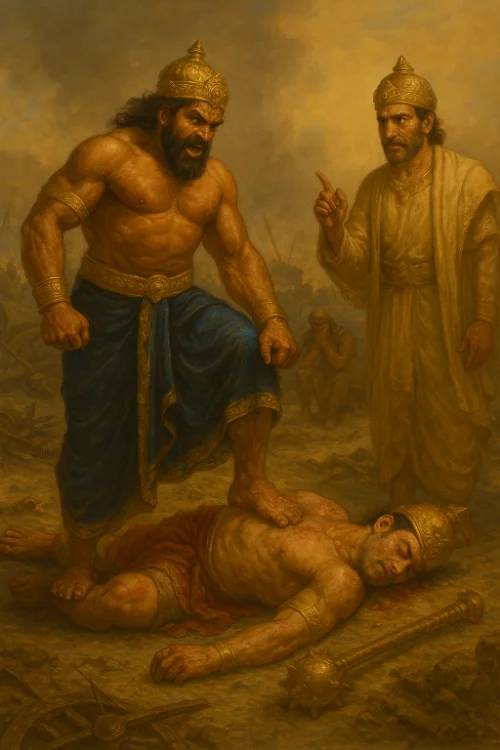
Having vanquished Duryodhana, the valiant Bhimasena approached the fallen Kuru prince and spoke these words: 'O wicked one! In that hall of assembly, mocking Draupadi as she stood clad in a single garment, you scorned us, calling us mere cows. Reap now the fruits of that derision!' Saying this, Bhima pressed his left foot upon Duryodhana's head and violently kicked it, grinding into the dust the crown of that lion among kings.
तथैवः क्रोधसंरक्तो भीमः परबलार्दनः ॥ ६ ॥
पुनरेवाब्रवीद्वाक्यं यत् तच्छृणु नराधिप ।
येऽस्मान् पुरोपनृत्यन्त मूढा गौरिति गौरिति ॥ ७ ॥
तान् वयं प्रतिनृत्यामः पुनर्गौरिति गौरिति ।
नास्माकं निकृतिर्वह्निर्नाक्षद्यूतं न वञ्चना ।
स्वबाहुबलमाश्रित्य प्रबाधामो वयं रिपून् ॥ ८ ॥
सोऽवाप्य वैरस्य परस्य पारं वृकोदरः प्राह शनैः प्रहस्य |
युधिष्ठिरं केशवसृजयांश्च धनंजय माद्रवतीसुतौ च ॥ ९ ॥
tathaivaḥ krodhasaṃrakto bhīmaḥ parabalārdanaḥ || 6 ||
punarevābravīdvākyaṃ yat tacchṛṇu narādhipa |
ye’smān puropanṛtyanta mūḍhā gauriti gauriti || 7 ||
tān vayaṃ pratinṛtyāmaḥ punargauriti gauriti |
nāsmākaṃ nikṛtirvahnirnākṣadyūtaṃ na vañcanā |
svabāhubalamāśritya prabādhāmo vayaṃ ripūn || 8 ||
so’vāpya vairasya parasya pāraṃ vṛkodaraḥ prāha śanaiḥ prahasya |
yudhiṣṭhiraṃ keśavasṛjayāṃśca dhanaṃjaya mādravatīsutau ca || 9 ||
His rage still unquenched, Bhimasena, the destroyer of foes, spoke again, his voice thundering across the battlefield: 'O King! Those fools who once ridiculed us, dancing about and calling us cows, behold as we now dance in triumph, returning their taunt—Cows! Cows! We have never relied on deceit, fire, treachery at dice, or deception in war. By the might of our arms alone do we conquer our enemies!' Thus, having brought this long-standing enmity to its fateful conclusion, Vrikodara, his wrath appeased, turned to Yudhishthira, Keshava, the Srinjayas, Dhananjaya, and the sons of Madri, speaking with a slow, triumphant smile.
रजस्वलां द्रौपदीमानयन् ये चाप्यकुर्वन्त सदस्यवस्त्राम्।
तान् पश्यध्वं पाण्डवैर्धार्तराष्ट्रान् रणे हतांस्तपसा याज्ञसेन्याः ॥ १० ॥
rajasvalāṃ draupadīmānayan ye cāpyakurvanta sadasyavastrām|
tān paśyadhvaṃ pāṇḍavairdhārtarāṣṭrān raṇe hatāṃstapasā yājñasenyāḥ || 10 ||
Behold now, those sons of Dhṛtarāṣṭra, who once dragged Draupadī, impure due to her monthly course, into the assembly and sought to strip her of her garments before the assembled kings! They have all been slain in battle by the Pāṇḍavas, their destruction brought forth by the ascetic merit of Yājñasenī.
ये नः पुरा षण्डतिलानवोचन् क्रूरा राज्ञो धृतराष्ट्रस्य पुत्राः ।
ते नो हताः सगणाः सानुबन्धाः कामं स्वर्गं नरकं वा पतामः ॥ ११ ॥
पुनश्च राज्ञः पतितस्य भूमौ सतां गदां स्कन्धगतां प्रगृह्य ।
वामेन पादेन शिरः प्रमृद्य दुर्योधनं नैकृतिकं न्यवोचत् ॥ १२ ॥
ye naḥ purā ṣaṇḍatilānavocan krūrā rājño dhṛtarāṣṭrasya putrāḥ |
te no hatāḥ sagaṇāḥ sānubandhāḥ kāmaṃ svargaṃ narakaṃ vā patāmaḥ || 11 ||
punaśca rājñaḥ patitasya bhūmau satāṃ gadāṃ skandhagatāṃ pragṛhya |
vāmena pādena śiraḥ pramṛdya duryodhanaṃ naikṛtikaṃ nyavocat || 12 ||
Those wicked sons of Dhṛtarāṣṭra who once derided us as weaklings and empty husks of sesame seeds have now all been slain along with their kinsmen and allies! Whether we now ascend to heaven or descend into hell, it matters not!—And once again, lifting his mighty mace, Bhīma pressed his left foot upon the head of the fallen king and, grinding it into the earth, spoke scornfully to the deceitful Duryodhana.
हृष्टेन राजन् कुरुसत्तमस्य क्षुद्रात्मना भीमसेनेन पादम् ।
दृष्ट्वा कृतं मूर्धनि नाभ्यनन्दन् धर्मात्मानः सोमकानां प्रबर्हाः ॥ १३ ॥
hṛṣṭena rājan kurusattamasya kṣudrātmanā bhīmasenena pādam |
dṛṣṭvā kṛtaṃ mūrdhani nābhyanandan dharmātmānaḥ somakānāṃ prabarhāḥ || 13 ||
O king, witnessing Bhīmasena, his heart brimming with satisfaction, place his foot upon the head of that foremost Kuru prince, the righteous and noble-minded leaders among the Somakas did not rejoice at the sight.
तव पुत्रं तथा हत्वा कत्थमानं वृकोदरम् ।
नृत्यमानं च बहुशो धर्मराजोऽब्रवीदिदम् ॥ १४ ॥
गतोऽसि वैरस्यानृण्यं प्रतिज्ञा पूरिता त्वया ।
शुभेनाथाशुभेनैव कर्मणा विरमाधुना ॥ १५ ॥
tava putraṃ tathā hatvā katthamānaṃ vṛkodaram |
nṛtyamānaṃ ca bahuśo dharmarājo’bravīdidam || 14 ||
gato’si vairasyānṛṇyaṃ pratijñā pūritā tvayā |
śubhenāthāśubhenaiva karmaṇā viramādhunā || 15 ||
Having slain your son, O king, and exulting in his triumph, the roaring Vṛkodara danced again and again. Seeing this, Dharmarāja Yudhiṣṭhira addressed him, saying, 'You have fulfilled your vow, and you are now free of your debt of vengeance. Whether by fair means or foul, your task is complete. Restrain yourself now.'
मा शिरोऽस्य पदा मादर्मा धर्मस्तेऽतिगो भवेत् ।
राजा ज्ञातिर्हतश्चायं नैतन्याय्यं तवानघ ॥ १६ ॥
mā śiro’sya padā mādarmā dharmaste’tigo bhavet |
rājā jñātirhataścāyaṃ naitanyāyyaṃ tavānagha || 16 ||
Do not place your foot upon his head, O Bhīma! Do not transgress the bounds of righteousness! He is a king, a fallen monarch, and also your kinsman. Such conduct is not befitting of you, O sinless one.
एकादशचमूनाथं कुरूणामधिपं तथा ।
मा स्प्राक्षीर्भीम पादेन राजानं ज्ञातिमेव च ॥ १७ ॥
ekādaśacamūnāthaṃ kurūṇāmadhipaṃ tathā |
mā sprākṣīrbhīma pādena rājānaṃ jñātimeva ca || 17 ||
He was once the lord of eleven mighty Akṣauhiṇīs and the sovereign ruler of the Kurus. Do not, O Bhīma, strike a fallen king and a kinsman with your foot!
हतबन्धुर्हतामात्यो भ्रष्टसैन्यो हतो मृधे ।
सर्वाकारेण शोच्योऽयं नावहास्योऽयमीश्वरः ॥ १८ ॥
hatabandhurhatāmātyo bhraṣṭasainyo hato mṛdhe |
sarvākāreṇa śocyo’yaṃ nāvahāsyo’yamīśvaraḥ || 18 ||
His kin are dead, his ministers slain, his vast army annihilated, and he himself has been struck down in battle. In every way, he is now an object of pity. He is not to be mocked—remember that he was a king!
विध्वस्तोऽयं हतामात्यो हतभ्राता हतप्रजः ।
उत्सन्नपिण्डो भ्राता च नैतन्याय्यं कृतं त्वया ॥ १९ ॥
vidhvasto’yaṃ hatāmātyo hatabhrātā hataprajaḥ |
utsannapiṇḍo bhrātā ca naitanyāyyaṃ kṛtaṃ tvayā || 19 ||
He is utterly destroyed! His trusted counselors are no more! His brothers have perished, his sons wiped out! His ancestral line is severed, and he stands without an heir! Yet, he remains our brother. What you have done, Bhīma, is not just!
धार्मिको भीमसेनोऽसावित्याहुस्त्वां पुरा जनाः ।
स कस्माद् भीमसेन त्वं राजानमधितिष्ठसि ॥ २० ॥
इत्युक्त्वा भीमसेनं तु साश्रुकण्ठो युधिष्ठिरः ।
उपसृत्याब्रवीद् दीनो दुर्योधनमरिंदमम् ॥ २१ ॥
तात मन्युर्न ते कार्यो नात्मा शोच्यस्त्वया तथा ।
नूनं पूर्वकृतं कर्म सुघोरमनुभूयते ॥ २२ ॥
dhārmiko bhīmaseno’sāvityāhustvāṃ purā janāḥ |
sa kasmād bhīmasena tvaṃ rājānamadhitiṣṭhasi || 20 ||
ityuktvā bhīmasenaṃ tu sāśrukaṇṭho yudhiṣṭhiraḥ |
upasṛtyābravīd dīno duryodhanamariṃdamam || 21 ||
tāta manyurna te kāryo nātmā śocyastvayā tathā |
nūnaṃ pūrvakṛtaṃ karma sughoramanubhūyate || 22 ||
People once called Bhīmasena a righteous man! Why then, O Bhīma, do you now insult a fallen king by standing over him? Having spoken thus to Bhīmasena, Yudhiṣṭhira, his throat choked with tears and overwhelmed with sorrow, approached Duryodhana, the subduer of foes, and spoke to him in a voice filled with grief." O son, you should not allow anger to consume you, nor should you grieve for yourself! Indeed, one must now endure the terrible consequences of one’s past actions.
धात्रोपदिष्टं विषमं नूनं फलमसंस्कृतम् ।
यद् वयं त्वां जिघांसामस्त्वं चास्मान् कुरुसत्तम ॥ २३ ॥
dhātropadiṣṭaṃ viṣamaṃ nūnaṃ phalamasaṃskṛtam |
yad vayaṃ tvāṃ jighāṃsāmastvaṃ cāsmān kurusattama || 23 ||
Surely, this tragic outcome was preordained by fate, O foremost of the Kurus! That we should seek your destruction and you should seek ours is the fruit of destiny.
आत्मनो ह्यपराधेन महद् व्यसनमीदृशम् ।
प्राप्तवानसि यल्लोभान्मदाद् बाल्याच्च भारत ॥ २४ ॥
ātmano hyaparādhena mahad vyasanamīdṛśam |
prāptavānasi yallobhānmadād bālyācca bhārata || 24 ||
Through your own errors, through your greed, arrogance, and folly, O Bhārata, you have now met with this great calamity.
घातयित्वा वयस्यांश्च भ्रातॄनथ पितॄंस्तथा ।
पुत्रान् पौत्रांस्तथा चान्यांस्ततोऽसि निधनं गतः ।। २५ ।
ghātayitvā vayasyāṃśca bhrātṝnatha pitṝṃstathā |
putrān pautrāṃstathā cānyāṃstato’si nidhanaṃ gataḥ || 25 |
Having caused the destruction of your friends, brothers, fathers, sons, grandsons, and so many others, you have now arrived at your own end.
तवापराधदस्माभिर्भ्रातरस्ते निपातिताः ।
निहता ज्ञातयश्चापि दिष्टं मन्ये दुरत्ययम् ॥ २६ ॥
tavāparādhadasmābhirbhrātaraste nipātitāḥ |
nihatā jñātayaścāpi diṣṭaṃ manye duratyayam || 26 ||
Through your own faults, your mighty brothers and kinsmen have been slain by us. This, I believe, is nothing but the inescapable decree of fate.
आत्मा न शोचनीयस्ते श्लाघ्यो मृत्युस्तवानघ ।
वयमेवाधुना शोच्याः सर्वावस्थासु कौरव ॥ २७ ॥
कृपणं वर्तयिष्यामस्तैर्हीना बन्धुभिः प्रियैः ।
ātmā na śocanīyaste ślāghyo mṛtyustavānagha |
vayamevādhunā śocyāḥ sarvāvasthāsu kaurava || 27 ||
kṛpaṇaṃ vartayiṣyāmastairhīnā bandhubhiḥ priyaiḥ |
You, O sinless one, are not to be pitied! Your death is, in fact, worthy of praise. It is we who are to be pitied now, O Kaurava, for we must continue living in misery, deprived of all our dear ones and kinsmen!
भ्रातॄणां चैव पुत्राणां तथा वै शोकविह्वलाः ॥ २८ ॥
कथं द्रक्ष्यामि विधवा वधूः शोकपरिप्लुताः ।
bhrātṝṇāṃ caiva putrāṇāṃ tathā vai śokavihvalāḥ || 28 ||
kathaṃ drakṣyāmi vidhavā vadhūḥ śokapariplutāḥ |
How shall I now face the grief-stricken widows of my brothers and sons, overwhelmed with sorrow and lamentation?
त्वमेकः सुस्थितो राजन् स्वर्गे ते निलयो ध्रुवः ॥ २९ ॥
वयं नरकसंज्ञं वै दुःखं प्राप्स्याम दारुणम् ।
tvamekaḥ susthito rājan svarge te nilayo dhruvaḥ || 29 ||
vayaṃ narakasaṃjñaṃ vai duḥkhaṃ prāpsyāma dāruṇam |
You alone, O king, are secure now, for your abode in heaven is assured! We, on the other hand, are doomed to a life of suffering, akin to hell itself!
स्नुषाश्च प्रस्नुषाश्चैव धृतराष्ट्रस्य विह्वलाः ।
गयिष्यन्ति नो नूनं विधवाः शोककर्शिताः ॥ ३० ॥
snuṣāśca prasnuṣāścaiva dhṛtarāṣṭrasya vihvalāḥ |
gayiṣyanti no nūnaṃ vidhavāḥ śokakarśitāḥ || 30 ||
The sorrow-stricken daughters-in-law and granddaughters-in-law of Dhṛtarāṣṭra will surely curse us, lamenting in agony over their slain husbands and sons.
संजय उवाच
एवमुक्त्वा सुदुःखार्तो निशश्वास स पार्थिवः ।
विललाप चिरं चापि धर्मपुत्रो युधिष्ठिरः ॥ ३१ ॥
saṃjaya uvāca
evamuktvā suduḥkhārto niśaśvāsa sa pārthivaḥ |
vilalāpa ciraṃ cāpi dharmaputro yudhiṣṭhiraḥ || 31 ||
Sañjaya said: Having spoken thus, overwhelmed by deep grief, the royal son of Dharma heaved heavy sighs and lamented for a long time.
Full Synopsis of Bhima Tries to Crush Duryodhana's Head With His Foot, and Yudhishthira Prevents Him.
The passage vividly captures the aftermath of Duryodhana's brutal defeat by Bhima in the Mahabharata. Struck down in combat, Duryodhana lies on the battlefield like a fallen titan. Consumed by rage and vengeance, Bhima mocks him for his past crimes, especially the humiliation of Draupadi. With scornful words, he places his foot on Duryodhana's head, taunting him for once and calling the Pandavas "cows." Bhima declares their revenge complete, boasting of the annihilation of the Kauravas. His actions, however, draw disapproval from allies who find such behavior dishonorable, even against an enemy.
Yudhishthira intervenes to chastise Bhima. He condemns his brother's disrespect, reminding him that Duryodhana, for all his faults, was still a king, a kinsman, and a fallen warrior deserving dignity in death. Turning to the dying Duryodhana, Yudhishthira does not offer comfort but delivers a cold reckoning, blaming his greed and pride for the war and the destruction of his family. He clarifies that Duryodhana's suffering is self-inflicted, resulting from his hubris.
Yet Yudhishthira reveals the bitter truth: the Pandavas are the real wretches. Their so-called victory has left them miserable survivors in a ruined world. They must endure the agony of living with the deaths of their loved ones and face the grief-stricken widows of their families and allies. Duryodhana's death is enviable, granting him escape, while the Pandavas are cursed to live on, burdened by the devastating cost of war. The passage closes with Yudhishthira lamenting the futility of revenge, the inevitability of destiny, and the hollow triumph of their shattered victory.