Mahābhārata - Shalya Parva
Chapter 61 - The Praise of Bhimasena. The Lamentation of Duryodhana.
धृतराष्ट्र उवाच
हतं दुर्योधनं दृष्ट्वा भीमसेनेन संयुगे ।
पाण्डवा: सृञ्जयाश्चैव किमकुर्वत संजय ॥ १ ॥
dhṛtarāṣṭra uvāca
hataṃ duryodhanaṃ dṛṣṭvā bhīmasenena saṃyuge |
pāṇḍavā: sṛñjayāścaiva kimakurvata saṃjaya || 1 ||
Dhritarashtra said, " Upon witnessing Duryodhana slain in battle by Bhimasena, what, O Sanjaya, did the Pandavas and the Srinjayas do?"
संजय उवाच
हतं दुर्योधनं दृष्ट्वा भीमसेनेन संयुगे ।
सिंहेनेव महाराज मत्तं वनगजं यथा ॥ २ ॥
प्रहृष्टमनसस्तत्र कृष्णेन सह पाण्डवाः ।
पञ्चाला सृञ्जयाश्चैव निहते कुरुनन्दने ॥ ३ ॥
आविद्ध्यन्नुत्तरीयाणि सिंहनादांश्च नेदिरे ।
नैतान् हर्षसमाविष्टानियं सेहे वसुंधरा ॥ ४ ॥
saṃjaya uvāca
hataṃ duryodhanaṃ dṛṣṭvā bhīmasenena saṃyuge |
siṃheneva mahārāja mattaṃ vanagajaṃ yathā || 2 ||
prahṛṣṭamanasastatra kṛṣṇena saha pāṇḍavāḥ |
pañcālā sṛñjayāścaiva nihate kurunandane || 3 ||
āviddhyannuttarīyāṇi siṃhanādāṃśca nedire |
naitān harṣasamāviṣṭāniyaṃ sehe vasuṃdharā || 4 ||
Sanjaya said Having seen Duryodhana slain by Bhimasena in battle, O great king, just as a lion kills an intoxicated wild elephant in the forest, the Pandavas, along with Krishna, as well as the Panchalas and Srinjayas, were filled with joy in their hearts when the delight of the Kurus (Duryodhana) was killed. They waved their upper garments and roared with lion-like shouts; the earth could scarcely bear these men overwhelmed with delight.
धनूंष्यन्ते व्याक्षिपन्त ज्याश्चाप्यन्ये तथाऽक्षिपन् ।
ये महाशङ्खान् जघ्नुश्च दुन्दुभीन् ॥ ५ ॥
dhanūṃṣyante vyākṣipanta jyāścāpyanye tathā’kṣipan |
ye mahāśaṅkhān jaghnuśca dundubhīn || 5 ||
Bows were drawn and released, their bowstrings twanging in unison. Mighty conchs were blown, and war drums resounded as the warriors celebrated the victory.
चिक्रीडुश्च तथैवान्ये जहसुश्च तवाहिताः ।
अब्रुवंश्चासकृद् वीरा भीमसेनमिदं वचः ॥ ६ ॥
दुष्करं भवता कर्म रणेऽद्य सुमहत् कृतम् ।
कौरवेन्द्रं रणे हत्वा गदयाऽतिकृतश्रमम् ॥७॥
इन्द्रेणेव हि वृत्रस्य वधं परमसंयुगे ।
त्वया कृतममन्यन्त शत्रोर्वधमिमं जनाः ॥ ८ ॥
cikrīḍuśca tathaivānye jahasuśca tavāhitāḥ |
abruvaṃścāsakṛd vīrā bhīmasenamidaṃ vacaḥ || 6 ||
duṣkaraṃ bhavatā karma raṇe’dya sumahat kṛtam |
kauravendraṃ raṇe hatvā gadayā’tikṛtaśramam ||7||
indreṇeva hi vṛtrasya vadhaṃ paramasaṃyuge |
tvayā kṛtamamanyanta śatrorvadhamimaṃ janāḥ || 8 ||
Some warriors played and danced in celebration, while others laughed aloud. Many valiant heroes addressed Bhimasena, exclaiming:
O Bhima! A feat most difficult, a deed of unparalleled might, has been accomplished by you today! Striking down the king of the Kurus in battle, you have triumphed despite his skill, endurance, and strength with the mace! Just as Indra slew Vritra in the great celestial war, so too have you vanquished your enemy today!
चरन्तं विविधान् मार्गान् मण्डलानि च सर्वशः ।
दुर्योधनमिमं शूरं कोऽन्यो हन्याद् वृकोदरात् ॥ ९ ॥
carantaṃ vividhān mārgān maṇḍalāni ca sarvaśaḥ |
duryodhanamimaṃ śūraṃ ko’nyo hanyād vṛkodarāt || 9 ||
Who else, apart from you, O Vrikodara, could have slain this mighty Duryodhana? He who fought with unmatched skill, weaving through intricate maneuvers and executing countless strategies—who but you could have brought him down?
वैरस्य च गतः पारं त्वमिहान्यैः सुदुर्गमम् ।
अशक्यमेतदन्येन सम्पादयितुमीदृशम् ॥ १० ॥
vairasya ca gataḥ pāraṃ tvamihānyaiḥ sudurgamam |
aśakyametadanyena sampādayitumīdṛśam || 10 ||
You have brought an end to this long-standing enmity, an enmity that none else could have vanquished! This feat, this triumph, is beyond the capability of any other warrior!
कुञ्जरेणेव मत्तेन वीर संग्राममूर्धनि ।
दुर्योधनशिरो दिष्ट्या पादेन मृदितं त्वया ॥ ११॥
kuñjareṇeva mattena vīra saṃgrāmamūrdhani |
duryodhanaśiro diṣṭyā pādena mṛditaṃ tvayā || 11||
By great fortune, O hero, you have, like an enraged elephant in the midst of battle, crushed Duryodhana’s head beneath your foot!
सिंहेन महिषस्येव कृत्वा सङ्गरमुत्तमम् ।
दुःशासनस्य रुधिरं दिष्ट्या पीतं त्वयानघ ॥ १२ ॥
siṃhena mahiṣasyeva kṛtvā saṅgaramuttamam |
duḥśāsanasya rudhiraṃ diṣṭyā pītaṃ tvayānagha || 12 ||
By great fortune, O sinless one, you have fought like a lion against a raging buffalo and fulfilled your vow by drinking the blood of Dushasana on the battlefield!
ये विप्रकुर्वन् राजान् धर्मात्मानं युधिष्ठिरम् ।
मूर्ध्नि तेषां कृतः पादो दिष्ट्या ते स्वेन कर्मणा ॥ १३ ॥
ye viprakurvan rājān dharmātmānaṃ yudhiṣṭhiram |
mūrdhni teṣāṃ kṛtaḥ pādo diṣṭyā te svena karmaṇā || 13 ||
By your own prowess, you have placed your foot upon the heads of those who dared to insult the righteous King Yudhishthira—by great fortune, you have accomplished this!
अमित्राणामधिष्ठानाद् वधाद् दुर्योधनस्य च ।
भीम दिष्ट्या पृथिव्यां ते प्रथितं सुमहद् यशः ॥ १४ ॥
amitrāṇāmadhiṣṭhānād vadhād duryodhanasya ca |
bhīma diṣṭyā pṛthivyāṃ te prathitaṃ sumahad yaśaḥ || 14 ||
O Bhima, by great fortune, you have destroyed your enemies and slain Duryodhana! Now, your fame has spread across the Earth like a mighty storm!
एवं नूनं हते वृत्रे शक्रं नन्दन्ति वन्दिनः ।
तथा त्वां निहतामित्रं वयं नन्दाम भारत ॥ १५ ॥
evaṃ nūnaṃ hate vṛtre śakraṃ nandanti vandinaḥ |
tathā tvāṃ nihatāmitraṃ vayaṃ nandāma bhārata || 15 ||
As bards once rejoiced and sang praises when Indra slew the mighty Vritra, so too do we now rejoice, O Bharata, for you have annihilated your foes!
दुर्योधनवधे यानि रोमाणि हृषितानि नः ।
अद्यापि न विकृष्यन्ते तानि तद् विद्धि भारत ॥ १६ ॥
इत्यब्रुवन् भीमसेनं वातिकास्तत्र सङ्गताः ।
duryodhanavadhe yāni romāṇi hṛṣitāni naḥ |
adyāpi na vikṛṣyante tāni tad viddhi bhārata || 16 ||
ityabruvan bhīmasenaṃ vātikāstatra saṅgatāḥ |
O Bharata, know that the thrill of joy we felt at Duryodhana’s fall still lingers within us—it has not faded even slightly!" Thus spoke the assembled eulogists to Bhimasena.
तान् हृष्टान् पुरुषव्याघ्रान् पञ्चालान् पाण्डवैः सह ॥ १७ ॥
ब्रुवतोऽसदृशं तत्र प्रोवाच मधुसूदनः ।
न न्याय्यं निहतं शत्रुं भूयो हन्तुं नराधिपाः ॥ १८ ॥
असकृद् वाग्भिरुग्राभिर्निहतो ह्येष मन्दधीः ।
tān hṛṣṭān puruṣavyāghrān pañcālān pāṇḍavaiḥ saha || 17 ||
bruvato’sadṛśaṃ tatra provāca madhusūdanaḥ |
na nyāyyaṃ nihataṃ śatruṃ bhūyo hantuṃ narādhipāḥ || 18 ||
asakṛd vāgbhirugrābhirnihato hyeṣa mandadhīḥ |
Then, as the jubilant Panchalas and Pandavas, like tigers among men, continued to rejoice, Krishna, the slayer of Madhu, intervened.
'It is not just, O kings, to slay a fallen foe again with cruel words. This wretched man has already been struck down, and he is vanquished not once, but many times over by your harsh words as well.'
तदैवैष हतः पापो यदैव निरपत्रपः ॥ १९ ॥
लुब्धः पापसहायश्च सुहृदां शासनातिगः ।
बहुशो विदुरद्रोणकृपगाङ्गेयसृजयैः॥२०॥
पाण्डुभ्य: प्रार्थ्यमानोऽपि पित्र्यमंशं न दत्तवान् ।
tadaivaiṣa hataḥ pāpo yadaiva nirapatrapaḥ || 19 ||
lubdhaḥ pāpasahāyaśca suhṛdāṃ śāsanātigaḥ |
bahuśo viduradroṇakṛpagāṅgeyasṛjayaiḥ||20||
pāṇḍubhya: prārthyamāno’pi pitryamaṃśaṃ na dattavān |
He was already slain, the moment he cast away all shame, the moment he aligned with the wicked and ignored the wise counsel of his well-wishers.
Despite being repeatedly advised by Vidura, Drona, Kripa, Bhishma, and Sanjaya, he stubbornly refused to return the Pandavas’ rightful share of their inheritance.
नैष योग्योऽद्य मित्रं वा शत्रुर्वा पुरुषाधमः ॥ २१॥
किमनेनातिभुग्नेन वाग्भिः काष्ठसधर्मणा ।
naiṣa yogyo’dya mitraṃ vā śatrurvā puruṣādhamaḥ || 21||
kimanenātibhugnena vāgbhiḥ kāṣṭhasadharmaṇā |
This wretch is neither worthy of being called a friend nor an enemy! Why waste words on him now, when he has become no different from a lifeless piece of wood?
रथेष्वारोहत क्षिप्रं गच्छामो वसुधाधिपाः ॥ २२ ॥
दिष्ट्या हतोऽयं पापात्मा सामात्यज्ञातिबान्धवः ।
इति श्रुत्वा त्वधिक्षेपं कृष्णाद् दुर्योधनो नृपः ॥ २३ ॥
अमर्षवशमापन्न उदतिष्ठद् विशाम्पते ।
स्फिग्देशेनोपविष्टः स दोर्भ्यां विष्टभ्य मेदिनीम् ॥ २४ ॥
ratheṣvārohata kṣipraṃ gacchāmo vasudhādhipāḥ || 22 ||
diṣṭyā hato’yaṃ pāpātmā sāmātyajñātibāndhavaḥ |
iti śrutvā tvadhikṣepaṃ kṛṣṇād duryodhano nṛpaḥ || 23 ||
amarṣavaśamāpanna udatiṣṭhad viśāmpate |
sphigdeśenopaviṣṭaḥ sa dorbhyāṃ viṣṭabhya medinīm || 24 ||
'Mount your chariots swiftly, O kings! We must leave this place! By great fortune, this sinful one—together with his ministers, kinsmen, and allies—has been slain!' Hearing these words of scorn from Krishna, King Duryodhana, O monarch, was overcome with fury and made an effort to rise. Propping himself up with his arms, he sat on his haunches, his shattered body quivering with unyielding resolve, his heart burning with rage.
दृष्टिं भ्रूसङ्कटां कृत्वा वासुदेवो न्यपातयत् ।
अर्धोन्नतशरीरस्य रूपमासीन्नृपस्य तु ॥ २५॥
dṛṣṭiṃ bhrūsaṅkaṭāṃ kṛtvā vāsudevo nyapātayat |
ardhonnataśarīrasya rūpamāsīnnṛpasya tu || 25||
With furrowed brows and blazing eyes, he glared at Vasudeva, his body half-raised from the ground, resembling a once-mighty tree struck down but still standing in defiance.
क्रुद्धस्याशीविषस्येव च्छिन्नपुच्छस्य भारत ।
प्राणान्तकारिणी घोरां वेदनामप्यचिन्तयन् ॥ २६ ॥
kruddhasyāśīviṣasyeva cchinnapucchasya bhārata |
prāṇāntakāriṇī ghorāṃ vedanāmapyacintayan || 26 ||
O Bharata, though his agony was excruciating, he ignored his mortal wounds, seething with wrath like a venomous serpent, its tail severed yet still striking in defiance.
दुर्योधनो वासुदेवं वाग्भिरुग्राभिरार्दयत् ।
कंसदासस्य दायाद न ते लज्जाऽस्त्यनेन वै ॥ २७॥
अधर्मेण गदायुद्धे यदहं विनिपातितः ।
ऊरू भिन्धीति भीमस्य स्मृतिं मिथ्या प्रयच्छता ॥ २८ ॥
किं न विज्ञातमेतन्मे यदर्जुनमवोचथाः ।
duryodhano vāsudevaṃ vāgbhirugrābhirārdayat |
kaṃsadāsasya dāyāda na te lajjā’styanena vai || 27||
adharmeṇa gadāyuddhe yadahaṃ vinipātitaḥ |
ūrū bhindhīti bhīmasya smṛtiṃ mithyā prayacchatā || 28 ||
kiṃ na vijñātametanme yadarjunamavocathāḥ |
Then, forgetting his agony in the fire of wrath, Duryodhana lashed out at Vasudeva with biting words— 'O son of Kansa's slave, have you no shame? Do you not see the injustice done to me? By deceit, you reminded Bhima of his oath, and thus I was unfairly struck down in this duel of maces! Do you think I did not recognize the signal you gave to Arjuna, directing Bhima to shatter my thighs?'
घातयित्वा महीपालानृजुयुद्धान् सहस्रशः॥२९॥
जिह्यैरुपायैर्बहुभिर्न ते लज्जा न ते घृणा ।
ghātayitvā mahīpālānṛjuyuddhān sahasraśaḥ||29||
jihyairupāyairbahubhirna te lajjā na te ghṛṇā |
Having slain thousands of righteous kings through deceitful means, do you not feel even the slightest shame? Have you no remorse, no sense of honor left in you, O Keshava?
अहन्यहनि शूराणां कुर्वाणः कदनं महत् ॥ ३० ॥
शिखण्डिनं पुरस्कृत्य घातितस्ते पितामहः ।
ahanyahani śūrāṇāṃ kurvāṇaḥ kadanaṃ mahat || 30 ||
śikhaṇḍinaṃ puraskṛtya ghātitaste pitāmahaḥ |
Day after day, you orchestrated the slaughter of warriors, O Krishna! Was it not through treachery that you made Bhishma, the invincible, fall—placing Shikhandi before him as a shield?
अश्वत्थाम्नः सनामानं हत्वा नागं सुदुर्मते ॥ ३१॥
आचार्यो न्यासितः शस्त्रं किं तन्त्र विदितं मया ।
aśvatthāmnaḥ sanāmānaṃ hatvā nāgaṃ sudurmate || 31||
ācāryo nyāsitaḥ śastraṃ kiṃ tantra viditaṃ mayā |
And by slaying an elephant named Ashvatthama, you deceived the venerable preceptor, Drona, into surrendering his arms! Did you think I was unaware of this wicked stratagem?
स चानेन नृशंसेन धृष्टद्युम्नेन वीर्यवान् ॥ ३२ ॥
पात्यमानस्त्वया दृष्टो न चैनं त्वमवारयः ।
sa cānena nṛśaṃsena dhṛṣṭadyumnena vīryavān || 32 ||
pātyamānastvayā dṛṣṭo na cainaṃ tvamavārayaḥ |
And when that cruel Dhrishtadyumna butchered the mighty Drona while he sat in meditation, You, Krishna, stood by and watched, making no effort to stop him!
वधार्थं पाण्डपुत्रस्य 'याचितां शक्तिमेव च ॥ ३३ ॥
घटोत्कचे व्यंसयतः कस्त्वत्तः पापकृत्तमः ।
vadhārthaṃ pāṇḍaputrasya 'yācitāṃ śaktimeva ca || 33 ||
ghaṭotkace vyaṃsayataḥ kastvattaḥ pāpakṛttamaḥ |
You had obtained the divine Śakti weapon for slaying Arjuna. Yet, in your folly, you wasted it on Ghaṭotkaca. Tell me, who is more sinful than you, who squandered such a divine boon in vain?
छिन्नहस्तः प्रायगतस्तथा भूरिश्रवा बली ॥ ३४ ॥
त्वयाऽभिसृष्टेन हतः शैनेयेन महात्मना ।
chinnahastaḥ prāyagatastathā bhūriśravā balī || 34 ||
tvayā’bhisṛṣṭena hataḥ śaineyena mahātmanā |
Bhūriśravā, the mighty warrior, had already been maimed, his arm severed, and had renounced battle through the vow of Prāya (voluntary death). Yet, instigated by you, he was slain by Sātyaki. Was this not an act of treachery?
कुर्वाणश्चोत्तमं कर्म कर्णः पार्थजिगीषया ॥ ३५ ॥
व्यंसनेनाश्वसेनस्य पन्नगेन्द्रस्य वै पुनः ।
kurvāṇaścottamaṃ karma karṇaḥ pārthajigīṣayā || 35 ||
vyaṃsanenāśvasenasya pannagendrasya vai punaḥ |
Karna, in his supreme prowess, had nearly vanquished Arjuna. Yet, you interfered and thwarted Aśvasena, the son of the mighty serpent Takṣaka, who sought vengeance upon Arjuna.
पुनश्च पतिते चक्रे व्यसनार्तः पराजितः ॥ ३६ ॥
पातितः समरे कर्णश्चक्रव्यग्रोऽग्रणीर्नृणाम्।
punaśca patite cakre vyasanārtaḥ parājitaḥ || 36 ||
pātitaḥ samare karṇaścakravyagro’graṇīrnṛṇām|
And again, when Karna’s chariot wheel sank into the earth and he struggled to free it, in that moment of misfortune and despair, the foremost among warriors was mercilessly slain.
यदि मां चापि कर्णं च भीष्मद्रोणौ च संयुतौ ॥ ३७ ॥
ऋजुना प्रतियुध्येथा न ते स्याद् विजयो ध्रुवम् ।
yadi māṃ cāpi karṇaṃ ca bhīṣmadroṇau ca saṃyutau || 37 ||
ṛjunā pratiyudhyethā na te syād vijayo dhruvam |
If you had fought me, Karna, Bhīṣma, and Droṇa in fair battle, your victory would have been impossible!
त्वया पुनरनार्येण जिह्ममार्गेण पार्थिवाः ॥ ३८ ॥
स्वधर्ममनुतिष्ठन्तो वयं चान्ये च घातिताः ।
tvayā punaranāryeṇa jihmamārgeṇa pārthivāḥ || 38 ||
svadharmamanutiṣṭhanto vayaṃ cānye ca ghātitāḥ |
But you, unrighteous one, used deceitful means to slay great kings who followed the path of Kṣatriya dharma. Not just us, but countless others have fallen to your cunning.
वासुदेव उवाच
हतस्त्वमसि गान्धारे सभ्रातृसुतबान्धवः ॥ ३९॥
सगणः ससुहृचैव पापं मार्गमनुष्ठितः ।
vāsudeva uvāca
hatastvamasi gāndhāre sabhrātṛsutabāndhavaḥ || 39||
sagaṇaḥ sasuhṛcaiva pāpaṃ mārgamanuṣṭhitaḥ |
Vāsudeva said You have met your end, O son of Gāndhārī, along with your brothers, sons, kinsmen, allies, and friends, for you chose to walk the sinful path.
तवैव दुष्कृतैर्वीरौ भीष्मद्रोणौ निपातितौ ॥ ४० ॥
कर्णश्च निहतः संख्ये तव शीलानुवर्तकः ।
tavaiva duṣkṛtairvīrau bhīṣmadroṇau nipātitau || 40 ||
karṇaśca nihataḥ saṃkhye tava śīlānuvartakaḥ |
Through your own misdeeds, the mighty Bhīṣma and Droṇa met their end. And Karna, who remained loyal to you until the very end, was slain as well.
याच्यमानं मया मूढ पित्र्यमंशं न दित्ससि ॥ ४१ ॥
पाण्डवेभ्यः स्वराज्यं च लोभाच्छकुनिनिश्चयात्।
yācyamānaṃ mayā mūḍha pitryamaṃśaṃ na ditsasi || 41 ||
pāṇḍavebhyaḥ svarājyaṃ ca lobhācchakuniniścayāt|
O fool, when I pleaded with you to grant the Pāṇḍavas their rightful inheritance, you refused, blinded by greed and led astray by the counsel of Śakuni.
विषं ते भीमसेनाय दत्तं सर्वे च पाण्डवाः ॥ ४२ ॥
प्रदीपिता जतुगृहे मात्रा सह सुदुर्मते ।
viṣaṃ te bhīmasenāya dattaṃ sarve ca pāṇḍavāḥ || 42 ||
pradīpitā jatugṛhe mātrā saha sudurmate |
You poisoned Bhīmasena! You conspired to burn the Pāṇḍavas alive with their mother in the house of lac, O wicked-hearted one!
सभायां याज्ञसेनी च कृष्टा द्यूते रजस्वला ॥ ४३ ॥
तदैव तावद् दुष्टात्मन् वध्यस्त्वं निरपत्रप |
sabhāyāṃ yājñasenī ca kṛṣṭā dyūte rajasvalā || 43 ||
tadaiva tāvad duṣṭātman vadhyastvaṃ nirapatrapa |
In the assembly, you dragged Yājñasenī (Draupadī), while she was in her menstrual period, before the court, after she had been won in a deceitful game of dice! For that vile act, O shameless wretch, you were already worthy of death!
अनक्षज्ञं च धर्मज्ञं सौबलेनाक्षवेदिना ॥ ४४ ॥
निकृत्या यत् पराजैषीस्तस्मादसि हतो रणे ।
anakṣajñaṃ ca dharmajñaṃ saubalenākṣavedinā || 44 ||
nikṛtyā yat parājaiṣīstasmādasi hato raṇe |
You deceived the righteous Yudhishṭhira, who was unskilled in dice but well-versed in dharma, through Śakuni, an expert in gambling. For this act of treachery, you have now met your death on the battlefield!
जयद्रथेन पापेन यत् कृष्णा केशिता वने ॥ ४५ ॥
यातेषु मृगयां चैव तृणबिन्दोरथाश्रमम् ।
jayadrathena pāpena yat kṛṣṇā keśitā vane || 45 ||
yāteṣu mṛgayāṃ caiva tṛṇabindorathāśramam |
When sinful Jayadratha attempted to abduct Draupadī in the forest, while the Pāṇḍavas were away hunting near Ṛṣi Tṛṇabindu’s hermitage, was this not an act of wickedness?
अभिमन्युश्च यद् बाल एको बहुभिराहवे । ४६ ॥
त्वदोषैर्निहतः पाप तस्मादसि हतो रणे ।
abhimanyuśca yad bāla eko bahubhirāhave | 46 ||
tvadoṣairnihataḥ pāpa tasmādasi hato raṇe |
That young Abhimanyu, who stood alone against many warriors in battle, was treacherously slaughtered due to your machinations, O sinful one! For that crime, you yourself have now been slain in battle!
यान्यकार्याणि चास्माकं कृतानीति प्रभाषसे॥४७॥
वैये तवात्यर्थं सर्वं हि तदनुष्ठितम् ।
yānyakāryāṇi cāsmākaṃ kṛtānīti prabhāṣase||47||
vaiye tavātyarthaṃ sarvaṃ hi tadanuṣṭhitam |
You accuse us of wrongdoing, but in reality, it is you who have committed all these misdeeds. Every sin that has been committed has its roots in your actions alone!
बृहस्पतेरुशनसो नोपदेशः श्रुतस्त्वया ॥ ४८ ॥
वृद्धा नोपासिताश्चैव हितं वाक्यं न ते श्रुतम् ।
bṛhaspateruśanaso nopadeśaḥ śrutastvayā || 48 ||
vṛddhā nopāsitāścaiva hitaṃ vākyaṃ na te śrutam |
You never heeded the wisdom of Bṛhaspati and Uśanas, nor did you respect the guidance of elders. You disregarded every piece of advice meant for your welfare.
लोभेनातिबलेन त्वं तृष्णया च वशीकृतः ॥ ४९॥
कृतवानस्यकार्याणि विपाकस्तस्य भुज्यताम् ।
lobhenātibalena tvaṃ tṛṣṇayā ca vaśīkṛtaḥ || 49||
kṛtavānasyakāryāṇi vipākastasya bhujyatām |
Blinded by excessive greed and consumed by unrestrained desire, you committed countless unrighteous acts. Now, suffer the inevitable consequences of your misdeeds!
दुर्योधन उवाच
अधीतं विधिवद् दत्तं भूः प्रशास्ता ससागरा ॥ ५० ॥
मूर्ध्नि स्थितममित्राणां को नु स्वन्ततरो मया ।
duryodhana uvāca
adhītaṃ vidhivad dattaṃ bhūḥ praśāstā sasāgarā || 50 ||
mūrdhni sthitamamitrāṇāṃ ko nu svantataro mayā |
Duryodhana said I have acquired knowledge as per the scriptures, performed generous donations, ruled the vast Earth with its seas, and held dominion over my enemies. Who could be more fortunate than I?
यदिष्टं क्षत्रबन्धूनां स्वधर्ममनुपश्यताम्॥ ५१ ॥
तदिदं निधनं प्राप्तं को नु स्वन्ततरो मया ।
yadiṣṭaṃ kṣatrabandhūnāṃ svadharmamanupaśyatām|| 51 ||
tadidaṃ nidhanaṃ prāptaṃ ko nu svantataro mayā |
I have attained the ultimate goal of all Kṣatriyas who uphold their sacred duty—to meet death in battle. Who could be more blessed than I?
देवार्हा मानुषा भोगाः प्राप्ता असुलभा नृपैः ॥ ५२ ॥
ऐश्वर्यं चोत्तमं प्राप्तः को नु स्वन्ततरो मया ।
devārhā mānuṣā bhogāḥ prāptā asulabhā nṛpaiḥ || 52 ||
aiśvaryaṃ cottamaṃ prāptaḥ ko nu svantataro mayā |
I have enjoyed pleasures fit for the gods, luxuries that are rarely attained even by kings. I have achieved supreme sovereignty. Who, indeed, is more fortunate than I?
ससुहृत् सानुगश्चैव स्वर्गं गन्ताहमच्युत । ५३ ॥
यूयं निहतसंकल्पाः शोचन्तो वर्तयिष्यथ ।।
sasuhṛt sānugaścaiva svargaṃ gantāhamacyuta | 53 ||
yūyaṃ nihatasaṃkalpāḥ śocanto vartayiṣyatha ||
I shall ascend to heaven, accompanied by my loyal friends and followers. But as for you, your ambitions shattered, you shall live on in this sorrowful world, consumed by grief!
संजय उवाच
अस्य वाक्यस्य निधने कुरुराजस्य धीमतः ॥ ५४ ॥
अपतत् सुमहद् वर्षं पुष्पाणां पुण्यगन्धिनाम्।
अवादयन्त गन्धर्वा वादित्रं सुमनोहरम् ॥ ५५ ॥
जगुश्चाप्सरसो राज्ञो यशः सम्बद्धमेव च।
सिद्धाश्च मुमुचुर्वाचः साधु साध्विति पार्थिव ॥ ५६॥
ववौ च सुरभिर्वायुः पुण्यगन्धो मृदुः सुखः ।
व्यराजंश्च दिशः सर्वा नभो वैदूर्यसंनिभम् ॥ ५७ ॥
saṃjaya uvāca
asya vākyasya nidhane kururājasya dhīmataḥ || 54 ||
apatat sumahad varṣaṃ puṣpāṇāṃ puṇyagandhinām|
avādayanta gandharvā vāditraṃ sumanoharam || 55 ||
jaguścāpsaraso rājño yaśaḥ sambaddhameva ca|
siddhāśca mumucurvācaḥ sādhu sādhviti pārthiva || 56||
vavau ca surabhirvāyuḥ puṇyagandho mṛduḥ sukhaḥ |
vyarājaṃśca diśaḥ sarvā nabho vaidūryasaṃnibham || 57 ||
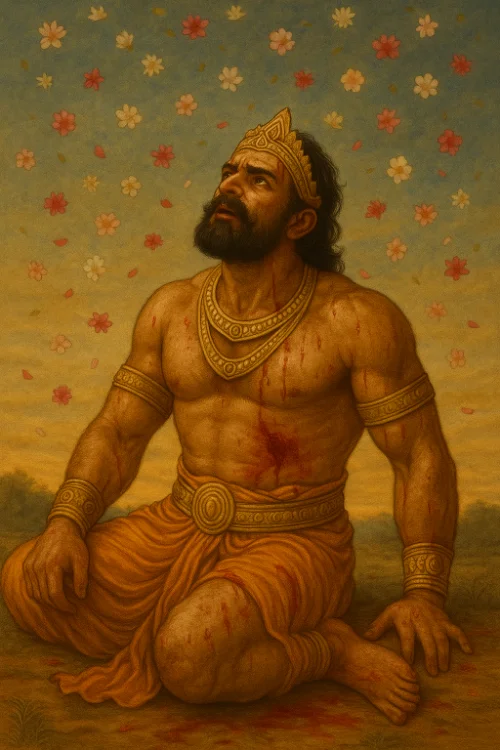
Sanjaya continued As the wise king of the Kurus breathed his last upon uttering these words, a great shower of fragrant flowers descended from the heavens.
The celestial Gandharvas played melodious instruments, while the Apsarās sang hymns glorifying King Duryodhana’s fame.
The Siddhas (celestial sages) proclaimed in unison—'Well done! Well done!' A gentle, fragrant breeze blew from all directions, carrying a divine aroma. The quarters of the sky shone brilliantly, resembling a canopy of blue sapphire.
अत्यद्भुतानि ते दृष्ट्वा वासुदेवपुरोगमाः ।
दुर्योधनस्य पूजां तु दृष्ट्वा व्रीडामुपागमन् ॥ ५८ ॥
atyadbhutāni te dṛṣṭvā vāsudevapurogamāḥ |
duryodhanasya pūjāṃ tu dṛṣṭvā vrīḍāmupāgaman || 58 ||
Beholding these divine omens and the honor bestowed upon Duryodhana even in death, the Pāṇḍavas, led by Vāsudeva, felt a deep sense of shame.
हतांश्चाधर्मतः श्रुत्वा शोकार्ताः शुशुचुर्हि ते ।
भीष्मं द्रोणं तथा कर्णं भूरिश्रवसमेव च ॥ ५९ ॥
hatāṃścādharmataḥ śrutvā śokārtāḥ śuśucurhi te |
bhīṣmaṃ droṇaṃ tathā karṇaṃ bhūriśravasameva ca || 59 ||
Hearing that Bhīṣma, Droṇa, Karṇa, and Bhūriśravas had been slain through unfair means, the Pāṇḍavas, overwhelmed with sorrow, grieved deeply for them.
तांस्तु चिन्तापरान् दृष्ट्वा पाण्डवान् दीनचेतसः ।
प्रोवाचेदं वचः कृष्णो मेघदुन्दुभिनिः स्वनः ॥६०॥
नैष शक्योऽतिशीघ्रास्त्रस्ते च सर्वे महारथाः ।
ऋजुयुद्धेन विक्रान्ता हन्तुं युष्माभिराहवे ॥६१॥
tāṃstu cintāparān dṛṣṭvā pāṇḍavān dīnacetasaḥ |
provācedaṃ vacaḥ kṛṣṇo meghadundubhiniḥ svanaḥ ||60||
naiṣa śakyo’tiśīghrāstraste ca sarve mahārathāḥ |
ṛjuyuddhena vikrāntā hantuṃ yuṣmābhirāhave ||61||
Seeing the Pāṇḍavas overcome with sorrow, their hearts burdened with deep anxiety, Kṛṣṇa, his voice resounding like a mighty thundercloud and war drums in unison, addressed them with unwavering resolve:
"These warriors—swift in arms, fearless in combat, and supreme among chariot-borne heroes—could never have been vanquished by you in battle through fair means alone. Their valor is unmatched, their skill beyond measure. Only through strategy and divine will has this victory been secured."
नैष शक्यः कदाचित् तु हन्तु धर्मेण पार्थिवः ।
ते वा भीष्ममुखाः सर्वे महेष्वासा महारथाः ॥ ६२ ॥
naiṣa śakyaḥ kadācit tu hantu dharmeṇa pārthivaḥ |
te vā bhīṣmamukhāḥ sarve maheṣvāsā mahārathāḥ || 62 ||
King Duryodhana, nor the other great archers led by Bhīṣma, could have ever been slain in a battle fought strictly by the codes of dharma.
मयानेकैरुपायैस्तु मायायोगेन चासकृत्।
हतास्ते सर्व एवाजौ भवतां हितमिच्छता ॥ ६३ ॥
mayānekairupāyaistu māyāyogena cāsakṛt|
hatāste sarva evājau bhavatāṃ hitamicchatā || 63 ||
By employing numerous strategies, repeatedly using illusions and indirect means, I ensured their destruction in battle—all for your welfare.
यदि नैवंविधं जातु कुर्यां जिह्ममहं रणे ।
कुतो वो विजयो भूयः कुतो राज्यं कुतो धनम् ॥ ६४ ॥
yadi naivaṃvidhaṃ jātu kuryāṃ jihmamahaṃ raṇe |
kuto vo vijayo bhūyaḥ kuto rājyaṃ kuto dhanam || 64 ||
If I had not employed such indirect and strategic methods in war, how could you have ever secured victory? How could you have claimed sovereignty or wealth?
ते हि सर्वे महात्मानश्चत्वारोऽतिरथा भुवि ।
न शक्या धर्मतो हन्तुं लोकपालैरपि स्वयम् ॥ ६५ ॥
te hi sarve mahātmānaścatvāro’tirathā bhuvi |
na śakyā dharmato hantuṃ lokapālairapi svayam || 65 ||
Those four—Bhīṣma, Droṇa, Karṇa, and Duryodhana—were all truly great souls and Atirathas (supreme warriors) on Earth. Even the guardians of the worlds (Lokapālas) themselves could not have slain them by fair means!
तथैवायं गदापाणिर्धार्तराष्ट्रो गतक्रमः ।
न शक्यो धर्मतो हन्तुं कालेनापीह दण्डिना ॥ ६६ ॥
tathaivāyaṃ gadāpāṇirdhārtarāṣṭro gatakramaḥ |
na śakyo dharmato hantuṃ kālenāpīha daṇḍinā || 66 ||
Likewise, this son of Dhṛtarāṣṭra, wielding the mighty mace, was beyond the reach of fair combat. Even Kāla (Time) himself, armed with his rod of justice, could not have slain him through righteous means.
न च वो हृदि कर्तव्यं यदयं घातितो रिपुः ।
मिथ्यावध्यास्तथोपायैर्बहवः शत्रवोऽधिकाः ॥ ६७॥
na ca vo hṛdi kartavyaṃ yadayaṃ ghātito ripuḥ |
mithyāvadhyāstathopāyairbahavaḥ śatravo’dhikāḥ || 67||
Let not remorse dwell in your hearts for the manner in which this enemy has been slain. When foes are numerous and powerful, their downfall must often be secured by means beyond mere righteousness.
पूर्वैरनुगतो मार्गो देवैरसुरघातिभिः ।
सद्भिश्चानुगतः पन्थाः स सर्वैरनुगम्यते ॥ ६८ ॥
pūrvairanugato mārgo devairasuraghātibhiḥ |
sadbhiścānugataḥ panthāḥ sa sarvairanugamyate || 68 ||
This is the path followed by the ancients—the gods themselves, in their battles against the Asuras, walked this way. It is the road of the virtuous, a path that all have followed and shall continue to follow.
कृतकृत्याश्च सायाह्ने निवासं रोचयामहे ।
साश्वनागरथाः सर्वे विश्रमामो नराधिपाः ॥ ६९ ॥
kṛtakṛtyāśca sāyāhne nivāsaṃ rocayāmahe |
sāśvanāgarathāḥ sarve viśramāmo narādhipāḥ || 69 ||
Having accomplished our purpose, as the evening approaches, let us retire for the night. Along with our horses, elephants, and chariots, let all the kings take their well-earned rest.
वासुदेववचः श्रुत्वा तदानीं पाण्डवैः सह ।
पञ्चाला भृशसंहृष्टा विनेदुः सिंहसंघवत् ॥ ७० ॥
vāsudevavacaḥ śrutvā tadānīṃ pāṇḍavaiḥ saha |
pañcālā bhṛśasaṃhṛṣṭā vineduḥ siṃhasaṃghavat || 70 ||
Hearing the words of Vāsudeva, the Pāṇḍavas and the Pāñcālas, overwhelmed with joy, roared aloud like a pride of triumphant lions.
ततः प्राध्मापयञ्शङ्खान् पाञ्चजन्यं च माधवः ।
हृष्टा दुर्योधनं दृष्ट्वा निहतं पुरुषर्षभ ।। ७१ ।।
tataḥ prādhmāpayañśaṅkhān pāñcajanyaṃ ca mādhavaḥ |
hṛṣṭā duryodhanaṃ dṛṣṭvā nihataṃ puruṣarṣabha || 71 ||
Then, in the exultation of victory, conches were blown from all sides. Mādhava (Śrī Kṛṣṇa) himself sounded his celestial conch, Pāñcajanya, rejoicing at the sight of Duryodhana lying slain on the battlefield.
Full Synopsis of The Praise of Bhimasena. The Lamentation of Duryodhana.
After Bhimasena strikes down Duryodhana in a fierce mace battle, Sanjaya recounts the reactions of the Pandavas, the Panchalas, and the Shrinjayas. They rejoice in their victory with celebratory roars, the blowing of conchs, and expressions of praise for Bhima, who is hailed for achieving an unparalleled feat by defeating the powerful Kuru king. Bhima's victory is compared to Indra slaying Vritra, and he is praised for avenging the injustices done to the Pandavas.
However, Krishna intervenes, advising restraint and discouraging harsh words against the fallen Duryodhana. He reminds the Pandavas of Duryodhana's past sins, including his refusal to share the kingdom, his role in various deceptions, and his mistreatment of Draupadi. Krishna emphasizes that Duryodhana's downfall resulted from his unrighteous actions and urges the victors to leave the battlefield.
Despite his injuries, Duryodhana rises partially and accuses Krishna of using deceit to secure victory, listing unfair tactics employed against Bhishma, Drona, Karna, and himself. Krishna rebuts these accusations, highlighting Duryodhana's misdeeds, such as poisoning Bhima, attempting to burn the Pandavas alive, and orchestrating the unjust killing of Abhimanyu. Krishna asserts that Duryodhana's death is a consequence of his sins and greed.
In his final moments, Duryodhana declares his life a success, having enjoyed immense pleasures, governed the Earth, and attained the warrior’s ultimate goal of death in battle. He proudly proclaims that he is destined for heaven, leaving the Pandavas to live in sorrow in the mortal world.
As Duryodhana utters these words, celestial signs honor his death—flowers rain from the sky, divine musicians and dancers celebrate him, and a soothing breeze blows. These signs of divine approval embarrass the Pandavas, who feel ashamed. Krishna reassures them, explaining that their victory was only possible due to his strategic interventions, as the great warriors of the Kaurava side could not have been defeated in fair combat.
Krishna concludes by urging the Pandavas and their allies to rest and prepare for the next steps. The Pandavas, filled with renewed joy, blow their conchs triumphantly, marking the end of the great battle and the demise of Duryodhana.