Vamana Mahapurana
Chapter 10 - Andhaka’s Victory Over the Gods
Verse 1-2
पुलस्त्य उवाच ।
ततः प्रवृत्ते संग्रामे भीरूणां भयवर्धने ।
सहस्राक्षो महाचापमादाय व्यसृजच्छरान् ॥ १ ॥
अन्धकोऽपि महावेगं धनुराकृष्य भास्वरम् ।
पुरन्दराय चिक्षेप शरान् बर्हिणवाससः ॥ २ ॥
तावन्योन्यं सुतीक्ष्णाग्रैः शरैः संनतपर्वभिः ।
रुक्मपुङ्खैर्महावेगैराजघ्नतुरुभावपि ॥ ३
pulastya uvāca |
tataḥ pravṛtte saṃgrāme bhīrūṇāṃ bhayavardhane |
sahasrākṣo mahācāpam ādāya vyasṛjac charān || 1 ||
andhako ’pi mahāvegaṃ dhanur ākṛṣya bhāsvaram |
purandarāya cikṣepa śarān barhiṇavāsasaḥ || 2 ||
tāv anyonyaṃ sutīkṣṇāgraiḥ śaraiḥ saṃnataparvabhiḥ |
rukmapuṅkhair mahāvegair ājaghnatur ubhāv api || 3 ||
Pulastya said: Then, when the battle had begun—a battle that increased the fear of the timid—the thousand-eyed Indra took up his great bow and discharged his arrows.
Andhaka likewise drew his radiant, immensely powerful bow and shot at Purandara arrows clothed in peacock plumage.
The two struck one another with exceedingly sharp-pointed arrows, whose joints were carefully formed, whose feathered shafts were adorned with gold, and which flew with tremendous speed.
Verse 4-6
ततः क्रुद्धः शतमखः कुलिशं भ्राम्य पाणिना ।
चिक्षेप दैत्यराजाय तं ददर्श तथान्धकः ॥ ४ ॥
आजघान च बाणौघैरस्त्रैः शस्त्रैः स नारद ।
तान् भस्मसात्तदा चक्रे नगानिव हुताशनः ॥ ५ ॥
ततोऽतिवेगिनं वज्रं दृष्ट्वा बलवतां वरः ।
समाप्लुत्य रथात्तस्थौ भुवि बाहुसहायवान् ॥ ६ ॥
tataḥ kruddhaḥ śatamakhaḥ kuliśaṃ bhrāmya pāṇinā |
cikṣepa daityarājāya taṃ dadarśa tathāndhakaḥ || 4 ||
ājaghāna ca bāṇaughair astraiḥ śastraiḥ sa nārada |
tān bhasmasāt tadā cakre nagān iva hutāśanaḥ || 5 ||
tato ’tiveginaṃ vajraṃ dṛṣṭvā balavatāṃ varaḥ |
samāplutya rathāt tasthau bhuvi bāhusahāyavān || 6 ||
Then Śatamakha, enraged, whirled the thunderbolt in his hand and hurled it at the king of the Daityas. Andhaka saw it approaching.
He struck it with volleys of arrows, divine missiles, and other weapons, O Nārada; but the thunderbolt then reduced them to ashes, as fire consumes trees.
Then, seeing the thunderbolt rushing upon him with tremendous speed, Andhaka—the foremost of the mighty—leaped down from his chariot and stood upon the ground, relying upon the strength of his arms.
Verse 7-9
रथं सारथिना सार्धं साश्वध्वजसकूबरम् ।
भस्म कृत्वाथ कुलिशमन्धकं समुपाययौ ॥ ७ ॥
तमापतन्तं वेगेन मुष्टिनाहत्य भूतले ।
पातयामास बलवान् जगर्ज च तदान्धकः ॥ ८ ॥
तं गर्जमानं वीक्ष्याथ वासवः सायकैर्दृढम् ।
ववर्ष तान् वारयन् स समभ्यायाच्छतक्रतुम् ॥ ९ ॥
rathaṃ sārathinā sārdhaṃ sāśvadhvajasakūbaram |
bhasma kṛtvātha kuliśam andhakaṃ samupāyayau || 7 ||
tam āpatantaṃ vegena muṣṭināhatya bhūtale |
pātayāmāsa balavāñ jagarja ca tadāndhakaḥ || 8 ||
taṃ garjamānaṃ vīkṣyātha vāsavaḥ sāyakair dṛḍham |
vavarṣa tān vārayann sa samabhyāyāc chatakratum || 9 ||
Having reduced the chariot to ashes together with its charioteer, horses, banner, and pole, the thunderbolt then advanced toward Andhaka.
As it rushed upon him with great speed, mighty Andhaka struck it with his fist and knocked it to the ground. Andhaka then roared aloud.
Seeing him roaring, Vāsava showered him heavily with arrows. Warding them off, Andhaka advanced toward Śatakratu.
Verse 10-12
आजघान तलेनेभं कुम्भमध्ये पदा करे ।
जानुना च समाहत्य विषाणं प्रबभञ्ज च ॥ १० ॥
वाममुष्ट्या तथा पार्श्वं समाहत्यान्धकस्त्वरन् ।
गजेन्द्रं पातयामास प्रहारैर्जर्जरीकृतम् ॥ ११ ॥
गजेन्द्रात् पतमानाच्च अवप्लुत्य शतक्रतुः ।
पाणिना वज्रमादाय प्रविवेशामरावतीम् ॥ १२ ॥
ājaghāna talenebhaṃ kumbhamadhye padā kare |
jānunā ca samāhatya viṣāṇaṃ prabhabhañja ca || 10 ||
vāmamuṣṭyā tathā pārśvaṃ samāhatyāndhakas tvaran |
gajendraṃ pātayāmāsa prahārair jarjarīkṛtam || 11 ||
gajendrāt patamānāc ca avaplutya śatakratuḥ |
pāṇinā vajram ādāya praviveśāmarāvatīm || 12 ||
Andhaka struck the elephant with his palm between its frontal globes and with his foot upon its trunk. Then, striking its tusk with his knee, he broke it.
Then Andhaka, moving swiftly, struck the elephant’s flank with his left fist and felled the lord of elephants, leaving it battered and broken by his blows.
As the lord of elephants was falling, Śatakratu leaped clear of it, took the thunderbolt in his hand, and entered Amarāvatī.
Verse 13-15
पराङ्मुखे सहस्राक्षे तद्दैवतबलं महत् ।
पातयामास दैत्येन्द्रः पादमुष्टितलादिभिः ॥ १३ ॥
ततो वैवस्वतो दण्डं परिभ्राम्य द्विजोत्तम ।
समभ्यधावत् प्रह्लादं हन्तुकामः सुरोत्तमः ॥ १४ ॥
तमापतन्तं बाणौघैर्ववर्ष रविनन्दनम् ।
हिरण्यकशिपोः पुत्रश्चापमानम्य वेगवान् ॥ १५ ॥
parāṅmukhe sahasrākṣe taddaivatabalaṃ mahat |
pātayāmāsa daityendraḥ pādamuṣṭitalādibhiḥ || 13 ||
tato vaivasvato daṇḍaṃ paribhrāmya dvijottama |
samabhyadhāvat prahlādaṃ hantukāmaḥ surottamaḥ || 14 ||
tam āpatantaṃ bāṇaughair vavarṣa ravinandanam |
hiraṇyakaśipoḥ putraś cāpam ānamya vegavān || 15 ||
When the thousand-eyed Indra had turned away, the lord of the Daityas struck down that great army of the gods with blows from his feet, fists, palms, and the like.
Then Vaivasvata, whirling his staff, O best of the twice-born, charged at Prahlāda, intent upon killing him, the foremost of the gods.
As the son of the Sun rushed toward him, the swift son of Hiraṇyakaśipu bent his bow and showered him with torrents of arrows.
Verse 16-18
तां बाणवृष्टिमतुलां दण्डेनाहत्य भास्करिः ।
शातयित्वा प्रचिक्षेप दण्डं लोकभयङ्करम् ॥ १६ ॥
स वायुपथमास्थाय धर्मराजकरे स्थितः ।
जज्वाल कालाग्निनिभो यद्वद् दग्धुं जगत्त्रयम् ॥ १७ ॥
जाज्वल्यमानमायान्तं दण्डं दृष्ट्वा दितेः सुताः ।
प्राक्रोशन्ति—“हतः! कष्टं प्रह्लादोऽयं यमेन हि!” ॥ १८ ॥
tāṃ bāṇavṛṣṭim atulāṃ daṇḍenāhatya bhāskariḥ |
śātayitvā pracikṣepa daṇḍaṃ lokabhayaṅkaram || 16 ||
sa vāyupatham āsthāya dharmarājakare sthitaḥ |
jajvāla kālāgninibho yadvat dagdhuṃ jagattrayam || 17 ||
jājvalyamānam āyāntaṃ daṇḍaṃ dṛṣṭvā diteḥ sutāḥ |
prākrośanti—“hataḥ! kaṣṭaṃ prahlādo ’yaṃ yamena hi!” || 18 ||
Bhāskari struck that incomparable shower of arrows with his staff and shattered it. He then hurled forth the world-terrifying staff.
Leaving the hand of Dharmarāja and taking to the path of the air, it blazed like the fire of cosmic dissolution, as though it would burn the three worlds.
Seeing the blazing staff coming toward him, the sons of Diti cried out, “Prahlāda is slain! Alas! Yama has surely killed him!”
Verse 19-21
तमाक्रन्दितमाकर्ण्य हिरण्याक्षसुतोऽन्धकः ।
प्रोवाच—“मा भैष्ट मयि स्थिते कोऽयं सुराधमः?” ॥ १९ ॥
इत्येवमुक्त्वा वचनं वेगेनाभिससार च ।
जग्राह पाणिना दण्डं हसन् सव्येन नारद ॥ २० ॥
तमादाय ततो वेगाद् भ्रामयामास चान्धकः ।
जगर्ज च महानादं यथा प्रावृषि तोयदः ॥ २१ ॥
tam ākranditam ākarṇya hiraṇyākṣasuto ’ndhakaḥ |
provāca—“mā bhaiṣṭa mayi sthite ko ’yaṃ surādhamaḥ?” || 19 ||
ity evam uktvā vacanaṃ vegenābhisasāra ca |
jagrāha pāṇinā daṇḍaṃ hasan savyena nārada || 20 ||
tam ādāya tato vegād bhrāmayāmāsa cāndhakaḥ |
jagarja ca mahānādaṃ yathā prāvṛṣi toyadaḥ || 21 ||
Hearing that cry of lamentation, Andhaka, the son of Hiraṇyākṣa, declared: “Do not be afraid while I am here! Who is this wretched god?”
Having spoken these words, he rushed forward with great speed and, laughing, seized the staff with his left hand, O Nārada.
Then, taking hold of it, Andhaka forcefully whirled it around and let out a tremendous roar, like a rain cloud in the rainy season.
Verse 22-24
प्रह्लादं रक्षितं दृष्ट्वा दण्डाद् दैत्येश्वरेण हि ।
साधुवादं ददुर्हृष्टा दैत्यदानवयूथपाः ॥ २२ ॥
भ्रामयन्तं महादण्डं दृष्ट्वा भानुसुतो मुने ।
दुःसहं दुर्धरं मत्वान्तर्धानमगाद् यमः ॥ २३ ॥
अन्तर्हिते धर्मराजे प्रह्लादोऽपि महामुने ।
दारयामास बलवान् देवसैन्यं समन्ततः ॥ २४ ॥
prahlādaṃ rakṣitaṃ dṛṣṭvā daṇḍād daityeśvareṇa hi |
sādhuvādaṃ dadur hṛṣṭā daityadānavayūthapāḥ || 22 ||
bhrāmayantaṃ mahādaṇḍaṃ dṛṣṭvā bhānusuto mune |
duḥsahaṃ durdharaṃ matvāntardhānam agād yamaḥ || 23 ||
antarhite dharmarāje prahlādo ’pi mahāmune |
dārayāmāsa balavān devasainyaṃ samantataḥ || 24 ||
Seeing that Prahlāda had indeed been rescued from the staff by the lord of the Daityas, the delighted commanders of the Daitya and Dānava hosts cried out in approval: “Well done!”
Seeing Andhaka whirling the great staff, O sage, the son of the Sun regarded him as irresistible and impossible to restrain; Yama then vanished from sight.
When Dharmarāja had disappeared, mighty Prahlāda too, O great sage, tore through the army of the gods on every side.
Verse 25-27
वरुणः शिशुमारस्थो बद्ध्वा पाशैर्महासुरान् ।
गदया दारयामास तमभ्यागाद् विरोचनः ॥ २५ ॥
तोमरैर्वज्रसंस्पर्शैः शक्तिभिर्मार्गणैरपि ।
जलेशं ताडयामास मुद्गरैः कणपैरपि ॥ २६ ॥
ततस्तं गदयाभ्येत्य पातयित्वा धरातले ।
अभिद्रुत्य बबन्धाथ पाशैर्मत्तगजं बली ॥ २७ ॥
varuṇaḥ śiśumārastho baddhvā pāśair mahāsurān |
gadayā dārayāmāsa tam abhyāgād virocanaḥ || 25 ||
tomarair vajrasaṃsparśaiḥ śaktibhir mārgaṇair api |
jaleśaṃ tāḍayāmāsa mudgaraiḥ kaṇapair api || 26 ||
tatas taṃ gadayābhyetya pātayitvā dharātale |
abhidrutya babandhātha pāśair mattagajaṃ balī || 27 ||
Varuṇa, mounted upon his śiśumāra, bound the mighty Asuras with his nooses and battered them with his mace. Virocana then advanced against him.
With javelins whose impact was like that of the thunderbolt, with lances and arrows, Virocana struck the Lord of Waters—also assailing him with hammers and iron kaṇapa weapons.
Then mighty Varuṇa approached Virocana with his mace and knocked him down upon the ground. Rushing forward, he bound Virocana’s rutting elephant with his nooses.
Verse 28-30
तान् पाशाञ्शतधा चक्रे वेगाच्च दनुजेश्वरः ।
वरुणं च समभ्येत्य मध्ये जग्राह नारद ॥ २८ ॥
ततो दन्ती च शृङ्गाभ्यां प्रचिक्षेप तदाव्ययः ।
ममर्द च तथा पद्भ्यां सवाहं सलिलेश्वरम् ॥ २९ ॥
तं मर्द्यमानं वीक्ष्याथ शशाङ्कः शिशिरांशुमान् ।
अभ्येत्य ताडयामास मार्गणैः कायदारणैः ॥ ३० ॥
tān pāśāñ śatadhā cakre vegāc ca danujeśvaraḥ |
varuṇaṃ ca samabhyetya madhye jagrāha nārada || 28 ||
tato dantī ca śṛṅgābhyāṃ pracikṣepa tadāvyayaḥ |
mamarda ca tathā padbhyāṃ savāhaṃ salileśvaram || 29 ||
taṃ mardyamānaṃ vīkṣyātha śaśāṅkaḥ śiśirāṃśumān |
abhyetya tāḍayāmāsa mārgaṇaiḥ kāyadāraṇaiḥ || 30 ||
The lord of the Dānavas swiftly broke those nooses into a hundred pieces. Then, approaching Varuṇa, he seized him around the waist, O Nārada.
Thereupon, Virocana’s indefatigable elephant hurled Varuṇa away with its two tusks and then trampled the Lord of Waters beneath its feet, together with his mount.
Seeing Varuṇa being crushed, the Moon, endowed with cooling rays, came forward and struck the elephant with arrows that tore through the body.
Verse 31-33
स ताड्यमानः शिशिरांशुबाणैरवाप पीडां परमां गजेन्द्रः ।
दुष्टश्च वेगात् पयसामधीशं मुहुर्मुहुः पादतलैर्ममर्द ॥ ३१ ॥
स मृद्यमानो वरुणो गजेन्द्रं पद्भ्यां सुगाढं जगृहे महर्षे ।
पादेषु भूमिं करयोः स्पृशंश्च मूर्धानमुल्लाल्य बलान्महात्मा ॥ ३२ ॥
गृह्याङ्गुलीभिश्च गजस्य पुच्छं कृत्वेह बन्धं भुजगेश्वरेण ।
उत्पाट्य चिक्षेप विरोचनं हि सकुञ्जरं खे सनियन्तृवाहम् ॥ ३३ ॥
sa tāḍyamānaḥ śiśirāṃśubāṇair avāpa pīḍāṃ paramāṃ gajendraḥ |
duṣṭaś ca vegāt payasām adhīśaṃ muhur muhuḥ pādatalair mamarda || 31 ||
sa mṛdyamāno varuṇo gajendraṃ padbhyāṃ sugāḍhaṃ jagṛhe maharṣe |
pādeṣu bhūmiṃ karayoḥ spṛśaṃś ca mūrdhānam ullālya balān mahātmā || 32 ||
gṛhyāṅgulībhiś ca gajasya pucchaṃ kṛtveha bandhaṃ bhujageśvareṇa |
utpāṭya cikṣepa virocanaṃ hi sakuñjaraṃ khe saniyantṛvāham || 33 ||
Struck by the arrows of the cool-rayed Moon, the lordly elephant suffered extreme pain. Becoming vicious and impetuous, it repeatedly crushed the Lord of the Waters beneath the soles of its feet.
While he was being trampled, Varuṇa firmly seized the lordly elephant by its two feet, O great sage. Bracing himself upon the ground with his hands and feet and forcefully raising his head, the great-souled god exerted his strength.
Then, grasping the elephant’s tail with his fingers and binding Virocana with a mighty serpent, Varuṇa heaved them up and hurled Virocana into the sky together with his elephant and its mahout.
Verse 34-36
क्षिप्तो जलेशेन विरोचनस्तु
सकुञ्जरो भूमितले पपात ।
साट्टं सयन्त्रार्गलहर्म्यभूमि
पुरं सुकेशेरिव भास्करेण ॥ ३४ ॥
ततो जलेशः सगदः सपाशः
समभ्यधावद् दितिजं निहन्तुम् ।
ततः समाक्रन्दमनुत्तमं हि
मुक्तं तु दैत्यैर्घनरावतुल्यम् ॥ ३५ ॥
“हा हा! हतोऽसौ वरुणेन वीरो
विरोचनो दानवसैन्यपालः ।
प्रह्लाद! हे जम्भकुजम्भकाद्याः!
रक्षध्वमभ्येत्य सहान्धकेन!” ॥ ३६ ॥
kṣipto jaleśena virocanas tu
sakuñjaro bhūmitale papāta |
sāṭṭaṃ sayantrārgalaharmyabhūmi
puraṃ sukeśer iva bhāskareṇa || 34 ||
tato jaleśaḥ sagadaḥ sapāśaḥ
samabhyadhāvad ditijaṃ nihantum |
tataḥ samākrandam anuttamaṃ hi
muktaṃ tu daityair ghanarāvatulyam || 35 ||
“hā hā! hato ’sau varuṇena vīro
virocano dānavasainyapālaḥ |
prahlāda! he jambhakujambhakādyāḥ!
rakṣadhvam abhyetya sahāndhakena!” || 36 ||
Hurled by the Lord of the Waters, Virocana fell upon the surface of the earth together with his elephant, like Sukeśa’s city—along with its towers, mechanisms, bars, palaces, and foundations—when it was cast down by the Sun.
Then the Lord of the Waters, carrying his mace and noose, rushed forward to slay the son of Diti. Thereupon, the Daityas raised a tremendous cry, comparable to the roaring of thunderclouds:
“Alas! Alas! The heroic Virocana, guardian of the Dānava army, is being slain by Varuṇa! O Prahlāda! O Jambha, Kujambha, and the others! Come with Andhaka and save him!”
Verse 37-39
अहो महात्मा बलवाञ्जलेशः
संचूर्णयन् दैत्यभटं सवाहम् ।
पाशेन बद्ध्वा गदया निहन्ति
यथा पशुं वाजिमखे महेन्द्रः ॥ ३७ ॥
श्रुत्वाथ शब्दं दितिजैः समीरितं
जम्भप्रधाना दितिजेश्वरास्ततः ।
समभ्यधावंस्त्वरिता जलेश्वरं
यथा पतङ्गा ज्वलितं हुताशनम् ॥ ३८ ॥
तानागतान् वै प्रसमीक्ष्य देवः
प्राह्लादिमुत्सृज्य वितत्य पाशम् ।
गदां समुद्भ्राम्य जलेश्वरस्तु
दुद्राव ताञ्जम्भमुखानरातीन् ॥ ३९ ॥
aho mahātmā balavāñ jaleśaḥ
saṃcūrṇayan daityabhaṭaṃ savāham |
pāśena baddhvā gadayā nihanti
yathā paśuṃ vājimakhe mahendraḥ || 37 ||
śrutvātha śabdaṃ ditijaiḥ samīritaṃ
jambhapradhānā ditijeśvarās tataḥ |
samabhyadhāvaṃs tvaritā jaleśvaraṃ
yathā pataṅgā jvalitaṃ hutāśanam || 38 ||
tān āgatān vai prasamīkṣya devaḥ
prāhlādim utsṛjya vitatya pāśam |
gadāṃ samudbhrāmya jaleśvaras tu
dudrāva tāñ jambhamukhān arīn || 39 ||
“Ah, how great-souled and powerful is the Lord of the Waters! He is crushing the Daitya warrior together with his mount; having bound him with his noose, he strikes him down with his mace, as Mahendra strikes the sacrificial beast at a horse sacrifice.”
Then, hearing the cry raised by the sons of Diti, the Daitya lords—with Jambha foremost among them—rushed swiftly against the Lord of the Waters, like moths rushing into a blazing fire.
Seeing them approaching, the god released the descendant of Prahlāda, cast out his noose, and whirled his mace. The Lord of the Waters then charged those enemies headed by Jambha.
Verse 40-42
जम्भं च पाशेन तथा निहत्य
तारं तलेनाशनिसंनिभेन ।
पादेन वृत्रं तरसा कुजम्भं
निपातयामास बलं च मुष्ट्या ॥ ४० ॥
तेनार्दिता देववरेण दैत्याः
संप्राद्रवन् दिक्षु विमुक्तशस्त्राः ।
ततोऽन्धकः स त्वरितोऽभ्युपेयाद्
रणाय योद्धुं जलनायकेन ॥ ४१ ॥
तमापतन्तं गदया जघान
पाशेन बद्ध्वा वरुणोऽसुरेशम् ।
तं पाशमाविध्य गदां प्रगृह्य
चिक्षेप दैत्यः स च जलेश्वराय ॥ ४२ ॥
jambhaṃ ca pāśena tathā nihatya
tāraṃ talenāśanisaṃnibhena |
pādena vṛtraṃ tarasā kujambhaṃ
nipātayāmāsa balaṃ ca muṣṭyā || 40 ||
tenārditā devavareṇa daityāḥ
saṃprādravan dikṣu vimuktaśastrāḥ |
tato ’ndhakaḥ sa tvarito ’bhyupeyād
raṇāya yoddhuṃ jalanāyakena || 41 ||
tam āpatantaṃ gadayā jaghāna
pāśena baddhvā varuṇo ’sureśam |
taṃ pāśam āvidhya gadāṃ pragṛhya
cikṣepa daityaḥ sa ca jaleśvarāya || 42 ||
Varuṇa struck down Jambha with his noose and Tāra with a palm-blow resembling a thunderbolt. With a powerful kick, he struck Vṛtra, and with his fist, he felled Kujambha and Bala.
Tormented by that foremost of the gods, the Daityas fled in every direction, casting away their weapons. Then Andhaka hastened forward to the battlefield to fight the Lord of the Waters.
As the lord of the Asuras charged toward him, Varuṇa struck him with his mace and bound him with his noose. But the Daitya tore the noose loose, seized the mace, and hurled both weapons back at the Lord of the Waters.
Verse 43-45
तमापतन्तं प्रसमीक्ष्य पाशं
गदां च दाक्षायणिनन्दनस्तु ।
विवेश वेगात् पयसां निधानं
ततोऽन्धको देवबलं ममर्द ॥ ४३ ॥
ततो हुताशः सुरशत्रुसैन्यं
ददाह रोषात् पवनावधूतः ।
तमभ्ययाद् दानवविश्वकर्मा
मयो महाबाहुरुदग्रवीर्यः ॥ ४४ ॥
तमापतन्तं सह शम्बरेण
समीक्ष्य वह्निः पवनेन सार्धम् ।
शक्त्या मयं शम्बरमेत्य कण्ठे
संताड्य जग्राह बलान्महर्षे ॥ ४५ ॥
tam āpatantaṃ prasamīkṣya pāśaṃ
gadāṃ ca dākṣāyaṇīnandanas tu |
viveśa vegāt payasāṃ nidhānaṃ
tato ’ndhako devabalaṃ mamarda || 43 ||
tato hutāśaḥ suraśatrusainyaṃ
dadāha roṣāt pavanāvadhūtaḥ |
tam abhyayād dānavaviśvakarmā
mayo mahābāhur udagravīryaḥ || 44 ||
tam āpatantaṃ saha śambareṇa
samīkṣya vahniḥ pavanena sārdham |
śaktyā mayaṃ śambaram etya kaṇṭhe
saṃtāḍya jagrāha balān maharṣe || 45 ||
Seeing the noose and mace rushing toward him, Varuṇa, the son of Dākṣāyaṇī, swiftly entered the ocean. Then Andhaka crushed the army of the gods.
Thereupon, Hutāśa, fanned by the wind, angrily burned the army of the gods’ enemies. Maya—the long-armed architect of the Dānavas, possessed of towering prowess—advanced against him.
Seeing Maya approaching together with Śambara, Agni, accompanied by Vāyu, struck Maya with his spear. Then, advancing against Śambara, he struck him and seized him forcefully by the throat, O great sage.
Verse 46-48
शक्त्या स कायावरणे विदारिते
संभिन्नदेहो न्यपतत् पृथिव्याम् ।
मयः प्रजज्वाल च शम्बरोऽपि
कण्ठावलग्ने ज्वलने प्रदीप्ते ॥ ४६ ॥
स दह्यमानो दितिजोऽग्निनाऽथ
सुविस्वरं घोरतरं रुराव ।
सिंहाभिपन्नो विपिने यथैव
मत्तो गजः क्रन्दति वेदनार्तः ॥ ४७ ॥
तं शब्दमाकर्ण्य च शम्बरस्य
दैत्येश्वरः क्रोधविरक्तदृष्टिः ।
आः किं किमेतन्ननु केन युद्धे
जितो मयः शम्बरदानवश्च ॥ ४८ ॥
śaktyā sa kāyāvaraṇe vidārite
saṃbhinnadeho nyapatat pṛthivyām |
mayaḥ prajajvāla ca śambaro ’pi
kaṇṭhāvalagne jvalane pradīpte || 46 ||
sa dahyamāno ditijo ’gninā ’tha
suvisvaraṃ ghorataraṃ rurāva |
siṃhābhipanno vipine yathaiva
matto gajaḥ krandati vedanārtaḥ || 47 ||
taṃ śabdam ākarṇya ca śambarasya
daityeśvaraḥ krodhaviraktadṛṣṭiḥ |
āḥ! kiṃ kim etan nanu kena yuddhe
jito mayaḥ śambaradānavaś ca || 48 ||
When the covering of his body had been split by the spear, Maya—his body pierced through—fell upon the earth. Maya burst into flame, and Śambara too, as the blazing fire clung to his throat.
Then that son of Diti, burning under Agni’s power, gave an exceedingly dreadful, discordant roar—just as, in a forest, an elephant in rut cries out in agony when attacked by a lion.
Hearing that cry of Śambara, the lord of the Daityas, his gaze reddened with anger, exclaimed: “Ah! What—what is this? By whom has Maya been defeated in battle, and Śambara the Dānava as well?”
Verse 49-51
ततोऽब्रुवन् दैत्यभटा दितीशं
प्रदह्यते ह्येष हुताशनेन ।
रक्षस्व चाभ्येत्य न शक्यतेऽन्यैः
हुताशनो वारयितुं रणाग्रे ॥ ४९ ॥
इत्थं स दैत्यैरभिनोदितस्तु
हिरण्यचक्षुस्तनयो महर्षे ।
उद्यम्य वेगात् परिघं हुताशं
समाद्रवत् “तिष्ठ तिष्ठ” ब्रुवन् हि ॥ ५० ॥
श्रुत्वान्धकस्यापि वचोऽव्ययात्मा
संक्रुद्धचित्तस्त्वरितो हि दैत्यम् ।
उत्पाट्य भूम्यां च विनिष्पिपेष
ततोऽन्धकः पावकमाससाद ॥ ५१ ॥
tato ’bruvan daityabhaṭā ditīśaṃ
pradahyate hy eṣa hutāśanena |
rakṣasva cābhyetya na śakyate ’nyair
hutāśano vārayituṃ raṇāgre || 49 ||
itthaṃ sa daityair abhinoditas tu
hiraṇyacakṣustanayo maharṣe |
udyamya vegāt parighaṃ hutāśaṃ
samādravat “tiṣṭha tiṣṭha” bruvan hi || 50 ||
śrutvāndhakasyāpi vaco ’vyayātmā
saṃkruddhacittas tvarito hi daityam |
utpāṭya bhūmyāṃ ca viniṣpipeṣa
tato ’ndhakaḥ pāvakam āsasāda || 51 ||
Then the Daitya warriors said to the lord of Diti’s descendants: “This one is being consumed by Hutāśana! Come and save him, for at the forefront of battle, Hutāśana cannot be restrained by the others.”
Thus urged on by the Daityas, O great sage, the son of Hiraṇyacakṣus swiftly raised his iron club and charged at Hutāśana, crying, “Stand! Stand and face me!”
Hearing Andhaka’s challenge, the imperishable Fire-god, his mind inflamed with anger, swiftly lifted the Daitya and crushed him upon the ground. Andhaka then closed with Pāvaka.
Verse 52-54
समाजघानाथ हुताशनं हि
वरायुधेनाथ वराङ्गमध्ये ।
समाहतोऽग्निः परिमुच्य शम्बरं
तथान्धकं स त्वरितोऽभ्यधावत् ॥ ५२ ॥
तमापतन्तं परिघेण भूयः
समाहनन्मूर्ध्नि तदान्धकोऽपि ।
स ताडितोऽग्निर्दितिजेश्वरेण
भयात् प्रदुद्राव रणाजिराद्धि ॥ ५३ ॥
ततोऽन्धको मारुतचन्द्रभास्करान्
साध्यान् सरुद्राश्विवसून् महोरगान् ।
यान् याञ्शरेण स्पृशते पराक्रमी
पराङ्मुखांस्तान् कृतवान् रणाजिरात् ॥ ५४ ॥
samājaghānātha hutāśanaṃ hi
varāyudhenātha varāṅgamadhye |
samāhato ’gniḥ parimucya śambaraṃ
tathāndhakaṃ sa tvarito ’bhyadhāvat || 52 ||
tam āpatantaṃ parigheṇa bhūyaḥ
samāhanan mūrdhni tadāndhako ’pi |
sa tāḍito ’gnir ditijeśvareṇa
bhayāt pradudrāva raṇājirād dhi || 53 ||
tato ’ndhako mārutacandrabhāskarān
sādhyān sarudrāśvivasūn mahoragān |
yān yāñ śareṇa spṛśate parākramī
parāṅmukhāṃs tān kṛtavān raṇājirāt || 54 ||
Andhaka then struck Hutāśana in the middle of his body with his excellent weapon. Struck by the blow, Agni released Śambara and swiftly rushed against Andhaka.
As Agni charged toward him, Andhaka again struck him upon the head with his iron club. Smitten by the lord of the Daityas, Agni fled from the battlefield in fear.
Thereafter, the mighty Andhaka turned Vāyu, the Moon, the Sun, the Sādhyas, the Rudras, the Aśvins, the Vasus, and the great serpents away from the battlefield: whomever he struck with an arrow, he forced to retreat.
Verse 55-57
ततो विजित्यामरसैन्यमुग्रं
सेन्द्रं सरुद्रं सयमं ससोमम् ।
संपूज्यमानो दनुपुङ्गवैस्तु
तदान्धको भूमिमुपाजगाम ॥ ५५ ॥
आसाद्य भूमिं करदान् नरेन्द्रान्
कृत्वा वशे स्थाप्य चराचरं च ।
जगत्समग्रं प्रविवेश धीमान्
पातालमग्र्यं पुरमश्मकाह्वम् ॥ ५६ ॥
तत्र स्थितस्यापि महासुरस्य
गन्धर्वविद्याधरसिद्धसंघाः ।
सहाप्सरोभिः परिचारणाय
पातालमभ्येत्य समावसन्त ॥ ५७ ॥
tato vijityāmarasainyam ugraṃ
sendraṃ sarudraṃ sayamaṃ sasomam |
saṃpūjyamāno danupuṅgavais tu
tadāndhako bhūmim upājagāma || 55 ||
āsādya bhūmiṃ karadān narendrān
kṛtvā vaśe sthāpya carācaraṃ ca |
jagat samagraṃ praviveśa dhīmān
pātālam agryaṃ puram aśmakāhvam || 56 ||
tatra sthitasyāpi mahāsurasya
gandharvavidyādharasiddhasaṃghāḥ |
sahāpsarobhiḥ paricāraṇāya
pātālam abhyetya samāvasanta || 57 ||
Having thus conquered the formidable army of the immortals—together with Indra, Rudra, Yama, and Soma—Andhaka was honored by the foremost descendants of Danu and then descended to the earth.
Having reached the earth, the wise Andhaka made the kings tributaries, brought the entire world of moving and unmoving beings under his control, and then entered the foremost city in Pātāla, called Aśmaka.
Even while that mighty Asura resided there, hosts of Gandharvas, Vidyādharas, and Siddhas, accompanied by Apsarases, came to Pātāla and took up residence there in order to attend upon him.
इति श्रीवामनपुराणे
दशमोऽध्यायः १०
iti śrīvāmanapurāṇe daśamo ’dhyāyaḥ || 10 ||
Thus ends the tenth chapter of the venerable Vāmana Purāṇa.
Synopsis of Chapter 10 — Andhaka’s Victory Over the Gods
Andhaka’s Defeat of Indra
The tenth chapter of the Vāmana Purāṇa opens with the direct confrontation between Andhaka and Indra. After an exchange of arrows, Indra hurls his thunderbolt, which destroys Andhaka’s chariot, horses, banner, and charioteer. Andhaka nevertheless resists the weapon physically, striking it down with his fist. He then attacks Indra’s elephant, breaking its tusk and battering it until Indra is forced to abandon the battlefield and retreat to Amarāvatī. The defeat of the celestial king marks the first decisive collapse in the gods’ defensive order.
Prahlāda, Yama, and the Seizure of the Staff
The battle then shifts to Prahlāda’s duel with Yama, identified through the patronymics Vaivasvata, Bhāskari, and Ravinandana, all emphasizing his descent from the Sun. Yama destroys Prahlāda’s arrows and releases his terrible staff, which blazes like the fire of cosmic dissolution. Andhaka intervenes at the moment when the Daityas believe Prahlāda is doomed, catches Yama’s weapon in his left hand, and brandishes it triumphantly. Yama, recognizing Andhaka as impossible to restrain, disappears from the battlefield, allowing Prahlāda to devastate the divine army.
Varuṇa’s Counteroffensive
Varuṇa emerges as one of the gods’ most effective combatants. Mounted on the aquatic śiśumāra, he binds Asuras with his nooses and strikes them with his mace. His duel with Virocana develops into a coordinated struggle between warriors and mounts: Virocana breaks the nooses and seizes Varuṇa, while his elephant tramples both the god and his vehicle. Varuṇa eventually overturns the situation by binding Virocana with a great serpent and hurling him, together with the elephant and its driver, into the sky.
The Collapse of the Daitya Reinforcements
When Jambha, Tāra, Vṛtra, Kujambha, and Bala rush to rescue Virocana, Varuṇa defeats them through a rapid sequence of attacks using his noose, palm, foot, and fist. This episode presents him not merely as a water deity but as a complete martial power capable of binding, striking, and physically overwhelming multiple opponents. The Daitya army temporarily loses cohesion and flees, abandoning its weapons. As elsewhere in the chapter, Andhaka responds personally whenever a major divine warrior threatens the stability of the Asura forces.
Andhaka Overcomes Varuṇa, Agni, and Vāyu
Andhaka breaks Varuṇa’s noose, seizes his mace, and throws both weapons back at him, forcing Varuṇa to retreat into the ocean. The narrative then introduces the combined elemental power of Agni and Vāyu. Fanned by the Wind, Agni burns the Asura army, wounds Maya with a spear, and seizes Śambara by the throat with consuming flame. Maya, the architect of the Dānavas, symbolically represents constructed form, while Agni embodies the force that destroys all material structures. Once again, Andhaka intervenes and defeats the divine power that the other Asuras cannot resist.
The Rout of the Celestial Order
Andhaka strikes Agni first in the body and then upon the head with his iron club, forcing the Fire-god to flee in fear. His victory then expands beyond individual combat. With his arrows, Andhaka turns away Vāyu, Soma, Sūrya, the Sādhyas, Rudras, Aśvins, Vasus, and great serpents. The phrasing suggests effortless superiority: merely being touched by one of his arrows is sufficient to make major divine beings retreat. The chapter thus depicts not only the defeat of several gods but the disintegration of coordinated celestial resistance.
Universal Sovereignty and the Court at Aśmaka
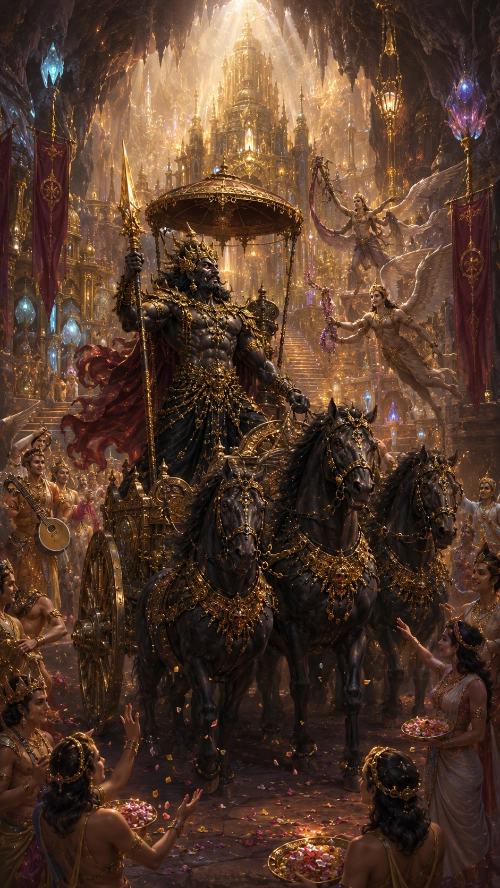
After conquering the divine army together with Indra, Yama, Soma, and the Rudras, Andhaka descends to earth and transforms military victory into imperial rule. He makes earthly kings tributaries and brings the whole world of moving and unmoving beings under his authority. He then establishes himself at Aśmaka in Pātāla, where Gandharvas, Vidyādharas, Siddhas, and Apsarases gather to attend him. The transfer of celestial attendants to an Asura court completes the temporary inversion of the cosmic hierarchy: Andhaka no longer appears merely as a victorious warrior, but as a universal sovereign whose power extends across heaven, earth, and the subterranean realms.


Commentary
The alternation between the names Sahasrākṣa and Purandara highlights two aspects of Indra: his divine, all-seeing sovereignty and his function as the destroyer of enemy fortifications. Andhaka is therefore confronting both the king and the foremost warrior of the gods.