Vamana Mahapurana
Chapter 6 - nanana
Verse 1-3
पुलस्त्य उवाच ।
हृद्भवो ब्रह्मणो योऽसौ धर्मो दिव्यवपुर्मुने ।
दाक्षायाणी तस्य भार्या तस्यामजनयत् सुतान् ॥ १ ॥
हरिं कृष्णं च देवर्षे नारायणनरौ तथा ।
योगाभ्यासरतौ नित्यं हरिकृष्णौ बभूवतुः ॥ २ ॥
नरनारायणौ चैव जगतो हितकाम्यया ।
तप्येतां च तपः सौम्यौ पुराणावृषिसत्तमौ ॥ ३ ॥
pulastya uvāca |
hṛdbhavo brahmaṇo yo ’sau dharmo divyavapur mune |
dākṣāyaṇī tasya bhāryā tasyām ajanayat sutān || 1 ||
hariṃ kṛṣṇaṃ ca devarṣe nārāyaṇanarau tathā |
yogābhyāsaratau nityaṃ harikṛṣṇau babhūvatuḥ || 2 ||
naranārāyaṇau caiva jagato hitakāmyayā |
tapyetāṃ ca tapaḥ saumau purāṇāv ṛṣisattamau || 3 ||
Pulastya said: O sage, that Dharma who sprang from the heart of Brahmā possessed a divine form. A daughter of Dakṣa was his wife, and through her, he begot sons.
O divine sage, they were Hari and Kṛṣṇa, as well as Nārāyaṇa and Nara. Hari and Kṛṣṇa were perpetually devoted to the practice of yoga.
Nara and Nārāyaṇa, likewise—the gentle, primeval, foremost of sages—performed austerities out of a desire for the welfare of the world.
Verse 4-6
प्रालेयाद्रिं समागम्य तीर्थे बदरिकाश्रमे ।
गृणन्तौ तत् परं ब्रह्म गङ्गाया विपुले तटे ॥ ४ ॥
नरनारायणाभ्यां च जगदेतच्चराचरम् ।
तापितं तपसा ब्रह्मन् शक्रः क्षोभं तदा ययौ ॥ ५ ॥
संक्षुब्धस्तपसा ताभ्यां क्षोभणाय शतक्रतुः ।
रम्भाद्याप्सरसः श्रेष्ठाः प्रेषयत् स महाश्रमम् ॥ ६ ॥
prāleyādriṃ samāgamya tīrthe badarikāśrame |
gṛṇantau tat paraṃ brahma gaṅgāyā vipule taṭe || 4 ||
naranārāyaṇābhyāṃ ca jagad etac carācaram |
tāpitaṃ tapasā brahman śakraḥ kṣobhaṃ tadā yayau || 5 ||
saṃkṣubdhas tapasā tābhyāṃ kṣobhaṇāya śatakratuḥ |
rambhādyāpsarasaḥ śreṣṭhāḥ preṣayat sa mahāśramam || 6 ||
Having reached the snow-clad mountain and the sacred Badarikāśrama, the two of them remained upon the broad bank of the Gaṅgā, proclaiming the Supreme Brahman.
O Brahman, through the austerity of Nara and Nārāyaṇa, this entire world—moving and unmoving—became intensely heated; Śakra then grew deeply agitated.
Disturbed by the austerity of those two, Śatakratu (Indra), seeking to disrupt them, sent the foremost Apsarases, headed by Rambhā, to the great hermitage.
Verse 7-9
कन्दर्पश्च सुदुर्धर्षश्चूताङ्कुरमहायुधः ।
समं सहचरेणैव वसन्तेनाश्रमं गतः ॥ ७ ॥
ततो माधवकन्दर्पौ ताश्चैवाप्सरसो वराः ।
बदर्याश्रममागम्य विचिक्रीडुर्यथेच्छया ॥ ८ ॥
ततो वसन्ते सम्प्राप्ते किंशुका ज्वलनप्रभाः ।
निष्पत्राः सततं रेजुः शोभयन्तो धरातलम् ॥ ९ ॥
kandarpaś ca sudurdharṣaś cūtāṅkura-mahāyudhaḥ |
samaṃ sahacareṇaiva vasantenāśramaṃ gataḥ || 7 ||
tato mādhava-kandarpau tāś caivāpsaraso varāḥ |
badaryāśramam āgamya vicikrīḍur yathecchayā || 8 ||
tato vasante samprāpte kiṃśukā jvalanaprabhāḥ |
niṣpatrāḥ satataṃ rejuḥ śobhayanto dharātalam || 9 ||
Kandarpa, exceedingly difficult to resist and possessing the tender mango shoot as his mighty weapon, went to the hermitage together with his companion, Spring.
Then Mādhava and Kandarpa, together with those excellent Apsarases, reached Badaryāśrama and sported there as they pleased.
Then, when spring had arrived, the leafless kiṃśuka trees, radiant like blazing fire, shone everywhere, beautifying the surface of the earth.
Verse 10-12
शिशिरं नाम मातङ्गं विदार्य नखरैरिव ।
वसन्तकेसरी प्राप्तः पलाशकुसुमैर्मुने ॥ १० ॥
मया तुषारौघकरी निर्जितः स्वेन तेजसा ।
तमेव हसतीत्युच्चैर्वसन्तः कुन्दकुड्मलैः ॥ ११ ॥
वनानि कर्णिकाराणां पुष्पितानि विरेजिरे ।
यथा नरेन्द्रपुत्राणि कनकाभरणानि हि ॥ १२ ॥
śiśiraṃ nāma mātaṅgaṃ vidārya nakharair iva |
vasantakesarī prāptaḥ palāśakusumair mune || 10 ||
mayā tuṣāraughakarī nirjitaḥ svena tejasā |
tam eva hasatīty uccair vasantaḥ kundakuḍmalaiḥ || 11 ||
vanāni karṇikārāṇāṃ puṣpitāni virejire |
yathā narendraputrāṇi kanakābharaṇāni hi || 12 ||
O sage, Spring arrived like a lion, appearing to have torn apart the elephant called Winter with his palāśa blossoms.
“The producer of masses of frost has been conquered by me through my own splendor”—as though saying this, Spring laughed loudly at that very Winter with the buds of the kunda flowers.
The blossoming groves of karṇikāra trees shone like princes adorned with ornaments of gold.
Verse 13-15
तेषामनु तथा नीपाः किङ्करा इव रेजिरे ।
स्वामिसंलब्धसम्माना भृत्या राजसुतानिव ॥ १३ ॥
रक्ताशोकवना भान्ति पुष्पिताः सहसोज्ज्वलाः ।
भृत्या वसन्तनृपतेः संग्रामेऽसृक्प्लुता इव ॥ १४ ॥
मृगवृन्दाः पिञ्जरिता राजन्ते गहने वने ।
पुलकाभिर्वृता यद्वत् सज्जनाः सुहृदागमे ॥ १५ ॥
teṣām anu tathā nīpāḥ kiṅkarā iva rejire |
svāmisaṃlabdhasammānā bhṛtyā rājasutān iva || 13 ||
raktāśokavanā bhānti puṣpitāḥ sahasojjvalāḥ |
bhṛtyā vasantanṛpateḥ saṃgrāme ’sṛkplutā iva || 14 ||
mṛgavṛndāḥ piñjaritā rājante gahane vane |
pulakābhir vṛtā yadvat sajjanāḥ suhṛdāgame || 15 ||
Following them, the nīpa trees likewise shone like attendants—like servants who, having received honor from their master, appear as princes.
The groves of red aśoka trees, suddenly radiant with blossoms, shone as the servants of King Spring drenched in blood upon the battlefield.
Herds of deer, tinged with a tawny hue, shone in the depths of the forest, just as good people become covered with horripilation at the arrival of a dear friend.
Verse 16-18
मञ्जरीभिर्विराजन्ते नदीकूलेषु वेतसाः ।
वक्तुकामा इवाङ्गुल्या कोऽस्माकं सदृशो नगः ॥ १६ ॥
रक्ताशोककरा तन्वी देवर्षे किंशुकाङ्घ्रिका ।
नीलाशोककचा श्यामा विकासिकमलानना ॥ १७ ॥
नीलेन्दीवरनेत्रा च ब्रह्मन् बिल्वफलस्तनी ।
प्रफुल्लकुन्ददशना मञ्जरीकरशोभिता ॥ १८ ॥
mañjarībhir virājante nadīkūleṣu vetasāḥ |
vaktukāmā ivāṅgulyā ko ’smākaṃ sadṛśo nagaḥ || 16 ||
raktāśokakarā tanvī devarṣe kiṃśukāṅghrikā |
nīlāśokakacā śyāmā vikāsikamala-ānanā || 17 ||
nīlendīvaranetrā ca brahman bilvaphalastanī |
praphullakundadaśanā mañjarīkaraśobhitā || 18 ||
The vetasa trees shone with their flower-clusters upon the riverbanks, as though, pointing with a finger and wishing to speak, they were asking: “What tree is equal to us?”
O divine sage, the slender, dark-complexioned Lady of Spring had red aśoka blossoms for her hands, kiṃśuka blossoms for her feet, blue aśoka flowers for her hair, and a fully opening lotus for her face.
O Brahman, she had blue lotuses for her eyes, bilva fruits for her breasts, fully blossomed kunda flowers for her teeth, and was adorned with flower clusters in her hands.
Verse 19-22
बन्धुजीवाधरा शुभ्रा सिन्दुवारनखाद्भुता ।
पुंस्कोकिलस्वना दिव्या अङ्कोलवसना शुभा ॥ १९ ॥
बर्हिवृन्दकलापा च सारसस्वरनूपुरा ।
प्राग्वंशरसना ब्रह्मन् मत्तहंसगतिस्तथा ॥ २० ॥
पुत्रजीवांशुका भृङ्गरोमराजिविराजिता ।
वसन्तलक्ष्मीः सम्प्राप्ता ब्रह्मन् बदरिकाश्रमे ॥ २१ ॥
ततो नारायणो दृष्ट्वा आश्रमस्यानवद्यताम् ।
समीक्ष्य च दिशः सर्वास्ततोऽनङ्गमपश्यत ॥ २२ ॥
bandhujīvādharā śubhrā sinduvāranakhādbhutā |
puṃskokilasvanā divyā aṅkolavasanā śubhā || 19 ||
barhivṛndakalāpā ca sārasasvaranūpurā |
prāgvaṃśarasanā brahman mattahaṃsagatis tathā || 20 ||
putrajīvāṃśukā bhṛṅgaromarājivirājitā |
vasantalakṣmīḥ samprāptā brahman badarikāśrame || 21 ||
tato nārāyaṇo dṛṣṭvā āśramasyānavadyatām |
samīkṣya ca diśaḥ sarvās tato ’naṅgam apaśyata || 22 ||
Radiant and auspicious, she had bandhujīva blossoms for her lips and wondrous sinduvāra blossoms for her nails. Her divine voice was like the call of the male cuckoo, and she was clothed in aṅkola blossoms.
She had an ornamented train formed of clusters of peacock plumage, while the calls of cranes served as the music of her anklets. O Brahman, the eastward bamboo growth formed her girdle, and her gait was that of an intoxicated swan.
Clad in a garment of putrajīva blossoms and beautified by a line of body hair formed by black bees, the personified splendor of Spring arrived, O Brahman, at Badarikāśrama.
Then Nārāyaṇa, beholding the flawless beauty of the hermitage and surveying all the directions, perceived Anaṅga.
Verse 23
नारद उवाच ।
कोऽसावनङ्गो ब्रह्मर्षे तस्मिन् बदरिकाश्रमे ।
यं ददर्श जगन्नाथो देवो नारायणोऽव्ययः ॥ २३ ॥
nārada uvāca |
ko ’sāv anaṅgo brahmarṣe tasmin badarikāśrame |
yaṃ dadarśa jagannātho devo nārāyaṇo ’vyayaḥ || 23 ||
Nārada said: O Brahmarṣi, who was that Anaṅga in Badarikāśrama whom the imperishable god Nārāyaṇa, Lord of the universe, beheld?
Verse 24
पुलस्त्य उवाच ।
कन्दर्पो हर्षतनयो योऽसौ कामो निगद्यते ।
स शङ्करेण सन्दग्धो ह्यनङ्गत्वमुपागतः ॥ २४ ॥
pulastya uvāca |
kandarpo harṣatanayo yo ’sau kāmo nigadyate |
sa śaṅkareṇa sandagdho hy anaṅgatvam upāgataḥ || 24 ||
Pulastya said: That Kandarpa, the son of Harṣa, who is known as Kāma, was utterly burned by Śaṅkara and thereby attained the state of being bodiless.
Verse 25
नारद उवाच ।
किमर्थं कामदेवोऽसौ देवदेवेन शम्भुना ।
दग्धस्तु कारणे कस्मिन्नेतद् व्याख्यातुमर्हसि ॥ २५ ॥
nārada uvāca |
kimarthaṃ kāmadevo ’sau devadevena śambhunā |
dagdhas tu kāraṇe kasminn etad vyākhyātum arhasi || 25 ||
Nārada said: For what purpose was that god Kāma burned by Śambhu, the God of gods? Under what circumstances did this occur? You should explain this to me.
Verse 26-28
पुलस्त्य उवाच ।
यदा दक्षसुता ब्रह्मन् सती याता यमक्षयम् ।
विनाश्य दक्षयज्ञं तं विचचार त्रिलोचनः ॥ २६ ॥
ततो वृषध्वजं दृष्ट्वा कन्दर्पः कुसुमायुधः ।
अपत्नीकं तदाऽस्त्रेण उन्मादेनाभ्यताडयत् ॥ २७ ॥
ततो हरः शरेणाथ उन्मादेनाशु ताडितः ।
विचचार तदोन्मत्तः काननानि सरांसि च ॥ २८ ॥
pulastya uvāca |
yadā dakṣasutā brahman satī yātā yamakṣayam |
vināśya dakṣayajñaṃ taṃ vicacāra trilocanaḥ || 26 ||
tato vṛṣadhvajaṃ dṛṣṭvā kandarpaḥ kusumāyudhaḥ |
apatnīkaṃ tadāstreṇa unmādenābhyatāḍayat || 27 ||
tato haraḥ śareṇātha unmādenāśu tāḍitaḥ |
vicacāra tadonmattaḥ kānanāni sarāṃsi ca || 28 ||
Pulastya said: O Brahman, when Satī, the daughter of Dakṣa, had gone to the abode of Yama, the Three-eyed Lord, having destroyed that sacrifice of Dakṣa, wandered about.
Then Kandarpa, whose weapon was made of flowers, saw the Bull-bannered Lord bereft of his wife and struck him with his missile called Unmāda—“Madness.”
Thereupon, Hara, swiftly struck by the arrow Unmāda, became deranged and wandered through forests and around lakes.
Verse 29-31
स्मरन् सतीं महादेवस्तथोन्मादेन ताडितः ।
न शर्म लेभे देवर्षे बाणविद्ध इव द्विपः ॥ २९ ॥
ततः पपात देवेशः कालिन्दीसरितं मुने ।
निमग्ने शङ्करे आपो दग्धाः कृष्णत्वमागताः ॥ ३० ॥
तदा प्रभृति कालिन्द्या भृङ्गाञ्जननिभं जलम् ।
आस्यन्दत् पुण्यतीर्था सा केशपाशमिवावनेः ॥ ३१ ॥
smaran satīṃ mahādevas tathonmādena tāḍitaḥ |
na śarma lebhe devarṣe bāṇaviddha iva dvipaḥ || 29 ||
tataḥ papāta deveśaḥ kālindī-saritaṃ mune |
nimagne śaṅkare āpo dagdhāḥ kṛṣṇatvam āgatāḥ || 30 ||
tadā prabhṛti kālindyā bhṛṅgāñjana-nibhaṃ jalam |
āsyandat puṇyatīrthā sā keśapāśam ivāvaneḥ || 31 ||
Remembering Satī and afflicted by the missile Unmāda, Mahādeva found no peace, O divine sage, like an elephant pierced by an arrow.
Then, O sage, the Lord of the gods plunged into the river Kālindī. When Śaṅkara became immersed in it, its waters were scorched and turned black.
From that time onward, the water of Kālindī flowed dark like a black bee or collyrium; that sacred river streamed across the earth like the earth’s own tress of hair.
Verse 32-34
ततो नदीषु पुण्यासु सरःसु च नदेषु च ।
पुलिनेषु च रम्येषु वापीषु नलिनीषु च ॥ ३२ ॥
पर्वतेषु च रम्येषु काननेषु च सानुषु ।
विचरन् स्वेच्छया नैव शर्म लेभे महेश्वरः ॥ ३३ ॥
क्षणं गायति देवर्षे क्षणं रोदिति शङ्करः ।
क्षणं ध्यायति तन्वङ्गीं दक्षकन्यां मनोरमाम् ॥ ३४ ॥
tato nadīṣu puṇyāsu saraḥsu ca nadeṣu ca |
pulineṣu ca ramyeṣu vāpīṣu nalinīṣu ca || 32 ||
parvateṣu ca ramyeṣu kānaneṣu ca sānuṣu |
vicaran svecchayā naiva śarma lebhe maheśvaraḥ || 33 ||
kṣaṇaṃ gāyati devarṣe kṣaṇaṃ roditi śaṅkaraḥ |
kṣaṇaṃ dhyāyati tanvaṅgīṃ dakṣakanyāṃ manoramām || 34 ||
Thereafter, Mahādeva wandered at will through sacred rivers, lakes, and streams, over beautiful sandy banks, among reservoirs and lotus ponds, upon delightful mountains, through forests, and across mountain ridges; yet he found no peace at all.
At one moment Śaṅkara sang, O divine sage; at another he wept; and at another he meditated upon the slender-limbed, enchanting daughter of Dakṣa.
Verse 35-37
ध्यात्वा क्षणं प्रस्वपिति क्षणं स्वप्नायते हरः ।
स्वप्ने तथेदं गदति तां दृष्ट्वा दक्षकन्यकाम् ॥ ३५ ॥
निर्घृणे तिष्ठ किं मूढे त्यजसे मामनिन्दिते ।
मुग्धे त्वया विरहितो दग्धोऽस्मि मदनाग्निना ॥ ३६ ॥
सति सत्यं प्रकुपिता मा कोपं कुरु सुन्दरि ।
पादप्रणामावनतमभिभाषितुमर्हसि ॥ ३७ ॥
dhyātvā kṣaṇaṃ prasvapiti kṣaṇaṃ svapnāyate haraḥ |
svapne tathedaṃ gadati tāṃ dṛṣṭvā dakṣakanyakām || 35 ||
nirghṛṇe tiṣṭha kiṃ mūḍhe tyajase mām anindite |
mugdhe tvayā virahito dagdho ’smi madanāgninā || 36 ||
sati satyaṃ prakupitā mā kopaṃ kuru sundari |
pādapraṇāmāvanatam abhibhāṣitum arhasi || 37 ||
Having meditated upon her, Hara falls asleep for a moment and then begins to dream. Seeing Dakṣa’s daughter in his dream, he speaks to her as follows:
“O merciless one, stop! Why, O foolish girl, do you abandon me, O blameless one? O lovely innocent one, separated from you, I am being consumed by the fire of love.
O Satī, you are truly angry. Do not remain angry, O beautiful one. You ought to speak to me, who am bowed down in salutation at your feet.”
Verse 38-40
श्रूयसे दृश्यसे नित्यं स्पृश्यसे वन्द्यसे प्रिये ।
आलिङ्ग्यसे च सततं किमर्थं नाभिभाषसे ॥ ३८ ॥
विलपन्तं जनं दृष्ट्वा कृपा कस्य न जायते ।
विशेषतः पतिं बाले ननु त्वमतिनिर्घृणा ॥ ३९ ॥
त्वयोक्तानि वचांस्येवं पूर्वं मम कृशोदरि ।
विना त्वया न जीवेयं तदसत्यं त्वया कृतम् ॥ ४० ॥
śrūyase dṛśyase nityaṃ spṛśyase vandyase priye |
āliṅgyase ca satataṃ kimarthaṃ nābhibhāṣase || 38 ||
vilapantaṃ janaṃ dṛṣṭvā kṛpā kasya na jāyate |
viśeṣataḥ patiṃ bāle nanu tvam atin irghṛṇā || 39 ||
tvayoktāni vacāṃsy evaṃ pūrvaṃ mama kṛśodari |
vinā tvayā na jīveyaṃ tad asatyaṃ tvayā kṛtam || 40 ||
“O beloved, I constantly hear you, see you, touch you, worship you, and continually embrace you; why, then, do you not speak to me?
Upon seeing someone lamenting, in whom would compassion not arise—especially upon seeing one’s husband, O young woman? Surely you are exceedingly merciless.
O slender-waisted one, these were the words you formerly spoke to me: ‘Without you, I could not live.’ Yet you have made that declaration false.”
Verse 41-43
एह्येहि कामसन्तप्तं परिष्वज सुलोचने ।
नान्यथा नश्यते तापः सत्येनापि शपे प्रिये ॥ ४१ ॥
इत्थं विलप्य स्वप्नान्ते प्रतिबुद्धस्तु तत्क्षणात् ।
उत्कूजति तथाऽरण्ये मुक्तकण्ठं पुनः पुनः ॥ ४२ ॥
तं कूजमानं विलपन्तमारात्
समीक्ष्य कामो वृषकेतनं हि ।
विव्याध चापं तरसा विनाम्य
सन्तापनाम्ना तु शरेण भूयः ॥ ४३ ॥
ehy ehi kāmasantaptaṃ pariṣvaja sulocane |
nānyathā naśyate tāpaḥ satyenāpi śape priye || 41 ||
itthaṃ vilapya svapnānte pratibuddhas tu tatkṣaṇāt |
utkūjati tathāraṇye muktakaṇṭhaṃ punaḥ punaḥ || 42 ||
taṃ kūjamānaṃ vilapantam ārāt
samīkṣya kāmo vṛṣaketanaṃ hi |
vivyādha cāpaṃ tarasā vināmya
santāpanāmnā tu śareṇa bhūyaḥ || 43 ||
“Come, come, O fair-eyed one! Embrace me, tormented as I am by love. This burning anguish cannot be extinguished in any other way; beloved, I swear to you by truth itself.”
Having lamented thus until the end of his dream, he awoke that very instant and, there in the forest, repeatedly cried aloud at the top of his voice.
Seeing from nearby the Bull-bannered Lord crying out and lamenting, Kāma swiftly bent his bow and once again pierced him with an arrow named Santāpana—“Torment.”
Verse 44-46
सन्तापनास्त्रेण तदा स विद्धो
भूयः स सन्तप्ततरो बभूव ।
सन्तापयंश्चापि जगत्समग्रं
फूत्कृत्य फूत्कृत्य विवासते स्म ॥ ४४ ॥
तं चापि भूयो मदनो जघान
विजृम्भणास्त्रेण ततो विजृम्भे ।
ततो भृशं कामशरैर्वितुन्नो
विजृम्भमाणः परितो भ्रमंश्च ॥ ४५ ॥
ददर्श यक्षाधिपतेस्तनूजं
पाञ्चालिकं नाम जगत्प्रधानम् ।
दृष्ट्वा त्रिनेत्रो धनदस्य पुत्रं
पार्श्वं समभ्येत्य वचो बभाषे ।
भ्रातृव्य वक्ष्यामि वचो यदद्य
तत् त्वं कुरुष्वामितविक्रमोऽसि ॥ ४६ ॥
santāpanāstreṇa tadā sa viddho
bhūyaḥ sa santaptataro babhūva |
santāpayaṃś cāpi jagat samagraṃ
phūtkṛtya phūtkṛtya vivāsate sma || 44 ||
taṃ cāpi bhūyo madano jaghāna
vijṛmbhaṇāstreṇa tato vijṛmbhe |
tato bhṛśaṃ kāmaśarair vitunno
vijṛmbhamāṇaḥ parito bhramaṃś ca || 45 ||
dadarśa yakṣādhipates tanūjaṃ
pāñcālikaṃ nāma jagatpradhānam |
dṛṣṭvā trinetro dhanadasya putraṃ
pārśvaṃ samabhyetya vaco babhāṣe |
bhrātṛvya vakṣyāmi vaco yad adya
tat tvaṃ kuruṣvāmitavikramo ’si || 46 ||
Then, pierced by the Santāpana weapon, he became still more intensely tormented. Scorching the entire world as well, he remained in that condition, repeatedly exhaling with a forceful “phūt” sound.
Madana then struck him once again with the weapon Vijṛmbhaṇa, whereupon he began to yawn and stretch. Thereafter, grievously pierced by Kāma’s arrows, yawning repeatedly and wandering in every direction, he beheld the son of the lord of the Yakṣas—a renowned being named Pāñcālika, foremost in the world. Seeing the son of Dhanada, the Three-eyed Lord approached his side and said: “O nephew, I shall now tell you what is to be done. Do it, for you possess immeasurable prowess.”
Verse 47
पाञ्चालिक उवाच ।
यन्नाथ मां वक्ष्यसि तत् करिष्ये
सुदुष्करं यद्यपि देवसंघैः ।
आज्ञापयस्वातुलवीर्य शम्भो
दासोऽस्मि ते भक्तियुतस्तथेश ॥ ४७ ॥
pāñcālika uvāca |
yan nātha māṃ vakṣyasi tat kariṣye
suduṣkaraṃ yady api devasaṅghaiḥ |
ājñāpayasvātulavīrya śambho
dāso ’smi te bhaktiyutas tatheśa || 47 ||
Pāñcālika said: “Whatever you tell me to do, O Lord, I shall accomplish—even though it may be exceedingly difficult for the hosts of gods themselves. Command me, O Śambhu of incomparable might! I am your servant, filled with devotion to you, O Lord.”
Verse 48-49
ईश्वर उवाच ।
नाशं गतायां वरदाम्बिकायां
कामाग्निना प्लुष्टसुविग्रहोऽस्मि ।
विजृम्भणोन्मादशरैर्विभिन्नो
धृतिं न विन्दामि रतिं सुखं वा ॥ ४८ ॥
विजृम्भणं पुत्र तथैव तापम्
उन्मादमुग्रं मदनप्रणुन्नम् ।
नान्यः पुमान् धारयितुं हि शक्तो
मुक्त्वा भवन्तं हि ततः प्रतीच्छ ॥ ४९ ॥
īśvara uvāca |
nāśaṃ gatāyāṃ varadāmbikāyāṃ
kāmāgninā pluṣṭasuvigraho ’smi |
vijṛmbhaṇonmādaśarair vibhinno
dhṛtiṃ na vindāmi ratiṃ sukhaṃ vā || 48 ||
vijṛmbhaṇaṃ putra tathaiva tāpam
unmādam ugraṃ madanapraṇunnam |
nānyaḥ pumān dhārayituṃ hi śakto
muktvā bhavantaṃ hi tataḥ pratīccha || 49 ||
Īśvara said: “Since boon-granting Ambikā has passed away, my noble body has been scorched by the fire of desire. Pierced by the arrows Vijṛmbhaṇa and Unmāda, I can find neither composure, delight, nor happiness.
O son, this yawning, this burning torment, and the fierce madness inflicted by Madana—no other man except you is capable of bearing them. Therefore, receive them.”
Verse 50
पुलस्त्य उवाच ।
इत्येवमुक्तो वृषभध्वजेन
यक्षः प्रतीच्छत् स विजृम्भणादीन् ।
तोषं जगामाशु ततस्त्रिशूली
तुष्टस्तदैवं वचनं बभाषे ॥ ५० ॥
pulastya uvāca |
ity evam ukto vṛṣabhadhvajena
yakṣaḥ pratīcchat sa vijṛmbhaṇādīn |
toṣaṃ jagāmāśu tatas triśūlī
tuṣṭas tadaivaṃ vacanaṃ babhāṣe || 50 ||
Pulastya said: Thus addressed by the Bull-bannered Lord, the Yakṣa accepted Vijṛmbhaṇa and the other afflictions. Thereupon, the Trident-bearing Lord was immediately filled with satisfaction and, being pleased, spoke these words:
Verse 51-53
हर उवाच ।
यस्मात्त्वया पुत्र सुदुर्धराणि
विजृम्भणादीनि प्रतीच्छितानि ।
तस्माद्वरं त्वां प्रतिपूजनाय
दास्यामि लोकस्य च हास्यकारि ॥ ५१ ॥
यस्त्वां यदा पश्यति चैत्रमासे
स्पृशेन्नरो वार्चयते च भक्त्या ।
वृद्धोऽथ बालोऽथ युवाथ योषित्
सर्वे तदोन्मादधरा भवन्ति ॥ ५२ ॥
गायन्ति नृत्यन्ति रमन्ति यक्ष
वाद्यानि यत्नादपि वादयन्ति ।
तवाग्रतो हास्यवचोऽभिरक्ता
भवन्ति ते योगयुतास्तु ते स्युः ॥ ५३ ॥
hara uvāca |
yasmāt tvayā putra sudurdharāṇi
vijṛmbhaṇādīni pratīcchitāni |
tasmād varaṃ tvāṃ pratipūjanāya
dāsyāmi lokasya ca hāsyakāri || 51 ||
yas tvāṃ yadā paśyati caitramāse
spṛśen naro vārcayate ca bhaktyā |
vṛddho ’tha bālo ’tha yuvātha yoṣit
sarve tadonmādadharā bhavanti || 52 ||
gāyanti nṛtyanti ramanti yakṣa
vādyāni yatnād api vādayanti |
tavāgrato hāsyavaco ’bhiraktā
bhavanti te yogayutās tu te syuḥ || 53 ||
Hara said: “Because you, my son, have accepted those exceedingly difficult afflictions beginning with Vijṛmbhaṇa, I shall therefore grant you, in recompense and honor, a boon that will produce laughter among the people.
Whenever anyone sees you during the month of Caitra, touches you, or worships you with devotion—whether an old person, a child, a young man, or a woman—they all become seized by ecstatic frenzy.
They sing, dance, and make merry, O Yakṣa, and energetically play musical instruments. In your presence, they become passionately fond of humorous speech; yet those same people shall remain endowed with yoga.”
Verse 54-56
ममैव नाम्ना भविताऽसि पूज्यः
पाञ्चालिकेशः प्रथितः पृथिव्याम् ।
मम प्रसादाद् वरदो नराणां
भविष्यसे पूज्यतमोऽभिगच्छ ॥ ५४ ॥
इत्येवमुक्तो विभुना स यक्षो
जगाम देशान् सहसैव सर्वान् ।
कालञ्जरस्योत्तरतः सुपुण्यो
देशो हिमाद्रेरपि दक्षिणस्थः ॥ ५५ ॥
तस्मिन् सुपुण्ये विषये निविष्टो
रुद्रप्रसादादभिपूज्यतेऽसौ ।
तस्मिन् प्रयाते भगवांस्त्रिनेत्रो
देवोऽपि विन्ध्यं गिरिमभ्यगच्छत् ॥ ५६ ॥
mamaiva nāmnā bhavitāsi pūjyaḥ
pāñcālikeśaḥ prathitaḥ pṛthivyām |
mama prasādād varado narāṇāṃ
bhaviṣyase pūjyatamo ’bhigaccha || 54 ||
ity evam ukto vibhunā sa yakṣo
jagāma deśān sahasaiva sarvān |
kālañjarasyottarataḥ supuṇyo
deśo himādrer api dakṣiṇasthaḥ || 55 ||
tasmin supuṇye viṣaye niviṣṭo
rudraprasādād abhipūjyate ’sau |
tasmin prayāte bhagavāṃs trinetro
devo ’pi vindhyaṃ girim abhyagacchat || 56 ||
“Through my own name, you shall become worthy of worship, renowned throughout the earth as Pāñcālikeśa. By my grace, you shall become a bestower of boons upon mortals. Go forth, O most worshipful one.”
Thus addressed by the all-powerful Lord, that Yakṣa immediately traveled through all the regions. There is an exceedingly sacred country situated north of Kālañjara and south of the Himālaya.
Having established himself in that most sacred territory, he is worshipped there by the grace of Rudra. When he had departed, the blessed Three-eyed God proceeded to the Vindhya mountain.
Verse 57-59
तत्रापि मदनो गत्वा ददर्श वृषकेतनम् ।
दृष्ट्वा प्रहर्तुकामं च ततः प्रादुद्रवद्धरः ॥ ५७ ॥
ततो दारुवनं घोरं मदनाभिसृतो हरः ।
विवेश ऋषयो यत्र सपत्नीकाः व्यवस्थिताः ॥ ५८ ॥
ते चापि ऋषयः सर्वे दृष्ट्वा मूर्ध्ना नताभवन् ।
ततस्तान् प्राह भगवान् भिक्षा मे प्रतिदीयताम् ॥ ५९ ॥
tatrāpi madano gatvā dadarśa vṛṣaketanam |
dṛṣṭvā prahartukāmaṃ ca tataḥ prādudravad dharaḥ || 57 ||
tato dāruvanaṃ ghoraṃ madanābhisṛto haraḥ |
viveśa ṛṣayo yatra sapatnīkā vyavasthitāḥ || 58 ||
te cāpi ṛṣayaḥ sarve dṛṣṭvā mūrdhnā natābhavan |
tatas tān prāha bhagavān bhikṣā me pratidīyatām || 59 ||
Madana followed him there as well and beheld the Bull-bannered Lord. Seeing Kāma intent upon striking him, Hara then fled.
Thereafter, Hara, pursued by Madana, entered the dreadful Dāruvana, where sages were dwelling together with their wives.
Upon seeing him, all those sages bowed their heads. The Blessed Lord then said to them: “Let alms be given to me.”
Verse 60-62
ततस्ते मौनिनस्तस्थुः सर्व एव महर्षयः ।
तदाश्रमाणि सर्वाणि परिचक्राम नारद ॥ ६० ॥
तं प्रविष्टं तदा दृष्ट्वा भार्गवात्रेययोषितः ।
प्रक्षोभमगमन् सर्वा हीनसत्त्वाः समन्ततः ॥ ६१ ॥
ऋते त्वरुन्धतीमेकामनसूयां च भामिनीम् ।
एताभ्यां भर्तृपूजासु तच्चिन्तासु स्थितं मनः ॥ ६२ ॥
tatas te mauninas tasthuḥ sarva eva maharṣayaḥ |
tadāśramāṇi sarvāṇi paricakrāma nārada || 60 ||
taṃ praviṣṭaṃ tadā dṛṣṭvā bhārgavātreyayoṣitaḥ |
prakṣobham agaman sarvā hīnasattvāḥ samantataḥ || 61 ||
ṛte tv arundhatīm ekām anasūyāṃ ca bhāminīm |
etābhyāṃ bhartṛpūjāsu taccintāsu sthitaṃ manaḥ || 62 ||
Then all those great sages remained silent. Thereupon, O Nārada, the Lord went around all their hermitages.
Seeing him enter, all the wives of the Bhārgavas and Ātreyas became agitated on every side, their self-command having weakened.
The sole exceptions were Arundhatī and the radiant Anasūyā: the minds of these two remained fixed upon serving their husbands and contemplating them.
Verse 63-65
ततः संक्षुभिताः सर्वा यत्र याति महेश्वरः ।
तत्र प्रयान्ति कामार्ता मदविह्वलितेन्द्रियाः ॥ ६३ ॥
त्यक्त्वाश्रमाणि शून्यानि स्वानि ता मुनियोषितः ।
अनुजग्मुर्यथा मत्तं करिण्य इव कुञ्जरम् ॥ ६४ ॥
ततस्तु ऋषयो दृष्ट्वा भार्गवाङ्गिरसो मुने ।
क्रोधान्विताब्रुवन् सर्वे लिङ्गोऽस्य पततां भुवि ॥ ६५ ॥
tataḥ saṃkṣubhitāḥ sarvā yatra yāti maheśvaraḥ |
tatra prayānti kāmārtā madavihvalitendriyāḥ || 63 ||
tyaktvāśramāṇi śūnyāni svāni tā muniyoṣitaḥ |
anujagmur yathā mattaṃ kariṇya iva kuñjaram || 64 ||
tatas tu ṛṣayo dṛṣṭvā bhārgavāṅgiraso mune |
krodhānvitābruvan sarve liṅgo ’sya patatāṃ bhuvi || 65 ||
Then all those women, deeply agitated, followed wherever Maheśvara went, tormented by desire and their senses overwhelmed by passion.
Leaving their own hermitages deserted, those wives of the sages followed him just as female elephants follow a rutting bull elephant.
Then, O sage, the Bhārgava and Aṅgirasa seers, seeing this, became filled with anger and all declared: “May his liṅga fall upon the earth!”
Verse 66-68
ततः पपात देवस्य लिङ्गः पृथ्वीं विदारयन् ।
अन्तर्धानं जगामाथ त्रिशूली नीललोहितः ॥ ६६ ॥
ततः स पतितो लिङ्गो विभिद्य वसुधातलम् ।
रसातलं विवेशाशु ब्रह्माण्डं चोर्ध्वतोऽभिनत् ॥ ६७ ॥
ततश्चचाल पृथिवी गिरयः सरितो नगाः ।
पातालभुवनाः सर्वे जङ्गमाजङ्गमैर्वृताः ॥ ६८ ॥
tataḥ papāta devasya liṅgaḥ pṛthvīṃ vidārayan |
antardhānaṃ jagāmātha triśūlī nīlalohitaḥ || 66 ||
tataḥ sa patito liṅgo vibhidya vasudhātalam |
rasātalaṃ viveśāśu brahmāṇḍaṃ cordhvato ’bhinat || 67 ||
tataś cacāla pṛthivī girayaḥ sarito nagāḥ |
pātālabhuvanāḥ sarve jaṅgamājaṅgamair vṛtāḥ || 68 ||
Then the Lord’s liṅga fell, rending the earth, while the Trident-bearing Nīlalohita disappeared from sight.
Having fallen, that liṅga split open the surface of the earth and swiftly entered Rasātala below; extending upward, it pierced the cosmic egg as well.
Then the earth shook, together with the mountains, rivers, trees, and all the subterranean worlds filled with moving and unmoving beings.
Verse 69-71
संक्षुब्धान् भुवनान् दृष्ट्वा भूर्लोकादीन् पितामहः ।
जगाम माधवं द्रष्टुं क्षीरोदं नाम सागरम् ॥ ६९ ॥
तत्र दृष्ट्वा हृषीकेशं प्रणिपत्य च भक्तितः ।
उवाच देव भुवनाः किमर्थं क्षुभिता विभो ॥ ७० ॥
अथोवाच हरिर्ब्रह्मन् शार्वो लिङ्गो महर्षिभिः ।
पातितस्तस्य भारार्ता सञ्चचाल वसुन्धरा ॥ ७१ ॥
saṃkṣubdhān bhuvanān dṛṣṭvā bhūrlokādīn pitāmahaḥ |
jagāma mādhavaṃ draṣṭuṃ kṣīrodaṃ nāma sāgaram || 69 ||
tatra dṛṣṭvā hṛṣīkeśaṃ praṇipatya ca bhaktitaḥ |
uvāca deva bhuvanāḥ kimarthaṃ kṣubhitā vibho || 70 ||
athovāca harir brahman śārvo liṅgo maharṣibhiḥ |
pātitas tasya bhārārtā sañcacāla vasundharā || 71 ||
Seeing the world’s beginning, with Bhūrloka thrown into violent agitation, Pitāmaha went to the ocean called Kṣīroda to see Mādhava.
There, having beheld Hṛṣīkeśa and bowed before him with devotion, he said: “O God, why have the worlds been shaken, O all-powerful Lord?”
Then Hari replied: “O Brahman, Śarva’s liṅga was caused to fall by the great sages. Tormented by its immense weight, the earth shook violently.”
Verse 72-74
ततस्तदद्भुततमं श्रुत्वा देवः पितामहः ।
तत्र गच्छाम देवेश एवमाह पुनः पुनः ॥ ७२ ॥
ततः पितामहो देवः केशवश्च जगत्पतिः ।
आजग्मतुस्तमुद्देशं यत्र लिङ्गं भवस्य तत् ॥ ७३ ॥
ततोऽनन्तं हरिर्लिङ्गं दृष्ट्वारुह्य खगेश्वरम् ।
पातालं प्रविवेशाथ विस्मयान्तरितो विभुः ॥ ७४ ॥
tatas tad adbhutatamaṃ śrutvā devaḥ pitāmahaḥ |
tatra gacchāma deveśa evam āha punaḥ punaḥ || 72 ||
tataḥ pitāmaho devaḥ keśavaś ca jagatpatiḥ |
ājagmatus tam uddeśaṃ yatra liṅgaṃ bhavasya tat || 73 ||
tato ’nantaṃ harir liṅgaṃ dṛṣṭvāruhya khageśvaram |
pātālaṃ praviveśātha vismayāntarito vibhuḥ || 74 ||
Having heard of that most extraordinary event, the divine Grandfather repeatedly said: “Let us go there, O Lord of the gods.”
Then the divine Grandfather and Keśava, Lord of the universe, came to that place where the liṅga of Bhava stood.
Seeing that boundless liṅga, Hari mounted the Lord of Birds and entered Pātāla, overwhelmed with astonishment.
Verse 75-77
ब्रह्मा पद्मविमानेन ऊर्ध्वमाक्रम्य सर्वतः ।
नैवान्तमलभद् ब्रह्मन् विस्मितः पुनरागतः ॥ ७५ ॥
विष्णुर्गत्वाऽथ पातालान् सप्तलोकपरायणः ।
चक्रपाणिर्विनिष्क्रान्तो लेभेऽन्तं न महामुने ॥ ७६ ॥
विष्णुः पितामहश्चोभौ हरलिङ्गं समेत्य हि ।
कृताञ्जलिपुटौ भूत्वा स्तोतुं देवं प्रचक्रतुः ॥ ७७ ॥
brahmā padmavimānena ūrdhvam ākramya sarvataḥ |
naivāntam alabhad brahman vismitaḥ punarāgataḥ || 75 ||
viṣṇur gatvātha pātālān saptalokaparāyaṇaḥ |
cakrapāṇir viniṣkrānto lebhe ’ntaṃ na mahāmune || 76 ||
viṣṇuḥ pitāmahaś cobhau haraliṅgaṃ sametya hi |
kṛtāñjalipuṭau bhūtvā stotuṃ devaṃ pracakratuḥ || 77 ||
Brahmā ascended upward in his lotus aerial vehicle, searching in every direction; but he could not find the end of the liṅga, O Brahman, and returned in astonishment.
Viṣṇu, the refuge of the seven worlds, traveled through the subterranean realms; but although the discus-bearing Lord eventually emerged from them, he too did not find its end, O great sage.
Viṣṇu and Pitāmaha then came together before Hara’s liṅga. Forming reverential cups with their joined hands, the two began to praise the Lord.
Verse 78-80
हरिब्रह्माणावूचतुः ।
नमोऽस्तु ते शूलपाणे नमोऽस्तु वृषभध्वज ।
जीमूतवाहन कवे शर्व त्र्यम्बक शङ्कर ॥ ७८ ॥
महेश्वर महेशान सुपर्णाक्ष वृषाकपे ।
दक्षयज्ञक्षयकर कालरूप नमोऽस्तु ते ॥ ७९ ॥
त्वमादिरस्य जगतस्त्वं मध्यं परमेश्वर ।
भवानन्तश्च भगवान् सर्वगस्त्वं नमोऽस्तु ते ॥ ८० ॥
hari-brahmāṇāv ūcatuḥ |
namo ’stu te śūlapāṇe namo ’stu vṛṣabhadhvaja |
jīmūtavāhana kave śarva tryambaka śaṅkara || 78 ||
maheśvara maheśāna suparṇākṣa vṛṣākape |
dakṣayajñakṣayakara kālarūpa namo ’stu te || 79 ||
tvam ādir asya jagatas tvaṃ madhyaṃ parameśvara |
bhavān antaś ca bhagavān sarvagas tvaṃ namo ’stu te || 80 ||
Hari and Brahmā said: Homage to you, O Trident-bearer! Homage to you, O Bull-bannered Lord! O Cloud-rider, O Seer, O Śarva, O Three-eyed One, O Śaṅkara!
O Maheśvara, O Supreme Lord, O Suparṇākṣa, O Vṛṣākapi! O destroyer of Dakṣa’s sacrifice, O embodiment of Time—homage to you!
You are the beginning of this universe; you are its middle, O Supreme Lord. You, the Blessed Lord, are also its end; you are all-pervading. Homage to you!
Verse 81
पुलस्त्य उवाच ।
एवं संस्तूयमानस्तु तस्मिन् दारुवने हरः ।
स्वरूपी ताविदं वाक्यमुवाच वदतां वरः ॥ ८१ ॥
pulastya uvāca |
evaṃ saṃstūyamānas tu tasmin dāruvane haraḥ |
svarūpī tāv idaṃ vākyam uvāca vadatāṃ varaḥ || 81 ||
Pulastya said: Thus praised in the Dāruvana, Hara manifested in his own form and, being the foremost of speakers, addressed these words to the two gods:
Verse 82
हर उवाच ।
किमर्थं देवतानाथौ परिभूतक्रमं त्विह ।
मां स्तुवाते भृशास्वस्थं कामतापितविग्रहम् ॥ ८२ ॥
hara uvāca |
kimarthaṃ devatānāthau paribhūtakramaṃ tv iha |
māṃ stuvāte bhṛśāsvasthaṃ kāmatāpitavigraham || 82 ||
Hara said: “O two lords of the gods, why do you praise me here—wearied in my wandering, grievously distressed, and with my body tormented by desire?”
Verse 83
देवावूचतुः ।
भवतः पातितं लिङ्गं यदेतद् भुवि शङ्कर ।
एतत् प्रगृह्यतां भूयः, अतो देव स्तुवावहे ॥ ८३ ॥
devāv ūcatuḥ |
bhavataḥ pātitaṃ liṅgaṃ yad etad bhuvi śaṅkara |
etat pragṛhyatāṃ bhūyaḥ, ato deva stuvāvahe || 83 ||
The two gods said: “O Śaṅkara, this liṅga of yours, which has been caused to fall upon the earth—let it be taken up again. It is for this reason, O God, that we two praise you.”
Verse 84-86
हर उवाच ।
यद्यर्चयन्ति त्रिदशा मम लिङ्गं सुरोत्तमौ ।
तदेतत् प्रतिगृह्णीयां नान्यथेति कथञ्चन ॥ ८४ ॥
ततः प्रोवाच भगवानेवमस्त्विति केशवः ।
ब्रह्मा स्वयं च जग्राह लिङ्गं कनकपिङ्गलम् ॥ ८५ ॥
ततश्चकार भगवांश्चातुर्वर्ण्यं हरार्चने ।
शास्त्राणि चैषां मुख्यानि नानोक्तिविदितानि च ॥ ८६ ॥
hara uvāca |
yady arcayanti tridaśā mama liṅgaṃ surottamau |
tad etat pratigṛhṇīyāṃ nānyatheti kathañcana || 84 ||
tataḥ provāca bhagavān evam astv iti keśavaḥ |
brahmā svayaṃ ca jagrāha liṅgaṃ kanaka-piṅgalam || 85 ||
tataś cakāra bhagavāṃś cāturvarṇyaṃ harārcane |
śāstrāṇi caiṣāṃ mukhyāni nānokti-viditāni ca || 86 ||
Hara said: “O two foremost gods, only if the deities worship my liṅga shall I take it up again; under no circumstances shall I do so otherwise.”
Then the Blessed Lord Keśava said, “So be it,” and Brahmā himself took up the liṅga, which was tawny like gold.
Thereafter, the Blessed Lord established the fourfold varṇa-order for the worship of Hara, together with its principal scriptures, which are known through various teachings.
Verse 87-89
आद्यं शैवं परिख्यातमन्यत् पाशुपतं मुने ।
तृतीयं कालवदनं चतुर्थं च कपालिनम् ॥ ८७ ॥
शैवश्चासीत् स्वयं शक्तिर्वसिष्ठस्य प्रियः सुतः ।
तस्य शिष्यो बभूवाथ गोपायन इति श्रुतः ॥ ८८ ॥
महापाशुपतश्चासीद् भरद्वाजस्तपोधनः ।
तस्य शिष्योऽप्यभूद् राजा ऋषभः सोमकेश्वरः ॥ ८९ ॥
ādyaṃ śaivaṃ parikhyātam anyat pāśupataṃ mune |
tṛtīyaṃ kālavadanaṃ caturthaṃ ca kapālinam || 87 ||
śaivaś cāsīt svayaṃ śaktir vasiṣṭhasya priyaḥ sutaḥ |
tasya śiṣyo babhūvātha gopāyana iti śrutaḥ || 88 ||
mahāpāśupataś cāsīd bharadvājas tapodhanaḥ |
tasya śiṣyo ’py abhūd rājā ṛṣabhaḥ somakeśvaraḥ || 89 ||
O sage, the first is renowned as the Śaiva system, another as the Pāśupata; the third is Kālavadana, and the fourth is Kāpālika.
Śakti himself, the beloved son of Vasiṣṭha, was a Śaiva. It is related that one named Gopāyana then became his disciple.
Bharadvāja, whose wealth was austerity, was a great Pāśupata. His disciple was King Ṛṣabha, lord of the Somakas.
Verse 90-92
कालास्यो भगवानासीदापस्तम्बस्तपोधनः ।
तस्य शिष्योऽभवद् वैश्यो नाम्ना क्राथेश्वरो मुने ॥ ९० ॥
महाव्रती च धनदस्तस्य शिष्यश्च वीर्यवान् ।
कर्णोदर इति ख्यातो जात्या शूद्रो महातपाः ॥ ९१ ॥
एवं स भगवान् ब्रह्मा पूजनाय शिवस्य तु ।
कृत्वा तु चातुराश्रम्यं स्वमेव भवनं गतः ॥ ९२ ॥
kālāsyo bhagavān āsīd āpastambas tapodhanaḥ |
tasya śiṣyo ’bhavad vaiśyo nāmnā krātheśvaro mune || 90 ||
mahāvratī ca dhanadas tasya śiṣyaś ca vīryavān |
karṇodara iti khyāto jātyā śūdro mahātapāḥ || 91 ||
evaṃ sa bhagavān brahmā pūjanāya śivasya tu |
kṛtvā tu cāturāśramyaṃ svam eva bhavanaṃ gataḥ || 92 ||
The venerable Āpastamba, whose wealth was austerity, was a Kālāsya. His disciple, O sage, was a Vaiśya named Krātheśvara.
Dhanada was a practitioner of the Mahāvrata. His mighty disciple, renowned as Karṇodara, was a Śūdra by birth and a great ascetic.
Thus the blessed Brahmā, having established the fourfold āśrama system for the worship of Śiva, returned to his own abode.
Verse 93-95
गते ब्रह्मणि शर्वोऽप्युपसंहृत्य तं तदा ।
लिङ्गं चित्रवने सूक्ष्मं प्रतिष्ठाप्य चचार ह ॥ ९३ ॥
विचरन्तं तदा भूयो महेशं कुसुमायुधः ।
आरात् स्थित्वाऽग्रतो धन्वी सन्तापयितुमुद्यतः ॥ ९४ ॥
ततस्तमग्रतो दृष्ट्वा क्रोधाध्मातदृशा हरः ।
स्मरमालोकयामास शिखाग्राच्चरणान्तिकम् ॥ ९५ ॥
gate brahmaṇi śarvo ’py upasaṃhṛtya taṃ tadā |
liṅgaṃ citravane sūkṣmaṃ pratiṣṭhāpya cacāra ha || 93 ||
vicarantaṃ tadā bhūyo maheśaṃ kusumāyudhaḥ |
ārāt sthitvāgrato dhanvī santāpayitum udyataḥ || 94 ||
tatas tam agrato dṛṣṭvā krodhādhmātadṛśā haraḥ |
smaram ālokayāmāsa śikhāgrāc caraṇāntikam || 95 ||
When Brahmā had departed, Śarva withdrew that liṅga and established it in a subtle form in Citravana; thereafter, he wandered about.
Then Kusumāyudha, the bow-bearing god of love, once again took his position before the wandering Maheśa, intent upon tormenting him.
Seeing Smara standing before him, Hara gazed upon him with eyes inflamed by anger, surveying him from the tip of his crest down to the extremities of his feet.
Verse 96-98
आलोकितस्त्रिनेत्रेण मदनो द्युतिमानपि ।
प्रादह्यत तदा ब्रह्मन् पादादारभ्य कक्षवत् ॥ ९६ ॥
प्रदह्यमानौ चरणौ दृष्ट्वाऽसौ कुसुमायुधः ।
उत्ससर्ज धनुः श्रेष्ठं तज्जगामाथ पञ्चधा ॥ ९७ ॥
यदासीन्मुष्टिबन्धं तु रुक्मपृष्ठं महाप्रभम् ।
स चम्पकतरुर्जातः सुगन्धाढ्यो गुणाकृतिः ॥ ९८ ॥
ālokitas trinetreṇa madano dyutimān api |
prādahyata tadā brahman pādād ārabhya kakṣavat || 96 ||
pradahyamānau caraṇau dṣṣṭvā'sau kusumāyudhaḥ |
utsasarja dhanuḥ śreṣṭhaṃ taj jagāmātha pañcadhā || 97 ||
yad āsīn muṭṭibandhaṃ tu rukmapṣṭhaṃ mahāprabham |
sa campakatarur jātaḥ sugandhāḍhyo guṇākṣtiḥ || 98 ||
Although Madana was radiant, when the Three-eyed Lord gazed upon him, he began to burn, O Brahman, starting from his feet, like dry grass.
Seeing his feet being consumed by fire, Kusumāyudha released his excellent bow, and it then divided into five parts.
The part that had formed the bow’s handgrip—gold-backed and exceedingly brilliant—became a campaka tree, rich in fragrance and beautiful in form.
Verse 99-101
नाहस्थानं शुभाकारं यदासीद् वज्रभूषितम् ।
तज्जातं केसरारण्यं बकुलं नामतो मुने ॥ ९९ ॥
या च कोटी शुभा ह्यासीदिन्द्रनीलविभूषिता ।
जाता सा पाटला रम्या भृङ्गराजिविभूषिता ॥ १०० ॥
नाहोपरि तथा मुष्टौ स्थानं शशिमणिप्रभम् ।
पञ्चगुल्माऽभवज्जाती शशाङ्ककिरणोज्ज्वला ॥ १०१ ॥
nāhasthānaṃ śubhākāraṃ yad āsīd vajrabhūṣitam |
taj jātaṃ kesarāraṇyaṃ bakulaṃ nāmato mune || 99 ||
yā ca koṭī śubhā hy āsīd indranīlavibhūṣitā |
jātā sā pāṭalā ramyā bhṛṅgarājivibhūṣitā || 100 ||
nāhopari tathā muṣṭau sthānaṃ śaśimaṇiprabham |
pañcagulmābhavaj jātī śaśāṅkakiraṇojjvalā || 101 ||
O sage, the beautifully fashioned section at the bow’s binding, which was adorned with diamonds, became a grove of kesara trees known by the name Bakula.
The beautiful tip of the bow, which was ornamented with a sapphire, became the lovely Pāṭalā tree, adorned with rows of bees.
The portion above the binding, at the handgrip, which shone with the brilliance of a moon-gem, became Jātī in five flowering clumps, radiant like the rays of the moon.
Verse 102-104
ऊर्ध्वं मुष्ट्याऽधः कोट्योः स्थानं विद्रुमभूषितम् ।
तस्माद् बहुपुटा मल्ली संजाता विविधा मुने ॥ १०२ ॥
पुष्पोत्तमानि रम्याणि सुरभीणि च नारद ।
जातियुक्तानि देवेन स्वयमाचरितानि च ॥ १०३ ॥
मुमोच मार्गणान् भूम्यां शरीरे दह्यति स्मरः ।
फलोपगानि वृक्षाणि संभूतानि सहस्रशः ॥ १०४ ॥
ūrdhvaṃ muṣṭyādhaḥ koṭyoḥ sthānaṃ vidrumabhūṣitam |
tasmād bahupuṭā mallī saṃjātā vividhā mune || 102 ||
puṣpottamāni ramyāṇi surabhīṇi ca nārada |
jātiyuktāni devena svayam ācaritāni ca || 103 ||
mumoca mārgaṇān bhūmyāṃ śarīre dahyati smaraḥ |
phalopagāni vṛkṣāṇi saṃbhūtāni sahasraśaḥ || 104 ||
O sage, from the section above the handgrip and beneath the two tips of the bow, which was adorned with coral, arose various kinds of many-petalled mallī jasmine.
O Nārada, these finest flowers—lovely and fragrant, including Jātī jasmine—were brought forth by the deity himself.
As his body was burning, Smara cast his arrows upon the earth; from them, fruit-bearing trees arose by the thousands.
Verse 105-107
चूतादीनि सुगन्धीनि स्वादूनि विविधानि च ।
हरप्रसादाज्जातानि भोज्यान्यपि सुरोत्तमैः ॥ १०५ ॥
एवं दग्ध्वा स्मरं रुद्रः संयम्य स्वतनुं विभुः ।
पुण्यार्थी शिशिराद्रिं स जगाम तपसेऽव्ययः ॥ १०६ ॥
एवं पुरा देववरेण शम्भुना
कामस्तु दग्धः सशरः सचापः ।
ततस्त्वनङ्गेति महाधनुर्धरो
देवैस्तु गीतः सुरपूर्वपूजितः ॥ १०७ ॥
cūtādīni sugandhīni svādūni vividhāni ca |
haraprasādāj jātāni bhojyāny api surottamaiḥ || 105 ||
evaṃ dagdhvā smaraṃ rudraḥ saṃyamya svatanuṃ vibhuḥ |
puṇyārthī śiśirādriṃ sa jagāma tapase ’vyayaḥ || 106 ||
evaṃ purā devavareṇa śambhunā
kāmas tu dagdhaḥ saśaraḥ sacāpaḥ |
tatas tv anaṅgeti mahādhanurdharo
devais tu gītaḥ surapūrvapūjitaḥ || 107 ||
Mangoes and other fruits—fragrant, sweet, and of wide varieties—came into being through Hara’s grace and were fit to be eaten even by the foremost of the gods.
Having thus burned Smara, the mighty and imperishable Rudra brought his own body under restraint and, seeking religious merit, went to the snow-covered mountain to practice austerity.
Thus, in ancient times, Kāma was burned by Śambhu, the foremost of the gods, along with his bow and arrows. Thereafter, the great bow-bearer was celebrated by the gods as Anaṅga, “the Bodiless One,” and was honored among the celestials.
इति श्रीवामनपुराणे
षष्ठोऽध्यायः ६
iti śrīvāmanapurāṇe ṣaṣṭho ’dhyāyaḥ || 6 ||
Thus ends the sixth chapter of the venerable Vāmana Purāṇa.
Synopsis of Chapter 5 — Nara-Nārāyaṇa, the Cosmic Liṅga, and the Burning of Kāma
Nara-Nārāyaṇa and the Ascetic Crisis
The chapter opens with Dharma’s four sons—Hari, Kṛṣṇa, Nara, and Nārāyaṇa—and focuses on the austerities of Nara and Nārāyaṇa at Badarikāśrama. Their tapas generates such intense spiritual heat that the entire universe, both moving and unmoving, is affected, alarming Indra. In response, he sends Rambhā and other Apsarases together with Kāma and Vasanta, transforming the ascetic landscape into an elaborate theatre of beauty, fragrance, music, and erotic stimulation.
Spring as an Instrument of Desire
The description of spring is highly technical and symbolic. Trees, flowers, birds, animals, and riverbanks are personified as participants in Vasanta’s conquest of Winter, while Vasantalakṣmī appears as a woman whose entire body and ornamentation are composed of seasonal vegetation. This extended botanical imagery does not function merely as decoration: it represents Kāma’s power operating through sensory correspondence, seasonal renewal, fertility, color, fragrance, and sound.
Śiva’s Grief and Kāma’s Psychological Weapons
Nārada’s question about Anaṅga prompts a long retrospective account of how Kāma lost his body. After Satī’s death and the destruction of Dakṣa’s sacrifice, Śiva wanders in grief and is attacked by Kāma with named psychological weapons: Unmāda produces madness, Santāpana causes burning anguish, and Vijṛmbhaṇa induces involuntary yawning and bodily agitation. Śiva’s suffering becomes cosmically effective, scorching the world and even darkening the waters of the Kālindī when he enters the river.
Pāñcālikeśa and Ritualized Ecstasy
Unable to bear Kāma’s afflictions, Śiva transfers them to Pāñcālika, a son of Kubera and lord among the Yakṣas. In return, Pāñcālika receives a cultic boon and becomes worshipped as Pāñcālikeśa. Those who see, touch, or worship him during Caitra are seized by sacred frenzy expressed through singing, dancing, music, laughter, and playful speech, yet remain connected with yoga. The episode transforms pathological states—madness, burning, and bodily disturbance—into ritually controlled ecstatic experience.
Dāruvana and the Cosmic Liṅga
Pursued again by Kāma, Śiva enters Dāruvana as a mendicant. The sages’ wives become overwhelmed by desire and follow him, while only Arundhatī and Anasūyā retain complete self-command. Enraged, the sages curse Śiva’s liṅga to fall. The fallen liṅga immediately assumes cosmic dimensions, piercing downward into Rasātala and upward through the brahmāṇḍa, thereby revealing that Śiva’s generative sign cannot be reduced to a merely physical organ. It becomes the vertical axis of the universe, destabilizing every level of creation.
Liṅga Worship and the Four Śaiva Systems
Brahmā and Viṣṇu attempt to discover the liṅga’s limits but fail, demonstrating the inadequacy of spatial measurement before Śiva’s infinity. They therefore turn from investigation to praise. Śiva agrees to withdraw the liṅga only if it becomes an object of divine worship, after which Brahmā establishes liṅga worship, the fourfold varṇa and āśrama frameworks, and four principal Śaiva systems: Śaiva, Pāśupata, Kālavadana, and Kāpālika. The chapter thus presents diverse Śaiva traditions as emerging from a single cosmic revelation and being integrated into an ordered religious society.
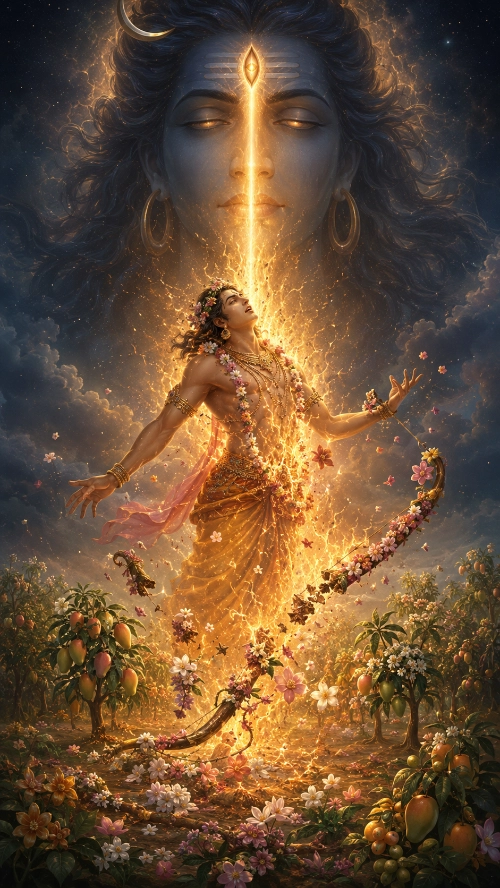
The Burning of Kāma and the Renewal of Nature
The chapter concludes when Śiva finally turns his wrathful gaze upon Kāma and burns him from the feet upward. Kāma’s bow divides into five parts that become fragrant flowering trees, while his arrows generate countless fruit-bearing species. Destruction is therefore converted into fertility: Kāma loses his material body and becomes Anaṅga, the invisible force of desire, while his weapons survive in the botanical world. The chapter unites asceticism, erotic power, grief, ritual ecstasy, liṅga theology, sectarian classification, and natural regeneration within a single cosmological narrative.


Commentary
The passage clearly enumerates four sons: Hari, Kṛṣṇa, Nārāyaṇa, and Nara.
In verse 3, saumya means gentle, gracious, or serene. Purāṇau here means “ancient” in the stronger sense of “primeval” or “existing from remote antiquity,” while ṛṣisattamau means “the two most excellent among sages.”