Vamana Mahapurana
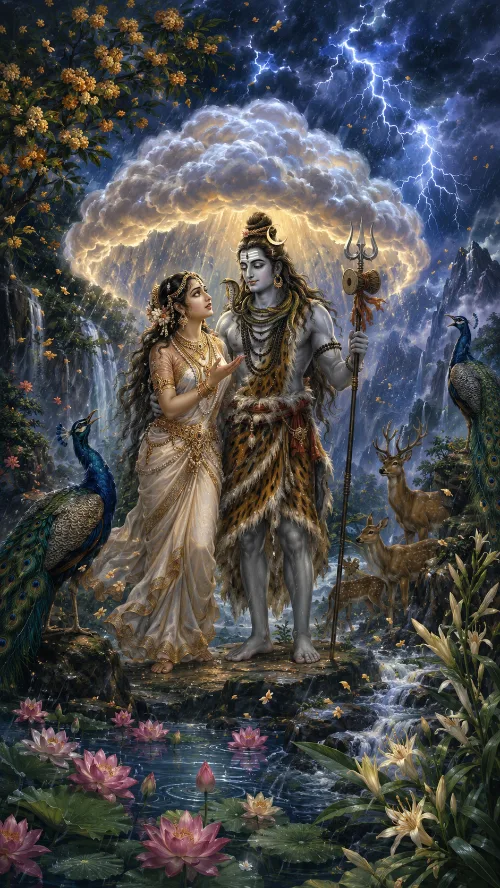
Chapter 1 - The Origin of Jīmūtaketu: Śiva Shelters Satī in the Monsoon Cloud
Verse 1
नारायणं नमस्कृत्य नरं चैव नरोत्तमम् ।
देवीं सरस्वतीं व्यासं ततो जयमुदीरयेत् ॥
शैलादिराजमासाद्य बलेरिन्द्राय यो ददौ ।
श्रीधराय नमस्तस्मै छद्मवामनरूपिणे ॥ १ ॥
nārāyaṇaṃ namaskṛtya naraṃ caiva narottamam |
devīṃ sarasvatīṃ vyāsaṃ tato jayam udīrayet ||
śailādirājam āsādya baler indrāya yo dadau |
śrīdharāya namas tasmai chadma-vāmana-rūpiṇe || 1 ||
Having bowed to Nārāyaṇa (Viṣṇu), to Nara (the ideal man / Arjuna), and to the supreme among men (Narottama), and also to Goddess Sarasvatī and Vyāsa, one should then recite the victorious narrative (Jaya).
To Him who seized the sovereignty of the three worlds (from Bali) and bestowed it upon Indra, salutations to that Śrīdhara (Viṣṇu), who assumed the deceptive form of the Dwarf (Vāmana). || 1 ||
Verse 2
पुलस्त्यमुनिमासीनमाश्रमे वाग्विदां वरम् ।
नारदः परिपप्रच्छ पुराणं वामनाश्रयम् ॥ २ ॥
pulastya-munim āsīnam āśrame vāg-vidāṃ varam |
nāradaḥ paripapraccha purāṇaṃ vāmanāśrayam || 2 ||
Nārada inquired of the sage Pulastya — who was seated in the āśrama, the foremost among masters of speech — about the Purāṇa that centers on Vāmana. || 2 ||
Verse 3
कथं भगवता ब्रह्मन् विष्णुना प्रभविष्णुना ।
वामनत्वं धृतं पूर्वं तन्ममाचक्ष्व पृच्छतः ॥ ३ ॥
kathaṃ bhagavatā brahman viṣṇunā prabhaviṣṇunā |
vāmanatvaṃ dhṛtaṃ pūrvaṃ tan mamācakṣva pṛcchataḥ || 3 ||
“O Brahman (Pulastya)! How did the all-powerful Lord Viṣṇu, the Bhagavān, previously assume the form of a Vāmana (dwarf)? Please tell me this, as I inquire.” || 3 ||
Verse 4
कथं च वैष्णवी भूत्वा प्रह्लादो दैत्यसत्तमः ।
त्रिदशैर्युध्यते सार्धमत्र मे संशयो महान् ॥ ४ ॥
kathaṃ ca vaiṣṇavī bhūtvā prahlādo daitya-sattamaḥ |
tridaśair yudhyate sārdham atra me saṃśayo mahān || 4 ||
“And how did Prahlāda, the foremost of the Daityas, after becoming devoted to Viṣṇu, come to fight together with the gods? In this matter, I have a great doubt.”
Verse 5
श्रूयते च द्विजश्रेष्ठ दक्षस्य दुहिता सती ।
शङ्करस्य प्रिया भार्या बभूव वरवर्णिनी ॥ ५ ॥
śrūyate ca dvija-śreṣṭha dakṣasya duhitā satī |
śaṅkarasya priyā bhāryā babhūva vara-varṇinī || 5 ||
“And it is heard, O best of twice-born sages, that Satī, the daughter of Dakṣa, beautiful in form, became the beloved wife of Śaṅkara.”
Verse 6
किमर्थं सा परित्यज्य स्वशरीरं वरानना ।
जाता हिमवतो गेहे गिरीन्द्रस्य महात्मनः ॥ ६ ॥
kimarthaṃ sā parityajya sva-śarīraṃ varānanā |
jātā himavato gehe girīndrasya mahātmanaḥ || 6 ||
“For what reason did that fair-faced lady abandon her own body and become born in the house of Himavat, the great-souled king of mountains?”
Verse 7
पुनश्च देवदेवस्य पत्नीत्वमगमच्छुभा ।
एतन्मे संशयं छिन्धि सर्ववित्त्वं मतोऽसि मे ॥ ७ ॥
punaś ca deva-devasya patnītvam agamac chubhā |
etan me saṃśayaṃ chindhi sarvavit tvaṃ mato ’si me || 7 ||
“And how did that auspicious one again attain the state of being the wife of the God of gods? Remove this doubt of mine, for you are regarded by me as all-knowing.”
Verse 8
तीर्थानां चैव माहात्म्यं दानानां चैव सत्तम ।
व्रतानां विविधानां च विधिमाचक्ष्व मे द्विज ॥ ८ ॥
tīrthānāṃ caiva māhātmyaṃ dānānāṃ caiva sattama |
vratānāṃ vividhānāṃ ca vidhim ācakṣva me dvija || 8 ||
“O excellent one, O twice-born sage, tell me also the greatness of the sacred tīrthas, the greatness of gifts and acts of charity, and the proper rules for the various vows.”
Verse 9
एवमुक्तो नारदेन पुलस्त्यो मुनिसत्तमः ।
प्रोवाच वदतां श्रेष्ठो नारदं तपसो निधिम् ॥ ९ ॥
evam ukto nāradena pulastyo muni-sattamaḥ |
provāca vadatāṃ śreṣṭho nāradaṃ tapaso nidhim || 9 ||
Thus addressed by Nārada, Pulastya, the excellent sage, the foremost among speakers, replied to Nārada, that treasury of austerity.
Verse 10
पुलस्त्य उवाच
पुराणं वामनं वक्ष्ये क्रमान्निखिलमादितः ।
अवधानं स्थिरं कृत्वा शृणुष्व मुनिसत्तम ॥ १० ॥
Pulastya uvāca
purāṇaṃ vāmanaṃ vakṣye kramān nikhilam āditaḥ |
avadhānaṃ sthiraṃ kṛtvā śṛṇuṣva muni-sattama || 10 ||
Pulastya said “I shall narrate the Vāmana Purāṇa completely, in proper sequence, from the beginning. Having made your attention steady, listen, O best of sages.”
Verse 11
पुरा हैमवती देवी मन्दरस्थं महेश्वरम् ।
उवाच वचनं दृष्ट्वा ग्रीष्मकालमुपस्थितम् ॥ ११ ॥
purā haimavatī devī mandara-sthaṃ maheśvaram |
uvāca vacanaṃ dṛṣṭvā grīṣma-kālam upasthitam || 11 ||
“Long ago, the goddess Haimavatī, seeing that the summer season had arrived, spoke these words to Maheśvara, who was dwelling on Mount Mandara.”
Verse 12
ग्रीष्मः प्रवृत्तो देवेश न च ते विद्यते गृहम् ।
यत्र वातातपौ ग्रीष्मे स्थितयोर्नौ गमिष्यतः ॥ १२ ॥
grīṣmaḥ pravṛtto deveśa na ca te vidyate gṛham |
yatra vātātapau grīṣme sthitayor nau gamiṣyataḥ || 12 ||
“O Lord of the gods, summer has begun, and you have no house where, while the two of us remain during the hot season, the wind and the burning heat may be kept away.”
Verse 13
एवमुक्तो भवान्या तु शङ्करो वाक्यमब्रवीत् ।
निराश्रयोऽहं सुदती सदाऽरण्यचरः शुभे ॥ १३ ॥
evam ukto bhavānyā tu śaṅkaro vākyam abravīt |
nirāśrayo ’haṃ sudatī sadāraṇya-caraḥ śubhe || 13 ||
Thus addressed by Bhavānī, Śaṅkara spoke these words: “I am without a fixed dwelling, O fair-toothed one; O auspicious lady, I am ever a wanderer in the forest.”
Verse 14
इत्युक्ता शङ्करेणाथ वृक्षच्छायासु नारद ।
निदाघकालमनयत् समं शर्वेण सा सती ॥ १४ ॥
ity uktā śaṅkareṇātha vṛkṣa-cchāyāsu nārada |
nidāgha-kālam anayat samaṃ śarveṇa sā satī || 14 ||
Thus addressed by Śaṅkara, O Nārada, that Satī passed the summer season together with Śarva beneath the shades of trees.
Verse 15
निदाघान्ते समुद्भूतो निर्जनाचरितोऽद्भुतः ।
घनान्धकारिताशो वै प्रावृट्कालोऽतिरागवान् ॥ १५ ॥
nidāghānte samudbhūto nirjanācarito ’dbhutaḥ |
ghanāndhakāritāśo vai prāvṛṭ-kālo ’tirāgavān || 15 ||
At the end of the hot season, there arose the wondrous rainy season, when lonely places become difficult to traverse, when the quarters are darkened by dense clouds, and when nature is filled with intense beauty and passion.
Verse 16
तं दृष्ट्वा दक्षतनुजा प्रावृट्कालमुपस्थितम् ।
प्रोवाच वाक्यं देवेशं सती सप्रणयं तदा ॥ १६ ॥
taṃ dṛṣṭvā dakṣa-tanujā prāvṛṭ-kālam upasthitam |
provāca vākyaṃ deveśaṃ satī sapraṇayaṃ tadā || 16 ||
Seeing that the rainy season had arrived, Satī, the daughter of Dakṣa, then spoke affectionately to the Lord of the gods.
Verse 17
विवान्ति वाता हृदयावदारणा
गर्जन्त्यमी तोयधरा महेश्वर ।
स्फुरन्ति नीलाभ्रगणेषु विद्युतो
वाशन्ति केकारवमेव बर्हिणः ॥ १७ ॥
vivānti vātā hṛdayāvadāraṇā
garjanty amī toyadharā maheśvara |
sphuranti nīlābhra-gaṇeṣu vidyuto
vāśanti kekāravam eva barhiṇaḥ || 17 ||
“The winds blow, as though tearing the heart apart; these rain-bearing clouds thunder, O Maheśvara. Lightning flashes among masses of dark-blue clouds, and the peacocks cry out with their kekā-sounds.”
Verse 18
पतन्ति धारा गगनात् परिच्युता
बका बलाकाश्च सरन्ति तोयदान् ।
कदम्बसर्जार्जुनकेतकीद्रुमाः
पुष्पाणि मुञ्चन्ति सुमारुताहताः ॥ १८ ॥
patanti dhārā gaganāt paricyutā
bakā balākāś ca saranti toyadān |
kadamba-sarja-arjuna-ketakī-drumāḥ
puṣpāṇi muñcanti su-mārutāhatāḥ || 18 ||
“Streams of rain, released from the sky, fall down; cranes and herons move about among the rain-clouds. The kadamba, sarja, arjuna, and ketakī trees, struck by pleasant winds, shed their blossoms.”
Verse 19
श्रुत्वैव मेघस्य दृढं तु गर्जितं
त्यजन्ति हंसाश्च सरांसि तत्क्षणात् ।
यथाश्रयान् योगिगणाः समन्तात्
प्रवृद्धमूलानपि संत्यजन्ति ॥ १९ ॥
śrutvaiva meghasya dṛḍhaṃ tu garjitaṃ
tyajanti haṃsāś ca sarāṃsi tatkṣaṇāt |
yathāśrayān yogigaṇāḥ samantāt
pravṛddha-mūlān api saṃtyajanti || 19 ||
“On hearing the deep, powerful thunder of the cloud, the haṃsas at once abandon the lakes; just as groups of yogins, on every side, abandon even shelters whose roots have grown deep.”
Verse 20
इमानि यूथानि वने मृगाणां
चरन्ति धावन्ति रमन्ति शम्भो ।
तथाचिराभाः सुतरां स्फुरन्ति
पश्येह नीलेषु घनेषु देव ।
नूनं समृद्धिं सलिलस्य दृष्ट्वा
चरन्ति शूरास्तरुणद्रुमेषु ॥ २० ॥
imāni yūthāni vane mṛgāṇāṃ
caranti dhāvanti ramanti śambho |
tathācirābhāḥ sutarāṃ sphuranti
paśyeha nīleṣu ghaneṣu deva |
nūnaṃ samṛddhiṃ salilasya dṛṣṭvā
caranti śūrās taruṇa-drumeṣu || 20 ||
“O Śambhu, these herds of deer in the forest are roaming, running, and delighting themselves. And see here, O Deva, how flashes of lightning shine forth intensely among the dark-blue clouds. Surely, seeing the abundance of water, the vigorous creatures move about among the young trees.”
Verse 21
उद्वृत्तवेगाः सहसैव निम्नगा
जाताः शशाङ्काङ्कितचारुमौले ।
किमत्र चित्रं यदनुज्ज्वलं जलं
निषेव्य योषिद्भवति त्वशीला ॥ २१ ॥
udvṛtta-vegāḥ sahasaiva nimnagā
jātāḥ śaśāṅkāṅkita-cāru-maule |
kim atra citraṃ yad anujjvalaṃ jalaṃ
niṣevya yoṣid bhavati tv aśīlā || 21 ||
“O beautiful-crested one marked with the moon, the rivers have suddenly become swollen and violent in their currents. What wonder is there in this? Having received turbid water, even a woman may become unrestrained.”
Verse 22
नीलैश्च मेघैः समावृतं नभः
पुष्पैश्च सर्जाः मुकुलैश्च नीपाः ।
फलैश्च बिल्वाः पयसा तथापगाः
पत्रैः सपद्मैश्च महासरांसि ॥ २२ ॥
nīlaiś ca meghaiḥ samāvṛtaṃ nabhaḥ
puṣpaiś ca sarjā mukulaiś ca nīpāḥ |
phalaiś ca bilvāḥ payasā tathāpagāḥ
patraiḥ sapadmaiś ca mahā-sarāṃsi || 22 ||
“The sky is covered with dark-blue clouds; the sarja trees with flowers, the nīpa trees with buds, the bilva trees with fruits; the rivers with water, and the great lakes with leaves and lotuses.”
Verse 23
इतीदृशे शङ्कर दुःसहोद्भटे
काले सुरौद्रे ननु ते ब्रवीमि ।
गृहं कुरुष्वात्र महाचलोत्तमे
सुनिर्वृता येन भवामि शम्भो ॥ २३ ॥
itīdṛśe śaṅkara duḥsahodbhaṭe
kāle su-raudre nanu te bravīmi |
gṛhaṃ kuruṣvātra mahācalottame
sunirvṛtā yena bhavāmi śambho || 23 ||
“O Śaṅkara, in such a season as this — fierce, terrible, and difficult to endure — I now tell you plainly: build a dwelling here upon this excellent great mountain, O Śambhu, by which I may live in comfort.”
Verse 24
इत्थं त्रिनेत्रः श्रुतिरामणीयकं
श्रुत्वा वचो वाक्यमिदं बभाषे ।
न मेऽस्ति वित्तं गृहसंचयार्थे
मृगारिचर्मावरणं मम प्रिये ॥ २४ ॥
itthaṃ trinetraḥ śruti-rāmaṇīyakaṃ
śrutvā vaco vākyam idaṃ babhāṣe |
na me ’sti vittaṃ gṛha-saṃcayārthe
mṛgāri-carmāvaraṇaṃ mama priye || 24 ||
Having heard these words, pleasing to the ear, the Three-eyed Lord spoke this reply: “My dear one, I have no wealth for the building of a house. The hide of the enemy of deer is my covering.”
Verse 25
ममोपवीतं भुजगेश्वरः शुभे
कर्णेऽपि पद्मश्च तथैव पिङ्गलः ।
केयूरमेकं मम कम्बलस्त्वहिः
द्वितीयमन्यो भुजगो धनञ्जयः ॥ २५ ॥
mamopavītaṃ bhujageśvaraḥ śubhe
karṇe ’pi padmaś ca tathaiva piṅgalaḥ |
keyūram ekaṃ mama kambalas tv ahiḥ
dvitīyam anyo bhujago dhanañjayaḥ || 25 ||
“O auspicious one, the lord of serpents is my sacred thread. In my ears are Padma and Piṅgala. One armlet of mine is the serpent Kambala, and the second is another serpent, Dhanañjaya.”
Verse 26
गस्तथैवाश्वतरो हि कङ्कणं
सव्येतरे तक्षक उत्तरे तथा ।
नीलोऽपि नीलाञ्जनतुल्यवर्णः
श्रोणीतटे राजति सुप्रतिष्ठः ॥ २६ ॥
nāgas tathaivāśvataro hi kaṅkaṇaṃ
savyetare takṣaka uttare tathā |
nīlo ’pi nīlāñjana-tulya-varṇaḥ
śroṇī-taṭe rājati supratiṣṭhaḥ || 26 ||
“Likewise, Nāga and Aśvatara serve as my bracelets; Takṣaka too is placed on the other side. And Nīla, dark like black collyrium, shines firmly set upon my hip.”
Verse 27
पुलस्त्य उवाच
इति वचनमथोक्तं शङ्करस्तां मृडानीं
ऋतुमपि तदसह्यं श्रीमदाकार्य भीता ।
प्रणतितलमवेक्ष्य स्वामिनो वासुकिं तु
परिवदति सरोषं लज्जयाच्छिन्नवक्त्रा च ॥ २७ ॥
Pulastya said
iti vacanam athoktaṃ śaṅkaras tāṃ mṛḍānīṃ
ṛtum api tad-asahyaṃ śrīmad ākārya bhītā |
praṇati-talam avekṣya svāmino vāsukiṃ tu
parivadati saroṣaṃ lajjayācchinna-vaktrā ca || 27 ||
Pulastya said: Hearing these fierce words from Śaṅkara, Mṛḍānī (Pārvatī), though they were true, became afraid upon hearing that unpleasant truth. Looking down at the ground because of the hardship of living with her lord, she speaks with anger, her breath hot with shame and indignation.
Verse 28
देव्युवाच
कथं हि देवदेवेश प्रावृट्कालो गमिष्यति ।
वृक्षमूले स्थिताया मे सुदुःखेन वदाम्यतः ॥ २८ ॥
Devya uvāca
kathaṃ hi deva-deveśa prāvṛṭ-kālo gamiṣyati |
vṛkṣa-mūle sthitāyā me su-duḥkhena vadāmy ataḥ || 28 ||
Goddess said “O Lord of the gods of gods, how indeed will the rainy season pass for me while I remain at the root of a tree? Therefore, I speak with great distress.”
Verse 29
शङ्कर उवाच
घनावस्थितदेहायाः प्रावृट्कालः प्रयास्यति ।
यथाम्बुधारा न तव निपतिष्यन्ति विग्रहे ॥ २९ ॥
Śaṅkara uvāca
ghanāvasthita-dehāyāḥ prāvṛṭ-kālaḥ prayāsyati |
yathāmbu-dhārā na tava nipatiṣyanti vigrahe || 29 ||
Śaṅkara said “The rainy season shall pass for you while your body is placed within a cloud, so that streams of water will not fall upon your form.”
Verse 30
ततो हरस्तद्वचनं खराङ्गमुक्तामाख्याय तस्थौ सह दक्षकन्यया ।
ततोऽभवद् राम तदेशस्य जीमूतकेतुरिति विश्रुता दिवि ॥ ३० ॥
tato haras tad-vacanaṃ kharāṅga-muktām ākhyāya tasthau saha dakṣa-kanyayā |
tato ’bhavad rāma tad-eśasya jīmūta-ketur iti viśrutā divi || 30 ||
Then Hara, having spoken those words and having released her from the harsh distress of exposure, remained there together with the daughter of Dakṣa. From that time, O Rāma, that place of the Lord became renowned in heaven as Jīmūtaketu.
इति श्रीवामनपुराणे प्रथमोऽध्यायः ॥
iti śrī-vāmana-purāṇe prathamo ’dhyāyaḥ ||
Thus ends the first chapter of the Śrī Vāmana Purāṇa.
Synopsis of Chapter 1
Vamana Purana ch1 - The Origin of Jīmūtaketu: Śiva Shelters Satī in the Monsoon Cloud
The opening chapter of the Vāmana Purāṇa begins with the traditional invocation to Nārāyaṇa, Nara, Sarasvatī, and Vyāsa, followed by praise of Śrīdhara Viṣṇu, who once assumed the form of Vāmana, the divine dwarf, to take back the sovereignty of the three worlds from Bali and restore it to Indra.
The sage Nārada approaches Pulastya, the great sage and master of sacred narration, and asks him to explain several profound matters: how Viṣṇu became Vāmana, how Prahlāda — though a Daitya devoted to Viṣṇu — became involved in conflict with the gods, how Satī became the wife of Śiva, why she abandoned her body and was reborn as the daughter of Himavat, and how she again became united with Śiva. Nārada also asks about the greatness of sacred places, gifts, charity, and vows.
Pulastya agrees to narrate the Vāmana Purāṇa in full and begins with an episode concerning Satī / Pārvatī and Śiva on Mount Mandara. During the summer season, the goddess observes that Śiva has no house where they may dwell comfortably and be protected from heat and wind. Śiva replies that he has no fixed residence and lives as a forest wanderer. Thus, they pass the summer beneath the shade of trees.
When the rainy season arrives, Satī describes the fierce beauty of the monsoon: thunderous clouds, flashing lightning, crying peacocks, swollen rivers, rain-filled skies, blooming trees, frightened birds, and restless animals. Troubled by the severity of the season, she asks Śiva to build a dwelling on the mountain so that she may live in comfort.
Śiva replies that he has no wealth to build a house. His life is one of ascetic poverty: his garment is animal hide, his sacred thread and ornaments are serpents, and his adornments are nāgas such as Padma, Piṅgala, Kambala, Dhanañjaya, Takṣaka, and Nīla. Hearing this stark truth, the goddess becomes distressed and ashamed, lamenting how she can pass the rainy season at the foot of a tree.
Śiva then offers a divine solution: she will remain within a cloud, protected from the falling rain. Having relieved her suffering in this way, Śiva stays there with Dakṣa’s daughter. From that time onward, that sacred place of the Lord became known in heaven as Jīmūtaketu.
Thus, the first chapter introduces the Purāṇa’s major themes — Viṣṇu’s Vāmana incarnation, Śiva and Satī’s divine history, sacred geography, austerity, devotion, and the contrast between worldly comfort and ascetic renunciation.


Commentary
The verse begins with the traditional maṅgala formula known from epic and Purāṇic literature: before narrating the sacred account, reverence is offered to Nārāyaṇa, Nara, Sarasvatī, and Vyāsa. The word jaya here means the victorious sacred narration, not merely “victory” in an ordinary sense.
The second half turns directly to Viṣṇu as Śrīdhara, “the bearer of Śrī/Lakṣmī.” He is praised as the one who assumed the deceptive or concealed form of Vāmana, the dwarf-brāhmaṇa, in order to recover the sovereignty taken by Bali and restore it to Indra. The expression chadma-vāmana-rūpiṇe emphasizes that the dwarf-form was a divine disguise, adopted for a cosmic purpose.