Vāyu Mahāpurāna - Vāyu-Proṣṭha
Chapter 7 - The enumeration of Pratisandhi period of transition between two Ages
सूत उवाच
इत्येष प्रथमः पादः प्रक्रियार्थः प्रकीर्तितः ।
श्रुत्वा तु संहृष्टमनाः काश्यपेयः सनातनः ॥ १ ॥
sūta uvāca
ityeṣa prathamaḥ pādaḥ prakriyārthaḥ prakīrtitaḥ |
śrutvā tu saṃhṛṣṭamanāḥ kāśyapeyaḥ sanātanaḥ || 1 ||
The Sūta said: Thus, this first section, intended as the prelude (prakriyā), has been expounded. Having heard it, the eternal sage, the descendant of Kaśyapa, was gladdened at heart.
संबोध्य सूतं वचसा पप्रच्छाथोत्तरां कथाम् ।
अतः प्रभृति कल्पज्ञ प्रतिसंधिं प्रचक्ष्व नः ॥ २ ॥
saṃbodhya sūtaṃ vacasā papracchāthottarāṃ kathām |
ataḥ prabhṛti kalpajña pratisaṃdhiṃ pracakṣva naḥ || 2 ||
Having respectfully addressed Sūta with words, he then inquired about the subsequent narrative: ‘From this point onward, O knower of kalpas, explain to us the transition period (pratisaṁdhi) between the cosmic cycles.’
समतीतस्य कल्पस्य वर्तमानस्य चोभयोः ।
कल्पयोरन्तरं यच्च प्रतिसंधिर्यतस्तयोः ।
एतद्वेदितुमिच्छाम अ (मो ह्य) त्यन्तकुशलोऽह्यसि ॥ ३ ॥
samatītasya kalpasya vartamānasya cobhayoḥ |
kalpayorantaraṃ yacca pratisaṃdhiryatastayoḥ |
etadveditumicchāma a (mo hya) tyantakuśalo’hyasi || 3 ||
We desire to know about the transition between the completely elapsed kalpa and the present one— the interval and the junction (pratisaṁdhi) between the two kalpas, for you are indeed supremely skilled and free from delusion.
लोमहर्षण उवाच
अत्र वोऽहं प्रवक्ष्यामि प्रतिसंधिश्च यस्तयोः ।
समतीतस्य कल्पस्य वर्तमानस्य चोभयोः ॥४॥
lomaharṣaṇa uvāca
atra vo’haṃ pravakṣyāmi pratisaṃdhiśca yastayoḥ |
samatītasya kalpasya vartamānasya cobhayoḥ ||4||
Lomaharṣaṇa said: Here I shall now explain to you the transition (pratisaṁdhi) that exists between the two kalpas— the past one which has elapsed and the present one that is underway.
मन्वन्तराणि कल्पेषु येषु यानि च सुव्रताः ।
यश्चायं वर्तते कल्पो वाराहः सांप्रतः शुभः ॥५॥
अस्मात्कल्पाच्च यः कल्पः पूर्वोऽतीतः सनातनः ।
तस्य चास्य च कल्पस्य मध्यावस्थां निबोधत ॥ ६ ॥
manvantarāṇi kalpeṣu yeṣu yāni ca suvratāḥ |
yaścāyaṃ vartate kalpo vārāhaḥ sāṃprataḥ śubhaḥ ||5||
asmātkalpācca yaḥ kalpaḥ pūrvo’tītaḥ sanātanaḥ |
tasya cāsya ca kalpasya madhyāvasthāṃ nibodhata || 6 ||
O sages of sacred vows, the Manvantaras (the periods of Manu) that exist within the kalpas—and this present kalpa which is now underway, known as the auspicious Vārāha Kalpa and the kalpa which preceded this one, the ancient and elapsed kalpa—you all now come to understand the intermediate state (madhyāvasthā) between that previous kalpa and this present one.
प्रत्याहृते पूर्वकाले प्रतिसंधिं च तत्र वै ।
अन्यः प्रवर्तते कल्पो जनाल्लोकात्पुनः पुनः ॥ ७ ॥
pratyāhṛte pūrvakāle pratisaṃdhiṃ ca tatra vai |
anyaḥ pravartate kalpo janāllokātpunaḥ punaḥ || 7 ||
When the previous aeon has been withdrawn, and during that transitional period (pratisaṁdhi), another kalpa arises repeatedly from Janaloka.
व्युच्छिन्नात्प्रतिसंधेस्तु कल्पाकल्पः परस्परम्।
व्युच्छिद्यन्ते क्रियाः सर्वाः कल्पान्ते सर्वशस्तदा ॥ ८ ॥
तस्मात्कल्पात्तु कल्पस्य प्रतिसंधिर्निगद्यते ।
vyucchinnātpratisaṃdhestu kalpākalpaḥ parasparam|
vyucchidyante kriyāḥ sarvāḥ kalpānte sarvaśastadā || 8 ||
tasmātkalpāttu kalpasya pratisaṃdhirnigadyate |
Indeed, from the interruption that is the pratisaṁdhi, one kalpa becomes separated from the next. At the end of a kalpa, all activities are completely cut off from all sides. Therefore, the term pratisaṁdhi is used to denote the transition from one kalpa to another.
भन्वन्तरयुगाख्यानामव्युच्छिन्नाश्च संघयः ॥ ९ ॥
परम्पराः प्रवर्तन्ते मन्वन्तरयुगैः सह ।
उक्ता ये प्रक्रियार्थेन पूर्वकल्पाः समासतः ॥ १० ॥
bhanvantarayugākhyānāmavyucchinnāśca saṃghayaḥ || 9 ||
paramparāḥ pravartante manvantarayugaiḥ saha |
uktā ye prakriyārthena pūrvakalpāḥ samāsataḥ || 10 ||
The successions of narratives regarding the Manvantaras and Yugas continue uninterrupted, and the traditional lineages flow on along with the Manvantaras and Yugas.
The earlier kalpas have been briefly described for the sake of procedural exposition.
तेषां परार्धकल्पानां पूर्वोह्यस्मात्तु यः परः ।
आसीत्कल्पो व्यतीतो वै परार्धं न परस्तु सः ॥ ११॥
teṣāṃ parārdhakalpānāṃ pūrvohyasmāttu yaḥ paraḥ |
āsītkalpo vyatīto vai parārdhaṃ na parastu saḥ || 11||
Of those kalpas belonging to the parārdha (half of Brahmā’s lifespan), the one earlier than this present kalpa—though occurring later in sequence—was indeed a past kalpa, but it did not belong to the second half (parārdha) of Brahmā’s life.
अन्ये भविष्या ये कल्पाअपरार्धाद्द्विगुणीकृताः ।
प्रथमः सांप्रतस्तेषां कल्पोऽयं वर्तते द्विजाः ॥ १२ ॥
anye bhaviṣyā ye kalpāaparārdhāddviguṇīkṛtāḥ |
prathamaḥ sāṃpratasteṣāṃ kalpo’yaṃ vartate dvijāḥ || 12 ||
The other kalpas that are yet to come, arising from the second half (aparārdha) of Brahmā’s lifespan and considered as doubled (or extended), —this kalpa, O Brāhmaṇas, is the first among them and is now ongoing.
यस्मिन्पूर्वः परार्धे तु द्वितीयः पर उच्यते ।
एतावान्स्थितिकालस्य प्रत्याहारस्ततः स्मृतः ॥ १३ ॥
yasminpūrvaḥ parārdhe tu dvitīyaḥ para ucyate |
etāvānsthitikālasya pratyāhārastataḥ smṛtaḥ || 13 ||
In that [lifespan of Brahmā], the first half is called the Pūrva-parārdha, and the second half is known as the Para-parārdha. Such is the duration of the world’s sustenance—and what follows thereafter is called pratyāhāra, the cosmic dissolution.
अस्मात्कल्पात्तु यः पूर्वं कल्पोऽतीतः सनातनः ।
चतुर्युगसहस्रान्ते अहो मन्वन्तरैः परा ॥ १४ ॥
क्षीणे कल्पे तदा तस्मिन्दाहकाले ह्युपस्थिते ।
तस्मिन्कल्पे तदा देवा आसन्वैमानिकास्तु ये ।। १५ ।।
नक्षत्रग्रहतारास्तु चन्द्रसूर्यग्रहाश्च ये ।
अष्टाविंशतिरेवैताः कोट्यस्तु सुकृतात्मनाम् ॥ १६॥
asmātkalpāttu yaḥ pūrvaṃ kalpo’tītaḥ sanātanaḥ |
caturyugasahasrānte aho manvantaraiḥ parā || 14 ||
kṣīṇe kalpe tadā tasmindāhakāle hyupasthite |
tasminkalpe tadā devā āsanvaimānikāstu ye || 15 ||
nakṣatragrahatārāstu candrasūryagrahāśca ye |
aṣṭāviṃśatirevaitāḥ koṭyastu sukṛtātmanām || 16||
Before this kalpa, there was an earlier, eternal (sanātana) kalpa. At the end of a thousand sets of four yugas (caturyuga-sahasra), along with the Manvantaras, that kalpa came to its conclusion.
When that kalpa reached its end and the time of burning (cosmic dissolution by fire) arrived, in that kalpa, the gods who dwelled in celestial vimānas still remained.
Likewise, the stars (nakṣatras), planets (grahas), constellations, and the Moon and the Sun— all these numbered twenty-eight crores (280 million), composed of virtuous souls.
मन्वन्तरे तथैकस्मिंश्चतुर्दशसु वै तथा ।
त्रीणि कोटिशतान्यासन्कोट्यो द्विनवतिस्तथा ॥ १७ ॥
manvantare tathaikasmiṃścaturdaśasu vai tathā |
trīṇi koṭiśatānyāsankoṭyo dvinavatistathā || 17 ||
Since each Manvantara contains 28 crores of those exalted beings, and there are fourteen Manvantaras in a kalpa, their total is (14 × 28) = 392 crores.
अष्टादिकाः सप्तशताः सहस्राणां स्मृताः पुरा ।
वैमानिकानां देवानां कल्पेऽतीते तु येऽभवन् ॥ १८ ॥
तु एकैकस्मिंस्तु कल्पे वै देवा वैमानिकाः स्मृताः ।
aṣṭādikāḥ saptaśatāḥ sahasrāṇāṃ smṛtāḥ purā |
vaimānikānāṃ devānāṃ kalpe’tīte tu ye’bhavan || 18 ||
tu ekaikasmiṃstu kalpe vai devā vaimānikāḥ smṛtāḥ |
In the past, the number of aerial gods (vaimānika devāḥ) in the previous kalpa was said to be seven hundred and eight thousand (708,000). In each individual kalpa, these vaimānika gods are similarly remembered as such.
अथ मन्वन्तरेष्वासंश्चतुर्दशसु वै दिवि ॥ १९ ॥
देवाश्च पितरश्चैव मुनयो मनवस्तथा ।
तेषामनुचरा ये च मनुपुत्रास्तथैव च ॥ २० ॥
वर्णाश्रमिभिरीड्याश्च तस्मिन्काले तु ये सुराः ।
मन्वन्तरेषु ये ह्यासन्देवलोके दिवौकसः ||२१||
ते तै: संयोजकैः सार्धं प्राप्ते संकालने तथा ।
तुल्यनिष्ठास्तु ते सर्वे प्राप्ते ह्याभूतसंप्लवे ॥२२॥
atha manvantareṣvāsaṃścaturdaśasu vai divi || 19 ||
devāśca pitaraścaiva munayo manavastathā |
teṣāmanucarā ye ca manuputrāstathaiva ca || 20 ||
varṇāśramibhirīḍyāśca tasminkāle tu ye surāḥ |
manvantareṣu ye hyāsandevaloke divaukasaḥ ||21||
te tai: saṃyojakaiḥ sārdhaṃ prāpte saṃkālane tathā |
tulyaniṣṭhāstu te sarve prāpte hyābhūtasaṃplave ||22||
In all the fourteen Manvantaras, there resided in heaven: the gods (Devas), the manes (Pitṛs), the sages (Munis), and the Manus themselves; along with their attendants, the sons of the Manus, and the gods who were revered by those observing all castes and stages of life (varṇāśrama).
These celestial beings (divaukasaḥ), dwelling in Devaloka during the Manvantaras,—along with their companions— when the time of final dissolution (saṁkālana) arrives all of them become established in equal realization (tulya-niṣṭhāḥ) when the great elemental dissolution (ābhūta-saṁplava) sets in.
ततस्तेऽवश्यभावित्वाद्बुध्वा पर्यायमात्मनः ।
त्रैलोक्यवासिनो देवा इहस्थानाभिमानिनः ॥२३॥
tataste’vaśyabhāvitvādbudhvā paryāyamātmanaḥ |
trailokyavāsino devā ihasthānābhimāninaḥ ||23||
Then, understanding the inevitability of it, the gods — residents of the three worlds, and proud of their positions here — realized the recurring cycle (paryāya) of their own existence.
स्थितिकाले तदा पूर्णे ह्यासन्ने पश्चिमेऽन्तरे ।
कल्पवासानिका देवा तस्मिन्प्राप्ते पप्लवे ॥ २४ ॥
तेनौत्सुक्यविषादेन त्यक्त्वा स्थानानि भावतः ।
महर्लोकाय संविग्नास्ततस्ते दधिरे मतिम् ॥ २५ ॥
sthitikāle tadā pūrṇe hyāsanne paścime’ntare |
kalpavāsānikā devā tasminprāpte paplave || 24 ||
tenautsukyaviṣādena tyaktvā sthānāni bhāvataḥ |
maharlokāya saṃvignāstataste dadhire matim || 25 ||
When the period of sustenance (sthiti-kāla) had been completed, and the final interval was drawing near, the gods residing in that kalpa, upon the arrival of the dissolution, were overcome.
Afflicted with agitation and sorrow, they abandoned their abodes out of emotional turmoil, and, deeply disturbed, they resolved to move toward Maharloka.
ते युक्ता उपपद्यन्ते महसि स्थैः शरीरकैः ।
विशुद्धिबहुलाः सर्वे मानसीं सिद्धिमास्थिताः ॥२६॥
te yuktā upapadyante mahasi sthaiḥ śarīrakaiḥ |
viśuddhibahulāḥ sarve mānasīṃ siddhimāsthitāḥ ||26||
They, being fully prepared, enter Maharloka with stable, subtle bodies; all of them rich in purity, having attained the perfection of mind-based realization.
कः कल्पवासिभिः सार्धं महानासादितस्तु यैः ।
ब्राह्मणैः क्षत्रियैर्वैश्यैस्तद्भक्तैश्चापरैर्जनैः ॥ २७ ॥
kaḥ kalpavāsibhiḥ sārdhaṃ mahānāsāditastu yaiḥ |
brāhmaṇaiḥ kṣatriyairvaiśyaistadbhaktaiścāparairjanaiḥ || 27 ||
The great realm (Maharloka) was attained— together with the kalpa-dwellers—by Brāhmaṇas, Kṣatriyas, Vaiśyas, their devotees, and other people as well.
मत्वा तु ते महर्लोकं देवसंघाश्चतुर्दश ।
ततस्ते जनलोकाय सोद्वेगा दधिरे मतिम् ॥ २८ ॥
matvā tu te maharlokaṃ devasaṃghāścaturdaśa |
tataste janalokāya sodvegā dadhire matim || 28 ||
Having reflected upon Maharloka, the fourteen groups of gods then, with a sense of unrest, fixed their minds on ascending to Janaloka.
विशुद्धिबहुला सर्वे मानसीं सिद्धिमास्थिताः ।
तैः कल्पवासिभिः सार्धं महानासादितस्तु यैः ॥ २९॥
viśuddhibahulā sarve mānasīṃ siddhimāsthitāḥ |
taiḥ kalpavāsibhiḥ sārdhaṃ mahānāsāditastu yaiḥ || 29||
All of them, being richly endowed with purity, and having attained mental perfection, together with the kalpa-dwellers, attained the great realm (Maharloka), indeed by whose merit it was reached.
दशकृत्व इवाऽऽवृत्य तस्माद्गच्छन्ति स्वस्तपः ।
तत्र कल्पान्दश स्थित्वा सत्यं गच्छन्ति वै पुनः ॥ ३० ॥
daśakṛtva ivā’’vṛtya tasmādgacchanti svastapaḥ |
tatra kalpāndaśa sthitvā satyaṃ gacchanti vai punaḥ || 30 ||
Having, as it were, revolved ten times, they ascend from there to Svargaloka and then to Tapoloka. There, after abiding for ten kalpas, they proceed once again to Satyaloka.
एतेन क्रमयोगेन (ण) यान्ति कल्पनिवासिनः ।
एवं देवयुगानां तु सहस्राणि परस्परात्॥३१॥
गतानि ब्रह्मलोकं वै अपरावर्तिनीं गतिम् ।
etena kramayogena (ṇa) yānti kalpanivāsinaḥ |
evaṃ devayugānāṃ tu sahasrāṇi parasparāt||31||
gatāni brahmalokaṃ vai aparāvartinīṃ gatim |
By this orderly progression, the dwellers of the kalpa proceed onward. Thus, after successively passing through thousands of divine yugas, they attain Brahmaloka — the realm of Brahmā — and the irreversible path of liberation.
आधिपत्यं विना ते वै ऐश्वर्येण तु तत्समाः ॥ ३२ ॥
भवन्ति ब्रह्मणस्तुल्या रूपेण विषयेण च।
ādhipatyaṃ vinā te vai aiśvaryeṇa tu tatsamāḥ || 32 ||
bhavanti brahmaṇastulyā rūpeṇa viṣayeṇa ca|
Though without rulership, they become equal to Brahmā in majesty — equal to him in form, in experience, and in enjoyment of divine objects.
तत्र ते ह्यवतिष्ठन्ति (न्ते) प्रीतियुक्ताः प्रसंगमात् ।। ३३ ।।
आनन्दं ब्रह्मणः प्राप्य मुच्यन्ते ब्रह्मणा सह ।
tatra te hyavatiṣṭhanti (nte) prītiyuktāḥ prasaṃgamāt || 33 ||
ānandaṃ brahmaṇaḥ prāpya mucyante brahmaṇā saha |
There, established in blissful affection through close association, they attain the joy of Brahmā and are liberated along with him.
अवश्यंभाविनाऽर्थेन प्राकृतेनैव ते स्वयम् ||३४||
नानात्वेनाभिसंबद्धास्तदा तत्कालभाविनः ।
avaśyaṃbhāvinā’rthena prākṛtenaiva te svayam ||34||
nānātvenābhisaṃbaddhāstadā tatkālabhāvinaḥ |
By the inevitably operative principle of Prakṛti itself, they become bound in multiplicity, conforming to the forms arising at that very moment.
स्वपतो बुद्धिपूर्वं हि यथा भवति जाग्रतः ॥ ३५ ॥
तत्कालभावि तेषां तु तथा ज्ञानं प्रवर्तते ।
svapato buddhipūrvaṃ hi yathā bhavati jāgrataḥ || 35 ||
tatkālabhāvi teṣāṃ tu tathā jñānaṃ pravartate |
Just as, upon awakening, knowledge arises preceded by intellect, so too, in them, knowledge arises and functions according to the form that manifests at that moment.
प्रत्याहारे तु भेदानां येषां भिन्नाभिसूक्ष्मणाम् ( ? ) ॥ ३६ ॥
तैः सार्धं प्रतिसृज्यन्ते कार्याणि करणानि च ।
pratyāhāre tu bhedānāṃ yeṣāṁ bhinnāḥ api sūkṣmāṇām || 36 ||
taiḥ sārdhaṃ pratisṛjyante kāryāṇi karaṇāni ca |
When the differences among even the subtlest forms are withdrawn at dissolution, then, along with them, all effects and instruments (senses and functions) are reabsorbed.
नानात्वदर्शनात्तेषां ब्रह्मलोकनिवासिनाम्॥३७॥
विनष्टस्वाधिकाराणां स्वेन धर्मेण तिष्ठताम् ।
ते तुल्यलक्षणा: सिद्धाः शुद्धात्मानोनिरञ्जनाः ॥ ३८ ॥
प्रकृतौ कारणातीताः स्वात्मन्येव व्यवस्थिताः ।
nānātvadarśanātteṣāṃ brahmalokanivāsinām||37||
vinaṣṭasvādhikārāṇāṃ svena dharmeṇa tiṣṭhatām |
te tulyalakṣaṇā: siddhāḥ śuddhātmānonirañjanāḥ || 38 ||
prakṛtau kāraṇātītāḥ svātmanyeva vyavasthitāḥ |
Due to the perceived diversity among those residing in Brahmaloka, whose former jurisdictions have now ceased, and who dwell by their essential dharma they are perfected ones, equal in quality, pure-souled, and untainted by illusion. They have transcended both Prakṛti and cause, and remain fully established in their own true Self.
प्रख्यापयित्वा ह्यात्मानं प्रकृतिस्तेषु सर्वशः ॥ ३९ ॥
पुरुषाव्यवहृत्वे (त्त्वे) न प्रतीता न प्रवर्तते ।
prakhyāpayitvā hyātmānaṃ prakṛtisteṣu sarvaśaḥ || 39 ||
puruṣāvyavahṛtve (ttve) na pratītā na pravartate |
Although Prakṛti fully reveals herself among them, in the absence of Puruṣa's engagement, she is neither recognized nor does she function.
प्रवर्तिते पुनः सर्गे तेषां वा कारणं पुनः॥४०॥
संयोगे प्राकृते तेषां युक्तानां तत्त्वदर्शिनाम् ।
अत्रापवर्गिणां तेषामपुनर्मार्गगामिना(णा)म्॥४१॥
अभाव: पुनरुत्पत्तौ शान्तानामर्चिषामिव ।
pravartite punaḥ sarge teṣāṃ vā kāraṇaṃ punaḥ||40||
saṃyoge prākṛte teṣāṃ yuktānāṃ tattvadarśinām |
atrāpavargiṇāṃ teṣāmapunarmārgagāminā(ṇā)m||41||
abhāva: punarutpattau śāntānāmarciṣāmiva |
When creation starts again, there is no longer any cause for rebirth for those united in yoga, the seers of truth, even if Prakṛti re-manifests. As for those who have attained liberation and no longer traverse the path of return — they do not arise again at creation, just as extinguished flames do not reignite.
ततस्तेषु गतेषूर्ध्वं त्रैलोक्यात्सुमहात्मसु ॥४२॥
तैः सार्धं ये महर्लोकात्तदा नाऽऽसादिता जनाः ।
तच्छिष्टाश्चेह तिष्ठन्ति कल्पाद्देहमुपासते ॥ ४३ ॥
tatasteṣu gateṣūrdhvaṃ trailokyātsumahātmasu ||42||
taiḥ sārdhaṃ ye maharlokāttadā nā’’sāditā janāḥ |
tacchiṣṭāśceha tiṣṭhanti kalpāddehamupāsate || 43 ||
Then on their having gone upwards, the great ones, from the triad of worlds, along with them who have not acquired Janaloka from Maharloka, those survived from their stay in Maharloka, they maintain their body for a Kalpa.
गन्धर्वाद्याः पिशाचान्ता मानुषा ब्राह्मणादयः ।
पशवः पक्षिणचैव स्थावराः ससरीसृपाः ।।४४॥
gandharvādyāḥ piśācāntā mānuṣā brāhmaṇādayaḥ |
paśavaḥ pakṣiṇacaiva sthāvarāḥ sasarīsṛpāḥ ||44||
From the Gandharvas down to the Piśācas, including humans — Brāhmaṇas and others — also the animals, the birds, the immobile beings, and the crawling creatures.
तिष्ठत्सु तेषु तत्कालं पृथिवीतलवासिषु ।
सहस्रं यत्तु रश्मीनां सूर्यस्येह विभासते ॥ ४५ ॥
ते सप्तरश्मयो भूत्वा ह्येकैको जायते रविः ।
tiṣṭhatsu teṣu tatkālaṃ pṛthivītalavāsiṣu |
sahasraṃ yattu raśmīnāṃ sūryasyeha vibhāsate || 45 ||
te saptaraśmayo bhūtvā hyekaiko jāyate raviḥ |
While those beings remained on the surface of the Earth at that time, a thousand rays of the Sun shone forth here. Each of those, having assumed a sevenfold form, individually became a Sun.
क्रमेणोत्तिष्ठमानास्ते त्रल्लोकान्प्रदहन्त्युत ॥४६॥
जङ्गमं स्थावरं चैव नदीः सर्वाश्च पर्वतान् ।
पूर्वे शुष्का हानावृष्ट्या सूर्यैस्तैश्च प्रधूपिताः ॥४७॥
krameṇottiṣṭhamānāste trallokānpradahantyuta ||46||
jaṅgamaṃ sthāvaraṃ caiva nadīḥ sarvāśca parvatān |
pūrve śuṣkā hānāvṛṣṭyā sūryaistaiśca pradhūpitāḥ ||47||
Rising gradually one after another, those Suns scorched the entire three worlds. They burned the mobile and immobile beings, all rivers and mountains. Already dried up due to lack of rain, the lands were further scorched and smoke-fumed by those Suns.
तदा ते विवशाः सर्वे निर्दग्धाः सूर्यरश्मिभिः ।
जङ्गमा: स्थावराः सर्वे धर्माधर्मात्मकास्तु वै ॥ ४८ ॥
tadā te vivaśāḥ sarve nirdagdhāḥ sūryaraśmibhiḥ |
jaṅgamā: sthāvarāḥ sarve dharmādharmātmakāstu vai || 48 ||
Then, all those beings, rendered helpless, were scorched by the rays of the Sun(s). All moving and unmoving beings — indeed composed of Dharma and Adharma — were consumed.
दग्धदेहास्ततस्ते वै गताः पापयुगात्यते ।
योन्या तया निर्मुक्ताः शुभपामानुबन्धया ॥४९॥
ततस्ते ह्युपपद्यन्ते तुल्यरूपा जने जनाः ।
विशुद्धिबहुलाः सर्वे मानसीं सिद्धिमास्थिताः ॥ ५० ॥
dagdhadehāstataste vai gatāḥ pāpayugātyate |
yonyā tayā nirmuktāḥ śubhapāmānubandhayā ||49||
tataste hyupapadyante tulyarūpā jane janāḥ |
viśuddhibahulāḥ sarve mānasīṃ siddhimāsthitāḥ || 50 ||
With their bodies burned at the end of the sinful age, they became freed from that [gross] bodily womb — yet still bound by the lingering residue of merit and sin. Thereafter, they took birth among the inhabitants of Janaloka, equal in form, all abounding in purity, and having attained a mental (i.e., subtle) mode of perfection.
उषित्वा रजनीं तत्र ब्रह्मणोऽव्यक्तजन्मनः ।
पुन: सर्गे भवन्तीह ब्रह्मणो मानसी प्रजा : ( ? ) ॥ ५१ ॥
uṣitvā rajanīṃ tatra brahmaṇo’vyaktajanmanaḥ |
puna: sarge bhavantīha brahmaṇo mānasī prajā : ( ? ) || 51 ||
Having dwelt through the night of Brahmā — the one of unmanifest birth — they are reborn here, at the new creation, as the mind-born progeny of Brahmā.
ततस्तेष्वप्रवृत्तेषु जने त्रैलोक्यवासिषु ।
निर्दग्धेषु च लोकेषु तेषु सूर्यैस्तु सप्तभि: ॥ ५२ ॥
वृष्ट्या क्षितौ प्लावितायां विशीर्णेष्वालयेषु च ।
समुद्राश्चैव मेघाश्च आपः सर्वाश्च पार्थिवाः ॥ ५३ ॥
व्रजन्त्येकार्णवत्वं हि सलिलाख्यास्तदाश्रिताः ।
tatasteṣvapravṛtteṣu jane trailokyavāsiṣu |
nirdagdheṣu ca lokeṣu teṣu sūryaistu saptabhi: || 52 ||
vṛṣṭyā kṣitau plāvitāyāṃ viśīrṇeṣvālayeṣu ca |
samudrāścaiva meghāśca āpaḥ sarvāśca pārthivāḥ || 53 ||
vrajantyekārṇavatvaṃ hi salilākhyāstadāśritāḥ |
Then, when the beings of the three worlds ceased to function, and those worlds had been scorched by the seven Suns, when the Earth was inundated by rain and the dwellings had collapsed, the oceans, the clouds, and all terrestrial waters merged, and all that had water as their base assumed the condition of a single ocean, called Salila (primordial waters).
आगतागतिकं तद्वै यदा तु सलिलं बहु ॥ ५४ ॥
संछाद्येमां स्थितां भूमिमर्णवाख्या तदा च सा ।
āgatāgatikaṃ tadvai yadā tu salilaṃ bahu || 54 ||
saṃchādyemāṃ sthitāṃ bhūmimarṇavākhyā tadā ca sā |
That immense flood of water, flowing in and out repeatedly, when it entirely covered this Earth, then the Earth came to be known by the name Arṇava (the oceanic expanse).
आभान्ति यस्मान्नाऽऽभान्ति भासन्तो व्याप्तिदीप्तिषु ॥ ५५ ॥
सर्वतः समनुप्लाव्य तासां चाम्भो विभाव्यते ।
ābhānti yasmānnā’’bhānti bhāsanto vyāptidīptiṣu || 55 ||
sarvataḥ samanuplāvya tāsāṃ cāmbho vibhāvyate |
Because of which [the elements] shine, and yet do not shine — though luminous in their all-pervading effulgence — having flooded everything on all sides, the waters of those alone become perceivable.
सदम्भस्तनुते यस्मात्सर्वां पृथ्वीं समन्ततः ॥५६॥
धातुस्तनोति विस्तारे तेनाम्भस्तनवः स्मृताः ।
sadambhastanute yasmātsarvāṃ pṛthvīṃ samantataḥ ||56||
dhātustanoti vistāre tenāmbhastanavaḥ smṛtāḥ |
Since the good waters (sad-ambhas) expand and pervade the entire Earth in all directions, and because the root tan means 'to expand' or 'to spread', therefore, these waters are known as tanavaḥ (expansions).
अरमित्येष शीघ्रं तु निपातः कविभिः स्मृतः ॥५७॥
एकार्णवे भवन्त्यापो न शीघ्रास्तेन ते नराः ।
aramityeṣa śīghraṃ tu nipātaḥ kavibhiḥ smṛtaḥ ||57||
ekārṇave bhavantyāpo na śīghrāstena te narāḥ |
The particle ‘aram’ is regarded by poets as denoting speed or quickness. But in the single, all-encompassing ocean (ekārṇava), the waters do not move swiftly — therefore, they are called Narāḥ.
तस्मिन्युगसहस्रान्ते संस्थिते ब्रह्मणोऽहनि ॥ ५८ ॥
रजन्यां वर्तमानायां तावत्तत्सलिलात्मना ।
ततस्तु सलिले तस्मिन्नष्टेऽग्नौ पृथिवीतले ॥ ५९ ॥
प्रशान्तवातेऽन्धकारे निरालोके समन्ततः ।
येनैवाधिष्ठितं हीदं ब्रह्मा स पुरुषः प्रभुः ॥ ६०॥
विभागमस्य लोकस्य पुनर्वै कर्तुमिच्छति ।
tasminyugasahasrānte saṃsthite brahmaṇo’hani || 58 ||
rajanyāṃ vartamānāyāṃ tāvattatsalilātmanā |
tatastu salile tasminnaṣṭe’gnau pṛthivītale || 59 ||
praśāntavāte’ndhakāre nirāloke samantataḥ |
yenaivādhiṣṭhitaṃ hīdaṃ brahmā sa puruṣaḥ prabhuḥ || 60||
vibhāgamasya lokasya punarvai kartumicchati |
At the end of the thousand Yugas — when the Day of Brahmā reaches its termination — and his night is underway, all things remain in the form of primordial waters (salila-ātmanā).
At that time, the earth, destroyed by fire, disappears into the waters; there is no wind, no light, and complete darkness prevails everywhere.
Then, He, by whom all this was formerly pervaded — that Supreme Puruṣa, Brahmā — wills again to divide and manifest this universe.
एकार्णवे तदा तस्मिन्नष्टे स्थावरजङ्गमे ॥ ६१ ॥
तदा स भवति ब्रह्मा सहस्राक्षः सहस्रपात् ।
सहस्रशीर्षा पुरुषो रुक्मवर्णो ह्यतीन्द्रियः ॥ ६२ ॥
ekārṇave tadā tasminnaṣṭe sthāvarajaṅgame || 61 ||
tadā sa bhavati brahmā sahasrākṣaḥ sahasrapāt |
sahasraśīrṣā puruṣo rukmavarṇo hyatīndriyaḥ || 62 ||
At that time, in that single, all-encompassing ocean (ekārṇava), when all mobile and immobile beings have perished, then emerges Brahmā – the thousand-eyed, thousand-footed, thousand-headed Puruṣa, golden-hued (rukma-varṇa), and transcendent of the senses (atīndriya).
ब्रह्मा नारायणाख्यस्तु सुष्वाप सलिले तदा ।
सत्त्वोद्रेकात्प्रबुद्धस्तु शून्यं लोकमवेक्ष्य च ॥ ६३ ॥
brahmā nārāyaṇākhyastu suṣvāpa salile tadā |
sattvodrekātprabuddhastu śūnyaṃ lokamavekṣya ca || 63 ||
Brahmā, also known as Nārāyaṇa, then lay asleep in the cosmic waters. Awakening due to the rise of the Sattva quality, he perceived the world as void.
इमं चोदाहरन्त्यत्र श्लोकं नारायणं प्रति ।
आपो नराख्यास्तनव इत्यपां नाम शुश्रुम ॥६४॥
आपूर्य नाभिं तत्राऽऽस्ते तेन नारायण स्मृतः ॥
imaṃ codāharantyatra ślokaṃ nārāyaṇaṃ prati |
āpo narākhyāstanava ityapāṃ nāma śuśruma ||64||
āpūrya nābhiṃ tatrā’’ste tena nārāyaṇa smṛtaḥ ||
Here is quoted a well-known verse concerning Nārāyaṇa. Waters are called Nara, and we have heard that Tanavaḥ (extensions/forms) is their name. Since He dwells (aste) in them, with the waters reaching His navel, He is called Nārāyaṇa.
सहस्रशीर्षा सुमनः सहस्रपात् सहस्रचक्षुर्वदनः सहस्रभुक्।
सहस्रबाहुः प्रथमः प्रजापति-
स्त्रीपथे यः पुरुषो निरुच्यते ॥ ६६ ॥
sahasraśīrṣā sumanaḥ sahasrapāt sahasracakṣurvadanaḥ sahasrabhuk|
sahasrabāhuḥ prathamaḥ prajāpati-
strīpathe yaḥ puruṣo nirucyate || 66 ||
The one with a thousand heads, of benevolent mind, with a thousand feet, With a thousand eyes and faces, one who consumes a thousandfold, With a thousand arms, the first Prajāpati — He is the Puruṣa who is described (in the Vedas) as moving along the path of the feminine (i.e., through Prakṛti).
आदित्यवर्णो भुवनस्य गोप्ता
एको पूर्व: प्रथमं तुराषाट् ।
हिरण्यगर्भः पुरुषो महात्मा
स पठ्यते वै तमसः परस्तात्॥६७॥
ādityavarṇo bhuvanasya goptā
eko pūrva: prathamaṃ turāṣāṭ |
hiraṇyagarbhaḥ puruṣo mahātmā
sa paṭhyate vai tamasaḥ parastāt||67||
He is of the hue of the sun (āditya-varṇaḥ), the protector of the universe (bhuvanasya goptā). He is the one and only, the foremost, the primal subduer (eko pūrvaḥ prathamaṁ turāṣāṭ). He is the golden-wombed (hiraṇya-garbhaḥ), the Cosmic Person (puruṣaḥ), the great-souled one (mahātmā). He is indeed spoken of as being beyond the darkness (tamasaḥ parastāt).
कल्पादौ रजसोद्रिक्तो ब्रह्मा भूत्वाऽसृजत्प्रजाः ।
कल्पान्ते तमसोद्रिक्तः कालो भूत्वाऽग्रसत्पुनः ॥ ६८ ॥
kalpādau rajasodrikto brahmā bhūtvā’sṛjatprajāḥ |
kalpānte tamasodriktaḥ kālo bhūtvā’grasatpunaḥ || 68 ||
At the beginning of the Kalpa, being dominated by Rajas (the quality of activity), he became Brahmā and created the beings. At the end of the Kalpa, dominated by Tamas (the quality of darkness/inertia), he became Kāla (Time or Death) and devoured them once again.
स वै नारायणाख्यस्तु सत्त्वोद्रिक्तोऽर्णवे स्वपन् ।
त्रिधा विभज्य चाऽऽत्मानं त्रैलोक्ये समवर्तत ॥ ६९ ॥
sa vai nārāyaṇākhyastu sattvodrikto’rṇave svapan |
tridhā vibhajya cā’’tmānaṃ trailokye samavartata || 69 ||
He, verily, known by the name Nārāyaṇa, abounding in Sattva (the quality of purity and harmony), while sleeping in the ocean, divided his own self into three forms and thus manifested in the three worlds.
सृजते ग्रसते चैव वीक्षते च त्रिभिस्तु तान् ।
एकार्णवे तदा लोके नष्टे स्थावरजङ्गमे ॥ ७० ॥
चतुर्युगसहस्रान्ते सर्वतः सलिलावृते ।
ब्रह्मा नारायणाख्यस्तु अप्रकाशार्णवे स्वपन् ॥ ७१ ॥
sṛjate grasate caiva vīkṣate ca tribhistu tān |
ekārṇave tadā loke naṣṭe sthāvarajaṅgame || 70 ||
caturyugasahasrānte sarvataḥ salilāvṛte |
brahmā nārāyaṇākhyastu aprakāśārṇave svapan || 71 ||
He creates, consumes, and observes them (the beings) through his threefold forms. At that time, when the entire world — both mobile and immobile — is destroyed, and all is immersed in the one cosmic ocean at the end of a thousand cycles of four Yugas (i.e., one Kalpa), and the world is entirely enveloped by water, then Brahmā, known as Nārāyaṇa, sleeps in the ocean of darkness, devoid of light.
चतुर्विधाः प्रजा ग्रस्त्वा ब्राह्मयां रात्र्यां महार्णवे ।
पश्यन्ति तं महर्लोकात्सुप्तं कालं महर्षयः ॥ ७२ ॥
caturvidhāḥ prajā grastvā brāhmayāṃ rātryāṃ mahārṇave |
paśyanti taṃ maharlokātsuptaṃ kālaṃ maharṣayaḥ || 72 ||
Having consumed the four kinds of beings during the night of Brahmā, Kāla (Time) sleeps in the great ocean; and from Maharloka, the great sages behold him.
भृग्वादयो यथा सप्त कल्पे ह्यस्मिन्महर्षयः ।
ततो विवर्तमानैस्तैर्महान्परिगतः परः ॥७३॥
bhṛgvādayo yathā sapta kalpe hyasminmaharṣayaḥ |
tato vivartamānaistairmahānparigataḥ paraḥ ||73||
Just as in this Kalpa, the seven great sages—Bṛgu and others—exist, so too, by those revolving (cyclically continuing) sages, the Great Being (Mahān), the Supreme One, is encompassed.
गत्यर्थादृषयो धातो ना (र्ना) मनिर्वृत्तिरादितः ।
तस्मादृषिपरत्वेन महांस्तस्मान्महर्षयः) ॥७४॥
gatyarthādṛṣayo dhāto nā (rnā) manirvṛttirāditaḥ |
tasmādṛṣiparatvena mahāṃstasmānmaharṣayaḥ) ||74||
From the root ‘√ṛṣ’ (meaning 'to go’ or 'move'), the word ṛṣi arises, as the derivation (vṛtti) stems from that root meaning. Therefore, due to their nature as ṛṣis, and being endowed with greatness (mahān), they are called mahāṛṣis or maharṣis.
महर्लोकस्थितैर्दृष्टः कालः सुप्तस्तदा च तैः ।
सत्याद्याः सप्त ये ह्यासन्कल्पेऽतीते महर्षयः ॥ ७५ ॥
maharlokasthitairdṛṣṭaḥ kālaḥ suptastadā ca taiḥ |
satyādyāḥ sapta ye hyāsankalpe’tīte maharṣayaḥ || 75 ||
By those stationed in Maharloka, the sleeping Kāla (Time or the cosmic being identified with dissolution) was then seen. And those seven great sages—beginning with Satya—existed in the previous Kalpa.
एवं ब्राह्मीषु रात्रीषु ह्यतीतासु सहस्रशः ।
दृष्टवन्तस्तथा ह्यन्ये सुप्तं कालं महर्षयः ॥ ७६ ॥
evaṃ brāhmīṣu rātrīṣu hyatītāsu sahasraśaḥ |
dṛṣṭavantastathā hyanye suptaṃ kālaṃ maharṣayaḥ || 76 ||
Thus, during the nights of Brahmā—thousands of which have passed—other great sages too beheld Kāla (Time) in his sleeping state.
कल्पस्यादौ तु बहुशो यस्मात्संस्थाश्चतुर्दश ।
कल्पयामास वै ब्रह्मा तस्मात्कल्पो निरुच्यते ॥ ७७ ॥
kalpasyādau tu bahuśo yasmātsaṃsthāścaturdaśa |
kalpayāmāsa vai brahmā tasmātkalpo nirucyate || 77 ||
Since at the beginning of the Kalpa, Brahmā repeatedly established the fourteen formations (realms or systems), it is therefore called a 'Kalpa'.
स स्रष्टा सर्वभूतानां कल्पादिषु पुनः पुनः ।
व्यक्ताव्यक्तो महादेवस्तस्य सर्वमिदं जगत् ॥ ७८ ॥
sa sraṣṭā sarvabhūtānāṃ kalpādiṣu punaḥ punaḥ |
vyaktāvyakto mahādevastasya sarvamidaṃ jagat || 78 ||
He is the creator of all beings at the beginning of each Kalpa, again and again. The Great God, both manifest and unmanifest, of Him is this entire universe.
इत्येष प्रतिसंधिर्वः कीर्तितः कल्पयोर्द्वयोः ।
सांप्रतातीतयोर्मध्ये प्रागवस्था बभूव या ।। ७९ ।।
कीर्तिता तु समासेन कल्पे कल्पे यथा तथा ।
सांप्रतं ते प्रवक्ष्यामि कल्पमेतं निबोधत ।। ८० ।।
ityeṣa pratisaṃdhirvaḥ kīrtitaḥ kalpayordvayoḥ |
sāṃpratātītayormadhye prāgavasthā babhūva yā || 79 ||
kīrtitā tu samāsena kalpe kalpe yathā tathā |
sāṃprataṃ te pravakṣyāmi kalpametaṃ nibodhata || 80 ||
Thus, this transition (pratisandhi) between the two Kalpas has been described to you — the intermediate state that existed between the present and the preceding Kalpa. That condition, as it occurs similarly in each Kalpa, has been briefly narrated. Now, I shall narrate to you this present Kalpa — understand it well.
इति महापुराणे वायुप्रोक्ते प्रतिसंधिकीर्तनं नाम सप्तमोऽध्यायः ॥७॥
Iti Mahāpurāṇe Vāyuproṣṭhe Pratisaṁdhikriyitaṁ Nāma Saptamo'dhyāyaḥ ||7||
Thus ends the seventh chapter titled Pratisaṁdhikriyita in the Vāyu Proṣṭha section of the Mahāpurāṇa.
Full Synopsis of Chapter 7 — The enumeration of Pratisandhi period of transition between two Ages
This profound chapter opens the cosmic narrative by examining the mysterious interval between two great cycles of creation — the kalpas — through the lens of pratisandhi, the transitional state. When the previous cosmic era ends and the new one has yet to begin, the universe enters a suspended phase, a pause between cycles. The sage Lomaharṣaṇa, responding to the eager questions of the seers, recounts the nature and significance of this temporal threshold.
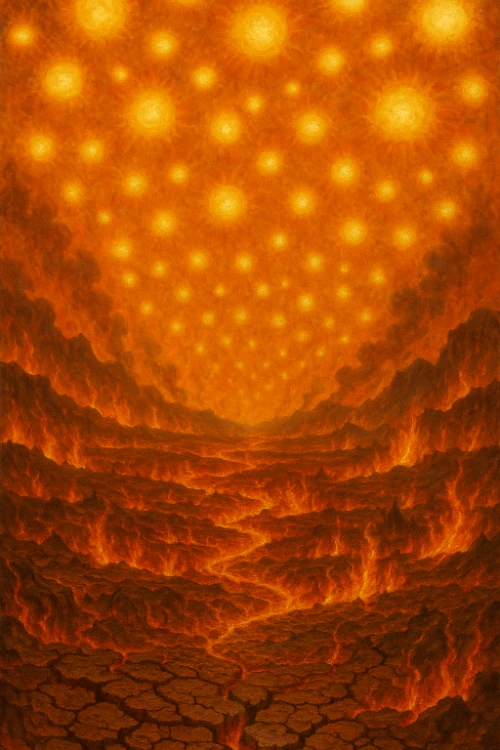
The focus is placed on the period following the conclusion of a previous, now-elapsed kalpa, and the current Vārāha Kalpa in which we live. This intermediate stage is not empty — it is filled with profound processes of dissolution (pralaya), ascension, and rebirth. As the universe winds down, all manifested actions cease. The world is scorched by a thousand Suns, each splitting into seven rays, and all mobile and immobile life is consumed. The Earth is plunged into drought, heat, and smoke, before being entirely submerged in the cosmic ocean (salila), rendering it an oceanic expanse (Arṇava).
During this cataclysm, the gods, sages, and virtuous beings—freed from gross bodies—ascend through the lokas, from Maharloka to Janaloka, Tapoloka, and eventually Satyaloka. They maintain subtle bodies, sustained by purity and austerity. There, having completed their journey through thousands of yugas, they attain Brahmaloka and liberation, free from rebirth.
At the heart of the cosmic waters lies Nārāyaṇa (Brahmā), golden in hue, with a thousand heads and eyes. Resting in the Ekārṇava (single ocean), he is both witness and agent of creation and dissolution. As the night of Brahmā proceeds, he remains in yogic sleep until, at the reawakening, he once again divides himself and sets the cosmos into motion.
The chapter not only describes the destruction of forms but also honors the permanence of dharma across cycles. Even when the cosmos collapses, the sages, Manus, devas, and all divine orders rise upward through subtle ascension. The cosmic hierarchy persists: the great ṛṣis like Bṛgu and Satya, the Vaimānika Devas, and the kalpa-dwellers, all continue their spiritual evolution across kalpas.
Finally, the text makes clear that this cycle has happened countless times: thousands of such nights and days of Brahmā have already passed. What has been narrated here is one such transition — the pratisandhi — between dissolution and rebirth, darkness and illumination. It is both terrifying and sacred, a reminder of the grandeur of cyclical time and the continuity of existence beyond form.


Commentary
Parārdha (परार्ध): Each day of Brahmā is 1 kalpa (~4.32 billion years). Brahmā lives for 100 years of such days and nights, split into two parārdhas (halves). The first 50 years = first parārdha, the next 50 = second parārdha.
This verse seems to distinguish between:
Kalpas that occurred in the first parārdha (now elapsed), and The current kalpa, which occurs in the second parārdha of Brahmā’s life.
The phrase “na paraḥ tu saḥ” — "but it was not of the latter parārdha" — clarifies that the previous kalpa (perhaps the one just before the current Vārāha Kalpa) belonged to the earlier half of Brahmā’s lifespan.