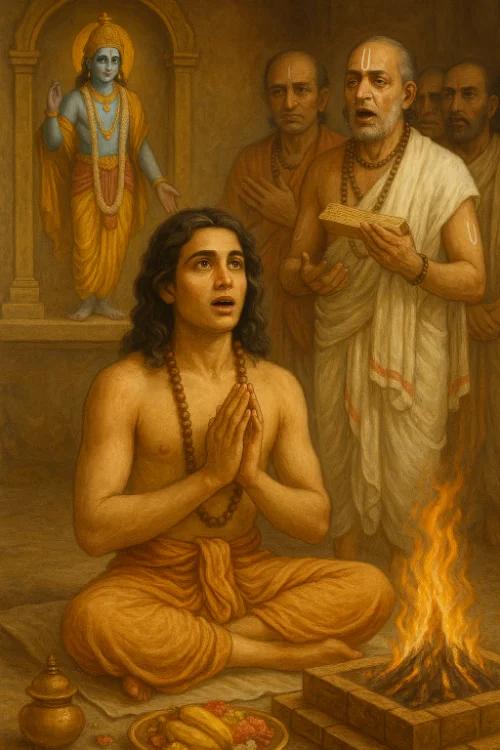
Liṅga Mahāpurāṇa
Chapter 7 — Praise of the Twelve Syllable Mantra
ऋषय ऊचुः
किंजपान्मुच्यते जंतुः सर्वलोकभयादिभिः ।
सर्वपापविनिर्मुक्तः प्राप्नोति परमां गतिम् ॥१॥
अलक्ष्मीं वाथ संत्यज्य गमिष्यति जपेन वै ।
लक्ष्मीवासो भवेन्मर्त्यः सूत वक्तुमिहार्हसि ॥ २॥
ṛṣaya ūcuḥ
kiṃjapānmucyate jaṃtuḥ sarvalokabhayādibhiḥ |
sarvapāpavinirmuktaḥ prāpnoti paramāṃ gatim ||1||
alakṣmīṃ vātha saṃtyajya gamiṣyati japena vai |
lakṣmīvāso bhavenmartyaḥ sūta vaktumihārhasi || 2||
The sages said: By chanting what sacred mantra can a living being be liberated from all fears and dangers that exist in this world and beyond? By what japa (mantra repetition) can one become completely free from all sins and impurities, and attain the Supreme Destination?
What should one chant to cast away misfortune and all forms of suffering, and instead, obtain divine prosperity and the presence of Lakṣmī (Goddess of wealth and fortune)?
O Sūta! You are worthy of answering this. Please reveal this knowledge to us here and now.
सूत उवाच
पुरा पितामहेनोक्तं वसिष्ठाय महात्मने ।
वक्ष्ये संक्षेपतः सर्वं सर्वलोकहिताय वै ॥ ३॥
sūta uvāca
purā pitāmahenoktaṃ vasiṣṭhāya mahātmane |
vakṣye saṃkṣepataḥ sarvaṃ sarvalokahitāya vai || 3||
Sūta said: Long ago, this sacred knowledge was revealed by the great Pitāmaha (Lord Brahmā) to the exalted sage Vasiṣṭha. Now, I shall summarize it briefly, for the benefit of all beings, and for the ultimate welfare of the entire world.
शृण्वंतु वचनं सर्वे प्रणिपत्य जनार्दनम् ।
देवदेवमजं विष्णुं कृष्णमच्युतमव्ययम् ॥४॥
सर्वपापहरं शुद्धं मोक्षदं ब्रह्मवादिनम् ।
मनसा कर्मणा वाचा यो विद्वान्पुण्यकर्मकृत् ॥५॥
नारायणं जपेन्नित्यं प्रणम्य पुरुषोत्तमम् ।
स्वपन्नारायणं देवं गच्छन्नारायणं तथा ॥ ६ ॥
भुञ्जन्नारायणं विप्रास्तिष्ठज्जाग्रत्सनातनम्।
उन्मिषन्निमिषन्वापि नमो नारायणेति वै ॥७॥
भोज्यं पेयं च लेह्यं च नमो नारायणेति च ।
अभिमंत्र्य स्पृशन्भुंक्ते स याति परमां गतिम् ॥ ८॥
śṛṇvaṃtu vacanaṃ sarve praṇipatya janārdanam |
devadevamajaṃ viṣṇuṃ kṛṣṇamacyutamavyayam ||4||
sarvapāpaharaṃ śuddhaṃ mokṣadaṃ brahmavādinam |
manasā karmaṇā vācā yo vidvānpuṇyakarmakṛt ||5||
nārāyaṇaṃ japennityaṃ praṇamya puruṣottamam |
svapannārāyaṇaṃ devaṃ gacchannārāyaṇaṃ tathā || 6 ||
bhuñjannārāyaṇaṃ viprāstiṣṭhajjāgratsanātanam|
unmiṣannimiṣanvāpi namo nārāyaṇeti vai ||7||
bhojyaṃ peyaṃ ca lehyaṃ ca namo nārāyaṇeti ca |
abhimaṃtrya spṛśanbhuṃkte sa yāti paramāṃ gatim || 8||
Listen carefully, O all beings! With reverence, bow before Janārdana (Viṣṇu), the Supreme among gods, unborn and eternal, the imperishable Krishna, Acyuta (the infallible one).
This sacred name destroys all sins, it is pure and bestows mokṣa (liberation). It is the essence of Brahma-jñāna (spiritual wisdom), known only to the wise who engage in virtuous actions through mind, speech, and deeds.
One should always chant the name of Nārāyaṇa, with devotion and reverence, bowing to the Supreme Puruṣottama.
While sleeping, one should chant 'Nārāyaṇa.' While walking, one should chant 'Nārāyaṇa.'
While eating, drinking, or even when standing or awake, one should continuously remember the eternal Lord, Nārāyaṇa. Even when blinking, opening, or closing the eyes, one should chant: 'Namo Nārāyaṇāya'.
Before consuming any food, drink, or medicine, one should chant 'Namo Nārāyaṇāya,' and by touching the food with this mantra, he who eats it shall attain the Supreme Destination.
सर्वपापविनिर्मुक्तः प्राप्नोति च सतां गतिम्।
अलक्ष्मीश्च मया प्रोक्ता पत्नी या दुःसहस्य च ॥ ९॥
नारायणपादं श्रुत्वा गच्छत्येव न संशयः ।
या लक्ष्मीर्देवदेवस्य हरेः कृष्णस्य वल्लभा ॥ १० ॥
गृहे क्षेत्रे तथावासे तनौ वसति सुव्रताः ।
आलोड्य सर्वशास्त्राणि विचार्य च पुनः पुनः ॥ ११ ॥
इदमेकं सुनिष्पन्नं ध्येयो नारायणः सदा ।
किं तस्य बहुभिर्मंत्रैः किं तस्य बहुभिर्व्रतैः ॥ १२॥
sarvapāpavinirmuktaḥ prāpnoti ca satāṃ gatim|
alakṣmīśca mayā proktā patnī yā duḥsahasya ca || 9||
nārāyaṇapādaṃ śrutvā gacchatyeva na saṃśayaḥ |
yā lakṣmīrdevadevasya hareḥ kṛṣṇasya vallabhā || 10 ||
gṛhe kṣetre tathāvāse tanau vasati suvratāḥ |
āloḍya sarvaśāstrāṇi vicārya ca punaḥ punaḥ || 11 ||
idamekaṃ suniṣpannaṃ dhyeyo nārāyaṇaḥ sadā |
kiṃ tasya bahubhirmaṃtraiḥ kiṃ tasya bahubhirvrataiḥ || 12||
One who hears and meditates upon the divine feet of Nārāyaṇa becomes completely freed from all sins and ultimately attains the supreme abode of the noble and the pure.
O seekers of truth, I have already spoken of Alakṣmī, the goddess of misfortune, the consort of suffering. But one who listens to the glories of Nārāyaṇa—she shall surely flee from him, without a doubt.
On the other hand, Lakṣmī, the beloved of Hari (Viṣṇu), the divine consort of Kṛṣṇa, dwells in the homes, lands, and very bodies of those who remain devoted to the Lord.
Having thoroughly examined all the Śāstras and reflected upon them again and again, one truth alone remains clear: The only true meditation is upon Nārāyaṇa, at all times.
What is the use of countless mantras? What is the need for numerous vratas (vows and austerities)? When the greatest truth is simply to remember and worship Lord Nārāyaṇa alone.
नमो नारायणायेति मंत्रः सर्वार्थसाधकः ।
तस्मात्सर्वेषु कालेषु नमो नारायणेति च ॥ १३॥
जपेत्स याति विप्रेंद्रा विष्णुलोकं सबांधवः ।
अन्यच्च देवदेवस्य शृण्वंतु मुनिसत्तमाः ॥ १४॥
मंत्रो मया पुराभ्यस्तः सर्ववेदार्थसाधकः ।
द्वादशाक्षरसंयुक्तो द्वादशात्मा पुरातनः ॥१५॥
तस्यैवेह च माहात्म्यं संक्षेपात्प्रवदामि वः ।
namo nārāyaṇāyeti maṃtraḥ sarvārthasādhakaḥ |
tasmātsarveṣu kāleṣu namo nārāyaṇeti ca || 13||
japetsa yāti vipreṃdrā viṣṇulokaṃ sabāṃdhavaḥ |
anyacca devadevasya śṛṇvaṃtu munisattamāḥ || 14||
maṃtro mayā purābhyastaḥ sarvavedārthasādhakaḥ |
dvādaśākṣarasaṃyukto dvādaśātmā purātanaḥ ||15||
tasyaiveha ca māhātmyaṃ saṃkṣepātpravadāmi vaḥ |
The mantra 'Namo Nārāyaṇāya' is the fulfiller of all desires and the bringer of all auspiciousness. Therefore, at all times and in all circumstances, one should chant 'Namo Nārāyaṇāya' without fail.
O foremost of the twice-born (Brahmins), one who chants this mantra will surely attain Viṣṇu-loka, along with all his family members.
Furthermore, O best among sages, listen now to another great truth about the Supreme Lord of all gods (Devadeva). There exists a mantra which I have practiced since ancient times, which encompasses the essence of all the Vedas.
It is the Twelve-Syllable Mantra, ancient and eternal, consisting of the twelve divine aspects of the Lord.
Now, I shall briefly describe its supreme greatness to you all.
कश्चिद्विजो महाप्राज्ञस्तपस्तप्त्वा कथञ्चन ॥ १६॥
पुत्रमेकं तयोत्पाद्य संस्कारैश्च यथाक्रमम् ।
योजयित्वा यथाकालं कृतोपनयनं पुनः ॥ १७॥
अध्यापयामास तदा स च नोवाच किञ्चन ।
न जिह्वा स्पंदते तस्य दुःखितोऽभूद्विजोत्तमः ॥ १८ ॥
kaścidvijo mahāprājñastapastaptvā kathañcana || 16||
putramekaṃ tayotpādya saṃskāraiśca yathākramam |
yojayitvā yathākālaṃ kṛtopanayanaṃ punaḥ || 17||
adhyāpayāmāsa tadā sa ca novāca kiñcana |
na jihvā spaṃdate tasya duḥkhito’bhūdvijottamaḥ || 18 ||
Once, there was a certain learned Brahmin who was highly wise and deeply devoted.
Through the practice of severe austerities, and by the grace of fate, he was able to beget a single son.
Following the proper Vedic rites, he nurtured and raised the child with the correct samskāras (sacraments) at every stage of life.
When the appropriate time came, he performed the sacred thread ceremony (upanayana) and initiated the child into the path of knowledge and discipline.
Thereafter, he began to teach his son and train him in the study of the scriptures. But to his great sorrow, the child did not utter a single word!
His tongue would not move, and no sound came from his mouth. Seeing this, the Brahmin father fell into deep despair.
वासुदेवेति नियतमैतरेयो वदत्यसौ ।
पिता तस्य तथा चान्यां परिणीय यथाविधि ॥ १९ ॥
पुत्रानुत्पादयामास तथैव विधिपूर्वकम् ।
वेदानधीत्य संपन्ना बभूवुः सर्वसंमताः ॥२०॥
vāsudeveti niyatamaitareyo vadatyasau |
pitā tasya tathā cānyāṃ pariṇīya yathāvidhi || 19 ||
putrānutpādayāmāsa tathaiva vidhipūrvakam |
vedānadhītya saṃpannā babhūvuḥ sarvasaṃmatāḥ ||20||
Then, to everyone's amazement, the mute son, named Aitareya, suddenly began speaking. But he uttered only one phrase repeatedly: "Vāsudeva! Vāsudeva!"
This was the only sound that ever came from his mouth—a constant and unwavering chant of the Supreme Lord’s name.
Meanwhile, his father, still desiring a complete family, married another wife, following the proper Vedic traditions.
From this union, he begot other sons through the correct rituals. These sons received full education in the Vedas, and became highly accomplished and respected by all who knew them.
ऐतरेयस्य सा माता दुःखिता शोकमूर्च्छिता ।
उवाच पुत्राः संपन्ना वेदवेदाङ्गपारगाः॥२१॥
ब्राह्मणैः पूज्यमाना वै मोदयंति च मातरम् ।
मम त्वं भाग्यहीनायाः पुत्रो जातो निराकृतिः ॥ २२॥
मात्र निधनं श्रेयो न कथञ्चन जीवितम् ।
इत्युक्तः स च निर्गम्य यज्ञावाटं जगाम वै ॥२३॥
aitareyasya sā mātā duḥkhitā śokamūrcchitā |
uvāca putrāḥ saṃpannā vedavedāṅgapāragāḥ||21||
brāhmaṇaiḥ pūjyamānā vai modayaṃti ca mātaram |
mama tvaṃ bhāgyahīnāyāḥ putro jāto nirākṛtiḥ || 22||
mātra nidhanaṃ śreyo na kathañcana jīvitam |
ityuktaḥ sa ca nirgamya yajñāvāṭaṃ jagāma vai ||23||
Aitareya’s mother, overcome with grief and despair, fell into deep sorrow, lamenting her fate.
She cried out in anguish: "Other mothers are blessed with sons who are accomplished and well-versed in the Vedas. Such sons are honored by the learned Brahmins and bring joy to their mothers."
But I am truly unfortunate! For I have given birth to you—a son without dignity, without worth, a child who speaks only one name and nothing else.
For me, death is preferable to the shame of having you as my son. Living with this sorrow is unbearable.
Hearing these harsh words, Aitareya, heartbroken yet silent, left his home and walked toward the yajña (sacrificial ground).
तस्मिन्यते द्विजानां तु न मंत्राः प्रतिपेदिरे ।
ऐतरेय स्थिते तत्र ब्राह्मणा मोहितास्तदा ॥ २४॥
tasminyate dvijānāṃ tu na maṃtrāḥ pratipedire |
aitareya sthite tatra brāhmaṇā mohitāstadā || 24||
As the Brahmins assembled for the yajña (sacred ritual), something extraordinary transpired—the sacred mantras they chanted ceased to have any effect.
Their rituals faltered, their prayers lost potency, and an overwhelming sense of bewilderment overtook them.
ततो वाणी समुद्भूता वासुदेवेति कीर्तनात् ।
ऐतरेयस्य ते विप्राः प्रणिपत्य यथातथम् ॥ २५ ॥
पूजां चक्रुस्ततो यज्ञं स्वयमेव समागतम् ।
ततः समाप्य तं यज्ञमैतरेयो धनादिभिः ॥ २६॥
सर्ववेदान्सदस्याह च षडङ्गान् समाहिताः ।
तुष्टुवुश्च तथा विप्रा ब्रह्माद्याश्च तथा द्विजाः ॥ २७ ॥
tato vāṇī samudbhūtā vāsudeveti kīrtanāt |
aitareyasya te viprāḥ praṇipatya yathātatham || 25 ||
pūjāṃ cakrustato yajñaṃ svayameva samāgatam |
tataḥ samāpya taṃ yajñamaitareyo dhanādibhiḥ || 26||
sarvavedānsadasyāha ca ṣaḍaṅgān samāhitāḥ |
tuṣṭuvuśca tathā viprā brahmādyāśca tathā dvijāḥ || 27 ||
Then, from the heavens, a divine voice resounded: "It is through the mere chanting of ‘Vāsudeva’ by Aitareya that this marvel has occurred!"
Hearing this celestial proclamation, the assembled Brahmins, realizing the truth, humbly prostrated before Aitareya, overcome with reverence. Filled with devotion, they honored and worshipped him.
Then, as if by divine will, the yajña miraculously completed itself—without the need for further effort or invocation!
Recognizing this divine intervention, Aitareya was bestowed with immense wealth and honor. At that moment, the gathered sages and Brahmins, absorbed in profound contemplation, began to sing hymns of praise in his honor.
Even Brahmā and the celestial beings glorified him, acknowledging the supreme power of pure devotion and the unparalleled sanctity of the Twelve-Syllable Mantra of Vāsudeva.
ससर्जु : पुष्पवर्षाणि खेचराः सिद्धचारणाः ।
एवं समाप्य वे यज्ञमैतरेयो द्विजोत्तमाः ॥२८॥
मातरं पूजयित्वा तु विष्णोः स्थानं जगाम ह।
एतद्वै कथितं सर्वं द्वादशाक्षरवैभवम्॥२९॥
पठतां शृण्वतां नित्यं महापातकनाशनम्।
जपेद्यः पुरुषो नित्यं द्वादशाक्षरमव्ययम् ॥३०॥
स याति दिव्यमतुलं विष्णोस्तत्परमं पदम् ।
अपि पापसमाचारो द्वादशाक्षरतत्परः ॥ ३१॥
प्राप्नोति परमं स्थानं नात्र कार्या विचारणा ।
किं पुनर्ये स्वधर्मस्था वासुदेवपरायणाः ॥३२॥
दिव्यं स्थानं महात्मानः प्राप्नुवंतीति सुव्रताः ॥३३॥
sasarju : puṣpavarṣāṇi khecarāḥ siddhacāraṇāḥ |
evaṃ samāpya ve yajñamaitareyo dvijottamāḥ ||28||
mātaraṃ pūjayitvā tu viṣṇoḥ sthānaṃ jagāma ha|
etadvai kathitaṃ sarvaṃ dvādaśākṣaravaibhavam||29||
paṭhatāṃ śṛṇvatāṃ nityaṃ mahāpātakanāśanam|
japedyaḥ puruṣo nityaṃ dvādaśākṣaramavyayam ||30||
sa yāti divyamatulaṃ viṣṇostatparamaṃ padam |
api pāpasamācāro dvādaśākṣaratatparaḥ || 31||
prāpnoti paramaṃ sthānaṃ nātra kāryā vicāraṇā |
kiṃ punarye svadharmasthā vāsudevaparāyaṇāḥ ||32||
divyaṃ sthānaṃ mahātmānaḥ prāpnuvaṃtīti suvratāḥ ||33||
As this wondrous event unfolded, Siddhas, Cāraṇas, and celestial beings showered divine flowers from the heavens, rejoicing in the supreme power of Viṣṇu’s name.
Thus, having accomplished the yajña, the exalted sage Aitareya reverently worshipped his mother before setting forth on his final journey—to the supreme abode of Viṣṇu.
This, indeed, is the sacred account of the immense glory of the Twelve-Syllable Mantra—Oṁ Namo Bhagavate Vāsudevāya.
He who recites or listens to this narration daily is absolved of even the gravest sins.
Whoever chants this eternal mantra constantly shall attain the incomparable, divine abode of Viṣṇu.
Even if a person has committed great transgressions, if he sincerely dedicates himself to this mantra, he shall undoubtedly attain the highest spiritual realm.
There is no room for doubt—one who is devoted to the Twelve-Syllable Mantra shall reach the supreme abode of Viṣṇu.
And if even the sinful and fallen can attain salvation through the power of this mantra, then what to speak of those who remain faithful to their dharma and are single-mindedly devoted to Vāsudeva?
Such noble souls certainly attain the most divine and eternal realm, reaching the ultimate destination of Viṣṇu’s great devotees.
इति श्रीलिङ्गमहापुराणे उत्तरभागे द्वादशाक्षरप्रशंसानाम सप्तमोऽध्यायः ॥७॥
iti śrīliṅgamahāpurāṇe uttarabhāge dvādaśākṣarapraśaṃsānāma saptamo’dhyāyaḥ ||7||
Full Synopsis of Ch6 - "Praise of the Twelve Syllable Mantra"
This passage presents a profound dialogue emphasizing the spiritual power of mantras dedicated to Lord Viṣṇu. The Ṛṣis ask which mantra can free living beings from their sins, protect them from Alakṣmī (misfortune and inauspiciousness), and invite Lakṣmī (the goddess of wealth and prosperity) into their homes and lives. In response, Sūta recounts the teachings of Brahmā to the sage Vasiṣṭha, which extols the greatness of invoking the divine names of Viṣṇu.
Sūta explains that Viṣṇu, also known as Kṛṣṇa and Acyuta, is the eternal lord of the Devas, the remover of all sins, and the bestower of mokṣa (liberation) upon those who follow the spiritual path. By consistently chanting the name "Namo Nārāyaṇa" with devotion—whether in waking, sleeping, eating, or walking—a person is freed from all sins and achieves liberation. Sūta highlights that the mere remembrance of Viṣṇu sanctifies food, drink, and daily activities, and even drives away Alakṣmī while welcoming the presence of Lakṣmī into one's home and body.
To illustrate the power of devotion, the story of Aitareya is shared. Aitareya, a mute son of a Brāhmaṇa, was unable to speak from birth. Despite his inability to learn or recite the Vedas, he constantly remembered and uttered the name "Vāsudeva" in his heart. His father, disheartened, remarried and had other sons who excelled in learning and wealth. Aitareya’s mother lamented their misfortune, considering her son worthless compared to his stepbrothers. Deeply affected by her grief, Aitareya sought divine grace.
During a yajña (sacred ritual), Aitareya entered the ceremonial ground, and the attending Brāhmaṇas were struck dumb upon his arrival. However, when Aitareya uttered the name "Vāsudeva," their speech was miraculously restored. Recognizing the divine power within Aitareya, the Brāhmaṇas honored him, showering him with gifts and reverence. Aitareya then performed the Vedic recitations flawlessly, earning the blessings of Brahmā and the assembled sages. His story serves as a testament to the transformative power of devotion to Viṣṇu and the recitation of His name.
Sūta concludes by glorifying the twelve-lettered mantra of Viṣṇu, which he describes as ancient, powerful, and capable of granting liberation even to the sinful. This mantra leads to the realization of Vedic truths and the attainment of Viṣṇu's divine abode. Sūta emphasizes that the consistent remembrance of Viṣṇu’s name surpasses all other rituals and practices, making it the most direct path to spiritual success and divine union.
The passage conveys the central message that unwavering faith, devotion, and the recitation of Viṣṇu’s names and mantras can elevate even the most downtrodden individuals, granting them liberation, prosperity, and eternal peace in Viṣṇuloka.