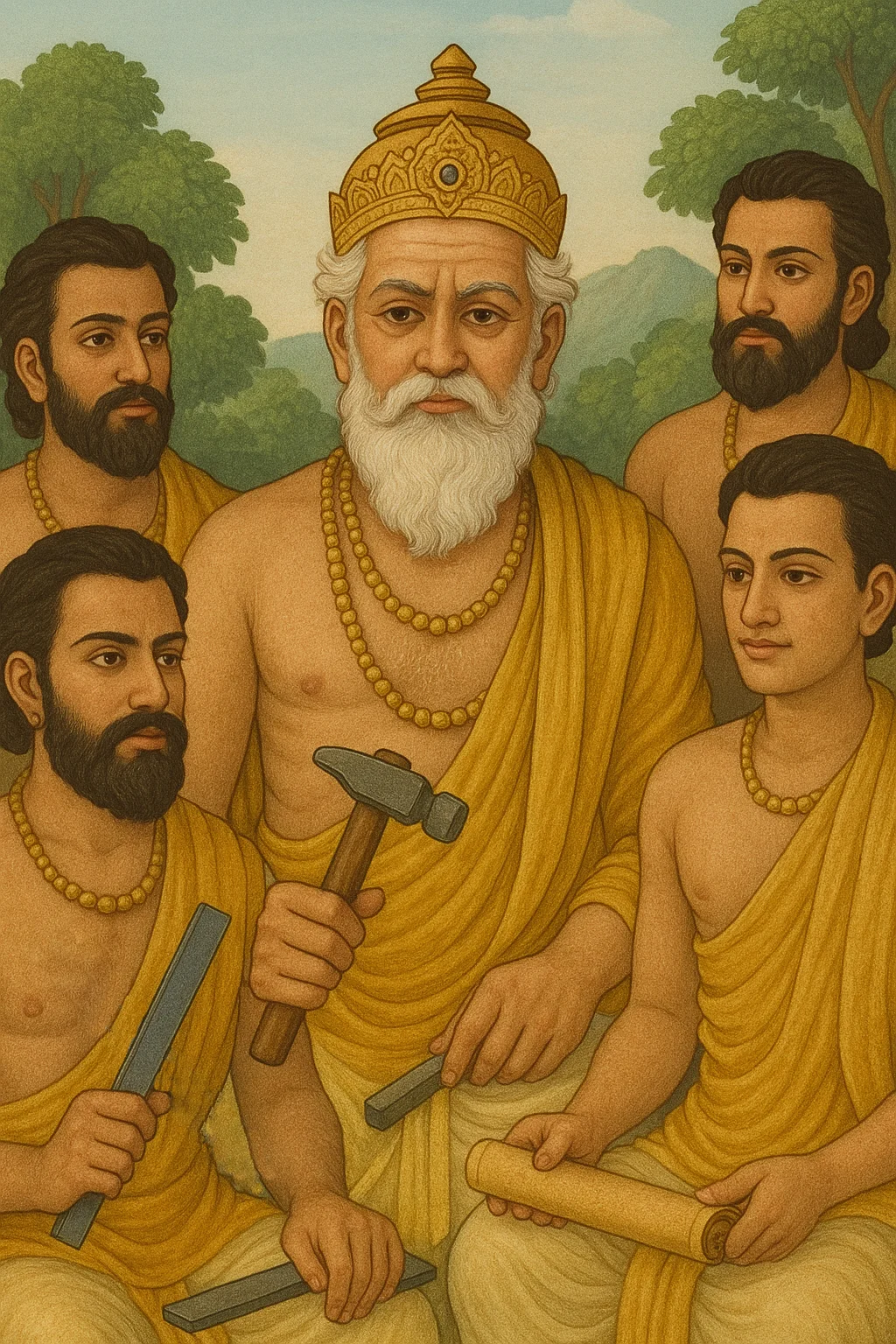
BRAHMAVAIVARTA MĀHĀPURĀṆAM - BRAHMA KHAṆḌA
Chapter 10, Comparison between Casts and the relations
सौतिरुवाच
भृगो पुत्रश्च च्यवनः शुक्रश्च ज्ञानिनां वरः ।
तोरपि क्रिया भार्या बालखिल्यानसूयत ॥ १ ॥
sautiruvāca
bhṛgo putraśca cyavanaḥ śukraśca jñānināṃ varaḥ |
torapi kriyā bhāryā bālakhilyānasūyata || 1 ||
Sauti said, Bhṛgu's son was Cyavana, and Śukra, who was the best among the wise. Kratu’s wife, Kriyā, gave birth to the sages known as Bālakhilyas.
त्रयः पुत्राश्चाङ्गिरसो बभूवुर्मुनिसत्तमाः ।
बृहस्पतिरुतथ्यश्च शम्बरश्चापि शौनक || २ ||
trayaḥ putrāścāṅgiraso babhūvurmunisattamāḥ |
bṛhaspatirutathyaśca śambaraścāpi śaunaka || 2 ||
Three sons were born to Aṅgiras—Bṛhaspati, Utathya, and Śambara, O Śaunaka, these sages were of great renown.
वसिष्ठस्य सुतः शक्तिः शक्तेः पुत्रः पराशरः ।
पराशरसुतः श्रीमान्कृष्णद्वैपायनो हरिः ॥ ३ ॥
vasiṣṭhasya sutaḥ śaktiḥ śakteḥ putraḥ parāśaraḥ |
parāśarasutaḥ śrīmānkṛṣṇadvaipāyano hariḥ || 3 ||
Śakti was the son of Vasiṣṭha, and Śakti’s son was Parāśara. Parāśara’s son was Kṛṣṇa Dvaipāyana Vyāsa, who was regarded as an incarnation of Lord Viṣṇu.
व्यासपुत्र: शिवांशश्च शुक्रश्च ज्ञानिनां वरः ।
विश्वश्रवाः पुलस्त्यस्य यस्य पुत्रो धनेश्वरः || ४ ||
vyāsaputra: śivāṃśaśca śukraśca jñānināṃ varaḥ |
viśvaśravāḥ pulastyasya yasya putro dhaneśvaraḥ || 4 ||
Vyāsa’s son was Śuka, an incarnation of Śiva and a great intellect. Pulastya’s son was Viśvaśravā, whose offspring included the Lord of Wealth (Kubera).
शौनक उवाच
अहो पुरार्णवदुषामत्यन्तं दुर्गमं वचः ।
न बुद्धं वचनं किंचिद्धनेशोत्पत्तिपूर्वकम्॥ ५ ॥
अधुना कथितं जन्म धनेशस्येश्वरादिदम् ।
पुनर्भिन्नक्रमं जन्म ब्रवीषि कथमेव माम् ॥ ६ ॥
śaunaka uvāca
aho purārṇavaduṣāmatyantaṃ durgamaṃ vacaḥ |
na buddhaṃ vacanaṃ kiṃciddhaneśotpattipūrvakam|| 5 ||
adhunā kathitaṃ janma dhaneśasyeśvarādidam |
punarbhinnakramaṃ janma bravīṣi kathameva mām || 6 ||
Śaunaka said O Sauti, the words of Purāṇic scholars are often difficult to comprehend! Earlier, you mentioned that Kubera was born from Lord Kṛṣṇa. Now you claim his birth from Viśvaśravā. How is it possible that Kubera had two different origins?
सौतिरुवाच
बभूवुरेते दिक्पालाः पुरा च परमेश्वरात् ।
पुरश्च ब्रह्मशापेन स च विश्वश्रवसः सुतः ॥ ७॥
sautiruvāca
babhūvurete dikpālāḥ purā ca parameśvarāt |
puraśca brahmaśāpena sa ca viśvaśravasaḥ sutaḥ || 7||
Sauti said All the Dikpālas (guardian deities of directions) were originally born from the Supreme Lord. However, due to a curse from Brahmā, Kubera was later reborn as the son of Viśvaśravā.
दक्षिणां दातुमुतथ्यश्च धनेश्वरम् ।
याचे कोटिसौवर्णं यत्नतश्च प्रचेतसे ॥ ८ ॥
धनेशो विरसो भूत्वा तस्मै तद्दातुमुद्यतः ।
चकार भस्मसाद्विप्र पुनर्जन्म ललाभ सः ॥ ९ ॥
dakṣiṇāṃ dātumutathyaśca dhaneśvaram |
yāce koṭisauvarṇaṃ yatnataśca pracetase || 8 ||
dhaneśo viraso bhūtvā tasmai taddātumudyataḥ |
cakāra bhasmasādvipra punarjanma lalābha saḥ || 9 ||
Once, Utathya demanded a donation of crores of gold coins from Kubera for offering as Guru Dakṣiṇā to his teacher. Kubera, being arrogant, refused him harshly. Enraged, the sage reduced him to ashes, and thus Kubera had to take birth again.
तेन विश्वश्रवसः पुत्रः कुबेरश्च धनाधिपः ।
रावणः कुम्भकर्णश्च धार्मिकच विभीषणः ॥ १० ॥
tena viśvaśravasaḥ putraḥ kuberaśca dhanādhipaḥ |
rāvaṇaḥ kumbhakarṇaśca dhārmikaca vibhīṣaṇaḥ || 10 ||
In this new birth, Kubera became the son of Viśvaśravā, the Lord of Wealth. He was also the brother of Rāvaṇa, Kumbhakarṇa, and the righteous Vibhīṣaṇa.
पुलहस्य सुतो वात्स्यः शाण्डिल्यश्च रुचेः सुतः ।
सावर्णिगौतमाज्जज्ञे मुनिप्रवर एव सः ॥ ११ ॥
pulahasya suto vātsyaḥ śāṇḍilyaśca ruceḥ sutaḥ |
sāvarṇigautamājjajñe munipravara eva saḥ || 11 ||
Pulaha’s son was Vātsya, and Śāṇḍilya was the son of Ruci. Sāvarṇi was born of the great sage Gautama.
काश्यपः कश्यपाज्जातो भरद्वाजो बृहस्पतेः ।
(स्वयं वात्स्यश्च पुलहात्सावर्णिगौतमात्तथा॥ १२ ॥
शाण्डिल्यश्च रुचेः पुत्रो मुनिस्तेजस्विनां वरः ।
बभूवुः पञ्चगोत्राश्च एतेषां प्रवरा भवे ॥ १३ ॥
kāśyapaḥ kaśyapājjāto bharadvājo bṛhaspateḥ |
(svayaṃ vātsyaśca pulahātsāvarṇigautamāttathā|| 12 ||
śāṇḍilyaśca ruceḥ putro munistejasvināṃ varaḥ |
babhūvuḥ pañcagotrāśca eteṣāṃ pravarā bhave || 13 ||
Kaśyapa was born to Kaśyapa, and Bhārdvāja was the son of Bṛhaspati. Vātsya himself was born from the sage Pulaha. Śāṇḍilya, the foremost of the ascetics, was the son of Ruci. From these five sages, five major gotras (lineages) were established.
बभूवुर्ब्रह्मणो वक्त्रादन्या ब्राह्मणजातयः ।
ताः स्थिता देशभेदेषु गोत्रशून्याश्च शौनक ॥ १४ ॥
babhūvurbrahmaṇo vaktrādanyā brāhmaṇajātayaḥ |
tāḥ sthitā deśabhedeṣu gotraśūnyāśca śaunaka || 14 ||
Other Brāhmaṇa lineages originated from the mouth of Brahmā. O Śaunaka, these Brāhmaṇas spread across different regions but remained devoid of gotras.
चन्द्रादित्यमनूनां च प्रवरा : क्षत्रियाः स्मृता ।
ब्रह्मणो बाहुदेशाच्चैवान्याः क्षत्रियाजातयः ॥ १५ ॥
ऊरुदेशाच्च वैश्याश्च पादतः शूद्रजातयः ।
तासां संकरजातेन बभूवुर्वर्णसंकराः ॥ १६ ॥
गोपनापितभिल्लाश्च तथा मोदककूबरौ ।
ताम्बूलिस्वर्णकारौ च वणिग्जातय एव च ॥ १७ ॥
इत्येवमाद्या विप्रेन्द्र सच्छूद्राः परिकीर्तिताः ।
शूद्राविशस्तु करणोऽम्बष्ठो वैश्यद्विजन्मनोः ॥ १८ ॥
candrādityamanūnāṃ ca pravarā : kṣatriyāḥ smṛtā |
brahmaṇo bāhudeśāccaivānyāḥ kṣatriyājātayaḥ || 15 ||
ūrudeśācca vaiśyāśca pādataḥ śūdrajātayaḥ |
tāsāṃ saṃkarajātena babhūvurvarṇasaṃkarāḥ || 16 ||
gopanāpitabhillāśca tathā modakakūbarau |
tāmbūlisvarṇakārau ca vaṇigjātaya eva ca || 17 ||
ityevamādyā viprendra sacchūdrāḥ parikīrtitāḥ |
śūdrāviśastu karaṇo’mbaṣṭho vaiśyadvijanmanoḥ || 18 ||
The Kṣatriyas, who are foremost among men, were born from the Moon, the Sun, and Manu. Other Kṣatriyas were created from the arms of Brahmā. Vaiśyas were born from his thighs, and Śūdras emerged from his feet.
Intermixing of castes gave rise to mixed-caste (Varṇa-saṅkara) communities.
The Sat-Śūdras (pure Śūdras) include cowherds, barbers, hunters, sweet-makers, weavers, blacksmiths, goldsmiths, and traders.
The offspring of a union between a Vaiśya and a Śūdra is called Ambaṣṭha. Similarly, different unions between castes resulted in new mixed castes.
विश्वकर्मा च शूद्रायां वीर्याधानं चकार सः ।
ततो वभूवुः पुत्राश्च नवैते शिल्पकारिणः ॥ १९॥
मालाकार: कर्मकारः शङ्खकार : कुविन्दकः ।
कुम्भकारः कांस्यकार: षडेते शिल्पिनां वराः ॥ २०॥
viśvakarmā ca śūdrāyāṃ vīryādhānaṃ cakāra saḥ |
tato vabhūvuḥ putrāśca navaite śilpakāriṇaḥ || 19||
mālākāra: karmakāraḥ śaṅkhakāra : kuvindakaḥ |
kumbhakāraḥ kāṃsyakāra: ṣaḍete śilpināṃ varāḥ || 20||
Viśvakarmā impregnated a Śūdra woman, leading to the birth of nine sons, known as artisans. These included:
Mālākāra (garland-makers or gardeners)
Karmakāra (carpenters or blacksmiths)
Śaṅkhakāra (conch-makers)
Kuvindaka (weavers)
Kumbhakāra (potters)
Sūtrakāra (thread-makers or architects)
Svarṇakāra (goldsmiths)
Citrakāra (painters or engravers)
Rūpakāra (image-makers or sculptors)
सूत्रधारश्चित्रकार: स्वर्णकारस्तथैव च ।
पतितास्ते बह्मशापादयाज्या वर्णसंकराः ॥ २१ ॥
sūtradhāraścitrakāra: svarṇakārastathaiva ca |
patitāste bahmaśāpādayājyā varṇasaṃkarāḥ || 21 ||
The carpenter (Sūtradhāra), painter (Chitrakāra), and goldsmith (Svarṇakāra) fell from their noble status due to a curse from Brahmā. They are now considered Varṇa-saṅkaras and are unfit to perform Vedic rituals.
शौनक उवाच
कथं देवो विश्वकर्मा वीर्याधानं चकार सः ।
शूद्रायामधमायां च कथं ते पतितास्त्रयः ॥ २२ ॥
कथं तेषु ब्रह्मशापो ह्यभवत्केन हेतुना ।
हे पुराणविदां श्रेष्ठ तन्नः शंसितुमर्हसि ॥ २३ ॥
śaunaka uvāca
kathaṃ devo viśvakarmā vīryādhānaṃ cakāra saḥ |
śūdrāyāmadhamāyāṃ ca kathaṃ te patitāstrayaḥ || 22 ||
kathaṃ teṣu brahmaśāpo hyabhavatkena hetunā |
he purāṇavidāṃ śreṣṭha tannaḥ śaṃsitumarhasi || 23 ||
śaunaka said O learned sage, how could Viśvakarmā, the celestial architect, implant his seed in a Śūdra woman? How did those three artisans (carpenter, painter, and goldsmith) fall from their status? How did Brahmā’s curse befall them, and for what reason? O best among those who know the Purāṇas, kindly explain this to us.
सौतिरुवाच
घृताची कामतः कामं वेषं चक्रे मनोहरम् ।
तामपश्यद्विश्वकर्मा गच्छन्ती पुष्करे पथि ॥ २४ ॥
sautiruvāca
ghṛtācī kāmataḥ kāmaṃ veṣaṃ cakre manoharam |
tāmapaśyadviśvakarmā gacchantī puṣkare pathi || 24 ||
Sauti said Once, the celestial nymph (Apsarā) Ghṛtāchī, infatuated with passion, adorned herself in exquisite garments and set off towards the abode of Kāmadeva (the god of love). Viśvakarmā spotted her as she passed near the sacred Puṣkara region.
आगच्छत्तद्विलोकाच्च प्रसादोत्फुल्लमानसः ।
तां ययाचे सशृङ्गारं कामेन हृतचेतनः ॥ २५ ॥
रत्नालङ्कारभूषाढ्यां सर्वावयवकोमलाम् ।
तथा षोडशवर्षीया शश्वत्सुस्थिरयौवनाम्॥ २६ ॥
बृहन्नितम्बभारार्तां मुनिमानसमोहिनीम् ।
अतिवेगकटाक्षेण लोलां कामातिपीडिताम् ॥ २७ ॥
तच्छ्रोणीं कठिनां दृष्ट्वा वायुनाऽपहृतांशुकाम् ।
अतीवोच्चैः स्तनयुगं कठिनं वर्तुलं परम् ॥ २८ ॥
सुस्मितं चारु वक्त्रं च शारच्चन्द्र विनिन्दकम् ।
पक्वबिम्बफलारक्तस्वोष्ठाधरमनोहरम्॥ २९ ॥
सिन्दूरबिन्दुसंयुक्तं कस्तूरीबिन्दुसंयुतम् ।
कपालमुज्ज्वलं शश्वन्महार्हमणिकुण्डलम्॥३०॥
तामुवाच प्रियां शान्ता कामशास्त्रविशारदः ।
कामग्निवर्द्धनोद्योगि वचनं श्रुतिसुन्दरम् ॥ ३१ ॥
āgacchattadvilokācca prasādotphullamānasaḥ |
tāṃ yayāce saśṛṅgāraṃ kāmena hṛtacetanaḥ || 25 ||
ratnālaṅkārabhūṣāḍhyāṃ sarvāvayavakomalām |
tathā ṣoḍaśavarṣīyā śaśvatsusthirayauvanām|| 26 ||
bṛhannitambabhārārtāṃ munimānasamohinīm |
ativegakaṭākṣeṇa lolāṃ kāmātipīḍitām || 27 ||
tacchroṇīṃ kaṭhināṃ dṛṣṭvā vāyunā’pahṛtāṃśukām |
atīvoccaiḥ stanayugaṃ kaṭhinaṃ vartulaṃ param || 28 ||
susmitaṃ cāru vaktraṃ ca śāraccandra vinindakam |
pakvabimbaphalāraktasvoṣṭhādharamanoharam|| 29 ||
sindūrabindusaṃyuktaṃ kastūrībindusaṃyutam |
kapālamujjvalaṃ śaśvanmahārhamaṇikuṇḍalam||30||
tāmuvāca priyāṃ śāntā kāmaśāstraviśāradaḥ |
kāmagnivarddhanodyogi vacanaṃ śrutisundaram || 31 ||
Upon seeing her, his heart blossomed with delight, and his mind, overwhelmed by desire, lost its steadiness. Driven by passion, he approached her with amorous intent, pleading for her love.
She was adorned with the most precious jewels and ornaments. Her limbs were soft and delicate, her form eternally youthful, appearing as though she was sixteen years old. She had broad hips, captivating even ascetics, and her glances were swift and teasing. Overcome with desire, her movements were restless. Her waist was well-defined, and her garments fluttered in the breeze. Her breasts were high, firm, and perfectly rounded."
Her enchanting smile radiated beauty, her face surpassing even the autumn moon in brilliance. Her lips were red like ripe bimba fruits and irresistible. Her forehead was adorned with vermilion and musk dots, and her earrings, studded with priceless gems, gleamed radiantly against her cheeks.
Viśvakarmā, a master of erotic arts and well-versed in the scriptures of love, approached her and spoke words as sweet as nectar, meant to ignite passion.
विश्वकर्मोवाच
अयि क्व यासि ललिते मम प्राणाधिके प्रिये ।
मम प्राणांश्चापहृत्य तिष्ठ कान्ते क्षणं शुभे ॥ ३२ ॥
viśvakarmovāca
ayi kva yāsi lalite mama prāṇādhike priye |
mama prāṇāṃścāpahṛtya tiṣṭha kānte kṣaṇaṃ śubhe || 32 ||
Viśvakarmā said O beautiful one, my love, dearer to me than my own life, where are you going? You have stolen my very breath—stay for a moment, my beloved, O auspicious one!
तवैवान्वेषणं कृत्वा भ्रमामि जगतीतलम् ।
स्वप्राणांस्त्यक्तुमिष्टोऽहं त्वां न दृष्ट्वा हुताशने । । ३३ ॥
tavaivānveṣaṇaṃ kṛtvā bhramāmi jagatītalam |
svaprāṇāṃstyaktumiṣṭo’haṃ tvāṃ na dṛṣṭvā hutāśane | | 33 ||
I have roamed across the entire earth in search of you. Failing to find you, I had resolved to sacrifice myself in fire, but now, having found you, my heart is restored.
त्वं कामलोकं यासीति श्रुत्वा रम्भामुखोदितम् ।
आगच्छमहमेवाद्य चास्मिन्वर्त्मन्यवस्थितः ॥ ३४॥
tvaṃ kāmalokaṃ yāsīti śrutvā rambhāmukhoditam |
āgacchamahamevādya cāsminvartmanyavasthitaḥ || 34||
I heard from the lips of Rambhā that you are on your way to the abode of Kāmadeva. That is why I have come here to intercept you.
अहो सरस्वतीतीरे पुष्पोद्याने मनोहरे ।
सुगन्धिमन्दशीतेन वायुना सुरभीकृते ॥ ३५ ॥
परम कान्ते मया सार्द्धं यूना कान्तेन शोभने ।
विदग्धाया विदग्धेन संगमो गुणवान्भवेत् ॥ ३६ ॥
aho sarasvatītīre puṣpodyāne manohare |
sugandhimandaśītena vāyunā surabhīkṛte || 35 ||
parama kānte mayā sārddhaṃ yūnā kāntena śobhane |
vidagdhāyā vidagdhena saṃgamo guṇavānbhavet || 36 ||
O beautiful one! On the banks of the Sarasvatī, in this charming grove filled with fragrant flowers and cooled by gentle breezes, let us delight together.
O lovely one! A passionate and intelligent man always desires the company of a woman as graceful and refined as himself. Let our union be filled with virtue and charm!
स्थिरयौवनसंयुक्ता त्वमेव चिरजीविनी ।
कामुकी कोमलाङ्गी च सुन्दरीषु च सुन्दरी ॥ ३७ ॥
sthirayauvanasaṃyuktā tvameva cirajīvinī |
kāmukī komalāṅgī ca sundarīṣu ca sundarī || 37 ||
Your youth is eternal, and you shall live forever. You are the most enchanting of all beauties, delicate-limbed, and the epitome of all feminine grace.
मृत्युंजयवरेणैव मृत्युकन्या जिता मया ।
कुबेरभवनं गत्वा धनं लब्धं कुबेरतः ॥ ३८ ॥
रत्नमाला च वरुणाद्वायोः स्त्रीरत्नभूषणम् ।
वह्निशुद्धं वस्त्रयुगं वह्नेः प्राप्तं महौजसः ॥ ३९ ॥
कामशास्त्रं कामदेवाद्योषिद्रञ्जनकारणम्।
शृङ्गारशिल्पं यत्किंचिल्लब्धं चन्द्राच्च दुर्लभम् ॥ ४० ॥
mṛtyuṃjayavareṇaiva mṛtyukanyā jitā mayā |
kuberabhavanaṃ gatvā dhanaṃ labdhaṃ kuberataḥ || 38 ||
ratnamālā ca varuṇādvāyoḥ strīratnabhūṣaṇam |
vahniśuddhaṃ vastrayugaṃ vahneḥ prāptaṃ mahaujasaḥ || 39 ||
kāmaśāstraṃ kāmadevādyoṣidrañjanakāraṇam|
śṛṅgāraśilpaṃ yatkiṃcillabdhaṃ candrācca durlabham || 40 ||
Through the boon of Mṛtyuñjaya (Śiva), I have conquered death's daughter. From Kubera, I have obtained immense wealth. From Varuṇa, I received a divine garland of gems. From Vāyu (the wind god), I acquired exquisite female ornaments. From Agni (the fire god), I received flawless garments purified by fire. From Kāmadeva, I learned the arts of love, which enchant all women. From Chandra (the moon god), I mastered the secrets of adornment and romance.
रत्नमालां वस्त्रयुग्मं सर्वाण्याभरणानि च ।
तुभ्यं दातुं हृदि कृतं प्राप्तं तत्क्षणमेव च ॥ ४१ ॥
गृहे तानि च संभाष्य चागतोऽन्वेषणे भवे ।
विरामे सुखसंभोगे तुभ्यं दास्यामि सांप्रतम् ॥ ४२ ॥
ratnamālāṃ vastrayugmaṃ sarvāṇyābharaṇāni ca |
tubhyaṃ dātuṃ hṛdi kṛtaṃ prāptaṃ tatkṣaṇameva ca || 41 ||
gṛhe tāni ca saṃbhāṣya cāgato’nveṣaṇe bhave |
virāme sukhasaṃbhoge tubhyaṃ dāsyāmi sāṃpratam || 42 ||
I have resolved to give you this garland of gems, the finest silken garments, and all these ornaments. After securing them at my home, I set out in search of you. Now, let us take our pleasure first, and then I shall offer you all these treasures with joy!
कामुकस्य वचः श्रुत्वा घृताची सस्मिता मुने ।
ददौ प्रत्युत्तरं शीघ्रं नीतियुक्तं मनोहरम् ॥ ४३ ॥
kāmukasya vacaḥ śrutvā ghṛtācī sasmitā mune |
dadau pratyuttaraṃ śīghraṃ nītiyuktaṃ manoharam || 43 ||
Hearing these amorous words, Ghṛtācī, smiling enchantingly, responded with swift and wise words, filled with reason and charm.
घृताच्युवाच
त्वया यदुक्तं भद्रं तत्स्वीकरोम्यधुना परम् ।
किंतु सामयिकं वाक्यं ब्रवीष्यामि स्मरातु ॥ ४४ ॥
ghṛtācyuvāca
tvayā yaduktaṃ bhadraṃ tatsvīkaromyadhunā param |
kiṃtu sāmayikaṃ vākyaṃ bravīṣyāmi smarātu || 44 ||
Ghrtācī said O Passionate One! Whatever you have spoken, I accept with pleasure. However, before we proceed, I must first share with you some words of wisdom.
कामदेवालयं यामि कृतवेषा च तत्कृते ।
यद्दिने यत्कृते यामो वयं तेषां च योषितः ॥ ४५ ॥
अद्याहं कामपत्नी च गुरुपत्नी तवाधुना ।
त्वयोक्तमधुनेदं च पठितं कामदेवतः॥४६॥
kāmadevālayaṃ yāmi kṛtaveṣā ca tatkṛte |
yaddine yatkṛte yāmo vayaṃ teṣāṃ ca yoṣitaḥ || 45 ||
adyāhaṃ kāmapatnī ca gurupatnī tavādhunā |
tvayoktamadhunedaṃ ca paṭhitaṃ kāmadevataḥ||46||
I am on my way to the abode of Kāmadeva, dressed appropriately for the occasion. The attire I wear on any given day is dedicated to the one for whom it is meant.
Today, therefore, I am the wife of Kāmadeva, and because you just now told me that Kāmadeva is your teacher, I also stand as the wife of your Guru. How, then, can you desire me?
विद्यादा मन्त्रदाता गुरुर्लक्षगुणैः पितुः ।
मातुः सहस्रगुणवान्नास्त्यन्यस्तत्समो गुरुः ॥ ४७ ॥
vidyādā mantradātā gururlakṣaguṇaiḥ pituḥ |
mātuḥ sahasraguṇavānnāstyanyastatsamo guruḥ || 47 ||
The one who imparts knowledge and mantras is superior to one's father by a hundred thousand times and superior to one's mother by a thousand times.
There is no one in this world greater than a Guru.
गुरोः शतगुणैः पूज्या गुरुपत्नी श्रुतौ श्रुता ।
पितुः शतगुणं पूज्या यथा माता विचक्षणः ॥ ४८ ॥
guroḥ śataguṇaiḥ pūjyā gurupatnī śrutau śrutā |
pituḥ śataguṇaṃ pūjyā yathā mātā vicakṣaṇaḥ || 48 ||
As the Vedas declare, the Guru’s wife is a hundred times more venerable than a mother. Just as a mother is a hundred times more respectable than a father, the Guru's wife commands even greater reverence.
मात्रा समागमे सूनोर्यावान्दोष: श्रुतौ श्रुता ।
ततो लक्षगुणो दोषो गुरुपत्नीसमागमे ॥ ४९ ॥
mātrā samāgame sūnoryāvāndoṣa: śrutau śrutā |
tato lakṣaguṇo doṣo gurupatnīsamāgame || 49 ||
The sin of cohabiting with one’s own mother is immense, as stated in the scriptures. But the sin of engaging with the Guru’s wife is a hundred thousand times greater.
मातरित्येव शब्देन यांच संभाषते नरः ।
सा मातृतुल्या सत्येन धर्मः साक्षी सतामपि ॥ ५० ॥
mātarityeva śabdena yāṃca saṃbhāṣate naraḥ |
sā mātṛtulyā satyena dharmaḥ sākṣī satāmapi || 50 ||
Whomever a man addresses as ‘Mother,’ she becomes his mother forever. Dharma itself is the witness to this sacred truth, upheld by the righteous.
ताहि संगतो यः स्यात्कालसूत्रं प्रयाति सः ।
तत्र घोरे वसत्येव यावच्चन्द्रदिवाकरौ ॥ ५१॥
tāhi saṃgato yaḥ syātkālasūtraṃ prayāti saḥ |
tatra ghore vasatyeva yāvaccandradivākarau || 51||
He who violates this sacred relationship is condemned to the terrible hell known as Kālasūtra, where he shall dwell in agony until the sun and the moon cease to shine.
मात्रा सह समायोगे ततो दोषश्चतुर्गणः ।
सार्द्धं च गुरुपल्या च तल्लक्षगुण एव च ॥ ५२॥
mātrā saha samāyoge tato doṣaścaturgaṇaḥ |
sārddhaṃ ca gurupalyā ca tallakṣaguṇa eva ca || 52||
The sin of cohabiting with one’s own mother is fourfold, but to do so with the Guru’s wife is a hundred thousand times worse.
कुम्भीपाके पतत्येव यावद्वै ब्रह्मणो वयः ।
प्रायश्चित्तं पापिनश्च तस्य नैव श्रुतौ श्रुतम् ॥ ५३ ॥
kumbhīpāke patatyeva yāvadvai brahmaṇo vayaḥ |
prāyaścittaṃ pāpinaśca tasya naiva śrutau śrutam || 53 ||
The sinner is cast into the hell of Kumbhīpāka, where he suffers until the lifetime of Brahmā himself. No atonement has been prescribed for such a heinous act, as even the Vedas fail to grant him redemption.
चक्राकारं कुलालस्य तीक्ष्णधारं च खड्गवत् ।
वसामूत्रपुरीषैश्च परिपूर्णं सुदुस्तरम् ॥ ५४ ॥
शूलवत्कृमिसंयुक्तं तप्तमग्निसमं द्रवत्।
पापिनां तद्विहारं च कुम्भीपाकं प्रकीर्तितम् ।। ५५ ।।
cakrākāraṃ kulālasya tīkṣṇadhāraṃ ca khaḍgavat |
vasāmūtrapurīṣaiśca paripūrṇaṃ sudustaram || 54 ||
śūlavatkṛmisaṃyuktaṃ taptamagnisamaṃ dravat|
pāpināṃ tadvihāraṃ ca kumbhīpākaṃ prakīrtitam || 55 ||
Kumbhīpāka hell is a terrible realm of torture. It spins like a potter’s wheel, its edges sharp like a sword’s blade. It is filled with boiling blood, urine, and excrement, infested with gnawing worms and piercing spears, and burns with unquenchable flames of molten fire. This is the dwelling place of sinners, a torment beyond all measure.
यावान्दोषो हि पुंसां च गुरुपत्नीसमागमे ।
तावांश्च गुरुपल्या वै तत्र चेत्कामुकी यदि ॥ ५६ ॥
yāvāndoṣo hi puṃsāṃ ca gurupatnīsamāgame |
tāvāṃśca gurupalyā vai tatra cetkāmukī yadi || 56 ||
The sin that a man incurs by engaging in unrighteous union with his Guru’s wife is equally incurred by the Guru’s wife if she consents to such a sinful act.
अ यास्यामि कामस्य मन्दिर तस्य कामिनी ।
वेषं कृत्वागमिष्यामि त्वत्कृतेऽहं दिनान्तरे ॥५७॥
a yāsyāmi kāmasya mandira tasya kāminī |
veṣaṃ kṛtvāgamiṣyāmi tvatkṛte’haṃ dināntare ||57||
Today, I am the beloved of Kāmadeva, and I must proceed to his abode. On another day, I shall return adorned in even more splendid attire, solely for your sake.
घृताचीवचनं श्रुत्वा विश्विकर्मा रुरोष ताम् ।
शशाप शूद्रयोनिं च व्रजेति जगतीतले ॥ ५८ ॥
ghṛtācīvacanaṃ śrutvā viśvikarmā ruroṣa tām |
śaśāpa śūdrayoniṃ ca vrajeti jagatītale || 58 ||
Hearing these words from Ghṛtācī, Viśvakarmā burned with rage. Overcome by wrath, he cursed her: "Descend to Earth and be born in the house of a Śūdra!"
घृताची तद्वचः श्रुत्वा तं शशाप सुदारुणम् ।
लभ जन्म भवे त्वं च स्वर्गभ्रष्टो भवेति च ॥ ५९ ॥
ghṛtācī tadvacaḥ śrutvā taṃ śaśāpa sudāruṇam |
labha janma bhave tvaṃ ca svargabhraṣṭo bhaveti ca || 59 ||
Upon hearing his curse, Ghṛtācī, too, uttered a dreadful curse: "You shall fall from heaven and be reborn on Earth, stripped of your celestial splendor!"
घृताची कारुमुक्त्वा च साऽगच्छत्काममन्दिरम्।
कामेन सुरतं कृत्वा कथयामास तां कथाम् ॥ ६० ॥
ghṛtācī kārumuktvā ca sā’gacchatkāmamandiram|
kāmena surataṃ kṛtvā kathayāmāsa tāṃ kathām || 60 ||
Thus cursing each other, Ghṛtācī proceeded to Kāmadeva’s abode, and after engaging in love’s play, she recounted everything to him.
सा भारते च कामोक्त्या गोपस्य मदनस्य च।
पल्या प्रयागे नगरे लेभे जन्म च शौनक ॥ ६१ ॥
जातिस्मरा तत्प्रसूता बभूव च तपस्विनी ।
वरं न वव्रे धर्मिष्ठा तपस्यायां मनो दधौ ॥ ६२॥
sā bhārate ca kāmoktyā gopasya madanasya ca|
palyā prayāge nagare lebhe janma ca śaunaka || 61 ||
jātismarā tatprasūtā babhūva ca tapasvinī |
varaṃ na vavre dharmiṣṭhā tapasyāyāṃ mano dadhau || 62||
O Śaunaka! As decreed by Kāmadeva’s will, Ghṛtācī was born on Earth in the town of Prayāga, in the house of a cowherd named Madana.
Endowed with divine memory, she recalled her past existence. Thus, choosing the path of righteousness, she renounced worldly pleasures and engaged in severe penance.
तपश्चकार तपसा तप्तकाञ्चनसंन्निभा ।
दिव्यं च शतवर्षं सा गंगातीरे मनोरमे ॥ ६३ ॥
tapaścakāra tapasā taptakāñcanasaṃnnibhā |
divyaṃ ca śatavarṣaṃ sā gaṃgātīre manorame || 63 ||
She performed tapasya for a hundred divine years, her radiance resembling molten gold, on the sacred and beautiful banks of the Gaṅgā.
वीर्येण सुरकारोश्च नव पुत्रान्प्रसूयसा ।
पुनः स्वर्लोकं गत्वा च सा घृताची बभूव ह ॥ ६४ ॥
vīryeṇa surakārośca nava putrānprasūyasā |
punaḥ svarlokaṃ gatvā ca sā ghṛtācī babhūva ha || 64 ||
By the divine seed of Viśvakarmā, she bore nine sons, and after fulfilling her earthly duties, she ascended back to the celestial realms and once again became the Apsarā Ghṛtācī.
शौनक उवाच
कथं वीर्यं सा दधार सुरकारोस्तपस्विनी ।
पुत्रान्नव प्रसूता च कुत्र वा कति वासरान् ॥ ६५॥
śaunaka uvāca
kathaṃ vīryaṃ sā dadhāra surakārostapasvinī |
putrānnava prasūtā ca kutra vā kati vāsarān || 65||
Śaunaka said How, O revered sage, did she bear the seed of Viśvakarmā while engaged in penance? Where were her sons born, and for how long did she remain on Earth?
सौतिरुवाच
विश्वकर्मा तु तच्छापं समाकर्ण्य रुषाऽन्वितः ।
जगाम ब्रह्मणः स्थानं शोकेन हृतचेतनः ॥ ६६ ॥
त्वा स्तुत्वा च ब्रह्मणं कथयामास तां कथाम् ।
लाभ जन्म ब्राह्मण्यां पृथिव्यामाज्ञया विधेः ॥ ६७ ॥
स एव ब्राह्मणो भूत्वा भुवि कारुर्बभूव ह ।
नृपाणां च गृहस्थानां नानाशिल्पं चकार ह ।। ६८॥
sautiruvāca
viśvakarmā tu tacchāpaṃ samākarṇya ruṣā’nvitaḥ |
jagāma brahmaṇaḥ sthānaṃ śokena hṛtacetanaḥ || 66 ||
tvā stutvā ca brahmaṇaṃ kathayāmāsa tāṃ kathām |
lābha janma brāhmaṇyāṃ pṛthivyāmājñayā vidheḥ || 67 ||
sa eva brāhmaṇo bhūtvā bhuvi kārurbabhūva ha |
nṛpāṇāṃ ca gṛhasthānāṃ nānāśilpaṃ cakāra ha || 68||
Sauti said Hearing the curse of Ghṛtācī, Viśvakarmā became deeply sorrowful. With his mind overwhelmed with grief, he proceeded to the abode of Brahmā.
Falling at the feet of Brahmā, he praised him and narrated all that had transpired. By the command of the Creator (Brahmā), he was reborn on Earth in a Brāhmaṇa lineage.
Though born as a Brāhmaṇa, he retained his former knowledge and engaged in the arts of architecture and craftsmanship, building grand palaces for kings and exquisite ornate houses for noble families.
शिल्पं च कारयामास सर्वेभ्यः सर्वतः सदा ।
विचित्रं विविधं शिल्पमाश्चर्यं सुमनोहरम् ॥ ६९ ॥
śilpaṃ ca kārayāmāsa sarvebhyaḥ sarvataḥ sadā |
vicitraṃ vividhaṃ śilpamāścaryaṃ sumanoharam || 69 ||
His skill in architecture remained unparalleled. He created magnificent structures, filling the world with astonishing, diverse, and wondrous works of art.
एकदा तु प्रयागे च शिल्पं कृत्वा नृपस्य च ।
स्नातुं जगाम गङ्गां स चापश्यत्तत्र कामिनीम् ॥ ७०॥
घृताचीं नवरूपां च युवति तां तपस्विनीम् ।
जातिस्मरां तां बुबुधे स च जातिस्मरो द्विजः ॥ ७१ ॥
ekadā tu prayāge ca śilpaṃ kṛtvā nṛpasya ca |
snātuṃ jagāma gaṅgāṃ sa cāpaśyattatra kāminīm || 70||
ghṛtācīṃ navarūpāṃ ca yuvati tāṃ tapasvinīm |
jātismarāṃ tāṃ bubudhe sa ca jātismaro dvijaḥ || 71 ||
Once, while performing his craftsmanship in Prayāga, he went to bathe in the Gaṅgā after his day’s work. There, his eyes fell upon a beautiful ascetic woman.
It was Ghṛtācī, radiant in her new youthful form, engaged in severe tapasya on the riverbank. She possessed the memory of her past birth, and he too recognized her, as he was also a jātismara (one who remembers past lives).
दृष्ट्वा सकामः सहसा बभूव हृतचेतनः ।
उवाच मधुरं शान्त: शान्तां तां च तपस्विनीम्॥॥७२॥
dṛṣṭvā sakāmaḥ sahasā babhūva hṛtacetanaḥ |
uvāca madhuraṃ śānta: śāntāṃ tāṃ ca tapasvinīm ||72||
Upon seeing her, desire suddenly arose in his heart. Yet, regaining his composure, he approached her and spoke in a sweet and gentle voice to the peaceful ascetic.
ब्राह्मण उवाच
अहोऽधुना त्वमत्रैव घृताचि सुमनोहरे ।
मा मां स्मरसि रम्भोरु विश्वकर्माऽहमेव च ॥ ७३ ॥
brāhmaṇa uvāca
aho’dhunā tvamatraiva ghṛtāci sumanohare |
mā māṃ smarasi rambhoru viśvakarmā’hameva ca || 73 ||
O Ghṛtācī, O most enchanting one, it is truly you! Do you not remember me, O slender-waisted beauty? I am none other than Viśvakarmā himself!
शापमोक्षं करिष्यामि भज मां तव सुन्दरि ।
त्वत्कृतेऽतिदहत्येव मनो मे स च मन्मथः ॥ ७४ ॥
śāpamokṣaṃ kariṣyāmi bhaja māṃ tava sundari |
tvatkṛte’tidahatyeva mano me sa ca manmathaḥ || 74 ||
Come, O radiant one, I shall free you from this curse. Embrace me, O beautiful one, for my heart is burning with longing for you!
द्विजस्य वचनं श्रुत्वा घृताची नवरूपिणी ।
उवाच मधुरं शान्ता नीतियुक्तं परं वचः ॥ ७५ ॥
dvijasya vacanaṃ śrutvā ghṛtācī navarūpiṇī |
uvāca madhuraṃ śāntā nītiyuktaṃ paraṃ vacaḥ || 75 ||
Hearing his words, Ghṛtācī transformed herself into an even more divine form, and in a calm and composed manner, she replied in a way that was righteous and full of wisdom.
गोपिकोवाच
तद्दिने कामाकान्ताऽहमधुना च तपस्विनी ।
कथं त्वया संगता स्यां गङ्गातीरे च भारते ॥ ७६ ॥
gopikovāca
taddine kāmākāntā’hamadhunā ca tapasvinī |
kathaṃ tvayā saṃgatā syāṃ gaṅgātīre ca bhārate || 76 ||
The cowherdesses said O Viśvakarmā, I was once the beloved of Kāmadeva. Now, I am a recluse engaged in penance. How can I now unite with you, here on the sacred banks of the Gaṅgā in Bhārata?
विश्वकर्मन्निदं पुण्यं कर्मक्षेत्रं च भारतम् ।
अत्र यत्क्रियते कर्म भोगोऽन्यत्र शुभाशुभम् ॥ ७७ ॥
viśvakarmannidaṃ puṇyaṃ karmakṣetraṃ ca bhāratam |
atra yatkriyate karma bhogo’nyatra śubhāśubham || 77 ||
O Viśvakarmā, this land of Bhārata is the holiest of all lands. It is the karmabhūmi (land of action) where all deeds—good and evil—yield results accordingly. The fruit of karma, whether merit or sin, is experienced in another life and realm.
धर्मो मोक्षकृते जन्म प्रलभ्य तपसः फलात् ।
निबद्धः कुरुते कर्म मोहितो विष्णुमायया ॥ ७८ ॥
dharmo mokṣakṛte janma pralabhya tapasaḥ phalāt |
nibaddhaḥ kurute karma mohito viṣṇumāyayā || 78 ||
Great sages desire to be born on Earth for the sake of liberation. However, due to their past karma, they become bound to worldly actions, deluded by the māyā (illusion) of Viṣṇu.
माया नारायणीशाना परितुष्टा च यं भवेत् ।
तस्मै ददाति श्रीकृष्ण भक्तिं तन्मन्त्रमीप्सितम् ॥ ७९ ॥
māyā nārāyaṇīśānā parituṣṭā ca yaṃ bhavet |
tasmai dadāti śrīkṛṣṇa bhaktiṃ tanmantramīpsitam || 79 ||
If Nārāyaṇī Māyā, the divine power of Nārāyaṇa, becomes pleased with anyone, She grants them devotion toward Śrī Kṛṣṇa and bestows upon them the sacred mantra they seek.
यो मूढ विषयासक्तो लब्धजन्मा च भारते ।
विहाय कृष्णं सर्वेशं स मुग्धो विष्णुमायया ॥ ८० ॥
yo mūḍha viṣayāsakto labdhajanmā ca bhārate |
vihāya kṛṣṇaṃ sarveśaṃ sa mugdho viṣṇumāyayā || 80 ||
But foolish beings, born in Bhārata, who become attached to worldly pleasures and desires, and abandon Kṛṣṇa, the Lord of all, are utterly deluded by Viṣṇu’s illusion.
सर्व स्मरामि देवाहमहो जातिस्मरा पुरा ।
घृताची सुरवेश्याऽहमधुना गोपकन्यका ॥ ८१ ॥
sarva smarāmi devāhamaho jātismarā purā |
ghṛtācī suraveśyā’hamadhunā gopakanyakā || 81 ||
I remember all my past births. O Viśvakarmā, I was once Ghṛtācī, the divine Apsarā, and now, in this birth, I am merely a cowherd maiden.
तपः करोमि मोक्षार्थं गङ्गातीरे सुपुण्यदे |
नात्र स्थलं च क्रीडायाः स्थिरस्त्वं भव कामुक ॥ ८२ ॥
tapaḥ karomi mokṣārthaṃ gaṅgātīre supuṇyade |
nātra sthalaṃ ca krīḍāyāḥ sthirastvaṃ bhava kāmuka || 82 ||
I am performing severe penance on the sacred banks of the Gaṅgā, a river bestowing great merits and liberation. This is not a place for love sports, so, control yourself, O passionate one!"
अन्यत्र यत्कृतं पापं गंगायां तद्विनश्यति ।
गङ्गातीरे कृतं पापं सद्यो लक्षगुणं भवेत्॥ ८३ ॥
anyatra yatkṛtaṃ pāpaṃ gaṃgāyāṃ tadvinaśyati |
gaṅgātīre kṛtaṃ pāpaṃ sadyo lakṣaguṇaṃ bhavet|| 83 ||
The sins committed elsewhere in the world are washed away by bathing in the sacred waters of the Gaṅgā. But the sins committed on its banks are multiplied a hundred thousand times instantly!
तत्तु नारायणक्षेत्रे तपसा च विनश्यति ।
यद्येव कामतः कृत्वा निवृत्तश्च भवेत्पुनः ॥ ८४ ॥
tattu nārāyaṇakṣetre tapasā ca vinaśyati |
yadyeva kāmataḥ kṛtvā nivṛttaśca bhavetpunaḥ || 84 ||
However, such sins can be nullified if one performs austerities dedicated to Lord Nārāyaṇa. Even a deliberate sin, if repented through sincere tapas (penance), can be purged away.
घृताचीवचनं श्रुत्वा विश्वकर्माऽनिलाकृतिः ।
जगाम तां गृहीत्वा च मलयं चन्दनालयम् ॥ ८५ ॥
ghṛtācīvacanaṃ śrutvā viśvakarmā’nilākṛtiḥ |
jagāma tāṃ gṛhītvā ca malayaṃ candanālayam || 85 ||
Hearing these words of wisdom from Ghṛtācī, Viśvakarmā, assuming a form as swift as the wind, took her and proceeded to Mount Malaya, the abode of sandalwood forests.
रम्याया मलयद्रोण्यां पुष्पतल्पे मनोरमे ।
पुष्पचन्दनवातेन सततं सुरभीकृते ॥ ८६ ॥
चकार सुखसंभोगं तया स विजने वने।
पूर्णं द्वादशवर्षं च बुबुधे न दिवानिशम् ॥ ८७ ॥
ramyāyā malayadroṇyāṃ puṣpatalpe manorame |
puṣpacandanavātena satataṃ surabhīkṛte || 86 ||
cakāra sukhasaṃbhogaṃ tayā sa vijane vane|
pūrṇaṃ dvādaśavarṣaṃ ca bubudhe na divāniśam || 87 ||
On the beautiful slopes of Malaya, amidst lush valleys covered in blooming flowers, where the gentle breeze carried the scent of sandalwood, they created a divine resting place.
There, in seclusion within the enchanting forests, on a bed of flowers, they enjoyed their union, lost in passion and ecstasy. For a full twelve years, neither day nor night mattered to them.
बभूव गर्भ: कामिन्या: परिपूर्णः सुदुर्वहः ।
सा सुषाव च तत्रैव पुत्रान्नव मनोहरान् ॥ ८८ ॥
कृतशिक्षितशिल्पांश्च ज्ञानयुक्तांश्च शौनक |
पूर्वप्राक्तनतो योग्यान्बलयुक्तान्विचक्षणान्॥ ८९ ॥
मालाकारान्कर्मकाराञ्छङ्खकारान्कुविन्दकान् ।
कुम्भकारान्सूत्रकारान्स्वर्णचित्रकरांस्तथा ॥ ९० ॥
तौ च तेभ्यो वरं दत्त्वा तान्संस्थाप्य महीतले ।
मानवीं तनुमुत्सृज्य जग्मतुर्निजमन्दिरम् ॥ ९१ ॥
babhūva garbha: kāminyā: paripūrṇaḥ sudurvahaḥ |
sā suṣāva ca tatraiva putrānnava manoharān || 88 ||
kṛtaśikṣitaśilpāṃśca jñānayuktāṃśca śaunaka |
pūrvaprāktanato yogyānbalayuktānvicakṣaṇān|| 89 ||
mālākārānkarmakārāñchaṅkhakārānkuvindakān |
kumbhakārānsūtrakārānsvarṇacitrakarāṃstathā || 90 ||
tau ca tebhyo varaṃ dattvā tānsaṃsthāpya mahītale |
mānavīṃ tanumutsṛjya jagmaturnijamandiram || 91 ||
Thereafter, the lustful Ghṛtācī became pregnant, carrying a fully developed fetus, heavy and difficult to bear. At the appropriate time, she gave birth to nine beautiful sons in that very place.
O Śaunaka, these sons were trained in various skills and crafts under the guidance of Viśvakarmā. They were intelligent, competent, strong, and wise, and they excelled in the knowledge of their previous births.
Among them were:
Mālākāra (gardeners)
Karmakāra (carpenters)
Śaṅkhakāra (conch-makers)
Kuvindaka (weavers)
Kumbhakāra (potters)
Sūtrakāra (thread-makers or architects)
Svarṇakāra (goldsmiths)
Citrakāra (painters)
These sons excelled in handicrafts and artisan work, each taking up a different skilled trade. Having blessed them and assigned them their respective duties, Viśvakarmā established them on Earth to serve humanity through their arts and craftsmanship. Then, having discarded his human form, Viśvakarmā returned to his celestial abode.
स्वर्णकार : स्वर्णचौर्याब्राह्मणानां द्विजोत्तम ।
बभूव पतितः सद्यो ब्रह्मशापेन कर्मणा ॥ ९२ ॥
svarṇakāra : svarṇacauryābrāhmaṇānāṃ dvijottama | babhūva patitaḥ sadyo brahmaśāpena karmaṇā || 92 ||
The goldsmiths (svarṇakāra), O best of Brāhmaṇas, became degraded (patita) due to their habit of stealing gold from the wealth of the Brāhmaṇas. This led to their immediate downfall, due to the curse (śāpa) of Brahmā.
सूत्रकारा द्विजानां तु शापेन पतितो भुवि ।
शीघ्रं च यज्ञकाष्ठानि न ददौ तेन हेतुना ॥ ९३ ॥
व्यतिक्रमेण चित्राणां सद्यश्चित्रकारस्तथा ।
पतितो ब्रह्मशापेन ब्राह्मणानां च कोपतः ॥ ९४॥
sūtrakārā dvijānāṃ tu śāpena patito bhuvi |
śīghraṃ ca yajñakāṣṭhāni na dadau tena hetunā || 93 ||
vyatikrameṇa citrāṇāṃ sadyaścitrakārastathā |
patito brahmaśāpena brāhmaṇānāṃ ca kopataḥ || 94||
Similarly, the sūtrakāra (architect or thread-maker) was cursed and fell from grace for failing to provide the sacred yajña wood to the Brāhmaṇas in time for their rituals.
The painter (citrakāra) also incurred a Brahmanical curse, for failing to make correct ritualistic paintings, thereby dishonoring sacred traditions.
कश्चिद्वणिग्विशेषश्च संसर्गात्स्वर्णकारिणः ।
स्वर्णचौर्यादिदोषेण पतितो ब्रह्मशापतः ॥ ९५ ॥
kaścidvaṇigviśeṣaśca saṃsargātsvarṇakāriṇaḥ |
svarṇacauryādidoṣeṇa patito brahmaśāpataḥ || 95 ||
A certain special trader who collaborated with goldsmiths in stealing sacred gold, also became degraded due to the curse of the Brāhmaṇas.
कुलटायां च शूद्रायां चित्रकारस्य वीर्यतः ।
बभूवाट्टालिकाकार: पतितो जारदोषतः ॥ ९६ ॥
kulaṭāyāṃ ca śūdrāyāṃ citrakārasya vīryataḥ |
babhūvāṭṭālikākāra: patito jāradoṣataḥ || 96 ||
From the illicit union of a painter (citrakāra) and an unchaste Śūdra woman, a mason (aṭṭālikākāra) was born, who became impure due to his illegitimate birth.
अट्टालिकाकारबीजात्कुम्भकारस्य योषिति ।
बभूव कोटक: सद्यः पतितो गृहकारकः ॥९७॥
aṭṭālikākārabījātkumbhakārasya yoṣiti |
babhūva koṭaka: sadyaḥ patito gṛhakārakaḥ ||97||
From the seed of a mason, implanted in the womb of a potter’s wife, a Koṭaka (house-builder or fort-maker) was born, who was considered fallen (patita) due to his impure lineage.
कुम्भकारस्य बीजेन सद्यः कोटक योषिति ।
बभूव तैलकारश्च कुटिलः पतितो भुवि ॥ ९८ ॥
kumbhakārasya bījena sadyaḥ koṭaka yoṣiti |
babhūva tailakāraśca kuṭilaḥ patito bhuvi || 98 ||
From the seed of a potter (kumbhakāra), implanted into the womb of a Koṭaka woman, an oil-crusher (tailakāra) was born, who became known for his deceitfulness and was considered a degraded caste.
सद्य: क्षत्रियवीजेन राजपुत्रस्य योषिति ।
भूव तीवरचैव पतितो जारदोषतः ॥ ९९ ॥
sadya: kṣatriyavījena rājaputrasya yoṣiti |
bhūva tīvaracaiva patito jāradoṣataḥ || 99 ||
Tīvara was born from the seed of a Kṣatriya, implanted in the womb of the wife of a Rājaputra. Due to this illicit union, he was considered degraded (patita).
तीवरस्य तु बीजेन तैलकारस्य योषिति ।
बभूव पतितो दस्युर्ले परिकीर्तितः ।। १०० ।।
लेटस्तीवरकन्यायां जनयामास षट् सुतान्।
माल्लं मन्त्रं मातरं च भण्डं कोलं कलंदरम् ॥ १०१ ॥
tīvarasya tu bījena tailakārasya yoṣiti |
babhūva patito dasyurle parikīrtitaḥ || 100 ||
leṭastīvarakanyāyāṃ janayāmāsa ṣaṭ sutān|
māllaṃ mantraṃ mātaraṃ ca bhaṇḍaṃ kolaṃ kalaṃdaram || 101 ||
With the seed of Tīvara implanted in the wife of an oil merchant, a lowly thief (dasyu) named Leṭa was born.
From the daughter of Tīvara, impregnated by Leṭa, six sons were born, named: Mālla, Mantra, Mātara, Bhaṇḍa, Kola, Kalandara.
ब्राह्मण्यां शूद्रवीर्येण पतितो जारदोषतः ।
सद्यो बभूव चाण्डालः सर्वस्मादधमोऽशुचिः ॥ १०२ ॥
brāhmaṇyāṃ śūdravīryeṇa patito jāradoṣataḥ |
sadyo babhūva cāṇḍālaḥ sarvasmādadhamo’śuciḥ || 102 ||
A Brāhmaṇa woman impregnated by a Śūdra, gave birth to a Cāṇḍāla, who was considered the most impure and degraded of all (adhama, aśuci).
तीवरेण च चण्डाल्यां चर्मकारो बभूव ह ।
चर्मकार्यां च चण्डालान्मांसच्छेदो बभूव ह ।। १०३॥
tīvareṇa ca caṇḍālyāṃ carmakāro babhūva ha |
carmakāryāṃ ca caṇḍālānmāṃsacchedo babhūva ha || 103||
From the union of Tīvara with a Cāṇḍāla woman, a cobbler (carmakāra) was born. And when the wife of a skinner was impregnated by a Cāṇḍāla, a hunter (māṃsaccheda) was born.
मांसच्छेद्यां तीवरेण कोञ्चश्च परिकीर्तितः ।
कोचस्त्रियांत कैवर्तात्कर्तारः परिकीर्तितः ॥ १०४ ॥
māṃsacchedyāṃ tīvareṇa koñcaśca parikīrtitaḥ |
kocastriyāṃta kaivartātkartāraḥ parikīrtitaḥ || 104 ||
From the union of a hunter and a fisherwoman, a bird-catcher (Koñcha) was born. From the wife of the bird-catcher, impregnated by a Kaivarta (boatman/fisherman), a Karttāra (net-maker or weaver) was born.
सद्यचाण्डालकन्यायां लेटवीर्येण शौनक |
बभूवतुस्तौ द्वौ पुत्रौ दुष्टौ हड्डिडमौ तथा ॥ १०५ ॥
sadyacāṇḍālakanyāyāṃ leṭavīryeṇa śaunaka |
babhūvatustau dvau putrau duṣṭau haḍḍiḍamau tathā || 105 ||
O Śaunaka, from the Cāṇḍāla woman, impregnated by Leṭa, two wicked sons named Haḍḍi and Dam were born.
क्रमेण हड्डिकन्यायां सद्यश्चाण्डालवीर्यतः ।
बभूवुः पञ्च पुत्राश्च दुष्टा वनचराश्च ते ॥ १०६ ॥
krameṇa haḍḍikanyāyāṃ sadyaścāṇḍālavīryataḥ |
babhūvuḥ pañca putrāśca duṣṭā vanacarāśca te || 106 ||
From the daughter of Haḍḍi, impregnated by a Cāṇḍāla, five wicked sons were born, who became forest dwellers (vana-cara), living in wild regions and mountains.
लेटात्तीवरकन्यायां गङ्गातीरे च शौनका
भूव सद्यो यो बालो गङ्गापुत्रः प्रकीर्तितः ॥ १०७ ॥
leṭāttīvarakanyāyāṃ gaṅgātīre ca śaunakā
bhūva sadyo yo bālo gaṅgāputraḥ prakīrtitaḥ || 107 ||
O Śaunaka, from the union of Leṭa and the daughter of Tīvara, a boy named Gaṅgāputra was born, by the banks of the Gaṅgā.
गङ्गापुत्रस्य कन्यायां वीर्याद्वै वेषधारिणः ।
बभूव वेषधारी च पुत्रो युङ्गी प्रकीर्तितः ॥ १०८ ॥
gaṅgāputrasya kanyāyāṃ vīryādvai veṣadhāriṇaḥ |
babhūva veṣadhārī ca putro yuṅgī prakīrtitaḥ || 108 ||
From the daughter of Gaṅgāputra, impregnated by a performer, a son named Yuṅgī was born.
वैश्यात्तीवरकन्यायां सद्यः शुण्डी बभूव ह ।
शुण्डियोषति वैश्यात्तु पौण्ड्रकश्च बभूव ह ।। १०९ ॥
vaiśyāttīvarakanyāyāṃ sadyaḥ śuṇḍī babhūva ha |
śuṇḍiyoṣati vaiśyāttu pauṇḍrakaśca babhūva ha || 109 ||
From the union of a Vaiśya and the daughter of Tīvara, a Śuṇḍī was born. From the union of a Śuṇḍī and a Vaiśya woman, a Pauṇḍraka was born.
क्षत्रात्करणकन्यायां राजपुत्रो बभूव ह ।
राजपुत्र्यां तु करणादागरीति प्रकीर्तितः ॥ ११० ॥
kṣatrātkaraṇakanyāyāṃ rājaputro babhūva ha |
rājaputryāṃ tu karaṇādāgarīti prakīrtitaḥ || 110 ||
From the union of a Kṣatriya and a Karaṇa woman, a Rājaputra was born. From the union of a Karaṇa and the daughter of a Rājaputra, a man called Āgarī was born.
क्षत्रवीर्येण वैश्यायां कैवर्तः परिकीर्तितः ।
कलौ तीवरसंसर्गाद्धीवरः पतितो भुवि ॥ १११ ॥
kṣatravīryeṇa vaiśyāyāṃ kaivartaḥ parikīrtitaḥ |
kalau tīvarasaṃsargāddhīvaraḥ patito bhuvi || 111 ||
A Kaivarta (fisherman) was born from the union of a Kṣatriya and a Vaiśya woman. From the union of Kali and Tīvara, a degraded man (Patita) was born.
तीवर्यां धीवरात्पुत्रो बभूव रजकः स्मृतः ।
रजक्यां तीवराच्चैव कोयालीति बभूव ह ।। ११२ ।।
tīvaryāṃ dhīvarātputro babhūva rajakaḥ smṛtaḥ |
rajakyāṃ tīvarāccaiva koyālīti babhūva ha || 112 ||
From the union of Dhīvara (fisherman) and the wife of Tīvara, a washerman (Rajaka) was born. From the union of a washerwoman and Tīvara, a man called Koyāli was born.
नापिताद्गोपकन्यायां सर्वस्वी तस्य योषिति ।
क्षत्राद्बभूव व्याधश्च बलवान्मृगहिंसकः ॥ ११३ ॥
nāpitādgopakanyāyāṃ sarvasvī tasya yoṣiti |
kṣatrādbabhūva vyādhaśca balavānmṛgahiṃsakaḥ || 113 ||
From the union of a barber (Nāpita) and a cowherd woman, a son named Sarvasvī was born. He was strong but a slayer of animals. From the union of a Kṣatriya and a woman of the Sarvasvī caste, a hunter (Vyādha) was born, who was powerful and cruel towards animals..
तीवराच्छुण्डिकन्यायां बभूवुः सप्त पुत्रकाः ।
ते कलौ हड्डिसंसर्गाविभूवुर्दस्यवः सदा ॥ ११४ ॥
tīvarācchuṇḍikanyāyāṃ babhūvuḥ sapta putrakāḥ |
te kalau haḍḍisaṃsargāvibhūvurdasyavaḥ sadā || 114 ||
From the union of Tīvara and the daughter of a butcher (Śuṇḍī), seven sons were born. During Kali Yuga, they associated with Haḍḍi (a degraded caste) and became robbers (Dasyus), always engaged in sinful acts.
ब्राह्मण्यामृषिवीर्येण ऋतोः प्रथमवासरे।
कुत्सितश्चोदरे जातः कूदरस्तेन कीर्तितः ॥ ११५ ॥
brāhmaṇyāmṛṣivīryeṇa ṛtoḥ prathamavāsare|
kutsitaścodare jātaḥ kūdarastena kīrtitaḥ || 115 ||
A Brāhmaṇa woman, who cohabited with a sage during her first menstrual cycle, gave birth to a son named Kūdar.
तदशौच विप्रतुल्यं पतितो ऋतुदोषत: ।
सद्यः कोटकसंसर्गादधमो जगतीतले ।। । ११६ ॥
tadaśauca vipratulyaṃ patito ṛtudoṣata: |
sadyaḥ koṭakasaṃsargādadhamo jagatītale || | 116 ||
Due to the impurity of menstruation, this son was considered equal to an impure Brāhmaṇa. If he united with a Koṭaka woman, he would become even more degraded (adhama).
क्षत्रवीर्येण वैश्यायामृतो: प्रथमवासरे।
जात: पुत्रो महादस्युर्बलवांश्च धनुर्धरः ।। ११७ ॥
चकार वागतीतं च क्षत्रियेणापि वारितः ।
तेन जात्या स पुत्रश्च वागतीतः प्रकीर्तितः ॥ ११८ ॥
kṣatravīryeṇa vaiśyāyāmṛto: prathamavāsare|
jāta: putro mahādasyurbalavāṃśca dhanurdharaḥ || 117 ||
cakāra vāgatītaṃ ca kṣatriyeṇāpi vāritaḥ |
tena jātyā sa putraśca vāgatītaḥ prakīrtitaḥ || 118 ||
From the union of a Kṣatriya and a Vaiśya woman during her first menstrual day, a son was born who was strong, a great robber, and an archer. Since he ignored the words of Kṣatriyas, and acted against Dharma, he was called Vāgatīta (one who disobeys).
क्षत्रवीर्येण शूद्रायामृतुदोषेण पापतः ।
बलवन्तो दुरन्ताश्च बभूवुम्लेच्छजातयः ॥ ११९ ॥
kṣatravīryeṇa śūdrāyāmṛtudoṣeṇa pāpataḥ |
balavanto durantāśca babhūvumlecchajātayaḥ || 119 ||
From the union of a Kṣatriya and a Śūdra woman during her impure menstrual cycle, were born the Mlecchas (barbarians), who were strong, wicked, and fierce.
अविद्धकर्णाः क्रूराश्च निर्भया रणदुर्जयाः ।
शौचाचारविहीनाश्च दुर्धर्षा धर्मवर्जिताः ॥ १२० ॥
aviddhakarṇāḥ krūrāśca nirbhayā raṇadurjayāḥ |
śaucācāravihīnāśca durdharṣā dharmavarjitāḥ || 120 ||
These Mlecchas were: born without ear-holes (signifying they were deaf to the Vedas); cruel and fearless; unconquerable in battle; devoid of cleanliness and good conduct; impossible to control; completely irreligious.
म्लेच्छात्कुविन्दकन्यायां जोलाजातिर्बभूव ।
जोलात्कुविन्दकन्यायां शराङ्कः परिकीर्तितः॥१२१॥
mlecchātkuvindakanyāyāṃ jolājātirbabhūva |
jolātkuvindakanyāyāṃ śarāṅkaḥ parikīrtitaḥ||121||
From the union of a Mleccha and a Kuvinda woman, the Jolā caste was born. From the union of a Jolā and a Kuvinda’s daughter, a man named Śarāṅka was born.
वर्णसंकरदोषेण बह्व्यश्चाश्रुतजातयः ।
तासां नामानि संख्याश्च को वा वक्तुं क्षमो द्विज ॥ १२२ ॥
varṇasaṃkaradoṣeṇa bahvyaścāśrutajātayaḥ |
tāsāṃ nāmāni saṃkhyāśca ko vā vaktuṃ kṣamo dvija || 122 ||
Because of the fault of Varṇasaṅkara (caste mixture), numerous unknown castes were born, and no one can fully enumerate their names.
वैश्वीकुमारेण जातो विप्रस्य योषिति ।
वैद्यवीर्येण शूद्रायां बभूवुर्बहवो जनाः ॥ १२३ ॥
तेच ग्राम्यगुणज्ञाश्च मन्त्रौषधिपरायणाः ।
तेभ्यश्च जाताः शूद्रायां ये व्यालग्राहिणो भुवि ॥ १२४॥
vaiśvīkumāreṇa jāto viprasya yoṣiti |
vaidyavīryeṇa śūdrāyāṃ babhūvurbahavo janāḥ || 123 ||
teca grāmyaguṇajñāśca mantrauṣadhiparāyaṇāḥ |
tebhyaśca jātāḥ śūdrāyāṃ ye vyālagrāhiṇo bhuvi || 124||
From a Brāhmaṇa woman, Aśvinī kumāra produced the Vaidyas (physicians). From the union of Vaidyas and Śūdra women, many other castes were born.
These people were well-versed in village rituals, and skilled in medicinal herbs and mantras. From their unions with Śūdra women, the snake charmers were born.
शौनक उवाच
कथं ब्राह्मणपत्न्यां तु सूर्यपुत्रोऽश्विनीसुतः ।
अहो केनाविवेकेन वीर्याधानं चकार ह।। १२५ ॥
śaunaka uvāca
kathaṃ brāhmaṇapatnyāṃ tu sūryaputro’śvinīsutaḥ |
aho kenāvivekena vīryādhānaṃ cakāra ha|| 125 ||
Śaunaka said How did Aśvinī Kumāra, the son of Sūrya, dare to cohabit with a Brāhmaṇa woman? By what means did he implant his seed in her?
सौतिरुवाच
गच्छन्तीं तीर्थयात्रायां ब्राह्मणी रविनन्दनः ।
ददर्श कामुकः शान्तः पुष्पोद्याने च निर्जने ॥ १२६ ॥
तया निवारितो यत्नाद्वलेन बलवान्सुरः ।
अतीव सुन्दरीं दृष्ट्वा वीर्याधानं चकार सः ॥ १२७॥
द्रुतं तत्याज गर्भं सा पुष्पोद्याने मनोहरे ।
सद्यो बभूव पुत्रश्च तप्तकाञ्चनसंनिभः ॥ १२८ ॥
sautiruvāca
gacchantīṃ tīrthayātrāyāṃ brāhmaṇī ravinandanaḥ |
dadarśa kāmukaḥ śāntaḥ puṣpodyāne ca nirjane || 126 ||
tayā nivārito yatnādvalena balavānsuraḥ |
atīva sundarīṃ dṛṣṭvā vīryādhānaṃ cakāra saḥ || 127||
drutaṃ tatyāja garbhaṃ sā puṣpodyāne manohare |
sadyo babhūva putraśca taptakāñcanasaṃnibhaḥ || 128 ||
Sauti said While a Brāhmaṇa lady was on a pilgrimage, Aśvinī Kumāra saw her in a secluded orchard. Though the Brāhmaṇī resisted, the powerful Deva forcibly united with her, overcome by her extraordinary beauty.
She immediately abandoned the fetus in that beautiful flower garden. Yet, at once, a child was born, with a complexion like molten gold.
सपुत्रा स्वामिनो गेहं जगाम व्रीडिता सदा ।
स्वामिनं कथयामास यन्मार्गे दैवसंकटम् ॥ १२९ ॥
विप्रो रोषेण तत्याज तं च पुत्रं स्वकामिनीम् ।
सरिद्बभूव योगेन सा च गोदावरी स्मृता ॥ १३० ॥
पुत्रं चिकित्साशास्त्रं च पाठयामास यत्नतः ।
नानाशिल्पं च मन्त्रं च स्वयं स रविनन्दनः ॥ १३१ ॥
saputrā svāmino gehaṃ jagāma vrīḍitā sadā |
svāminaṃ kathayāmāsa yanmārge daivasaṃkaṭam || 129 ||
vipro roṣeṇa tatyāja taṃ ca putraṃ svakāminīm |
saridbabhūva yogena sā ca godāvarī smṛtā || 130 ||
putraṃ cikitsāśāstraṃ ca pāṭhayāmāsa yatnataḥ |
nānāśilpaṃ ca mantraṃ ca svayaṃ sa ravinandanaḥ || 131 ||
Ashamed, the Brāhmaṇī returned home with the child, and narrated everything to her husband.
In anger, the Brāhmaṇa abandoned both the child and his wife. Through yogic powers, the Brāhmaṇī transformed into the river Godāvarī.
Aśvinī Kumāra took the child under his protection, teaching him medicine, mantras, and the arts.
विप्रश्च वेतनाज्योतिर्गणनाच्च निरन्तरम् ।
वेदधर्मपरित्यक्तो बभूव गणको भुवि ॥ १३२ ॥
लोभी विप्रश्च शूद्राणामग्रे दानं गृहीतवान् ।
ग्रहणे मृतदानानामदानी बभूव सः ॥ १३३ ॥
vipraśca vetanājyotirgaṇanācca nirantaram |
vedadharmaparityakto babhūva gaṇako bhuvi || 132 ||
lobhī vipraśca śūdrāṇāmagre dānaṃ gṛhītavān |
grahaṇe mṛtadānānāmadānī babhūva saḥ || 133 ||
A Brāhmaṇa who abandoned Vedic duties, and constantly engaged in astrology for wages, fell from Dharma and became known as a Gaṇaka.
A greedy Brāhmaṇa who took donations, from Śūdras and at inauspicious times, such as eclipses and funerals, became known as an Agradāni.
कश्चित्पुमान्ब्रह्मयज्ञे यज्ञकुण्डात्समुत्थितः ।
स सूतो धर्मवक्ता च मत्पूर्वपुरुषः स्मृतः॥ १३४॥
kaścitpumānbrahmayajñe yajñakuṇḍātsamutthitaḥ |
sa sūto dharmavaktā ca matpūrvapuruṣaḥ smṛtaḥ|| 134||
Once, a man was born from a sacrificial altar, of a Brāhmaṇa yajña. He became known as Sūta, a speaker of Dharma and an ancestor of sages.
पुराणं पाठयामास तं च ब्रह्म कृपानिधिः ।
पुराणवक्ता सूतश्च यज्ञकुण्डसमुद्भवः ॥ १३५ ॥
purāṇaṃ pāṭhayāmāsa taṃ ca brahma kṛpānidhiḥ |
purāṇavaktā sūtaśca yajñakuṇḍasamudbhavaḥ || 135 ||
The compassionate Brahmā taught him the knowledge of the Purāṇas. Thus, he became the Purāṇa-reciter and was known as the Sūta, born from yajña.
वैश्यायां सूतवीर्येण पुमानेको बभूव ह ।
भट्टो वावदूकच सर्वेषां स्तुतिपाठकः ॥ १३६ ॥
एवं ते कथितः किंचित्पृथिव्यां जातिनिर्णयः ।
वर्णसंकरदोषेण बह्व्योऽन्याः सन्ति जातयः ॥ १३७॥
vaiśyāyāṃ sūtavīryeṇa pumāneko babhūva ha |
bhaṭṭo vāvadūkaca sarveṣāṃ stutipāṭhakaḥ || 136 ||
evaṃ te kathitaḥ kiṃcitpṛthivyāṃ jātinirṇayaḥ |
varṇasaṃkaradoṣeṇa bahvyo’nyāḥ santi jātayaḥ || 137||
A son was born from a Vaiśya woman with the seed of a Sūta. He became known as a Bhaṭṭa, a learned orator and a professional eulogist.
Thus, I have narrated the origin of some castes, that exist on Earth today. Many other mixed castes were born, due to illicit unions that are not listed here.
संबन्धो येषु येषां यः सर्वजातिषु सर्वतः ।
तत्त्वं ब्रवीमि वेदोक्तं ब्रह्मणा कथितं पुरा ।। १३८ ॥
saṃbandho yeṣu yeṣāṃ yaḥ sarvajātiṣu sarvataḥ |
tattvaṃ bravīmi vedoktaṃ brahmaṇā kathitaṃ purā || 138 ||
Now I shall describe the relationships, among the various castes and lineages, as originally spoken by Brahmā, and recorded in the Vedas.
पिता तातस्तु जनको जन्मदाता प्रकीर्तितः
अम्बा माता च जननी जनयित्री प्रसूरपि ॥ १३९ ॥
पितामहः पितृपिता तत्पिता प्रपितामहः ।
अत ऊर्ध्वं ज्ञातयश्च सगोत्राः परिकीर्तिताः ॥ १४० ॥
pitā tātastu janako janmadātā prakīrtitaḥ
ambā mātā ca jananī janayitrī prasūrapi || 139 ||
pitāmahaḥ pitṛpitā tatpitā prapitāmahaḥ |
ata ūrdhvaṃ jñātayaśca sagotrāḥ parikīrtitāḥ || 140 ||
The father is called Pitā, Tāta, or Janaka, and also Janmadātā (one who gives birth).
The mother is called Ambā, Mātā, Jananī, or Janayitrī, or Prasū (one who nurtures birth).
The father’s father is called Pitāmaha (grandfather), and the father’s grandfather is called Prapitāmaha.
Beyond that are lineage ancestors, who are referred to as Sagotras (belonging to the same family line).
मातामहः पिता मातुः प्रमातामह एव च ।
मातामहस्य जनकस्तत्पिता वृद्धपूर्वकः ॥ १४१ ॥
पितामही पितुर्माता तच्छ्वश्रूः प्रपितामहा ।
तच्छ्वश्रूश्च परिज्ञेया सा वृद्धप्रपितामही ॥ १४२ ॥
mātāmahaḥ pitā mātuḥ pramātāmaha eva ca |
mātāmahasya janakastatpitā vṛddhapūrvakaḥ || 141 ||
pitāmahī piturmātā tacchvaśrūḥ prapitāmahā |
tacchvaśrūśca parijñeyā sā vṛddhaprapitāmahī || 142 ||
The mother’s father is called Mātāmaha (maternal grandfather), and his father is called Pramātāmaha. The great-grandfather of the maternal side, is known as Vṛddhapūrvaka.
The father’s mother is called Pitāmahī (paternal grandmother), and the mother-in-law is called Śvaśrūḥ. The great-grandmother of the father’s side, is known as Prapitāmahī. The great-great-grandmother, is called Vṛddhaprapitāmahī.
मातामही मातृमाता मातृतुल्या च पूजित।
प्रमातामहीति ज्ञेया प्रमातामहकामिनी ॥ १४३ ॥
वृद्धमातामही ज्ञेया तत्पितुः कामिनी तथा ।
पितृभ्राता पितृव्यश्च मातृभ्राता च मातुलः ॥ १४४॥
mātāmahī mātṛmātā mātṛtulyā ca pūjita|
pramātāmahīti jñeyā pramātāmahakāminī || 143 ||
vṛddhamātāmahī jñeyā tatpituḥ kāminī tathā |
pitṛbhrātā pitṛvyaśca mātṛbhrātā ca mātulaḥ || 144||
The mother’s mother is called Mātāmahī (maternal grandmother). She is also known as Mātṛmātā and should be respected as one’s own mother.
The great-grandmother of the maternal lineage is called Pramātāmahī, and the wife of the great-grandfather is also called Pramātāmahakāminī.
The elderly maternal grandmother is called Vṛddhamātāmahī. The wife of the father’s great-grandfather is called Tatpituḥ Kāminī. The father’s brother is called Pitṛbhrātā or Pitṛvya (paternal uncle). The mother’s brother is called Mātṛbhrātā or Mātula (maternal uncle).
पितृष्वसा पितुर्मातृष्वसा मातु: स्वसा स्मृता ।
सूनुश्च तनयः पुत्रो दायादश्चाऽत्मजस्तथा।। १४५॥
धनभाग्वीर्यजश्चैव पुंसि जन्ये च वर्तते ।
जन्यायां हिता कन्या चात्मजा परिकीर्तिता ॥ १४६॥
pitṛṣvasā piturmātṛṣvasā mātu: svasā smṛtā |
sūnuśca tanayaḥ putro dāyādaścā’tmajastathā|| 145||
dhanabhāgvīryajaścaiva puṃsi janye ca vartate |
janyāyāṃ hitā kanyā cātmajā parikīrtitā || 146||
The father’s sister is called Pitṛṣvasā (paternal aunt). The mother’s sister is called Mātṛṣvasā (maternal aunt). A son is called Sūnu, Tanaya, Putra, Dāyāda, or Ātmaja.
The heir of the wealth is called Dhanabhāg or Vīryaja. A daughter is known as Duhitā, Kanyā, and Ātmajā.
पुत्रपत्नी वधूर्ज्ञेया जामाता दुहितुः पतिः ।
पति: प्रियश्च भर्ता च स्वामी कान्ते च वर्तते ॥ १४७ ॥
देवर: स्वामिनो भ्राता ननान्दा स्वामिनः स्वसा ।
श्वशुरः स्वामिनस्तातः श्वश्रूश्च स्वामिनः प्रसूः ॥ १४८॥
भार्या जाया प्रिया कान्ता स्त्री च पत्नी प्रकीर्तिता ।
पत्नीभ्राता श्यालकच स्वसा पत्न्याश्च श्यालिका ॥ १४९ ॥
पत्नीमाता तथा श्वश्रूस्पिता श्वशुरः स्मृतः ।
सगर्भः सोदरो भ्राता सगर्भा भगिनी स्मृता ॥ १५० ॥
putrapatnī vadhūrjñeyā jāmātā duhituḥ patiḥ |
pati: priyaśca bhartā ca svāmī kānte ca vartate || 147 ||
devara: svāmino bhrātā nanāndā svāminaḥ svasā |
śvaśuraḥ svāminastātaḥ śvaśrūśca svāminaḥ prasūḥ || 148||
bhāryā jāyā priyā kāntā strī ca patnī prakīrtitā |
patnībhrātā śyālakaca svasā patnyāśca śyālikā || 149 ||
patnīmātā tathā śvaśrūspitā śvaśuraḥ smṛtaḥ |
sagarbhaḥ sodaro bhrātā sagarbhā bhaginī smṛtā || 150 ||
The son’s wife is called Vadhū (daughter-in-law). The husband of the daughter is called Jāmātā (son-in-law). A husband is known by various names: Pati, Priya, Bhartā, Svāmī, and Kānta. The husband’s brother is called Devara (brother-in-law). The husband’s sister is called Nanāndā. The husband’s father is called Śvaśura (father-in-law). The husband’s mother is called Śvaśrū (mother-in-law). A wife is also called Bhāryā, Jāyā, Priyā, Kāntā, Strī, and Patnī. The wife’s brother is called Śyālaka (brother-in-law). The wife’s sister is called Śyālikā (sister-in-law). The wife’s mother is also called Śvaśrū (mother-in-law). The wife’s father is called Śvaśura (father-in-law). A real brother (born of the same mother and father) is called Sodara. A real sister is called Sodarā or Bhaginī.
भगिनीज भागिनेयो भ्रातृजो भ्रातृपुत्रकः ।
आत्तो भगिनीकान्तो भगिनिपतिरेव च ॥ १५१ ॥
श्यालीपतिस्तु भ्राता च श्वशुरैकत्वहेतुना ।
श्वशुरस्तु पिताज्ञेयो जन्मदातुः समो मुने ॥ १५२ ॥
bhaginīja bhāgineyo bhrātṛjo bhrātṛputrakaḥ |
ātto bhaginīkānto bhaginipatireva ca || 151 ||
śyālīpatistu bhrātā ca śvaśuraikatvahetunā |
śvaśurastu pitājñeyo janmadātuḥ samo mune || 152 ||
The sister’s son is called Bhāgineya. The brother’s son is called Bhrātṛja. The husband of a sister is called Āvutta, Bhaginīkānta, or Bhaginīpati. The husband of a wife’s sister is also called a brother. The father-in-law (Śvaśura) is to be respected as one’s own father.
अन्नदाता भयत्राता पत्नीतातस्तथैव च।
विद्यादाता जन्मदाता पञ्चैते पितरो नृणाम् ॥ १५३ ॥
annadātā bhayatrātā patnītātastathaiva ca|
vidyādātā janmadātā pañcaite pitaro nṛṇām || 153 ||
There are five types of fathers for a person:
Janmadātā – The biological father.
Annadātā – The one who provides food.
Bhayatrātā – The one who protects from dangers.
Patnītāta – The father of one’s wife.
Vidyādātā – The one who imparts knowledge.
अन्नदातुश्च या पत्नी भगिनी गुरुकामिनी ।
माता च तत्सपत्नी च कन्या पुत्रप्रिया तथा ॥ १५४ ॥
मातुर्माता पितुर्माता श्वश्रूः पित्रो: स्वसा तथा ।
पितृव्यस्त्री मातुलानी मातरश्च चतुर्दश ।। १५५ ॥
annadātuśca yā patnī bhaginī gurukāminī |
mātā ca tatsapatnī ca kanyā putrapriyā tathā || 154 ||
māturmātā piturmātā śvaśrūḥ pitro: svasā tathā |
pitṛvyastrī mātulānī mātaraśca caturdaśa || 155 ||
The following fourteen women are to be considered as mothers:
The wife of the one who gives food (Annadātuḥ Patnī)
One’s own sister (Bhaginī)
The wife of a teacher (Gurukāminī)
One’s mother (Mātā)
Stepmother (Tat-sapatnī)
One’s daughter (Kanyā)
One’s daughter-in-law (Putra-priyā)
Mother’s mother (Māturmātā)
Father’s mother (Piturmātā)
Mother-in-law (Śvaśrū)
Father’s sister (Pitṛsvasā)
Mother’s sister (Mātṛsvasā)
Uncle’s wife (Pitṛvyastrī)
Maternal uncle’s wife (Mātulānī)
These fourteen women should be respected as one’s own mother.
पौत्रस्तु पुत्रपुत्रे च प्रपौत्रस्तत्सुतेऽपि च ।
तत्पुत्राद्याश्च ये वंश्याः कुलजाश्च प्रकीर्तिताः ॥ १५६ ॥
pautrastu putraputre ca prapautrastatsute’pi ca |
tatputrādyāśca ye vaṃśyāḥ kulajāśca prakīrtitāḥ || 156 ||
The son of a son is called Pautra (grandson). His son is Prapautra (great-grandson). Their sons form the lineage are called Vaṃśya and Kulaja.
कन्यापुत्रस्य दौहित्रस्तत्पुत्राद्यश्च बान्धवाः ।
भागिनेयसुताद्याश्च पुरुषा बान्धवाः स्मृताः ॥ १५७ ॥
kanyāputrasya dauhitrastatputrādyaśca bāndhavāḥ |
bhāgineyasutādyāśca puruṣā bāndhavāḥ smṛtāḥ || 157 ||
The son of a daughter is called Dauhitra. His descendants are also known as Bandhava (relatives). The sons of Bhāgineya (sister’s son) are also called Bandhava.
भ्रातृपुत्रस्य पुत्राद्यास्ते पुनर्ज्ञातयः स्मृताः ।
गुरुपुत्रस्तथा भ्राता पोष्यः परमबान्धवः ।। १५८ ॥
bhrātṛputrasya putrādyāste punarjñātayaḥ smṛtāḥ |
guruputrastathā bhrātā poṣyaḥ paramabāndhavaḥ || 158 ||
The sons of a brother are known as Jñāti (kinsmen of the same caste). A guru’s son is considered a brother and should be honored as a close relative.
गुरुकन्या च भगिनी पोष्या मातृसमा मुने ।
पुत्रस्य च गुरुर्भ्राता पोष्यः सुस्निग्धबान्धवः ॥ १५९ ॥
gurukanyā ca bhaginī poṣyā mātṛsamā mune |
putrasya ca gururbhrātā poṣyaḥ susnigdhabāndhavaḥ || 159 ||
A guru’s daughter is like one’s own sister and should be treated as a mother. The son’s guru is to be treated like one’s own brother.
पुत्रस्य श्वशुरो भ्राता बन्धुवैवाहिकः स्मृतः ।
कन्यायाः श्वशुरे चैव तत्संबन्धः प्रकीर्तितः ।। १६० ।।
putrasya śvaśuro bhrātā bandhuvaivāhikaḥ smṛtaḥ |
kanyāyāḥ śvaśure caiva tatsaṃbandhaḥ prakīrtitaḥ || 160 ||
The father-in-law of one’s son should be treated as one’s brother. The same applies to the father-in-law of one’s daughter.
गुरुश्च कन्यकायाश्च भ्राता सुस्निग्धबान्धवाः ।
गुरुश्वशुरभ्रातृणां गुरुतुल्यः प्रकीर्तितः ।। १६१ ।।
बन्धुता येन सार्द्धं च तन्मित्रं परिकीर्तितम् ।
मित्रं सुखप्रदं ज्ञेय दुःखदो रिपुरुच्यते ॥ १६२ ॥
guruśca kanyakāyāśca bhrātā susnigdhabāndhavāḥ |
guruśvaśurabhrātṛṇāṃ gurutulyaḥ prakīrtitaḥ || 161 ||
bandhutā yena sārddhaṃ ca tanmitraṃ parikīrtitam |
The guru of a daughter is to be treated as a highly respected relative. The brothers of one’s father-in-law should be treated with equal respect. A true friend is one with whom one shares deep bonds. A friend gives happiness, whereas an enemy causes distress.
बान्धवो दुःखदो दैवान्निस्संबन्धोऽसुखप्रदः ।
संबन्धास्त्रिविधाः पुंसां विप्रेन्द्र जगतीतले ॥ १६३ ॥
विद्याजो योनिजश्चैव प्रीतिजश्च प्रकीर्तितः ।
मित्रं तु प्रीतिजं ज्ञेयं स संबन्धः सुदुर्लभः ॥ १६४ ॥
bāndhavo duḥkhado daivānnissaṃbandho’sukhapradaḥ |
saṃbandhāstrividhāḥ puṃsāṃ viprendra jagatītale || 163 ||
vidyājo yonijaścaiva prītijaśca prakīrtitaḥ |
mitraṃ tu prītijaṃ jñeyaṃ sa saṃbandhaḥ sudurlabhaḥ || 164 ||
A relative can sometimes be the cause of sorrow, while a stranger can sometimes bring great joy.
There are three types of relations: Vidya-ja – Those based on knowledge exchange. Yonija – Those formed through birth and physical lineage. Pritija – Those based on deep emotional attachment.
The friendship based on love (Pritija) is the rarest and most valuable.
मित्रमाता मित्रभार्या मातृतुल्या न संशयः ।
मित्रभ्राता मित्रपिता भ्रातृतातसमौ नृणाम् ॥ १६५ ॥
mitramātā mitrabhāryā mātṛtulyā na saṃśayaḥ |
mitrabhrātā mitrapitā bhrātṛtātasamau nṛṇām || 165 ||
A friend’s mother and wife should be treated like one’s own mother; there is no doubt about this. A friend’s brother and father should be respected like one’s own father and brother.
चतुर्थं नामसंबन्धमित्याह कमलोद्भवः ।
जारश्चोपपतिर्बन्धुर्दुष्टसंभोगकर्तरि ।। १६६ ॥
caturthaṃ nāmasaṃbandhamityāha kamalodbhavaḥ |
jāraścopapatirbandhurduṣṭasaṃbhogakartari || 166 ||
Brahmā spoke of another form of relationship—one created through illicit means. A lover and a woman’s illicit lover are considered closely tied due to the act of intimacy.
उपपल्यां नवज्ञा च प्रेयसी चित्तहारिणी ।
स्वामितुल्यश्च जारश्च नवज्ञा गृहिणीसमा ।। १६७ ॥
upapalyāṃ navajñā ca preyasī cittahāriṇī |
svāmitulyaśca jāraśca navajñā gṛhiṇīsamā || 167 ||
A beloved woman who captivates a man’s mind is considered a co-wife. A lover can sometimes be seen as equivalent to a husband, just as a beloved woman may be considered like a wife. However, such relationships are not recognized in a moral sense.
संबन्धो देशभेदे च सर्वदेशे विगर्हितः ।
अवैदिको निन्दितस्तु विश्वामित्रेण निर्मितः ॥ १६८॥
दुस्त्यजश्च महद्भिस्तु देशभेदे विधीयते ।
अकीर्तिजनकः पुंसां योषिता च विशेषतः ॥ १६९ ॥
तेजीयसां न दोषाय विद्यमाने युगे युगे ॥ १७० ॥
saṃbandho deśabhede ca sarvadeśe vigarhitaḥ |
avaidiko ninditastu viśvāmitreṇa nirmitaḥ || 168||
dustyajaśca mahadbhistu deśabhede vidhīyate |
akīrtijanakaḥ puṃsāṃ yoṣitā ca viśeṣataḥ || 169 ||
tejīyasāṃ na doṣāya vidyamāne yuge yuge || 170 ||
A relationship that transgresses regional boundaries is condemned everywhere. It is unlawful and censured, and was first established by Viśvāmitra.
Even the great ones find it difficult to renounce, as it is shaped by regional differences. It brings disgrace to men, especially for women. However, among the mighty ones, such things are not considered a fault, as per the laws that prevail in different ages.
इति श्रीब्रह्मवैवर्ते महापुराणे सौतिशौनकसंवादे ब्रह्मखण्डे जातिसम्बन्धनिर्णयो नाम दशमोऽध्यायः ॥१०॥
iti śrībrahmavaivarte mahāpurāṇe sautiśaunakasaṃvāde brahmakhaṇḍe jātisambandhanirṇayo nāma daśamo’dhyāyaḥ || 10 ||
Thus ends the 10th chapter in the Brahma-Khaṇḍa of the great Purāṇa, the Śrī Brahma-Vaivarta Mahāpurāṇa. This chapter is known as "Jāti-Sambandha-Nirṇaya" (The Determination of Caste-Based Relations) and is presented in the dialogue between Sūta and Śaunaka.
Full Synopsis of Comparison Between Casts and Relations
Chapter 10 of the Brahmavaivarta Mahāpurāṇa (Brahma-Khaṇḍa), titled “Jāti-Sambandha-Nirṇaya” (Determination of Caste-Based Relations), presents a rich narrative interweaving divine genealogies, the origins of social classes and mixed castes, mythological accounts of transgression and rebirth, and the classification of kinship and familial roles. Told through a dialogue between Sūta and Śaunaka, the chapter opens with the lineages of sages like Cyavana, Śukra, Bṛhaspati, Śakti, Parāśara, and Vyāsa—who is described as an incarnation of Viṣṇu—leading to Śuka, the embodiment of Śiva. It recounts the ancestry of Kubera, attributing his dual origin to divine birth and a subsequent mortal rebirth due to a curse.
The text delves into the creation of the four varṇas—Brāhmaṇas from Brahmā’s mouth, Kṣatriyas from his arms, Vaiśyas from his thighs, and Śūdras from his feet. It details how inter-varṇa unions gave rise to countless mixed castes (varṇa-saṅkaras), many of which became impure or “fallen” due to sinful acts or divine curses. Special attention is given to the origin of artisan communities, particularly through the episode of Viśvakarmā and the celestial nymph Ghṛtācī. Overcome by desire, Viśvakarmā seeks union with her, only to be rebuked on moral grounds. A mutual curse follows, resulting in both being born on Earth, where their eventual union produces nine sons—founders of artisan groups like carpenters, goldsmiths, weavers, and painters.
The story continues with a detailed description of these sons and the roles they assume in human society, shaping its crafts and industries. However, due to acts of neglect, theft, or ritual error, some of these artisan groups—such as painters, architects, and goldsmiths—are cursed by Brāhmaṇas and deemed unfit for Vedic rituals. The origin of many other castes is attributed to increasingly illicit and impure unions, described in layered genealogical lists, showing the downward movement of lineage, moral decline, and societal categorization.
In its latter part, the chapter outlines the intricate system of familial relationships and social bonds. It describes various types of fathers and mothers (biological, adoptive, nourisher, protector, and teacher), and emphasizes who should be respected as one’s own mother—highlighting not only one’s birth mother, but also stepmothers, teachers’ wives, sisters, daughters-in-law, and maternal or paternal grandmothers. Kinship terms for grandparents, uncles, aunts, in-laws, siblings, and children are clarified according to scriptural norms.
It distinguishes relationships based on lineage (yonija), learning (vidyāja), and emotional connection (pritija), regarding the last as the rarest and most sacred. The text also warns against unlawful or regionally prohibited relationships, underscoring that while such relations exist, they lack moral recognition and may invite social or cosmic repercussions. Through all this, the chapter reinforces the importance of Dharma, social order, and respectful conduct within complex human and divine relationships, ending with a declaration of its authority as revealed by Brahmā and upheld by tradition.