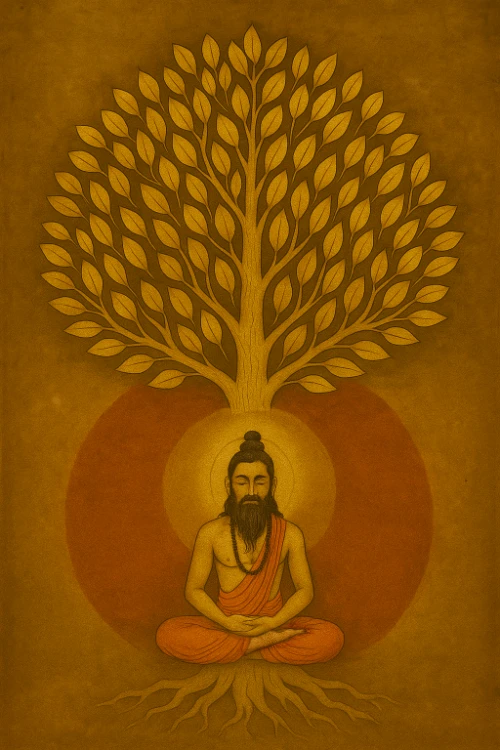
शैलादिरुवाच
श्रुत्वा शक्रेणं कथितं पिता मम महामुनिः ।
पुनः पप्रच्छ देवेशं प्रणम्य रचिताञ्जलिः ॥ १॥
śailādiruvāca
śrutvā śakreṇaṃ kathitaṃ pitā mama mahāmuniḥ |
punaḥ papraccha deveśaṃ praṇamya racitāñjaliḥ || 1||
Śailādi said: Having heard what was spoken by Śakra (Indra), my father — the great sage (mahāmuniḥ) — bowed down with joined palms (racitāñjaliḥ) and once again asked the Lord of the gods (deva-īśa).
2-3
शिलाद उवाच
भगवन् शक्र सर्वज्ञ देवदेवनमस्कृत ।
शचीपते जगन्नाथ सहस्राक्ष महेश्वरः ॥ २ ॥
युगधर्मान्कथं चक्रे भगवान्पद्मसंभवः ।
वक्तुमर्हसि मे सर्वं सांप्रतं प्रणताय मे॥३॥
śilāda uvāca
bhagavan śakra sarvajña devadevanamaskṛta |
śacīpate jagannātha sahasrākṣa maheśvaraḥ || 2 ||
yugadharmānkathaṃ cakre bhagavānpadmasaṃbhavaḥ |
vaktumarhasi me sarvaṃ sāṃprataṃ praṇatāya me||3||
Śilāda said: O Lord Śakra, Omniscient One (sarvajña), worshipped by the gods of gods (deva-deva-namaskṛta), O husband of Śacī (śacīpati), Lord of the Universe (jagannātha), Thousand-eyed One (sahasrākṣa), O Great Lord (maheśvara)— how did the Blessed One, the Lotus-born (padma-sambhava, i.e., Brahmā), establish the Dharma appropriate to each Yuga (yuga-dharmān)? Please tell me all of this now, for I have bowed down before you (praṇatāya).
04
शैलादिरुवाच
तस्य तद्वचनं श्रुत्वा शिलादस्य महात्मनः ।
व्याजहार यथादृष्टं युगधर्मं सुविस्तरम् ॥४॥
śailādiruvāca
tasya tadvacanaṃ śrutvā śilādasya mahātmanaḥ |
vyājahāra yathādṛṣṭaṃ yugadharmaṃ suvistaram ||4||
Śailādi said: Having heard those words of the great-souled Śilāda (mahātman), he [Indra] then spoke in detail (su-vistaram) about the Dharma of the Yugas, as he had seen it (yathā-dṛṣṭam).
05
शक्र उवाच
आद्यं कृतयुगं विद्धि ततस्त्रेतायुगं मुने ।
द्वापरं तिष्यमित्येते चत्वारस्तु समासतः ॥५॥
śakra uvāca
ādyaṃ kṛtayugaṃ viddhi tatastretāyugaṃ mune |
dvāparaṃ tiṣyamityete catvārastu samāsataḥ ||5||
Indra said: O sage, know that the first is the Kṛta Yuga, followed by the Tretā Yuga. Then comes the Dvāpara, and finally the Kali — these are the four Yugas in brief (samāsataḥ).
06
सत्त्वं कृतं रजस्त्रेता द्वापरं च रजस्तमः ।
कलिस्तमश्च विज्ञेयं युगवृत्तिर्युगेषु च ॥६॥
sattvaṃ kṛtaṃ rajastretā dvāparaṃ ca rajastamaḥ |
kalistamaśca vijñeyaṃ yugavṛttiryugeṣu ca ||6||
Kṛta Yuga is characterized by predominance of sattva (purity and harmony); Tretā Yuga by rajas (activity); Dvāpara Yuga by a mix of rajas and tamas (activity and darkness); and Kali Yuga by predominance of tamas (ignorance and inertia). Such is the conduct of the Yugas (yuga-vṛtti) in their respective eras.
07
ध्यानं परं कृतयुगे त्रेतायां यज्ञ उच्यते ।
भजनं द्वापरे शुद्धं दानमेव कलौ युगे ॥७॥
dhyānaṃ paraṃ kṛtayuge tretāyāṃ yajña ucyate |
bhajanaṃ dvāpare śuddhaṃ dānameva kalau yuge ||7||
In the Kṛta Yuga, meditation (dhyāna) is considered supreme. In the Tretā Yuga, sacrificial rituals (yajña) are praised. In the Dvāpara Yuga, pure worship (śuddha-bhajana) is extolled, and in the Kali Yuga, it is charity (dāna) alone that is regarded as the highest.
08
चत्वारि च सहस्राणि वर्षाणां तत्कृतं युगम्।
तस्य तावच्छती संध्या संध्यांशश्च तथाविधः ॥८॥
catvāri ca sahasrāṇi varṣāṇāṃ tatkṛtaṃ yugam|
tasya tāvacchatī saṃdhyā saṃdhyāṃśaśca tathāvidhaḥ ||8||
The Kṛta Yuga consists of four thousand years of the divine scale (i.e., deva-varṣa, not human years). Its Sandhyā (dawn or transition period before the Yuga) lasts for four hundred years, and its Sandhyāṁśa (closing twilight period) is of equal duration. In total, the full span of Kṛta Yuga with its transitions is 4800 divine years: Sandhyā (400) + Main Yuga (4000) + Sandhyāṁśa (400).
09
चत्वारि स सहस्राणि मानुषाणि शिलाशन ।
आयुः कृतयुगे विद्धि प्रजानामिह सुव्रत ॥ ९ ॥
catvāri sa sahasrāṇi mānuṣāṇi śilāśana |
āyuḥ kṛtayuge viddhi prajānāmiha suvrata || 9 ||
O Śilāśana, O you of noble vows (su-vrata), know that in the Kṛta Yuga, the lifespan (āyuḥ) of human beings here (iha) was four thousand human years (mānuṣāṇi sahasrāṇi catvāri). So, in the Kṛta Yuga, not only was dharma at its height, but lifespans were correspondingly vast — 4000 human years.
10
ततः कृतयुगे तस्मिन् संध्यांशे च गते तु वै ।
पादावशिष्टो भवति युगधर्मस्तु सर्वतः ॥ १० ॥
tataḥ kṛtayuge tasmin saṃdhyāṃśe ca gate tu vai |
pādāvaśiṣṭo bhavati yugadharmastu sarvataḥ || 10 ||
Then, when the Kṛta Yuga along with its Sandhyāṁśa (closing twilight period) has passed, only one quarter (pāda) of the Yuga Dharma remains in its fullness (sarvataḥ). Thus, with the ending of Satya Yuga, the dharma of that age begins to decay, and only one-fourth of it survives — a key feature of the transition into Tretā Yuga.
11
चतुर्भागैकहीनं तु त्रेतायुगमनुत्तमम् ।
कृतार्धं द्वापरं विद्धि तदर्धं तिष्यमुच्यते ॥ ११ ॥
caturbhāgaikahīnaṃ tu tretāyugamanuttamam |
kṛtārdhaṃ dvāparaṃ viddhi tadardhaṃ tiṣyamucyate || 11 ||
The excellent Tretā Yuga (anuttamam) is said to be one part less than the full four parts — that is, three-fourths the duration of Kṛta Yuga. Know that Dvāpara Yuga is half the duration of Kṛta, and Kali Yuga (tiṣya) is said to be half of Dvāpara.
So in terms of proportion (excluding Sandhyā/Sandhyāṁśa for now):
Kṛta = 4 units
Tretā = 3 units
Dvāpara = 2 units
Kali = 1 unit
Total Duration of One Mahāyuga (Caturyuga):
Divine Years: 4,800 + 3,600 + 2,400 + 1,200 = 12,000 divine years
Human Years: 1,728,000 + 1,296,000 + 864,000 + 432,000 = 4,320,000 years
1 divine year = 360 human years
A Kalpa (1 day of Brahmā) consists of 1,000 Mahāyugas = 4.32 billion human years
12
त्रिशती द्विशती संध्या तथा चैकशती मुने ।
संध्यांशकं तथाप्येवं कल्पेष्वेवं युगेयुगे ॥ १२ ॥
triśatī dviśatī saṃdhyā tathā caikaśatī mune |
saṃdhyāṃśakaṃ tathāpyevaṃ kalpeṣvevaṃ yugeyuge || 12 ||
O sage, the Sandhyā periods are of 300, 200, and 100 [divine] years respectively, and the Sandhyāṁśa (the twilight period after each Yuga) is likewise of the same duration. This same pattern continues across all Yugas and in every Kalpa.
Kṛta Yuga: 400 + 400
Tretā Yuga: 300 + 300
Dvāpara Yuga: 200 + 200
Kali Yuga: 100 + 100
13-14
आद्ये कृतयुगे धर्मश्चतुष्पादः सनातनः ।
त्रेतायुगे त्रिपादस्तु द्विपादो द्वापरे स्थितः ॥ १३॥
त्रिपादहीनस्तिष्ये तु सत्तामात्रेण धिष्ठितः ।
कृते तु मिथुनोत्पत्तिर्वृत्तिः साक्षाद्रसोल्लसाः ॥१४॥
ādye kṛtayuge dharmaścatuṣpādaḥ sanātanaḥ |
tretāyuge tripādastu dvipādo dvāpare sthitaḥ || 13||
tripādahīnastiṣye tu sattāmātreṇa dhiṣṭhitaḥ |
kṛte tu mithunotpattirvṛttiḥ sākṣādrasollasāḥ ||14||
In the first age, the Kṛta Yuga, eternal Dharma (sanātana dharma) stands firmly on four legs (truth, purity, compassion, and austerity). In Tretā Yuga, it stands on three; in Dvāpara Yuga, it remains on two. In Kali Yuga (Tiṣya), Dharma stands deprived of three legs — sustained only by a trace of its former vitality (sattā-mātra). But in the Kṛta Yuga, the generation of couples (mithuna-utpattiḥ) and their conduct (vṛttiḥ) is direct and radiant with innate delight (rasa-ullāsa), meaning filled with spiritual sweetness or inner fulfillment (not mere sensuality).
15
प्रजास्तृप्ताः सदा सर्वाः सर्वानंदाश्चभोगिनः ।
अधमोत्तमता तासां न विशेषाः प्रजाः शुभाः ॥ १५ ॥
prajāstṛptāḥ sadā sarvāḥ sarvānaṃdāścabhoginaḥ |
adhamottamatā tāsāṃ na viśeṣāḥ prajāḥ śubhāḥ || 15 ||
All beings (prajāḥ) are always content (tṛptāḥ) and enjoy complete delight (sarvānandāḥ) and pleasures (bhoginaḥ). Among them, there is no distinction of lower or higher — all are auspicious (śubhāḥ), virtuous people.
16
तुल्यमायुः सुखं रूपं तासां तस्मिन्कृते युगे ।
तासां प्रीतिर्न च द्वंद्वं न द्वेषो नास्ति च क्लमः ॥१६॥
tulyamāyuḥ sukhaṃ rūpaṃ tāsāṃ tasminkṛte yuge |
tāsāṃ prītirna ca dvaṃdvaṃ na dveṣo nāsti ca klamaḥ ||16||
In that Kṛta Yuga, all people had equal lifespan (tulyam āyuḥ), equal enjoyment (sukham), and equal beauty (rūpam). Their mutual love (prītiḥ) was constant; there was no conflict (dvandvaṃ), no hatred (dveṣaḥ), and no fatigue (klamaḥ).
17-19
पर्वतोदधिवासिन्यो ह्यनिकेताश्र यास्तु ताः ।
विशोकाः सत्त्वबहुला एकांतबहुलास्तथा ॥ १७॥
ता वै निष्कामचारिण्यो नित्यं मुदितमानसाः ।
अप्रवृत्तिः कृतकृते कर्मणोः शुभपापयोः॥१८॥
वर्णाश्रमव्यवस्था च तदासीन च सङ्करः ।
रसोल्लासः कालयोगात्रेताख्ये नश्यते द्विज ॥ १९॥
parvatodadhivāsinyo hyaniketāśra yāstu tāḥ |
viśokāḥ sattvabahulā ekāṃtabahulāstathā || 17||
tā vai niṣkāmacāriṇyo nityaṃ muditamānasāḥ |
apravṛttiḥ kṛtakṛte karmaṇoḥ śubhapāpayoḥ||18||
varṇāśramavyavasthā ca tadāsīna ca saṅkaraḥ |
rasollāsaḥ kālayogātretākhye naśyate dvija || 19||
They (the people of the Kṛta Yuga) lived in mountains and by the ocean, having no fixed dwellings (aniketa-āśrayāḥ). They were free from sorrow (viśokāḥ), full of sattva (sattva-bahulāḥ), and fond of solitude (ekānta-bahulāḥ). Indeed, they moved about without desires (niṣkāma-cāriṇyaḥ), always with cheerful hearts (mudita-mānasāḥ).
They were untouched by the actions (karmaṇoḥ) — both virtuous and sinful (śubha-pāpayoḥ) — that arise from intent or compulsion (kṛta-kṛte). In that time, there was no system of caste or life stages (varṇa-āśrama-vyavasthā), nor any intermixture (saṅkaraḥ).
O Brāhmaṇa, that spontaneous joy and divine delight (rasollāsaḥ) began to fade with the advent of the age known as Tretā (Tretākhye kāla-yogāt).
20-22
तस्य सिद्धौ प्रनष्टायामन्या सिद्धिः प्रजायते ।
अपां सौक्ष्म्ये प्रतिगते मेघात्मना तु वै ॥ २० ॥
मेघेभ्यस्तनयित्नुभ्यः प्रवृतं वृष्टिसर्जनम् ।
सकृदेव तथा वृष्ट्या संयुक्ते पृथिवीतले ॥ २१ ॥
प्रादुरासंस्तदा तासां वृक्षास्ते गृहसंज्ञिताः ।
सर्ववृत्त्युपभोगस्तु तासां तेभ्यः प्रजायते ॥ २२ ॥
tasya siddhau pranaṣṭāyāmanyā siddhiḥ prajāyate |
apāṃ saukṣmye pratigate meghātmanā tu vai || 20 ||
meghebhyastanayitnubhyaḥ pravṛtaṃ vṛṣṭisarjanam |
sakṛdeva tathā vṛṣṭyā saṃyukte pṛthivītale || 21 ||
prādurāsaṃstadā tāsāṃ vṛkṣāste gṛhasaṃjñitāḥ |
sarvavṛttyupabhogastu tāsāṃ tebhyaḥ prajāyate || 22 ||
When one perfection (siddhi) ceases, another perfection arises. When the subtle essence of water (apām saukṣmya) transforms, it assumes the form of clouds (megha-ātmanā). From the clouds, accompanied by thunder (tanayitnu), rain begins to fall. With just one such rainfall (sakṛt eva), the surface of the earth becomes saturated (saṃyukta). Then, for the people, trees (vṛkṣāḥ) spontaneously arose, which came to be regarded as their homes (gṛha-saṃjñitāḥ). All means of livelihood and enjoyment (sarva-vṛtti-upabhogaḥ) arose for them from those trees.
वर्तयंति स्म तेभ्यस्तास्त्रेतायुगमुखे प्रजाः ।
ततः कालेन महता तासामेव विपर्ययात् ॥ २३॥
रागलोभात्मको भावस्तदा ह्याकस्मिकोऽभवत् ।
विपर्ययेण तासां तु तेन तत्कालभाविना ॥ २४ ॥
प्रणश्यति ततः सर्वे वृक्षास्ते गृहसंज्ञिताः ।
ततस्तेषु प्रनष्टेषु विभ्रांता मैथुनोद्भावाः ॥ २५ ॥
अपि ध्यायंति तां सिद्धिं सत्याभिध्यायिनस्तदा ।
प्रादुर्बभूवुस्तासां तु वृक्षास्ते गृहसंज्ञिताः ॥ २६ ॥
vartayaṃti sma tebhyastāstretāyugamukhe prajāḥ |
tataḥ kālena mahatā tāsāmeva viparyayāt || 23||
rāgalobhātmako bhāvastadā hyākasmiko’bhavat |
viparyayeṇa tāsāṃ tu tena tatkālabhāvinā || 24 ||
praṇaśyati tataḥ sarve vṛkṣāste gṛhasaṃjñitāḥ |
tatasteṣu pranaṣṭeṣu vibhrāṃtā maithunodbhāvāḥ || 25 ||
api dhyāyaṃti tāṃ siddhiṃ satyābhidhyāyinastadā |
prādurbabhūvustāsāṃ tu vṛkṣāste gṛhasaṃjñitāḥ || 26 ||
At the beginning of the Tretā Yuga (tretā-yuga-mukhe), the people continued to live by means of those trees (tebhyaḥ). But after a long lapse of time (kālena mahatā), due to a change (viparyayāt) within themselves, things began to alter.
Suddenly (ākasmikaḥ), an inner disposition (bhāvaḥ) driven by passion (rāga) and greed (lobha) arose within them. By that reversal of nature (viparyayeṇa), which emerged in that very moment (tadkāla-bhāvinā), their inner harmony was disturbed. Then, all those trees that served as their homes (gṛha-saṃjñitāḥ vṛkṣāḥ) disappeared (praṇaśyati).
When those trees perished, the beings born of twin-natured origin (maithuna-udbhavāḥ) became bewildered (vibhrāntāḥ). Then, reflecting on that former perfection (siddhiṃ), and meditating upon it with sincerity (satyābhi-dhyāyinaḥ), those trees that were considered as homes (gṛha-saṃjñitāḥ) once again manifested (prādurbabhūvuḥ).
Commentary
These verses depict a moral decline at the transition from Kṛta to Tretā Yuga.
The arising of rāga (desire, attachment) and lobha (greed) marks the fall from natural dharma into ego-based karma.
The vanishing of the trees symbolizes the loss of natural abundance, a metaphysical withdrawal of grace in response to inner corruption.
However, the reappearance of the trees through sincere contemplation highlights the power of truthful intent (satya-abhi-dhyāna) to restore lost harmony.
27-28
वस्त्राणि ते प्रसूयंते फलान्याभरणानि च।
तेष्वेव जायते तासां गंधवर्णरसान्वितम् ॥ २७॥
अमाक्षिकं महावीर्यं पुटकेपुटके मधु ।
तेन ता वर्तयंति स्म सुखमायुः सदैव हि ॥२८॥
vastrāṇi te prasūyaṃte phalānyābharaṇāni ca|
teṣveva jāyate tāsāṃ gaṃdhavarṇarasānvitam || 27||
amākṣikaṃ mahāvīryaṃ puṭakepuṭake madhu |
tena tā vartayaṃti sma sukhamāyuḥ sadaiva hi ||28||
From those trees, garments (vastrāṇi), fruits (phalāni), and ornaments (ābharaṇāni) were naturally produced. On the very same trees, these items appeared—endowed with fragrance (gandha), color (varṇa), and taste (rasa).
And in every leafy cup (puṭake puṭake), there was honey (madhu) of immense potency (mahā-vīryam), not produced by bees (amākṣikam). With that alone, they lived happily (sukham) and healthily, always enjoying long life (āyuḥ sadā eva hi).
29
हृष्टपुष्टास्तया सिद्ध्या प्रजा वै विगतज्वराः ।
ततः कालांतरेणैव पुनर्लोभावृतास्तु ताः॥२९॥
hṛṣṭapuṣṭāstayā siddhyā prajā vai vigatajvarāḥ |
tataḥ kālāṃtareṇaiva punarlobhāvṛtāstu tāḥ||29||
The people, nourished and strong (hṛṣṭa-puṣṭāḥ), free from ailments (vigata-jvarāḥ), were content through that miraculous abundance (tayā siddhyā). But after some time (kālāntareṇa), they once again became overcome by greed (lobha-āvṛtāḥ).
वृक्षांस्तान्पर्यगृह्णति मधु वा माक्षिकं बलात् ।
तासां तेनोपचारेण पुनर्लोभकृतेन वै ॥३०॥
प्रनष्टा मधुना सार्धं कल्पवृक्षाः क्वचित्क्वचित्।
तस्यामेवाल्पशिष्टायां सिद्धयां कालवशात्तदा ॥३१॥
आवर्त्तनात्तु त्रेतायां द्वंद्वान्यभ्युत्थितानि वै ।
शीतवर्षातपैस्तीत्रैस्ततस्ता दुःखिता भृशम् ॥३२॥
vṛkṣāṃs tān paryagṛhṇati madhu vā mākṣikaṃ balāt |
tāsāṃ tenopacāreṇa punar lobhakṛtena vai || 30 ||
pranaṣṭā madhunā sārdhaṃ kalpavṛkṣāḥ kvacit kvacit |
tasyām evālpaśiṣṭāyāṃ siddhyāṃ kālavaśāt tadā || 31 ||
āvarttanāt tu tretāyāṃ dvaṃdvāny abhyutthitāni vai |
śīta-varṣātapais tītraiḥ tatas tā duḥkhitā bhṛśam || 32 ||
They began to seize those trees and forcibly extract honey (madhu or mākṣika) from them. Because of such greedy conduct (lobhakṛta), and that form of misuse (upacāra), the wish-fulfilling trees (kalpavṛkṣāḥ) disappeared along with their honey in many places. At that time, due to the influence of time (kālavaśāt), only a portion of that earlier siddhi (attainment or blessing) remained.
With the return (āvarttana) of Tretāyuga, dualities (dvaṃdva) arose. As a result, the people became extremely afflicted (duḥkhitā bhṛśam) by the severe cold, rain, and heat (śīta–varṣa–ātapaiḥ tītraiḥ).
Commentary
Mākṣika (माक्षिक) can mean “bee-made honey” but is often used here generically for divine or spontaneously appearing honey.
Kalpavṛkṣa (कल्पवृक्ष) refers to mythical wish-fulfilling trees symbolizing divine abundance.
The theme is symbolic of the degeneration of dharma and human virtue: from divine natural abundance to scarcity caused by greed, triggering suffering.
The mention of dvaṃdva (dualities like heat–cold, pleasure–pain) signals the cosmic shift from a sattvic to a rajasic world order.
33
द्वंद्वैः संपीड्यमानाश्च चक्रुरावरणानि तु ।
कृतद्वंद्वप्रतीघाताः केतनानि गिरौ ततः ॥ ३३ ॥
dvaṃdvaiḥ saṃpīḍyamānāśca cakrurāvaraṇāni tu |
kṛtadvaṃdvapratīghātāḥ ketanāni girau tataḥ || 33 ||
Oppressed by natural dualities (such as heat and cold, rain and drought), they began to craft coverings for themselves (āvaraṇāni). To counter these opposing forces, they constructed shelters (ketanāni) on mountain slopes as protection.
34
पूर्वं निकामचारास्ता निकेता अथावसन्।
यथायोगं यथाप्रीति निकेतेष्ववसन्पुनः॥३४॥
pūrvaṃ nikāmacārāstā niketā athāvasan|
yathāyogaṃ yathāprīti niketeṣvavasanpunaḥ||34||
Earlier, they used to roam about freely, without fixed residences (nikāmacāra). Later, they began to dwell in fixed dwellings (niketa) — settling in houses as suited their needs (yathāyoga) and personal preferences (yathāprīti).
35-36
कृत्वा द्वंद्वोपघातांस्तान्वृत्त्युपायमचिंतयन् ।
नष्टेषु मधुना सार्धं कल्पवृक्षेषु वै तदा॥३५॥
विवादव्याकुलास्ता वै प्रजास्तृष्णाक्षुधार्दिताः ।
ततः प्रादुर्बुभौ तासां सिद्धिस्त्रेतायुगे पुनः॥३६॥
kṛtvā dvaṃdvopaghātāṃstānvṛttyupāyamaciṃtayan |
naṣṭeṣu madhunā sārdhaṃ kalpavṛkṣeṣu vai tadā||35||
vivādavyākulāstā vai prajāstṛṣṇākṣudhārditāḥ |
tataḥ prādurbubhau tāsāṃ siddhistretāyuge punaḥ||36||
After taking primitive measures against the opposing forces (dvaṃdva-upaghāta), they began to contemplate ways for sustaining themselves (vṛtti-upāya). When the kalpa trees along with the honey disappeared (naṣṭeṣu madhunā sārdham kalpavṛkṣeṣu), the people (prajāḥ) became confused and agitated by disputes (vivāda-vyākulāḥ) and were afflicted with thirst and hunger (tṛṣṇā-kṣudhā-ārditāḥ). Then, in the Tretāyuga, a new form of attainment or prosperity (siddhiḥ) emerged once again.
37
वार्तायाः साधिकाप्यन्या वृष्टिस्तासां निकामतः ।
तासां वृष्टयुदकादीनि भवन्निम्नगानि तु ॥ ३७॥
vārtāyāḥ sādhikāpyanyā vṛṣṭistāsāṃ nikāmataḥ |
tāsāṃ vṛṣṭayudakādīni bhavannimnagāni tu || 37||
At times there were excessive rains (vṛṣṭiḥ) beyond what was needed for agriculture (vārttāyāḥ sādhikā) among them. These rains led to the formation of streams and channels (nimnagāni) from the excess water.
38
अभवन्वृष्टिसंतत्या स्रोतस्थानानि निम्नगाः ।
एवं नद्यः प्रवृत्तास्तु द्वितीये वृष्टिसर्जने ॥३८॥
abhavanvṛṣṭisaṃtatyā srotasthānāni nimnagāḥ |
evaṃ nadyaḥ pravṛttāstu dvitīye vṛṣṭisarjane ||38||
Due to the continuous rainfall (vṛṣṭi-santatyā), water sources (srotas-sthānāni) in lower grounds (nimnagaḥ) came into being. Thus, rivers (nadyaḥ) emerged during the second creation of rains (dvitīye vṛṣṭi-sarjane).
39
ये पुनस्तदपां स्तोकाः पतिताः पृथिवीतले ।
अपां भूमेश्च संयोगादोषध्यसतास्तदाभवन्॥३९॥
ye punastadapāṃ stokāḥ patitāḥ pṛthivītale |
apāṃ bhūmeśca saṃyogādoṣadhyasatāstadābhavan||39||
Water was filled in the small and big pits on earth. Because of the combination of the water with earth, numerous shrubs and plants were also irrigated.
40-41
अथाल्पकृष्टाश्चानुप्ता ग्राम्यारण्याश्चतुर्दश ।
ऋतुपुष्पफलाश्चैव वृक्षगुल्माश्च जज्ञिरे ॥ ४० ॥
प्रादुर्भूतानि चैतानि वृक्षजात्यौषधानि च ।
तेनौषधेन वर्तंते प्रजास्त्रेता युगे तदा ॥४१॥
athālpakṛṣṭāścānuptā grāmyāraṇyāścaturdaśa |
ṛtupuṣpaphalāścaiva vṛkṣagulmāśca jajñire || 40 ||
prādurbhūtāni caitāni vṛkṣajātyauṣadhāni ca |
tenauṣadhena vartaṃte prajāstretā yuge tadā ||41||
Then, certain lands—though little tilled or even untilled (alpa-kṛṣṭa and anupta)—produced growth. Fourteen types of rural and wild vegetation (grāmya-āraṇya), seasonally flowering and fruit-bearing trees and shrubs (ṛtu-puṣpa-phala-vṛkṣa-gulma) came into existence.
Thus, various species of trees and medicinal herbs (vṛkṣa-jāti-auṣadhāni) manifested. Living upon these medicinal plants and forest produce, the people of the Tretāyuga sustained themselves.
42
ततः पुनरभूत्तासां रागो लोभश्च सर्वशः ।
अवश्यं भाविनार्थेन त्रेतायुगवशेन च ॥४२॥
tataḥ punarabhūttāsāṃ rāgo lobhaśca sarvaśaḥ |
avaśyaṃ bhāvinārthena tretāyugavaśena ca ||42||
Then again, among them arose passion (rāga) and greed (lobha) in full measure, inevitably due to the destined course of time and under the influence of the Tretāyuga (tretāyuga-vaśena).
43
ततस्ताः पर्यगृह्वंत नदीक्षेत्राणि पर्वतान् ।
वृक्षगुल्मौषधीश्चैव प्रसह्य तु यथाबलम्॥४३॥
tatastāḥ paryagṛhvaṃta nadīkṣetrāṇi parvatān |
vṛkṣagulmauṣadhīścaiva prasahya tu yathābalam||43||
Then, those people began to forcibly take possession of riverbanks, fertile lands (nadī-kṣetrāṇi), and mountains (parvatān), as well as trees (vṛkṣa), shrubs (gulma), and medicinal plants (auṣadhīḥ), each according to their own strength (yathā-balam).
44-45
विपर्ययेण चौषध्यः प्रनष्टास्ताश्चतुर्दश ।
मत्वा धरां प्रविष्टास्ता इत्यौषध्यः पितामहः ॥४४॥
दुदोह गां प्रयत्नेन सर्वभूतहिताय वै ।
तदाप्रभृति चौषध्यः फालकृष्टास्त्वितस्ततः॥४५॥
viparyayeṇa cauṣadhyaḥ pranaṣṭāstāścaturdaśa |
matvā dharāṃ praviṣṭāstā ityauṣadhyaḥ pitāmahaḥ ||44||
dudoha gāṃ prayatnena sarvabhūtahitāya vai |
tadāprabhṛti cauṣadhyaḥ phālakṛṣṭāstvitastataḥ||45||
Due to the upheaval (viparyayeṇa), the fourteen kinds of medicinal herbs (cauṣadhyaḥ) perished (pranaṣṭāḥ).
Perceiving (matvā) that those herbs (auṣadhyaḥ) had entered (praviṣṭāḥ) into the earth (dharām), Brahmā, the Grandfather (pitāmahaḥ), took thoughtful action. Then, for the benefit of all beings (sarvabhūtahitāya), Brahmā diligently milked (dudoh) the Earth as a cow (gām prayatnena).
From that moment onward (tadā prabhṛti), the herbs (cauṣadhyaḥ) came to be extracted (i.e., grown) by ploughing (phālakṛṣṭāḥ) in various places (itastataḥ).
वार्ता कृषिं समायाता वर्तुकामाः प्रयत्नतः ।
वाता वृत्तिः समाख्याता कृषिकामप्रयत्नतः ॥४६॥
vārtā kṛṣiṃ samāyātā vartukāmāḥ prayatnataḥ |
vātā vṛttiḥ samākhyātā kṛṣikāmaprayatnataḥ ||46||
Thereafter, such of the people who were interested in farming, patronised the profession of irrigation and farming. The word vārtā means avocation and avocation in this context is the endeavour and the desire for agriculture.
Commentary
This passage emphasizes how, after the decline of natural abundance in earlier ages, agriculture became necessary, and Brahmā himself initiated the process of cultivating medicinal and food-bearing plants by tilling the earth.
अन्यथा जीवितं तासां नास्ति त्रेतायुगात्यये ।
हस्तोद्भवा ह्यपश्चैव भवंति बहुशस्तदा ॥४७॥
anyathā jīvitaṃ tāsāṃ nāsti tretāyugātyaye |
hastodbhavā hyapaścaiva bhavaṃti bahuśastadā ||47||
Otherwise, at the end of the Tretā Yuga, the subjects had no means of livelihood left. Therefore, many domesticated animals (apaḥ) and those born for manual labor (hastodbhavāḥ, “produced through hand effort” or manual work) began to appear in large numbers.
Commentary
This verse marks the transition from a semi-natural way of life to a more agrarian and labor-intensive society. The phrase hastodbhavāḥ refers to things generated through manual labor—indicating the rise of human industry, tools, and effort. The reference to apaḥ (animals) suggests the domestication of cattle and other beasts of burden which became essential for survival, particularly in agriculture and transport.
48
तत्रापि जगृहुः सर्वे चान्योन्यं क्रोधमूर्च्छिताः ।
सुतदारधनाद्यांस्तु बलाद्युगबलेन तु ॥४८॥
tatrāpi jagṛhuḥ sarve cānyonyaṃ krodhamūrcchitāḥ |
sutadāradhanādyāṃstu balādyugabalena tu ||48||
Even during that time (in the Tretāyuga), all people, overwhelmed with rage (krodha-mūrcchitāḥ), began to seize one another. They started forcibly taking over each other’s sons (suta), wives (dāra), wealth (dhana), and other possessions (ādya), driven by the power of that age (yuga-balena).
49
मर्यादायाः प्रतिष्ठार्थं ज्ञात्वा तदखिलं विभुः ।
ससर्ज क्षत्रियांस्त्रातुं क्षतात्कमलसंभवः॥४९॥
maryādāyāḥ pratiṣṭhārthaṃ jñātvā tadakhilaṃ vibhuḥ |
sasarja kṣatriyāṃstrātuṃ kṣatātkamalasaṃbhavaḥ||49||
Realizing the overall deterioration and desiring to re-establish order and righteous boundaries (maryādā), the all-pervading lotus-born deity (kamala-saṃbhavaḥ) — Brahmā — created the Kṣatriyas (kṣatriyān) to protect society from violence and lawlessness.
50
वर्णाश्रमप्रतिष्ठां च चकार स्वेन तेजसा ।
वृत्तेन वृत्तिना वृत्तं विश्वात्मा निर्ममे स्वयम् ॥५०॥
varṇāśramapratiṣṭhāṃ ca cakāra svena tejasā |
vṛttena vṛttinā vṛttaṃ viśvātmā nirmame svayam ||50||
By his own power (svena tejasā), [Brahmā], the Soul of the Universe (viśvātmā), established the order of the four castes (varṇa) and four stages of life (āśrama). He himself created the appropriate means of livelihood (vṛtti) for each through their own conduct (vṛttinā vṛttena).
51
यज्ञप्रवर्तनं चैव त्रेतायामभवत्क्रमात्।
पशुयज्ञं न सेवंते केचित्तत्रापि सुव्रताः ॥५१॥
yajñapravartanaṃ caiva tretāyāmabhavatkramāt|
paśuyajñaṃ na sevaṃte kecittatrāpi suvratāḥ ||51||
In the Tretā Yuga, the practice of sacrifice (yajña) gradually became established. However, even then, some of the virtuous and devoted practitioners abstained from performing animal sacrifices (paśuyajña).
52
बलाद्विष्णुस्तदा यज्ञमकरोत्सर्वदृक् क्रमात् ।
द्विजास्तदा प्रशंसंति ततस्त्वाहिंसकं मुने ॥ ५२॥
balādviṣṇustadā yajñamakarotsarvadṛk kramāt |
dvijāstadā praśaṃsaṃti tatastvāhiṃsakaṃ mune || 52||
Then, Viṣṇu, perceiving all (sarvadarśī), performed the yajña by force (balāt). O sage, from then on, the Brāhmaṇas began to praise the non-violent (ahiṁsaka) form of sacrifice.
53
द्वापरेष्वपि वर्तते मतिभेदास्तदा नृणाम् ।
मनसा कर्मणा वाचा कृच्छ्राद्वार्ता प्रसिध्यति ॥ ५३ ॥
dvāpareṣvapi vartate matibhedāstadā nṛṇām |
manasā karmaṇā vācā kṛcchrādvārtā prasidhyati || 53 ||
Even in Dvāpara Yuga, differences of opinion existed among men. Their livelihood (vārtā) was achieved only with difficulty, through mind, actions, and speech.
54-55
तदा तु सर्वभूतानां कायक्लेशवशात्क्रमात्।
लोभो भृतिर्वणिग्युद्धं तत्वानाभविनिश्चयः ॥५४॥
वेदशाखाप्रणयनं धर्माणां सङ्करस्तथा ।
वर्णाश्रमपरिध्वंसः कामद्वेषौ तथैव च ॥ ५५ ॥
tadā tu sarvabhūtānāṃ kāyakleśavaśātkramāt|
lobho bhṛtirvaṇigyuddhaṃ tatvānābhaviniścayaḥ ||54||
vedaśākhāpraṇayanaṃ dharmāṇāṃ saṅkarastathā |
varṇāśramaparidhvaṃsaḥ kāmadveṣau tathaiva ca || 55 ||
In that age, due to the gradual rise of physical hardship among all beings, greed, paid labor, trade, warfare, and a lack of certainty in metaphysical truths began to prevail. The branches of the Vedas multiplied, confusion in dharmic duties arose, the established order of varṇas and āśramas deteriorated, and desire and hatred prevailed.
द्वापरे तु प्रवर्तते रागो लोभो मदस्तथा ।
वेदो व्यासैश्चतुर्धा तु व्यस्यते द्वापरादिषु ॥ ५६ ॥
dvāpare tu pravartate rāgo lobho madastathā |
vedo vyāsaiścaturdhā tu vyasyate dvāparādiṣu || 56 ||
But in the Dvāpara Yuga, attachment (rāga), greed (lobha), and pride (mada) arise. Also, the Veda is divided into four parts by the sages Vyāsa at the beginning of the Dvāpara Yuga.
Commentary
“Vyāsa” refers to a lineage or succession of sages, each one responsible for dividing the Vedas in their respective Dvāpara Yuga. The plural form in this verse is therefore both grammatically correct and scripturally consistent.
The Viṣṇu Purāṇa and other texts confirm this by saying: “In every Dvāpara Yuga, Viṣṇu incarnates as Vyāsa and divides the Vedas.” — Viṣṇu Purāṇa 3.3.5–6
57
एको वेदश्चतुष्पादस्त्रेतास्विह विधीयते ।
संक्षयादायुषश्चैव व्यस्येते द्वापरेषु सः ॥५७॥
eko vedaścatuṣpādastretāsviha vidhīyate |
saṃkṣayādāyuṣaścaiva vyasyete dvāpareṣu saḥ ||57||
In Tretā Yuga, the one Veda consisting of four parts was established. But due to the decline in human lifespan, that (Veda) was divided during the Dvāpara Yugas.
58-59
ऋषिपुत्रैः पुनर्भेदा भिद्यंते दृष्टिविभ्रमैः ।
मंत्रब्राह्मणविन्यासैः स्वरवर्णविपर्ययैः॥५८॥
संहिता ऋग्यजुः साम्नां संहन्यंते मनीषिभिः ।
सामान्या वैकृताश्चैव द्रष्टुभिस्तैः पृथक्पृथक् ॥ ५९ ॥
ṛṣiputraiḥ punarbhedā bhidyaṃte dṛṣṭivibhramaiḥ |
maṃtrabrāhmaṇavinyāsaiḥ svaravarṇaviparyayaiḥ||58||
saṃhitā ṛgyajuḥ sāmnāṃ saṃhanyaṃte manīṣibhiḥ |
sāmānyā vaikṛtāścaiva draṣṭubhistaiḥ pṛthakpṛthak || 59 ||
The divisions [of the Vedas] were again fragmented by the sons of the sages due to distortions in perception. Through disarrangement in the sequence of mantras and brāhmaṇas, and through changes in intonation and phonetics, further differences arose.
The Saṁhitās of the Ṛgveda, Yajurveda, and Sāmaveda were compiled by learned men. Though their content is common, they appear varied due to the distinct visions (dṛṣṭi) of the seers who composed them.
60
ब्राह्मणं कल्पसूत्राणि मंत्रप्रवचनानि च ।
अन्ये तु प्रस्थितास्तान्वै केचित्तान्प्रत्यवस्थिताः॥६०॥
brāhmaṇaṃ kalpasūtrāṇi maṃtrapravacanāni ca |
anye tu prasthitāstānvai kecittānpratyavasthitāḥ||60||
The Brāhmaṇas, the Kalpasūtras, and the expositions of mantras —some (among the sages) had departed from them, indeed, while others remained adhering to them.
61-63
इतिहासपुराणानि भिद्यंते कालगौरवात् ।
ब्राह्मं पाद्मं वैष्णवं च शैवं भागवतं तथा ॥ ६१॥
भविष्यं नारदीयं च मार्कण्डेयमतः परम् ।
आग्नेयं ब्रह्मवैवर्तं लैङ्गं वाराहमेव च॥६२॥
वामनाख्यं ततः कूर्मं मात्स्यं गारुडमेव च।
स्कांदं तथा च ब्रह्माण्डं तेषां भेदः प्रकथ्यते॥६३॥
itihāsapurāṇāni bhidyaṃte kālagauravāt |
brāhmaṃ pādmaṃ vaiṣṇavaṃ ca śaivaṃ bhāgavataṃ tathā || 61||
bhaviṣyaṃ nāradīyaṃ ca mārkaṇḍeyamataḥ param |
āgneyaṃ brahmavaivartaṃ laiṅgaṃ vārāhameva ca||62||
vāmanākhyaṃ tataḥ kūrmaṃ mātsyaṃ gāruḍameva ca|
skāṃdaṃ tathā ca brahmāṇḍaṃ teṣāṃ bhedaḥ prakathyate||63||
The Itihāsas and Purāṇas are differentiated due to the solemnity and weight of time (kāla-gaurava). These are:
Brāhma (Brahma Purāṇa),
Pādma (Padma Purāṇa),
Vaiṣṇava (Vishnu Purāṇa),
Śaiva (Shiva Purāṇa),
Bhāgavata (Bhāgavata Purāṇa),
Bhaviṣya (Bhaviṣya Purāṇa),
Nāradīya (Nāradīya Purāṇa),
Mārkaṇḍeya (Mārkaṇḍeya Purāṇa),
Āgneya (Agni Purāṇa),
Brahma-vaivarta (Brahma-vaivarta Purāṇa),
Laiṅga (Liṅga Purāṇa),
Vārāha (Varāha Purāṇa),
Vāmana (Vāmana Purāṇa),
Kūrma (Kūrma Purāṇa),
Mātsya (Matsya Purāṇa),
Gāruḍa (Garuda Purāṇa),
Skānda (Skanda Purāṇa),
Brahmāṇḍa (Brahmāṇḍa Purāṇa). These eighteen are mentioned as the divisions (bhedaḥ) of the Purāṇas.
64-65
लैङ्गमेकादशविधं प्रभिन्नं द्वापरे शुभम् ।
मन्वत्रिविष्णुहारीतयाज्ञवल्क्योशनोङ्गिराः ॥६४॥
यमापस्तंबसंवर्ताः कात्यायनबृहस्पती ।
पराशरव्यासशङ्खलिखिता दक्षगौतमौ ॥६५॥
शातातपो वसिष्ठश्च एवमाद्यैः सहस्रशः ।
laiṅgamekādaśavidhaṃ prabhinnaṃ dvāpare śubham |
manvatriviṣṇuhārītayājñavalkyośanoṅgirāḥ ||64||
yamāpastaṃbasaṃvartāḥ kātyāyanabṛhaspatī |
parāśaravyāsaśaṅkhalikhitā dakṣagautamau ||65||
śātātapo vasiṣṭhaśca evamādyaiḥ sahasraśaḥ |
The eleventh, the Liṅga Purāṇa, was fragmented in the Dvāparayuga. Countless sages (ṛṣis) composed Smṛti texts, including Manu, Atri, Viṣṇu, Hārita, Yājñavalkya, Uśanas (Śukra), Aṅgiras, Yama, Āpastamba, Saṁvarta, Kātyāyana, Bṛhaspati, Parāśara, Vyāsa, Śaṅkha, Likhita, Dakṣa, Gautama, Śātātapa, Vasiṣṭha, and thousands of others
66-70
अवृष्टिर्मरणं चैव तथा व्याध्याद्युपद्रवाः ॥६६॥
वाङ्मनःकर्मजैर्दुःखैर्निर्वेदो जायते ततः ।
निर्वेदाज्जायते तेषां दुःखमोक्षविचारणा ॥६७॥
विचारणाच्च वैराग्य वैराग्याद्दोषदर्शनम् ।
दोषाणां दर्शनाश्चैव द्वापरे ज्ञानसंभवः ॥ ६८ ॥
एषा रजस्तमोयुक्ता वृत्तिर्वै द्वापरे स्मृता ।
आद्ये कृते तु धर्मोस्ति स त्रेतायां प्रवर्तते ॥ ६९॥
द्वापरे व्याकुली भूत्वा प्रणश्यति कलौ युगे ॥ ७० ॥
avṛṣṭirmaraṇaṃ caiva tathā vyādhyādyupadravāḥ ||66||
vāṅmanaḥkarmajairduḥkhairnirvedo jāyate tataḥ |
nirvedājjāyate teṣāṃ duḥkhamokṣavicāraṇā ||67||
vicāraṇācca vairāgya vairāgyāddoṣadarśanam |
doṣāṇāṃ darśanāścaiva dvāpare jñānasaṃbhavaḥ || 68 ||
eṣā rajastamoyuktā vṛttirvai dvāpare smṛtā |
ādye kṛte tu dharmosti sa tretāyāṃ pravartate || 69||
dvāpare vyākulī bhūtvā praṇaśyati kalau yuge || 70 ||
With the onset of misfortune, there arose droughts (avṛṣṭi), untimely deaths, diseases, and various other calamities. Oppressed by sufferings caused through speech, mind, and bodily actions, people developed a deep sense of disillusionment (nirveda). From that disillusionment emerged reflection upon the means of liberation from suffering. From such reflection arose detachment (vairāgya), and from detachment emerged the discernment of inherent faults and imperfections in worldly existence. This perception of defects, in turn, gave rise to true knowledge (jñāna) during the Dvāpara Yuga. This progression of thought and conduct—infused with the qualities of rajas and tamas—is said to be characteristic of Dvāpara. In the first age, Kṛta Yuga, Dharma (righteousness) exists in its complete and unshaken form. In Tretā Yuga, it is set into motion and begins to operate actively. In Dvāpara Yuga, Dharma becomes unsteady and troubled, and in Kali Yuga, it ultimately declines and vanishes.
इति श्रीलिङ्गमहापुराणे पूर्वभागे चतुर्युगानाम्विशिष्टधर्मं नाम एकोनचत्वारिंशोऽध्यायः ॥ ३९॥
iti śrīliṅgamahāpurāṇe pūrvabhāge caturyugānāmviśiṣṭadharmaṃ nāma ekonacatvāriṃśo’dhyāyaḥ || 39||
Thus ends Chapter 39, entitled ‘The Specific Dharma of the Four Yugas’, in the Pūrvabhāga (First Part) of the sacred Liṅga Mahāpurāṇa.