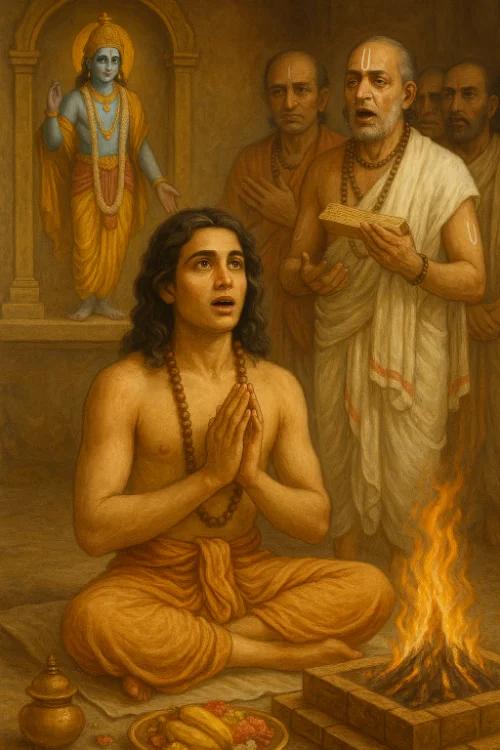
This passage presents a profound dialogue emphasizing the spiritual power of mantras dedicated to Lord Viṣṇu. The Ṛṣis ask which mantra can free living beings from their sins, protect them from Alakṣmī (misfortune and inauspiciousness), and invite Lakṣmī (the goddess of wealth and prosperity) into their homes and lives. In response, Sūta recounts the teachings of Brahmā to the sage Vasiṣṭha, which extols the greatness of invoking the divine names of Viṣṇu.
Sūta explains that Viṣṇu, also known as Kṛṣṇa and Acyuta, is the eternal lord of the Devas, the remover of all sins, and the bestower of mokṣa (liberation) upon those who follow the spiritual path. By consistently chanting the name “Namo Nārāyaṇa” with devotion—whether in waking, sleeping, eating, or walking—a person is freed from all sins and achieves liberation. Sūta highlights that the mere remembrance of Viṣṇu sanctifies food, drink, and daily activities, and even drives away Alakṣmī while welcoming the presence of Lakṣmī into one’s home and body.
To illustrate the power of devotion, the story of Aitareya is shared. Aitareya, a mute son of a Brāhmaṇa, was unable to speak from birth. Despite his inability to learn or recite the Vedas, he constantly remembered and uttered the name “Vāsudeva” in his heart. His father, disheartened, remarried and had other sons who excelled in learning and wealth. Aitareya’s mother lamented their misfortune, considering her son worthless compared to his stepbrothers. Deeply affected by her grief, Aitareya sought divine grace.
During a yajña (sacred ritual), Aitareya entered the ceremonial ground, and the attending Brāhmaṇas were struck dumb upon his arrival. However, when Aitareya uttered the name “Vāsudeva,” their speech was miraculously restored. Recognizing the divine power within Aitareya, the Brāhmaṇas honored him, showering him with gifts and reverence. Aitareya then performed the Vedic recitations flawlessly, earning the blessings of Brahmā and the assembled sages. His story serves as a testament to the transformative power of devotion to Viṣṇu and the recitation of His name.
Sūta concludes by glorifying the twelve-lettered mantra of Viṣṇu, which he describes as ancient, powerful, and capable of granting liberation even to the sinful. This mantra leads to the realization of Vedic truths and the attainment of Viṣṇu’s divine abode. Sūta emphasizes that the consistent remembrance of Viṣṇu’s name surpasses all other rituals and practices, making it the most direct path to spiritual success and divine union.
The passage conveys the central message that unwavering faith, devotion, and the recitation of Viṣṇu’s names and mantras can elevate even the most downtrodden individuals, granting them liberation, prosperity, and eternal peace in Viṣṇuloka.