

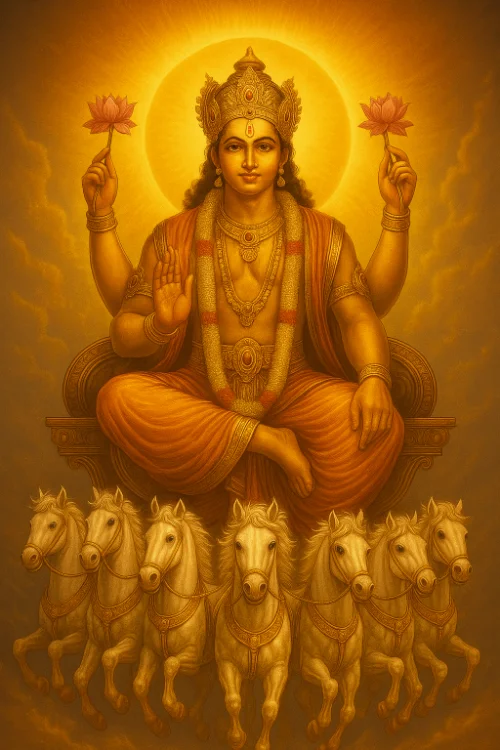
Āditya Hṛdayam: Agastya’s Hymn to the Sun
Synopsis
The Āditya Hṛdayam, “the heart of the Sun”, is the hymn the sage Agastya teaches Rāma on the battlefield of Laṅkā, in the Yuddha-kāṇḍa of Vālmīki’s Rāmāyaṇa. Rāma stands exhausted before his last fight with Rāvaṇa. Agastya tells him to worship the rising Sun, praises the Sun as every god and the witness of the world, and promises victory to whoever recites the hymn three times. Rāma recites it and takes up his bow, and the Sun himself urges him on.
All 31 verses are given in Devanāgarī and IAST with an English meaning, preceded by the viniyoga and nyāsa used when the hymn is recited.
Viniyoga and Nyāsa
ॐ अस्य श्रीआदित्यहृदयस्तोत्रमन्त्रस्य श्रीअगस्त्यऋषिः ।
अनुष्टुप्छन्दः ।
श्रीआदित्यहृदयभूतो भगवान् ब्रह्मा देवताः ।
ॐ बीजम् ।
रश्मिमतेरिति शक्तिः ।
ॐ तत्सवितुरित्यादिगायत्री कीलकम् ।
निरस्ताशेषविघ्नतया ब्रह्मविद्यासिद्धौ सर्वत्र जयसिद्धौ च विनियोगः ।
Oṁ asya śrīādityahṛdayastotramantrasya śrīagastyaṛṣiḥ |
Anuṣṭupchandaḥ |
Śrīādityahṛdayabhūto bhagavān brahmā devatāḥ |
Oṁ bījam |
Raśmimateriti śaktiḥ |
Oṁ tatsaviturityādigāyatrī kīlakam |
Nirastāśeṣavighnatayā brahmavidyāsiddhau sarvatra jayasiddhau ca viniyogaḥ |
Oṁ. Of this hymn-mantra, the Śrī Āditya Hṛdayam, the seer is Śrī Agastya; the metre is anuṣṭubh; the deity is Lord Brahmā, who is the heart of Āditya; the seed is Oṁ; the power is “to the One with rays”; the pin is the Gāyatrī that begins “Oṁ tat savituḥ”. It is recited to remove every obstacle, to attain the knowledge of Brahman, and for victory everywhere.
A viniyoga names a mantra’s seer, metre, deity, seed (bīja), power (śakti) and pin (kīlaka), and states the purpose for which it is recited. The viniyoga and the three nyāsas that follow belong to the practice of recitation, not to the Rāmāyaṇa; the hymn itself begins with verse 1.
अथ ऋष्यादिन्यासः ॥
ॐ अगस्त्यऋषये नमः शिरसि ।
अनुष्टुप्छन्दसे नमः मुखे ।
आदित्यहृदयभूतब्रह्मदेवतायै नमः हृदि ।
ॐ बीजाय नमः गुह्ये ।
ॐ रश्मिमते शक्तये नमः पादयोः ।
ॐ तत्सवितुरित्यादिगायत्री कीलकाय नमः नाभौ ।
विनियोगाय नमः सर्वाङ्गे ।
इति ऋष्यादिन्यासः ॥
Atha ṛṣyādinyāsaḥ ||
Oṁ agastyaṛṣaye namaḥ śirasi |
Anuṣṭupchandase namaḥ mukhe |
Ādityahṛdayabhūtabrahmadevatāyai namaḥ hṛdi |
Oṁ bījāya namaḥ guhye |
Oṁ raśmimate śaktaye namaḥ pādayoḥ |
Oṁ tatsaviturityādigāyatrī kīlakāya namaḥ nābhau |
Viniyogāya namaḥ sarvāṅge |
Iti ṛṣyādinyāsaḥ ||
Now the placing of the seer and the rest. Oṁ, homage to the seer Agastya: on the head. Homage to the anuṣṭubh metre: on the mouth. Homage to the deity Brahmā, who is the heart of Āditya: on the heart. Oṁ, homage to the seed: on the private parts. Oṁ, homage to the power, “to the One with rays”: on the feet. Oṁ, homage to the pin, the Gāyatrī that begins “Oṁ tat savituḥ”: on the navel. Homage to the purpose: on the whole body. Thus the placing of the seer and the rest.
In nyāsa, “placing”, the reciter touches each part of the body as its line is spoken, setting the elements of the mantra within the body before reciting it.
अथ करन्यासः ॥
ॐ रश्मिमते अङ्गुष्ठाभ्यां नमः ।
ॐ समुद्यते तर्जनीभ्यां नमः ।
ॐ देवासुरनमस्कृताय मध्यमाभ्यां नमः ।
ॐ विवस्वते अनामिकाभ्यां नमः ।
ॐ भास्कराय कनिष्ठिकाभ्यां नमः ।
ॐ भुवनेश्वराय करतलकरपृष्ठाभ्यां नमः ।
इति करन्यासः ॥
Atha karanyāsaḥ ||
Oṁ raśmimate aṅguṣṭhābhyāṁ namaḥ |
Oṁ samudyate tarjanībhyāṁ namaḥ |
Oṁ devāsuranamaskṛtāya madhyamābhyāṁ namaḥ |
Oṁ vivasvate anāmikābhyāṁ namaḥ |
Oṁ bhāskarāya kaniṣṭhikābhyāṁ namaḥ |
Oṁ bhuvaneśvarāya karatalakarapṛṣṭhābhyāṁ namaḥ |
Iti karanyāsaḥ ||
Now the placing on the hands. Oṁ, to the One with rays: homage with the thumbs. Oṁ, to the One rising: with the index fingers. Oṁ, to the One saluted by gods and asuras: with the middle fingers. Oṁ, to Vivasvat: with the ring fingers. Oṁ, to Bhāskara: with the little fingers. Oṁ, to the Lord of the world: with the palms and the backs of the hands. Thus the placing on the hands.
The six names are the six epithets of the Sun in verse 6.
अथ हृदयादिषडङ्ग न्यासः ॥
ॐ रश्मिमते हृदयाय नमः ।
ॐ समुद्यते शिरसे स्वाहा ।
ॐ देवासुरनमस्कृताय शिखायै वषट् ।
ॐ विवस्वते कवचाय हुम् ।
ॐ भास्कराय नेत्रत्रयाय वौषट् ।
ॐ भुवनेश्वराय अस्त्राय फट् ।
इति हृदयादिषडङ्ग न्यासः ॥
Atha hṛdayādiṣaḍaṅga nyāsaḥ ||
Oṁ raśmimate hṛdayāya namaḥ |
Oṁ samudyate śirase svāhā |
Oṁ devāsuranamaskṛtāya śikhāyai vaṣaṭ |
Oṁ vivasvate kavacāya hum |
Oṁ bhāskarāya netratrayāya vauṣaṭ |
Oṁ bhuvaneśvarāya astrāya phaṭ |
Iti hṛdayādiṣaḍaṅga nyāsaḥ ||
Now the placing on the six limbs, beginning with the heart. Oṁ, to the One with rays: homage to the heart. Oṁ, to the One rising: svāhā to the head. Oṁ, to the One saluted by gods and asuras: vaṣaṭ to the tuft of hair. Oṁ, to Vivasvat: hum to the armour. Oṁ, to Bhāskara: vauṣaṭ to the three eyes. Oṁ, to the Lord of the world: phaṭ to the weapon. Thus the placing on the six limbs.
Svāhā, vaṣaṭ, hum, vauṣaṭ and phaṭ are sacred exclamations rather than words to be translated. The “armour” is touched with crossed arms over the chest, and the “weapon” is marked with a clap of the hands.
The Āditya Hṛdayam
॥ अथ आदित्यहृदयम् ॥
ततो युद्धपरिश्रान्तं समरे चिन्तया स्थितम् ।
रावणं चाग्रतो दृष्ट्वा युद्धाय समुपस्थितम् ॥ १॥
|| Atha ādityahṛdayam ||
Tato yuddhapariśrāntaṁ samare cintayā sthitam |
Rāvaṇaṁ cāgrato dṛṣṭvā yuddhāya samupasthitam || 1 ||
Now the Āditya Hṛdayam. Rāma stood on the battlefield, worn out by the fighting and lost in thought, with Rāvaṇa before him, ready to fight again.
The hymn comes from the Yuddha-kāṇḍa of Vālmīki’s Rāmāyaṇa: sarga 105 in the Gita Press edition, numbered 107 in others. It is spoken on the battlefield of Laṅkā, just before Rāma’s final fight with Rāvaṇa.
दैवतैश्च समागम्य द्रष्टुमभ्यागतो रणम् ।
उपागम्याब्रवीद्राममगस्त्यो भगवानृषिः ॥ २॥
Daivataiśca samāgamya draṣṭumabhyāgato raṇam |
Upāgamyābravīdrāmamagastyo bhagavānṛṣiḥ || 2 ||
The blessed sage Agastya, who had come with the gods to watch the battle, approached Rāma and said:
राम राम महाबाहो शृणु गुह्यं सनातनम् ।
येन सर्वानरीन्वत्स समरे विजयिष्यसि ॥ ३॥
Rāma rāma mahābāho śṛṇu guhyaṁ sanātanam |
Yena sarvānarīnvatsa samare vijayiṣyasi || 3 ||
Rāma, mighty-armed Rāma, listen, my child, to this eternal secret, by which you will conquer all your enemies in battle.
आदित्यहृदयं पुण्यं सर्वशत्रुविनाशनम् ।
जयावहं जपेन्नित्यमक्षयं परमं शिवम् ॥ ४॥
Ādityahṛdayaṁ puṇyaṁ sarvaśatruvināśanam |
Jayāvahaṁ japennityamakṣayaṁ paramaṁ śivam || 4 ||
It is the Āditya Hṛdayam: holy, the destroyer of every enemy, the bringer of victory. Recite it always. It is imperishable, supreme and auspicious.
Āditya Hṛdayam means “the heart of Āditya”, the Sun, the son of Aditi. The title is often written Aditya Hridayam or Aditya Hrudayam.
सर्वमङ्गलमाङ्गल्यं सर्वपापप्रणाशनम् ।
चिन्ताशोकप्रशमनमायुर्वर्धनमुत्तमम् ॥ ५॥
Sarvamaṅgalamāṅgalyaṁ sarvapāpapraṇāśanam |
Cintāśokapraśamanamāyurvardhanamuttamam || 5 ||
Most auspicious of all auspicious things, the destroyer of every sin, it calms anxiety and grief, and it is the best means of lengthening life.
रश्मिमन्तं समुद्यन्तं देवासुरनमस्कृतम् ।
पूजयस्व विवस्वन्तं भास्करं भुवनेश्वरम् ॥ ६॥
Raśmimantaṁ samudyantaṁ devāsuranamaskṛtam |
Pūjayasva vivasvantaṁ bhāskaraṁ bhuvaneśvaram || 6 ||
Worship Vivasvat, full of rays, as he rises, saluted by gods and asuras alike: the maker of light, the Lord of the world.
These six names, from raśmimantaṁ to bhuvaneśvaram, supply the six lines of the nyāsa above.
सर्वदेवात्मको ह्येष तेजस्वी रश्मिभावनः ।
एष देवासुरगणाँल्लोकान् पाति गभस्तिभिः ॥ ७॥
Sarvadevātmako hyeṣa tejasvī raśmibhāvanaḥ |
Eṣa devāsuragaṇām̐llokān pāti gabhastibhiḥ || 7 ||
He is the self of all the gods, radiant, sustaining all things with his rays. With his rays he protects the worlds and the hosts of gods and asuras.
एष ब्रह्मा च विष्णुश्च शिवः स्कन्दः प्रजापतिः ।
महेन्द्रो धनदः कालो यमः सोमो ह्यपां पतिः ॥ ८॥
Eṣa brahmā ca viṣṇuśca śivaḥ skandaḥ prajāpatiḥ |
Mahendro dhanadaḥ kālo yamaḥ somo hyapāṁ patiḥ || 8 ||
He is Brahmā and Viṣṇu, Śiva, Skanda and Prajāpati; he is Mahendra, Kubera, Time, Yama, Soma and the lord of the waters.
Kubera is named here by his title dhanada, “the giver of wealth”; the lord of the waters is Varuṇa.
पितरो वसवः साध्या ह्यश्विनौ मरुतो मनुः ।
वायुर्वह्निः प्रजाप्राण ऋतुकर्ता प्रभाकरः ॥ ९॥
Pitaro vasavaḥ sādhyā hyaśvinau maruto manuḥ |
Vāyurvahniḥ prajāprāṇa ṛtukartā prabhākaraḥ || 9 ||
He is the ancestors, the Vasus, the Sādhyas, the two Aśvins, the Maruts and Manu; he is the wind and the fire, the breath of living beings, the maker of the seasons, the maker of light.
आदित्यः सविता सूर्यः खगः पूषा गभस्तिमान् ।
सुवर्णसदृशो भानुर्हिरण्यरेता दिवाकरः ॥ १०॥
Ādityaḥ savitā sūryaḥ khagaḥ pūṣā gabhastimān |
Suvarṇasadṛśo bhānurhiraṇyaretā divākaraḥ || 10 ||
He is Āditya, Savitṛ, Sūrya, the bird that crosses the sky, Pūṣan, the one with rays; the golden, the shining one, of golden seed, the maker of the day.
Savitṛ is the Sun as the one who sets all things in motion, and Pūṣan as the one who nourishes them. For bhānurhiraṇyaretā, “shining, of golden seed”, some editions read bhānurviśvaretā, “the seed of all”.
हरिदश्वः सहस्रार्चिः सप्तसप्तिर्मरीचिमान् ।
तिमिरोन्मथनः शम्भुस्त्वष्टा मार्ताण्ड अंशुमान् ॥ ११॥
Haridaśvaḥ sahasrārciḥ saptasaptirmarīcimān |
Timironmathanaḥ śambhustvaṣṭā mārtāṇḍa aṁśumān || 11 ||
He has tawny horses and a thousand flames, seven steeds and countless rays; he churns away the darkness; he is Śambhu, the giver of happiness, Tvaṣṭṛ the shaper, Mārtāṇḍa, the radiant one.
The seven horses of the Sun’s chariot are identified in the Purāṇas with the seven metres of the Veda. Mārtāṇḍa, “from the lifeless egg”, is Aditi’s eighth son. For mārtāṇḍa some editions read mārtaṇḍa.
हिरण्यगर्भः शिशिरस्तपनो भास्करो रविः ।
अग्निगर्भोऽदितेः पुत्रः शङ्खः शिशिरनाशनः ॥ १२॥
Hiraṇyagarbhaḥ śiśirastapano bhāskaro raviḥ |
Agnigarbho’diteḥ putraḥ śaṅkhaḥ śiśiranāśanaḥ || 12 ||
He is Hiraṇyagarbha, the golden womb; he is cool and he is burning; he is Bhāskara, the maker of light, and Ravi; he carries fire within him; he is Aditi’s son, Śaṅkha, the destroyer of cold.
Śiśira, “cool”, stands beside tapana, “burning”: he is gentle at dawn and fierce at noon. Śaṅkha, literally the conch, is explained in several ways by the commentators.
व्योमनाथस्तमोभेदी ऋग्यजुःसामपारगः ।
घनवृष्टिरपां मित्रो विन्ध्यवीथी प्लवङ्गमः ॥ १३॥
Vyomanāthastamobhedī ṛgyajuḥsāmapāragaḥ |
Ghanavṛṣṭirapāṁ mitro vindhyavīthī plavaṅgamaḥ || 13 ||
He is the lord of the sky, the piercer of darkness, master of the Ṛg, Yajur and Sāma Vedas; he brings the heavy rains, he is the friend of the waters, and he moves in swift leaps along the path of the Vindhya.
आतपी मण्डली मृत्युः पिङ्गलः सर्वतापनः ।
कविर्विश्वो महातेजा रक्तः सर्वभवोद्भवः ॥ १४॥
Ātapī maṇḍalī mṛtyuḥ piṅgalaḥ sarvatāpanaḥ |
Kavirviśvo mahātejā raktaḥ sarvabhavodbhavaḥ || 14 ||
He gives heat; he is the round disc; he is death; he is tawny, and he burns all things. He is the seer, he is everything, great in splendour, red, the source of all that comes to be.
नक्षत्रग्रहताराणामधिपो विश्वभावनः ।
तेजसामपि तेजस्वी द्वादशात्मन्नमोऽस्तु ते ॥ १५॥
Nakṣatragrahatārāṇāmadhipo viśvabhāvanaḥ |
Tejasāmapi tejasvī dvādaśātmannamo’stu te || 15 ||
Lord of the constellations, the planets and the stars, origin of all things, brightest even among the bright: you who are twelve, homage to you.
The twelve are the twelve Ādityas, the forms the Sun takes in the twelve months of the year.
नमः पूर्वाय गिरये पश्चिमायाद्रये नमः ।
ज्योतिर्गणानां पतये दिनाधिपतये नमः ॥ १६॥
Namaḥ pūrvāya giraye paścimāyādraye namaḥ |
Jyotirgaṇānāṁ pataye dinādhipataye namaḥ || 16 ||
Homage to the eastern mountain, homage to the western mountain; homage to the lord of the hosts of lights, homage to the lord of the day.
He is saluted as the mountains themselves, the one on which he rises and the one behind which he sets.
जयाय जयभद्राय हर्यश्वाय नमो नमः ।
नमो नमः सहस्रांशो आदित्याय नमो नमः ॥ १७॥
Jayāya jayabhadrāya haryaśvāya namo namaḥ |
Namo namaḥ sahasrāṁśo ādityāya namo namaḥ || 17 ||
Homage, homage to the one who is victory and the good fortune victory brings, to the one with tawny horses. Homage, homage to you of a thousand rays; homage, homage to Āditya.
नम उग्राय वीराय सारङ्गाय नमो नमः ।
नमः पद्मप्रबोधाय मार्ताण्डाय नमो नमः ॥ १८॥
Nama ugrāya vīrāya sāraṅgāya namo namaḥ |
Namaḥ padmaprabodhāya mārtāṇḍāya namo namaḥ || 18 ||
Homage to the fierce one, the hero, the swift one: homage, homage. Homage to the one who awakens the lotus, to Mārtāṇḍa: homage, homage.
For mārtāṇḍāya some editions read mārtaṇḍāya or pracaṇḍāya, “to the fierce one”.
ब्रह्मेशानाच्युतेशाय सूर्यायादित्यवर्चसे ।
भास्वते सर्वभक्षाय रौद्राय वपुषे नमः ॥ १९॥
Brahmeśānācyuteśāya sūryāyādityavarcase |
Bhāsvate sarvabhakṣāya raudrāya vapuṣe namaḥ || 19 ||
Homage to the Lord of Brahmā, Śiva and Acyuta, to Sūrya, to the splendour of Āditya; to the shining one, the devourer of all, whose form is as fierce as Rudra’s.
तमोघ्नाय हिमघ्नाय शत्रुघ्नायामितात्मने ।
कृतघ्नघ्नाय देवाय ज्योतिषां पतये नमः ॥ २०॥
Tamoghnāya himaghnāya śatrughnāyāmitātmane |
Kṛtaghnaghnāya devāya jyotiṣāṁ pataye namaḥ || 20 ||
Homage to the destroyer of darkness, the destroyer of frost, the destroyer of enemies, the boundless self; to the god who destroys the ungrateful, the lord of all the lights.
तप्तचामीकराभाय वह्नये विश्वकर्मणे ।
नमस्तमोऽभिनिघ्नाय रुचये लोकसाक्षिणे ॥ २१॥
Taptacāmīkarābhāya vahnaye viśvakarmaṇe |
Namastamo’bhinighnāya rucaye lokasākṣiṇe || 21 ||
Homage to the one who shines like molten gold, to the fire, to the maker of all things; homage to the destroyer of darkness, to the radiance, to the witness of the world.
For vahnaye, “to the fire”, some editions read haraye viśvakarmaṇe, “to Hari, the maker of all things”.
नाशयत्येष वै भूतं तदेव सृजति प्रभुः ।
पायत्येष तपत्येष वर्षत्येष गभस्तिभिः ॥ २२॥
Nāśayatyeṣa vai bhūtaṁ tadeva sṛjati prabhuḥ |
Pāyatyeṣa tapatyeṣa varṣatyeṣa gabhastibhiḥ || 22 ||
This Lord destroys all beings and creates them again. With his rays he drinks up the waters, he heats, and he sends the rain.
एष सुप्तेषु जागर्ति भूतेषु परिनिष्ठितः ।
एष एवाग्निहोत्रं च फलं चैवाग्निहोत्रिणाम् ॥ २३॥
Eṣa supteṣu jāgarti bhūteṣu pariniṣṭhitaḥ |
Eṣa evāgnihotraṁ ca phalaṁ caivāgnihotriṇām || 23 ||
He is awake in beings while they sleep, firmly seated within them. He is the agnihotra, and he is also the fruit gained by those who offer it.
The agnihotra is the fire offering made every day at sunrise and sunset.
वेदाश्च क्रतवश्चैव क्रतूनां फलमेव च ।
यानि कृत्यानि लोकेषु सर्व एष रविः प्रभुः ॥ २४॥
Vedāśca kratavaścaiva kratūnāṁ phalameva ca |
Yāni kṛtyāni lokeṣu sarva eṣa raviḥ prabhuḥ || 24 ||
He is the Vedas and the sacrifices, and he is the fruit of the sacrifices. Whatever is done in the worlds, the Sun is the Lord of all of it.
The Fruit of Recitation
॥ फलश्रुतिः ॥
एनमापत्सु कृच्छ्रेषु कान्तारेषु भयेषु च ।
कीर्तयन् पुरुषः कश्चिन्नावसीदति राघव ॥ २५॥
|| Phalaśrutiḥ ||
Enamāpatsu kṛcchreṣu kāntāreṣu bhayeṣu ca |
Kīrtayan puruṣaḥ kaścinnāvasīdati rāghava || 25 ||
The fruit of recitation. Rāghava, whoever praises him in calamity, in hardship, in the wilderness or in fear does not lose heart.
Agastya now states the fruit, phala-śruti, of reciting the hymn.
पूजयस्वैनमेकाग्रो देवदेवं जगत्पतिम् ।
एतत् त्रिगुणितं जप्त्वा युद्धेषु विजयिष्यसि ॥ २६॥
Pūjayasvainamekāgro devadevaṁ jagatpatim |
Etat triguṇitaṁ japtvā yuddheṣu vijayiṣyasi || 26 ||
Worship him with a single mind, the God of gods, the Lord of the world. Recite this three times and you will be victorious in battle.
अस्मिन्क्षणे महाबाहो रावणं त्वं वधिष्यसि ।
एवमुक्त्वा तदाऽगस्त्यो जगाम च यथागतम् ॥ २७॥
Asminkṣaṇe mahābāho rāvaṇaṁ tvaṁ vadhiṣyasi |
Evamuktvā tadā’gastyo jagāma ca yathāgatam || 27 ||
Mighty-armed one, at this very moment you will slay Rāvaṇa. Having said this, Agastya went back the way he had come.
एतच्छ्रुत्वा महातेजा नष्टशोकोऽभवत्तदा ।
धारयामास सुप्रीतो राघवः प्रयतात्मवान् ॥ २८॥
Etacchrutvā mahātejā naṣṭaśoko’bhavattadā |
Dhārayāmāsa suprīto rāghavaḥ prayatātmavān || 28 ||
Hearing this, the radiant Rāghava was freed from sorrow. Greatly pleased, with his mind composed, he held the hymn in his heart.
आदित्यं प्रेक्ष्य जप्त्वा तु परं हर्षमवाप्तवान् ।
त्रिराचम्य शुचिर्भूत्वा धनुरादाय वीर्यवान् ॥ २९॥
Ādityaṁ prekṣya japtvā tu paraṁ harṣamavāptavān |
Trirācamya śucirbhūtvā dhanurādāya vīryavān || 29 ||
Gazing at the Sun, he recited it and attained the highest joy. Having sipped water three times and become pure, the mighty one took up his bow.
रावणं प्रेक्ष्य हृष्टात्मा युद्धाय समुपागमत् ।
सर्वयत्नेन महता वधे तस्य धृतोऽभवत् ॥ ३०॥
Rāvaṇaṁ prekṣya hṛṣṭātmā yuddhāya samupāgamat |
Sarvayatnena mahatā vadhe tasya dhṛto’bhavat || 30 ||
Seeing Rāvaṇa, he went joyfully into battle, resolved with all his great effort to slay him.
अथ रविरवदन्निरीक्ष्य रामं
मुदितमनाः परमं प्रहृष्यमाणः ।
निशिचरपतिसङ्क्षयं विदित्वा
सुरगणमध्यगतो वचस्त्वरेति ॥ ३१॥
Atha raviravadannirīkṣya rāmaṁ
Muditamanāḥ paramaṁ prahṛṣyamāṇaḥ |
Niśicarapatisaṅkṣayaṁ viditvā
Suragaṇamadhyagato vacastvareti || 31 ||
Then the Sun, standing among the hosts of the gods and knowing that the end of the lord of the night-wanderers was at hand, looked on Rāma, glad at heart and overjoyed, and said: “Hurry!”
The lord of the night-wanderers is Rāvaṇa. The last verse is in the longer puṣpitāgrā metre that closes the sarga, and the hymn ends with the Sun himself urging Rāma on.
इति आदित्यहृदयं मन्त्रम् ॥
Iti ādityahṛdayaṁ mantram ||
Thus the Āditya Hṛdayam mantra.
Text from: Sanskritdocuments.org, encoded by M. Giridhar.
More in Surya
Āditya HṛdayamMantras
You are here