BRAHMA-VAIVARTA MAHĀPURĀṆAM - BRAHMA-KHAṆḌA
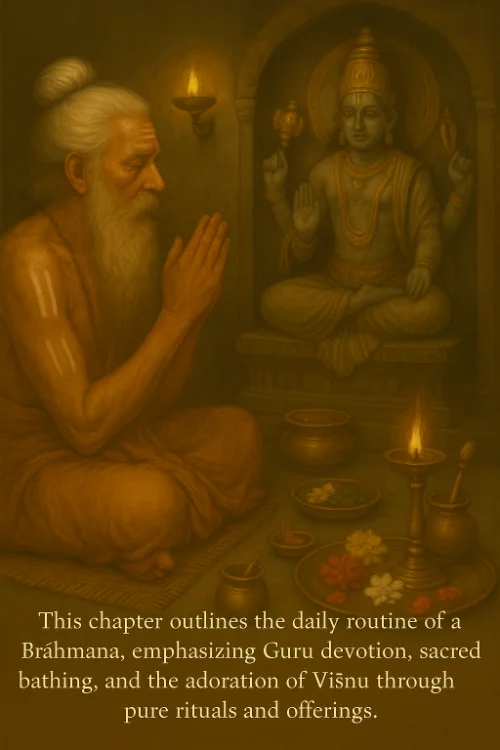
Chapter 26 - Daily Routine and Method of Adoration
सौतिरुवाच
हरिस्तोत्रं च कवचं मन्त्रं पूजाविधिं परम् ।
हरं ययाचे देवर्षिर्थ्यानं च ज्ञानमेव च ॥ १ ॥
sautiruvāca
haristotraṃ ca kavacaṃ mantraṃ pūjāvidhiṃ param |
haraṃ yayāce devarṣirthyānaṃ ca jñānameva ca || 1 ||
Sauti said, "The sage Narada then prayed to Śiva to enlighten him on the stotra of Lord Hari, his kavaca, his mantra, and the best methods of his adoration, including meditation and the knowledge of tattva.
स्तोत्रं च कवचं मन्त्रं ध्यानं पूजाविधिं तथा ।
तत्प्राक्तनीयज्ञानं च ददौ तस्मै महेश्वरः ॥ २ ॥
सर्वं प्राप्य मुनिश्रेष्ठः परिपूर्णमनोरथ: ।
उवाच प्रणतो भक्त्याः गुरुं प्रणतवत्सलम् ॥ ३ ॥
stotraṃ ca kavacaṃ mantraṃ dhyānaṃ pūjāvidhiṃ tathā |
tatprāktanīyajñānaṃ ca dadau tasmai maheśvaraḥ || 2 ||
sarvaṃ prāpya muniśreṣṭhaḥ paripūrṇamanoratha: |
uvāca praṇato bhaktyāḥ guruṃ praṇatavatsalam || 3 ||
Maheśvara taught him stotra, kavaca, mantra meditation, and method of adoration. Nārada, the best of the sages, felt that all his wishes had been fulfilled. Thereafter, he bowed at his feet and, his mind filled with devotion spoke to his Guru, Who was always kind to the devotees.
नारद उवाच
आह्निकं ब्राह्मणानां च वद वेदविदां वर ।
स्वधर्मपालनं नित्यं यतो भवति नित्यशः ॥ ४ ॥
nārada uvāca
āhnikaṃ brāhmaṇānāṃ ca vada vedavidāṃ vara |
svadharmapālanaṃ nityaṃ yato bhavati nityaśaḥ || 4 ||
Nārada said: O best of those who know the Vedas, please describe the daily rituals that brāhmaṇas must observe, for by steadfast adherence to one's own dharma one attains eternal righteousness.
श्रीमहेश्वर उवाच
ब्राह्मे मुहूर्ते चोत्थाय ब्रह्मरन्ध्रस्थपङ्कजे ।
सूक्ष्मे सहस्रपत्रे स्वे निर्मले ग्लानिवर्जिते ॥५॥
रात्रिवासं परित्यज्य गुरुं तत्रैव चिन्तयेत् ।
व्याख्यामुद्राकरं प्रीतं सस्मितं शिष्यवत्सलम् ॥ ६॥
प्रसन्नवदनं शान्तं परितुष्टं निरन्तरम् ।
साक्षाद्वह्मस्वरूपं च परमं चिन्तयेत्सदा ॥ ७ ॥
ध्यात्वैवं गुरुमाराध्य हृत्पद्मे निर्मले सिते ।
सहस्रपत्रे विस्तीर्णे देवमिष्टं विचिन्तयेत् ॥ ८ ॥
यस्य देवस्य यद्ध्यानं यद्रूपं तद्विचिन्तयेत् ।
गृहीत्वा तदनुज्ञां च कर्तव्यं समयोचितम् ॥ ९॥
śrīmaheśvara uvāca
brāhme muhūrte cotthāya brahmarandhrasthapaṅkaje |
sūkṣme sahasrapatre sve nirmale glānivarjite ||5||
rātrivāsaṃ parityajya guruṃ tatraiva cintayet |
vyākhyāmudrākaraṃ prītaṃ sasmitaṃ śiṣyavatsalam || 6||
prasannavadanaṃ śāntaṃ parituṣṭaṃ nirantaram |
sākṣādvahmasvarūpaṃ ca paramaṃ cintayetsadā || 7 ||
dhyātvaivaṃ gurumārādhya hṛtpadme nirmale site |
sahasrapatre vistīrṇe devamiṣṭaṃ vicintayet || 8 ||
yasya devasya yaddhyānaṃ yadrūpaṃ tadvicintayet |
gṛhītvā tadanujñāṃ ca kartavyaṃ samayocitam || 9||
Śrī Maheśvara (Lord Śiva) said: Upon waking in the Brāhma Muhūrta (the sacred pre-dawn hour), one should focus on the thousand-petaled lotus (Sahasrāra) located at the Brahmarandhra (crown center of the head), a subtle and radiant lotus, pure, expansive, and free from fatigue.
Having abandoned the state of sleep, one should first meditate upon the Guru, who is seated within that Sahasrāra lotus, holding the gesture of teaching (Vyākhyā-Mudrā), amiling, gracious, and filled with love for disciples.
With a serene and blissful countenance, ever peaceful and perfectly content, He is the embodiment of the Supreme Brahman, the eternal form to be meditated upon.
Having meditated upon the Guru, one should then worship him within the heart, visualizing him seated in the lotus of the heart (Hṛt-Padma), a pure, white, thousand-petaled lotus, vast and luminous.
After this, one should meditate upon the form of one’s chosen deity (Iṣṭa-Deva), exactly as prescribed for that deity. Having received the Guru’s blessings, one should proceed to perform the duties of the day, according to the appropriate time and circumstances.
आदौ ध्यात्वा गुरुं नत्वा संपूज्य विधिपूर्वकम्।
पश्चात्तदाज्ञामादाय ध्यायेदिष्टं प्रपूजयेत् ॥ १० ॥
गुरुप्रदर्शितो देवो मन्त्रः पूजाविधिर्जप: ।
न देवेन गुरुर्दृष्टस्तस्माद्देवाद्गुरुः परः ॥ ११ ॥
ādau dhyātvā guruṃ natvā saṃpūjya vidhipūrvakam|
paścāttadājñāmādāya dhyāyediṣṭaṃ prapūjayet || 10 ||
gurupradarśito devo mantraḥ pūjāvidhirjapa: |
na devena gururdṛṣṭastasmāddevādguruḥ paraḥ || 11 ||
First, one should meditate upon the Guru, bow to him and worship him with proper rituals. Only after receiving his command, should one then meditate upon one's chosen deity (Iṣṭa-Deva) and offer worship accordingly.
The deity to be worshiped, the mantra, the rituals of worship, and the practice of japa, are all revealed through the guidance of the Guru. Since the deity is never seen without the Guru’s grace, the Guru is superior to the deity.
गुरुर्ब्रह्मा गुरुर्विष्णुर्गुरुर्देवो महेश्वरः ।
गुरुः प्रकृतिरीशाद्या गुरुचन्द्रोऽनलो रविः ॥ १२ ॥
gururbrahmā gururviṣṇurgururdevo maheśvaraḥ |
guruḥ prakṛtirīśādyā gurucandro’nalo raviḥ || 12 ||
The Guru is Brahmā, the Guru is Viṣṇu, the Guru is Lord Maheśvara (Śiva). The Guru is Prakṛti (Nature), the Guru is Īśvara (the Supreme Lord). The Guru is the Moon, Fire, and the Sun, illuminating all paths of knowledge.
गुरुर्वायुश्च वरुणो गुरुर्माता पिता सुहृत् ।
गुरुरेव परं ब्रह्म नास्ति पूज्यो गुरोः परः ॥ १३ ॥
gururvāyuśca varuṇo gururmātā pitā suhṛt |
gurureva paraṃ brahma nāsti pūjyo guroḥ paraḥ || 13 ||
The Guru is Vāyu (the Wind God), the Guru is Varuṇa (the Lord of Waters). The Guru is the Mother, the Father, and the True Friend. The Guru alone is the Supreme Brahman. There is no one more worthy of worship than the Guru.
अभीष्टदेवे रुष्टे च समर्थो रक्षणे गुरुः ।
न समर्था गुरौ रुष्टे रक्षणे सर्वदेवताः ॥ १४ ॥
यस्य तुष्टो गुरुः शश्वज्जयस्तस्य पदे पदे ।
यस्य रुष्टो गुरुस्तस्य सर्वनाशश्च सर्वदा ॥ १५ ॥
न संपूज्य गुरुं देवं यो मूढः पूजयेद्भ्रमात् ।
ब्रह्महत्याशतं पापी लभते नात्र संशयः ॥ १६॥
abhīṣṭadeve ruṣṭe ca samartho rakṣaṇe guruḥ |
na samarthā gurau ruṣṭe rakṣaṇe sarvadevatāḥ || 14 ||
yasya tuṣṭo guruḥ śaśvajjayastasya pade pade |
yasya ruṣṭo gurustasya sarvanāśaśca sarvadā || 15 ||
na saṃpūjya guruṃ devaṃ yo mūḍhaḥ pūjayedbhramāt |
brahmahatyāśataṃ pāpī labhate nātra saṃśayaḥ || 16||
If one's cherished deity (Iṣṭa-Deva) becomes angry, the Guru alone has the power to offer protection. But if the Guru is displeased, then even all the gods together are incapable of offering protection.
One whose Guru is pleased attains victory at every step, always. But one whose Guru is displeased faces total destruction at all times.
The fool who, out of delusion, worships deities but neglects the Guru, accumulates the sin of killing a hundred Brāhmaṇas (Brahmahatyā). There is no doubt about this.
सामवेदे च भगवानित्युवाच हरिः स्वयम् ।
तस्मादभीष्टदेवाच्च गुरुः पूज्यतमः परः ॥ १७॥
sāmavede ca bhagavānityuvāca hariḥ svayam |
tasmādabhīṣṭadevācca guruḥ pūjyatamaḥ paraḥ || 17||
In the Sāma Veda, Lord Hari (Viṣṇu) himself declared, that the Guru is superior even to one's cherished deity (Iṣṭa-Deva). Thus, the Guru is the most worthy of worship, even beyond one's personal deity.
गुरुमिष्टं स्वयं ध्यात्वा स्तुत्वा वै साधको मुने ।
निर्मलं स्थलमासाद्य विण्मूत्रं ह्यत्सृजेन्मुदा ॥ १८ ॥
gurumiṣṭaṃ svayaṃ dhyātvā stutvā vai sādhako mune |
nirmalaṃ sthalamāsādya viṇmūtraṃ hyatsṛjenmudā || 18 ||
O Sage, having meditated upon and praised the revered Guru with devotion, the spiritual practitioner, upon reaching a pure and clean place, should joyfully relieve himself of bodily wastes (excrement and urine).
जलं जलसमीपं च सरन्ध्रं प्राणिसंनिधिम् ।
देवालयसमीपं च वृक्षमूलं च वर्त्म च ॥ १९ ॥
हलोत्कर्षस्थलं चैव सस्यक्षेत्रं च गोष्ठकम् ।
नदीकन्दरगर्भं च पुष्पोद्यानं च पङ्किलम् ॥ २० ॥
ग्रामाद्यभ्यन्तरं चैव नृणां गृहसमीपकम् ।
शङ्कं सेतुं शरवणं श्मशानं वह्निसंन्निधिम् ॥ २१॥
क्रीडास्थलं महारण्यं मञ्चकाध: स्थलं तथा ।
वृक्षच्छायायुतं स्थानमन्त: प्राण्यवपर्णकम्॥ २२॥
दूर्वास्थानं कुशस्थानं वल्मीकस्थानमेव च ।
वृक्षारोपणभूमिं च कार्यार्थं च परिष्कृतम् ॥ २३ ॥
एतत्सर्वं परित्यज्य सूर्यतापविवर्जितम् ।
कृत्वा गर्तं पुरीषं च मूत्रं स परिवर्जयेत् ॥ २४ ॥
jalaṃ jalasamīpaṃ ca sarandhraṃ prāṇisaṃnidhim |
devālayasamīpaṃ ca vṛkṣamūlaṃ ca vartma ca || 19 ||
halotkarṣasthalaṃ caiva sasyakṣetraṃ ca goṣṭhakam |
nadīkandaragarbhaṃ ca puṣpodyānaṃ ca paṅkilam || 20 ||
grāmādyabhyantaraṃ caiva nṛṇāṃ gṛhasamīpakam |
śaṅkaṃ setuṃ śaravaṇaṃ śmaśānaṃ vahnisaṃnnidhim || 21||
krīḍāsthalaṃ mahāraṇyaṃ mañcakādha: sthalaṃ tathā |
vṛkṣacchāyāyutaṃ sthānamanta: prāṇyavaparṇakam|| 22||
dūrvāsthānaṃ kuśasthānaṃ valmīkasthānameva ca |
vṛkṣāropaṇabhūmiṃ ca kāryārthaṃ ca pariṣkṛtam || 23 ||
etatsarvaṃ parityajya sūryatāpavivarjitam |
kṛtvā gartaṃ purīṣaṃ ca mūtraṃ sa parivarjayet || 24 ||
One should not relieve oneself near water sources, wells, or reservoirs, near living beings, or close to a temple. One should avoid doing so at the base of a tree, on roads, on plowed agricultural land, or fertile fields filled with crops.
Also, avoid riverbanks, caves, flower gardens, or muddy places.
It should also not be done inside a village, near houses, on sacred bridges, reed forests, or near cremation grounds and fire altars.
Avoid playgrounds, deep forests, beneath raised platforms or stages, under the shade of a tree, or in places where insects and creatures dwell.
One should never relieve oneself on beds of sacred grass (Dūrvā, Kuśa), on anthills, termite mounds, or in areas meant for planting trees.
Instead, one should choose a clean and secluded place, avoiding exposure to direct sunlight, dig a small pit, and ensure urine and feces are properly covered.
पुरीषमूत्रोत्सर्गं च दिवा कुर्यादुदमुखः ।
पश्चिमाभिमुखो रात्रौ संध्यायां दक्षिणामुखः ॥ २५ ॥
purīṣamūtrotsargaṃ ca divā kuryādudamukhaḥ |
paścimābhimukho rātrau saṃdhyāyāṃ dakṣiṇāmukhaḥ || 25 ||
During the day, one should free himself from refuse and urination facing north, and during the night, facing the west. During the evenings, facing the south, one should do so.
मौनी धृत्वा च निःश्वासं यथा गन्धो न संचरेत् ।
त्यक्त्वा मुदा समाच्छाद्य शौचं कुर्याद्विचक्षणः ॥ २६ ॥
कृत्वा तु लोष्टशौचं च जलशौचं ततः परम् ।
मृद्युक्तं तज्जलं चैव तत्प्रमाणं प्रकीर्तितम्॥२७॥
maunī dhṛtvā ca niḥśvāsaṃ yathā gandho na saṃcaret |
tyaktvā mudā samācchādya śaucaṃ kuryādvicakṣaṇaḥ || 26 ||
kṛtvā tu loṣṭaśaucaṃ ca jalaśaucaṃ tataḥ param |
mṛdyuktaṃ tajjalaṃ caiva tatpramāṇaṃ prakīrtitam||27||
While maintaining silence and holding one's breath so that no odor spreads, one should carefully perform the act with joy, covering the area afterward and demonstrating wisdom. Afterward, one should first cleanse with earth (soil or mud) and then wash with water. The use of mud and water in the appropriate measure is prescribed as the proper method for purification.
एका लिङ्गे मृदं दद्याद्वामहस्ते चतुष्टयम् ।
उभयोर्हस्तयोर्द्वे तु मूत्रशौचं प्रकीर्तितम् ॥ २८ ॥
ekā liṅge mṛdaṃ dadyādvāmahaste catuṣṭayam |
ubhayorhastayordve tu mūtraśaucaṃ prakīrtitam || 28 ||
After easing oneself, the organ should be washed four times, and the hand should be cleaned by applying dirt twice.
मूत्रशौचं द्विगुणितं मैथुनान्तरं यदि ।
मैथुनान्तरं यद्वा मूत्रशौचं चतुर्गुणम् ॥ २९ ॥
एका लिङ्गे गुदे तिस्रस्तथा वामकरे दश ।
उभयोः सप्त दातव्याः पादः षष्ठेन शुध्यति ॥ ३०॥
mūtraśaucaṃ dviguṇitaṃ maithunāntaraṃ yadi |
maithunāntaraṃ yadvā mūtraśaucaṃ caturguṇam || 29 ||
ekā liṅge gude tisrastathā vāmakare daśa |
ubhayoḥ sapta dātavyāḥ pādaḥ ṣaṣṭhena śudhyati || 30||
Similarly, after co-habitation, one should use twice the amount of water and four times the dirt for purification. After easing, one should clean the organ thrice with the left hand. He should then wash his hands. Both hands should be washed seven times, and the feet should be washed by applying the dirt half a dozen times for purification. This method is prescribed for the Brāhmaṇas householder for purification after relieving himself of the refuse.
पुरीषशौचं विप्राणां गृहिणामिदमेव च ।
विधवानां द्विगुणितं शौचमेवं प्रकीर्तितम् ॥ ३१॥
purīṣaśaucaṃ viprāṇāṃ gṛhiṇāmidameva ca |
vidhavānāṃ dviguṇitaṃ śaucamevaṃ prakīrtitam || 31||
The widows should adopt double the purification standards prescribed for household Brāhmaṇa.
वैष्णवानां यतीनां च ब्रह्मर्षेर्ब्रह्मचारिणाम् ।
चतुर्गुणं च गृहिणां तेषां शौचं प्रकीर्तितम् ॥ ३२ ॥
नो यावदुपनीयेत द्विजः शूद्रस्तथाऽङ्गना ।
गन्धलेपक्षयकरं तेषां शौचं प्रकीर्तितम् ॥ ३३ ॥
शौचं क्षत्रविशोश्चैव द्विजानां गृहिणां समम् ।
द्विगुणं वैष्णवादीनां मुनीनां परिकीर्तितम् ॥ ३४ ॥
vaiṣṇavānāṃ yatīnāṃ ca brahmarṣerbrahmacāriṇām |
caturguṇaṃ ca gṛhiṇāṃ teṣāṃ śaucaṃ prakīrtitam || 32 ||
no yāvadupanīyeta dvijaḥ śūdrastathā’ṅganā |
gandhalepakṣayakaraṃ teṣāṃ śaucaṃ prakīrtitam || 33 ||
śaucaṃ kṣatraviśoścaiva dvijānāṃ gṛhiṇāṃ samam |
dviguṇaṃ vaiṣṇavādīnāṃ munīnāṃ parikīrtitam || 34 ||
For Vaiṣṇavas, ascetics (Yatis), Brahmarṣis, and Brahmacārins, the required cleansing after defecation is four times that of householders (Gṛhasthas).
For a Dvija (twice-born) who has not yet undergone the sacred thread ceremony, for a Śūdra, and for women in general, the cleansing required is only sufficient to remove odor and surface impurities.
For Kṣatriyas and Vaiśyas, the prescribed cleansing is the same as that for Brāhmaṇa householders. However, for Vaiṣṇavas, ascetics, and sages, it is prescribed to be twice as much.
न्यूनाधिकं न कर्त्तव्यं शौचं शुद्धिमभीप्सता ।
प्रायश्चित्तं प्रयुज्येत विहितातिक्रमे कृते ॥ ३५ ॥
nyūnādhikaṃ na karttavyaṃ śaucaṃ śuddhimabhīpsatā |
prāyaścittaṃ prayujyeta vihitātikrame kṛte || 35 ||
One desiring purity should neither reduce nor exceed the prescribed cleansing. If the prescribed rules are violated, penance should be performed.
शौचं तत्रियमं मत्तः सावधानं निशामय ।
मृच्छौचे च शुचिर्विप्रोऽप्यशुचिश्च व्यतिक्रमे ॥ ३६ ॥
śaucaṃ tatriyamaṃ mattaḥ sāvadhānaṃ niśāmaya |
mṛcchauce ca śucirvipro’pyaśuciśca vyatikrame || 36 ||
Purity has three types: listen carefully, a wise person is pure through proper cleanliness, while even a learned Brahmin becomes impure if the prescribed rules are violated.
वल्मीकमूषिकोत्खातां मृदमन्तर्जलां तथा ।
शौचावशिष्टां गेहाच्च नादद्याल्लेपसंभवाम् ॥ ३७॥
अन्त: प्राण्यवपर्णां च हलोत्खातां विशेषतः ।
कुशमूलोत्थितां चैव दूर्वामूलोत्थितां तथा ॥ ३८ ॥
अश्वत्थमूलान्नीतां च तथैव शयनोत्थिताम् ।
चतुष्पथाच्च गोष्ठानां गोष्पदानां तथैव च ॥ ३९॥
सस्यस्थलानां क्षेत्राणामुद्यानानां मृदं त्यजेत् ।
स्नातो वाऽप्यथवा स्नातो विप्रः शौचेन शुद्ध्यति ॥ ४०॥
valmīkamūṣikotkhātāṃ mṛdamantarjalāṃ tathā |
śaucāvaśiṣṭāṃ gehācca nādadyāllepasaṃbhavām || 37||
anta: prāṇyavaparṇāṃ ca halotkhātāṃ viśeṣataḥ |
kuśamūlotthitāṃ caiva dūrvāmūlotthitāṃ tathā || 38 ||
aśvatthamūlānnītāṃ ca tathaiva śayanotthitām |
catuṣpathācca goṣṭhānāṃ goṣpadānāṃ tathaiva ca || 39||
sasyasthalānāṃ kṣetrāṇāmudyānānāṃ mṛdaṃ tyajet |
snāto vā’pyathavā snāto vipraḥ śaucena śuddhyati || 40||
One should not use earth for purification if it comes from:
Anthills, burrows dug by rats or other creatures;
Inside water bodies,
Previously used for cleansing,
Taken from inside a house,
Derived from decayed or decomposed matter.
One should also avoid using clay that is:
Taken from places where insects or small creatures reside;
Plowed or disturbed by a plow;
Collected from the roots of Kuśa grass;
Taken from the roots of Dūrvā grass;
Similarly, earth should not be used if taken from:
The roots of an Aśvattha tree;
Places where one has slept;
Crossroads or intersections;
Cow sheds;
Cow footprints or dung-covered ground.
One should also avoid taking earth from:
Crop fields;
Farmlands;
Orchards and gardens.
A Brahmin, whether bathed or unbathed, becomes purified through adherence to these rules of cleanliness.
शौचहीनो ऽशुचिर्नित्यमनर्हः सर्वकर्मसु ।
कृत्वा शौचमिदं विप्रो मुखं प्रक्षालयेत्सुधीः ॥ ४१॥
आदौ षोडश गण्डूषैर्मूखशुद्धिं विधाय च ।
दन्तकाष्ठेन दन्तांश्च तत्पश्चात्परिमार्जयेत्॥ ४२ ॥
śaucahīno ’śucirnityamanarhaḥ sarvakarmasu |
kṛtvā śaucamidaṃ vipro mukhaṃ prakṣālayetsudhīḥ || 41||
ādau ṣoḍaśa gaṇḍūṣairmūkhaśuddhiṃ vidhāya ca |
dantakāṣṭhena dantāṃśca tatpaścātparimārjayet || 42 ||
The person who does not purify himself remains impure always; therefore, he remains incapable of performing any religious deeds. The intelligent Brāhmaṇa does purify himself with the washing of his face. He should rinse his mouth sixteen times. Thereafter, he should rub his teeth sixteen times with the brush of a tree branch.
पुन: षोडशगण्डूषैर्मुखशुद्धिं समाचरेत् ।
दन्तमार्जनकाष्ठानां नियमं शृणु नारद ॥ ४३ ॥
निरूपितं सामवेदे हरिणा चाह्निकक्रमे ।
अपामार्ग सिंधुवारमात्रं च करवीरकम् ॥ ४४ ॥
खदिरं च शिरीषं च जातिपुन्नागशालकम् ।
अशोकमर्जुनं चैव क्षीरिवृक्षं कदम्बकम् ॥ ४५ ॥
जम्बकं बकुलं तोक्मं पलाशं च प्रशस्तकम् ।
बदरी पारिभद्रं च मन्दारं शाल्मलिं तथा ॥ ४६ ॥
वृक्षं कण्टकयुक्तं च लतादि परिवर्जयेत् ।
पिप्पलं च प्रियालं च तिन्तिडीकं च तालकम् ॥ ४७ ॥
खर्जूरं नारिकेलं च तालं च परिवर्जयेत् ।
दन्तशौचविहीनश्च सर्वशौचविहीनकः ॥ ४८ ॥
puna: ṣoḍaśagaṇḍūṣairmukhaśuddhiṃ samācaret |
dantamārjanakāṣṭhānāṃ niyamaṃ śṛṇu nārada || 43 ||
nirūpitaṃ sāmavede hariṇā cāhnikakrame |
apāmārga siṃdhuvāramātraṃ ca karavīrakam || 44 ||
khadiraṃ ca śirīṣaṃ ca jātipunnāgaśālakam |
aśokamarjunaṃ caiva kṣīrivṛkṣaṃ kadambakam || 45 ||
jambakaṃ bakulaṃ tokmaṃ palāśaṃ ca praśastakam |
badarī pāribhadraṃ ca mandāraṃ śālmaliṃ tathā || 46 ||
vṛkṣaṃ kaṇṭakayuktaṃ ca latādi parivarjayet |
pippalaṃ ca priyālaṃ ca tintiḍīkaṃ ca tālakam || 47 ||
kharjūraṃ nārikelaṃ ca tālaṃ ca parivarjayet |
dantaśaucavihīnaśca sarvaśaucavihīnakaḥ || 48 ||
One should purify the mouth using sixteen types of substances. The practice of cleaning teeth with twigs, as outlined by Narada, should be followed as prescribed in the Samaveda. Various herbs and plants, such as Apamarga, Sindhuvara, and Karavira, are recommended for oral hygiene. Other plants, such as Khadira, Shireesha, Jatipunnaaga, Shalaka, Ashoka, Arjuna, Kshirivriksha, and Kadamba, are also suggested. Plants like Jamvaka, Bakula, Tokma, Palasha, and others should be used for purification. One should avoid using trees with thorns or creepers and plants like Pippala, Priyala, Tintidika, and Talaka. The use of trees like Khajura (Date Palm), Narikela (Coconut), and Tal (Palm) for purification should be avoided. Those who neglect the proper method of cleaning their teeth or any purification process are considered impure.
शौचहीनोऽशुचिर्नित्यमनर्हः सर्वकर्मसु ।
कृत्वा शौचं शुचिर्विप्रो धृत्वा धौते च वाससी ॥ ४९ ॥
प्रक्षाल्य पादावाचम्य प्रात: संध्यां समाचरेत् ।
एवं त्रिसंध्यं सन्ध्यां च कुरुते कुलजो द्विजः ॥ ५० ॥
śaucahīno’śucirnityamanarhaḥ sarvakarmasu |
kṛtvā śaucaṃ śucirvipro dhṛtvā dhaute ca vāsasī || 49 ||
prakṣālya pādāvācamya prāta: saṃdhyāṃ samācaret |
evaṃ trisaṃdhyaṃ sandhyāṃ ca kurute kulajo dvijaḥ || 50 ||
A person devoid of purity is incompetent to perform any job because he is impure. That is why a Brāhmaṇa, after purifying himself, would take his bath and should clad himself in washed clean garments. He should then perform Ācamana (sipping of water) and perform his adoration or sandhyā. In this way, the spotless Brāhmaṇa, who conducts his adoration thrice a day, earns the merit of bathing at all the sacred places.
स स्नातः सर्वतीर्थेषु त्रिसंध्यं य: समाचरेत्।
संध्यात्रितयहीनः स्यादनर्हः सर्वकर्मसु ॥ ५१॥
यदह्ना कुरुते कर्म न तस्य फलभाग्भवेत् ।
नोपतिष्ठति यः पूर्वं नोपास्ते यस्तु पश्चिमाम् ॥ ५२ ॥
स शूद्रवद्बहिष्कार्य: सर्वस्माद्द्विजकर्मणः ।
पूर्वी संध्यां परित्यज्य मध्यमां पश्चिमां तथा ॥ ५३ ॥
ब्रह्महत्यामात्महत्यां प्रत्यहं लभते द्विजः ।
एकादशीविहीनो यः संध्याहीनश्च यो द्विजः ॥ ५४ ॥
कल्पं व्रजेत्कालसूत्रं यथा हि वृषलीपतिः ।
प्रातः सन्ध्यां विधायैवं गुरुमिष्टं सुरं रविम् ॥ ५५ ॥
ब्रह्माणमीशं विष्णुं च मायां पद्मां सरस्वतीम् ।
प्रणम्य गुरुमाज्यं च दर्पणं मधु काञ्चनम् ॥ ५६ ॥
स्पृष्ट्वा स्नानादिकं काले कुर्यात्साधकसत्तमः ।
पुष्करिण्यां तु वाप्यां वा यदा स्नानं समाचरेत् ॥ ५७॥
समुद्धृत्य पञ्च पिण्डानादौ धर्मी विचक्षणः ।
नद्यां नदे कन्दरे वा तीर्थे वा स्नानमाचरेत् ॥ ५८ ॥
sa snātaḥ sarvatīrtheṣu trisaṃdhyaṃ ya: samācaret|
saṃdhyātritayahīnaḥ syādanarhaḥ sarvakarmasu || 5
yadahnā kurute karma na tasya phalabhāgbhavet |
nopatiṣṭhati yaḥ pūrvaṃ nopāste yastu paścimām || 52 ||
sa śūdravadbahiṣkārya: sarvasmāddvijakarmaṇaḥ |
pūrvī saṃdhyāṃ parityajya madhyamāṃ paścimāṃ tathā || 53 ||
brahmahatyāmātmahatyāṃ pratyahaṃ labhate dvijaḥ |
ekādaśīvihīno yaḥ saṃdhyāhīnaśca yo dvijaḥ || 54 ||
kalpaṃ vrajetkālasūtraṃ yathā hi vṛṣalīpatiḥ |
prātaḥ sandhyāṃ vidhāyaivaṃ gurumiṣṭaṃ suraṃ ravim || 55 ||
brahmāṇamīśaṃ viṣṇuṃ ca māyāṃ padmāṃ sarasvatīm |
praṇamya gurumājyaṃ ca darpaṇaṃ madhu kāñcanam || 56 ||
spṛṣṭvā snānādikaṃ kāle kuryātsādhakasattamaḥ |
puṣkariṇyāṃ tu vāpyāṃ vā yadā snānaṃ samācaret || 57||
samuddhṛtya pañca piṇḍānādau dharmī vicakṣaṇaḥ |
nadyāṃ nade kandare vā tīrthe vā snānamācaret || 58 ||
One who bathes properly in all the sacred waters (Tīrthas) and performs the three daily Sandhyā rituals at dawn, noon, and dusk, is considered truly purified.
However, one who neglects the three Sandhyās becomes unfit for all religious and Vedic activities.
Whatever rituals (karma) a person performs during the day, will bear no fruit if he does not perform the Sandhyā prayers.
The one who does not offer the morning Sandhyā and does not perform the evening Sandhyā, is to be treated like a Śūdra and is excluded from all Brāhmaṇical duties.
A Brāhmaṇa who abandons the morning, midday, and evening Sandhyā rituals commits the sin of Brahmahatyā (killing a Brāhmaṇa) and Atmahatyā (self-destruction) every single day.
A Brāhmaṇa who neglects the observance of Ekādaśī fasting, and also fails to perform his daily Sandhyā, falls into hellish suffering for an entire Kalpa (cosmic age), just like a fallen outcaste (Vṛṣalī-pati) or one bound in Kālī-Sūtra (hellish punishment).
After completing the morning Sandhyā, one should offer respect to the Guru, to one’s Iṣṭa-Deva (chosen deity), to Sūrya (the Sun God), to Brahmā, Śiva, Viṣṇu, to Māyā (Divine Energy), Lakṣmī, and Sarasvatī.
Then, touching Guru’s feet, a mirror, honey, and gold, the spiritual practitioner should proceed to perform his daily bathing rituals.
If one is to bathe in a sacred reservoir (Puṣkariṇī), lake (Vāpī), or river, one should first gather five symbolic offerings (Pañca-Piṇḍa), and then perform ritual purification in a river, waterfall, cave, or holy Tīrtha.
कुर्यात् स्नात्वा तु संकल्पं ततः स्नानं पुनर्मुने ।
श्रीकृष्णप्रीतिकामश्च वैष्णवानां महात्मनाम् ॥ ५९ ॥
kuryāt snātvā tu saṃkalpaṃ tataḥ snānaṃ punarmune |
śrīkṛṣṇaprītikāmaśca vaiṣṇavānāṃ mahātmanām || 59 ||
After bathing, the sage should perform the Sankalpa and bathe again with devotion to Lord Krishna, the beloved of the Vaishnavas and the great souls.
संकल्पो गृहिणां चैव कृतपातकनाशकः ।
विप्रः कृत्वा तु संकल्पं मृदं गात्रे प्रलेपयेत् ॥ ६० ॥
वेदोक्तमन्त्रेणानेन देहशुद्धिकृते नरः ।
अश्वक्रान्ते रथक्रान्ते विष्णुक्रान्ते वसुन्धरे ॥ ६१ ॥
मृत्तिके हर मे पापं यन्मया दुष्कृतं कृतम् ।
उद्धृताऽसि वराहेण कृष्णेन शतबाहुना ।। ६२ ।।
आरुह्य मम गात्राणि सर्वं पापं प्रमोचय ।
पुण्यं देहि महाभागे स्नानानुज्ञां कुरुष्व माम् ॥ ६३ ॥
saṃkalpo gṛhiṇāṃ caiva kṛtapātakanāśakaḥ |
vipraḥ kṛtvā tu saṃkalpaṃ mṛdaṃ gātre pralepayet || 60 ||
vedoktamantreṇānena dehaśuddhikṛte naraḥ |
aśvakrānte rathakrānte viṣṇukrānte vasundhare || 61 ||
mṛttike hara me pāpaṃ yanmayā duṣkṛtaṃ kṛtam |
uddhṛtā’si varāheṇa kṛṣṇena śatabāhunā || 62 ||
āruhya mama gātrāṇi sarvaṃ pāpaṃ pramocaya |
puṇyaṃ dehi mahābhāge snānānujñāṃ kuruṣva mām || 63 ||
For householders (Gṛhasthas), making a sacred resolve (Sankalpa) is capable of destroying past sins.
A Brāhmaṇa (Vipra), after making his Sankalpa, should apply purified earth onto his body.
Reciting the Vedic mantra meant for bodily purification, one should chant the following: “O Sacred Earth (Mṛttikā), You have been trodden upon by horses (Aśva-krāntā), by chariots (Ratha-krāntā), by the divine feet of Lord Viṣṇu (Viṣṇu-krāntā), O Earth (Vasundharā), purify me.
O Sacred Clay, take away my sins and all the misdeeds I have committed.
You were rescued by Lord Varāha (Boar Incarnation of Viṣṇu), by Kṛṣṇa, the mighty one with a hundred arms.
O blessed and auspicious Earth (Mahābhāge), now that I have applied you to my body, please remove all my sins. Grant me spiritual merit (Puṇya), and give me permission to complete my ritual bath (Snāna).
इत्युक्त्वा च जले नाभिप्रमाणे मन्त्रपूर्वकम् ।
चतुर्हस्तप्रमाणां च कृत्वा मण्डलिकां शुभाम् ॥ ६४॥
तीर्थान्यावाहयेत्तत्र हस्तं दत्त्वा तपोधन ।
यानि यानि च तीर्थानि सर्वाणि कथयामि ते ॥ ६५ ॥
ityuktvā ca jale nābhipramāṇe mantrapūrvakam |
caturhastapramāṇāṃ ca kṛtvā maṇḍalikāṃ śubhām || 64||
tīrthānyāvāhayettatra hastaṃ dattvā tapodhana |
yāni yāni ca tīrthāni sarvāṇi kathayāmi te || 65 ||
O sage, thus speaking, one should enter the waters as deep as the navel, and reciting the mantra, he should create a circle four feet in width. He should then invoke the sacred places at that place.
Now I will narrate the names of the holy places.
गङ्गे च यमुने चैव गोदावरि सरस्वति ।
नर्मदे सिन्धु कावेरि जलेऽस्मिन्संनिधिं कुरु ॥ ६६ ॥
नलिनी नन्दिनी सीता मालिनी च महापगा ।
विष्णुपादाब्जसंभूता गङ्गा त्रिपथगामिनी ॥ ६७ ॥
पद्मावती भोगवती स्वर्णरेखा च कौशिकी ।
दक्षा पृथ्वी च सुभगा विश्वकाया शिवाऽमृता ॥ ६८ ॥
विद्याधरी सुप्रसन्ना तथा लोकप्रसाधिनी ।
क्षेमा च वैष्णवी शान्ता शान्तिदा गोमती सती ॥ ६९ ॥
सावित्री तुलसी दुर्गा महालक्ष्मीः सरस्वती ।
कृष्णप्राणाधिका राधा लोपामुद्रा दिती रतिः ॥ ७० ॥
अहल्या चादिति: संज्ञा स्वधा स्वाहाऽप्यरुन्धती ।
शतरूपा देवहूतिरित्याद्याः संस्मरेत्सुधीः ॥ ७१ ॥
gaṅge ca yamune caiva godāvari sarasvati |
narmade sindhu kāveri jale’sminsaṃnidhiṃ kuru || 66 ||
nalinī nandinī sītā mālinī ca mahāpagā |
viṣṇupādābjasaṃbhūtā gaṅgā tripathagāminī || 67 ||
padmāvatī bhogavatī svarṇarekhā ca kauśikī |
dakṣā pṛthvī ca subhagā viśvakāyā śivā’mṛtā || 68 ||
vidyādharī suprasannā tathā lokaprasādhinī |
kṣemā ca vaiṣṇavī śāntā śāntidā gomatī satī || 69 ||
sāvitrī tulasī durgā mahālakṣmīḥ sarasvatī |
kṛṣṇaprāṇādhikā rādhā lopāmudrā ditī ratiḥ || 70 ||
ahalyā cāditi: saṃjñā svadhā svāhā’pyarundhatī |
śatarūpā devahūtirityādyāḥ saṃsmaretsudhīḥ || 71 ||
In this water, invoke the divine presence of the Gaṅgā, Yamunā, Godāvarī, Sarasvatī, Narmadā, Sindhu, and Kāverī rivers. May you all be present In this water I am about to use for purification.
Invoke the great river Gaṅgā, which is born from the lotus feet of Viṣṇu and is also called Tripathagāminī (the one who travels in three paths), along with Nalinī, Nandinī, Sītā, Mālinī, Mahāpagā.
Ganga River is called Tripathagāminī because she travels three paths:
Heavenly Path (Svarga-patha): Flows in the heavens (believed to flow in the Milky Way, known as Akash Ganga).
Earthly Path (Bhūmi-patha): Flows on Earth as the river Ganga.
Netherworld Path (Pātāla-patha): Flows into the underworld (symbolizing its spiritual significance in cleansing sins across all realms).
Invoke Padmāvatī, Bhogavatī, Svarṇarekhā, and Kauśikī, and also Dakṣā, Pṛthvī, Subhagā, Viśvakāyā, Śivā, Amṛtā.
Invoke Vidyādharī (the bearer of knowledge), Suprasannā, Lokaprasādhinī (the one who pleases the worlds), Kṣemā, Vaiṣṇavī, Śāntā, Śāntidā, and Gomatī, Satī.
Invoke Sāvitrī, Tulasī, Durgā, Mahālakṣmī, Sarasvatī, and Rādhā, who is dearer to Kṛṣṇa than life, as well as Lopāmudrā, Diti, and Rati.
Remember Ahalyā, Aditi, Saṅjñā, Svadhā, Svāhā, Arundhatī, Śatarūpā, Devahūti, and others—great sages will remember these.
स्मृत्वा स्नात्वा महापूतः कुर्यात्तु तिलकं बुधः ।
बाह्वोर्मूले ललाटे च कण्ठदेशे च वक्षसि ॥ ७२ ॥
smṛtvā snātvā mahāpūtaḥ kuryāttu tilakaṃ budhaḥ |
bāhvormūle lalāṭe ca kaṇṭhadeśe ca vakṣasi || 72 ||
After remembering and bathing, a wise person should apply the sacred mark (tilak) with sandal paste to the base of the arms, forehead, neck, and chest.
स्नानं दानं तपो होमो देवता पितृकर्म च ।
तत्सर्वं निष्फलं याति ललाटे तिलकं विना ॥ ७३ ॥
snānaṃ dānaṃ tapo homo devatā pitṛkarma ca |
tatsarvaṃ niṣphalaṃ yāti lalāṭe tilakaṃ vinā || 73 ||
Bathing, giving, penance, sacrifice, worship of deities, and ancestral rites, all become fruitless if the tilak is not applied on the forehead.
ब्राह्मणस्तिलकं कृत्वा कुर्यात्संध्यां च तर्पणम् ।
नमस्कृत्य सुरान्भक्त्या गृहं गच्छेन्मुदाऽन्वितः ॥ ७४ ॥
brāhmaṇastilakaṃ kṛtvā kuryātsaṃdhyāṃ ca tarpaṇam |
namaskṛtya surānbhaktyā gṛhaṃ gacchenmudā’nvitaḥ || 74 ||
After applying the tilak, the Brahmin should perform the Sandhya and offer oblations. After respectfully worshiping the deities with devotion, he should return home filled with joy.
प्रक्षाल्य पादौ न धृत्वा धौते च वाससी ।
मन्दिरं प्रविशेत्प्राज्ञ इत्याह हरिरेव च ॥ ७५ ॥
prakṣālya pādau na dhṛtvā dhaute ca vāsasī |
mandiraṃ praviśetprājña ityāha harireva ca || 75 ||
He should wash his feet well and clad himself in neat clothes. Thereafter, the wise person should enter the temple, as Lord Hari (Vishnu) said.
विना पादक्षालनं यः स्नात्वा विशति मन्दिरम् ।
तस्य स्नानादिकं नष्टं जपहोमादिपञ्चकम्॥७६॥
vinā pādakṣālanaṃ yaḥ snātvā viśati mandiram |
tasya snānādikaṃ naṣṭaṃ japahomādipañcakam||76||
One who enters the temple without washing his feet after bathing, his purification rituals, including his recitations, homa, and the five sacred acts, are all rendered void.
परिधाय स्निग्धवस्त्रं गृहं च प्रविशेद्गृही।
रुष्टा लक्ष्मीगृहाद्याति शापं दत्त्वा सुदारुणम् ॥ ७७ ॥
paridhāya snigdhavastraṃ gṛhaṃ ca praviśedgṛhī|
ruṣṭā lakṣmīgṛhādyāti śāpaṃ dattvā sudāruṇam || 77 ||
After completing the sacred bath, a householder should wear clean and soft garments and then enter his home in a purified state. If he enters the house improperly, Lakṣmī becomes displeased and leaves the household, leaving behind a terrible curse.
जङ्घोर्ध्वतश्च यो विप्रः पादौ प्रक्षालयेद्यदा ।
तावद्भवति चाण्डालो यावद्गङ्गां न पश्यति ॥ ७८ ॥
jaṅghordhvataśca yo vipraḥ pādau prakṣālayedyadā |
tāvadbhavati cāṇḍālo yāvadgaṅgāṃ na paśyati || 78 ||
The Brāhmaṇa, who, by washing his feet, washes his thighs (in a manner considered improper or disrespectful), becomes a Cāṇḍāla and remains in that position until he sights the Gaṅgā.
उपविश्यासने ब्रह्मञ्छुचिराचम्य साधकः ।
पूजां कुर्यात्तु वेदोक्तां भक्तियुक्तो हि संयतः ॥ ७९ ॥
upaviśyāsane brahmañchucirācamya sādhakaḥ |
pūjāṃ kuryāttu vedoktāṃ bhaktiyukto hi saṃyataḥ || 79 ||
After sitting on a proper seat and purifying themselves by rinsing the mouth, the purified truth seeker should perform the worship (Pūjā) as prescribed in the Vedas. The worship should be done with devotion (Bhakti) and self-control.
शालग्रामे मणौ पूजा च शालग्रामे च नारद ।
गोपृष्ठे वा गुरौ विप्रे प्रशस्तमर्चनं हरेः ॥ ८० ॥
śālagrāme maṇau pūjā ca śālagrāme ca nārada |
gopṛṣṭhe vā gurau vipre praśastamarcanaṃ hareḥ || 80 ||
O Nārada, the worship performed to a Śālagrāma stone is equivalent to worshiping Lord Hari (Viṣṇu) Himself.
Similarly, worship performed on the back of a cow, to one’s Guru, or to a Brāhmaṇa is considered highly auspicious and equivalent to worshiping Viṣṇu.
सर्वेषु शस्ता पूजा च शालग्रामे च नारद ।
सुराणामेव सर्वेषां यत्राधिष्ठानमेव च ॥ ८१ ॥
sarveṣu śastā pūjā ca śālagrāme ca nārada |
surāṇāmeva sarveṣāṃ yatrādhiṣṭhānameva ca || 81 ||
O Nārada, among all forms of worship, the worship performed to Śālagrāma is considered the most excellent. For in Śālagrāma, reside all the gods, and it serves as their supreme dwelling place.
स स्नातः सर्वतीर्थेषु सर्वयज्ञेषु दीक्षितः ।
शालग्रामोदकेनैव योऽभिषेकं समाचरेत् ॥ ८२ ॥
sa snātaḥ sarvatīrtheṣu sarvayajñeṣu dīkṣitaḥ |
śālagrāmodakenaiva yo’bhiṣekaṃ samācaret || 82 ||
Therefore, the one who adores Śālagrāma with water achieves the merit of having a bath in all the sacred places and performing all the yajña.
शालग्रामजलं भक्त्या नित्यमश्नाति यो नरः ।
जीवन्मुक्तः स च भवेद्यात्यन्ते कृष्णमन्दिरम् ॥ ८३॥
śālagrāmajalaṃ bhaktyā nityamaśnāti yo naraḥ |
jīvanmuktaḥ sa ca bhavedyātyante kṛṣṇamandiram || 83||
The one who sips the water with which Śālagrāma is washed is liberated from human bondage and ultimately reaches the abode of Lord Kṛṣṇa.
शालग्रामशिलाचक्रं यत्र तिष्ठति नारद ।
सचक्रो भगवांस्तत्र सर्वतीर्थानि निश्चितम् ॥ ८४॥
śālagrāmaśilācakraṃ yatra tiṣṭhati nārada |
sacakro bhagavāṃstatra sarvatīrthāni niścitam || 84||
O Nārada, wherever a Śālagrāma stone containing a divine chakra is present, know that Bhagavān Viṣṇu Himself resides there. Certainly, all sacred tīrthas are also present in that very place.
तत्र यो हि मृतो देही ज्ञानाज्ञानेन दैवतः ।
रत्ननिर्मितयानेन स याति श्रीहरेः पदम् ॥ ८५ ॥
tatra yo hi mṛto dehī jñānājñānena daivataḥ |
ratnanirmitayānena sa yāti śrīhareḥ padam || 85 ||
Therefore, the person who meets the end of his life at that particular place, knowingly and unknowingly, immediately proceeds to the abode of Lord Viṣṇu.
शालग्रामं विनाऽन्यत्र कः साधुः पूजयेद्धरिम् ।
कृत्वा तत्र हरेः पूजां परिपूर्णं फलं लभेत् ॥ ८६ ॥
śālagrāmaṃ vinā’nyatra kaḥ sādhuḥ pūjayeddharim |
kṛtvā tatra hareḥ pūjāṃ paripūrṇaṃ phalaṃ labhet || 86 ||
Which one of the noble ascetics would prefer to adore any other god discarding Śālagrāma? By worshiping the gods, one is fully satisfied.
पूजाधारश्च कथितः श्रूयतां पूजनक्रमः ।
हरेः पूजां बहुमतां कथयामि यथागमम् ॥ ८७ ॥
pūjādhāraśca kathitaḥ śrūyatāṃ pūjanakramaḥ |
hareḥ pūjāṃ bahumatāṃ kathayāmi yathāgamam || 87 ||
The foundation of worship has been described. Now listen to the procedure of worship. I will narrate the revered worship of Lord Hari, as per the scriptures.
कश्चिद्ददाति हरये चोपचारांश्च षोडश ।
सुन्दराणि पवित्राणि नित्यं भक्त्या च वैष्णवः ॥ ८८ ॥
kaściddadāti haraye copacārāṃśca ṣoḍaśa |
sundarāṇi pavitrāṇi nityaṃ bhaktyā ca vaiṣṇavaḥ || 88 ||
A devoted Vaiṣṇava should daily offer to Lord Hari the sixteen upachāras (ritual offerings) which are beautiful (sundarāṇi), sacred (pavitrāṇi), and performed with unwavering devotion (bhaktyā).
कश्चिद्वादश वस्तूनि पञ्च वस्तूनि कश्चन ।
येषामेव यथा शक्तिर्भक्तिर्मूलं च पूजने ॥ ८९ ॥
kaścidvādaśa vastūni pañca vastūni kaścana |
yeṣāmeva yathā śaktirbhaktirmūlaṃ ca pūjane || 89 ||
Similarly, some offer twelve things as presents while others offer only five. But the people should adore the Lord according to their competence. The utmost devotion to the Lord is the basis of adoration.
आसनं वसनं पाद्यमर्घ्यमाचमनीयकम्।
पुष्पं चन्दनधूपं च दीपं नैवेद्यमुत्तमम् ॥ ९० ॥
āsanaṃ vasanaṃ pādyamarghyamācamanīyakam|
puṣpaṃ candanadhūpaṃ ca dīpaṃ naivedyamuttamam || 90 ||
The following are considered the best (uttamam) offerings in Viṣṇu worship:
Āsana – A sacred seat for the deity.
Vasana – Clothing for the deity.
Pādya – Water for washing the feet.
Arghya – Water for honoring the deity.
Ācamanīya – Water for sipping.
Puṣpa – Fresh flowers.
Candana – Fragrant sandalwood paste.
Dhūpa – Incense.
Dīpa – A ghee lamp.
Naivedya – An offering of food.
गन्धं माल्यं च शय्यां च ललितां सुविलक्षणाम्।
जलमन्नं च ताम्बूलं साधारं देयमेव च ॥ ९१ ॥
गन्धान्नतल्पताम्बूलं विना द्रव्याणि द्वादश ।
पाद्यार्घ्यजलनैवेद्यपुष्पाण्येतानि पञ्च च ॥ ९२ ॥
सर्वाण्येतानि मूलेन दद्यात्साधकसत्तमः ।
गुरूपदिष्टं मूलं च प्रशस्तं सर्वकर्मसु ॥ ९३ ॥
आदौ कृत्वा भूतशुद्धि प्राणायामं ततः परम् ।
अङ्गप्रत्यङ्गयोर्न्यासं मन्त्रन्यासं ततः परम् ॥९४॥
वर्णन्यासं विनिर्वर्त्य चार्घ्यपात्रं विनिर्दिशेत् ।
त्रिकोणमण्डलं कृत्वा तत्र कूर्मं प्रपूजयेत् ॥ ९५ ॥
gandhaṃ mālyaṃ ca śayyāṃ ca lalitāṃ suvilakṣaṇām|
jalamannaṃ ca tāmbūlaṃ sādhāraṃ deyameva ca || 91 ||
gandhānnatalpatāmbūlaṃ vinā dravyāṇi dvādaśa |
pādyārghyajalanaivedyapuṣpāṇyetāni pañca ca || 92 ||
sarvāṇyetāni mūlena dadyātsādhakasattamaḥ |
gurūpadiṣṭaṃ mūlaṃ ca praśastaṃ sarvakarmasu || 93 ||
ādau kṛtvā bhūtaśuddhi prāṇāyāmaṃ tataḥ param |
aṅgapratyaṅgayornyāsaṃ mantranyāsaṃ tataḥ param ||94||
varṇanyāsaṃ vinirvartya cārghyapātraṃ vinirdiśet |
trikoṇamaṇḍalaṃ kṛtvā tatra kūrmaṃ prapūjayet || 95 ||
One should also offer the following in worship:
Gandhaṁ – Fragrance (sandalwood paste, perfumes).
Mālyaṁ – Garlands (fresh flower garlands).
Śayyāṁ – A fine resting place (a beautifully decorated seat or bed).
Jalam – Water (for various rituals).
Annam – Food offerings.
Tāmbūlaṁ – Betel leaves (after food offering).
Sādhāraṁ – Various sacred items that complement the worship.
Apart from these, a devotee should always provide:
12 essential items including sandalwood, food, and tāmbūla.
5 key offerings (pañca dravyāṇi):
Pādya (water for washing feet),
Arghya (ritual water offering),
Jala (pure drinking water),
Naivedya (food offering),
Puṣpa (flowers).
O great devotee, all of these offerings must be given with devotion and reverence to their root essence. What is instructed by the Guru is considered the most auspicious and must be followed in all sacred rituals.
Before beginning the ritual worship, one must first:
Perform Bhūta-Śuddhi (Purification of Elements).
Practice Prāṇāyāma (Yogic breath control for inner purity).
Apply Aṅga-Nyāsa (ritual purification of different body parts).
Perform Mantra-Nyāsa (establishing divine energy through mantras).
Establish Varṇa-Nyāsa (placement of sacred syllables).
After completing these purifications,
One should set up the ritual Arghya-Pātra (offering vessel),
Draw a triangular maṇḍala (Trikoṇa-Maṇḍala),
And within it, worship the divine form of Kūrma — (Viṣṇu’s Tortoise Incarnation).
जलेनापूर्य्य शङ्खं च तत्र संस्थापयेद्द्विजः।
जलं संपूज्य विधिवत्तीर्थान्यावाहयेत्ततः ॥ ९६ ॥
jalenāpūryya śaṅkhaṃ ca tatra saṃsthāpayeddvijaḥ|
jalaṃ saṃpūjya vidhivattīrthānyāvāhayettataḥ || 96 ||
A Brāhmaṇa should first fill a conch with water and place it properly. Then, one must ritually sanctify the water according to the correct Vedic method and subsequently, invoke all sacred tīrthas (holy waters) into it.
पूजोपकरणं तेन जलेन क्षालयेत्पुनः ।
ततो गृहीत्वा पुष्पं च कृत्वा योगासनं शुचिः ॥ ९७॥
ध्यानेन गुरुदत्तेन ध्यायेत्कृष्णमनन्यधीः ।
ध्यात्वा पाद्यादिकं सर्वं दद्यान्मूलेन साधकः ॥ ९८ ॥
pūjopakaraṇaṃ tena jalena kṣālayetpunaḥ |
tato gṛhītvā puṣpaṃ ca kṛtvā yogāsanaṃ śuciḥ || 97||
dhyānena gurudattena dhyāyetkṛṣṇamananyadhīḥ |
dhyātvā pādyādikaṃ sarvaṃ dadyānmūlena sādhakaḥ || 98 ||
He should thereafter wash all the articles of the pūjā with the same water. Thereafter, the Sādhaka should be seated in Yogāsana holding the flowers. He should then meditate upon lord Kṛṣṇa according to the guidelines provided to him by his Teacher. Thereafter, the Sādhaka, reciting the basic mantra, should give his offerings.
अङ्गप्रत्यङ्गदेवं च तन्त्रोक्तं पूजयेद्धरिम् ।
मूलं जप्त्वा यथाशक्ति देवे मन्त्रं समर्पयेत् ॥ ९९ ॥
aṅgapratyaṅgadevaṃ ca tantroktaṃ pūjayeddharim |
mūlaṃ japtvā yathāśakti deve mantraṃ samarpayet || 99 ||
One should worship Lord Hari by invoking His divine presence into each of His bodily parts as prescribed in the Tantras.
After chanting the root mantra to the best of one’s ability, one should offer the deity the appropriate mantra.
दत्त्वोपहारं विविधं स्तुत्वा च कवचं पठेत् ।
ततः कृत्वा परीहारं मूर्ध्ना च प्रणमेद्भुवि ॥ १०० ॥
dattvopahāraṃ vividhaṃ stutvā ca kavacaṃ paṭhet |
tataḥ kṛtvā parīhāraṃ mūrdhnā ca praṇamedbhuvi || 100 ||
After offering various sacred gifts and offerings, and reciting hymns along with the protective Kavaca, one should then perform the final ritual of conclusion, and prostrate to the deity by bowing the head to the ground in complete devotion.
कृत्वा वै देवपूजां च यज्ञं कुर्याद्विचक्षणः ।
श्रौतस्मार्त्ताग्नियुक्तं च बलिं दद्यात्ततो मुने ॥ १०१ ॥
kṛtvā vai devapūjāṃ ca yajñaṃ kuryādvicakṣaṇaḥ |
śrautasmārttāgniyuktaṃ ca baliṃ dadyāttato mune || 101 ||
After worshipping gods, a wise person should perform yajña appropriately. O sage, after the yajña, the offering should be made to the Dikpālas.
नित्यश्राद्धं यथाशक्ति दानं वित्तानुरूपकम् ।
कृत्वा कृती स विहरेत्क्रम एष श्रुतौ श्रुतः ॥ १०२ ॥
nityaśrāddhaṃ yathāśakti dānaṃ vittānurūpakam |
kṛtvā kṛtī sa viharetkrama eṣa śrutau śrutaḥ || 102 ||
Thereafter, one should regularly perform śrāddha and give away the riches according to his capacity in charity; after doing all this, one should engage in his daily business.
इति ते कथितं सर्वं वेदोक्तं सूत्रमुत्तमम् ।
आह्निकस्य च विप्राणां किं भूयः श्रोतुमिच्छसि ॥ १०३ ॥
iti te kathitaṃ sarvaṃ vedoktaṃ sūtramuttamam |
āhnikasya ca viprāṇāṃ kiṃ bhūyaḥ śrotumicchasi || 103 ||
Thus, I have spoken to you about the daily routine of the Brāhmaṇas. What else would you like to hear from me?
इति श्री ब्रह्मा० महा० ब्रह्म० शिवनारदसंवाद आह्निकनिरूपणं नाम षड्विशोऽध्यायः ॥ २६ ॥
iti śrī brahmā mahā brahma śivanāradasaṃvāda āhnikanirūpaṇaṃ nāma ṣaḍviśo’dhyāyaḥ || 26 ||
Full Synopsis of Daily Routine and Method of Adoration
The sage Nārada approaches Lord Śiva, seeking instruction on the proper worship of Lord Hari, including his stotra (praise), kavaca (protective armor), mantra, and modes of meditation and adoration. Lord Śiva graciously imparts this sacred knowledge. Nārada, overwhelmed with devotion, then requests to learn the essential daily rituals for Brāhmaṇas, those which uphold dharma and lead to lasting righteousness.
Śiva begins by emphasizing the importance of rising in the Brahma Muhūrta and meditating upon the thousand-petaled lotus (Sahasrāra) and the Guru seated within it. The Guru is visualized as serene, radiant, and an embodiment of Brahman. After meditating on the Guru, the practitioner should focus on their chosen deity (Iṣṭa-Deva) and begin daily duties only after receiving the Guru’s blessings, as the Guru is seen as superior even to the deity, being the gateway to divine realization.
The text elaborates on the spiritual supremacy of the Guru, describing him as Brahmā, Viṣṇu, Śiva, the five elements, and more. He is the ultimate refuge even when deities fail. Neglecting the Guru while worshiping deities accrues grave sins, whereas pleasing the Guru ensures victory and protection.
Following this, Śiva prescribes the correct method for personal hygiene, covering where and how one should relieve oneself, cleanse the body, and the specific rules for different castes and stages of life.
Detailed purification procedures are outlined, including the use of mud and water in specific proportions. The acceptable sources of earth for cleansing are listed, and many impure sources are rejected. The text then moves to oral hygiene, outlining sixteen suitable herbal sticks for cleaning teeth and cautioning against improper methods. The Brāhmaṇa should maintain bodily and ritual purity, bathe with sacred resolve (Sankalpa), and apply sacred clay while reciting specific mantras invoking Earth’s sanctity and Viṣṇu’s blessings.
The bathing rite involves invoking sacred rivers—Gaṅgā, Yamunā, Sarasvatī, and others—and praising Gaṅgā as Tripathagāminī for flowing through heaven, earth, and the underworld. After bathing, the devotee applies tilak and performs the Sandhyā prayers. Failing to do Sandhyā is equated with committing the gravest sins. Bathing in tīrthas, following with Sandhyā and respectful worship of Guru, deities, and the Śālagrāma stone, leads to liberation and immense merit.
Śālagrāma worship is glorified as supreme among all rituals. The sixteen upachāras (ritual offerings) to Viṣṇu are described in detail, along with five essential offerings and additional items based on one’s ability. Ritual worship begins with Bhūta-śuddhi, Nyāsa, maṇḍala drawing, and invoking Lord Kūrma. Worship includes mantra chanting, Kavaca recitation, and concluding rituals. After yajña and charity, one resumes daily life. Thus ends Śiva’s profound revelation on the Brāhmaṇa’s daily duties to Nārada.