MINI-SYNOPSIS The History of Sapta Sarasvati and Mankanaka
Vaishampayana tells King Janamejaya about Sapta-Sarasvati, where the Sarasvati River manifests in seven sacred forms:
Suprabhā – सुप्रभा – “Radiant, Auspicious One”
Kāñcanākṣī – काञ्चनाक्षी – “Golden-Eyed One”
Viśālā – विशाला – “Vast, Great One”
Manoramā – मनोरमा – “Delightful to the Mind”
Oghavatī – ओघवती – “Abundant or Torrential Flow”
Sureṇu – सुरेणु – “Fine-Dusted or Swift-Flowing”
Vimalodakā – विमलोदका – “Of Pure Waters”
Each form appeared during significant sacrifices or divine events and later converged at the tirtha now called Sapta-Sarasvati, where Baladeva performed rituals.
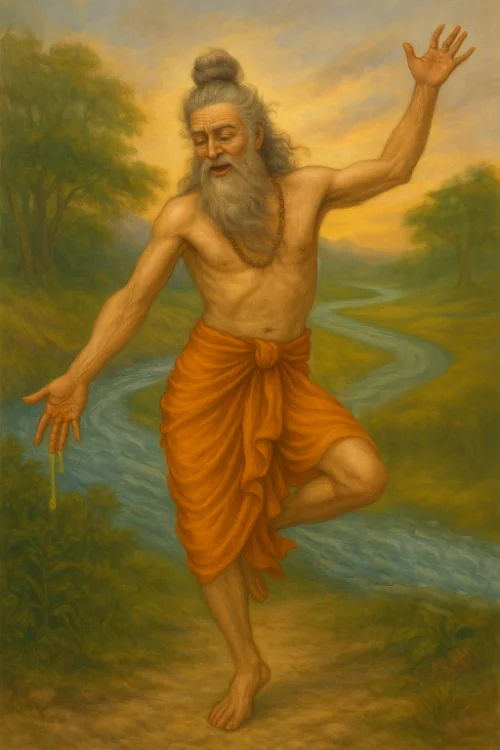
The sage Mankanaka, son of Vayu and Sukanya, once began dancing when vegetable juice, not blood, flowed from a wound. His ecstatic energy caused the entire world to join in. The gods, alarmed, requested Mahadeva’s intervention. Śiva struck his thumb, revealing ash instead of blood, humbling Mankanaka. The sage praised Mahadeva, who granted him merit and promised blessings to worshippers at the Sapta-Sarasvati, marking it as a path to earthly and celestial rewards.
Mahābhārata - Shalya Parva
Chapter 38 - The History of Sapta Sarasvati and Mankanaka
Janamejaya said Why was that tirtha called Sapta-Sarasvat? Who was the ascetic Mankanaka? How was that worshipful one successful? What were his vows and observances?
vaiśampāyana uvāca rājan sapta sarasvatyo yābhirvyāptamidaṃ jagat | āhūta balavadabhirhi tatra tatra sarasvatī || 3 ||
Vaishampayana said "O King, the seven Sarasvatis by whom this entire world is pervaded are invoked by her immense energy; they are present everywhere, in all places, and all things.
सुप्रभा काञ्चनाक्षी त विशाला च मनोरमा । सरस्वती चौघवती सुरेणुर्विमलोदका ॥ ४ ॥
suprabhā kāñcanākṣī ta viśālā ca manoramā | sarasvatī caughavatī sureṇurvimalodakā || 4 ||
Sarasvati is supremely radiant, with golden eyes, vast and enchanting. Sarasvati is four-armed, with a pure, untainted form and a clear, refreshing water flow. These are the seven forms of the Sarasvati: Suprabha, Kanchanakshi, Vishala, Manorama, Oghavati, Surenu and Vimalodaka.
पितामहस्य महतो वर्तमाने महामखे । वितते यज्ञवाटे च संसिद्धेषु द्विजातिषु ॥ ५ ॥
Brahma once celebrated a great sacrifice. While that sacrifice was being celebrated on the site selected, many Rishis, crowned with ascetic success, came there.
The spot was filled with the sound of the Vedas being recited and chanted. Seeing those sacrificial rites, even the gods lost their temper.
तत्र चैव महाराज दीक्षिते प्रपितामहे । यजतस्तस्य सत्रेण सर्वकामसमृद्धिना ॥ ७ ॥ मनसा चिन्तिता ह्यर्था धर्मार्थकुशलैस्तदा । उपतिष्ठन्ति राजेन्द्र द्विजातींस्तत्र तत्र ह ॥ ८ ॥
tatra caiva mahārāja dīkṣite prapitāmahe | yajatastasya satreṇa sarvakāmasamṛddhinā || 7 || manasā cintitā hyarthā dharmārthakuśalaistadā | upatiṣṭhanti rājendra dvijātīṃstatra tatra ha || 8 ||
While the grandfather was initiated in the sacrifice and performed the grand ceremony capable of granting prosperity and wished-for objects, many great Rishis, conversant with virtue and profit, were present. As soon as they thought of necessary articles, they, O king, immediately came before the Rishis.
जगुश्च तत्र गन्धर्वा ननृतुश्चाप्सरोगणाः । वादित्राणि च दिव्यानि वादयामासुरञ्जसा ॥ ९ ॥
jaguśca tatra gandharvā nanṛtuścāpsarogaṇāḥ | vāditrāṇi ca divyāni vādayāmāsurañjasā || 9 ||
The Gandharvas sang, and the Apsaras danced. And they played many celestial instruments.
Upon completing the sacrifice, even the gods were exceptionally pleased. They were filled with the highest astonishment. What, then, can be said of beings born as humans?
वर्तमाने तथा यज्ञे पुष्करस्थे पितामहे । अब्रुवन्नृषयो राजन्नायं यज्ञो महागुणः ॥ ११ ॥ न दृश्यते सरिच्छ्रेष्टा यस्मादिह सरस्वती । तच्छ्रुत्वा भगवान् प्रीतः सस्माराथ सरस्वतीम् ॥ १२ ॥
During the progress of that sacrifice at Pushkara and in the presence of Brahma, the Rishis, O king, said -"This sacrifice is not successful, since that foremost of rivers, Sarasvati, is not to be seen here." Hearing these words, the divine Brahman meditated on Sarasvati.
पितामहेन यजता आहूता पुष्करेषु वै। सुप्रभा नाम राजेन्द्र नाम्ना तत्र सरस्वती ॥ १३ ॥
By the great Lord Brahma, who performed a yajna (sacrifice), Saraswati was invoked at Pushkara. O King, she is known there by the name 'Suprabha' (the radiant one).
तां दृष्ट्वा मुनयस्तुष्टास्तवरायुक्तां सरस्वतीम् । पितामहं मानयन्तीं क्रतुं ते बहु मेनिरे ॥ १४ ॥
Seeing Sarasvati pay that regard to the grandfather, the ascetics regarded that sacrifice with great esteem.
Seeing Saraswati, sages were delighted and adorned her with hymns of praise. Honoring Lord Brahma, she elevated the yajna (sacrifice), which was very significant.
एवमेषा सरिच्छ्रेष्टा पुष्करेषु सरस्वती । पितामहार्थ सम्भूता तुष्ट्यर्थं च मनीषिणाम् ॥ १५ ॥
sā tu dhyātā mahārāja ṛṣibhiḥ satrayājibhiḥ | samāgatānāṃ rājendra sāhāyyārthaṃ mahātmanām || 18 || ājagāma mahābhāga tatra puṇyā sarasvatī | naimiṣe kāñcanākṣī tu munīnāṃ satrayājinām ||19||
Meditated upon by the great sages and those performing yajnas, she came to the assembly of the noble-hearted, O King, to assist them in their sacred endeavors. The blessed Saraswati, who is worshipped in the holy place of Naimisha and is known as Kanchanākshi (the one with golden eyes), arrived to aid the sages performing the yajnas.
आगता सरितां श्रेष्ठा तत्र भारत पूजिता । यस्य यजमानस्य वेव महाक्रतुम् ॥ २० ॥ आहूता सरितां श्रेष्ठा गययज्ञे सरस्वती । विशालां तु यस्हुर्ऋषयः संशितव्रताः || २१ ||
Worshipped of all, that best of rivers, thus came there, O Bharata. While King Gaya was celebrating a great sacrifice at Gaya, the foremost of rivers, Sarasvati, summoned at Gaya's sacrifice, came there. The Rishis of rigid vows that were present there named her Vishala (vast and magnificent) at Gaya.
सरित् सा हिमावत्पार्श्वाडत् प्रस्रुता शीघ्रगामिनी । औद्दालकस्तथा यज्ञे यजतस्तस्य भारत ।। २२ ॥
Previously, Uddālaka, meditating upon Saraswati, performed the yajna. The greatest of rivers, Saraswati, arrived in that land due to the sages' invocation.
पूज्यमाना मुनिगणैर्वल्कलाजिसंवृत्तैः। मनोरमेति विख्याता सा हि तैर्मनसा कृता ॥ २५ ॥ सुरेणऋषभे द्वीपे पुण्ये राजर्षिसेविते ।
Worshipped by all those Munis clad in barks and deer-skins, she passed by the name of Manorama (one who pleases the mind) as those Rishis mentally called her.
Summoned, O king, by the great Vashishtha who assisted Kuru in his sacrifice, the Sarasvati, of celestial water, came to Kurukshetra and passed by the name of Oghavati (which means plentiful, abundant, having a strong stream).
Once again, while Brahman was engaged in a sacrifice in the sacred forest of the Himavat mountains, the worshipful Sarasvati "Vimalodā" (meaning "immaculate" or "pure") he summoned came there.
All these seven streams then joined together in that tirtha where Baladeva came. And because the seven joined together at that spot, that tirtha is known on earth as Sapta-Sarasvati.
इति सप्त सरस्वत्यो नामतः परिकीर्तिताः ॥ ३१ ॥ सप्ता सारस्वतं चैव तीर्थं पुण्य तथा स्मृतम् ।
Thus, according to their names, I have described the seven Sarasvatis to you. I have also given you an account of the sacred tirtha called Satpa-Sarasvat.
Listen now to a great deed of Mankanaka, who had, from his youth, led the life of a Brahmachari. While performing his ablutions in the river, he saw one day O Bharata, a damsel of beautiful features and fair brows, bathing in the river with her body uncovered. At this sight, O monarch, the seminal fluid of the Rishi, dropped to the Sarasvati.
Seven Rishis were born from those seven portions, from whom forty-nine Maruts originated. The seven Rishis were named:
Vāyuvega — "The speed of the wind"Vāyubala — "The strength of the wind"Vāyuhā — "The one who moves with the wind"Vāyumaṇḍala — "The circle or domain of the wind"Vāyujvāla — "The flame or blaze of the wind"Vāyureta — "The energy or force of the wind"Vāyucakrā — "The wheel or cycle of the wind"Vīryavān — "The one who is powerful or full of valor"
Thus were born those progenitors of the various Maruts.
savai śākarasaṃ dṛṣṭvā harṣāviṣṭaḥ pranṛttavān | tatastasmin pranṛtte vai sthāvaraṃ jaṅgamaṃ ca yat || 40||
Seeing that vegetable juice, the Rishi was joyful and danced about there. Beholding him dance, all mobile and immobile creatures, O hero, overpowered by his energy, began to dance.
Then, the celestials, with Brahma at their head, and the Rishis, having asceticism for their wealth, O king, all approached Mahadeva and informed him of the doings of the great Rishi (Mankanaka). And they said to him - Thou shouldst, O god, do that which may prevent the Rishi from dancing."
Why, O Brahmana, do you dance in this way, you who know your duties well? What must be the cause of your joy, O sage, that being an ascetic, O best of Brahmanas, and walking in the path of virtue, you should behave this way?
ऋषिरुवाच किं न पश्यसि मे ब्रह्मन् कराच्छाकरसं स्रुतम् ॥ ४५ ॥ यं दृष्ट्वा सम्प्रनृत्तो वै हर्षेण महता विभो ।
ṛṣiruvāca kiṃ na paśyasi me brahman karācchākarasaṃ srutam || 45 || yaṃ dṛṣṭvā sampranṛtto vai harṣeṇa mahatā vibho |
The Rishi said Do you not see that a vegetable juice is flowing from this wound? Seeing this, O lord, I am dancing in great glee.
He understood the deity to be Mahadeva. Filled with wonder, he said, "I do not consider any other deity greater than Rudra, the supreme lord. You are the source of the Universe's motion, holding the trident.
tvāmupāsanta varadaṃ devā brahmādayo’nagha | sarvastvamasi devānāṃ kartā kārayitā ca ha || 53 || tvatprasādāt surāḥ sarve modantīhākutobhayāḥ |
The gods, including Brahma and others, who worship you, the bestower of boons, are free from sin. You are the creator and the guide of all the gods. By your grace, all the gods, free from fear, rejoice here.
एवं स्तुत्वा महादेवं स ऋषिः प्रणतोऽभवत् ॥ ५४ ॥ यदिदं चापलं देव कृतमेतत् स्मयदिकम् ।
evaṃ stutvā mahādevaṃ sa ṛṣiḥ praṇato’bhavat || 54 || yadidaṃ cāpalaṃ deva kṛtametat smayadikam |
Thus, having praised Mahadeva, the sage bowed down in reverence. O deity, this transitory and ever-changing creation is made by you, O smiling one.
ततः प्रसादयामि त्वां तपो मे न क्षरेदिति ॥ ५५॥ ततो देवः प्रीतमनास्तमृषिं पुनरब्रवीत् । तपस्ते वर्धतां विप्र मत्प्रसादात् सहस्रधा ॥ ५६ ॥ आश्रमे चेह वत्स्यामि त्वया सार्धमहं सदा ।
tataḥ prasādayāmi tvāṃ tapo me na kṣarediti || 55|| tato devaḥ prītamanāstamṛṣiṃ punarabravīt | tapaste vardhatāṃ vipra matprasādāt sahasradhā || 56 || āśrame ceha vatsyāmi tvayā sārdhamahaṃ sadā |
Let not my ridiculous childishness, which I displayed, O God, destroy my ascetic merit. I pray to thee for this. God cheerfully replied, "Let your asceticism increase a thousandfold, O Brahmana, through my grace. I shall also always live with you in this hermitage.”
सप्तासारस्वते चास्मिन यो मामर्चिष्यते नरः ॥५७॥ न तस्य दुर्लभं किञ्चिद् भवितेह परत्र वा । सारस्वतं च ते लोकं गमिष्यन्ति न संशयः ॥ ५८ ॥
saptāsārasvate cāsmina yo māmarciṣyate naraḥ ||57|| na tasya durlabhaṃ kiñcid bhaviteha paratra vā | sārasvataṃ ca te lokaṃ gamiṣyanti na saṃśayaḥ || 58 ||
Whoever worships me with devotion in this sacred place of Sapta-Saraswat will attain my grace. Such a person will not face any difficulty in this life or the next. Without a doubt, they will reach the world of Saraswati.
एतन्मङ्कणकस्यापि चरितं भूरितेजसः । स हि पुत्र सुकन्यायामुत्पन्नो मातरिश्वना ॥ ५९ ॥
etanmaṅkaṇakasyāpi caritaṃ bhūritejasaḥ | sa hi putra sukanyāyāmutpanno mātariśvanā || 59 ||
This is the story of the radiant Risi Mankanaka, who is truly blessed to be born as a son to the noble and virtuous mother Matariśvani.
Full Synopsis of The History of Sapta Sarasvati and Mankanaka
Vaishampayana recounts to King Janamejaya the origins of the sacred tirtha called Sapta-Sarasvati, the seven forms of the Sarasvati River, and the remarkable story of the ascetic Mankanaka.
The Seven Sarasvatis
The Sarasvati River manifests in seven forms, each linked to specific locations and significant events:
Suprabha: Invoked by Brahma during a grand sacrifice at Pushkara.
Kanchanakshi: Summoned by sages at Naimisha during Vedic discussions.
Vishala: Appeared at King Gaya's sacrifice in Gaya.
Manorama: Called by the ascetic Ouddalaka during his sacrifice in North Kosala.
Oghavati: Invoked by Vashishtha at Kuru's sacrifice in Kurukshetra.
Surenu: Appeared at Daksha's sacrifice at the Ganga's source.
Vimalodaka: Manifested during a sacrifice performed by Brahma in the Himavat forest.
These seven streams converged at the tirtha, now called Sapta-Sarasvati, where Baladeva later performed rituals.
The Ascetic Mankanaka
Mankanaka was the son of the Wind God (Vayu) and Sukanya. From his seminal fluid, which fell into the Sarasvati during an encounter with a bathing damsel, seven Rishis were born, who became progenitors of the forty-nine Maruts.
Once, while performing penances, Mankanaka's hand was accidentally pierced by a blade of Kusha grass, and instead of blood, vegetable juice flowed from the wound. Overjoyed by this wonder, Mankanaka began to dance. His energy caused all mobile and immobile creatures to join in the dance.
The gods, led by Brahma, sought Mahadeva's help to calm Mankanaka. Mahadeva approached the ascetic, and, to illustrate, a more incredible marvel struck his thumb, from which ashes flowed instead of blood. Realizing his folly, Mankanaka was humbled, praised Mahadeva, and sought forgiveness for his behavior. Mahadeva blessed him with increased ascetic merit and promised to reside with him in the hermitage.
Mahadeva declared that anyone who worships him at the Sapta-Sarasvati tirtha would achieve earthly success and heavenly rewards. The region is described as a sacred site where devotees can attain liberation and reach the celestial region of Sarasvati after death.
This story emphasizes the sacredness of the Sarasvati and its tirthas, the divine origins of Mankanaka, and the humility and enlightenment gained through interactions with higher powers.