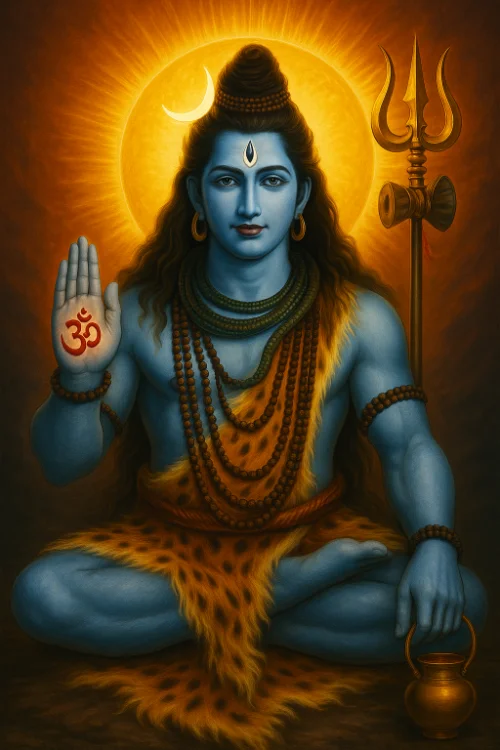
Tuṁba-vīṇaḥ (the one who plays the divine lute, symbolizing celestial music and wisdom)
Mahākopaḥ (the greatly wrathful one, whose anger is transformative and righteous)
Ūrdhva-retāḥ (the one whose energy flows upward, symbolizing supreme celibacy and asceticism)
Jaleśayaḥ (the one who rests upon the waters, controlling cosmic balance)
Ugraḥ (the fierce and formidable one)
Vaṁśakaraḥ (the creator of lineages, ensuring continuity of dharma)
Vaṁśaḥ (the divine lineage itself, the progenitor of great dynasties)
Vaṁśavādī (the upholder of traditions and righteous heritage)
Aninditaḥ (the flawless one, beyond reproach)
Sarvāṅga-rūpī (the one who has forms in all limbs, appearing in many manifestations)
Māyāvī (the master of divine illusion, controlling the cosmic play of reality)
Su-hṛdaḥ (the best of friends, the true companion of all beings)
Anilaḥ (the wind, representing the all-pervading life force)
Balaḥ (the embodiment of strength and power)
Bandhanaḥ (the one who binds karmic forces)
Bandha-kartā (the creator of bonds, determining the fate of all beings)
Su-bandhana-vimochanaḥ (the liberator from divine bondage, the giver of ultimate freedom)
Rākṣasa-naḥ (the destroyer of demons, the protector of dharma)
Kāmāriḥ (the enemy of desire, the one who overcomes lust and attachment)
Mahādaṁṣṭraḥ (the one with great fangs, terrifying to unrighteous beings)
Mahāyudhaḥ (the wielder of great weapons, invincible in battle)
Lambitaḥ (the one who stands tall and unwavering)
Lambitoṣṭhaḥ (the one with hanging lips, signifying his divine and fearsome appearance)
Lambahastaḥ (the one with long-reaching hands, symbolizing his omnipresence)
Varapradaḥ (the bestower of boons, fulfilling the desires of devotees)
Bāhuḥ (the mighty-armed one, signifying protection and strength)
Aninditaḥ (the blameless, without flaw)
Sarvaḥ (the all-encompassing one, pervading everything)
Śaṅkaraḥ (the giver of bliss and auspiciousness)
Apyakopanaḥ (the one who does not get easily angry, the embodiment of patience)
Amareśaḥ (the lord of immortals, the ruler of celestial beings)
Mahāghoraḥ (the most fearsome and terrible to evildoers)
Viśvadevaḥ (the universal deity, the god of all worlds)
Surārihā (the slayer of enemies of the gods, protector of dharma)
Ahirbudhnyaḥ (the serpent beneath the ocean, the mysterious force governing the depths)
Nirṛtiḥ (the lord of dissolution and destruction, removing negativity)
Chekitānaḥ (the wise one, aware of all things)
Halī (the one who wields a plow, associated with agriculture and sustenance)
Ajaikapāt (the one-legged form of Rudra, a mysterious aspect of the divine)
Kāpālī (the skull-bearer, signifying renunciation and transcendence)
Śaṁkumāraḥ (the ever-youthful one, full of divine energy)
Mahāgiriḥ (the great mountain, the immovable and eternal)
Dhanvantariḥ (the divine physician, the bestower of health and healing)
Dhūmaketuḥ (the one who appears as a comet, symbolizing power and transformation)
Sūryaḥ (the sun, the source of life and illumination)
Vaiśravaṇaḥ (the king of wealth, associated with Kubera)
Dhātā (the sustainer, the one who holds everything together)
Viṣṇuḥ (the all-pervading one, present in all beings)
Śakraḥ (Indra, the ruler of the heavens)
Mitraḥ (the friend of all, benevolent and kind)
Tvaṣṭā (the divine architect, shaping forms and structures)
Dharaḥ (the bearer of all existence)
Dhruvaḥ (the eternal, the immovable one)
Prabhāsaḥ (the one who radiates divine brilliance, the source of all light)
Parvataḥ (the mountain, symbolizing strength and stability)
Vāyuḥ (the wind, representing prāṇa and movement)
Aryamā (the noble one, associated with the solar deities and righteousness)
Savitaḥ (the inspirer, the one who drives all actions)
Raviḥ (the sun, the ever-shining one)
Dhṛtiḥ (the steadfast one, full of patience and perseverance)
Vidhātā (the ordainer, the one who sets all things in motion)
Māndhātā (the great king of ancient lineage, representing justice and virtue)
Bhūta-bhāvanaḥ (the nurturer of all beings, the sustainer of existence)
Nīras-tīrthaḥ (the one who transcends all sacred pilgrimages, being the ultimate holy destination)
Bhīmaḥ (the terrifying one, feared by the unrighteous)
Sarvakarmā (the doer of all actions, controlling the cosmic play)
Guṇodvahaḥ (the bearer of all good qualities and virtues)
Padya-garbhaḥ (the one who holds the essence of the sacred scriptures and knowledge)
Mahāgarbhaḥ (the great womb, from whom the universe emerges)
Chandra-vaktraḥ (the one with a moon-like face, radiating peace and serenity)
Nabhaḥ (the vast sky, representing formless infinity)
Anaghaḥ (the sinless, the pure one)
Balavān (the strongest one, holding immeasurable power)
Upaśāntaḥ (the peaceful one, embodying serenity and calmness)
Purāṇaḥ (the ancient one, existing before time itself)
Puṇya-kṛttamaḥ (the greatest doer of virtuous deeds)
Krūra-kartā (the one who punishes evil with strictness and justice)
Krūra-vāsī (the one who dwells even in terrifying places, protecting all beings)
Tanuḥ (the embodiment of cosmic existence)
Ātmā (the supreme self, the indwelling consciousness in all beings)
Mahauṣadhaḥ (the great healer, the ultimate remedy for all suffering)
Sarvāśayaḥ (the refuge of all, the ultimate shelter for seekers)
Sarvachārī (the one who moves through all realms, omnipresent)
Prāṇeśaḥ (the lord of life energy, the controller of all breath and existence)
Prāṇināṁ patiḥ (the master of all living beings)
Devadevaḥ (the god of gods, the supreme deity)
Sukhotsiktaḥ (the one immersed in divine bliss)
Sadasat (the essence of both being and non-being, beyond duality)
Sarvaratnavit (the knower of all treasures, material and spiritual)
Kailāsa-sthaḥ (the one who resides in Mount Kailāsa, the divine abode of ascetics and deities)
Guhāvāsī (the dweller of caves, symbolizing his renunciate and meditative nature)
Himavad-viri-saṁśrayaḥ (the one who takes refuge in the Himalayas, the great sacred mountain)
Kulahārī (the destroyer of corrupt dynasties and families)
Kulākartā (the creator of noble lineages)
Bahuvitto (the one with immense wealth, both material and spiritual)
Bahuprajaḥ (the progenitor of numerous beings, the father of all creatures)
Prāṇeśaḥ (the lord of life energies, the controller of prāṇa)
Bandhakī (the one who binds and releases souls from the cycle of birth and death)
Vṛkṣaḥ (the cosmic tree, representing the shelter and support of all beings)
Nakulaḥ (the one associated with the mongoose, signifying protection from snakes and poison)
Ādrikaḥ (the one connected to mountains, symbolizing stability and permanence)
Hrasva-grīvaḥ (the one with a short neck, or symbolic of a contained and controlled force)
Mahājānuḥ (the one with large knees, representing firm grounding and steadfastness)
Alolaḥ (the unwavering one, free from fickleness and distractions)
Mahauṣadhiḥ (the greatest medicine, the supreme healer of all ailments, physical and spiritual)
Siddhānta-kārī (the establisher of philosophical truths, the ultimate lawgiver)
Siddhārthaḥ (the one who has achieved all spiritual goals, the supreme realized being)
Chando (the essence of the Vedic meters, the rhythmic form of divine speech)
Vyākaraṇodbhavaḥ (the source of all grammar and language, the revealer of knowledge)
Siṁhanādaḥ (the one whose roar is like a lion, signifying fearless authority)
Siṁhadaṁṣṭraḥ (the one with lion-like fangs, terrifying to enemies of dharma)
Siṁhāsyaḥ (the one with a lion-like face, symbolic of power and kingship)
Siṁhavāhanaḥ (the one who rides a lion, indicating strength and dominance)
Prabhāvātmā (the essence of all power and glory, the embodiment of divine influence)
Jagatkālaḥ (the time of the universe, the force that moves all creation)
Kālaḥ (time itself, the ultimate destroyer and regenerator of existence)
Kampītaruḥ (the one who shakes the cosmic tree, symbolizing transformation and destruction)
Tanuḥ (the subtle essence, the divine body of reality)
Sāraṅgaḥ (the one with spotted antelope-like eyes, signifying alertness and grace)
Bhūta-cakrāṅkaḥ (the one marked with the circle of beings, the controller of all creatures)
Ketumāli (the one who wears a banner or flag, signifying leadership and divine identity)
Suvedhakaḥ (the one with supreme wisdom and insight)
Bhūtālayaḥ (the abode of all beings, the shelter of existence)
Bhūtapatiḥ (the lord of all creatures, the master of spirits and elements)
Ahorātraḥ (the one who encompasses both day and night, beyond the cycles of time)
Malaḥ (the remover of impurities, the purifier of souls)
Amalaḥ (the pure one, free from all contamination)
Vasubhṛt (the sustainer of wealth, both material and spiritual)
Sarvabhūtātmā (the soul of all beings, the essence within all creatures)
Niścalaḥ (the unshakable one, immovable and firm)
Suvidurbudhaḥ (the one who is well understood by the wise but difficult for the ignorant to comprehend)
Asuhṛt (the one who appears unfriendly to the unrighteous, but is truly the well-wisher of all beings)
Sarvabhūtānām (the one who belongs to all creatures, the ultimate refuge of all beings)
Niścalaḥ (the steadfast and unwavering one, free from all doubts)
Avid-budhaḥ (the one whose wisdom is beyond ordinary comprehension)
Amoghaḥ (the infallible one, whose actions and blessings never go to waste)
Saṁyamaḥ (the embodiment of self-restraint and discipline)
Hṛṣṭaḥ (the ever-joyous one, filled with divine bliss)
Bhojanaḥ (the one who consumes all offerings and nourishes the world)
Prāṇa-dhāraṇaḥ (the sustainer of life, the one who upholds all living beings)
Dṛṣṭimān (the all-seeing one, whose vision encompasses all)
Matimān (the supremely intelligent one, the knower of all knowledge)
Tryakṣaḥ (the three-eyed one, seeing past, present, and future simultaneously)
Sukṛtaḥ (the doer of righteous deeds, the embodiment of virtue)
Yudhāṁ-yatiḥ (the warrior among warriors, the conqueror of battles)
Gopālaḥ (the protector of cows, signifying nourishment and dharma)
Gopatiḥ (the lord of all beings, the master of divine herds)
Grāmaḥ (the community leader, ensuring social and spiritual order)
Go-charma-vasanaḥ (the one who wears the hide of a bull, signifying renunciation and detachment)
Haraḥ (the remover of sins and ignorance)
Hiraṇyabāhuḥ (the one with golden arms, symbolizing divine splendor and strength)
Guhāvāsaḥ (the cave-dweller, the lord of ascetics and yogis)
Praveśanaḥ (the one who enters all beings, pervading all of existence)
Mahāmanāḥ (the one with a great mind, the embodiment of divine intelligence)
Mahākāmaḥ (the one who grants the highest desires of liberation and wisdom)
Citta-kāmaḥ (the one who fulfills the aspirations of the heart)
Jitendriyaḥ (the one who has conquered all senses, the supreme yogi)
Gāndhāraḥ (the one associated with music, especially the Gāndhāra note of the Sāma Veda)
Surāpaḥ (the one who intoxicates devotees with divine bliss and nectar)
Tāpa-karma-rataḥ (the one engaged in penance and ascetic practices, mastering heat and energy transformation)
Hitaḥ (the benevolent one, always working for the welfare of beings)
Mahābhūtaḥ (the great elemental force, controlling all five elements)
Bhūtavṛtaḥ (the protector of all creatures and supernatural beings)
Apsarogaṇa-sevitaḥ (the one served by celestial dancers, Apsarās)
Mahāketuḥ (the great banner, symbolizing victory and righteousness)
Dharādhātā (the supporter of the earth, holding the world in balance)
Naikatānārataḥ (the one who is not fixed in one place, moving freely in the cosmos)
Svarah (the divine sound, the essence of sacred vibrations)
Avedanīyaḥ (the one beyond sensory perception, beyond the grasp of the material world)
Āvedyaḥ (the one who can only be known through direct spiritual experience)
Sarvagaḥ (the all-pervading one, present everywhere)
Sukhāvahaḥ (the bringer of joy and ultimate bliss)