

नारद उवाच
मुद्राणां लक्षणं वक्ष्ये सान्निध्यादिप्रकारकम्
अञ्चलिः प्रथमा मुद्रा वन्दनी हृदयानुगा ॥१॥
nārada uvāca
mudrāṇāṃ lakṣaṇaṃ vakṣye sānnidhyādi-prakārakam
añjaliḥ prathamā mudrā vandanī hṛdayānugā || 1 ||
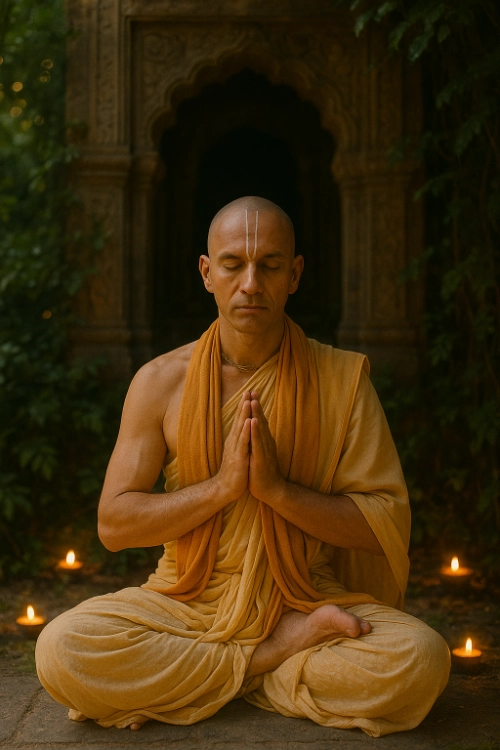
Nārada said: Nārada said: I shall explain the characteristics of the mudrās, which bring about divine presence and related effects. Añjali is the first mudrā. The mudrā called Vandanī, performed near the heart, is (the second).
This opening verse introduces the ritual doctrine that mudrās are operative instruments, not symbolic gestures alone: they establish divine proximity (sānnīdhya) and activate ritual efficacy. Nārada announces a technical exposition, not a devotional sermon. The verse actually names two distinct mudrās: Añjali as the first and Vandanī as the second. Añjali is the traditional gesture of joined palms expressing reverence. Vandanī, however, is a separate mudrā, performed at the heart region (hṛdayānugā), indicating its interiorized and contemplative function. The qualities “vandanī” and “hṛdayānugā” therefore do not describe Añjali but introduce a second mudrā with a different ritual placement. The verse thus establishes a sequence structure: Añjali (first), Vandanī (second), with further mudrās to follow. It frames mudrās as functional techniques within worship, involving precise bodily placement rather than emotional symbolism.