

What Pure Devotion Really Means
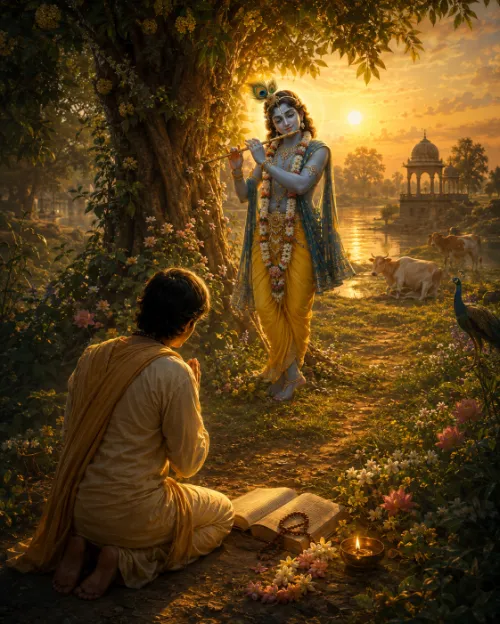
What Pure Devotion Really Means: Rūpa Gosvāmī’s Definition of Uttamā-bhakti
Few verses have shaped Gauḍīya Vaiṣṇava theology as deeply as Rūpa Gosvāmī’s famous definition of uttamā-bhakti—the highest, unalloyed form of devotion. It is quoted constantly:
अन्याभिलाषिता-शून्यं
ज्ञान-कर्माद्य्-अनावृतम् ।
आनुकूल्येन कृष्णानु-
शीलनं भक्तिर् उत्तमा ॥
anyābhilāṣitā-śūnyaṁ
jñāna-karmādy-anāvṛtam
ānukūlyena kṛṣṇānu-
śīlanaṁ bhaktir uttamā
“The highest devotion is the favorable and sustained cultivation of service to Kṛṣṇa, free from ulterior desires and unobscured by jñāna, karma, or other competing pursuits.”
Bhakti-rasāmṛta-sindhu 1.1.11
The verse is often summarized in three parts: anyābhilāṣitā-śūnyam — free from extraneous desires; jñāna-karmādy-anāvṛtam — not covered by jñāna, karma, and similar pursuits; ānukūlyena kṛṣṇānuśīlanam — favorable cultivation directed toward Kṛṣṇa.
That summary is correct. But it can also be misleading if these phrases are taken too quickly. Does “free from other desires” mean a pure devotee never feels fear, never wants relief from pain, and literally possesses no desire except one?
Does “not covered by jñāna” mean that a devotee should not study philosophy? Does “not covered by karma” mean that pure bhakti requires inactivity or abandonment of ordinary duties?
Does “favorable to Kṛṣṇa” mean simply doing whatever appears to make Kṛṣṇa happy at that moment? And what exactly is anuśīlanam? Is it merely “service,” or does Rūpa Gosvāmī intend something broader?
The Sanskrit commentaries of Jīva Gosvāmī and Viśvanātha Cakravartī make the verse considerably more sophisticated. Rūpa is not defining a person who has become psychologically blank.
He is defining a life whose organizing center has become Kṛṣṇa.
Rūpa Gosvāmī Is Giving a Technical Definition
The previous verse announces exactly what he is about to do:
तत्रादौ सुष्ठु वैशिष्ट्यम्
अस्याः कथयितुं स्फुटम् ।
लक्षणं क्रियते भक्तेर्
उत्तमायाः सतां मतम् ॥
tatrādau suṣṭhu vaiśiṣṭyam
asyāḥ kathayituṁ sphuṭam
lakṣaṇaṁ kriyate bhakter
uttamāyāḥ satāṁ matam
“At the outset, in order to explain clearly the distinctive excellence of this devotion, the defining characteristics of uttamā-bhakti are now stated according to the understanding of the sādhus.”
Bhakti-rasāmṛta-sindhu 1.1.10
Two words deserve attention:
लक्षणम्
lakṣaṇam
a definition or identifying characteristic;
and:
सतां मतम्
satāṁ matam
“according to the understanding of the saintly.”
Rūpa is not giving inspirational poetry. He is constructing a technical theological definition. Nor does he present it merely as a personal invention. The very next verses support it with older Pañcarātric and Bhāgavata formulations.
One other detail should be noticed. The Sanskrit says: bhaktir uttamā —“highest,” “excellent,” or “supreme bhakti.” The word śuddha, “pure,” is not literally present in 1.1.11. But within Gauḍīya theological usage, uttamā-bhakti becomes the classical definition of what is commonly called śuddha-bhakti, pure devotion.
One Positive Definition and Two Safeguards
The verse is beautifully constructed. Its positive heart is:
आनुकूल्येन कृष्णानुशीलनम्
ānukūlyena kṛṣṇānuśīlanam
This tells us what bhakti is. The first two phrases tell us what must not distort it:
अन्याभिलाषिता-शून्यम्
anyābhilāṣitā-śūnyam
and:
ज्ञान-कर्माद्य्-अनावृतम्
jñāna-karmādy-anāvṛtam
Jīva Gosvāmī’s analysis makes this structure especially clear. The essence of bhakti is not fundamentally: “want nothing,” “do no karma,” “study no jñāna.” Those are protections against mixture.
The center is positive: Kṛṣṇa-oriented cultivation. That distinction matters enormously. Pure bhakti is not primarily defined by deprivation. It is defined by what has captured the heart.
Anyābhilāṣitā-śūnyam : Not a Person With Literally No Desire
The first qualification is:
अन्याभिलाषिता-शून्यम्
anyābhilāṣitā-śūnyam
It is often rendered: “devoid of all other desires.” That communicates the general idea, but the actual Sanskrit is subtler. Rūpa does not simply say: anyābhilāṣa-śūnyam “empty of every other desire.”
He says: anyābhilāṣitā-śūnyam. The formation abhilāṣitā allows the commentators to focus not merely on the accidental appearance of a desire but upon the disposition toward pursuing another object as one’s goal.
Jīva Gosvāmī explains:
भक्त्येकाभिलाषेण युक्तम् इत्यर्थः ।
bhakty-ekābhilāṣeṇa yuktam ity arthaḥ
“The meaning is that one is endowed with one principal desire—the desire for bhakti.”
This is extremely important. Pure bhakti is not absolute desirelessness. The devotee desires. He may desire intensely. He wants to hear about Kṛṣṇa. To remember Kṛṣṇa. To chant Kṛṣṇa’s names.
To serve. To associate with devotees. To deepen his devotion. To attain prema. The issue is not: “Is any desire present?” The issue is: “What is devotion being used to obtain?”
An Incidental Desire Does Not Automatically Destroy Pure Bhakti
Viśvanātha Cakravartī draws out this subtlety beautifully. He considers a devotee who suddenly falls into mortal danger and cries:
हे भगवन् भक्तं माम् एतद्-विपत्तेः सकाशाद् रक्ष ।
he bhagavan bhaktaṁ mām etad-vipatteḥ sakāśād rakṣa
“O Bhagavān, please protect me, Your devotee, from this danger.”
Does that prayer prove that the devotee is no longer anyābhilāṣitā-śūnya? Viśvanātha says no. A temporary desire arising under helpless circumstances does not necessarily define the person’s settled devotional orientation.
Fear may arise. Pain may arise. The instinct for survival may arise. A devotee may pray for health, protection, or assistance. The deeper question is whether those things have become the reason for bhakti.
There is an enormous difference between: “Kṛṣṇa, please protect me.” and: “Kṛṣṇa, I will serve You only if You protect me.” The first can arise within devotion. The second turns devotion into a bargain.
“Desireless” Means That Bhakti Is No Longer a Means to Something Else
Kṛṣṇadāsa Kavirāja summarizes this Gauḍīya idea in Bengali:
কৃষ্ণভক্ত—নিষ্কাম, অতএব ‘শান্ত’ ।
ভুক্তি-মুক্তি-সিদ্ধি-কামী—সকলি ‘অশান্ত’ ॥
kṛṣṇa-bhakta—niṣkāma, ataeva ‘śānta’
bhukti-mukti-siddhi-kāmī—sakali ‘aśānta’
“The devotee of Kṛṣṇa is free from separate selfish desire and is therefore peaceful. Those who desire enjoyment, liberation, or mystic perfection are all restless.”
Śrī Caitanya-caritāmṛta, Madhya 19.149
The contrast is between: bhukti — material enjoyment; mukti — liberation; siddhi — extraordinary yogic perfection; and: bhakti — devotion itself. This explains anyābhilāṣitā-śūnyam much better than the slogan “a devotee wants nothing.”
The devotee does want something. He wants bhakti. The radical change is that bhakti is no longer being used to purchase: wealth, safety, prestige, heaven, mystic power, impersonal liberation, or even spiritual status.
Bhakti itself has become the treasure.
Jñāna-karmādy-anāvṛtam : “Not Covered,” Not “Completely Absent”
The second qualification is:
ज्ञान-कर्माद्य्-अनावृतम्
jñāna-karmādy-anāvṛtam
The key word is:
अनावृतम्
anāvṛtam
“uncovered,” “unobscured,” “not enveloped.” Rūpa could have repeated śūnyam: “completely devoid of jñāna and karma.” He does not. He says bhakti must not be covered by them.
Viśvanātha makes the distinction explicit: practices included under jñāna, karma, yoga, vairāgya, and so forth are not necessarily required to be utterly nonexistent. They must not become processes that dominate, subordinate, or obscure bhakti.
This resolves several common misunderstandings.
Jñāna Does Not Mean “Knowledge Is Bad”
Jīva Gosvāmī defines the technical sense of jñāna here:
ज्ञानम् अत्र निर्भेद-ब्रह्मानुसन्धानम् ।
jñānam atra nirbheda-brahmānusandhānam
“Here ‘jñāna’ means the pursuit of undifferentiated Brahman.”
Then he immediately adds:
न तु भजनीय-तत्त्वानुसन्धानम् अपि,
तस्यावश्यापेक्षणीयत्वात् ।
na tu bhajanīya-tattvānusandhānam api
tasyāvaśyāpekṣaṇīyatvāt
“It does not mean inquiry into the truth concerning the object of worship, because such knowledge is necessarily required.”
This is decisive. Bhakti-rasāmṛta-sindhu 1.1.11 does not mean: “Do not study philosophy.” A devotee needs to understand: Who is Kṛṣṇa? What is the jīva? What is māyā? What is bhakti?
What is guru? What is sambandha? What is sādhana? What is prema? What is favorable and unfavorable for spiritual life? Knowledge about the reality one worships is not the jñāna Rūpa excludes.
What is excluded is jñāna pursued as an independent path or final goal—especially realization of undifferentiated Brahman when such realization becomes the purpose for which bhakti is practiced.
The problem is not knowledge. The problem is making bhakti a servant of another goal.
Karma Does Not Mean “Stop Acting”
Jīva applies the same precision to karma:
कर्म चात्र स्मृत्याद्युक्तं नित्य-नैमित्तिकादि ।
karma cātra smṛty-ādy-uktaṁ nitya-naimittikādi
“Here ‘karma’ refers to prescribed nitya and naimittika duties and related ritual actions taught in the smṛtis.”
Then he clarifies:
न तु भजनीय-परिचर्यादि,
तस्य तदनुशीलन-रूपत्वात् ।
na tu bhajanīya-paricaryādi
tasya tad-anuśīlana-rūpatvāt
“It does not refer to acts of service to the worshipable Lord, because these themselves constitute anuśīlana.”
So pure bhakti is emphatically not inactivity. Chanting is action. Cooking for Kṛṣṇa is action. Cleaning a temple is action. Writing about Kṛṣṇa is action. Supporting a devotional household is action.
Caring for a devotee is action. Teaching is action. Pilgrimage is action. Offering flowers is action. The issue is not whether one acts. The issue is what governs the action and what result the action is meant to produce.
What Does “And So Forth” Include?
The Sanskrit says: jñāna-karma-ādi “jñāna, karma, and so forth.” Jīva explains:
आदि-शब्देन वैराग्य-योग-साङ्ख्याभ्यासादयः ।
ādi-śabdena vairāgya-yoga-sāṅkhyābhyāsādayaḥ
“The word ‘ādi’ includes such things as the cultivation of vairāgya, yoga, and Sāṅkhya.”
Viśvanātha also includes sacrificial and similar spiritual disciplines when they function as independent processes. This explains why A. C. Bhaktivedanta Swami Prabhupāda, while discussing this verse in his purport to Caitanya-caritāmṛta Madhya 13.140, speaks of the pure devotee as uninterested in independent mystic yoga and speculative philosophy.
That passage is an explanatory application of BRS 1.1.11, not its literal translation. The distinction is worth making. The verse itself says: jñāna-karmādy-anāvṛtam. The commentators explain that ādi includes yoga, vairāgya, Sāṅkhya, and related independently pursued disciplines.
Prabhupāda is drawing out that commentarial meaning.
Renunciation Can Serve Bhakti—But It Must Not Become the Master
This principle applies to vairāgya, renunciation. A devotee may renounce something because it obstructs remembrance of Kṛṣṇa. That is compatible with bhakti. But renunciation can itself become an identity: “I am more spiritual because I own less.”
“I am superior because I eat less.” “I am advanced because I sleep less.” “I am holy because I have abandoned what others have not.” Then renunciation begins covering bhakti.
The same discipline that once served devotion now competes with it. Rūpa Gosvāmī’s definition therefore asks a severe question of every spiritual practice: Is this serving bhakti, or has bhakti begun serving this?
The Positive Heart: Kṛṣṇānuśīlanam
We now reach the center:
कृष्णानुशीलनम्
kṛṣṇānuśīlanam
This is often translated: “cultivation of service to Kṛṣṇa.” That is good, but Jīva’s explanation shows how broad the word is. He writes:
कृष्ण-सम्बन्धि कृष्णार्थं वा अनुशीलनं
कृष्णानुशीलनम् इति ।
kṛṣṇa-sambandhi kṛṣṇārthaṁ vā anuśīlanaṁ
kṛṣṇānuśīlanam iti
“Kṛṣṇānuśīlanam means anuśīlana that is related to Kṛṣṇa or performed for the sake of Kṛṣṇa.”
This is far more expansive than a narrow list of temple rituals. Something may be kṛṣṇa-sambandhi: related to Kṛṣṇa, or: kṛṣṇārtham: performed for Kṛṣṇa’s sake. That can include hearing, chanting, remembering, worship, service, taking shelter of guru, caring for devotees, and the entire inner cultivation of devotional life.
Anuśīlana Includes Body, Speech, Mind—and Emotion
Jīva analyzes anuśīlana as encompassing two broad dimensions. There are deliberate activities of: body, speech, and mind, and there are internal devotional states such as: love, joy, sorrow, longing, remembrance, and other bhāvas connected with Kṛṣṇa.
That is crucial. Bhakti is not simply: doing religious tasks. A person could mechanically perform many religious actions while the heart remains oriented elsewhere. Nor is bhakti merely emotion.
The emotion must enter a cultivated life of remembrance, service, conduct, and relationship. Thus anuśīlanam holds together: practice and consciousness. Bhakti involves what one does, what one says, what one remembers, what one values, what one loves, and how all of these are increasingly reorganized around Kṛṣṇa.
Why “Cultivation” Is Better Than a One-Time Act
The prefix: anu- adds the sense of following, continuing, repeatedly practicing, or cultivating. Bhakti is therefore not an isolated religious moment. One offering does not constitute a whole spiritual life.
One ecstatic experience does not complete bhakti. One pilgrimage does not complete bhakti. One burst of devotion does not complete bhakti. The word suggests something sustained: heard again, remembered again, served again, offered again, cultivated again.
Bhakti becomes a way of inhabiting life.
What Does “Kṛṣṇa” Include Here?
Jīva Gosvāmī adds another useful qualification. He explains that the term Kṛṣṇa here principally indicates Svayaṁ Bhagavān Śrī Kṛṣṇa but also encompasses His other genuine divine forms.
Thus the verse should not be interpreted crudely as: “Service to Kṛṣṇa is bhakti, but service to Nārāyaṇa, Viṣṇu, Rāma, or other forms of Bhagavān is somehow non-bhakti.”
Gauḍīya theology distinguishes among manifestations of Bhagavān in terms of rasa and theological fullness, but it does not deny their divinity. The word Kṛṣṇa in Rūpa’s definition functions within that wider Bhagavān-centered devotional world.
Ānukūlyena : What Does “Favorable” Really Mean?
Then comes:
आनुकूल्येन
ānukūlyena
usually translated: “favorably.” At first this appears straightforward. Bhakti is activity pleasing to Kṛṣṇa. Jīva describes it as action that is pleasing to Kṛṣṇa, who is its intended object.
But Viśvanātha Cakravartī notices a problem. Suppose something happens to please Kṛṣṇa—but the person doing it hates Him. Would that be bhakti? And suppose a devotee performs an act of love that momentarily displeases Kṛṣṇa.
Would that cease to be bhakti? Those cases force a deeper definition.
An Enemy Can Give Kṛṣṇa Pleasure Without Performing Bhakti
Kṛṣṇa enjoys heroic combat. A powerful enemy may fight Him magnificently. The battle may give Kṛṣṇa pleasure as an expression of vīra-rasa, heroic exchange. Yet the enemy attacks with: dveṣa —hostility.
Surely this cannot be called bhakti merely because Kṛṣṇa enjoyed the fight. So “favorable” cannot simply mean: “Kṛṣṇa experienced pleasure from the event.” The actor’s disposition matters.
Mother Yaśodā Creates the Opposite Problem
Now take Mother Yaśodā. She is nursing Kṛṣṇa when milk on the stove begins boiling over. That milk is meant for Kṛṣṇa. Yaśodā puts Him down and runs to save it. Kṛṣṇa becomes angry:
सञ्जातकोपः स्फुरितारुणाधरं
सन्दश्य दद्भिर्दधिमन्थभाजनम् ।
भित्त्वा मृषाश्रुर्दृषदश्मना रहो
जघास हैयङ्गवमन्तरं गतः ॥
sañjāta-kopaḥ sphuritāruṇādharaṁ
sandaśya dadbhir dadhi-mantha-bhājanam
bhittvā mṛṣāśrur dṛṣad-aśmanā raho
jaghāsa haiyaṅgavam antaraṁ gataḥ
“Becoming angry, biting His reddish lips with His teeth, Kṛṣṇa broke the yogurt pot with a stone, shed false tears, went into a secluded place, and began eating freshly churned butter.”
Śrīmad-Bhāgavatam 10.9.6
Yaśodā has clearly displeased Kṛṣṇa. He is angry. Yet no Gauḍīya theologian would say: “Yaśodā temporarily stopped performing bhakti.” Why? Because her entire act is saturated with love.
She leaves Kṛṣṇa only to protect Kṛṣṇa’s milk. There is no self-centered hostility in her action.
Viśvanātha’s Brilliant Refinement
Viśvanātha resolves the problem with this formulation:
आनुकूल्यं नाम प्रतिकूल्य-शून्यत्वम् एव विवक्षणीयम् ।
ānukūlyaṁ nāma prātikūlya-śūnyatvam eva vivakṣaṇīyam
“Ānukūlya should ultimately be understood as freedom from prātikūlya—hostile or contrary disposition.”
This is a subtle and powerful definition. The demon may accidentally please Kṛṣṇa, but hostility is present. Therefore there is no bhakti. Yaśodā may temporarily upset Kṛṣṇa, but hostility is absent.
Therefore her action remains the highest devotion. The deepest issue is not whether Kṛṣṇa appears immediately comfortable. It is: What is the orientation of the heart?
This Prevents Bhakti From Becoming Servile Passivity
This is more important than it first appears. “Serving favorably” does not mean: “Always do whatever appears to satisfy the beloved’s immediate preference.” Love can correct.
Love can restrain. Love can refuse. Yaśodā herself binds Kṛṣṇa. Her relationship is not bureaucratic obedience. It is intimate love. The highest bhakti is therefore not servility.
It is a consciousness so thoroughly centered on Kṛṣṇa that the devotee’s actions arise from a deep absence of hostility and self-centered opposition. In Vraja, this becomes so complete that love itself governs the relationship.
Caitanya Mahāprabhu Explains Rūpa’s Definition in Bengali
Immediately after quoting BRS 1.1.11, Caitanya-caritāmṛta gives a Bengali explanation:
অন্য-বাঞ্ছা, অন্য-পূজা ছাড়ি’ ‘জ্ঞান’, ‘কর্ম’ ।
আনুকূল্যে সর্বেন্দ্রিয়ে কৃষ্ণানুশীলন ॥
anya-vāñchā, anya-pūjā chāḍi’ ‘jñāna’, ‘karma’
ānukūlye sarvendriye kṛṣṇānuśīlana
“Giving up other desires, other worship, and independent pursuits of jñāna and karma, one favorably cultivates service to Kṛṣṇa with all the senses.”
Śrī Caitanya-caritāmṛta, Madhya 19.168
This makes the positive orientation very concrete: sarvendriye “with all the senses.” Pure bhakti is not merely something believed. The senses themselves become involved: the ears hear, the tongue chants, the hands serve, the eyes see Kṛṣṇa and His devotees, the feet travel for service, the mind remembers.
Devotion becomes embodied.
The Nārada-pañcarātra Gives a Parallel Definition
Immediately after BRS 1.1.11, Rūpa quotes:
सर्वोपाधि-विनिर्मुक्तं
तत्-परत्वेन निर्मलम् ।
हृषीकेण हृषीकेश-
सेवनं भक्तिर् उच्यते ॥
sarvopādhi-vinirmuktaṁ
tat-paratvena nirmalam
hṛṣīkeṇa hṛṣīkeśa-
sevanaṁ bhaktir ucyate
“Bhakti is said to be service to Hṛṣīkeśa, the Lord of the senses, through the senses, freed from limiting designations and purified by being entirely directed toward Him.”
Nārada-pañcarātra, quoted in Bhakti-rasāmṛta-sindhu 1.1.12
The parallels are striking.
This is almost another angle on Rūpa’s definition. The devotee does not annihilate the senses. He reorients them.
The Bhāgavatam Describes Bhakti as the Ganges Flowing to the Ocean
Rūpa then invokes Kapila’s teaching in the Śrīmad-Bhāgavatam:
मद्गुणश्रुतिमात्रेण
मयि सर्वगुहाशये ।
मनोगतिरविच्छिन्ना
यथा गङ्गाम्भसोऽम्बुधौ ॥
mad-guṇa-śruti-mātreṇa
mayi sarva-guhāśaye
mano-gatir avicchinnā
yathā gaṅgāmbhaso ’mbudhau
“Simply upon hearing My qualities, the movement of the mind flows uninterruptedly toward Me, who dwell in the hearts of all, just as the water of the Ganges flows toward the ocean.”
Then:
लक्षणं भक्तियोगस्य
निर्गुणस्य ह्युदाहृतम् ।
अहैतुक्यव्यवहिता
या भक्तिः पुरुषोत्तमे ॥
lakṣaṇaṁ bhakti-yogasya
nirguṇasya hy udāhṛtam
ahaituky avyavahitā
yā bhaktiḥ puruṣottame
“This is declared to be the characteristic of bhakti-yoga beyond the guṇas: devotion to the Supreme Person that is causeless and unobstructed.”
Śrīmad-Bhāgavatam 3.29.11–12
Two words mirror Rūpa beautifully: ahaitukī — without ulterior cause or motive; avyavahitā — uninterrupted, unobstructed. The mind does not flow toward Kṛṣṇa because it expects another reward downstream.
It flows toward Him as the Ganges flows toward the sea.
Pure Devotion Can Reject Even Liberation
Kapila continues:
सालोक्यसार्ष्टिसामीप्य-
सारूप्यैकत्वमप्युत ।
दीयमानं न गृह्णन्ति
विना मत्सेवनं जनाः ॥
sālokya-sārṣṭi-sāmīpya-
sārūpyaikatvam apy uta
dīyamānaṁ na gṛhṇanti
vinā mat-sevanaṁ janāḥ
“My devotees do not accept sālokya, sārṣṭi, sāmīpya, sārūpya, or even ekatva when these are offered without My service.”
Śrīmad-Bhāgavatam 3.29.13
This takes anyābhilāṣitā-śūnyam to its radical conclusion. The pure devotee is not merely saying: “I do not want money.” He can say: “I do not even want liberation if liberation deprives me of service.”
The fundamental distinction is therefore not: material reward versus spiritual reward. It is: service versus something other than service. That is why bhakti is not merely a method for obtaining mokṣa.
Bhakti Produces More Bhakti
The Bhāgavatam contains one of the most beautiful expressions of this principle:
स्मरन्तः स्मारयन्तश्च
मिथोऽघौघहरं हरिम् ।
भक्त्या सञ्जातया भक्त्या
बिभ्रत्युत्पुलकां तनुम् ॥
smarantaḥ smārayantaś ca
mitho ’ghaugha-haraṁ harim
bhaktyā sañjātayā bhaktyā
bibhraty utpulakāṁ tanum
“Remembering Hari, who removes all inauspiciousness, and reminding one another of Him, the devotees develop bhakti through bhakti itself, and their bodies become thrilled with spiritual emotion.”
Śrīmad-Bhāgavatam 11.3.31
The extraordinary phrase is:
भक्त्या सञ्जातया भक्त्या
bhaktyā sañjātayā bhaktyā
“bhakti generated through bhakti.” This captures the self-contained character of devotion. Bhakti does not ultimately need another object to justify it. Its fruit is deeper devotion.
Practice matures into attachment. Attachment matures into bhāva. Bhāva matures into prema. The treasure obtained is of the same essential family as the practice itself.
Why Liberation Eventually Looks Small
A few verses later in the opening section of Bhakti-rasāmṛta-sindhu, Rūpa lists six extraordinary qualities of pure bhakti:
क्लेशघ्नी शुभदा मोक्ष-
लघुता-कृत् सुदुर्लभा ।
सान्द्रानन्द-विशेषात्मा
श्रीकृष्णाकर्षिणी च सा ॥
kleśa-ghnī śubhadā mokṣa-
laghutā-kṛt sudurlabhā
sāndrānanda-viśeṣātmā
śrī-kṛṣṇākarṣiṇī ca sā
“Bhakti destroys suffering, bestows auspiciousness, makes liberation seem insignificant, is exceedingly difficult to attain, consists of a special concentrated bliss, and attracts Śrī Kṛṣṇa Himself.”
Bhakti-rasāmṛta-sindhu 1.1.17
The striking expression is:
मोक्ष-लघुता-कृत्
mokṣa-laghutā-kṛt
“that which makes mokṣa seem small.” Why would liberation appear small? Because the devotee has discovered something greater than freedom from suffering: relationship with Kṛṣṇa.
A person who merely wants release asks: “How can I stop suffering?” Bhakti eventually asks: “How can I serve?” That is a different spiritual center.
The Difference Between Mixed and Pure Bhakti
This allows us to distinguish mixed devotion from uttamā-bhakti. A person may worship Kṛṣṇa for money. There is bhakti present. But money is governing the relationship. Another worships for heavenly reward.
Another for liberation. Another for mystic power. Another because devotion supports social prestige. Another wants Kṛṣṇa—but also needs everyone to recognize him as advanced.
The problem is not that Kṛṣṇa refuses these people. The Bhagavad-gītā itself welcomes distressed, curious, materially desirous, and knowledge-seeking persons who approach Him.
The distinction is about maturity and purity of motive. Uttamā-bhakti begins where Kṛṣṇa is no longer merely the means. Kṛṣṇa becomes the end.
What BRS 1.1.11 Does Not Mean
Rūpa Gosvāmī’s definition does not require a devotee to:
- become psychologically devoid of all desire;
- stop wanting food when hungry;
- stop seeking treatment when ill;
- refuse protection when endangered;
- abandon all responsibilities;
- stop studying philosophy;
- reject knowledge of Kṛṣṇa;
- stop performing actions;
- reject every form of discipline or renunciation;
- refuse every practice that resembles yoga;
- or become mechanically submissive to whatever appears pleasant to Kṛṣṇa at a superficial level.
Those are overextensions of the Sanskrit.
What It Does Mean
The verse asks for something more radical.
Anyābhilāṣitā-śūnyam
Do not make bhakti a tool for obtaining some independent goal.
Jñāna-karmādy-anāvṛtam
Do not allow philosophical speculation, reward-oriented religious action, yoga, renunciation, or other processes to dominate and cover bhakti. They may serve devotion. They must not become its masters.
Ānukūlyena
Cultivate a disposition free from hostility toward Kṛṣṇa and genuinely oriented toward Him.
Kṛṣṇānuśīlanam
Build a sustained Kṛṣṇa-related life through body, speech, mind, relationship, activity, remembrance, and devotional emotion. That is uttamā-bhakti.
A Practical Test for Ordinary Life
The verse can be turned into several direct questions. When praying: Am I speaking to Kṛṣṇa—or merely trying to obtain something from Him? When studying: Is knowledge deepening devotion, or making me proud of knowing?
When working: Can this activity become connected with Kṛṣṇa, or is my identity becoming swallowed by achievement? When renouncing something: Am I giving it up because it obstructs bhakti—or because renunciation makes me feel superior?
When performing devotional practices: Do I actually want Kṛṣṇa, or mainly the reputation of being devotional? When suffering: Can I sincerely ask for relief without making relief the condition of my relationship with Kṛṣṇa?
When success comes: Does success become another instrument of service—or another competitor for the center of my heart? These are much harder questions than simply counting external activities.
A More Exact Expanded Translation
Taking Rūpa, Jīva, and Viśvanātha together, a fuller explanatory rendering might be: “Uttamā-bhakti is the sustained cultivation, through one’s activities and inner devotional states, of everything related to Kṛṣṇa and performed for His sake, undertaken in a disposition free from hostility toward Him; it is free from the habitual pursuit of goals other than bhakti and unobscured by impersonal jñāna, reward-seeking karma, or other independently pursued spiritual processes.”
That is too long for ordinary quotation. A concise publication translation can remain: “The highest devotion is the favorable and sustained cultivation of service to Kṛṣṇa, free from ulterior desires and unobscured by jñāna, karma, or other competing pursuits.”
The commentary supplies the nuance.
Rūpa Gosvāmī’s definition is sometimes reduced to:
- No desires.
- No jñāna.
- No karma.
- Serve Kṛṣṇa.
But that misses its elegance. The verse describes an entire reorganization of consciousness.
The devotee still thinks. Still acts. Still learns. Still feels. Still makes decisions. Still experiences bodily needs. Still may become frightened. Still may pray for help.
But something fundamental has changed. Bhakti is no longer employed as a servant of another ambition. Knowledge serves bhakti. Action serves bhakti. Renunciation serves bhakti.
The senses serve bhakti. The mind serves bhakti. Relationships can serve bhakti. Even suffering and success can be drawn into bhakti. And at the center stands:
आनुकूल्येन कृष्णानुशीलनम्
ānukūlyena kṛṣṇānuśīlanam
“the favorable and sustained cultivation of life in relation to Kṛṣṇa and for Kṛṣṇa.” That is why the Bhāgavatam can say:
भक्त्या सञ्जातया भक्त्या
bhaktyā sañjātayā bhaktyā
“Bhakti arises from bhakti.” The highest devotee does not ultimately practice bhakti in order to obtain something beyond it. Not wealth. Not power. Not prestige. Not even liberation.
Bhakti itself, ripening into prema, has become the treasure. That is the radical simplicity of:
भक्तिर् उत्तमा
bhaktir uttamā
“the highest devotion.”
Primary Texts and Commentaries Consulted
Bhakti-rasāmṛta-sindhu
Jīva Gosvāmī
- Durgama-saṅgamanī commentary on BRS 1.1.11:
- kṛṣṇānuśīlanam as cultivation related to Kṛṣṇa or performed for His sake;
- jñāna as pursuit of undifferentiated Brahman rather than knowledge of the worshipable Lord;
- karma as independent prescribed ritual activity rather than devotional service;
- ādi as including vairāgya, yoga, Sāṅkhya, and similar practices.
Viśvanātha Cakravartī
- Commentary on BRS 1.1.11:
- an incidental desire arising under extreme circumstances does not automatically destroy uttamā-bhakti;
- anāvṛtam means these other processes must not cover bhakti, not necessarily that all traces of them must be absent;
- ānukūlya is ultimately clarified as freedom from hostile disposition, illustrated through the contrast between Kṛṣṇa’s enemies and Mother Yaśodā.
Śrīmad-Bhāgavatam
Śrī Caitanya-caritāmṛta
Digital Texts and Reference Sites Consulted
Indira Gandhi National Centre for the Arts (IGNCA) — Sanskrit text of Bhakti-rasāmṛta-sindhu with classical commentarial material, especially Jīva Gosvāmī’s explanations of anuśīlana, jñāna, karma, and ādi.
Bhakti Tattva / The Krishna Bhakti site — detailed presentations and translations of Jīva Gosvāmī’s commentary, especially on kṛṣṇānuśīlanam and jñāna-karmādy-anāvṛtam. Bhakti-rasāmṛta-sindhu textual editions / three-commentary editions — comparison of Jīva and Viśvanātha, including the important Yaśodā example and prātikūlya-śūnyatva interpretation of ānukūlya.
Vedabase.io — Śrī Caitanya-caritāmṛta Madhya 19.167 and Madhya 13.140, and Śrīmad-Bhāgavatam 3.29.11–13 and 11.3.31. Vanisource / Caitanya-caritāmṛta textual resources — Bengali text and explanatory context for Madhya 19.149 and 19.168.
Bhakti-rasāmṛta-sindhu online Sanskrit text — verification of BRS 1.1.11–12 and 1.1.17. For formal academic publication, the Sanskrit commentaries should additionally be checked against a specified critical or printed edition of the Bhakti-rasāmṛta-sindhu together with Jīva Gosvāmī’s Durgama-saṅgamanī and Viśvanātha Cakravartī’s commentary.