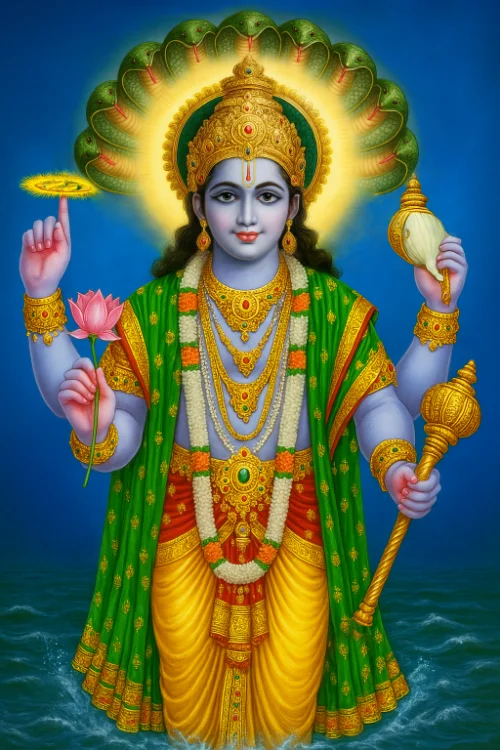
The Elephant King and the Crocodile
॥ ॐ नमो भगवते वासुदेवाय ॥
श्रीशुक उवाच ।
आसीद्गिरिवरो राजंस्त्रिकूट इति विश्रुतः ।
क्षीरोदेनावृतः श्रीमान् योजनायुतमुच्छ्रितः ॥ १॥
|| Oṁ namo bhagavate vāsudevāya ||
Śrīśuka uvāca |
Āsīdgirivaro rājaṁstrikūṭa iti viśrutaḥ |
Kṣīrodenāvṛtaḥ śrīmān yojanāyutamucchritaḥ || 1 ||
Oṁ, salutations to Bhagavān Vāsudeva. Śrī Śuka said: O king, there was a great mountain called Trikūṭa, splendid, surrounded by the Ocean of Milk and rising ten thousand yojanas high.
Śuka tells the story to King Parīkṣit. A yojana is an ancient measure of several miles.
तावता विस्तृतः पर्यक् त्रिभिः शृङ्गैः पयोनिधिम् ।
दिशः खं रोचयन्नास्ते रौप्यायसहिरण्मयैः ॥ २॥
Tāvatā vistṛtaḥ paryak tribhiḥ śṛṅgaiḥ payonidhim |
Diśaḥ khaṁ rocayannāste raupyāyasahiraṇmayaiḥ || 2 ||
Spread as wide on every side, it stands with its three peaks of silver, iron and gold, lighting up the ocean, the directions and the sky,
अन्यैश्च ककुभः सर्वा रत्नधातुविचित्रितैः ।
नानाद्रुमलतागुल्मैर्निर्घोषैर्निर्झराम्भसाम् ॥ ३॥
Anyaiśca kakubhaḥ sarvā ratnadhātuvicitritaiḥ |
Nānādrumalatāgulmairnirghoṣairnirjharāmbhasām || 3 ||
and with other peaks bright with gems and minerals it lights up all the quarters, with trees, creepers and shrubs of every kind and the roar of its waterfalls.
स चावनिज्यमानाङ्घ्रिः समन्तात्पयऊर्मिभिः ।
करोति श्यामलां भूमिं हरिण्मरकताश्मभिः ॥ ४॥
Sa cāvanijyamānāṅghriḥ samantātpayaūrmibhiḥ |
Karoti śyāmalāṁ bhūmiṁ hariṇmarakatāśmabhiḥ || 4 ||
Its feet washed on every side by the waves of the ocean, it turns the earth dark green with its emerald stones.
सिद्धचारणगन्धर्वविद्याधरमहोरगैः ।
किन्नरैरप्सरोभिश्च क्रीडद्भिर्जुष्टकन्दरः ॥ ५॥
Siddhacāraṇagandharvavidyādharamahoragaiḥ |
Kinnarairapsarobhiśca krīḍadbhirjuṣṭakandaraḥ || 5 ||
Its caves are frequented by Siddhas, Cāraṇas, Gandharvas, Vidyādharas, great serpents, Kinnaras and Apsarās at play.
यत्र सङ्गीतसन्नादैर्नदद्गुहममर्षया ।
अभिगर्जन्ति हरयः श्लाघिनः परशङ्कया ॥ ६॥
Yatra saṅgītasannādairnadadguhamamarṣayā |
Abhigarjanti harayaḥ ślāghinaḥ paraśaṅkayā || 6 ||
There, when the caves ring with the sound of singing, proud lions roar back in anger, taking it for a rival.
नानारण्यपशुव्रातसङ्कुलद्रोण्यलङ्कृतः ।
चित्रद्रुमसुरोद्यानकलकण्ठविहङ्गमः ॥ ७॥
Nānāraṇyapaśuvrātasaṅkuladroṇyalaṅkṛtaḥ |
Citradrumasurodyānakalakaṇṭhavihaṅgamaḥ || 7 ||
Its valleys are adorned with herds of every kind of forest beast, and in its gardens of the gods, among many-coloured trees, sweet-voiced birds sing.
सरित्सरोभिरच्छोदैः पुलिनैर्मणिवालुकैः ।
देवस्त्रीमज्जनामोदसौरभाम्ब्वनिलैर्युतः ॥ ८॥
Saritsarobhiracchodaiḥ pulinairmaṇivālukaiḥ |
Devastrīmajjanāmodasaurabhāmbvanilairyutaḥ || 8 ||
It has rivers and lakes of clear water, banks of jewelled sand, and breezes fragrant from the waters where the wives of the gods bathe.
तस्य द्रोण्यां भगवतो वरुणस्य महात्मनः ।
उद्यानमृतुमन्नाम आक्रीडं सुरयोषिताम् ॥ ९॥
Tasya droṇyāṁ bhagavato varuṇasya mahātmanaḥ |
Udyānamṛtumannāma ākrīḍaṁ surayoṣitām || 9 ||
In one of its valleys lies Ṛtumat, the garden of the great lord Varuṇa, a pleasure ground for the goddesses.
सर्वतोऽलङ्कृतं दिव्यैर्नित्यं पुष्पफलद्रुमैः ।
मन्दारैः पारिजातैश्च पाटलाशोकचम्पकैः ॥ १०॥
Sarvato’laṅkṛtaṁ divyairnityaṁ puṣpaphaladrumaiḥ |
Mandāraiḥ pārijātaiśca pāṭalāśokacampakaiḥ || 10 ||
It is adorned on every side with heavenly trees always in flower and fruit: mandāra and pārijāta, pāṭala, aśoka and campaka;
चूतैः प्रियालैः पनसैराम्रैराम्रातकैरपि ।
क्रमुकैर्नालिकेरैश्च खर्जूरैर्बीजपूरकैः ॥ ११॥
Cūtaiḥ priyālaiḥ panasairāmrairāmrātakairapi |
Kramukairnālikeraiśca kharjūrairbījapūrakaiḥ || 11 ||
mangoes of several kinds, priyāla, jackfruit, hog plum, areca, coconut, date and citron;
मधूकैः शालतालैश्च तमालैरसनार्जुनैः ।
अरिष्टोदुम्बरप्लक्षैर्वटैः किंशुकचन्दनैः ॥ १२॥
Madhūkaiḥ śālatālaiśca tamālairasanārjunaiḥ |
Ariṣṭodumbaraplakṣairvaṭaiḥ kiṁśukacandanaiḥ || 12 ||
madhūka, sāla and palmyra, tamāla, asana and arjuna, ariṣṭa, udumbara, plakṣa and banyan, kiṁśuka and sandalwood;
पिचुमन्दैः कोविदारैः सरलैः सुरदारुभिः ।
द्राक्षेक्षुरम्भाजम्बूभिर्बदर्यक्षाभयामलैः ॥ १३॥
Picumandaiḥ kovidāraiḥ saralaiḥ suradārubhiḥ |
Drākṣekṣurambhājambūbhirbadaryakṣābhayāmalaiḥ || 13 ||
nimba, kovidāra, sarala and devadāru, vines, sugarcane, banana and jambu, jujube, akṣa, harītakī and āmalakī;
बिल्वैः कपित्थैर्जम्बीरैर्वृतो भल्लातकादिभिः ।
तस्मिन् सरः सुविपुलं लसत्काञ्चनपङ्कजम् ॥ १४॥
Bilvaiḥ kapitthairjambīrairvṛto bhallātakādibhiḥ |
Tasmin saraḥ suvipulaṁ lasatkāñcanapaṅkajam || 14 ||
bilva, wood-apple, lime, bhallātaka and others. Within it lies a very large lake, shining with golden lotuses,
कुमुदोत्पलकह्लारशतपत्रश्रियोर्जितम् ।
मत्तषट्पदनिर्घुष्टं शकुन्तैश्च कलस्वनैः ॥ १५॥
Kumudotpalakahlāraśatapatraśriyorjitam |
Mattaṣaṭpadanirghuṣṭaṁ śakuntaiśca kalasvanaiḥ || 15 ||
glorious with white and blue water lilies, kahlāra and hundred-petalled lotuses, humming with drunken bees and the sweet songs of birds;
हंसकारण्डवाकीर्णं चक्राह्वैः सारसैरपि ।
जलकुक्कुटकोयष्टिदात्यूहकुलकूजितम् ॥ १६॥
Haṁsakāraṇḍavākīrṇaṁ cakrāhvaiḥ sārasairapi |
Jalakukkuṭakoyaṣṭidātyūhakulakūjitam || 16 ||
crowded with swans and kāraṇḍava ducks, with cakravākas and cranes, and ringing with flocks of water hens, koyaṣṭis and dātyūhas;
मत्स्यकच्छपसञ्चारचलत्पद्मरजःपयः ।
कदम्बवेतसनलनीपवञ्जुलकैर्वृतम् ॥ १७॥
Matsyakacchapasañcāracalatpadmarajaḥpayaḥ |
Kadambavetasanalanīpavañjulakairvṛtam || 17 ||
its water dusted with pollen from lotuses rocked by moving fish and turtles; ringed by kadamba, vetasa, reeds, nīpa and vañjulaka,
कुन्दैः कुरबकाशोकैः शिरीषैः कुटजेङ्गुदैः ।
कुब्जकैः स्वर्णयूथीभिर्नागपुन्नागजातिभिः ॥ १८॥
Kundaiḥ kurabakāśokaiḥ śirīṣaiḥ kuṭajeṅgudaiḥ |
Kubjakaiḥ svarṇayūthībhirnāgapunnāgajātibhiḥ || 18 ||
by kunda, kurabaka and aśoka, śirīṣa, kuṭaja and iṅguda, by kubjaka, golden jasmine, nāga, punnāga and jāti,
मल्लिकाशतपत्रैश्च माधवीजालकादिभिः ।
शोभितं तीरजैश्चान्यैर्नित्यर्तुभिरलं द्रुमैः ॥ १९॥
Mallikāśatapatraiśca mādhavījālakādibhiḥ |
Śobhitaṁ tīrajaiścānyairnityartubhiralaṁ drumaiḥ || 19 ||
by mallikā, śatapatra, mādhavī, jālaka and others, and adorned with other trees along its banks that flower in every season.
तत्रैकदा तद्गिरिकाननाश्रयः
करेणुभिर्वारणयूथपश्चरन् ।
सकण्टकान् कीचकवेणुवेत्रव-
द्विशालगुल्मं प्ररुजन् वनस्पतीन् ॥ २०॥
Tatraikadā tadgirikānanāśrayaḥ
Kareṇubhirvāraṇayūthapaścaran |
Sakaṇṭakān kīcakaveṇuvetrava-
dviśālagulmaṁ prarujan vanaspatīn || 20 ||
Once the leader of an elephant herd who lived in the forests of that mountain was roaming with his she-elephants, crushing thorny thickets of kīcaka, bamboo and cane, great shrubs and trees.
यद्गन्धमात्राद्धरयो गजेन्द्रा
व्याघ्रादयो व्यालमृगाः सखड्गाः ।
महोरगाश्चापि भयाद्द्रवन्ति
सगौरकृष्णाः शरभाश्चमर्यः ॥ २१॥
Yadgandhamātrāddharayo gajendrā
Vyāghrādayo vyālamṛgāḥ sakhaḍgāḥ |
Mahoragāścāpi bhayāddravanti
Sagaurakṛṣṇāḥ śarabhāścamaryaḥ || 21 ||
At the mere scent of him, lions, elephants, tigers and other beasts of prey, rhinoceroses, great serpents, and white and black śarabhas and yaks flee in fear;
वृका वराहा महिषर्क्षशल्या
गोपुच्छसालावृकमर्कटाश्च ।
अन्यत्र क्षुद्रा हरिणाः शशादय-
श्चरन्त्यभीता यदनुग्रहेण ॥ २२॥
Vṛkā varāhā mahiṣarkṣaśalyā
Gopucchasālāvṛkamarkaṭāśca |
Anyatra kṣudrā hariṇāḥ śaśādaya-
ścarantyabhītā yadanugraheṇa || 22 ||
while wolves, boars, buffaloes, bears and porcupines, gopucchas, hyenas and monkeys, and elsewhere the small creatures, deer, hares and the rest, roam without fear by his favour.
स घर्मतप्तः करिभिः करेणुभि-
र्वृतो मदच्युत्करभैरनुद्रुतः ।
गिरिं गरिम्णा परितः प्रकम्पयन्
निषेव्यमाणोऽलिकुलैर्मदाशनैः ॥ २३॥
Sa gharmataptaḥ karibhiḥ kareṇubhi-
rvṛto madacyutkarabhairanudrutaḥ |
Giriṁ garimṇā paritaḥ prakampayan
Niṣevyamāṇo’likulairmadāśanaiḥ || 23 ||
Burning in the heat, surrounded by elephants and she-elephants, followed by the young calves, shaking the mountain all around with his weight, attended by swarms of bees drinking the ichor that flowed from him,
सरोऽनिलं पङ्कजरेणुरूषितं
जिघ्रन् विदूरान्मदविह्वलेक्षणः ।
वृतः स्वयूथेन तृषार्दितेन तत्
सरोवराभ्याशमथागमद्द्रुतम् ॥ २४॥
Saro’nilaṁ paṅkajareṇurūṣitaṁ
Jighran vidūrānmadavihvalekṣaṇaḥ |
Vṛtaḥ svayūthena tṛṣārditena tat
Sarovarābhyāśamathāgamaddrutam || 24 ||
his eyes rolling with rut, he caught from afar the breeze off the lake, laden with lotus pollen, and with his thirsty herd around him came quickly to the shore of that great lake.
विगाह्य तस्मिन्नमृताम्बु निर्मलं
हेमारविन्दोत्पलरेणुवासितम् ।
पपौ निकामं निजपुष्करोद्धृत-
मात्मानमद्भिः स्नपयन् गतक्लमः ॥ २५॥
Vigāhya tasminnamṛtāmbu nirmalaṁ
Hemāravindotpalareṇuvāsitam |
Papau nikāmaṁ nijapuṣkaroddhṛta-
mātmānamadbhiḥ snapayan gataklamaḥ || 25 ||
Plunging into its clear, nectar-sweet water, scented with the pollen of golden lotuses and lilies, he drank his fill, drawing it up in his trunk, and bathed himself until his weariness was gone.
स्वपुष्करेणोद्धृतशीकराम्बुभि-
र्निपाययन् संस्नपयन् यथा गृही ।
घृणी करेणुः कलभांश्च दुर्मदो
नाचष्ट कृच्छ्रं कृपणोऽजमायया ॥ २६॥
Svapuṣkareṇoddhṛtaśīkarāmbubhi-
rnipāyayan saṁsnapayan yathā gṛhī |
Ghṛṇī kareṇuḥ kalabhāṁśca durmado
Nācaṣṭa kṛcchraṁ kṛpaṇo’jamāyayā || 26 ||
Drawing up spray in his trunk he made his she-elephants and calves drink and bathed them, like a fond householder; proud and pitiable, deluded by the Lord’s māyā, he saw no danger coming.
तं तत्र कश्चिन्नृप दैवचोदितो
ग्राहो बलीयांश्चरणे रुषाग्रहीत् ।
यदृच्छयैवं व्यसनं गतो गजो
यथाबलं सोऽतिबलो विचक्रमे ॥ २७॥
Taṁ tatra kaścinnṛpa daivacodito
Grāho balīyāṁścaraṇe ruṣāgrahīt |
Yadṛcchayaivaṁ vyasanaṁ gato gajo
Yathābalaṁ so’tibalo vicakrame || 27 ||
There, O king, impelled by fate, a powerful crocodile seized him by the leg in anger. Fallen into this calamity by chance, the mighty elephant struggled with all his strength.
तथाऽऽतुरं यूथपतिं करेणवो
विकृष्यमाणं तरसा बलीयसा ।
विचुक्रुशुर्दीनधियोऽपरे गजाः
पार्ष्णिग्रहास्तारयितुं न चाशकन् ॥ २८॥
Tathā’’turaṁ yūthapatiṁ kareṇavo
Vikṛṣyamāṇaṁ tarasā balīyasā |
Vicukruśurdīnadhiyo’pare gajāḥ
Pārṣṇigrahāstārayituṁ na cāśakan || 28 ||
Seeing the lord of their herd in such distress, dragged by a mightier force, the she-elephants cried out in anguish, and the other elephants, seizing him from behind, could not pull him free.
नियुध्यतोरेवमिभेन्द्रनक्रयो-
र्विकर्षतोरन्तरतो बहिर्मिथः ।
समाः सहस्रं व्यगमन् महीपते
सप्राणयोश्चित्रममंसतामराः ॥ २९॥
Niyudhyatorevamibhendranakrayo-
rvikarṣatorantarato bahirmithaḥ |
Samāḥ sahasraṁ vyagaman mahīpate
Saprāṇayościtramamaṁsatāmarāḥ || 29 ||
As the elephant king and the crocodile fought, dragging each other into the water and out of it, a thousand years passed, O king, and the gods marvelled that both still lived.
ततो गजेन्द्रस्य मनोबलौजसां
कालेन दीर्घेण महानभूद्व्ययः ।
विकृष्यमाणस्य जलेऽवसीदतो
विपर्ययोऽभूत्सकलं जलौकसः ॥ ३०॥
Tato gajendrasya manobalaujasāṁ
Kālena dīrgheṇa mahānabhūdvyayaḥ |
Vikṛṣyamāṇasya jale’vasīdato
Viparyayo’bhūtsakalaṁ jalaukasaḥ || 30 ||
Then over that long time the strength of mind, body and vigour of the elephant king wore away, dragged and sinking in the water as he was, while the creature of the water grew ever stronger.
इत्थं गजेन्द्रः स यदाऽऽप सङ्कटं
प्राणस्य देही विवशो यदृच्छया ।
अपारयन्नात्मविमोक्षणे चिरं
दध्याविमां बुद्धिमथाभ्यपद्यत ॥ ३१॥
Itthaṁ gajendraḥ sa yadā’’pa saṅkaṭaṁ
Prāṇasya dehī vivaśo yadṛcchayā |
Apārayannātmavimokṣaṇe ciraṁ
Dadhyāvimāṁ buddhimathābhyapadyata || 31 ||
When the elephant king, embodied and helpless, found his life in danger and for a long time could not free himself, he thought deeply and came to this resolve:
न मामिमे ज्ञातय आतुरं गजाः
कुतः करिण्यः प्रभवन्ति मोचितुम् ।
ग्राहेण पाशेन विधातुरावृतो-
ऽप्यहं च तं यामि परं परायणम् ॥ ३२॥
Na māmime jñātaya āturaṁ gajāḥ
Kutaḥ kariṇyaḥ prabhavanti mocitum |
Grāheṇa pāśena vidhāturāvṛto-
’Pyahaṁ ca taṁ yāmi paraṁ parāyaṇam || 32 ||
“My kinsmen, these elephants, cannot free me in my distress, much less my she-elephants. Caught by the crocodile, the noose of fate, I too will go to that Supreme, the final refuge,
यः कश्चनेशो बलिनोऽन्तकोरगा-
त्प्रचण्डवेगादभिधावतो भृशम् ।
भीतं प्रपन्नं परिपाति यद्भया-
न्मृत्युः प्रधावत्यरणं तमीमहि ॥ ३३॥
Yaḥ kaścaneśo balino’ntakoragā-
tpracaṇḍavegādabhidhāvato bhṛśam |
Bhītaṁ prapannaṁ paripāti yadbhayā-
nmṛtyuḥ pradhāvatyaraṇaṁ tamīmahi || 33 ||
“to the Lord who protects whoever comes to him in fear from the mighty serpent of death rushing upon him with fierce speed, the Lord for fear of whom Death itself runs. In him we take refuge.”
इति श्रीमद्भागवते महापुराणे पारमहंस्यां संहितायां अष्टमस्कन्धे
मन्वन्तरानुवर्णने गजेन्द्रोपाख्याने द्वितीयोऽध्यायः ॥ २॥
Iti śrīmadbhāgavate mahāpurāṇe pāramahaṁsyāṁ saṁhitāyāṁ aṣṭamaskandhe
Manvantarānuvarṇane gajendropākhyāne dvitīyo’dhyāyaḥ || 2 ||
Thus ends the second chapter, the story of Gajendra in the account of the Manvantaras, in the eighth canto of the Śrīmad-Bhāgavatam, the great Purāṇa, the collection of the paramahaṁsas.
Gajendra’s Prayer
॥ ॐ नमो भगवते वासुदेवाय ॥
श्रीशुक उवाच ।
एवं व्यवसितो बुद्ध्या समाधाय मनो हृदि ।
जजाप परमं जाप्यं प्राग्जन्मन्यनुशिक्षितम् ॥ १॥
|| Oṁ namo bhagavate vāsudevāya ||
Śrīśuka uvāca |
Evaṁ vyavasito buddhyā samādhāya mano hṛdi |
Jajāpa paramaṁ jāpyaṁ prāgjanmanyanuśikṣitam || 1 ||
Oṁ, salutations to Bhagavān Vāsudeva. Śrī Śuka said: Having resolved this in his intelligence and fixed his mind in his heart, he recited the supreme prayer he had learned in his previous birth.
गजेन्द्र उवाच ।
ॐ नमो भगवते तस्मै यत एतच्चिदात्मकम् ।
पुरुषायादिबीजाय परेशायाभिधीमहि ॥ २॥
Gajendra uvāca |
Oṁ namo bhagavate tasmai yata etaccidātmakam |
Puruṣāyādibījāya pareśāyābhidhīmahi || 2 ||
Gajendra said: Oṁ, salutations to that Bhagavān from whom this conscious world arises. On him, the Person, the original seed, the supreme Lord, we meditate.
Verses 2 to 29 are Gajendra’s prayer, the Gajendra Stuti, the part most often recited on its own.
यस्मिन्निदं यतश्चेदं येनेदं य इदं स्वयम् ।
योऽस्मात्परस्माच्च परस्तं प्रपद्ये स्वयम्भुवम् ॥ ३॥
Yasminnidaṁ yataścedaṁ yenedaṁ ya idaṁ svayam |
Yo’smātparasmācca parastaṁ prapadye svayambhuvam || 3 ||
I take refuge in the self-born one, in whom this world rests, from whom it comes, by whom it is made, who is himself this world, and who is beyond it and beyond its cause.
यः स्वात्मनीदं निजमाययार्पितं
क्वचिद्विभातं क्व च तत्तिरोहितम् ।
अविद्धदृक्साक्ष्युभयं तदीक्षते
स आत्ममूलोऽवतु मां परात्परः ॥ ४॥
Yaḥ svātmanīdaṁ nijamāyayārpitaṁ
Kvacidvibhātaṁ kva ca tattirohitam |
Aviddhadṛksākṣyubhayaṁ tadīkṣate
Sa ātmamūlo’vatu māṁ parātparaḥ || 4 ||
May he protect me, the root of himself, higher than the highest, who with unclouded vision watches as witness this world placed in himself by his own māyā, now manifest and now withdrawn.
कालेन पञ्चत्वमितेषु कृत्स्नशो
लोकेषु पालेषु च सर्वहेतुषु ।
तमस्तदासीद्गहनं गभीरं
यस्तस्य पारेऽभिविराजते विभुः ॥ ५॥
Kālena pañcatvamiteṣu kṛtsnaśo
Lokeṣu pāleṣu ca sarvahetuṣu |
Tamastadāsīdgahanaṁ gabhīraṁ
Yastasya pāre’bhivirājate vibhuḥ || 5 ||
When in time all the worlds, their guardians and all their causes have dissolved into the five elements, there is only deep, impenetrable darkness, and beyond it the all-pervading Lord shines forth.
न यस्य देवा ऋषयः पदं विदु-
र्जन्तुः पुनः कोऽर्हति गन्तुमीरितुम् ।
यथा नटस्याकृतिभिर्विचेष्टतो
दुरत्ययानुक्रमणः स मावतु ॥ ६॥
Na yasya devā ṛṣayaḥ padaṁ vidu-
rjantuḥ punaḥ ko’rhati gantumīritum |
Yathā naṭasyākṛtibhirviceṣṭato
Duratyayānukramaṇaḥ sa māvatu || 6 ||
Not even the gods and sages know his state; how then could any creature reach it or describe it? Like an actor moving in many roles, his course is hard to follow. May he protect me.
दिदृक्षवो यस्य पदं सुमङ्गलं
विमुक्तसङ्गा मुनयः सुसाधवः ।
चरन्त्यलोकव्रतमव्रणं वने
भूतात्मभूताः सुहृदः स मे गतिः ॥ ७॥
Didṛkṣavo yasya padaṁ sumaṅgalaṁ
Vimuktasaṅgā munayaḥ susādhavaḥ |
Carantyalokavratamavraṇaṁ vane
Bhūtātmabhūtāḥ suhṛdaḥ sa me gatiḥ || 7 ||
Longing to see his most auspicious feet, sages free of attachment and truly saintly, friends to all, seeing every being as themselves, keep the flawless vow of renunciation in the forest. He is my refuge.
न विद्यते यस्य च जन्म कर्म वा
न नामरूपे गुणदोष एव वा ।
तथापि लोकाप्ययसम्भवाय यः
स्वमायया तान्यनुकालमृच्छति ॥ ८॥
Na vidyate yasya ca janma karma vā
Na nāmarūpe guṇadoṣa eva vā |
Tathāpi lokāpyayasambhavāya yaḥ
Svamāyayā tānyanukālamṛcchati || 8 ||
He has no birth or action, no name or form, no quality or fault; yet for the creation and dissolution of the world he takes them on in time by his own māyā.
तस्मै नमः परेशाय ब्रह्मणेऽनन्तशक्तये ।
अरूपायोरुरूपाय नम आश्चर्यकर्मणे ॥ ९॥
Tasmai namaḥ pareśāya brahmaṇe’nantaśaktaye |
Arūpāyorurūpāya nama āścaryakarmaṇe || 9 ||
Salutations to him, the supreme Lord, Brahman of endless power, formless and of manifold form, whose deeds are wonderful.
नम आत्मप्रदीपाय साक्षिणे परमात्मने ।
नमो गिरां विदूराय मनसश्चेतसामपि ॥ १०॥
Nama ātmapradīpāya sākṣiṇe paramātmane |
Namo girāṁ vidūrāya manasaścetasāmapi || 10 ||
Salutations to the self-luminous, the witness, the Supreme Self; salutations to him who is far beyond words, mind and thought.
सत्त्वेन प्रतिलभ्याय नैष्कर्म्येण विपश्चिता ।
नमः कैवल्यनाथाय निर्वाणसुखसंविदे ॥ ११॥
Sattvena pratilabhyāya naiṣkarmyeṇa vipaścitā |
Namaḥ kaivalyanāthāya nirvāṇasukhasaṁvide || 11 ||
Salutations to the Lord of liberation, reached by the wise through purity and freedom from action, who knows the bliss of release.
नमः शान्ताय घोराय मूढाय गुणधर्मिणे ।
निर्विशेषाय साम्याय नमो ज्ञानघनाय च ॥ १२॥
Namaḥ śāntāya ghorāya mūḍhāya guṇadharmiṇe |
Nirviśeṣāya sāmyāya namo jñānaghanāya ca || 12 ||
Salutations to him who appears peaceful, fierce and dull through the qualities he bears; salutations to him who is without distinction, equal to all, a mass of knowledge.
क्षेत्रज्ञाय नमस्तुभ्यं सर्वाध्यक्षाय साक्षिणे ।
पुरुषायात्ममूलाय मूलप्रकृतये नमः ॥ १३॥
Kṣetrajñāya namastubhyaṁ sarvādhyakṣāya sākṣiṇe |
Puruṣāyātmamūlāya mūlaprakṛtaye namaḥ || 13 ||
Salutations to you, the knower of the field, overseer of all, the witness; salutations to the Person, the root of himself, the root of nature.
सर्वेन्द्रियगुणद्रष्ट्रे सर्वप्रत्ययहेतवे ।
असताच्छाययोक्ताय सदाभासाय ते नमः ॥ १४॥
Sarvendriyaguṇadraṣṭre sarvapratyayahetave |
Asatācchāyayoktāya sadābhāsāya te namaḥ || 14 ||
Salutations to you, the seer of all the senses and their objects, the cause of every perception, made known by the shadow of the unreal, shining in all that exists.
नमो नमस्तेऽखिलकारणाय
निष्कारणायाद्भुतकारणाय ।
सर्वागमाम्नायमहार्णवाय
नमोऽपवर्गाय परायणाय ॥ १५॥
Namo namaste’khilakāraṇāya
Niṣkāraṇāyādbhutakāraṇāya |
Sarvāgamāmnāyamahārṇavāya
Namo’pavargāya parāyaṇāya || 15 ||
Salutations again and again to you, the cause of all, yourself without cause, the wondrous cause; the great ocean into which all scriptures and traditions flow; liberation itself, the final refuge.
गुणारणिच्छन्नचिदूष्मपाय
तत्क्षोभविस्फूर्जितमानसाय ।
नैष्कर्म्यभावेन विवर्जितागम-
स्वयम्प्रकाशाय नमस्करोमि ॥ १६॥
Guṇāraṇicchannacidūṣmapāya
Tatkṣobhavisphūrjitamānasāya |
Naiṣkarmyabhāvena vivarjitāgama-
svayamprakāśāya namaskaromi || 16 ||
I bow to him whose consciousness lies hidden in the guṇas like fire in the kindling sticks, whose mind awakens when they are stirred, and who shines by himself for those who through freedom from action have gone beyond the rules of scripture.
मादृक् प्रपन्नपशुपाशविमोक्षणाय
मुक्ताय भूरिकरुणाय नमोऽलयाय ।
स्वांशेन सर्वतनुभृन्मनसि प्रतीत-
प्रत्यग्दृशे भगवते बृहते नमस्ते ॥ १७॥
Mādṛk prapannapaśupāśavimokṣaṇāya
Muktāya bhūrikaruṇāya namo’layāya |
Svāṁśena sarvatanubhṛnmanasi pratīta-
pratyagdṛśe bhagavate bṛhate namaste || 17 ||
Salutations to the one who frees surrendered beasts like me from the noose; to the ever-free, boundless in compassion, never idle; salutations to you, Bhagavān, the great one, known in the mind of every embodied being as its inner seer through a portion of yourself.
आत्माऽऽत्मजाप्तगृहवित्तजनेषु सक्तै-
र्दुष्प्रापणाय गुणसङ्गविवर्जिताय ।
मुक्तात्मभिः स्वहृदये परिभाविताय
ज्ञानात्मने भगवते नम ईश्वराय ॥ १८॥
Ātmā’’tmajāptagṛhavittajaneṣu saktai-
rduṣprāpaṇāya guṇasaṅgavivarjitāya |
Muktātmabhiḥ svahṛdaye paribhāvitāya
Jñānātmane bhagavate nama īśvarāya || 18 ||
Salutations to the Lord, Bhagavān, whose nature is knowledge: hard to reach for those attached to body, children, friends, home, wealth and people, untouched by the guṇas, contemplated by the liberated in their own hearts.
यं धर्मकामार्थविमुक्तिकामा
भजन्त इष्टां गतिमाप्नुवन्ति ।
किं त्वाशिषो रात्यपि देहमव्ययं
करोतु मेऽदभ्रदयो विमोक्षणम् ॥ १९॥
Yaṁ dharmakāmārthavimuktikāmā
Bhajanta iṣṭāṁ gatimāpnuvanti |
Kiṁ tvāśiṣo rātyapi dehamavyayaṁ
Karotu me’dabhradayo vimokṣaṇam || 19 ||
Those who seek dharma, desire, wealth or liberation worship him and gain the goal they wish; and more, he grants other blessings and an imperishable body. May he, whose mercy is vast, grant me release.
एकान्तिनो यस्य न कञ्चनार्थं
वाञ्छन्ति ये वै भगवत्प्रपन्नाः ।
अत्यद्भुतं तच्चरितं सुमङ्गलं
गायन्त आनन्दसमुद्रमग्नाः ॥ २०॥
Ekāntino yasya na kañcanārthaṁ
Vāñchanti ye vai bhagavatprapannāḥ |
Atyadbhutaṁ taccaritaṁ sumaṅgalaṁ
Gāyanta ānandasamudramagnāḥ || 20 ||
His devotees, given wholly to him and surrendered to the Lord, want nothing at all, but sing his wonderful, most auspicious deeds, immersed in an ocean of bliss.
तमक्षरं ब्रह्म परं परेश-
मव्यक्तमाध्यात्मिकयोगगम्यम् ।
अतीन्द्रियं सूक्ष्ममिवातिदूर-
मनन्तमाद्यं परिपूर्णमीडे ॥ २१॥
Tamakṣaraṁ brahma paraṁ pareśa-
mavyaktamādhyātmikayogagamyam |
Atīndriyaṁ sūkṣmamivātidūra-
manantamādyaṁ paripūrṇamīḍe || 21 ||
I praise him, the imperishable, the supreme Brahman, the supreme Lord, unmanifest, reached by inward yoga, beyond the senses, subtle, as if far away, infinite, the first, perfect and complete.
यस्य ब्रह्मादयो देवा वेदा लोकाश्चराचराः ।
नामरूपविभेदेन फल्ग्व्या च कलया कृताः ॥ २२॥
Yasya brahmādayo devā vedā lokāścarācarāḥ |
Nāmarūpavibhedena phalgvyā ca kalayā kṛtāḥ || 22 ||
Brahmā and the gods, the Vedas and the worlds of moving and unmoving beings, with all their distinctions of name and form, are made from a tiny part of him.
यथार्चिषोऽग्नेः सवितुर्गभस्तयो
निर्यान्ति संयान्त्यसकृत्स्वरोचिषः ।
तथा यतोऽयं गुणसम्प्रवाहो
बुद्धिर्मनः खानि शरीरसर्गाः ॥ २३॥
Yathārciṣo’gneḥ saviturgabhastayo
Niryānti saṁyāntyasakṛtsvarociṣaḥ |
Tathā yato’yaṁ guṇasampravāho
Buddhirmanaḥ khāni śarīrasargāḥ || 23 ||
As flames from a fire and rays from the sun go forth and return again and again, so from him come and go this stream of the guṇas, intelligence, mind, the senses and the creation of bodies.
स वै न देवासुरमर्त्यतिर्यङ्-
न स्त्री न षण्ढो न पुमान्न जन्तुः ।
नायं गुणः कर्म न सन्न चास-
न्निषेधशेषो जयतादशेषः ॥ २४॥
Sa vai na devāsuramartyatiryaṅ-
na strī na ṣaṇḍho na pumānna jantuḥ |
Nāyaṁ guṇaḥ karma na sanna cāsa-
nniṣedhaśeṣo jayatādaśeṣaḥ || 24 ||
He is neither god nor demon, man nor beast, neither woman, eunuch nor man, nor any creature; not a quality, not an action, neither being nor non-being. He is what remains when all is denied, and he is all. May he be victorious.
जिजीविषे नाहमिहामुया कि-
मन्तर्बहिश्चावृतयेभयोन्या ।
इच्छामि कालेन न यस्य विप्लव-
स्तस्यात्मलोकावरणस्य मोक्षम् ॥ २५॥
Jijīviṣe nāhamihāmuyā ki-
mantarbahiścāvṛtayebhayonyā |
Icchāmi kālena na yasya viplava-
stasyātmalokāvaraṇasya mokṣam || 25 ||
I do not wish to live on, here or hereafter; what use is this elephant’s life, covered within and without by ignorance? I long for release from that covering of the self, which time does not destroy.
सोऽहं विश्वसृजं विश्वमविश्वं विश्ववेदसम् ।
विश्वात्मानमजं ब्रह्म प्रणतोऽस्मि परं पदम् ॥ २६॥
So’haṁ viśvasṛjaṁ viśvamaviśvaṁ viśvavedasam |
Viśvātmānamajaṁ brahma praṇato’smi paraṁ padam || 26 ||
Longing for release, I bow to Brahman, the supreme state, the creator of the universe, himself the universe and beyond it, its knower and its soul, the unborn.
योगरन्धितकर्माणो हृदि योगविभाविते ।
योगिनो यं प्रपश्यन्ति योगेशं तं नतोऽस्म्यहम् ॥ २७॥
Yogarandhitakarmāṇo hṛdi yogavibhāvite |
Yogino yaṁ prapaśyanti yogeśaṁ taṁ nato’smyaham || 27 ||
I bow to the Lord of yoga, whom yogīs whose karma yoga has burned away see in hearts made pure by yoga.
नमो नमस्तुभ्यमसह्यवेग-
शक्तित्रयायाखिलधीगुणाय ।
प्रपन्नपालाय दुरन्तशक्तये
कदिन्द्रियाणामनवाप्यवर्त्मने ॥ २८॥
Namo namastubhyamasahyavega-
śaktitrayāyākhiladhīguṇāya |
Prapannapālāya durantaśaktaye
Kadindriyāṇāmanavāpyavartmane || 28 ||
Salutations again and again to you, whose three powers have irresistible force, who appear as the objects of every sense, protector of the surrendered, of boundless power, whose path cannot be found by those whose senses run astray.
नायं वेद स्वमात्मानं यच्छक्त्याहन्धिया हतम् ।
तं दुरत्ययमाहात्म्यं भगवन्तमितोऽस्म्यहम् ॥ २९॥
Nāyaṁ veda svamātmānaṁ yacchaktyāhandhiyā hatam |
Taṁ duratyayamāhātmyaṁ bhagavantamito’smyaham || 29 ||
I take refuge in Bhagavān, whose greatness is hard to cross, by whose power the soul, struck by the sense of “I”, does not know its own self.
श्रीशुक उवाच ।
एवं गजेन्द्रमुपवर्णितनिर्विशेषं
ब्रह्मादयो विविधलिङ्गभिदाभिमानाः ।
नैते यदोपससृपुर्निखिलात्मकत्वा-
त्तत्राखिलामरमयो हरिराविरासीत् ॥ ३०॥
Śrīśuka uvāca |
Evaṁ gajendramupavarṇitanirviśeṣaṁ
Brahmādayo vividhaliṅgabhidābhimānāḥ |
Naite yadopasasṛpurnikhilātmakatvā-
ttatrākhilāmaramayo harirāvirāsīt || 30 ||
Śrī Śuka said: Brahmā and the other gods, each proud of a separate form, did not come to Gajendra, who had praised the Supreme without naming any particular form; so Hari, who is all the gods, being the soul of all, appeared there himself.
तं तद्वदार्तमुपलभ्य जगन्निवासः
स्तोत्रं निशम्य दिविजैः सह संस्तुवद्भिः ।
छन्दोमयेन गरुडेन समुह्यमान-
श्चक्रायुधोऽभ्यगमदाशु यतो गजेन्द्रः ॥ ३१॥
Taṁ tadvadārtamupalabhya jagannivāsaḥ
Stotraṁ niśamya divijaiḥ saha saṁstuvadbhiḥ |
Chandomayena garuḍena samuhyamāna-
ścakrāyudho’bhyagamadāśu yato gajendraḥ || 31 ||
Knowing his distress and hearing his prayer, the refuge of the world, praised by the gods, came swiftly to where Gajendra was, discus in hand, borne by Garuḍa, who is made of the Vedic metres.
सोऽन्तःसरस्युरुबलेन गृहीत आर्तो
दृष्ट्वा गरुत्मति हरिं ख उपात्तचक्रम् ।
उत्क्षिप्य साम्बुजकरं गिरमाह कृच्छ्रा-
न्नारायणाखिलगुरो भगवन्नमस्ते ॥ ३२॥
So’ntaḥsarasyurubalena gṛhīta ārto
Dṛṣṭvā garutmati hariṁ kha upāttacakram |
Utkṣipya sāmbujakaraṁ giramāha kṛcchrā-
nnārāyaṇākhilaguro bhagavannamaste || 32 ||
Seized in the lake by the mighty one and in pain, the elephant saw Hari on Garuḍa in the sky, discus raised. Lifting a lotus in his trunk, he spoke with difficulty: “Nārāyaṇa, guru of all, Bhagavān, salutations to you!”
तं वीक्ष्य पीडितमजः सहसावतीर्य
सग्राहमाशु सरसः कृपयोज्जहार ।
ग्राहाद्विपाटितमुखादरिणा गजेन्द्रं
सम्पश्यतां हरिरमूमुचदुच्छ्रियाणाम् ॥ ३३॥
Taṁ vīkṣya pīḍitamajaḥ sahasāvatīrya
Sagrāhamāśu sarasaḥ kṛpayojjahāra |
Grāhādvipāṭitamukhādariṇā gajendraṁ
Sampaśyatāṁ hariramūmucaducchriyāṇām || 33 ||
Seeing him in pain, the unborn Lord came down at once and in his mercy drew him out of the lake together with the crocodile; then, as the gods looked on, Hari split the crocodile’s jaws with his discus and set Gajendra free.
इति श्रीमद्भागवते महापुराणे पारमहंस्यां संहितायां अष्टमस्कन्धे
मन्वन्तरानुवर्णने गजेन्द्रोपाख्याने तृतीयोऽध्यायः ॥ ३॥
Iti śrīmadbhāgavate mahāpurāṇe pāramahaṁsyāṁ saṁhitāyāṁ aṣṭamaskandhe
Manvantarānuvarṇane gajendropākhyāne tṛtīyo’dhyāyaḥ || 3 ||
Thus ends the third chapter, the story of Gajendra in the account of the Manvantaras, in the eighth canto of the Śrīmad-Bhāgavatam, the great Purāṇa, the collection of the paramahaṁsas.
The Release and the Lord’s Blessing
॥ ॐ नमो भगवते वासुदेवाय ॥
श्रीशुक उवाच ।
तदा देवर्षिगन्धर्वा ब्रह्मेशानपुरोगमाः ।
मुमुचुः कुसुमासारं शंसन्तः कर्म तद्धरेः ॥ १॥
|| Oṁ namo bhagavate vāsudevāya ||
Śrīśuka uvāca |
Tadā devarṣigandharvā brahmeśānapurogamāḥ |
Mumucuḥ kusumāsāraṁ śaṁsantaḥ karma taddhareḥ || 1 ||
Oṁ, salutations to Bhagavān Vāsudeva. Śrī Śuka said: Then the gods, sages and Gandharvas, led by Brahmā and Śiva, showered flowers, praising that deed of Hari.
नेदुर्दुन्दुभयो दिव्या गन्धर्वा ननृतुर्जगुः ।
ऋषयश्चारणाः सिद्धास्तुष्टुवुः पुरुषोत्तमम् ॥ २॥
Nedurdundubhayo divyā gandharvā nanṛturjaguḥ |
Ṛṣayaścāraṇāḥ siddhāstuṣṭuvuḥ puruṣottamam || 2 ||
Heavenly drums sounded, the Gandharvas danced and sang, and the sages, Cāraṇas and Siddhas praised the Supreme Person.
योऽसौ ग्राहः स वै सद्यः परमाश्चर्यरूपधृक् ।
मुक्तो देवलशापेन हूहूर्गन्धर्वसत्तमः ॥ ३॥
Yo’sau grāhaḥ sa vai sadyaḥ paramāścaryarūpadhṛk |
Mukto devalaśāpena hūhūrgandharvasattamaḥ || 3 ||
The crocodile at once took on a most wonderful form: he was Hūhū, best of the Gandharvas, freed from the curse of Devala.
प्रणम्य शिरसाधीशमुत्तमश्लोकमव्ययम् ।
अगायत यशोधाम कीर्तन्यगुणसत्कथम् ॥ ४॥
Praṇamya śirasādhīśamuttamaślokamavyayam |
Agāyata yaśodhāma kīrtanyaguṇasatkatham || 4 ||
Bowing his head to the imperishable Lord, praised in the finest verses, he sang the glory of him whose virtues and deeds are worthy of song.
सोऽनुकम्पित ईशेन परिक्रम्य प्रणम्य तम् ।
लोकस्य पश्यतो लोकं स्वमगान्मुक्तकिल्बिषः ॥ ५॥
So’nukampita īśena parikramya praṇamya tam |
Lokasya paśyato lokaṁ svamagānmuktakilbiṣaḥ || 5 ||
Shown mercy by the Lord, he circled him and bowed, and freed from sin went to his own world as all looked on.
गजेन्द्रो भगवत्स्पर्शाद्विमुक्तोऽज्ञानबन्धनात् ।
प्राप्तो भगवतो रूपं पीतवासाश्चतुर्भुजः ॥ ६॥
Gajendro bhagavatsparśādvimukto’jñānabandhanāt |
Prāpto bhagavato rūpaṁ pītavāsāścaturbhujaḥ || 6 ||
Gajendra, freed by the Lord’s touch from the bondage of ignorance, attained the Lord’s own form, four-armed and clad in yellow.
स वै पूर्वमभूद्राजा पाण्ड्यो द्रविडसत्तमः ।
इन्द्रद्युम्न इति ख्यातो विष्णुव्रतपरायणः ॥ ७॥
Sa vai pūrvamabhūdrājā pāṇḍyo draviḍasattamaḥ |
Indradyumna iti khyāto viṣṇuvrataparāyaṇaḥ || 7 ||
In a former life he had been Indradyumna, a king of the Pāṇḍya country, best of the Draviḍas, devoted to the vows of Viṣṇu.
स एकदाऽऽराधनकाल आत्मवान्
गृहीतमौनव्रत ईश्वरं हरिम् ।
जटाधरस्तापस आप्लुतोऽच्युतं
समर्चयामास कुलाचलाश्रमः ॥ ८॥
Sa ekadā’’rādhanakāla ātmavān
Gṛhītamaunavrata īśvaraṁ harim |
Jaṭādharastāpasa āpluto’cyutaṁ
Samarcayāmāsa kulācalāśramaḥ || 8 ||
Once, at the time of worship, self-controlled, keeping a vow of silence, wearing matted hair as an ascetic, he had bathed and was worshipping the infallible Lord Hari in his hermitage in the Kulācala hills.
यदृच्छया तत्र महायशा मुनिः
समागमच्छिष्यगणैः परिश्रितः ।
तं वीक्ष्य तूष्णीमकृतार्हणादिकं
रहस्युपासीनमृषिश्चुकोप ह ॥ ९॥
Yadṛcchayā tatra mahāyaśā muniḥ
Samāgamacchiṣyagaṇaiḥ pariśritaḥ |
Taṁ vīkṣya tūṣṇīmakṛtārhaṇādikaṁ
Rahasyupāsīnamṛṣiścukopa ha || 9 ||
By chance the great and famous sage came there, surrounded by his disciples. Seeing the king seated in solitary worship, silent, offering no welcome, the sage grew angry.
तस्मा इमं शापमदादसाधु-
रयं दुरात्माकृतबुद्धिरद्य ।
विप्रावमन्ता विशतां तमोऽन्धं
यथा गजः स्तब्धमतिः स एव ॥ १०॥
Tasmā imaṁ śāpamadādasādhu-
rayaṁ durātmākṛtabuddhiradya |
Viprāvamantā viśatāṁ tamo’ndhaṁ
Yathā gajaḥ stabdhamatiḥ sa eva || 10 ||
He laid this curse on him: “This wicked, ill-taught man insults a brāhmaṇa. Let him enter blind darkness as an elephant, as dull-witted as one.”
श्रीशुक उवाच ।
एवं शप्त्वा गतोऽगस्त्यो भगवान् नृप सानुगः ।
इन्द्रद्युम्नोऽपि राजर्षिर्दिष्टं तदुपधारयन् ॥ ११॥
Śrīśuka uvāca |
Evaṁ śaptvā gato’gastyo bhagavān nṛpa sānugaḥ |
Indradyumno’pi rājarṣirdiṣṭaṁ tadupadhārayan || 11 ||
Śrī Śuka said: Having cursed him so, the great Agastya left with his followers, O king; and the royal sage Indradyumna, accepting it as his destiny,
आपन्नः कौञ्जरीं योनिमात्मस्मृतिविनाशिनीम् ।
हर्यर्चनानुभावेन यद्गजत्वेऽप्यनुस्मृतिः ॥ १२॥
Āpannaḥ kauñjarīṁ yonimātmasmṛtivināśinīm |
Haryarcanānubhāvena yadgajatve’pyanusmṛtiḥ || 12 ||
was born as an elephant, a birth that destroys the memory of the self; yet by the power of his worship of Hari, even as an elephant he remembered.
एवं विमोक्ष्य गजयूथपमब्जनाभ-
स्तेनापिपार्षदगतिं गमितेन युक्तः ।
गन्धर्वसिद्धविबुधैरुपगीयमान-
कर्माद्भुतं स्वभवनं गरुडासनोऽगात् ॥ १३॥
Evaṁ vimokṣya gajayūthapamabjanābha-
stenāpipārṣadagatiṁ gamitena yuktaḥ |
Gandharvasiddhavibudhairupagīyamāna-
karmādbhutaṁ svabhavanaṁ garuḍāsano’gāt || 13 ||
Having freed the leader of the elephant herd in this way, the lotus-navelled Lord, together with him, now raised to the rank of his attendant, returned to his own abode on Garuḍa, his wondrous deed sung by Gandharvas, Siddhas and gods.
एतन्महाराज तवेरितो मया
कृष्णानुभावो गजराजमोक्षणम् ।
स्वर्ग्यं यशस्यं कलिकल्मषापहं
दुःस्वप्ननाशं कुरुवर्य शृण्वताम् ॥ १४॥
Etanmahārāja taverito mayā
Kṛṣṇānubhāvo gajarājamokṣaṇam |
Svargyaṁ yaśasyaṁ kalikalmaṣāpahaṁ
Duḥsvapnanāśaṁ kuruvarya śṛṇvatām || 14 ||
O great king, best of the Kurus, I have told you this deed of Kṛṣṇa’s power, the release of the elephant king. For those who hear it, it leads to heaven, brings fame, removes the impurity of the Kali age and destroys bad dreams.
यथानुकीर्तयन्त्येतच्छ्रेयस्कामा द्विजातयः ।
शुचयः प्रातरुत्थाय दुःस्वप्नाद्युपशान्तये ॥ १५॥
Yathānukīrtayantyetacchreyaskāmā dvijātayaḥ |
Śucayaḥ prātarutthāya duḥsvapnādyupaśāntaye || 15 ||
So the twice-born who seek their good, rising early and pure, recite it to calm bad dreams and other troubles.
इदमाह हरिः प्रीतो गजेन्द्रं कुरुसत्तम ।
शृण्वतां सर्वभूतानां सर्वभूतमयो विभुः ॥ १६॥
Idamāha hariḥ prīto gajendraṁ kurusattama |
Śṛṇvatāṁ sarvabhūtānāṁ sarvabhūtamayo vibhuḥ || 16 ||
Pleased, the all-pervading Lord, who is all beings, spoke this to Gajendra, O best of the Kurus, as all beings listened.
श्रीभगवानुवाच ।
ये मां त्वां च सरश्चेदं गिरिकन्दरकाननम् ।
वेत्रकीचकवेणूनां गुल्मानि सुरपादपान् ॥ १७॥
Śrībhagavānuvāca |
Ye māṁ tvāṁ ca saraścedaṁ girikandarakānanam |
Vetrakīcakaveṇūnāṁ gulmāni surapādapān || 17 ||
The Lord said: Those who remember me and you, this lake, the mountain with its caves and forests, the thickets of cane, kīcaka and bamboo, the trees of the gods,
शृङ्गाणीमानि धिष्ण्यानि ब्रह्मणो मे शिवस्य च ।
क्षीरोदं मे प्रियं धाम श्वेतद्वीपं च भास्वरम् ॥ १८॥
Śṛṅgāṇīmāni dhiṣṇyāni brahmaṇo me śivasya ca |
Kṣīrodaṁ me priyaṁ dhāma śvetadvīpaṁ ca bhāsvaram || 18 ||
these peaks, the abodes of Brahmā, of me and of Śiva, my beloved home the Ocean of Milk, and the shining White Island,
श्रीवत्सं कौस्तुभं मालां गदां कौमोदकीं मम ।
सुदर्शनं पाञ्चजन्यं सुपर्णं पतगेश्वरम् ॥ १९॥
Śrīvatsaṁ kaustubhaṁ mālāṁ gadāṁ kaumodakīṁ mama |
Sudarśanaṁ pāñcajanyaṁ suparṇaṁ patageśvaram || 19 ||
my Śrīvatsa, the Kaustubha gem, my garland and my mace Kaumodakī, Sudarśana, Pāñcajanya and Suparṇa, lord of the birds,
शेषं च मत्कलां सूक्ष्मां श्रियं देवीं मदाश्रयाम् ।
ब्रह्माणं नारदमृषिं भवं प्रह्लादमेव च ॥ २०॥
Śeṣaṁ ca matkalāṁ sūkṣmāṁ śriyaṁ devīṁ madāśrayām |
Brahmāṇaṁ nāradamṛṣiṁ bhavaṁ prahlādameva ca || 20 ||
Śeṣa, my subtle portion, the goddess Śrī who rests in me, Brahmā, the sage Nārada, Bhava and Prahlāda,
मत्स्यकूर्मवराहाद्यैरवतारैः कृतानि मे ।
कर्माण्यनन्तपुण्यानि सूर्यं सोमं हुताशनम् ॥ २१॥
Matsyakūrmavarāhādyairavatāraiḥ kṛtāni me |
Karmāṇyanantapuṇyāni sūryaṁ somaṁ hutāśanam || 21 ||
the deeds of endless merit I have done as Matsya, Kūrma, Varāha and my other avatāras, the sun, the moon and fire,
प्रणवं सत्यमव्यक्तं गोविप्रान् धर्ममव्ययम् ।
दाक्षायणीर्धर्मपत्नीः सोमकश्यपयोरपि ॥ २२॥
Praṇavaṁ satyamavyaktaṁ goviprān dharmamavyayam |
Dākṣāyaṇīrdharmapatnīḥ somakaśyapayorapi || 22 ||
the syllable Oṁ, truth, the unmanifest, cows and brāhmaṇas, imperishable dharma, the daughters of Dakṣa, wives of Dharma, Soma and Kaśyapa,
गङ्गां सरस्वतीं नन्दां कालिन्दीं सितवारणम् ।
ध्रुवं ब्रह्मऋषीन् सप्त पुण्यश्लोकांश्च मानवान् ॥ २३॥
Gaṅgāṁ sarasvatīṁ nandāṁ kālindīṁ sitavāraṇam |
Dhruvaṁ brahmaṛṣīn sapta puṇyaślokāṁśca mānavān || 23 ||
the Gaṅgā, the Sarasvatī, the Nandā and the Kālindī, the white elephant, Dhruva, the seven brahmarṣis and righteous men of good name,
उत्थायापररात्रान्ते प्रयताः सुसमाहिताः ।
स्मरन्ति मम रूपाणि मुच्यन्ते ह्येनसोऽखिलात् ॥ २४॥
Utthāyāpararātrānte prayatāḥ susamāhitāḥ |
Smaranti mama rūpāṇi mucyante hyenaso’khilāt || 24 ||
rising at the end of the night, self-controlled and composed: those who remember these forms of mine are freed from every sin.
ये मां स्तुवन्त्यनेनाङ्ग प्रतिबुध्य निशात्यये ।
तेषां प्राणात्यये चाहं ददामि विमलां मतिम् ॥ २५॥
Ye māṁ stuvantyanenāṅga pratibudhya niśātyaye |
Teṣāṁ prāṇātyaye cāhaṁ dadāmi vimalāṁ matim || 25 ||
And to those who wake at the end of the night and praise me with this prayer, I give pure understanding at the time of death.
श्रीशुक उवाच ।
इत्यादिश्य हृषीकेशः प्रध्माय जलजोत्तमम् ।
हर्षयन् विबुधानीकमारुरोह खगाधिपम् ॥ २६॥
Śrīśuka uvāca |
Ityādiśya hṛṣīkeśaḥ pradhmāya jalajottamam |
Harṣayan vibudhānīkamāruroha khagādhipam || 26 ||
Śrī Śuka said: Having said this, Hṛṣīkeśa blew the best of conches, delighting the hosts of the gods, and mounted the king of birds.
इति श्रीमद्भागवते महापुराणे पारमहंस्यां संहितायां
अष्टमस्कन्धे गजेन्द्रमोक्षणं नाम चतुर्थोऽध्यायः ॥ ४॥
॥ ॐ तत्सत् ॥
Iti śrīmadbhāgavate mahāpurāṇe pāramahaṁsyāṁ saṁhitāyāṁ
Aṣṭamaskandhe gajendramokṣaṇaṁ nāma caturtho’dhyāyaḥ || 4 ||
|| Oṁ tatsat ||
Thus ends the fourth chapter, called the Release of Gajendra, in the eighth canto of the Śrīmad-Bhāgavatam, the great Purāṇa, the collection of the paramahaṁsas. Oṁ tat sat.
Text from: Sanskritdocuments.org, proofread by PSA Easwaran.