

Venkatesha Stotram
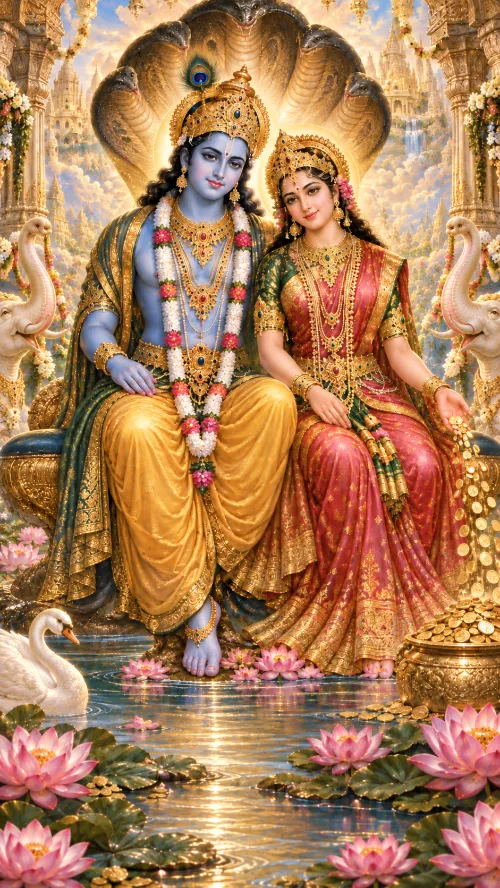
Śrī Veṅkaṭeśa Stotram: The Hymn to the Lord of the Seven Hills
Synopsis
The Śrī Veṅkaṭeśa Stotram, which opens kamalākucacūcuka kuṅkumato, is sung at dawn at Tirumala as part of the Suprabhātam service, after the Suprabhātam itself. It praises Viṣṇu as Veṅkaṭeśvara, the Lord of the Veṅkaṭa hill, the beloved of Kamalā, whom even Brahmā, Skanda and Śiva honour, and asks Him to forgive countless offences.
Its middle verses see in Him Kṛṣṇa of the flute and Rāma of the Raghus, and it closes with a devotee who has come from far away to serve Him. All 11 verses are given in Devanāgarī and IAST with an English meaning.
कमलाकुचचूचुक कुङ्कुमतो नियतारुणितातुलनीलतनो ।
कमलायतलोचन लोकपते विजयी भव वेङ्कटशैलपते ॥ १॥
Kamalākucacūcuka kuṅkumato niyatāruṇitātulanīlatano |
Kamalāyatalocana lokapate vijayī bhava veṅkaṭaśailapate || 1 ||
Lord of the Veṅkaṭa hill, whose matchless dark-blue body is always reddened by the kuṅkuma from Kamalā’s breast, lotus-eyed Lord of the worlds, be victorious!
Kamalā is Lakṣmī, who lives on the Lord’s chest; the red kuṅkuma of her embrace colours His dark body. Veṅkaṭa is the hill at Tirumala, which the hymn also calls the Vṛṣa hill (vṛṣa-śaila) and the Śeṣa hill (śeṣa-śaila). The Lord of Veṅkaṭa, Veṅkaṭeśa, is also called Veṅkaṭeśvara (often written Venkateswara), Śrīnivāsa and Bālājī.
सचतुर्मुखषण्मुखपञ्चमुखप्रमुखाखिलदैवतमौलिमणे ।
शरणागतवत्सल सारनिधे परिपालय मां वृषशैलपते ॥ २॥
Sacaturmukhaṣaṇmukhapañcamukhapramukhākhiladaivatamaulimaṇe |
Śaraṇāgatavatsala sāranidhe paripālaya māṁ vṛṣaśailapate || 2 ||
Crest-jewel of all the gods, headed by the four-faced, the six-faced and the five-faced; loving to those who come to You for shelter; treasure of all that is essential: protect me, Lord of the Vṛṣa hill.
The four-faced is Brahmā, the six-faced Skanda and the five-faced Śiva: even the greatest gods wear Him as the jewel on their crowns.
अतिवेलतया तव दुर्विषहैरनुवेलकृतैरपराधशतैः ।
भरितं त्वरितं वृषशैलपते परया कृपया परिपाहि हरे ॥ ३॥
Ativelatayā tava durviṣahairanuvelakṛtairaparādhaśataiḥ |
Bharitaṁ tvaritaṁ vṛṣaśailapate parayā kṛpayā paripāhi hare || 3 ||
Lord of the Vṛṣa hill, I am full of hundreds of offences, committed at every moment and so many that they are hard even for You to bear. Hari, protect me quickly with Your supreme mercy.
अधिवेङ्कटशैलमुदारमतेर्जनताभिमताधिकदानरतात् ।
परदेवतया गदितान्निगमैः कमलादयितान्न परं कलये ॥ ४॥
Adhiveṅkaṭaśailamudāramaterjanatābhimatādhikadānaratāt |
Paradevatayā gaditānnigamaiḥ kamalādayitānna paraṁ kalaye || 4 ||
I consider none higher than the beloved of Kamalā, who dwells on the Veṅkaṭa hill, generous of mind, delighting in giving people more than they wish for, and whom the Vedas declare to be the supreme deity.
कलवेणुरवावशगोपवधू शतकोटिवृतात्स्मरकोटिसमात् ।
प्रतिवल्लविकाभिमतात्सुखदात् वसुदेवसुतान्न परं कलये ॥ ५॥
Kalaveṇuravāvaśagopavadhū śatakoṭivṛtātsmarakoṭisamāt |
Prativallavikābhimatātsukhadāt vasudevasutānna paraṁ kalaye || 5 ||
I consider none higher than the son of Vasudeva, surrounded by hundreds of millions of cowherd women held spellbound by the sweet sound of His flute, as beautiful as millions of Kāmadevas, beloved of every cowherd girl, the giver of happiness.
From here to verse 8 the hymn praises the Lord of Veṅkaṭa as Kṛṣṇa and then as Rāma: He is the source of both.
अभिरामगुणाकर दाशरथे जगदेकधनुर्धर धीरमते ।
रघुनायक राम रमेश विभो वरदो भव देव दयाजलधे ॥ ६॥
Abhirāmaguṇākara dāśarathe jagadekadhanurdhara dhīramate |
Raghunāyaka rāma rameśa vibho varado bhava deva dayājaladhe || 6 ||
Son of Daśaratha, mine of delightful qualities, the one great archer of the world, steady of mind; Rāma, leader of the Raghus, Lord of Ramā, all-pervading God, ocean of compassion, grant us boons.
अवनीतनयाकमनीयकरं रजनीकरचारुमुखाम्बुरुहम् ।
रजनीचरराजतमोमिहिरं महनीयमहं रघुराममये ॥ ७॥
Avanītanayākamanīyakaraṁ rajanīkaracārumukhāmburuham |
Rajanīcararājatamomihiraṁ mahanīyamahaṁ raghurāmamaye || 7 ||
I come to Rāma of the Raghus, worthy of all honour, whose hand is dear to the daughter of the Earth, whose beautiful lotus face is like the moon, and who is the sun that dispels the darkness of the king of the night-wanderers.
The daughter of the Earth is Sītā, and the king of the night-wanderers is Rāvaṇa.
सुमुखं सुहृदं सुलभं सुखदं स्वनुजं च सुकायममोघशरम् ।
अपहाय रघूद्वहमन्यमहं न कथञ्चन कञ्चन जातु भजे ॥ ८॥
Sumukhaṁ suhṛdaṁ sulabhaṁ sukhadaṁ svanujaṁ ca sukāyamamoghaśaram |
Apahāya raghūdvahamanyamahaṁ na kathañcana kañcana jātu bhaje || 8 ||
Fair-faced, a true friend, easy to reach, the giver of happiness, with a good younger brother, a handsome form and arrows that never miss: setting Him aside, the upholder of the Raghus, I will never, in any way, worship anyone else.
The good younger brother is Lakṣmaṇa.
विना वेङ्कटेशं न नाथो न नाथः सदा वेङ्कटेशं स्मरामि स्मरामि ।
हरे वेङ्कटेश प्रसीद प्रसीद प्रियं वेङ्कटेश प्रयच्छ प्रयच्छ ॥ ९॥
Vinā veṅkaṭeśaṁ na nātho na nāthaḥ sadā veṅkaṭeśaṁ smarāmi smarāmi |
Hare veṅkaṭeśa prasīda prasīda priyaṁ veṅkaṭeśa prayaccha prayaccha || 9 ||
Without Veṅkaṭeśa there is no master, no master at all. Always I remember Veṅkaṭeśa, I remember Him. Hari, Veṅkaṭeśa, be gracious, be gracious! Veṅkaṭeśa, give what is dear to me, give it.
अहं दूरतस्ते पदाम्भोजयुग्मप्रणामेच्छयाऽऽगत्य सेवां करोमि ।
सकृत्सेवया नित्यसेवाफलं त्वं प्रयच्छ प्रयच्छ प्रभो वेङ्कटेश ॥ १०॥
Ahaṁ dūrataste padāmbhojayugmapraṇāmecchayā’’gatya sevāṁ karomi |
Sakṛtsevayā nityasevāphalaṁ tvaṁ prayaccha prayaccha prabho veṅkaṭeśa || 10 ||
Longing to bow to Your two lotus feet, I have come from far away to serve You. Lord Veṅkaṭeśa, for this one act of service give me the fruit of serving You forever; give it.
अज्ञानिना मया दोषानशेषान् विहितान् हरे ।
क्षमस्व त्वं क्षमस्व त्वं शेषशैलशिखामणे ॥ ११॥
Ajñāninā mayā doṣānaśeṣān vihitān hare |
Kṣamasva tvaṁ kṣamasva tvaṁ śeṣaśailaśikhāmaṇe || 11 ||
Hari, crest-jewel of the Śeṣa hill, forgive the countless faults I have committed in my ignorance; forgive them, forgive them.
The hills of Tirumala are said to be the coils of the serpent Śeṣa, on whom Viṣṇu rests.
॥ इति श्री वेङ्कटेश स्तोत्रं सम्पूर्णम् ॥
|| Iti śrī veṅkaṭeśa stotraṁ sampūrṇam ||
Thus ends the Śrī Veṅkaṭeśa Stotra.
Text from: Sanskritdocuments.org, proofread by Dr. Varagur S.V. Rajan.
More in Vishnu
Veṅkaṭeśa StotramMantras
You are here
Vidhi-Bhakti and Vaikuṇṭha
Vishnu MantrasMantras
Well-Wisher of the World