

When Duty Is Not Enough
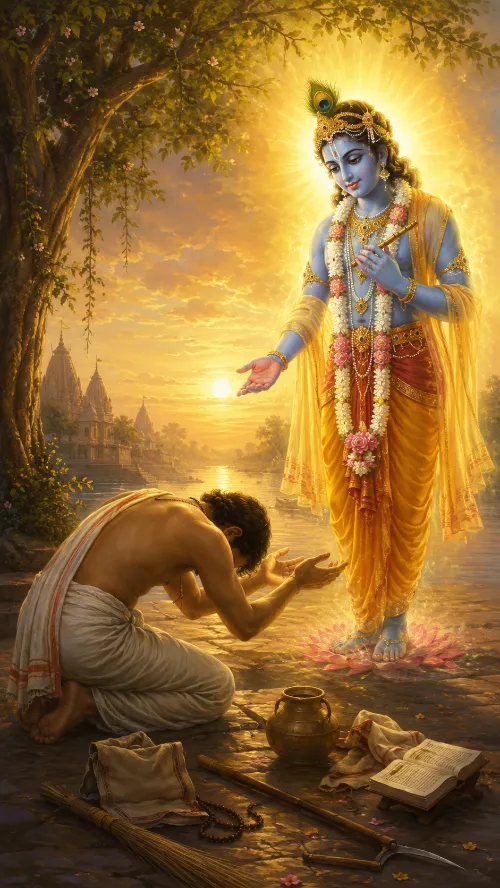
When Duty Is Not Enough: Why Caitanya-caritāmṛta Says Varṇāśrama Without Kṛṣṇa-Bhakti Fails
A striking tension exists in the Hindu scriptures. The Bhagavad-gītā tells a person to perform his own duty rather than imitate another’s: sva-dharma matters. The Vedic tradition carefully describes the duties of brāhmaṇas, kṣatriyas, vaiśyas, śūdras, householders, students, renunciants, and others.
Yet the Caitanya-caritāmṛta makes a startling declaration:
চারি বর্ণাশ্রমী যদি কৃষ্ণ নাহি ভজে ।
স্বকর্ম করিতে সে রৌরবে পড়ি’ মজে ॥
cāri varṇāśramī yadi kṛṣṇa nāhi bhaje
svakarma karite se raurave paḍi’ maje
“If a follower of the fourfold varṇāśrama system does not worship Kṛṣṇa, then even while performing his prescribed work, he falls into Raurava and becomes immersed there.”
Caitanya-caritāmṛta, Madhya 22.26
A. C. Bhaktivedanta Swami Prabhupāda translates the theological force more generally: “The followers of the varṇāśrama institution accept the regulative principles of the four social orders [brāhmaṇa, kṣatriya, vaiśya and śūdra] and four spiritual orders [brahmacarya, gṛhastha, vānaprastha and sannyāsa]. However, if one carries out the regulative principles of these orders but does not render transcendental service to Kṛṣṇa, he falls into a hellish condition of material life.”
At first glance this may sound like a rejection of varṇāśrama itself. It is not. The deeper argument is more subtle: Duty is necessary, but duty is not ultimate. Varṇāśrama can organize human life, discipline desire, allocate responsibility, and direct work toward sacred purposes—but if the system never awakens the soul’s relationship with Bhagavān, it has failed to achieve its highest purpose.
The issue, then, is not whether one performs one’s role. The decisive question is: For whom is that role being performed?
The Immediate Context: The Real Problem Is Forgetfulness of Kṛṣṇa
Madhya 22.26 cannot be understood properly without the two verses immediately preceding it. Kṛṣṇadāsa Kavirāja first identifies the deepest problem of conditioned existence.
‘কৃষ্ণ-নিত্যদাস’ — জীব তাহা ভুলি’ গেল ।
এই দোষে মায়া তার গলায় বান্ধিল ॥
‘kṛṣṇa-nitya-dāsa’ — jīva tāhā bhuli’ gela
ei doṣe māyā tāra galāya bāndhila
Caitanya-caritāmṛta, Madhya 22.24
“The jīva has forgotten that he is Kṛṣṇa’s eternal servant; because of this fault, māyā has bound him around the neck.” This is the theological foundation of everything that follows.
The soul’s essential problem is not simply:
- bad social organization,
- poor professional performance,
- lack of ritual discipline,
- or ignorance of one’s temporary social role.
The deeper problem is: the jīva has forgotten its eternal relationship with Kṛṣṇa. The expression is famous: kṛṣṇa-nitya-dāsa “the eternal servant of Kṛṣṇa.” From the Gauḍīya perspective, this is not merely one social identity among others.
It is the soul’s enduring spiritual identity. One may be a brāhmaṇa today, a householder for part of one’s life, a renunciant later, or occupy countless other circumstantial identities.
But the relationship expressed by kṛṣṇa-nitya-dāsa is not temporary.
The Remedy Is Bhajana and Guru-Sevā
The next verse gives the remedy.
তাতে কৃষ্ণ ভজে, করে গুরুর সেবন ।
মায়াজাল ছুটে, পায় কৃষ্ণের চরণ ॥
tāte kṛṣṇa bhaje, kare gurura sevana
māyā-jāla chuṭe, pāya kṛṣṇera caraṇa
“Therefore, when one worships Kṛṣṇa and serves the spiritual master, the net of māyā is broken and one attains Kṛṣṇa’s feet.”
Caitanya-caritāmṛta, Madhya 22.25
The progression is now clear: forget Kṛṣṇa → māyā but Kṛṣṇa-bhajana + guru-sevā → freedom from māyā. Only after establishing this does Kṛṣṇadāsa say that merely performing varṇāśrama duties without worshiping Kṛṣṇa does not solve the problem.
That means Madhya 22.26 is not fundamentally about sociology. It is about spiritual identity. A person may perfectly fulfill every duty belonging to a conditioned identity while still forgetting the eternal identity: “I belong to Kṛṣṇa.”
The Verse, Phrase by Phrase
The Bengali deserves close attention.
cāri varṇāśramī
“one belonging to the fourfold varṇa and āśrama system.” This encompasses the four varṇas: brāhmaṇa — intellectual, priestly, educational and contemplative functions; kṣatriya — protection, government, leadership and martial responsibility; vaiśya — agriculture, commerce, cattle protection and production; śūdra — skilled support and service.
And the four āśramas: brahmacarya — disciplined student life; gṛhastha — household life; vānaprastha — gradual withdrawal from household responsibility; sannyāsa — renounced life.
The warning therefore includes both the socially active person and the renunciant. Even sannyāsa, externally the most renounced āśrama, is not automatically identical with bhakti.
yadi kṛṣṇa nāhi bhaje
“if one does not worship or serve Kṛṣṇa.” The verb bhaje comes from the Sanskrit root bhaj, with meanings that include: to serve, to worship, to participate in, to honor, to devote oneself to.
So Kṛṣṇadāsa is not merely saying: “If someone does not acknowledge intellectually that Kṛṣṇa exists.” He means: if one’s life is not actually oriented toward Kṛṣṇa through bhakti.
This is the heart of the verse.
sva-karma karite
“even while performing one’s own prescribed work.” This phrase makes the warning particularly strong. The person is not necessarily immoral. He may not be neglecting his responsibilities.
Indeed, he may be performing sva-karma—his proper duty. The problem is not necessarily bad execution. It is that the correct external action is disconnected from its final spiritual purpose.
raurave paḍi’ maje
Literally: “falling into Raurava, he becomes immersed there.” Prabhupāda translates this more broadly as entering a “hellish condition of material life.” Both senses are worth preserving.
Raurava is in fact the name of a particular hell described in the Bhāgavata Purāṇa. But in Madhya 22.26 the word also works rhetorically as a vivid image of severe spiritual downfall.
The expression is intentionally shocking. Kṛṣṇadāsa is saying: external religious correctness does not guarantee spiritual success.
Raurava in the Bhāgavata Purāṇa
Śrīmad-Bhāgavatam 5.26.11 describes Raurava:
ये त्विह यथैवामुना विहिंसिता जन्तवः परत्र यमयातनामुपगतं त एव रुरवो भूत्वा तथा तमेव विहिंसन्ति तस्माद्रौरवमित्याहू रुरुरिति सर्पादतिक्रूरसत्त्वस्यापदेशः ॥
ye tv iha yathaivāmunā vihiṁsitā jantavaḥ
paratra yama-yātanām upagataṁ ta eva ruravo bhūtvā
tathā tam eva vihiṁsanti
tasmād rauravam ity āhuḥ
rurur iti sarpād ati-krūra-sattvasyāpadeśaḥ
“Those living beings whom a cruel person injured in this life appear in the next life as creatures called rurus and inflict severe suffering upon him under the punishment of Yama. Therefore that hell is called Raurava. The ruru is described as a creature even more ferocious than a serpent.”
Śrīmad-Bhāgavatam 5.26.11
One should nevertheless be careful not to build more doctrine into Madhya 22.26 than its context requires. Kṛṣṇadāsa’s Sanskrit proof-text immediately afterward speaks more generally of falling downward when Bhagavān is neglected.
So the safest reading is: Raurava gives the Bengali verse its severe, concrete imagery, while the underlying scriptural principle is the broader danger of spiritual downfall when the Supreme Person is ignored.
The Sanskrit Source Kṛṣṇadāsa Gives Immediately Afterward
Kṛṣṇadāsa does not leave his statement unsupported. The Caitanya-caritāmṛta immediately quotes Śrīmad-Bhāgavatam 11.5.2–3. The first verse explains where varṇa and āśrama themselves come from.
मुखबाहूरुपादेभ्यः पुरुषस्याश्रमैः सह ।
चत्वारो जज्ञिरे वर्णा गुणैर्विप्रादयः पृथक् ॥
mukha-bāhūru-pādebhyaḥ
puruṣasyāśramaiḥ saha
catvāro jajñire varṇā
guṇair viprādayaḥ pṛthak
“The four varṇas, beginning with the brāhmaṇas, arose according to their differing qualities from the mouth, arms, thighs and feet of the Supreme Person, together with the four āśramas.”
Śrīmad-Bhāgavatam 11.5.2
Then comes the warning.
य एषां पुरुषं साक्षादात्मप्रभवमीश्वरम् ।
न भजन्त्यवजानन्ति स्थानाद् भ्रष्टाः पतन्त्यधः ॥
ya eṣāṁ puruṣaṁ sākṣād
ātma-prabhavam īśvaram
na bhajanty avajānanti
sthānād bhraṣṭāḥ patanty adhaḥ
“Those among them who do not worship, but instead disregard, the Supreme Person—the Lord who is the very source of their own existence—fall from their position and descend.”
Śrīmad-Bhāgavatam 11.5.3
This is essentially the Sanskrit theological foundation of Madhya 22.26.
The Irony: The System Comes From God, Yet God Can Be Forgotten
The juxtaposition of Bhāgavatam 11.5.2 and 11.5.3 is important. The varṇas and āśramas arise symbolically from the cosmic body of the Puruṣa. Then the next verse says that members of those very orders may fail because they neglect the Puruṣa Himself.
That is the theological irony. A person may honor: the structure, the regulation, the social identity, the ritual, the etiquette, the inherited institution, and the prescribed work, while forgetting the Person from whom the whole system derives its meaning.
The container remains. The center disappears.
Varṇāśrama Was Supposed to Be Worship of Viṣṇu
The Viṣṇu Purāṇa states the purpose positively:
वर्णाश्रमाचारवता पुरुषेण परः पुमान् ।
विष्णुराराध्यते पन्था नान्यस्तत्तोषकारकः ॥
varṇāśramācāra-vatā
puruṣeṇa paraḥ pumān
viṣṇur ārādhyate panthā
nānyas tat-toṣa-kārakaḥ
“By a person who properly follows the conduct of varṇa and āśrama, the Supreme Person Viṣṇu is worshiped. This is the path for satisfying Him.”
Viṣṇu Purāṇa 3.8.9
This verse is quoted by Rāmānanda Rāya in Caitanya-caritāmṛta Madhya 8.58. The decisive expression is: viṣṇur ārādhyate “Viṣṇu is worshiped.” The goal of varṇāśrama is therefore not the preservation of varṇāśrama for its own sake.
Its purpose is ārādhana—worship. That gives us the correct formula: varṇāśrama + Bhagavān = sacred duty functioning as intended but varṇāśrama without Bhagavān = the structure severed from its purpose.
The Bhāgavata Gives the Same Criterion
Śrīmad-Bhāgavatam 1.2.13 states the principle with extraordinary clarity.
अतः पुम्भिर्द्विजश्रेष्ठा वर्णाश्रमविभागशः ।
स्वनुष्ठितस्य धर्मस्य संसिद्धिर्हरितोषणम् ॥
ataḥ pumbhir dvija-śreṣṭhā
varṇāśrama-vibhāgaśaḥ
svanuṣṭhitasya dharmasya
saṁsiddhir hari-toṣaṇam
“Therefore, O best of the twice-born, the complete perfection of one’s properly performed dharma within the divisions of varṇa and āśrama is the satisfaction of Hari.”
Śrīmad-Bhāgavatam 1.2.13
The decisive phrase is: saṁsiddhir hari-toṣaṇam “its complete perfection is the satisfaction of Hari.” This changes the criterion of success. The final question is not: “Did I perform my role flawlessly?”
It is: “Did my life please Hari?”
The Apparent Conflict With Sva-Dharma
This is especially important because Bhagavad-gītā 18.47 famously says:
श्रेयान् स्वधर्मो विगुणः परधर्मात् स्वनुष्ठितात् ।
स्वभावनियतं कर्म कुर्वन् नाप्नोति किल्बिषम् ॥
śreyān sva-dharmo viguṇaḥ
para-dharmāt sv-anuṣṭhitāt
svabhāva-niyataṁ karma
kurvan nāpnoti kilbiṣam
“Better is one’s own dharma, though imperfect, than another’s dharma well performed. Performing action determined by one’s own nature, one does not incur the corresponding fault.”
Bhagavad-gītā 18.47
Does this contradict Madhya 22.26? Not at all. The verse immediately before it gives the missing key.
The Goal of Sva-Karma Is Worship
यतः प्रवृत्तिर्भूतानां येन सर्वमिदं ततम् ।
स्वकर्मणा तमभ्यर्च्य सिद्धिं विन्दति मानवः ॥
yataḥ pravṛttir bhūtānāṁ
yena sarvam idaṁ tatam
sva-karmaṇā tam abhyarcya
siddhiṁ vindati mānavaḥ
“By worshiping through one’s own work Him from whom all beings arise and by whom this entire world is pervaded, a human being attains perfection.”
Bhagavad-gītā 18.46
The critical phrase is: sva-karmaṇā tam abhyarcya “worshiping Him through one’s own work.” The Gītā therefore does not say: “Do your work and the work itself is sufficient.”
It says: “Use your work to worship the Supreme.” Caitanya-caritāmṛta Madhya 22.26 gives the negative counterpart: if sva-karma never becomes Kṛṣṇa-bhajana, its ultimate purpose remains unfulfilled.
Two Errors Are Therefore Avoided
Read together, Bhagavad-gītā 18.47 and Caitanya-caritāmṛta Madhya 22.26 protect against two opposite mistakes.
Error One: Escaping One’s Duty in the Name of Spirituality
The Gītā warns: Do not imitate another person’s life merely because it looks purer or more attractive. Arjuna cannot abandon his actual responsibility simply because renunciation appears spiritually cleaner than battle.
Error Two: Making Duty a Substitute for Spirituality
The Caitanya-caritāmṛta warns: Do not imagine that merely performing your temporary role completes the purpose of human life. The first error is escapism. The second is spiritual complacency.
The proper path is: perform the responsibility that is truly yours—and transform it into service to Bhagavān.
Perfectly Performed Dharma Can Still Be Spiritually Fruitless
Śrīmad-Bhāgavatam 1.2.8 makes the point even more sharply.
धर्मः स्वनुष्ठितः पुंसां विष्वक्सेनकथासु यः ।
नोत्पादयेद्यदि रतिं श्रम एव हि केवलम् ॥
dharmaḥ svanuṣṭhitaḥ puṁsāṁ
viṣvaksena-kathāsu yaḥ
notpādayed yadi ratiṁ
śrama eva hi kevalam
“If a person’s properly performed dharma does not awaken attraction for the narrations of Viṣvaksena, it is nothing but labor.”
Śrīmad-Bhāgavatam 1.2.8
The phrase is devastating: dharmaḥ svanuṣṭhitaḥ The dharma has been properly performed. There is no accusation of negligence. Nevertheless, if it does not produce: rati — attraction toward Bhagavān, the conclusion is: śrama eva hi kevalam “nothing but labor.”
This is almost the philosophical essence of Madhya 22.26. The Bhāgavata asks not only: “What did you do?” It asks: “What did your doing make your heart love?”
The Supreme Dharma Is the One That Produces Bhakti
Two verses earlier the Bhāgavata gives the positive definition.
स वै पुंसां परो धर्मो यतो भक्तिरधोक्षजे ।
अहैतुक्यप्रतिहता ययात्मा सुप्रसीदति ॥
sa vai puṁsāṁ paro dharmo
yato bhaktir adhokṣaje
ahaituky apratihatā
yayātmā suprasīdati
“The supreme dharma for humanity is that by which bhakti to the transcendent Lord arises—bhakti that is unmotivated and uninterrupted, by which the self becomes fully satisfied.”
Śrīmad-Bhāgavatam 1.2.6
The hierarchy is now clear. Dharma is evaluated by bhakti. Bhakti is not merely one additional compartment inside the social system. It is the higher spiritual criterion by which the system’s success is judged.
Duty Has a Purpose Beyond Duty
These passages create a consistent progression:
- sva-karma
one’s rightful work - ārādhana
work becomes worship - hari-toṣaṇa
the Lord is pleased - rati
attraction to Bhagavān awakens - bhakti
devotional relationship becomes central - śaraṇāgati
complete surrender to Kṛṣṇa.
Duty is therefore not discarded. It is transformed.
The Final Gītā Does Not End With Social Identity
The Bhagavad-gītā eventually reaches its famous climax:
सर्वधर्मान् परित्यज्य मामेकं शरणं व्रज ।
अहं त्वां सर्वपापेभ्यो मोक्षयिष्यामि मा शुचः ॥
sarva-dharmān parityajya
mām ekaṁ śaraṇaṁ vraja
ahaṁ tvāṁ sarva-pāpebhyo
mokṣayiṣyāmi mā śucaḥ
“Abandoning all separate dharmas, take refuge in Me alone. I shall deliver you from all sin; do not grieve.”
Bhagavad-gītā 18.66
This does not mean that Arjuna now abandons action. Quite the opposite. His surrender culminates in his willingness to act according to Kṛṣṇa’s instruction. The battlefield remains.
The bow remains. His responsibility remains. What changes is the center. Before surrender, Arjuna asks: “What do I want to do?” After surrender: “What does Kṛṣṇa want me to do?”
That is the transformation from ego-centered karma to devotional service.
Caitanya Mahāprabhu Does Not Call Varṇāśrama False
This distinction appears beautifully in the conversation between Śrī Caitanya and Rāmānanda Rāya. Rāmānanda first proposes the Viṣṇu Purāṇa teaching that Viṣṇu is worshiped through varṇāśrama.
Mahāprabhu responds:
প্রভু কহে,—“এহো বাহ্য, আগে কহ আর” ।
রায় কহে, “কৃষ্ণে কর্মার্পণ—সর্বসাধ্য-সার” ॥
prabhu kahe,—“eho bāhya, āge kaha āra”
rāya kahe, “kṛṣṇe karmārpaṇa—sarva-sādhya-sāra”
“The Lord said, ‘This is external; speak further.’ Rāmānanda Rāya replied, ‘Offering one’s actions to Kṛṣṇa is the essence of attainment.’”
Caitanya-caritāmṛta, Madhya 8.59
The word is: bāhya “external.” Not: false. Not: evil. Not: useless. Varṇāśrama can be a legitimate sacred structure. But from the perspective of prema-bhakti it remains an outer framework.
The inner reality is the relationship with Kṛṣṇa.
Why a Perfect Brāhmaṇa May Still Be Spiritually Incomplete
Madhya 22.26 therefore demolishes a common religious assumption: external rank does not guarantee internal devotion. A person may possess: birth, learning, ritual purity, social respect, correct dress, correct āśrama, correct ceremonies, and correct professional duties, yet still lack Kṛṣṇa-bhakti.
Conversely, one may occupy a socially humble position and possess profound devotion. This is why Caitanya Mahāprabhu says:
কিবা বিপ্র, কিবা ন্যাসী, শূদ্র কেনে নয় ।
যেই কৃষ্ণতত্ত্ববেত্তা, সেই ‘গুরু’ হয় ॥
kibā vipra, kibā nyāsī, śūdra kene naya
yei kṛṣṇa-tattva-vettā, sei ‘guru’ haya
“Whether one is a brāhmaṇa, a sannyāsī, or a śūdra—whoever knows the truth of Kṛṣṇa is qualified to be guru.”
Caitanya-caritāmṛta, Madhya 8.128
The decisive qualification here is not merely social position. It is: kṛṣṇa-tattva-vettā “one who knows the truth of Kṛṣṇa.”
Birth Alone Does Not Create Eligibility for Bhakti
Kṛṣṇadāsa states the principle even more plainly elsewhere.
নীচ-জাতি নহে কৃষ্ণভজনে অযোগ্য ।
সৎকুল-বিপ্র নহে ভজনের যোগ্য ॥
nīca-jāti nahe kṛṣṇa-bhajane ayogya
sat-kula-vipra nahe bhajanera yogya
“Birth in a socially low family does not make one unfit for Kṛṣṇa-bhajana, nor does birth as a brāhmaṇa in a respectable family itself make one fit for bhajana.”
Caitanya-caritāmṛta, Antya 4.66
This is a crucial Gauḍīya distinction. Material duties may differ according to embodied nature and circumstance. But: eligibility for bhakti is not monopolized by social birth.
One must not confuse the organization of conditioned human society with the eternal spiritual worth of the soul.
Social Identity and Spiritual Identity
We can now return to Madhya 22.24. A person may possess many legitimate relative identities: “I am a father.” “I am a teacher.” “I am a ruler.” “I am a merchant.” “I am a student.”
“I am a renunciant.” “I am a priest.” These identities carry genuine responsibilities. Gauḍīya Vaiṣṇavism does not require that one irresponsibly deny them. But beneath them lies another identity: kṛṣṇa-nitya-dāsa “I am eternally Kṛṣṇa’s servant.”
The relative identities answer: What responsibilities do I presently carry? The eternal identity answers: To whom do I ultimately belong? The two need not conflict. The correct relationship is: temporary duty becomes an expression of eternal service.
Why Good Conduct Alone Cannot Liberate the Soul
This is perhaps the deepest philosophical point. Suppose a person becomes: honest, disciplined, responsible, socially useful, self-controlled, dutiful, and respected. These are real virtues.
The Caitanya-caritāmṛta does not dismiss them. But they still do not by themselves answer the fundamental spiritual problem identified in 22.24: forgetfulness of Kṛṣṇa. One can become an excellent inhabitant of the material world while still identifying entirely with temporary existence.
One can perfect the performance of the role without discovering the actor. That is why social virtue and spiritual liberation cannot simply be equated. The question is not only: “Am I behaving correctly?”
but eventually: “Have I remembered whose servant I am?”
Even Renunciation Is Not Enough
Because Madhya 22.26 includes all four āśramas, its warning reaches even the sannyāsī. This is significant. A person may renounce: family, property, career, wealth, comfort, sexual life, and social ambition, yet still lack loving devotion to Kṛṣṇa.
Therefore renunciation itself cannot be the absolute criterion. The same principle applies to: scholarship, ritual purity, austerity, philosophical knowledge, social prestige, and institutional authority.
None of them is condemned. But none of them can replace bhakti.
Varṇāśrama as Means, Not Idol
The failure occurs when the means becomes an end. A religious culture can become fascinated with: who belongs to which category, who is higher, who is lower, who may perform which ritual, who has which title, who wears which clothing, who occupies which institutional position.
All these questions may have legitimate contextual importance. But if they eclipse the central question— “How does this lead to the remembrance and service of Bhagavān?” —the hierarchy has consumed its own purpose.
The Bhāgavata therefore gives the corrective: saṁsiddhir hari-toṣaṇam The perfection of duty is Hari’s satisfaction. Not status. Not prestige. Not institutional victory.
Not merely correct classification.
What “Falls Down” Really Means
Bhāgavatam 11.5.3 says: sthānād bhraṣṭāḥ patanty adhaḥ “They fall from their position and descend.” This can be understood at several connected levels. A person may fall: religiously — because the sacred purpose of the institution has been lost; morally — because external identity begins substituting for internal purification; karmically — because action remains within the binding field of karma; spiritually — because one’s relationship with Bhagavān remains forgotten.
Thus Kṛṣṇadāsa’s invocation of Raurava is not merely a threat attached arbitrarily to nonconformity. It dramatizes the central paradox: a person can appear religiously well situated and still be moving away from the ultimate purpose of religion.
Sva-Karma Without Kṛṣṇa and Sva-Karma Offered to Kṛṣṇa
The distinction can be expressed simply.
Sva-karma without Kṛṣṇa
“I am the doer.” “This is my status.” “These are my achievements.” “This duty defines me.” “The result belongs to me.” This remains largely within karma and conditioned identity.
Sva-karma offered to Kṛṣṇa
“This capacity has been entrusted to me.” “This responsibility is a field of service.” “I am not the independent proprietor.” “The fruit belongs ultimately to Bhagavān.” “My work should purify remembrance rather than strengthen ego.”
The outer action may be similar. The consciousness is completely different.
The Real Meaning of Sva-Dharma in a Bhakti Framework
The Gītā says: Do not live someone else’s life. The Caitanya-caritāmṛta adds: Do not make your own temporary life the final truth either. That gives us a remarkably balanced teaching.
Be faithful to your actual responsibilities. But: offer them upward. Do not use spirituality to escape duty. And do not use duty to avoid spirituality.
The Full Scriptural Progression
The major texts fit together with remarkable precision.
What Madhya 22.26 Does Not Mean
“Everyone outside explicit Kṛṣṇa worship is mechanically assigned to the specific Raurava hell of Bhāgavatam 5.26.11.”
The text should not be pressed that mechanically. Kṛṣṇadāsa invokes Raurava vividly, while the supporting Bhāgavata verse formulates the broader principle as falling downward after neglecting Bhagavān.
The Most Important Distinction
There are really two levels of dharma in view.
Contextual dharma
What should I do in this body, position, stage of life, and field of responsibility?
Eternal dharma
What is my permanent relationship with Bhagavān? The first changes. The second does not. One can therefore perform contextual dharma in a way that reveals eternal dharma.
That is the ideal. The householder feeds his family as service. The teacher teaches as service. The ruler protects as service. The merchant produces and exchanges as service.
The student learns as service. The renunciant renounces as service. Then sva-karma becomes bhakti-oriented karma-yoga rather than an isolated material identity.
The Deepest Irony of Religious Life
Madhya 22.26 exposes a possibility that every religious tradition must confront. A person can become highly skilled at religion while forgetting God. The structures remain: rules, clothing, ritual, institutions, hierarchies, titles, duties, scriptural vocabulary.
Yet the heart’s actual orientation can disappear. That is why Kṛṣṇadāsa’s warning remains powerful. Religion is successful only when its forms reconnect the soul with the reality those forms were meant to serve.
Otherwise the form survives while the purpose dies.
The Teaching in One Paragraph
Caitanya-caritāmṛta Madhya 22.26 does not reject varṇāśrama-dharma; it denies that varṇāśrama possesses independent spiritual sufficiency. The four varṇas and four āśramas provide legitimate forms of responsibility, discipline, and worship, but according to the Bhāgavata their perfection is hari-toṣaṇa, the satisfaction of Hari. Bhagavad-gītā likewise does not teach merely “perform your duty”; it teaches sva-karmaṇā tam abhyarcya—worship the Supreme through your own work. If duty does not awaken attraction to Bhagavān, the Bhāgavata calls it śrama eva hi kevalam, mere labor. Kṛṣṇadāsa therefore places varṇāśrama beneath a deeper truth: the jīva is eternally Kṛṣṇa’s servant. Temporary duty becomes spiritually meaningful when it helps restore that forgotten relationship.
The message of Madhya 22.26 can easily be misunderstood because it sounds severe. But its purpose is not to belittle work, morality, social responsibility, or sacred discipline.
It is to put them in their proper place. Duty matters. But duty is not God. Varṇāśrama matters. But varṇāśrama is not the eternal identity of the soul. Sva-dharma matters.
But its perfection is not simply flawless performance. Its perfection is: hari-toṣaṇam — the satisfaction of Hari. Thus the Gītā and Caitanya-caritāmṛta give two complementary instructions: Do not abandon the duty that is truly yours.
And: Do not mistake that duty for the final goal. Perform it. Purify it. Offer it. Let it become worship. Let worship awaken attraction. Let attraction become bhakti. And finally let every temporary identity become transparent to the eternal one: kṛṣṇa-nitya-dāsa “I am eternally Kṛṣṇa’s servant.”
The deepest meaning of the verse can therefore be stated very simply: The purpose of duty is not merely to make us good performers of our temporary roles. It is to turn those roles into service and lead us back to our eternal relationship with Kṛṣṇa.
Or even more sharply: Sva-karma without Kṛṣṇa remains incomplete.
Sva-karma offered to Kṛṣṇa becomes a path toward perfection.
Primary texts and classical sources discussed
- Kṛṣṇadāsa Kavirāja Gosvāmī, Śrī Caitanya-caritāmṛta, Madhya-līlā 22.24–27.
- Kṛṣṇadāsa Kavirāja Gosvāmī, Śrī Caitanya-caritāmṛta, Madhya-līlā 8.58–59 and 8.128.
- Kṛṣṇadāsa Kavirāja Gosvāmī, Śrī Caitanya-caritāmṛta, Antya-līlā 4.66.
- Śrīmad-Bhāgavatam 1.2.6, 1.2.8, 1.2.13; 5.26.11; 11.5.2–3.
- Bhagavad-gītā 18.46–47 and 18.66.
- Viṣṇu Purāṇa 3.8.9.
- A. C. Bhaktivedanta Swami Prabhupāda, translations and purports to the passages above.