

Madhurashtakam
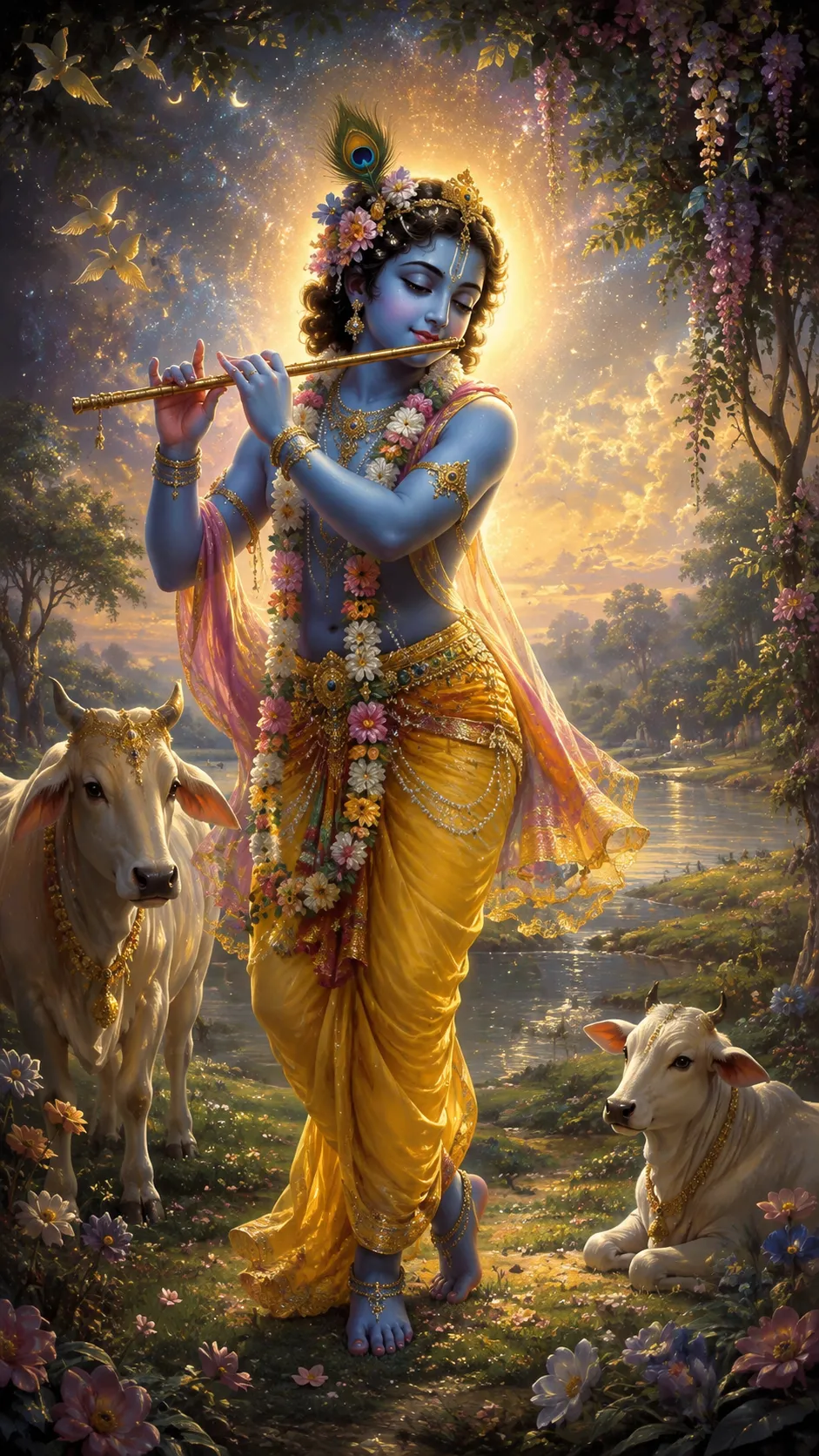
Madhurāṣṭakam: Everything About Kṛṣṇa Is Sweet
Synopsis
The Madhurāṣṭakam, “eight verses on sweetness”, opens adharaṁ madhuraṁ, “His lips are sweet”. Its closing line names Vallabhācārya, the teacher who founded the Puṣṭimārga, as its author. Each verse lists what belongs to Kṛṣṇa, His face, His flute, His play, the Yamunā, the gopīs and the cows, calls every one of them sweet, and ends on the same refrain: everything about the Lord of sweetness is sweet.
It is the simplest expression of mādhurya, God approached through intimacy rather than majesty. All 8 verses are given in Devanāgarī and IAST with an English meaning.
अधरं मधुरं वदनं मधुरं नयनं मधुरं हसितं मधुरम् ।
हृदयं मधुरं गमनं मधुरं मधुराधिपतेरखिलं मधुरम् ॥ १॥
Adharaṁ madhuraṁ vadanaṁ madhuraṁ nayanaṁ madhuraṁ hasitaṁ madhuram |
Hṛdayaṁ madhuraṁ gamanaṁ madhuraṁ madhurādhipaterakhilaṁ madhuram || 1 ||
His lips are sweet, His face is sweet, His eyes are sweet, His smile is sweet; His heart is sweet, His walk is sweet. Everything about the Lord of sweetness is sweet.
Madhurādhipati reads two ways: the sovereign of sweetness, and the Lord of Madhurā, an old name of Mathurā, the city of His birth. The refrain keeps both.
वचनं मधुरं चरितं मधुरं वसनं मधुरं वलितं मधुरम् ।
चलितं मधुरं भ्रमितं मधुरं मधुराधिपतेरखिलं मधुरम् ॥ २॥
Vacanaṁ madhuraṁ caritaṁ madhuraṁ vasanaṁ madhuraṁ valitaṁ madhuram |
Calitaṁ madhuraṁ bhramitaṁ madhuraṁ madhurādhipaterakhilaṁ madhuram || 2 ||
His words are sweet, His deeds are sweet, His clothes are sweet, the bend of His body is sweet; His movements are sweet, His wandering is sweet. Everything about the Lord of sweetness is sweet.
वेणुर्मधुरो रेणुर्मधुरः पाणिर्मधुरः पादौ मधुरौ ।
नृत्यं मधुरं सख्यं मधुरं मधुराधिपतेरखिलं मधुरम् ॥ ३॥
Veṇurmadhuro reṇurmadhuraḥ pāṇirmadhuraḥ pādau madhurau |
Nṛtyaṁ madhuraṁ sakhyaṁ madhuraṁ madhurādhipaterakhilaṁ madhuram || 3 ||
His flute is sweet, the dust of His feet is sweet, His hands are sweet, His feet are sweet; His dancing is sweet, His friendship is sweet. Everything about the Lord of sweetness is sweet.
गीतं मधुरं पीतं मधुरं भुक्तं मधुरं सुप्तं मधुरम् ।
रूपं मधुरं तिलकं मधुरं मधुराधिपतेरखिलं मधुरम् ॥ ४॥
Gītaṁ madhuraṁ pītaṁ madhuraṁ bhuktaṁ madhuraṁ suptaṁ madhuram |
Rūpaṁ madhuraṁ tilakaṁ madhuraṁ madhurādhipaterakhilaṁ madhuram || 4 ||
His singing is sweet, His drinking is sweet, His eating is sweet, His sleep is sweet; His form is sweet, His tilaka is sweet. Everything about the Lord of sweetness is sweet.
Pītam is both “what He drinks” and “yellow”, the yellow cloth He wears.
करणं मधुरं तरणं मधुरं हरणं मधुरं रमणं मधुरम् ।
वमितं मधुरं शमितं मधुरं मधुराधिपतेरखिलं मधुरम् ॥ ५॥
Karaṇaṁ madhuraṁ taraṇaṁ madhuraṁ haraṇaṁ madhuraṁ ramaṇaṁ madhuram |
Vamitaṁ madhuraṁ śamitaṁ madhuraṁ madhurādhipaterakhilaṁ madhuram || 5 ||
All He does is sweet, His crossing over is sweet, His stealing is sweet, His love-play is sweet; what He gives away is sweet, His calm is sweet. Everything about the Lord of sweetness is sweet.
Each word here carries more than one sense. Taraṇam is crossing, as of the Yamunā, and also carrying others across; haraṇam is His stealing, of butter and of hearts.
गुञ्जा मधुरा माला मधुरा यमुना मधुरा वीची मधुरा ।
सलिलं मधुरं कमलं मधुरं मधुराधिपतेरखिलं मधुरम् ॥ ६॥
Guñjā madhurā mālā madhurā yamunā madhurā vīcī madhurā |
Salilaṁ madhuraṁ kamalaṁ madhuraṁ madhurādhipaterakhilaṁ madhuram || 6 ||
His necklace of guñjā berries is sweet, His garland is sweet, the Yamunā is sweet, its ripples are sweet; its water is sweet, its lotuses are sweet. Everything about the Lord of sweetness is sweet.
Guñjā berries are small red-and-black seeds that the cowherds of Vraja string into necklaces.
गोपी मधुरा लीला मधुरा युक्तं मधुरं मुक्तं मधुरम् ।
दृष्टं मधुरं शिष्टं मधुरं मधुराधिपतेरखिलं मधुरम् ॥ ७॥
Gopī madhurā līlā madhurā yuktaṁ madhuraṁ muktaṁ madhuram |
Dṛṣṭaṁ madhuraṁ śiṣṭaṁ madhuraṁ madhurādhipaterakhilaṁ madhuram || 7 ||
The gopīs are sweet, His play is sweet, His being with us is sweet, His setting free is sweet; His glance is sweet, His courtesy is sweet. Everything about the Lord of sweetness is sweet.
गोपा मधुरा गावो मधुरा यष्टिर्मधुरा सृष्टिर्मधुरा ।
दलितं मधुरं फलितं मधुरं मधुराधिपतेरखिलं मधुरम् ॥ ८॥
Gopā madhurā gāvo madhurā yaṣṭirmadhurā sṛṣṭirmadhurā |
Dalitaṁ madhuraṁ phalitaṁ madhuraṁ madhurādhipaterakhilaṁ madhuram || 8 ||
The cowherd boys are sweet, the cows are sweet, His herding stick is sweet, His creation is sweet; what He crushes is sweet, what He brings to fruit is sweet. Everything about the Lord of sweetness is sweet.
Dalitam, what He breaks, recalls the demons He crushed in Vraja; phalitam is everything He brings to fruition.
॥ इति श्रीमद्वल्लभाचार्यविरचितं मधुराष्टकं सम्पूर्णं ॥
|| Iti śrīmadvallabhācāryaviracitaṁ madhurāṣṭakaṁ sampūrṇaṁ ||
Thus ends the Madhurāṣṭakam, composed by Śrīmad Vallabhācārya.
Text from: Sanskritdocuments.org.
More in Krishna
MadhurāṣṭakamMantras
You are here
Mahā-mahā-prasāda
Make Your World Kṛṣṇa’s
Nectar and Poison