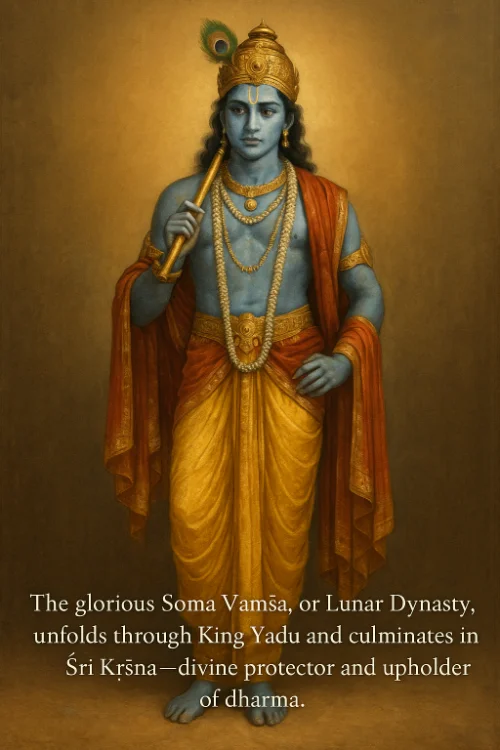
Liṅga Mahāpurāṇa - Pūrva-bhāga
Chapter 69 - Recitation of Soma Vamsha
सूत उवाच
सात्त्वतः सत्यसंपन्नः प्रजज्ञे चतुरः सुतान् ।
भजनं भ्राजमानं च दिव्यं देवावृधं नृपम् ॥ १॥
अंधकं च महाभागं वृष्णिं च यदुनंदनम् ।
तेषां निसर्गांश्चतुरः शृणुध्वं विस्तरेण वै ॥ २ ॥
sūta uvāca
sāttvataḥ satyasaṃpannaḥ prajajñe caturaḥ sutān |
bhajanaṃ bhrājamānaṃ ca divyaṃ devāvṛdhaṃ nṛpam || 1||
aṃdhakaṃ ca mahābhāgaṃ vṛṣṇiṃ ca yadunaṃdanam |
teṣāṃ nisargāṃścaturaḥ śṛṇudhvaṃ vistareṇa vai || 2 ||
Sūta said- Sūta said—Sāttvata, endowed with truthfulness and virtue, had four sons: Bhajana, who shone brightly; the divine and kingly Devāvṛddha; the illustrious Andhaka; and Vṛṣṇi, the delight of the Yadus. Now, listen in detail to the expansion of their lineages.
सञ्जय्यां भजनाच्चैव भ्राजमानाद्विजज्ञिरे ।
अयुतायुः शतायुश्च बलवान् हर्षकृत्स्मृतः ॥३॥
sañjayyāṃ bhajanāccaiva bhrājamānādvijajñire |
ayutāyuḥ śatāyuśca balavān harṣakṛtsmṛtaḥ ||3||
From Bhajana, through Sañjayī, were born three sons: Śatāyu, Ayutāyu, and the mighty Harṣakṛta, all renowned for their valor.
तेषां देवावृधो राजा चचार परमं तपः ।
पुत्रः सर्वगुणोपेतो मम भूयादिति स्मरन् ॥४॥
teṣāṃ devāvṛdho rājā cacāra paramaṃ tapaḥ |
putraḥ sarvaguṇopeto mama bhūyāditi smaran ||4||
Among them, King Devāvṛddha undertook intense penance, desiring a son endowed with all noble qualities.
तस्य बभ्रुरिति ख्यातः पुण्यश्लोको नृपोत्तमः ।
अनुवंशपुराणज्ञा गायंतीति परिश्रुतम्॥५॥
tasya babhruriti khyātaḥ puṇyaśloko nṛpottamaḥ |
anuvaṃśapurāṇajñā gāyaṃtīti pariśrutam||5||
From him was born Babhru, a king of sacred renown, whose fame was celebrated by those learned in the genealogies of the Purāṇas.
गुणान्देवावृधस्याथ कीर्तयंतो महात्मनः ।
यथैव शृणुमो दूरात् संपश्यामस्तथांतिकात्॥६॥
guṇāndevāvṛdhasyātha kīrtayaṃto mahātmanaḥ |
yathaiva śṛṇumo dūrāt saṃpaśyāmastathāṃtikāt||6||
The virtues of the noble Devāvṛddha were sung by the great ones, and as we heard of his greatness from afar, so too did we witness it up close.
बभ्रुः श्रेष्ठो मनुष्याणां देवैर्देवावृधः समः ।
पुरुषाः पञ्चषष्टि तु षट् सहस्राणि चाष्ट च ॥७॥
येऽमृतत्वमनुप्राप्ता बभ्रोर्देवावृधादपि ।
यज्वा दानमतिर्वीरो ब्रह्मण्यस्तु दृढव्रतः ॥ ८ ॥
कीर्तिमांश्च महातेजाः सात्त्वतानां महारथः ।
तस्यान्ववाये संभूता भोजा वै दैवतोपमाः ॥९॥
babhruḥ śreṣṭho manuṣyāṇāṃ devairdevāvṛdhaḥ samaḥ |
puruṣāḥ pañcaṣaṣṭi tu ṣaṭ sahasrāṇi cāṣṭa ca ||7||
ye’mṛtatvamanuprāptā babhrordevāvṛdhādapi |
yajvā dānamatirvīro brahmaṇyastu dṛḍhavrataḥ || 8 ||
kīrtimāṃśca mahātejāḥ sāttvatānāṃ mahārathaḥ |
tasyānvavāye saṃbhūtā bhojā vai daivatopamāḥ ||9||
Babhru was the greatest among men, while Devāvṛddha was on par with the gods. Fourteen thousand and sixty-five people attained immortality through their association with Babhru and Devāvṛddha.
He was a performer of great yajñas, generous in charity, a mighty warrior, steadfast in his vows, and a protector of Brāhmaṇas. He was celebrated for his brilliance and was the greatest warrior among the Sāttvatas. From his lineage arose the Bhojas, who were as radiant as the gods.
गांधारी चैव माद्री च वृष्णिभार्ये बभूवतु ॥ ।
गांधारी जनयामास सुमित्रं मित्रनंदनम् ॥ १० ॥
माद्री लेभे च तं पुत्रं ततः सा देवीमीढुषम् ।
अनमित्रं शिनिं चैव तावुभौ पुरुषोत्तमौ ॥११॥
अन मित्रसुतो निघ्नो निघ्नस्य द्वौ बभूवतुः ।
प्रसेनश्च महाभागः सत्राजिच्च सुतावुभौ ॥१२॥
gāṃdhārī caiva mādrī ca vṛṣṇibhārye babhūvatu || |
gāṃdhārī janayāmāsa sumitraṃ mitranaṃdanam || 10 ||
mādrī lebhe ca taṃ putraṃ tataḥ sā devīmīḍhuṣam |
anamitraṃ śiniṃ caiva tāvubhau puruṣottamau ||11||
ana mitrasuto nighno nighnasya dvau babhūvatuḥ |
prasenaśca mahābhāgaḥ satrājicca sutāvubhau ||12||
Vṛṣṇi had two wives, Gāndhārī and Mādrī. Gāndhārī gave birth to Sumitra, who was dear to his friends. Mādrī gave birth to a son named Devamīḍhuṣa. She also bore two other sons, Anamitra and Śini, both of whom were exceptional men. Anamitra’s son was Nighna. Nighna had two sons: Prasena, the highly fortunate one, and Śatrājit.
तस्य सत्राजितः सूर्यः सखा प्राणसमोऽभवत् ।
स्यमंतको नाम मणिर्दत्तस्तस्मै विवस्वता ॥ १३ ॥
tasya satrājitaḥ sūryaḥ sakhā prāṇasamo’bhavat |
syamaṃtako nāma maṇirdattastasmai vivasvatā || 13 ||
Śatrājit had the Sun God as his intimate friend, as dear to him as his own life. The Sun God, Vivasvān, bestowed upon him the celebrated Syamantaka gem.
पृथिव्यां सर्वरत्नानामसौ राजाऽभवन्मणिः ।
कदाचिन्मृगयां याताः प्रसेनेव सहैव सः॥१४॥
वधं प्राप्तो सहायश्च सिंहादेव सुदारुणात् ।
अथ पुत्रः शिनेर्जज्ञे कनिष्ठाद्धृष्णिनंदनात् ॥ १५ ॥
सत्यवाक् सत्यसंपन्नः सत्यकस्तस्य चात्मजः ।
सात्यकिर्युयुधानस्तु शिनेर्नसा प्रतापवान् ॥ १६ ॥
pṛthivyāṃ sarvaratnānāmasau rājā’bhavanmaṇiḥ |
kadācinmṛgayāṃ yātāḥ praseneva sahaiva saḥ||14||
vadhaṃ prāpto sahāyaśca siṃhādeva sudāruṇāt |
atha putraḥ śinerjajñe kaniṣṭhāddhṛṣṇinaṃdanāt || 15 ||
satyavāk satyasaṃpannaḥ satyakastasya cātmajaḥ |
sātyakiryuyudhānastu śinernasā pratāpavān || 16 ||
Among all the gems on earth, the Syamantaka was the most precious. Prasena, the brother of Satrajit, went hunting while wearing the Syamantaka gem. During this expedition, he was attacked and killed by a lion, which then took the gem. The lion was subsequently slain by Jambavan, the king of the bears, who took the gem to his cave.
Śini’s youngest son was born in the illustrious lineage of Hṛṣṇi. He was known as Satyavāk, being a man of absolute truthfulness. His son was the renowned Satyaka. Sātyaki, also known as Yuyudhāna, was a powerful and illustrious descendant of Śini.
असङ्गो युयुधानस्य कुणिस्तस्य सुतोऽभवत् ।
कुर्युगंधरः पुत्रः शैनेया इति कीर्तिताः ॥ १७ ॥
asaṅgo yuyudhānasya kuṇistasya suto’bhavat |
kuryugaṃdharaḥ putraḥ śaineyā iti kīrtitāḥ || 17 ||
Asaṅga was the son of Yuyudhān, and Kuṇi was the son of Asaṅga. Yugandhara was the son of Kuṇi. Thus, Śainayas have been mentioned in the family of Śini.
माद्याः सुतस्य सहजज्ञे सुतो वार्ष्णिर्युधाजितः ।
श्वफल्क इति विख्यातस्त्रैलोक्यहितकारकः ॥ १८ ॥
श्वफल्कश्च महाराजो धर्मात्मा यत्र वर्तते ।
नास्ति व्याधिभयं तत्र नावृष्टिभयमप्युत ॥ १९॥
mādyāḥ sutasya sahajajñe suto vārṣṇiryudhājitaḥ |
śvaphalka iti vikhyātastrailokyahitakārakaḥ || 18 ||
śvaphalkaśca mahārājo dharmātmā yatra vartate |
nāsti vyādhibhayaṃ tatra nāvṛṣṭibhayamapyuta || 19||
A son was born to Vṛṣṇi and Mādrī, known by the name of Yudhājit. He came to be known by the name of Śvaphalka. He was benevolent towards all the three lokas. Wherever the righteous king Śvaphalka resided, there was no fear of disease or famine.
श्व फल्कः काशिराजस्य सुतां भार्यामवाप सः ।
गांदिनी नाम काश्यो हि ददौ तस्मै स्वकन्यकाम् ॥२०॥
śva phalkaḥ kāśirājasya sutāṃ bhāryāmavāpa saḥ |
gāṃdinī nāma kāśyo hi dadau tasmai svakanyakām ||
Śvaphalka took as his wife Gāndinī, the daughter of the king of Kāśī. The Kāśī king joyfully gave her to him in marriage.
सा मातुरुदरस्था वै बहून्वर्षगणान्किल ।
वसंती न च सज्जज्ञे गर्भस्था तां पिताऽब्रवीत् ॥
जायस्व शीघ्रं भद्रं ते किमर्थं चाभितिष्ठसि ।
प्रोवाच चैनं गर्भस्था सा कन्या गांदिनी तदा ॥ २२ ॥
वर्षत्रयं प्रतिदिनं गामेकां ब्राह्मणाय तु ।
यदि दद्यास्ततः कुक्षेर्निर्गमिष्याम्यहं पितः॥२३॥
तथेत्युवाच तस्या वै पिता काममपूरयत् ।
दाता शूरश्च यज्वा च श्रुतवानतिथिप्रियः ॥ २४ ॥
sā māturudarasthā vai bahūnvarṣagaṇānkila |
vasaṃtī na ca sajjajñe garbhasthā tāṃ pitā’bravīt ||
jāyasva śīghraṃ bhadraṃ te kimarthaṃ cābhitiṣṭhasi |
provāca cainaṃ garbhasthā sā kanyā gāṃdinī tadā || 22 ||
varṣatrayaṃ pratidinaṃ gāmekāṃ brāhmaṇāya tu |
yadi dadyāstataḥ kukṣernirgamiṣyāmyahaṃ pitaḥ||23||
tathetyuvāca tasyā vai pitā kāmamapūrayat |
dātā śūraśca yajvā ca śrutavānatithipriyaḥ || 24 ||
She remained in her mother’s womb for many years and did not take birth. Then her father addressed the unborn child, saying, "My blessed one, be born quickly. Why do you remain in the womb?" Hearing this, the girl, still in the womb, replied, "O father, if you donate one cow every day to a Brāhmaṇa for three years, then I shall come forth from the womb." Her father agreed and fulfilled her wish. He became known as a great donor, a performer of yajñas, a learned man, and a great host who revered guests.
तस्याः पुत्रः स्मृतोऽक्रूरः श्वफल्काद्भूरिदक्षिणः ।
रत्ना कन्या च शैवस्य ह्यक्रूरस्तामवाप्तवान् ॥ २५ ॥
अस्यामुत्पादयामास तनयांस्तान्निबोधत ।
उपमन्युस्तथा मागुर्वृतस्तु जनमेजयः ॥२६॥
गिरिरक्षस्तथोपेक्षः शत्रुघ्नो योरिमर्दनः ।
धर्मभृदृष्टधर्मा च गोधनोथ वरस्तथा॥२७॥
आवाहप्रतिवाहौ च सुधारा च वराङ्गना।
अक्रूरस्योग्रसेन्यां तु पुत्रौ द्वौ कुलनंदनौ ॥ २८ ॥
देववानुपदेवश्च जज्ञाते देवसंमतौ ।
सुमित्रस्य सुतो जज्ञे चित्रकश्च महायशाः ॥ २९ ॥
tasyāḥ putraḥ smṛto’krūraḥ śvaphalkādbhūridakṣiṇaḥ |
ratnā kanyā ca śaivasya hyakrūrastāmavāptavān || 25 ||
asyāmutpādayāmāsa tanayāṃstānnibodhata |
upamanyustathā māgurvṛtastu janamejayaḥ ||26||
girirakṣastathopekṣaḥ śatrughno yorimardanaḥ |
dharmabhṛdṛṣṭadharmā ca godhanotha varastathā||27||
āvāhaprativāhau ca sudhārā ca varāṅganā|
akrūrasyograsenyāṃ tu putrau dvau kulanaṃdanau || 28 ||
devavānupadevaśca jajñāte devasaṃmatau |
sumitrasya suto jajñe citrakaśca mahāyaśāḥ || 29 ||
Akrūra, the son of Śvaphalka, was known for his great generosity in giving gifts. He married Ratnā, the daughter of King Śaiva. From her, he begot several sons—Upamanyu, Māguru, Vṛta, Janamejaya, Girirakṣa, Upekṣa, Śatrughna, Arimardana, Dharmabhṛt, Dṛṣṭadharmā, Godhana, Vara, Āvāha, and Prativāha. He also had a daughter named Sudhārā, a woman of great beauty and virtue.
Akrūra also had two distinguished sons, Devavān and Upadeva, through Ugrasenī (the daughter of Ugrasena). Both were esteemed among the gods.
Additionally, Sumitra had a famous son named Citraka.
चित्रकस्याभवन्पुत्रा विपृथुः पृथुरेव च ।
अश्वग्रीवः सुबाहुश्च सुधासूकगवेक्षणौ ॥ ३० ॥
अरिष्टनेमिस्वश्च धर्मो धर्मभृदेव च ।
सुभूमिर्बहुभूमिश्च श्रविष्ठाश्रवणे स्त्रियौ ॥ ३१ ॥
citrakasyābhavanputrā vipṛthuḥ pṛthureva ca |
aśvagrīvaḥ subāhuśca sudhāsūkagavekṣaṇau || 30 ||
ariṣṭanemisvaśca dharmo dharmabhṛdeva ca |
subhūmirbahubhūmiśca śraviṣṭhāśravaṇe striyau || 31 ||
Citraka had several sons: Vipṛthu, Pṛthu, Aśvagrīva, Subāhu, Sudhāsūka, Gavekṣaṇa, Ariṣṭanemi, Svaśca, Dharma, and Dharmabhṛt. Additionally, he had two more sons, Subhūmi and Bahubhūmi.
Citraka also had two daughters, Śraviṣṭhā and Śravaṇā.
अंधकात्काश्यदुहिता लेभे च चतुरः सुतान् ।
कुकुरं भजमानं च शुचिं कंबलबर्हिषम्॥३२॥
aṃdhakātkāśyaduhitā lebhe ca caturaḥ sutān |
kukuraṃ bhajamānaṃ ca śuciṃ kaṃbalabarhiṣam||32||
The daughter of the king of Kāśī bore four sons to Andhaka. They were Kukura, Bhajamāna, Śuci, and Kaṁbalabarhi.
कुकुरस्य सुतो वृष्णिर्वृष्णेः शूरस्ततोऽभवत् ।
कपोतरोमातिबलस्तस्य पुत्रो विलोमकः ॥ ३३ ॥
kukurasya suto vṛṣṇirvṛṣṇeḥ śūrastato’bhavat |
kapotaromātibalastasya putro vilomakaḥ || 33 ||
Kukura's son was Vṛṣṇi, and from him was born Śūra. Śūra's son was the mighty Kapotaromātibala, who had a son named Vilomaka.
तस्यासीत्तुंरुखो विद्वान्पुत्रो नलः किल ।
ख्यायते स सुनाम्ना तु चंदनानकदुंदुभिः ॥ ३४ ॥
tasyāsīttuṃrukho vidvānputro nalaḥ kila |
khyāyate sa sunāmnā tu caṃdanānakaduṃdubhiḥ || 34 ||
Vilomaka's son was the wise Tuṁruka, and his son was Nala. He became widely renowned under the auspicious names Candanānaka and Dundubhi.
तस्मादप्यजित्पुत्र उत्पन्नोस्य पुनर्वसुः ।
अश्वमेधं स पुत्रार्थमाजहार नरोत्तमः ॥ ३५ ॥
tasmādapyajitputra utpannosya punarvasuḥ |
aśvamedhaṃ sa putrārthamājahāra narottamaḥ || 35 ||
Ajita was born from Nala. Ajita's son was Punarvasu, an excellent king who performed the Aśvamedha sacrifice with the desire to beget a son.
तस्य मध्येतिरात्रस्य सदोमध्यात्समुत्थितः ।
ततस्तु विद्वान् सर्वज्ञो दाता यज्वा पुनर्वसुः ॥३६॥
tasya madhyetirātrasya sadomadhyātsamutthitaḥ |
tatastu vidvān sarvajño dātā yajvā punarvasuḥ ||36||
During the middle of the Atirātra (a great sacrificial rite), as the sacred mantras were being recited in the assembly of priests, Punarvasu was miraculously born. He later became a wise, all-knowing, generous donor and an expert performer of yajñas.
तस्यापि पुत्रमिथुनं बभूवाभिजितः किल ।
आहुकश्चाहुकी चैव ख्यातौ कीर्तिमतां वरौ ॥ ३७॥
tasyāpi putramithunaṃ babhūvābhijitaḥ kila |
āhukaścāhukī caiva khyātau kīrtimatāṃ varau || 37||
From Punarvasu, a pair of twins was born—Āhuka and Āhukī—who were highly renowned and among the best of the illustrious.
आहुकात्काश्यदुहितुर्द्वी पुत्रौ संबभूवतुः ।
देवकश्चोग्रसेनश्च देवगर्भसमावुभौ ॥ ३८ ॥
āhukātkāśyaduhiturdvī putrau saṃbabhūvatuḥ |
devakaścograsenaśca devagarbhasamāvubhau || 38 ||
From Āhuka and the daughter of the king of Kāśī, two sons were born—Devaka and Ugrasena—both radiant and godlike in splendor.
देवकस्य सुता राज्ञो जज्ञिरे त्रिदशोपमाः ।
देववानुपदेवश्च सुदेवो देवरक्षितः ॥ ३९ ॥
devakasya sutā rājño jajñire tridaśopamāḥ |
devavānupadevaśca sudevo devarakṣitaḥ || 39 ||
Devaka, the king, had four sons, all resembling the gods in splendor—Devavān, Upadeva, Sudeva, and Devarakṣita.
तेषां स्वसारः सप्तासन् वसुदेवाय ता ददौ ।
वृषदेवोपदेवा च तथान्या देवरक्षिता॥४०॥
श्रीदेवा शांतिदेवा च सहदेवा तथापरा ।
देवकी चापि तासां च वरिष्ठाऽभूत्सुमध्यमा॥४१॥
teṣāṃ svasāraḥ saptāsan vasudevāya tā dadau |
vṛṣadevopadevā ca tathānyā devarakṣitā||40||
śrīdevā śāṃtidevā ca sahadevā tathāparā |
devakī cāpi tāsāṃ ca variṣṭhā’bhūtsumadhyamā||41||
He also had seven daughters, who were all given in marriage to Vasudeva. Their names were Vṛṣadevā, Upadevā, Devarakṣitā, Śrīdevā, Śāntidevā, Sahadevā, and Devakī. Among them, Devakī was the most distinguished and the most beautiful, possessing a slender waist and extraordinary grace.
नवोग्रसेनस्य सुतास्तेषां कंसस्तु पूर्वजः ।
तेषां पुत्रश्च पौत्राश्च शतशोथ सहस्रशः ॥४२॥
navograsenasya sutāsteṣāṃ kaṃsastu pūrvajaḥ |
teṣāṃ putraśca pautrāśca śataśotha sahasraśaḥ ||42||
Ugrasena had nine sons, with Kaṁsa being the eldest. He also had hundreds and thousands of sons and grandsons, expanding the lineage significantly.
देवकस्य सुता पत्नी वसुदेवस्य धीमतः ।
बभूव वंद्या पूज्या च देवैरपि पतिव्रता ॥४३॥
devakasya sutā patnī vasudevasya dhīmataḥ |
babhūva vaṃdyā pūjyā ca devairapi pativratā ||43||
Devakī, the daughter of Devaka, was the wife of the wise Vasudeva. She was highly revered, chaste, and honored even by the gods.
रोहिणी च महाभागा पत्नी चानकदुंदुभेः ।
पौरवी बाह्निकसुता संपूज्यासीत्सुरैरपि ॥ ४४ ॥
असूत रोहिणी रामं बलश्रेष्ठं हलायुधम् ।
आश्रितं कंसभीत्या च स्वात्मानं शांततेजसम् ॥ ४५
rohiṇī ca mahābhāgā patnī cānakaduṃdubheḥ |
pauravī bāhnikasutā saṃpūjyāsītsurairapi || 44 ||
asūta rohiṇī rāmaṃ balaśreṣṭhaṃ halāyudham |
āśritaṃ kaṃsabhītyā ca svātmānaṃ śāṃtatejasam || 45
Rohiṇī, another fortunate wife of Vasudeva, was the daughter of Bāhlika and known as Pauravī. She too was worshipped by the gods.
Rohiṇī gave birth to Balarāma, the wielder of the plough and foremost in strength. He was transferred from Devakī’s womb to hers to protect him from Kaṁsa’s fear, making him a tranquil presence.
रामेऽथ निहते षट्ङ्गर्भे चातिदक्षिणे ।
वसुदेवो हरिं धीमान्देवक्यामुदपादयत्॥४६॥
rāme’tha nihate ṣaṭṅgarbhe cātidakṣiṇe |
vasudevo hariṃ dhīmāndevakyāmudapādayat||46||
After Kaṁsa had slain the six elder sons, and following Balarāma’s birth, the wise Vasudeva begot Kṛṣṇa in Devakī.
स एव परमात्मासौ देवदेवो जनार्दनः ।
हलायुधश्च भगवाननंतो रजतप्रभः ॥४७॥
sa eva paramātmāsau devadevo janārdanaḥ |
halāyudhaśca bhagavānanaṃto rajataprabhaḥ ||47||
That Supreme Soul, the God of gods, Janārdana (Lord Krishna's name, representing the Supreme Being), is also the divine Halāyudha (Balarāma), the infinite one, shining with a silver radiance.
भृगुशापच्छलेनैव मानयन्मानुषीं तनुम् ।
बभूव तस्यां देवक्यां वासुदेवो जनार्दनः ॥ ४८ ॥
bhṛguśāpacchalenaiva mānayanmānuṣīṃ tanum |
babhūva tasyāṃ devakyāṃ vāsudevo janārdanaḥ || 48 ||
Due to the curse of the sage Bhṛgu, the Supreme Lord (Viṣṇu) accepted a human form and was born from the womb of Devakī as Vāsudeva (Kṛṣṇa), the delight of the world.
उमादेहसमुद्भता योगनिद्रा च कौशिकी ।
नियोगाद्देवदेवस्य यशोदातनया ह्यभूत् ॥४९॥
umādehasamudbhatā yoganidrā ca kauśikī |
niyogāddevadevasya yaśodātanayā hyabhūt ||49||
Kauśikī, also known as Yoganidrā, who emerged from the body of Umā (Pārvatī), was born as the daughter of Yaśodā by the command of the God of gods (Viṣṇu).
सा चैव प्रकृतिः साक्षात्सर्वदेवनमस्कृता।
पुरुष भगवान् कृष्णो धर्ममोक्षफलप्रदः॥५०॥
sā caiva prakṛtiḥ sākṣātsarvadevanamaskṛtā|
puruṣa bhagavān kṛṣṇo dharmamokṣaphalapradaḥ||50||
She is Prakṛti (the divine cosmic energy), directly worshiped by all gods, while Bhagavān Kṛṣṇa is the eternal Puruṣa, the bestower of Dharma and Mokṣa (liberation).
तां कन्यां जगृहे रक्षन्कंसात्स्वस्यात्मजं तदा ।
चतुर्भुजं विशालाक्षं श्रीवत्सकृतलांछनम् ॥ ५१ ॥
शङ्खचक्रगदापद्मं धारयंतं जनार्दनम् ।
यशोदायै प्रदत्त्वा तु वसुदेवश्च बुद्धिमान् ॥ ५२ ॥
tāṃ kanyāṃ jagṛhe rakṣankaṃsātsvasyātmajaṃ tadā |
caturbhujaṃ viśālākṣaṃ śrīvatsakṛtalāṃchanam || 51 ||
śaṅkhacakragadāpadmaṃ dhārayaṃtaṃ janārdanam |
yaśodāyai pradattvā tu vasudevaśca buddhimān || 52 ||
To save the life of his son from Kaṁsa, Vāsudeva exchanged the infant daughter of Yaśodā for his own divine child. That infant, Kṛṣṇa, was four-armed, with large eyes and bearing the Śrīvatsa mark on his chest, holding a conch (śaṅkha), discus (cakra), mace (gadā), and lotus (padma). The wise Vāsudeva then placed Yaśodā’s daughter in exchange and entrusted his divine son to her protection.
दत्त्वैनं नंदगोपस्य रक्षतामिति चाब्रवीत्।
रक्षकं जगतां विष्णुं स्वेच्छया धृतविग्रहम् ॥५३॥
dattvainaṃ naṃdagopasya rakṣatāmiti cābravīt|
rakṣakaṃ jagatāṃ viṣṇuṃ svecchayā dhṛtavigraham ||53||
The Supreme Protector of the Universe, Viṣṇu, who had assumed a human form of his own will, was handed over to Nanda Gopa. Vāsudeva said to him, "Protect him well."
प्रसादाच्चैव देवस्य शिवस्यामिततेजसः ।
रामेण सार्धं तं दत्त्वा वरदं परमेश्वरम् ॥५४॥
भूभारनिग्रहार्थं च ह्यवतीर्णं जगद्गुरुम् ।
अतो वै सर्वकल्याणं यादवानां भविष्यति ॥५५॥
prasādāccaiva devasya śivasyāmitatejasaḥ |
rāmeṇa sārdhaṃ taṃ dattvā varadaṃ parameśvaram ||54||
bhūbhāranigrahārthaṃ ca hyavatīrṇaṃ jagadgurum |
ato vai sarvakalyāṇaṃ yādavānāṃ bhaviṣyati ||55||
By the grace of Śiva, the infinitely resplendent Lord, Kṛṣṇa, along with Rāma, was given to bring blessings to the world. The Supreme Lord, the granter of boons, had incarnated to relieve the burden of the earth and guide the world. Because of this, all auspiciousness shall befall the Yādavas.
अयं स गर्भो देवक्या यो नः क्लेश्यान्हरिष्यति ।
उग्रेनात्मजायाथ कंसायानकदुंदुभिः ॥५६॥
निवेदयामास तदा जातां कन्यां सुलक्षणाम् ।
अस्यास्तवाष्टमो गर्भो देवक्याः कंस सुव्रत ॥५७॥
मृत्युरेव न संदेह इति वाणी पुरातनी ।
ततस्तां हंतुमारेभे कंसः सोल्लंघ्य चांबरम् ॥५८॥
उवाचाष्टभुजा देवी मेघगंभीरया गिरा ।
रक्षस्व तत्स्वकं देहमायातो मृत्युरेव ते॥५९॥
ayaṃ sa garbho devakyā yo naḥ kleśyānhariṣyati |
ugrenātmajāyātha kaṃsāyānakaduṃdubhiḥ ||56||
nivedayāmāsa tadā jātāṃ kanyāṃ sulakṣaṇām |
asyāstavāṣṭamo garbho devakyāḥ kaṃsa suvrata ||57||
mṛtyureva na saṃdeha iti vāṇī purātanī |
tatastāṃ haṃtumārebhe kaṃsaḥ sollaṃghya cāṃbaram ||58||
uvācāṣṭabhujā devī meghagaṃbhīrayā girā |
rakṣasva tatsvakaṃ dehamāyāto mṛtyureva te||59||
Vasudeva then informed Kaṁsa, the son of Ugrasena: "A meritorious girl has been born. This is the eighth child of Devakī. O Kaṁsa, O virtuous one, this child will certainly be the cause of your death."
A voice from the past had already foretold: "There is no doubt—Devakī’s eighth child will be your death, Kaṁsa."
Upon hearing this, Kaṁsa, in his fury, rushed to kill the infant girl, who then leaped into the sky with supernatural speed.
The eight-armed goddess thundered in a deep voice, like a roaring cloud, and declared: "Protect your own body, for the one who will bring your death has already been born!"
रक्षमाणस्य देहस्य मायावी कंसरूपिणः ।
किं कृतं दुष्कृतं मूर्ख जातः खलु तवांतकृत् ॥ ६० ॥
rakṣamāṇasya dehasya māyāvī kaṃsarūpiṇaḥ |
kiṃ kṛtaṃ duṣkṛtaṃ mūrkha jātaḥ khalu tavāṃtakṛt || 60 ||
She further rebuked him: "O foolish Kaṁsa, in your desperate attempt to protect yourself, you have committed countless evil deeds. The one destined to end you is already in the world!"
देवक्याः स भयात्कंसे जघानैवाष्टमंत्विति ।
स्मरंति विहितो मृत्युर्देवस्यास्तनयोऽष्टमः॥६१॥
devakyāḥ sa bhayātkaṃse jaghānaivāṣṭamaṃtviti |
smaraṃti vihito mṛtyurdevasyāstanayo’ṣṭamaḥ||61||
Out of fear, Kaṁsa thought he had slain Devakī’s eighth child, but in reality, the son of Devakī had already escaped and was destined to be the cause of his demise.
यस्तत्प्रतिकृतौ यत्नो भोजस्यासीद्वृथा हरेः ।
प्रभावान्मुनिशार्दूलास्तया चैव जडीकृतः॥६२॥
yastatpratikṛtau yatno bhojasyāsīdvṛthā hareḥ |
prabhāvānmuniśārdūlāstayā caiva jaḍīkṛtaḥ||62||
O best among sages, all of Kaṁsa’s efforts to prevent his fate were in vain. Before the supreme power of Lord Hari, all his actions proved fruitless. Even the mighty Bhojas were rendered powerless by the influence of Kauśikī’s divine illusion.
कंसोपि निहतस्तेन कृष्णेनाक्लिष्टकर्मणा ।
निहता बहवाश्चान्ये देवब्राह्मणघातिनः ॥६३॥
kaṃsopi nihatastena kṛṣṇenākliṣṭakarmaṇā |
nihatā bahavāścānye devabrāhmaṇaghātinaḥ ||63||
Then Kṛṣṇa, the performer of great deeds, slew Kaṁsa, along with many others who had committed sins against gods and Brāhmaṇas.
तस्य कृष्णस्य तनयाः प्रद्युम्नप्रमुखस्तथा ।
बहवः परिसंख्याताः सर्वे युद्धविशारदाः ॥ ६४॥
tasya kṛṣṇasya tanayāḥ pradyumnapramukhastathā |
bahavaḥ parisaṃkhyātāḥ sarve yuddhaviśāradāḥ || 64||
The sons of Kṛṣṇa, including Pradyumna and others, have already been enumerated. They were numerous and skilled in warfare.
कृष्णपुत्राः समाख्याताः कृष्णेन सदृशाः सुताः ।
पुत्रेष्वेतेषु सर्वेषु चारुदेष्णादयो हरेः ॥ ६५ ॥
विशिष्टा बलवंतश्च रौक्मिणेयारिसूदनाः ।
षोडशस्त्रीसहस्राणि शतमेकं तथाधिकम् ॥६६॥
कृष्णस्य तासु सर्वासु प्रिया ज्येष्ठा च रुक्मिणी ।
तया द्वादशवर्षाणि कृष्णेनाक्लिष्टकर्मणा ॥ ६७॥
उष्यता वायुभक्षेण पुत्रार्थं पूजितो हरः ।
चारुदेष्ण: सुचारुश्च चारुवेषो यशोधरः ॥ ६८ ॥
चारुश्रवाश्चारुयशाः प्रद्युम्नः सांब एव च ।
एते लब्धास्तु कृष्णेन शूलपाणिप्रसादतः ॥ ६९ ॥
kṛṣṇaputrāḥ samākhyātāḥ kṛṣṇena sadṛśāḥ sutāḥ |
putreṣveteṣu sarveṣu cārudeṣṇādayo hareḥ || 65 ||
viśiṣṭā balavaṃtaśca raukmiṇeyārisūdanāḥ |
ṣoḍaśastrīsahasrāṇi śatamekaṃ tathādhikam ||66||
kṛṣṇasya tāsu sarvāsu priyā jyeṣṭhā ca rukmiṇī |
tayā dvādaśavarṣāṇi kṛṣṇenākliṣṭakarmaṇā || 67||
uṣyatā vāyubhakṣeṇa putrārthaṃ pūjito haraḥ |
cārudeṣṇa: sucāruśca cāruveṣo yaśodharaḥ || 68 ||
cāruśravāścāruyaśāḥ pradyumnaḥ sāṃba eva ca |
ete labdhāstu kṛṣṇena śūlapāṇiprasādataḥ || 69 ||
All of Kṛṣṇa’s sons were famous and resembled him in power and virtue. Among them, Cārudeṣṇa and his brothers were the most distinguished warriors, being the slayers of their enemies and the sons of Rukmiṇī.
Kṛṣṇa had sixteen thousand one hundred wives.
Among them, Rukmiṇī was the eldest and most beloved. In her desire for a son, she observed a severe vow for twelve years, living only on air and worshipping Lord Śiva alongside Kṛṣṇa.
By the grace of Śiva, they obtained eight sons, who were: Cārudeṣṇa, Sucāru, Cāruveṣa, Yaśodhara, Cāruśravā, Cāruyaśa, Pradyumna, and Sāṁba.
तान् दृष्ट्वा तनयान्वीरान् रौक्मिणेयांश्च रुक्मिणीम्।
जांबवत्यब्रवीत्कृष्णं भार्या कृष्णस्य धीमतः ॥७०॥
tān dṛṣṭvā tanayānvīrān raukmiṇeyāṃśca rukmiṇīm|
jāṃbavatyabravītkṛṣṇaṃ bhāryā kṛṣṇasya dhīmataḥ ||70||
Seeing the valorous sons of Rukmiṇī and Rohiṇī, Jāmbavatī, the wife of the intelligent Kṛṣṇa, once addressed him.
मम त्वं पुण्डरीकाक्ष विशिष्टं गुणवत्तरम् ।
सुरेशसंमितं पुत्रं प्रसन्नो दातुमर्हसि ॥ ७१ ॥
mama tvaṃ puṇḍarīkākṣa viśiṣṭaṃ guṇavattaram |
sureśasaṃmitaṃ putraṃ prasanno dātumarhasi || 71 ||
“O lotus-eyed one (Puṇḍarīkākṣa), if you are pleased with me, grant me a son superior in virtues, who would be matchless and comparable to the gods.”
जांबवत्या वचः श्रुत्वा जगन्नाथस्ततो हरिः ।
तपस्तप्तुं समारेभे तपोनिधिरनिंदितः॥७२॥
jāṃbavatyā vacaḥ śrutvā jagannāthastato hariḥ |
tapastaptuṃ samārebhe taponidhiraniṃditaḥ||72||
Hearing the words of Jāmbavatī, Lord Kṛṣṇa, the ocean of austerities, then resolved to undertake a great penance.
सोऽथ नारायणः कृष्णः शङ्खचक्रगदाधरः ।
व्याघ्रपादस्य च मुनेर्गत्वा चैवाश्रमोत्तमम्॥७३॥
ऋषिं दृष्ट्वा त्वंगिरसं प्रणिपत्य जनार्दनः ।
दिव्यं पाशुपतं योगं लब्धवांस्तस्य चाज्ञया ॥७४॥
प्रलुप्तश्मश्रुकेशश्च घृताक्तो मुञ्जमेखली ।
दीक्षितो भगवान् कृष्णस्तताप च परंतपः ॥ ७५ ॥
so’tha nārāyaṇaḥ kṛṣṇaḥ śaṅkhacakragadādharaḥ |
vyāghrapādasya ca munergatvā caivāśramottamam||73||
ṛṣiṃ dṛṣṭvā tvaṃgirasaṃ praṇipatya janārdanaḥ |
divyaṃ pāśupataṃ yogaṃ labdhavāṃstasya cājñayā ||74||
praluptaśmaśrukeśaśca ghṛtākto muñjamekhalī |
dīkṣito bhagavān kṛṣṇastatāpa ca paraṃtapaḥ || 75 ||
Then, Nārāyaṇa (Kṛṣṇa), the wielder of conch, discus, and club, went to the sacred hermitage of the great sage Vyāghrapāda.
Janārdana (Kṛṣṇa), after seeing the sage Aṅgiras, bowed down to him and, under his instruction, attained the divine Pāśupata yoga.
As part of the initiation, Kṛṣṇa shaved his beard, mustache, and head, applied clarified butter all over his body, and wore the sacred girdle of muñja grass. Thus initiated, the revered Lord Kṛṣṇa, the destroyer of enemies, engaged in severe penance.
ऊर्ध्वबाहुर्निरालंबः पादांगुष्ठग्रधिष्ठितः ।
फलाम्ब्वनिलभोजी च ऋतुत्रयमधोक्षजः ॥७६॥
ūrdhvabāhurnirālaṃbaḥ pādāṃguṣṭhagradhiṣṭhitaḥ |
phalāmbvanilabhojī ca ṛtutrayamadhokṣajaḥ ||76||
Lord Adhokṣaja (Kṛṣṇa) stood with his arms raised and without support, balancing only on the tips of his toes. For three seasons, he sustained himself only on fruits, water, and air.
तपसा तस्य संतुष्टो ददौ रुद्रो बहून् वरान् ।
सांबं जांबवतीपुत्रं कृष्णाय च महात्मने ॥७७॥
tapasā tasya saṃtuṣṭo dadau rudro bahūn varān |
sāṃbaṃ jāṃbavatīputraṃ kṛṣṇāya ca mahātmane ||77||
Pleased with Kṛṣṇa's severe penance, Lord Rudra (Śiva) granted him many boons. As a blessing to the noble-souled Kṛṣṇa, he bestowed a son named Sāmba, who would be born from Jāmbavatī.
तथा जांबवती चैव सांबं भार्या हरेः सुतम् ।
प्रहर्षमतुलं लेभे लब्ध्वादित्यं यथादितिः॥७८॥
tathā jāṃbavatī caiva sāṃbaṃ bhāryā hareḥ sutam |
praharṣamatulaṃ lebhe labdhvādityaṃ yathāditiḥ||78||
Jāmbavatī, the wife of Kṛṣṇa, upon giving birth to Sāmba, was overjoyed beyond measure, just as Aditi rejoiced upon giving birth to the Sun-god Āditya.
बाणस्य च तदा तेन च्छेदितं मुनिपुङ्गवाः ।
भुजानां चैव साहस्रं शापाद्रुद्रस्य धीमतः ॥७९॥
bāṇasya ca tadā tena ccheditaṃ munipuṅgavāḥ |
bhujānāṃ caiva sāhasraṃ śāpādrudrasya dhīmataḥ ||79||
O excellent sages, by the curse of lord Śiva, the thousand hands of Bāņa were cut off by Kṛṣṇa.
अथ दैत्यवधं चक्रे हलायुधसहायवान्।
तथा दुष्टक्षितीशानां लीलयैव रणाजिरे ॥८०॥
atha daityavadhaṃ cakre halāyudhasahāyavān|
tathā duṣṭakṣitīśānāṃ līlayaiva raṇājire ||80||
Then, with the assistance of Balarāma (Halāyudha), Śrī Kṛṣṇa slaughtered the Daityas and also killed several wicked kings on the battlefield, treating it as mere sport.
स हत्वा देवसंभूतं नरकं दैत्यपुङ्गवम् ।
ब्राह्मणस्योर्ध्वचक्रस्य वरदानान्महात्मनः ॥ ८१ ॥
sa hatvā devasaṃbhūtaṃ narakaṃ daityapuṅgavam |
brāhmaṇasyordhvacakrasya varadānānmahātmanaḥ || 81 ||
The great demon Naraka, who had been born through the merit of the gods, was slain by Kṛṣṇa, with the boon granted by the noble Brāhmaṇa Urdhvacakra.
स्वोपभोग्यानि कन्यानां षोडशातुलविक्रमः ।
शताधिकानि जग्राह सहस्राणि महाबलः ॥ ८२ ॥
शापव्याजेन विप्राणामुपसंहृतवान् कुलम्।
संहृत्य तत्कुलं चैव प्रभासेऽतिष्ठदच्युतः ॥८३॥
svopabhogyāni kanyānāṃ ṣoḍaśātulavikramaḥ |
śatādhikāni jagrāha sahasrāṇi mahābalaḥ || 82 ||
śāpavyājena viprāṇāmupasaṃhṛtavān kulam|
saṃhṛtya tatkulaṃ caiva prabhāse’tiṣṭhadacyutaḥ ||83||
The mighty and unparalleled Kṛṣṇa, whose valor knew no bounds, accepted sixteen thousand one hundred maidens for his pleasure, having rescued them.
Under the pretext of a Brāhmaṇa’s curse, he brought about the destruction of the Vṛṣṇi dynasty. After annihilating his own clan, Acyuta (Kṛṣṇa) took refuge at Prabhāsa.
तदा तस्यैव तु गतं वर्षाणामधिकं शतम् ।
कृष्णस्य द्वारकायां वै जराक्लेशापहारिणः ॥ ८४॥
विश्वामित्रस्य कण्वस्य नारदस्य च धीमतः ।
शापं पिण्डारकेऽरक्षद्वचो दुर्वाससस्तदा ॥ ८५ ॥
tadā tasyaiva tu gataṃ varṣāṇāmadhikaṃ śatam |
kṛṣṇasya dvārakāyāṃ vai jarākleśāpahāriṇaḥ || 84||
viśvāmitrasya kaṇvasya nāradasya ca dhīmataḥ |
śāpaṃ piṇḍārake’rakṣadvaco durvāsasastadā || 85 ||
By then, more than a hundred years had passed since Kṛṣṇa had been ruling in Dvārakā, bringing relief from the afflictions of old age and suffering.
Finally, in Piṇḍāraka, he faced the curse of the sages Viśvāmitra, Kaṇva, the wise Nārada, and Durvāsā, which he did not seek to avert.
त्यक्त्वा च मानुषं रूपं जरकास्त्रच्छलैन तु ।
अनुगृह्य च कृष्णोपि लुब्धकं प्रययौ दिवम् ॥ ८६ ॥
tyaktvā ca mānuṣaṃ rūpaṃ jarakāstracchalaina tu |
anugṛhya ca kṛṣṇopi lubdhakaṃ prayayau divam || 86 ||
Then, the lord abandoned his human form under the pretext of an arrow shot by a hunter named Jaraka. After blessing the hunter, Kṛṣṇa ascended to heaven.
अष्टावक्रस्य शापेन भार्याः कृष्णस्य धीमतः ।
चौरेश्चापहृताः सर्वास्तस्य मायाबलेन च ॥ ८७ ॥
aṣṭāvakrasya śāpena bhāryāḥ kṛṣṇasya dhīmataḥ |
caureścāpahṛtāḥ sarvāstasya māyābalena ca || 87 ||
Due to the curse of Aṣṭāvakra and the power of māyā, the wives of Śrī Kṛṣṇa were abducted by thieves.
बलभद्रोपि संत्यज्य नागो भूत्वा जगाम च ।
महिष्यस्तस्य कृष्णस्य रुक्मिणी प्रमुखाः शुभाः ॥ ८८
सहाग्निं विविशुः सर्वाः कृष्णेनाक्लिष्टकर्मणा ।
रेवती च तथा देवी बलभद्रेण धीमता ॥ ८९ ॥
प्रविष्टा पावकं विप्राः सा च भर्तृपथं गता ।
प्रेतकार्यं हरेः कृत्वा पार्थः परमवीर्यवान् ॥ ९० ॥
रामस्य च तथान्येषां वृष्णीनामपि सुव्रतः ।
कंदमूलफलैस्तस्य वह्निकार्यं चकार सः॥९१॥
balabhadropi saṃtyajya nāgo bhūtvā jagāma ca |
mahiṣyastasya kṛṣṇasya rukmiṇī pramukhāḥ śubhāḥ || 88
sahāgniṃ viviśuḥ sarvāḥ kṛṣṇenākliṣṭakarmaṇā |
revatī ca tathā devī balabhadreṇa dhīmatā || 89 ||
praviṣṭā pāvakaṃ viprāḥ sā ca bhartṛpathaṃ gatā |
pretakāryaṃ hareḥ kṛtvā pārthaḥ paramavīryavān || 90 ||
rāmasya ca tathānyeṣāṃ vṛṣṇīnāmapi suvrataḥ |
kaṃdamūlaphalaistasya vahnikāryaṃ cakāra saḥ||91||
Balarāma discarded his human form and resumed his divine form as Śeṣa, returning to his celestial abode. The auspicious queens of Kṛṣṇa, led by Rukmiṇī, entered the funeral pyre, following their departed lord. Similarly, Revatī, the noble wife of Balarāma, entered the fire and followed her husband.
The mighty Arjuna performed the last rites of Kṛṣṇa, Balarāma, and the other Vṛṣṇis. Due to the lack of wealth, the funeral offerings were made using roots and wild fruits.
द्रव्याभावात्स्वयं पार्थो भ्रातृभिश्च दिवङ्गतः ।
एवं संक्षेपतः प्रोक्तः कृष्णस्याक्लिष्टकर्मणः ॥ ९२ ॥
प्रभावो विलयश्चैव स्वेच्छयैव महात्मनः ।
इत्येतत्सोमवंशानां नृपाणां चरितं द्विजाः ॥ ९३ ॥
यः पठेच्छृणुयाद्वापि ब्राह्मणान् श्रावयेदपि ।
स याति वैष्णवं लोकं नात्र कार्या विचारणा ॥ ९४ ॥
dravyābhāvātsvayaṃ pārtho bhrātṛbhiśca divaṅgataḥ |
evaṃ saṃkṣepataḥ proktaḥ kṛṣṇasyākliṣṭakarmaṇaḥ || 92 ||
prabhāvo vilayaścaiva svecchayaiva mahātmanaḥ |
ityetatsomavaṃśānāṃ nṛpāṇāṃ caritaṃ dvijāḥ || 93 ||
yaḥ paṭhecchṛṇuyādvāpi brāhmaṇān śrāvayedapi |
sa yāti vaiṣṇavaṃ lokaṃ nātra kāryā vicāraṇā || 94 ||
After performing these rites, Arjuna and his brothers also departed from the world. Thus, the extraordinary deeds and dissolution of Śrī Kṛṣṇa—who had taken human form by his own will—have been briefly narrated.
O Brāhmaṇas, this is the glorious history of the kings of the Lunar Dynasty. Whoever reads, listens to, or recites it to others will surely attain the divine abode of Lord Viṣṇu—there is no doubt about this.
Thus ends the sixty-ninth chapter, named Recitation of the Lunar Dynasty, in the first part of the great Śrī Liṅga Mahāpurāṇa.
इति श्रीलिङ्गमहापुराणे पूर्वभागे सोमवंशानुकीर्तनं नामैकोनसप्ततितमोऽध्यायः ॥ ६९ ॥
iti śrīliṅgamahāpurāṇe pūrvabhāge somavaṃśānukīrtanaṃ nāmaikonasaptatitamo’dhyāyaḥ || 69 ||
Full Synopsis of Recitation of Soma Vamsha
In this majestic chapter of the Liṅga Mahāpurāṇa (Pūrvabhāga), Sūta continues the narration of the divine and royal genealogy stemming from King Yadu, the eldest son of Yayāti. Yadu, filled with extraordinary splendor, becomes the patriarch of a vast and powerful lineage known as the Yādavas. His descendants include kings, sages, and heroes—many worshipped as incarnations of divine power.
Among Yadu’s progeny are four noble sons: Bhajana, Devāvṛddha, Andhaka, and Vṛṣṇi—each of them born with auspicious qualities and destined to father powerful lineages. Devāvṛddha performs deep austerities to be blessed with a virtuous son, resulting in the birth of the illustrious Babhru. Their influence and virtue led over fourteen thousand people to immortality, establishing a golden era of dharma and prosperity. From these lineages emerge the radiant Bhojas and the famed Sāttvatas.
Vṛṣṇi, another pillar of the Yādava dynasty, fathers notable descendants through his wives Gāndhārī and Mādrī. From their line comes Śini and his grandson Sātyaki (Yuyudhāna), one of the greatest warriors of the Mahābhārata. The dynasty continues to flourish through kings like Akrūra, a symbol of generosity and devotion, and Śvaphalka, whose presence brings healing and protection to all realms.
The sacred tale recounts how the goddess Kauśikī is born as the daughter of Yaśodā and how the divine Syamantaka gem, gifted by the Sun God, becomes central to the tale of Śatrājit and his brother Prasena. This segues into the miraculous birth and life of Lord Kṛṣṇa—born from Devakī and raised by Yaśodā—as he performs divine exploits to protect dharma and vanquish adharma.
Kṛṣṇa’s life and lineage are expansively glorified: his sixteen thousand wives, the noble sons from Rukmiṇī and Jāmbavatī, and the great sacrifices he performs. Stories of devotion, penance, and divine grace abound, including Kṛṣṇa’s pilgrimage for a son through the blessings of Lord Śiva, resulting in the birth of Sāmba.
Eventually, the curse of sages and the inevitability of fate bring about the end of the Vṛṣṇi dynasty. Kṛṣṇa, Balarāma, and all their kin leave the mortal realm in divine ways—either by renunciation, ascension, or self-immolation. Kṛṣṇa’s death at the hands of the hunter Jaraka is not seen as an end, but a divine exit, emphasizing his voluntary descent and ascent as Nārāyaṇa.
The chapter closes by affirming the sanctity and power of this story: that anyone who hears or recites the history of the Lunar Dynasty and the divine life of Śrī Kṛṣṇa will be freed from sin, attain heavenly worlds, and ultimately reach the eternal abode of Lord Viṣṇu.