

108 Names of Shiva
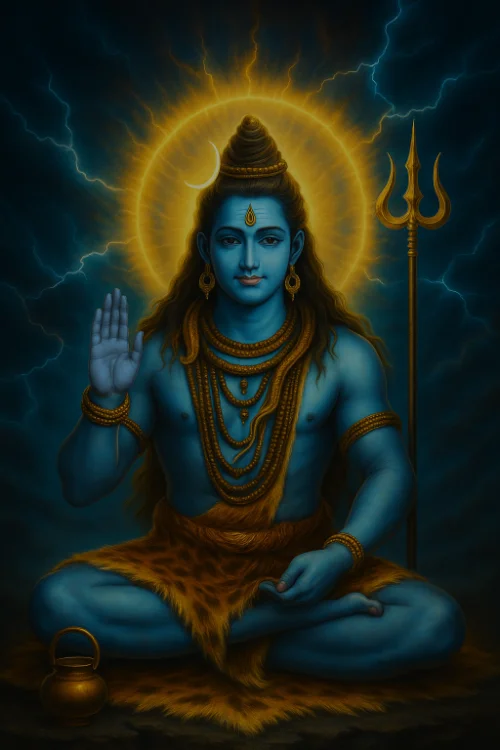
Dive into the divine power and mystery of Lord Śiva through his revered 108 names, each reflecting a unique facet of the cosmic destroyer and benevolent protector. Worshipped as the supreme yogi, source of creation and dissolution, and embodiment of compassion and wisdom, Śiva is honored across all Hindu traditions through these sacred names.
This page presents each of the 108 names in Sanskrit, with IAST transliteration, accurate English translation, and a brief explanation of meaning and symbolism. Whether used for chanting, meditation, or learning, these names invoke Lord Śiva’s blessings, inner peace, and spiritual awakening.
Perfect for devotees, scholars, and spiritual aspirants, this list offers a profound glimpse into Śiva’s boundless nature — from Maheśvara and Nīlakaṇṭha to Śaṅkara, Paśupati, and Sadāśiva.
-
ॐ शिवाय नमःOm Śivāya NamaḥTo ShivaShiva is the auspicious one, representing the supreme consciousness and the destroyer of evil.
-
ॐ महेश्वराय नमःOm Maheśvarāya NamaḥTo the Great LordMaheshvara means the great lord, indicating Shiva’s supreme authority over the universe.
-
ॐ शम्भवे नमःOm Śambhave NamaḥTo the Source of BlissShambhu symbolizes the one who bestows happiness and prosperity.
-
ॐ पिनाकिने नमःOm Pinākine NamaḥTo the Wielder of the PinakaPinaka is the bow of Shiva, symbolizing his prowess and protection.
-
ॐ शशिशेखराय नमःOm Śaśiśekharāya NamaḥTo the Moon-Crested LordShashishekhara refers to Shiva wearing the crescent moon on his head, symbolizing time and its cycles.
-
ॐ वामदेवाय नमःOm Vāmadevāya NamaḥTo the Pleasant GodVamadeva represents the peaceful and benevolent aspect of Shiva.
-
ॐ विरूपाक्षाय नमःOm Virūpākṣāya NamaḥTo the One with Uneven EyesVirupaksha signifies Shiva’s all-seeing nature, with his third eye representing wisdom.
-
ॐ कपर्दिने नमःOm Kapardine NamaḥTo the One with Matted HairKapardin refers to Shiva’s matted hair, symbolizing asceticism and spiritual power.
-
ॐ नीललोहिताय नमःOm Nīlalohitāya NamaḥTo the Blue-Red OneNīlalohita describes Shiva’s unique complexion, representing both calmness and intensity.
-
ॐ शङ्कराय नमःOm Śaṅkarāya NamaḥTo the BeneficentShankara means the one who brings about happiness and welfare.
-
ॐ शूलपाणये नमःOm Śūlapāṇaye NamaḥTo the Holder of the TridentShulapani refers to Shiva holding a trident, symbolizing his ability to destroy evil.
-
ॐ खट्वाङ्गिने नमःOm Khaṭvāṅgine NamaḥTo the Wielder of the ClubKhatvanga is a club carried by ascetics, symbolizing Shiva’s mastery over life and death.
-
ॐ विष्णुवल्लभाय नमःOm Viṣṇuvallabhāya NamaḥTo the Beloved of VishnuVishnuvallabha signifies the close relationship and harmony between Shiva and Vishnu.
-
ॐ शिपिविष्टाय नमःOm Śipiviṣṭāya NamaḥTo the Pervasive OneShipivishta refers to Shiva’s all-pervading nature, enveloping the entire cosmos.
-
ॐ अम्बिकानाथाय नमःOm Ambikānāthāya NamaḥTo the Lord of AmbikaAmbikanatha denotes Shiva as the consort of Parvati (Ambika), reflecting their divine union.
-
ॐ श्रीकण्ठाय नमःOm Śrīkaṇṭhāya NamaḥTo the One with a Beautiful NeckShrikantha signifies Shiva’s graceful neck, often associated with the story of drinking poison during the churning of the ocean.
-
ॐ भक्तवत्सलाय नमःOm Bhaktavatsalāya NamaḥTo the Protector of DevoteesBhaktavatsala highlights Shiva’s compassion and care for his devotees.
-
ॐ भवाय नमःOm Bhavāya NamaḥTo the Source of ExistenceBhava means existence or being, indicating Shiva as the origin of all creation.
-
ॐ शर्वाय नमःOm Śarvāya NamaḥTo the DestroyerSharva signifies Shiva’s role as the destroyer of evil and ignorance.
-
ॐ त्रिलोकेशाय नमःOm Trilokeśāya NamaḥTo the Lord of the Three WorldsTrilokesha indicates Shiva’s dominion over the heavens, earth, and the netherworld.
-
ॐ शीतिकण्ठाय नमःOm Śītikaṇṭhāya NamaḥSalutations to the One with a White NeckThis name refers to Shiva having a white neck, symbolizing the poison he held in his throat during the churning of the ocean to save the universe.
-
ॐ शिवाप्रियाय नमःOm Śivāpriyāya NamaḥSalutations to the Beloved of ParvatiThis name highlights Shiva as the beloved of Goddess Parvati, representing the divine couple’s unity and love.
-
ॐ उग्राय नमःOm Ugrāya NamaḥSalutations to the Fierce OneUgra signifies Shiva’s fierce and intense form, often associated with his role as a destroyer of evil.
-
ॐ कपालिने नमःOm Kapāline NamaḥSalutations to the Bearer of SkullsShiva is depicted as wearing a garland of skulls, symbolizing his transcendence over death and the cycle of life.
-
ॐ कामारये नमःOm Kāmarāye NamaḥSalutations to the Enemy of DesireThis refers to Shiva’s victory over Kama, the god of desire, symbolizing the triumph of spiritual discipline over material desires.
-
ॐ अन्धकासुरसूदनाय नमःOm Andhakāsurasūdanāya NamaḥSalutations to the Slayer of AndhakaThis name commemorates Shiva’s destruction of the demon Andhaka, representing the victory of light over darkness.
-
ॐ गङ्गाधराय नमःOm Gaṅgādharāya NamaḥSalutations to the Bearer of the GangesShiva holds the river Ganges in his matted hair, symbolizing the flow of spiritual knowledge and purification.
-
ॐ ललाटाक्षाय नमःOm Lalāṭākṣāya NamaḥSalutations to the One with the Eye on the ForeheadThis refers to Shiva’s third eye, which represents higher perception and the power to destroy evil.
-
ॐ कालकालाय नमःOm Kālākālāya NamaḥSalutations to the Conqueror of TimeShiva is known as the conqueror of time, symbolizing his eternal nature and mastery over the cycle of birth and death.
-
ॐ कृपानिधये नमःOm Kṛpānidhaye NamaḥSalutations to the Treasure of CompassionThis name emphasizes Shiva’s boundless compassion and mercy towards all beings.
-
ॐ भीमाय नमःOm Bhīmāya NamaḥSalutations to the Formidable OneBhīma signifies Shiva’s formidable and awe-inspiring presence, often associated with his role as a protector of righteousness.
-
ॐ परशुहस्ताय नमःOm Paraśuhastāya NamaḥSalutations to the One Who Holds an AxeShiva is often depicted holding a parashu (axe), symbolizing the removal of ignorance and obstacles.
-
ॐ मृगपाणये नमःOm Mṛgapāṇaye NamaḥSalutations to the Holder of the DeerThis name refers to Shiva holding a deer in his hand, representing his mastery over nature and the mind.
-
ॐ जटाधराय नमःOm Jaṭādharāya NamaḥSalutations to the One with Matted HairShiva’s matted hair symbolizes his ascetic nature and connection to the divine flow of energy.
-
ॐ कैलासवासिने नमःOm Kailāsavāsine NamaḥSalutations to the Resident of Mount KailashMount Kailash is considered Shiva’s abode, symbolizing spiritual ascent and ultimate liberation.
-
ॐ कवचिने नमःOm Kavacine NamaḥSalutations to the Armored OneThis name signifies Shiva’s protective nature, offering a shield of divine protection to his devotees.
-
ॐ कठोराय नमःOm Kaṭhorāya NamaḥSalutations to the Stern OneKaṭhora refers to Shiva’s sternness and unyielding nature in upholding dharma and justice.
-
ॐ त्रिपुरान्तकाय नमःOm Tripurāntakāya NamaḥSalutations to the Destroyer of the Three CitiesThis name commemorates Shiva’s destruction of the three cities of the demons, symbolizing the destruction of ignorance, ego, and desire.
-
ॐ वृषाङ्काय नमःOm Vṛṣāṅkāya NamaḥSalutations to the One with the Bull as His EmblemThe bull, Nandi, is Shiva’s vehicle, symbolizing strength, virility, and righteous action.
-
ॐ वृषभारूढाय नमःOm Vṛṣabhārūḍhāya NamaḥSalutations to the Rider of the BullShiva riding on Nandi, the bull, represents his mastery over animal instincts and his role as a protector of dharma.
-
ॐ भस्मोद्धूलितविग्रहाय नमःOm Bhasmoddhūlitavigrahāya NamaḥSalutations to the One whose form is smeared with sacred ashThis name refers to Shiva, whose divine form is adorned with sacred ash (bhasma), symbolizing purity and detachment from worldly impurities.
-
ॐ सामप्रियाय नमःOm Sāmapriyāya NamaḥSalutations to the Lover of Sāma VedaShiva is fond of the Sāma Veda, one of the four Vedas, known for its musical chants and hymns.
-
ॐ स्वरमयाय नमःOm Svaramayāya NamaḥSalutations to the Essence of SoundShiva embodies the essence of sound, representing the primordial vibrations of the universe.
-
ॐ त्रयीमूर्तये नमःOm Trayīmūrtaye NamaḥSalutations to the One with Three FormsThis name signifies Shiva as part of the Trimurti, the triad of Brahma, Vishnu, and Shiva, representing creation, preservation, and destruction.
-
ॐ अनीश्वराय नमःOm Anīśvarāya NamaḥSalutations to the One without a SuperiorAnīśvara means one who has no lord above him, highlighting Shiva’s supreme and independent nature.
-
ॐ सर्वज्ञाय नमःOm Sarvajñāya NamaḥSalutations to the All-knowing OneShiva is omniscient, possessing complete knowledge of all things past, present, and future.
-
ॐ परमात्मने नमःOm Paramātmanē NamaḥSalutations to the Supreme SoulParamātman refers to the ultimate soul or spirit, of which Shiva is the highest representation.
-
ॐ सोमसूर्याग्निलोचनाय नमःOm Somasūryāgnilocanāya NamaḥSalutations to the One with Moon, Sun, and Fire as EyesThis name describes Shiva’s cosmic vision, with the moon, sun, and fire representing different aspects of divine sight.
-
ॐ हविषे नमःOm Haviṣe NamaḥSalutations to the OblationHavis refers to the offerings made in a sacrifice, indicating Shiva’s integral presence in sacred rituals.
-
ॐ यज्ञमयाय नमःOm Yajñamayāya NamaḥSalutations to the Embodiment of SacrificeShiva embodies the spirit of yajña (sacrifice), which is central to maintaining cosmic order and dharma.
-
ॐ सोमाय नमःOm Somāya NamaḥSalutations to the Moon GodSoma is another name for the moon, often associated with nectar and immortality, reflecting Shiva’s nurturing aspect.
-
ॐ पञ्चवक्त्राय नमःOm Pañcavaktrāya NamaḥSalutations to the Five-faced OneShiva’s five faces represent his five aspects: creation, protection, destruction, concealment, and grace.
-
ॐ सदाशिवाय नमःOm Sadāśivāya NamaḥSalutations to the Ever-auspicious OneSadāśiva signifies Shiva’s eternal and auspicious nature, ever-present and benevolent.
-
ॐ विश्वेश्वराय नमःOm Viśveśvarāya NamaḥSalutations to the Lord of the UniverseViśveśvara denotes Shiva as the supreme ruler and protector of the entire cosmos.
-
ॐ वीरभद्राय नमःOm Vīrabhadrāya NamaḥSalutations to the Courageous WarriorVīrabhadra is a fierce incarnation of Shiva, created to destroy arrogance and uphold righteousness.
-
ॐ गणनाथाय नमःOm Gaṇanāthāya NamaḥSalutations to the Lord of the GanasShiva is the leader of the ganas, the divine attendants, symbolizing his role as a protector and guide.
-
ॐ प्रजापतये नमःOm Prajāpataye NamaḥSalutations to the Lord of CreaturesPrajāpati denotes Shiva’s role as the creator and sustainer of all living beings.
-
ॐ हिरण्यरेतसे नमःOm Hiraṇyaretase NamaḥSalutations to the Golden Seeded OneHiraṇyareta signifies Shiva as the source of all creation, with ‘golden seed’ symbolizing purity and divinity.
-
ॐ दुर्धर्षाय नमःOm Durdharṣāya NamaḥSalutations to the Invincible OneDurdharṣa indicates Shiva’s formidable and unconquerable nature, commanding respect and reverence.
-
ॐ गिरीशाय नमःOm Girīśāya NamaḥSalutations to the Lord of the MountainsGirīśa, meaning ‘Lord of the Mountains,’ reflects Shiva’s abode in the Himalayas and his connection to nature.
-
ॐ गिरिशाय नमःOm Giriśāya NamaḥSalutations to the Lord of the MountainsGiriśa refers to Shiva as the Lord of the mountains, symbolizing his abode at Mount Kailash and his supreme power and majesty.
-
ॐ अनघाय नमःOm Anaghāya NamaḥSalutations to the Sinless OneAnagha means one who is without sin or blemish, highlighting Shiva’s purity and perfection.
-
ॐ भुजङ्गभूषणाय नमःOm Bhujangabhūṣaṇāya NamaḥSalutations to the One Adorned with SerpentsBhujangabhūṣaṇa refers to Shiva adorned with serpents, symbolizing his control over fear and death.
-
ॐ भर्गाय नमःOm Bhargāya NamaḥSalutations to the Radiant OneBharga signifies the radiant and effulgent aspect of Shiva, representing his divine light and energy.
-
ॐ गिरिधन्वने नमःOm Giridhanvane NamaḥSalutations to the One with a Mountain as His BowGiridhanvan describes Shiva as having the mountain as his bow, indicating his immense strength and prowess.
-
ॐ गिरिप्रियाय नमःOm Giripriyāya NamaḥSalutations to the Lover of MountainsGiripriya emphasizes Shiva’s fondness for mountains, where he resides and meditates.
-
ॐ कृतिवाससे नमःOm Kṛttivāsase NamaḥSalutations to the Wearer of SkinsKṛttivāsa denotes Shiva’s attire of animal skins, representing his ascetic nature and detachment from materialism.
-
ॐ पुरारातये नमःOm Purārātaye NamaḥSalutations to the Destroyer of CitiesPurārāti refers to Shiva as the destroyer of the three cities (Tripura), symbolizing the destruction of ignorance and evil.
-
ॐ भगवते नमःOm Bhagavate NamaḥSalutations to the Possessor of FortuneBhagavān signifies one who is endowed with all divine glories, representing Shiva’s supreme divinity and abundance.
-
ॐ प्रमथाधिपाय नमःOm Pramathādhipāya NamaḥSalutations to the Lord of the PramathasPramathādhipa indicates Shiva as the leader of the Pramathas, celestial beings who accompany him, showcasing his leadership and command.
-
ॐ मृत्युञ्जयाय नमःOm Mṛtyuñjayāya NamaḥSalutations to the Conqueror of DeathMṛtyuñjaya means the one who has conquered death, highlighting Shiva’s power over mortality and his ability to grant immortality.
-
ॐ सूक्ष्मतनवे नमःOm Sūkṣmatanave NamaḥSalutations to the One with a Subtle BodySūkṣmatanu refers to Shiva’s subtle form, representing his omnipresence and ability to exist beyond physical limitations.
-
ॐ जगद्व्यापिने नमःOm Jagadvāpine NamaḥSalutations to the All-Pervading OneJagadvāpī highlights Shiva’s omnipresence, signifying his presence in every part of the universe.
-
ॐ जगद्गुरवे नमःOm Jagadgurave NamaḥSalutations to the Teacher of the UniverseJagadguru refers to Shiva as the ultimate teacher, imparting wisdom and guidance to the entire cosmos.
-
ॐ व्योमकेशाय नमःOm Vyomakeśāya NamaḥSalutations to the One with Sky as HairVyomakeśa symbolizes Shiva’s vastness and boundlessness, with the sky representing his infinite nature.
-
ॐ महासेनजनकाय नमःOm Mahāsenajanakāya NamaḥSalutations to the Father of KārttikeyaMahāsenajanaka refers to Shiva as the father of Kārttikeya (also known as Skanda or Murugan), the god of war.
-
ॐ चारुविक्रमाय नमःOm Cāruvikramāya NamaḥSalutations to the One with Graceful ProwessCāruvikrama signifies Shiva’s graceful and heroic actions, reflecting his strength combined with beauty.
-
ॐ रुद्राय नमःOm Rudrāya NamaḥSalutations to the Fierce OneRudra is a fierce aspect of Shiva, associated with storm and hunt, embodying his power to destroy evil.
-
ॐ भूतपतये नमःOm Bhūtapataye NamaḥSalutations to the Lord of BeingsBhūtapati refers to Shiva as the lord of all living beings, indicating his dominion over life and nature.
-
ॐ स्थानवे नमःOm Sthānave NamaḥSalutations to the Immovable OneSthānu signifies Shiva’s stability and permanence, representing his unchanging and eternal nature.
-
ॐ अहिर्बुध्न्याय नमःOm Ahirbudhnyāya NamaḥSalutations to the Serpent of the DeepAhirbudhnya refers to a form of Shiva associated with the primordial serpent or the deep. It signifies the mysterious and profound aspects of Shiva, representing the depths of consciousness.
-
ॐ दिगम्बराय नमःOm Digambarāya NamaḥSalutations to the Sky-Clad OneDigambara means “one who is clothed with the directions” or “sky-clad,” symbolizing Shiva’s renunciation and transcendence of material possessions.
-
ॐ अष्टमूर्तये नमःOm Aṣṭamūrtaye NamaḥSalutations to the Lord of Eight FormsAṣṭamūrti refers to Shiva manifesting in eight forms, representing the elements and the cosmic functions, showing his omnipresence and omnipotence.
-
ॐ अनेकात्मने नमःOm Anekātmanē NamaḥSalutations to the One with Many FormsAnekātman signifies Shiva’s ability to assume countless forms, embodying the diversity of the universe.
-
ॐ सात्विकाय नमःOm Sātvikāya NamaḥSalutations to the Pure and Virtuous OneSātvika embodies the quality of purity, balance, and righteousness, reflecting Shiva’s nature as the epitome of virtue and serenity.
-
ॐ शुद्धविग्रहाय नमःOm Śuddhavigrahāya NamaḥSalutations to the One with a Pure FormŚuddhavigraha denotes Shiva’s form as pure and untainted, symbolizing spiritual purity and transcendence.
-
ॐ शाश्वताय नमःOm Śāśvatāya NamaḥSalutations to the Eternal OneŚāśvata means eternal or timeless, highlighting Shiva’s nature as beyond time and change.
-
ॐ खण्डपरशवे नमःOm Khaṇḍaparaśave NamaḥSalutations to the One with the Broken AxeKhaṇḍaparaśu symbolizes Shiva’s role as the destroyer of evil and ignorance, using his axe to cut through delusion.
-
ॐ अजाय नमःOm Ajāya NamaḥSalutations to the Unborn OneAja refers to the unborn, indicating Shiva’s existence beyond birth and death, as the eternal source of all creation.
-
ॐ पाशविमोचकाय नमःOm Pāśavimocakāya NamaḥSalutations to the Liberator from BondsPāśavimocaka represents Shiva’s power to liberate souls from the bonds of ignorance and attachment.
-
ॐ मृडाय नमःOm Mṛḍāya NamaḥSalutations to the Compassionate OneMṛḍa signifies kindness and compassion, highlighting Shiva’s benevolent nature towards all beings.
-
ॐ पशुपतये नमःOm Paśupataye NamaḥSalutations to the Lord of BeastsPaśupati means the lord of all living creatures, symbolizing Shiva’s role as the protector and master of all beings.
-
ॐ देवाय नमःOm Devāya NamaḥSalutations to the Divine OneDeva refers to the divine, emphasizing Shiva’s supreme divinity and spiritual eminence.
-
ॐ महादेवाय नमःOm Mahādevāya NamaḥSalutations to the Great GodMahādeva means the great god, underscoring Shiva’s preeminence and greatness among the divine.
-
ॐ अव्ययाय नमःOm Avyayāya NamaḥSalutations to the Imperishable OneAvyaya signifies the imperishable and indestructible nature of Shiva, who remains unchanged through time.
-
ॐ हराय नमःOm Harāya NamaḥSalutations to the RemoverHara means remover or destroyer, referring to Shiva’s power to remove obstacles and destroy ignorance.
-
ॐ भगनेत्रभिदे नमःOm Bhaganetrabhide NamaḥSalutations to the One who Pierced Bhaga’s EyeBhaganetrabhid refers to the incident where Shiva, in his wrathful form, pierced the eye of Bhaga, symbolizing the destruction of ego and pride.
-
ॐ अव्यक्ताय नमःOm Avyaktāya NamaḥSalutations to the Unmanifest OneAvyakta means unmanifest or beyond perception, highlighting Shiva’s transcendental and formless nature.
-
ॐ दक्षाध्वरहराय नमःOm Dakṣādhvaraharāya NamaḥSalutations to the Destroyer of Daksha’s SacrificeDakṣādhvarahara refers to Shiva’s act of destroying the sacrificial ritual of Daksha, representing the triumph of divine will over arrogance and disrespect.
-
ॐ हराय नमःOm Harāya NamaḥSalutations to the RemoverHara means remover or destroyer, referring to Shiva’s power to remove obstacles and destroy ignorance.
-
ॐ पुषदन्तभिदे नमःOm Puṣadantabhide NamaḥSalutations to the One who broke the teeth of PuṣadantaPuṣadanta was a celestial being whose teeth were broken by Shiva as a punishment for a transgression. This name highlights Shiva’s role as an enforcer of cosmic order and justice.
-
ॐ अव्यग्राय नमःOm Avyagrāya NamaḥSalutations to the Unperturbed OneAvyagra means one who is calm and composed, unaffected by worldly disturbances. This name signifies Shiva’s supreme equanimity and serenity.
-
ॐ सहस्राक्षाय नमःOm Sahasrākṣāya NamaḥSalutations to the One with a Thousand EyesThis name symbolizes Shiva’s omnipresence and omniscience, as having a thousand eyes suggests the ability to see everything everywhere.
-
ॐ सहस्रपादे नमःOm Sahasrapāde NamaḥSalutations to the One with a Thousand FeetHaving a thousand feet represents Shiva’s omnipresence and ability to be in all places at once, signifying his all-pervading nature.
-
ॐ अपवर्गप्रदाय नमःOm Apavargapradāya NamaḥSalutations to the Bestower of LiberationApavarga refers to liberation or moksha, the ultimate release from the cycle of birth and death. Shiva is revered as the one who grants this liberation to devotees.
-
ॐ अनन्ताय नमःOm Anantāya NamaḥSalutations to the Infinite OneAnanta means endless or infinite, representing Shiva’s boundless and limitless nature, transcending time and space.
-
ॐ तारकाय नमःOm Tārakāya NamaḥSalutations to the DelivererTāraka means one who helps to cross over, particularly across the ocean of worldly existence. Shiva is seen as the deliverer who guides souls to salvation.
-
ॐ परमेश्वराय नमःOm Parameśvarāya NamaḥSalutations to the Supreme LordParameśvara means the highest or supreme lord, emphasizing Shiva’s position as the ultimate deity, the lord of all lords.