

सुगन्धिं पुष्टिवर्धनम्।
उर्वारुकमिव बन्धनान्
मृत्योर्मुक्षीय माऽमृतात्॥
Sugandhiṁ Puṣṭi-vardhanam
Urvārukam-iva Bandhanān
Mṛtyor-mukṣīya Mā’mṛtāt
who increase fragrance and nourishment.
From powerful disease, bondage and death
free us into immortality.
The true “mṛtyu” (death) we seek release from is not merely physical death, but the spiritual death caused by ignorance, delusion, and weakness — and the amṛta we seek is liberation, truth, and divine consciousness.
ॐ त्र्यम्बकं यजामहे
Om Tryambakaṁ Yajāmahe
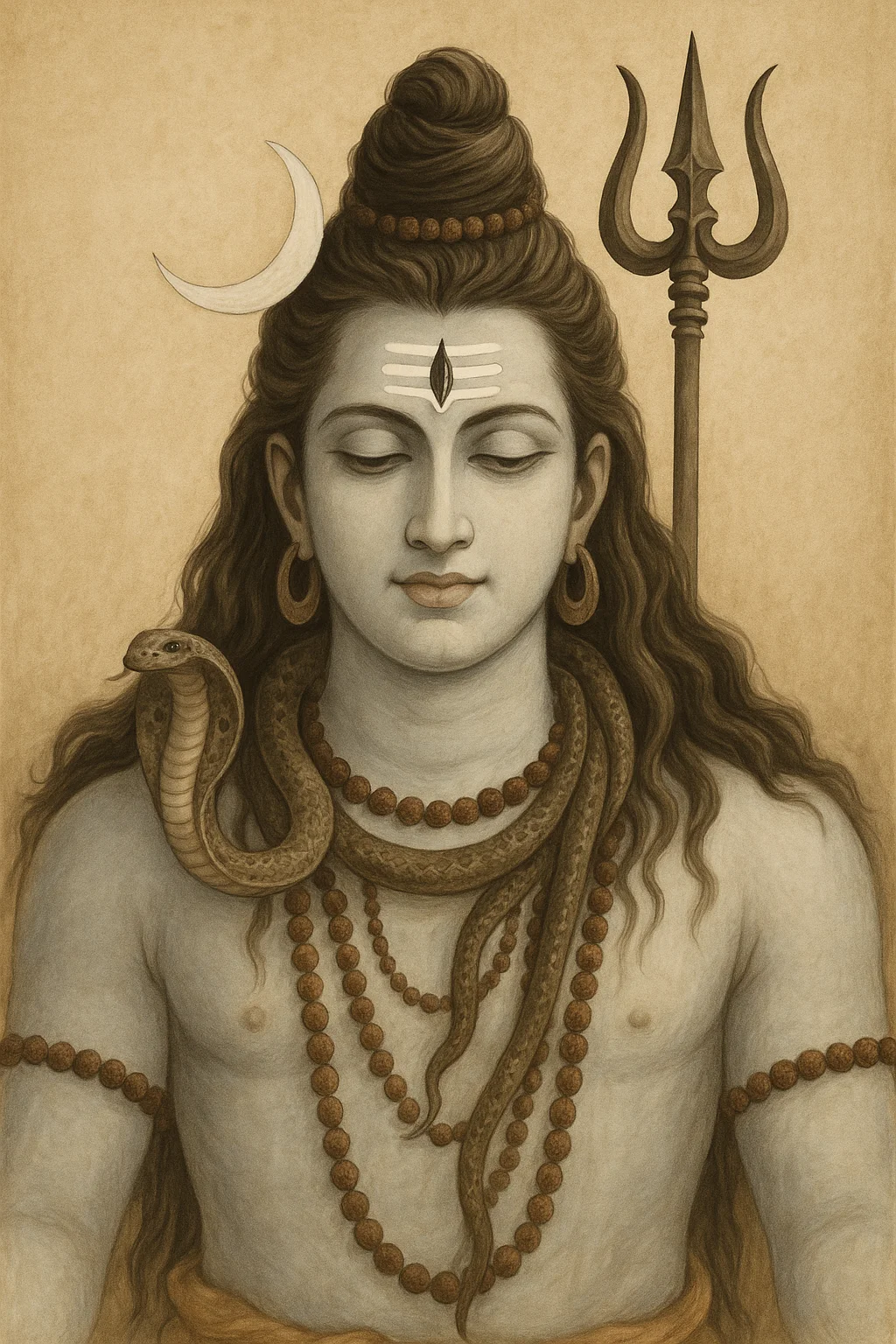
We worship the three-eyed One (Śiva)
- ॐ (Om) — The primordial sound, representing the Absolute (Brahman).
- त्र्यम्बकम् (Tryambakam) — “The Three-eyed One”;
- Tri = three, Ambaka = eye.
- Refers to Lord Śiva, whose third eye symbolizes divine insight, beyond duality, and liberating knowledge.
- यजामहे (Yajāmahe) — “We worship” or “We offer our oblations to”
- Root: yaj — to worship, sacrifice, or honor.
सुगन्धिं पुष्टिवर्धनम्
Sugandhiṁ Puṣṭi-vardhanam
The one who is fragrant (pure and divine), and who nourishes and strengthens all beings.
- सुगन्धिम् (Sugandhim) — “Fragrant one”;
- Literally “good-smelling”, metaphorically means pure, divine presence, and essence of spiritual fragrance.
- पुष्टिवर्धनम् (Puṣṭi-vardhanam) — “The increaser of nourishment”;
- Puṣṭi = nourishment, well-being
- Vardhana = enhancer, increaser
उर्वारुकमिव बन्धनान्
Urvārukam-iva Bandhanān
Just as one is bound by deadly and overpowering diseases,
may I be released from such bondage.
- उर्वारुकम् (Urvārukam):
- From urva (उर्व) = vast, powerful, overwhelming
- and ārukam (आरुकम्) = disease, affliction
- “deadly and overpowering diseases” — not just physical illness, but the spiritual diseases: ignorance (avidyā), delusion (asat), and inner weaknesses (ṣaḍripu).
- इव (iva):
- “Like”, “just as”
- बन्धनान् (Bandhanān):
- From bandhana = bondage, constraint, captivity
- ⇒ “from captivity”, i.e., from being bound down, imprisoned
मृत्योर्मुक्षीय माऽमृतात्॥
Mṛtyor-mukṣīya Mā’mṛtāt
May I be liberated from death, not from immortality.
- मृत्योः (Mṛtyoḥ) — “From death”
- मुक्षीय (Mukṣīya) — “May I be liberated”
- From muc — to free, to release
- मा (Mā) — “Not”
- अमृतात् (Amṛtāt) — “From immortality”
- Amṛta = immortality, eternal life, divine essence
This line expresses a yearning for freedom from the cycle of birth and death (saṁsāra), not merely physical death, but the death of ignorance, ego, and bondage — seeking the eternal truth and liberation (mokṣa).
Though the mantras generally start with word OM, one should end it also with word OM.
According to some puranas, the mahamrutyunjaya mantra has been used by many rishis as well as Sati during the time when Chandra suffered from the curse of Prajapati Daksha. By reciting this mantra, the effect of the curse of Daksha, that could make him die, slowed, and Shiva then took Chandrama on his head.