

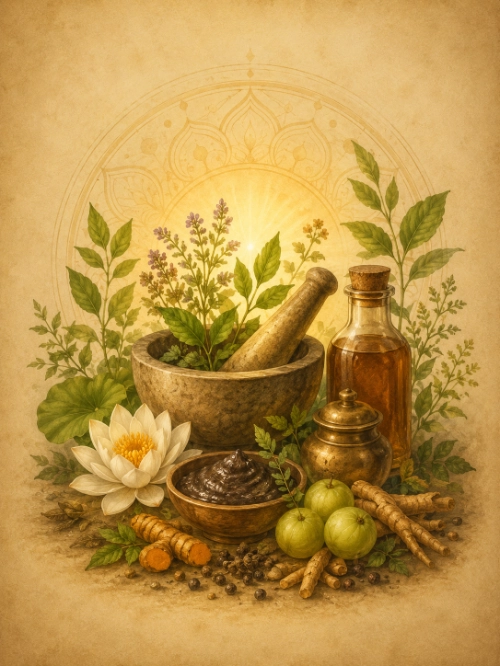
धन्वन्तरिरुवाच
सिंही शटी निशायुग्मं वत्सकं क्वाथसेवनम् ।
शिशोः सर्वातिसारेषु स्तन्यदोषेषु शस्यते ॥ १ ॥
शृङ्गीं सकृष्णातिविषां चूर्णितां मधुना लिहेत् ।
एका चातिविषा कासच्छर्दिज्वरहरी शिशोः ॥ २ ॥
बालैः सेव्या वचा साज्या सदुग्धा वाथ तैलयुक् ।
यष्टिकां शङ्खपुष्पीं वा बालः क्षीरान्वितां पिबेत् ॥ ३ ॥
Dhanvantarir uvāca
siṃhī śaṭī niśā-yugmaṃ vatsakaṃ kvātha-sevanam |
śiśoḥ sarvātisāreṣu stanya-doṣeṣu śasyate || 1 ||
śṛṅgīṃ sa-kṛṣṇātiviṣāṃ cūrṇitāṃ madhunā lihet |
ekā cātiviṣā kāsa-chardi-jvara-harī śiśoḥ || 2 ||
bālaiḥ sevyā vacā sājyā sa-dugdhā vātha taila-yuk |
yaṣṭikāṃ śaṅkhapuṣpīṃ vā bālaḥ kṣīrānvitāṃ pibet || 3 ||
The decoction (kvātha) of siṃhī [Solanum indicum / lion’s herb], śaṭī [Hedychium spicatum, spiked ginger lily], the two niśā [Curcuma longa (turmeric) and Berberis aristata (dāruharidra)], and vatsaka [Holarrhena antidysenterica, kurchi bark] — this is recommended for all forms of diarrhea (atisāra) and for defects of breast milk (stanya doṣa) in infants.
One should administer by licking (lihet) the powder of śṛṅgī [Pistacia integerrima, gall-nut / śṛṅgī herb] together with kṛṣṇā [Piper longum, long pepper] and ativiṣā [Aconitum heterophyllum, white aconite] with honey. Ativiṣā alone [is] a remover of cough (kāsa), vomiting (chardi), and fever (jvara) in infants.
Vacā [Acorus calamus, sweet flag/calamus] combined with ghee, or with milk, or with oil — should be taken by children. Or a child should drink yaṣṭikā [Glycyrrhiza glabra, licorice] or śaṅkhapuṣpī [Convolvulus pluricaulis] combined with milk — whereby speech (vāk), beauty of form (rūpa sampat), longevity (āyus), intellect (medhā), and auspicious prosperity (śrī) all grow and increase in the child.
This chapter begins with pediatric remedies, especially for diarrhea, breast milk disorders, cough, vomiting, fever, and weakness in children. The formulations combine digestive, antidiarrhoeal, respiratory, and strengthening herbs with gentle carriers such as honey, ghee, milk, and oil. The repeated use of substances such as vatsaka, ativiṣā, vacā, yaṣṭikā, and śaṅkhapuṣpī reflects a classical pediatric logic: restoring digestion, calming vomiting and fever, clearing kapha, supporting nourishment, and protecting the developing child. Since these are potent traditional medicines, especially in infants, this should be read as a textual translation and historical medical study, not as a modern self-treatment instruction.