

When a Brāhmaṇa Is Not Qualified to Be Guru
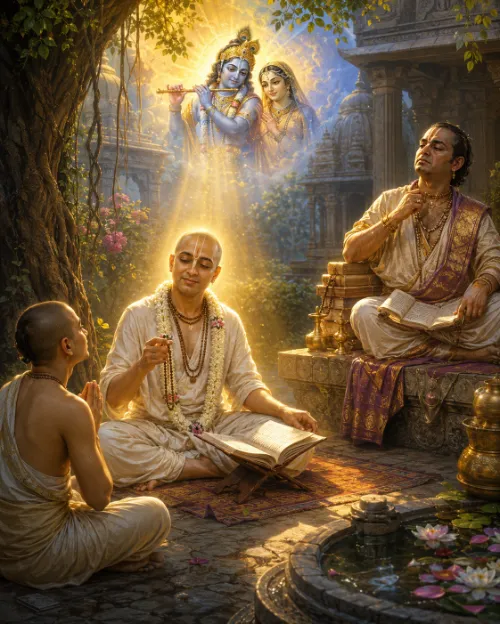
When a Brāhmaṇa Is Not Qualified to Be Guru: The Padma Purāṇa on Birth, Learning, Vaiṣṇava Devotion, and Spiritual Authority
A person may be born in a respected brāhmaṇa family. He may know Sanskrit. He may have mastered Vedic ritual. He may know mantras, tantras, sacrificial procedure, and theology.
He may perform all six traditional duties expected of a brāhmaṇa. And yet an old Vaiṣṇava text says: Do not accept him as guru—if he is not a Vaiṣṇava. Then the same verse makes an even more startling statement: A genuine Vaiṣṇava may be guru even if born among those traditionally considered the lowest of society.
The Sanskrit reads:
षट्कर्मनिपुणो विप्रो
मन्त्रतन्त्रविशारदः ।
अवैष्णवो गुरुर्न स्याद्
वैष्णवः श्वपचो गुरुः ॥
ṣaṭ-karma-nipuṇo vipro
mantra-tantra-viśāradaḥ
avaiṣṇavo gurur na syād
vaiṣṇavaḥ śva-paco guruḥ
“A learned brāhmaṇa may be expert in the six traditional duties and highly proficient in mantra and tantra, but if he is not a Vaiṣṇava, he should not be guru. A Vaiṣṇava, even if born among dog-eaters, may be guru.”
traditional Padma Purāṇa verse quoted in Gauḍīya literature
A. C. Bhaktivedanta Swami Prabhupāda quotes this statement in his purport to Śrīmad-Bhāgavatam 3.6.30 and explains: “An impersonalist can become a qualified brāhmaṇa, but he cannot become a spiritual master unless and until he is promoted to the stage of a Vaiṣṇava, or a devotee of the Personality of Godhead.”
The implications are enormous. The verse does not reject the brāhmaṇa. It does not dismiss Vedic learning. It does not condemn ritual competence. Its point is sharper: None of these things, by themselves, establish qualification to guide another soul to Bhagavān.
Guruhood is not merely a religious profession. It is a spiritual function. And in Gauḍīya Vaiṣṇavism, the indispensable center of that function is Vaiṣṇava realization—knowledge of and devotion to Bhagavān.
A Source-Critical Note: This Is Not “Padma Purāṇa 3.6.30”
A shorthand reference such as: “Padma Purāṇa / 3.6.30, kom.” can easily be misunderstood. It does not mean: Padma Purāṇa 3.6.30. Rather, it means: a verse attributed to the Padma Purāṇa and quoted in the commentary or purport to Śrīmad-Bhāgavatam 3.6.30.
That distinction should be preserved in publication. The verse is firmly established in Gauḍīya textual usage as a Padma Purāṇa quotation, but it is safer not to invent a modern chapter-and-verse location unless one is citing a specific printed recension.
Purāṇic manuscripts and editions can differ considerably in arrangement and numbering. So a careful citation is: Padma Purāṇa, traditional Gauḍīya citation; quoted in Prabhupāda’s purport to Śrīmad-Bhāgavatam 3.6.30.
The Verse Deliberately Begins With an Exceptionally Qualified Brāhmaṇa
The first half says:
षट्कर्मनिपुणो विप्रो
मन्त्रतन्त्रविशारदः
ṣaṭ-karma-nipuṇo vipro
mantra-tantra-viśāradaḥ
“A learned brāhmaṇa expert in the six duties and highly proficient in mantra and tantra…”
This is not describing an uneducated hereditary priest. The person imagined by the verse is highly accomplished. Three expressions build the picture.
Vipra
विप्र
vipra
A learned brāhmaṇa; a person associated with sacred knowledge.
Nipuṇa
निपुण
nipuṇa
Expert, skilled, accomplished, proficient.
Viśārada
विशारद
viśārada
Highly learned, thoroughly skilled, expert. The verse intentionally gives the brāhmaṇa almost every conventional religious credential. Then it asks: Is that enough to become guru?
Its answer is: No.
What Are the Six Brahminical Duties?
The phrase is:
षट्कर्म
ṣaṭ-karma
literally: “six duties” or “six activities.” The classical sixfold list is stated in Manu-smṛti:
अध्यापनमध्ययनं
यजनं याजनं तथा ।
दानं प्रतिग्रहं चैव
ब्राह्मणानामकल्पयत् ॥
adhyāpanam adhyayanaṁ
yajanaṁ yājanaṁ tathā
dānaṁ pratigrahaṁ caiva
brāhmaṇānām akalpayat
“Teaching, studying, performing sacrifice, officiating sacrifice for others, giving gifts, and receiving gifts were appointed as the activities of the brāhmaṇas.”
Manu-smṛti 1.88
In familiar Vaiṣṇava terminology:
- paṭhana / adhyayana — studying scripture;
- pāṭhana / adhyāpana — teaching scripture;
- yajana — performing worship or sacrifice;
- yājana — conducting worship or sacrifice for others;
- dāna — giving charity;
- pratigraha — properly accepting gifts or charity.
So the person imagined by the Padma Purāṇa is not merely a brāhmaṇa by name.
He is:
- educated,
- ritually competent,
- functioning according to traditional brahminical duties,
- and skilled in sacred procedure.
Still: avaiṣṇavo gurur na syāt.
Mantra-tantra-viśārada : Religious Expertise Is Still Not Enough
The verse adds:
मन्त्रतन्त्रविशारदः
mantra-tantra-viśāradaḥ
“highly proficient in mantra and tantra.” Here tantra should not automatically evoke the narrow modern association with occult or sexual practices. In Sanskrit religious literature, tantra can refer more broadly to systems, procedures, ritual manuals, methods of worship, and revealed traditions of practice.
Thus the imagined brāhmaṇa knows: mantras, ritual procedures, religious systems, sacred formulas, and technical worship. The verse therefore anticipates a common mistake: confusing expertise in religion with realization of religion’s ultimate object.
A person may know exactly how to conduct worship while lacking devotion to the One who is worshiped. He may understand ritual mechanics without possessing bhakti. He may know the vocabulary of liberation without being able to guide another person toward liberation.
That is why technical competence cannot be the final qualification of guru.
Then Comes the Decisive Word: Avaiṣṇava
The entire first half collapses under one qualification:
अवैष्णवः
avaiṣṇavaḥ
“not a Vaiṣṇava.” Then:
गुरुर्न स्यात्
gurur na syāt
“he should not be guru.” The point could hardly be clearer. Religious accomplishment is not self-validating. If its possessor has not become genuinely oriented toward Bhagavān, something essential is missing.
In this context, a Vaiṣṇava is not merely someone who carries a social label.
It means one whose understanding and life are centered upon Viṣṇu or Kṛṣṇa:
- one who accepts Bhagavān,
- worships Bhagavān,
- knows the devotional conclusion of śāstra,
- and lives within bhakti.
Thus the verse distinguishes: religious competence from: Vaiṣṇava realization.
Why Prabhupāda Applies This to Impersonalism
In his purport to Śrīmad-Bhāgavatam 3.6.30, Prabhupāda argues that a person may become highly learned in Brahman and yet fail to understand Bhagavān, the Supreme Person. His reasoning follows a basic Vaiṣṇava premise: the culmination of Vedic knowledge is knowledge of Bhagavān.
Kṛṣṇa Himself says:
सर्वस्य चाहं हृदि सन्निविष्टो
मत्तः स्मृतिर्ज्ञानमपोहनं च ।
वेदैश्च सर्वैरहमेव वेद्यो
वेदान्तकृद्वेदविदेव चाहम् ॥
sarvasya cāhaṁ hṛdi sanniviṣṭo
mattaḥ smṛtir jñānam apohanaṁ ca
vedaiś ca sarvair aham eva vedyo
vedānta-kṛd veda-vid eva cāham
“I am situated in everyone’s heart. From Me come memory, knowledge, and forgetfulness. By all the Vedas I alone am to be known. I am the author of Vedānta and indeed the knower of the Vedas.”
Bhagavad-gītā 15.15
The crucial words are:
वेदैश्च सर्वैरहमेव वेद्यः
vedaiś ca sarvair aham eva vedyaḥ
“By all the Vedas I alone am to be known.” If the study of the Vedas does not culminate in recognition of Bhagavān, Vaiṣṇava commentators ask whether the destination of Vedic knowledge has actually been reached.
That is the background of Prabhupāda’s statement: a qualified brāhmaṇa is not automatically a qualified guru.
Guru Is Not Simply “A Person Who Knows More Religion Than I Do”
The Sanskrit word guru has a broad semantic range. It can refer to: a teacher, elder, preceptor, spiritual master, or person of weight and authority. But in this verse, the issue is specifically spiritual guruhood.
The guru must lead another person toward the ultimate object of spiritual life. That immediately connects this verse with Ṛṣabhadeva’s famous statement:
गुरुर्न स स्यात्स्वजनो न स स्यात्
पिता न स स्याज्जननी न सा स्यात् ।
दैवं न तत्स्यान्न पतिश्च स स्यान्
न मोचयेद्यः समुपेतमृत्युम् ॥
gurur na sa syāt sva-jano na sa syāt
pitā na sa syāj jananī na sā syāt
daivaṁ na tat syān na patiś ca sa syān
na mocayed yaḥ samupeta-mṛtyum
“One should not be a guru, kinsman, father, mother, worshipable authority or husband if one cannot liberate the person who has been overtaken by death.”
Śrīmad-Bhāgavatam 5.5.18
Jīva Gosvāmī glosses the “death” in this verse as:
मृत्युः संसारः
mṛtyuḥ saṁsāraḥ
“Death here is saṁsāra.” The two teachings fit perfectly. The Padma Purāṇa asks: What qualification must the guru possess? Ṛṣabhadeva asks: What must the guru be able to do?
The answer is not: perform impressive ritual. It is: lead the disciple toward freedom from saṁsāra and toward Bhagavān.
Then the Padma Purāṇa Reverses the Social Hierarchy
The second half says:
वैष्णवः श्वपचो गुरुः
vaiṣṇavaḥ śva-paco guruḥ
“A Vaiṣṇava, even if a śva-paca, may be guru.” The word:
श्वपच
śva-paca
literally means: “one who cooks dogs,” and conventionally: “dog-eater.” Ancient Sanskrit literature uses the term as an extreme social category—someone regarded as far outside orthodox ritual respectability.
The verse deliberately places the two extremes side by side:
Highest conventional religious status
a learned, ritually expert brāhmaṇa.
Lowest conventional social status
a śva-paca. Then it asks: Which one can be guru? Its answer depends not simply on social rank. It depends on: Vaiṣṇava qualification. That is the radical point.
The Verse Does Not Say “Low Birth Is Better”
This needs to be stated clearly. The argument is not: “Low birth is spiritually superior to high birth.” Nor: “Brahminical training is bad.” The logic is: high birth cannot compensate for the absence of devotion, and low birth cannot cancel genuine devotion.
Those are very different claims. The verse attacks spiritual determinism by birth. It refuses to say: “If you were born here, you automatically possess realization.” And it refuses the opposite: “If you were born there, realization can never qualify you.”
Bhakti changes the criterion.
Prahlāda Mahārāja Gives Almost the Same Teaching
The Śrīmad-Bhāgavatam itself contains an extraordinary parallel. Prahlāda says:
विप्राद् द्विषड्गुणयुतादरविन्दनाभ-
पादारविन्दविमुखात् श्वपचं वरिष्ठम् ।
मन्ये तदर्पितमनोवचनेहितार्थ-
प्राणं पुनाति स कुलं न तु भूरिमानः ॥
viprād dvi-ṣaḍ-guṇa-yutād aravinda-nābha-
pādāravinda-vimukhāt śva-pacaṁ variṣṭham
manye tad-arpita-mano-vacanehitārtha-
prāṇaṁ punāti sa kulaṁ na tu bhūri-mānaḥ
“I consider a dog-eater who has dedicated his mind, words, endeavors, wealth, and life to Bhagavān superior to a brāhmaṇa endowed with all twelve brahminical qualities if that brāhmaṇa is turned away from the lotus feet of Lord Aravinda-nābha. The devotee can purify his family, whereas the proud brāhmaṇa cannot.”
Śrīmad-Bhāgavatam 7.9.10
This is extraordinarily close to the Padma Purāṇa principle. Again: qualified brāhmaṇa without bhakti is contrasted with: socially despised person with wholehearted devotion.
Prahlāda says:
श्वपचं वरिष्ठम्
śva-pacaṁ variṣṭham
“the śva-paca is superior.” But note why. Not because he is a śva-paca. Because he has offered: manaḥ — mind, vacana — speech, īhita — endeavor, artha — wealth, prāṇa — life to Bhagavān.
The superiority belongs to surrender, not social marginality.
What Are the “Twelve Brahminical Qualities”?
Prahlāda says:
द्विषड्गुणयुत
dvi-ṣaḍ-guṇa-yuta
“endowed with twice six—twelve—qualities.” Traditional explanations list such qualities as: truthfulness, self-control, austerity, freedom from envy, tolerance, absence of fault-finding, sacrifice, charity, steadiness, scriptural learning, good conduct, and sacred vows.
The exact traditional enumeration can differ according to the cited source, but the rhetorical point is clear: Prahlāda imagines a genuinely accomplished brāhmaṇa, not merely someone with a birth certificate.
And still: if he is:
अरविन्दनाभ-पादारविन्द-विमुख
aravinda-nābha-pādāravinda-vimukha
“turned away from the lotus feet of Bhagavān,” his virtues have not culminated in bhakti.
Ṛṣabhadeva Himself Gives an Astonishing Praise of the Brāhmaṇa
This makes the discussion beside Śrīmad-Bhāgavatam 5.5.21–24 especially important. Ṛṣabhadeva is certainly not anti-brāhmaṇa. He says:
न ब्राह्मणैस्तुलये भूतमन्यत्
पश्यामि विप्राः किमतः परं तु ।
यस्मिन्नृभिः प्रहुतं श्रद्धयाहम्
अश्नामि कामं न तथाग्निहोत्रे ॥
na brāhmaṇais tulaye bhūtam anyat
paśyāmi viprāḥ kim ataḥ paraṁ tu
yasmin nṛbhiḥ prahutaṁ śraddhayāham
aśnāmi kāmaṁ na tathāgni-hotre
“O brāhmaṇas, I see no other being equal to the brāhmaṇas; what then could be superior? When people offer to Me through them with faith, I accept that offering with greater satisfaction than an offering made into the sacrificial fire.”
Śrīmad-Bhāgavatam 5.5.23
This is extraordinarily high praise. If taken alone, it could easily be used to support the idea: “brāhmaṇa status is itself the supreme spiritual qualification.” But the next verse tells us what kind of brāhmaṇa Ṛṣabhadeva is praising.
ŚB 5.5.24 Defines the Brāhmaṇa by Character and Realization
Ṛṣabhadeva continues:
धृता तनूरुशती मे पुराणी
येनेह सत्त्वं परमं पवित्रम् ।
शमो दमः सत्यमनुग्रहश्च
तपस्तितिक्षानुभवश्च यत्र ॥
dhṛtā tanūr uśatī me purāṇī
yeneha sattvaṁ paramaṁ pavitram
śamo damaḥ satyam anugrahaś ca
tapas titikṣānubhavaś ca yatra
“The Vedic revelation is My eternal, pure manifestation, and the brāhmaṇa embodies its purified sattva. In him are found control of mind, control of senses, truthfulness, mercy, austerity, tolerance, and realized knowledge.”
Śrīmad-Bhāgavatam 5.5.24
The defining qualities include:
- śama — control of the mind;
- dama — control of the senses;
- satya — truthfulness;
- anugraha — mercy;
- tapas — austerity;
- titikṣā — tolerance;
- anubhava — realization or direct understanding.
This is not a definition by birth alone. The brāhmaṇa being glorified is: purified, disciplined, truthful, merciful, tolerant, and spiritually realized. That matters enormously.
The Bhāgavatam Explicitly Says Varṇa Should Be Recognized by Qualities
Nārada later gives an important principle:
यस्य यल्लक्षणं प्रोक्तं
पुंसो वर्णाभिव्यञ्जकम् ।
यदन्यत्रापि दृश्येत
तत्तेनैव विनिर्दिशेत् ॥
yasya yal lakṣaṇaṁ proktaṁ
puṁso varṇābhivyañjakam
yad anyatrāpi dṛśyeta
tat tenaiva vinirdiśet
“Whatever characteristics have been described as indicating a person’s varṇa, if those characteristics are found in a person elsewhere, that person should be designated according to those characteristics.”
Śrīmad-Bhāgavatam 7.11.35
This is directly relevant. The Bhāgavatam itself refuses to make birth the only operative criterion. Lakṣaṇa—observable qualification—matters. The same logic becomes even stronger when discussing guruhood.
Brāhmaṇa and Guru Are Not Identical Categories
A great deal of confusion disappears once these two categories are separated. A brāhmaṇa is characterized by: knowledge, self-control, purity, truthfulness, mercy, austerity, tolerance, and Vedic culture.
A guru must possess qualities appropriate to teaching spiritual truth and leading another person toward the highest good. The categories overlap. Ideally, a spiritual guru should manifest the qualities associated with genuine brāhmaṇa culture.
But they are not simply identical. One can possess substantial brahminical qualification without yet being qualified to lead another person into Vaiṣṇava realization. That is precisely the force of:
अवैष्णवो गुरुर्न स्यात्
avaiṣṇavo gurur na syāt
“A non-Vaiṣṇava should not be guru.”
Caitanya Mahāprabhu Gives the Gauḍīya Principle in One Sentence
In His conversation with Rāmānanda Rāya, Caitanya Mahāprabhu says:
কিবা বিপ্র, কিবা ন্যাসী, শূদ্র কেনে নয় ।
যেই কৃষ্ণতত্ত্ববেত্তা, সেই ‘গুরু’ হয় ॥
kibā vipra, kibā nyāsī, śūdra kene naya
yei kṛṣṇa-tattva-vettā, sei ‘guru’ haya
“Whether one is a brāhmaṇa, a sannyāsī, or a śūdra—whatever one’s social position—one who knows Kṛṣṇa-tattva is guru.”
Śrī Caitanya-caritāmṛta, Madhya 8.128
The decisive expression is:
কৃষ্ণতত্ত্ববেত্তা
kṛṣṇa-tattva-vettā
“one who knows the truth of Kṛṣṇa.” This does not mean merely: “one who can repeat information about Kṛṣṇa.” Tattva-vettā implies real understanding of the truth. Thus Caitanya Mahāprabhu removes several external conditions: brāhmaṇa, sannyāsī, śūdra.
The central question becomes: Does the person know Kṛṣṇa-tattva?
The Context With Rāmānanda Rāya Makes the Verse Even More Powerful
Rāmānanda Rāya was not presenting himself as a conventional renunciant brāhmaṇa teacher. He was a householder and political administrator. Caitanya Mahāprabhu was a sannyāsī.
Yet Mahāprabhu repeatedly asked Rāmānanda to speak profound spiritual conclusions. The social expectation would have said: the sannyāsī should teach the householder. Mahāprabhu’s principle is: spiritual truth is not owned by external status.
Where Kṛṣṇa-tattva is genuinely known, one may hear. That is the practical meaning of the Padma Purāṇa principle.
But “A Vaiṣṇava Can Be Guru” Does Not Mean “Any Vaiṣṇava Is Automatically Qualified”
This safeguard is essential. The line: vaiṣṇavaḥ śva-paco guruḥ can be badly misused if detached from the wider śāstric description of guru. It does not mean: “Anyone who identifies as a Vaiṣṇava should initiate disciples.”
Nor: “Devotional emotion alone eliminates the need for scriptural knowledge.” The Śrīmad-Bhāgavatam gives another clear standard:
तस्माद् गुरुं प्रपद्येत
जिज्ञासुः श्रेय उत्तमम् ।
शाब्दे परे च निष्णातं
ब्रह्मण्युपशमाश्रयम् ॥
tasmād guruṁ prapadyeta
jijñāsuḥ śreya uttamam
śābde pare ca niṣṇātaṁ
brahmaṇy upaśamāśrayam
“Therefore one who desires to inquire into the highest good should take shelter of a guru who is deeply versed in revealed śabda and in the Supreme Reality, and who has taken shelter of spiritual tranquility.”
Śrīmad-Bhāgavatam 11.3.21
The guru must be: śābde niṣṇātam deeply grounded in revelation, and: pare niṣṇātam deeply grounded in the Supreme Reality. So the full formula is not: low birth + Vaiṣṇava label = automatic guru.
It is: genuine Vaiṣṇava realization + śāstric competence + spiritual character + capacity to guide = guru qualification. Birth does not create that qualification. Birth does not cancel it either.
This Is the Same Principle as Śrotriyaṁ Brahma-niṣṭham
The Upaniṣadic standard is beautifully parallel:
तद्विज्ञानार्थं स गुरुमेवाभिगच्छेत्
समित्पाणिः श्रोत्रियं ब्रह्मनिष्ठम् ॥
tad-vijñānārthaṁ sa gurum evābhigacchet
samit-pāṇiḥ śrotriyaṁ brahma-niṣṭham
“For realization of That, one should indeed approach a guru, carrying sacrificial fuel in hand—a teacher learned in revelation and firmly established in Brahman.”
Muṇḍaka Upaniṣad 1.2.12
Again: knowledge and: realization. Not merely birth. Not merely charisma. Not merely ritual license. The teacher must know the tradition and be established in the Reality toward which it points.
Scholarship Alone Is Explicitly Declared Insufficient
The Muṇḍaka Upaniṣad later says:
नायमात्मा प्रवचनेन लभ्यो
न मेधया न बहुना श्रुतेन ।
यमेवैष वृणुते तेन लभ्यस्
तस्यैष आत्मा विवृणुते तनूं स्वाम् ॥
nāyam ātmā pravacanena labhyo
na medhayā na bahunā śrutena
yam evaiṣa vṛṇute tena labhyas
tasyaiṣa ātmā vivṛṇute tanūṁ svām
“The Self is not attained merely through eloquent exposition, nor through intelligence, nor through much learning. It is attained by the one whom the Self chooses; to such a person the Self reveals its own nature.”
Muṇḍaka Upaniṣad 3.2.3
This is remarkably relevant to: mantra-tantra-viśāradaḥ. The tradition is not anti-intellectual. It is anti-reductionist. Learning matters. But learning about Reality is not identical with realization of Reality.
Why the Padma Purāṇa Verse Is Not Anti-Brāhmaṇa
This deserves explicit emphasis. The verse does not say: “Brāhmaṇas are unimportant.” Quite the opposite. Its rhetorical force depends upon the recognized greatness of genuine brahminical qualification.
If the brāhmaṇa described were spiritually worthless, saying: “even he cannot be guru” would be meaningless. The actual argument is: Even such exalted qualifications are still not enough without Vaiṣṇava devotion.
That exalts bhakti. It does not demean śama, dama, study, austerity, truthfulness, ritual competence, or Vedic culture. It places them in relation to their highest goal.
Vaiṣṇava Does Not Mean “Anti-Brāhmaṇa”
Nor should the relationship be imagined as: Vaiṣṇava versus brāhmaṇa. In Gauḍīya theology, an advanced Vaiṣṇava naturally manifests many of the qualities expected of a true brāhmaṇa: self-control, truthfulness, mercy, purity, scriptural understanding, tolerance, devotion.
Prabhupāda therefore repeatedly argues that a properly trained pure Vaiṣṇava should also be recognized according to spiritual qualities rather than excluded because of birth.
The higher principle does not destroy the lower qualification. It fulfills it.
Another Padma Purāṇa Principle: Devotion Reorders Social Identity
Another verse traditionally attributed to the Padma Purāṇa and frequently cited in Gauḍīya literature says:
न शूद्रा भगवद्भक्तास्
ते तु भागवता मताः ।
सर्ववर्णेषु ते शूद्रा
ये न भक्ताः जनार्दने ॥
na śūdrā bhagavad-bhaktās
te tu bhāgavatā matāḥ
sarva-varṇeṣu te śūdrā
ye na bhaktā janārdane
“Devotees of Bhagavān are not to be regarded as spiritually śūdra-like; they are recognized as Bhāgavatas. Conversely, among all varṇas, those who lack devotion to Janārdana are spiritually degraded.”
traditional Padma Purāṇa citation in Gauḍīya literature
Again, the point is not to erase every social distinction mechanically. The theological point is: devotion establishes a spiritual identity deeper than inherited social location.
The Real Problem With Hereditary Guruhood
This principle creates an obvious problem for automatic hereditary guru systems. Suppose someone says: “My father was guru. Therefore I am guru.” The Padma Purāṇa responds: Are you Vaiṣṇava?
Caitanya Mahāprabhu asks: Do you know Kṛṣṇa-tattva? The Bhāgavatam asks: Are you deeply grounded in śāstra and the Supreme Reality? Ṛṣabhadeva asks: Can you actually lead someone beyond saṁsāra?
Biological succession can transmit: property, culture, language, institutional relationships, social prestige. It cannot automatically transmit: realization. Guruhood therefore cannot simply be inherited as a family office.
Nor Can Institutional Appointment Manufacture Spiritual Qualification
The same applies beyond hereditary systems. An institution may appoint someone. A committee may elect someone. A title may be given. Followers may gather. A person may acquire thousands of disciples.
None of these facts alone establishes guru qualification. The real questions remain: Does this person know Kṛṣṇa-tattva? Does this person understand śāstra? Does this person embody bhakti?
Does this person live with self-control? Does this person’s teaching lead toward Bhagavān rather than toward dependence on the teacher’s ego? Can this person help others beyond saṁsāra?
Titles recognize qualification. They do not create it.
Scholarship Alone Cannot Manufacture Guruhood Either
Another modern assumption is: “The most academically learned person must be the highest spiritual authority.” The Padma Purāṇa anticipates that mistake too. mantra-tantra-viśāradaḥ —extreme competence— still does not guarantee guruhood.
A person may be able to:
- parse Sanskrit flawlessly,
- identify manuscript variants,
- teach Vedānta,
- recite large quantities of scripture,
- explain ritual history,
- debate philosophical schools,
- and still lack actual devotion.
Such scholarship may be immensely valuable. But a scholar and a guru are not automatically the same category. A professor can explain a map. A guru must also know where the map leads.
Conversely, Devotion Is Not an Excuse for Ignorance
The opposite mistake must also be avoided. Someone may say: “I love Kṛṣṇa, therefore I do not need to know śāstra.” That also fails the guru standard. A sincere Vaiṣṇava may be spiritually admirable without being qualified to answer every theological question or guide disciples through complex spiritual problems.
Bhakti is indispensable. But guruhood requires competence to teach. That is why the Bhāgavatam says: śābde pare ca niṣṇātam deeply grounded in revelation and transcendence.
The Padma Purāṇa removes false barriers. It does not remove real qualifications.
The Most Powerful Synthesis: Three Tests for Guru
Three texts can be placed side by side.
Ṛṣabhadeva: What must guru accomplish?
गुरुर्न स स्यात् …
न मोचयेद्यः समुपेतमृत्युम्
gurur na sa syāt …
na mocayed yaḥ samupeta-mṛtyum
“One should not be guru if one cannot liberate the person overtaken by the death of saṁsāra.”
Śrīmad-Bhāgavatam 5.5.18
Test:
Can this guidance lead beyond saṁsāra?
Padma Purāṇa: What indispensable spiritual orientation must guru possess?
अवैष्णवो गुरुर्न स्याद्
वैष्णवः श्वपचो गुरुः
avaiṣṇavo gurur na syād
vaiṣṇavaḥ śva-paco guruḥ
“A non-Vaiṣṇava should not be guru; a Vaiṣṇava may be guru even from the lowest social birth.”
Test:
Is this person genuinely Vaiṣṇava?
Caitanya Mahāprabhu: What must guru know?
যেই কৃষ্ণতত্ত্ববেত্তা, সেই ‘গুরু’ হয়
yei kṛṣṇa-tattva-vettā, sei ‘guru’ haya
“One who knows Kṛṣṇa-tattva is guru.”
Śrī Caitanya-caritāmṛta, Madhya 8.128
Test:
Does this person actually know Kṛṣṇa-tattva? Together: destination + devotion + realization. That is a powerful Gauḍīya theology of guru.
Add ŚB 11.3.21 and the Standard Becomes Complete
The Bhāgavatam adds:
शाब्दे परे च निष्णातम्
śābde pare ca niṣṇātam
deeply grounded in: śabda revelation, and: para the Supreme Reality. Thus the complete picture becomes: Vaiṣṇava devotion knowledge of Kṛṣṇa-tattva śāstric competence spiritual realization character capacity to guide beyond saṁsāra.
Birth is not on the list of decisive spiritual requirements.
What About the Brāhmaṇa Then?
The brāhmaṇa remains profoundly important. Ṛṣabhadeva’s description shows why. A true brāhmaṇa cultivates: śama — mental control; dama — sense control; satya — truth; anugraha — mercy; tapas — austerity; titikṣā — tolerance; anubhava — realization.
These are extraordinarily relevant to guruhood. Indeed, a guru lacking these qualities should raise concern. The mistake is not honoring brāhmaṇa qualities. The mistake is reducing them to: birth, ritual license, or social prestige.
Birth Can Be an Opportunity Without Being a Guarantee
A person born into a family of serious Vedic practitioners may receive tremendous advantages: Sanskrit from childhood, ritual familiarity, scriptural education, examples of disciplined life, access to teachers, cultural memory.
Those are real advantages. But opportunity is not realization. A child born to a physician does not automatically become a physician. A judge’s son is not automatically a judge.
Likewise, birth into a brāhmaṇa family can create favorable conditions for brahminical formation. It cannot replace formation. And guruhood requires still more.
The Same Principle Protects Low-Born Devotees From Spiritual Exclusion
The second half of the Padma verse is therefore not decorative. It directly blocks another error: “No matter how realized this devotee becomes, his birth forever disqualifies him.”
The text says: No. If genuine Vaiṣṇava qualification is present, low social origin cannot by itself cancel guru qualification. That is precisely why: śva-paca is chosen. The example is intentionally extreme.
If even this extreme social boundary cannot cancel authentic Vaiṣṇava attainment, ordinary caste prejudice certainly cannot be treated as an absolute spiritual criterion.
But the Verse Must Not Be Used to Erase Ethical Qualification
Another safeguard is essential. A person cannot reasonably say: “I am a Vaiṣṇava, therefore my misconduct does not matter.” That would contradict the very meaning of devotion.
A guru who is: deceitful, exploitative, habitually uncontrolled, abusive, or indifferent to truth cannot hide behind: vaiṣṇavaḥ śva-paco guruḥ. The verse removes birth discrimination.
It does not authorize ethical exemption. The greater the claim to spiritual realization, the more important spiritual character becomes.
“Vaiṣṇava” Must Mean More Than Membership
Modern religious identity makes this especially important. Someone may be: formally initiated, a temple member, wearing tilaka, chanting a certain number of rounds, known publicly as a Vaiṣṇava.
These may be meaningful practices and identities. But the Padma Purāṇa’s theological use of Vaiṣṇava should not be reduced to administrative membership. The guru-level Vaiṣṇava must actually embody the devotional truth he teaches.
Otherwise the verse becomes meaningless.
The Real Opposition Is Not Brāhmaṇa Versus Vaiṣṇava
The real opposition is: qualification without devotion versus: qualification fulfilled in devotion. The ideal is not: a spiritually ignorant Vaiṣṇava instead of a learned brāhmaṇa.
The ideal is: a realized Vaiṣṇava who possesses the knowledge, character, steadiness, and compassion necessary to transmit bhakti. That person may have been born in any social setting.
That is the actual revolution.
A Useful Hierarchy of Qualification
The relationship can be visualized as a progression:
Each higher stage gives meaning to the lower. None can simply be assumed because of the stage below it.
Why This Matters Beside Ṛṣabhadeva’s Teaching
There is a beautiful continuity between the passages. Ṛṣabhadeva says: Do not lead the blind into the pit. Then: Do not become guru unless you can lead beyond death. Then he praises the realized brāhmaṇa.
The Padma Purāṇa adds: Do not assume that brahminical expertise alone establishes guruhood. And Caitanya Mahāprabhu concludes: The one who actually knows Kṛṣṇa-tattva is guru.
The full sequence becomes:
- authority is responsibility;
- responsibility requires knowledge;
- knowledge must culminate in Bhagavān;
- Bhagavān must be approached through bhakti;
- and bhakti cannot be monopolized by birth.
That is an extraordinarily coherent theology.
What This Teaching Does Not Mean
It does not mean:
- brāhmaṇas are unnecessary;
- Vedic learning is unimportant;
- Sanskrit scholarship is worthless;
- ritual has no place;
- social discipline is irrelevant;
- anyone who claims to be a Vaiṣṇava is qualified as guru;
- devotion removes the need for character;
- devotion removes the need for scriptural understanding;
- low birth automatically makes someone spiritually superior;
- caste background never has any cultural significance;
- or every Vaiṣṇava should initiate disciples.
Those are distortions.
What It Does Mean
The teaching means:
- birth alone does not establish spiritual realization;
- ritual expertise alone does not establish guru qualification;
- scholarship alone does not establish guru qualification;
- genuine brahminical qualities are highly valuable;
- Vedic knowledge must reach its spiritual conclusion;
- Vaiṣṇava devotion is indispensable for a Vaiṣṇava spiritual guru;
- genuine spiritual attainment cannot be invalidated merely by low birth;
- guruhood depends upon truth, realization, character, and capacity to guide;
- the guru must know Kṛṣṇa-tattva;
- and the guru’s function is ultimately to lead another person beyond saṁsāra.
A Practical Checklist Before Accepting Someone as Guru
The combined scriptures suggest better questions than: What family was he born into? What title does he have? How many followers does he have? How impressive are his rituals?
How famous is he? Instead ask:
Does he know śāstra?
śābde niṣṇātam
Does he know the spiritual Reality toward which śāstra points?
pare niṣṇātam
Does he know Kṛṣṇa-tattva?
kṛṣṇa-tattva-vettā
Is he actually Vaiṣṇava?
avaiṣṇavo gurur na syāt
Does his life display self-control, truthfulness, mercy, tolerance, and realization?
śamo damaḥ satyam anugrahaś ca
tapas titikṣānubhavaś ca
Does his guidance move disciples toward freedom?
na mocayed yaḥ samupeta-mṛtyum Those are much harder qualifications than pedigree.
A Similar Checklist for Anyone Who Wants to Become Guru
The verse also turns the examination inward. Before accepting disciples, a teacher should ask: Do I want disciples—or do I want their liberation? Am I teaching Kṛṣṇa—or building my identity?
Can I distinguish śāstra from my personal preference? Do I possess enough knowledge to answer responsibly? Can I admit when I do not know? Does my conduct support my teaching?
Do I need people psychologically dependent on me? Do I redirect worship toward Bhagavān—or absorb it into myself? Would following my example for twenty years make someone more truthful, peaceful, self-controlled, compassionate, and devoted?
Can I actually help this person move beyond saṁsāra? The title guru is therefore not an ornament. It is a burden of responsibility.
The Padma Purāṇa verse is powerful precisely because it begins with a genuinely impressive religious person:
षट्कर्मनिपुणो विप्रो
मन्त्रतन्त्रविशारदः
ṣaṭ-karma-nipuṇo vipro
mantra-tantra-viśāradaḥ
“A learned brāhmaṇa, expert in the six duties and highly proficient in mantra and tantra.”
Almost every external credential is present. Then comes:
अवैष्णवो गुरुर्न स्यात्
avaiṣṇavo gurur na syāt
“If he is not a Vaiṣṇava, he should not be guru.”
Why? Because guruhood exists for a specific destination. Ṛṣabhadeva says:
न मोचयेद्यः समुपेतमृत्युम्
na mocayed yaḥ samupeta-mṛtyum
“One should not become guru if one cannot liberate the person overtaken by the death of saṁsāra.”
Caitanya Mahāprabhu says:
যেই কৃষ্ণতত্ত্ববেত্তা, সেই ‘গুরু’ হয়
yei kṛṣṇa-tattva-vettā, sei ‘guru’ haya
“One who knows Kṛṣṇa-tattva is guru.”
And the Bhāgavatam says the guru must be:
शाब्दे परे च निष्णातम्
śābde pare ca niṣṇātam
“deeply grounded in revelation and the Supreme Reality.”
Put together, these statements leave very little room for a purely hereditary, ritualistic, institutional, or academic definition of spiritual authority. Birth can provide opportunity.
Brahminical training can provide discipline. Scholarship can provide understanding. Ritual can provide sacred structure. But guruhood requires something that none of these can manufacture automatically: realized Vaiṣṇava knowledge capable of leading another soul toward Bhagavān.
And this is why the second half of the Padma Purāṇa verse is so radical:
वैष्णवः श्वपचो गुरुः
vaiṣṇavaḥ śva-paco guruḥ
“A Vaiṣṇava may be guru even if born among dog-eaters.”
The point is not that birth is reversed and low birth becomes the new privilege. The point is that bhakti breaks the monopoly of birth altogether. The ultimate spiritual hierarchy is not built from pedigree.
It is built from: truth, character, realization, devotion, and the ability to guide another person toward Kṛṣṇa. That is why perhaps the entire teaching can be summarized in one line: Brāhmaṇa is a qualification. Guru is a responsibility. Vaiṣṇava realization is the indispensable bridge between them.
Primary Texts Cited
Traditional Padma Purāṇa citation
ṣaṭ-karma-nipuṇo vipro / mantra-tantra-viśāradaḥ / avaiṣṇavo gurur na syād / vaiṣṇavaḥ śva-paco guruḥ — brahminical and ritual expertise cannot substitute for Vaiṣṇava qualification in a spiritual guru.
Śrīmad-Bhāgavatam
Bhagavad-gītā
Muṇḍaka Upaniṣad
Manu-smṛti
Śrī Caitanya-caritāmṛta
Digital Texts and Reference Sites Consulted
Vedabase.io — Prabhupāda’s purport to Śrīmad-Bhāgavatam 3.6.30, including the traditional Padma Purāṇa citation and its connection to Caitanya-caritāmṛta Madhya 8.128. Vedabase.io — Śrīmad-Bhāgavatam — Sanskrit and textual material for Prahlāda’s comparison of the devotee and the nondevotional brāhmaṇa, Ṛṣabhadeva’s praise and description of the brāhmaṇa, and the guru qualification of ŚB 11.3.21.
Vedabase.io — Śrīmad-Bhāgavatam 7.11.35 — the principle that varṇa is identified by its defining lakṣaṇas when those qualities appear in a person. Vedabase / Upaniṣadic citations preserved in Gauḍīya editions — Muṇḍaka Upaniṣad 3.2.3 and its use in explaining the limits of scholarship without realization.
For formal academic publication, the traditional Padma Purāṇa quotations should be checked against a specified printed recension before assigning them a precise Purāṇic chapter and verse number, since the verse numbering of Purāṇic editions can vary considerably.