

Gopi Gita
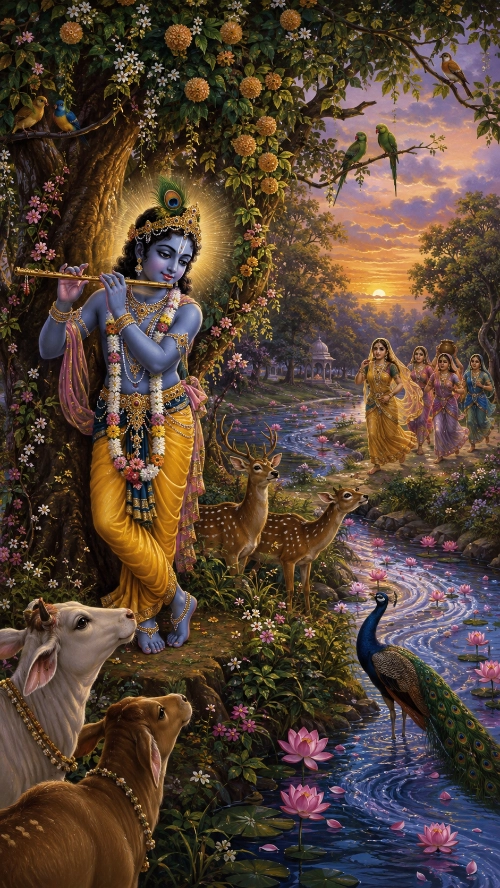
Gopī Gīta: The Song of the Gopīs, from the Śrīmad-Bhāgavatam
Synopsis
The Gopī Gīta, the Song of the Gopīs, is the thirty-first chapter of the tenth canto of the Śrīmad-Bhāgavatam. On an autumn night Kṛṣṇa’s flute has called the gopīs of Vraja to the forest for the rāsa dance. When they grow proud of His company He vanishes, and they search for Him through the moonlit groves. Gathered again on the bank of the Yamunā, they sing these nineteen verses to call Him back.
They remember how He protected Vraja, dwell on His feet, His hands, His face and His flute, and tell Him they have left everything for Him. All 19 verses are given in Devanāgarī and IAST with an English meaning.
गोप्य ऊचुः ।
जयति तेऽधिकं जन्मना व्रजः
श्रयत इन्दिरा शश्वदत्र हि ।
दयित दृश्यतां दिक्षु तावका-
स्त्वयि धृतासवस्त्वां विचिन्वते ॥ १॥
Gopya ūcuḥ |
Jayati te’dhikaṁ janmanā vrajaḥ
Śrayata indirā śaśvadatra hi |
Dayita dṛśyatāṁ dikṣu tāvakā-
stvayi dhṛtāsavastvāṁ vicinvate || 1 ||
The gopīs said: Because of Your birth, Vraja is glorious above all other lands, and Indirā, the goddess of fortune, lives here forever. Beloved, show Yourself! Your own people, who keep their life-breath only for You, are searching for You in every direction.
Kṛṣṇa has vanished from the rāsa dance, and the gopīs search the forest for Him through the night. This song is the whole of chapter 10.31 of the Bhāgavatam. Indirā is Lakṣmī: Vraja is so blessed by His birth that the goddess of fortune lives there forever.
शरदुदाशये साधुजातस-
त्सरसिजोदरश्रीमुषा दृशा ।
सुरतनाथ तेऽशुल्कदासिका
वरद निघ्नतो नेह किं वधः ॥ २॥
Śaradudāśaye sādhujātasa-
tsarasijodaraśrīmuṣā dṛśā |
Suratanātha te’śulkadāsikā
Varada nighnato neha kiṁ vadhaḥ || 2 ||
Lord of love, Your glance steals the beauty from the heart of a perfect lotus grown in an autumn pond, and with it You are killing us, Your maidservants who ask no price. Giver of boons, is this not killing too?
Aśulka-dāsikā: servants bought for no price, who serve without wages. The gopīs say that wounding with a glance is as much killing as wounding with a weapon.
विषजलाप्ययाद्व्यालराक्षसा-
द्वर्षमारुताद्वैद्युतानलात् ।
वृषमयात्मजाद्विश्वतोभया-
दृषभ ते वयं रक्षिता मुहुः ॥ ३॥
Viṣajalāpyayādvyālarākṣasā-
dvarṣamārutādvaidyutānalāt |
Vṛṣamayātmajādviśvatobhayā-
dṛṣabha te vayaṁ rakṣitā muhuḥ || 3 ||
From the poisoned water, from the serpent-demon, from the rain and the wind, from the fire of the lightning, from the bull and from the son of Maya, from fear on every side, O best of men, again and again You have protected us.
The gopīs recall His earlier rescues of Vraja: the Yamunā poisoned by Kāliya, the serpent-demon Agha, Indra’s storm, the bull Ariṣṭa, and Vyoma, the son of Maya.
न खलु गोपिकानन्दनो भवा-
नखिलदेहिनामन्तरात्मदृक् ।
विखनसार्थितो विश्वगुप्तये
सख उदेयिवान्सात्वतां कुले ॥ ४॥
Na khalu gopikānandano bhavā-
nakhiladehināmantarātmadṛk |
Vikhanasārthito viśvaguptaye
Sakha udeyivānsātvatāṁ kule || 4 ||
You are not really the son of the gopī Yaśodā; You are the inner witness of every embodied being. Brahmā prayed to You to protect the universe, and so, friend, You have appeared in the family of the Sātvatas.
Vikhanas is Brahmā. The Sātvatas are the Yadu line into which Kṛṣṇa was born.
विरचिताभयं वृष्णिधुर्य ते
चरणमीयुषां संसृतेर्भयात् ।
करसरोरुहं कान्त कामदं
शिरसि धेहि नः श्रीकरग्रहम् ॥ ५॥
Viracitābhayaṁ vṛṣṇidhurya te
Caraṇamīyuṣāṁ saṁsṛterbhayāt |
Karasaroruhaṁ kānta kāmadaṁ
Śirasi dhehi naḥ śrīkaragraham || 5 ||
Beloved, best of the Vṛṣṇis, Your lotus hand gives fearlessness to those who come to Your feet in fear of the cycle of birth and death. It fulfils every desire, and it held the hand of Śrī. Place it on our heads.
व्रजजनार्तिहन्वीर योषितां
निजजनस्मयध्वंसनस्मित ।
भज सखे भवत्किङ्करीः स्म नो
जलरुहाननं चारु दर्शय ॥ ६॥
Vrajajanārtihanvīra yoṣitāṁ
Nijajanasmayadhvaṁsanasmita |
Bhaja sakhe bhavatkiṅkarīḥ sma no
Jalaruhānanaṁ cāru darśaya || 6 ||
Hero who ends the sorrow of the people of Vraja, whose smile breaks the pride of Your own, accept us, friend, as Your maidservants, and show us women Your beautiful lotus face.
प्रणतदेहिनां पापकर्षणं
तृणचरानुगं श्रीनिकेतनम् ।
फणिफणार्पितं ते पदाम्बुजं
कृणु कुचेषु नः कृन्धि हृच्छयम् ॥ ७॥
Praṇatadehināṁ pāpakarṣaṇaṁ
Tṛṇacarānugaṁ śrīniketanam |
Phaṇiphaṇārpitaṁ te padāmbujaṁ
Kṛṇu kuceṣu naḥ kṛndhi hṛcchayam || 7 ||
Your lotus feet take away the sins of all who bow to them; they follow the grazing animals; they are the home of Śrī; You placed them on the serpent’s hoods. Set them on our breasts, and cut away the desire in our hearts.
Kṛṣṇa danced on the hoods of the serpent Kāliya. Hṛc-chaya, “that which lies in the heart”, is a name of Kāma, desire.
मधुरया गिरा वल्गुवाक्यया
बुधमनोज्ञया पुष्करेक्षण ।
विधिकरीरिमा वीर मुह्यती-
रधरसीधुनाऽऽप्याययस्व नः ॥ ८॥
Madhurayā girā valguvākyayā
Budhamanojñayā puṣkarekṣaṇa |
Vidhikarīrimā vīra muhyatī-
radharasīdhunā’’pyāyayasva naḥ || 8 ||
Lotus-eyed hero, Your sweet voice and charming words delight even the wise, and they have bewildered these maidservants of Yours. Revive us with the nectar of Your lips.
तव कथामृतं तप्तजीवनं
कविभिरीडितं कल्मषापहम् ।
श्रवणमङ्गलं श्रीमदाततं
भुवि गृणन्ति ये भूरिदा जनाः ॥ ९॥
Tava kathāmṛtaṁ taptajīvanaṁ
Kavibhirīḍitaṁ kalmaṣāpaham |
Śravaṇamaṅgalaṁ śrīmadātataṁ
Bhuvi gṛṇanti ye bhūridā janāḥ || 9 ||
The nectar of Your stories gives life to those who suffer; the poets have praised it; it takes away sin; it brings good fortune to all who hear it, and it is full of beauty. The people who tell it across the earth are generous indeed.
Those who tell the stories of Kṛṣṇa are called bhūri-dā, “givers of much”, because what they give is more valuable than any gift of wealth.
प्रहसितं प्रिय प्रेमवीक्षणं
विहरणं च ते ध्यानमङ्गलम् ।
रहसि संविदो या हृदिस्पृशः
कुहक नो मनः क्षोभयन्ति हि ॥ १०॥
Prahasitaṁ priya premavīkṣaṇaṁ
Viharaṇaṁ ca te dhyānamaṅgalam |
Rahasi saṁvido yā hṛdispṛśaḥ
Kuhaka no manaḥ kṣobhayanti hi || 10 ||
Beloved, Your laughter, Your loving glances, Your play, which is a blessing to meditate on, and the secret meetings that touched our hearts: all of these stir our minds, deceiver.
चलसि यद्व्रजाच्चारयन्पशून्
नलिनसुन्दरं नाथ ते पदम् ।
शिलतृणाङ्कुरैः सीदतीति नः
कलिलतां मनः कान्त गच्छति ॥ ११॥
Calasi yadvrajāccārayanpaśūn
Nalinasundaraṁ nātha te padam |
Śilatṛṇāṅkuraiḥ sīdatīti naḥ
Kalilatāṁ manaḥ kānta gacchati || 11 ||
Master, when You leave Vraja to herd the animals, our minds are troubled, beloved, at the thought that Your feet, lovely as a lotus, are hurt by the stubble of the grain, the grass and the sprouting shoots.
दिनपरिक्षये नीलकुन्तलै-
र्वनरुहाननं बिभ्रदावृतम् ।
घनरजस्वलं दर्शयन्मुहु-
र्मनसि नः स्मरं वीर यच्छसि ॥ १२॥
Dinaparikṣaye nīlakuntalai-
rvanaruhānanaṁ bibhradāvṛtam |
Ghanarajasvalaṁ darśayanmuhu-
rmanasi naḥ smaraṁ vīra yacchasi || 12 ||
At the end of the day You show us again and again Your lotus face, framed by dark locks and thick with the dust of the herd, and so, hero, You awaken love in our minds.
The dust is raised by the cows as Kṛṣṇa brings them home in the evening.
प्रणतकामदं पद्मजार्चितं
धरणिमण्डनं ध्येयमापदि ।
चरणपङ्कजं शन्तमं च ते
रमण नः स्तनेष्वर्पयाधिहन् ॥ १३॥
Praṇatakāmadaṁ padmajārcitaṁ
Dharaṇimaṇḍanaṁ dhyeyamāpadi |
Caraṇapaṅkajaṁ śantamaṁ ca te
Ramaṇa naḥ staneṣvarpayādhihan || 13 ||
Your lotus feet fulfil the desires of those who bow to them; Brahmā, born of the lotus, worships them; they adorn the earth; they are the one thing to meditate on in danger, and they give the highest peace. Lover, destroyer of anguish, place them on our breasts.
सुरतवर्धनं शोकनाशनं
स्वरितवेणुना सुष्ठु चुम्बितम् ।
इतररागविस्मारणं नृणां
वितर वीर नस्तेऽधरामृतम् ॥ १४॥
Suratavardhanaṁ śokanāśanaṁ
Svaritaveṇunā suṣṭhu cumbitam |
Itararāgavismāraṇaṁ nṛṇāṁ
Vitara vīra naste’dharāmṛtam || 14 ||
Hero, give us the nectar of Your lips. It increases the joy of love and destroys sorrow; the sounding flute kisses it fully; and it makes people forget every other attachment.
अटति यद्भवानह्नि काननं
त्रुटि युगायते त्वामपश्यताम् ।
कुटिलकुन्तलं श्रीमुखं च ते
जड उदीक्षतां पक्ष्मकृद्दृशाम् ॥ १५॥
Aṭati yadbhavānahni kānanaṁ
Truṭi yugāyate tvāmapaśyatām |
Kuṭilakuntalaṁ śrīmukhaṁ ca te
Jaḍa udīkṣatāṁ pakṣmakṛddṛśām || 15 ||
When You go to the forest by day, a moment becomes an age for us who cannot see You. And when we do look on Your beautiful face with its curling locks, the creator of our eyelids seems a fool to us.
The eyelids blink and interrupt the sight of Him, so the gopīs blame Brahmā, who made them.
पतिसुतान्वयभ्रातृबान्धवा-
नतिविलङ्घ्य तेऽन्त्यच्युतागताः ।
गतिविदस्तवोद्गीतमोहिताः
कितव योषितः कस्त्यजेन्निशि ॥ १६॥
Patisutānvayabhrātṛbāndhavā-
nativilaṅghya te’ntyacyutāgatāḥ |
Gatividastavodgītamohitāḥ
Kitava yoṣitaḥ kastyajenniśi || 16 ||
Acyuta, we have left behind our husbands, sons, families, brothers and kinsmen, and come to You, bewitched by Your song. You know why we came, deceiver. Who would abandon women in the night?
Udgīta, the song that drew them, is the song of His flute, which called the gopīs to the forest at the start of the rāsa.
रहसि संविदं हृच्छयोदयं
प्रहसिताननं प्रेमवीक्षणम् ।
बृहदुरः श्रियो वीक्ष्य धाम ते
मुहुरतिस्पृहा मुह्यते मनः ॥ १७॥
Rahasi saṁvidaṁ hṛcchayodayaṁ
Prahasitānanaṁ premavīkṣaṇam |
Bṛhaduraḥ śriyo vīkṣya dhāma te
Muhuratispṛhā muhyate manaḥ || 17 ||
Remembering our secret meetings, which awakened love, Your smiling face and Your loving glances, and seeing Your broad chest, the home of Śrī, our minds are bewildered again and again by longing.
व्रजवनौकसां व्यक्तिरङ्ग ते
वृजिनहन्त्र्यलं विश्वमङ्गलम् ।
त्यज मनाक् च नस्त्वत्स्पृहात्मनां
स्वजनहृद्रुजां यन्निषूदनम् ॥ १८॥
Vrajavanaukasāṁ vyaktiraṅga te
Vṛjinahantryalaṁ viśvamaṅgalam |
Tyaja manāk ca nastvatspṛhātmanāṁ
Svajanahṛdrujāṁ yanniṣūdanam || 18 ||
Dear one, You have appeared to end the distress of those who live in the forests of Vraja, and You are a blessing to the whole world. Give us a little of the medicine that cures the heartache of Your own people, for our hearts long only for You.
यत्ते सुजातचरणाम्बुरुहं स्तनेषु
भीताः शनैः प्रिय दधीमहि कर्कशेषु ।
तेनाटवीमटसि तद्व्यथते न किंस्वित्
कूर्पादिभिर्भ्रमति धीर्भवदायुषां नः ॥ १९॥
Yatte sujātacaraṇāmburuhaṁ staneṣu
Bhītāḥ śanaiḥ priya dadhīmahi karkaśeṣu |
Tenāṭavīmaṭasi tadvyathate na kiṁsvit
Kūrpādibhirbhramati dhīrbhavadāyuṣāṁ naḥ || 19 ||
Beloved, we place Your tender lotus feet gently on our hard breasts, afraid of hurting them. With those same feet You wander the forest. Are they not hurt by the small stones? Our minds reel, for You are our very life.
इति श्रीमद्भागवत महापुराणे पारमहंस्यां संहितायां
दशमस्कन्धे पूर्वार्धे रासक्रीडायां गोपीगीतं नामैकत्रिंशोऽध्यायः ॥
Iti śrīmadbhāgavata mahāpurāṇe pāramahaṁsyāṁ saṁhitāyāṁ
Daśamaskandhe pūrvārdhe rāsakrīḍāyāṁ gopīgītaṁ nāmaikatriṁśo’dhyāyaḥ ||
Thus ends the thirty-first chapter, called the Song of the Gopīs, in the account of the rāsa play, in the first half of the tenth canto of the Śrīmad-Bhāgavatam, the great Purāṇa, the collection for the paramahaṁsas.
Text from: Sanskritdocuments.org, encoded by Sunder Hattangadi.
More in Krishna
Gopī GītaMantras
You are here
Guarding the Heart
Gāṇḍīva
Heaven and Hell