

Bhakti, Bhukti, Mukti and Siddhi
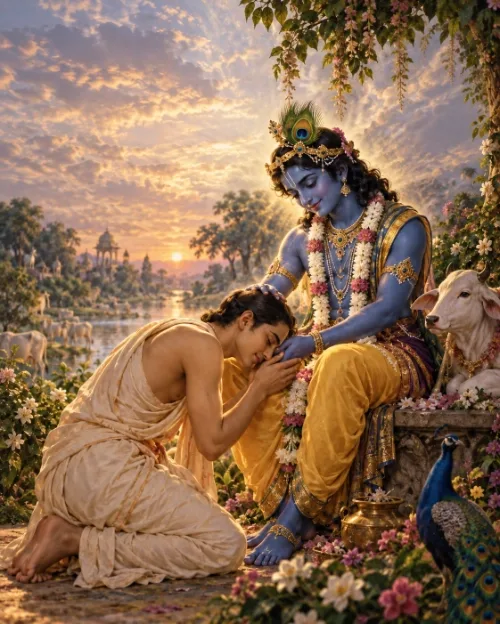
What the Bhāgavatam Really Means by Itara — and Why the Pure Devotee Is Called Peaceful
Why does Gauḍīya Vaiṣṇava theology sometimes place karmīs, jñānīs and yogīs together under the category of itara—“the others,” or nondevotees? At first the classification seems strange.
A karmī may perform religious duties. A jñānī may possess profound philosophical knowledge. A yogī may practice extraordinary discipline and meditation. Surely these are not all the same.
They are not. Yet from the standpoint of pure bhakti, they can share one underlying feature: something other than loving service to Bhagavān remains the ultimate goal. The karmī may seek enjoyment.
The independent jñānī may seek liberation. The siddhi-seeking yogī may seek perfection or mystical power. The pure bhakta seeks: sevā—service. That is the deeper distinction behind A. C. Bhaktivedanta Swami Prabhupāda’s statement in his purport to Śrīmad-Bhāgavatam 3.2.15 that: “karmīs, jñānīs and yogīs are called itara or nondevotees.”
The statement is genuine, but it must be understood carefully. The Sanskrit verse itself does not literally define itara as “karmīs, jñānīs and yogīs.” The word simply means: “the others.”
Prabhupāda is giving a theological explanation of who may fall into that category when their pursuits remain independent of bhakti. And this qualification is crucial, because the Bhagavad-gītā itself praises a jñānī endowed with exclusive devotion and calls the devotee the highest of all yogīs.
So the real issue is not: action versus devotion, knowledge versus devotion, or yoga versus devotion. It is: What is everything ultimately for?
The Actual Verse
Śrīmad-Bhāgavatam 3.2.15
स्वशान्तरूपेष्वितरैः स्वरूपै-
रभ्यर्द्यमानेष्वनुकम्पितात्मा ।
परावरेशो महदंशयुक्तो
ह्यजोऽपि जातो भगवान् यथाग्निः ॥
sva-śānta-rūpeṣv itaraiḥ sva-rūpair
abhyardyamāneṣv anukampitātmā
parāvareśo mahad-aṁśa-yukto
hy ajo ’pi jāto bhagavān yathāgniḥ
“When His own peaceful devotees were being afflicted by others of a contrary nature, Bhagavān—the Lord of all higher and lower beings—became moved by compassion. Although unborn, He manifested Himself together with His great expansions, just as fire becomes manifest.”
The verse occurs in Uddhava’s remembrance of Kṛṣṇa. Its immediate concern is not primarily to classify philosophical schools. It is explaining why the unborn Bhagavān appears within the world.
His peaceful devotees are suffering. Their suffering moves Him. And the Lord becomes manifest.
The Key Contrast: Śānta and Itara
Two expressions stand opposite one another.
स्व-शान्त-रूपेषु
sva-śānta-rūpeṣu
His own devotees of peaceful disposition. And:
इतरैः
itaraiḥ
by the others. The basic Sanskrit word:
इतर
itara
means: other, another, the other kind, one belonging to the contrasted category. So strictly speaking, itara does not itself mean: karmī, jñānī, yogī, atheist, or demon. It simply establishes a contrast: these and: the others.
Prabhupāda then explains this contrast through Gauḍīya Vaiṣṇava theology.
Why Are the Devotees Called Peaceful?
This is where Caitanya-caritāmṛta gives an extraordinarily clear explanation. Śrī Caitanya Mahāprabhu tells Rūpa Gosvāmī:
কৃষ্ণভক্ত — নিষ্কাম, অতএব ‘শান্ত’ ।
ভুক্তি-মুক্তি-সিদ্ধি — কামী সকলি ‘অশান্ত’ ॥
kṛṣṇa-bhakta — niṣkāma, ataeva ‘śānta’
bhukti-mukti-siddhi-kāmī — sakali ‘aśānta’
“The devotee of Kṛṣṇa is free from separate selfish desire and is therefore peaceful. Those who desire material enjoyment, liberation or mystic perfection are all unpeaceful.”
Caitanya-caritāmṛta, Madhya 19.149
This verse supplies almost the entire theological framework. There are three great categories of acquisition: bhukti — enjoyment; mukti — liberation; siddhi — mystic perfection.
And then there is: bhakti — loving service.
Four Different Questions
The difference is simple to express. The karmī asks: “What can I enjoy?” The independent jñānī asks: “How can I become liberated?” The siddhi-seeking yogī asks: “What can I attain?”
The bhakta asks: “How may I serve Bhagavān?” That final question changes the structure of spiritual life. The center shifts from: my attainment to: His pleasure.
The Karmī: Bhukti
In Vaiṣṇava technical usage, a karmī is not merely “a person who acts.” Everyone acts. Arjuna acts. Hanumān acts. The gopīs act. A karmī specifically means someone whose actions remain motivated by fruitive results.
The desired fruit may be obvious: wealth, pleasure, status, offspring, power. Or it may be religious: heaven, good karma, a better birth, celestial enjoyment. The inner structure remains: I perform this action so that I may receive this result.
That is: bhukti-kāma desire for enjoyment.
Karma Itself Is Not the Problem
The Bhagavad-gītā does not tell Arjuna to become inactive. Kṛṣṇa tells him to act. The transformation is: for whom? Action offered to personal gain is karma. Action offered to Bhagavān becomes karma-yoga.
Action fully absorbed in loving service becomes bhakti. Therefore the contrast is not: work versus spirituality. It is: fruitive work versus service.
The Jñānī: Mukti
The second great desire is:
मुक्ति
mukti
liberation. At first this seems completely different from material enjoyment. And it is. The jñānī may reject: wealth, sensuality, heaven, social status. Yet from the standpoint of pure bhakti, one subtle self-interest may remain: “I want liberation.”
I want freedom from: saṁsāra, birth, death, ignorance, suffering. That is spiritually much more elevated than ordinary sense enjoyment. But Gauḍīya theology asks: What if even liberation is not the highest goal?
The Pure Devotee Does Not Even Bargain for Liberation
Lord Kapila gives an astonishing definition of pure devotion:
सालोक्यसार्ष्टिसामीप्य-
सारूप्यैकत्वमप्युत ।
दीयमानं न गृह्णन्ति
विना मत्सेवनं जनाः ॥
sālokya-sārṣṭi-sāmīpya-
sārūpyaikatvam apy uta
dīyamānaṁ na gṛhṇanti
vinā mat-sevanaṁ janāḥ
“My devotees do not accept residence in My world, equality of opulence, proximity to Me, a form like Mine, or even oneness when these are offered to them if such liberation is devoid of My service.”
Śrīmad-Bhāgavatam 3.29.13
This is radical. The devotee does not say: “I serve Kṛṣṇa because He can liberate me.” Rather: “Liberation is meaningful only if I can serve Kṛṣṇa.” Bhagavān is not valuable because He gives liberation.
Liberation is valuable because it may permit service to Bhagavān. The hierarchy has been reversed.
Caitanya Mahāprabhu Goes Even Further
The fourth verse of the Śikṣāṣṭaka says:
न धनं न जनं न सुन्दरीं
कवितां वा जगदीश कामये ।
मम जन्मनि जन्मनीश्वरे
भवताद् भक्तिरहैतुकी त्वयि ॥
na dhanaṁ na janaṁ na sundarīṁ
kavitāṁ vā jagad-īśa kāmaye
mama janmani janmanīśvare
bhavatād bhaktir ahaitukī tvayi
“O Lord of the universe, I do not desire wealth, followers, sensual beauty or worldly accomplishment. Birth after birth, may I have causeless devotion to You.”
Śikṣāṣṭaka 4; Caitanya-caritāmṛta, Antya 20.29
The astonishing phrase is:
जन्मनि जन्मनि
janmani janmani
“birth after birth.”
This means: “I am not even making liberation from rebirth the price of my devotion.” The prayer asks only:
भक्तिरहैतुकी त्वयि
bhaktir ahaitukī tvayi
“causeless devotion unto You.”
That is the Gauḍīya ideal of bhakti purified even of the demand: “Save me.”
But Knowledge Is Not the Enemy
This qualification is essential. The Bhagavad-gītā itself says:
तेषां ज्ञानी नित्ययुक्त
एकभक्तिर्विशिष्यते ।
प्रियो हि ज्ञानिनोऽत्यर्थम्
अहं स च मम प्रियः ॥
teṣāṁ jñānī nitya-yukta
eka-bhaktir viśiṣyate
priyo hi jñānino ’tyartham
ahaṁ sa ca mama priyaḥ
“Among them, the jñānī who is always united with Me in exclusive devotion is especially distinguished. I am exceedingly dear to him, and he is exceedingly dear to Me.”
Bhagavad-gītā 7.17
Kṛṣṇa explicitly calls this person: jñānī and: eka-bhakti one of exclusive devotion. Therefore the equation: “jñānī = nondevotee” cannot be universally correct. The term jñānī in Prabhupāda’s ŚB 3.2.15 purport refers to the practitioner whose jñāna and liberation remain independent goals.
Knowledge that culminates in bhakti is not rejected.
The Yogī: Siddhi
The third aspiration is:
सिद्धि
siddhi
perfection, accomplishment, mystical attainment. Yoga traditions speak of extraordinary abilities emerging from concentration and subtle mastery. These can include powers associated with: subtle perception, control of the body, movement, mind, matter.
Yet the Bhāgavata repeatedly warns that power does not equal pure devotion. A yogī may control extraordinary forces and still fail to control: anger, pride, envy.
Durvāsā: Great Yogī, Yet Defeated by a Devotee’s Humility
Durvāsā Muni is a powerful example. He possesses immense yogic power. Yet he becomes angry with the pure devotee: Ambarīṣa Mahārāja. He creates a destructive being to attack him.
But Bhagavān’s Sudarśana cakra turns upon Durvāsā. The powerful yogī must eventually beg forgiveness from the apparently defenseless devotee. The lesson is unmistakable: siddhi is not the same as bhakti.
Power can coexist with: ego. Devotion requires something deeper.
Yet Yoga Itself Is Not Rejected
Kṛṣṇa says:
योगिनामपि सर्वेषां
मद्गतेनान्तरात्मना ।
श्रद्धावान् भजते यो मां
स मे युक्ततमो मतः ॥
yoginām api sarveṣāṁ
mad-gatenāntar-ātmanā
śraddhāvān bhajate yo māṁ
sa me yukta-tamo mataḥ
“Of all yogīs, the one who abides in Me within himself and worships Me faithfully is considered by Me to be the most perfectly united.”
Bhagavad-gītā 6.47
This verse destroys any simplistic idea that: yogī = nondevotee. Kṛṣṇa says the bhakta is: the highest yogī. So again, the issue is not the practice. It is the practice’s final orientation.
The Pure Bhakta: Sevā
Now we arrive at the fourth position. The bhakta seeks neither: bhukti, mukti, nor siddhi as an independent ultimate goal. The desired object is:
सेवा
sevā
service. That does not mean a bhakta lacks desire. Quite the opposite. Pure bhakti can contain tremendous longing. The devotee may desperately desire: to see Kṛṣṇa; to remember Kṛṣṇa; to chant Kṛṣṇa’s name; to serve His devotees; to please Him; to live in His dhāma.
So: niṣkāma does not mean: psychologically desireless. It means: free from independent self-centered desire. Desire has not disappeared. It has become: Kṛṣṇa-centered.
Rūpa Gosvāmī Gives the Classic Definition
अन्याभिलाषिताशून्यं
ज्ञानकर्माद्यनावृतम् ।
आनुकूल्येन कृष्णानु-
शीलनं भक्तिरुत्तमा ॥
anyābhilāṣitā-śūnyaṁ
jñāna-karmādy-anāvṛtam
ānukūlyena kṛṣṇānuśīlanaṁ
bhaktir uttamā
“Uttama-bhakti is favorable cultivation directed toward Kṛṣṇa, free from extraneous desire and unobscured by jñāna, karma and other independent pursuits.”
Bhakti-rasāmṛta-sindhu 1.1.11
Every word matters.
Rūpa does not say: knowledge is evil. He says bhakti should not be: covered by knowledge pursued as an independent goal.
Likewise, action can serve bhakti. Yoga can serve bhakti. Knowledge can illuminate bhakti. The problem begins when they become: competitors with bhakti.
The Deepest Difference Is Possession Versus Relationship
Prabhupāda makes a subtle observation in the purport. The karmī wants to possess something: enjoyment. The jñānī wants to possess something: liberation. The yogī wants to possess something: siddhi.
These are enormously different achievements, but their internal grammar can remain: “I want to obtain…” Bhakti changes the grammar: “I belong to Bhagavān.” That is not merely another acquisition.
It is: relationship.
Why Desire Produces Restlessness
Now we can understand Mahāprabhu’s statement: bhukti-mukti-siddhi-kāmī — sakali aśānta Those who desire enjoyment, liberation or perfection remain: aśānta unpeaceful. Why?
Because desire creates dependence upon an uncertain future. If I want something: I must acquire it. Once acquired: I must protect it. If threatened: I become afraid. If lost: I lament.
If another possesses more: I may become envious. Thus even refined spiritual desire can preserve the basic structure of restlessness: “My peace depends upon getting what I want.”
Bhagavad-gītā Gives the Psychology of Peace
Kṛṣṇa says:
विहाय कामान्यः सर्वान्
पुमांश्चरति निःस्पृहः ।
निर्ममो निरहङ्कारः
स शान्तिमधिगच्छति ॥
vihāya kāmān yaḥ sarvān
pumāṁś carati niḥspṛhaḥ
nirmamo nirahaṅkāraḥ
sa śāntim adhigacchati
“One who abandons selfish desires, who lives without hankering and is free from possessiveness and false ego, attains peace.”
Bhagavad-gītā 2.71
The crucial words are:
निःस्पृहः
niḥspṛhaḥ
without hankering;
निर्ममः
nirmamaḥ
without the conception “mine”;
निरहङ्कारः
nirahaṅkāraḥ
without false ego. Then:
स शान्तिमधिगच्छति
sa śāntim adhigacchati
“he attains peace.”
This is precisely the psychology underlying the Gauḍīya distinction between: śānta and: aśānta.
The Bhakta’s Peace Is Not Circumstantial
Ordinary peace means: “Everything is going the way I want.” Bhakti offers something much more radical. The devotee says: “Let me serve wherever Bhagavān places me.” If circumstances are pleasant: serve.
If difficult: serve. If respected: serve. If ignored: serve. If materially prosperous: serve. If materially poor: serve. The location changes. The relationship does not. That stability produces another kind of peace.
Bhagavad-gītā Describes Such a Devotee
अद्वेष्टा सर्वभूतानां
मैत्रः करुण एव च ।
निर्ममो निरहङ्कारः
समदुःखसुखः क्षमी ॥
सन्तुष्टः सततं योगी
यतात्मा दृढनिश्चयः ।
मय्यर्पितमनोबुद्धिर्
यो मद्भक्तः स मे प्रियः ॥
adveṣṭā sarva-bhūtānāṁ
maitraḥ karuṇa eva ca
nirmamo nirahaṅkāraḥ
sama-duḥkha-sukhaḥ kṣamī
santuṣṭaḥ satataṁ yogī
yatātmā dṛḍha-niścayaḥ
mayy arpita-mano-buddhir
yo mad-bhaktaḥ sa me priyaḥ
“One who envies no living being, who is friendly and compassionate, free from possessiveness and false ego, equal in happiness and distress, forgiving, always satisfied, self-controlled and resolute, and whose mind and intelligence are offered to Me—such a devotee is dear to Me.”
Bhagavad-gītā 12.13–14
Notice again: santuṣṭaḥ satisfied; nirmamaḥ without possessiveness; mayy arpita-mano-buddhiḥ mind and intelligence offered to Kṛṣṇa. Peace follows: surrender.
Even Liberation and Siddhi Do Not Automatically Produce This Peace
The Bhāgavatam says:
मुक्तानामपि सिद्धानां
नारायणपरायणः ।
सुदुर्लभः प्रशान्तात्मा
कोटिष्वपि महामुने ॥
muktānām api siddhānāṁ
nārāyaṇa-parāyaṇaḥ
su-durlabhaḥ praśāntātmā
koṭiṣv api mahā-mune
“O great sage, even among liberated and perfected beings, one who is wholly devoted to Nārāyaṇa and whose heart is completely peaceful is exceedingly rare—even among millions.”
Śrīmad-Bhāgavatam 6.14.5
This verse is extremely important. It distinguishes: mukta the liberated; siddha the perfected; from: nārāyaṇa-parāyaṇa one whose sole destination and shelter is Nārāyaṇa.
And the latter is described as: praśāntātmā completely peaceful. Liberation alone is therefore not being equated with the culmination of devotion. Nor is mystic perfection.
Hiraṇyakaśipu: Achievement Without Surrender
Prabhupāda also invokes figures such as Hiraṇyakaśipu to show the limits of achievement without devotion. Hiraṇyakaśipu possesses: tremendous austerity, knowledge, discipline, power, almost unimaginable material control.
Yet when his son Prahlāda develops devotion to Viṣṇu, Hiraṇyakaśipu becomes furious. His attainments have not produced: humility. Instead they magnify: ego. This is perhaps the most extreme illustration of the principle: spiritual or material power does not automatically transform the heart into bhakti.
The Question Is Not “How Advanced Are You?”
It is: “Advanced toward what?” This is one of the most useful insights hidden in the verse. A person may be extremely advanced in: ritual, philosophy, meditation, austerity, mystical practice, religious discipline.
But advancement is always directional. If one walks a thousand kilometers in the wrong direction, the distance traveled does not solve the problem. Gauḍīya Vaiṣṇavism therefore asks: Where does the path culminate?
Its answer is: loving relationship with Bhagavān.
Why the Word “Nondevotee” Can Be Misleading in English
Prabhupāda translates or explains itara as: “nondevotee.” That is theologically meaningful, but modern English can make the word sound like: wicked person, atheist, enemy of religion.
That is not necessarily intended. A person may be an itara in this technical bhakti classification while being: ethical, disciplined, learned, pious, philosophically sophisticated.
The distinction is primarily: theological. It means: pure devotion to Bhagavān has not yet become the ultimate center.
Not Every Itara Persecutes Devotees
This is another important safeguard. ŚB 3.2.15 describes the Lord’s peaceful devotees being: abhyardyamāneṣu afflicted or harassed. But this should not be turned into: “Every jñānī, karmī or yogī hates devotees.”
Clearly not. Many practitioners of other paths may be: respectful, saintly, compassionate, nonviolent. Prabhupāda’s theological classification concerns their ultimate aim.
Hostility is a further possible condition, not the automatic character of every person outside pure bhakti.
The Actual Center of ŚB 3.2.15: Why Bhagavān Appears
Now we return to the verse itself. The devotees are being afflicted. Bhagavān is described as:
अनुकम्पितात्मा
anukampitātmā
His heart moved by compassion. The noun behind this is:
अनुकम्पा
anukampā
compassion, sympathetic trembling, being moved by another’s suffering. Bhagavān does not manifest because He lacks anything. He appears because: His devotees suffer.
परित्राणाय साधूनां
विनाशाय च दुष्कृताम् ।
धर्मसंस्थापनार्थाय
सम्भवामि युगे युगे ॥
paritrāṇāya sādhūnāṁ
vināśāya ca duṣkṛtām
dharma-saṁsthāpanārthāya
sambhavāmi yuge yuge
“To protect the sādhus, to destroy destructive forces and to reestablish dharma, I manifest age after age.”
Bhagavad-gītā 4.8
The Bhāgavata verse presents the same principle in an intimate form. The Lord sees: His own peaceful devotees being afflicted. His compassion is stirred. He manifests.
Ajo ’pi Jātaḥ : The Unborn Becomes Born
Another remarkable expression is:
अजोऽपि जातः
ajo ’pi jātaḥ
“although unborn, He became manifest as though born.”
Bhagavān does not take birth in the ordinary karmic sense. The conditioned jīva takes embodiment because previous karma forces another material body.
Bhagavān is: aja unborn. His appearance is voluntary. So the verse speaks of: manifestation rather than: compulsory biological birth.
The Fire Analogy
The final word is:
यथाग्निः
yathāgniḥ
“like fire.”
This image is beautiful. Fire may remain unmanifest within wood. When the araṇis are rubbed together: the fire appears. The rubbing does not manufacture the principle of fire out of nothing.
It makes latent fire: manifest. Likewise Bhagavān is eternally existent. When historical conditions reach the point at which His devotees require protection and His purpose must be fulfilled: He becomes: manifest.
The Friction Does Not Create God
This distinction matters. One might imagine: people suffer, therefore God somehow comes into existence. No. The analogy means the opposite. Bhagavān already exists. Just as fire exists potentially within the fire sticks.
The situation provides the occasion for: prakaṭa-līlā manifest līlā. The eternal becomes visible within history.
The Verse Also Says He Appears With His Great Expansions
The phrase:
महदंशयुक्तः
mahad-aṁśa-yuktaḥ
indicates that Bhagavān manifests together with His great expansions or divine portions. Gauḍīya theologians, including Rūpa Gosvāmī, use the verse in discussions of Kṛṣṇa’s avatāra theology.
Thus 3.2.15 simultaneously concerns: the devotees; their opponents; divine compassion; the unborn Lord’s manifestation; and the accompanying divine expansions. The sentence about karmīs, jñānīs and yogīs belongs within this much larger theological structure.
The Pure Devotee Is Not Passive
Another possible misunderstanding: If the bhakta has no selfish desire, does he become: inactive, apathetic, unambitious? No. Consider: Arjuna. Hanumān. Prahlāda. The Gosvāmīs.
Śrī Caitanya Mahāprabhu. Their lives contain enormous activity. The difference is that activity is no longer organized around: “What will I receive?” It becomes: “What service is required?”
Bhakti does not destroy energy. It redirects it.
The Bhakta May Receive Bhukti, Mukti or Siddhi Anyway
Another paradox deserves attention. A devotee may receive: wealth, comfort, liberation, mystical ability, honor. Bhagavān may give any of these. The difference lies in: why the devotion exists.
If devotion exists because: “Kṛṣṇa will make me rich,” then wealth remains the center. If: “Kṛṣṇa will liberate me,” liberation remains the center. But if: “I belong to Kṛṣṇa,”
then whatever follows is secondary. Pure bhakti is distinguished not by the absence of gifts but by the absence of: bargaining.
Bhakti Is Not a Transaction
Transactional religion says: I give God worship. God gives me something. Bhakti says: I give myself because He is worthy of love. This is why: ahaitukī causeless or motiveless devotion is such an important word in Bhāgavata theology.
It does not mean irrational devotion. It means devotion not caused by: a desired payment.
The Difference Between Means and End
This helps clarify the place of: karma, jñāna, yoga. They can become: means serving bhakti. Knowledge can deepen understanding of Kṛṣṇa. Discipline can stabilize sādhana.
Action can become sevā. Meditation can become remembrance of Bhagavān. But when any one of these becomes the independent end, bhakti is no longer governing the whole structure.
That is what Rūpa Gosvāmī means by: jñāna-karmādy-anāvṛtam bhakti must not be: covered.
A Simple Fourfold Map
This is not an insult hierarchy. It is an analysis of: motivation.
Why the Bhakta Alone Is Called Niṣkāma
At first this seems paradoxical. Surely the bhakta wants something: Kṛṣṇa. Yes. But Kṛṣṇa is not merely something to be: possessed. Bhakti is a relationship. The devotee does not seek Kṛṣṇa in order to make Him: “mine”
in the sense of personal exploitation. The deeper mood is: “I am His.” That shift from: possession to: belonging is essential.
“I Am Yours” Versus “You Are Mine to Use”
Many religious motivations can quietly preserve the latter idea: God is useful because: He gives wealth. He gives protection. He gives liberation. He grants mystical success.
Pure bhakti reverses the relationship: I am useful to Him. Not in the sense that Bhagavān lacks anything. But in the sense: “Let my life become an offering.” This is why sevā sits at the center of bhakti.
The Peace of the Bhakta Comes From Belonging
The bhakta’s peace does not mean: nothing painful ever happens. Prahlāda suffers. The Pāṇḍavas suffer. Ambarīṣa is attacked. The Vrajavāsīs experience separation from Kṛṣṇa.
Yet another stability exists beneath circumstances: relationship with Bhagavān. One may lose: wealth, health, status, security. But if the deepest identity is: “I am Kṛṣṇa’s servant,”
then the foundation remains. That is: śānti through surrender.
And This Explains the Word Itara
After all these qualifications, Prabhupāda’s use of itara becomes much clearer. The contrast is not: good people versus bad people. Nor: educated versus uneducated. Nor: ascetics versus householders.
Nor even: religious versus irreligious. The deepest contrast is: consciousness still organized around independent acquisition versus consciousness reorganized around loving service.
That is what makes bhakti categorically distinctive.
What the Teaching Does Not Mean
It does not mean:
- all jñānīs are atheists;
- every yogī is hostile to Bhagavān;
- performing karma is spiritually useless;
- intellectual knowledge is bad;
- liberation is evil;
- mystical discipline is automatically demonic;
- devotees should despise practitioners of other paths;
- anyone outside one religious institution is an itara in a contemptuous social sense;
- or that a bhakta should become intellectually passive.
Such conclusions would flatten a sophisticated theology into sectarian labeling.
What It Does Mean
The teaching means:
- karma is incomplete if fruit remains the ultimate aim;
- jñāna is incomplete if personal liberation remains the ultimate aim;
- yoga is incomplete if siddhi or independent realization remains the ultimate aim;
- all three can become integrated into bhakti when subordinated to Bhagavān;
- the pure devotee seeks no independent reward;
- such freedom from bargaining produces spiritual peace;
- and Bhagavān Himself is moved when such devotees are persecuted.
The Verse Ultimately Is About Divine Love
This is easy to miss if we focus only on the word: itara. The real emotional center of 3.2.15 is:
अनुकम्पितात्मा
anukampitātmā
Bhagavān’s heart is moved. Why does the unborn Lord appear? Because those who belong to Him are suffering. The verse is therefore not primarily saying: “Look how inferior everyone else is.”
It is saying: “Look how deeply Bhagavān loves His devotees.” That changes the tone completely.
The Whole Theology in One Movement
The teaching can be condensed into four stages.
Prabhupāda’s statement that karmīs, jñānīs and yogīs may be called: itara is correct within the theological argument of his purport to Śrīmad-Bhāgavatam 3.2.15. But the Sanskrit itself simply says: itaraiḥ “by the others.”
The verse contrasts Bhagavān’s: sva-śānta-rūpa peaceful devotees with those of a contrary disposition who afflict them. Prabhupāda then identifies the deeper psychology separating pure bhakti from independent karma, jñāna and yoga.
Mahāprabhu summarizes it perfectly:
কৃষ্ণভক্ত — নিষ্কাম, অতএব ‘শান্ত’ ।
ভুক্তি-মুক্তি-সিদ্ধি — কামী সকলি ‘অশান্ত’ ॥
kṛṣṇa-bhakta — niṣkāma, ataeva ‘śānta’
bhukti-mukti-siddhi-kāmī — sakali ‘aśānta’
“The Kṛṣṇa devotee is free from separate selfish desire and is therefore peaceful. Those who desire enjoyment, liberation or mystical perfection remain unpeaceful.”
The karmī seeks: bhukti. The independent jñānī seeks: mukti. The independent yogī seeks: siddhi. But pure bhakti seeks: sevā. And that one change transforms the whole structure of spiritual life.
Bhakti does not ask: “What can Bhagavān become for me?” It asks: “What can I become for Bhagavān?” That is why the pure devotee is called: śānta. Not because he has no passion.
Not because he has no desire. Not because he has no activity. But because his deepest desire is no longer negotiating for personal gain. His consciousness rests in: relationship.
And that may be the deepest meaning of the contrast between: śānta and: itara.
Primary Texts Discussed
Śrīmad-Bhāgavatam
Bhagavad-gītā
Śrī Caitanya-caritāmṛta
Rūpa Gosvāmī
- Bhakti-rasāmṛta-sindhu 1.1.11 — anyābhilāṣitā-śūnyaṁ jñāna-karmādy-anāvṛtam: pure bhakti free from separate desire and not covered by independent jñāna or karma.