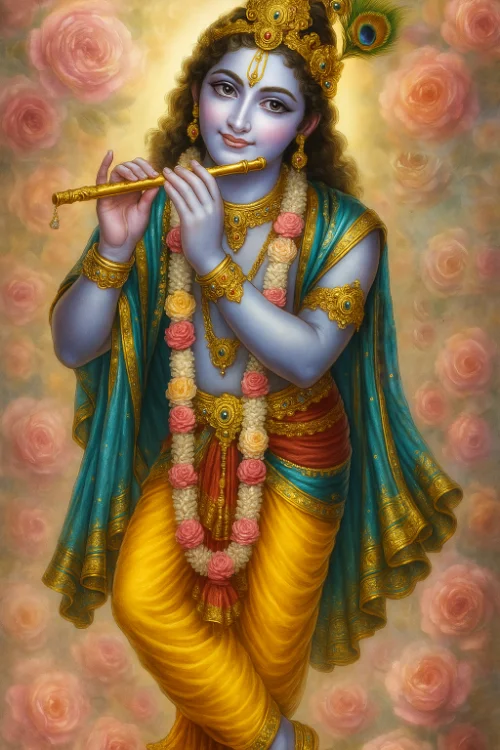
Discover the timeless beauty of Kṛṣṇa mantras — sacred vibrations that open the heart, awaken divine love, and connect the soul to the supreme bliss of Lord Kṛṣṇa. Each mantra carries the power to purify the mind, inspire devotion, and bring the presence of the all-attractive one into your life. Chant, meditate, and immerse yourself in the eternal joy of His holy names.
Kṛṣṇa mantras originate from ancient Vedic and Purāṇic traditions, where the chanting of the Lord’s names (nāma-saṅkīrtana) is praised as the most effective spiritual practice for the current age (Kali Yuga). Texts like the Bhagavad-gītā and Śrīmad Bhāgavatam emphasize that the sound of Kṛṣṇa’s name is non-different from Kṛṣṇa Himself, carrying His full presence, power, and mercy. Thus, through sincere repetition of these sacred mantras, devotees are not merely calling upon a distant divinity, but directly inviting the living presence of Kṛṣṇa into their hearts and lives.
Hare Kṛṣṇa Mahā-mantra
हरे कृष्ण हरे कृष्ण कृष्ण कृष्ण हरे हरे । हरे राम हरे राम राम राम हरे हरे ॥
Hare Kṛṣṇa Hare Kṛṣṇa Kṛṣṇa Kṛṣṇa Hare Hare Hare Rāma Hare Rāma Rāma Rāma Hare Hare
O Hari/Kṛṣṇa! O divine energy of the Lord! O Kṛṣṇa! O Rāma! Please engage me in divine service.
The great mantra (mahā-mantra) of sixteen names. The Kali-santaraṇa Upaniṣad gives these names and says that no higher means than this is seen in all the Vedas. There Hare Rāma comes first; the Gauḍīya tradition, following Caitanya, chants Hare Kṛṣṇa first.
In the Gauḍīya reading, Hare calls on the Lord’s own energy, Rādhā; Kṛṣṇa is the all-attractive one; Rāma is the one in whom all delight rests.
Kṛṣṇa Kāma-Bīja Mantra
क्लीं कृष्णाय गोविन्दाय गोपीजनवल्लभाय स्वाहा
Kliṁ Kṛṣṇāya Govindāya Gopījana-Vallabhāya Svāhā!
Oṁ! I offer myself to Kṛṣṇa, the supreme protector Govinda, the beloved of the Gopīs, invoking the energy of divine attraction (Kliṁ). Svāhā!
Or more simply: Salutations to Kṛṣṇa — Govinda — the beloved of the Gopīs — with the power of divine love!
Kāma-bīja (कामबीज) means “the seed syllable of love and attraction” — here, Kliṁ (क्लीं) is the kāma bīja.
It is a mantra of love, devotion, and spiritual attraction, focusing on Kṛṣṇa’s most intimate and enchanting aspect as the beloved of the Gopīs.
This mantra invokes the sweet, attractive, all-loving aspect of Kṛṣṇa.
Kliṁ calls upon the energy of divine attraction — helping the devotee become drawn to God and vice versa.
It is a powerful tool for developing love (prema) for Kṛṣṇa.
Breakdown word by word:
Kliṁ (क्लीं): This is the Kāmabīja (seed syllable of desire/love). It symbolizes divine attraction, love, devotion, and the power to enchant. It’s closely associated with Kṛṣṇa, who is the supreme attractor (ākarṣaka). In Sanskrit, “Kliṁ” is called a bīja mantra — a “seed” syllable with great vibrational power.
Kṛṣṇāya (कृष्णाय): “To Kṛṣṇa” — Dative case, meaning “for Kṛṣṇa” or “unto Kṛṣṇa.” Kṛṣṇa = The dark-hued one, the all-attractive Lord.
Govindāya (गोविन्दाय): “To Govinda” — another name of Kṛṣṇa, meaning “the protector (or Lord) of cows,” or “the protector of the senses.” Go = cow/senses; Vinda = one who finds/protects.
Gopījana-Vallabhāya (गोपीजनवल्लभाय): To the beloved of the Gopīs (cowherd maidens) — Gopījana = the group of gopīs; Vallabha = beloved, dearest one. This highlights Kṛṣṇa’s most intimate and sweet relationship with his devotees.
Svāhā (स्वाहा): a sacred exclamation meaning “I offer,” “so be it,” “hail!” or “I surrender this into the sacred fire.” Traditionally used at the end of mantras to signify complete offering.
Oṁ! Let us know (meditate upon) the son of Devakī (Devakīnandana). Let us meditate upon Vāsudeva (the all-pervading Lord). May Kṛṣṇa inspire and illumine our intellect!
Oṁ (ॐ): The primordial sacred syllable — the sound of the universe — invoking the Divine.
Devakīnandanāya (देवकीनन्दनाय): “To Devakīnandana” — Devakī’s son (Devakī = mother of Kṛṣṇa; Nandana = son or delight). Dative case: “unto the son of Devakī.”
Vidmahe (विद्महे): “We contemplate,” “we know,” or “we understand.”
Vāsudevāya (वासुदेवाय): “To Vāsudeva” — another name for Kṛṣṇa, meaning “the son of Vasudeva” or “the all-pervading Lord” (Vāsudeva can mean both “son of Vasudeva” and “the one who dwells in all beings”).
Dhīmahi (धीमहि): “We meditate upon,” “we hold in our consciousness.”
Tanno (तन्नः): “May that (Lord) for us” — (tat = that, naḥ = for us).
Kṛṣṇaḥ (कृष्णः): “Kṛṣṇa” — the supreme, all-attractive one.
हे कृष्ण करुणासिन्धो दीनबन्धो जगत्पते । गोपेश गोपिकाकान्त राधाकान्त नमोऽस्तु ते ॥
He Kṛṣṇa Karuṇāsindho Dīnabandho Jagatpate Gopeśa Gopikākānta Rādhākānta Namo’stu Te
“O Kṛṣṇa, ocean of compassion, friend of the distressed, Lord of the universe! O Lord of the cowherds, beloved of the gopīs, beloved of Rādhā, I offer my respectful obeisances unto You.”
One of the most beloved prayers of the Gauḍīya Vaiṣṇava tradition, recited in daily worship and regularly by Śrīla A. C. Bhaktivedanta Swami Prabhupāda. In two lines it praises Kṛṣṇa as the Lord of the universe and as the beloved of the gopīs and of Rādhā in Vṛndāvana.
Give up every kind of dharma and take refuge in me alone. I shall set you free from all sins; do not grieve.
The last instruction of the Bhagavad-gītā (18.66), which Kṛṣṇa has just called the most secret of all (18.64). After teaching the paths of action, knowledge, meditation and devotion, he gathers them into one: take refuge in me. The Śrīvaiṣṇava tradition names it the carama-śloka, the final verse, and reads it as the charter of śaraṇāgati, surrender.
What “every kind of dharma” means is where the commentators differ. For Śaṅkara it is all action, given up for knowledge of the one Self; for Rāmānuja, reliance on one’s own practices as the means, or the expiations a seeker despairs of completing; for the Gauḍīya ācāryas, every duty pursued apart from devotion to Kṛṣṇa. None reads it as leave for wrongdoing: what is given up is reliance on one’s own means, and what remains is Kṛṣṇa’s promise, mā śucaḥ, “do not grieve”.