

Why Rādhā Is Supreme Among the Gopīs
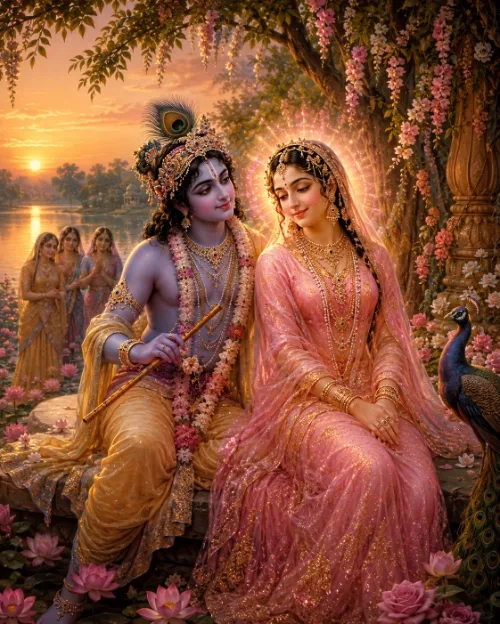
Why Rādhā Is Supreme Among the Gopīs: The Real Source and Meaning of Mahābhāva-svarūpā
Rūpa Gosvāmī does not declare Śrī Rādhā supreme merely because she is the best-known gopī, because later devotees preferred her, or because a sectarian hierarchy demanded a winner. His claim is more precise: Rādhā is supreme because divine love reaches its fullest possible concentration in her. She does not merely experience mahābhāva; mahābhāva is her very form.
That is the force of the Sanskrit expression mahābhāva-svarūpā. It means more than “intensely emotional,” more than “the greatest devotee,” and even more than “one who possesses the highest love.” Rādhā is presented as the personal embodiment of Kṛṣṇa’s own bliss-giving potency at the summit of love.
The original explanation is substantially correct. The quotation is genuinely from Śrī Rūpa Gosvāmī’s Ujjvala-nīlamaṇi. The most precise modern reference is 4.3—the third verse of the fourth section, the Rādhā-prakaraṇa. It is quoted twice in Caitanya-caritāmṛta: Ādi-līlā 4.70 and Madhya-līlā 8.161.
One refinement is needed. The verse gives two closely related grounds for Rādhā’s preeminence:
- mahābhāva-svarūpeyam—she is mahābhāva embodied; and
- guṇair ativarīyasī—she is exceedingly preeminent in her qualities.
The surrounding Ujjvala-nīlamaṇi does not leave those “qualities” vague. Rūpa later names twenty-five principal qualities of Rādhā and ultimately says that, like Kṛṣṇa’s, her qualities are beyond counting.
The central verse
तयोरप्युभयोर्मध्ये राधिका सर्वथाधिका ।
महाभावस्वरूपेयं गुणैरतिवरीयसी ॥
tayor apy ubhayor madhye
rādhikā sarvathādhikā
mahābhāva-svarūpeyaṁ
guṇair ativarīyasī
Even between those two, Rādhikā is superior in every respect. She is the very embodiment of mahābhāva and is exceedingly preeminent in her qualities.
Ujjvala-nīlamaṇi 4.3; quoted in Caitanya-caritāmṛta, Ādi 4.70 and Madhya 8.161
The familiar translation—“Of these two gopīs [Rādhārāṇī and Candrāvalī], Śrīmatī Rādhārāṇī is superior in all respects. She is the embodiment of mahābhāva, and She surpasses all in good qualities”—is accurate. The bracketed identification of the two gopīs is not guesswork inserted by the translator. Rūpa names them explicitly two verses earlier.
The real source and the numbering problem
The quotation occurs at the opening of the Rādhā-prakaraṇa, the fourth section of Ujjvala-nīlamaṇi. Modern electronic and sectional numbering therefore identifies it as Ujjvala-nīlamaṇi 4.3.
Some older printings of A. C. Bhaktivedanta Swami Prabhupāda’s purport call it “verse 2 of the Ujjvala-nīlamaṇi.” Current Vedabase editions identify it more clearly as Rādhā-prakaraṇa 3. The difference is bibliographical, not doctrinal: editions and citations have counted introductory verses or subsections differently. The secure locator is:
Śrī Rūpa Gosvāmī, Ujjvala-nīlamaṇi, Rādhā-prakaraṇa, verse 3—commonly numbered 4.3.
The verse is especially important because Kṛṣṇadāsa Kavirāja uses it in two different theological settings:
- In Ādi-līlā 4, it supports the explanation of Rādhā as Kṛṣṇa’s hlādinī-śakti and the embodiment of mahābhāva.
- In Madhya-līlā 8, Rāmānanda Rāya cites it while describing Rādhā as the supreme beloved of Kṛṣṇa.
Its double appearance shows that this is not a decorative quotation. It is one of the textual hinges of Gauḍīya Rādhā theology.
Who are “those two”?
The first verse of the Rādhā-prakaraṇa answers directly.
तत्रापि सर्वथा श्रेष्ठे राधाचन्द्रावलीत्युभे ।
यूथयोस्तु ययोः सन्ति कोटिसङ्ख्या मृगीदृशः ॥
tatrāpi sarvathā śreṣṭhe rādhā-candrāvalīty ubhe
yūthayos tu yayoḥ santi koṭi-saṅkhyā mṛgīdṛśaḥ
Even among all these beloved gopīs, the two who are foremost in every respect are Rādhā and Candrāvalī. In their two groups are doe-eyed maidens numbering in the millions.
Ujjvala-nīlamaṇi 4.1
The next verse expands the scale of the rāsa-līlā:
अभूदाकुलितो रासः प्रमदाशतकोटिभिः ।
पुलिने यामुने तस्मिन्नित्येषागमिकी प्रथा ॥
abhūd ākulito rāsaḥ pramadā-śata-koṭibhiḥ
puline yāmune tasminn ity eṣāgamikī prathā
The rāsa dance upon that bank of the Yamunā was filled with hundreds of millions of young women—so runs the sacred tradition.
Ujjvala-nīlamaṇi 4.2
Only after establishing the almost immeasurable number of gopīs and naming the two supreme group leaders does Rūpa say:
tayor apy ubhayor madhye—“even between those two.”
The word api, “even,” is important. The comparison is not between an excellent gopī and an ordinary one. Candrāvalī has just been declared, together with Rādhā, foremost in every respect among countless beloveds of Kṛṣṇa. Verse 4.3 then makes a final distinction at the very summit: even within this supreme pair, Rādhā is sarvathādhikā—superior in every way relevant to their love for Kṛṣṇa.
The Sanskrit, phrase by phrase
The apparent repetition in tayoḥ … ubhayoḥ is emphatic rather than careless: “of those two—yes, between the two of them.” Rūpa narrows an immense hierarchy down to a final comparison and then resolves it decisively.
The scope of sarvathā, “in every respect,” must also be read carefully. It does not mean that Rādhā is being compared with every being in every metaphysical category. The comparison class has already been established: Rādhā and Candrāvalī as the two supreme yūtheśvarīs, leaders of gopī groups and beloveds of Kṛṣṇa. Within that field of divine love, Rādhā is unsurpassed.
Why svarūpā is stronger than “one who possesses”
The expression mahābhāva-svarūpā does not merely say that Rādhā has mahābhāva. Sanskrit could have expressed possession in several ordinary ways. Instead, Rūpa uses svarūpa—one’s own essential form, intrinsic nature, or true constitution.
There is a decisive difference:
- A person may possess a quality without being identical with its full expression.
- A person described as its svarūpa is its living embodiment—the form in which it becomes fully manifest.
Thus a careful translation is not merely “she experiences mahābhāva,” but:
Her essential spiritual form is mahābhāva itself.
This does not turn Rādhā into an impersonal emotion. The movement is the reverse: divine love is so full and real that its supreme condition exists personally—as Rādhā. In Gauḍīya theology, ultimate love is not an abstract property floating above persons. It is embodied, relational, intelligent, free, and active.
What is mahābhāva?
“Great emotion” is too weak and potentially misleading. In ordinary speech, emotion may mean a temporary psychological state caused by material circumstances. Mahābhāva is the highest transformation of fully spiritual prema, arising from Kṛṣṇa’s own internal bliss potency. It is not produced by the material mind or nervous system.
Caitanya-caritāmṛta gives the progression succinctly:
প্রেম বৃদ্ধি-ক্রমে নাম—স্নেহ, মান, প্রণয় ।
রাগ, অনুরাগ, ভাব, মহাভাব হয় ॥
prema vṛddhi-krame nāma—sneha, māna, praṇaya
rāga, anurāga, bhāva, mahābhāva haya
As prema progressively intensifies, it is known as sneha, māna, praṇaya, rāga, anurāga, bhāva, and mahābhāva.
Caitanya-caritāmṛta, Madhya 19.178
These words are not simply seven unrelated emotions. They name increasing depths and transformations of one love:
- sneha—prema becomes concentrated affection that melts the heart;
- māna—love develops a tender, apparently contrary indignation that increases intimacy;
- praṇaya—love becomes fearless intimacy and deep mutual identification;
- rāga—attachment becomes so strong that pain accepted for Kṛṣṇa can be experienced as happiness;
- anurāga—the beloved appears ever new, and longing remains fresh even in repeated meeting;
- bhāva, in this advanced technical sequence—anurāga reaches an extraordinary self-manifesting intensity; and
- mahābhāva—that love reaches its supreme, all-possessing culmination.
The same term bhāva is used elsewhere for an earlier stage preceding ordinary prema. Context therefore matters. Here Rūpa is speaking within the advanced transformations of mature madhura-prema, not the preliminary stage of sādhana-bhakti.
Rūpa’s technical definition
In the Sthāyi-bhāva-prakaraṇa of Ujjvala-nīlamaṇi, Rūpa defines the state that culminates as mahābhāva:
अनुरागः स्वसंवेद्यदशां प्राप्य प्रकाशितः ।
यावदाश्रयवृत्तिश्चेद् भाव इत्यभिधीयते ॥
anurāgaḥ sva-saṁvedya-daśāṁ prāpya prakāśitaḥ
yāvad-āśraya-vṛttiś ced bhāva ity abhidhīyate
When anurāga becomes fully manifest, reaches a condition apprehended through its own power, and completely pervades its receptacle, it is called bhāva—the state here associated with mahābhāva.
Ujjvala-nīlamaṇi 14.154
The commentators analyze sva-saṁvedya-daśā in subtle ways, but the central idea is clear: love is no longer merely one experience among others. It becomes self-revealing, overwhelming, and fully determinative of the person who is its āśraya—its living receptacle.
Rūpa then explicitly names the state:
मुकुन्दमहिषीवृन्दैरप्यसाव् अतिदुर्लभः ।
व्रजदेव्येकसंवेद्यो महाभावाख्ययोच्यते ॥
mukunda-mahiṣī-vṛndair apy asāv atidurlabhaḥ
vraja-devy-eka-saṁvedyo mahābhāvākhyayocyate
This state is exceedingly difficult to attain even for the queens of Mukunda. It is known uniquely among the goddesses of Vraja and is called mahābhāva.
Ujjvala-nīlamaṇi 14.156
This verse prevents us from using mahābhāva as a casual synonym for strong religious feeling. It is a highly restricted technical category within Rūpa’s theology of rasa.
Mahābhāva has its own summit—and that summit exists only in Rādhā
Rūpa divides mahābhāva into rūḍha, “fully developed,” and adhirūḍha, “supremely developed.” Adhirūḍha is further divided into modana and mādana. In separation, modana may manifest as mohana, with extraordinary symptoms such as divine madness and the forms of speech known as citra-jalpa.
The most important point for understanding Ādi 4.70 is that Rūpa locates the absolute summit, mādana, in Rādhā alone:
सर्वभावोद्गमोल्लासी मादनोऽयं परात्परः ।
राजते ह्लादिनीसारो राधायामेव यः सदा ॥
sarva-bhāvodgamollāsī mādano ’yaṁ parāt paraḥ
rājate hlādinī-sāro rādhāyām eva yaḥ sadā
This mādana, exultantly bringing forth every divine loving state, is higher than the highest. It is the essence of the hlādinī potency and shines eternally in Rādhā alone.
Ujjvala-nīlamaṇi 14.219
The words are emphatic:
- parāt paraḥ—higher than the highest;
- hlādinī-sāraḥ—the essence of the bliss potency;
- rādhāyām eva—in Rādhā alone; and
- sadā—always.
This later definition explains the compressed claim of 4.3. Other gopīs participate in exalted forms of love; Rādhā’s intimate companions may share astonishing reaches of mahābhāva. But the complete essence, culminating in mādana, shines uniquely and eternally in Rādhā. That is why she can be called not merely mahābhāva-vatī, one who possesses mahābhāva, but mahābhāva-svarūpā, mahābhāva embodied.
From hlādinī to Rādhā
The immediately preceding verses of Caitanya-caritāmṛta supply the theological chain:
হ্লাদিনীর সার ‘প্রেম’, প্রেমসার ‘ভাব’ ।
ভাবের পরমকাষ্ঠা, নাম—‘মহাভাব’ ॥
hlādinīra sāra ‘prema’, prema-sāra ‘bhāva’
bhāvera parama-kāṣṭhā, nāma—‘mahābhāva’
The essence of hlādinī is prema; the essence of prema is bhāva; and the highest limit of bhāva is called mahābhāva.
Caitanya-caritāmṛta, Ādi 4.68
Then:
মহাভাবস্বরূপা শ্রীরাধা-ঠাকুরাণী ।
সর্বগুণখনি কৃষ্ণকান্তা-শিরোমণি ॥
mahābhāva-svarūpā śrī-rādhā-ṭhākurāṇī
sarva-guṇa-khani kṛṣṇa-kāntā-śiromaṇi
Śrī Rādhā Ṭhākurāṇī is mahābhāva embodied, the mine of every excellence and the crown jewel among Kṛṣṇa’s beloveds.
Caitanya-caritāmṛta, Ādi 4.69
Verse 4.70 then quotes Rūpa Gosvāmī as Sanskrit authority for precisely this claim. The sequence is deliberate:
hlādinī → prema → bhāva → mahābhāva → Śrī Rādhā
Rūpa’s own Rādhā-prakaraṇa gives the same theological identity:
ह्लादिनी या महाशक्तिः सर्वशक्तिवरीयसी ।
तत्सारभावरूपेयमिति तन्त्रे प्रतिष्ठिता ॥
hlādinī yā mahā-śaktiḥ sarva-śakti-varīyasī
tat-sāra-bhāva-rūpeyam iti tantre pratiṣṭhitā
The great potency known as hlādinī is preeminent among all potencies. Rādhā is established in the sacred tradition as the embodiment of its essential state.
Ujjvala-nīlamaṇi 4.6
Rādhā’s supremacy is therefore not an external honor granted to her after the fact. She is supreme because she is the fullest personal manifestation of the very power by which Kṛṣṇa tastes and communicates spiritual bliss.
Rādhā and Kṛṣṇa: one reality in two loving persons
Calling Rādhā Kṛṣṇa’s hlādinī-śakti does not make her a tool or an impersonal force. Nor does her supremacy make her an unrelated second Absolute. Gauḍīya theology holds together unity and distinction.
राधा कृष्णप्रणयविकृतिर्ह्लादिनी शक्तिरस्माद्
एकात्मानावपि भुवि पुरा देहभेदं गतौ तौ ।
चैतन्याख्यं प्रकटमधुना तद्द्वयं चैक्यमाप्तं
राधाभावद्युतिसुवलितं नौमि कृष्णस्वरूपम् ॥
rādhā kṛṣṇa-praṇaya-vikṛtir hlādinī śaktir asmād
ekātmānāv api bhuvi purā deha-bhedaṁ gatau tau
caitanyākhyaṁ prakaṭam adhunā tad-dvayaṁ caikyam āptaṁ
rādhā-bhāva-dyuti-suvalitaṁ naumi kṛṣṇa-svarūpam
Rādhā is the transformation of Kṛṣṇa’s love, his hlādinī potency. Although the two are one in spiritual identity, they eternally assumed distinct forms. Now those two have appeared in unity as Śrī Caitanya, Kṛṣṇa adorned with Rādhā’s feeling and radiance. I bow to that form of Kṛṣṇa.
Caitanya-caritāmṛta, Ādi 1.5
Their difference makes love possible; their unity makes that love intrinsic to the Absolute. Rādhā is not outside Kṛṣṇa, yet she stands before him as the perfect beloved. The one spiritual reality contains real reciprocity without falling into material division.
This also explains why Kṛṣṇa desires to taste Rādhā’s love in Śrī Caitanya. The highest love is present in Rādhā with an intensity and viewpoint that Kṛṣṇa, as its object, does not taste in exactly the same way. His desire to experience her bhāva is not evidence of deficiency but of the inexhaustible depth of divine self-relation.
The scriptural seed in the Bhāgavata Purāṇa
The Bhāgavata Purāṇa does not ordinarily name Rādhā openly in its account of the rāsa-līlā. Yet it describes one unnamed gopī whom Kṛṣṇa takes away alone. The remaining gopīs discover their footprints and say:
अनयाराधितो नूनं भगवान् हरिरीश्वरः ।
यन्नो विहाय गोविन्दः प्रीतो यामनयद् रहः ॥
anayārādhito nūnaṁ bhagavān harir īśvaraḥ
yan no vihāya govindaḥ prīto yām anayad rahaḥ
Surely this particular gopī has perfectly worshiped Bhagavān Hari, for Govinda was so pleased with her that he left us behind and led her to a secluded place.
Śrīmad-Bhāgavatam 10.30.28
Gauḍīya commentators identify this unnamed gopī as Rādhā and hear in anayā ārādhitaḥ, “by her he was perfectly worshiped,” an evocative disclosure of her name. This is a traditional theological reading of the narrative and its wordplay; grammatically, the verse itself says “by this woman,” not explicitly “Rādhā.”
What the narrative unmistakably establishes is the underlying pattern later systematized by Rūpa: among all the gopīs, one beloved attracts Kṛṣṇa away from the entire assembly. Ujjvala-nīlamaṇi names her, classifies her love, and explains why her attraction is supreme.
Rūpa also cites the traditional praise of Rādhā and Rādhā-kuṇḍa:
यथा राधा प्रिया विष्णोस्तस्याः कुण्डं प्रियं तथा ।
सर्वगोपीषु सैवैका विष्णोरत्यन्तवल्लभा ॥
yathā rādhā priyā viṣṇos tasyāḥ kuṇḍaṁ priyaṁ tathā
sarva-gopīṣu saivaikā viṣṇor atyanta-vallabhā
Just as Rādhā is dear to Viṣṇu—Kṛṣṇa—so her lake is dear to him. Among all the gopīs, she alone is his most intensely beloved.
Quoted in Ujjvala-nīlamaṇi 4.5 and traditionally attributed to the Padma Purāṇa
Rādhā and Candrāvalī are two styles of divine love
The comparison should not be turned into moral contempt for Candrāvalī. Rūpa first declares Candrāvalī one of the two greatest gopīs. She is not material, spiritually defective, or an enemy of devotion. Her group supplies a contrasting form of love that increases the variety of Kṛṣṇa’s līlā.
Rādhā and Candrāvalī are commonly associated with two dramaturgical temperaments:
- vāmā, the resistant, contrary, or “left-wing” heroine, especially characteristic of Rādhā and her circle; and
- dakṣiṇā, the conciliatory, accommodating, or “right-wing” heroine, especially characteristic of Candrāvalī.
These are poetic and relational categories, not political labels and not a division into good and bad personalities. Rūpa defines the vāmā heroine:
मानग्रहे सदोद्युक्ता तच्छैथिल्ये च कोपना ।
अभेद्या नायके प्रायः क्रूरा वामेति कीर्त्यते ॥
māna-grahe sadodyuktā tac-chaithilye ca kopanā
abhedyā nāyake prāyaḥ krūrā vāmeti kīrtyate
She who is always ready to maintain loving indignation, becomes angry if it is relaxed, is generally not easily won over by the hero, and can be severe toward him is called vāmā.
Ujjvala-nīlamaṇi 8.32
He defines the dakṣiṇā heroine:
असहा माननिर्बन्धे नायके युक्तवादिनी ।
सामभिस्तेन भेद्या च दक्षिणा परिकीर्तिता ॥
asahā māna-nirbandhe nāyake yukta-vādinī
sāmabhis tena bhedyā ca dakṣiṇā parikīrtitā
She who cannot sustain a rigid insistence on loving indignation, speaks reasonably to the hero, and can be softened by his conciliating words is called dakṣiṇā.
Ujjvala-nīlamaṇi 8.38
Rādhā’s vāmya does not indicate egoistic stubbornness. Her māna, loving indignation, arises from the intensity and absolute exclusiveness of her love. It makes Kṛṣṇa plead, invent, search, surrender his pride, and discover ever-new dimensions of the relationship.
Kṛṣṇadāsa Kavirāja explains the paradox:
বাম্য-স্বভাবে মান উঠে নিরন্তর ।
তার মধ্যে উঠে কৃষ্ণের আনন্দ-সাগর ॥
vāmya-svabhāve māna uṭhe nirantara
tāra madhye uṭhe kṛṣṇera ānanda-sāgara
Because of her contrary nature, loving indignation continually arises; and within it an ocean of Kṛṣṇa’s bliss swells.
Caitanya-caritāmṛta, Madhya 14.162
Candrāvalī’s conciliatory love offers another sweetness: gentleness, reasonableness, receptivity, and graceful submission. The two groups therefore generate complementary dramatic possibilities. Yet, in Rūpa’s theological aesthetics, Rādhā’s intense vāmya produces the greater expansion of Kṛṣṇa’s desire, astonishment, dependence, and bliss. The comparison concerns the power of love to nourish rasa, not the moral value of one woman over another.
“She surpasses all in qualities”: Rādhā’s twenty-five principal excellences
Rūpa’s phrase guṇair ativarīyasī is followed later in the same Rādhā-prakaraṇa by a formal list. The Sanskrit names twenty-five principal qualities and then says that the complete number is incalculable.
अथ वृन्दावनेश्वर्याः कीर्त्यन्ते प्रवरा गुणाः ।
मधुरेयं नववयाश्चलापाङ्गोज्ज्वलस्मिता ॥ ११ ॥
चारुसौभाग्यरेखाढ्या गन्धोन्मादितमाधवा ।
सङ्गीतप्रसराभिज्ञा रम्यवाङ्नर्मपण्डिता ॥ १२ ॥
विनीता करुणापूर्णा विदग्धा पाटवान्विता ।
लज्जाशीला सुमर्यादा धैर्यगाम्भीर्यशालिनी ॥ १३ ॥
सुविलासा महाभावपरमोत्कर्षतर्षिणी ।
गोकुलप्रेमवसतिर्जगच्छ्रेणीलसद्यशाः ॥ १४ ॥
गुर्वर्पितगुरुस्नेहा सखीप्रणयितावशा ।
कृष्णप्रियावलीमुख्या सन्तताश्रवकेशवा ।
बहुना किं गुणास्तस्याः सङ्ख्यातीता हरेरिव ॥ १५ ॥
atha vṛndāvaneśvaryāḥ kīrtyante pravarā guṇāḥ
madhureyaṁ nava-vayāś calāpāṅgojjvala-smitā
cāru-saubhāgya-rekhāḍhyā gandhonmādita-mādhavā
saṅgīta-prasarābhijñā ramya-vāṅ narma-paṇḍitā
vinītā karuṇā-pūrṇā vidagdhā pāṭavānvitā
lajjā-śīlā sumaryādā dhairya-gāmbhīrya-śālinī
suvilāsā mahābhāva-paramotkarṣa-tarṣiṇī
gokula-prema-vasatir jagac-chreṇī-lasad-yaśāḥ
gurv-arpita-guru-snehā sakhī-praṇayitā-vaśā
kṛṣṇa-priyāvalī-mukhyā santatāśrava-keśavā
bahunā kiṁ guṇās tasyāḥ saṅkhyātītā harer iva
Now the foremost qualities of the Queen of Vṛndāvana are proclaimed. She is sweet; ever-fresh in youth; possessed of restless sidelong glances and a radiant smile; adorned with beautiful auspicious markings; and her fragrance maddens Mādhava. She is expert in the full art of music, charming in speech, and learned in playful wit. She is modest, filled with compassion, artistically ingenious, highly skillful, naturally bashful, perfectly courteous, patient, and profoundly grave. She is graceful in loving play, eager for the supreme height of mahābhāva, the abode of Gokula’s love, and radiant with fame throughout all worlds. Her elders bestow immense affection upon her; she is governed by the love of her friends; she is foremost among all Kṛṣṇa’s beloveds; and Keśava is always obedient to her. Why say more? Her qualities, like Hari’s, are beyond counting.
Ujjvala-nīlamaṇi 4.11–15
The twenty-five may be grouped for clarity:
Bodily and aesthetic excellences
- She is naturally sweet and captivating.
- Her youth is ever fresh.
- Her sidelong glances are restless and expressive.
- Her smile is radiant.
- Auspicious markings beautify her form.
- Her fragrance enchants Mādhava.
Verbal and artistic excellences
- She is expert in music.
- Her speech is charming.
- She is accomplished in wit and playful conversation.
Qualities of mind and character
- She is modest and well-mannered.
- She is filled with compassion.
- She is vidagdhā—refined, ingenious, and perfectly conversant with the arts of rasa.
- She is dexterous and capable.
- She is naturally bashful.
- She possesses impeccable propriety.
- She is patient and steady.
- She is deep and difficult to fathom.
- She is graceful and expressive in loving play.
- She thirsts for the highest possible expansion of mahābhāva.
Relational and theological excellences
- She is the abode of the love of Gokula.
- Her fame illuminates the worlds.
- Her elders pour great affection upon her.
- She allows herself to be governed by the love of her sakhīs.
- She is foremost among Kṛṣṇa’s entire garland of beloveds.
- Keśava is always responsive and obedient to her.
The final two are especially revealing. Rādhā’s supremacy does not isolate her from others. She is controlled by the love of her friends, while Kṛṣṇa is controlled by her love. Her greatness is relational through and through.
Nor does Rūpa reduce her to a fixed list. After twenty-five qualities he stops and says, in effect: Why continue? Her qualities are limitless like Hari’s.
Kṛṣṇa’s own potency standing before him as his beloved
Immediately after quoting Ujjvala-nīlamaṇi 4.3, Caitanya-caritāmṛta explains Rādhā’s spiritual constitution:
কৃষ্ণপ্রেম-ভাবিত যাঁর চিত্তেন্দ্রিয়-কায় ।
কৃষ্ণ-নিজশক্তি রাধা ক্রীড়ার সহায় ॥
kṛṣṇa-prema-bhāvita yāṅra cittendriya-kāya
kṛṣṇa-nija-śakti rādhā krīḍāra sahāya
Her mind, senses, and body are wholly permeated by love for Kṛṣṇa. Rādhā is Kṛṣṇa’s own intrinsic potency and the companion of his divine play.
Caitanya-caritāmṛta, Ādi 4.71
This rules out a material reading. Rādhā is not a conditioned soul whose psychological attachment happened to become stronger than everyone else’s. Her entire being—mind, senses, and body—is spiritual and constituted of Kṛṣṇa-prema.
The next verse, from Brahma-saṁhitā, places the gopīs within Kṛṣṇa’s own spiritual reality:
आनन्दचिन्मयरसप्रतिभाविताभिस्
ताभिर्य एव निजरूपतया कलाभिः ।
गोलोक एव निवसत्यखिलात्मभूतो
गोविन्दमादिपुरुषं तमहं भजामि ॥
ānanda-cinmaya-rasa-pratibhāvitābhis
tābhir ya eva nija-rūpatayā kalābhiḥ
goloka eva nivasaty akhilātma-bhūto
govindam ādi-puruṣaṁ tam ahaṁ bhajāmi
I worship Govinda, the original person, who dwells in Goloka with those expansions of his own spiritual form who are fully permeated by the blissful conscious rasa of divine love, while he remains the indwelling self of all.
Brahma-saṁhitā 5.37; quoted in Caitanya-caritāmṛta, Ādi 4.72
Rādhā’s superiority is therefore a mystery within Kṛṣṇa’s own potency: the all-attractive Kṛṣṇa is himself most fully attracted, conquered, and delighted by the supreme concentration of his hlādinī-śakti standing before him as Rādhā.
Why the comparison is not arbitrary
Rūpa’s conclusion rests on an integrated theology of love:
- Kṛṣṇa is the supreme relisher of rasa.
- His hlādinī potency makes bliss and loving exchange possible.
- The essence of hlādinī is prema.
- Prema reaches its supreme limit in mahābhāva.
- Mahābhāva reaches its ultimate expression as mādana.
- Mādana, the essence of hlādinī, shines eternally in Rādhā alone.
- Therefore Rādhā most completely delights, attracts, and even governs Kṛṣṇa.
The argument is not “Rādhā is greatest because our tradition likes her most.” It is:
The greatest beloved is the one in whom the power of divine love reaches its highest conceivable fullness; Rūpa identifies that fullness with Rādhā.
The verse’s second reason, guṇair ativarīyasī, confirms that her supremacy is not a single abstract status. Mahābhāva saturates and organizes her beauty, intelligence, speech, compassion, artistry, friendships, dignity, loving resistance, and power to delight Kṛṣṇa.
What this does—and does not—say about Candrāvalī
It says that:
- Candrāvalī is one of the two foremost gopīs.
- She is a great yūtheśvarī surrounded by innumerable companions.
- Her dakṣiṇā disposition reveals a genuine and exalted form of love for Kṛṣṇa.
- Rādhā nevertheless exceeds her in the total intensity, variety, and theological fullness of love.
It does not say that:
- Candrāvalī is material, envious in an ordinary way, spiritually fallen, or unworthy of reverence;
- rivalry in Vraja is equivalent to mundane competition for possession or status;
- Rādhā’s supremacy requires hatred of other gopīs; or
- every devotee must imitate the private emotional states described by Rūpa.
The opposition of their groups is part of spiritual dramaturgy. Contrasting moods create meetings, delays, misunderstandings, messages, reconciliations, boasts, jokes, and displays of loyalty. Difference nourishes rasa; it does not fracture the spiritual unity of Kṛṣṇa’s internal potency.
Common misunderstandings
“Mahābhāva means extreme emotion.”
That is much too broad. Material panic, infatuation, grief, or euphoria can be extreme without being spiritual. Mahābhāva is the culmination of pure Kṛṣṇa-prema and belongs to the internal potency.
“Rādhā is supreme because the verse merely says so.”
The verse states the conclusion, but the work supplies its rationale: she is mahābhāva embodied, the essence of hlādinī reaches its unique summit in her, and her qualities are then described in detail.
“Only Rādhā experiences any form of mahābhāva.”
That is too simple. Rūpa associates mahābhāva with the gopīs of Vraja and locates modana in Rādhā’s group. What is unique to Rādhā is the complete essential embodiment and the supreme mādana manifestation.
“Sarvathādhikā means Rādhā is metaphysically superior to Kṛṣṇa.”
That is not the comparison being made. She is declared superior between the two foremost gopī leaders and as Kṛṣṇa’s beloved. Elsewhere the text explains that Rādhā is Kṛṣṇa’s own potency and that the two are one in spiritual identity while eternally distinct for love.
“Rādhā’s vāmā nature is ordinary jealousy or bad temper.”
No. Her apparent contrariness is a transformation of selfless prema. It does not arise from insecurity or egoistic ownership. Its function is to intensify Kṛṣṇa’s longing and expand the varieties of blissful exchange.
“Candrāvalī is the villain.”
No. Rūpa explicitly places her beside Rādhā as one of the two greatest gopīs. She is a spiritual counterpart whose contrasting mood enriches Kṛṣṇa’s līlā.
“Calling Rādhā the hlādinī potency makes her impersonal.”
No. It means that Kṛṣṇa’s intrinsic power of bliss exists personally and relationally in its fullest form. Rādhā is not less personal because she is śakti; she is the supreme personification of divine love.
The verse’s full meaning in one paragraph
Among the countless gopīs of Vraja, Rādhā and Candrāvalī are the two supreme leaders. Even between these two exalted beloveds, Rādhā is unsurpassed. Her superiority is not an arbitrary preference but the consequence of what she is: the personal embodiment of mahābhāva, the highest development of Kṛṣṇa-prema and the concentrated essence of his hlādinī potency. That love culminates in mādana, which Rūpa says shines eternally in Rādhā alone. Her mahābhāva expresses itself through limitless qualities—beauty, compassion, wit, artistry, dignity, intimacy, loving resistance, friendship, and the unique power to bring Kṛṣṇa under the control of love. Candrāvalī remains one of the greatest gopīs, representing a complementary, conciliatory style of devotion; but Rādhā’s love produces the fullest possible expansion of divine rasa.
Final assessment
The original explanation is correct, but a fully precise version should say:
- The quotation is genuinely from Rūpa Gosvāmī’s Ujjvala-nīlamaṇi, Rādhā-prakaraṇa 3, normally cited as 4.3.
- “Those two” are unquestionably Rādhā and Candrāvalī, because 4.1 names them as the two foremost gopī leaders.
- Sarvathādhikā means that Rādhā is supreme in every relevant aspect of love and rasa within that comparison.
- The reason is not only that she experiences the highest love: mahābhāva is her svarūpa—her essential spiritual form.
- Rūpa makes the claim still stronger in 14.219: the supreme mādana state, the essence of hlādinī, shines in Rādhā alone, always.
- Guṇair ativarīyasī is not empty praise. Rūpa immediately develops it through twenty-five principal qualities and concludes that her qualities are countless like Kṛṣṇa’s.
- Candrāvalī is not demeaned; she is first acknowledged as one of the two highest gopīs. The comparison distinguishes two exalted forms of spiritual love, with Rādhā’s vāmā love producing the greater intensification of rasa.
The shortest faithful formulation is:
Rādhā is not merely the devotee who loves Kṛṣṇa most. She is Kṛṣṇa’s own power of love at its highest conceivable intensity—mahābhāva embodied.
Primary texts consulted
- Kṛṣṇadāsa Kavirāja Gosvāmī, Caitanya-caritāmṛta, Ādi-līlā 1.5; 4.68–4.72.
- Kṛṣṇadāsa Kavirāja Gosvāmī, Caitanya-caritāmṛta, Madhya-līlā 8.158–8.162; 14.161–14.163; 19.178.
- Śrī Rūpa Gosvāmī, Ujjvala-nīlamaṇi, Rādhā-prakaraṇa 4.1–6 and 4.11–15; Sakhī-prakaraṇa 8.32 and 8.38; Sthāyi-bhāva-prakaraṇa 14.154–14.176 and 14.219.
- Śrīmad-Bhāgavatam 10.30.28.
- Brahma-saṁhitā 5.37.